
You can spend the morning standing in front of more Raphaels than any other museum on earth, walk back to the courtyard for lunch, then climb up through one of the great Baroque gardens of Europe before sunset. That’s a normal day at Pitti Palace. The trick is knowing how to break it up so it doesn’t break you.
- In a Hurry? Top Pitti Palace Picks
- What You’re Actually Buying a Ticket To
- Tickets and Prices: Cutting Through the Confusion
- How to Actually Book Pitti Palace
- Three Tours Worth Booking
- 1. Pitti Palace Entrance Ticket + Audio App
- 2. Uffizi + Pitti Palace + Boboli 5-Day Combined Pass:
- 3. Pitti Palace + Boboli Gardens Ticket and eBook:
- Inside the Palatine Gallery: What to Actually Look At
- The Other Museums: What’s Worth Your Time
- Boboli Gardens: How to Do It Without Wrecking Yourself
- Practical Stuff: Hours, Closures, How to Get There
- The Building Itself: A Quick History
- Common Mistakes to Avoid
- If You Have More Time in Florence
In a Hurry? Top Pitti Palace Picks
- Best for art lovers: Pitti Palace entry with audio app. Skip the queue, get the Raphaels narrated.
- Best for combo tickets: 5-Day Uffizi + Pitti + Boboli pass: $81. One ticket, three of Florence’s biggest sights.
- Best for a single full day: Pitti + Boboli ticket with eBook: $45. The classic palace-and-gardens pairing.
What You’re Actually Buying a Ticket To
Most people think of Pitti Palace as one museum. It isn’t. It’s seven, plus a 45-acre Baroque garden, all packed inside the Medici family’s old residence on the south side of the Arno.
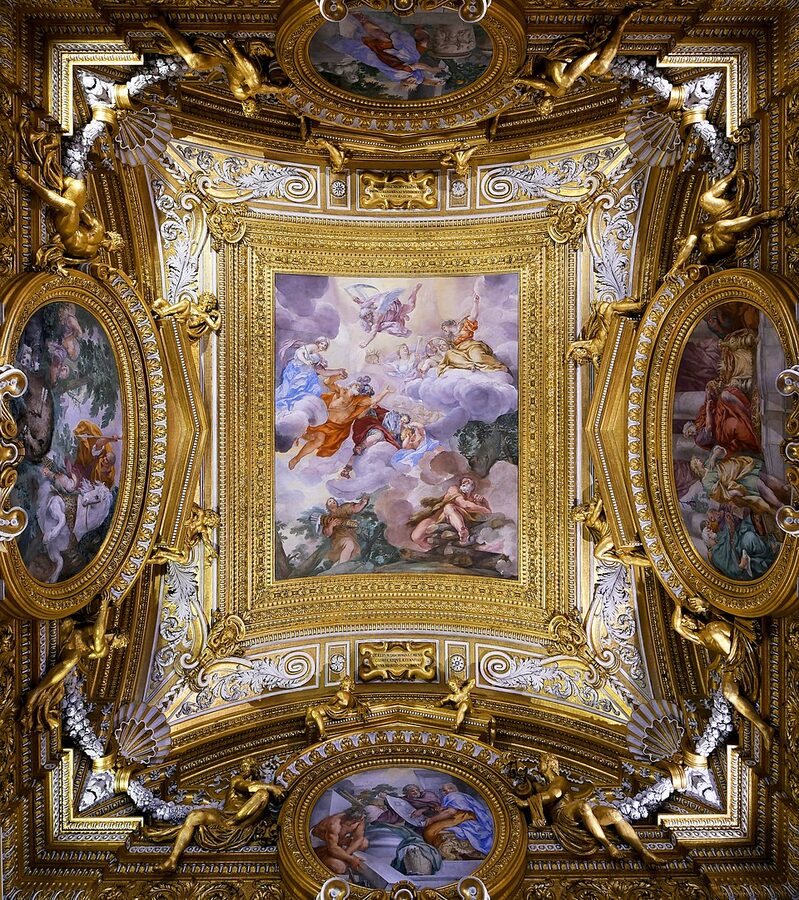
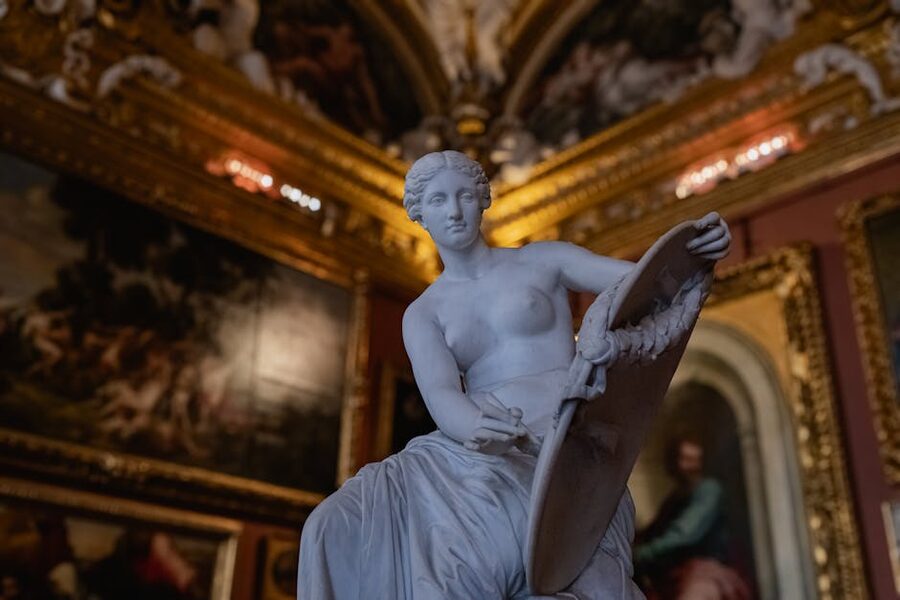
The headliner is the Palatine Gallery. It holds the largest collection of Raphael paintings in the world, plus rooms full of Titian, Caravaggio, Rubens and Artemisia Gentileschi. The walls are covered floor to ceiling in the old salon style. No labels next to each painting. You stand in the middle of a room and the masters are stacked above you in three rows. It’s closer in feel to the Vatican Museums than the Uffizi: density over curation.
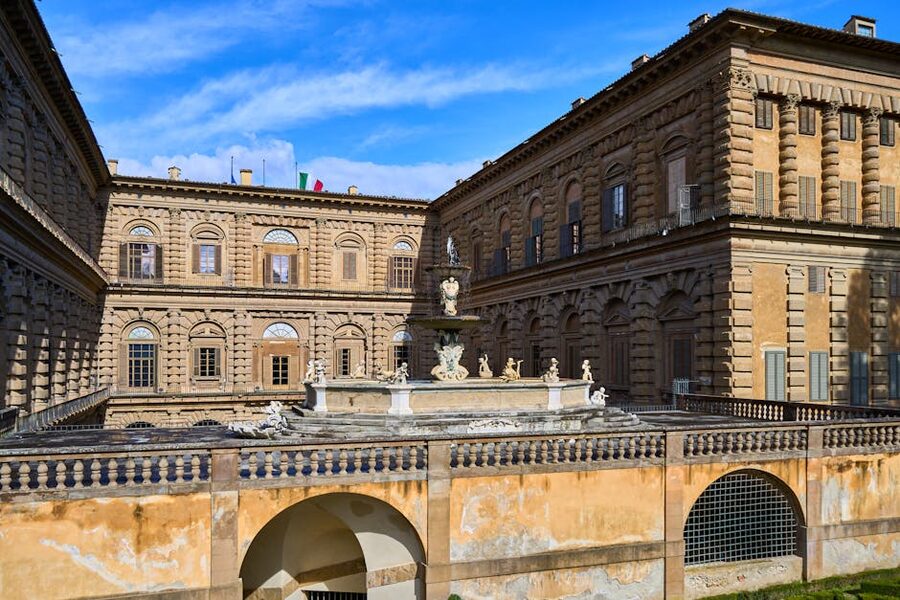
Then there’s the Royal Apartments, the Modern Art Gallery on the floor above (mostly 19th-century Italian, including the Macchiaioli movement that ran parallel to the French Impressionists), the Museum of Costume and Fashion in a side wing, the Treasury of the Grand Dukes on the ground floor, plus a porcelain museum and a horse-drawn carriages museum that nobody talks about. Behind the palace, the Boboli Gardens climb up the hill.
You don’t have to see all of it. Most visitors do the Palatine Gallery + Boboli, which takes around 3-4 hours and is plenty. If you’ve already been to the Uffizi, the Palatine is a different experience. The Uffizi is professionally hung and crowd-flow-managed. The Palatine feels more like a private collection that someone forgot to update. Which is the point.
Tickets and Prices: Cutting Through the Confusion
Pitti’s ticket structure is the most confusing of any major Florence museum. Here’s the part the official site buries.
The basics. A standard Pitti ticket is €19 (high season, March 1 to October 31) or €10 (low season, November 1 to end of February). That gets you the whole palace complex: Palatine Gallery, Royal Apartments, Modern Art Gallery, Treasury of the Grand Dukes, plus the smaller museums. It does NOT include Boboli Gardens.
Pitti + Boboli combined. €25 high season, €13 low season. If you plan to do both in one day, this is the only ticket that makes sense. Don’t try to buy them separately at the door. The line for combined tickets is shorter. If you only want the gardens (no palace), the standalone Boboli reserved-entry ticket runs €10 and is cheaper than buying the combined and skipping the palace.
The 5-Day PassPartout. €40 standard, €58 with the Vasari Corridor. Covers Uffizi, Pitti, Boboli, the National Archaeological Museum, and the Museum of the Opera del Duomo. One priority entry per museum, valid for 5 consecutive days from your first scan. If you’re in Florence for 3+ days and plan to see the Uffizi as well, this almost always saves money.
Free first Sunday of the month. Italy’s state museums all run a free first-Sunday scheme. Pitti participates. Don’t go. The line stretches around the block, the rooms are jammed, and you can’t reserve a time slot. Pay the €19 on a Tuesday morning and you’ll see more in less time.
Reservation fee. If you book ahead through the official Uffizi Galleries site or through resellers, you pay a small booking surcharge (usually around €4 on top). For Pitti specifically, this is worth it in summer. In November or February, walk-up is fine.
How to Actually Book Pitti Palace
You have three booking routes, and the right one depends on what else you’re doing in Florence.
Route 1: Direct from the official Uffizi Galleries site. Cheapest. No booking fee on the basic ticket itself, only the timed-entry surcharge. Downside: the official site is in Italian and English, the calendar is glitchy, and refunds are basically impossible if your plans change.
Route 2: A reseller with skip-the-line and audio guide. Slightly more expensive, but you get an English-language audio app on your phone that walks you through the Palatine room by room. The most-booked version is this Pitti entry with audio app. There’s a stripped-down version (no audio, lower price) if you’d rather read your own guidebook. The audio is necessary, not optional. The Palatine has almost no signage in the rooms, just a printed sheet with painting numbers, and you’ll burn out after 30 minutes if you don’t have a guide whispering in your ear.
Route 3: A guided tour with a real human. More expensive again, but the Palatine rewards a guide. Two hours with someone who can point you at the three Raphaels worth dwelling on, walk you past the rest, and explain why the Sala di Saturno ceiling is doing what it’s doing.
Three Tours Worth Booking
I’ve narrowed the field down to three. Each one solves a different problem.
1. Pitti Palace Entrance Ticket + Audio App
This is the most-reviewed Pitti ticket on the market for a reason. Our full review goes deeper, but the short version: priority entry, English-language audio app on your own phone, full access to the Palatine and the smaller museums. The audio matters because the Palatine has almost no in-room signage. Boboli is not included.
2. Uffizi + Pitti Palace + Boboli 5-Day Combined Pass: $81
If you’re staying in Florence three or more days and plan to see both Pitti AND the Uffizi, this is the cleanest single ticket. Our review walks through the maths. One priority entry per site, mobile-friendly, and the 5-day spread means you can actually rest a day in the middle. Highest reviewer satisfaction of any combined Florence pass we track.
3. Pitti Palace + Boboli Gardens Ticket and eBook: $45
For one-day visitors who want to do both Pitti and Boboli without the Uffizi commitment. Our review covers the eBook in detail. Includes Villa Bardini next door, which is a quiet bonus most people miss. Free cancellation up to 24 hours.
Inside the Palatine Gallery: What to Actually Look At
The Palatine has 28 rooms and you cannot do them all justice. Here’s how I’d spend two hours if you only have two hours.
Start at the Sala di Venere. Four Titians in one room. The “Concert” used to be attributed to Giorgione, then Titian, and the museum hedges. It doesn’t matter. Stand in front of it.
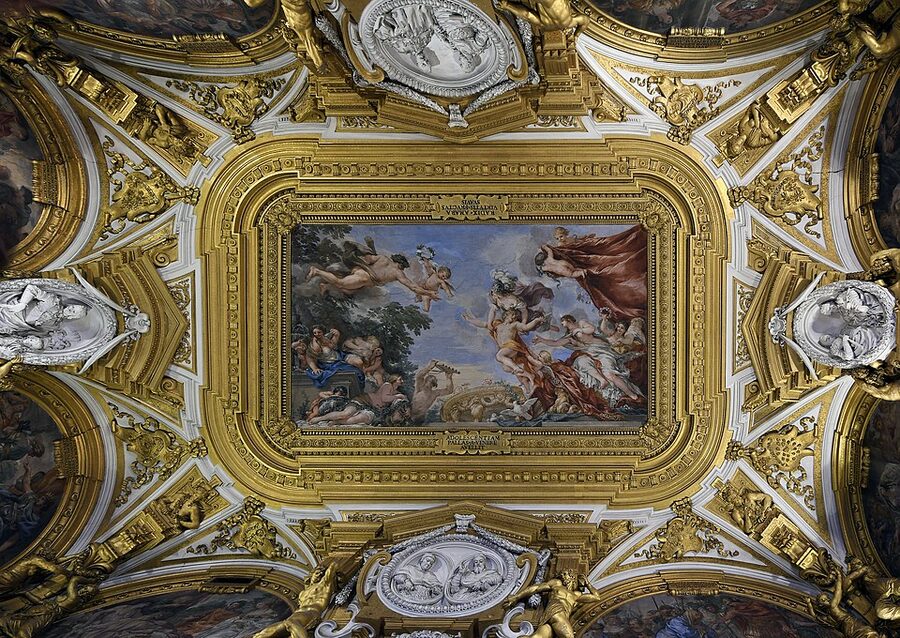
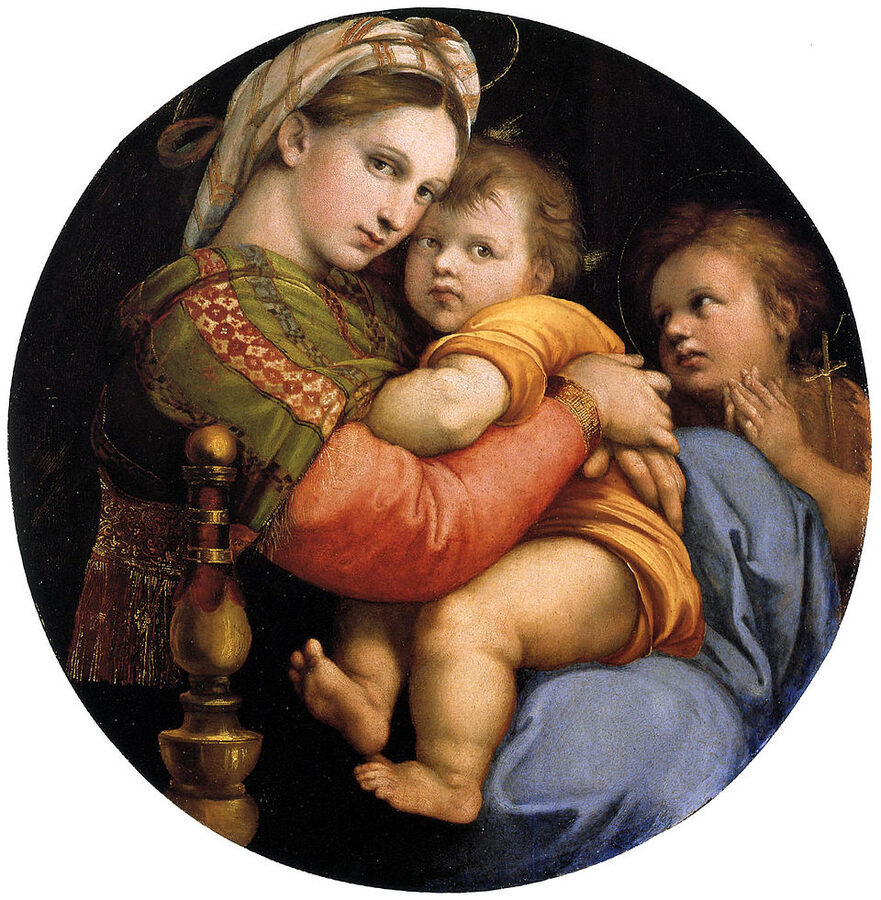
Walk through to the Sala di Saturno. This is the Raphael room. The “Madonna della Seggiola” is here (the round one, the most reproduced Madonna in art history). Also the portrait of Maddalena Doni, painted in 1506. The Mona Lisa was finished around the same time. You can see what Raphael was thinking when he saw what Leonardo was doing.
Then the Sala di Marte. Rubens. The “Consequences of War” is brutal and political and very far from the polite Caravaggio postcards. Pair it with a quick look at his “Four Philosophers” portrait next door.
Skip the Iliad Hall unless you’re a 19th-century painting completist. The walls are blue, the paintings are mostly portraits, and you’ll have used your best two hours by the time you reach it.
End in the Sala dell’Educazione di Giove. Caravaggio’s “Sleeping Cupid” is small, easy to miss, and the room is usually empty. Take five minutes and don’t speak. If you only get one Caravaggio in Italy and you’re heading to Rome, the Borghese Gallery has a stronger collection. Pitti’s Caravaggio is just one painting.
The Other Museums: What’s Worth Your Time
If you’ve got a half-day spare and the Palatine isn’t enough.
Modern Art Gallery (one floor up): 19th-century Italian. The Macchiaioli rooms are the highlight. Think bright colours, plein-air painting, what Italy was doing while France was inventing Impressionism. About 45 minutes if you move briskly.
Museum of Costume and Fashion (Palazzina della Meridiana side wing): Florence was an international fashion capital from 1952 to 1982. The runway shows that launched Pucci and Valentino happened upstairs from where you’re standing. The galleries hold the funeral dress of Eleonora of Toledo (1562) and pieces by Schiaparelli. Niche, but if you care about fashion at all, go.
Treasury of the Grand Dukes (ground floor): The Medici jewellery and semi-precious stone vases. Smaller than you expect. About 30 minutes. The bowl carved from a single block of lapis lazuli is the showpiece.
Royal Apartments: Period rooms, mostly Habsburg-era, redone for King Victor Emmanuel II when Florence was briefly the capital of unified Italy in the 1860s. Fine. Skippable if you’re tired.
Boboli Gardens: How to Do It Without Wrecking Yourself
Boboli is steep. Not a casual stroll. The whole hill behind the palace is a Baroque garden running up to a fortress at the top, and the heat in July is brutal because there’s almost no shade on the main axis.
Start at the Amphitheatre right behind the palace. There’s a 3,500-year-old Egyptian obelisk in the middle, looted by the Romans, donated to the Medici. Most people walk past it.
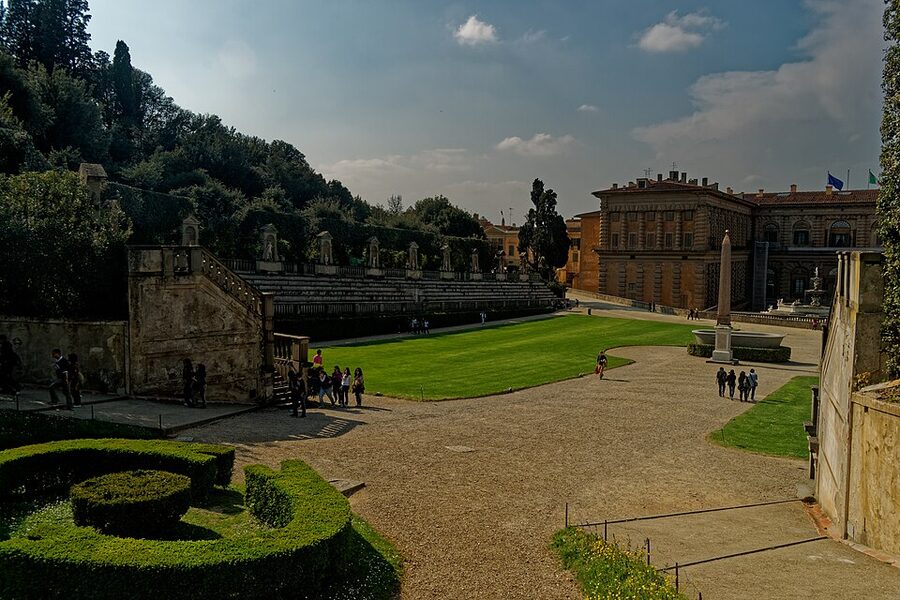
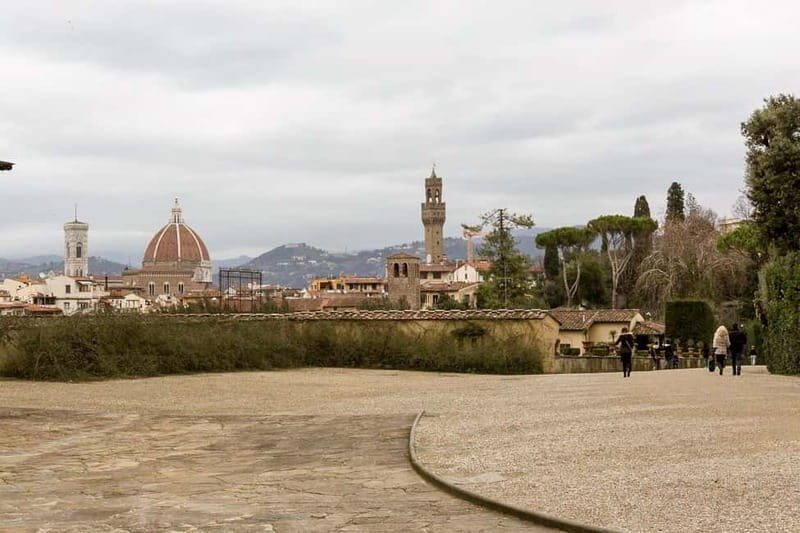
Walk up the central axis to the Neptune Fountain pond. Then keep climbing to the Forte di Belvedere viewpoint at the top. That’s the postcard view of Florence: cathedral dome, terracotta roofs, hills behind. Best at golden hour, around 6 pm in summer, 4 pm in winter.
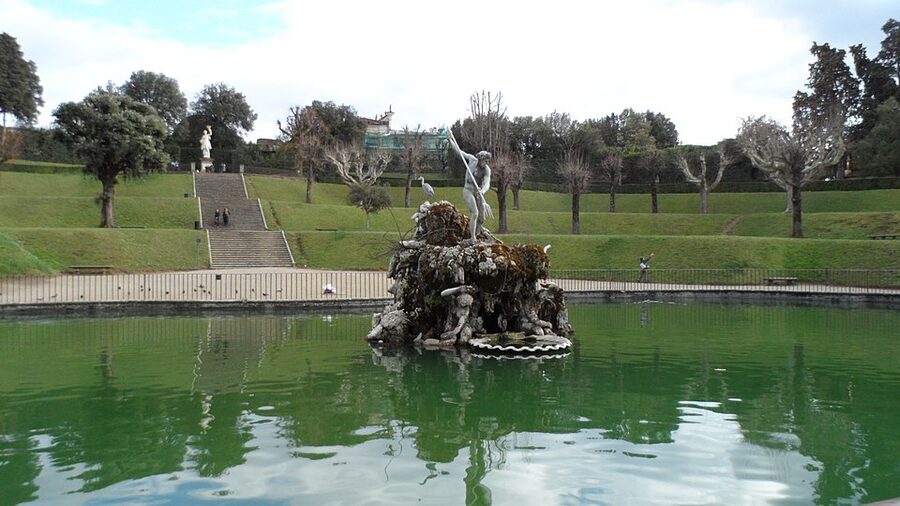
Coming back down, take the path through the Cypress Avenue (“Viottolone”) on the western side. It dumps you out near the Isolotto, an oval island in the middle of a pond with a Giambologna fountain. Then the Porcelain Museum, then back to the palace exit.
Total time: 90 minutes if you move, 2.5 hours if you take the views slowly.
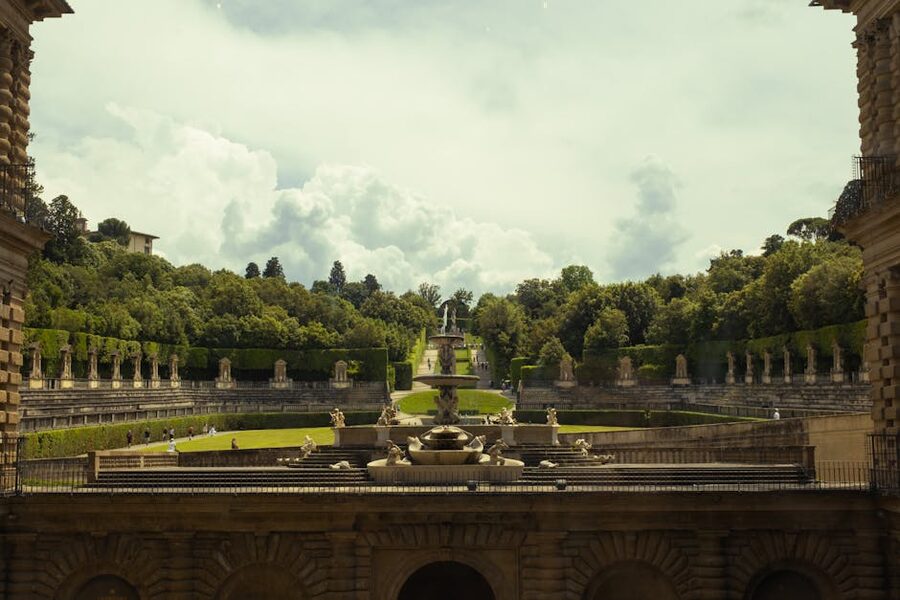
For just the gardens (without the palace), the standalone Boboli ticket costs €10. The reserved-entry version with audio app is the easiest booking route. Combined with Pitti, it’s €25 and almost always the better call.
Practical Stuff: Hours, Closures, How to Get There
Opening hours. Tuesday to Sunday, 8:15 am to 6:50 pm. Last entry around 5:45 pm. Closed Mondays. Closed January 1, May 1, December 25.
Boboli runs on a slightly different schedule depending on season. Roughly: 8:15 am to 4:30 pm in November-February, 8:15 am to 6:30 pm in March, 8:15 am to 7:30 pm April-May and September-October, 8:15 am to 7:30 pm in June-August. It’s also closed the first and last Monday of each month even though the palace is closed every Monday. Bureaucratic logic.
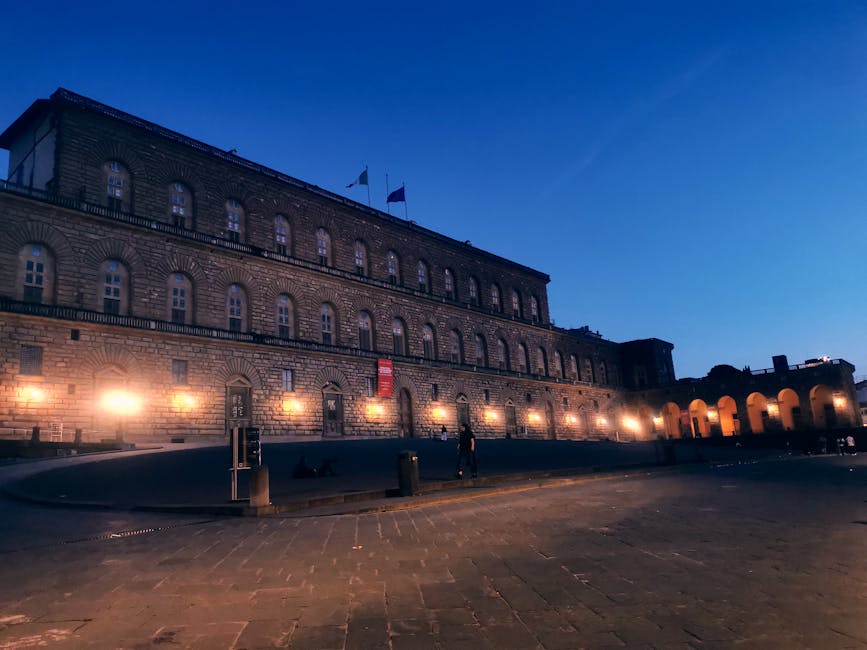
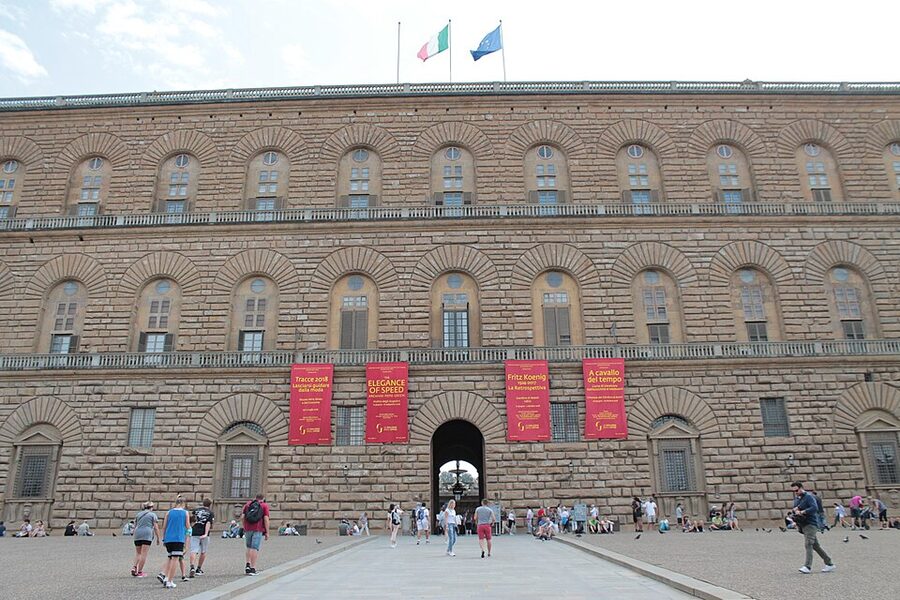
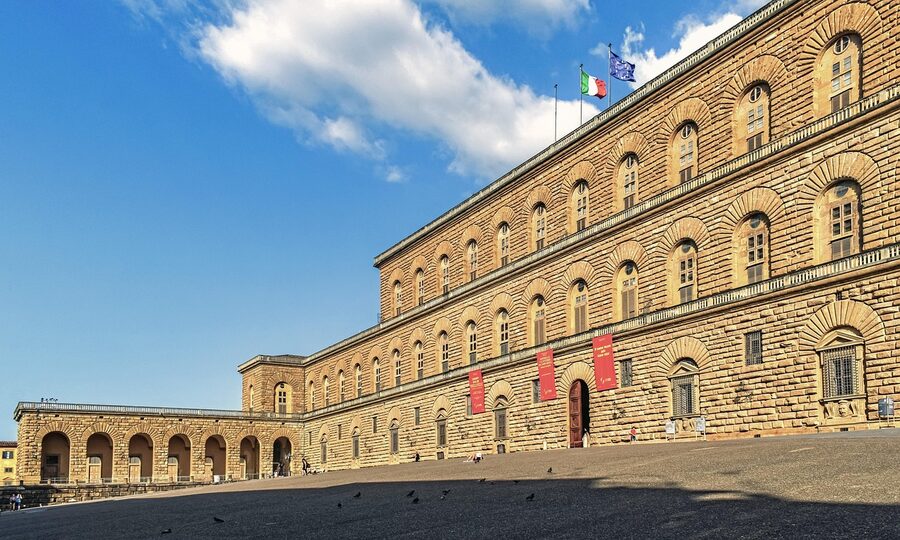
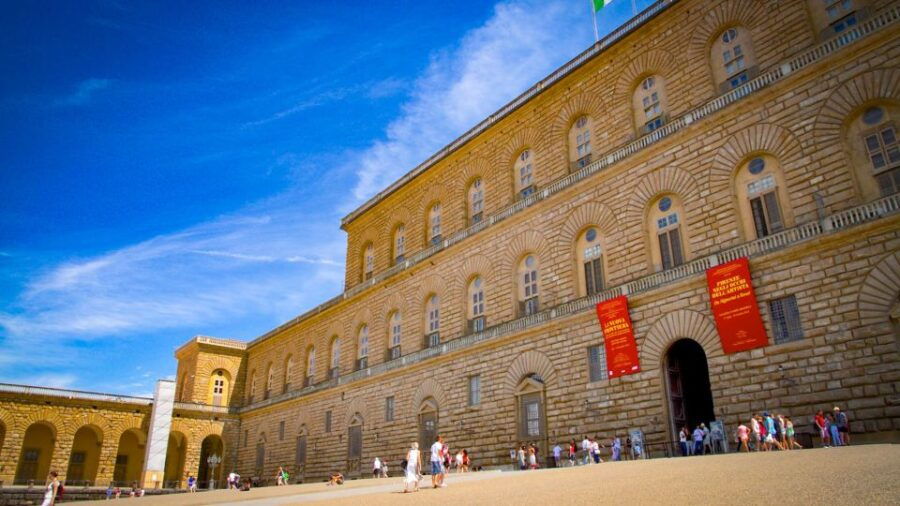
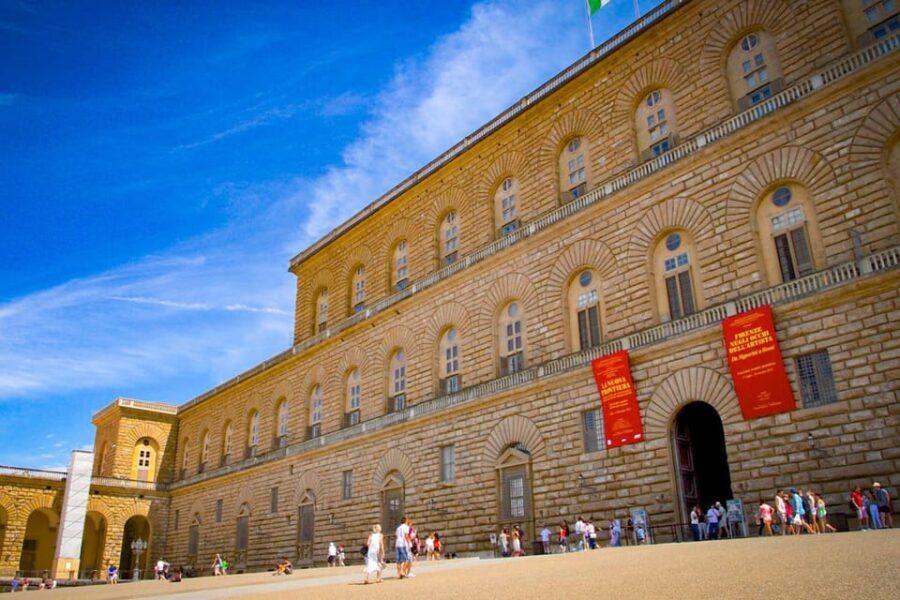
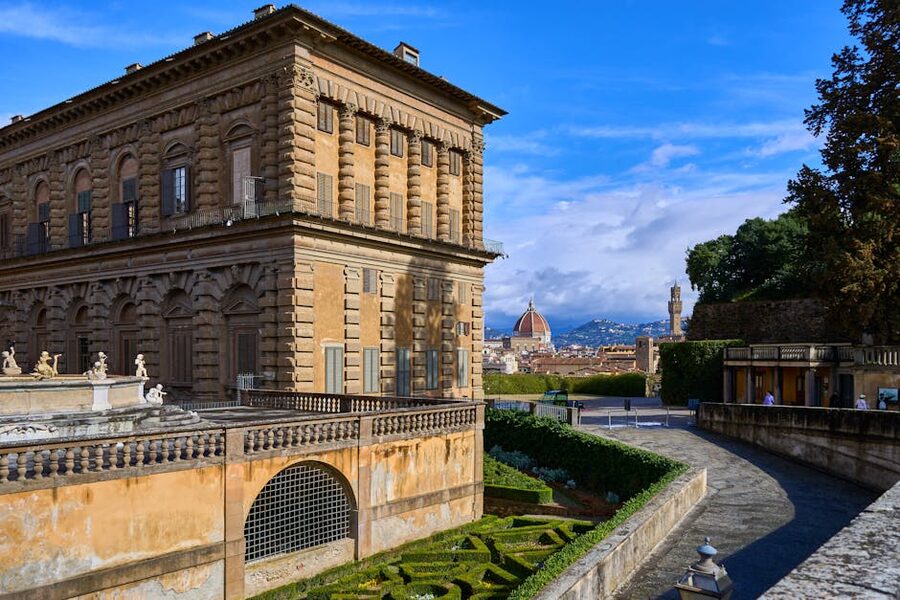
Where it is. The Oltrarno district, on the south side of the Arno. From the Duomo, walk down Via Calzaiuoli, cross the Ponte Vecchio, then continue straight along Via de’ Guicciardini for about 5 minutes. The palace is impossible to miss: it’s the longest building you’ll see all day.
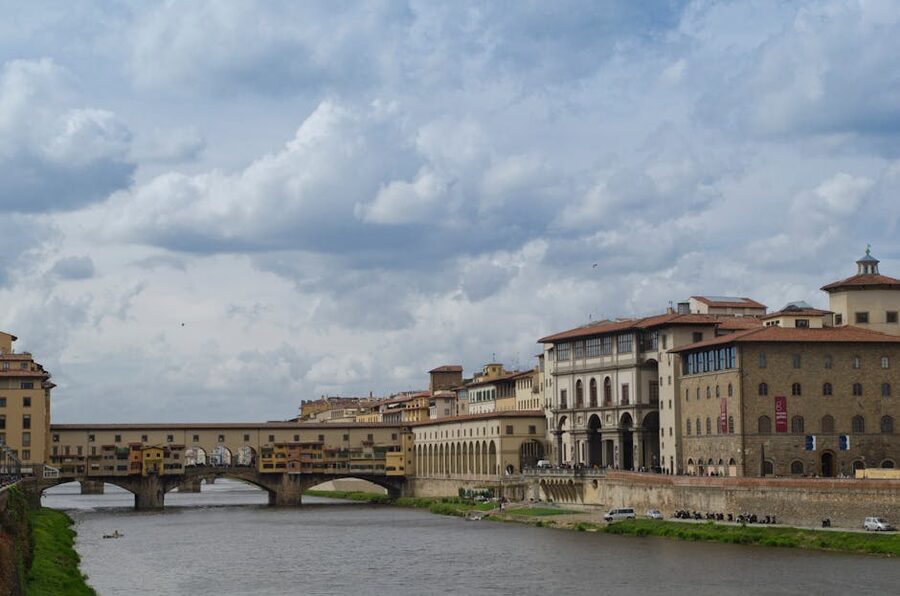
Bus. Lines C3 and C4 stop directly in front. The stop is just called “Pitti.” Useful if you’re staying further out or your hotel is across town.
Parking. Forget it. The whole centre is ZTL (limited traffic zone) and the fines are real. If you’re driving, park at one of the perimeter garages (Parterre or Beccaria) and bus or walk in.
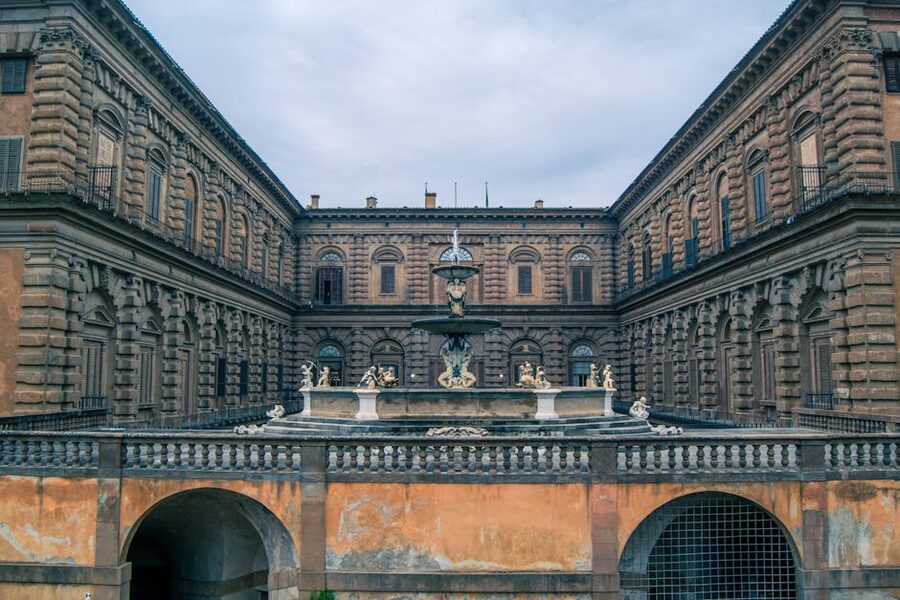
The Building Itself: A Quick History
The palace started in the 1460s. Luca Pitti, a Florentine banker, hired the same architects circle as Brunelleschi to build him a residence bigger than anything the Medici had. The original building was much smaller than what stands today: just the central core, seven bays wide, three floors high.
The Pitti family went bankrupt before they finished. In 1549, Eleonora of Toledo (wife of Cosimo I de’ Medici) bought the half-finished palace, expanded it dramatically, and turned the back hill into the Boboli Gardens. The Medici lived here for 200 years.
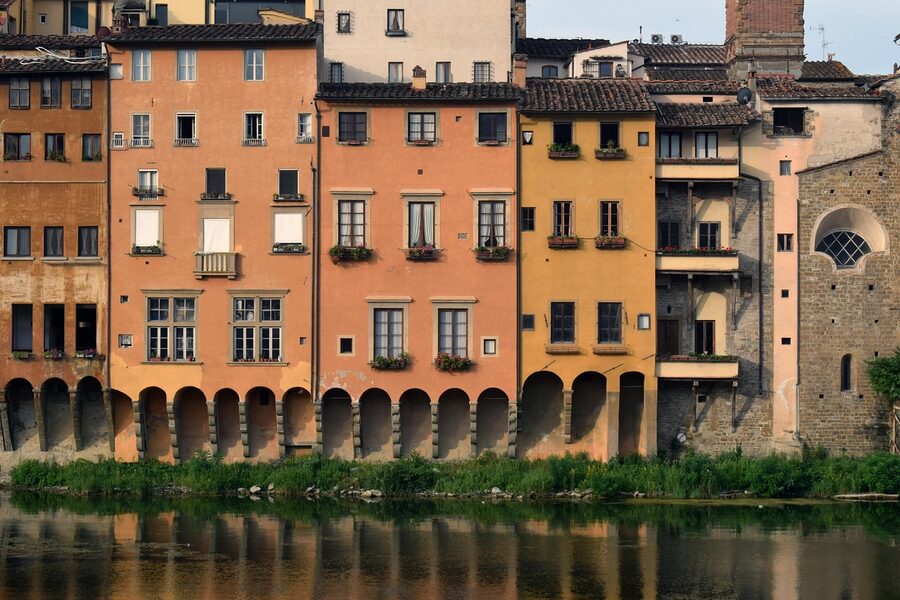
When the Medici line died out in 1737, the palace passed to the Habsburg-Lorraine dynasty. They added the Palazzina della Meridiana side wing as their private apartments, which is where the Costume and Fashion Museum lives today.
During the Napoleonic period, the palace was redecorated for Elisa Baciocchi, Napoleon’s sister, who ran Tuscany as Grand Duchess. Then the Habsburgs again. Then briefly King Victor Emmanuel II of Italy in the 1860s, when Florence was the temporary capital of newly-unified Italy.
Each layer left behind a different room. That’s why the Palatine looks Medici, the side wing looks Habsburg, and the Royal Apartments look Savoyard. The building is essentially three-and-a-half palaces stitched together.
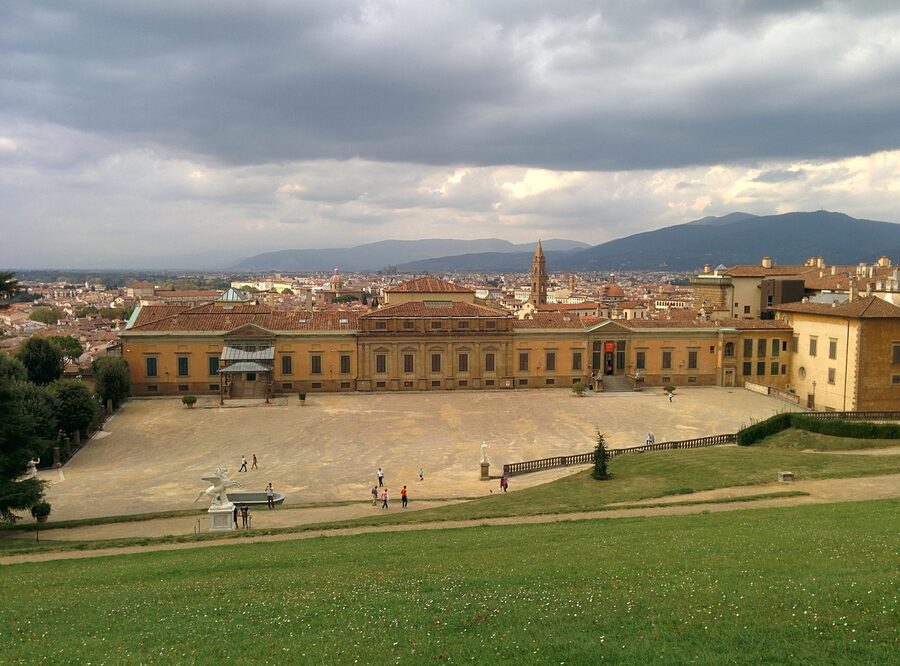
Common Mistakes to Avoid
Doing Pitti AND the Uffizi on the same day. You’ll burn out by 2 pm. The two galleries together are roughly 100 rooms of Renaissance painting. Spread them across two days minimum. The 5-day combined pass exists for this reason.
Showing up without a reservation in July or August. Walk-up wait can hit 90 minutes in peak summer. Even a small booking surcharge is worth it. In November or February, walk-up is fine.
Confusing the Palatine Gallery with the Accademia. The Accademia has Michelangelo’s David. The Palatine has Raphael, Titian, Caravaggio. Both are worth seeing, but they’re different museums in different buildings.
Trying to see all seven museums. Don’t. Pick the Palatine + maybe one other. Give yourself permission to skip the rest.
Going to Boboli in midday August. No shade, full sun, steep stone paths. Either go at 8:30 am right when it opens or after 5 pm. Otherwise you’ll regret it.
If You Have More Time in Florence
Pitti is a half-to-full day on its own. If you’ve got more time, the obvious next moves are the Uffizi (for the Renaissance painting collection on the other side of the river) and the Accademia (for Michelangelo’s David and a smaller, faster-to-see collection). For a third-day option, the Duomo and Brunelleschi’s Dome are right in the centre and the climb to the top is the best view in the city. If you fly out via Rome, the Colosseum and Roman Forum combined ticket covers your first day there.