
Min ducks under a low doorway in a Haeundae apartment building, past a shoe rack that holds three pairs of Crocs and a pair of perfectly shined chef’s clogs, and waves me into a kitchen that smells of toasted sesame and something fermented and bright. There’s a white pinafore apron on the counter with my name written on masking tape. There’s a little glass of green plum syrup and sparkling water on the island next to it. Class starts before I’ve even put my bag down.
That was my first Busan cooking class. It’s also the pattern you’re about to book yourself into — teachers who treat their own apartments like a classroom, three or four dishes deep in Korean home cooking, and a meal you eat sitting on a cushion next to people you met ninety minutes ago. This is how to pick the right one.
- In A Hurry? My Top Picks
- What “Cooking Class” Actually Means in Busan
- Where the Best Classes Are — and Why It’s Haeundae
- The Menu — What You’ll Actually Cook
- Bibimbap — the one you’ll definitely make
- Haemul pajeon — the Busan one
- Miyeok-guk — the seaweed soup
- Banchan — the side dishes you didn’t know you were cooking
- Drinks
- What It Costs (and What You’re Paying For)
- How to Choose Between the Three Main Classes
- The 3 Classes I’d Actually Book
- 1. Korean Cooking Class in Haeundae, Busan — 0
- 2. Busan Tailored Korean Cooking Class (Vegan OK, Gluten Free OK) —
- 3. Busan: Small-Group Traditional Korean Food Cooking Class —
- If You Want the Market Version
- BIFF Square and Gukje
- Booking Logistics — What Actually Happens After You Pay
- Before and After — How to Build a Full Food Day Around Your Class
- The Pairings Most People Miss
- What to Wear and Bring
- Common Questions I Get Asked
- Do I need to speak Korean?
- Can I bring kids?
- Is it still worth it if I already cook Korean food?
- Is the class a tourist trap?
- What if I have a seafood allergy?
- What if I want to just eat without cooking?
- Where to Stay to Make This Easy
- A Few Things That Will Happen That Nobody Warns You About
- Some Worth-It Extras That Aren’t the Cooking Class
- Ideas For Rounding Out Your Busan Food Education
In A Hurry? My Top Picks
- Korean Cooking Class in Haeundae — $100. The Bapsang class on Viator, run by Min (a certified temple chef) from her Haeundae apartment. Three dishes, real home kitchen, the one I’d book if you’re only doing one. Check availability.
- Busan Tailored Korean Cooking Class (Vegan / Gluten-Free OK) — $95. Dorawayo’s tailored class if you have dietary restrictions or you want the menu built around ingredients you actually like. Smaller, more private. Check availability.
- Busan Small-Group Traditional Cooking Class — $98, 3 hours. Same Bapsang host on GetYourGuide, slightly different booking path. Pick this one if you prefer GYG’s free-cancellation policy or you’re combining it with other GYG activities. Check availability.
What “Cooking Class” Actually Means in Busan
I want to set expectations, because the words “cooking class” mean different things in different countries.
In Busan, they almost never mean a commercial kitchen with stainless steel everywhere and a chef in whites lecturing from a microphone. They mean someone’s home. Specifically, an apartment — usually in Haeundae, occasionally in Centum City, once in a while up near Beomil or Busan Station — with a kitchen island, two to six mini induction hobs, a shared prep counter, and a host who lives there.
The host is the whole experience. Min at Bapsang is a former hospitality professional and a certified temple chef who makes her own soy sauce. The Dorawayo host builds the menu around what you can and can’t eat. The Small-Group Bapsang host (still Min, but running the GYG-listed version) lets people book in pairs or fours.
None of them run a “school.” They run their home. That’s the point. You get the recipes by watching someone make them in the actual kitchen where they’d make them on a random Tuesday for their own family.
Three hours is the standard length. The breakdown I see again and again:
- 15-20 minutes of welcome — a drink, a conversation, a gentle orientation to the kitchen and what you’re about to cook. Some hosts do a sauce tasting here. Min does.
- 30-40 minutes of prep — washing, chopping, measuring. You’re doing real knife work, not watching.
- 45-60 minutes of actual cooking — pancakes on induction hobs, soup on the big pot, the rice cooker doing its thing, everyone working at roughly the same rhythm.
- 45-60 minutes of eating — sat on cushions on the floor for the traditional setting, or at a low table if your knees are not up for cushions (they let you choose).
- 10-15 minutes of wrap-up — recipes printed on paper, a signed certificate if you want it, a second cup of tea, and out you go.
The total is usually three hours on the nose. Some classes run long when a group is chatty. I’ve never had one run short.
Where the Best Classes Are — and Why It’s Haeundae
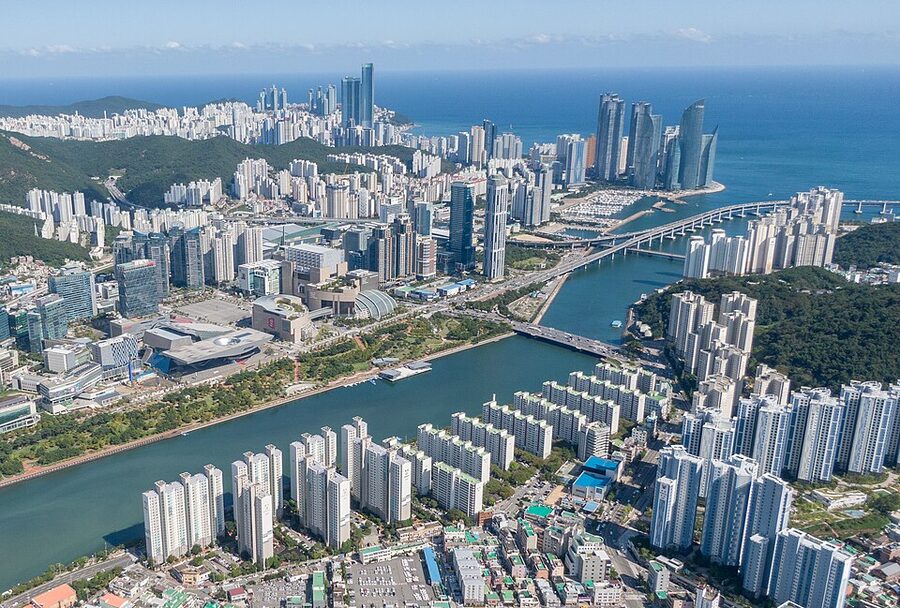
Haeundae gets roughly three out of every four cooking class bookings in Busan, and that’s not an accident.
The neighbourhood has the biggest concentration of foreign visitors, so the earliest English-speaking hosts set up here. Word of mouth did the rest. Min started in Haeundae. Two of the top four classes on review sites still operate out of apartments within a five-minute walk of Haeundae subway station. If you’re doing one cooking class in Busan, expect to take the green line (Line 2) to Haeundae and walk five to ten minutes.
The exceptions:
- Dorawayo / Busan Tailored — also runs near Haeundae but lists itself with a slightly broader pickup radius, so sometimes the host moves the class closer to your hotel if you’re staying in Centum City or near Marine City.
- Kkakdugi Radish Kimchi Class — runs in Nampo-dong on the other side of town. More focused (just one dish), shorter, and often cheaper, but it’s a specialty class, not a full meal experience.
- Busan Local Food Cooking Class with Market Tour — starts at a local market (usually BIFF Square or Jagalchi) then moves to the kitchen. The market portion adds 40 minutes to the total.
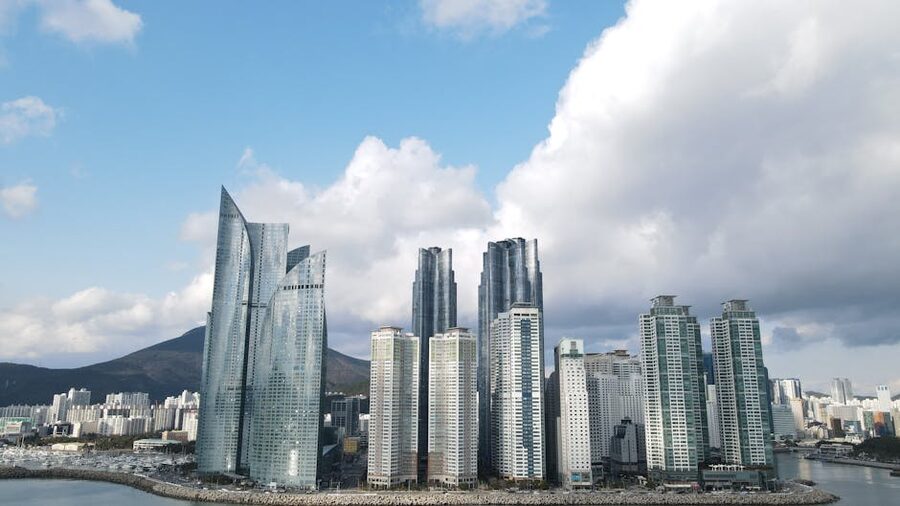
Book from a hotel in Haeundae or Centum City if you can. If you’re staying near Seomyeon, Busan Station, or Nampo-dong, factor in 25-35 minutes of subway time each way. The cooking class itself is three hours, so a Seomyeon-based booking will eat about four and a half hours of your day door to door.
The Menu — What You’ll Actually Cook
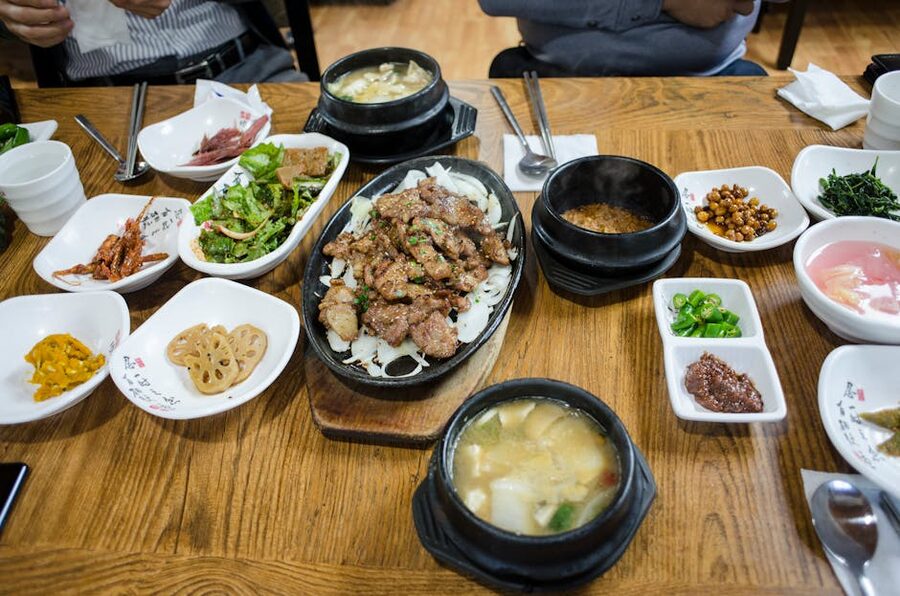
Most Busan home classes teach a three-dish meal plus rice and banchan. The dishes change based on the host, but the rotation is tight and predictable. Here’s what you should expect.
Bibimbap — the one you’ll definitely make
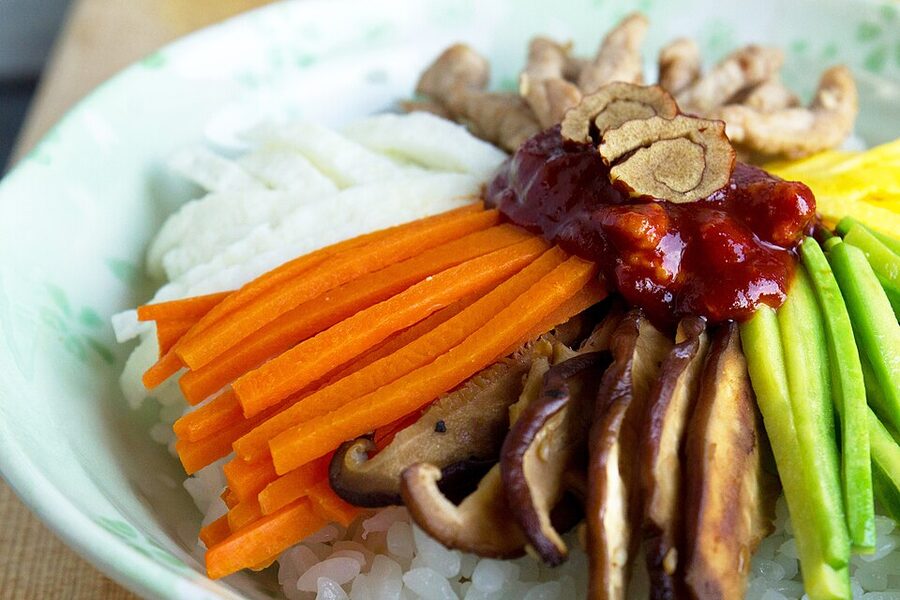
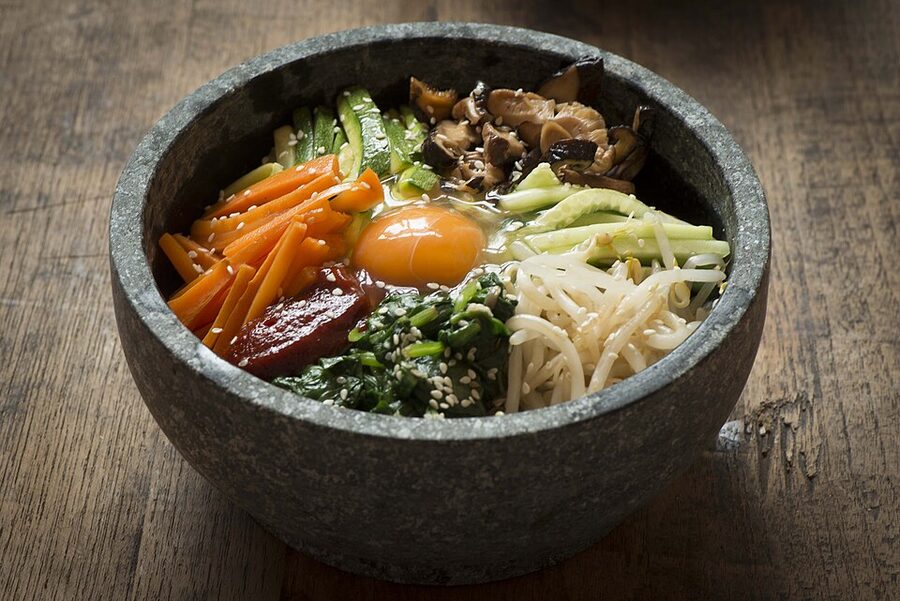
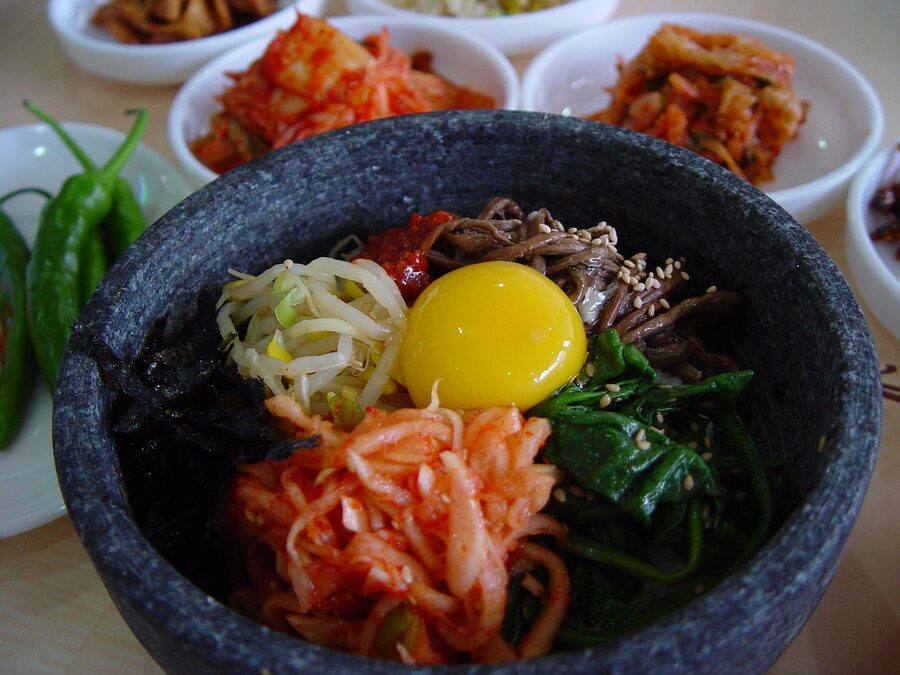
Nine out of ten Busan classes end with a bibimbap. There’s a reason. It’s the best first Korean dish to learn because it teaches you five small techniques in one sitting: how to season spinach, how to quick-pickle radish, how to thin a beef marinade, how to fry an egg yolk-up, and how to mix without mushing. If you leave Korea only knowing how to make bibimbap, you’ll still cook Korean food at home for the next twenty years.
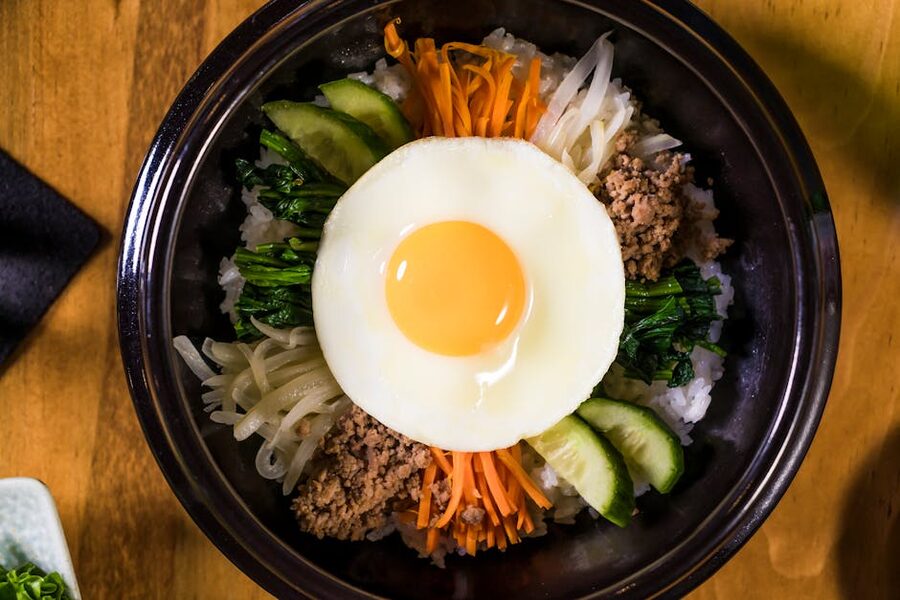
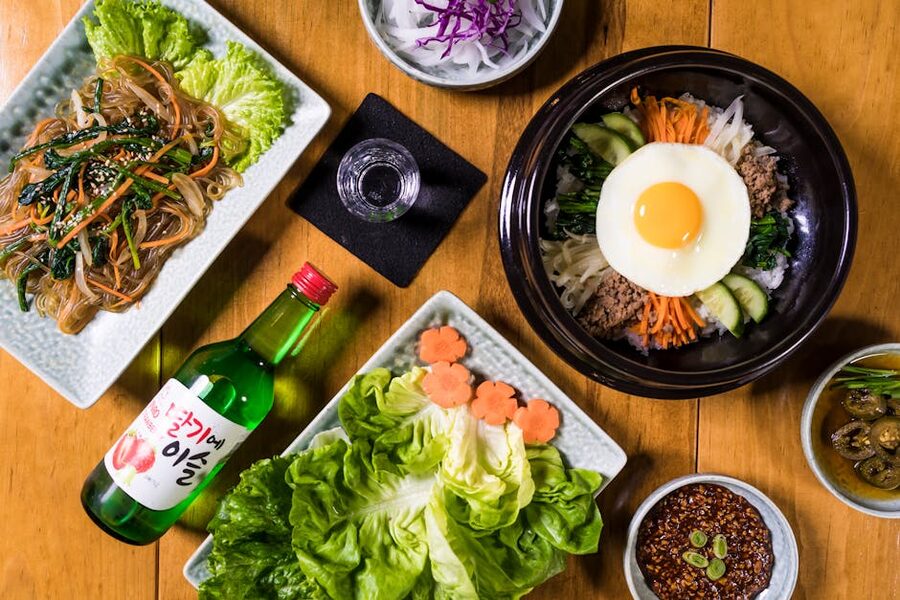
Hosts differ on the rice. Min uses a regular rice cooker and serves it in a wide bowl. Dorawayo sometimes swaps to a dolsot (a hot stone bowl) if you ask — it toasts the bottom layer of rice into a crust called nurungji. The stone-bowl version is harder to scale in a home class, so you usually have to request it in advance.
Haemul pajeon — the Busan one
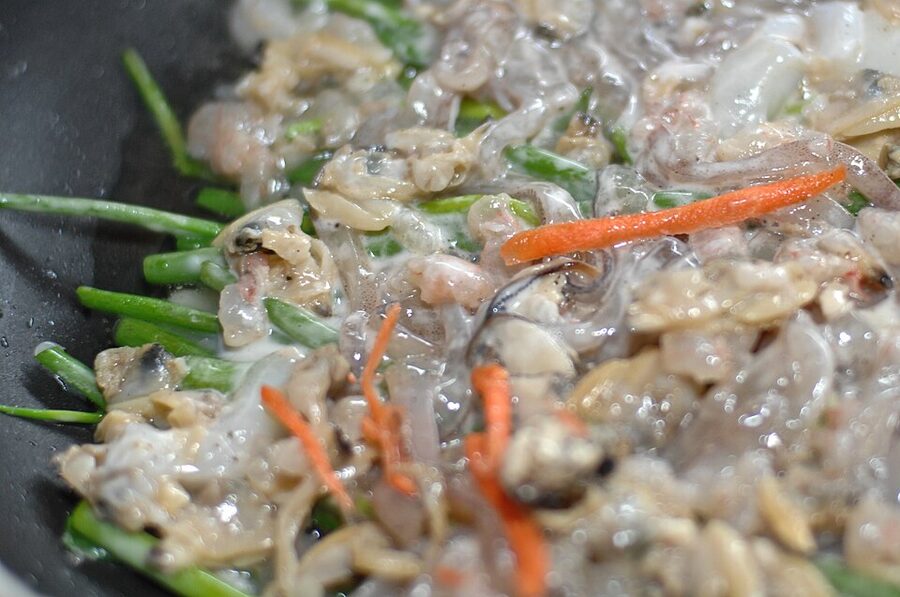
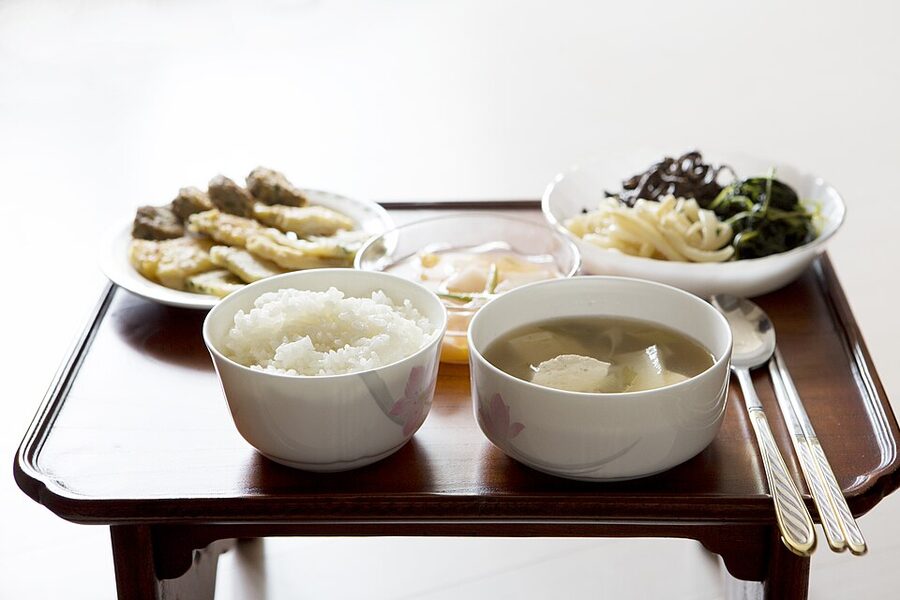
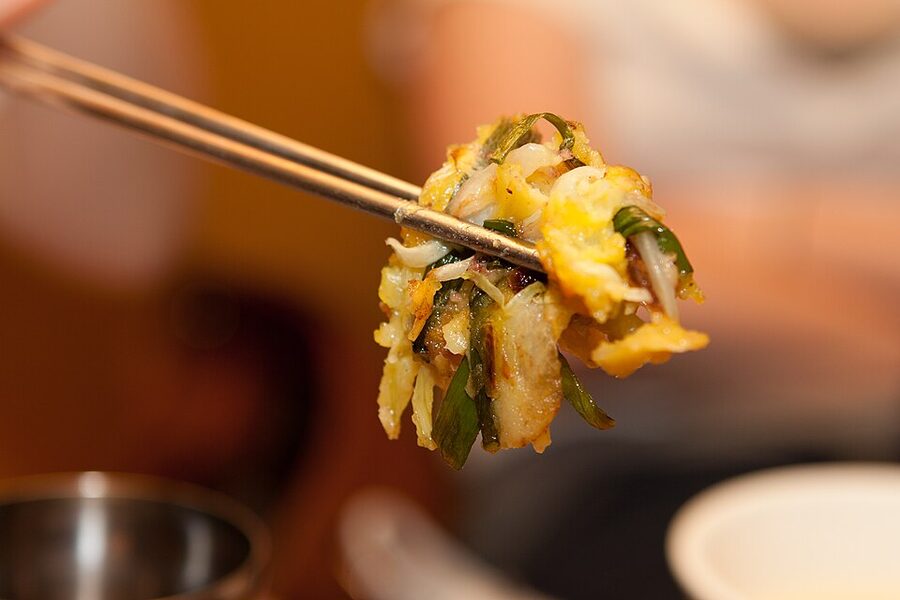
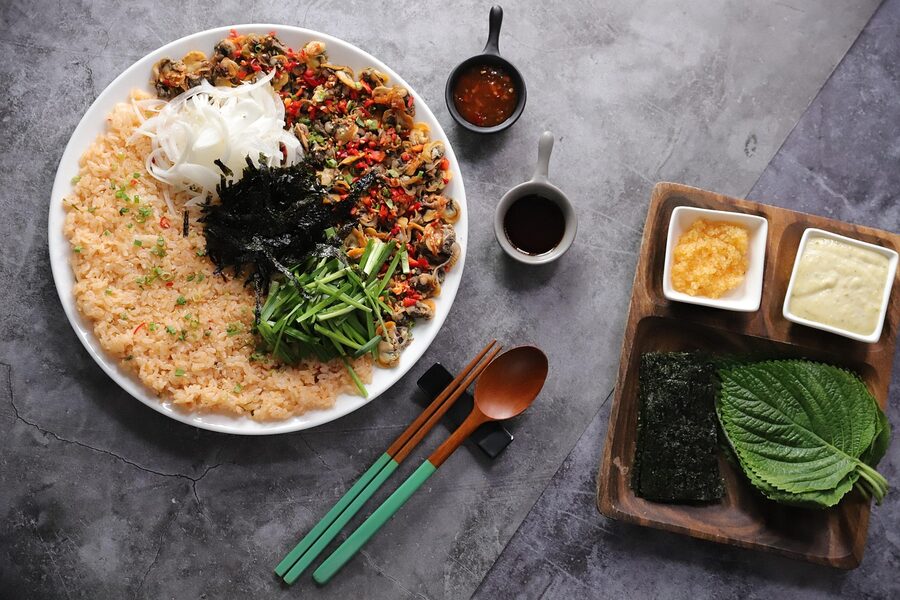
Haemul pajeon is a savoury seafood and scallion pancake, and it’s the closest thing Busan has to a regional signature in the cooking class circuit. You’re on the coast. The seafood is cheap, fresh, and absolutely everywhere. A pajeon on a rainy afternoon in Busan is basically a cultural requirement, and the fact that it’s on almost every cooking class menu is not random.
The technique is a study in controlled batter. Too much flour and it’s stodgy. Too little and it falls apart. Too much water and it takes forever to set. Every host I’ve watched has a strict ratio — the Bapsang class uses about 1 cup flour to ¾ cup water and one egg, Dorawayo goes a touch wetter. It matters.
Miyeok-guk — the seaweed soup
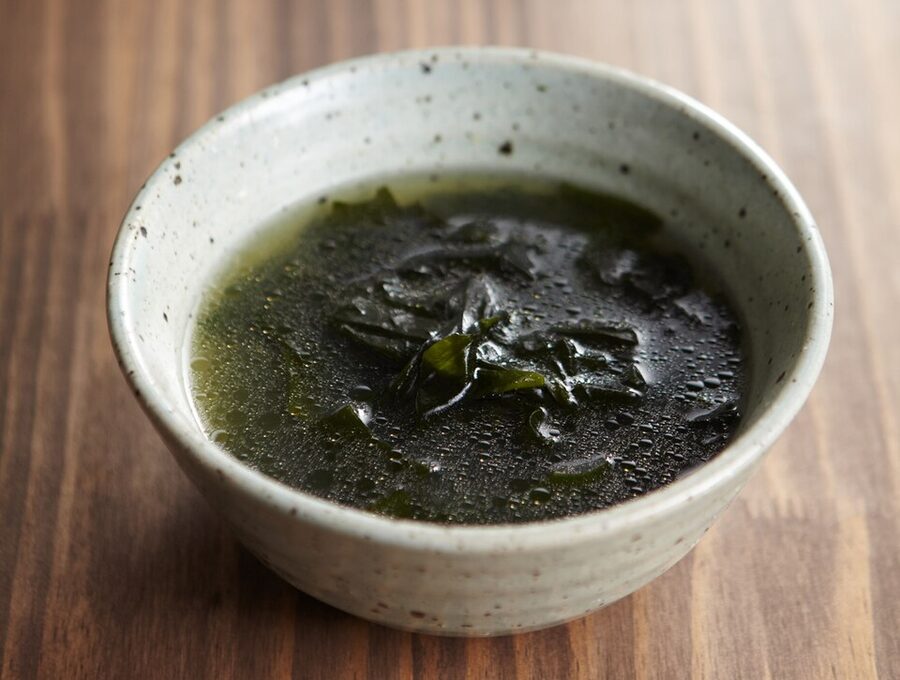
If the class includes a soup, it’s almost always miyeok-guk — dried brown seaweed reconstituted and simmered with soy sauce, garlic, sesame oil, and either beef or clams (in Busan, often clams because it’s a port city). Don’t let the phrase “seaweed soup” put you off. It’s one of the calmest, cleanest broths in Korean cooking, and the technique you’ll learn in class — how to soak and wash the miyeok so it doesn’t get slimy — is the kind of thing you can’t get from a YouTube video.
Busan’s version leans slightly more coastal than Seoul’s. Don’t be surprised if clams, mussels, or even a small piece of sea snail show up in the pot.
Banchan — the side dishes you didn’t know you were cooking
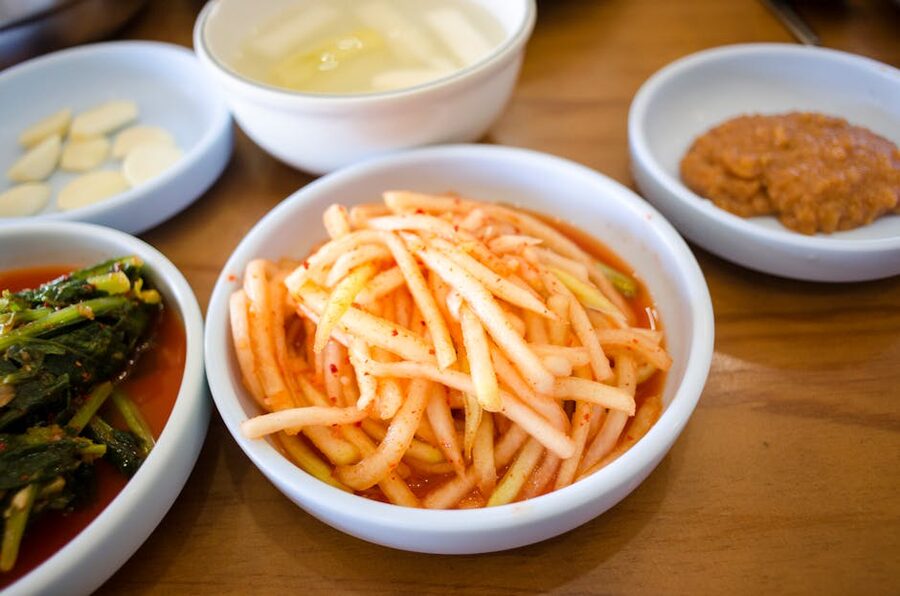
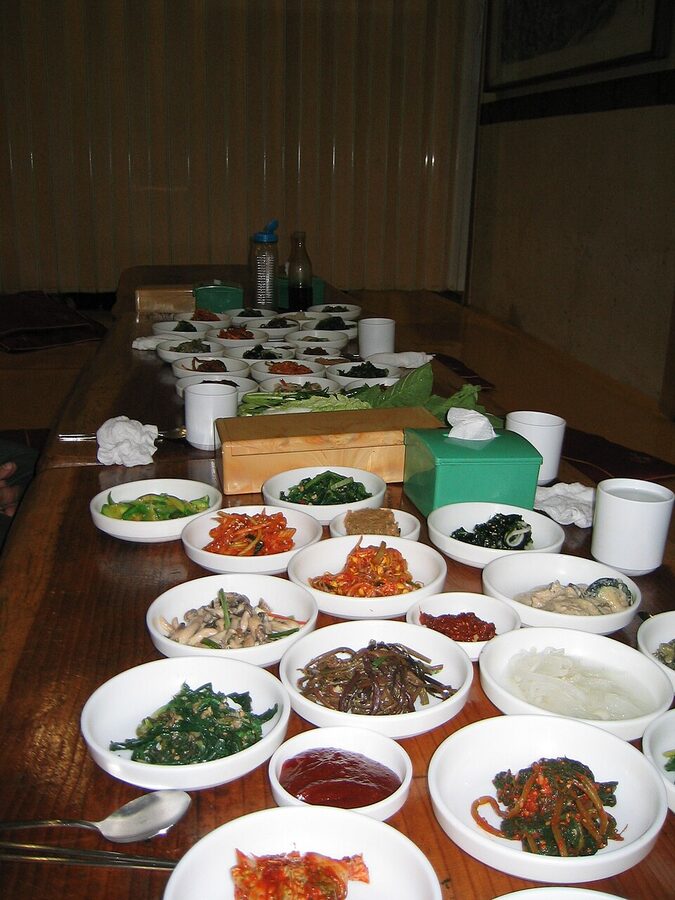
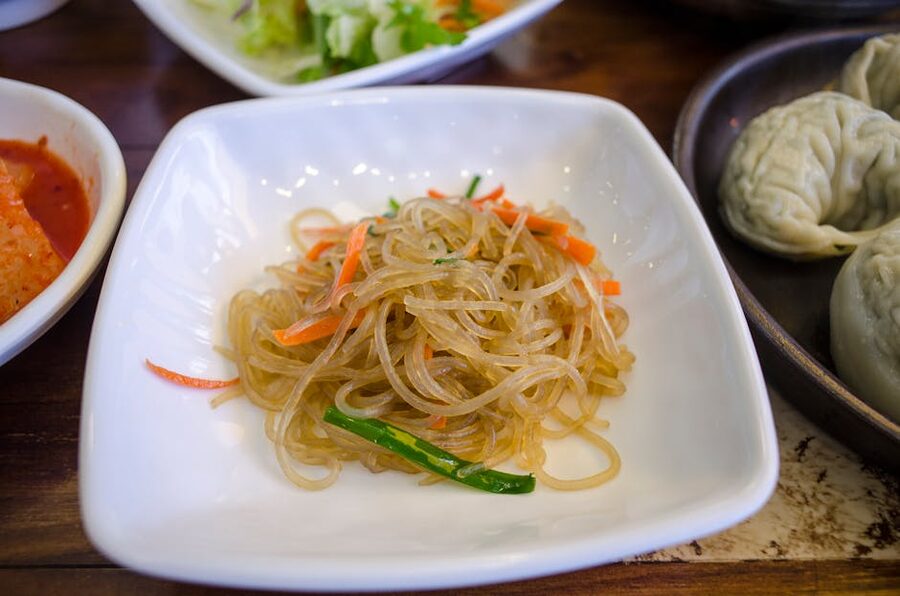
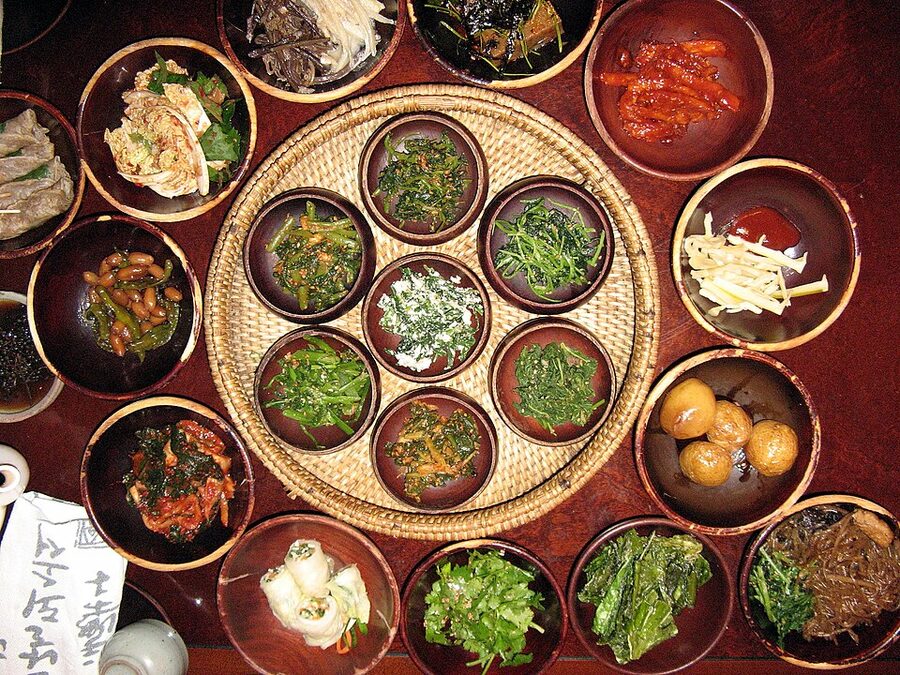
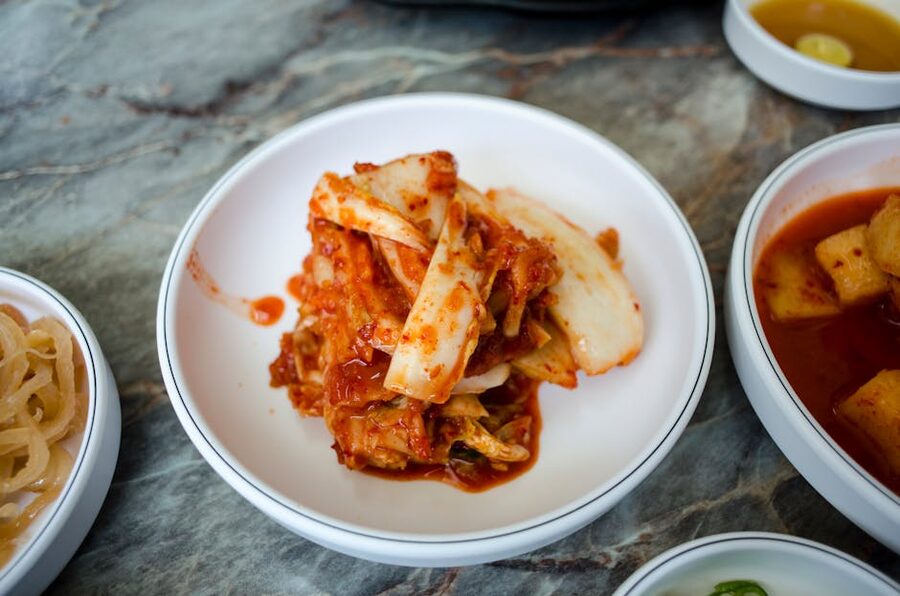
Banchan are the little shared dishes — kimchi, sesame spinach, pickled radish, quick-seasoned bean sprouts, soy-glazed potato, whatever the host has in the fridge. Most cooking classes will teach you two or three on top of the main dishes. Don’t treat these as footnotes. They are, genuinely, the reason Korean home food tastes different from Korean restaurant food — and learning to batch a couple of banchan on a Sunday is the single biggest weekday cooking upgrade you can make.
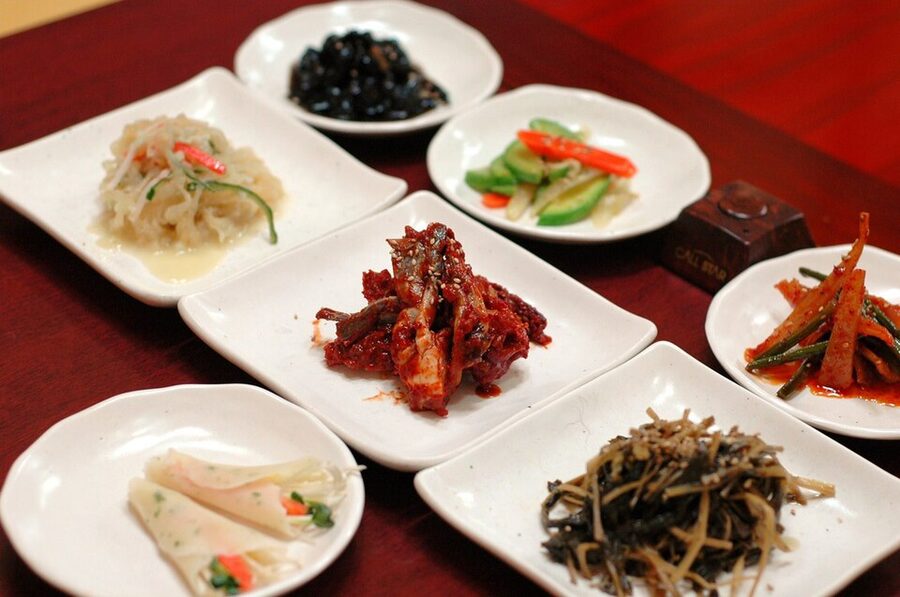
If you want to go deeper specifically on the fermented stuff, book a separate kimchi-making class — most Busan cooking classes don’t have time for a proper kimchi session, so that’s its own booking.
Drinks
Most classes include a welcome drink — usually green plum syrup (maesil) cut with sparkling water, served in a small glass. It’s non-alcoholic, slightly sour, very restorative. Bapsang pours this. Dorawayo sometimes swaps in a cold barley tea if it’s summer.
Alcohol isn’t standard but shows up when the host knows the group is up for it. Makgeolli — the milky, slightly fizzy rice wine — is the pairing most hosts default to. Soju is rarer, mostly because it’s harsh and can blow out the palate for what comes next. If you’d rather go wider on Korean drinks, book a dedicated soju tasting instead of expecting the cooking class to cover it.

What It Costs (and What You’re Paying For)
Expect to pay $85 to $110 per person for a standard three-hour Busan home cooking class. The exact breakdown on the three flagships:
- Korean Cooking Class in Haeundae (Bapsang / Viator): $100 per person. Three dishes plus rice and banchan, takeaway recipes, certificate.
- Busan Tailored Korean Cooking Class (Dorawayo / Viator): $95 per person. Dietary customisation (vegan, gluten-free, halal-friendly), smaller group sizes, menu set after booking based on what you can eat.
- Busan Small-Group Traditional Cooking Class (Bapsang / GetYourGuide): $98 per person, 3 hours. Same host as the first one, but booked through GYG’s system if you prefer that platform’s cancellation terms.
- Busan Local Food Cooking Class with Market Tour: $109 per person. Adds a 40-minute guided walk through a local market before cooking.
What’s actually in the price:
- The host’s time (three hours of teaching plus prep before you arrive and clean-up after)
- Ingredients for every dish — all the veg, seafood, meat, soy, sesame oil, the works
- Drinks (non-alcoholic always, sometimes makgeolli)
- Take-home recipes, usually printed on a single sheet
- A certificate if the class offers one (Bapsang does, Dorawayo doesn’t always bother)
- Use of aprons, knives, and all the home equipment
What’s not included and why it matters:
- Transport to and from the class — you’re on the subway or a taxi. Budget ₩2,000-8,000 for a Kakao Taxi from most parts of Busan to Haeundae.
- Tips — not expected, but not refused. ₩10,000 is polite if the host has been generous with seconds or stayed past the end.
- Extra alcohol beyond what the host pours
If the price looks high versus, say, a Thai or Vietnamese class, remember that Korean home cooking uses more ingredients per dish than most Southeast Asian cooking — the banchan alone can run six or seven separate veg, each separately seasoned. You’re paying for a fridge that had to get restocked the morning of.
How to Choose Between the Three Main Classes
The three top picks all deliver a similar meal at a similar price. Here’s how to pick.
Book the Haeundae Bapsang class (Viator) if you’re doing one cooking class in all of Korea and you want the most celebrated host in Busan. Min has been running this class for years, her English is excellent, and the class is well-polished. It’s the safest bet for couples, solo travellers, and anyone who’s nervous about their first Korean cooking attempt.
Book the Small-Group Bapsang class (GetYourGuide) if you’re already booking other things through GYG and want them in one cart, or you prefer GYG’s free cancellation policy (up to 24 hours before). The class itself is very similar to the Viator listing — same host, same kitchen, usually the same menu. The booking path is the only meaningful difference.
Book the Dorawayo Tailored class if you have dietary restrictions — vegan, gluten-free, shellfish allergy, halal-leaning, whatever. This is the only Busan class that builds the menu around your constraints rather than adapting on the fly. If you’re a coeliac, this is the one. If someone in your group doesn’t eat seafood, this is the one.
Book the Local Food + Market Tour class if you’re a market-obsessed traveller and you want the ingredient-sourcing story as much as the cooking. The market walk adds value if you’re genuinely curious about Korean produce and fish. It adds filler if you just want to cook.
The 3 Classes I’d Actually Book
Sorted by what fits most first-time Busan travellers, not by marketing volume.
1. Korean Cooking Class in Haeundae, Busan — $100

This is the one to book if you can only do one. Min runs it from her home in Haeundae, and she’s a certified temple chef who makes her own soy sauce. Three dishes, a warm welcome, recipes to take home. Our full review covers what’s on the menu on a typical day and the quirks of navigating her block.
2. Busan Tailored Korean Cooking Class (Vegan OK, Gluten Free OK) — $95

Book this if you’re coeliac, vegan, vegetarian, halal, or travelling with anyone who can’t eat shellfish. The host confirms the menu after you book, which means every ingredient is cleared in advance. The class is smaller and slightly more private than the flagship Bapsang session — it’s my pick for couples celebrating something. Our full review walks through what a gluten-free version actually looks like.
3. Busan: Small-Group Traditional Korean Food Cooking Class — $98
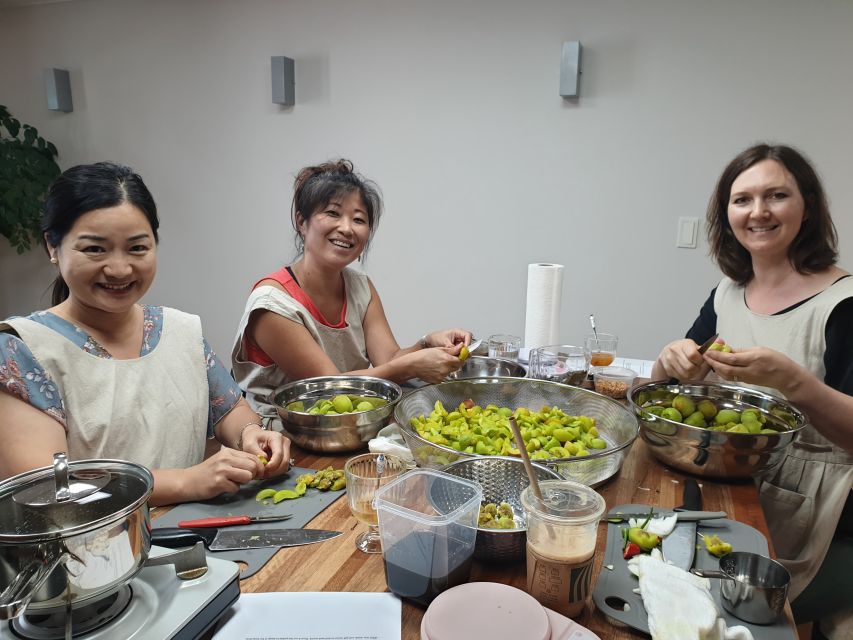
This is effectively the GetYourGuide version of the flagship Bapsang class. Same Min, same apartment, three hours on the timer. I usually recommend this path only when travellers are combining it with other GYG-only activities (like the Busan airport SIM + T-money bundle) to keep everything on one booking platform. Our full review breaks down the small differences in the booking process.
If You Want the Market Version
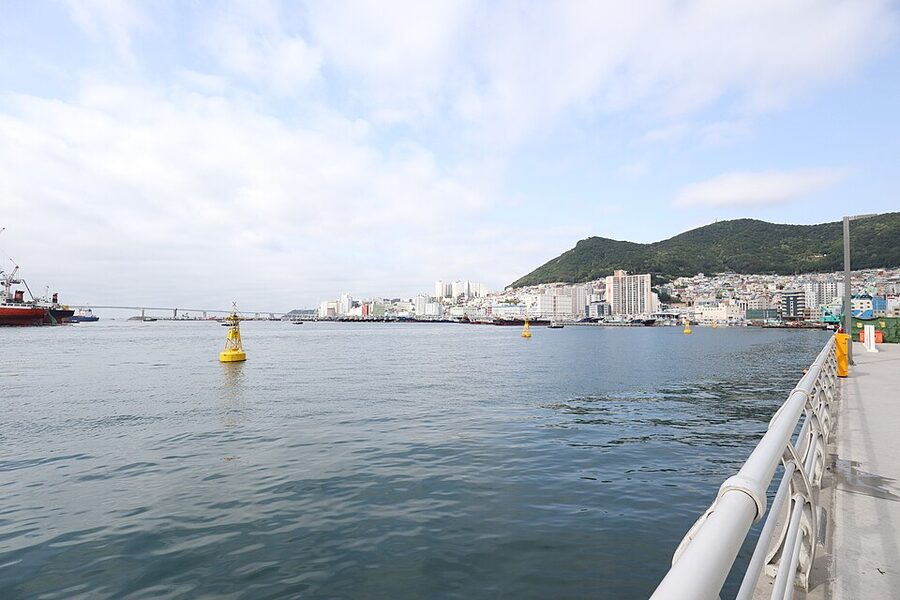
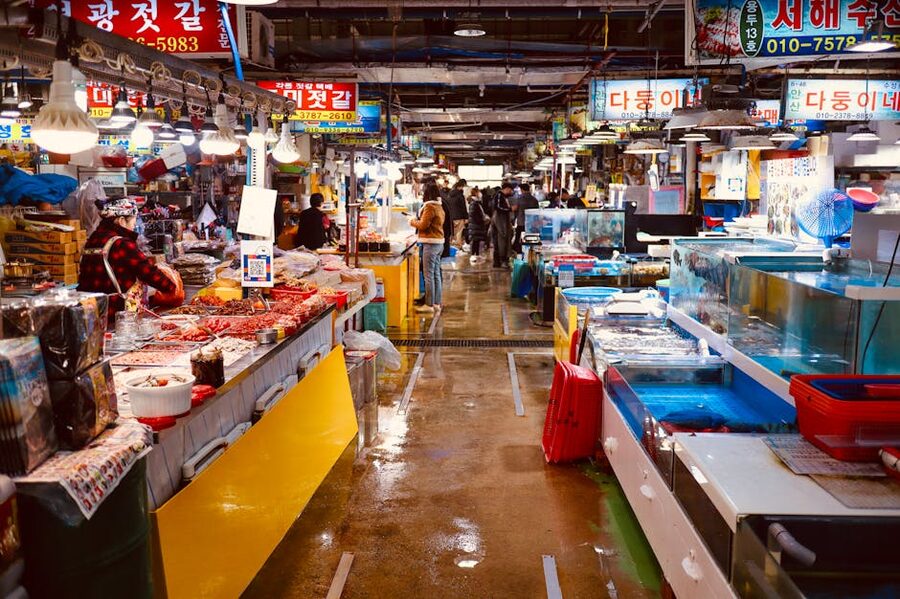
A few Busan classes combine the cooking with a market walk first. The Busan Local Food Cooking Class with Market Tour is the flagship in this category. You meet at the market, the host walks you through what’s in season and what they buy for the class, then everyone heads to the kitchen together.

Pros: you learn how to identify quality fish, which seaweed is which, what “new-harvest” means for rice, and how to tell chestnuts and gingko nuts apart (both are common in Korean cooking, one is safe to eat in quantity and one is not). You also leave knowing which stalls at Jagalchi you could come back to on your own.
Cons: it adds 40-60 minutes to an already three-hour session. Some market mornings are hot and humid and, in summer, the fish smell is not trivial. If your time in Busan is tight and the goal is the cooking itself, skip the market version and book a straight class instead.
BIFF Square and Gukje
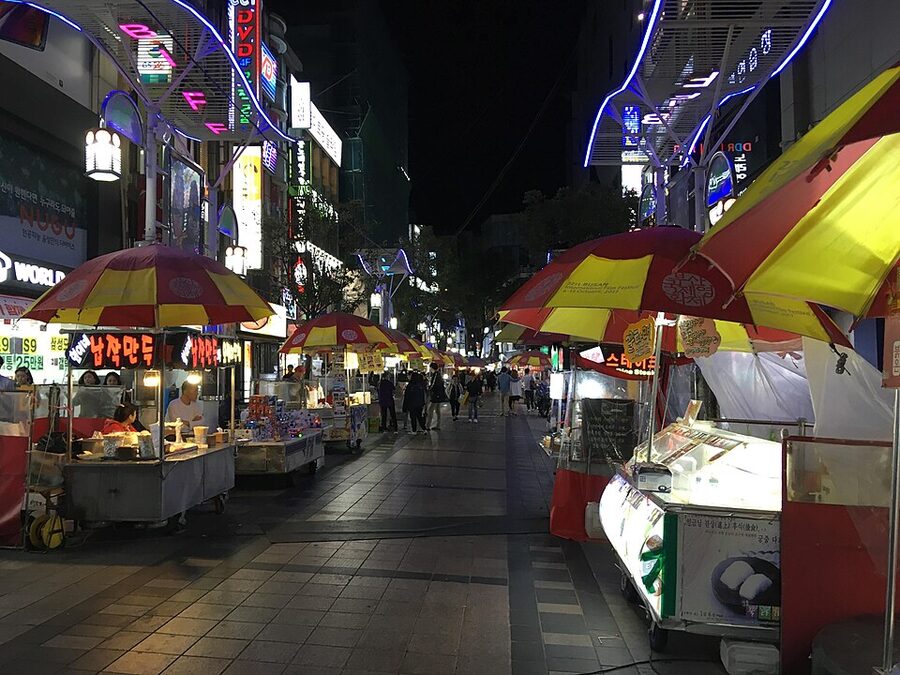
If your class uses BIFF Square as the market stop, expect a street-food element rather than a raw-ingredient tour. You’ll probably eat a hotteok (a sweet filled pancake) or a tteokbokki cup as a snack while the host points out the stalls that make the best versions. It’s fun, but it’s more of a food tour than a cooking class prep walk.
Booking Logistics — What Actually Happens After You Pay
Here’s what to expect from the moment you click “book” to the moment you sit down to eat.
- Booking confirmation arrives within minutes. Viator and GYG both email you a voucher. Keep it. You won’t need to print it, but you will need to show it on your phone if the host asks.
- The host contacts you 24-48 hours before the class. Usually a KakaoTalk message or a WhatsApp text. They’ll confirm the address, the exact door number, and any dietary specifics. If you haven’t heard by 24 hours before, check the voucher for their number and message first.
- On the day, arrive 5-10 minutes early. Not more, not less. These are apartments, and showing up 30 minutes early puts the host in the awkward position of letting you into a kitchen that’s still being prepped.
- Take off your shoes. This is non-negotiable in a Korean home. There will be slippers on a rack. Use them.
- Put your phone on silent. Min has a small rule about phones at the cooking island — she’s fine with photos, but calls go in another room. Most hosts are the same.
- Don’t bring gifts unless you genuinely want to. A bottle of wine is always welcome but never expected. The class is already a transaction — the gift culture around Korean hosts applies to personal friendships, not paid classes.
Cancellation policy varies. Viator classes are typically free cancel up to 24 hours before. GYG classes have the same window. If your class is non-refundable after a certain hour (rare, but it happens), the voucher will say so in bold.
If you get sick the morning of, message the host directly as well as cancelling on the booking platform. Hosts have bought your ingredients. A note beats a no-show, and most will rebook you for another day at no cost if there’s availability.
Before and After — How to Build a Full Food Day Around Your Class
The mistake I see most travellers make is booking the class in isolation. You’re going to cook and eat three dishes over three hours. That’s one meal. The day around it matters.
For a morning class (10am-1pm-ish):
- Light breakfast only — skip the hotel buffet or eat half of it
- After class, use the afternoon for a walking tour (I do a Busan full-day city tour on another day, not this one)
- Dinner is light — something broth-based or cold noodles, not another big meal
For an afternoon class (2pm-5pm-ish):
- Normal breakfast and a light lunch before class
- Afternoon is the class — everything else goes around it
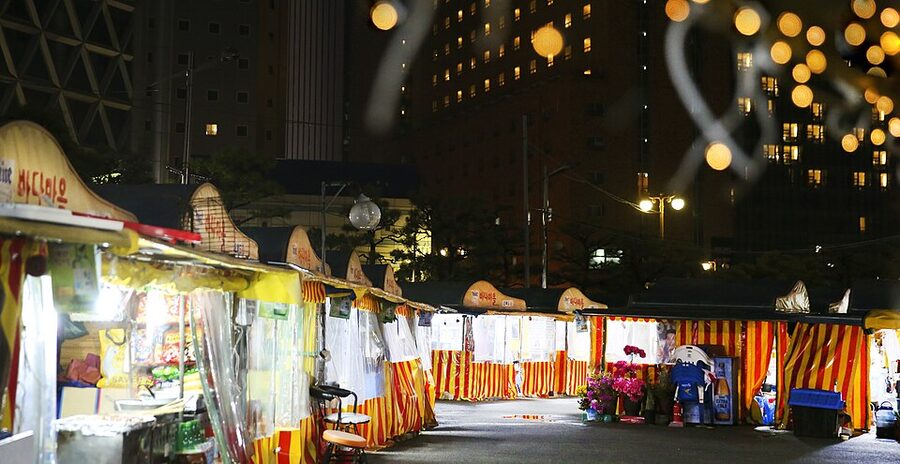
- Evening is ideal for a drink-focused second act — Busan’s night tour circuit, a pojangmacha stop, or back to your hotel for a sundowner on the balcony
For an evening class (6pm-9pm-ish):
- Full tourism day before class, finishing back in Haeundae by 5:30pm
- Class runs until 9-9:30pm
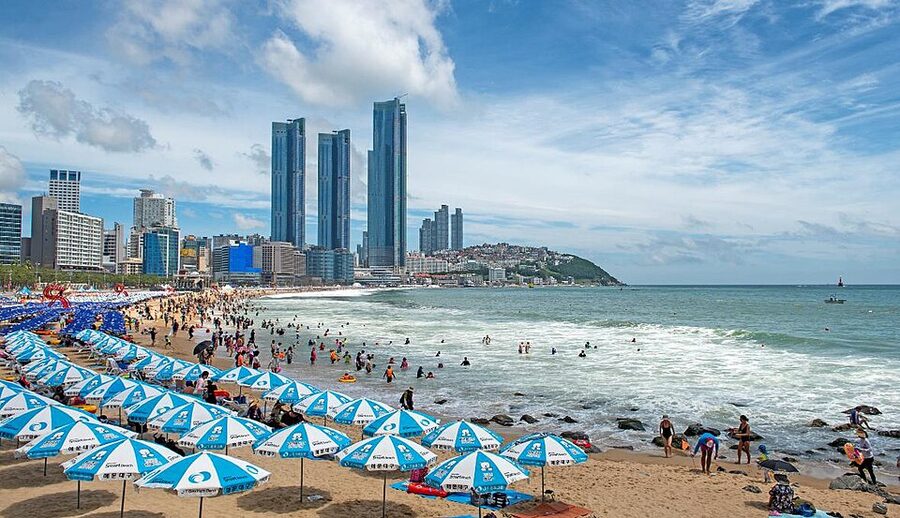
- Walk the Haeundae beach afterwards — it’s 400m from most class apartments and the city lights reflecting on the water at 10pm are worth the extra fifteen minutes
The Pairings Most People Miss
The obvious pairing is another food activity. Kimchi-making deserves its own session because a proper class runs three to four hours on its own and won’t fit inside a cooking class. A soju tasting gives you the Korean drinks map in a way a cooking class can’t — the difference between a regional soju from Andong and a convenience-store green-bottle soju is worth an evening of its own.
Less obvious: book the cooking class on day two or three of your Busan trip, not day one. You’ll understand what you’re cooking better if you’ve already eaten your way through a BBQ joint, a raw fish (hoe) place, and a pojangmacha street-food stall in the days before. Context shows up on the palate.
And if you’re doing a Korea trip that spans Seoul as well, consider stacking complementary hands-on experiences — a K-pop dance lesson in Seoul, a K-beauty personal colour analysis session, a hanbok photoshoot at Gyeongbokgung. A cooking class in Busan and one of these in Seoul sketches the country more accurately than any two-city sightseeing itinerary. You’re learning what people make, wear, and move to — not just where they take photos.
What to Wear and Bring
Keep this simple. You don’t need anything special, but a couple of small things will make the day easier.
- Clothes you don’t mind getting a splash on. The apron covers most of you, but pajeon batter is sneaky. No silk, no dry-clean-only.
- Closed-toe shoes. Hosts will have slippers for indoors, but it’s easier to swap from sneakers than from sandals.
- A hair tie if you have long hair. Self-explanatory.
- Your phone, silenced. For photos, the recipes, and if you need to send the host a note.
- A small amount of cash. For the tip (if you want to) and for anything incidental — most classes are cashless, but Korean hospitality runs on a little cash under the table for very small courtesies.
- An empty stomach. Seriously. Korean home cooking classes produce more food than you expect, and a heavy breakfast will leave you struggling to finish the meal. Not finishing the meal in someone’s home is a soft breach of etiquette you can easily avoid.
Don’t bring your own knife (weird move, tried it once, never again). Don’t bring a notebook (the recipes are printed). Don’t bring a camera crew — if you want to film the class for social content, ask the host in advance. Most are fine with it but hate being surprised.
Common Questions I Get Asked
Do I need to speak Korean?
No. Every class I’d book in Busan teaches in English. The hosts chose to run international-facing classes specifically — they’re fluent enough to explain knife angles, seasoning ratios, and the slightly philosophical parts of Korean cooking (why certain dishes pair, why some banchan are served cold). A few Korean words (annyeonghaseyo for hello, gamsahamnida for thanks) get you a smile but they’re not necessary.
Can I bring kids?
Depends on the class. Bapsang accepts children over about 8 if they can follow knife-safety instructions. Dorawayo is more flexible because the menu can flex around a younger eater. Neither is a great option for kids under 6 — there’s a lot of standing around, the meal takes time, and the attention span required is real.
Is it still worth it if I already cook Korean food?
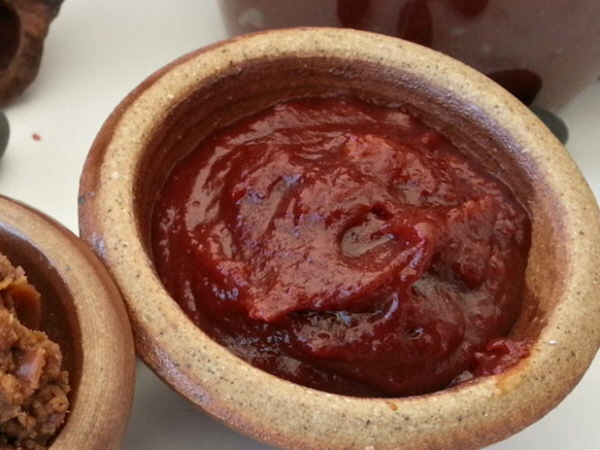
Yes, but book the tailored Dorawayo class. If you already cook at home, the generic menu covers ground you know. Dorawayo will ask what you want to work on. I’ve seen experienced home cooks use the class to nail specific dishes they’d been guessing at for years — the right gochujang-to-doenjang ratio in a stew, the exact technique for crispy bulgogi, how to time banchan prep so four dishes land on the table at once.
Is the class a tourist trap?
No, and here’s why I’m confident. The hosts make more from a well-run class than they would from a restaurant kitchen job, but only if the reviews stay strong over years. The incentive is aligned with your experience. The two hosts I know (Min and the Dorawayo team) have both been running for five-plus years — that doesn’t happen if the class is a trap.
That said, if you land on one of the lower-booked classes (barely any traction, obscure listing) you’re rolling the dice. Stick with the flagships until you’ve done one.
What if I have a seafood allergy?
Tell the Dorawayo team at the time of booking. They’ll swap the haemul pajeon for a kimchi-jeon or a kimchi pancake and the miyeok-guk for a soybean paste stew (doenjang-jjigae). The meal adapts smoothly. Don’t try to adapt on the day — the groceries are already bought.
What if I want to just eat without cooking?
Then don’t book a cooking class. Book a food tour or a dedicated meal experience. A Busan BBQ dinner, a hoe (raw fish) tasting, or a Seomyeon street-food walking tour is a better fit. Cooking classes are for people who want their hands on the ingredients.
Where to Stay to Make This Easy
For a Busan stay with a cooking class on the itinerary, the shortlist is short.
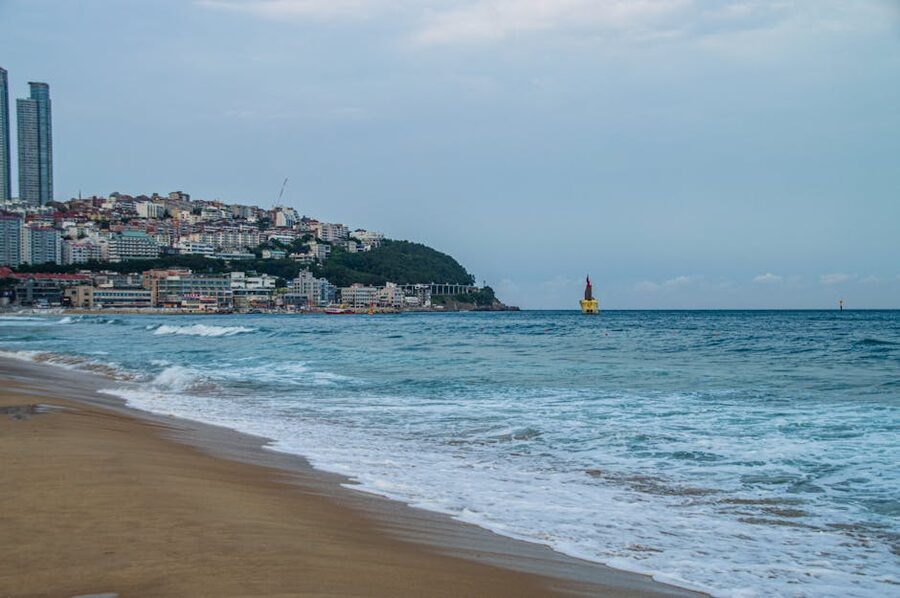
- Haeundae — default. Walk to the class, walk to the beach, walk to about 40 restaurants. Hotels here range from the Signiel Busan and Park Hyatt on the high end to decent mid-range chains like Shilla Stay and Toyoko Inn Haeundae down the street.
- Centum City — next best. Slightly less touristy, next to Shinsegae department store. Taxi to a Haeundae class is six minutes and costs about ₩4,500.
- Seomyeon — central Busan, but you’re adding a subway commute each way. Only choose this if you’ve got other Seomyeon-based plans and the cooking class is one small piece of a broader itinerary.
- Nampo-dong — old-city Busan. Great if you want to be near BIFF Square, but 35-40 minutes by subway to Haeundae.
If you’re setting up a Korea trip where Seoul is a big slice of your days, a private Seoul tour on your Seoul leg pairs well with a Haeundae cooking class on your Busan leg — one personal guide on each side of the country, one learning-by-doing session in the kitchen. That’s how I usually structure a first Korea trip for friends.
A Few Things That Will Happen That Nobody Warns You About
A few small realities that don’t fit neatly under “logistics” but will shape your afternoon.
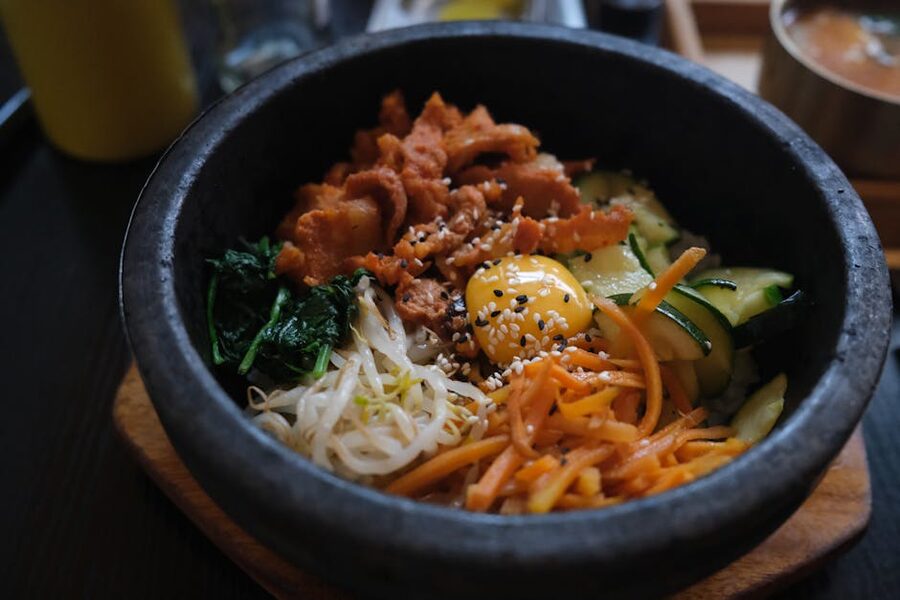
You will eat a lot. Three dishes for six people means each person eats more than they would at a restaurant portion. Pace yourself. Don’t fill up on the pajeon while the bibimbap is still cooking.
You will talk to strangers. Most classes are 4-8 people, and the conversation around the cooking island is half the experience. If you’re a solo traveller, a cooking class is the easiest social moment in all of Busan. You share a table, you share a recipe, you often share a taxi back.
You will want the recipes to work at home, and some will. Bibimbap works at home. Pajeon works at home. Miyeok-guk works at home but requires the dried miyeok — buy a pack at the HomePlus or Lotte Mart before you leave Korea. The banchan are where home-cook reality bites — the ratio of work to output is only worth it if you’re batching for the week, not making one dish for one meal.
You will leave smelling of sesame oil and garlic. The apron keeps your clothes mostly clean, but your hair will carry the kitchen out the door. This is a feature, not a bug.
The photos will be better than you expect. Home kitchens in Korea have incredible natural light. The Bapsang apartment has a window behind the cooking island that hits at 3pm like a softbox. Bring your phone. Take more photos than you think you need.
Some Worth-It Extras That Aren’t the Cooking Class

If you like your Korean food learning to come with context, these pair nicely with the cooking class but go on separate days.
Jagalchi Fish Market on a weekday morning. Even if your class doesn’t include a market walk, go on your own the morning after. The auctions happen around 6am and the retail floor is open by 8am. Coffee from the 7-Eleven across the street and twenty minutes walking the aisles is a full education in what Korea actually eats.
Haeundae Traditional Market. Smaller than Jagalchi, five minutes from the Bapsang apartment. A better place to buy home-scale ingredients if you’re trying to bring back gochugaru, sesame oil, or a specific soy sauce to take home.
Gamcheon Culture Village. Not food-related, but a Busan cultural anchor. Pair it with a morning cooking class — class at 10am, Gamcheon at 3pm, Haeundae dinner at 7pm makes a full Busan day without burning you out.
A kimchi class on a different day. Serious fermentation is its own three-hour session. If you loved the cooking class, a dedicated kimchi class in Seoul or Busan is the natural follow-up.
Ideas For Rounding Out Your Busan Food Education
One cooking class is a spark. To turn it into a trip, pair it with a few of these. I’d start with the Busan full-day city tour on a separate day to see how Jagalchi, Haeundae, and Gamcheon stitch together, then ease into the evening with a Busan night tour that takes in the seafood-heavy pojangmacha scene you walked past in daylight. If you’re arriving from Seoul, the Busan airport SIM and T-money card is the boring-but-essential bookend that keeps you from hunting for data at Gimhae. For readers who are combining Busan with a Korea-wide trip, the kimchi class and the soju tasting go deeper on two of the fermented pillars you touched on in cooking class. If you want to compare notes on home-kitchen Asian cooking from another country, the Kyoto cooking class sits in a similar home-style tradition — both cities teach you how to cook like a local, but Kyoto leans kaiseki-quiet and Busan leans feast-generous. Between those two evenings you’ll have a much better sense of what “home cooking” actually means in East Asia.