
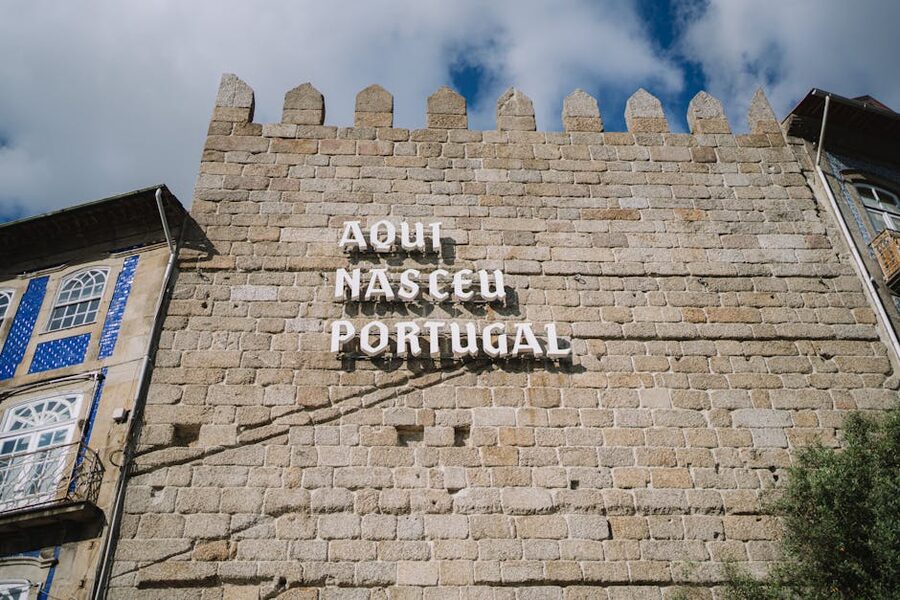
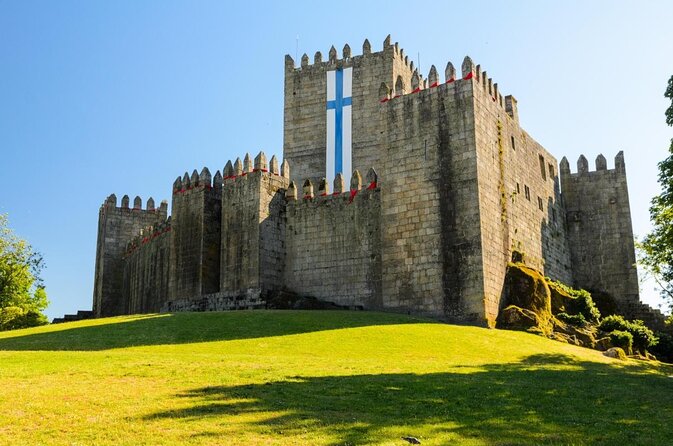
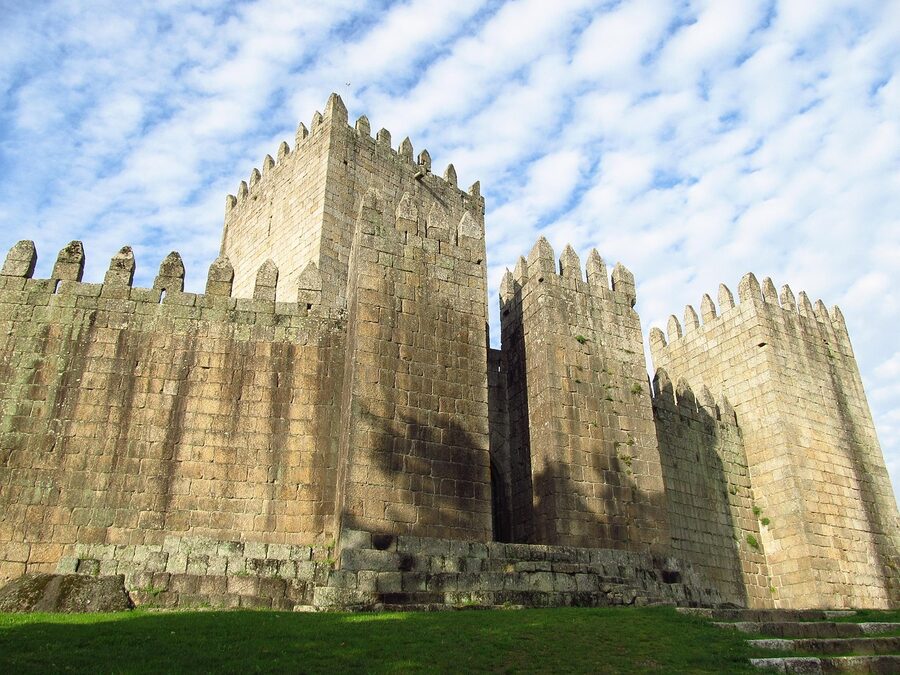
Our guide stops in front of the castle wall, presses a hand against the granite, and reads the inscription out loud: AQUI NASCEU PORTUGAL. Here Portugal was born. Then she explains, almost casually, that the first king of Portugal, Afonso Henriques, was born inside this castle in 1109. The whole country, she says, started in this small Minho hill town we just drove an hour and a bit to reach.
Braga and Guimarães are the two day-trip cities you keep hearing about in Porto. They sit close together in the Minho region, about 50km north, and the standard run is to do both on one long Saturday. Here’s how I’d go about booking that.
In a hurry? My three picks
Best overall: From Porto: Braga and Guimarães Full-Day Trip, about $59, nine hours, the most-booked Braga + Guimarães day trip in Porto by a wide margin.
Lunch and entry tickets sorted: Guimarães & Braga Tour With Entry Tickets and Lunch, about $123, eight hours, includes the castle and Paço dos Duques entries plus a sit-down Portuguese lunch.
Smaller group, slower pace: Braga and Guimarães Small-Group Full-Day Tour with Lunch, about $145, eight-ish hours, capped at a smaller minivan group with lunch in a family restaurant.
- In a hurry? My three picks
- Why bother doing both in one day
- Getting there: tour vs train vs car
- The three tours I’d actually book
- 1. From Porto: Braga and Guimarães Full-Day Trip:
- 2. Porto: Guimarães & Braga Tour With Entry Tickets and Lunch: 3
- 3. Braga and Guimarães Small-Group Full-Day Tour with Lunch: 5
- Guimarães: the birthplace, broken down
- Castle of Guimarães
- Palace of the Dukes of Bragança (Paço dos Duques)
- Largo da Oliveira and the historic centre
- Lunch: where you’ll actually eat
- Braga: the religious capital
- Sé de Braga
- Praça da República and the old town walk
- Bom Jesus do Monte
- The view from the top
- Practical bits
- What to pack
- Timing
- Pickup and drop-off
- If you’re combining this with other Porto trips
- Best time of year
- If you’re on a tight Portugal itinerary overall
- What you’ll wish you knew before booking
- Where this fits in a wider Porto plan
Why bother doing both in one day
You could split this into two day trips and stretch it. Some people do. But Braga and Guimarães are 25km apart, the train and bus links between them are easy, and almost every organised tour from Porto bundles them together because the geography just works. You drive an hour out to Guimarães first thing, do the castle and old town, drive thirty minutes to Braga for lunch and the cathedral, then climb Bom Jesus do Monte in the late afternoon and roll back into Porto in time for dinner.
That’s the rhythm of the day, and it’s the same rhythm every operator runs. The differences between tours are about group size, what’s included, and if you eat lunch with the group or on your own. The route is fixed.
A useful mental model: Guimarães is the history half of the day, Braga is the religion half. They are not the same kind of town. Guimarães is medieval, walled, cobbled, the country’s ceremonial birthplace. Braga is older still (Roman Bracara Augusta), but what survives above ground is mostly cathedrals and Baroque churches, and the city’s identity is “Portugal’s religious capital.” Doing them in one day works because they’re so different from each other that you don’t get monument fatigue.
If you only have time for one and you have to pick, Guimarães wins for first-time visitors. The castle plus the UNESCO old town is a tighter, more memorable visit than Braga’s spread-out cathedrals. But Bom Jesus do Monte is the single most photographed thing in the Minho region, and you really do want to see it. So do both. Take the day.
Getting there: tour vs train vs car
Porto to Braga is about an hour by train (around €3-5 each way on the Comboios de Portugal urban line, leaving every hour from São Bento or Campanhã). Porto to Guimarães is roughly 75 minutes on a separate line. Connecting Braga and Guimarães by public transport is doable but slower than it should be: there’s no direct train, so you change in Lousado or grab a Get Bus coach. Total cost on public transport, both cities in one day, is about €15-20.
So why pay $59 for a tour? Three reasons. The first is the bus connection between the two cities (about 30 minutes by minibus or coach versus an hour-plus by changing trains). The second is the climb up to Bom Jesus, which is a few kilometres east of central Braga and not walkable from the train station. The third is the running commentary inside both castles and the cathedral, which is the part that turns the visit from “old building” into “the parents of Afonso Henriques are buried right there.” If you’re confident driving in Portugal and don’t mind navigating Braga’s one-way streets, renting a car works too. If not, the tour is the cleanest way.
I’d also flag that the same operators run a few related Porto day trips you might be weighing this against. The classic alternative is the Douro Valley wine country day trip, which is the other big Porto Saturday outing. Douro is wine and river. Braga and Guimarães is history and religion. If you have two days in Porto you can do one of each. If you only have time for one, Douro tends to win in summer, Braga + Guimarães in shoulder season when wine country gets cold and the Minho stays warm enough for walking. There’s also a two wine regions farm-to-table tour that combines Vinho Verde and Douro in one day if you can’t decide.
The three tours I’d actually book
I’ve put these in order of how I’d recommend them to someone planning their first trip to Porto. Price differences are real, and they reflect real differences in what you get on the day.
1. From Porto: Braga and Guimarães Full-Day Trip: $59
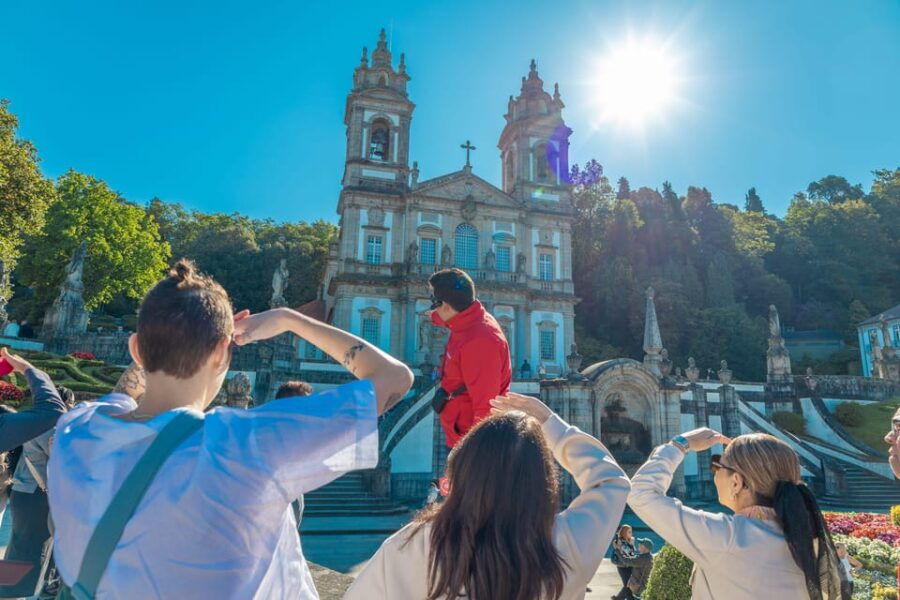
This is the most-booked option in Porto and the one I’d start with for anyone on a normal travel budget. Nine hours, full coach group, English-speaking guide, the standard route I’ve described above. Lunch is on your own in Braga, which is fine because Braga’s old town has plenty of cheap, good places to eat. Our full review of this tour goes into the exact stops and the timing block by block. Pick this one if you want the cheapest reliable way to do both cities in a day.
2. Porto: Guimarães & Braga Tour With Entry Tickets and Lunch: $123
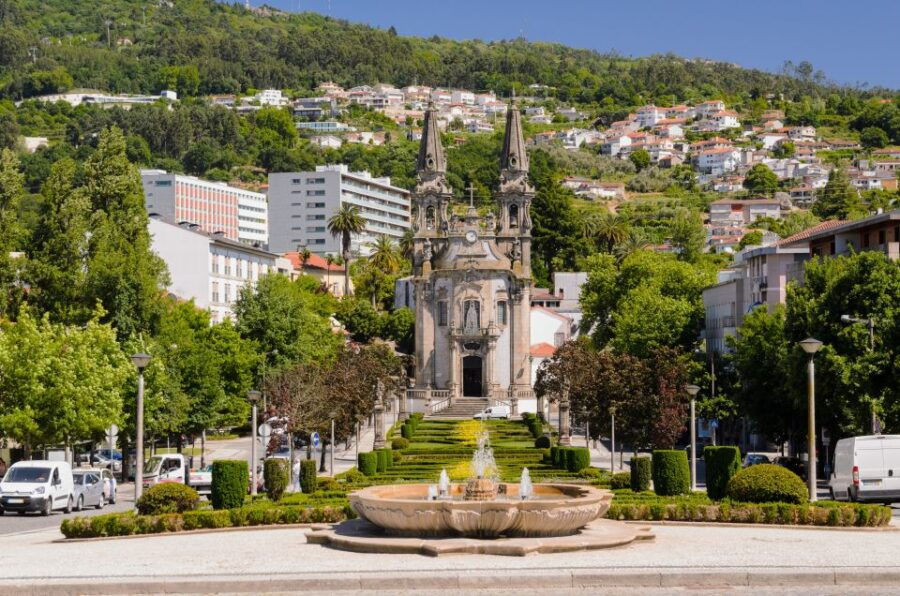
The roughly $60 premium over the flagship gets you two real things. First, the entry tickets to Guimarães Castle and the Palace of the Dukes of Bragança are bundled, so you skip the ticket lines and you actually go inside both buildings. Second, lunch in Braga is included as a proper sit-down meal at a local restaurant rather than a fend-for-yourself break. Our review covers what the lunch usually looks like and how the timings shift to fit it in. Pick this one if you don’t want to think about logistics on the day, or if eating with the group sounds nicer than ducking into a random tasca.
3. Braga and Guimarães Small-Group Full-Day Tour with Lunch: $145
The slowest version of the day, in a good way. A minivan instead of a 50-seat coach changes the trip more than you’d expect: pickup is faster, the guide can take questions in real time, and the walking groups inside the castle and the cathedral don’t get strung out across two streets. Lunch is included at a family-run restaurant. Our small-group review details the format and what you actually eat. Pick this one if you don’t like coach tours, you’re travelling as two or three, and you want the day to feel less like a school trip.
If none of those three feels right, the Viana do Castelo + Braga + Guimarães three-city version is worth a look as a long-day option (about ten hours, adds the Atlantic-coast town of Viana to the route). It’s a stretch on the day for first-timers, but if you’ve already seen the standard route once and want to extend it, that’s the one.
Guimarães: the birthplace, broken down
Tours hit Guimarães first because it’s a slightly longer drive (just over an hour from Porto) and the morning light on the castle is good. Here’s what you actually see, in the order most tours do it.
Castle of Guimarães
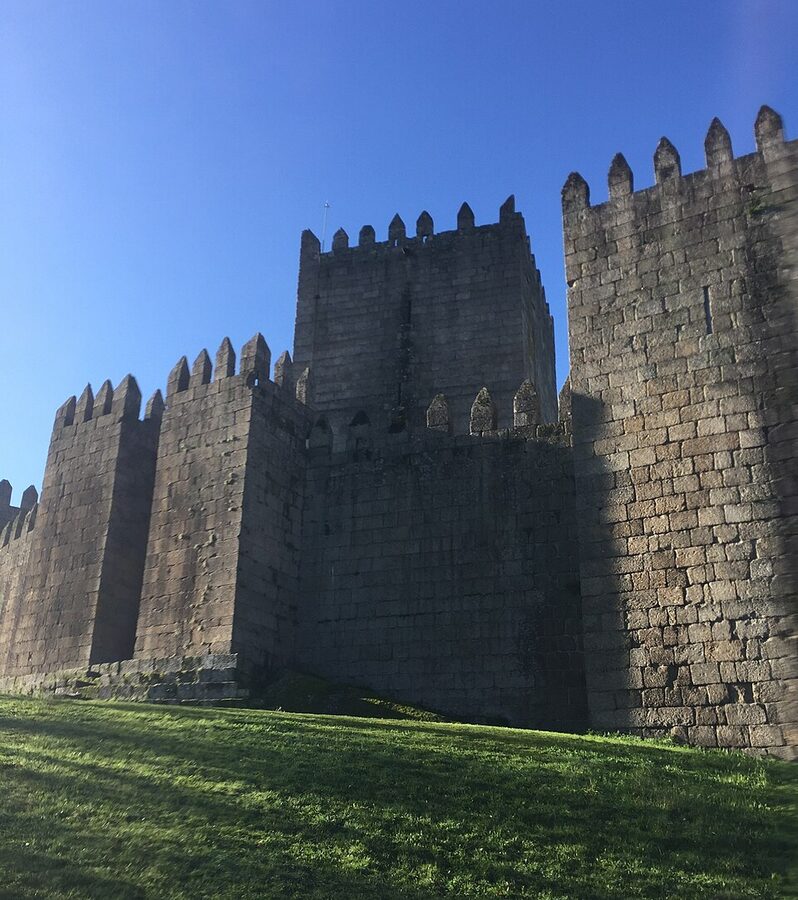
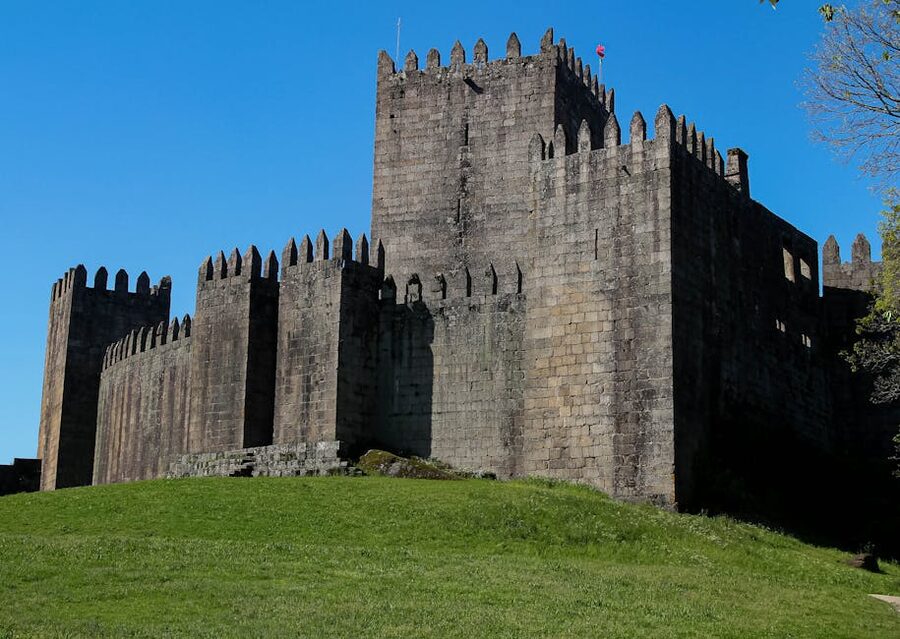
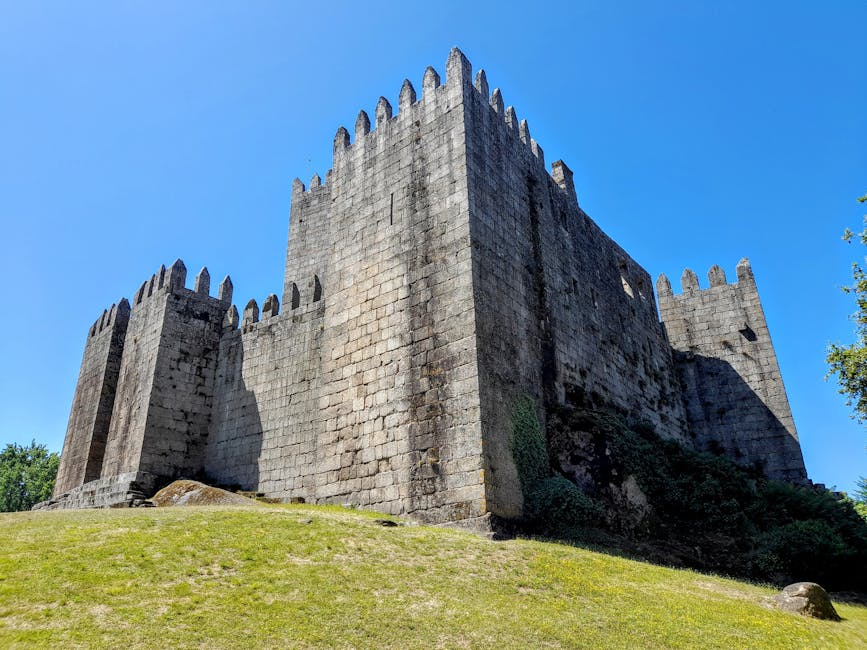
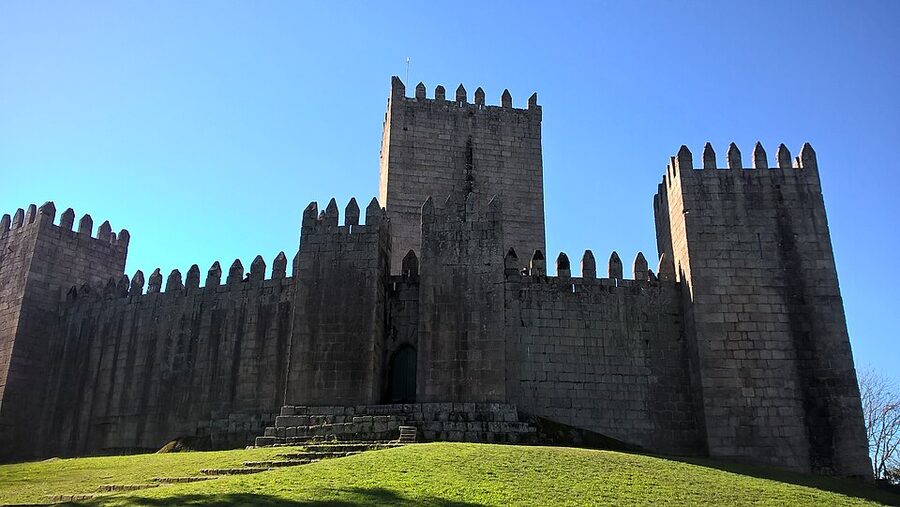
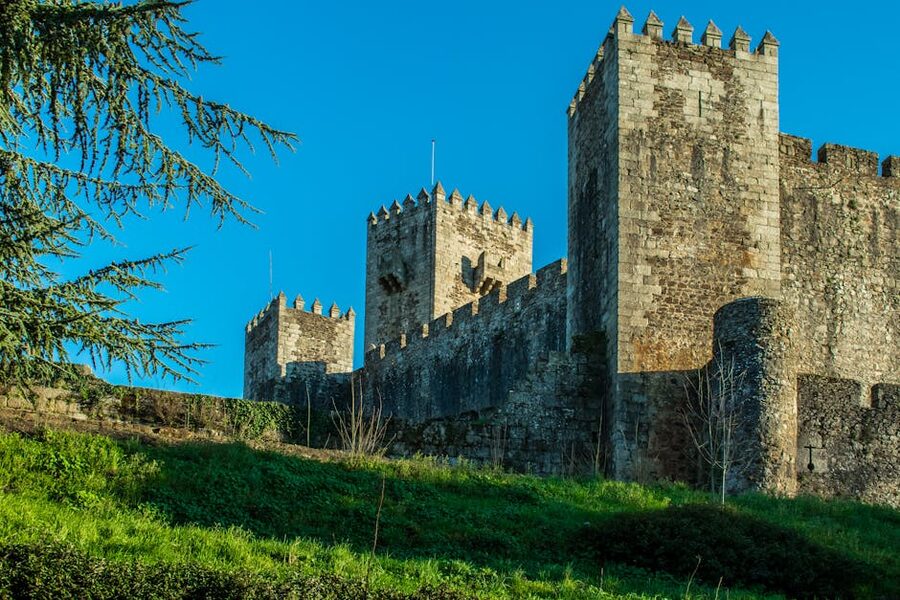
The castle was built in the 10th century by Countess Mumadona Dias to defend the Guimarães monastery from Moorish and Norse raids, which is the kind of context plate you don’t really expect to find above an entrance gate. It’s been a national monument since 1881. Construction is on a hill, the curtain walls are flanked by eight rectangular towers, and the central keep is the part you’ll see in every photograph. You can climb it for a small extra fee, and on a clear day the view stretches out to the hills above the Cávado valley.
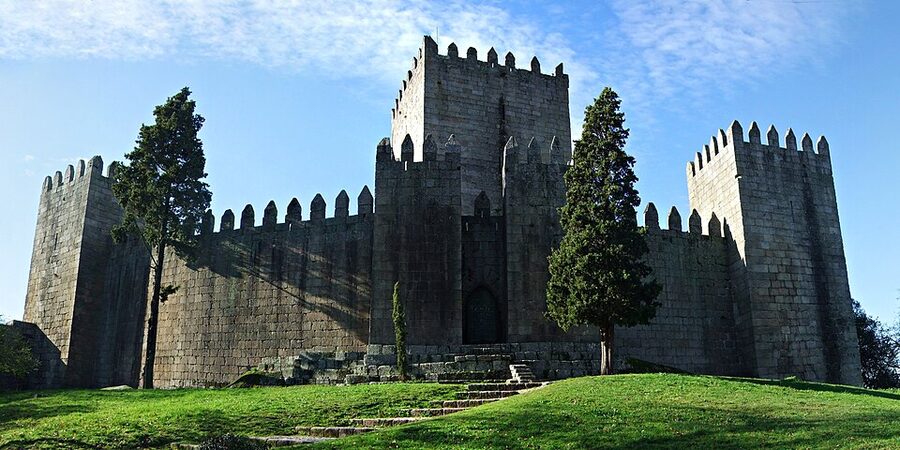
The thing your guide will spend the most time on is the founder story. Afonso Henriques was born inside these walls in 1109 to Henry of Burgundy and Teresa of León, the count and countess of Portucale (the Roman-era county that gave Portugal its name). When Afonso came of age, he revolted against his mother’s regency, won the Battle of São Mamede in 1128 just outside Guimarães, and started the slow process of separating the county from the Kingdom of León. By 1139 he was calling himself King of Portugal. By 1143 León recognised him. The castle is where the whole story starts, which is why the wall reads aqui nasceu Portugal.
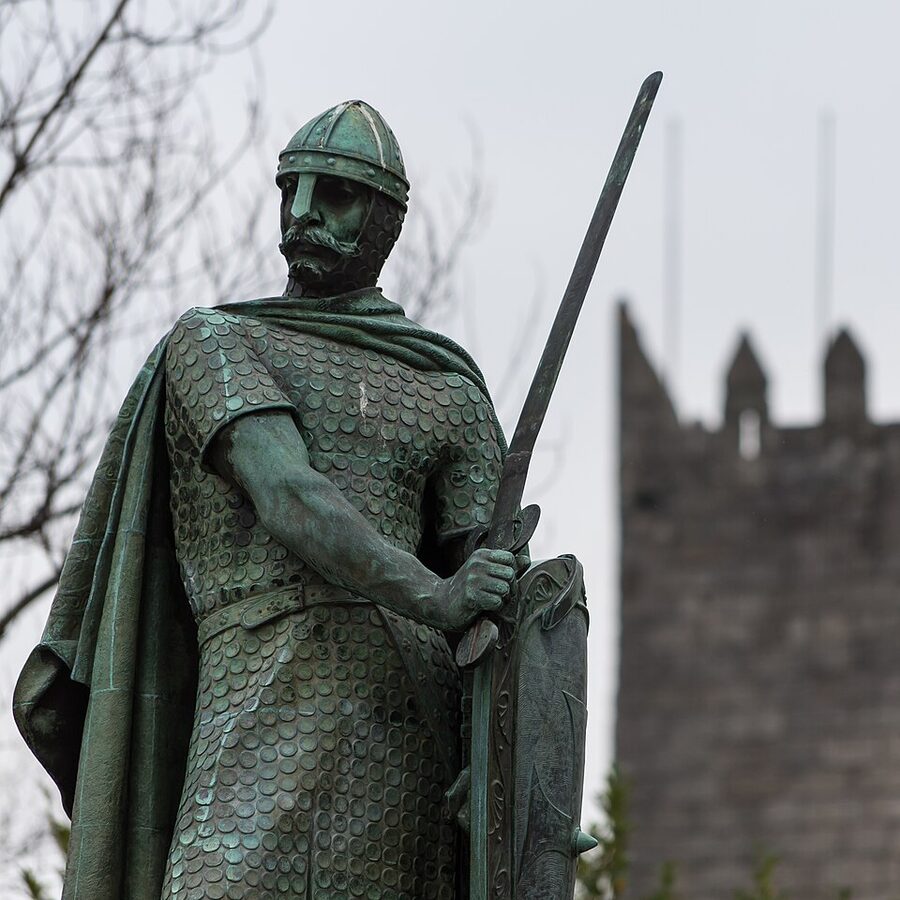
Practical: the castle takes about thirty minutes if you’re climbing the keep, fifteen if you’re not. There’s a statue of Afonso Henriques out front that nobody can resist taking a photo with. Don’t.
Palace of the Dukes of Bragança (Paço dos Duques)
About 100 metres downhill from the castle is the Paço dos Duques, the 15th-century palace built by the first Duke of Bragança, Afonso, who was an illegitimate son of King João I. The Bragança line eventually became the royal house of Portugal in 1640 after the Restoration War with Spain, so this palace is, in effect, the country house of the dynasty that would later rule from Lisbon.
The exterior is the most photographed bit because of the absurd number of brick chimneys on the roof. Inside, you get tapestries, period furniture, a chapel with stained glass, and a few rooms that were used as the official residence of the President of Portugal in the north until very recently. Worth the entry if your tour includes it. The shorter cheap tour skips the inside.
Largo da Oliveira and the historic centre
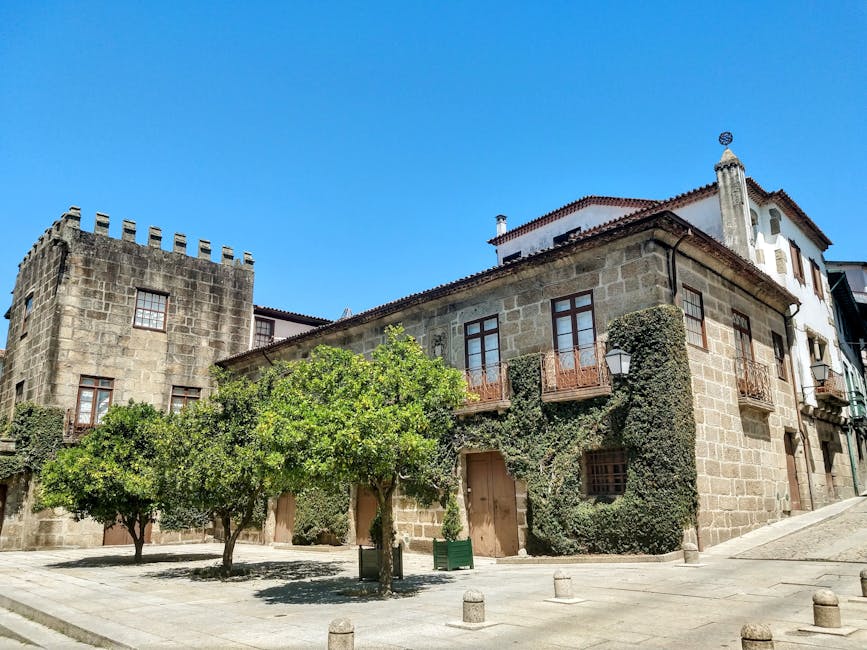
The UNESCO old town starts a five-minute walk down from the castle. Largo da Oliveira is the main square, named for the olive tree at its centre and dominated by the Igreja de Nossa Senhora da Oliveira (Church of Our Lady of the Olive Tree). The square is also home to the Padrão do Salado, a small Gothic monument that commemorates the 1340 Battle of Salado against the last Moorish invasion from North Africa.
The other monument every guide stops at is the two-faced statue on the façade of the Antigos Paços do Concelho (the old town hall). It’s a warrior with two faces, and the symbolism is the Portuguese victory over Spain that secured independence in 1640. One face looks toward Spain, the other toward Portugal. It’s small and easy to miss, so listen for your guide.
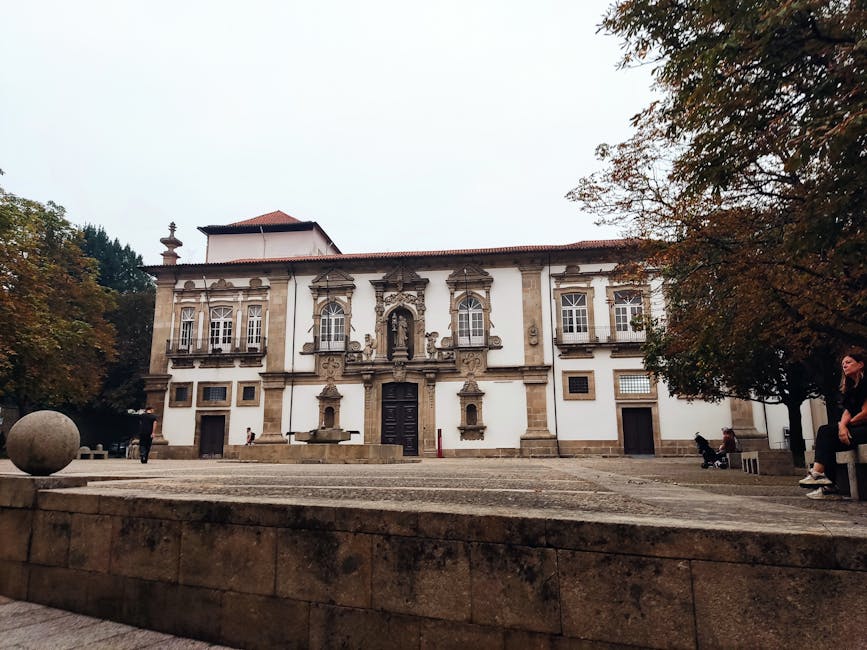
Most tours give you free time here, usually 45 minutes to an hour. Use it to grab a coffee on the square (Café Milenário is the safe choice), wander down Rua de Santa Maria toward the old Jewish quarter, and pick up a tile or a Barcelos rooster from one of the souvenir shops on Rua Egas Moniz. The Barcelos rooster is the Portuguese national symbol, painted in red, blue and yellow, and it’s actually from a small town not far from Braga. Buying one in Guimarães feels right.
Lunch: where you’ll actually eat
Most tours land in Braga around 1pm and that’s lunch time. The two cheaper tours leave you to find your own food, and the two more expensive ones include a sit-down lunch.
If you’re on the cheap option and you have to pick a place, a few tips. Skip the restaurants on Praça da República, which is the main central square. They’re the most touristy and the worst value. Walk five minutes off the main square, in any direction, and the prices halve. The Braga lunch dish you should try is bacalhau à Braga, salt cod fried with onions and potatoes, which is a regional version of the national fish. Pataniscas de bacalhau (cod fritters) and caldo verde (kale and potato soup) are the safe non-fish options. A plate runs about €9-12 with a glass of vinho verde, which is the local light, slightly fizzy white wine.
If you’re on the included-lunch tour, you’ll usually end up at one of the family-run places off the main drag. Expect three courses, pork or cod as the protein, a glass of wine, dessert, and an espresso. It’s not a Michelin moment, but it’s solid Portuguese food, and the €15-20 it would cost you on your own is more or less what the upgrade buys.
Braga: the religious capital
After lunch the tour reconverges and walks through Braga’s old town to the cathedral. Braga is older than Portugal itself: the city was founded as Bracara Augusta by the Romans in 16 BC, and the Christian episcopal see goes back to at least the 4th century. It’s been the seat of the Archbishop of Braga continuously since the 11th century, and the title Primaz das Espanhas (Primate of the Spains) was claimed by Braga’s archbishops over the rest of the Iberian Peninsula. That history is why Braga has so many churches stacked into such a small space.
Sé de Braga
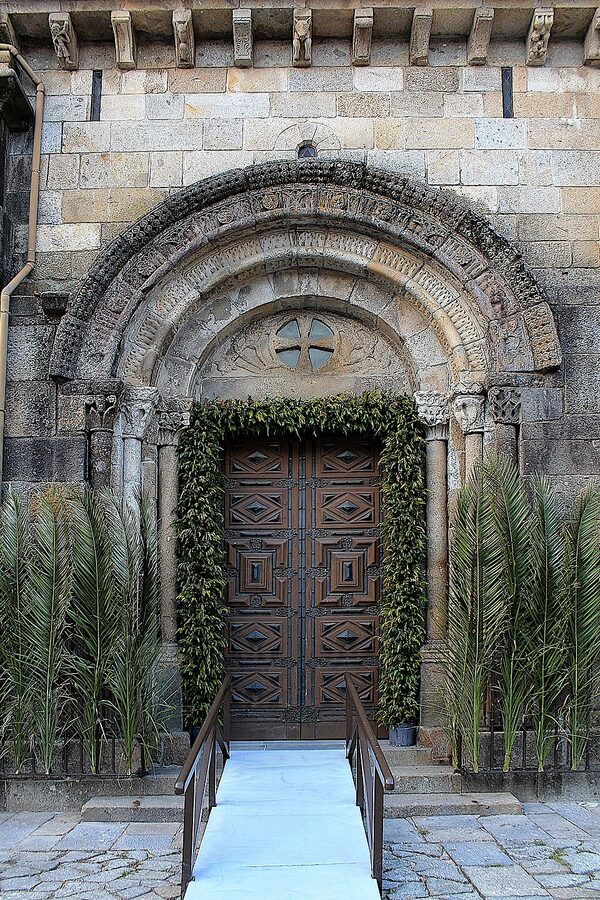
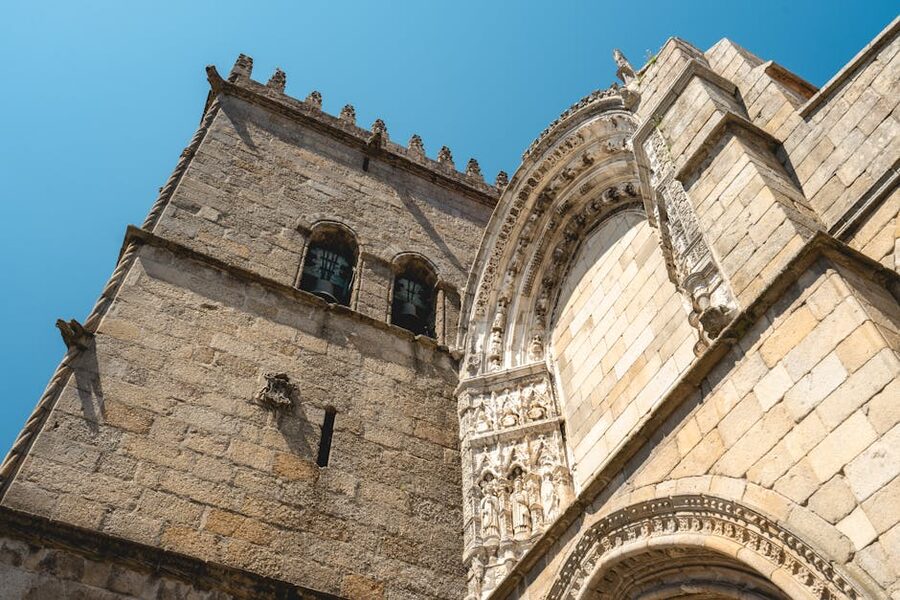
The Sé is the oldest cathedral in Portugal. Construction started in 1070, took nearly a century to complete, and the building has been added to and stripped back ever since. What you see now is a layered thing: Romanesque stone bones, Manueline doorways added in the 16th century, Baroque interior decoration laid over the top in the 17th and 18th centuries. The southern façade has the Door of the Sun (Porta do Sol), a tight Romanesque arch with stone carving worth a slow look.
The reason guides go into so much detail here is that the Sé contains the tombs of Henry of Burgundy and Teresa of León. The same Henry and Teresa whose son was born in Guimarães Castle and went on to become the first king of Portugal. So you get the founding story bookended in one day: the parents are buried in the cathedral in Braga, the son was born in the castle in Guimarães. The two cities are part of the same narrative, which is the real reason they’re paired on a day trip.
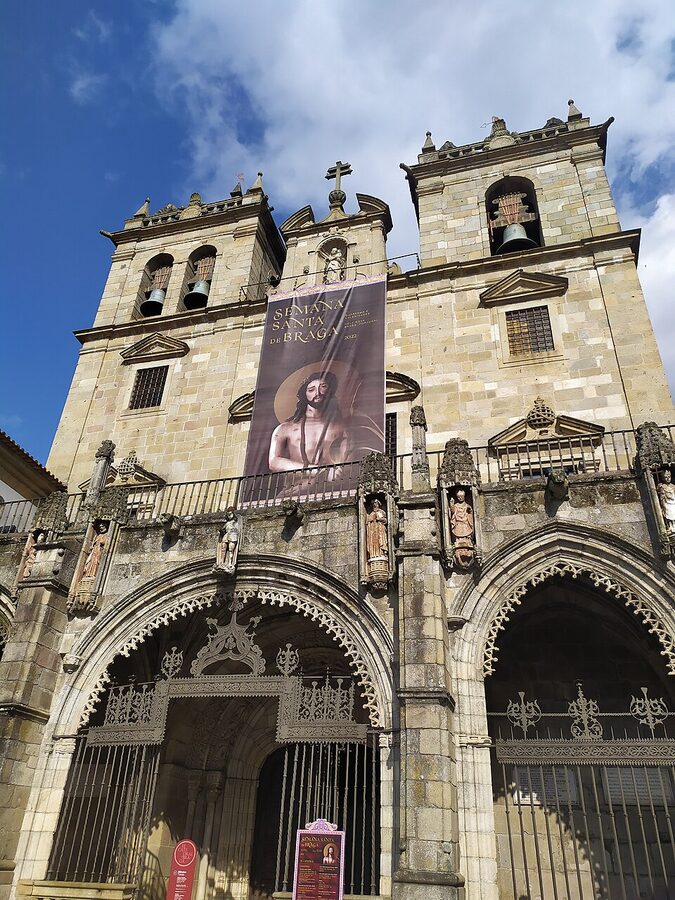
Inside, the bits worth looking at: the Gothic altar fragment (a remnant of the original altarpiece), the Chapel of Glory, and the Capela dos Reis (Chapel of the Kings) where the founder tombs sit. Some tours also take you up to the cathedral treasury museum, which has Romanesque ironwork and a frankly excessive collection of reliquaries.
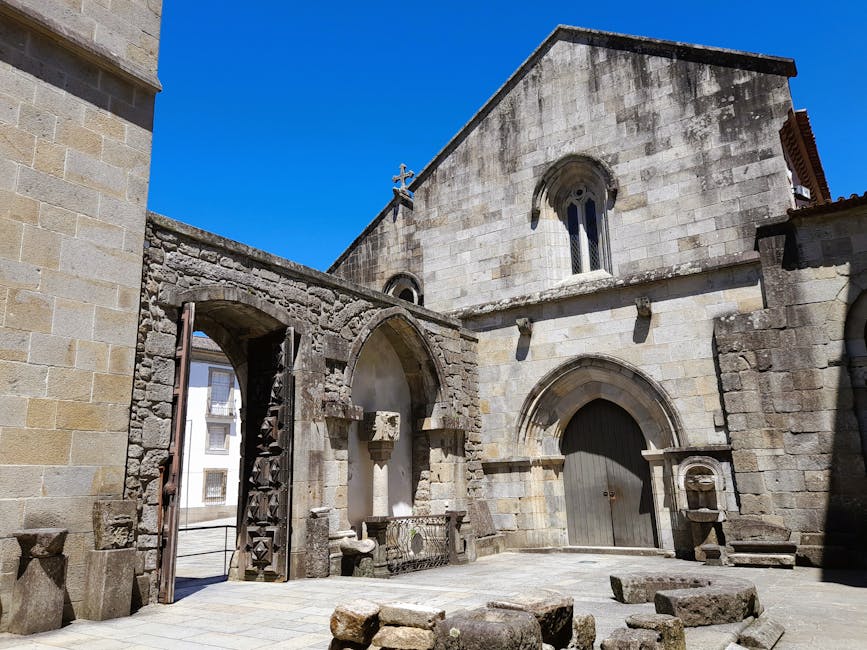
Praça da República and the old town walk
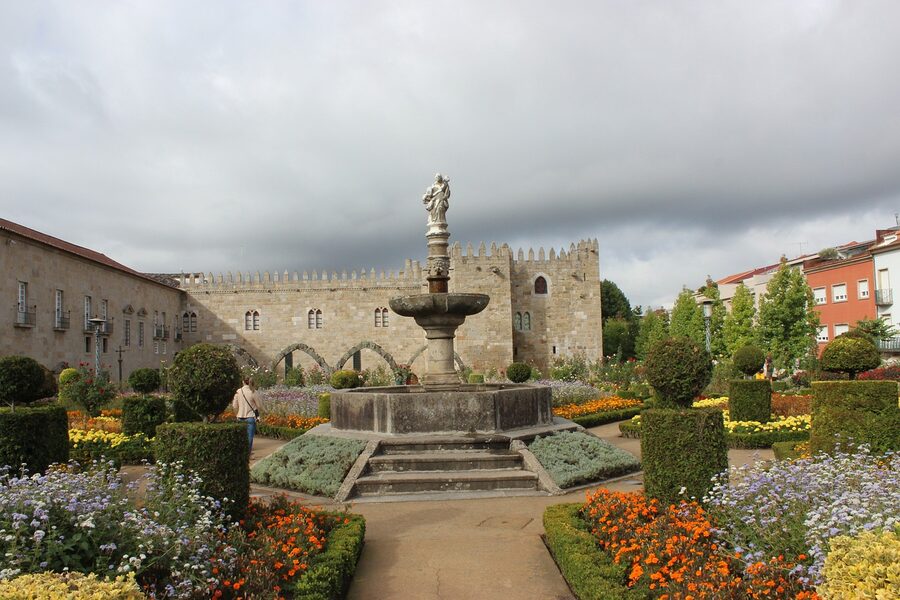
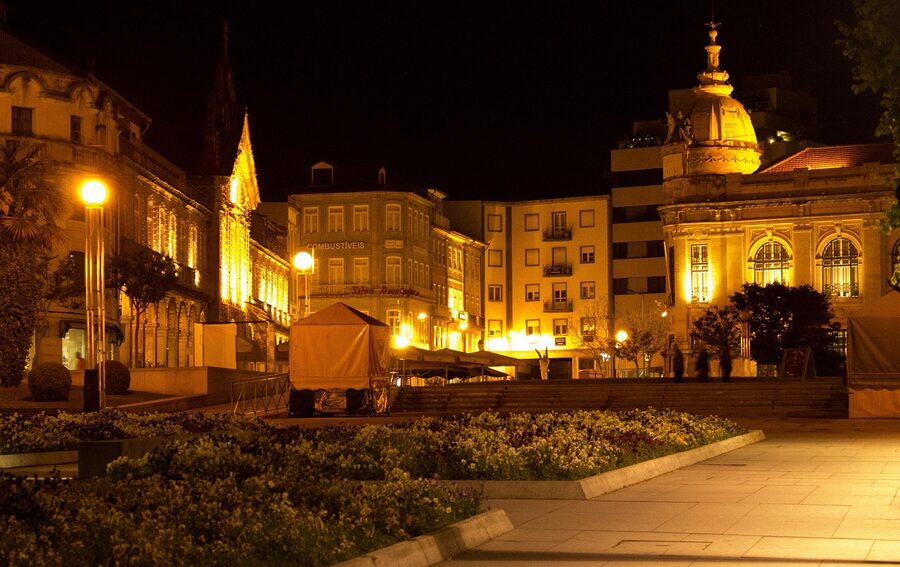
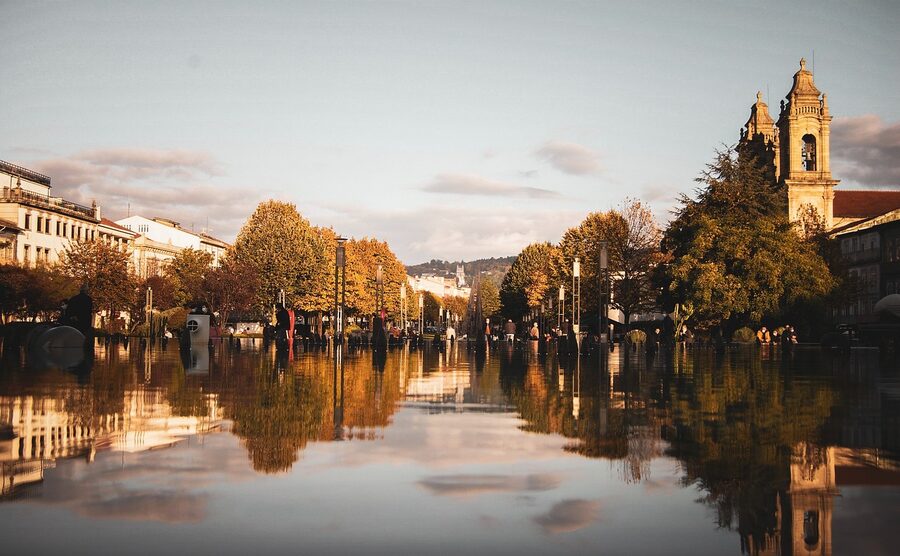
The main public square is Praça da República, which most locals just call Avenida. This is where the cafés are, where the Easter and Christmas decorations go up, and where you’ll see Café Vianna and Café Astória, two grand 19th-century coffee houses still in business. If you have free time after the cathedral and before the bus leaves for Bom Jesus, get a bica (espresso) at one of those two and watch the square. They are almost certainly the best people-watching spots in northern Portugal.
Bom Jesus do Monte
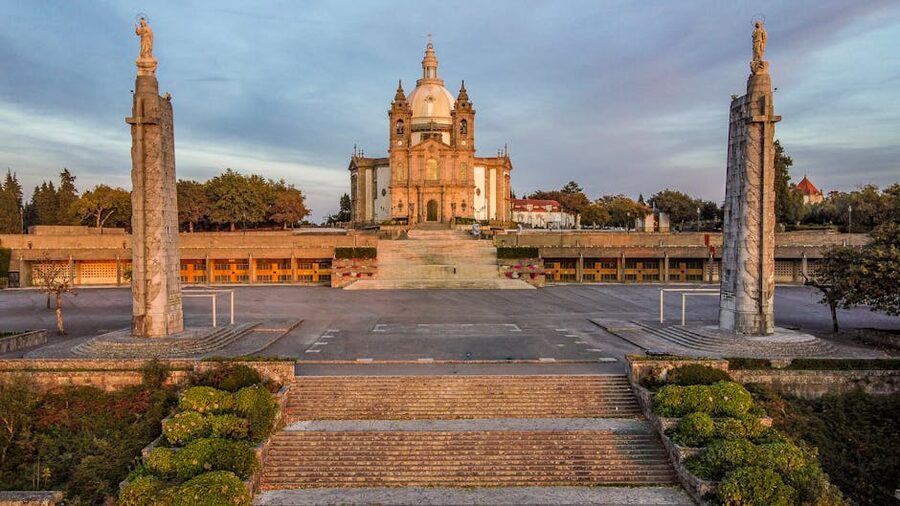
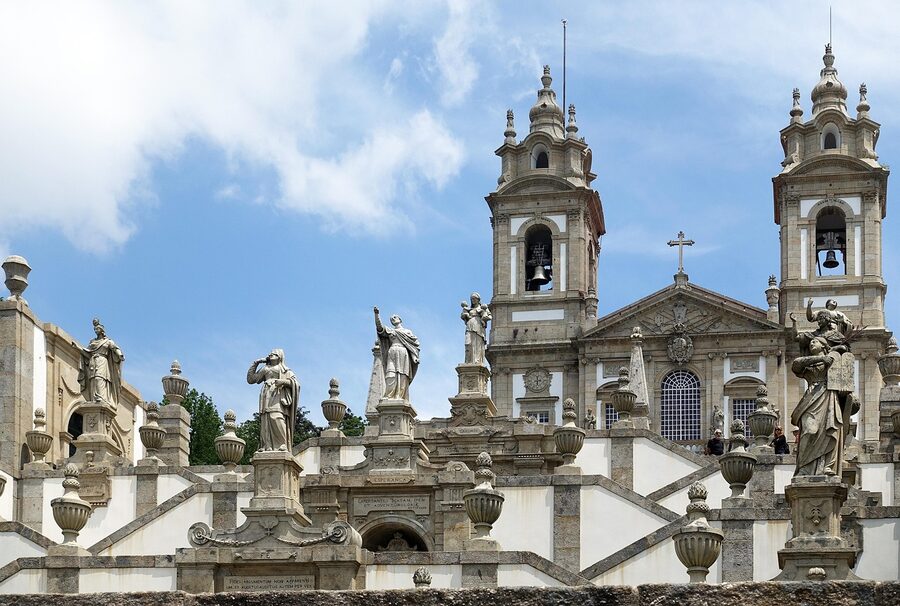
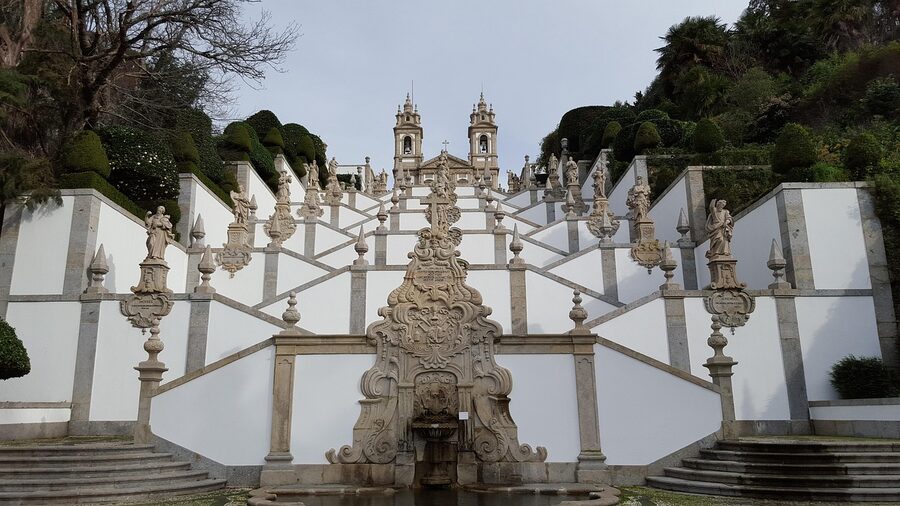
The last stop is the one your phone camera roll will be 80% of by the end of the day. Bom Jesus do Monte sits about 4km east of central Braga, on a wooded hill, and the thing that makes it famous is the staircase: a Baroque pilgrimage stair built in the 18th century to climb roughly 116 metres up to the church at the top. UNESCO listed the whole sanctuary in 2019.
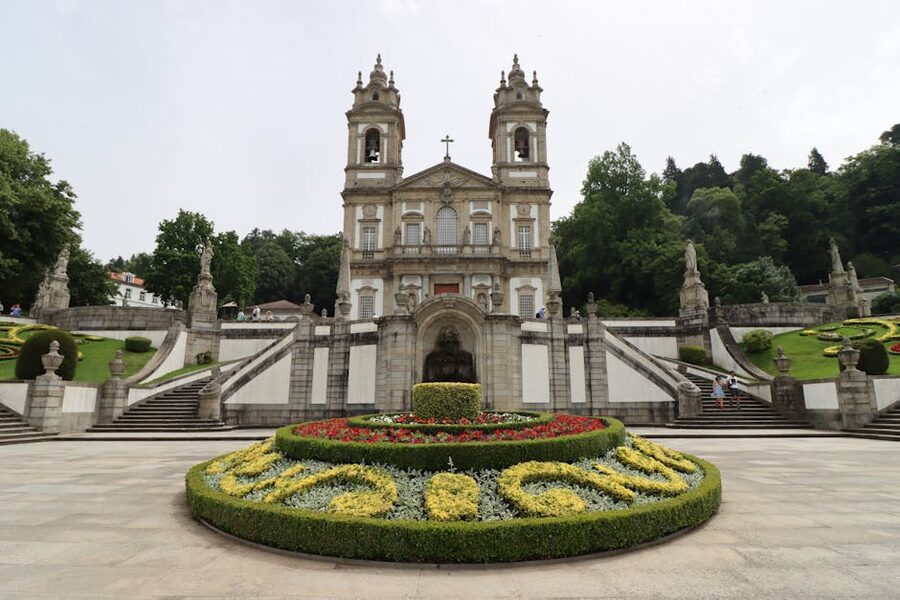
The staircase is officially the Escadório dos Cinco Sentidos (Stairway of the Five Senses) plus the Escadório das Três Virtudes (Stairway of the Three Virtues), and it’s organised in landings that each represent something. The lower flights cover the five senses (sight, hearing, smell, taste, touch). The upper flights cover the three theological virtues (faith, hope, charity). Each landing has a fountain and a set of allegorical statues. It’s surprisingly clever once you start looking for the symbolism, and surprisingly tiring once you start counting the steps.
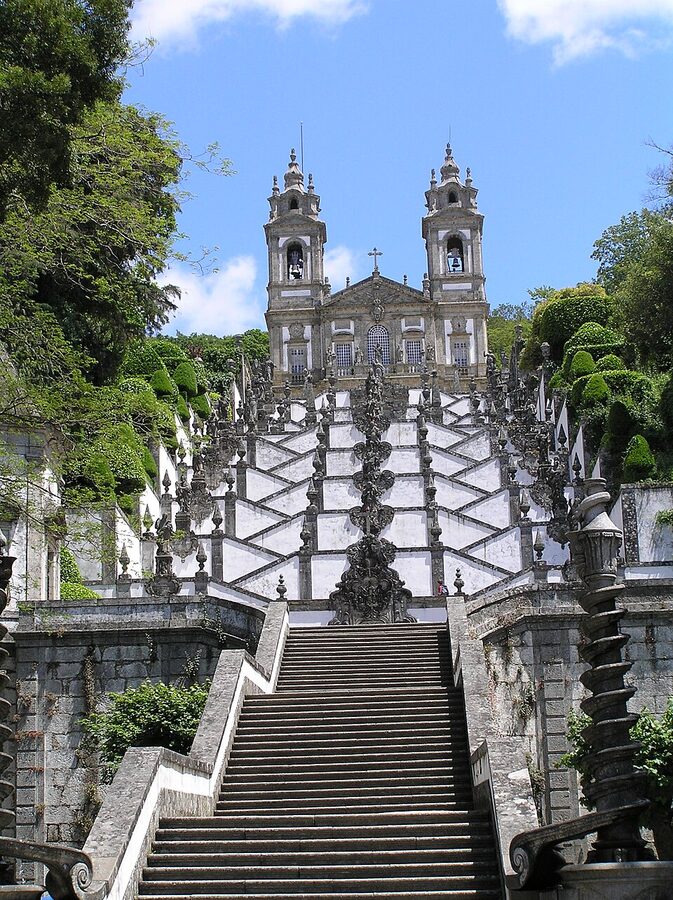
You don’t have to climb. There are three ways up, and the tour will pick one for you depending on the weather and the group:
- Walk the staircase top to bottom (or bottom to top). The full route is about 580 steps. Most tours have you walk down rather than up because down is easier on the knees and the symbolism reads better in that direction.
- Drive to the top car park. The cheaper coach tours often do this when it’s raining or the group is mixed-mobility. You miss the staircase as a climb but you still see it as a view from the upper terrace.
- Take the funicular. The 19th-century water-powered funicular (built 1882, still running on the same hydraulic counterweight system) costs €2 each way, takes about three minutes, and is the world’s oldest water-powered funicular still in operation. Riding it is its own little experience.
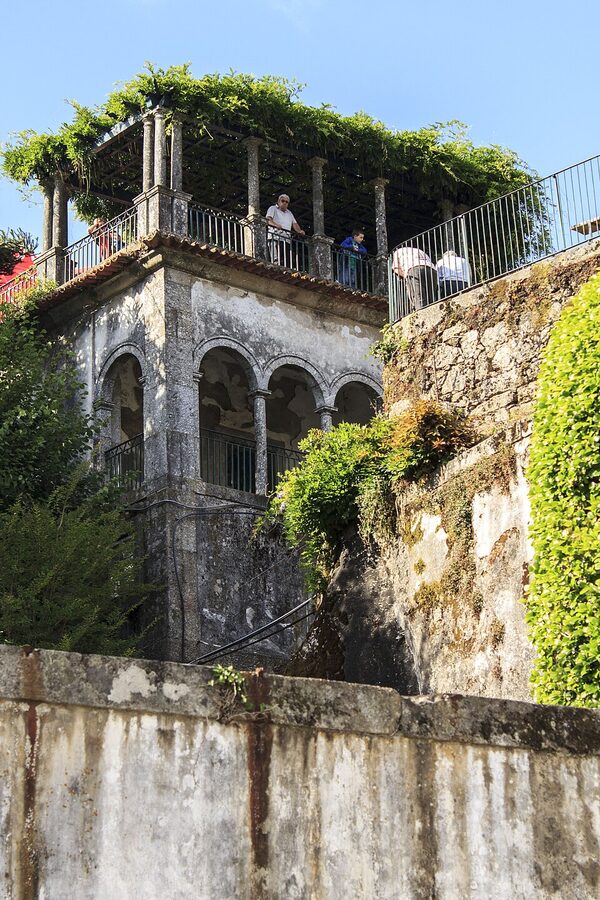
If your tour drops you at the top, walk down at least a few flights. The symbolism is on the way down too, and the views over Braga’s plain open up as you descend. Don’t try to walk the whole way down if it’s wet. The granite gets very slick.
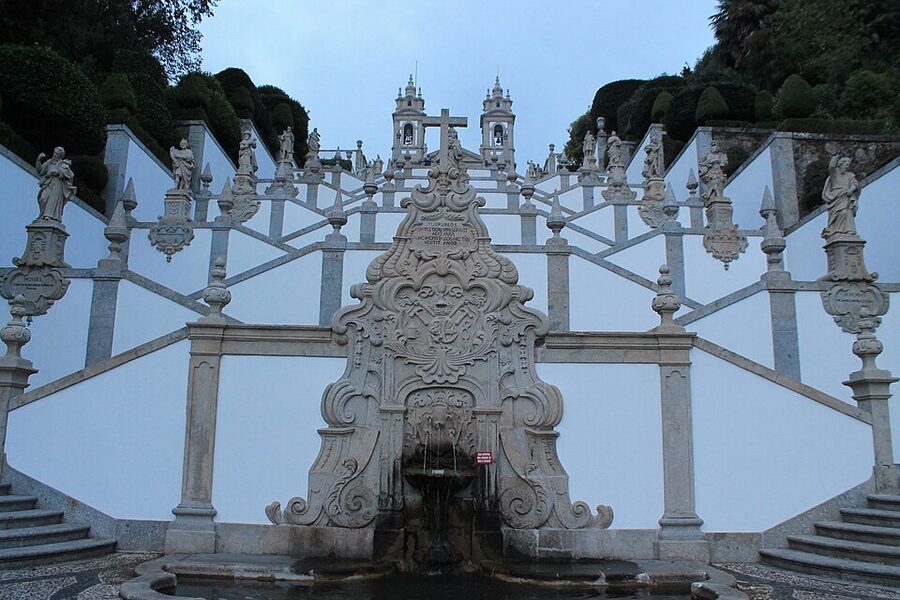
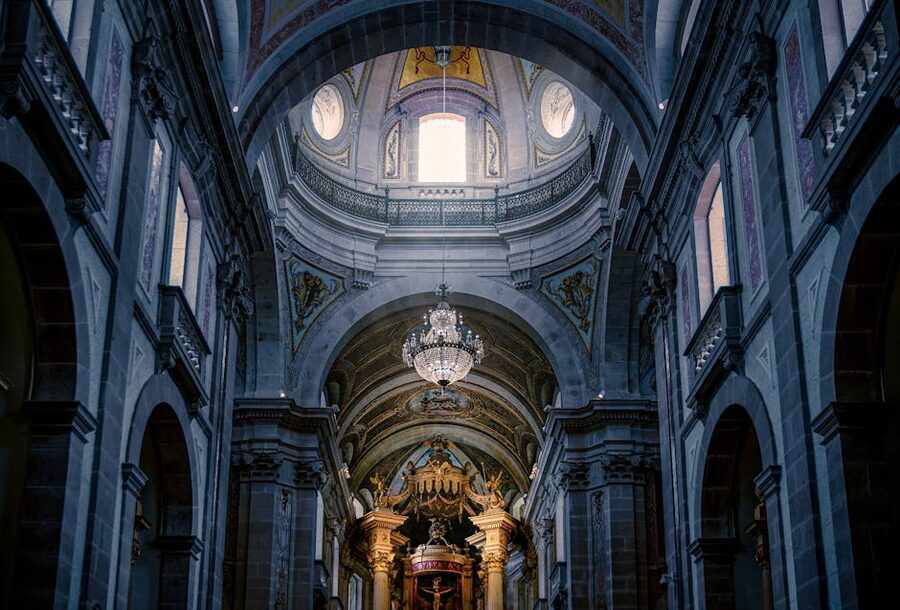
The church at the top, designed by Carlos Amarante in 1784, is Italian-inspired Neoclassical, which sits oddly above all that Baroque drama on the way up. Most tours give you 20 to 30 minutes inside, which is enough for a quick look at the Latin-cross plan and the Chapel of the Relics (which holds the body of Saint Clement, a 3rd-century Roman martyr). The interior is calmer than the exterior approach. That’s by design: the climb is the spectacle, the church at the top is the resolution.
The view from the top
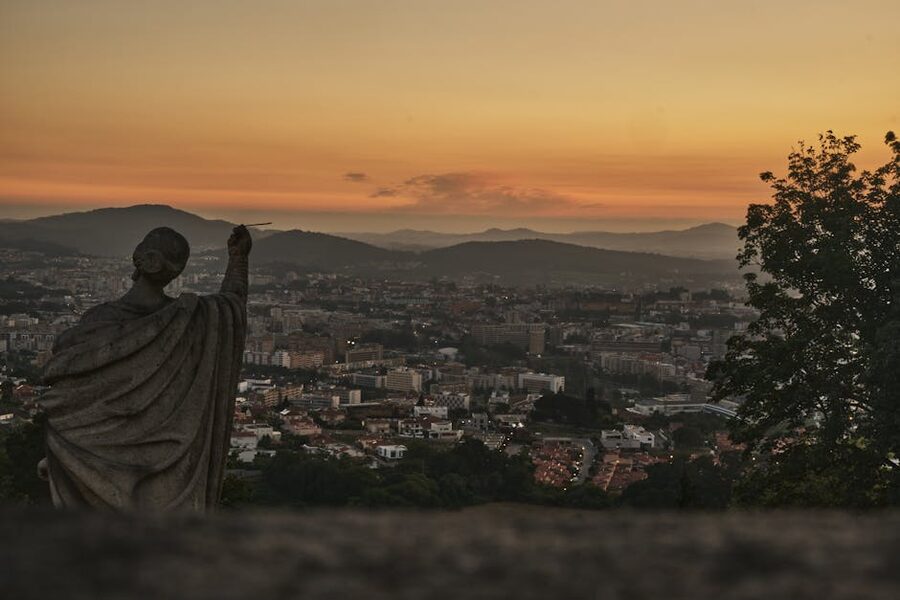
The terrace in front of the church is the photo people come for. From up there you can see Braga’s red rooftops in the middle distance and the hills behind them. On a clear afternoon the view runs all the way to the Cávado river valley. The terrace has a small park behind the church, with a lake and rowing boats if you’ve got an extra hour, but most day-trip groups don’t.
Practical bits
What to pack
The Minho region gets meaningfully wetter and cooler than Porto. Even in summer, pack a light layer for Bom Jesus in late afternoon. In autumn and winter, a proper rain jacket isn’t optional. The granite steps get treacherous in the wet, so wear shoes with grip rather than smooth-soled trainers.
Timing
The day runs roughly 8.30am to 6.30pm or 9am to 7pm depending on the operator. Allow about ten hours including pickup and drop-off. Don’t book anything else for the evening unless it’s late and within walking distance of central Porto.
Pickup and drop-off
Most tours pick up in central Porto, near Aliados or Praça da Liberdade. A few hotels in Vila Nova de Gaia get a separate pickup. Check this when you book. The drop-off is usually at the same point as pickup, give or take a block, and if your hotel is near the riverfront you can walk back from there.
If you’re combining this with other Porto trips
If this is one day in a longer Porto stay, the obvious complements are a wine-region day for the other big day trip, plus a city day for the centre itself. The half-day Porto city tour covers the core sights in three hours, and the six bridges Douro cruise from the riverfront gives you a different angle on the city by water. For evenings, my pick is the Spiritus multimedia show inside Igreja dos Clérigos, which is a 30-minute video-mapping piece on the church interior and works as a quiet end to a day on your feet. If you want to climb the same Clérigos church tower in daylight, the Clérigos tower ticket is the simpler version. And the Porto Card is worth a look if you’re hitting four or more paid attractions over a couple of days.
Best time of year
April through October is the easiest weather window. May and September are my picks: warm enough for the staircase to be dry, cool enough that the climb doesn’t cook you. July and August are hot but reliable. November to March can be very wet, and Bom Jesus turns into more of a slog when the granite is slick. The trade-off is that winter Sé de Braga has fewer crowds and the cathedral interior reads better when the light is softer.
If you’re on a tight Portugal itinerary overall
People often ask whether to do Braga and Guimarães from Porto or Lisbon. Always Porto. Lisbon to Braga is a four-hour drive, and you’d lose the day on transit. From Porto it’s an hour. If you’re staying in Lisbon and want a comparable-shape day, the Sintra day trip from Lisbon is the closer match: castle in the morning, palace and town in the afternoon. If you’re in Madrid, the Toledo and Segovia day trip covers similar history-and-architecture ground in one long day. And if you’re in southern Spain, the Alhambra in Granada is the must-do equivalent that shouldn’t be skipped.
What you’ll wish you knew before booking
A few things I’d have liked to know before my first run at this day. First, lunch is more important than most people plan for. If you’re on a tour that leaves lunch off, factor in fifteen minutes of finding a place and twenty-five minutes of eating, and don’t expect a quick sandwich to do the job. Second, the funicular is worth riding once even if you also walk down. It costs €2 and it’s genuinely historic. Third, the castle entry is cheap (about €2 for the castle alone, more for combined castle + Paço dos Duques tickets), so the price upcharge on tours that “include entry” is mostly the lunch and the convenience, not the tickets themselves.
Fourth, accept that the day is long. By 6pm in the bus on the way back you will be tired in the legs and the brain. Don’t book a fancy dinner at 7.30pm. Save the wine bar for the next night.
Where this fits in a wider Porto plan
For active Porto days the obvious pair is a guided e-bike ride through Ribeira and across the Luís I Bridge into Gaia. For port wine specifically, the Cálem cellar tasting on the Gaia side is the easy entry point, and a small-room Porto fado evening works well as the gentle close to a long day on your feet. If you want a similar day-out shape from southern Spain, the Málaga, Ronda and Setenil day trip is the closest equivalent.