
The driver picks you up at your hotel at 6:30 am. There are four of you in the van — no coach, no name badges, no “everyone on the bus in 8 minutes please.” He’s got a thermos of coffee for the group and asks where you’d like to start. You say Chureito Pagoda. He pulls up the traffic map, says it’ll be busy by 9, suggests you start there before the tour buses arrive. You’re on the highway before the Tokyo rush even begins.
That’s the shape of a Mt Fuji private tour. You pay 4-8 times more per person than a coach tour, and what you buy is flexibility — the ability to optimise the day around your Fuji, not a fixed itinerary of twelve stops predetermined six months ago in an office.
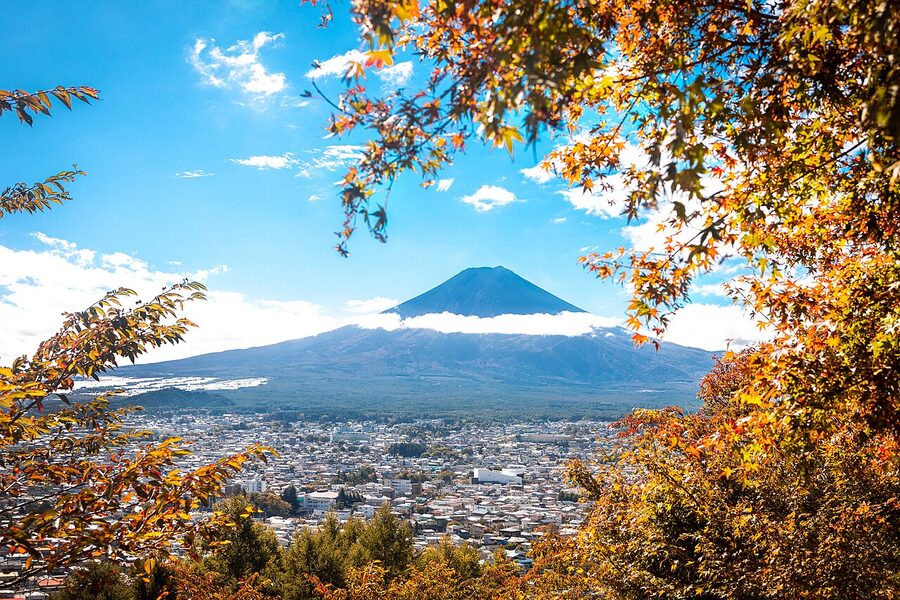
Three Viator-listed private operators dominate this market. They differ mostly in group size (up to 3, up to 5, up to 6) and in which driver-guide you’re paired with. The underlying format — private vehicle, English-speaking driver, flexible itinerary — is consistent across all three.
Short on time? Here are my top picks:
Best for couples/small groups: One Day Private Tour to Mount Fuji — up to 3 people, $415 total, 8 stops built around your preferences.
Best for families/mid-size groups: 1 Day Private Mt Fuji Tour (Charter) — up to 5 people, $454 total, full-day charter with an English-speaking driver.
Best for larger groups: Mt Fuji Private Tour by Car With Pick up — up to 6-7 people, $507 total, hotel pickup and drop-off.
- When a Private Tour Actually Pays Off
- The 3 Best Mt Fuji Private Tours from Tokyo
- 1. One Day Private Tour to Mount Fuji — 5 (up to 3)
- 2. 1 Day Private Mt Fuji Tour (Charter) — 4 (up to 5)
- 3. Mt Fuji Private Tour by Car With Pick up — 7 (up to 6-7)
- What a Private Tour Lets You Do That a Coach Tour Doesn’t
- Visit Chureito Pagoda (Arakurayama Sengen Park)
- Oshino Hakkai Spring Village
- Shiraito Falls (Fujinomiya side)
- Fuji 5th Station (with time to actually look)
- Shizuoka Tea Fields
- Sunrise or Sunset at Lake Kawaguchi
- How to Pick the Right Group Size
- What to Confirm Before You Book
- Private Day Trip vs Overnight
- Practical Tips
- More Japan Experiences
When a Private Tour Actually Pays Off
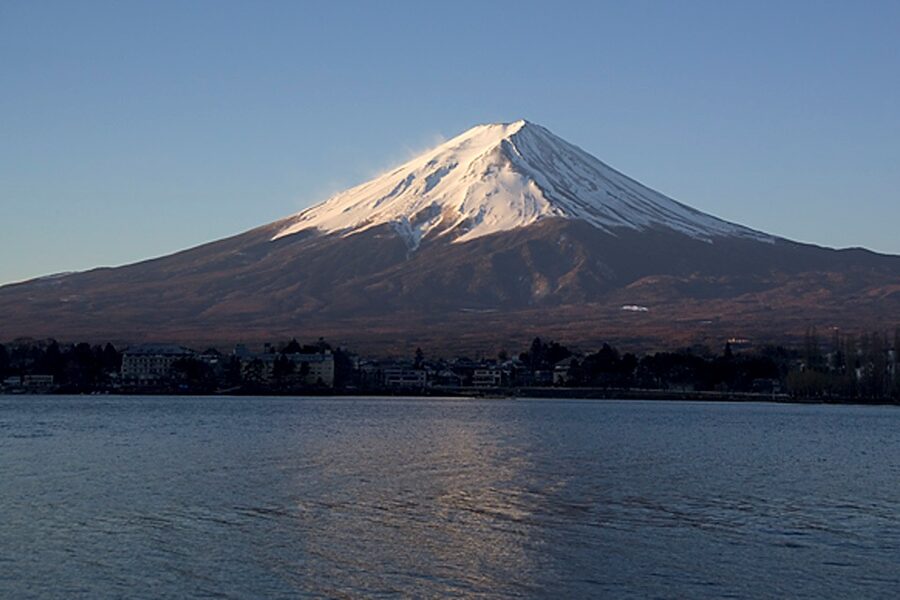
Coach tours to Mt Fuji + Hakone start at around $54 per person. A private tour runs $140-170 per person when you fill the vehicle. That’s 2.5-3x the cost. Here’s when it’s worth it:
Group of 4-6 people. This is the key math. At full occupancy, a $415-507 private tour splits to $100-150 per head — close enough to the coach-tour premium version ($154) that the flexibility alone justifies the swap. Smaller groups get a worse per-head rate; solo travellers and couples pay a significant premium.
You want sunrise or sunset. Coach tours are locked to 7am-8pm working hours. Private tours can leave at 4:30 am for sunrise at Kawaguchi, or stay until 7pm for the golden hour shot at Oshino Hakkai. The light quality is completely different.
Photography is the priority. If you’re spending on a Japan trip specifically to photograph Fuji, the ability to chase the weather window, stop unexpectedly at a good roadside angle, or spend 90 minutes at one spot instead of 20 is exactly what you’re paying for.
Mobility or accessibility needs. Coach tours assume fast-paced walking and standard stair climbing. Private vehicles can drop you closer to viewpoints, wait longer at each stop, and skip the stops you can’t manage. This is probably the single strongest case for a private tour for older travellers or travellers with knee/back issues.
Family with young kids. A toddler’s schedule doesn’t sync with a coach tour. Private tours can adapt — a nap break, a quick food stop, a skip on one viewpoint if everyone’s had enough.
When a private tour doesn’t pay off: solo travel, 1-2 people on a budget, any scenario where “pretty good for $54” beats “really good for $200-400 per head.”
The 3 Best Mt Fuji Private Tours from Tokyo
1. One Day Private Tour to Mount Fuji — $415 (up to 3)

At $415 total for up to 3 travellers ($138 per head for a trio, $208 per head for a couple), this is the entry-level private tour in the best sense — the full private experience without the full-vehicle fleet price. The “choose 8 sights” framing is the differentiator: the operator lists about 12 Fuji-region attractions (Chureito, Oshino Hakkai, Lake Kawaguchi, Shiraito Falls, Fuji 5th Station, tea fields, Hakone Shrine, Owakudani) and you pick which 8 to build the day around. Driver-guide speaks English; vehicle is typically a mid-size van with wifi. Pickup from Tokyo hotels in the 23 wards. Book 1-2 weeks ahead. Our full review covers which 8 sights to pick and why.
2. 1 Day Private Mt Fuji Tour (Charter) — $454 (up to 5)
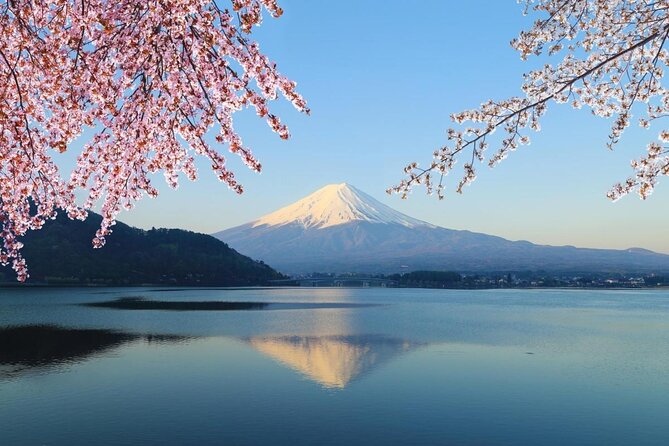
$454 for up to 5 people works out to $91 per head with a full van — the best price-per-person on any private Fuji tour. Same core offering: English-speaking driver-guide, hotel pickup, flexible itinerary. The “charter” framing means you lock the vehicle and driver for the full day; you’re not paying per stop or per hour extra. 10 hours door-to-door is typical. Mid-size van comfortable for 4-5 adults; tight for 5 adults plus any luggage. Driver can suggest itineraries if you’re undecided — the common defaults are Kawaguchi + Oshino Hakkai + Chureito morning, 5th Station afternoon, back to Tokyo by 6pm. Perfect for a family of 4 or two couples travelling together. Our review covers what a typical charter day looks like.
3. Mt Fuji Private Tour by Car With Pick up — $507 (up to 6-7)
$507 for up to 7 people works out to $72 per head at full capacity — approaching the coach-tour price point while keeping all the private-tour benefits. Larger van (typically a 7-seater or small bus). Best use case is a three-couple trip or a family of 6-7. Same flexible itinerary offering as the other two. Pickup from Tokyo hotels. Driver will confirm your preferred stops at booking and again on the morning. One warning: fitting 7 adults plus day bags is tight; confirm with the operator if your group is all full-sized adults. Our review covers the larger-group logistics.
What a Private Tour Lets You Do That a Coach Tour Doesn’t
This is the specific value breakdown. Everything below is impossible or impractical on a coach tour.
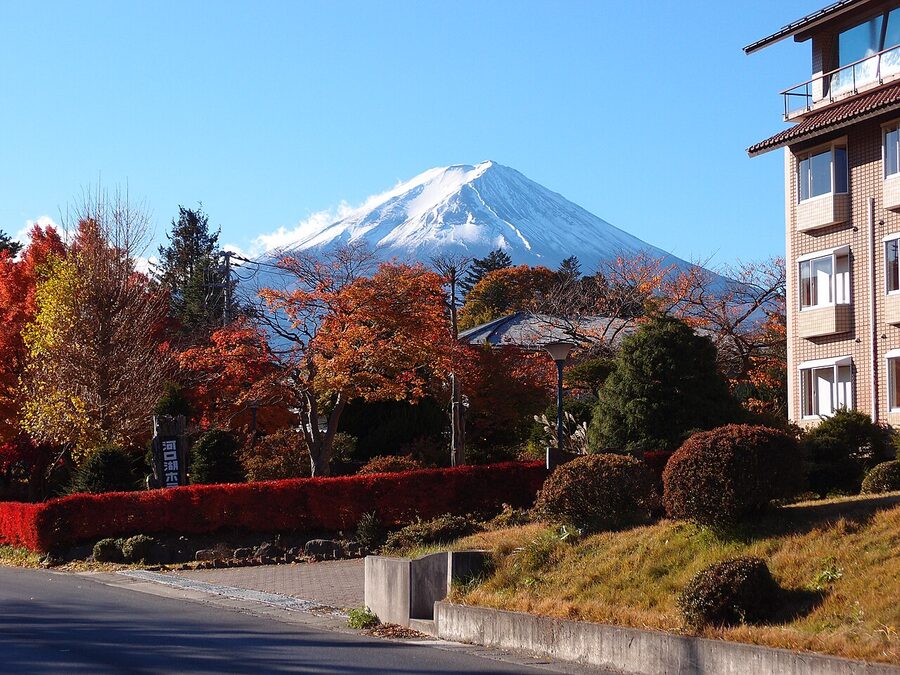
Visit Chureito Pagoda (Arakurayama Sengen Park)
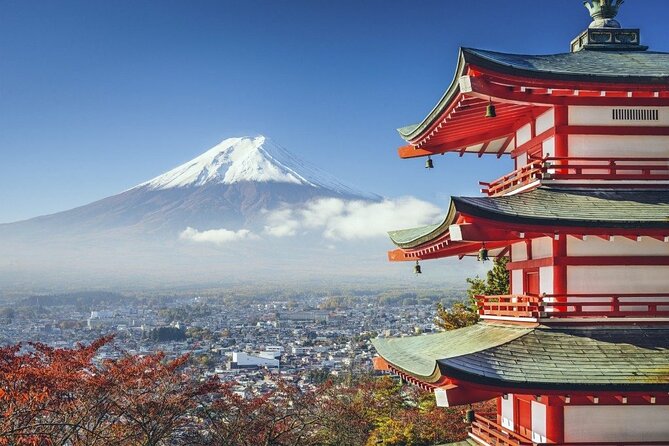
The pagoda-with-Fuji image on every Japan travel poster is taken at Arakurayama Sengen Park, a hillside shrine in Fujiyoshida with the Chureito Pagoda on its upper slope. To reach the pagoda you climb 400 stone steps up from the park entrance. The view at the top is the iconic Fuji-with-pagoda composition you’ve seen a thousand times before.
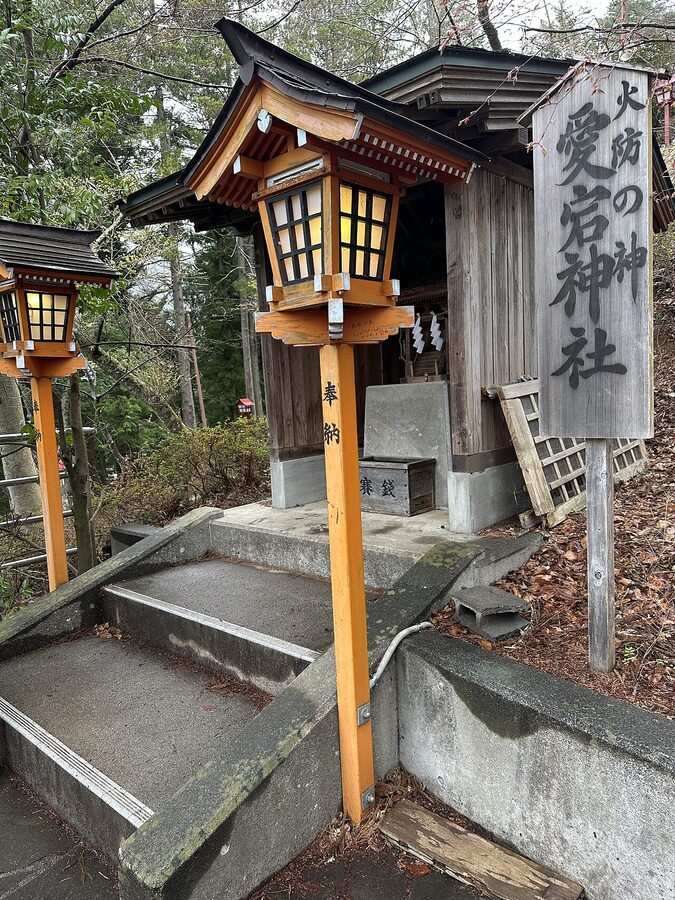
Coach tours rarely stop here because (1) the 400 steps don’t suit a 45-person group pace, (2) the parking lot can’t hold a full coach, and (3) the summit queue for photos doesn’t scale. A private tour can arrive at 7 am before the crowds, spend an hour at the top, and leave by 8:30 with the shot everyone else will spend the day trying to get.
Oshino Hakkai Spring Village
Oshino Hakkai is a preserved village at the base of Fuji built around eight spring-fed ponds. The water that feeds the ponds falls as snow on Fuji’s upper slopes, filters through 20+ years of volcanic rock, and emerges at Oshino at a steady 10°C year-round. The ponds are so clear you can see 4-6 metres down — koi drifting in them look suspended in glass.
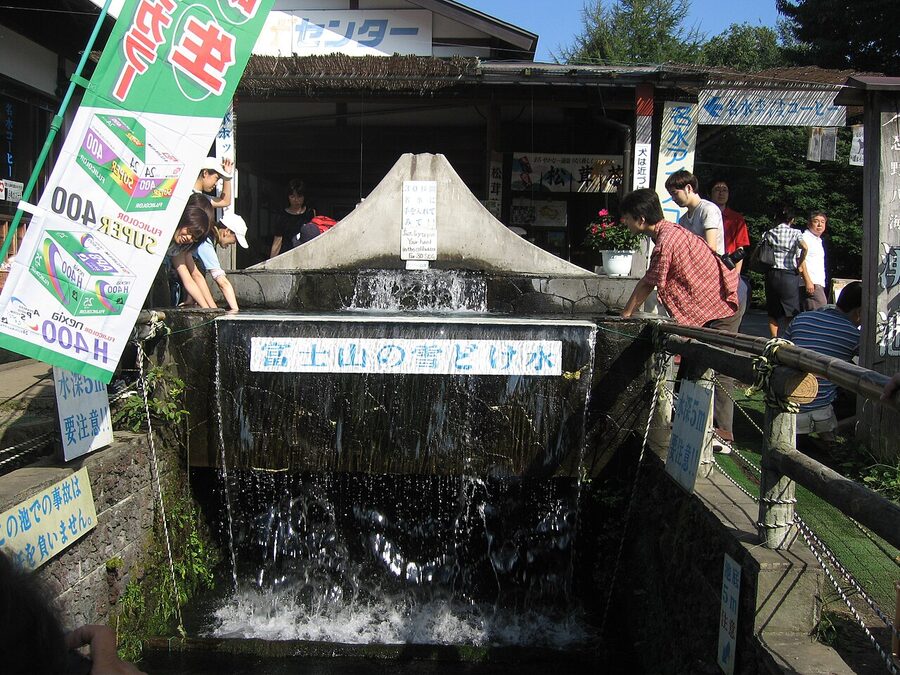
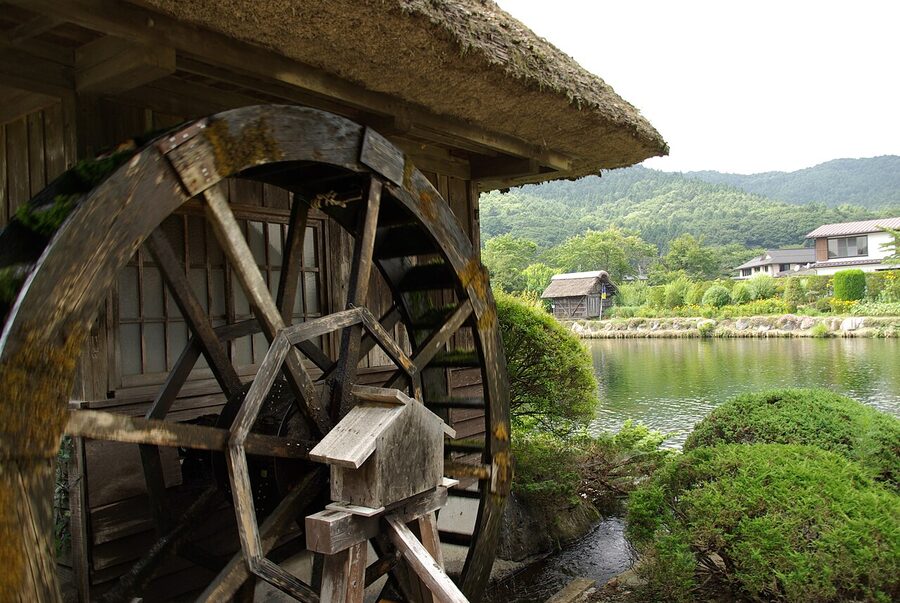
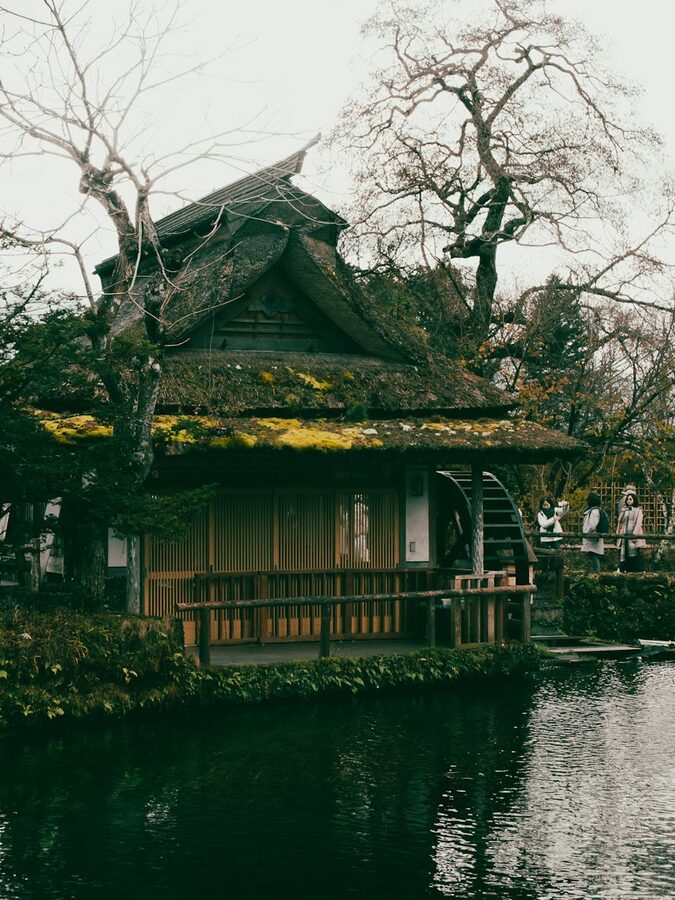
The village itself is preserved thatched-roof farmhouses (some still lived in), small shops selling spring-water noodles and spring-water coffee, and a handful of museums covering Fuji-region history. The full walking circuit is 40-60 minutes. Some coach tours include this, but they usually allocate only 20 minutes — a quick photo stop before the next thing. Private tours can spend the full hour here if you want.
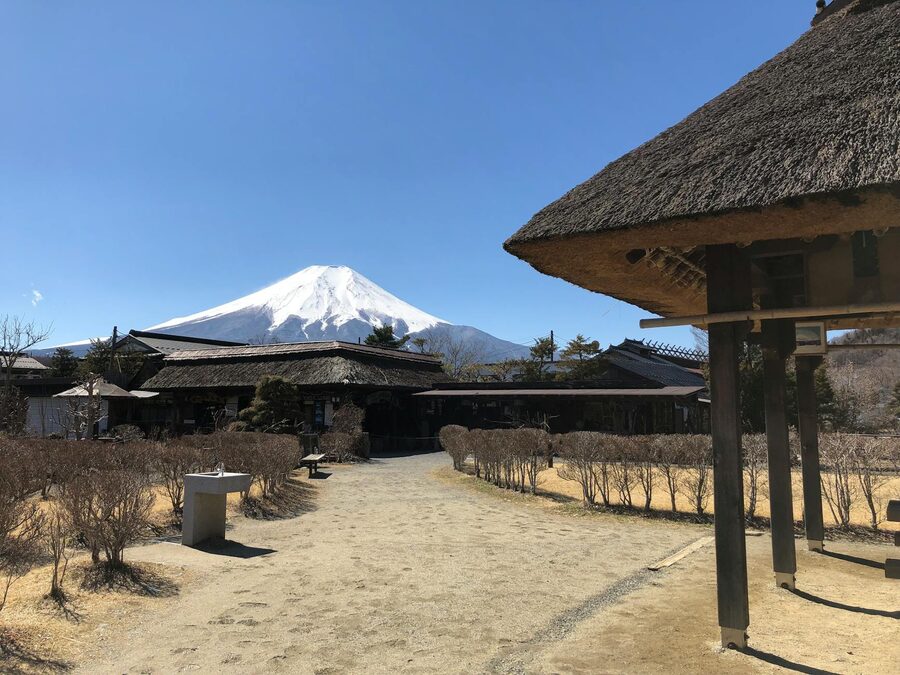
Shiraito Falls (Fujinomiya side)
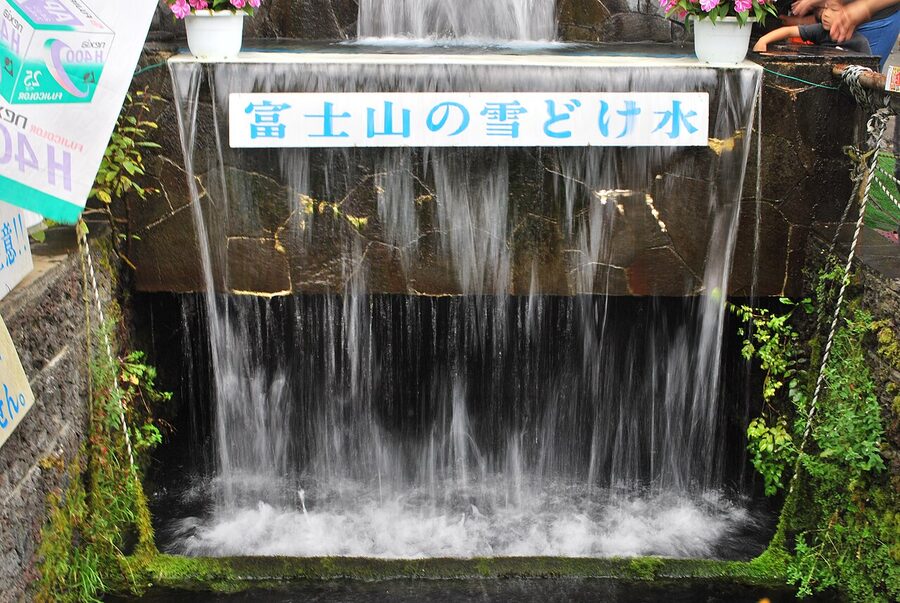
Shiraito Falls is on the south side of Fuji, about 2 hours from central Tokyo. It’s a 20-metre-wide semicircular waterfall fed by Fuji-filtered snowmelt — hundreds of individual cascades stream down a basalt cliff face, looking like white thread (shiraito translates as “white threads”). UNESCO-listed as part of the Mount Fuji World Heritage Site.
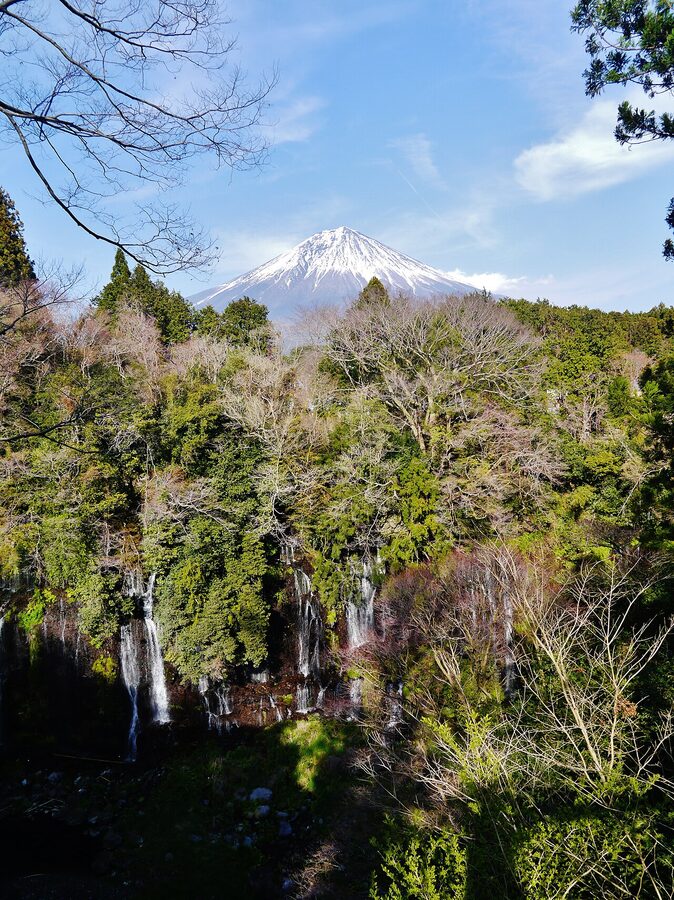
Zero coach tours visit Shiraito Falls as part of a Tokyo day trip — the driving distance puts it outside the usual loop. A private tour can add it on request (expect an extra 90 minutes each way on the itinerary). Worth the detour if waterfalls or UNESCO sites are your thing; skip it if you’re focused on the main Fuji viewpoints.
Fuji 5th Station (with time to actually look)
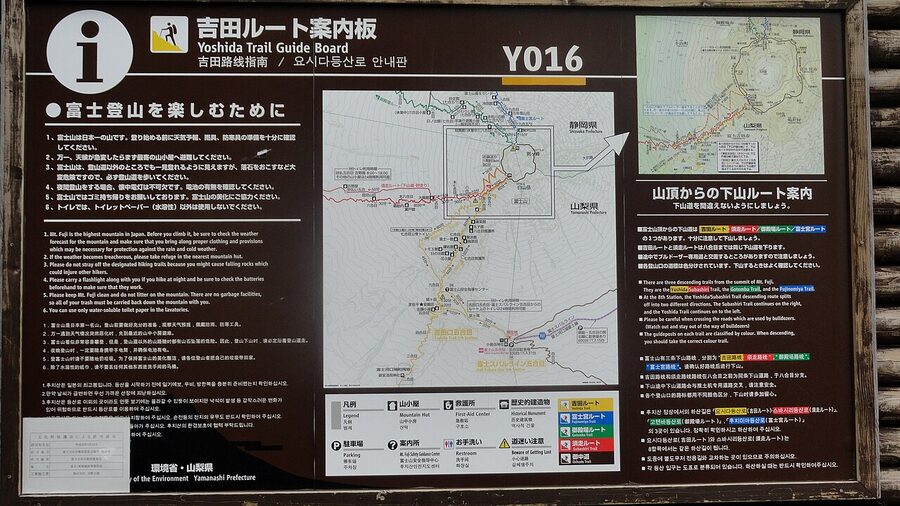
Coach tours stop at the 5th Station for 30 minutes — you buy a snack, take three photos, reboard. A private tour lets you hang out for 90+ minutes if you want: walk partway up the trail (no climb needed), grab a proper lunch at the restaurant overlooking the valley, sit at the shrine for a while. The elevation alone is worth the extended stop; at 2,300m the air is cooler, thinner, and distinctly different from the base.
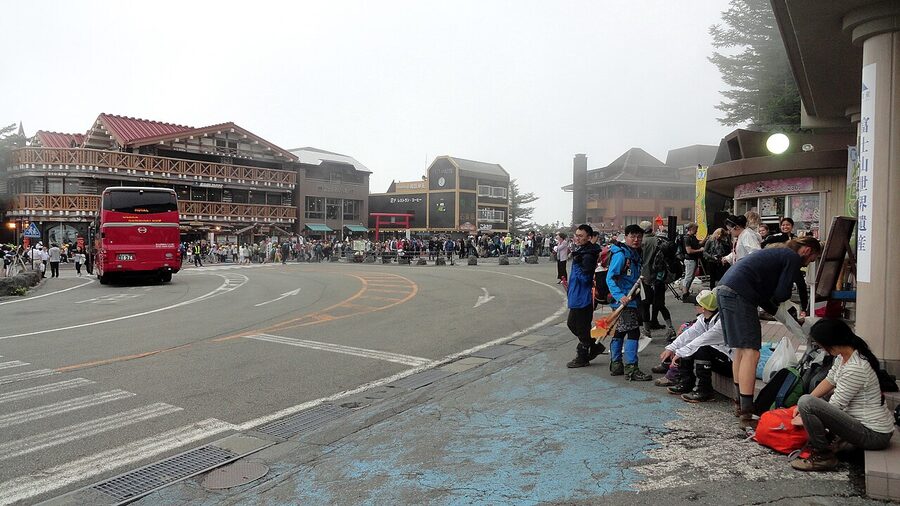
Note: 5th Station is closed November through mid-April due to snow. If you’re visiting in winter, the road stops at 4th Station and the 5th-Station equivalent viewpoint on a private tour is usually the tea fields in Shizuoka or a lower-elevation Fuji overlook.
Shizuoka Tea Fields

Shizuoka sits south of Fuji and produces 40% of Japan’s tea. The region’s tea fields framed against Fuji are a completely different composition from the lake-side views — rolling green hedges of tea plants with the snow-capped peak in the background. Coach tours don’t go near this area. A private tour can route south via Fujinomiya and include a tea-field stop with tasting at one of the roadside tea cafés.
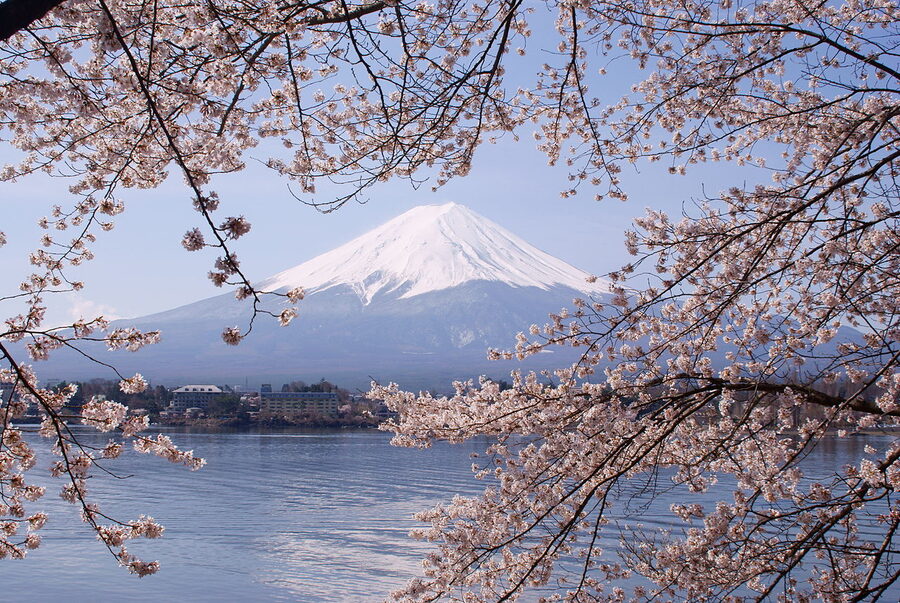
Sunrise or Sunset at Lake Kawaguchi
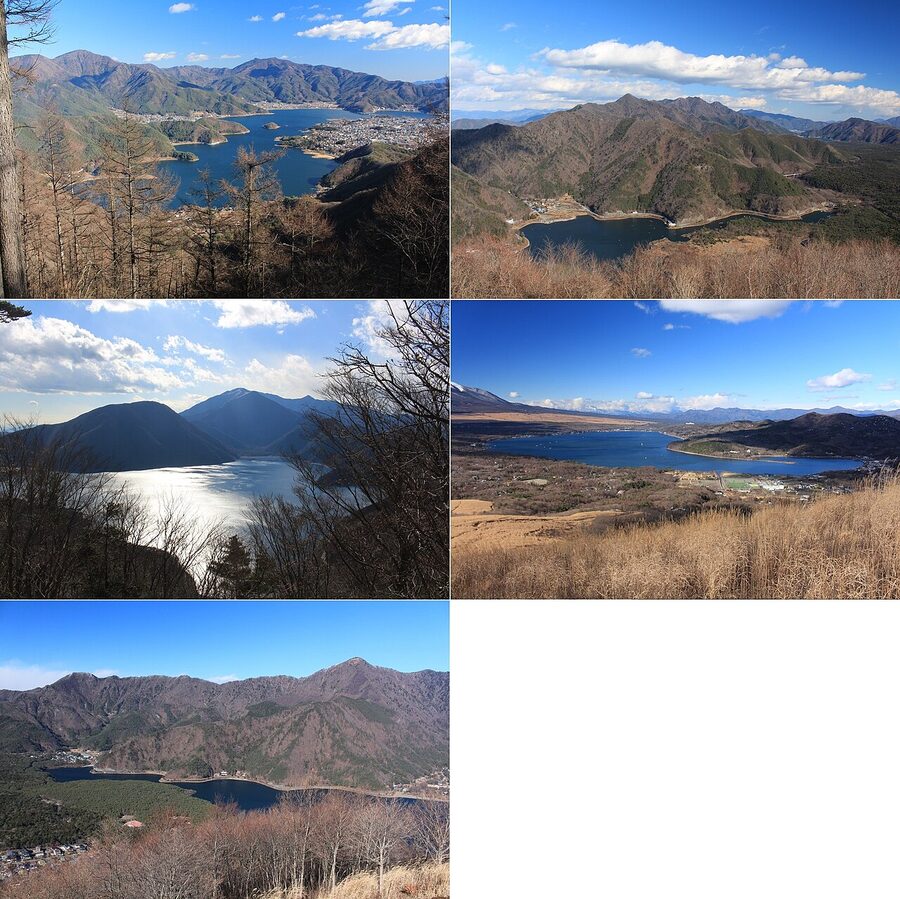
This is arguably the single biggest gain from paying for a private tour. Coach tours depart Tokyo at 7-8am, arrive at Fuji viewpoints at 10-11am, and have left by 3pm. You never see Fuji in the golden hour. A private tour can leave Tokyo at 4:30 am and arrive at Kawaguchi in time for sunrise — the 30-minute window when the snow on Fuji’s upper cone catches the rising sun and turns pink-orange.
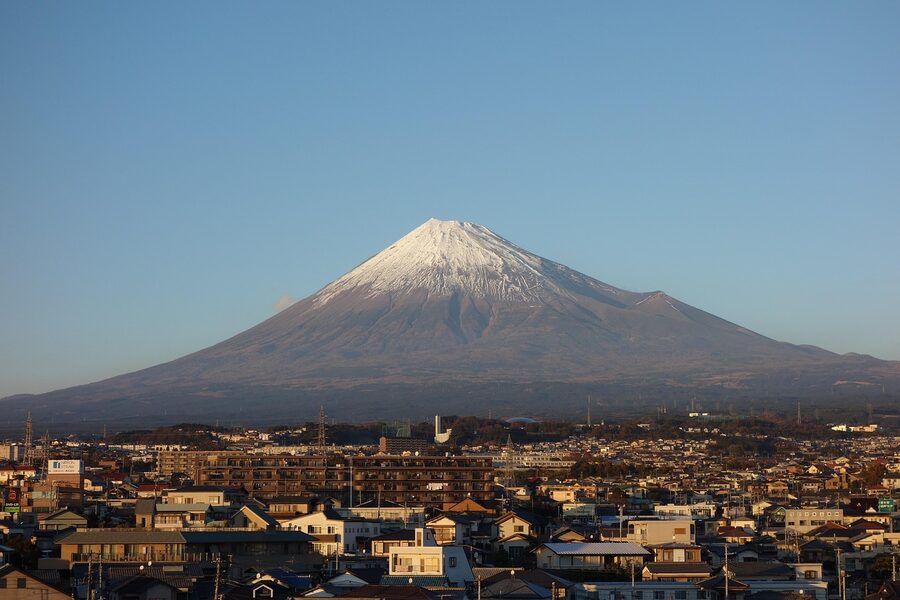
The evening version is also possible: spend the full day at moderate pace, then drive to a sunset viewpoint and get back to Tokyo by 9-10pm. A little longer day but often produces the best single photo.
How to Pick the Right Group Size
This is where the math gets sensitive. The three tours above are priced per group, not per person. Per-head cost depends entirely on how many of you fill the vehicle.
Solo traveller: Don’t. A private tour for 1 is $415-507 — prohibitive vs a $54 coach tour. Book the coach.
Couple (2): Private tour runs $208-254 per head. Worth considering only if photography or accessibility matters; otherwise the coach + bullet train at $154 is the value play.
Small group (3): Private at $138 (Tour 1) or $151 (Tour 2). Reasonable premium over coach. Start being worth it here.
Family of 4: Tour 2 (up to 5) at $113 per head is now below coach-premium pricing. Private becomes the obvious choice.
Group of 5-6: Tour 3 (up to 7) at $84-101 per head is below standard coach price with all the private benefits. Strongly recommended.
Group of 7: Maximum capacity. $72 per head. Cheaper than any coach tour and completely private. The ideal scenario.

What to Confirm Before You Book
Private tours vary more than coach tours, and the brochures don’t always cover the details that matter. Confirm these before paying:
Vehicle type and capacity. “Up to 5” sometimes means 5 adults + 2 kids + 3 bags won’t actually fit. If you have 4+ adults, ask for the specific vehicle model and confirm luggage capacity.
Pickup location and time. Most operators cover central Tokyo hotels (23 wards) free. If you’re in Chiba or Yokohama, there may be a pickup surcharge.
Itinerary customisation. Ask how flexible the day is. Some operators have a fixed 6-hour route with 2 customisable stops; others are fully blank-canvas. The difference matters if you have specific goals (sunrise, Shiraito Falls, etc).
Lunch arrangement. Usually own-cost. Ask if the driver recommends stops — a good driver can get you into a proper Hoto noodle shop or a tea-field café rather than a coach-bus rest stop.
Toll road and parking fees. Usually included, but check. Some operators bill extra for toll roads.
Cancellation and weather policies. Viator’s standard is 24-hour free cancellation. Weather cancellations (heavy snow on the Subaru Line, typhoons) usually trigger full refunds — but confirm.
Guide credentials. English “fluent” varies. If language depth matters, ask for specifics — “certified national guide” vs “English-speaking driver” are different levels.
Private Day Trip vs Overnight
If you’re paying private-tour prices, worth asking whether an overnight changes the calculus. The short answer: for solo and couple travellers, an overnight plus self-rail from Kawaguchiko can work out similarly priced to a private day tour, with more time on the ground.
Overnight approach: JR Chuo train from Shinjuku to Otsuki, then Fujikyu Line to Kawaguchiko (2 hours total, roughly ¥4,000 each way). Overnight at a Kawaguchiko lakeside ryokan or guesthouse (¥12,000-25,000 per person for ryokan with onsen, ¥6,000-10,000 for business hotel). Next morning you’re at the lake at sunrise without having driven 2 hours. Day 2 hit 2-3 viewpoints, return afternoon.
Versus a private tour ($415-507 for the group, plus own food/transport to/from pickup point): if you have 2 travellers, an overnight can be cheaper and delivers the sunrise shot the day tour can’t guarantee. If you have 4+ travellers, the private tour per-head cost undercuts the overnight approach — at which point the single-day option wins.
Groups of 5+ should book the private tour. Couples with time flexibility should consider the overnight. The one variable that shifts the equation is sunrise: if golden hour Fuji is non-negotiable, the overnight is the only reliable way to get it.
Practical Tips
When to book: 1-2 weeks in normal seasons; 3-4 weeks during cherry blossom (early-mid April) and autumn colour (late October-early November); 4-6 weeks for weekend dates in winter (December-February) when Fuji visibility is best.
What to bring: Layers (Fuji slopes are 10-15°C colder than Tokyo; 5th Station can be near freezing even in summer). Walking shoes (Chureito pagoda climb is 400 stone steps, Oshino Hakkai is gravel paths). Cash for lunch/snacks/shrine donations (¥5,000-8,000 per person is comfortable). A proper camera if photography is the goal — phone cameras struggle with Fuji’s scale.
Tipping: Not expected in Japan, but increasingly accepted for private-tour drivers who’ve gone above and beyond. A ¥1,000-3,000 per passenger gesture at the end is appreciated but not required.
Language: All three tours include English-speaking drivers. Depth varies. Ask during booking if you have specific interests (photography, history, food) — some drivers specialise and can pair you accordingly.
Accessibility: Private tours are significantly more accessible than coach tours. The driver can drop you close to each viewpoint, pick you up at a different spot, and skip stops that involve stairs. Mention any mobility needs at booking so the operator can assign the right vehicle (sliding-door vans are easier for limited mobility than sedans).
More Japan Experiences
A Mt Fuji private tour is an upgrade on the classic day trip. If you’re weighing the options, our Mt Fuji + Hakone coach day trip guide covers the standard group-coach alternative, and our how to visit Mt Fuji by bus guide covers the DIY highway-bus option for independent travellers. For broader Tokyo experiences, our Asakusa Sensoji walking tour pairs naturally with a Fuji day as an accessible city counterpart. Our Tokyo Yakatabune dinner cruise is a good post-Fuji evening. If you’re stringing together a longer Japan trip, our Nagoya to Takayama and Shirakawa-go day trip is the mountain-village equivalent for the Honshu interior. Kyoto Gion food tour and Osaka Kuromon Market food tour are the natural food-tour anchors for the Kyoto/Osaka legs. Tokyo ramen tasting is the usual “back from Fuji, hungry, want street food” follow-up. For smaller, private-style experiences, our kintsugi experience guide and Kanazawa tea ceremony cover intimate traditional-arts formats. Takayama sake brewery is another private-feel small-group format in a different region. Most travellers who book a Fuji private tour do it in the first week of their Japan trip — if clouds roll in, a subsequent trip to Kyoto or Osaka gives a second chance at clear-Fuji weather from the shinkansen window.