
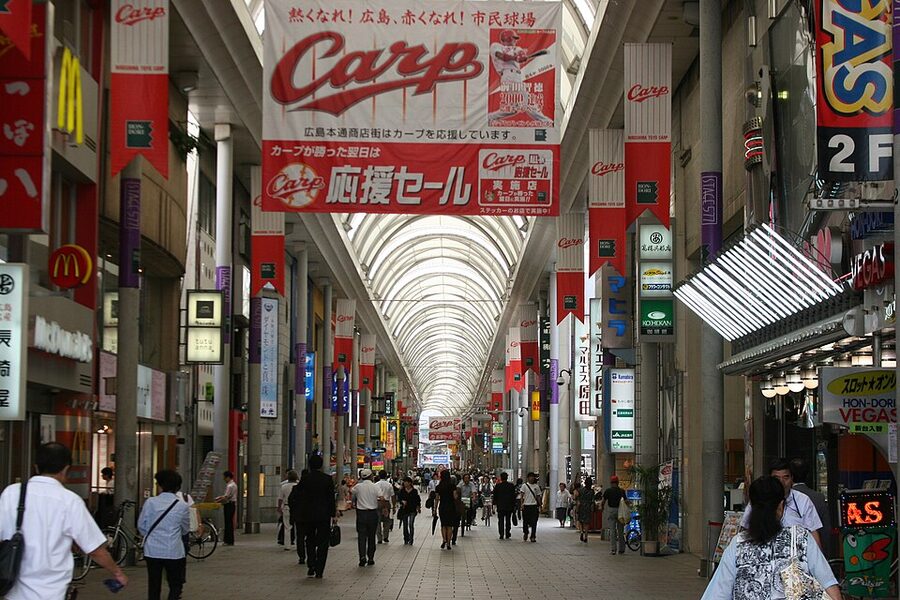
The first thing you notice is the quiet. You’ve climbed a narrow staircase above a clothing shop on Hondori, Hiroshima’s main shopping street, and the rumble of the covered arcade falls away behind you. On the third floor, the room smells faintly of tatami and cedar. A seven-foot bamboo bow rests on a stand. The instructor bows, you bow back, and the only sound for the next ten seconds is the whisper of the bowstring tensioning and then the clean, flat thwack of an arrow hitting straw.
That’s Sharaku, and it’s the reason people search “Hiroshima Japanese archery” in the first place. Kyudo is one of the few traditional Japanese martial arts that foreigners can still try in the middle of a city, not in a dojo that takes months to find. This guide covers how to book it, which of the two or three main operators to pick, and what actually happens during the hour you’re there.
Short on time? Here are my top picks:
Most popular: Japanese Archery Experience at Hiroshima Castle Sharaku — the Hondori-street studio most travellers end up at. One hour, 12 arrows, real bow, good English support.
Best value: Hiroshima: Traditional Japanese Archery Experience — almost identical format on GetYourGuide, often cheaper once promotions run. Same studio, different booking route.
For the wider samurai-day crowd: Samurai Training (Kyudo and Katana) in Tokyo — if you want the full katana-and-bow package and Hiroshima isn’t on your route, this is the closest Tokyo equivalent.
- What kyudo actually is (and why Sharaku changed my plans)
- My pick of the Hiroshima archery experiences
- 1. Japanese Archery Experience at Hiroshima Castle Sharaku —
- 2. Hiroshima: Traditional Japanese Archery Experience —
- 3. Samurai Training (Kyudo and Katana) in Tokyo —
- How booking actually works
- What actually happens in the hour
- What to wear and bring
- How to get to the Sharaku studio
- A short history of kyudo — why this particular martial art
- Yabusame and the older cousin of kyudo
- Who should book this, and who probably shouldn’t
- Booking checklist — what to do 48 hours out
- Pair it with the rest of your Hiroshima day
- Hiroshima Castle — the reason for the name
- If you’re in Hiroshima already — book today
- Where kyudo fits in a bigger Japan trip
What kyudo actually is (and why Sharaku changed my plans)
I went to Hiroshima expecting to spend the day at Peace Memorial Park and the Atomic Bomb Dome. Kyudo wasn’t on my list. It got bumped on because a hotel staff member mentioned it, and because Sharaku’s studio is a three-minute walk from the park. If you’re in central Hiroshima for the morning, the studio is already on your walk back to the station.
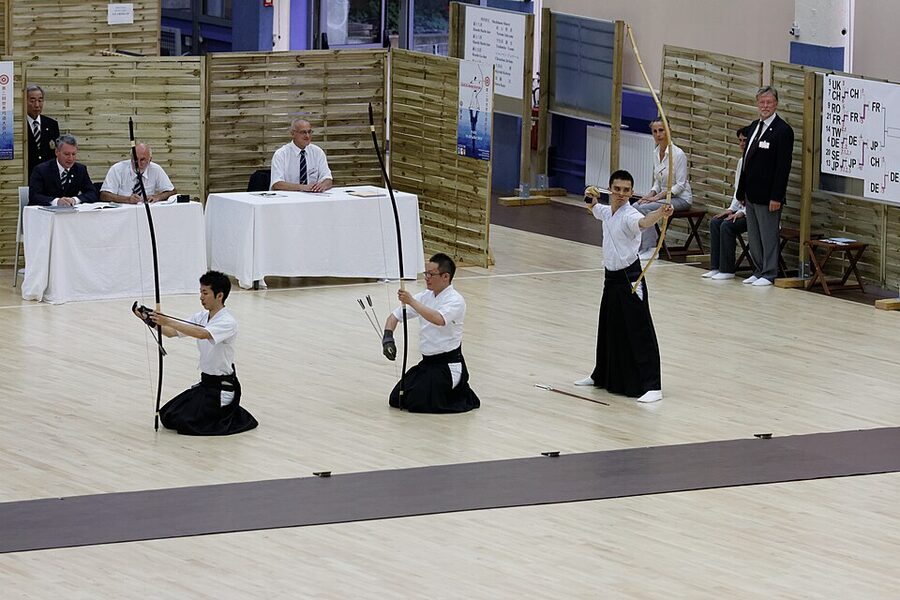
Kyudo translates as “the way of the bow.” It’s a Japanese martial art codified mostly after World War II, but drawn from a longer tradition of archery that goes back to the samurai era and, before that, to hunting and battlefield use. Unlike European archery, which is about the shot, kyudo is about the shooting. There are eight formal steps from picking up the bow to releasing the arrow, and competitions are judged as much on form as on whether the arrow hits.
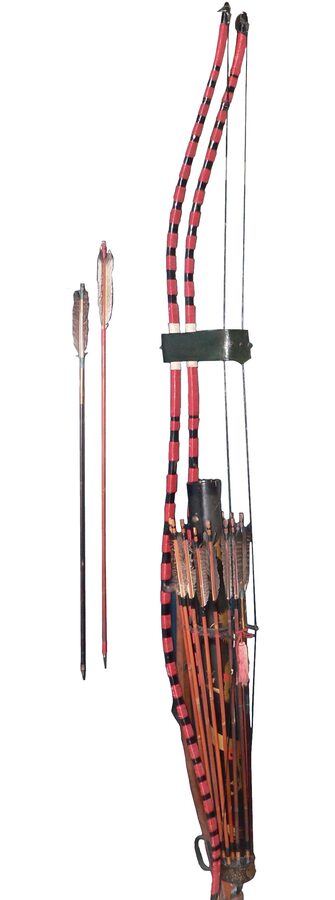
For a tourist, none of that matters at first. What matters is that the bow in your hands is over two metres long, the arrow is taller than you’d guess, and the target is close enough to feel fair and far enough to feel real. You miss a few times. Then you don’t. Then you want to come back tomorrow.
My pick of the Hiroshima archery experiences
Two tours dominate this route, and they’re both running out of the same Hondori studio — Sharaku. The difference is the booking platform and, sometimes, the price. A third pick sits further afield for travellers who want the full samurai-day experience and aren’t limited to Hiroshima. I’d book one of the first two if Hiroshima is on your itinerary.
1. Japanese Archery Experience at Hiroshima Castle Sharaku — $43
This is the Viator listing for Sharaku’s beginner session — the one most people I met in the hostel had either booked or were about to. The twelve-arrow format is just long enough to feel like a real lesson and short enough that you aren’t learning on empty arms by the end. Our full review gets into the exact sequence the instructor walks you through, including why you wear a single archer’s glove on the right hand. If you’re booking one kyudo slot in Hiroshima, this is it.
2. Hiroshima: Traditional Japanese Archery Experience — $41
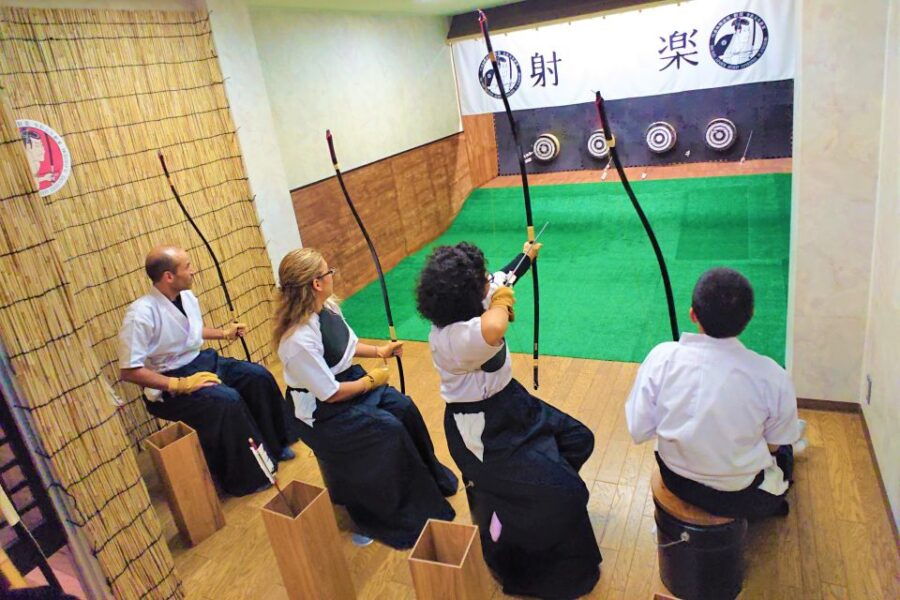
This is Sharaku’s GetYourGuide listing and it runs the same one-hour slot as the Viator version. The GYG page is sometimes a few dollars cheaper, and the cancellation policy is marginally more forgiving if you’re not sure about your Hiroshima dates yet. Our review of this tour walks through the booking confirmation process and what to expect at check-in. Book on GYG if you already have a GetYourGuide account and want to keep your bookings in one app.
3. Samurai Training (Kyudo and Katana) in Tokyo — $99
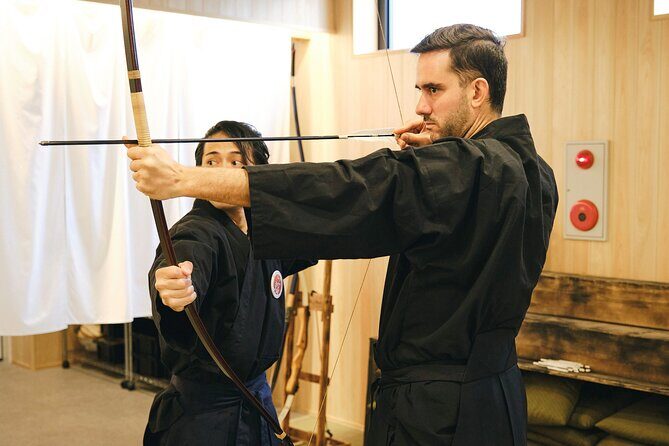
Not a Hiroshima option — I’m including it because about a third of readers on this page end up writing in to ask “what if I skip Hiroshima?” This Asakusa studio runs a small-group class that folds archery into a broader samurai experience with sword work. Our full review is honest about the trade-offs — more surface-level than Sharaku, but more variety for the price. Book this one only if Hiroshima is off the table.
How booking actually works
Book 24-48 hours in advance if you can. Sharaku takes small groups at set time slots, and the weekend afternoons fill first — especially the 2pm and 3pm windows, when people are walking back from the Peace Park. Weekday morning slots are usually bookable same-day, but that’s the only window where I’d chance it.
Both Viator and GetYourGuide give you an instant confirmation. The studio then sends a short email with the Hondori address, a photo of the street-level entrance, and the staircase. Screenshot that email — the entrance is genuinely easy to walk past, even with the pin on Google Maps, because the signage is small and the building is mid-block between two clothing stores.
Payment at Sharaku itself is usually nothing extra — the booking covers the session. If you want a second round of arrows at the end (some studios offer 12 more for a discounted rate), that’s a cash-only add-on of around 1,500 yen.
What actually happens in the hour
The first fifteen minutes are setup. You take your shoes off at the door, swap into indoor slippers, and sit on a low bench. The instructor — at Sharaku, often the owner himself — walks you through a short history of the bow, explains what you’re holding, and demonstrates the correct grip and release.
There’s a translator device on the table if the owner’s English is patchy on any given day. In practice, he mimes most of it. The bow sits on his knee. He shows you the difference between the beginner bow (about 4kg draw, forgiving) and the adult-grade bow (20kg, for veterans only). You’re strongly encouraged to try pulling the heavy one — almost nobody can, which is the point.
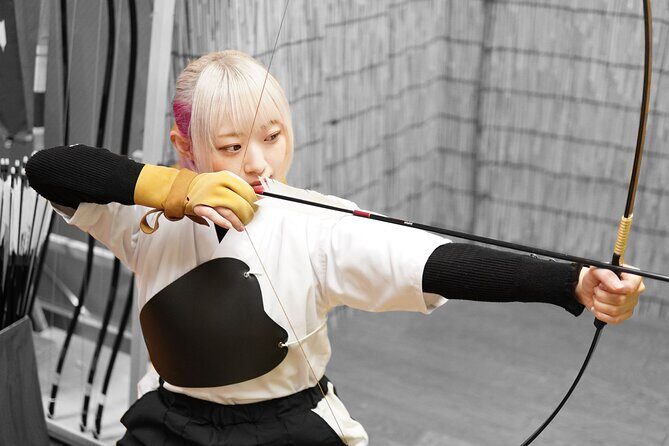
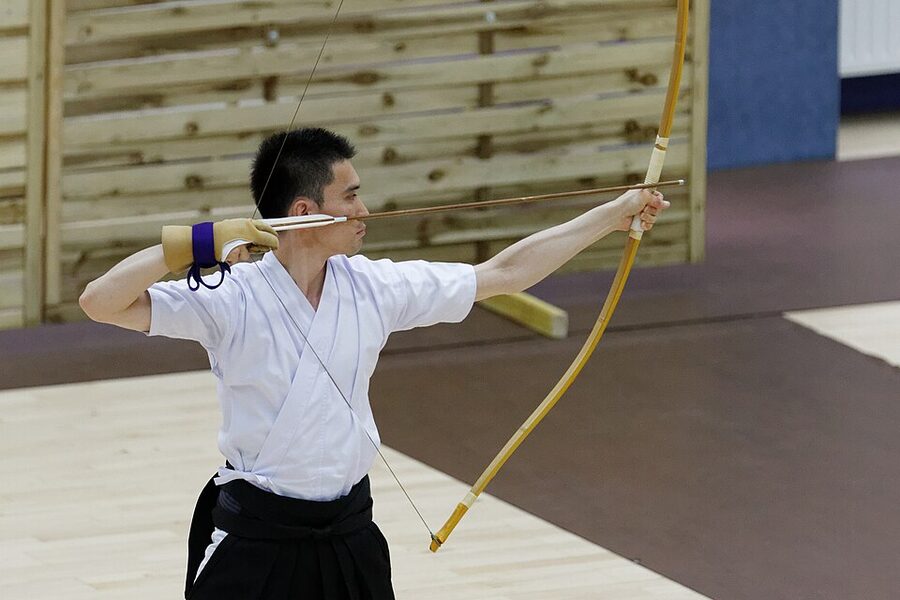
Then gloves on. Only your right hand gets a glove, and only your thumb and index finger are covered. The rest of your hand is free. It feels strange at first. The gloves are real leather, worn soft by hundreds of previous students.
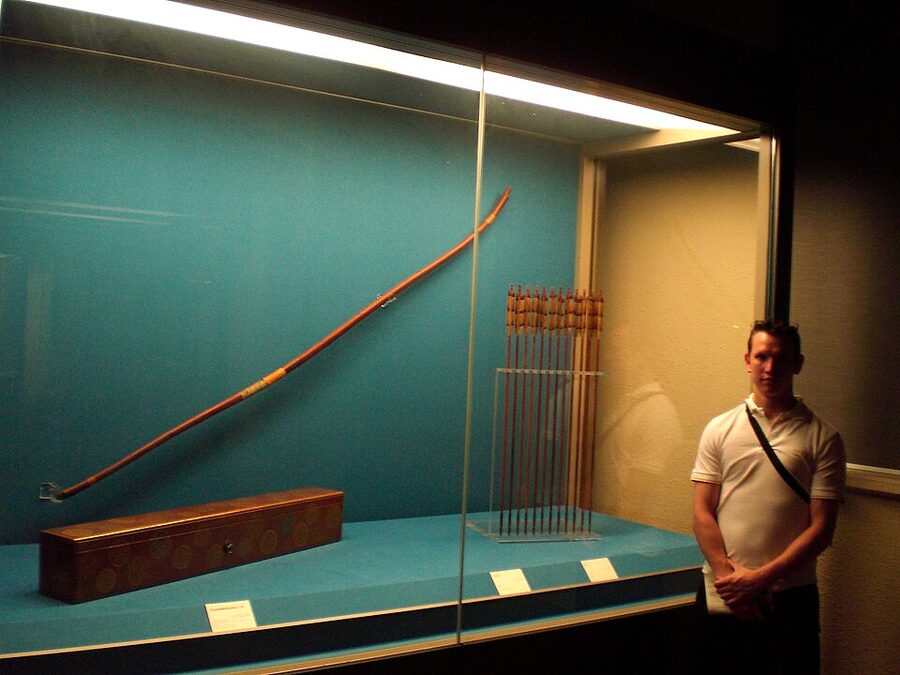
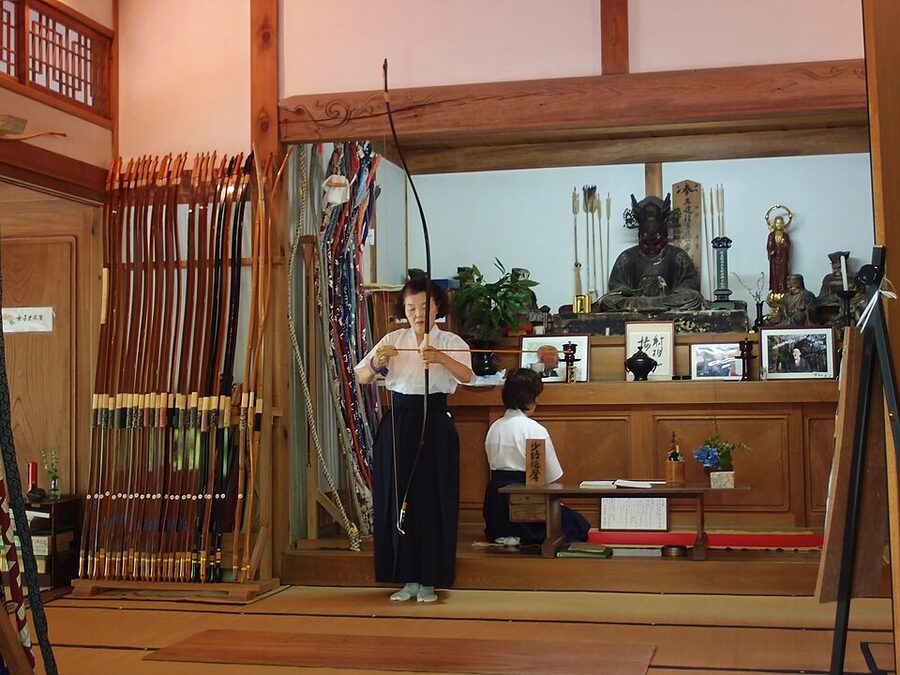
Twelve arrows follow, released in small batches. The instructor stands behind you and corrects angle, grip, and stance. The big correction nearly everyone gets is “aim left.” Kyudo arrows curve right on release because of the way the string catches the shaft on the way out, and the only way to hit the target in front of you is to aim at the target to its left.
That single instruction will be the most memorable thing about the hour. You sight at empty wall, trust the instructor, release — and the arrow lands where you weren’t looking. It’s the kind of counterintuitive thing that makes the whole practice feel more like meditation than sport.
What to wear and bring
Wear something you can move your arms in. A loose t-shirt is fine. The studio provides a traditional kyudo-gi top if you want the full photo, but you’ll only get it if you ask at booking or check-in — don’t assume it comes with the basic session. Long sleeves are actually easier than short sleeves because the string brushes your inner forearm on release, and without the guard, a bare forearm will sting.
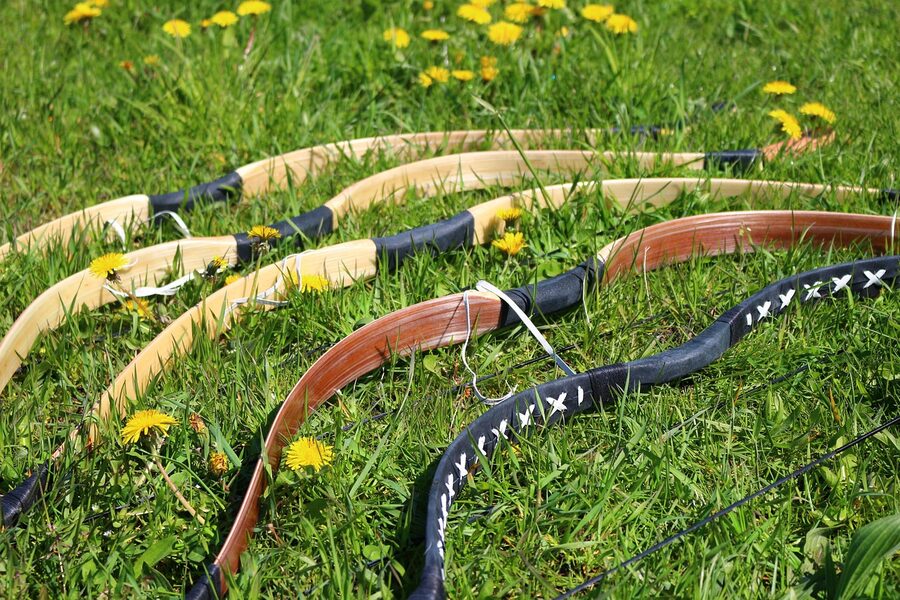
Shoes come off at the door. Bring socks, or at least clean bare feet — you’ll be standing on tatami and the floor gets visibly dirty on rainy days. No dress code beyond that, no need for white clothing, no long trousers required.
Leave large backpacks in a locker at your hotel or at Hiroshima Station. The studio has a small coat rail but no secure lockers, and you’re shooting arrows — you want your hands and mind free.
How to get to the Sharaku studio
The Sharaku studio sits on Hondori, the covered shopping arcade that runs east-west through central Hiroshima. From Hiroshima Station, take the tram (green line, Route 1 or Route 2) to Hatchobori stop — about 15 minutes and 240 yen. Hondori is the arcade directly south of the stop. The studio is roughly four minutes’ walk once you’re in the arcade.
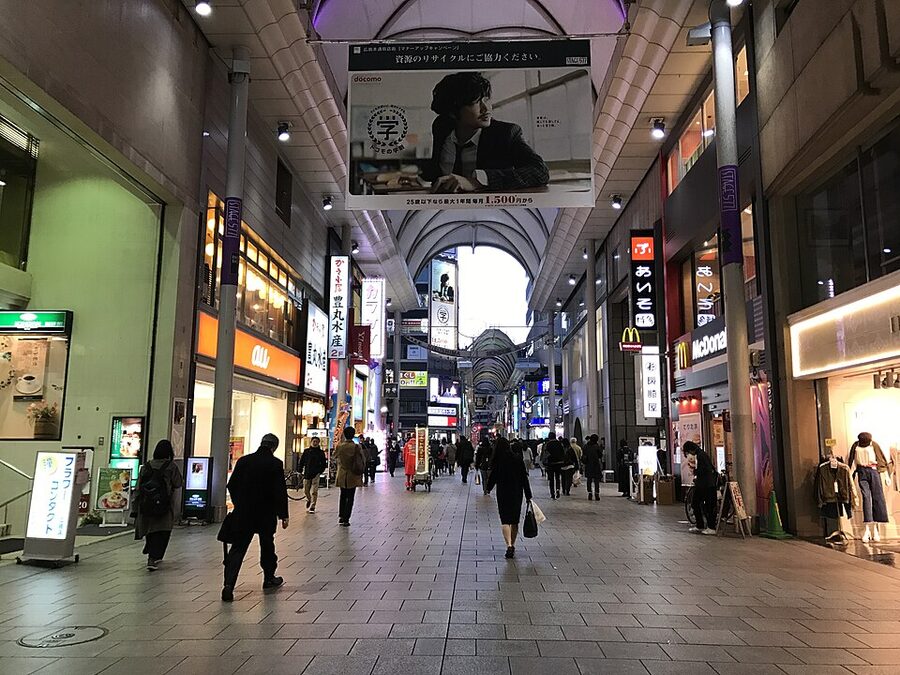
From Peace Memorial Park, it’s even easier. Walk east along Heiwa-odori, cross Aioi Bridge, and Hondori starts on the far side. The studio is about a five-minute walk from the bridge. This is the route most people take — Peace Park in the morning, lunch in town, kyudo in the afternoon.
If you’re coming in for the day from Osaka or Kyoto on the shinkansen, Hiroshima Station is the endpoint, and the tram from there is the most reliable route. Taxis exist but Hondori is pedestrianised for much of the day, so a taxi will drop you at the edge of the arcade anyway.
A short history of kyudo — why this particular martial art
Kyudo is one of the older Japanese martial arts you can still walk in off the street and try. The Japanese longbow, the yumi, has been in continuous use for well over a thousand years. Archery was the samurai’s primary battlefield skill long before the katana took centre stage in popular culture. When firearms arrived in Japan in the 1500s via Portuguese traders, the bow shifted from a weapon of war to a disciplined, ceremonial practice.
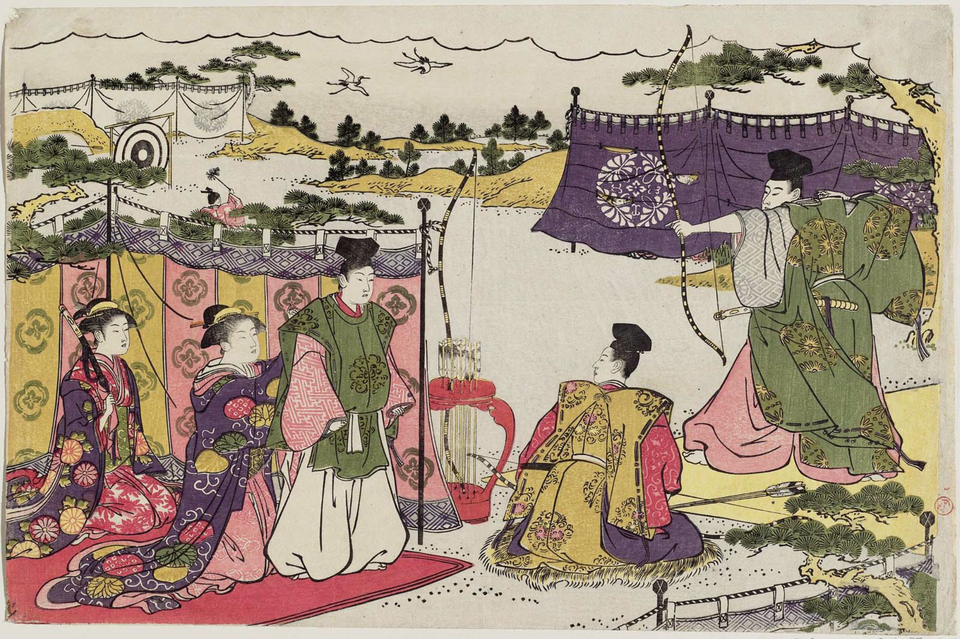
The modern form of kyudo was largely codified after World War II, partly as a deliberate preservation effort. Competitive kyudo today is judged on posture, technique, breathing, and the release — not just whether the arrow hits. The International Kyudo Federation has tens of thousands of members worldwide, and there are active dojos across North America and Europe.
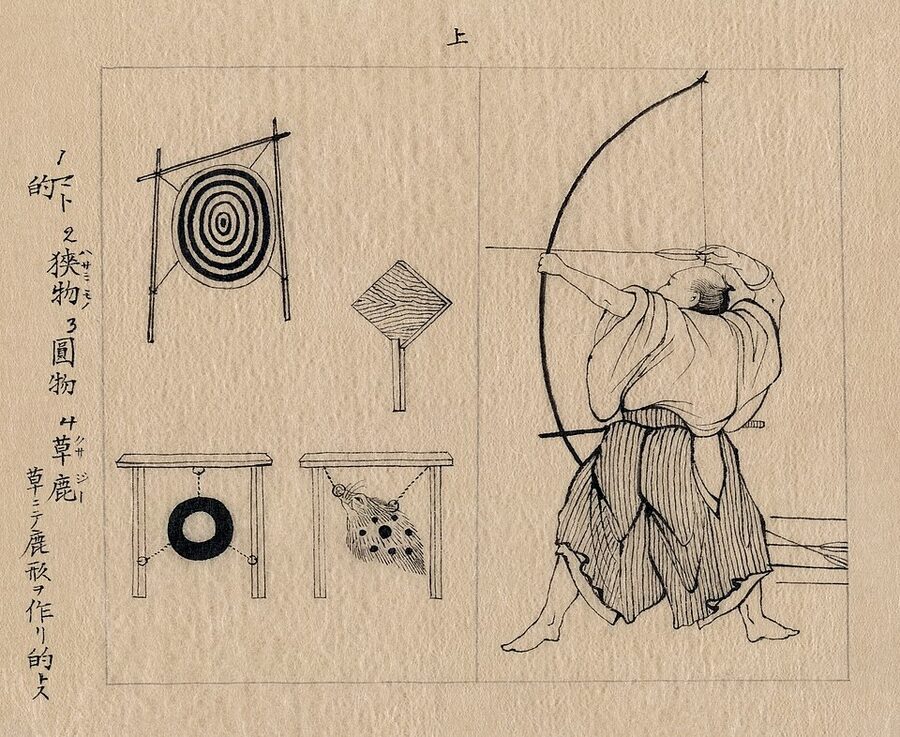
Hiroshima isn’t the most famous kyudo city in Japan — that honour probably goes to Kyoto, with its centuries-old Sanjusangendo archery competitions — but it’s one of the easiest places to try it as a tourist. The Sharaku studio is set up for beginners, and the format is tuned to give you a real taste in an hour rather than a watered-down photo-op.
Yabusame and the older cousin of kyudo
If standing-target kyudo hooks you, the natural next question is yabusame — horseback archery, where the archer canters along a track and fires at three wooden targets in quick succession. Yabusame isn’t something you can try as a tourist in Hiroshima. It requires years of training and a horse. But you can watch it at shrine festivals across Japan, and if you’re curious, it’s worth knowing that the bow you hold at Sharaku is a direct descendant of the one used on horseback for centuries.
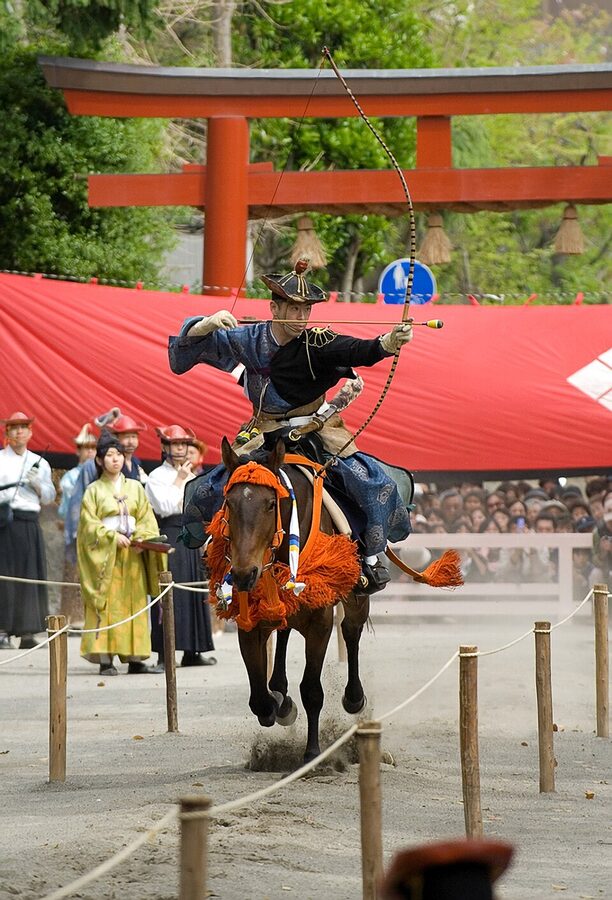
The most accessible yabusame festival for a Hiroshima traveller is actually in Kamakura, outside Tokyo, held each September at Tsurugaoka Hachimangu. If you’re building a Japan trip from the south up and kyudo at Sharaku is early in your route, you can see the full horseback version near the end. I did it in that order and the connection between the two sessions was more vivid than if I’d started with yabusame.
Who should book this, and who probably shouldn’t
Book it if you’re curious about Japanese martial arts but don’t want to commit to a multi-day course. Book it if you’ve got an afternoon free in Hiroshima and you’ve already done Peace Park and Miyajima. Book it especially if you’re travelling with a partner or teenagers — the hour is hands-on enough to be a real experience, not a passive watch-and-nod.
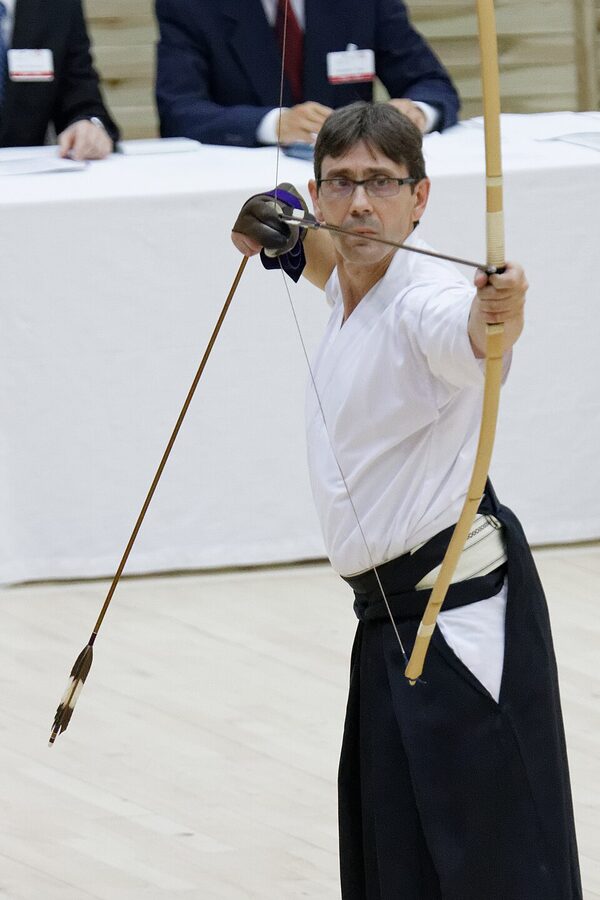
Skip it if you’ve got a shoulder injury or recent surgery — the draw weight on even the beginner bow is 4kg, which isn’t a huge load, but the full extension repeats twelve times in an hour. Skip it if you’re travelling with children under about 9 or 10; there’s no children’s bow at this studio, and the adult beginner bow is genuinely taller than most younger kids. Skip it if you’re hoping for an outdoor range with long-distance targets — this is an indoor studio experience, closer in format to a class than a sport.
One last thing worth flagging: the studio is small. If there’s another group booked in the same hour as you, the experience is less intimate than if you’re alone or with a partner. I’d ask about group size when you email the confirmation address — it’s the single thing that most changes the feel of the session.
Booking checklist — what to do 48 hours out
Here’s the practical flow I’d use if I were booking this from scratch, one week before arriving in Hiroshima.
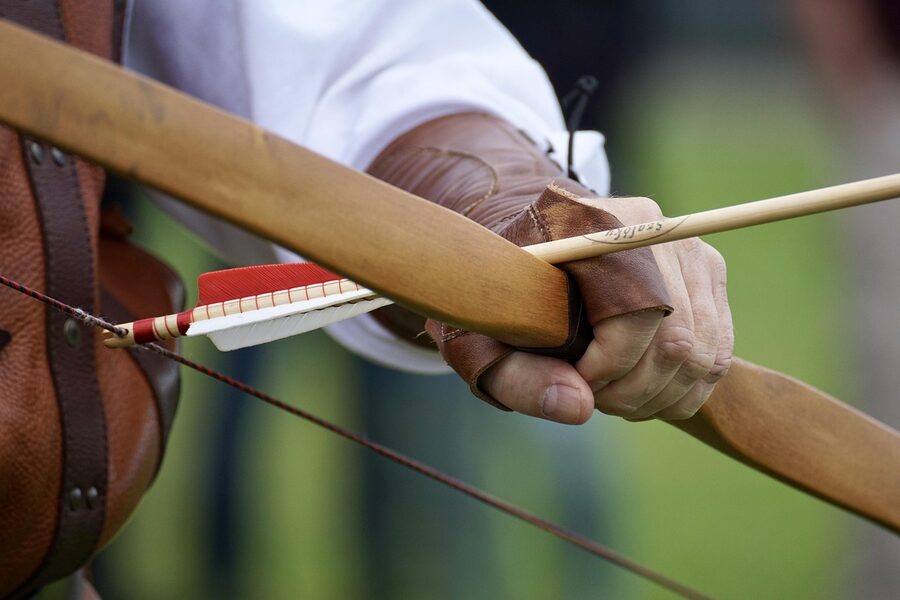
First, compare the Viator and GetYourGuide listings side by side — prices shift, and one is usually a few dollars cheaper. Check the exact address the operator gives you and screenshot it. Look at the street-level photo; it’s the only way you’ll find the entrance on the first pass. Confirm whether the traditional gi costume is included or a paid add-on (it varies). Bring socks, light top, no heavy bag.
On the day, arrive about ten minutes early — the staircase to the third floor is narrow and you don’t want to keep a group waiting. Greet the instructor with a small bow rather than a handshake; he’ll do the same. After the hour, there’s usually a certificate or a small printed photo available for a few hundred yen, and it’s genuinely a nice souvenir.
Pair it with the rest of your Hiroshima day
Kyudo is an hour, which means you have to build the rest of the day around it. I’d frame it as the afternoon anchor rather than the main event — something quiet and focused after a morning at the Peace Memorial Park, or before an evening at an okonomiyaki place. The studio’s Hondori location makes both of those bookends walkable.
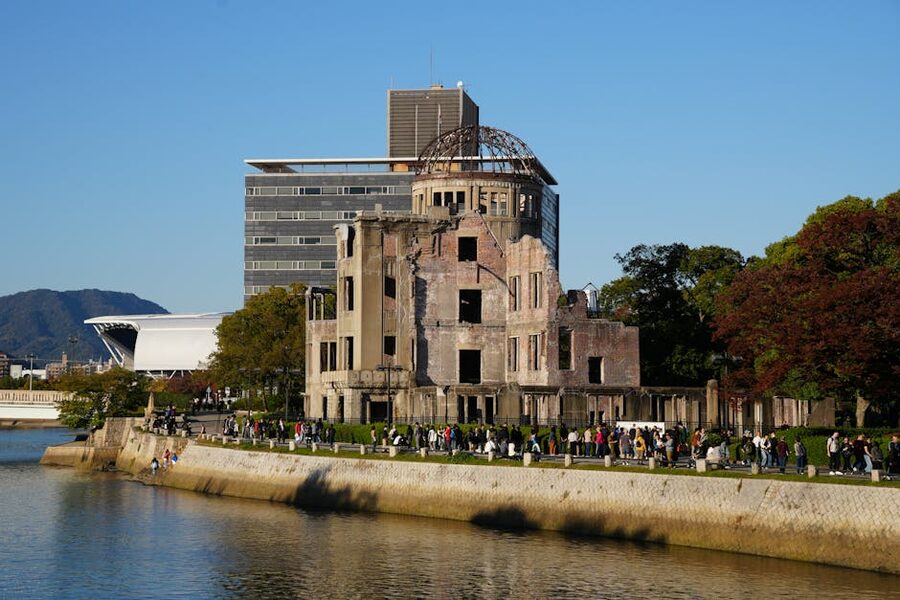
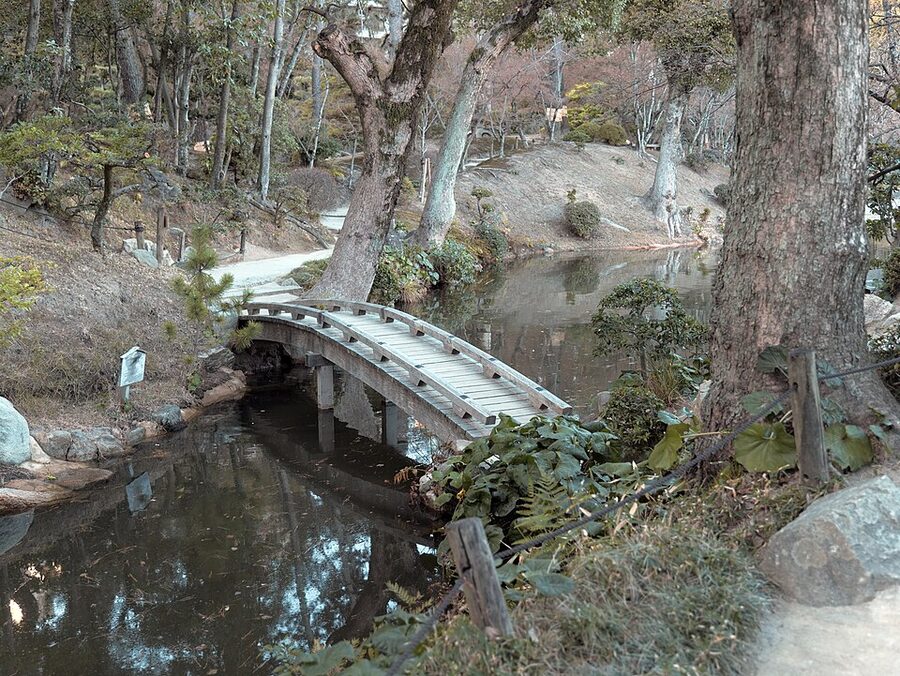
A few good afternoon pairings: lunch at Okonomi-mura (the multi-floor okonomiyaki building ten minutes from the studio), a short visit to Shukkeien garden (the old feudal lord’s garden on the east side of the city, about 20 minutes on foot or 10 by tram), or Hiroshima Castle itself if you haven’t seen it. A Hiroshima city walking tour in the morning sets the historical context nicely before kyudo in the afternoon, and if you want something quieter on a rest day, the same Hiroshima-Miyajima day trip guide flags the best ferry times to beat the afternoon crowds.
If you’ve got a full second day, Miyajima is the next move. The Hiroshima and Miyajima day trip is the classic second-day circuit, and it pairs well with kyudo on day one because you’re already anchored in the city. With kids in tow, the kid-friendly Miyajima day trip is worth a look instead — the deer on the island tend to be the hit of any family Hiroshima trip.
Hiroshima Castle — the reason for the name
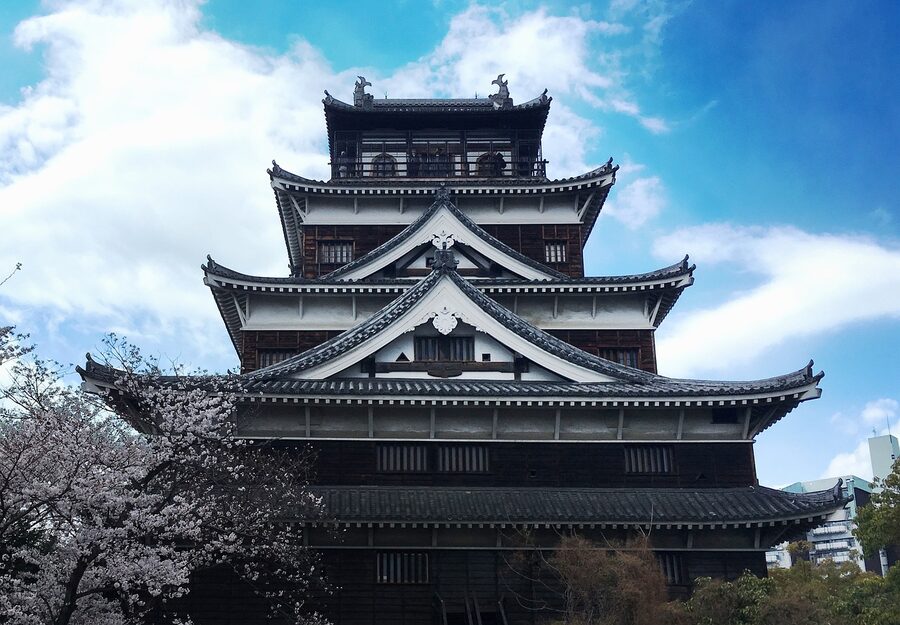
The studio uses “Hiroshima Castle” in its branding, which causes some confusion. The studio is nowhere near the actual castle — the name is historical, referring to the fact that the founding instructor trained at Hiroshima Castle’s former archery range. The castle itself, about a 15-minute walk north of Hondori, is worth a separate visit, not part of the kyudo experience.
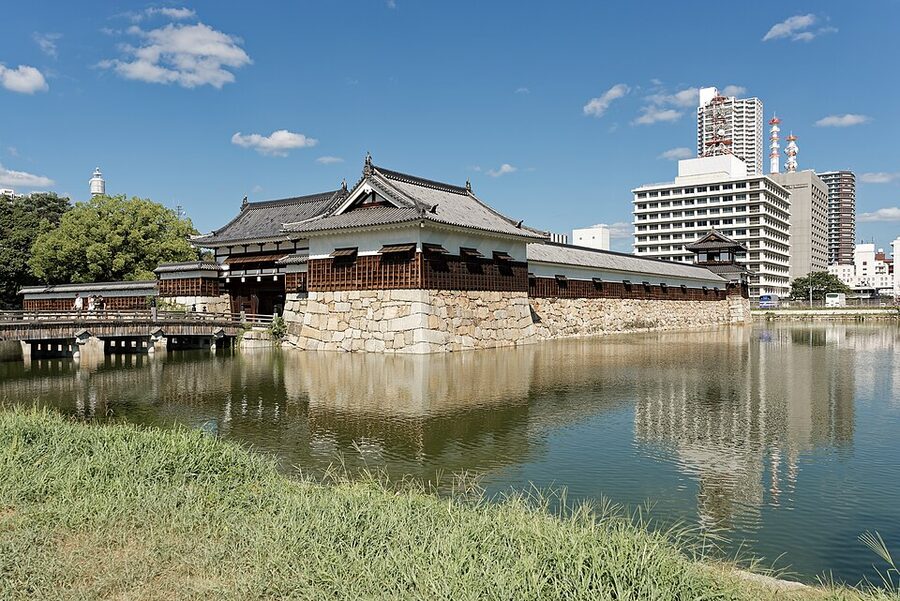
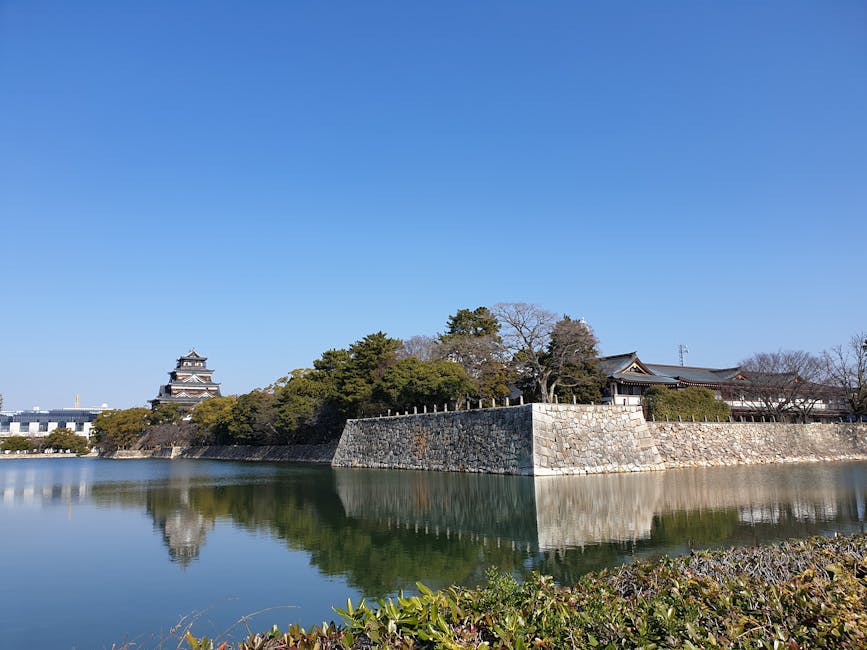
That said, the walk from the studio to the castle grounds is one of the nicest fifteen-minute strolls in central Hiroshima. It takes you through a quiet residential pocket with a few small shrines, and the approach to the castle across the moat bridge is genuinely striking, especially in cherry blossom season.
If you’re in Hiroshima already — book today
One more thing. If you’re reading this from a Hiroshima hotel with a free afternoon tomorrow, same-day and next-day bookings do work, but you have to email the studio directly rather than going through Viator or GYG. Their contact address is on both listings, and the response time is usually a few hours. I did this on a Tuesday night for a Wednesday afternoon slot and got a confirmation back at 10pm. The platform listings are safer for advance booking; direct email is faster for last-minute.
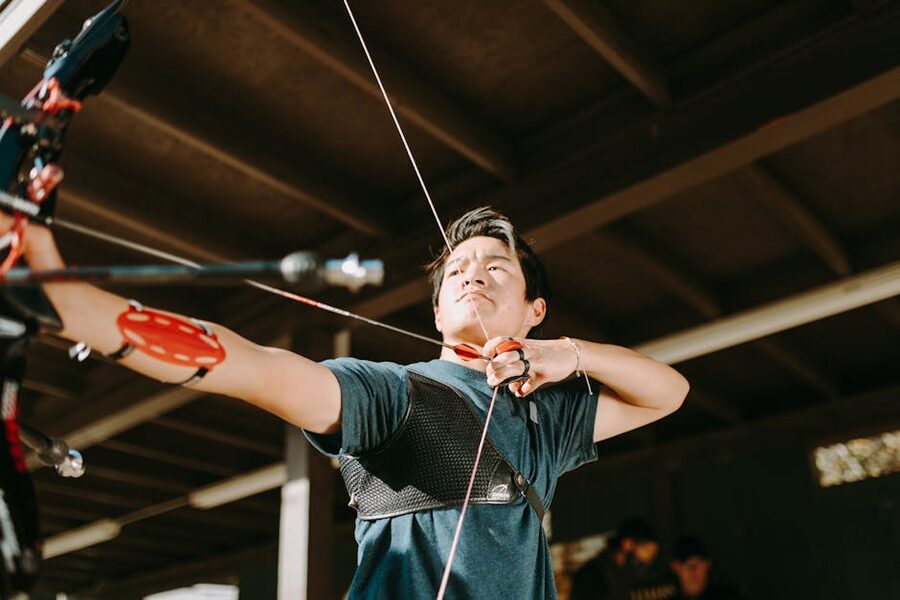
One note on timing for solo travellers: I’d aim for a weekday mid-morning slot rather than a weekend afternoon. The weekend sessions tend to pair you with bigger groups, which dilutes the instructor’s attention. Weekdays before 11am are usually quieter, and if nobody else is booked, you effectively get a private lesson at the group rate.
Where kyudo fits in a bigger Japan trip
If you’re building a Japan trip around Japanese cultural experiences rather than just sightseeing, kyudo in Hiroshima pairs naturally with a samurai experience in Kyoto and a Kyoto kenbu sword dance session. Those three together — Hiroshima for the bow, Kyoto for the sword — give you a more complete picture of martial-arts Japan than any single city can manage. A Kyoto rickshaw ride through Arashiyama rounds out the traditional-Japan day if you want a gentler afternoon in between. And if your itinerary is Tokyo-heavy, the upcoming Tokyo ninja experience guide slots in as the closest-parallel hands-on cultural hour in the capital, while a private Hiroshima tour is the easiest way to turn a single-day stopover into a proper visit. Not every city needs to be doing as much as Hiroshima with its martial-arts offering, but the ones that do tend to be the ones you remember longest.