The rickshaw is Japanese. People forget that. It was invented in Tokyo around 1869, and within a few years there were roughly 40,000 of them hauling passengers around the city. The English word “rickshaw” is a smoothed-down version of the original jinrikisha — literally “human power vehicle” in Japanese.
That history is the thing that makes a rickshaw ride in Kyoto a little more interesting than it sounds. You aren’t doing a tourist gag. You’re riding the vehicle that this neighbourhood used, for real, within living memory of some of its older buildings.
In a hurry? The three I’d book
- Arashiyama Customized Rickshaw Tour — from around $51 per person. Pick your length (45 min to 3 hours), pick your priorities. The most-requested option in the grove.
- Arashiyama Rickshaw Tour with Bamboo Forest — from around $87 per person. Two hours, photography-heavy, goes deeper into the grove than walking does.
- Kyoto Rickshaw Tour (Higashiyama or Arashiyama) — from around $40 per person. The cheapest way in. 30 minutes is enough to see whether you want more.
- In a hurry? The three I’d book
- What a rickshaw ride in Kyoto actually is
- The price ladder, honestly
- Who actually runs the rickshaws in Arashiyama
- How to book, step by step
- 1. Book online in advance (recommended)
- 2. Walk up on the day
- 3. Book directly via Ebisuya
- My three ranked picks
- 1. Arashiyama Customized Rickshaw Tour — from around
- 2. Arashiyama Rickshaw Tour With Bamboo Forest — from around
- 3. Kyoto Rickshaw Tour — from around
- When to go — the honest seasonal breakdown
- What the ride actually feels like
- The Togetsukyo Bridge stop — don’t skip this
- Photography — the hidden perk
- Combining the rickshaw with the rest of Arashiyama
- Is it worth the money?
- A short history, because it’s worth knowing
- Practical details that catch people out
- Gion vs Arashiyama — which Kyoto rickshaw matters more
- Booking mistakes I’ve watched other people make
- What to do after the ride
- A note on the sibling guides
What a rickshaw ride in Kyoto actually is
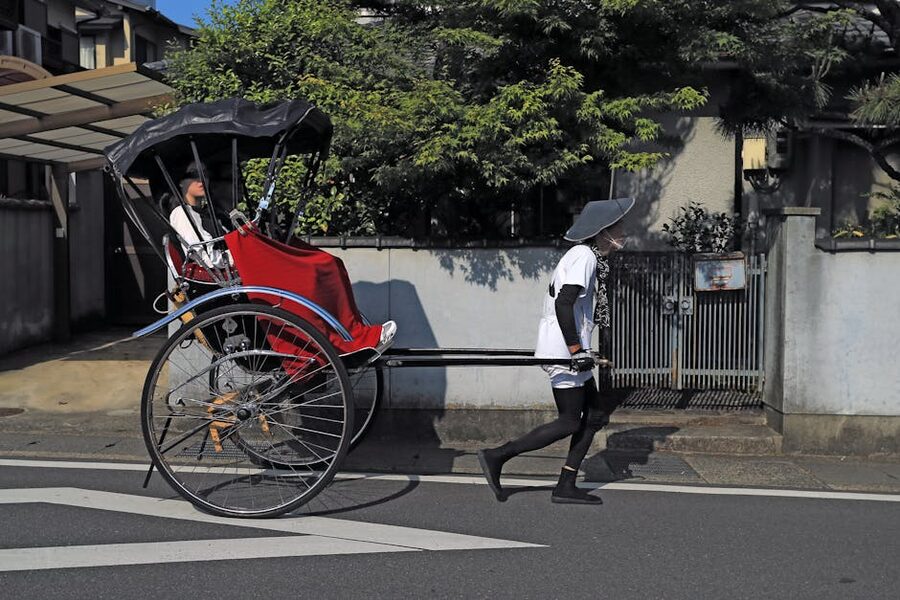
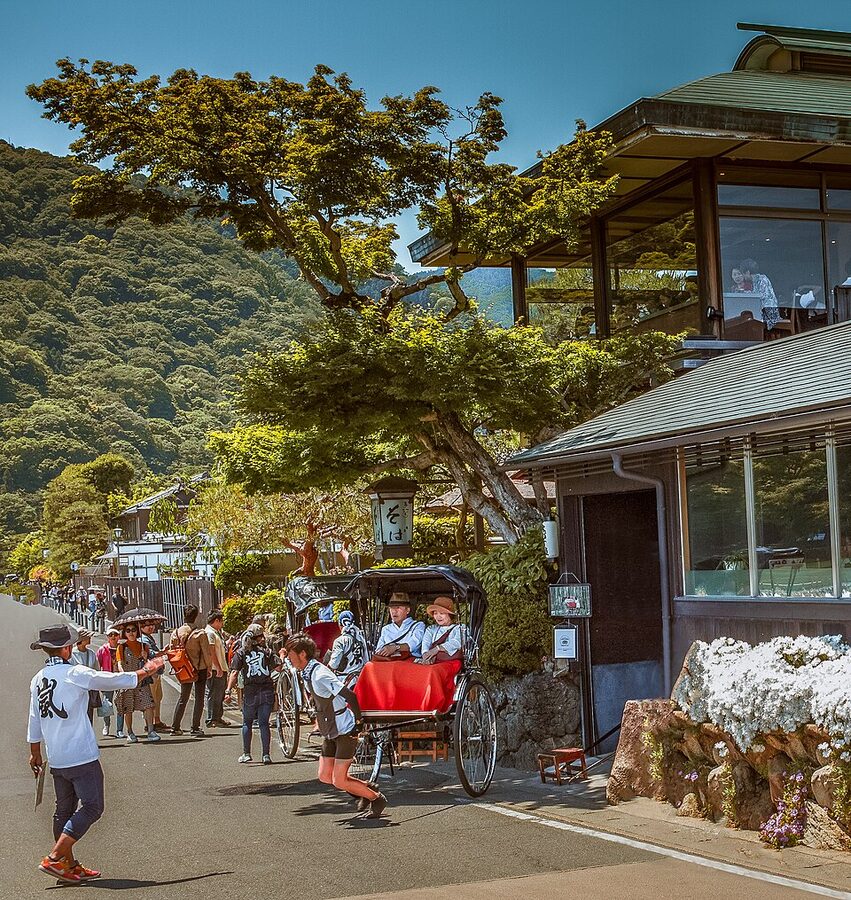
Your puller — the traditional term is shafu — is a guide who happens to also be pulling you. That’s the important reframe. You aren’t hiring a pair of legs. You’re hiring a local who has the right to take a rickshaw down paths that tour buses and most taxis can’t reach, and who stops to tell you what you’re looking at.
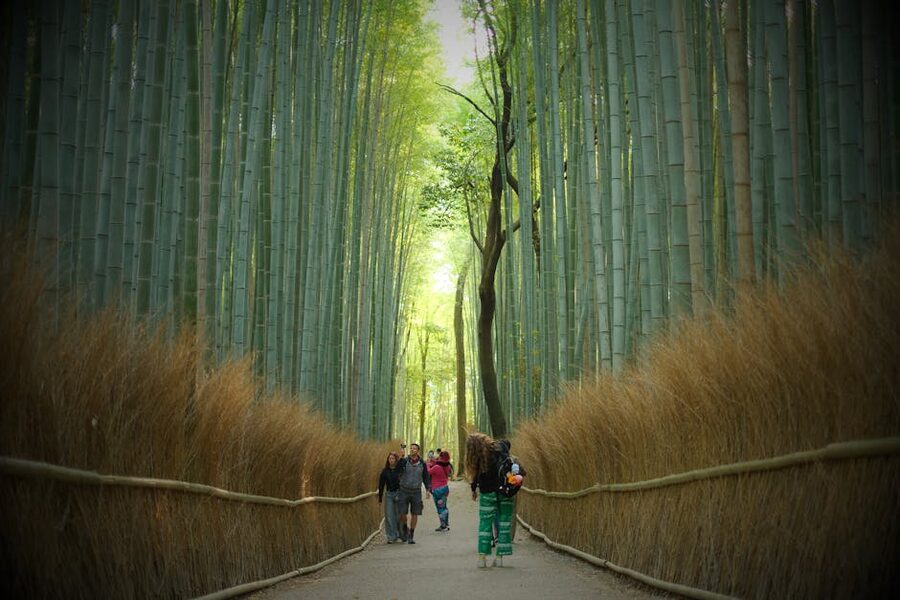
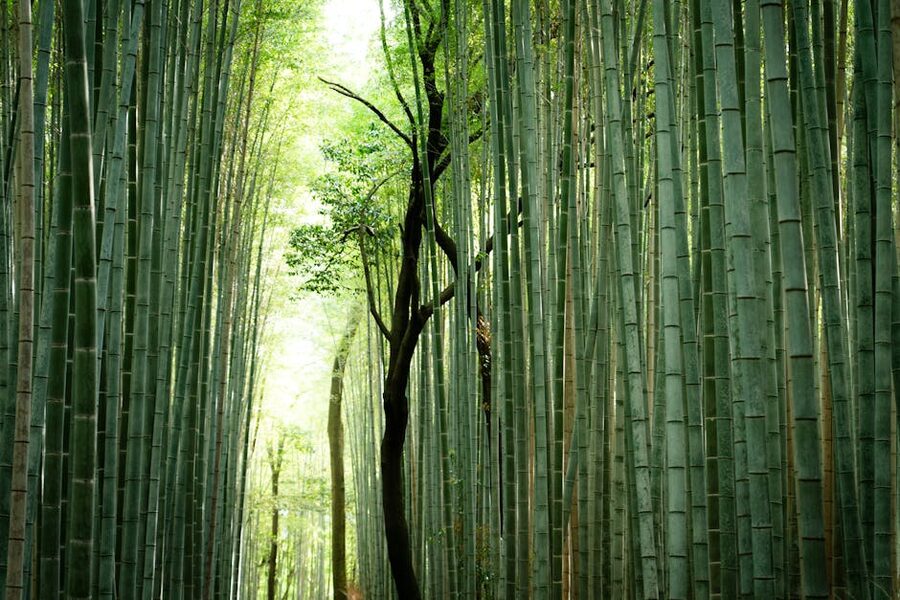
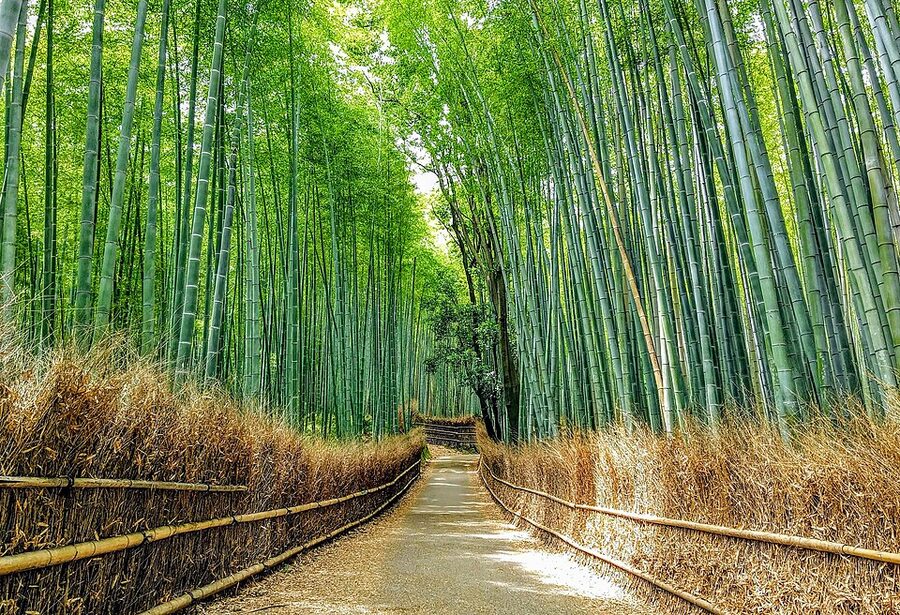
In Arashiyama that matters. The bamboo grove has a pedestrian-only path that is basically a tourist conveyor belt by late morning. Rickshaws have access to a parallel set of narrow lanes behind the grove, used almost exclusively by shafu and local residents. You see bamboo from an angle no walker gets.
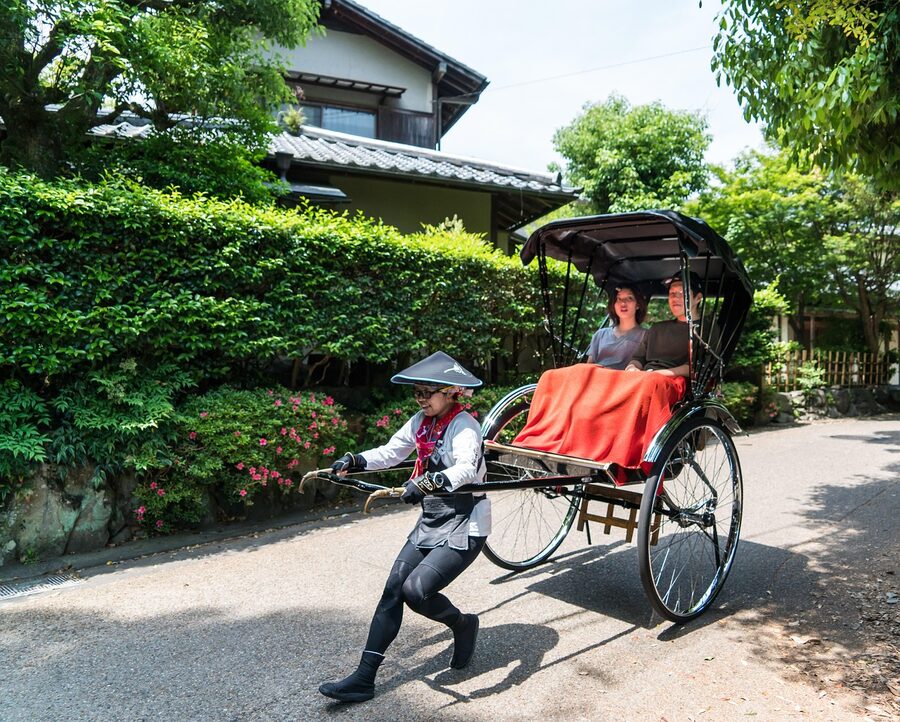
Rides sit two across. Most shafu speak good English — Ebisuya, the main operator, requires a formal guide qualification on top of the physical training. A few speak Mandarin, Korean, or French. You can ask for a specific language when you book. If your puller is Japanese-only, you’ll still have a fine ride, but you’ll lose the running commentary that’s the actual reason to spend the money.
The price ladder, honestly
Arashiyama rickshaw pricing is confusing because every operator lists a different length. Here’s the real shape of it, per passenger, in yen:
- 12–30 minutes: ¥4,000–¥9,000. A loop of Togetsukyo Bridge and the edge of the grove. Good introduction, but you’ll wish you’d done longer.
- 45 minutes–1 hour: ¥9,000–¥15,000. Grove plus one temple stop — usually Tenryu-ji’s gate or Nonomiya Shrine. This is the sweet spot for most visitors.
- 2 hours: ¥22,000–¥30,000. Full Arashiyama, including Okochi Sanso villa approach, the Togetsukyo viewpoints, and stops for photos along the river. This is where the shafu really becomes a guide.
- 3 hours: ¥40,000–¥50,000. Adds outer Sagano — Gio-ji, Adashino Nenbutsu-ji, the quieter moss temples. For people who’ve been to Kyoto before.
The per-person figure drops significantly for two passengers sharing a rickshaw, because the puller is doing the same work. A 2-hour ride for one is much more expensive than a 2-hour ride for two.
Who actually runs the rickshaws in Arashiyama
You’ll see several companies with rickshaws in Arashiyama, but realistically one dominates: Ebisuya. They started in Arashiyama in 1992 with three rickshaws. They now run about 200 rickshaws across 11 locations in Japan and move around 400,000 passengers a year. Almost every “Kyoto rickshaw tour” sold on Viator, GetYourGuide, Klook, and Marriott Activities is, under the hood, an Ebisuya booking.
Smaller operators exist for Higashiyama and Gion — where the lanes are different and the style leans more “historical stroll” than “bamboo country” — but in Arashiyama itself Ebisuya has the scale to always have pullers free, even on peak weekends.
The reason this matters for booking: the same tour often shows up on three or four platforms at different prices. Check Ebisuya’s own site, Viator, GetYourGuide, and Klook before you commit. I’ve seen the same 1-hour Arashiyama ride listed between $51 and $86 depending on the platform and markup.
How to book, step by step
Three paths, all valid, all different in price and certainty.
1. Book online in advance (recommended)
Most people should do this. It removes every bit of stress from the actual day. Pick GetYourGuide, Viator, or Klook — whichever you already have an account on. Pick a morning slot, ideally the first one of the day (usually 9:30am in Arashiyama).
You’ll get a voucher with a meeting point. The main Ebisuya Arashiyama office is right beside the JR Saga-Arashiyama station exit, 3 minutes’ walk from the bamboo grove entrance. Show up 10 minutes early, give them the voucher, and you’re on.
2. Walk up on the day
Yes, this works. The Ebisuya stand has rickshaws lined up and a queue board with wait times. On a weekday morning in low season you’ll usually be rolling within 20 minutes. On a Saturday in cherry blossom or autumn foliage season, wait times hit two hours. I’ve seen it.
If you’re flexible, this is fine. If you have a fixed window — you’re catching the early morning tour crowd-beating slot, then a train out at noon — don’t gamble on walk-up.
3. Book directly via Ebisuya
Ebisuya’s own website takes bookings and sometimes runs promotions that the aggregators don’t. The interface is a bit Japanese-first but the English version works. If you want a specific named shafu (some are famous among repeat visitors for photography skill), direct booking is the only way to request them.
My three ranked picks
These are the three I’d hand a friend planning an Arashiyama day. All three are Ebisuya under the skin — it’s the shafu, the length, and the booking platform that differ.
1. Arashiyama Customized Rickshaw Tour — from around $51

This is the one I’d start with. The four length options mean you aren’t paying for time you don’t want, and the “customized” part is real — the shafu will ask up front whether you’re there for bamboo, temples, river views, or all three, and cut the loop accordingly. Our full review goes deeper on which length fits which kind of visit. Bilingual pullers, private rickshaw, free cancellation 24 hours out.
2. Arashiyama Rickshaw Tour With Bamboo Forest — from around $87
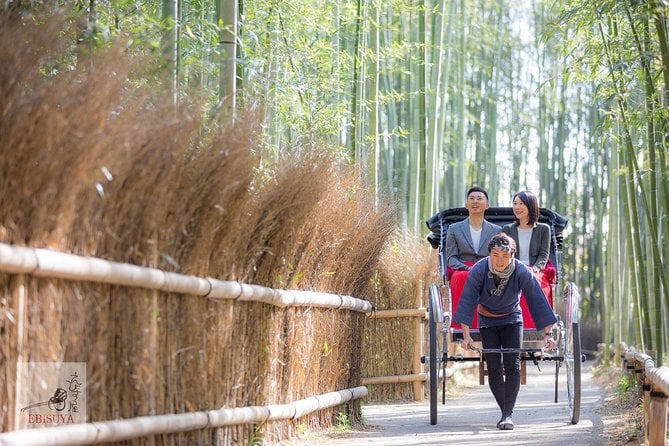
If you know you want more than a highlight loop, book this one instead. The shafu take you into sections of the grove that are off-limits to walkers, pause for photographs, and the 2 hours leaves space for a proper Togetsukyo Bridge viewpoint at the end. Our review covers the photography coaching several pullers quietly throw in. Suitable for families and older travellers — no stairs.
3. Kyoto Rickshaw Tour — from around $40
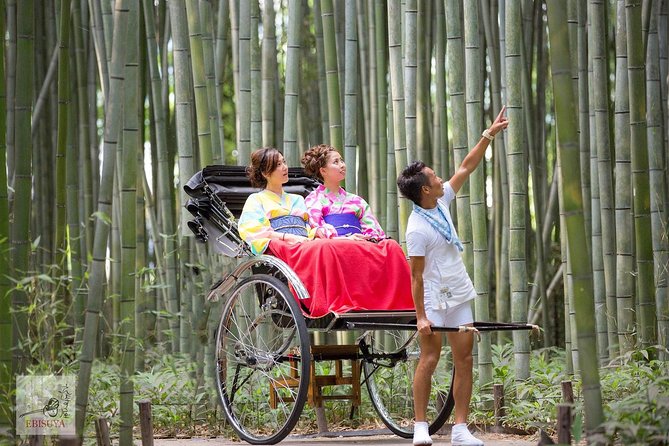
Book this if you only have half a morning or you’re not sure whether rickshaws are your thing. You don’t need a long tour to know. Thirty minutes gets you through a real stretch of bamboo or Higashiyama alleys, with the same level of commentary per minute that the longer tours offer. Several riders mention it as wheelchair-accessible — the carriage is low, no stairs, and pullers help with the lift. Our review explains which meeting point goes where.
When to go — the honest seasonal breakdown
Spring (late March to mid April): Cherry blossoms along the Hozu River are as good as Kyoto gets. Also the busiest single week of the year. Book at least three weeks ahead, first slot of the day.
Early summer (May to June): Underrated. Bamboo is at its brightest green after the rainy-season rains. Fewer crowds than spring or autumn. My favourite window for a rickshaw ride — mornings are warm but not yet punishing.
Summer (July to August): Hot and humid. Shafu are pulling a hundred-kilogram carriage plus passengers in high thirties heat, and they earn every yen. Go if you’re already in Kyoto, but pick the first slot of the day and bring water for yourself and — this is nice — a chilled drink for your puller. They will remember you.
Autumn (mid-November): The peak. Maple colour in Arashiyama is genuinely world-class. It’s also when Kyoto becomes a traffic jam. Book two to three weeks ahead, weekdays if you can.
Winter (December to February): Quiet, cold, sometimes magical. Snow on the bamboo is rare but happens a few days each year. Ebisuya provides blankets. This is the only season where walk-ups reliably work.
What the ride actually feels like
This is the bit that’s hard to convey in photos. The carriage sits higher than you’d expect. Your eye line is above the rooflines of the lower shops, and you look down slightly at people walking past. That shift in perspective is a big part of why the photos look the way they do.
The ride itself is smoother than it sounds. The wheels are rubber-rimmed, the carriage is on leaf springs, and the shafu jog rather than run — a very specific paced lope that professional pullers build up over months. On flat ground you feel a soft bounce, not a jolt.
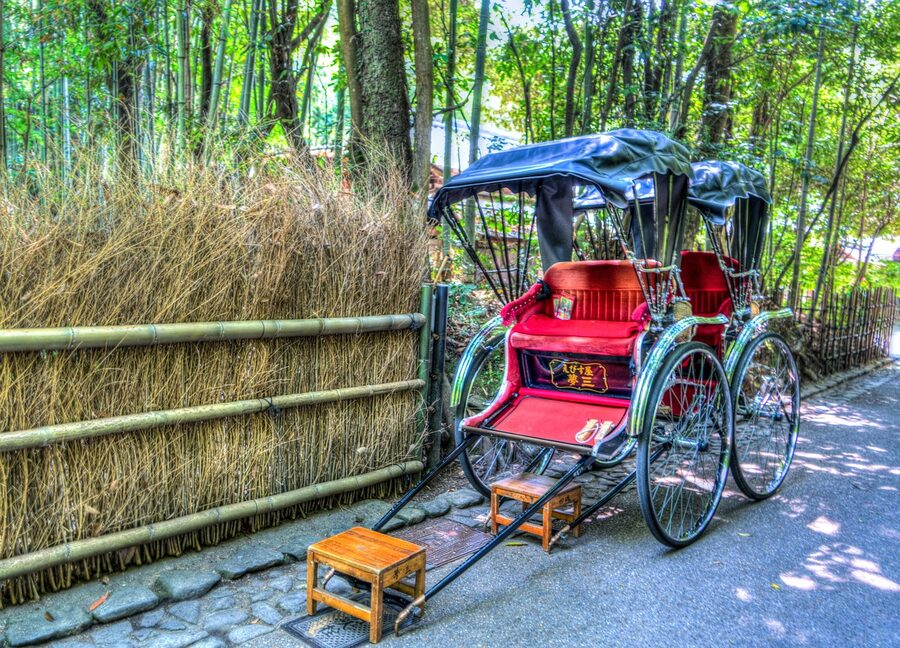
Uphill, you slow down. There’s a moment where you realise your puller is doing real physical work and you stop being embarrassed about it only once they start talking again, cheerfully, and the path levels out. Shafu train hard — most of them cover 15 kilometres a day at working pace — and they’d rather you enjoy the ride than feel guilty through it.
The blanket that comes with the carriage is not optional in winter, and it’s genuinely welcome in the morning even in April. If you’re prone to motion sickness, let the shafu know before you start — they adjust the cornering speed and avoid the bumpier back lanes.
The Togetsukyo Bridge stop — don’t skip this
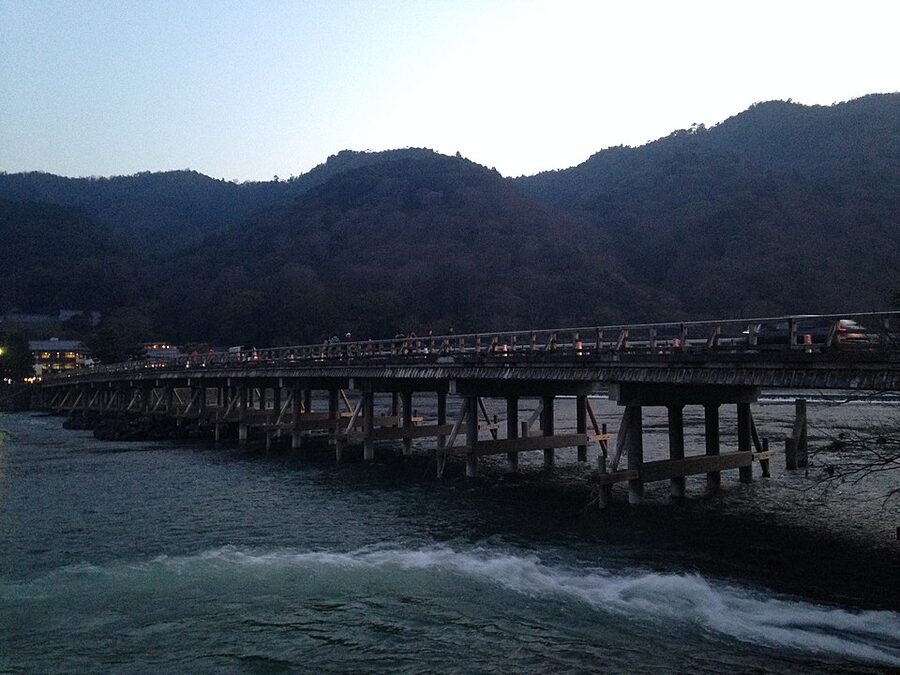
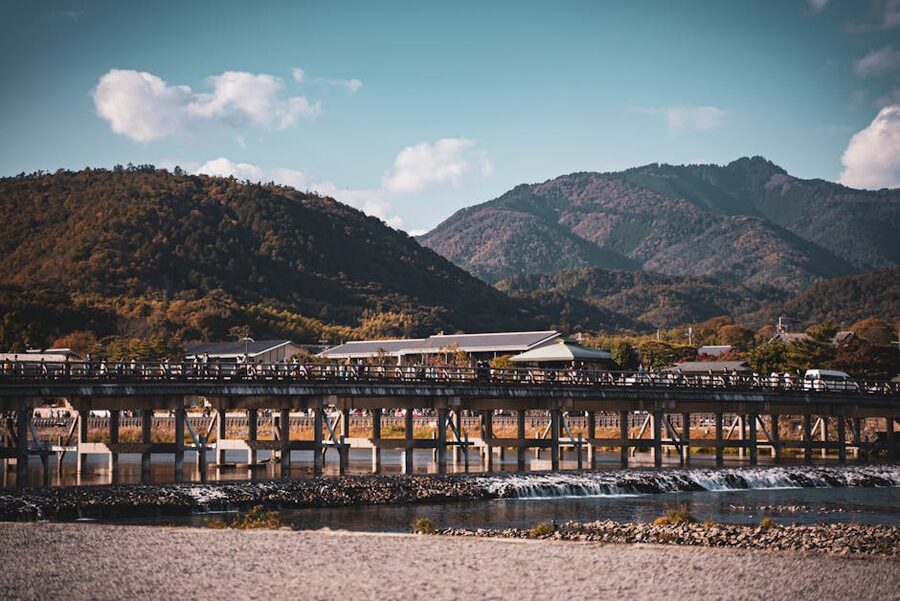
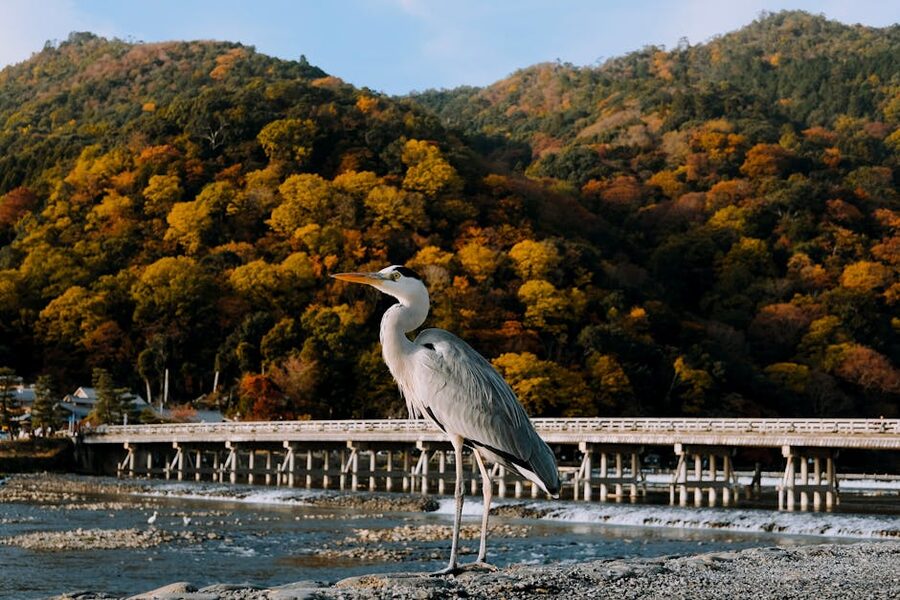
Every Arashiyama rickshaw tour at least touches Togetsukyo. The longer ones stop on the north bank for photos. The bridge — the name means “moon-crossing” — has been rebuilt many times, but the spot it stands at has been the front door of Arashiyama for a thousand years.
What the shafu know, and what a guidebook won’t tell you, is the correct angle. Most first-time visitors stop on the bridge and shoot up at the mountain, which flattens the whole scene. The proper view is from the embankment downstream, about 40 metres from the bridge’s west end, where you get the bridge, Mount Arashiyama, and the river all in one frame. Your puller will walk you to it if you ask.
If you have time after the rickshaw ride, cross the bridge and sit on the south bank with a coffee. The same view in reverse is less photographed and just as good.
Photography — the hidden perk
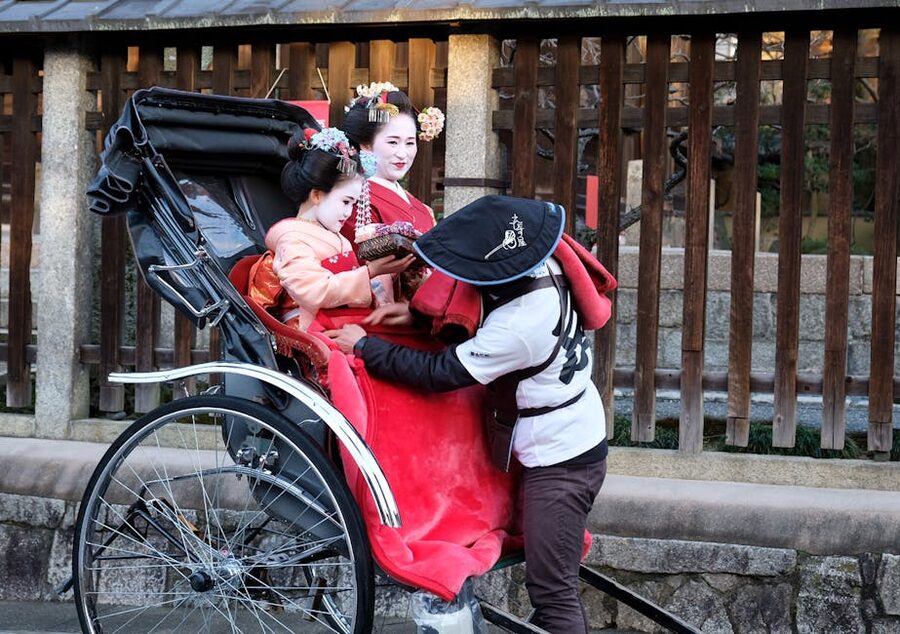
The single most consistent feedback from people who’ve done an Ebisuya ride is how good the photos come out. That isn’t marketing. Shafu do a short course in composition as part of their training, and the longer-serving ones are better with a phone camera than most amateur photographers.
Hand them your phone without hesitation. They know the standard portrait spots — on the carriage with the bamboo as backdrop, in front of Togetsukyo, under a red torii at Nonomiya — and they know where to stand to get the right depth of field. Some will quietly coach you on pose.
If you’re doing this as part of a kimono rental day, the rickshaw photos are the ones you’ll actually print. It’s worth picking the tour length that lets the shafu stop properly — 45 minutes is the minimum, 70 is better.
Combining the rickshaw with the rest of Arashiyama
A 1-hour rickshaw ride plus a walk through the bamboo plus Tenryu-ji Temple plus lunch is a full half-day, comfortable. Here’s the order I’d actually do it in:
- Arrive Arashiyama 8:15am. JR Saga-Arashiyama or Randen Arashiyama — either works.
- Tenryu-ji Temple garden first, 8:30am open. You want the empty garden hour. 45 minutes.
- Walk through the bamboo grove on foot, 9:15am. Still reasonably quiet. 15 minutes.
- Rickshaw at 9:30am. Pre-booked. Now the shafu can take you along the back lanes and you’ve already seen the main walking path to compare.
- Lunch on the river bank, 11:30am. There’s a cluster of soba and yudofu places between Togetsukyo and JR Saga-Arashiyama.
This sequence works because you see the “normal” version of the bamboo before you see the rickshaw version, which makes the rickshaw version land properly as an upgrade rather than a substitute.
If you’re building a larger day, Arashiyama pairs well with the Kyoto full-day UNESCO bus tour route in the morning, or a Gion food tour in the evening on the other side of the city. A private car can stitch both, which the private Kyoto tour operators handle well.
Is it worth the money?
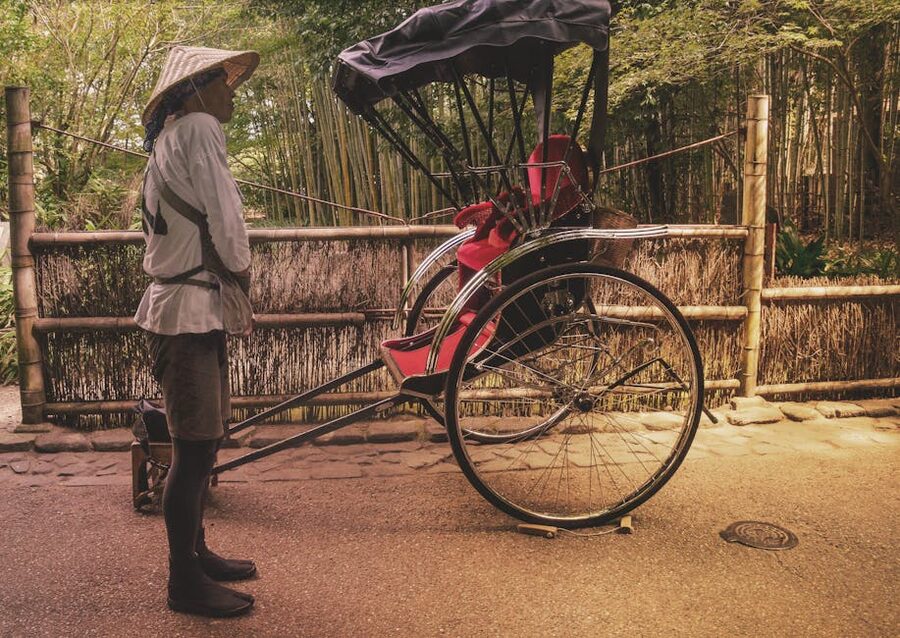
The honest answer: yes, if you pick a length long enough to let the shafu actually guide. A 12-minute photo loop is a gimmick. A 45-minute or 1-hour ride is a proper local-guided tour that happens to be on a bamboo-forest-sized cart, and at that length the price starts to make sense.
The thing that tips it, for most people, isn’t the ride. It’s that you leave with twenty good photos you couldn’t have taken yourself, a set of stories about the buildings you passed that nobody else in your group knows, and an hour in the grove that didn’t feel like a queue.
If the budget is tight, do the 30-minute Kyoto Rickshaw Tour pick. If you’re doing Kyoto properly and only coming once, book the 2-hour Arashiyama tour well ahead and call it the centrepiece of your morning.
A short history, because it’s worth knowing
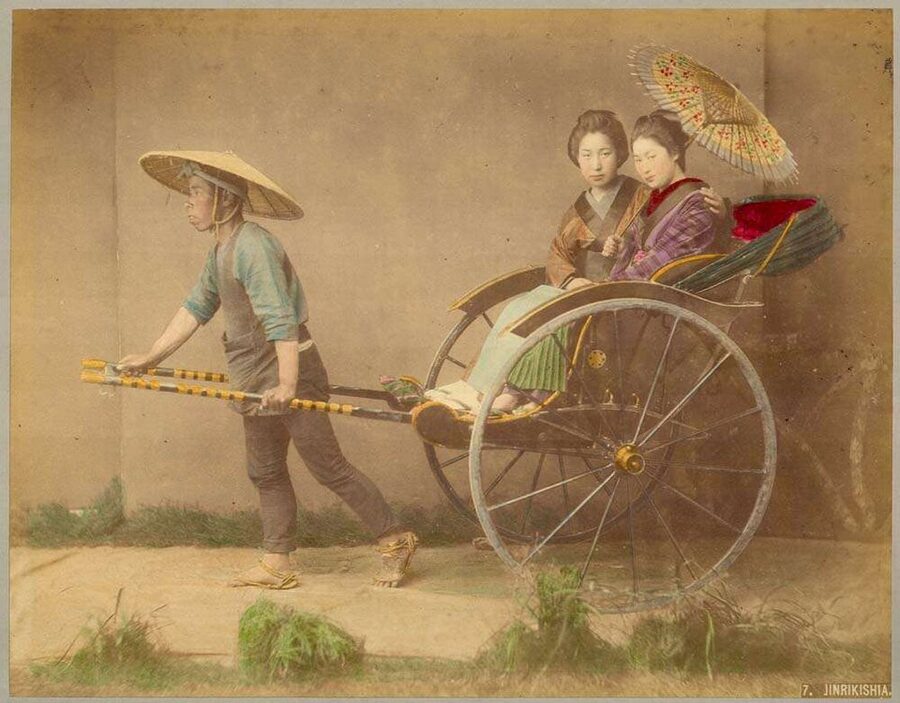
The rickshaw was invented in Tokyo around 1869, widely attributed to a trio — Izumi Yosuke, Takayama Kosuke, and Suzuki Tokujiro — who filed for a permit to build and sell jinrikisha the following year. The government issued the permit. Within two decades rickshaws were the default short-distance transport in Tokyo, Osaka, and Kyoto, with tens of thousands of licensed pullers.
The Meiji period photographer Kusakabe Kimbei photographed rickshaws and shafu constantly — some of those images are still the clearest we have of what daily working life looked like in the 1880s. Looking at them, the uniform hasn’t changed much: the split-toe tabi, the wrapped leg guards, the happi coat. What your shafu is wearing today is, with minor updates, exactly what a working puller in 1885 wore.
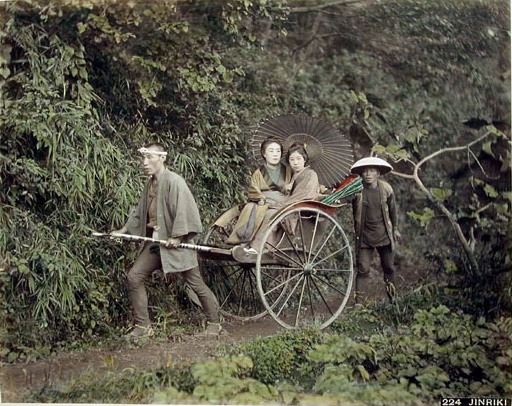
The shafu profession almost vanished after WW2, replaced by trams and taxis. It was revived in the 1970s and 80s as a tourist industry, but Arashiyama’s rickshaws aren’t re-enactment theatre — Ebisuya’s modern shafu do genuine guide training and treat the work as a skilled trade. It’s one of the few places in the world where a 19th-century job still pays a full-time professional wage.
Practical details that catch people out
Weight limits: Each rickshaw seats two, combined weight up to around 160kg. If you’re close to or over that, book two single-passenger rickshaws.
Accessibility: The carriage is low and there’s a fold-down step. Several travellers with reduced mobility have used Ebisuya specifically because it’s an Arashiyama option that doesn’t require walking the full grove. Let them know when booking and they’ll assign a puller comfortable with lifting assistance.
Cash vs card: The main platforms (Viator, GetYourGuide, Klook) pre-charge. Walk-up at the Ebisuya office takes card and cash. Cash-only backup plan is worth having — ATMs are available at the Lawson convenience store beside the station.
Tipping: Not expected. A chilled drink or a sincere “arigatou gozaimashita” at the end is more than enough, and honestly more welcome.
Rain: Rides continue in light rain — the carriage has a rain cover. In heavy rain, Ebisuya cancels and refunds. The cover itself is surprisingly watertight but the view out is less clear, so if the forecast is properly wet, shift to another day if you can.
Kids: Children under roughly 8 sit with an adult — there’s no separate seatbelt setup. Strollers can be folded and strapped to the back. The shafu are generally excellent with children; a lot of them chose this job over more corporate options specifically because it’s people-facing.
Gion vs Arashiyama — which Kyoto rickshaw matters more
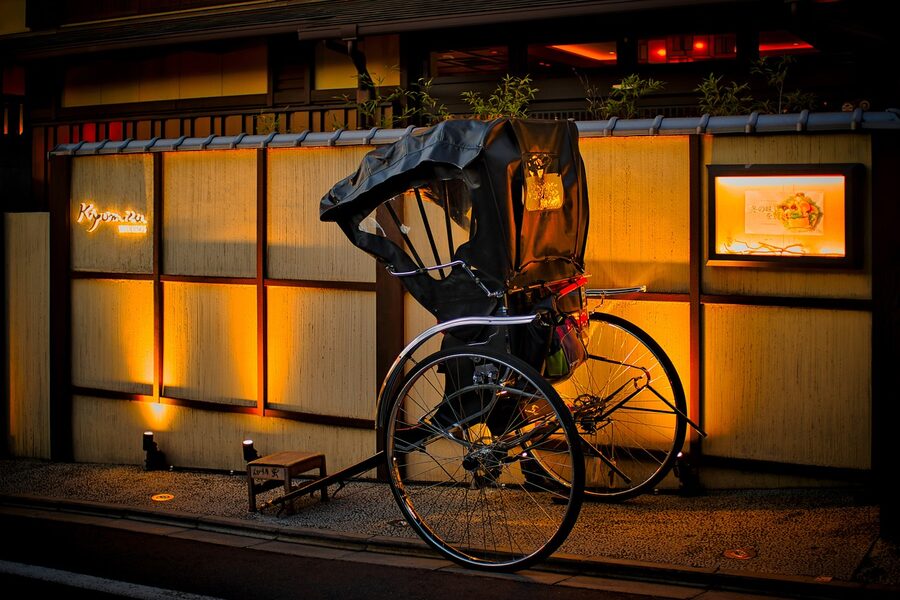
Ebisuya and others also run rickshaws in Gion and Higashiyama on the east side of Kyoto. The question I get a lot: if I only ride one, which?
For a first visit, Arashiyama. The combination of bamboo, bridge, and river is simply more photographically distinct, and it’s the location where the shafu’s route access matters most — in Gion the narrow lanes are already open to any pedestrian, so the rickshaw advantage is thinner.
For a second visit, or for people who’ve already seen the bamboo grove on a previous Kyoto trip, I’d flip it. Higashiyama at dusk, in a rickshaw, with a decent shafu narrating the backstreets between Yasaka Shrine and Kodai-ji, is a genuinely special half-hour. If that interests you, our Gion geisha walking tour guide covers the same general district on foot, and pairs naturally with a short rickshaw stop.
Booking mistakes I’ve watched other people make
Booking a 12-minute tour. Don’t. The 12-minute option exists so that people can try it, but it’s barely a ride. By the time you’ve settled in and taken the first photo, it’s over. If cost is the issue, do 30 minutes, not 12.
Booking for mid-afternoon. Arashiyama is crowded by 11am, and rickshaws have to slow to walking pace around dense pedestrian groups. Morning slots are quieter, faster, and the light is significantly better for photos. Noon is the worst time.
Booking the grove walk before the rickshaw on the same day. If the grove is packed, your morning energy is gone by the time you get in the rickshaw. Do the grove before 9am or after 5pm, and book the rickshaw for somewhere in between.
Not asking for a specific language. The booking flow often defaults to English-capable but doesn’t guarantee specific languages. If Mandarin, Korean, French, or Spanish matters, leave a note in the booking comments. Ebisuya can usually accommodate with 48 hours’ notice.
Assuming the review platform prices reflect reality. Ebisuya’s website sometimes runs promotions that the resellers don’t carry. Check the direct site before committing to GetYourGuide or Viator — the platform fee can be 15–20% of the price, and the same ride is often cheaper booked direct.
What to do after the ride
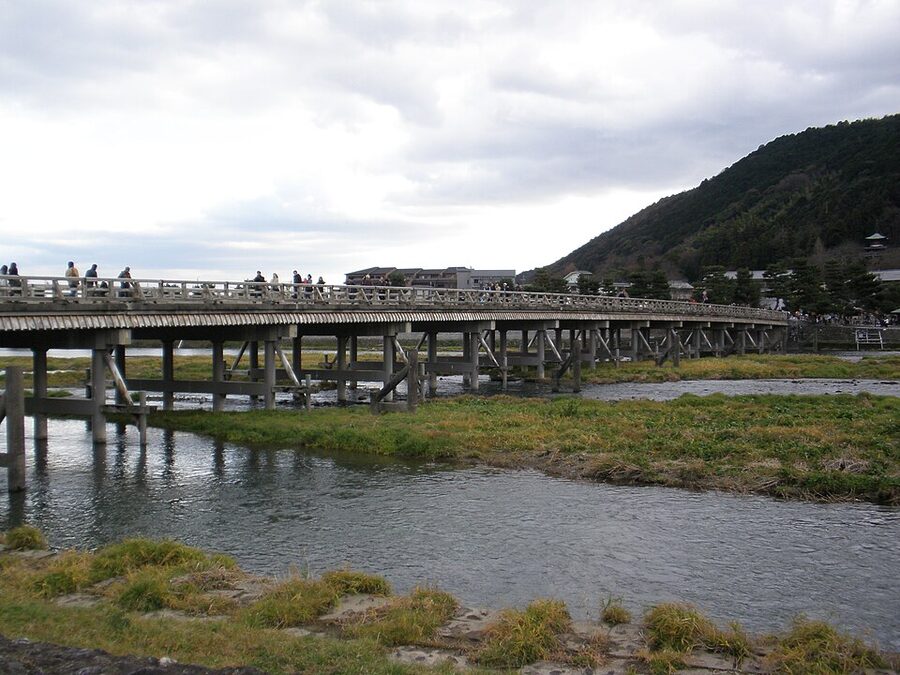
If the ride ends near Togetsukyo — which is typical — don’t just walk back to the station. Cross the bridge, turn right along the south bank, and walk ten minutes. You’ll find the quieter half of Arashiyama: Kameyama Park, Okochi Sanso’s approach, and a handful of yudofu restaurants that aren’t on the main tour-bus strip.
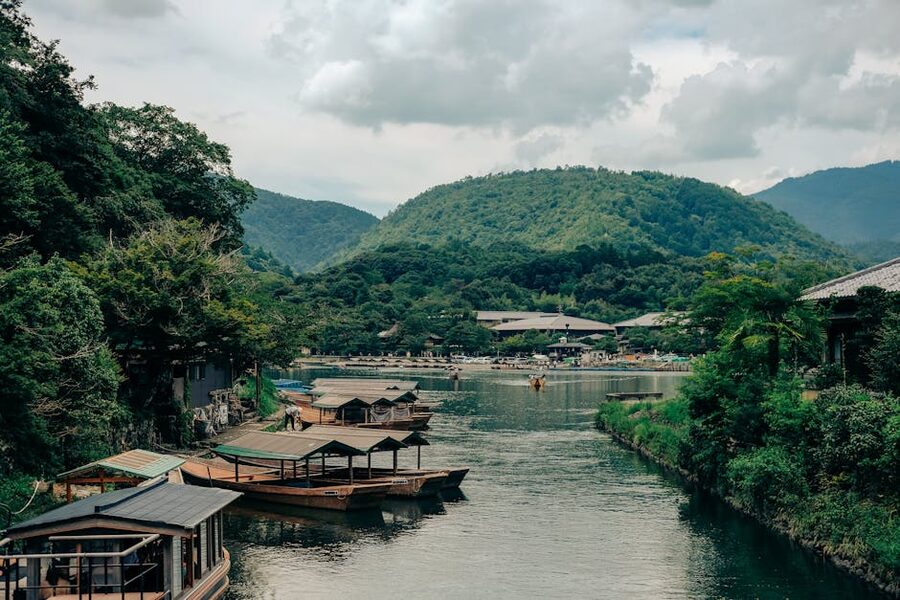
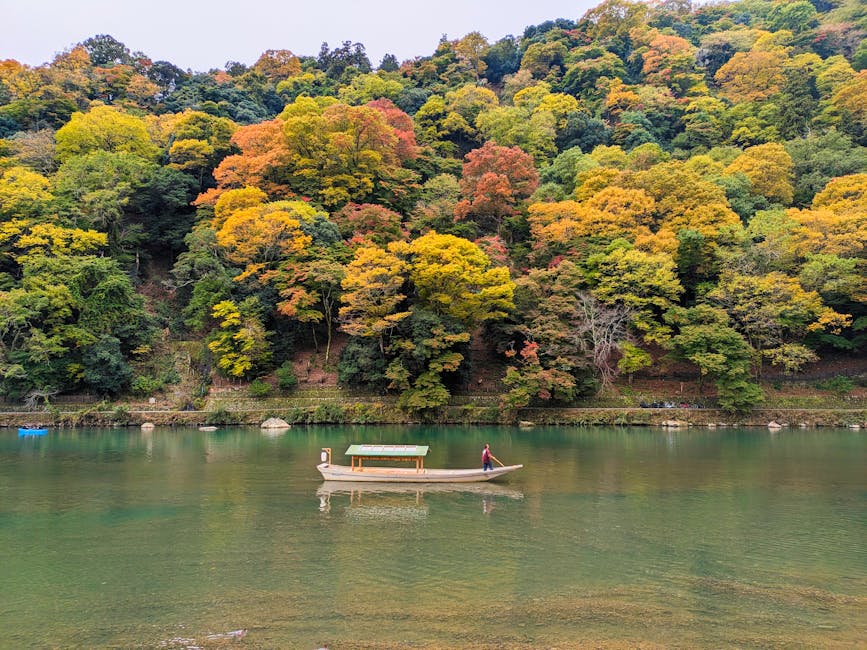
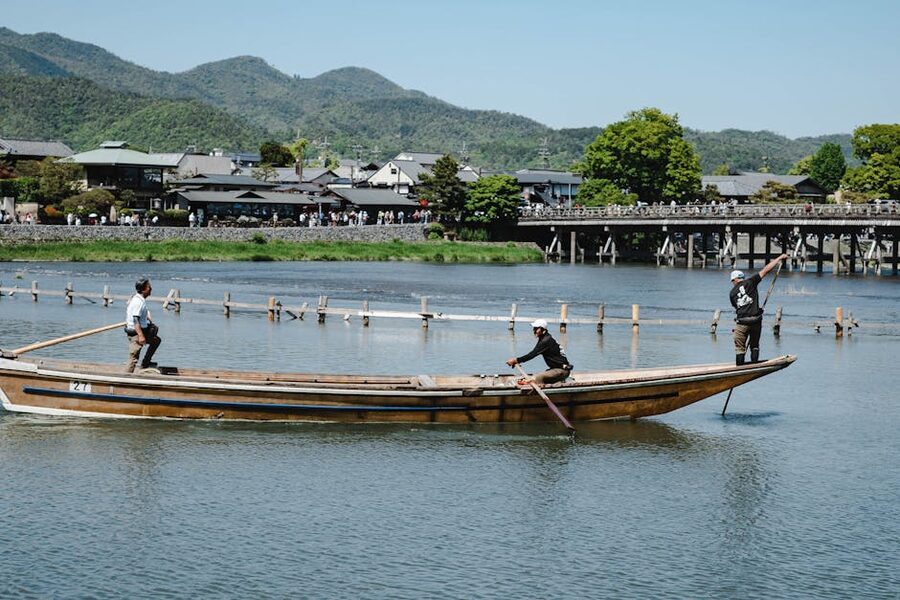
If you still have energy, the Hozu River boat ride pairs well with the rickshaw as its opposite number — water instead of road, an hour of drift instead of 20 minutes of jog. Not every day permits it (weather, water levels), but when it runs it’s worth the trip up to Kameoka.
For dinner, come back east into central Kyoto. The Pontocho and Gion night food tours pick up around 6pm and cover the kind of small-bar dining that’s difficult to do cold as a visitor. A good day, well-framed by a morning rickshaw ride.
A note on the sibling guides
If you’re planning a multi-city Japan trip around “book the best operator once, trust the local guide to carry it”, the companion pieces to this one are worth a look. A private Hiroshima tour is the same philosophy applied to a Peace Memorial day — one local, running point, the whole day shaped around what you care about. A Japanese archery session in Hiroshima is the hands-on cultural experience in the same mould as the rickshaw, where the instructor’s job is as much guide as teacher. And a ninja experience in Tokyo scratches the same itch for kids — low-theatre, high-engagement, and booked the same way. Between the four, you cover Kyoto, Tokyo, and Hiroshima with one booking philosophy: pay for the guide, not the infrastructure, and make sure the person on the ground has the training to do their job properly.