
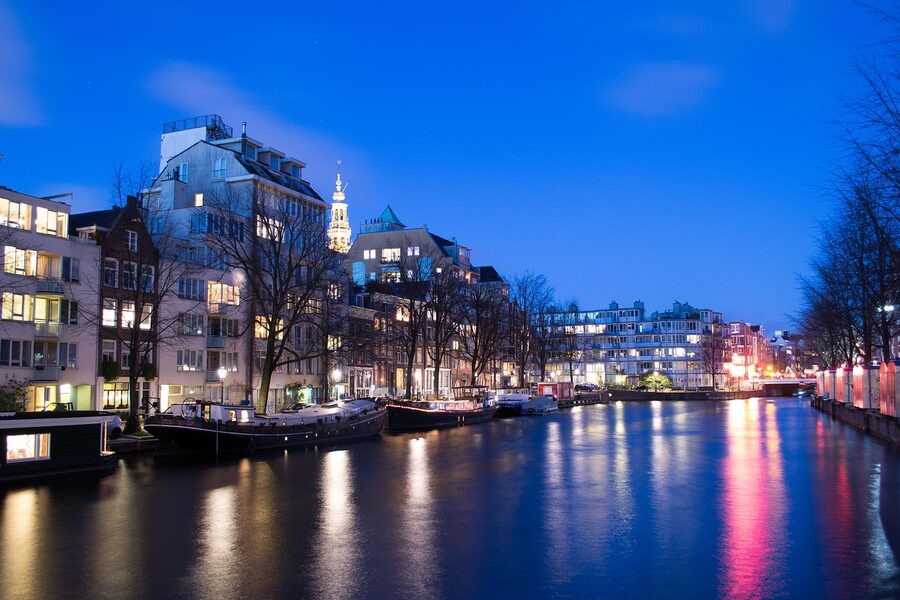
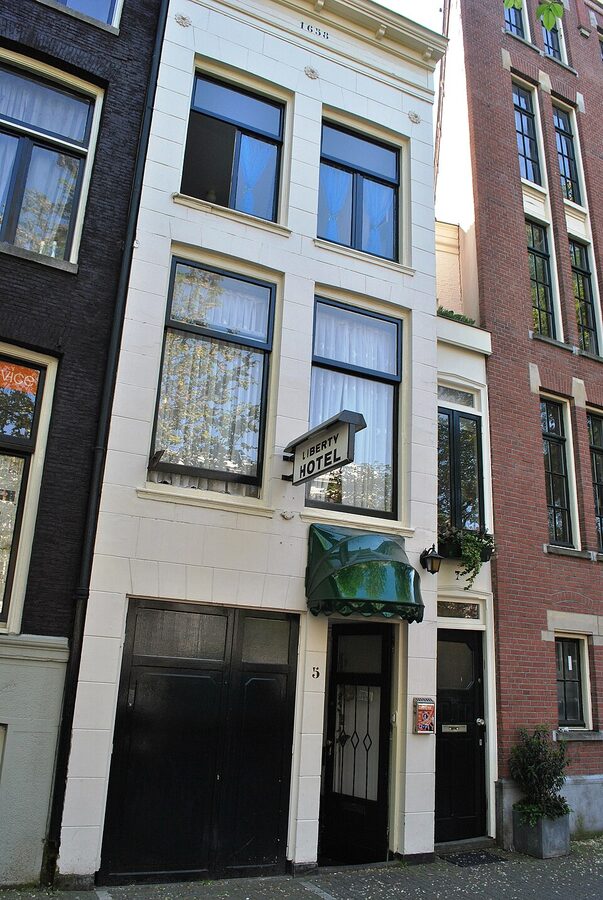
You’re leaning back on the open deck of a 12-seat sloep, beer cold in your hand, and the canal-house lights along the Herengracht pop on one row at a time. The captain cuts the throttle. Off the starboard side he points up at Singel 7, two metres and two centimetres of facade, said by half the open-boat captains in town to be the world’s narrowest house. True or not, you’re now close enough to touch it from the water, which a glass-roofed cruise can’t pull off.
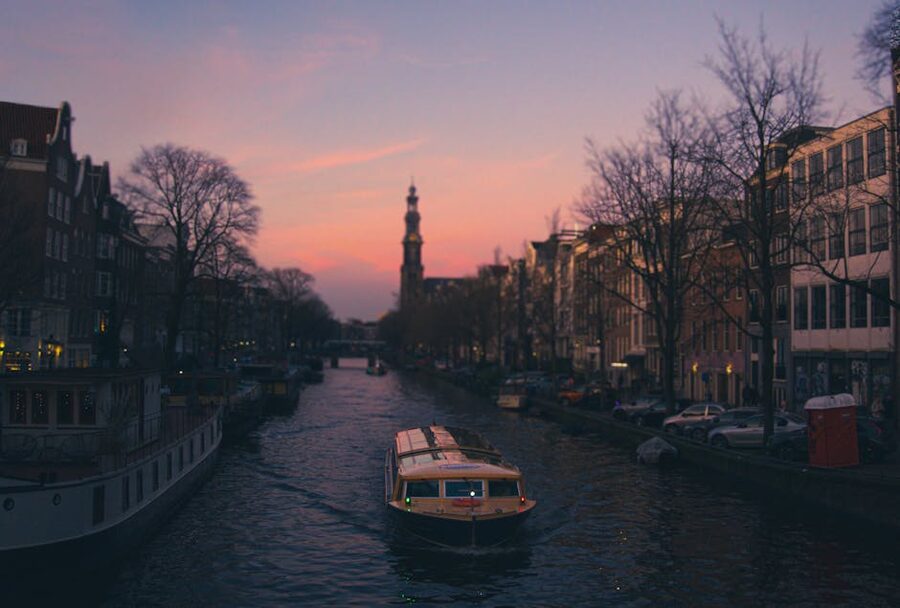
An open boat in Amsterdam is a specific product. Not the big glass-roofed saloon boat that holds 100 people. Not the booze-cruise barge with a DJ. It’s a small, low-sitting sloep that takes 12 to 16 passengers, no roof, captain on the microphone, drinks on board, usually 75 to 90 minutes. The price-to-experience ratio is the best in the city if the weather is on your side.
This guide sorts the open-boat market into the categories operators actually run, points you at three picks I’d send my own friends to, and tells you where to stand on the pier so you don’t get bumped to the next departure.
- In a Hurry? Three Picks
- What an open boat actually is
- Why book an open boat over a covered cruise
- The variants you’ll see on every booking page
- The three open boats I’d actually book
- 1. Open Boat Cruise with Unlimited Drinks and Bite:
- 2. 75-Minute Open Boat Canal Cruise with Live Guide:
- 3. Cozy Evening Canal Cruise with Open Bar Option:
- How long the cruise actually runs
- Where the boats actually leave from
- The route, narrated from the boat
- What’s actually included in the ticket
- When to go: weather, season, slot
- Tipping, payment, and what to bring
- Common ways travellers book the wrong open boat
- Pier-side: what to do in the 30 minutes before
- How the open boat compares to other Amsterdam evening options
- A short history of the canals you’re cruising
- Common questions before booking
- Pairing the open boat with the rest of your Amsterdam day
- Other Amsterdam guides worth your time
In a Hurry? Three Picks
Best all-rounder: Amsterdam Open Boat Cruise with Unlimited Drinks and Bite from $21. The most-booked open boat in town. Unlimited beer, wine, soft drinks, plus a snack plate.
Best for guide-led storytelling: 75-minute Open Boat Canal Cruise with Live Guide from $28. Captain doubles as a real guide. The route covers four canals plus the Amstel.
Best small-group cosy option: Cozy Evening Canal Cruise with Open Bar from $22. Smaller boat, smaller group, more conversation.
What an open boat actually is
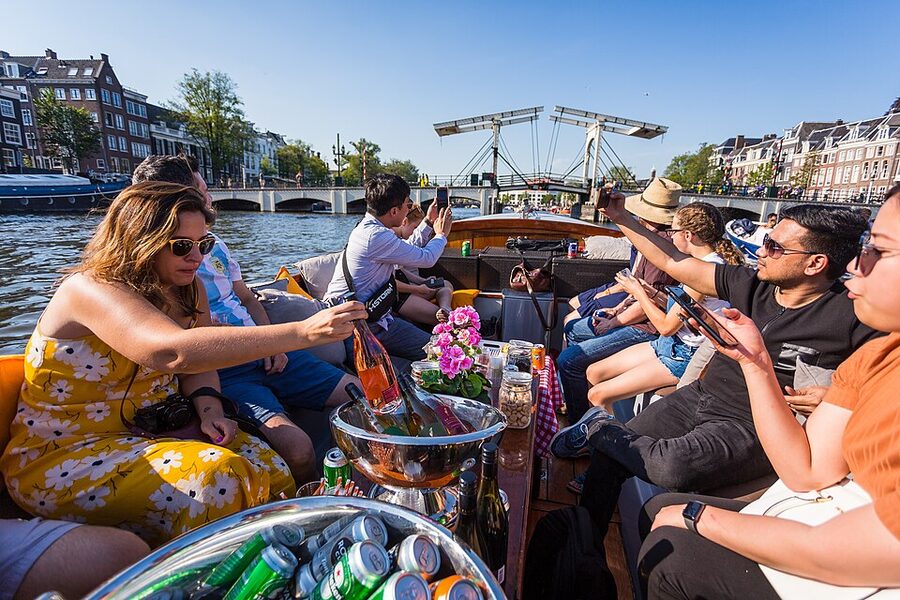
An open boat (Dutch: open sloep) is a low, flat-bottomed, electric-motor canal boat with no glass roof. Most are 7 to 9 metres long. The sides are low so you can dip a hand in the water if you want. There’s a padded bench around the edge and a low table down the middle for drinks.
The captain stands or sits at the tiller and runs the tour live. No recorded audio in 18 languages. Just a real local with a microphone (or no microphone, on the smallest boats) telling you what you’re looking at and answering questions. This is the bit you can’t get on a saloon-boat cruise.
If you want a deeper breakdown of every other Amsterdam cruise type (covered, audio-guide, party, dinner), our guide to Amsterdam canal cruises covers all seven product categories. The open boat is one of those, but specific enough to deserve its own write-up.
Why book an open boat over a covered cruise
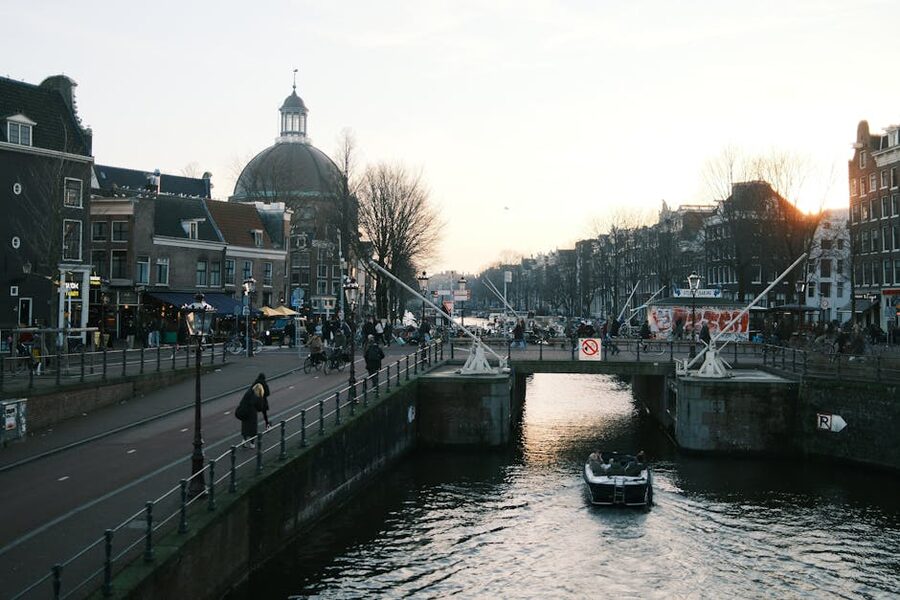
Five reasons people switch from saloon boats to open boats after their first Amsterdam cruise.
1. The light hits you. A glass roof at golden hour gives you reflections of your own face on the windows. On an open deck the light hits the canal-house facades, the water, and your beer with nothing in between. The Magere Brug after the lights flick on is a different photograph from each.
2. The captain is the show. Open boats are guided live. The script changes by neighbourhood and by mood. You get the smaller stories, the off-script jokes, and the right answer when you ask why a hoist still hangs from a 17th-century facade.
3. Group size sits between 12 and 16. You can hear the captain. You can talk to the people opposite you. You’re not pinned in row 14 of an 80-seat saloon boat behind two phone screens.
4. Drinks are uncapped on most variants. The open-boat fleet pioneered the unlimited-drinks model in Amsterdam. The flagship product, the most-booked open boat on GetYourGuide by a wide margin, is the unlimited-drinks-and-bite variant for around $21 a head.
5. They go where saloon boats can’t. The Brouwersgracht, the smaller side canals around the Jordaan, and the half-bridges with low clearance. If your photos look exactly like the booking-site photos, you were on a saloon boat. If they don’t, you weren’t.
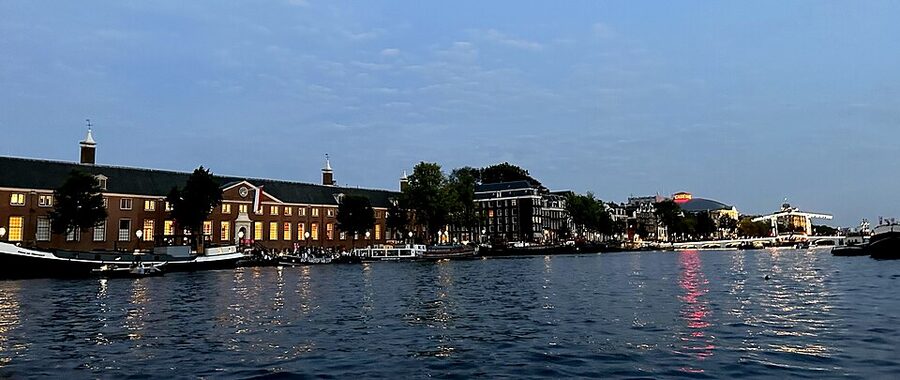
The variants you’ll see on every booking page
Every open-boat product sold on GetYourGuide and Viator falls into one of five buckets. Once you see the buckets, the price page stops being confusing.
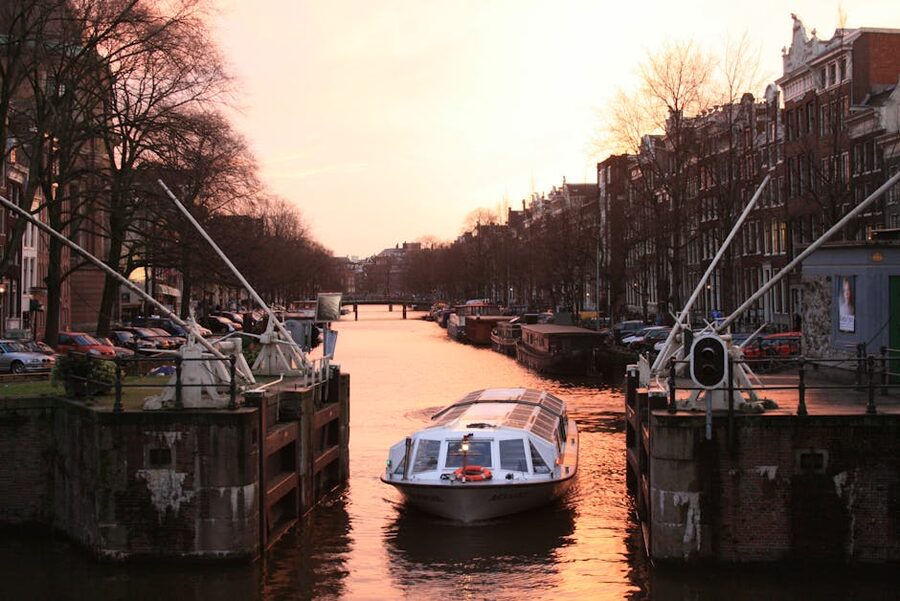
Unlimited drinks and bite. The headline bucket. 75 to 90 minutes, beer + wine + soft drinks unlimited, plus a small snack plate (cheese cubes, salami, sometimes a stroopwafel). $21 to $25 a head. The flagship version is the most-booked open boat in Amsterdam by a long way; if you’ve seen friends post canal photos with a beer in the foreground, this is what they were on. Our full review of the flagship unlimited-drinks-and-bite cruise walks through the boat, the route, and the snack plate in detail.
Live-guide focus. Captain-as-guide. Less party energy, more storytelling. Around $28 for 75 minutes. Drinks usually included as one or two beverages rather than unlimited. If your group cares about the city more than the bar tab, this is your bucket. The 75-minute live-guide cruise is the most-booked product in this lane.
Cosy small-group evening. Smaller boat, often 8 to 10 passengers, with an open-bar upgrade option. $22 base. The cozy evening cruise with open bar option is the cleanest example of this bucket. Better for couples, worse for big groups.
Luxury small-boat with unlimited drinks. Top of the open-boat range, around $35 to $45 a head. Premium hull, leather benches, sometimes a heated deck. The luxury open-boat with unlimited drinks is on Viator and runs as a small-group public departure or a private hire.
Semi-open with optional cover. An in-between hull. Sides come up higher, there’s a roof you can pull across in rain. About $24 for 60 minutes. Useful if you’re booking two months out and the weather is a coin flip. The semi-open boat cruise sits in this lane and runs almost daily year-round.
The three open boats I’d actually book
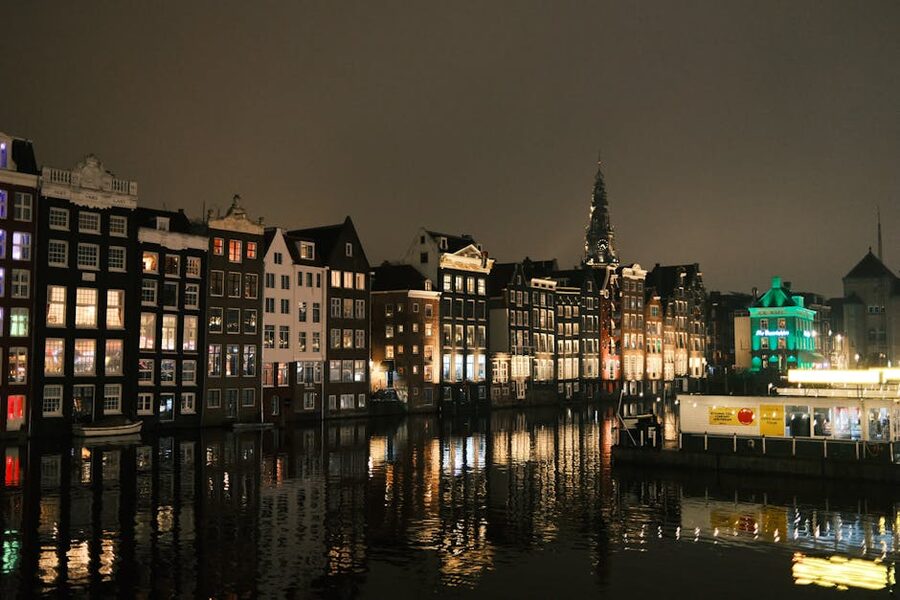
Three picks. One for the all-rounder, one for the storytellers, one for couples who want the small version. Pricing is current at the time of writing; check the booking page for live availability.
1. Open Boat Cruise with Unlimited Drinks and Bite: $21
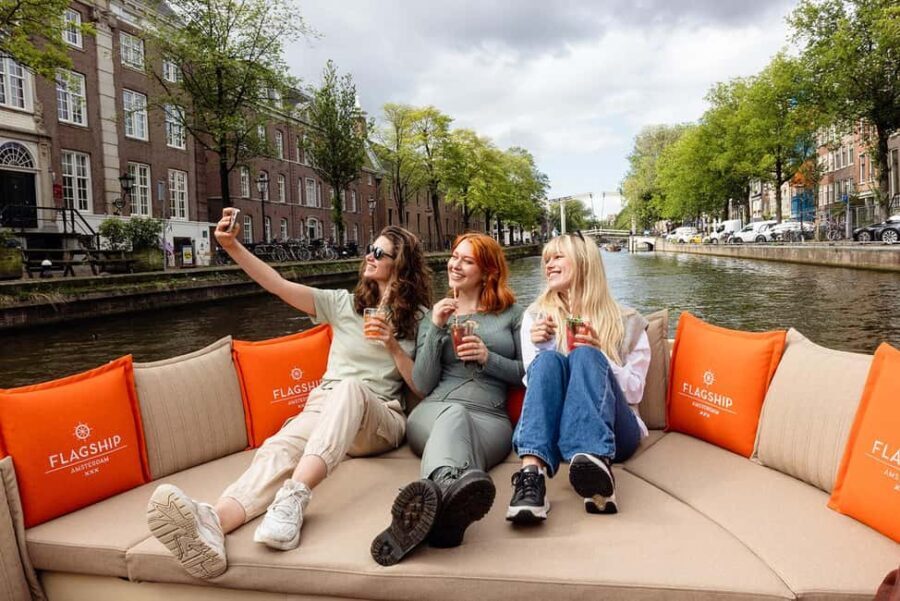
This is the open boat I send people to first because nothing else gets close on price-to-experience. Flagship Amsterdam runs an electric sloep, you get unlimited beer, wine, and soft drinks plus a small bite plate, and the captain runs the commentary live. Our long-form review of this cruise goes deeper on the snack plate and the route options.
2. 75-Minute Open Boat Canal Cruise with Live Guide: $28
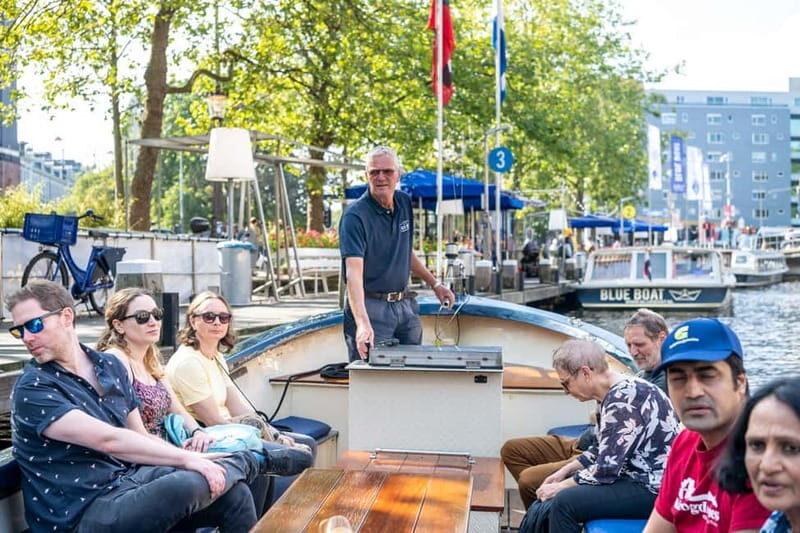
If you’d rather hear what you’re looking at than chase a refill, book this one. The captain runs as the guide for the full 75 minutes and the route hits four canals plus the Amstel. Drinks are sold separately rather than unlimited; the upside is a quieter boat and proper Q&A. Our review covers the typical guide patter and the route map.
3. Cozy Evening Canal Cruise with Open Bar Option: $22
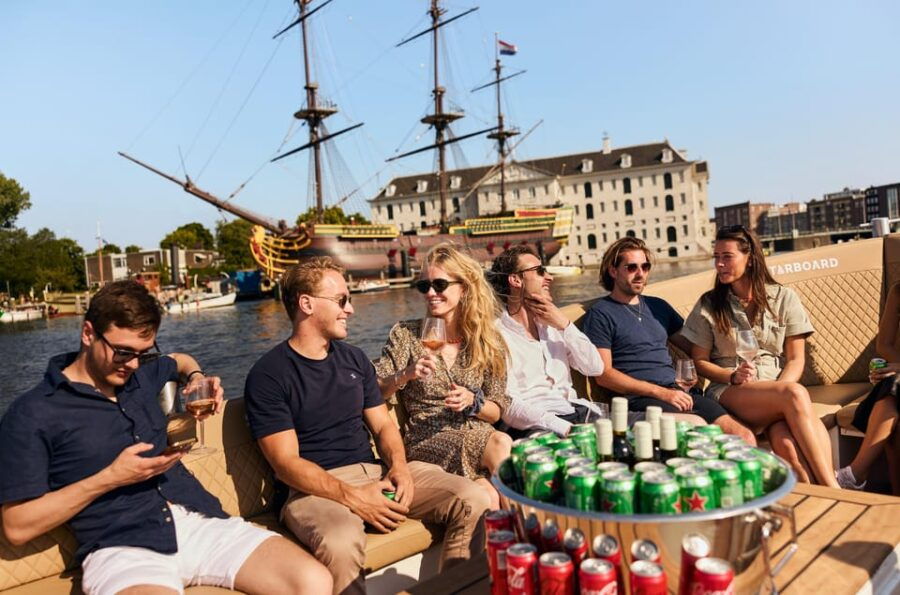
Run by Starboard Boats. The base ticket is the cruise plus one drink; the upgrade adds the open bar for the full hour. Group size is capped lower than the flagship, which is the difference you feel within the first ten minutes. Our review walks through whether the upgrade is worth it (short answer: yes if there are four of you, marginal if two).
How long the cruise actually runs
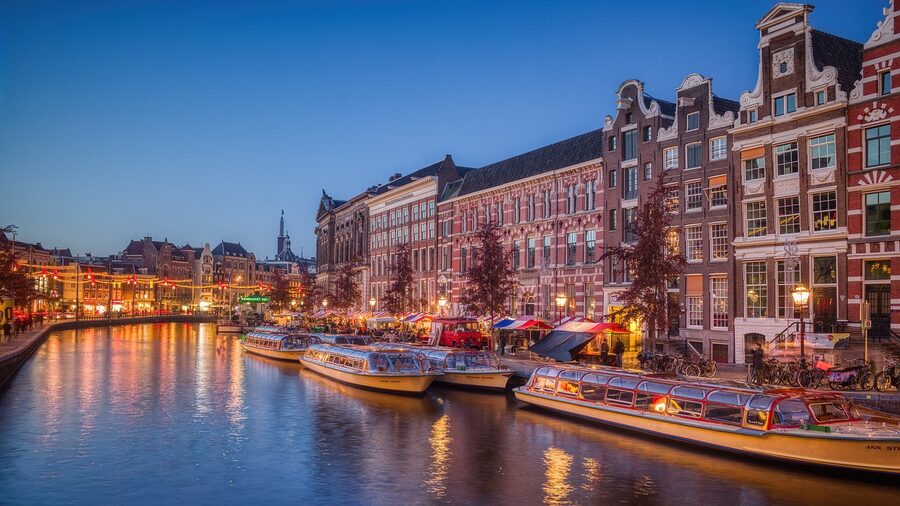
Listed durations and water time differ. A 75-minute open boat runs 70 to 80 minutes on the canal once you’re off the pier. Add 15 minutes for boarding and the safety briefing. Plan 100 minutes from arrival to walking back into the streets.
The 90-minute variants don’t add proportional water time. Most use the extra 15 to slow the loop through the Jordaan or push up the Amstel past the Hermitage. If you care about route content, the longer slot is worth it. If you mostly want the bar and the bridges, the 75-minute slot is fine.
Avoid the 60-minute open boats unless price is the deciding factor. They have to cut the Amstel section to fit the loop, which means no Magere Brug crossing. The Magere Brug is half the reason you’re on this boat.
Where the boats actually leave from
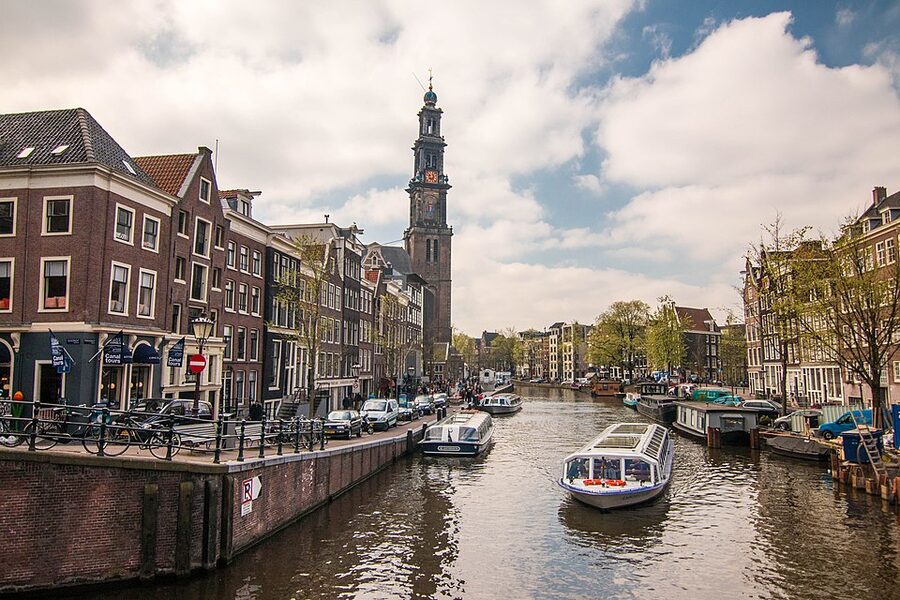
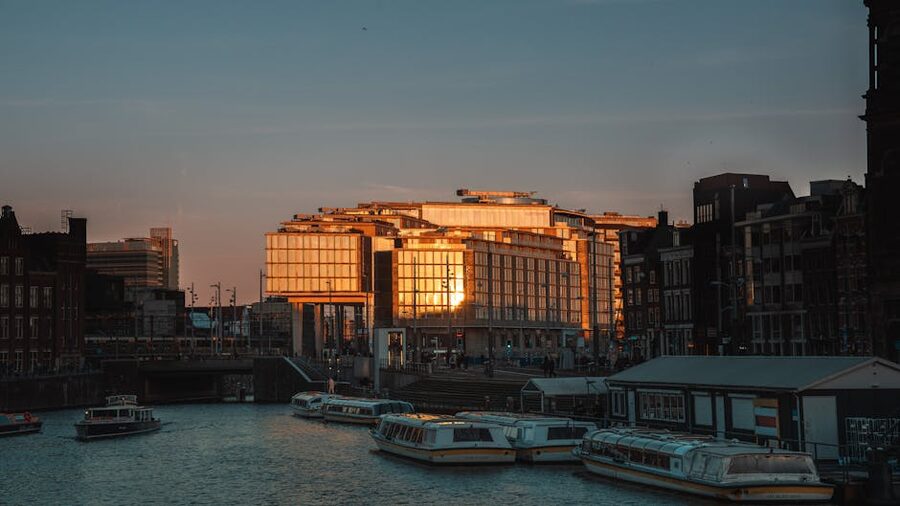
Open-boat operators don’t dock at the big saloon-boat piers near Centraal. They run from smaller, easier-to-miss departure points scattered around the inner ring. Three clusters cover most of the bookings.
Anne Frank House / Prinsengracht. The biggest open-boat cluster. Look for the Westerkerk tower; the pier sits two minutes south of it on the Prinsengracht. Most of the unlimited-drinks-and-bite departures leave from here. Trams 13, 17 to Westermarkt.
Pulitzer / Keizersgracht. Smaller cluster used by the cosy-evening operators. About 10 minutes’ walk from Centraal Station, between Prinsengracht and Singel.
Stadhouderskade / Heineken side. The southern departure cluster, used by combo operators that pair the cruise with the Heineken Experience. Worth checking if you’re already booking the Heineken brewery tour for the same day.
Centraal-side piers exist but mostly host saloon boats. The few open-boat operators that pick up at Damrak run a smaller fleet and tend to be a longer route to the canal ring. Stick with Prinsengracht clusters unless your booking specifies otherwise.
The route, narrated from the boat
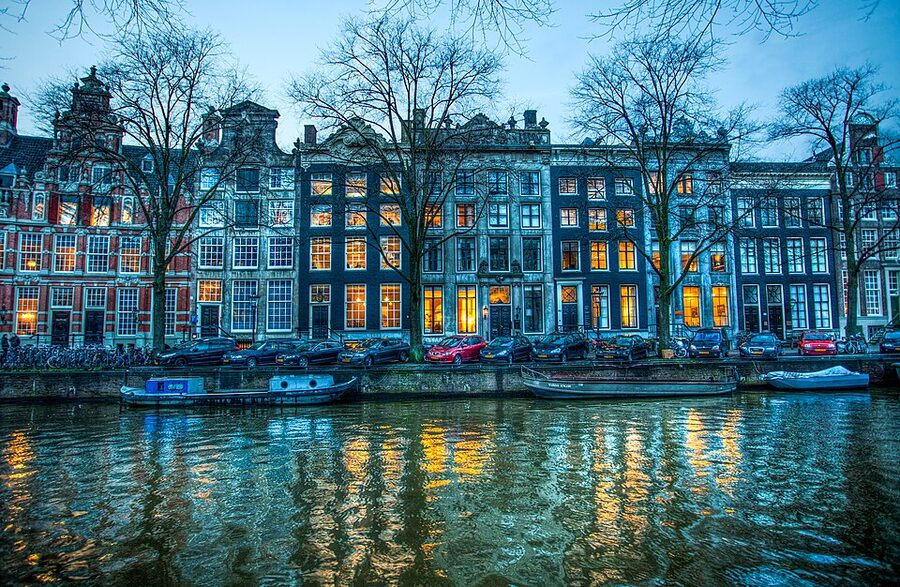
Most open-boat 75-minute routes follow the same skeleton with small variations. Knowing the skeleton in advance means you can plan where to sit (port side beats starboard for the Magere Brug crossing) and which photo to set up for.
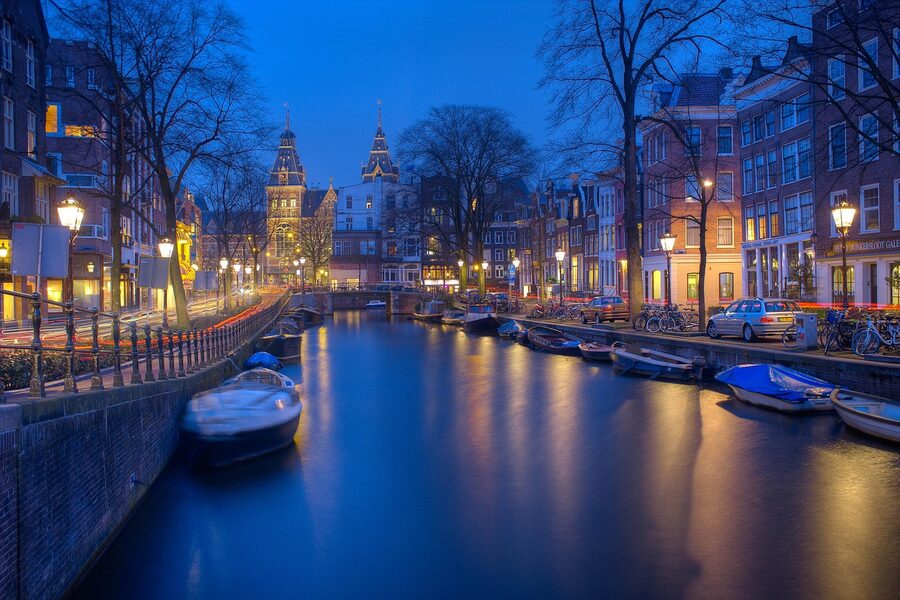
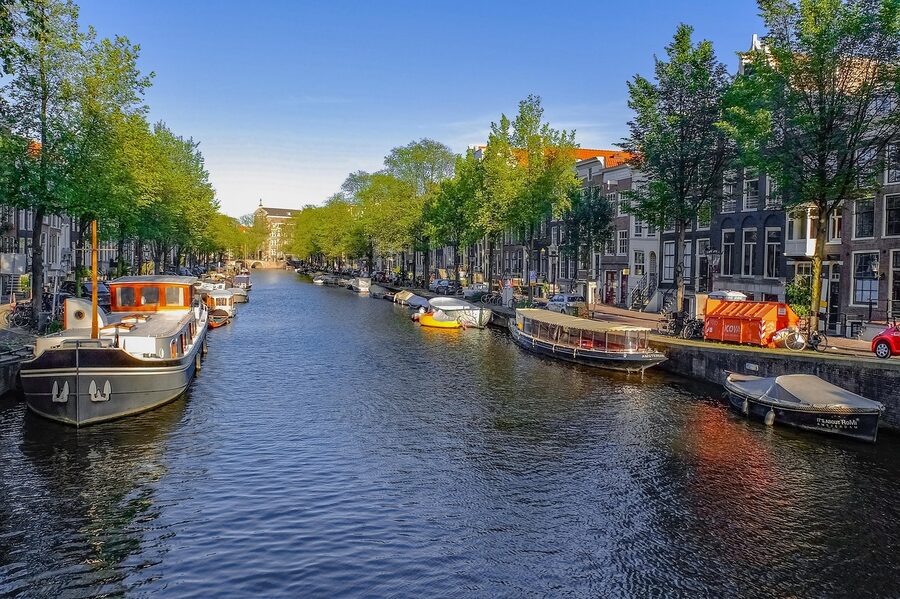
Pier to the Jordaan. First 15 minutes. The boat runs north along the Prinsengracht into the Jordaan side canals. The narrow Brouwersgracht is the photogenic stretch here; the saloon boats can’t fit, so on an open boat you’ll have it to yourselves.
Loop through the Negen Straatjes. Next 10 to 15 minutes. The boat threads through the small canals between Prinsengracht, Keizersgracht, and Herengracht. This is where the canal-house facades are at their most consistent and where most operators slow the throttle.
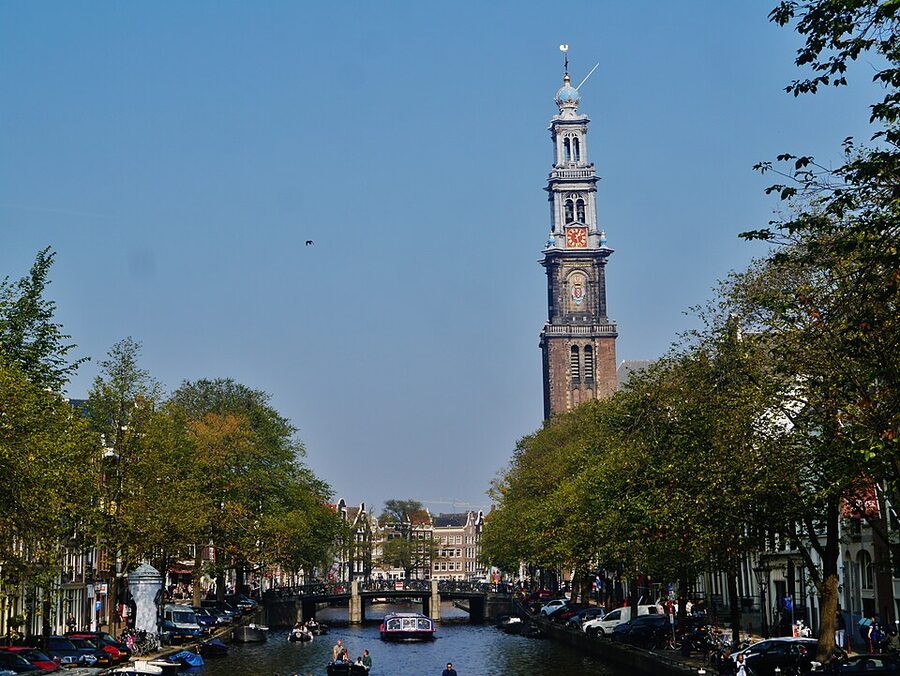
Down to the Singel. 35-minute mark. The boat crosses to Singel, which is the oldest of the four ring canals. This is where the captain points out Singel 7, said to be 2.02 metres wide. The locals will argue about whether it’s actually the narrowest in the city (the answer is technically the back of Oude Hoogstraat 22, but the front of Singel 7 is the canonical answer). Open boats can pull right alongside the facade; saloon boats can’t.
Across to the Amstel. 50-minute mark. The boat exits the inner ring at the south and turns onto the Amstel river. The width of the river opens up the photo. The Magere Brug crossing is the showpiece moment.
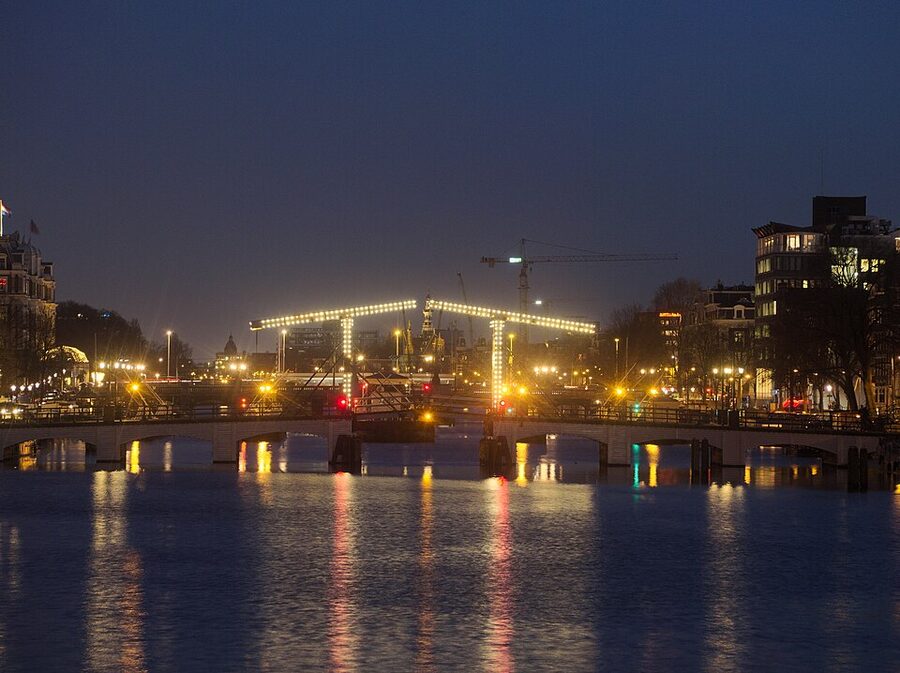
Back through the inner ring. Last 15 minutes. The boat retraces a slightly different inner-ring route home, sometimes via Reguliersgracht (the bridge-after-bridge view that puts seven arches in one frame, looking south from Herengracht). You’ll be back at the pier 75 to 90 minutes after departure.
What’s actually included in the ticket
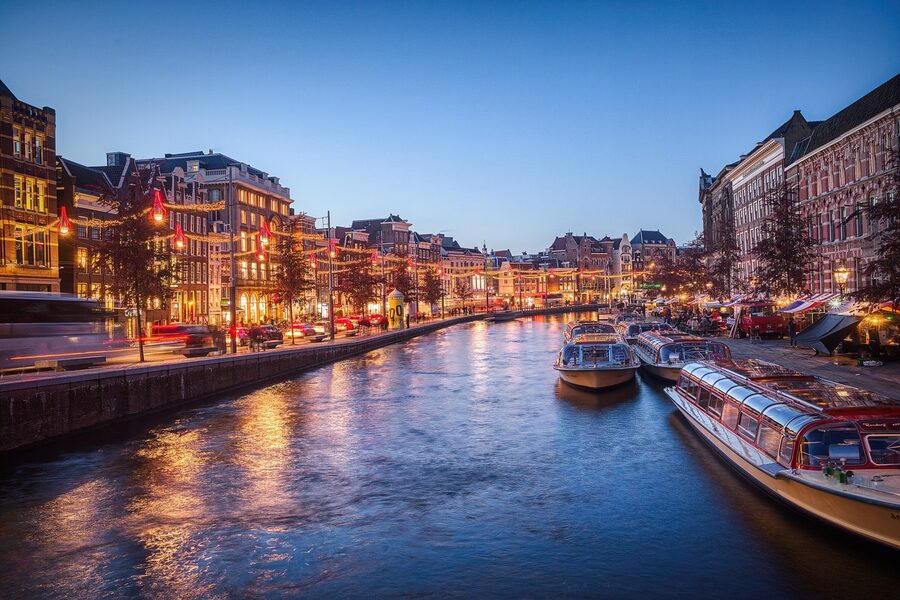
Read the fine print on the booking page. Open-boat tickets are mostly straightforward, but a few items catch travellers out.
Drinks: read the unlimited tier. The headline products include unlimited beer, wine, and soft drinks. Spirits are usually extra. Some boats include prosecco, some don’t. The flagship unlimited-drinks-and-bite cruise covers everything except liquor; the cosy-evening base ticket is one drink, with the open-bar upgrade adding unlimited.
Snack plate vs no snack. Cheese cubes, salami, sometimes a stroopwafel. The flagship product includes one. The live-guide product usually doesn’t. If you’re going straight from a 6pm cruise to dinner at 8pm, the snack plate is enough to bridge.
Blanket and umbrella. Most operators have fleece blankets onboard for chilly evenings. Some include a small canopy at the back for rain. Check the photos on the booking page; if the boat is wide-open with no canopy, plan for the weather yourself.
Toilet: no. Open boats are too small. Use the cafe or pier loo before you board. The Anne Frank pier has a public toilet two minutes’ walk away.
When to go: weather, season, slot
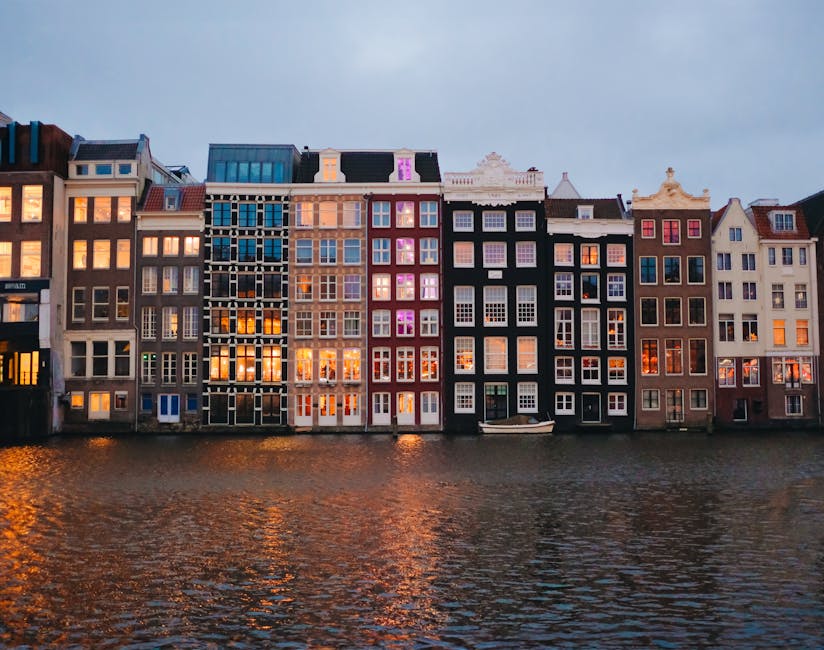
Open boats run year-round. Booking one is a different decision in February than in July, and the slot you pick matters as much as the operator.
Late April to early October: best season. Long evenings, mild water, low chance of rain. Book the sunset slot. If your trip is in this window and the forecast holds, this is non-negotiable.
November to March: book a semi-open or skip. A fully open boat in a January Amsterdam evening is cold in a way that no fleece blanket fixes. The semi-open variant with the canopy works because you can pull cover over the windier sections. The Light Festival cruise (mid-November to mid-January) is a separate product, mostly heated; we covered the seasonal options in our guide to Amsterdam Light Festival boat tickets.
Sunset slot beats daytime slot. Always. Same boat, same captain, same price (or a $2-$3 premium). The open-boat product is engineered for the lighting changeover. A daytime open boat is a worse version of a covered cruise; an evening open boat is a different category.
Weekend slots fill four to five days out in summer. Friday and Saturday sunset departures sell out. Weekday slots are usually fine the day before. If you’re set on a specific operator and date, book the sunset slot a week ahead minimum from June to August.
Tipping, payment, and what to bring
Tipping is not expected in the Netherlands but is appreciated on guided experiences. €5 to €10 per couple to the captain at the end is generous and unusual; €2 a head is normal. The flagship operators have a small tip jar at the dismount.
Card payment is universal at booking. On board, most boats are cash-or-card for spirits if drinks aren’t unlimited. iDeal works on the Dutch operators, contactless on all of them.
Bring: a layer (it’s always 3-5 degrees cooler on the water), a phone with charge for photos, and your booking QR code. Skip: a tripod (no room), heels (the dismount is steep), and any bag bigger than a tote (storage is under the bench, not a lot of it).
Children. Open boats accept kids on most operators. The unlimited-drinks variants are 18+. The live-guide product is family-friendly and runs at child-appropriate volume; the cosy-evening cruise is technically family-friendly but skews to couples. Ask the operator if you’re unsure.
Common ways travellers book the wrong open boat
Three booking-page traps come up over and over.
Trap 1: booking the booze cruise instead of the open boat. The booze cruise runs on a bigger boat, holds 30 to 50, and is a different vibe. It’s louder, it’s covered, and the route is shorter. If your booking page shows 30+ passengers, it’s not an open boat.
Trap 2: booking the daytime slot in summer. Same product, worse experience. The lighting changeover is the open boat’s killer feature. A 2pm slot in July is a covered-saloon-cruise experience without the cover.
Trap 3: booking the 60-minute open boat to save $5. The 60-minute boats cut the Amstel section to fit the loop. No Amstel means no Magere Brug. No Magere Brug is a bad open boat.
The fix for all three is to read the duration and the route map on the booking page before clicking buy. A 75-90 minute, evening, captain-narrated, 12-16-passenger sloep is what you want. Any combination of those four elements that’s missing is a different product.
Pier-side: what to do in the 30 minutes before
Half the people who miss their open boat slot were either at the wrong pier or at the right pier 30 minutes too late. Both are fixable.
If your booking is at the Anne Frank pier, plan to be on Prinsengracht 20 minutes before departure. The pier itself is small. There’s a coffee shop on the corner of Westermarkt that’s good for a 15-minute warm-up if it’s cold; the toilets next to the church are open until 6pm.
If you’ve got an hour to kill before, use it well. The Anne Frank House is one option, but the queue is long and unpredictable. The guide to Anne Frank House tickets covers timed entry. The Negen Straatjes (the nine streets between Prinsengracht and Singel) are a 5-minute walk and full of small shops and bars.
For something specifically pre-cruise rather than a separate visit, the Royal Palace on Dam Square is a 12-minute walk if you want to see one quick interior before boarding. The Moco Museum is a longer walk south but doable; the Moco timed-entry guide covers the queue mechanics.
How the open boat compares to other Amsterdam evening options
If you’re trying to fit a single Amsterdam evening into a single activity, the open boat wins on effort-to-payoff. Compared to a walking tour, you sit. Compared to a covered saloon cruise, you see and hear more. Compared to dinner-on-a-boat, you spend a third as much.
The categories that compete for the same evening slot:
Open boat with drinks vs covered audio cruise. Open boat wins on character, audio cruise wins on weather-proofing. If the forecast is wet, book the covered. Our breakdown of the seven canal-cruise types covers this in detail.
Open boat vs Red Light District tour. Different products. The cruise is sit, drink, look. The walking tour is move, listen, think. Both work as one-evening activities. If you’re in town for two evenings, do one of each. The Red Light District walking tour is the pairing pick if you’ve got Tuesday and Wednesday.
Open boat vs Light Festival cruise. Seasonal swap. Mid-November to mid-January, the Light Festival cruise is the better booking; the rest of the year, the open-boat unlimited-drinks variant is. The two products use different operators and different boats; don’t confuse them on a booking page.
Open boat vs Thames cruise (London cousin comparison). If you’re cruise-shopping in both cities, they’re not the same product. The London Thames cruise is a much bigger boat on a much wider river with no inner-canal intimacy. Amsterdam’s open boat is a different category entirely; book both if you’re hitting both cities.
A short history of the canals you’re cruising
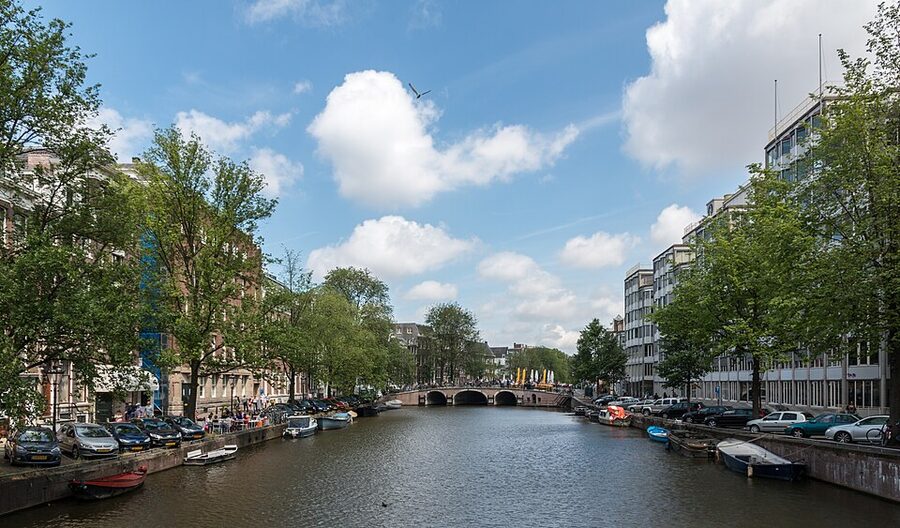
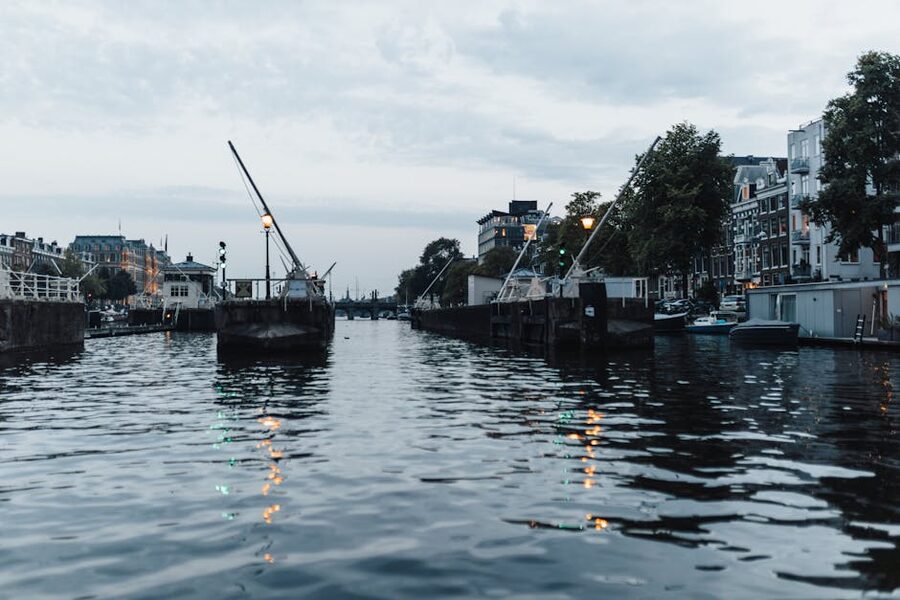
The four concentric ring canals (Singel, Herengracht, Keizersgracht, Prinsengracht) are the surviving piece of Amsterdam’s 17th-century Golden Age expansion. The Singel was the original medieval moat. The other three were dug between roughly 1612 and 1660 to create new merchant-class housing as the city’s population doubled in 50 years.
The canal ring became UNESCO World Heritage in 2010. There are 165 canals across the city and around 1,500 bridges. The 17th-century houses you see from the open boat are mostly still in residential use; many of them are split into apartments, with ground floors as shops or restaurants.
The hoists you see hanging from the upper gables of most facades aren’t decorative. The houses lean very slightly forward over the water (typically 1 to 5 degrees) so that goods could be hoisted to the upper floors past the windows below. Many hoists are still used today, mostly for moving furniture; you can’t fit a sofa up most Amsterdam staircases.
The captains will fold a chunk of this into the cruise narration. Different captains lean on different angles; some go heavy on the merchant-class economics, others on the architectural weirdness. The story you’ll get on the boat is more entertaining than the version in this paragraph.
Common questions before booking
Can I private-hire an open boat? Yes. Most operators run private hires for groups of 6 to 12 at $200-$350 per hour. Worth it if you’ve got a birthday or a big group; not worth it for two people.
Can I bring my own drinks? Generally no. Boats with included or unlimited drinks won’t allow outside alcohol. The boats that don’t include drinks usually do.
What if it rains? Most operators run rain-or-shine and provide ponchos. A heavy thunderstorm will get you a reschedule or refund; light rain doesn’t. The semi-open variant with the canopy is the rain-day pick.
Cancellation policy? GetYourGuide and Viator standard: free cancellation up to 24 hours before. Some operators are 48 or 72; check the booking page.
Wheelchair access? Limited. The dismount onto the boat is a step down off the pier. Some operators can lift; ask before booking. The semi-open variants tend to be more accessible than the smaller sloeps.
Do I need to print the ticket? No. The QR code on your phone works at every operator. Charge your phone.
Pairing the open boat with the rest of your Amsterdam day
If the cruise is your evening, the day before it should be lighter on the brain. The Rijksmuseum and the Van Gogh Museum are both 90-minute commitments and they sit on the south side of the canal ring. Do one, walk back through Vondelpark, eat at five, and you’ll be on the boat by six-thirty.
If the cruise is the start of your evening, plan dinner for after. Most cruises end at 8 to 8:30pm, which is right inside the Dutch dinner window. The Jordaan is a 10-minute walk from the Anne Frank pier and is full of small restaurants. The De Pijp area near Heineken is a longer walk south but better for bigger groups.
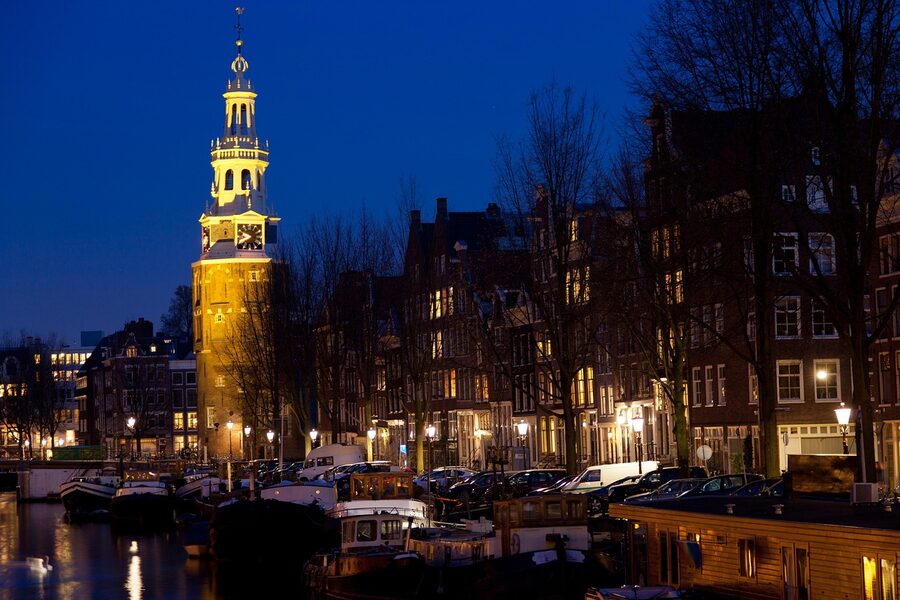
For the morning of cruise day, book something walkable. Madame Tussauds on Dam Square is a 10-minute walk to most piers; the Moco Museum on Museumplein is a longer walk but quick once inside. The Heineken Experience pairs neatly because some open-boat combos pick up at the Stadhouderskade pier.
Other Amsterdam guides worth your time
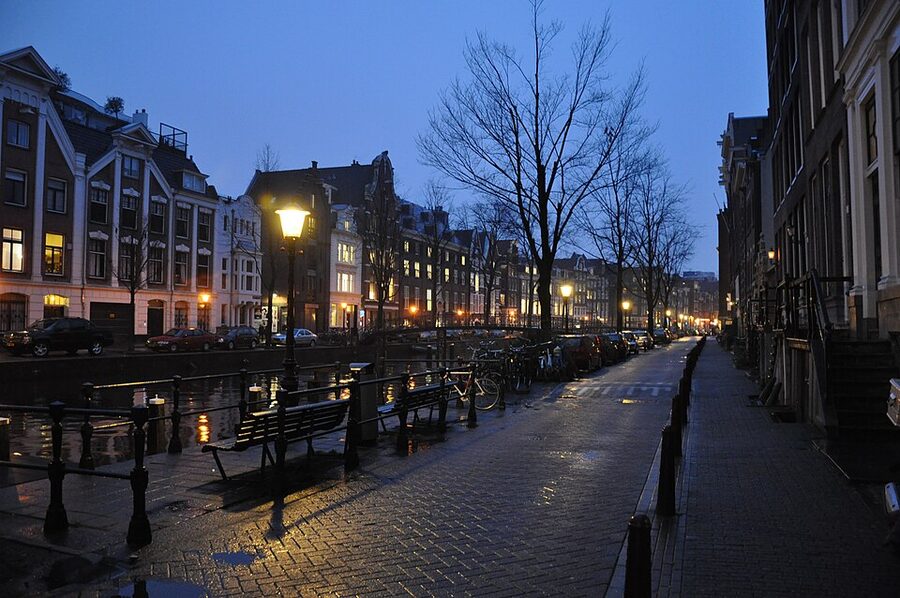
If the cruise sells you on Amsterdam evening tours, the Red Light District walking tour is the obvious next booking; it’s the same time slot, different mood, and works as a Tuesday-Wednesday pair. From mid-November to mid-January the Light Festival cruise is the seasonal upgrade on the standard open boat. For a covered, scripted-audio version of the same canal route in case the weather turns, our guide to Amsterdam canal cruises sorts every other product type.
If the open boat sounds good but you want a bigger-river cousin, the London Thames cruise is the closest match in another city; it’s not the same intimacy, but it scratches the same itch.