
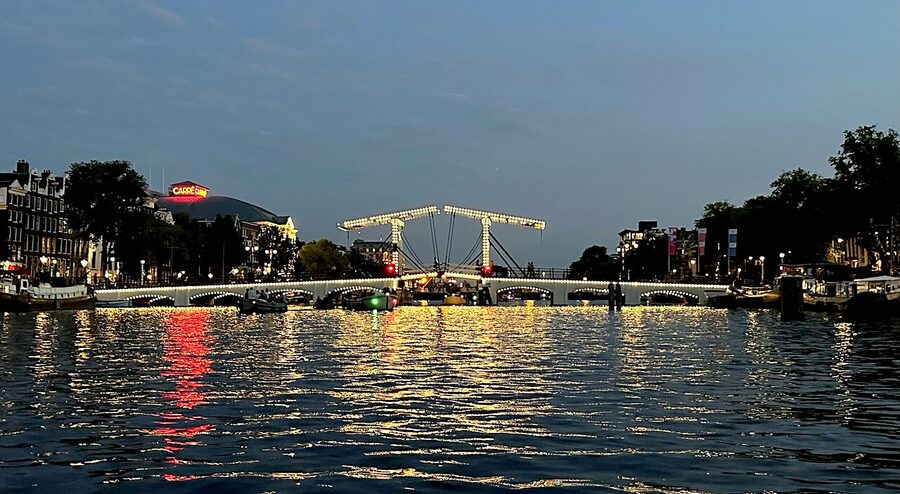
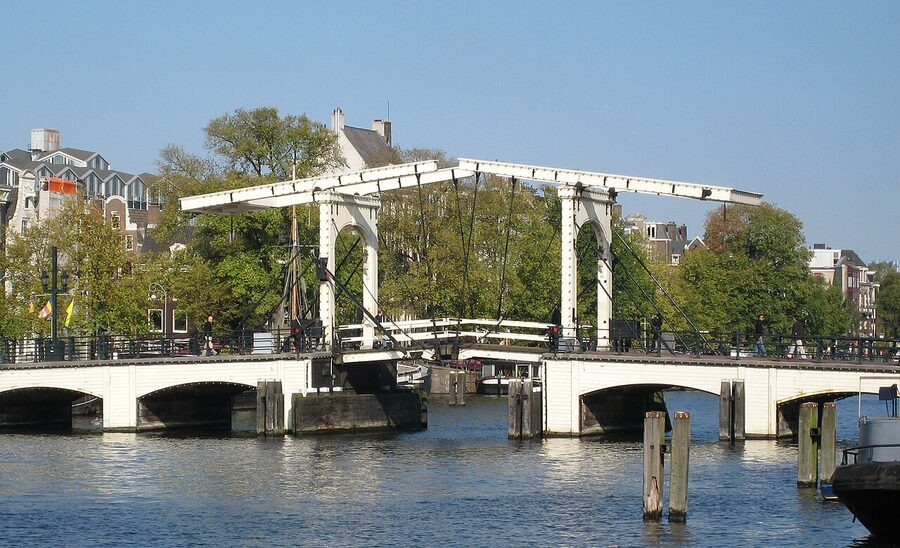
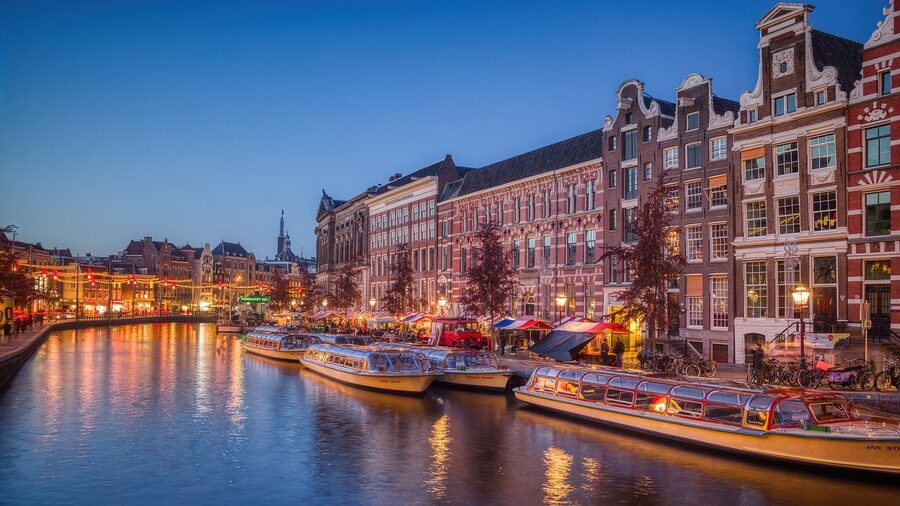
You’re sliding under the Magere Brug at the moment the bridge lights flick on. The wood arch overhead goes from grey to honeyed yellow in the space of one breath. The boat captain dips his head, the brick-and-elm guardhouses on either side blink awake, and a couple of cyclists cross above you, tyres clicking on the planks. You stop talking. So does everyone else on the boat.
Booking a canal cruise sounds like the simplest tourist task in Europe. It isn’t. There are at least seven distinct product types in Amsterdam, the prices range from $14 to $55, and the difference between the cheapest and the best-fit choice can be very large depending on who you’re with and how many drinks you want included. This guide sorts them out so you book the one you actually want, not the one the first booking page in your search results pushes.
The canals themselves became UNESCO World Heritage in 2010. The 17th-century concentric ring (Singel, Herengracht, Keizersgracht, Prinsengracht) is the original Golden Age trader-merchant infrastructure, still in residential use today. There are 165 canals and roughly 1,500 bridges. Almost every cruise covers a slice of the inner ring plus the Amstel, with regional variations between operators.
- In a Hurry? Three Picks
- The seven cruise types you’ll see on every booking page
- How long the cruise actually takes
- Where the boats actually leave from
- The standard route, explained from the boat
- Top picks for booking right now
- 1. Canal Cruise with Live Commentary and Audio Guide:
- 2. Canal Cruise with Free Dutch Stroopwafel:
- 3. Canal Booze Cruise with Unlimited Drinks:
- The open-boat small-group version
- Evening cruises and the lighting moment
- The electric boat with sun roof
- Themed cruises beyond stroopwafel
- Why the canals look the way they do
- Combos: cruise plus museum
- What to wear and what to bring
- Timing your cruise across the day
- Common booking traps
- Accessibility and practicalities
- Comparing with the Thames and Manchester options
- Where to go from here
In a Hurry? Three Picks
Best for first-timers who want a party: Amsterdam Canal Booze Cruise with Unlimited Drinks Option from $18. One hour, full bar, the loudest of the lot.
Best for food-curious daytime visitors: Canal Cruise with Free Dutch Stroopwafel from $15. 60-75 minutes, audio guide, warm caramel waffle in your hand.
Best cheap-and-clean covered cruise: Canal Cruise with Live Commentary and Audio Guide from $14. Glass-roof, multilingual narration, the workhorse option.
The seven cruise types you’ll see on every booking page
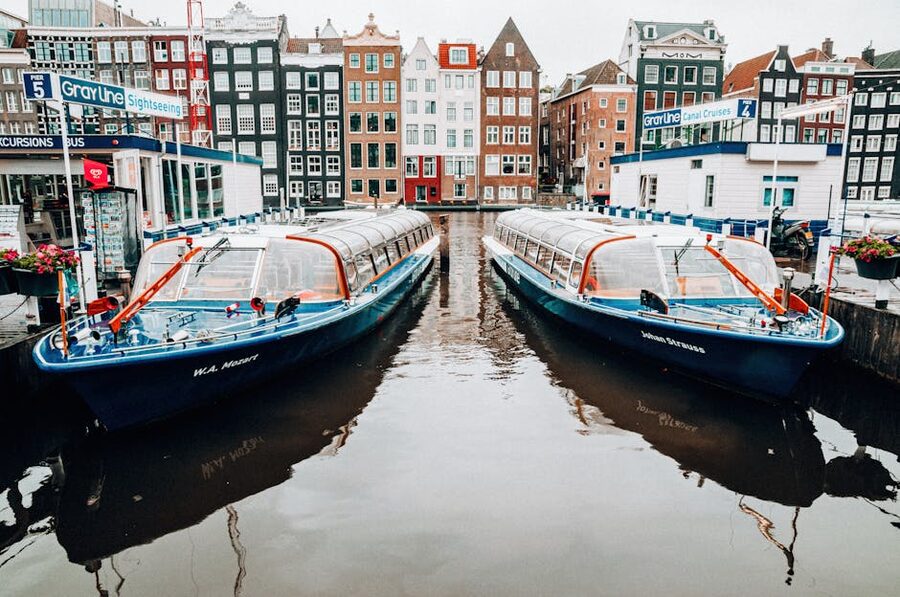
Every Amsterdam canal cruise sold online falls into one of seven product types. The marketing copy tries to disguise this. Once you see the categories the price sheet stops being confusing.
1. Classic audio cruise. 60-75 minutes, glass-roof saloon boat that holds 80-150 people, recorded multilingual audio guide, no drinks included. Cheapest tier, $14-19. Operators include Stromma (the big one), Blue Boat, Lovers, City Sightseeing. Indistinguishable in practice.
2. Live commentary cruise. Same boat shape, same route, but a real guide on the microphone instead of recorded audio. Adds about $3-5 to the ticket. Worth it if you like questions answered. Skip if you’d rather just look at the houses.
3. Open-boat small group. 12 passengers maximum, no roof, captain doubles as guide. 75-90 minutes. Around $35-40. The best version of the experience if the weather is good and you want a conversation rather than a script.
4. Evening or sunset cruise. 90 minutes, usually on the bigger boats, hits the lighting changeover. Around $20-25. The Blue Boat 90-minute evening run is the most-booked version. Run after sunset, so you get the lights on the bridges and the canal-house facades. The Magere Brug crossing is the one to wait for.
5. Booze cruise. One hour, unlimited drinks (beer, wine, soft drinks; spirits sometimes extra). $18-30. Smaller capacity, livelier crowd, less guide content. The cheapest unlimited-drinks option in central Amsterdam if you like the bar maths.
6. Themed (cheese and wine, stroopwafel-included). Tasting cruises that pair the boat ride with a Dutch food. Stroopwafel is the most popular and the best value at around $15. Cheese-and-wine versions cost more and are usually 90 minutes. Worth it if you’re using the cruise as your dinner-adjacent activity.
7. Electric boat with sun roof / private hire. Top of the price ladder, $50+ per person. Quiet motor, smaller boat, opens at the top in good weather. Best if you have four or more people and want a more private feel.
How long the cruise actually takes
Listed durations and actual durations differ by 5-15 minutes either way. A “60-minute cruise” usually means 50-65 minutes on the water, plus 10-15 minutes of pier-side queueing and boarding. Plan 90 minutes total from arrival at the pier to walking back into the streets.
The 75-minute and 90-minute cruises don’t add proportional water time. They mostly add a longer slow loop through the Jordaan or a detour up the Amstel. If you’re picking by route content, that’s where the extra minutes go. If you’re picking by Magere Brug visibility, every operator covers it.
Where the boats actually leave from
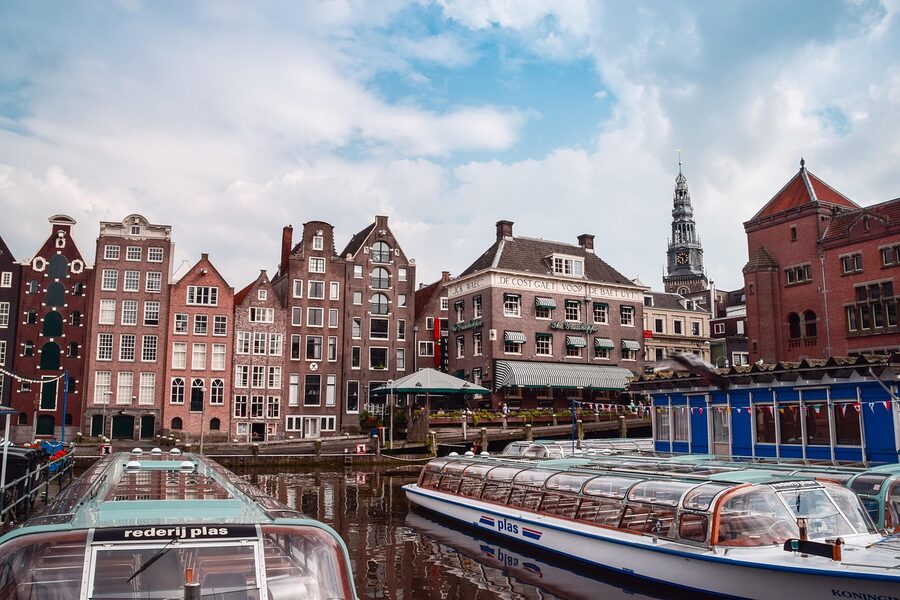
There are five main pier clusters and your booking page will tell you which one. Don’t guess. Walking 20 minutes to the wrong pier is one of the most common reasons people miss their slot.
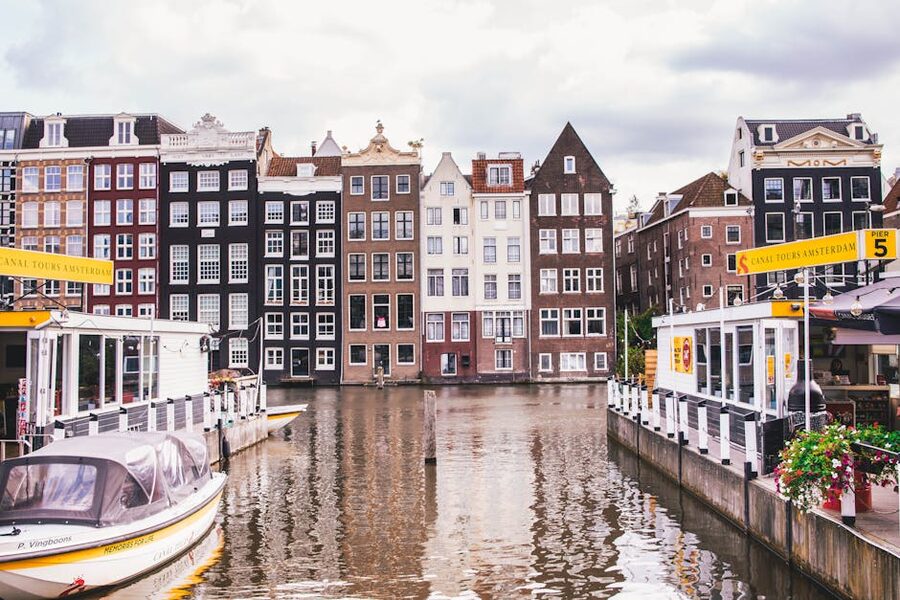
Damrak / Centraal Station piers. The biggest cluster, used by Stromma, Lovers, Blue Boat and most of the budget boats. Five-minute walk from the station’s main south exit. Signposted “Rondvaart” everywhere.
Anne Frank House pier (Prinsengracht). Smaller cluster, used by some of the open-boat operators and a couple of evening runs. About 12 minutes’ walk west of Centraal. Convenient if you’re combining the cruise with the Anne Frank visit.
Heineken Experience pier. One operator runs combo cruises that pick up at the Heineken brewery on Stadhouderskade. Worth checking if you’re booking both attractions on one day.
Rijksmuseum pier. Used by the Rijks-plus-cruise combos. Pier sits beside the museum building on Stadhouderskade, walking distance from Museumplein.
Leidseplein. A handful of small-boat operators pick up here. Useful if you’re staying in the Leidseplein area; the rest of the city is a longer walk.
The standard route, explained from the boat
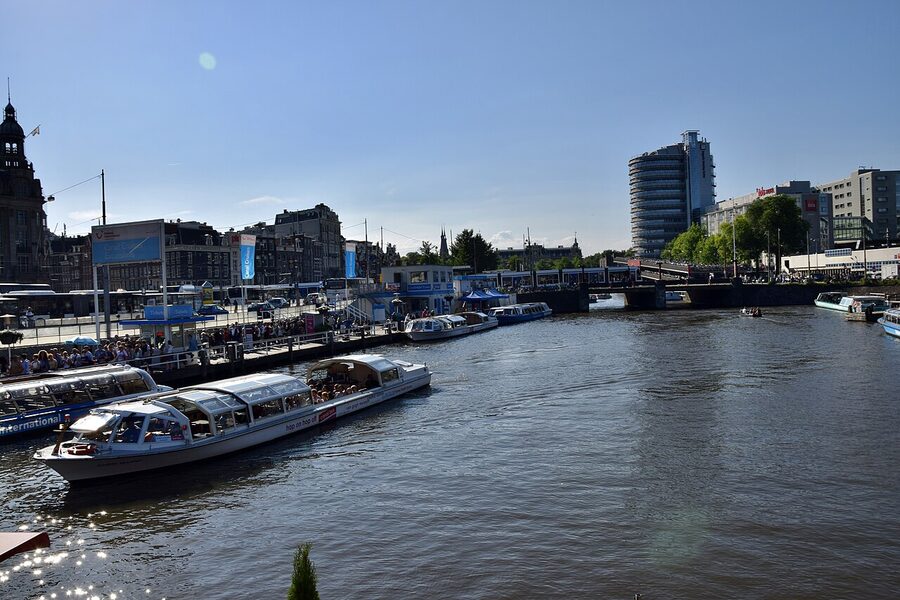
Most cruises follow a clockwise or anticlockwise loop that hits roughly the same waypoints. From a Damrak departure you’ll exit through the harbour, swing south past Centraal, and head into the Singel. The first stretch is industrial and modern. Stick with it. The 17th-century houses start kicking in around the Bloemenmarkt.
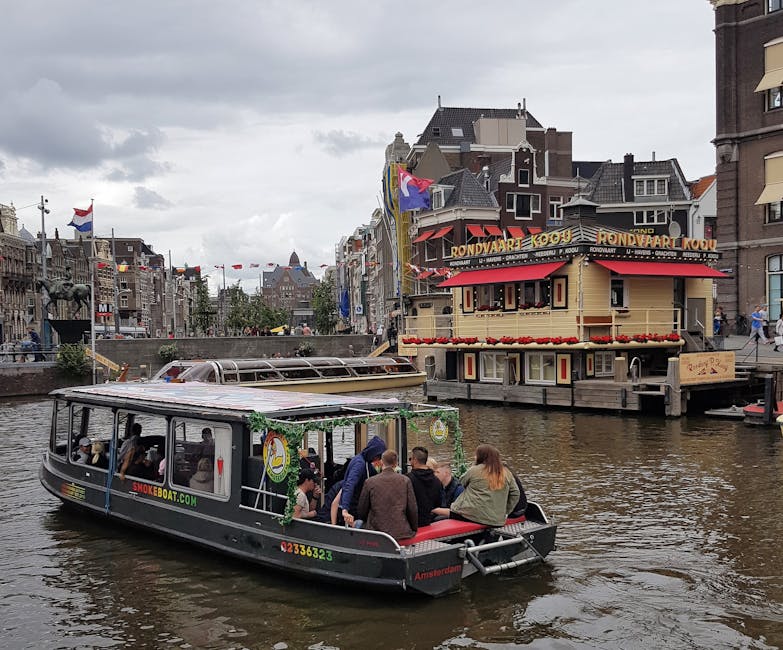
From the Bloemenmarkt the route turns into the Herengracht. This is the postcard stretch. The grandest houses sit between numbers 380 and 500. Look for the Cromhouthuis (Herengracht 366), now a museum, with the four matched gables. The captain will slow down at this point on every cruise. Get your camera ready.
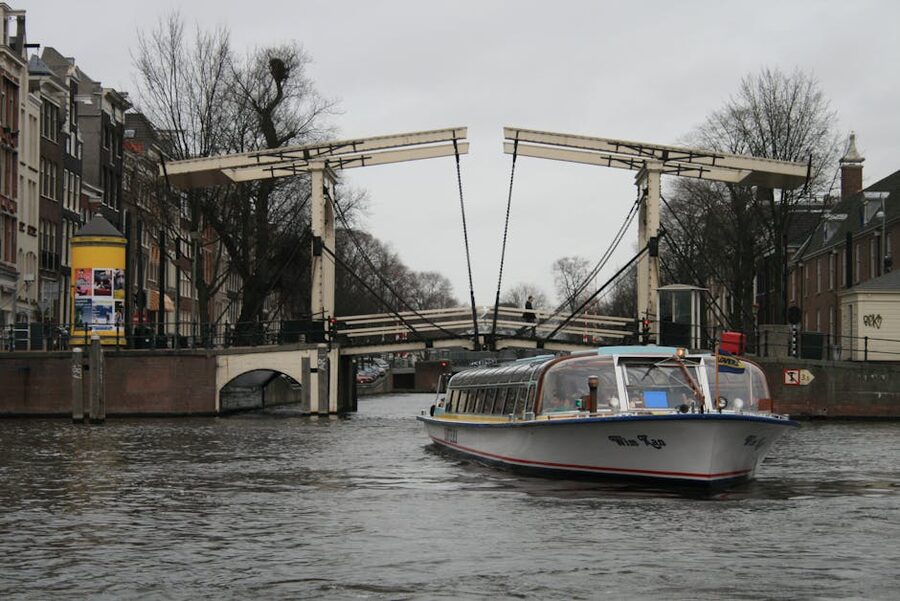
Then the boat cuts across to the Amstel river, the wide one. From the Amstel you get the Magere Brug shot, the Theater Carre, the Hermitage, and a view back towards the Royal Palace. This is also where the Skinny Bridge crossing happens. If you’re on an evening cruise this is where the lights flick on.
The return loop usually swings back through the Prinsengracht (passing the Anne Frank House from the water side, which most visitors find more sobering than they expected) and back to Damrak. Total water time: roughly 50-65 minutes for a “60-minute” cruise.
Top picks for booking right now
I’ve narrowed the field to the three that I’d actually recommend. The first is the budget workhorse with audio guide. The second is the food-and-cruise combo that pulls its weight. The third is the booze cruise, which is what most groups of friends end up wanting once they’ve seen it on the booking page.
1. Canal Cruise with Live Commentary and Audio Guide: $14
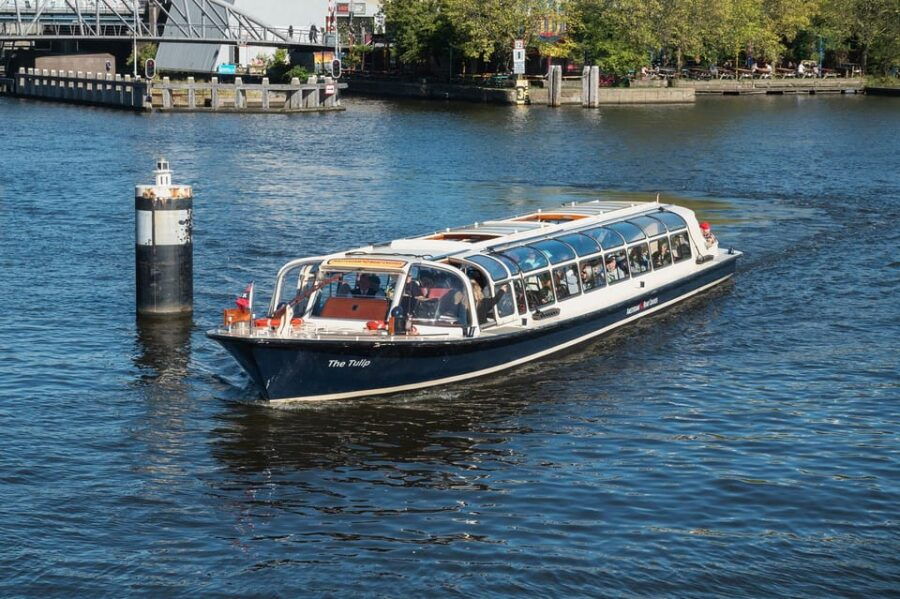
This is the budget default and it earns the spot for most first-timers. You get the live narration, the multilingual audio backup, and the standard glass-roof loop. Our full review walks through the operator differences and which slot of the day picks up the better guide rotations.
2. Canal Cruise with Free Dutch Stroopwafel: $15
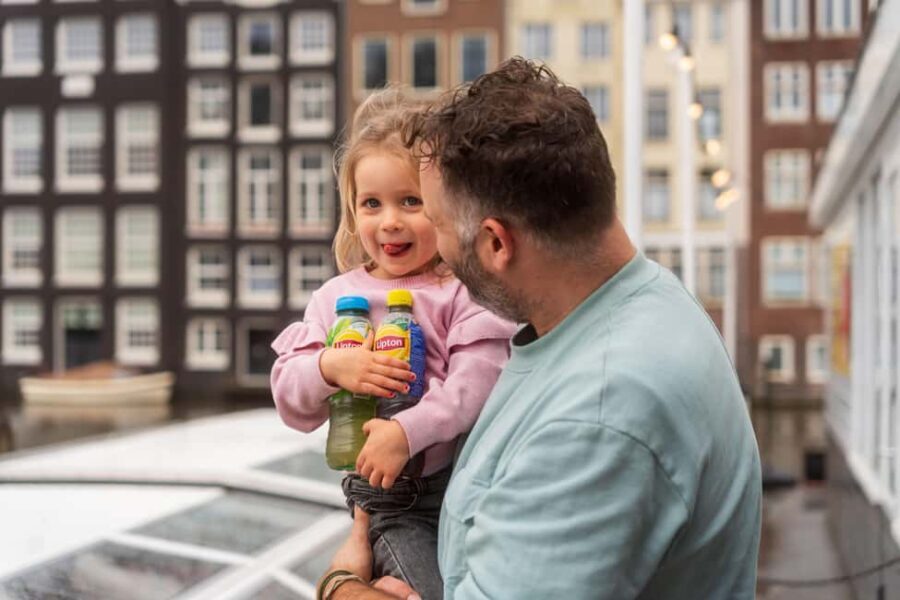
The stroopwafel cruise is the daytime sweet-spot pick. You get the standard route, the audio guide, and a warm caramel waffle that softens just enough to bend. The full review covers the timing of when the waffles get handed out and which operator runs the warmest ones.
3. Canal Booze Cruise with Unlimited Drinks: $18
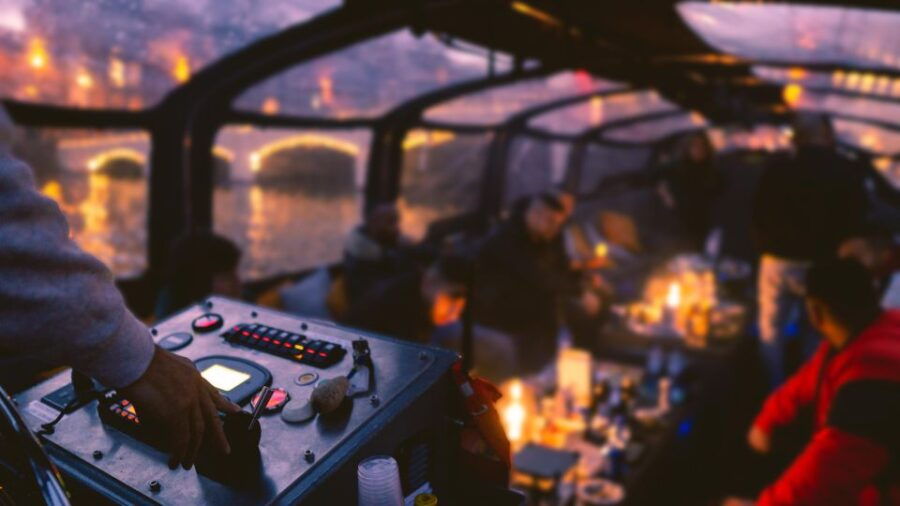
This is the most-booked party cruise in Amsterdam and the bar maths usually work out: two beers ashore costs more than the ticket. Our booze cruise review calls out the noise level, the music, and which slot of the day is calmer if you actually want to look at the canals while you drink.
The open-boat small-group version
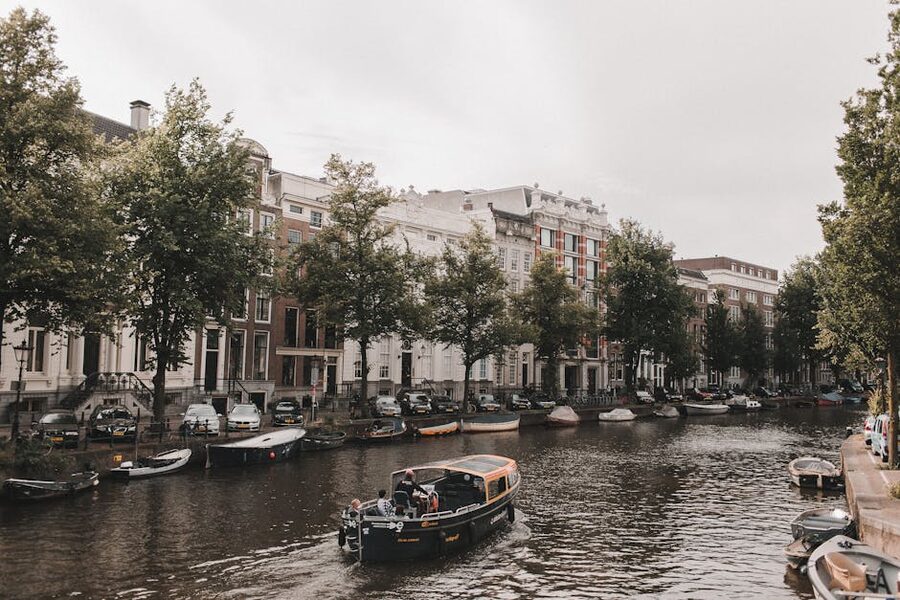
If you’ve already done a saloon-boat cruise once, the open-boat 12-passenger version is the upgrade. Amsterdam Canal Cruise on a Small Open Boat is the one I’d point friends towards on a second trip. The boat is low to the water, the captain is the guide, and you can ask actual questions. The narrative is improvised and reactive rather than scripted.
The trade-off is weather. There’s no roof. Operators provide blankets and ponchos in cool weather, but a January cruise in horizontal rain is rough. Spring through autumn is the window. Book the morning slot in summer; afternoon ones get crowded by the Damrak crowds spilling onto the same canals.
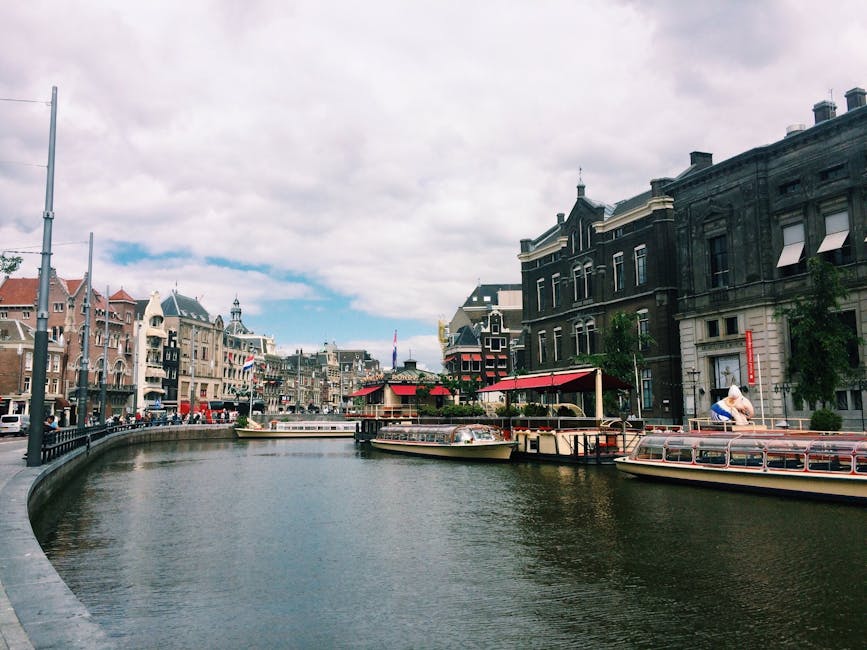
Evening cruises and the lighting moment
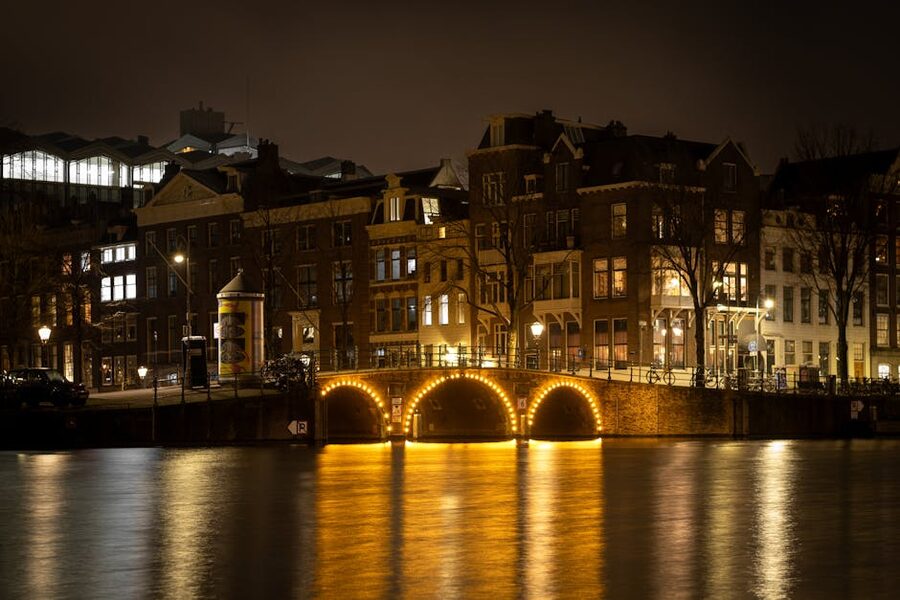
The 90-minute Blue Boat evening cruise is the operator most people end up on for this. Read the full review for the details on which 90-minute slot lines up with which seasonal sunset.
The 75-minute Blue Boat run is the daytime sister. Our 75-minute cruise review covers the differences with their 90-minute version. Spoiler: the extra 15 minutes adds a Jordaan loop, not Amstel time.
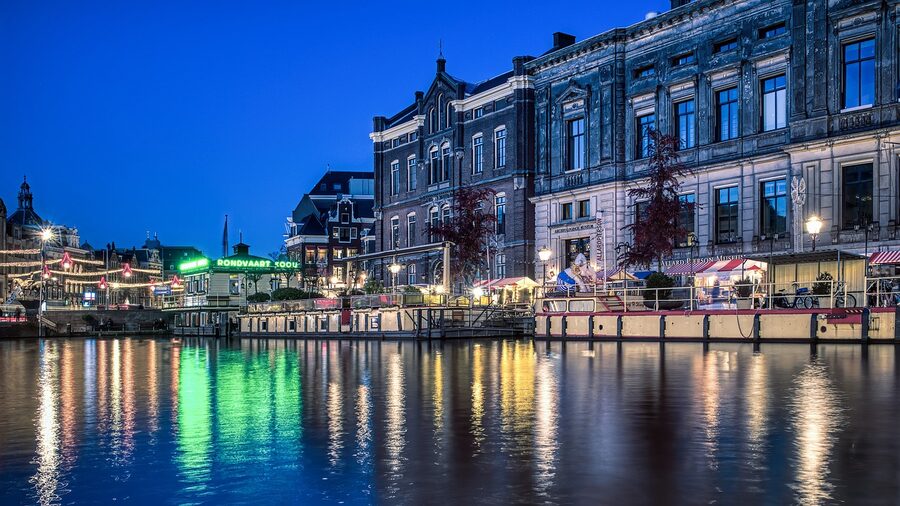
What you actually want from an evening cruise is the changeover, not full darkness. Full darkness flattens the contrast, hides the canal-house facades, and turns the windows into black rectangles. The 30 minutes around sunset is when the canals are richest. Book a slot that puts you mid-cruise at the changeover, not arriving for it.
The electric boat with sun roof
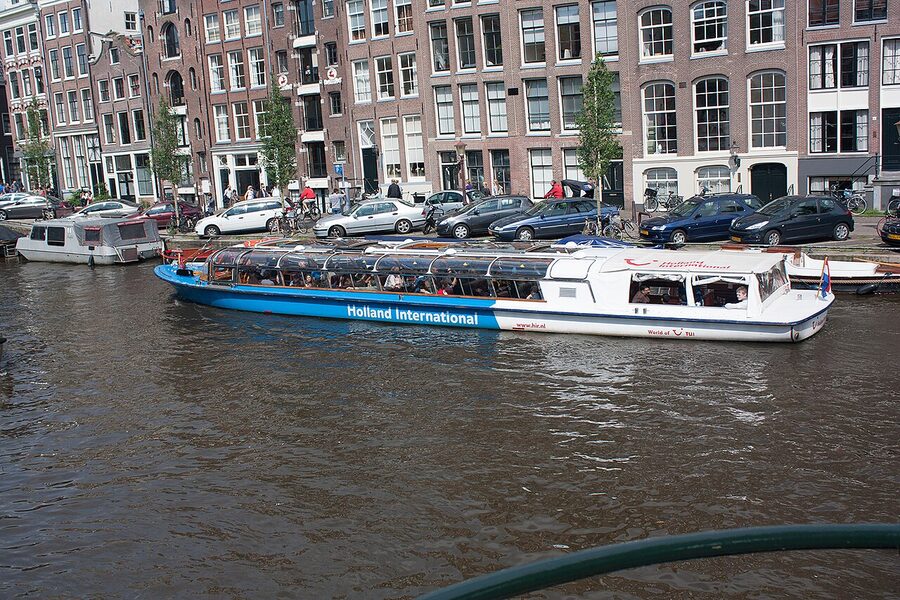
The electric boat with sun roof sits at the top of the price ladder, around $55, and is more of a small-group experience than the budget options. It’s worth it if you specifically dislike the engine drone of the older diesel saloons (it’s noticeable from the front rows), or if you want a quieter platform for conversation.
The roof opens for the bridge crossings, which means you get the up-into-the-arch view that the closed-roof boats can’t deliver. On a clear evening cruise this is the version that produces the best photos.
Themed cruises beyond stroopwafel
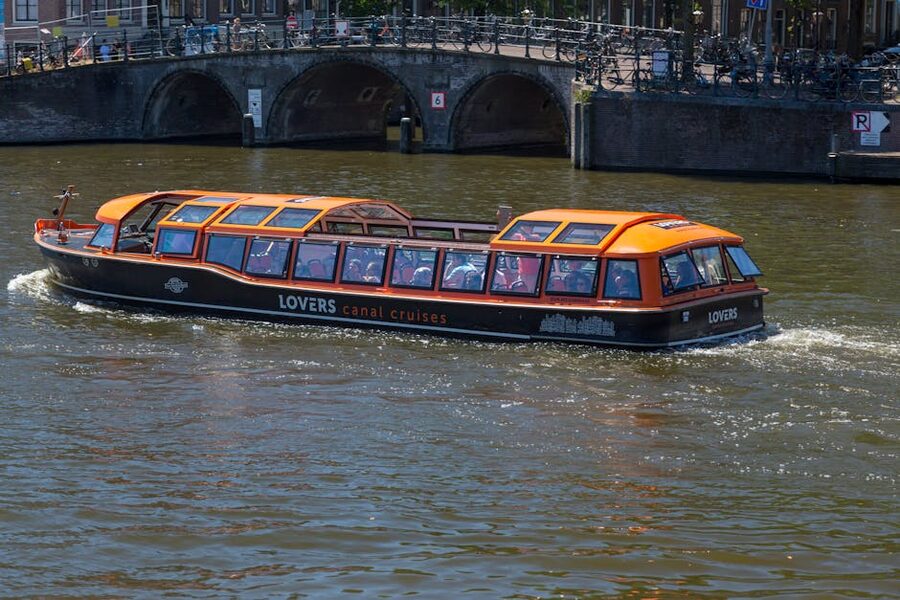
Beyond the stroopwafel cruise there’s a cheese-and-wine version (90 minutes, around $40-50, comes with a small flight of Dutch cheeses and matching wines). It’s hit-or-miss depending on the operator and the season; some serve from a properly chosen cheese board, others just hand out three pre-cut cubes. Read the booking page carefully.
There are also pizza cruises, BBQ cruises, and a pancake cruise that operates mostly at midday for families. None of them are the right pick if you’re prioritising the canal experience itself; the food becomes the focus and the canals become the backdrop. If you want a meal on the water, fine. If you want a cruise that happens to feed you, stick with stroopwafel.
Why the canals look the way they do
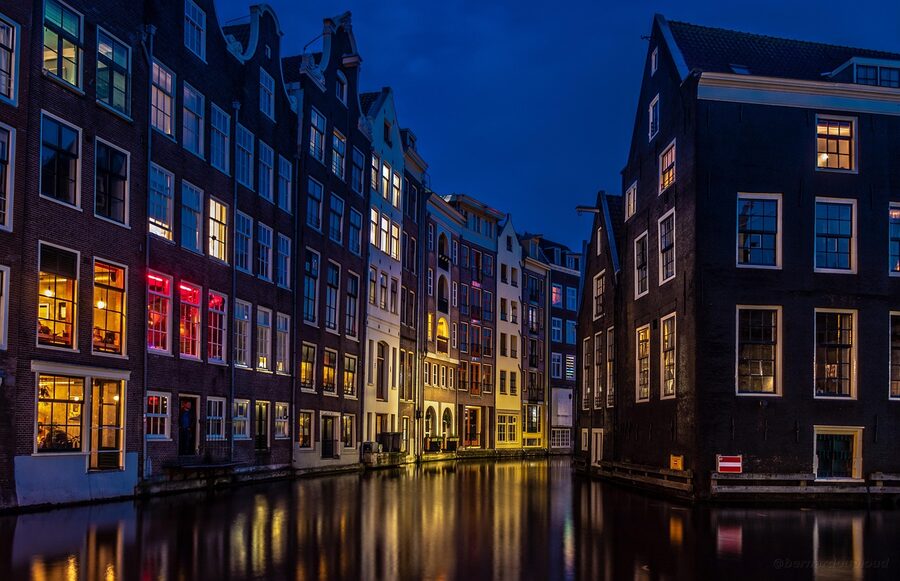
This part of the cruise pays for itself. Knowing why the houses look the way they do changes what you see from the water.
The canal ring was dug between 1613 and 1660 as one of the first deliberately planned urban expansions in Europe. Singel is the medieval moat. Herengracht, Keizersgracht, and Prinsengracht were the new construction. Plots were sold lengthways, narrow at the canal frontage and long towards the back, because frontage was taxed and depth wasn’t. That’s why the houses are tall and thin.
The lean-forward angle is structural, not decorative. Stone hoists on the gable peaks needed clearance to lift goods past lower-floor windows; tilting the entire facade forward let the load swing free. The hoists are still there. Look at the very top of the gables on Herengracht and you’ll see them, sometimes carved into ornamental shapes.
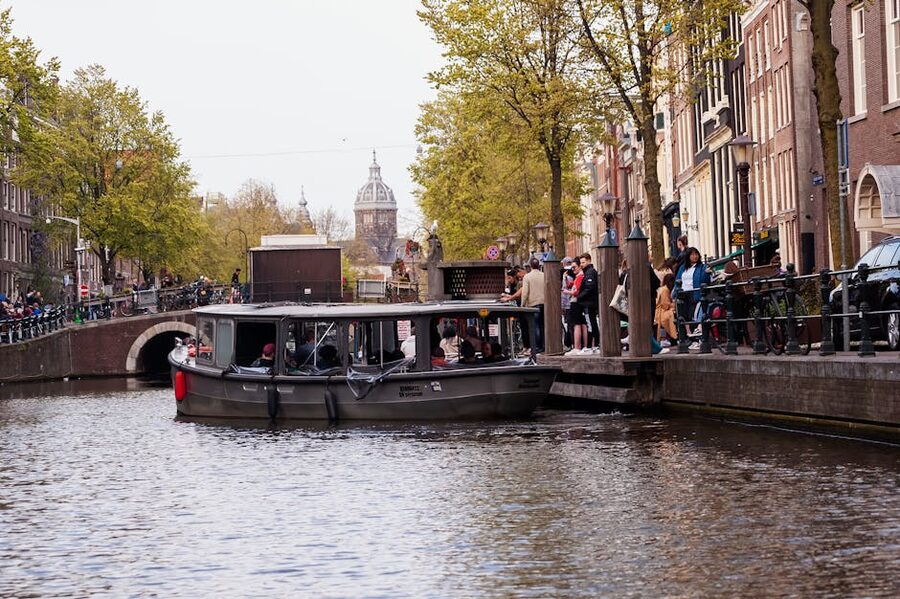
The merchant houses were homes and warehouses combined. Goods came up the canal, were lifted into the upper floors via the hoist, and stored in the attic. The family lived on the first and second floors. The ground floor was often the trading office. Some of these layouts survive (the Cromhouthuis museum lets you walk it) and the cruise is a good visual primer for the museum visit.
Combos: cruise plus museum
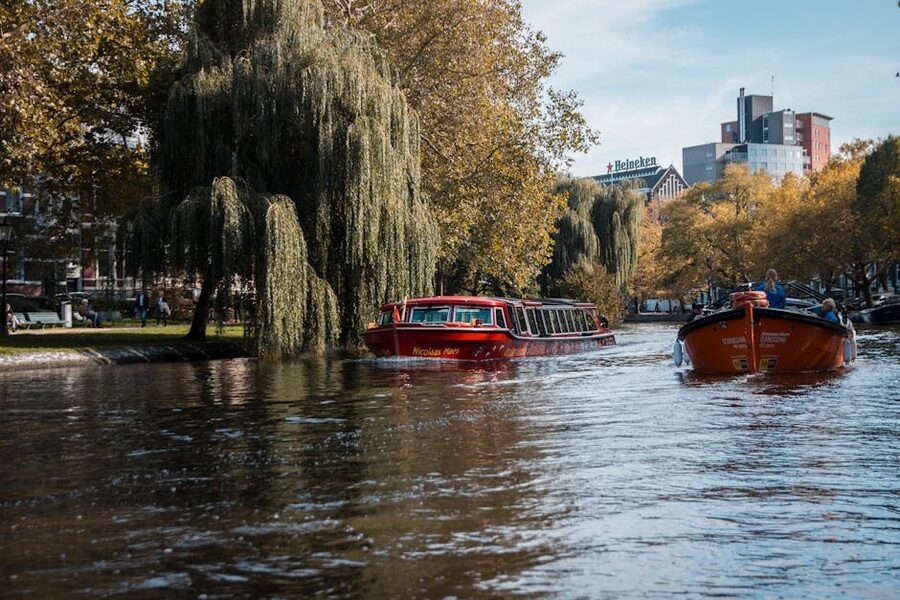
If you’re booking a museum on the same day as the cruise, the combo tickets save real money. The Rijksmuseum and Van Gogh combos depart from the Rijksmuseum pier on Stadhouderskade and you can do the cruise either before or after the gallery slot. Our Rijksmuseum guide walks through how the combo timings work, and our Van Gogh booking guide covers the same ground for the Museumplein neighbour.
The Heineken-plus-cruise combo is the surprise sleeper hit. The brewery is on Stadhouderskade and the cruise picks up at the Heineken pier, so the logistics are clean. The Heineken Experience guide explains the brewery flow; pair it with a 60-minute cruise as a half-day plan.
What to wear and what to bring
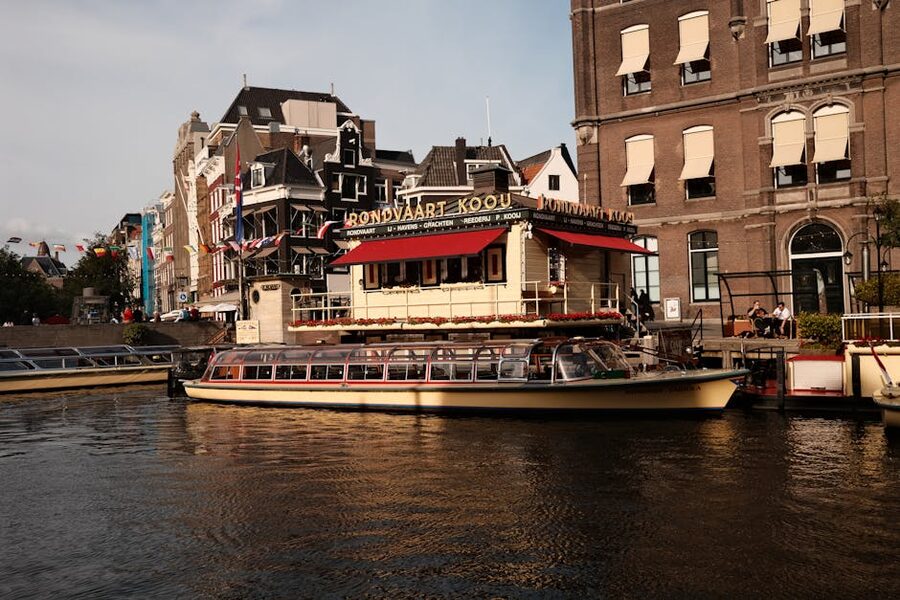
For the saloon-boat cruises, indoor clothes are fine. The roof seals against the rain and the heating works. The seats nearest the open back are colder; if you’re sensitive to that, board early and pick a middle row.
For the open-boat cruises, dress one layer warmer than the air temperature. The wind off the water does its own thing. Operators provide blankets but they’re communal, which feels different in 2026 than it did a decade ago.
Cameras: a phone camera handles the cruise fine, even at dusk. The autoexposure on modern phones balances the warm-yellow bridge lights and the dark water surprisingly well. A short telephoto helps if you want to compress the canal-house facades into a single tight frame.
Timing your cruise across the day
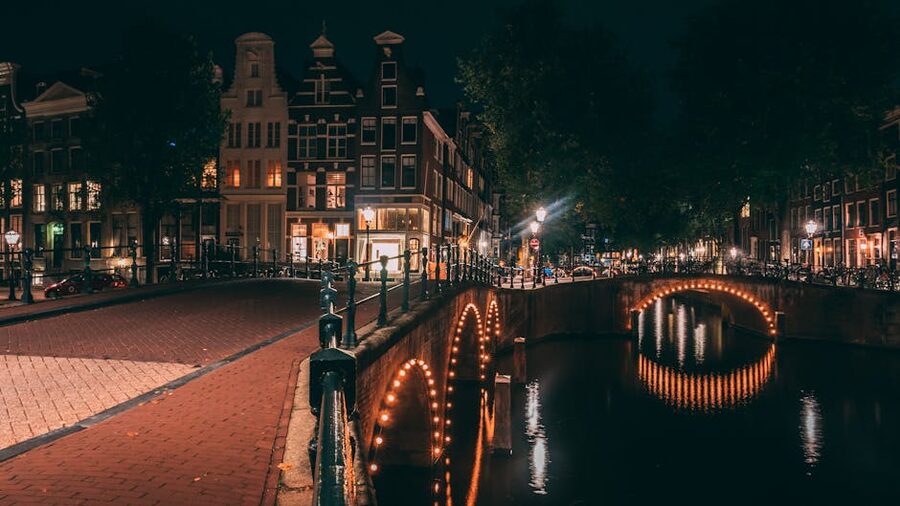
09:30-11:00 is the calmest window. Crowds are still queueing for breakfast and the Damrak piers are quiet. The light is soft. If you have one slot for a daytime cruise, this is it.
11:00-15:00 is the busy daytime window. The boats run constantly but the piers get crowded. Booking online is genuinely useful here; walk-up tickets are sold but there can be a 30-45 minute wait for the next available departure.
15:00-17:00 is when the open-boat cruises get the best weather light. The afternoon sun raks across the canal-house fronts and the photographs are at their warmest.
The 30 minutes around sunset is the magic window. Book the cruise that puts you on the water during the lighting changeover. Almost every operator has a slot tagged for it. In June this means an 8.30pm or 9pm boarding. In December it’s 4pm or 4.30pm. The slots get bookable about a week ahead and the good ones go.
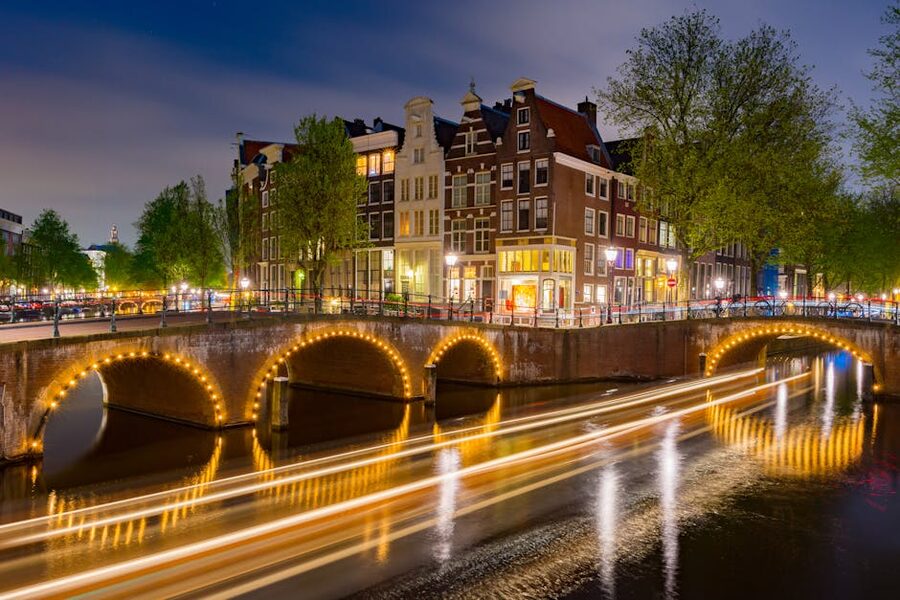
After 22:00 the canals get quiet again. The booze cruises run later but the regular cruises mostly stop. If you want late-night water activity, look at the dinner cruise category instead, which I haven’t covered here because it’s a different product altogether.
Common booking traps
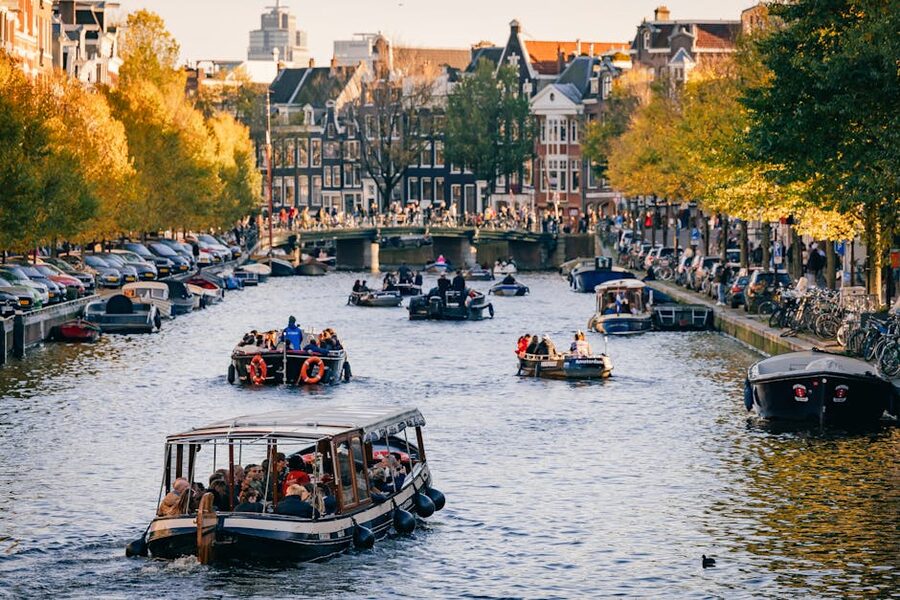
A few mistakes I’ve seen friends make.
Booking the cheapest slot without checking the pier. The cheapest cruise of the day might leave from a pier 25 minutes’ walk from your hotel. Check the pier address before clicking pay. Stromma’s central piers and Lovers’ central piers are both Damrak-adjacent, but the smaller operators are scattered.
Confusing the Hop-On Hop-Off canal bus with a sightseeing cruise. The Hop-On Hop-Off is transit. It runs scheduled stops and you ride between them. It’s not a guided cruise. If you want a narrated loop, don’t accidentally buy the Hop-On Hop-Off ticket.
Picking 90 minutes when 60 would do. The 90-minute cruises mostly add a slow loop, not new content. If you’re tight on time, the 60-minute cruise covers the showpiece sections. The extra 30 minutes is nice-to-have, not need-to-have.
Going on a rainy-day open boat. The open-boat cruises are wonderful in fair weather and miserable in horizontal rain. Check the forecast and switch to a glass-roof boat if conditions look bad.
Accessibility and practicalities
Most of the saloon-boat operators are wheelchair-accessible at the major Damrak and Centraal piers. Boarding is via a single step down from the pier; ramps are available on request, but you should email the operator at least 48 hours ahead if you need one. The boats themselves have wheelchair spaces at the front. Toilets onboard are smaller than airline lavatories; use the pier facility before boarding.
The open-boat 12-passenger cruises are not wheelchair-accessible by default. Some operators run accessible private charters for an upcharge. Worth an email enquiry rather than relying on the booking platform listing.
Children: every cruise type takes children. Under-2s are usually free, 3-12s are typically half price. The booze cruises will refuse boarding for under-18s, which is sometimes only stated in small print on the booking page; don’t book one if any of your group is underage.
Comparing with the Thames and Manchester options
If you’ve done other big-city water tours and you’re trying to place Amsterdam on the spectrum, here’s how it compares with the two closest UK cousins.
The London Thames cruise is wider water, bigger boats, longer distances between sights. You see Westminster, the Eye, and Tower Bridge from a real river. The Thames is tidal and the boats are commuter-grade as much as touristic. It’s a different product. Both are worth doing if you visit both cities.
The Manchester canal cruise is the closer cousin in scale: a narrow industrial waterway, smaller boats, much shorter routes. Manchester’s canals are 19th-century industrial; Amsterdam’s are 17th-century mercantile. Both are intimate. Amsterdam wins on architectural depth; Manchester is the better northern-grit version.
If I could only do one in Europe, it’d be Amsterdam. The architectural set-piece behind the canals doesn’t have a real rival on the continent.
Where to go from here
If you’ve got a half-day in Amsterdam built around the cruise, the natural pairing is a museum on Museumplein: Rijksmuseum for the Vermeer-and-Rembrandt set, Van Gogh for the chronological-life walk-through, or the Heineken Experience for a brewery tour with the canal pier on the doorstep. For city-cruise cousins from elsewhere in Europe, the Thames cruise and Manchester canal cruise guides are the closest comparisons. Pick the one closest to your trip and start there.