
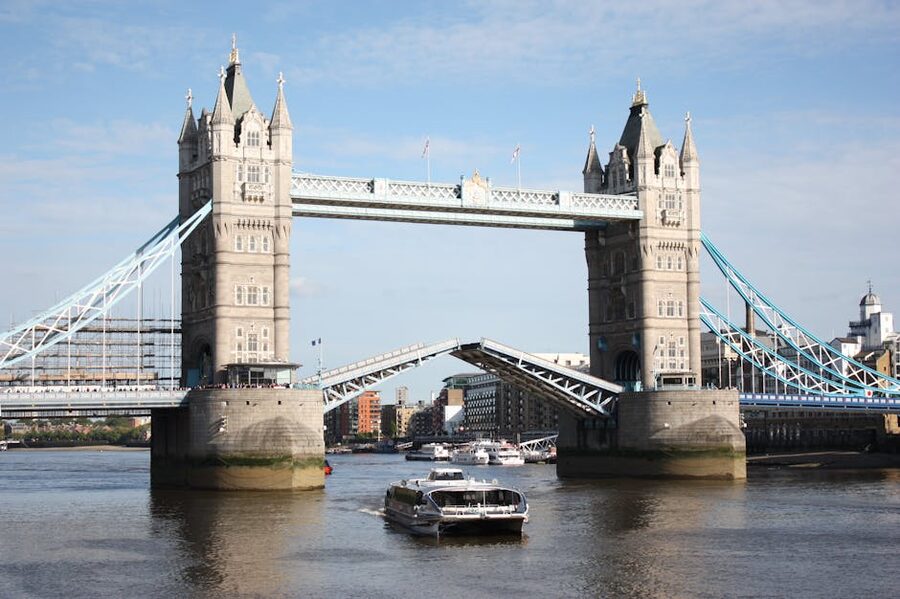
Tower Bridge starts to lift just as the boat passes underneath. The road on each side has gone red ten minutes earlier and now the southern bascule is climbing into the gap, and the captain on the upper deck is calling out the tall ship coming through behind us. The Pool of London opens up. Canary Wharf shows itself on the horizon. The Cutty Sark’s three masts will be in view in twenty minutes.
I have done the Westminster to Greenwich run in summer, in fog, and once at dusk with a glass of bubbly. It is the most-booked single river trip on the Thames for a reason. Here is how to actually book it without overpaying or ending up on the wrong boat.
Westminster to Greenwich flagship, around $22. One-way or return on the classic sightseeing route, live commentary from the deck, the most-booked Thames trip on the market. Book the Westminster to Greenwich flagship.
Hop-on hop-off Thames day pass, around $33. Unlimited rides on the river bus all day, board and get off at any pier from Westminster to Greenwich. Book the Thames hop-on hop-off pass.
Evening cruise with bubbly and canapés, around $37. Two hours, glass of fizz on arrival, the city lit up after dusk. Book the evening cruise with bubbly.
- Why this route is the one to book
- The route from west to east
- The middle stretch and the City
- The Pool of London and Tower Bridge
- Past Tower Bridge: the docklands stretch
- Greenwich and the Cutty Sark
- What to actually do once you arrive
- The three trips worth booking
- 1. London: Westminster to Greenwich River Thames Cruise:
- 2. London: River Thames Hop-On Hop-Off Sightseeing Cruise:
- 3. London: River Thames Evening Cruise With Bubbly and Canapés:
- How to actually buy a ticket
- Picking a season and a time of day
- Westminster to Tower Bridge versus full Greenwich
- Combining the cruise with other London attractions
- Operators worth knowing about
- Practical things people get wrong
- What to skip and what to do twice
- One last thing about the river itself
- More London guides worth lining up
Why this route is the one to book
Westminster to Greenwich is the trip the river was built for. You start beside the Houses of Parliament, you finish under the masts of the last surviving tea clipper in the world, and in between you pass eleven of the city’s biggest landmarks from the water. The deck is the angle the architects designed the riverside for. Every Victorian wharf, every modern glass tower, every bridge has been built to look its best from the boat.
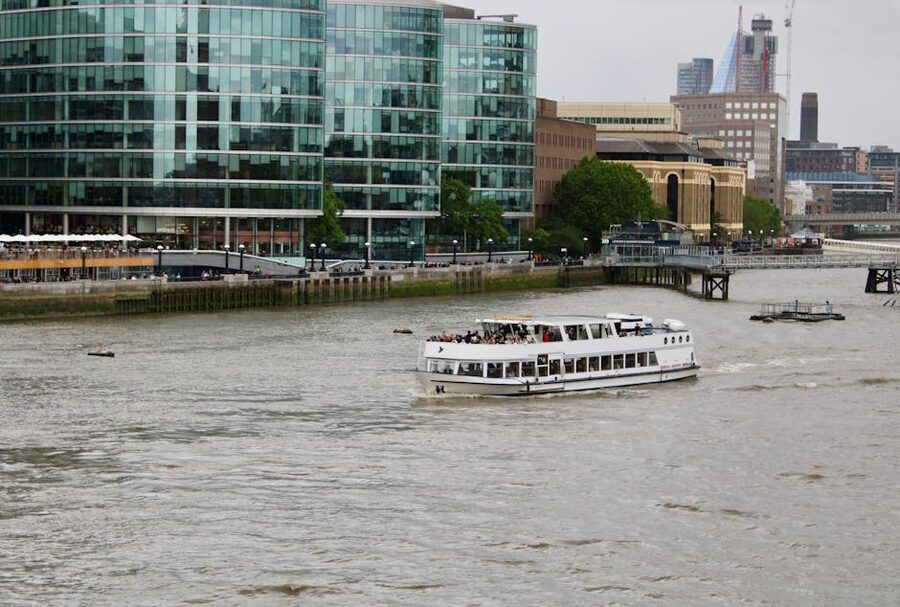
The route is what makes it. The bus tours and walking tours can show you Big Ben or the Tower individually. The cruise stitches the whole city together in seventy-five minutes of moving water. You see London the way Pepys saw it, the way Whistler painted it, the way every river-trade map of the eighteenth century laid it out. And at the end you step off into Maritime Greenwich, which is a UNESCO World Heritage Site in its own right.
I rate it above the Westminster to Tower Bridge short route for a first visit. The shorter trip is fine if you only have an hour and you want the highlights reel. The longer one to Greenwich is the proper trip. There is a comparison further down for the Tower Bridge route if your time is genuinely tight.
The route from west to east
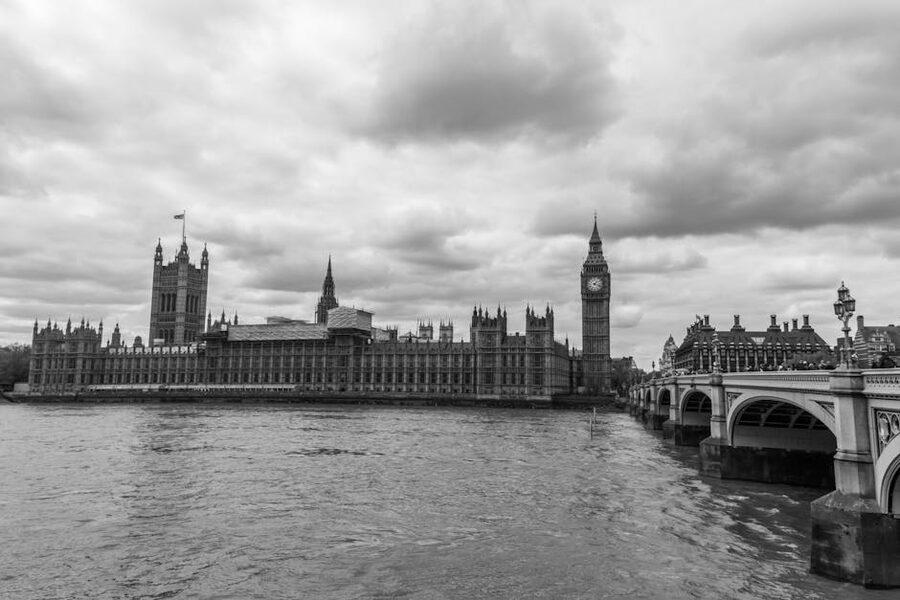
Boats leave from Westminster Pier on the north bank, right next to Westminster Bridge and across from the London Eye. The pier sits below the statue of Boudicca, postcode SW1A 2JH, and it is signposted from Westminster Tube. The Houses of Parliament rise on the same bank as you cast off. Big Ben on the upstream end of Parliament. The clock face is twenty-three feet across. You see it cleanly for about ninety seconds before the boat steers under Westminster Bridge.
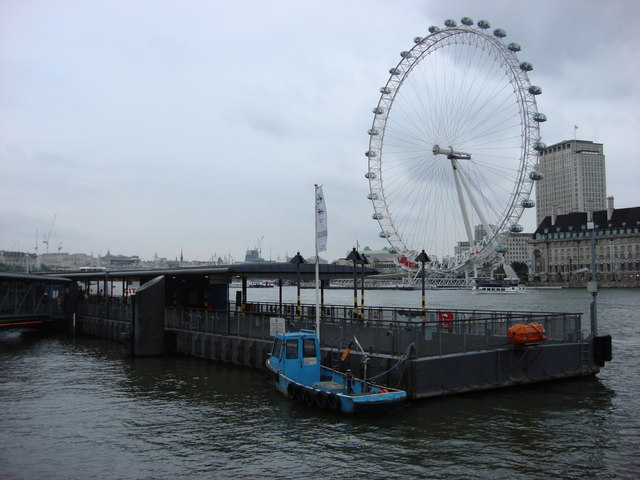
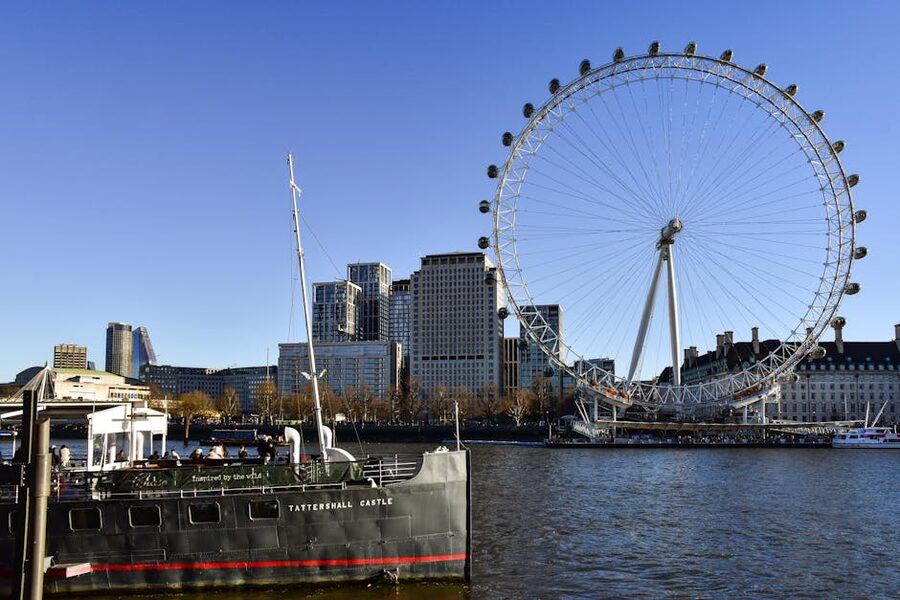
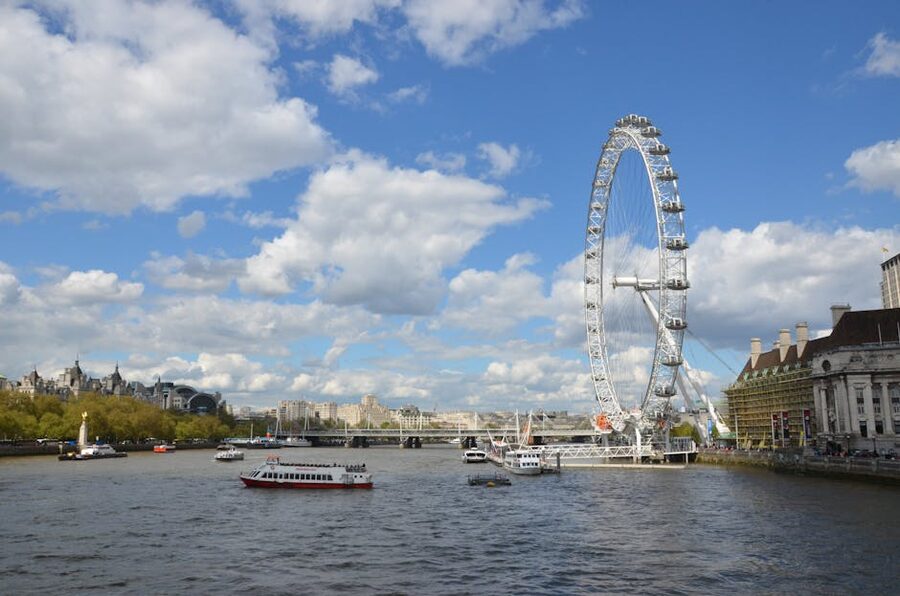
On the south bank within the first three minutes you pick up the London Eye, County Hall, and the Royal Festival Hall. The Eye sits 135 metres above the water and the wheel turns slowly enough that the people in the capsules look frozen. If you are pairing a cruise with the wheel itself, the combo tickets work out cheaper than buying both separately. Our guide to how to book London Eye tickets covers the timing and the skip-the-line options.
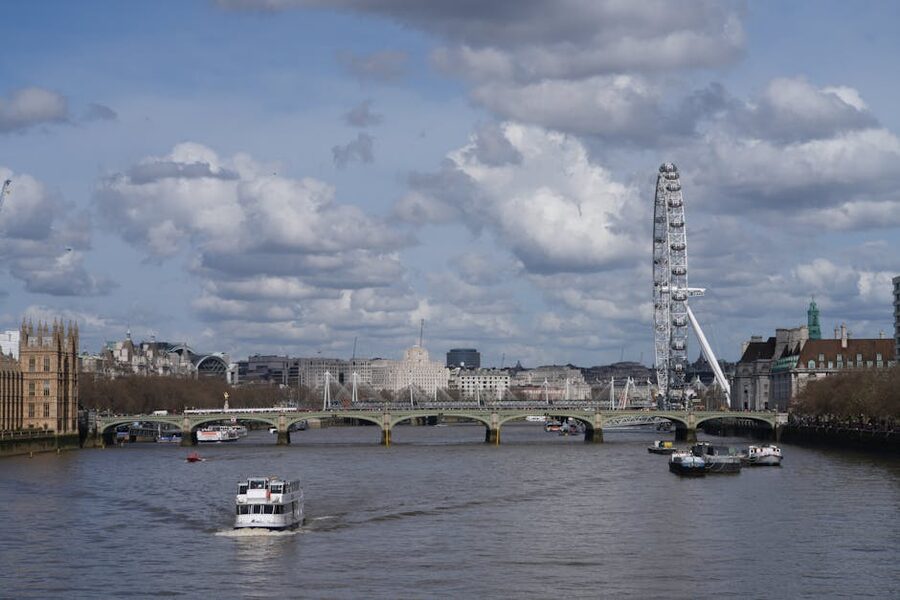
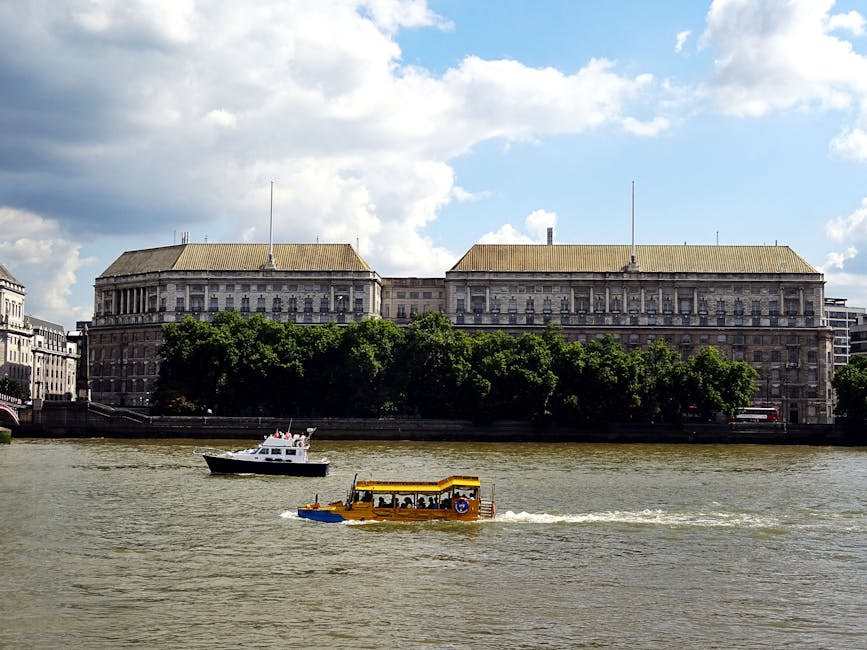
Past Westminster Bridge the river bends north-east. On the north bank you pick up Whitehall in the distance, then the Ministry of Defence, then Cleopatra’s Needle (the genuine Egyptian obelisk, 3,500 years old, donated to Britain in 1819). On the south bank you pass the Royal Festival Hall, the National Theatre, and the BFI Southbank. Our flagship Thames cruise review walks through the commentary in detail.
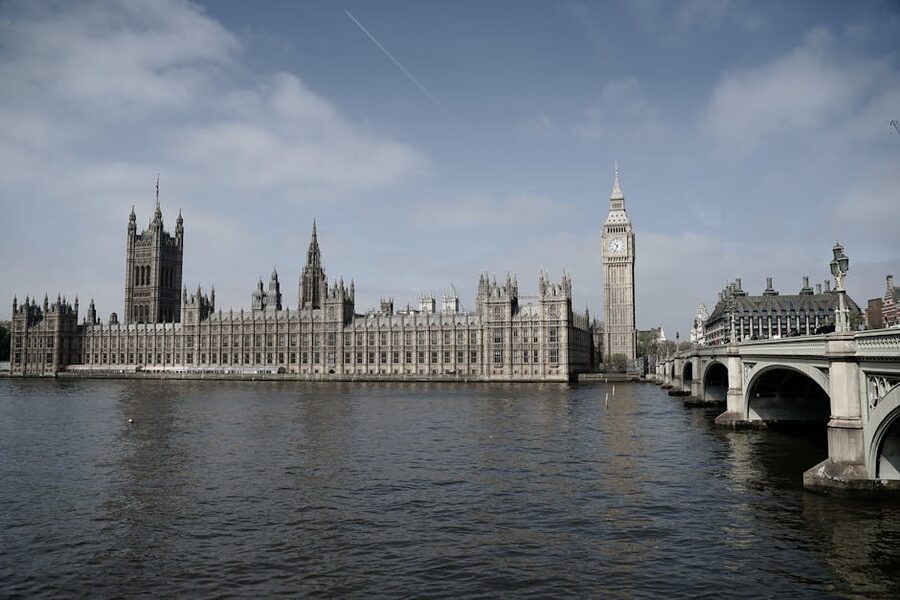
The next bridge is Hungerford and Golden Jubilee (rail bridge plus two pedestrian footbridges, side by side). Then Waterloo Bridge, which is the prettiest bridge to cross on foot for the views, and the one most photographers shoot the city from at sunset. The captain on the upper deck will probably mention this. They all do.
Past Waterloo Bridge the south bank hits Gabriel’s Wharf and the Oxo Tower (eight stops up, free roof terrace, decent views). The north bank shows you the Inns of Court and Somerset House. Then Blackfriars Bridge, with its pink-and-white painted ironwork, and the line of stubs from the original 1864 railway bridge sticking out of the water on the upstream side.
The middle stretch and the City
From Blackfriars onward the south bank gets meaningful. Bankside, the Tate Modern (the brick chimney is visible from a long way off), and the Globe Theatre with its white plaster facade. The Globe is a 1997 reconstruction of Shakespeare’s original, sitting roughly where the 1599 building stood. From the boat you see only the upper rim, but it is unmistakable.
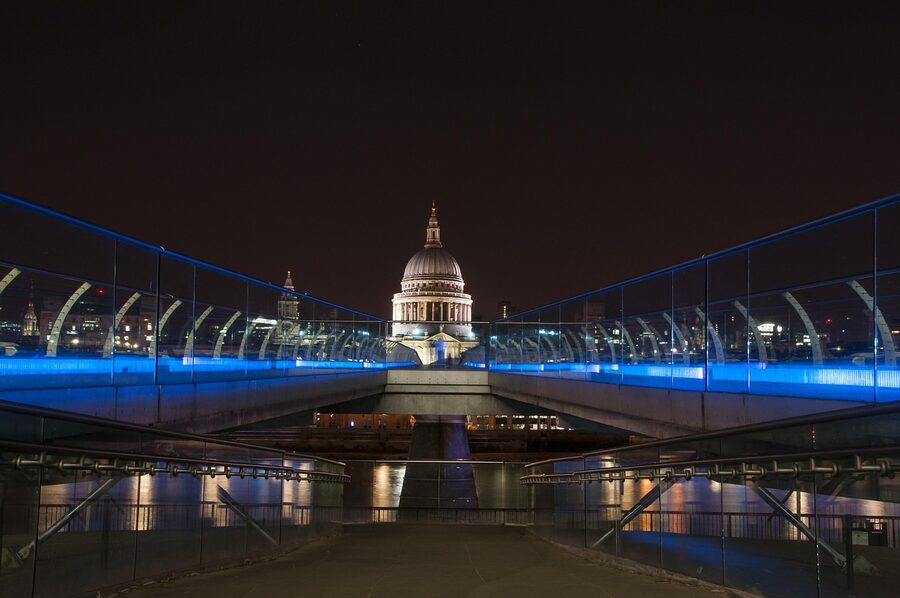
On the north bank from Blackfriars you pick up the dome of St Paul’s Cathedral. From the water it sits back from the river, but the dome rises above everything in front of it. Wren designed the building to be visible from the Thames. Look for the gold cross on top of the lantern. Our cruise plus London Eye combo review covers a deal that pairs the wheel with the same boat trip if you want both.
Past the Globe is the Millennium Bridge, the only pedestrian-only bridge in central London. It has a thin steel deck and looks like a single silver line across the river when you steam under it. It famously wobbled when it opened in 2000 and had to close for two years for fixes. Locals still call it the Wobbly Bridge.
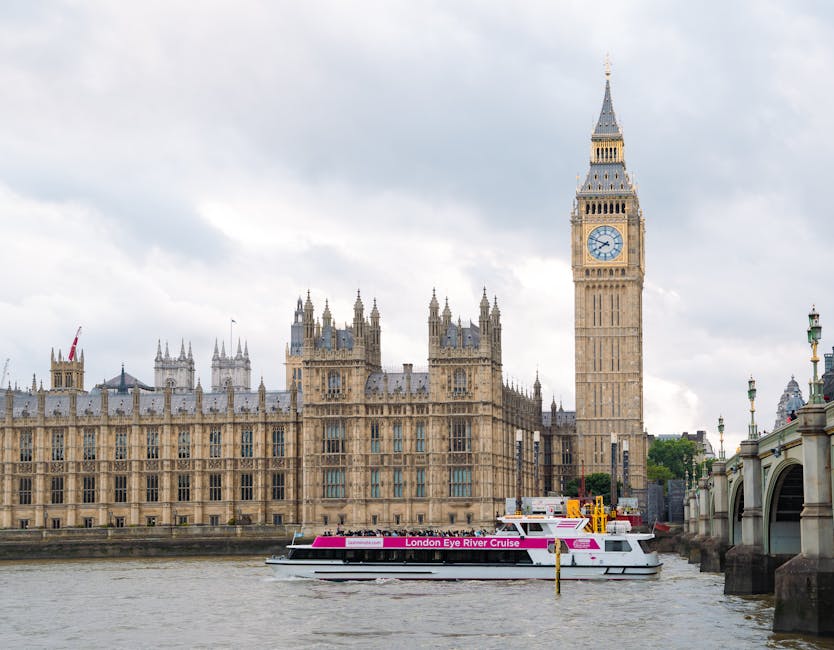
Then Southwark Bridge (cast iron, painted yellow), then Cannon Street rail bridge, then London Bridge itself. The London Bridge in place today is from 1973, the third on roughly the same site. The previous one was sold to an American buyer in 1968 and rebuilt in Lake Havasu, Arizona, where it still stands. The captain will tell this story. They always tell this story.
The Pool of London and Tower Bridge
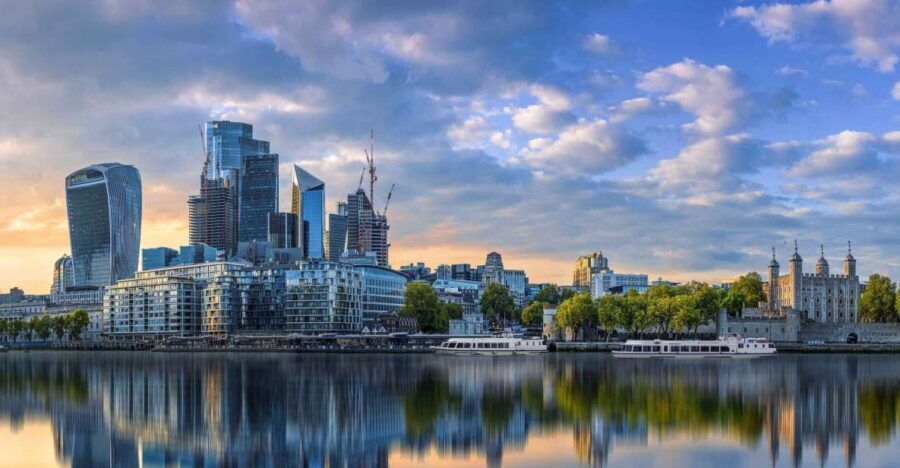
Past London Bridge the river opens out into the Pool of London. This is the historic heart of the port, where every cargo ship in the British Empire used to dock. On the north bank Old Billingsgate (the former fish market, now an events venue) and then the Tower of London. Henry III’s white keep, the curtain walls, the moat (drained, now a garden), and Tower Wharf running along the river edge.
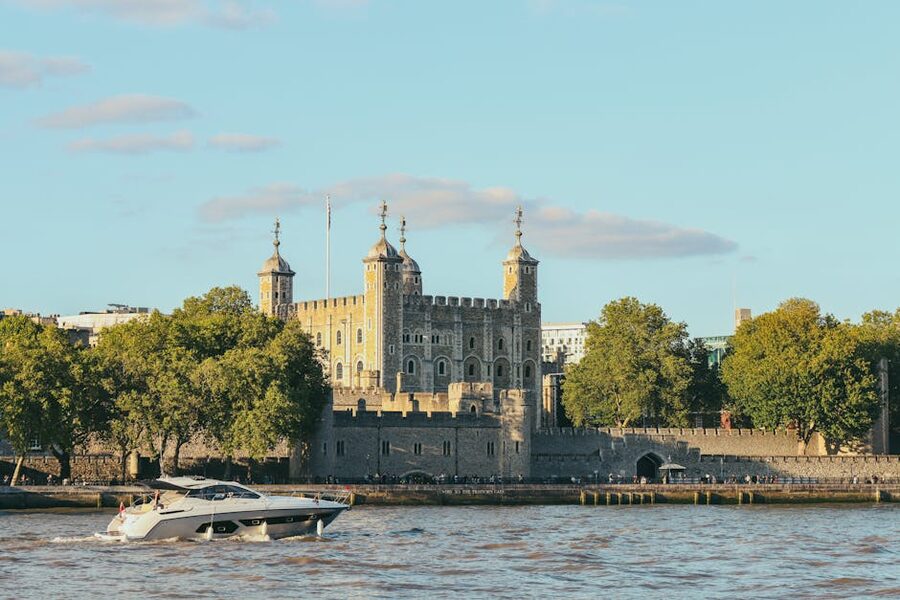
You will get about ninety seconds of clean Tower views before Tower Bridge takes over the frame. If you are pairing the cruise with a Tower visit, the early-access tour with the boat ride from Westminster is the smart combo. Our review of the opening tour with the Westminster boat ride covers the logistics and timing for that one.
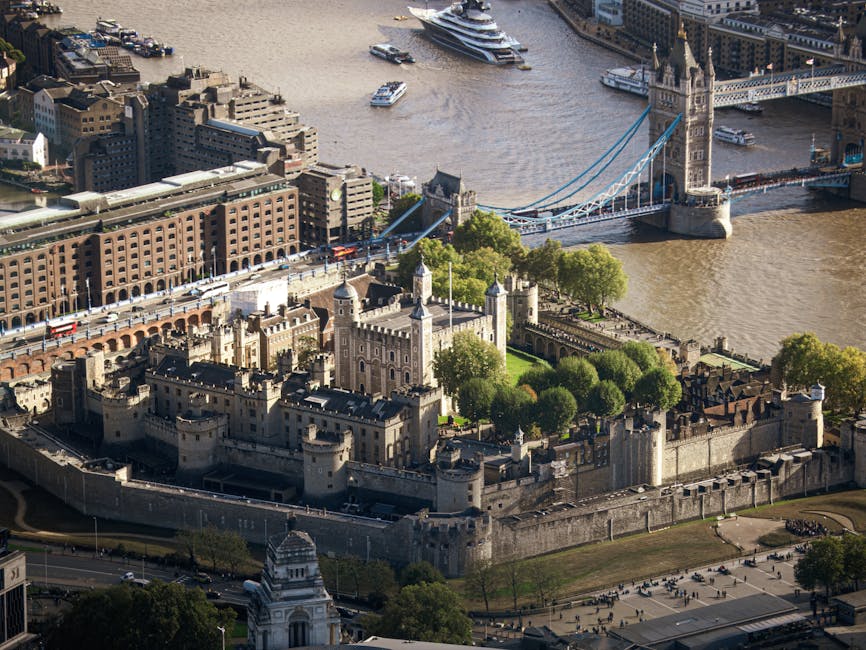
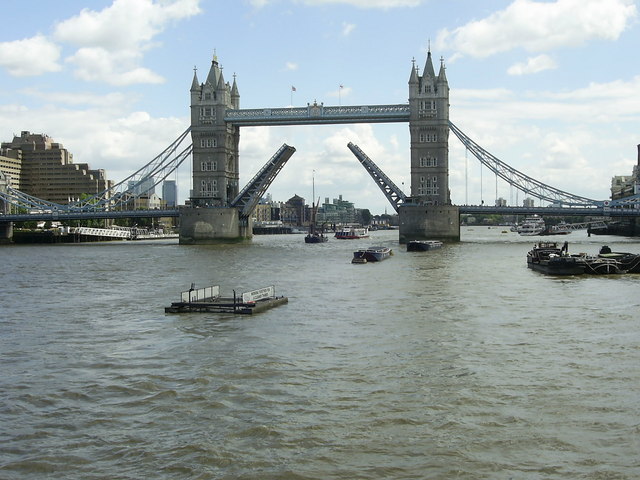
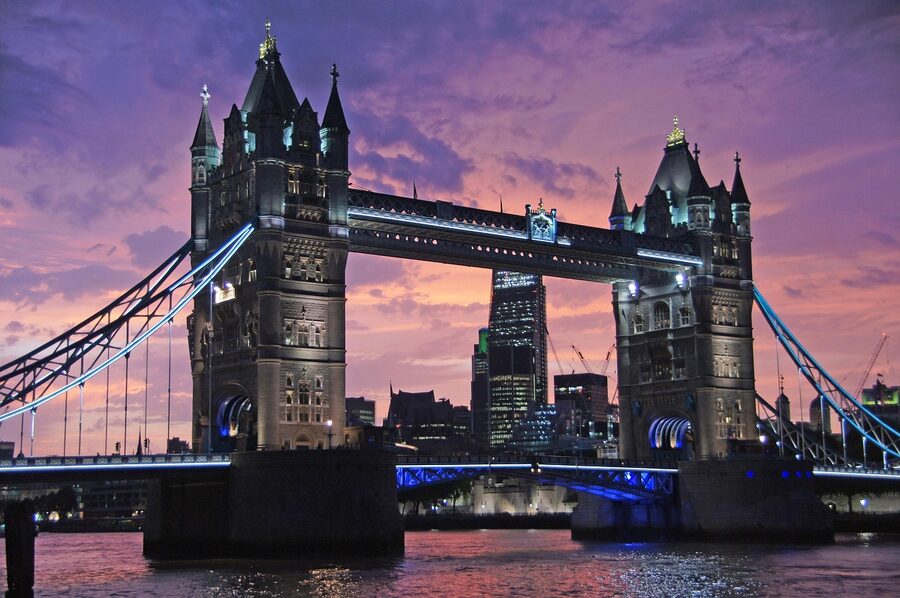
Tower Bridge itself is the single most photographed landmark on the trip. Built 1894, two Cornish granite towers covered in steel cladding, the central span splits in two and lifts when a tall ship needs to pass. The mechanism still uses the original hydraulic principle (now powered by oil instead of steam, since 1976). The bridge lifts about three times a day and the schedule is published in advance on the Tower Bridge website. If you can time your cruise for a lift, do it.
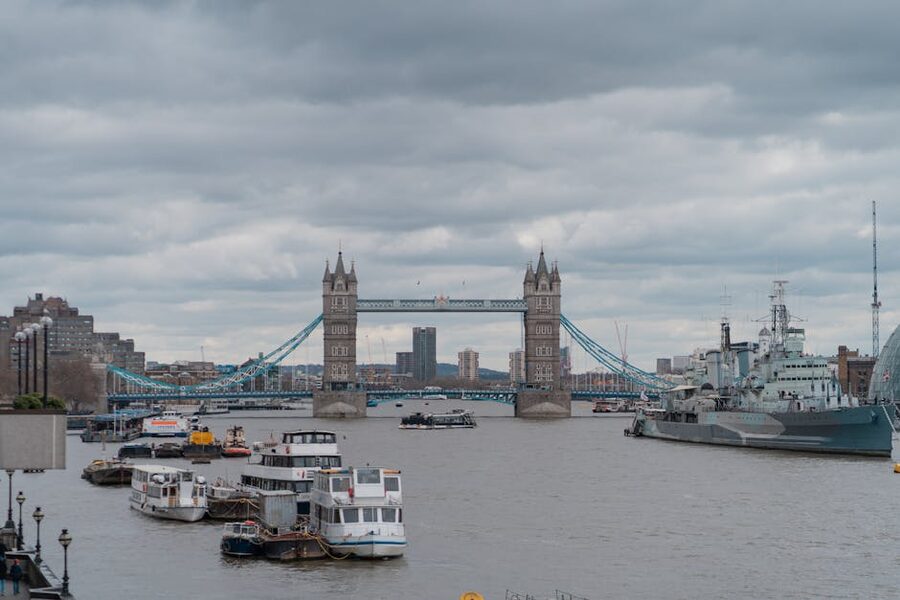
If you specifically want to focus on Tower Bridge as the destination instead of pushing on to Greenwich, the shorter Westminster to Tower Bridge route does exactly that. Our Westminster to Tower Bridge cruise review covers when that shorter trip makes more sense than the full run.
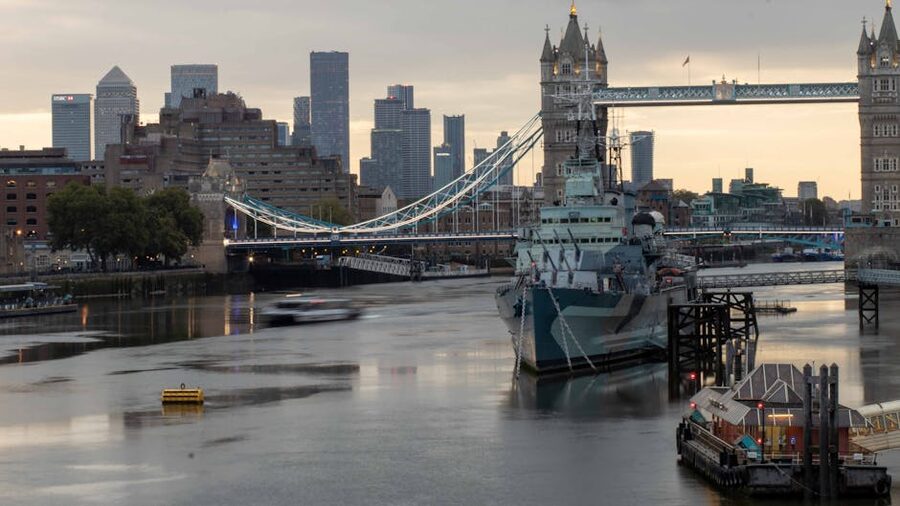
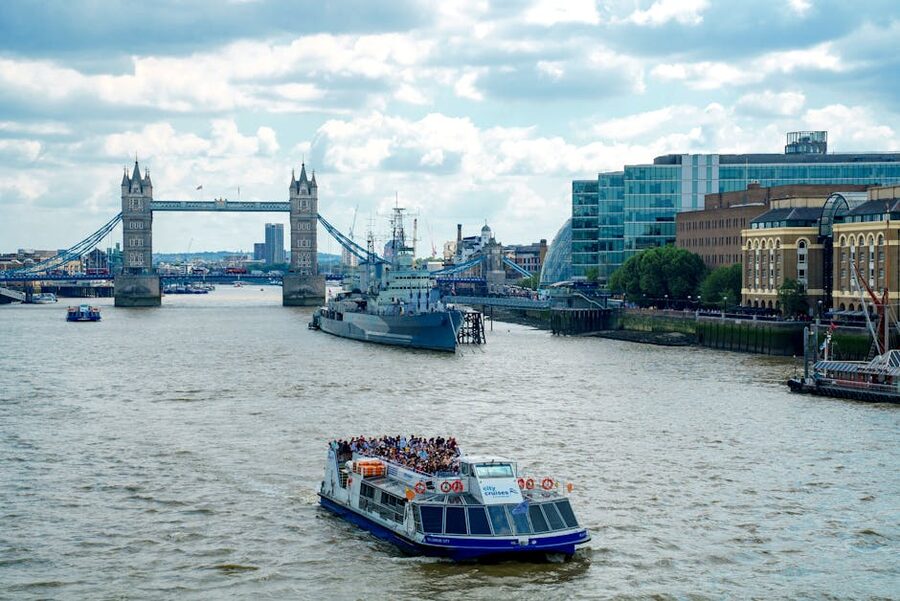
HMS Belfast sits permanently moored on the south bank between London Bridge and Tower Bridge. She fought at D-Day and in the Korean War, and is now a Imperial War Museum site. The boat passes within thirty metres on the way through. From the upper deck you can see straight onto the foredeck and the Bofors guns.
Past Tower Bridge: the docklands stretch
This is the bit most cruise passengers are not expecting. Once you clear Tower Bridge the river bends and the modern city takes over. The Shard sits on the south bank just behind London Bridge station, glass and steel, 310 metres tall. Then St Katharine Docks on the north bank, the converted Victorian dock that is now a marina. Then the long bend through Wapping and Rotherhithe.
The Wapping and Rotherhithe stretch was the heart of the docks until the 1970s. Old warehouses on both banks have been converted to flats, but the cranes and the names survive. Hermitage Wharf, Shadwell Basin, Limehouse Basin, Surrey Docks. The boat captain usually picks one or two stories. The Mayflower pub at Rotherhithe is the spot the Pilgrim Fathers’ ship sailed from in 1620. The pub is still there.
Past Limehouse the river curls south and Canary Wharf appears on the left. This is the second financial district, built on the West India Docks in the 1990s. One Canada Square is the central tower with the pyramid roof. From the boat it dominates the skyline for the next ten minutes. The captain often says it used to be the tallest building in the UK. It was, until the Shard opened in 2012.
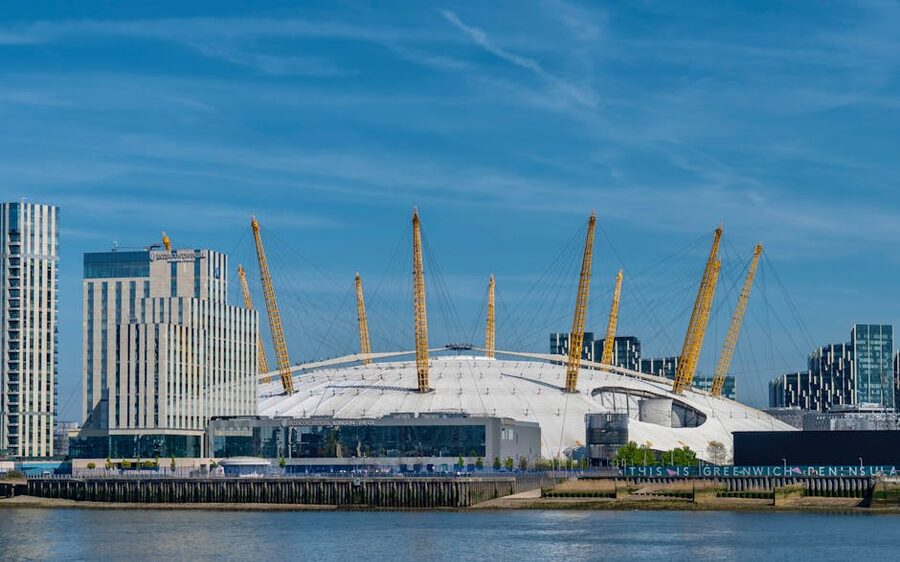
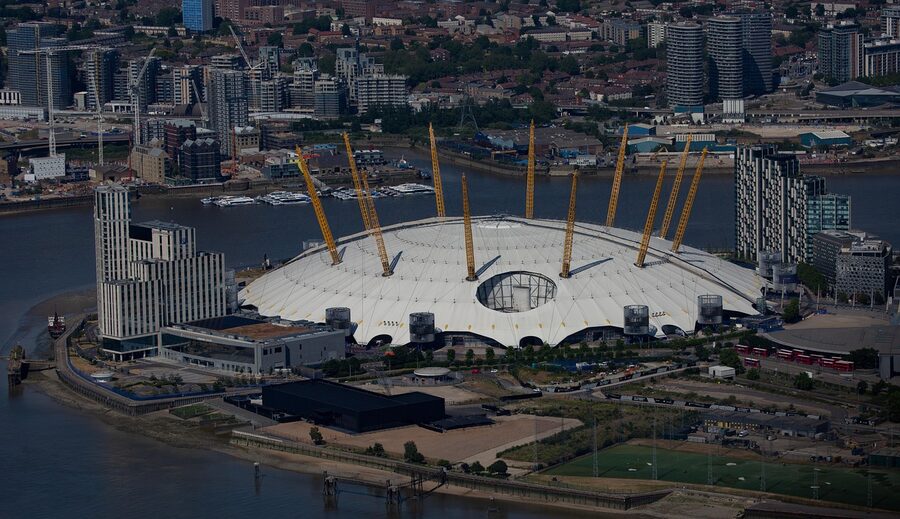
The river bends sharply north around the Isle of Dogs and then sharply south again around the Greenwich peninsula. From the upper deck the change is dramatic. Canary Wharf was on your left for ten minutes; now it is on your right and shrinking. The O2 Arena (the white-tent former Millennium Dome) takes over the foreground. You are nearly at Greenwich.
Greenwich and the Cutty Sark
Greenwich Pier sits on the south bank, postcode SE10 9HT, right next to the Cutty Sark. The boat slows and reverses into the pier. You step off into the heart of Maritime Greenwich. The Cutty Sark is the first thing you see, with her three masts rising above the dry dock she sits in.
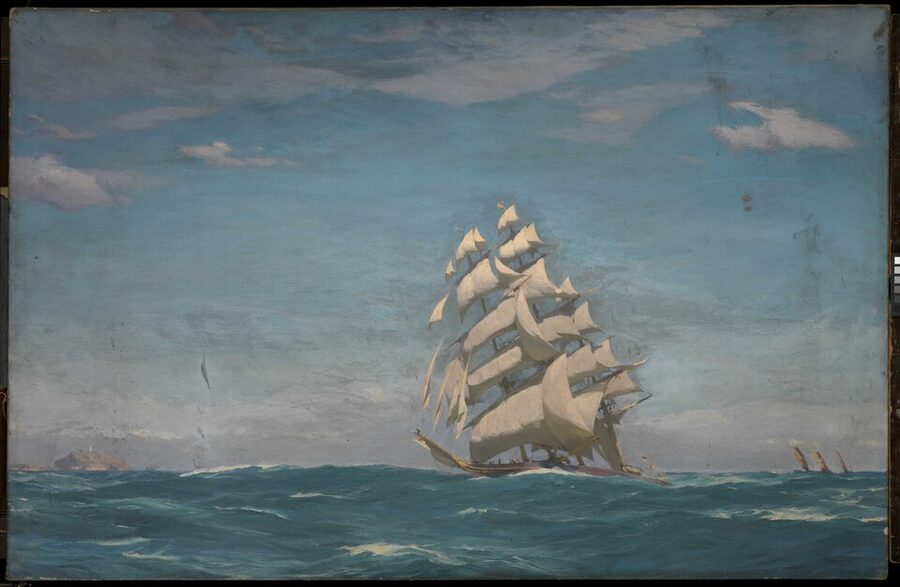
The ship is genuinely worth the entry fee. You walk on the upper deck, you can climb the rigging if you book that bit ahead, and the dry-dock layout means you can stand under the bronze-sheathed hull and look up. Three masts, eleven miles of rigging, and the original 1869 bowsprit on the front. She did the Sydney to London wool run in 73 days. That was the record.
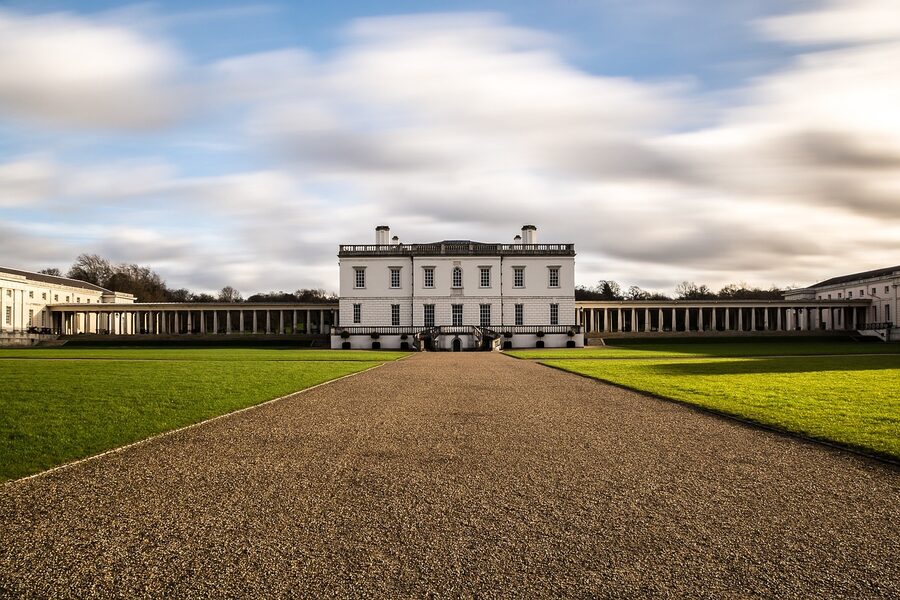
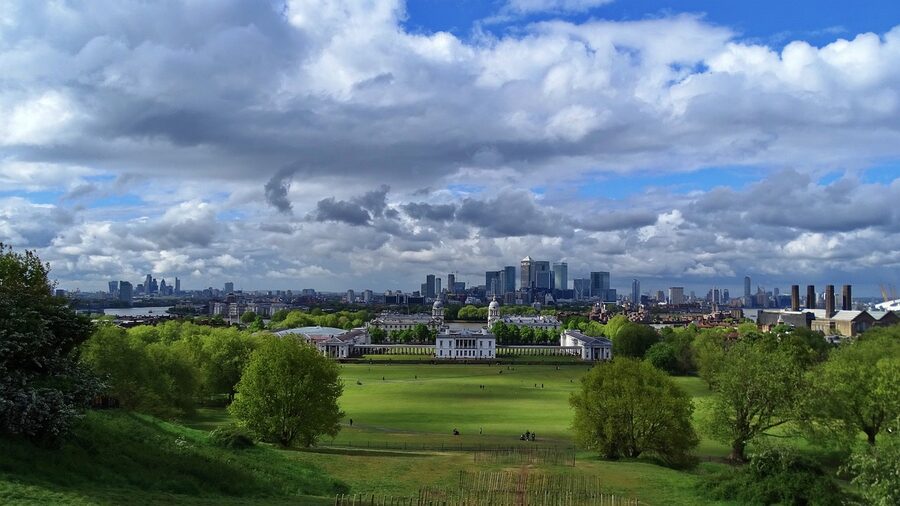
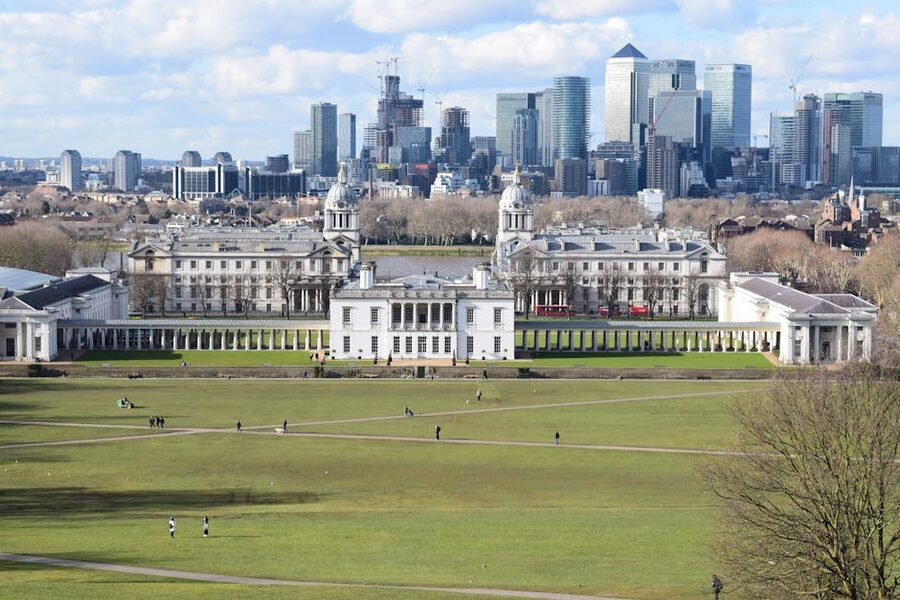
Behind the ship the Old Royal Naval College runs the riverfront. The twin domed buildings are by Christopher Wren (yes, the same one). The space between them deliberately frames the Queen’s House behind, which is by Inigo Jones, the architect who introduced classical Italian Renaissance to England. The whole layout is designed to be seen from the river, not the land. You are seeing it the way it was meant to be seen.
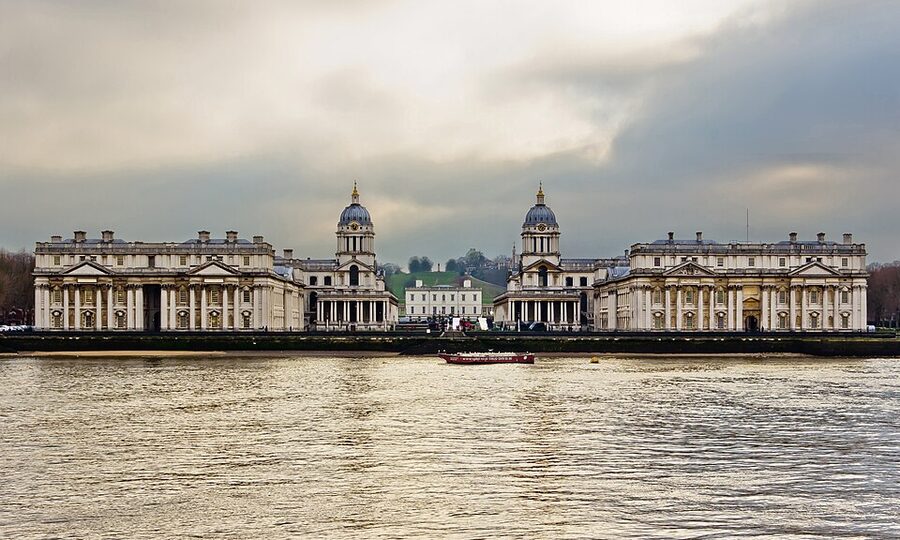
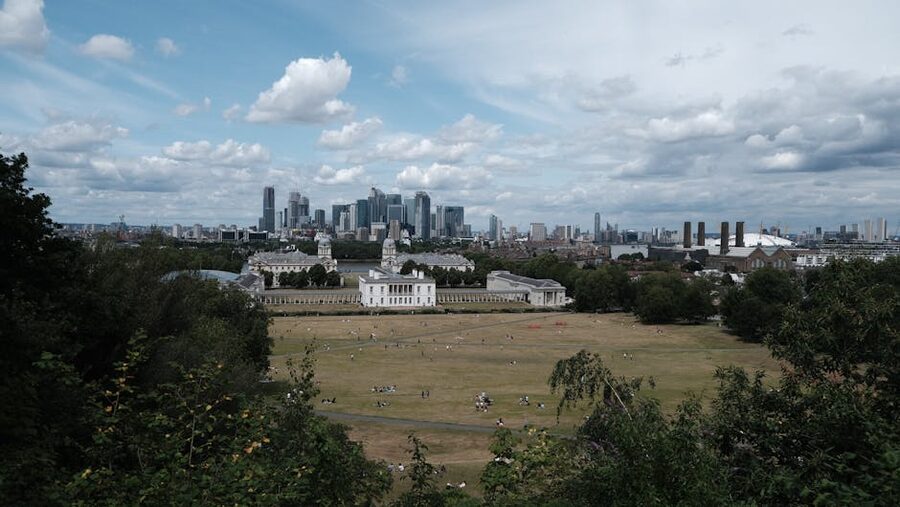
Henry VIII was born here in 1491. So was Elizabeth I. The Tudor palace stood roughly where the College is now, until William and Mary tore it down to build the hospital. The royal connection is why every architect since has treated the slope as a single composition. From the boat all four buildings (College, Queen’s House, National Maritime Museum, Royal Observatory on the hill) line up.
What to actually do once you arrive
Most cruise passengers have two to four hours on shore in Greenwich before catching a boat back. Pick your battle. The four big sites are the Cutty Sark, the Queen’s House, the National Maritime Museum, and the Royal Observatory on the hill. The first two cluster at the bottom of the slope. The other two need a fifteen-minute uphill walk through Greenwich Park.
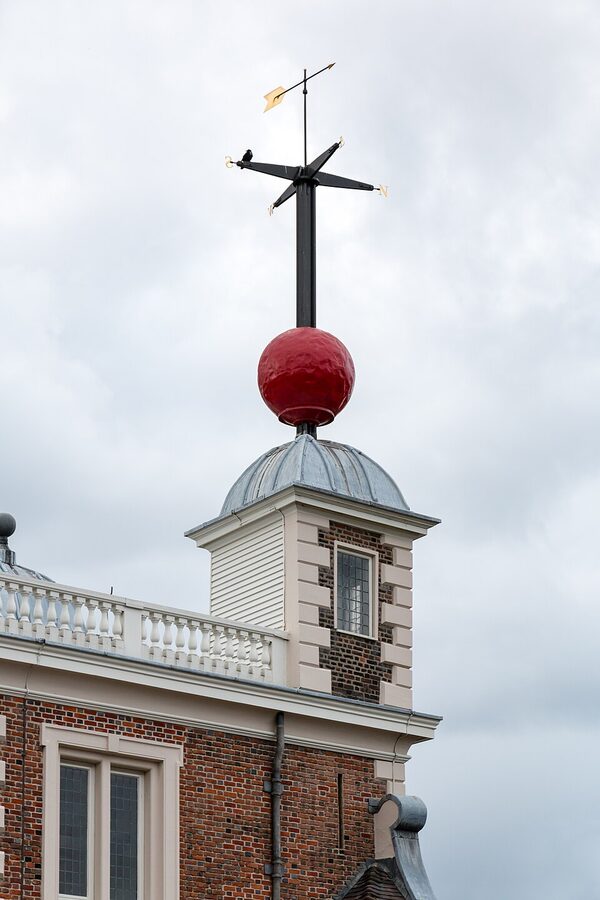
The Royal Observatory is where the Prime Meridian runs. You can stand with one foot in the eastern hemisphere and one in the western. Tickets are £24 adult, £12 child. There is a separate Astronomy Centre that is free. The big draw is John Harrison’s marine chronometers (the four clocks that solved the longitude problem in the 1700s). They are still working, still being wound by the museum staff, and one of them is over 250 years old.
The National Maritime Museum is free and is the biggest naval museum in the world. Nelson’s coat from the Battle of Trafalgar (with the bullet hole) is on display, and there is a Titanic gallery with relics from the ship. Allow at least ninety minutes if you go in. If you only have an hour total in Greenwich, skip the museums and do the Cutty Sark, the meridian line, and the view from the hill.
Greenwich Market is two blocks back from the pier and is open every day. Covered stalls, mostly food and crafts, and a decent place to grab lunch before the boat back. The pubs are also worth knowing about. The Trafalgar Tavern overlooks the Thames just east of the College. The Cutty Sark Tavern (different from the ship) is a fifteen-minute walk along the river path toward the O2.
The three trips worth booking
I narrowed the Thames cruise market down to three. They cover the price points and the main use cases, and any of them gets you on the river with a competent operator and clean commentary.
1. London: Westminster to Greenwich River Thames Cruise: $22
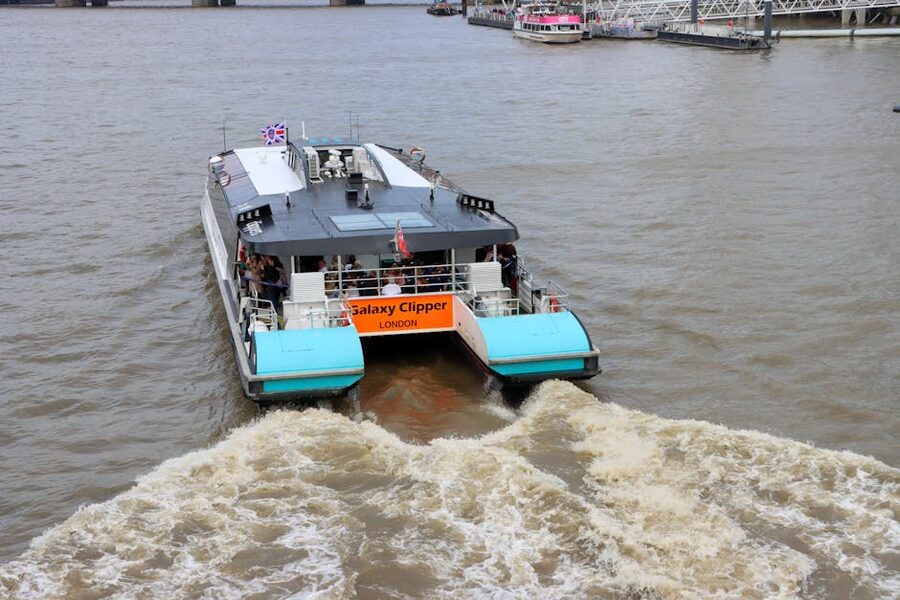
This is the one I would book first if you only do one Thames trip. About seventy-five minutes one-way, live commentary, and the option to do a return ticket if you want the same boat back. Our Westminster to Greenwich review covers the seating layout and which deck to sit on for the best photos. It is the most-booked Thames trip for a reason.
2. London: River Thames Hop-On Hop-Off Sightseeing Cruise: $33
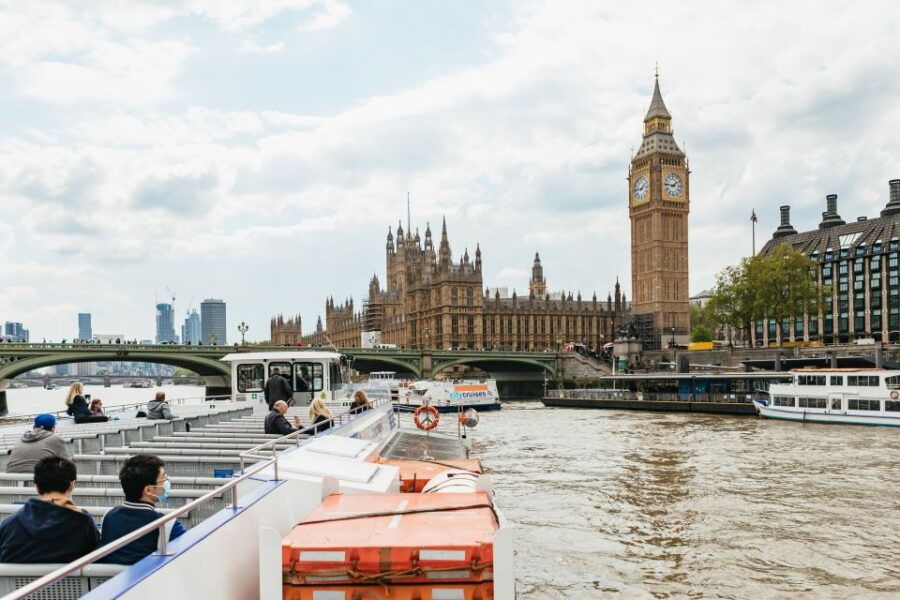
This is the better pick if you want flexibility. One ticket buys you all-day boarding rights on the river bus, and you can get off at Tower Bridge for the Tower of London, at Bankside for the Tate, at Greenwich for the Cutty Sark, and back on whenever you are done. Our hop-on hop-off cruise review walks through the eight piers and which combinations work best for a day in London. Note: the commentary is shorter than on the dedicated sightseeing cruise.
3. London: River Thames Evening Cruise With Bubbly and Canapés: $37
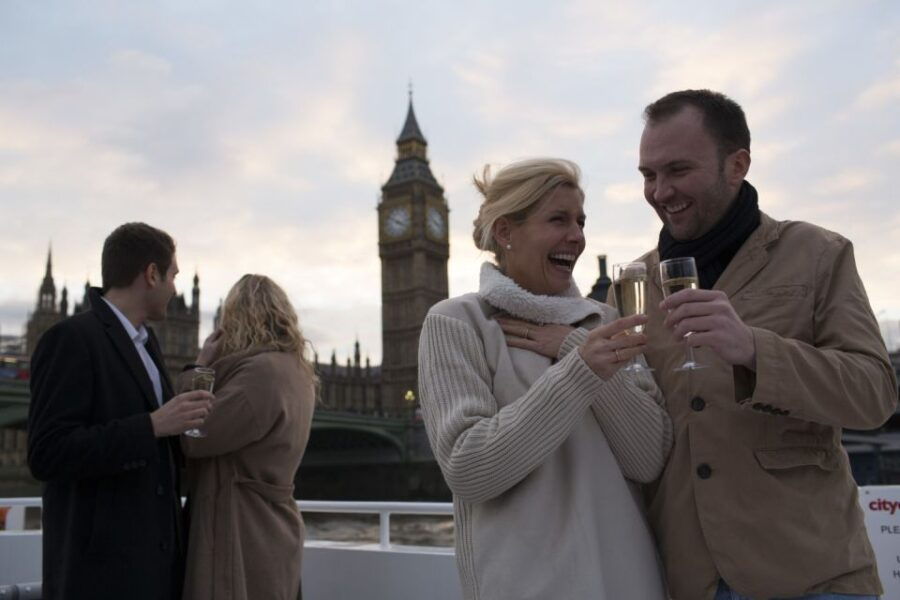
For evenings, anniversaries, or anyone who wants the city lit up after dark, this is the one. Two hours on the same river, the same landmarks, but the lights have come on and the photo moments are different. Our evening cruise with bubbly review covers the canapé quality (mixed) and the timing (sunset is the best one to book). Book the bubbly cruise for the lights, not the food.
How to actually buy a ticket
The flagship sightseeing cruises run roughly every thirty to forty minutes from Westminster Pier between 10am and around 6pm in summer, with reduced winter timetables. Buy online ahead of time and you skip the kiosk queue. Buy at the pier on the day and you take what is available, which on a sunny weekend can mean a wait of an hour for the next boat with a free seat.
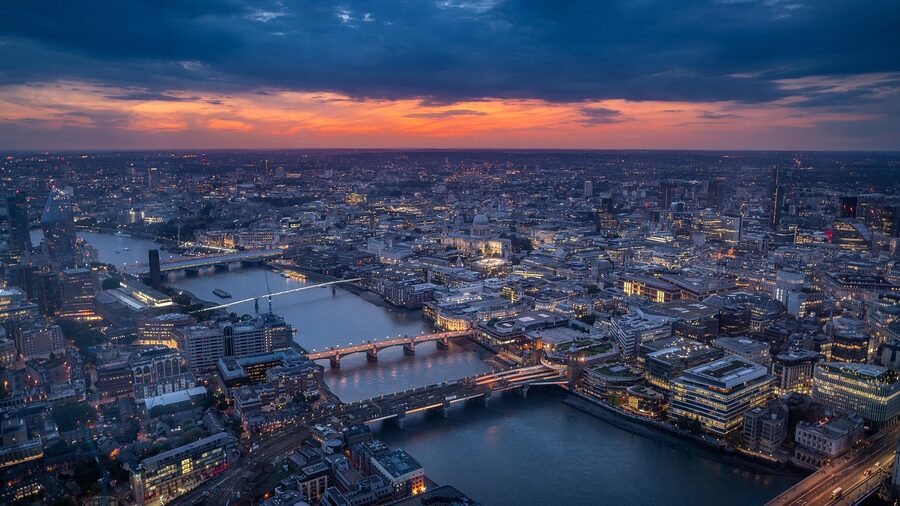
One-way or return is the first decision. One-way is fine if you plan to come back by DLR (Cutty Sark station is two minutes from the pier). Return tickets save a few pounds versus buying both legs separately and let you skip queueing again at Greenwich. The hop-on hop-off pass is a third option that lets you get off at intermediate piers (Embankment, Tower, Bankside) and reboard later.
Show up fifteen minutes before departure. The boats fill from the upper deck (best views) downwards, so early boarding gets you the front row of the open top. Each boat takes 250 to 400 passengers depending on the operator. The 10am and 11am departures are the quietest. The 2pm and 3pm departures are the busiest. The last boat of the day from Westminster is around 6pm in summer, 4pm in winter.
Picking a season and a time of day
April to October is the comfortable window. The upper deck is the best seat on the boat and you want to be on it, which means dressing for the wind. From November to March the upper deck is open but cold, and most passengers stay below. The covered lower deck has window seats but the views are compromised by the glass. If you are doing a winter cruise, the late afternoon trips are the call: shorter day means you start in light and finish at dusk.
Sunday afternoons in summer are the busiest sailing slots. If you have flexibility, go on a weekday. Tuesday or Wednesday morning is the sweet spot for a quiet boat with full views. The boats themselves run rain or shine, and a Thames drizzle from the covered deck is fine. The captain still does the commentary and the visibility holds up to about 4mm of rain per hour. Anything heavier and the upper deck closes.
The midweek 11am Westminster to Greenwich is the trip I would book if I had one slot to pick. You finish lunch in Greenwich, wander the College, climb the hill to the meridian, and catch the 4pm boat back to Westminster in time for an early dinner. That sequence is the one most travellers wish they had planned upfront.
Westminster to Tower Bridge versus full Greenwich
This is the most common question I get. The shorter route covers Westminster to Tower Bridge in roughly forty minutes, returns to Westminster, and is about twenty pounds cheaper than the full Greenwich run. It is the right choice if your day is genuinely tight. It is the wrong choice if you have any flexibility.
The reason is the docklands. Past Tower Bridge the trip becomes a different kind of cruise. You leave the medieval and Victorian parts of the city behind and run through the modern docklands and the curling river bend through Canary Wharf and Greenwich. The shorter route gives you the postcard. The longer route gives you the city in three layers: medieval, industrial, and modern. The price difference is not enough to justify missing the back half if you have the time.
The exception: cruise-ship passengers with only a port-day window. If your time on shore is under three hours total, the short route plus a quick walk to Tower of London makes sense. Anything over four hours, do the full Greenwich run.
Combining the cruise with other London attractions
The cruise pairs naturally with two specific things: the London Eye, which sits across the river from Westminster Pier; and the Tower of London, which has its own pier where the boat passes. Both have combo tickets that work out cheaper than buying separately.
For Eye-and-cruise pairings, the combo with the optional Eye ticket bolts the wheel onto the same Westminster-pier visit. Our cruise with optional Eye review covers when the combo is worth it and when buying separate makes more sense. For the Tower combo, the early-access tour with a Westminster boat ride is the smarter combo. Our Tower and Bridge early-access tour review walks through that one.
If you are also planning the Warner Bros Studio Harry Potter tour or want to know which combos are sensible for a London weekend, our WB Studio booking guide covers timing for that one. It does not pair with the cruise on the same day; the studio takes most of the daylight by itself.
Operators worth knowing about
Three operators run most of the licensed Thames sightseeing trips: City Cruises, Thames River Sightseeing, and Uber Boat by Thames Clippers (the river bus). The first two run the dedicated tourist cruises with live commentary. The third is the commuter ferry that doubles as a sightseeing option via the hop-on hop-off pass.
City Cruises runs the flagship Westminster to Greenwich route. Thames River Sightseeing runs a parallel route on the same river with similar timings. The two operators are nearly indistinguishable from a passenger perspective; both have open upper decks, both have cafe-bars, both have live commentary. Uber Boat by Thames Clippers is faster (forty-five minutes Westminster to Greenwich) but has minimal commentary and the seats are designed for a commute, not a tour. The hop-on hop-off ticket is what makes the river bus interesting for tourists.
Operator-specific accessibility: all three are wheelchair-accessible at Westminster and Greenwich piers. Cadogan Pier and Wandsworth are the only two that are not step-free, and neither is on the standard tourist route. Check the pier list before you buy if you have mobility needs.
Practical things people get wrong
Westminster Pier and Westminster Millennium Pier are different piers. Westminster Pier is the larger one beside Westminster Bridge and is the one used by the sightseeing cruises. The Millennium Pier is two minutes downstream and is mostly used by the river bus. If your ticket says Westminster Pier and you end up at the wrong one, walk the path along the embankment, you cannot miss it.
The DLR back from Greenwich is faster than the boat on a busy Saturday. Cutty Sark DLR station is a two-minute walk from Greenwich Pier and runs to Bank in eighteen minutes. If you are running late for a dinner reservation back in central London, take the train, not the boat. Saturday afternoon return cruises can pick up a 30-minute wait at the pier in peak season.
Tickets can be paid for on the boat itself (debit card or contactless), but the gangway queue at Westminster Pier moves faster if you have a printed or screenshot voucher in your hand. Oyster and contactless cards work for the river bus only, not the dedicated sightseeing cruisers. The hop-on hop-off pass is a separate ticket that is not the same as a single river-bus journey.

Bring a layer. The wind on the upper deck takes about two degrees off the air temperature on a still day, and four to five degrees off on a windy one. A summer evening cruise sounds warm; the breeze on the river makes it cold. Take a jumper even in July.
What to skip and what to do twice
Skip the dinner cruises if you actually like food. The two-hour dinner cruise option exists and the food is average. The kitchen is small, the menu is reheated, and the prices are double what you would pay at a decent London restaurant for better cooking. Do the cruise for the river. Eat dinner ashore.
Do consider booking the trip twice. Once one-way to Greenwich for the daytime view, once on a separate evening for the lights and the bubbly. Both runs cover the same water and the same landmarks but feel like different cities. If you are in London for a long weekend, splitting the cruise into a daytime leg and an evening leg is a smarter use of money than picking one of the longer combo trips that bundles a meal you do not need.
Do walk one way back. Most passengers take the boat both directions out of habit. Walking from Greenwich to Tower Bridge along the south-bank Thames Path is six kilometres and takes about ninety minutes, and you pass parts of the docklands you only saw at distance from the boat. The Mayflower pub at Rotherhithe makes a good halfway stop. Then take the boat or DLR back from Tower Pier.
One last thing about the river itself
The Thames is tidal as far west as Teddington Lock. Westminster to Greenwich is fully in the tidal zone. The water you see going one direction in the morning will be flowing the other way by afternoon. The cruise schedule does not care about tides, but the river under you is shifting every six hours. Look at the moored boats at the piers. Their angle gives the tide direction away.
The thing nobody talks about is the silence in places. After the captain finishes the Tower of London commentary the boat steams east through the docklands and the chatter dies down. Passengers stop pointing things out. Everyone just watches the river bend through Wapping. That ten-minute stretch is the best part of the trip and nobody can tell you why. It is the part you remember.
More London guides worth lining up
If the cruise is one stop on a London weekend, the obvious pairings stitch the river angle into the rest of the city. The riverside booking sequence usually goes the cruise, then a Tower of London visit the next morning, and an evening on the London Eye for the night-light view. For boat-day cousins on the wider European cluster, the Lisbon sunset cruise is the closest equivalent in tone and pace.