
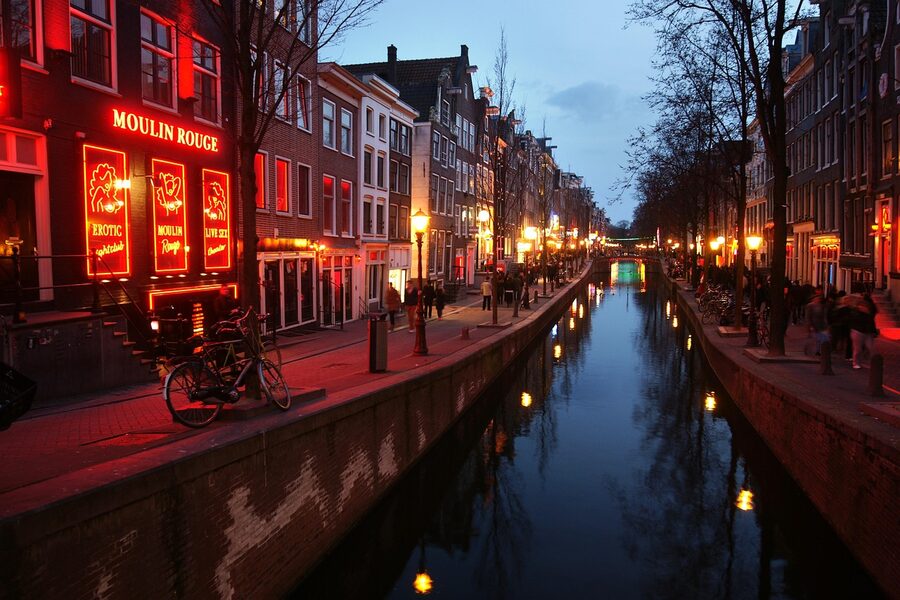
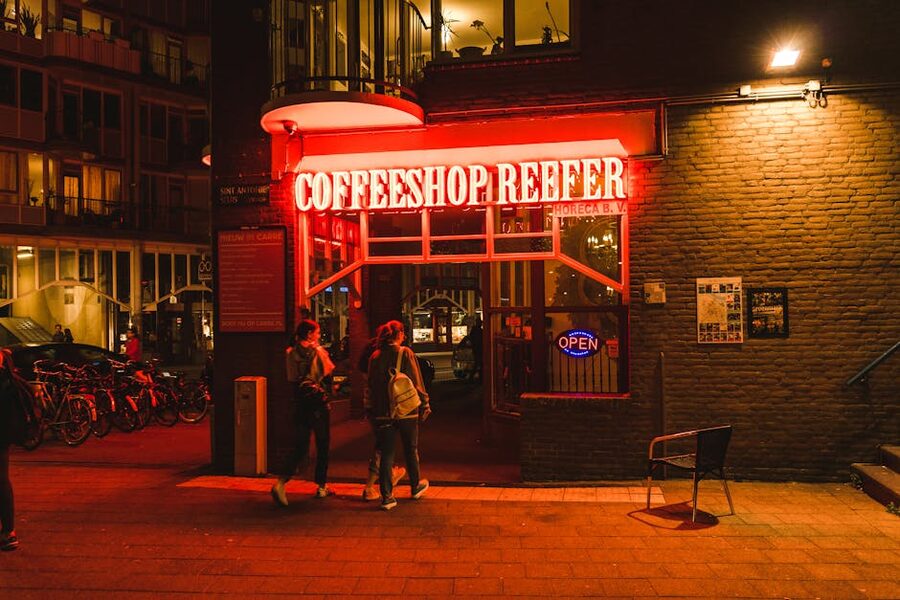
Walk into De Wallen on a wet Tuesday and the first thing your senses do is split. Stroopwafel sugar drifts out of one alley and skunky cannabis drifts out of the next, both of them trying to win the air at the same time. The cobblestones reflect purple-pink from a hundred small red windows and the neon coffeeshop signs above them, and you stop walking because you don’t know which direction to look first.
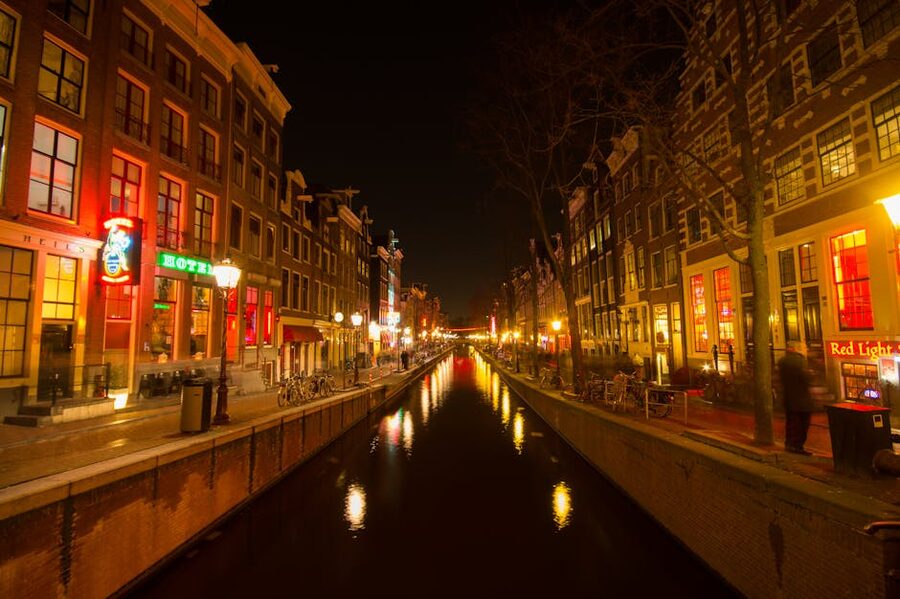
This guide is about booking a Red Light District tour the right way. There are about nine versions on the market and they are not the same product. Some are pure history. One is built around coffee shops. One is a pub crawl. One is a private after-dark walk. The wrong choice ruins the evening, the right one is one of the best two hours you’ll spend in Amsterdam.
- In a Hurry? Three Picks
- What you can and cannot do here. Read this first.
- De Wallen, briefly. So you know what you’re walking through.
- The format the legal tours actually run
- The three Red Light District tours worth booking
- 1. Amsterdam: Red Light District Tour:
- 2. Red Light District and Coffee Shop Tour:
- 3. Red Light District Tour in German or English:
- The pub crawl is a different product
- The after-dark and private options
- How this differs from the Red Light Secrets museum
- Booking timing and pricing reality
- What to wear, what to leave at home
- Where to eat before or after
- Combine it with a canal cruise or another evening tour
- The legalisation debate, briefly
- The other walking tours that pair with this one
- Frequently asked, briefly
- If you only have one Amsterdam evening
- More Amsterdam walking and history
In a Hurry? Three Picks
Best for most visitors: Amsterdam: Red Light District Tour from $28. Ninety minutes, history-led, the most-booked walking version on the market.
Best for cannabis-culture context: Red Light District and Coffee Shop Tour from $29. Two hours, covers the gedoogbeleid (toleration policy) and walks you past the first coffeeshop in Amsterdam.
Best for multilingual groups: Red Light District Tour in German or English from $28. Same flagship route, dual language, useful for mixed-nationality friend groups.
What you can and cannot do here. Read this first.
The single most useful thing to know before booking: photos of the windowed workers are illegal. Not frowned upon. Illegal. The city brought that rule in years ago and the management companies enforce it. You will see signs. You will also see locals call out anyone holding up a phone. Cameras get grabbed. It happens. Leave the phone in your pocket when you walk past windows and your evening will be fine.
The second thing to know: stationary group tours stopping in front of the windows are also banned. The 2020 rule change ended the old style of guided tour where forty people would crowd an alley while a guide pointed at workers. The tours that still operate today use a different format. They brief you in a cafe first, walk you through the district at a respectful pace without stopping, and end with a sit-down debrief. That’s the legal way to run it now, and it’s actually a better tour structure.
If a tour operator promises you a stationary group with windows-pointed-at, walk away. They’re either operating illegally or they’re a fake listing. The good operators have all rebuilt their format around the new rules.
De Wallen, briefly. So you know what you’re walking through.
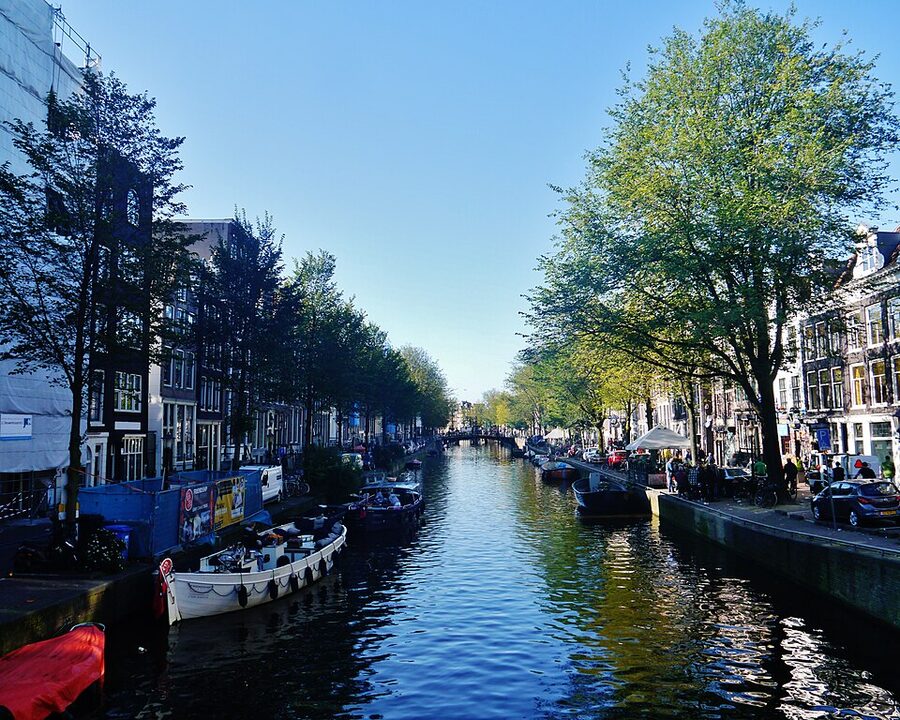
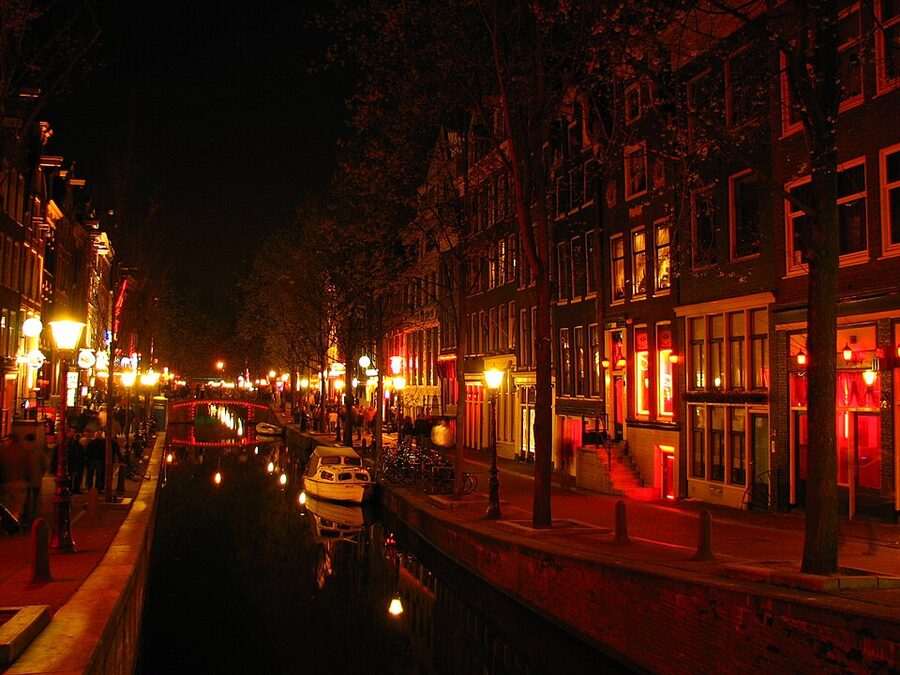
De Wallen is the oldest part of Amsterdam. The street grid here is 14th century. Sailors arriving at the port in the 1300s were directed to taverns and to women on the streets near the harbour, and the trade settled into the alleys around what is now Oudezijds Achterburgwal and Oudezijds Voorburgwal. The two canals run parallel, and the windows are on the inner sides of the houses facing each canal. About three blocks. A hundred or so window-rooms. The whole district is small. You can walk it end-to-end in eight minutes if you’re going briskly.
Prostitution has been regulated in the Netherlands since 1830, which surprises people. It became fully legal as a profession in 2000, with sex workers paying tax, registering for VAT and operating under labour rules. The window-rentals work like any other small commercial sublet: a worker rents a room from a management company, usually for an eight-hour shift, sets her own prices, screens her own clients. The minimum is around 50 euro for fifteen minutes. The tax authorities know about all of it. That part is not a grey area.
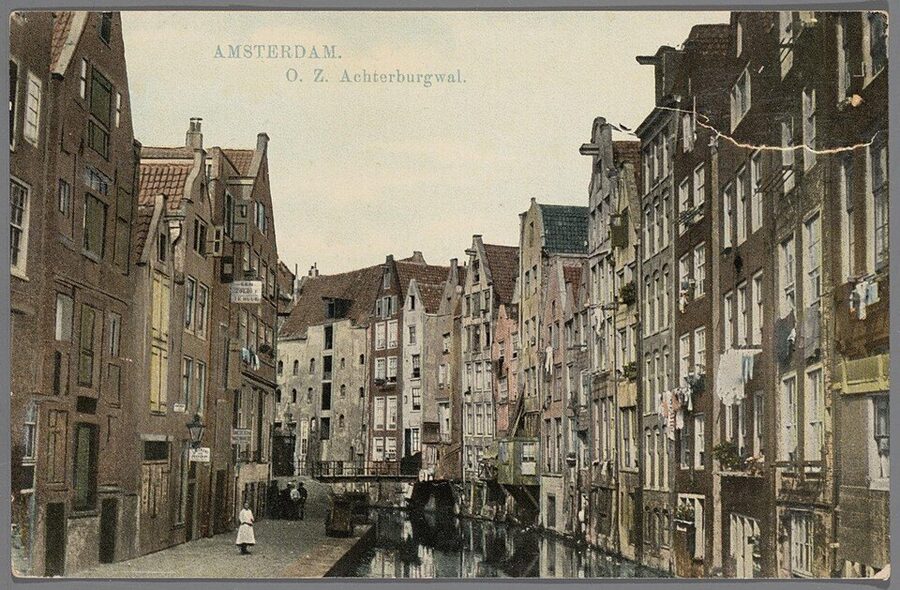
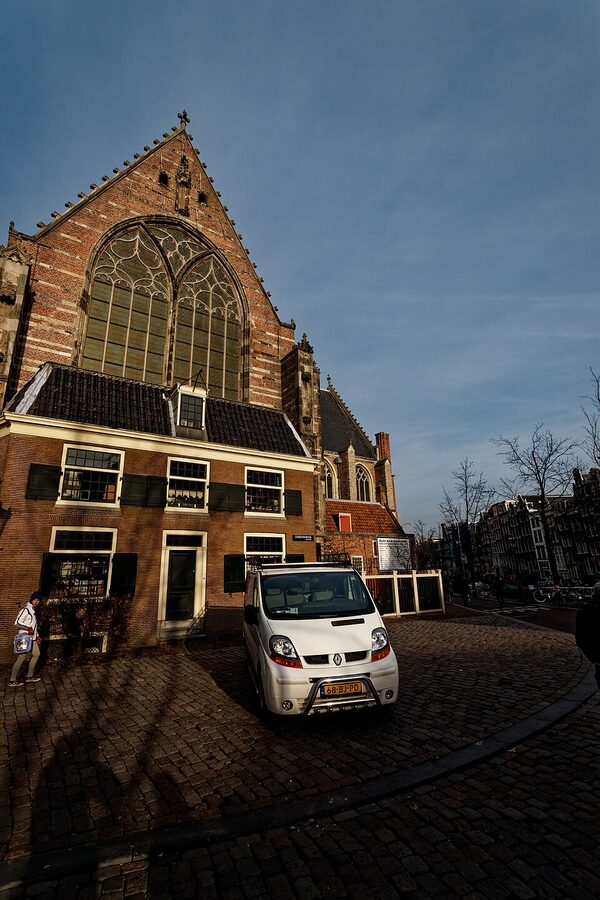
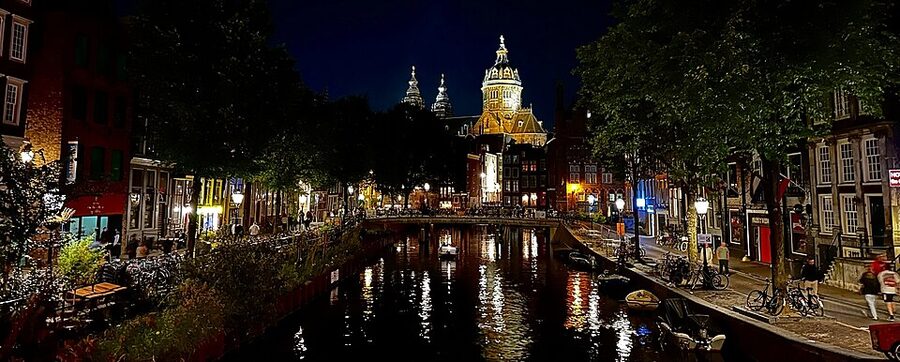
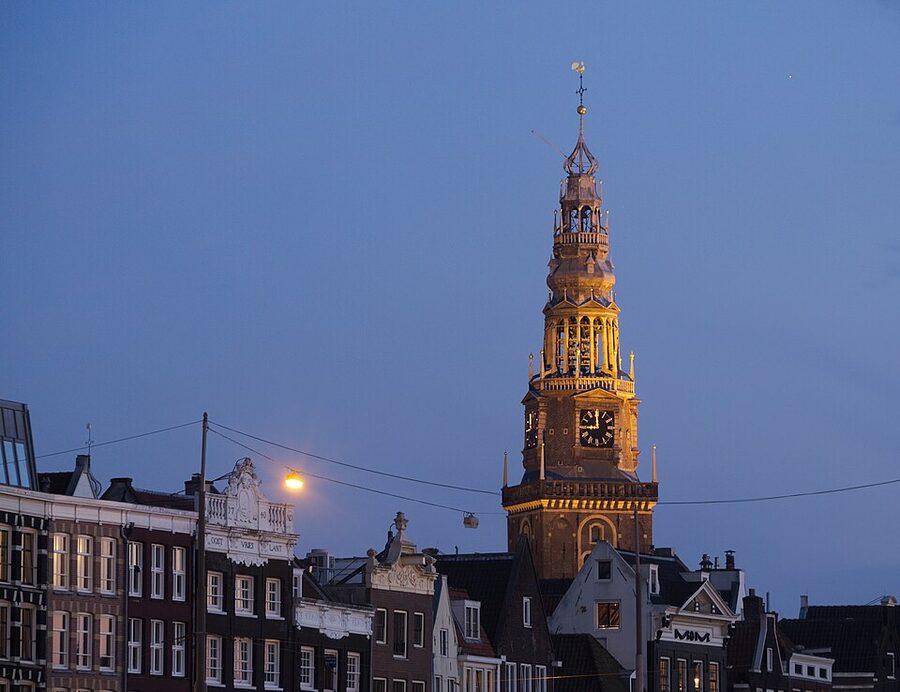
And the part most visitors don’t realise: the Oude Kerk, consecrated in 1306, sits in the literal middle of the district. Catholic until the Reformation, Protestant after. Today it’s an active church and an art venue. You walk past the windows on three sides and the church on the fourth. That juxtaposition is the strangest thing about De Wallen, and it’s the moment most tour guides go quiet and let you take it in. The bells of the Oude Kerk strike from the same tower they’ve struck from since 1565. Stand in the square, hear the bell, count the windows in your peripheral vision. That’s the tour in one moment.
The format the legal tours actually run
Almost every legal red light district tour in Amsterdam now uses some version of this three-part structure:
Part one, the cafe briefing. Forty minutes in a quiet cafe near Centraal Station or Nieuwmarkt. You get a coffee or a beer, the guide hands out a printed map and runs the history. The 1300s origins, the 1830 regulation, the 2000 full legalisation, the 2020 anti-tour rules, how the management companies work, what the workers actually pay. This is the meaty part. Take notes if you’re the kind of person who takes notes.
Part two, the walk. Forty to fifty minutes. The guide leads you through De Wallen at a steady walking pace. Nobody stops in front of windows. The guide will stop in neutral spots, the Oude Kerk square, a corner with no windows visible, an alley head, and tell you what you just walked past. You’re encouraged to look at the architecture, the bells, the canal water, the brickwork. The windowed alleys themselves you walk through, you don’t linger.
Part three, the wrap-up. Twenty to thirty minutes back in a cafe. Q&A. This is where the conversation goes places it can’t go on the street: the city council’s repeated proposals to relocate the district out to the Houthavens dock area, the workers’ own pushback against that idea, the arguments about whether legalisation actually protects workers or commodifies them, what the trade looks like in countries with the Nordic model versus the Dutch one. The guides who run this format well are usually current or former fieldworkers for a sex workers’ union, and that depth shows up in part three.
The three Red Light District tours worth booking
I narrowed it to three. The flagship history-led walk that most first-time visitors should default to. The coffee shop variant for cannabis-curious travellers who want a parallel cultural angle. And the multilingual version for friend groups where one of you doesn’t have native English.
1. Amsterdam: Red Light District Tour: $28
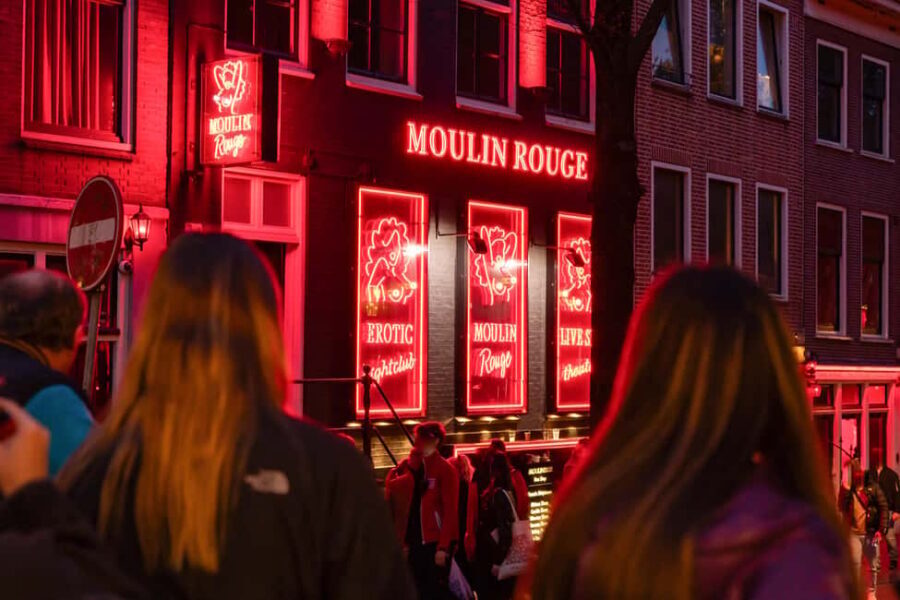
This is the one most visitors should book. Ninety minutes, expert guides, the standard cafe-walk-cafe format. Our full review covers which evening time slots have the calmest crowd flow and which guides tend to spend the most time on the labour-rights material in part three. Book this one first.
2. Red Light District and Coffee Shop Tour: $29
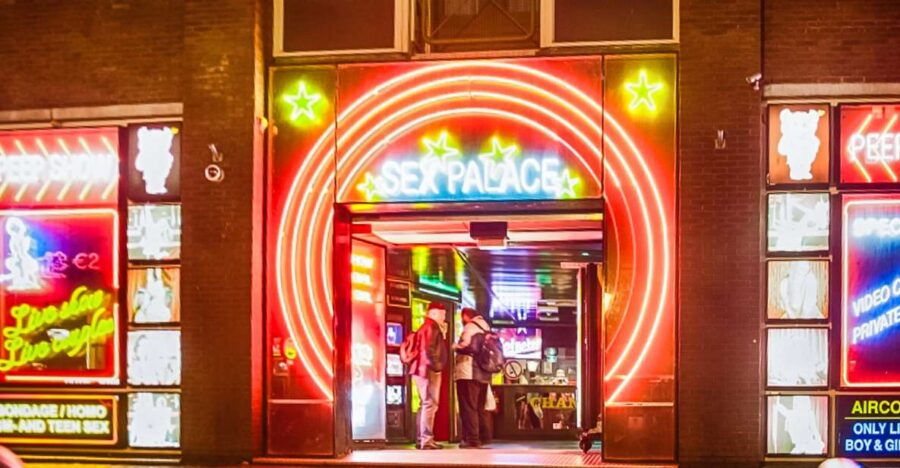
The version to book if you want the cannabis-culture context alongside the prostitution-history material. Two hours, slightly slower pace, and the guides on this route tend to know the policy detail cold. Our review of this tour goes into which coffeeshops the route passes and which one is worth doubling back to afterwards.
3. Red Light District Tour in German or English: $28
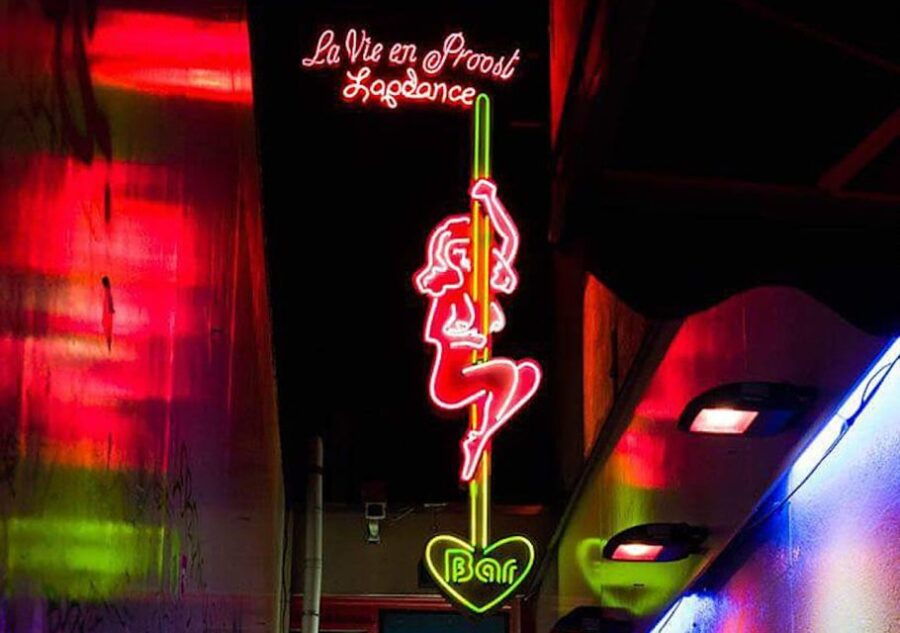
This is the right pick for German-speaking friend groups or families where one or two people aren’t comfortable with rapid English. The route and content match the flagship closely, so you don’t lose any depth. Our full review covers how the bilingual switching works in practice and which guides handle it most smoothly.
The pub crawl is a different product
I want to flag this clearly because it’s the booking mistake I see most often. The Red Light District Pub Crawl is not a history tour. It’s a five-and-a-half-hour party-led crawl through four bars in De Wallen, with free shots at each, drinking games, and a prize at every venue. The “Red Light District” in the name refers to the geography, not the content. The guide knows the area but the format is bar-to-bar, not history-to-history.
That’s not a complaint. It’s a great pub crawl if a pub crawl is what you want. Just don’t book it expecting a sober historical walk. Book the flagship for the history, book the pub crawl separately, on a different night, if you want the party version of the same streets.
The after-dark and private options
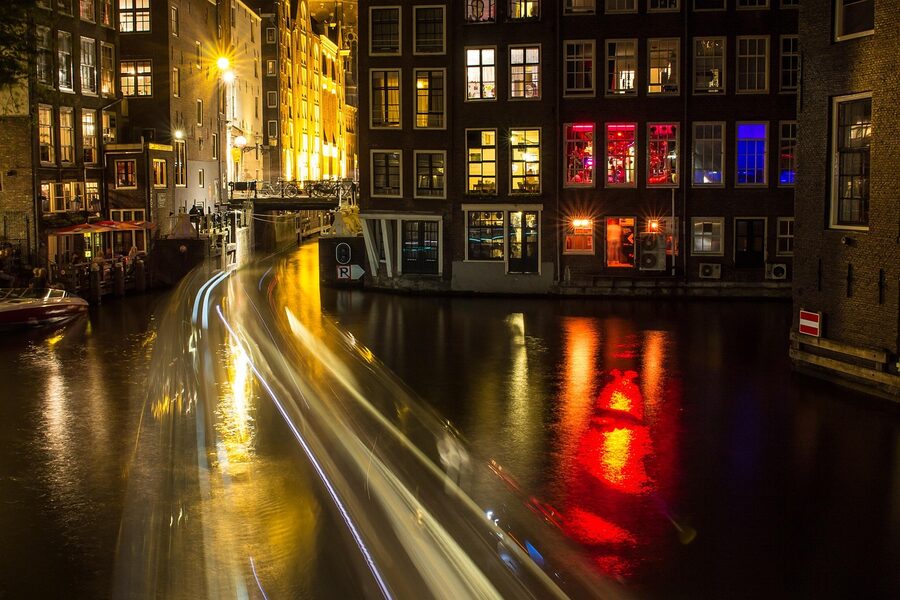
The After Dark Red Light District tour runs the same route but at the later end of the evening, usually 9pm or 10pm start. The crowd shifts. The colour shifts. The guide gives you slightly more on the city’s nightlife history alongside the standard material. It’s the right pick if you want the visual atmosphere at full strength and you don’t mind starting late.
For couples or small friend groups who want to set the pace and ask whatever questions they want without a stranger group of fifteen, the private RLD and coffee shop tour is the option. Two hours, just your group, the guide adjusts depth and route to whatever you’re most curious about. Pricier per person, obviously, but worth it if there’s any topic you really want to push the guide on. There’s also a basic alt called the straight Red Light District tour version 2 for shoulder-season slots when the flagship is fully booked.
How this differs from the Red Light Secrets museum
The other thing visitors get tangled up on is the difference between a walking tour and the Red Light Secrets museum, which is a sit-and-read-the-displays experience inside a converted canal house at Oudezijds Achterburgwal 60H. The museum is self-guided, takes about 45 minutes to an hour, and lets you sit inside a recreated window booth and see what the worker sees. It’s interesting and it pairs well with a walking tour if you do them on the same evening, but it’s a different format entirely.
The walking tour gives you the streets, the air, the bells, the architecture and a guide telling you what you’re looking at. The museum gives you the inside of one room with text panels, video interviews and economic-history displays. Most visitors who do both say the order matters: walk first, museum second. The walk gives you the questions. The museum answers some of them.
If you only have time for one, pick the walk. If you have time for both, do them on the same night, the walk first.
Booking timing and pricing reality
The flagship history tour books two to seven days ahead in shoulder season. In high summer (July, August) and Christmas-New Year, you’re looking at one to two weeks ahead for the better evening slots. Saturday nights book first. The 9pm Friday slot also goes early. If you want a midweek 7pm slot you can usually book a couple of days before and still get in.
Pricing sits at $28 to $30 for the standard ninety-minute history walk, around $29 for the two-hour coffee shop variant, around $24 to $30 for the pub crawl, and the private tour climbs to about $40 to $60 per person depending on group size. None of these include drinks. The cafe stops at the start and end usually involve a coffee or a beer that you pay for separately, and you’ll spend a few extra euros on top.
Cancellation policies on GetYourGuide are usually free up to 24 hours before. Read the specific listing because the private tours sometimes have stricter cutoffs.
What to wear, what to leave at home
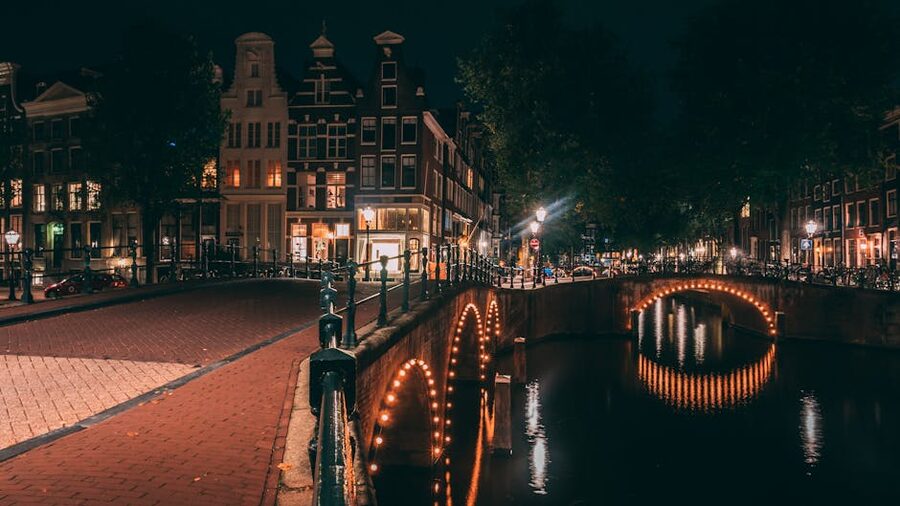
Wear flat shoes with grip. The cobbles in De Wallen are 17th-century brick rounded by four hundred years of foot traffic, and after a wet evening they get genuinely slick. I have seen a tourist in heels go down hard outside the Oude Kerk. Don’t be that tourist.
Layer for cold. Even in summer, the canal-side air drops a few degrees after sunset, and the brick alleys hold the chill. A windbreaker over a long sleeve is plenty in May to September. October to April you want a proper coat, hat, and gloves for January-February.
Leave the camera in the bag. I mean this. Phone in pocket, camera away. The legal point I made earlier about photographing windowed workers is the headline rule, but the broader social rule in De Wallen is that you walk through, not gawk. The locals living above the windows can spot a tourist with a raised phone from forty metres and they will say something. Or worse, the management company’s security will. Just don’t.
Don’t bring kids. The tour operators technically allow over-18s only, sometimes 16+ with a parent, but practically the content is not for children. The coffee shop variant especially.
Where to eat before or after
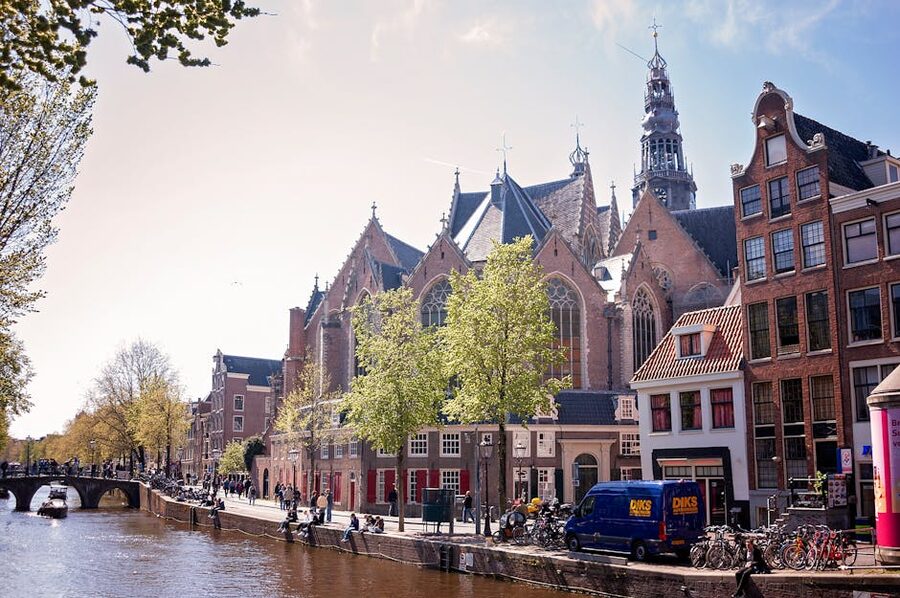
The streets immediately around the Oude Kerk get tourist pricing. Walk five minutes south to Nieuwmarkt square and the food gets noticeably better and noticeably cheaper. Bird Thai Restaurant on Zeedijk is a local fixture, cash and card both, queue moves fast. Greetje on Peperstraat is more upmarket Dutch food and wants a reservation a few days out. For something quick and cheap before the tour, Burgermeester on Spuistraat is reliable.
The cafes the tours use for the briefing and wrap-up are usually quiet local-style brown cafes, not part of any chain. The coffee is decent and the beer is fine, and the ambiance is part of the tour.
Combine it with a canal cruise or another evening tour
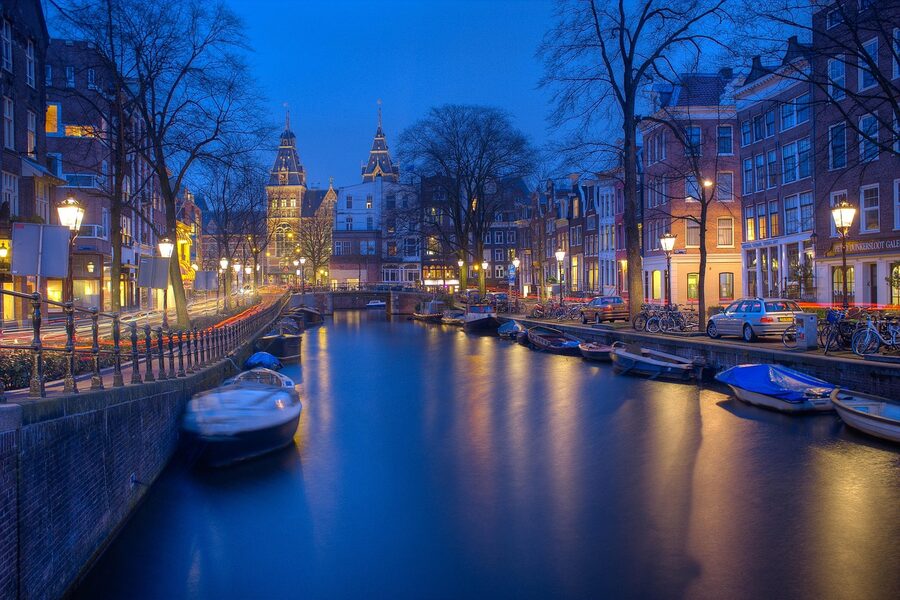
If you’ve got a full evening to fill, the smart pair is to do an open boat canal cruise at sunset and then walk into De Wallen for the 9pm history tour. The boat sets the geography, the walk fills in the cultural layer, and the timing flows naturally. If you want a more conventional sit-down boat, the covered canal cruise works just as well, and it’s cheaper.
For visitors hitting Amsterdam in November through January, the Amsterdam Light Festival boat cruise takes over the same canals with light installations and pairs interestingly with the red light tour. Different kind of light, same water, both very Amsterdam.
The legalisation debate, briefly
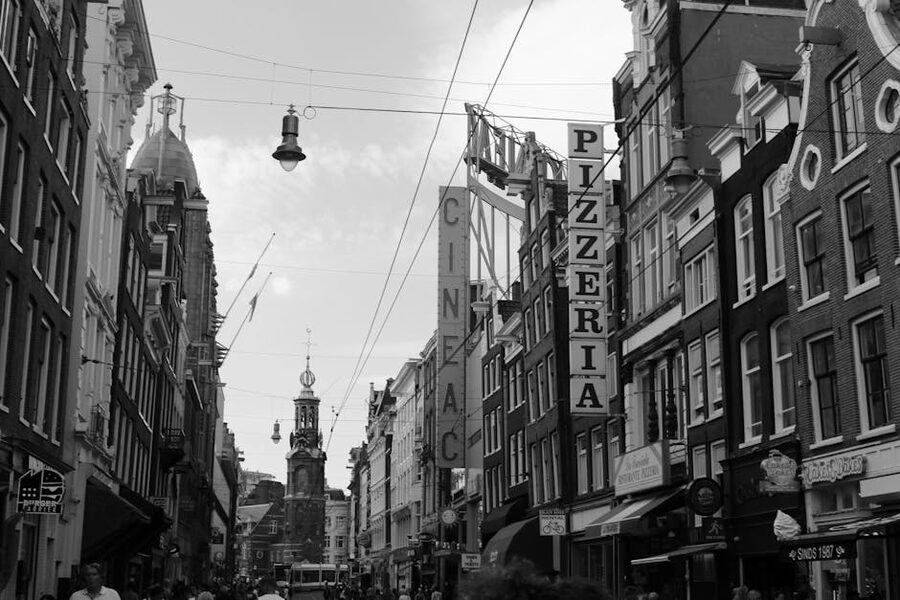
This is the part that gets more interesting the more you read. The standard line is that the Netherlands legalised prostitution in 2000 to protect workers, reduce trafficking and tax the trade. The reality is messier. Anti-trafficking organisations have published reports arguing that legalisation didn’t reduce trafficking; it just moved it indoors. Sex worker unions in the Netherlands have argued the opposite, that the rules around legal premises actually made workers safer.
The Amsterdam city council has been trying for several years to relocate De Wallen out of the historic centre to a purpose-built facility in the Houthavens area. The mayor’s office argues this would reduce tourist congestion and improve worker safety. The workers themselves, organised through the union PROUD, have largely opposed the relocation, on the grounds that being in the centre is what makes the work safer (more pedestrians, more police, less isolation). At time of writing the relocation plan is stalled.
If you’re interested in any of this, ask your guide in part three. The cafe wrap-up is the right place to go deep. They’ve usually read more on it than you have, and they often disagree with each other on solid grounds.
The other walking tours that pair with this one
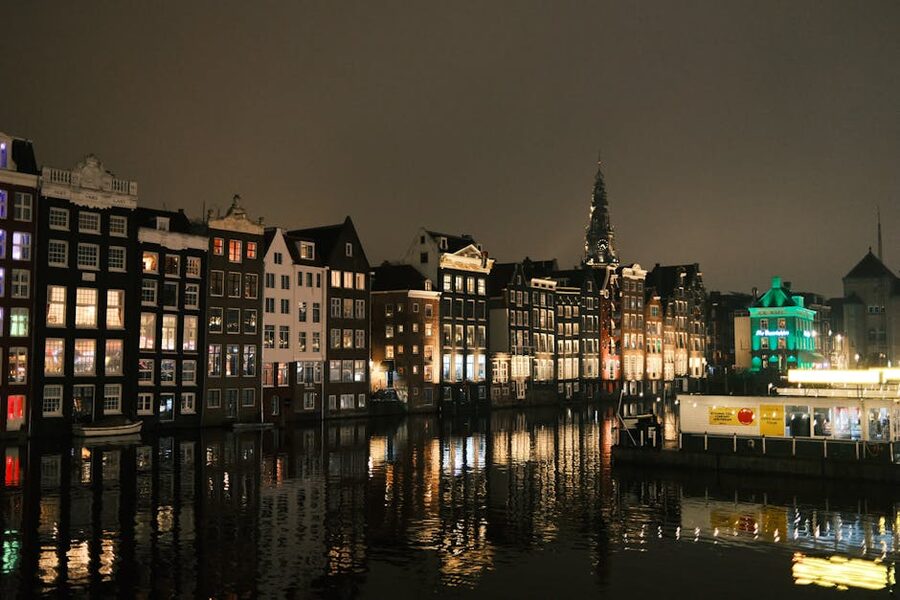
If the format works for you, the city most similar in dark-history walking tours is London with the Jack the Ripper tour, which uses the same cafe-walk-cafe template through Whitechapel. Same idea, different century, different crime, equally well-researched guides. Edinburgh has two strong gritty-history options too: the Edinburgh Vaults underground tour covers a sealed-off 18th-century slum below the Royal Mile, and the Dark Side walking tour works the surface streets above. Different cities, same kind of guide, same kind of evening.
Frequently asked, briefly
Are the tours safe? Yes. De Wallen is one of the more heavily-policed parts of central Amsterdam, with management-company security cameras and visible foot patrols. The crowd density at evening hours is high enough that anything sketchy gets noticed quickly. Pickpockets work the area, like every tourist zone, so keep your phone deep in a pocket and your wallet zipped.
Can I do the tour solo as a woman? Solo female travellers do these tours all the time. The good operators run small mixed groups, the guides are professional, and the route is well-lit and busy. If you’d rather, the private option lets you pick your own group composition.
Is it disrespectful to the workers? The newer-format tours, run by guides with sex-worker-union backgrounds, are explicitly built to not be. You walk past at a respectful pace, you don’t stop and stare, you don’t photograph, and the cafe sections are about the labour rights side rather than the prurient side. Workers in De Wallen have been broadly fine with the rebuilt tour format. The old stationary-group format that got banned in 2020 was the one with the actual problem.
Can I take any photos at all? Of architecture, canals, the Oude Kerk, the bridges and the public street scenes, yes. Of windowed houses where workers are present, no. The simplest rule is: if a person is in the frame of your photo, put the phone away.
Is it open year-round? Yes. The tours run every night of the year except Christmas Day and New Year’s Day. Some operators reduce frequency in deep January and February.
If you only have one Amsterdam evening
Book the flagship ninety-minute history tour at the 7pm or 8pm slot. Eat dinner at Nieuwmarkt before. Walk to the meeting point ten minutes early. Stay for the cafe wrap-up properly, ask one real question. If you want a drink afterwards, the same cafes the tour uses are happy to keep you on. That’s the version most visitors get the most out of.
If you’ve got two Amsterdam evenings, do the walk on night one and pair it with the Red Light Secrets museum on night two for the indoor counterpart, or with the open boat cruise on night two for the canal-side view of the same streets. Both work. The walk and the museum cover similar ground from different angles, the walk and the boat cover the same geography from different elevations.
More Amsterdam walking and history
The natural next stop after a red light walking tour is the Red Light Secrets museum, which fills in the indoor side of the same story. After that, most readers do an Anne Frank walking tour for the city’s other dark history. And if gritty walking history is your thing more broadly, the London Jack the Ripper tour is the obvious cousin to line up next.