
I lost my breath twice on the climb between Largo das Portas do Sol and the Sé Cathedral. Once because the cobbles were steeper than they look, and once because we turned a corner and a woman three floors up opened her shutters and let an old fado recording spill into the lane while a guitar from a wine bar below answered on the same chord. The guide stopped, said nothing, let it happen, and then walked us into a courtyard with sea-tile facades catching the late sun. Twenty minutes later I had pastel de nata crumbs on my shirt and a head full of stories about a 19th-century woman from Mouraria who turned a song nobody respected into a national art form.
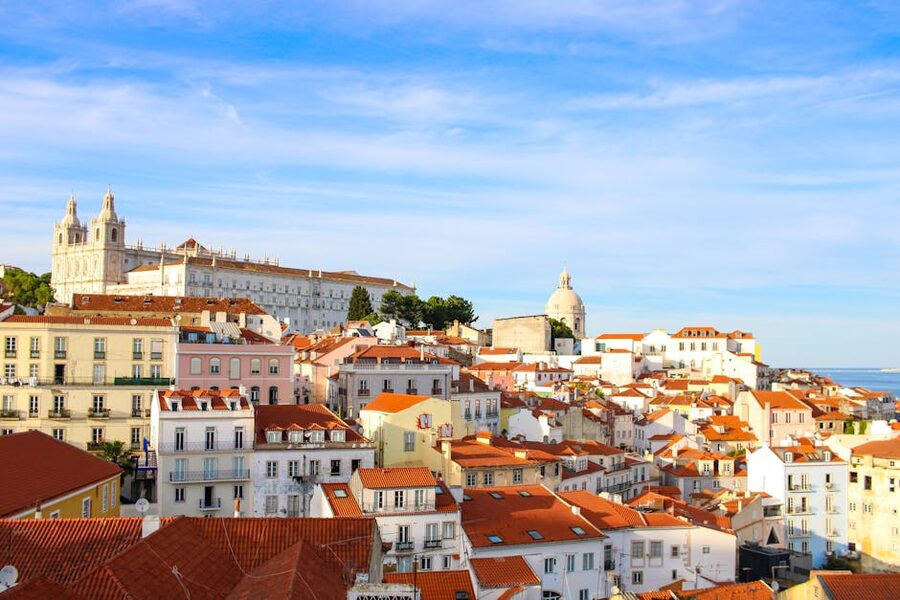
This is a guide to the Alfama-specific walking tour. Not the broader city loop that hits Rossio, Chiado, and the Bairro before dipping into Alfama for an hour. The one where you spend the whole tour in the oldest quarter of Lisbon, the only neighbourhood that survived the 1755 earthquake intact, and you actually get the Moorish street layout, the azulejo facades, and the fado origin story explained properly. Some are walking-only. Some swap walking for an electric bike or a Segway because of the hills. Some end with dinner and a live fado set. I’ll tell you the differences and which one to book.
Short on time? My three picks:
- Lisbon: Hills, Alfama, and Mouraria Tour by Electric Bike, around $25. The most-booked Alfama-and-Mouraria experience on the market, three hours, fixes the hill problem without taking you out of the cobbles.
- Lisbon: Alfama Tour and Live Fado With Traditional Dinner, around $58. Walking tour first, sit-down Portuguese dinner with a live fado set after.
- Lisbon: Segway Food Tour of Alfama and Old Town, around $90. The premium pick if you want food stops baked in and you don’t want to walk the hills.
- Why Alfama is its own thing
- What an Alfama walking tour actually is
- The format choice: walking, e-bike, or segway
- My three Alfama tour picks
- 1. Lisbon: Hills, Alfama, and Mouraria Tour by Electric Bike,
- 2. Lisbon: Alfama Tour and Live Fado With Traditional Dinner,
- 3. Lisbon: Segway Food Tour of Alfama and Old Town,
- How to choose between the three
- The fado origin story (the part nobody tells you properly)
- If you want the music alone, not the walk
- Castle of São Jorge access logistics
- Alfama’s azulejos: how to read what you’re looking at
- Tram 28 and the routing trap
- When to book the walk
- What it costs (real numbers)
- What to wear, what to bring
- Combining Alfama with other Lisbon things
- Mouraria specifically
- Comparing Alfama to other Iberian Moorish quarters
- Mistakes I made the first time
- Booking timeline
- What I’d actually book
- Other Portugal guides worth reading next
Why Alfama is its own thing
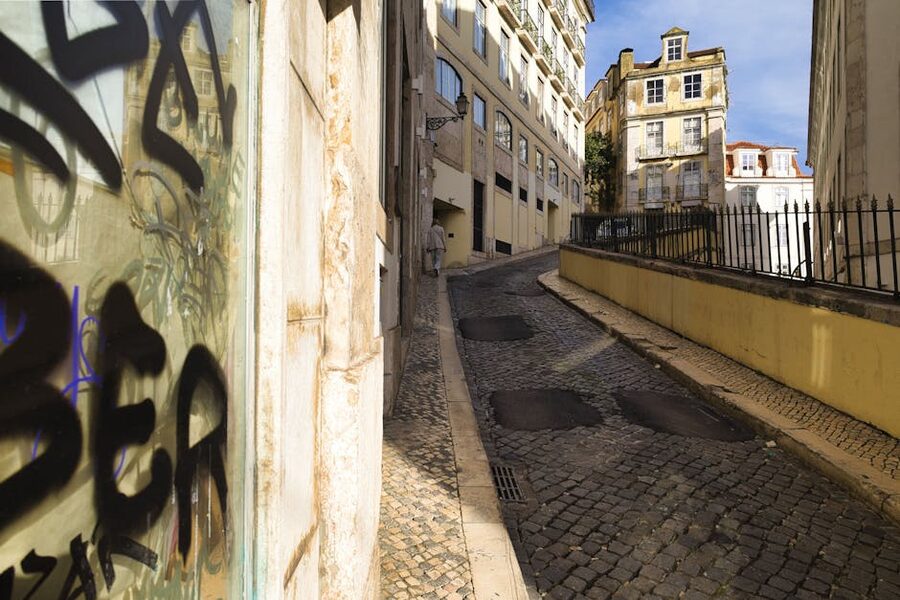
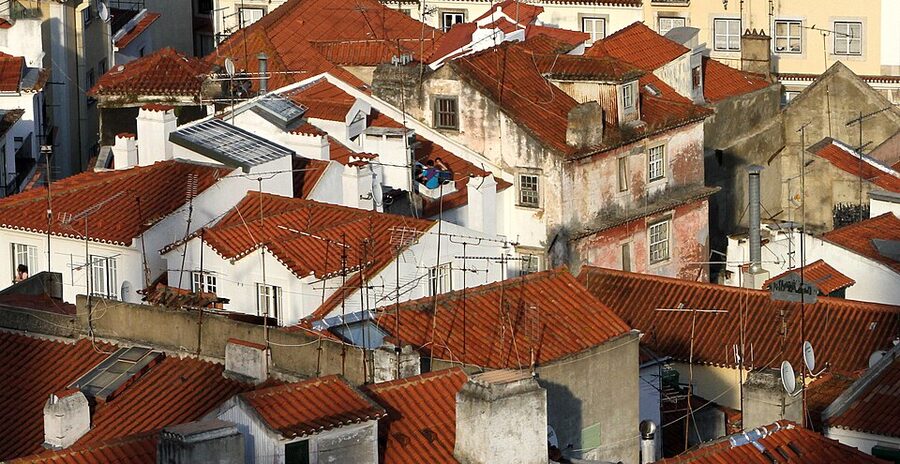
You hear “oldest neighbourhood in Lisbon” and assume that means a couple of medieval churches and a viewpoint. Alfama is older than that. The street layout is Moorish, drawn before the 12th-century Christian reconquest, which is why the lanes wind and dead-end and double back instead of running on a grid. The Portuguese kept the layout because the area was where servants and fishermen lived, and reorganising a working-class quarter was nobody’s priority. Then on 1 November 1755 a magnitude-9 earthquake destroyed two-thirds of Lisbon, fires burned for six days, a tsunami hit the riverfront. Alfama survived. The hill kept it above the wave, and the dense low-rise stone bones held when the marble palaces of the Baixa came down.
So when you walk Alfama you’re walking the only piece of pre-1755 Lisbon still standing. The Pombaline grid you see in the city centre, all the wide straight streets and identical facades, was rebuilt after the quake by a marquis with a ruler. Alfama was already there and stayed there. That’s the whole story in one paragraph and it’s the reason the neighbourhood-specific walking tour is worth doing on top of any general city tour. If you want the broader story of how the city looks the way it does, our Lisbon city-center walking tour guide covers the Rossio-Chiado-Bairro-Alfama loop and the earthquake context across all four neighbourhoods. This guide is for when you want to spend the whole morning in the medieval part.
What an Alfama walking tour actually is
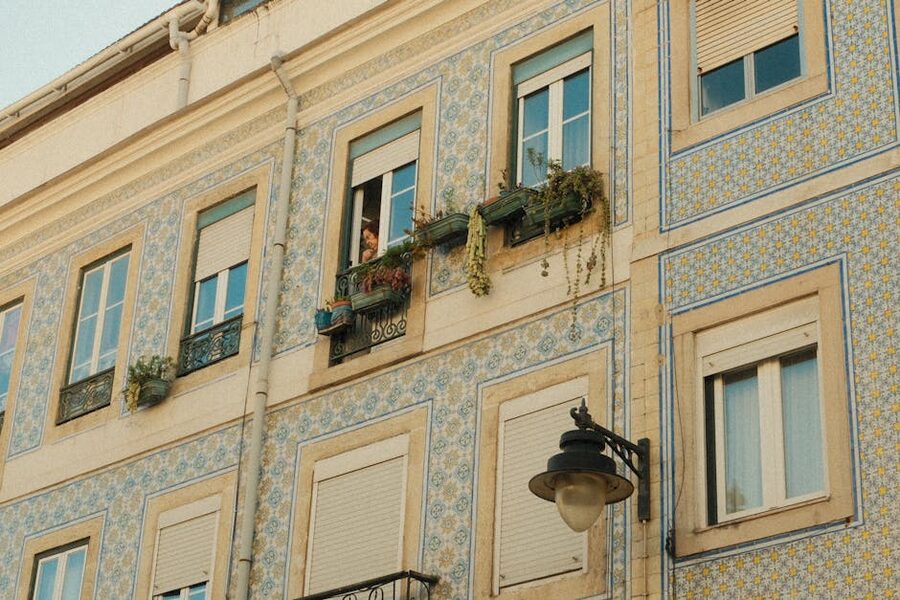
The standard format runs about three hours. You meet near the cathedral or at one of the miradouro viewpoints, usually Largo das Portas do Sol or Miradouro de Santa Luzia. The guide walks you through the lanes between Sé de Lisboa and the castle, points out the azulejo facades, stops at the Igreja de Santo Estêvão or the National Pantheon, talks about saints’ day decorations, and ends either inside the Castle of São Jorge or at a fado bar. Group sizes run 12 to 15 on the better tours, up to 25 on the cheaper ones. English is the default language. Spanish, French, and German turn up on bigger operators.
What you don’t get on the basic walk: deep stops inside any single church, ticketed entry to the castle (most operators end at the gates and let you decide whether to pay separately), or a guaranteed fado performance. For those you upgrade to a longer tour or a combo. I’ll cover the combos further down.
The format choice: walking, e-bike, or segway
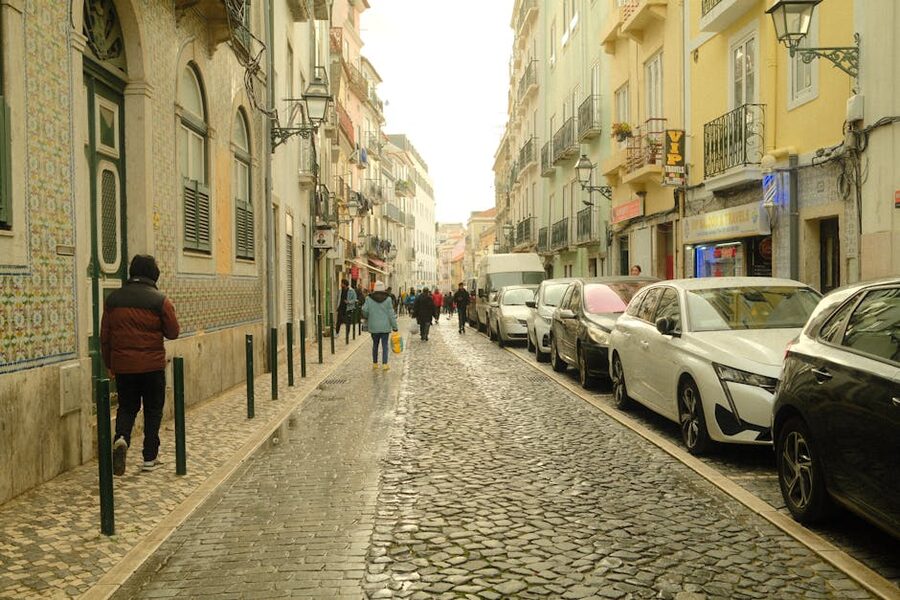
Alfama is steep. The slope from the river to the castle gates is roughly 100 metres of vertical climb over about 600 metres of distance, and the lanes are uneven cobbles, sometimes a metre wide, sometimes with steps. If you have any knee issues, or if you’re with someone in their 70s, this matters. There are three formats:
Walking is the classic. You move slow, you stop a lot, you go inside small spaces the bigger groups can’t reach. Best for storytellers and for first-timers who want the cathedral, the miradouros, and a slow scan of the azulejos. Worst for the heat in July and August. The narrow lanes hold heat and there’s almost no shade between 11am and 4pm in summer.
Electric bike is the format that solved Alfama for me. I’m in my forties and the hills are still a workout in regular shoes. An e-bike gives you the same routes plus extra ground in Mouraria and the riverfront, and you don’t arrive at the castle gates dripping. The big caveat: cobbles are jarring even with assistance, so if you have wrist or back issues, skip it. Tour I keep recommending is the Hills, Alfama, and Mouraria one with the e-bikes, three hours, ~$25, and the most-booked Alfama-area experience by a wide margin. Our review of that e-bike tour walks through the route in detail.
Segway is the polarising option. People either love it or feel ridiculous on one. The advantage in Alfama is the same as the e-bike: you cover ground, you skip the climb, you don’t have to be fit. The disadvantage is the cobbles are worse on a Segway than on an e-bike, and you do attract attention from locals. I’ve done it once. It works. The food-tour version that includes Pastel de Nata and Ginjinha stops in Alfama and the Old Town is the most popular Segway pick. Our take on the Segway food tour covers what’s tasted and where the route detours.
My three Alfama tour picks
I keep these to three. They cover the format split: e-bike for the hill problem, fado-and-dinner combo for the evening crowd, Segway food tour for travellers who want tastings rolled in.
1. Lisbon: Hills, Alfama, and Mouraria Tour by Electric Bike, $25

This is the most-booked tour in the Alfama-and-Mouraria pool by a clear margin and the one I’d pick first for almost anyone who isn’t dead set on walking. The e-bike does the hard work, you spend the time looking at the city instead of at your shoes, and the route adds Mouraria and a riverfront pass that walking-only tours rarely cover. Our full review of the e-bike tour covers the meeting point near Praça do Comércio and the bike-handling briefing they do before you ride. Pick this one if you want to see both old quarters in three hours without sweating through your shirt.
2. Lisbon: Alfama Tour and Live Fado With Traditional Dinner, $58

Book this one if you only want one Alfama experience and you want fado included rather than tacked on as a separate evening. You walk Alfama at sunset with a guide, then sit down in a small fado house for a traditional Portuguese dinner and a live performance. The group size is intentionally small. I’d warn you that the food is plain rather than chef-y, and the dinner adds significant time to the tour, so don’t book if you have an early flight the next day. Our review of the Alfama-and-fado dinner tour covers the menu and the typical fado set length. It is the right pick if your priority is the music and the meal in one evening.
3. Lisbon: Segway Food Tour of Alfama and Old Town, $90
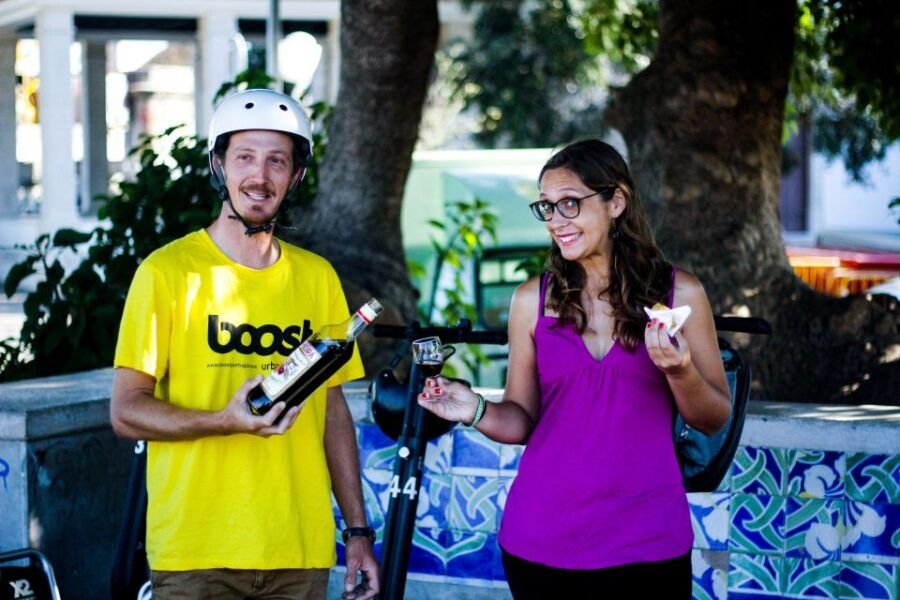
This is the splurge option and I’m glad I tried it once. The Segway covers Alfama and the Baixa in the time a walking tour covers half of Alfama, and the food stops are real local picks rather than tourist-trap nata factories. Our review of the Segway food tour notes the cobble-handling tutorial and the four-tasting itinerary. Pick this one if your time in Lisbon is short and you want the geography and the snacks rolled together. Skip it if you’re not comfortable balancing on a Segway, the cobble sections are not forgiving.
How to choose between the three
Three quick filters. If you’re physically able and the weather is below 25, take the e-bike tour. It’s the cheapest, the most-booked, and the fastest way to see both old quarters. If your trip is short and you want food stops included, pay for the Segway tour. If your priority is fado and a sit-down dinner in one evening, book the dinner combo. If none of those fit, look at the longer Alfama-only walking tour pool I’ll mention at the end.
The fado origin story (the part nobody tells you properly)
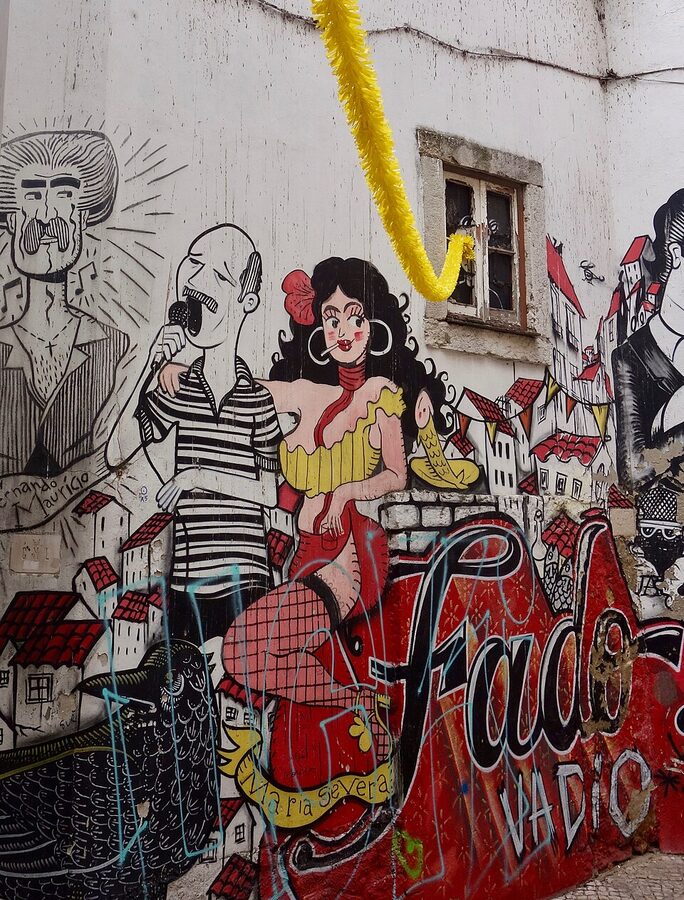
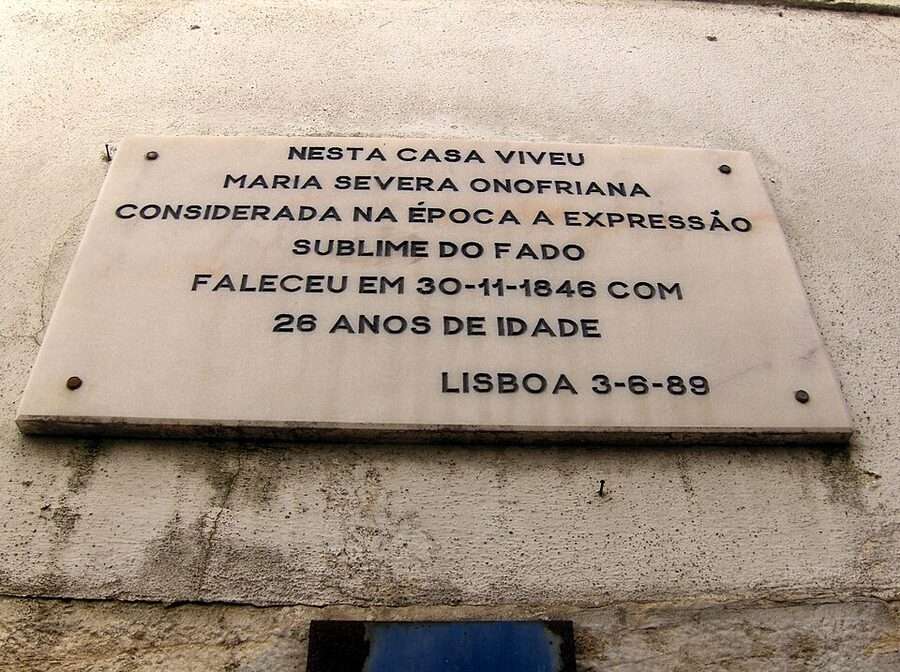
Fado was born in the early 19th century in the dockworker bars of Alfama and Mouraria. The first famous fadista was Maria Severa, a woman from Mouraria who sang in taverns, had an affair with a count, died at 26, and became the founding myth of the genre. She’s the reason Mouraria has the mural, and why almost every Alfama walking tour with a fado angle pauses at the Casa da Severa, the building where she allegedly lived. Today it’s a fado-house restaurant. Our Lisbon fado guide covers the actual fado-house options if you want to book a dedicated show separately from the walk.
Why the origin matters for the walking tour: most Alfama walks stay in Alfama proper and tell you about Amália Rodrigues, the 20th-century star who took fado international. But the genre’s roots are actually in Mouraria, the neighbourhood directly north of Alfama, separated by the castle hill. The better operators cross the hill at some point, walk you through Mouraria’s narrower lanes, and explain that Alfama and Mouraria are sister neighbourhoods rather than the same place. If you want both, look for tours that explicitly include Mouraria in the title. The e-bike pick above does. So does the dedicated Alfama and Mouraria oldest-neighbourhoods walking tour if you want a slower walking pace across both quarters. There’s also a medieval Segway tour if you’d rather not walk the hill twice.
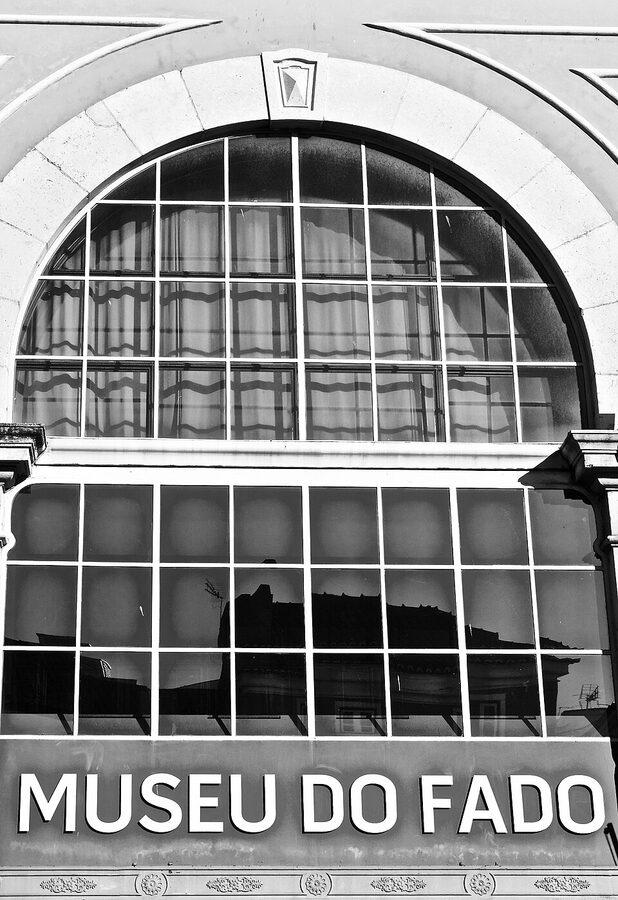
If you want the music alone, not the walk
Some travellers don’t want a walking tour at all, just a fado set with port wine in a small Alfama venue. That’s a different product. There’s a live fado show with port that runs around an hour, no walking, you sit in a small venue and the singers come out one at a time. I’d book that on a separate evening from the walking tour rather than try to combine.
Castle of São Jorge access logistics

The castle is the obvious end point for an Alfama walk. Most tours don’t include castle entry. They drop you at the gates and tell you to come back the next day or buy a ticket on the spot. Tickets cost 15 euro for adults at the time of writing, half price for over-65s, free for under-12s, and the line in summer can be 30 to 45 minutes long. Two practical notes:
First, book online before the tour. The official castle site sells timed-entry tickets that skip the queue. If your walking tour ends at noon, book a 12:30 entry. That gives you a 30-minute buffer for the guide’s wrap-up and a coffee, and you walk past the line into the castle.
Second, you can see most of the castle exterior and the best viewpoint without paying. The miradouro at Largo das Portas do Sol gives you the same Tagus panorama. The cost-benefit of the ticket is the inner walls and the peacocks. Worth it once. Skip it if you’ve already done the Madrid Royal Palace, the Granada Alhambra, or the Seville Alcázar this trip and you’re castle-fatigued. The Alhambra in particular is on the same Moorish-citadel timeline as São Jorge but on a much grander scale, see our guide to booking the Alhambra if you’re routing south after Lisbon.

Alfama’s azulejos: how to read what you’re looking at
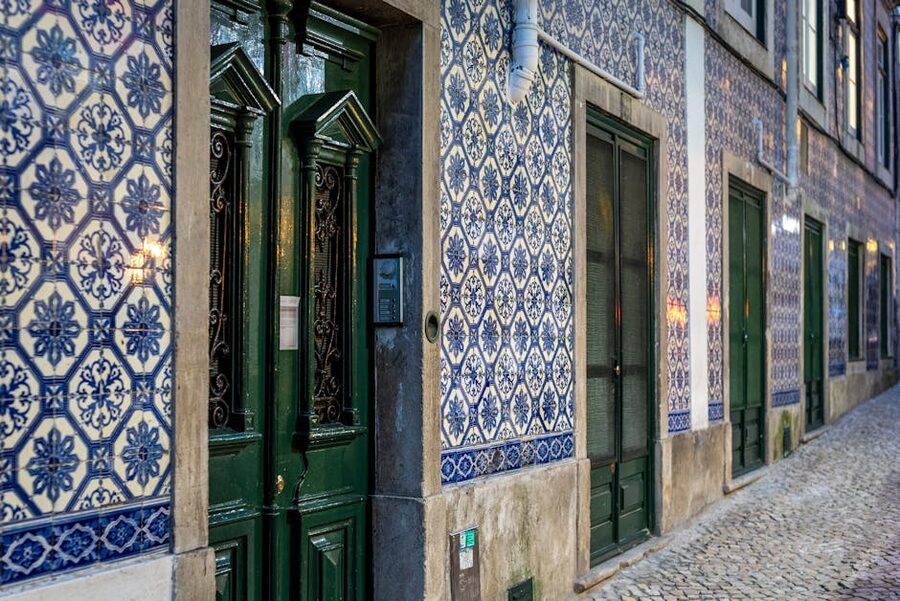
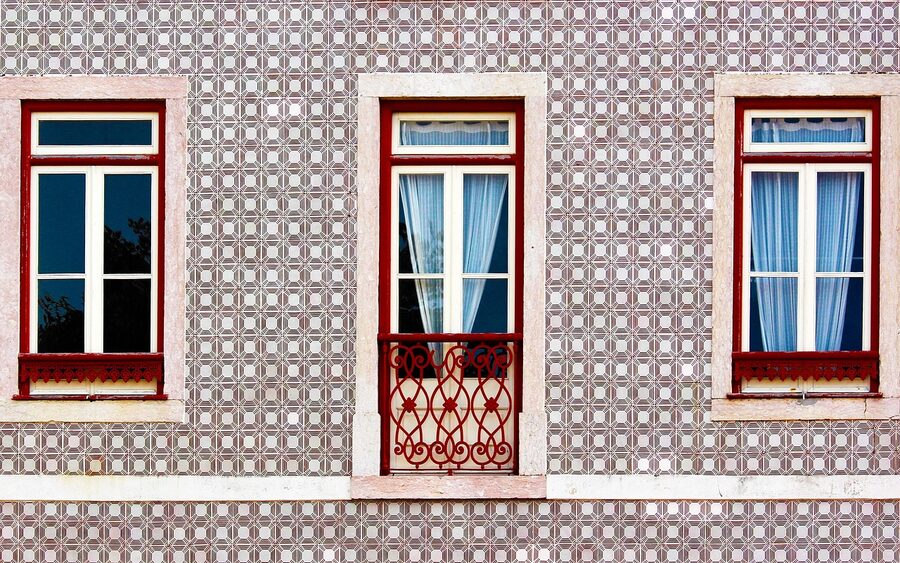
The tiled facades in Alfama aren’t decoration, they’re climate engineering. Lisbon summers are hot and the tiles reflect heat, so wealthier owners covered their walls with them. The earliest patterns are Moorish, abstract geometric shapes that date back to before 1147. The blue-and-white style most people associate with Portugal arrived later, in the 17th century, when Portuguese merchants started copying Chinese porcelain via their trade route to Macau. Some of the most photographed walls in Alfama are 18th-century pieces showing biblical scenes or naval battles. A good guide will stop at one wall and walk you through the symbology. A lazy guide will say “blue tiles, very pretty” and move on.
Tram 28 and the routing trap
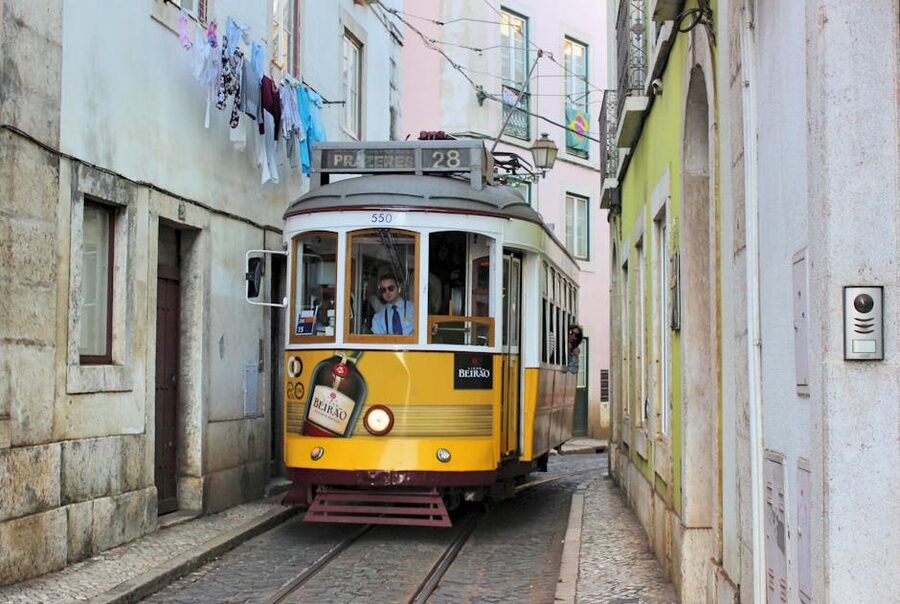
You’ll see Tram 28 mentioned on every Lisbon list. It runs through Alfama, climbs the castle hill, drops down to Estrela. Standalone tram rides are the worst part of a Lisbon trip in July, you queue 45 minutes at Martim Moniz, you stand the whole way, you can’t see anything. Some Alfama walking tours include a Tram 28 segment with reserved seats. Worth paying extra for if the tram experience is on your list. If you don’t care about the tram, skip the combo and use the time for the castle. A tuk-tuk Alfama tour is the alternative wheeled option if you want to cover the steepest sections without walking and you don’t want to wrestle with a Segway.
When to book the walk
Alfama tours run year-round. The shoulder months, April-May and September-October, are the best balance of light, heat, and crowd levels. June through August the lanes get hot from 10am, the cruise groups arrive by 11, and the popular tours sell out 48 hours ahead. November through March the weather is unpredictable but the tours are half-booked and the operators run the route slower because they have time. Morning starts give you cooler walking and emptier streets. Evening starts give you sunset at a miradouro and the fado bars opening as you finish. If your trip is in summer, book the morning slot. If you’re there in winter, book the late afternoon.
Saturdays the saints’ day decorations come out in June around the Festas de Lisboa, when sardine smoke fills the streets and the lanes turn into a street party. If you’re in town on 12 or 13 June, the regular walking tours either don’t run or run at half pace because you can’t move through the crowd. That’s a feature, not a bug, but plan accordingly.
What it costs (real numbers)
Walking-only Alfama tours: 20 to 35 euros for a three-hour group walk. The cheaper end is the bigger group sizes, the higher end is the small-group operators who cap at 8 to 10. A best-of-Lisbon walking tour that includes Alfama as one stop runs around $23 if you want the broader city loop instead. A full-day Lisbon combo with Alfama and Belém sits in the $80-100 range and saves you booking two separate halves. E-bike Alfama tours: $25 for the most popular three-hour version, $40-60 for the longer ones with extra stops. Segway: $80 to $100 for the food-tour version, $50-70 for the segway-only routes. Fado-with-dinner combos: $55 to $90 depending on the venue and the meal. Castle entry separately if needed: 15 euros.
What to wear, what to bring
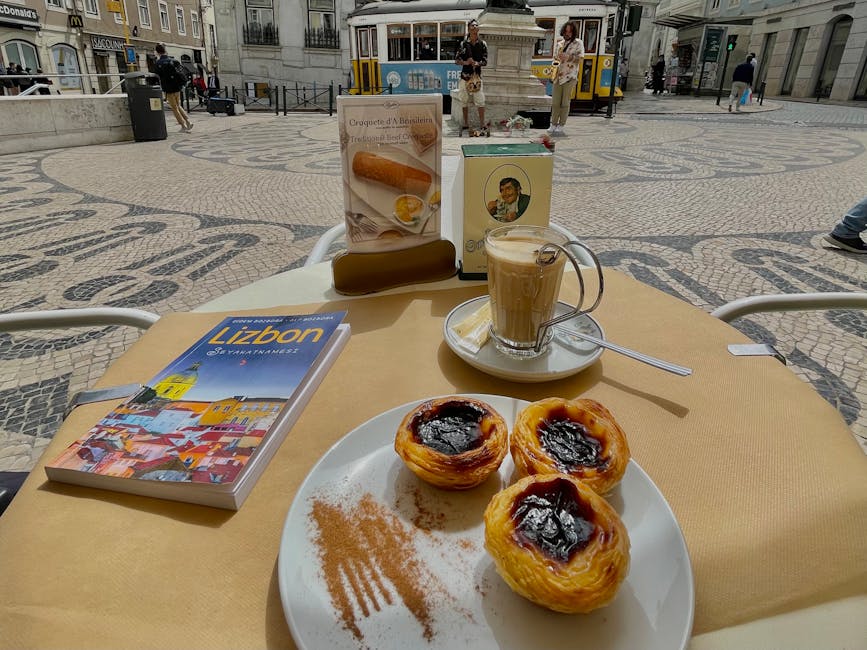
Real shoes with grip. The cobbles are calçada portuguesa, polished smooth by 200 years of foot traffic, and they get slick after a five-minute drizzle. Trainers are fine in dry weather, useless in wet. A light layer for the morning if you start before 10. A water bottle, the lanes are dry, and the cafés on the route mostly do tiny espresso cups not water glasses. Cash for the Ginjinha stop, most of the tiny bars don’t take card. A camera or a phone with battery, you’ll take more photos than you expect.
Combining Alfama with other Lisbon things
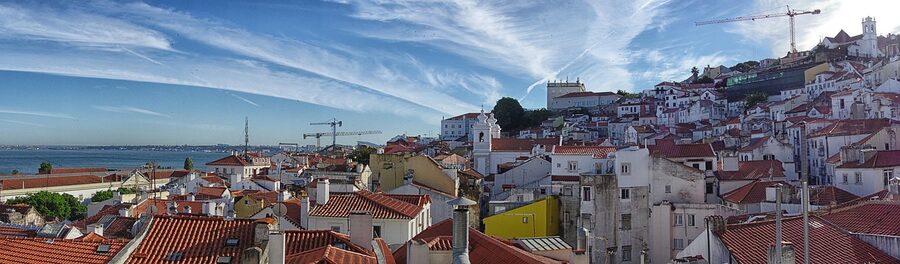
The Alfama walk pairs well with two other Lisbon things on the same day. First, a sunset cruise on the Tagus. Walking tour 9am to noon, lunch, free afternoon, sunset cruise at 6 or 7pm, dinner. Our Lisbon sunset cruise booking guide covers the format split between party DJ cruises and quieter sailing options. Second, a daytime trip out to Belém for the Jerónimos Monastery and the riverside monuments. Belém is the other half of Lisbon’s pre-1755 architecture, the half built before the earthquake by the kings showing off their colonial wealth. Our Jerónimos Monastery booking guide covers the timed-entry queue that everyone underestimates.
If you only have two full days in Lisbon and you want one out-of-town trip, route Sintra. It’s 40 minutes by train and the Pena Palace is the standout. Our Pena Palace day trip guide and the broader full Sintra day-trip guide cover the routing differences. The other Sintra option includes Cascais on the same loop, see our Sintra and Cascais combo guide.
Mouraria specifically
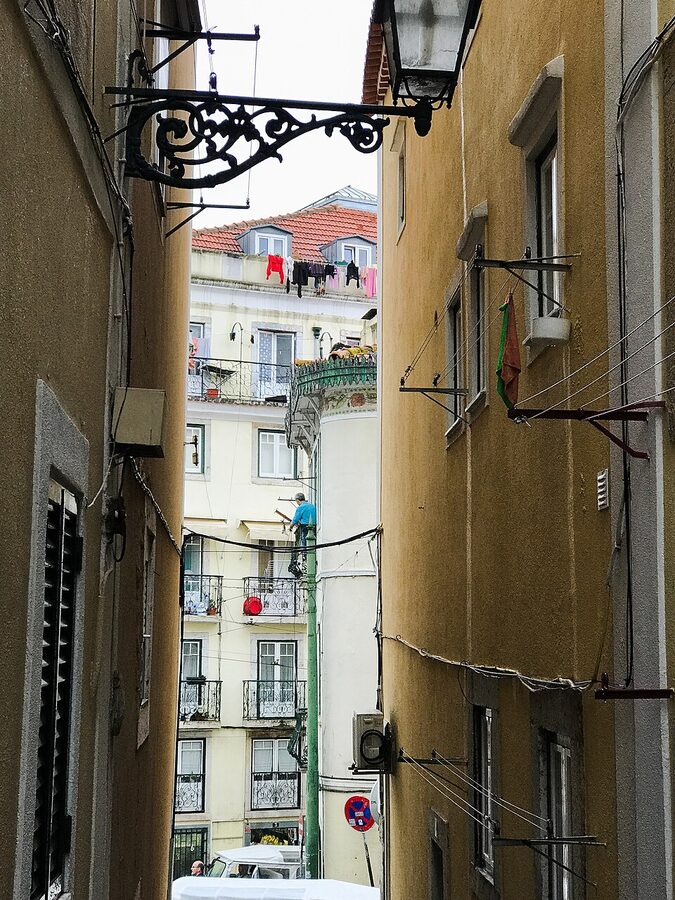
Mouraria is the neighbourhood north of the castle hill. It looks similar to Alfama from a distance, narrow lanes, hill, tile facades, but it’s poorer, more recent immigrant communities live there, and the street art is significantly better. Most walking tours either skip it entirely or treat it as a 20-minute add-on. The combined Alfama-and-Mouraria tours give both quarters real time. The e-bike pick I recommended above is one. The dedicated Alfama and Mouraria oldest-neighbourhoods tour is the walking-only equivalent if you don’t want the bike.
Why bother with Mouraria when Alfama is more famous: because the fado story actually starts there, because the food is cheaper, and because the absence of cruise crowds means you hear residents instead of tour guides. If you only have a half-day, do Alfama. If you have a full morning, do both.
Comparing Alfama to other Iberian Moorish quarters
Alfama isn’t unique in its bones. The whole western Mediterranean had Moorish quarters that survived in piecemeal form. If your Iberian itinerary includes Andalusia, you’ll see the family resemblance. The big three are the Alhambra in Granada (the most intact citadel anywhere in Spain), the Alcázar in Seville (Mudéjar palace built by Christian kings using Moorish craftsmen), and the Mezquita in Córdoba (the great mosque-cathedral with its forest of striped arches). Our Seville Alcázar guide, our Mezquita-Cathedral guide, and the Alhambra guide I linked earlier all walk through the booking specifics. Alfama is the smallest and least monumental of the four, but the only one where ordinary people still live in the original layout.
Mistakes I made the first time
I wore canvas trainers. They lasted 90 minutes before my soles were aching from the cobble seams. I booked the noon slot in July and lost the first hour of the tour to the heat. I didn’t pre-book castle entry and queued 35 minutes at the gate while the rest of the group went home. I tried to combine Alfama with Sintra in the same day, which is fine if you’re 25, miserable if you’re 45 with luggage. Don’t do that.
The second time I went, I booked the e-bike tour for 9am, ate at a tasca near the cathedral, took the afternoon off, and went to a fado show in the evening. Different city.
Booking timeline
Most operators sell out 24 to 48 hours ahead in summer. The popular ones, the e-bike Hills tour and the small-group fado dinner, can sell out four to seven days ahead in July and August. Cancellation policies vary, the GetYourGuide standard is free cancellation up to 24 hours before. Read the specific tour’s cancellation terms. A Lisbon Card isn’t usually worth it for an Alfama walking tour because the tour doesn’t include public transport, but it’s worth the maths if you’re combining the walk with public transport to Belém and the castle entry on the same day.
What I’d actually book
If it’s my first trip and I’m under 50: the e-bike tour, full stop. Three hours, both old quarters, hill problem solved.
If I want fado in the same evening: the dinner combo. Once. Not the kind of thing you do twice.
If I have two full Lisbon days: the e-bike tour on day one morning, a separate fado show on the same evening, the rest of day two on Belém and a sunset cruise.
If I’m walking with someone over 70: skip the tour formats with hill climbs entirely. Use a tuk-tuk for the steep sections and pick up the walking only on flat stretches. Or do the dinner combo for the music and let the seated time do the heavy lifting.
Other Portugal guides worth reading next
If Lisbon is the start of a wider trip, my Lisbon fado guide goes deeper on the music venues, and the Lisbon food tour guide is the right read if you want a tasting walk separately from Alfama. Heading north, the Porto city tour guide covers the Douro side. Working out the rest of the city, the Lisbon hop-on hop-off bus guide handles the geography across all four neighbourhoods if you want a low-effort orientation before the deeper Alfama walk.