
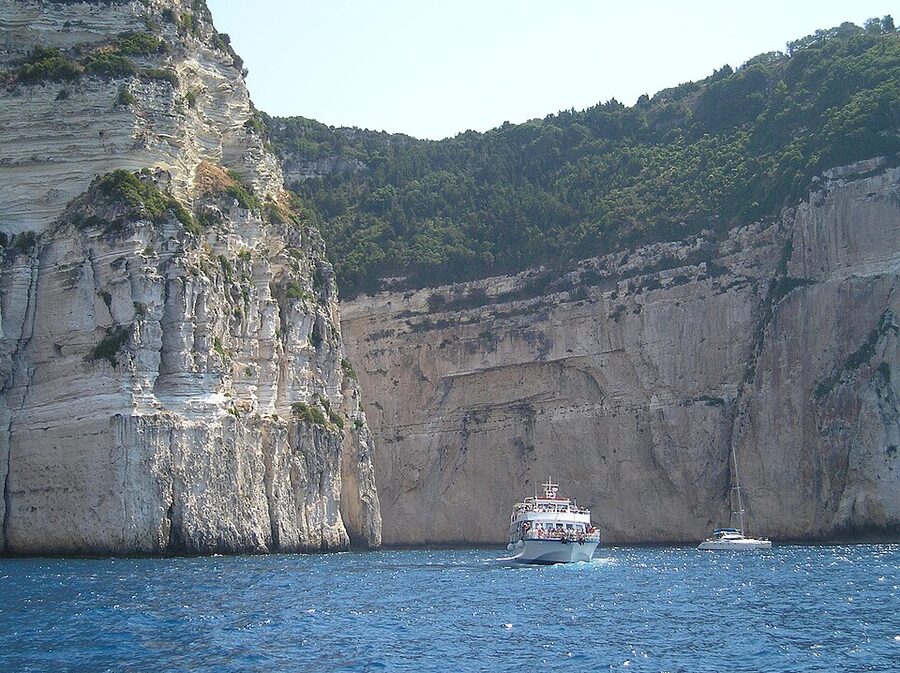
The boat slid into a slot in the limestone you would not believe was wide enough. The captain killed the engine. And underneath us the water turned a colour I have never seen anywhere else: an electric, lit-from-below blue, like someone had put a lamp on the seabed. Light bounced off the white walls of the cave, hit the water, and came up again. Phones and cameras on the upper deck stopped working as cameras and started working as souvenirs.
That is the Blue Caves on the northwest coast of Paxos, and it is the moment that justifies a 9-hour day cruise out of Corfu. Below I will walk you through how to actually book one of these trips and what to expect on the day.
- In a Hurry? My Top 3 Picks
- What This Cruise Actually Is
- The Snorkel Mask Is the One Thing Most People Forget
- Antipaxos: Vrika or Voutoumi
- Paxos: Gaios vs Lakka
- The Blue Caves on the Northwest Coast
- Sea-State Cancellations and the Backup Plan
- Ferry vs Cruise: When the Ferry Wins
- What to Bring
- Best Time of Year
- The Cruises I Would Actually Book
- 1. From Corfu Day Cruise to Paxos, Antipaxos and the Blue Caves (around )
- 2. From Corfu Antipaxos and Paxos Blue Caves Boat Cruise (around )
- 3. Paxos, Antipaxos and Blue Caves with Lakka Village from Corfu (around )
- The Common Mistakes
- Pacing the Cruise Into a Bigger Corfu Trip
- Worth It or Not
- More Greece Guides Worth a Look
In a Hurry? My Top 3 Picks
From Corfu Day Cruise to Paxos, Antipaxos and the Blue Caves, around $58. The flagship and most-booked option on the route. Modern boat, the standard 8am-to-5pm shape, free time on Paxos, swim stop at Antipaxos, Blue Caves on the way. Check availability and times.
From Corfu Antipaxos and Paxos Blue Caves Boat Cruise, around $53. Same three stops, slightly different operator, slightly cheaper. Higher passenger satisfaction in our database, the boat tends to give you a longer Antipaxos swim and a tighter Blue Caves run. See dates and price.
Paxos Antipaxos Blue Caves with Lakka Village from Corfu, around $54. Same Ionian loop but the Paxos stop drops you in tiny Lakka village instead of busy Gaios. Pick this if you want the quieter Paxos. Check the listing.
What This Cruise Actually Is
The standard Corfu-to-Paxos day cruise runs roughly 9 hours: 8am to about 5pm at most operators, sometimes 8:15am to 7pm depending on whether the boat picks up at Lefkimmi on the way south. You pay roughly 50 to 80 euros, with hotel pickup adding 5 to 10 euros and a sit-down lunch on Paxos at your own cost (15 to 25 euros at a Gaios or Lakka taverna).
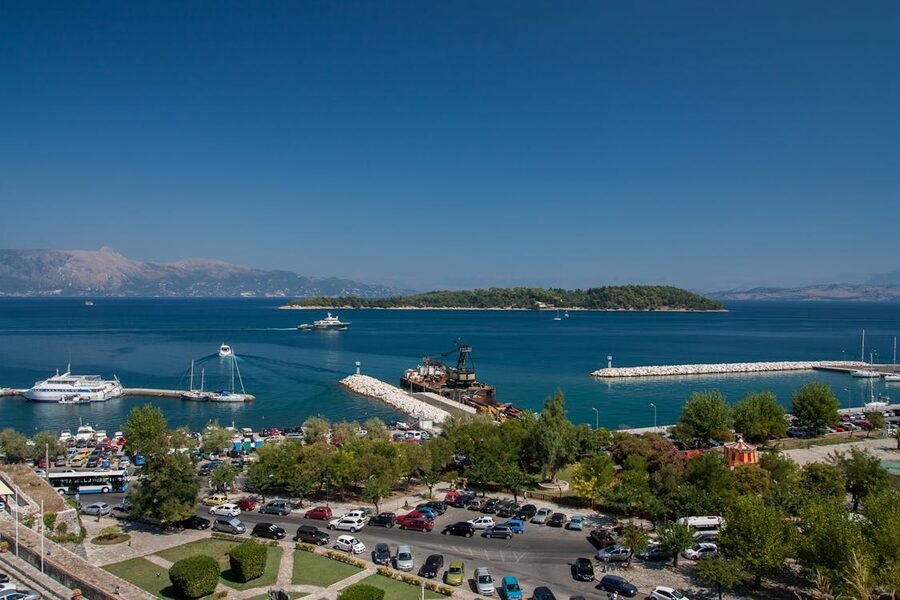
The shape of the day is consistent across operators. South from Corfu New Port for about 2 hours along the open Ionian. First stop: a swim at Antipaxos, the small uninhabited-feeling island just south of Paxos, usually at Vrika or Voutoumi beach. Then north into Paxos for free time in Gaios (or Lakka, depending on the operator). Then the Blue Caves boat tour up the northwest coast on the way out, and the long run back to Corfu.
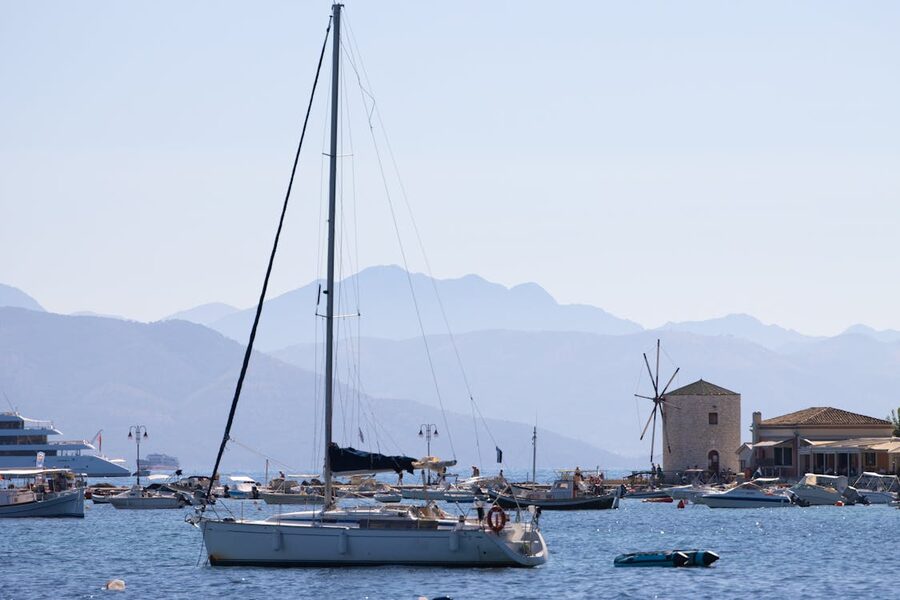
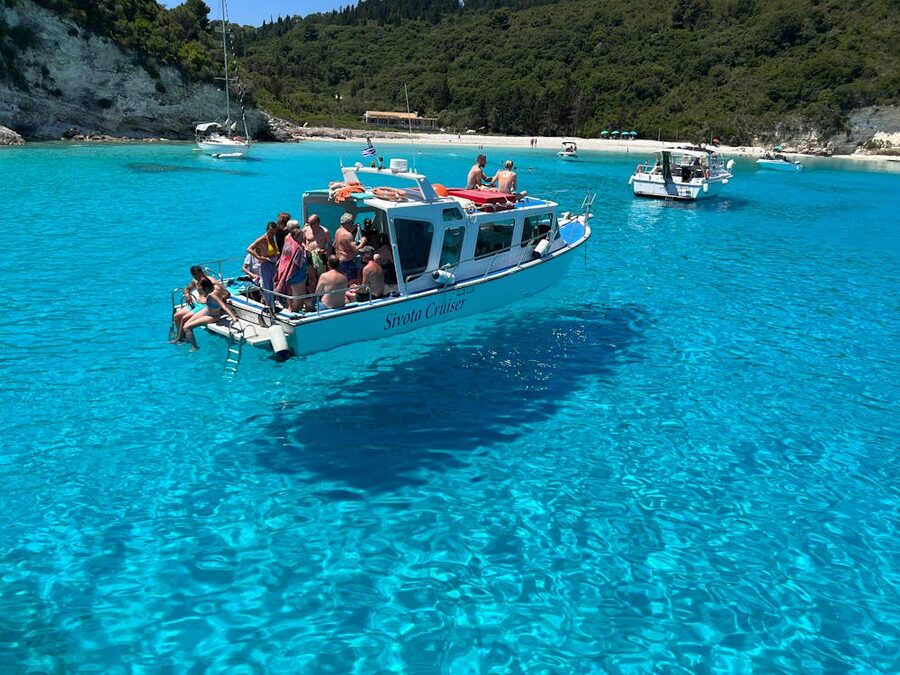
The boats are not luxury. Most are converted day-ferries, two decks, a covered saloon with a small bar, an open upper deck for sun. Capacity ranges from about 80 on the smaller wooden vessels to 250 on the bigger steel ones. Drinks are cash only on board: water 2 euros, beer 4-5, frappé 4. Lunch is not included on most operators, which is on purpose. The point is to spend an hour and a half on Paxos eating at a real Greek taverna rather than a buffet line on a boat.
One thing the cruise blogs rarely mention: this is a long sea day. Three hours south, three hours back, two hours of swimming, an hour and a half on Paxos, half an hour at the Caves. If you have ever felt iffy on a boat, take a Stugeron or Dramamine 30 minutes before boarding. The afternoon return leg is when the wind picks up and the swell turns serious. Same advice we gave on the Saronic three-island day from Athens, and it applies double here because the run is longer.
The Snorkel Mask Is the One Thing Most People Forget
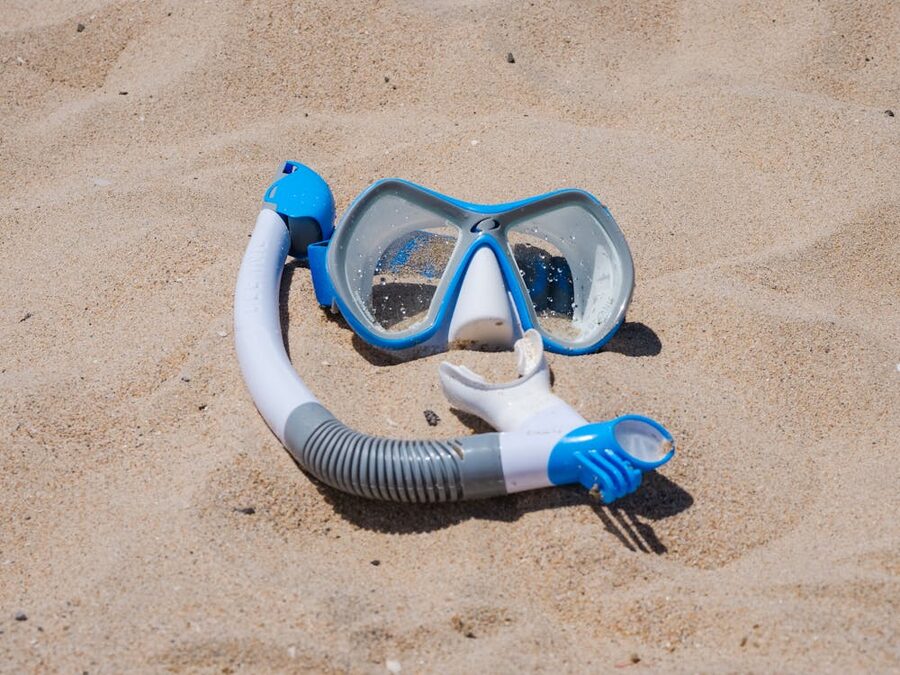
This is the one thing that separates the people who come back raving from the people who come back saying it was just a boat ride. Bring a snorkel mask.
Antipaxos has some of the clearest water in the Mediterranean. Not “clear” in the marketing-photo sense. Clear in the literal sense, where you can sit on the boat ladder and see your own shadow on the seabed twenty metres below. With a mask on, you can swim away from the boat and watch tiny fish flash through patches of sea grass against white sand. Without a mask, you are just floating in nice water. The difference is enormous.
The mask costs 8 to 12 euros at any beach shop in Corfu town. Theotoki Street and the streets running off Spianada Square have half a dozen of them. Buy a cheap one, throw it in your day bag, take it home as a souvenir or leave it for the next traveller. None of the operators rent or sell masks on board, and Antipaxos has no shops. If you forget it, you forget the swim.
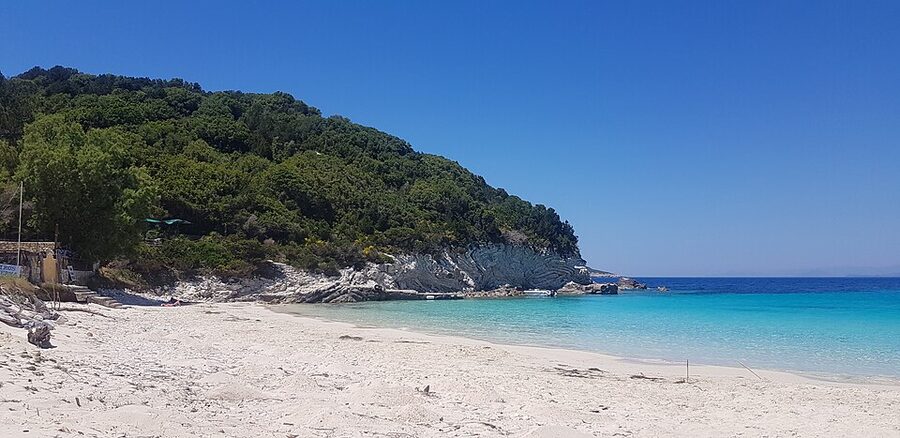
Antipaxos: Vrika or Voutoumi
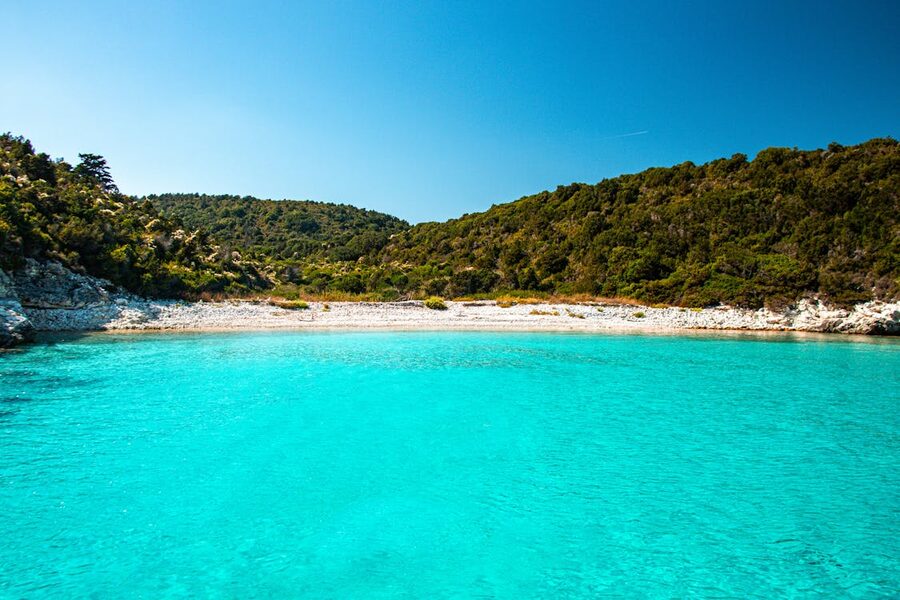
Antipaxos is small. About 5 km long, fewer than 50 permanent residents, no port that takes a real ferry. The cruise boats anchor offshore in one of two bays: Vrika on the north, Voutoumi just south of it. You usually get an hour and a half in the water here, which is the longest single stop of the day.
Vrika is the first one you hit. It is the smaller, prettier, and busier of the two. White sand sloping into pure turquoise, a cluster of small day boats already anchored when the cruise arrives, and a single taverna up on the hill behind the beach (Spiros Vrika, a real working taverna, decent simple food, expensive by Antipaxos standards because they can charge what they want). About a third of operators stop here.
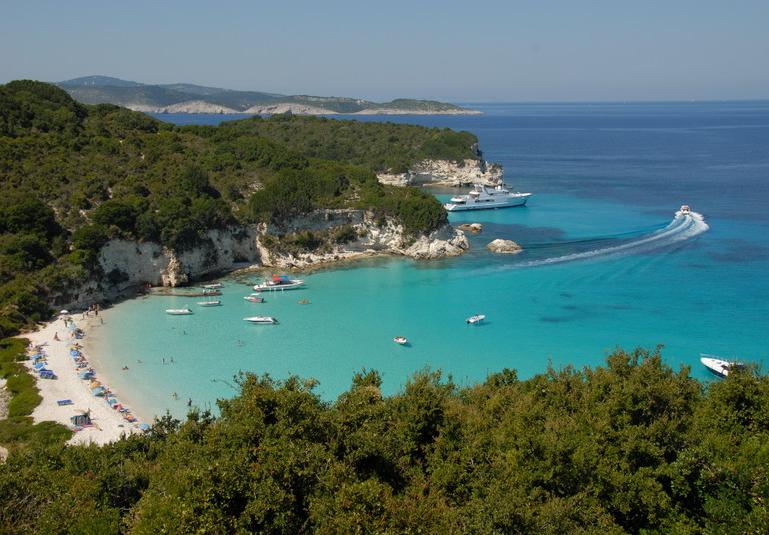
Voutoumi is the bigger bay just south. More space for the cruise boats to anchor, slightly less crowded, water arguably even clearer because the bottom is more sand than seagrass. There are two beach tavernas on Voutoumi, Bella Vista and Voutoumi Beach Bar, both with sun loungers you can rent for around 10 euros if you want shade.
Which beach you get is a function of which operator you book and what the wind is doing. Both are in the same bay system on the east coast of Antipaxos. The water is the same colour. If it matters to you, ask the operator before you book. Most will simply say “Antipaxos beach swim” without specifying.
The swim itself: walk down the boat ladder, kick out 30 metres, put your face in the water with the mask on. The seabed is white sand with patches of seagrass and the occasional rocky outcrop. Tiny fish in shoals, the odd small octopus tucked into a rock if you are lucky, no jellyfish on the days I have been. The water sits around 22 to 25 degrees in July and August, dropping to about 19 in May and October. It is not Caribbean-warm. It is Mediterranean-warm, which means a few seconds of “oh that is cool” and then you forget about temperature entirely.
Paxos: Gaios vs Lakka
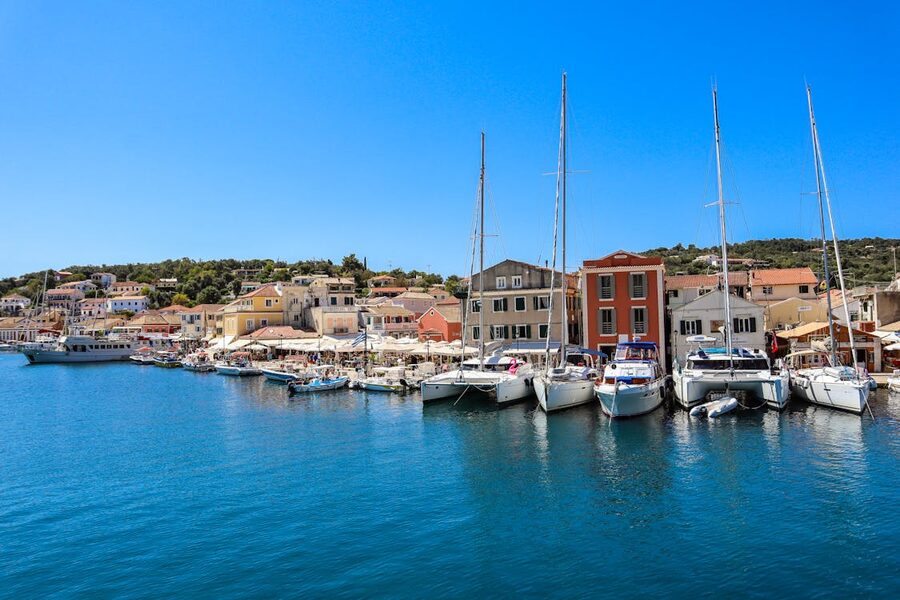
After Antipaxos the boat lifts anchor and runs north into Paxos. The island is small, mostly olive groves and limestone, and most cruises drop you in one of two villages: Gaios on the east coast or Lakka on the north.
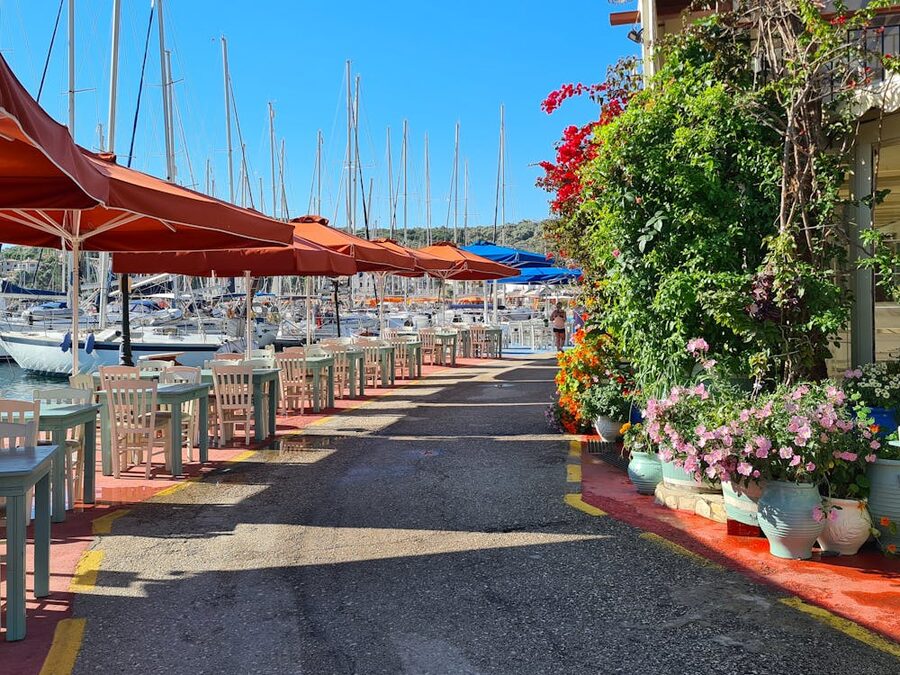
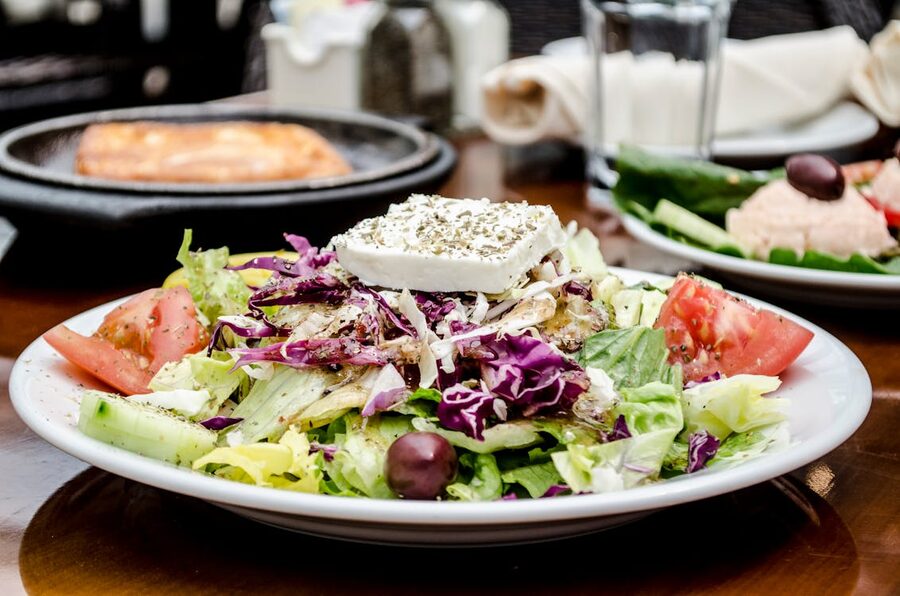
Gaios is the main town. Population about 500, a handful of cafes facing a sheltered harbour, two olive-oil shops, a small Venetian fortress on the offshore islet of Agios Nikolaos that shields the bay. Most boats from Corfu dock here. You usually get 90 minutes to two hours, which is enough for one of two things: a sit-down lunch at one of the harbour tavernas (Taka Taka and Vassilis are the locals’ picks, and yes the prices are about 30 percent higher than the Corfu mainland), or a slow walk along the waterfront with a frappé.
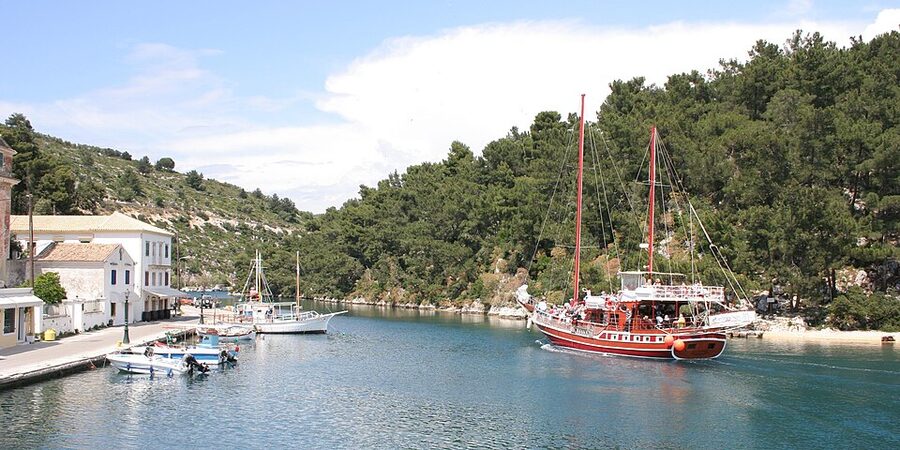
Skip the tat shops on the main lane. They sell the same olive-wood spoons you can buy on every Greek island. Do buy Paxos olive oil if you see a shop selling it directly: the island has its own micro-production, the bottles say “Paxos” in small print, and it is genuinely good. Around 12 to 15 euros for a 500ml bottle.
Lakka is the alternative. Smaller, quieter, north-coast village, about 200 residents, half a dozen tavernas around a horseshoe-shaped bay. Only a few operators drop you here, and it is what makes the Lakka-village cruise worth picking. If you have already spent a day in Corfu town and you want the opposite of busy, Lakka is the answer.
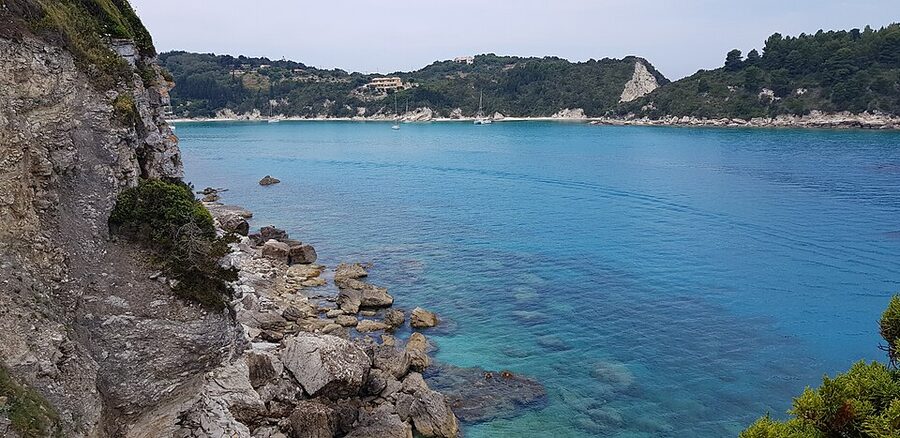
The trade is straightforward. Gaios has more places to eat and more to look at in 90 minutes. Lakka has fewer people, prettier light off the water, and a tighter walk. If you are an island-hopper who already has Greek harbour towns ticked off, take Lakka. If this is your first Greek-island day trip, take Gaios. The food on Paxos costs the same in both villages.
The Blue Caves on the Northwest Coast
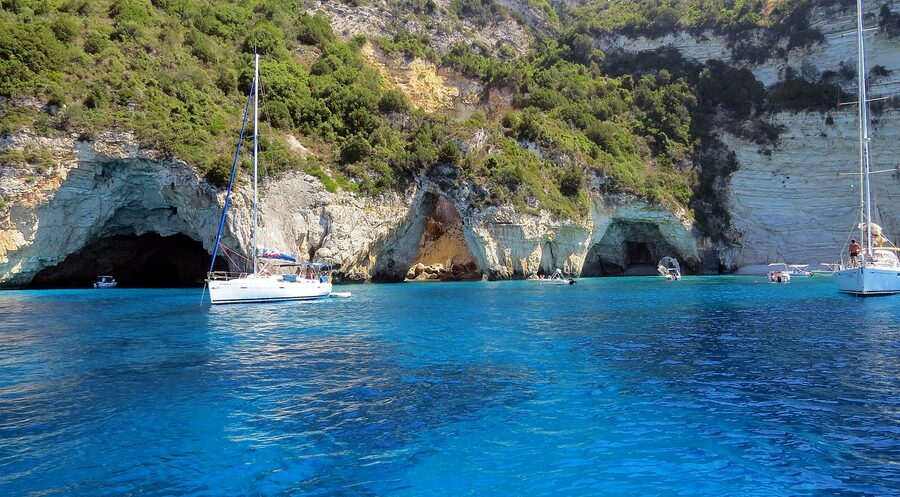
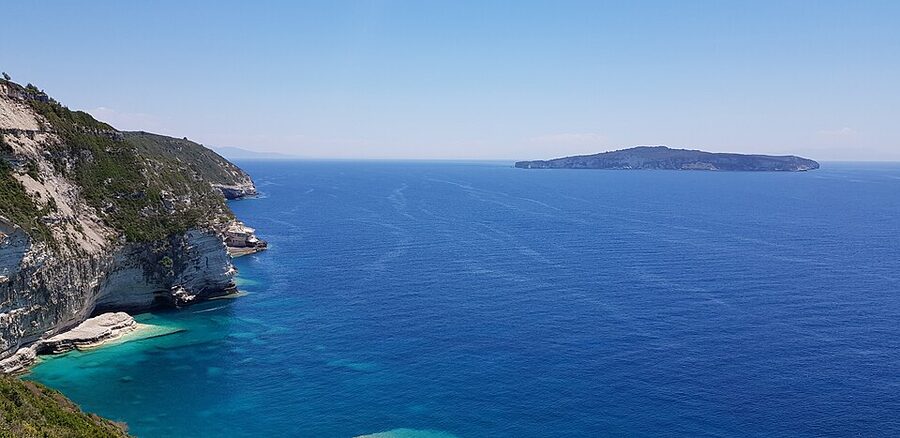
The Blue Caves are the photo, the one you bought the trip for. They sit along the northwest coast of Paxos between Lakka and the southern tip of the island, in a stretch of about 5 km of vertical limestone cliff. Inside several openings the water turns the famous electric blue. The chemistry is straightforward and worth understanding before you go.
The cave openings face west into the Ionian. The cliff walls and seabed are white limestone. When the sun hits the water at the right angle (mid-late morning is perfect), light passes down through the water, bounces off the white seabed, and comes back up through the water filtering out the red wavelengths. What is left is blue. The same physics that makes the sky blue, concentrated inside a stone room. On a cloudy day the effect is muted to a dull turquoise. On a sunny day, especially between 10am and 1pm, it goes electric.
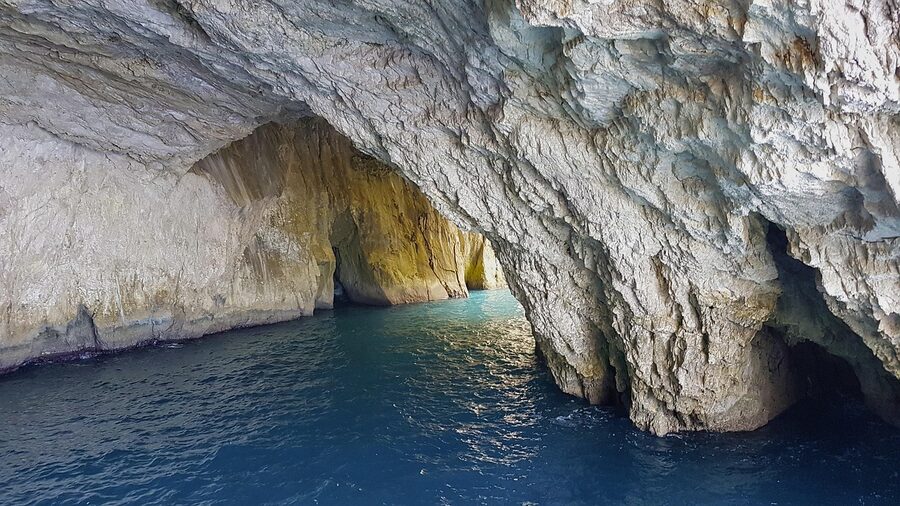
There are about a dozen named caves along the coast. The most famous are Ypapanti (the long deep one, 1200 metres according to local tradition, said to lead to the centre of the island, which is geologically nonsense but a great story) and Ortholithos (the one with the freestanding stack just outside the entrance). Cruise boats spend roughly 30 minutes here, drifting past three or four of the bigger openings, with one or two short tender runs into the caves where the swell allows.
The Blue Caves are why most operators run this loop in this order: Antipaxos first, Paxos lunch, Blue Caves on the way back. The Caves work best with the sun overhead, which is the late-morning to early-afternoon window. By 3pm the angle is wrong and the blue dulls. The flagship cruise builds its schedule entirely around hitting the Caves at the right hour, which is one reason it has such a high satisfaction rate in our database.
Sea-State Cancellations and the Backup Plan
The cruise gets cancelled when the wind comes up. This happens more often than the booking pages will admit, especially in late July, August, and the first half of September when the meltemi is in season. The Ionian gets the meltemi softer than the Aegean, but it still pushes the swell up enough that a 250-passenger boat shipping water on the upper deck is not a thing operators want to do.
Cancellation usually comes the night before or the morning of. You get a refund or a free reschedule. Operators are generally good about this. Email or text comes through your booking platform. Read it before you set your alarm.
If you get a cancellation and you were counting on this day in your itinerary, here is what to do. The standard backup is to take the regular ferry to Paxos and back. The Kamelia Lines hydrofoil from Corfu’s New Port runs 60 to 90 minutes one way, costs about 25 to 30 euros each way, and lands you in Gaios. You miss Antipaxos and you miss the Blue Caves. But you get the lunch and the village. It is a respectable B-day if your A-day was the cruise.
If you have flexibility on dates, rebook the cruise rather than substitute the ferry. The cruise is what you came for. Paxos by itself, without Antipaxos and without the Blue Caves, is just a small Greek village. Pleasant, but not the experience.
Ferry vs Cruise: When the Ferry Wins
Some travellers ask whether the ferry plus a private water taxi makes more sense than the cruise. Almost never, but there is one case.
The cruise is the right call if you have one day and you want all three: Antipaxos beach swim, Paxos lunch, Blue Caves. The economics are unbeatable. 50 to 80 euros for nine hours of boat time, three stops, a guided cave run. You cannot replicate it independently for less.
The ferry plus a hire boat from Gaios is the right call only if you are staying on Paxos for two or more nights. From Gaios you can hire a small day boat (no licence needed for the smaller engines, around 80 to 120 euros for the day) and run yourself up to the Blue Caves in the morning, swim at Antipaxos in the afternoon, and skip the cruise entirely. This gives you the freedom to time the Caves visit perfectly and stay an extra hour at the beach. But you need the overnight to make it work, and you need the confidence to handle a small boat in open Ionian water. If either is missing, take the cruise.
What to Bring
The list is short. The omissions are what cost you the day.
Snorkel mask. Already covered above. The single most important thing in your day bag.
Swimsuit under your clothes. The boat changing facilities are a single tiny toilet for 200 passengers. The line is 15 minutes deep when the boat anchors. You do not want to be in that line. Wear it under.
Reef shoes or aqua socks. Antipaxos has sandy bays but a few rocky entry points. Voutoumi has fine pebbles. The boat ladder is metal and gets hot. Aqua socks for 10 euros from any Corfu beach shop solve this whole category of problem.
A hat and SPF 50. The upper deck has no shade on most boats. The Ionian sun in July at noon is genuinely brutal. The boat shop sells sun cream at marked-up prices.
Cash. About 40 to 60 euros per person beyond the ticket. Lunch on Paxos (15-25 euros), drinks on the boat (about 10-15 euros across the day), the snorkel mask if you have not bought it yet (8-12 euros), and a tip for the crew if they have looked after you (5-10 euros). Cards work in Gaios tavernas but not always in the smaller Lakka places, and not at all on the boat bar.
Best Time of Year
The cruise runs roughly May through October. The shape of the day stays the same. The experience varies a lot.
May and early June. Best window. Water temperature 19 to 21 degrees, warm enough to swim but cooler than peak. Boats at 50 to 70 percent capacity. Wind less likely. The Blue Caves still work because the sun angle in May is high enough by 11am. The trade is the boat company has not yet hit cruising rhythm and the lunch tavernas on Paxos run shorter menus.
Late June through mid-September. Peak. Water at 23 to 26 degrees. Boats full. Meltemi wind kicks in some afternoons, especially August. Cancellation risk goes up sharply in August. The light is hard and bright. Photographs from the deck come out almost too contrasty unless you wait for late afternoon.
Mid-September through mid-October. Second-best window. Water still warm into early October. Wind drops back. Day-trip volume falls. The lunch tavernas are still running their full summer menus. If you can be flexible on dates, this is when I would book.
November to April. Most operators stop running. A handful of off-season cruises happen on demand, but the Blue Caves do not work as well in low winter sun and the swim stop becomes pointless. Skip.
The Cruises I Would Actually Book
I have looked at every Corfu-to-Paxos cruise in our review database. Three sit clearly above the rest. They cover the three main ways to do this trip.
1. From Corfu Day Cruise to Paxos, Antipaxos and the Blue Caves (around $58)
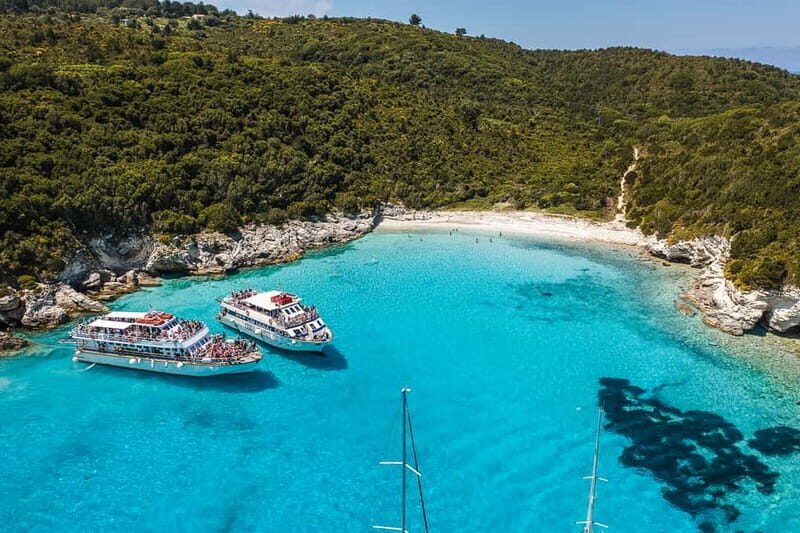
This is the most-booked Corfu-Paxos cruise on the market and the safe pick for a first-timer. The boat is modern and comfortable, the crew genuinely friendly, and the timing of the Blue Caves visit is the most reliable in the fleet. Our full review goes into the lunch logistics and the upgrade options. The trade is sheer scale: when the boat is full this can feel like a packaged day. If you want something quieter, scroll down.
2. From Corfu Antipaxos and Paxos Blue Caves Boat Cruise (around $53)
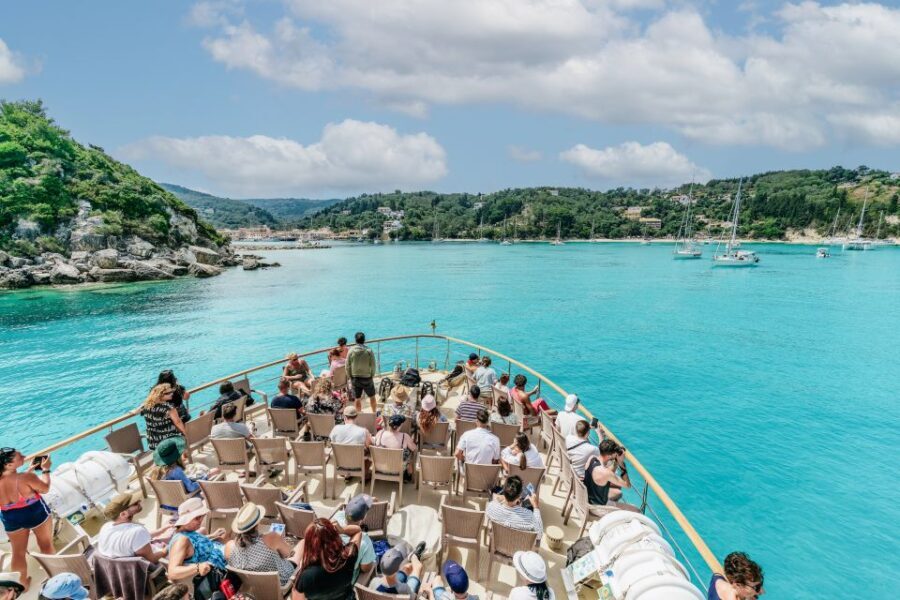
This one consistently rates higher in our database than the flagship despite being cheaper, and the reason is the swim stop. Passengers report two full hours at Antipaxos versus the flagship’s hour and a half, plus a more generous Blue Caves window. Our review walks through what is and is not in the ticket and how the operator differs from the flagship in the small things (drink prices, music on the upper deck, language of the commentary). My pick if you care more about water time than boat polish.
3. Paxos, Antipaxos and Blue Caves with Lakka Village from Corfu (around $54)
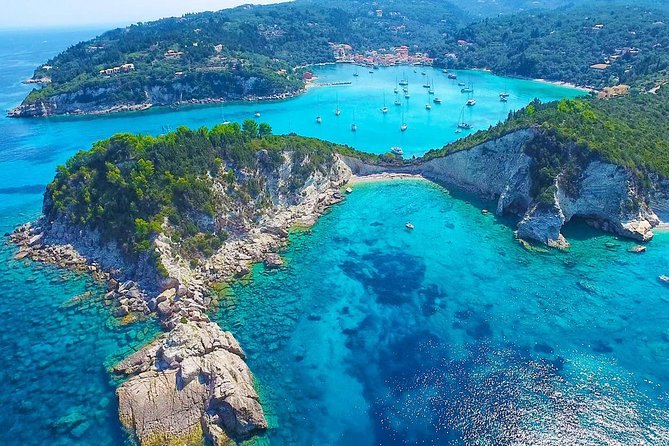
Pick this one if your Corfu trip already includes a busy harbour-town day and you want the opposite of crowds. Lakka has six tavernas and 200 residents and a horseshoe bay full of yachts. Our review covers the operator and the day flow. One passenger in our database described the water as the most blue she had ever seen anywhere, which lines up with the small-boat advantage: the Lakka cruise is a smaller vessel with fewer passengers, which means smaller anchorage groups at Antipaxos and a more intimate Blue Caves run. The trade is fewer departure days. Book early.
The Common Mistakes
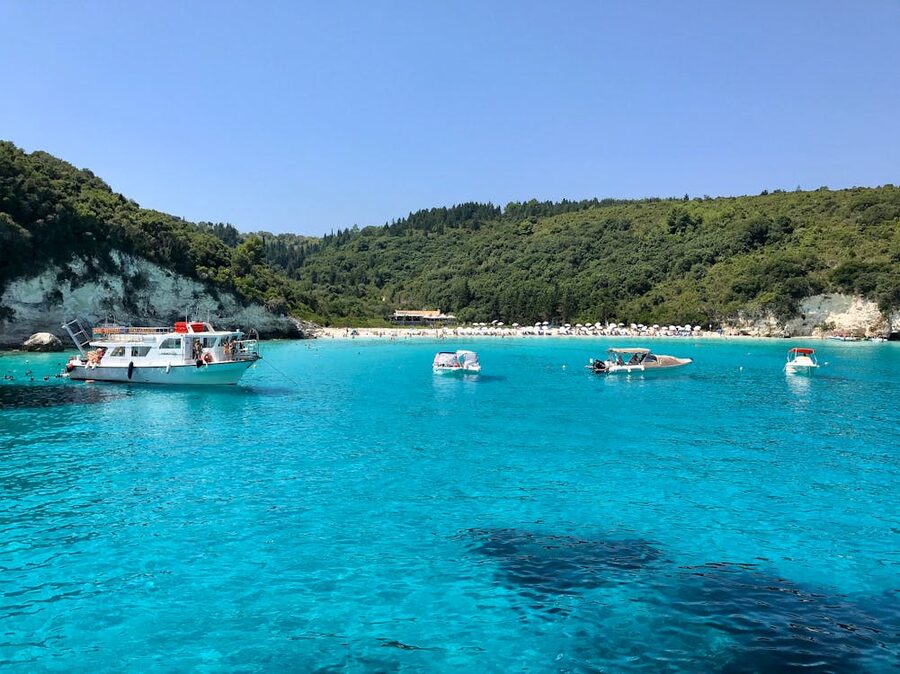
Five things I see people get wrong on this trip, in rough order of how often.
Forgetting the snorkel mask. The single biggest mistake. Already covered. Buy one in Corfu town before you board.
Booking peak August and expecting flat seas. The meltemi is real. Cancellation risk in August is meaningfully higher than in May or September. If you can flex by a week, book outside August.
Trying to do a sit-down lunch on the 90-minute Paxos stop. A proper Greek-island lunch with a starter, a main, wine, and dessert needs two hours and a relaxed waiter. You have neither. Order one main, one salad, one drink, eat fast, leave 15 minutes for the walk back. Or just get a souvlaki from the takeaway place near the harbour and sit on the quay.
Standing on the upper deck for the full Blue Caves run. The interior of the caves shifts the light dramatically and the boat moves quickly through the openings. Move to the lower deck or the side rail near the waterline for the actual cave moments. The view is better from there. Save the upper deck for the cliff approach.
Skipping seasickness tablets. The afternoon return is when the swell builds. About one in twenty passengers ends up green on the back deck. Take a Stugeron 30 minutes before boarding and forget about it.
Pacing the Cruise Into a Bigger Corfu Trip
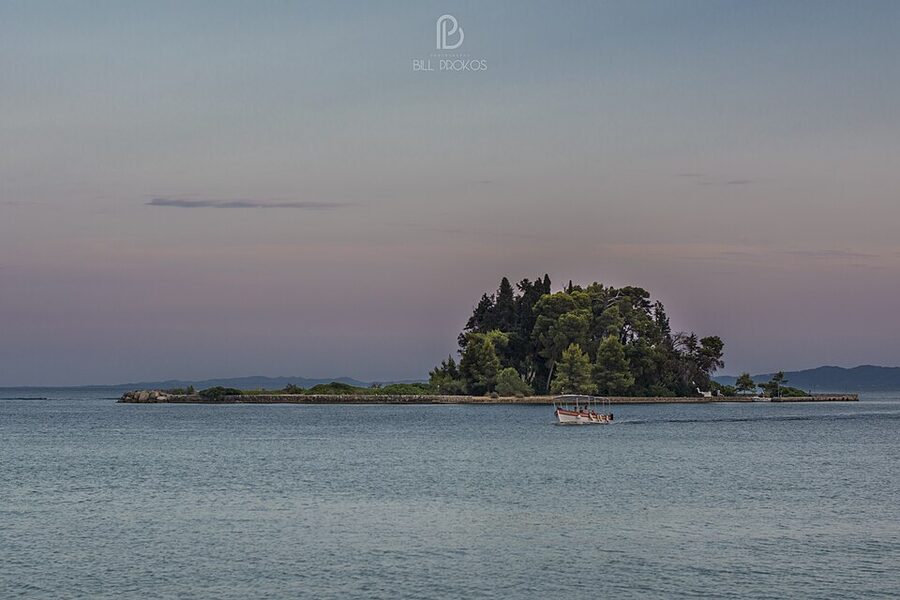
The Paxos cruise is a big day. Nine hours, mostly on the water, sun and salt and a boat ride home. Plan a quieter Corfu day before and after. The morning of departure I would not stack a 6am wake-up after a late night out in Corfu town’s old quarter. The day after, plan something gentle: a town walk, lunch at one of the harbour tavernas, an early evening on the Liston.
If you are doing the broader Greek-islands grand tour and the Corfu cruise is one stop in a longer plan, the rhythm of the Paxos day pairs well with the cruise-day formula we use elsewhere. The pace and intensity sits between the long Santorini volcanic islands cruise, which is a half-day, and the bigger sailing-day shape of the Santorini catamaran day. The Antipaxos beach swim plays the same role as the swim stops on the Crete Balos and Gramvousa cruise: that is the moment everyone remembers later, more than the boat itself. The same swim-stop-as-the-real-event pattern shows up on Mediterranean day boats elsewhere, like the Palma catamaran day in Mallorca and the western coast of Ibiza on the small-boat cruise; what the Corfu day adds is the Blue Caves spectacle on top of the swim.
If your Greek itinerary also passes through Athens, the Corfu day fits between the Saronic three-island day from Athens (similar shape, more cultural, less swim-focused) and the dramatic mainland trips. The Meteora monasteries day is the inland counterweight to the Paxos day, and pairing the two on a 10-day Greece itinerary is a good rhythm.
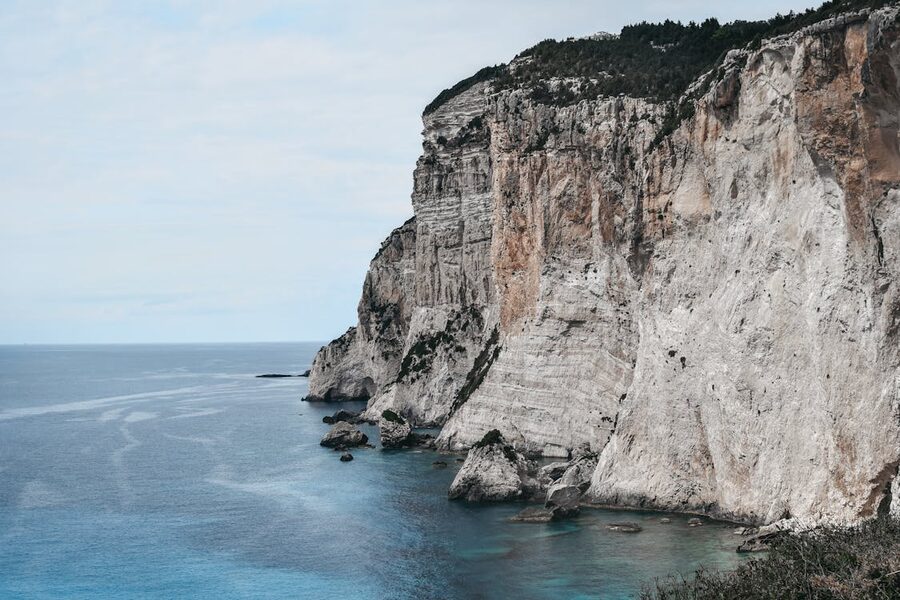
For Greek-island cluster planning, our other Greece guides cover the rest of the obvious island days: the Balos lagoon and Gramvousa cruise on Crete is the closest analogue to the Paxos day in shape and intensity, the Spinalonga island and the eastern Crete day works for travellers focused on history rather than swimming, and the two Santorini cruises cover the volcanic-island and the catamaran-day formats. If you are working a full Athens and islands trip, our Acropolis combo guide, Cape Sounion sunset guide, and Athens food walking guide handle the city side.
Worth It or Not
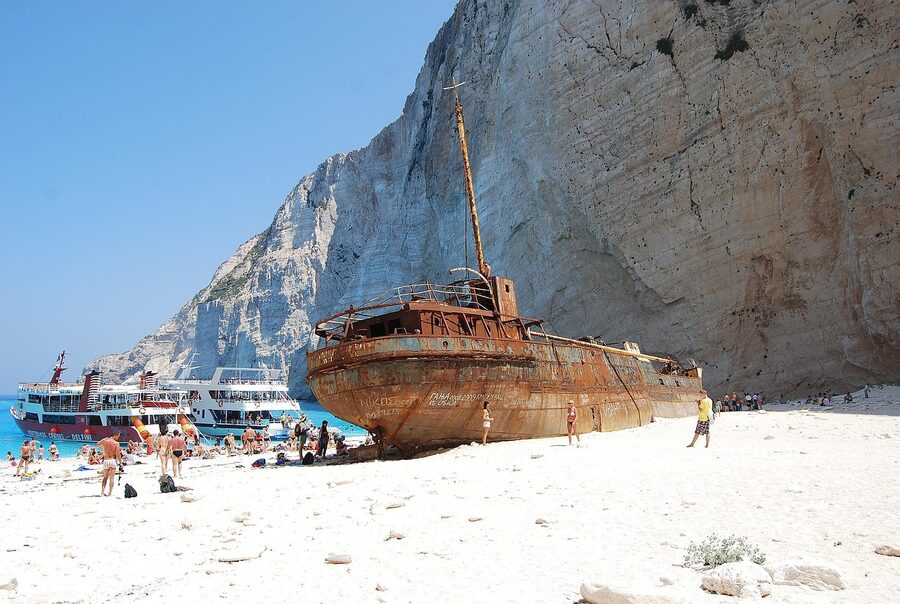
Yes. With one caveat.
It is worth it if Corfu is your only Ionian stop, you have a clear weather day, and you bring a snorkel mask. You get Antipaxos, Paxos, and the Blue Caves in nine hours for under 70 euros. The price-per-experience is unbeatable in this part of Greece, and there is no realistic way to assemble the same day independently for less.
It is not worth it if you have already overnighted on Paxos or Antipaxos. Day cruises are sketchy by definition: you get an hour and a half on the prettiest beach in the Ionian, when what the place actually rewards is two days. If you have the time to overnight, take the ferry and stay. If you have one shot, take the cruise.
The simple version: book the flagship if it is your first Corfu trip, book the smaller-boat alternative if you want more water time, book the Lakka option if you want quiet. Bring the mask. Take the seasickness tablet. Eat fast on Paxos. Move down to the side rail for the Blue Caves. The rest takes care of itself.
More Greece Guides Worth a Look
If the Corfu day works for your itinerary, the rest of our Greece cluster covers the other obvious shapes. The Crete Balos lagoon cruise is the closest analogue to this day, similar 9-hour rhythm and a comparable swim stop, and the Santorini catamaran sunset cruise is the high-end alternative. For sibling guides on the same Greek-islands round we are publishing, take a look at the Rhodes-to-Symi speedboat day if you are heading to the Dodecanese, or the Kos three-island cruise if you are based further east.