
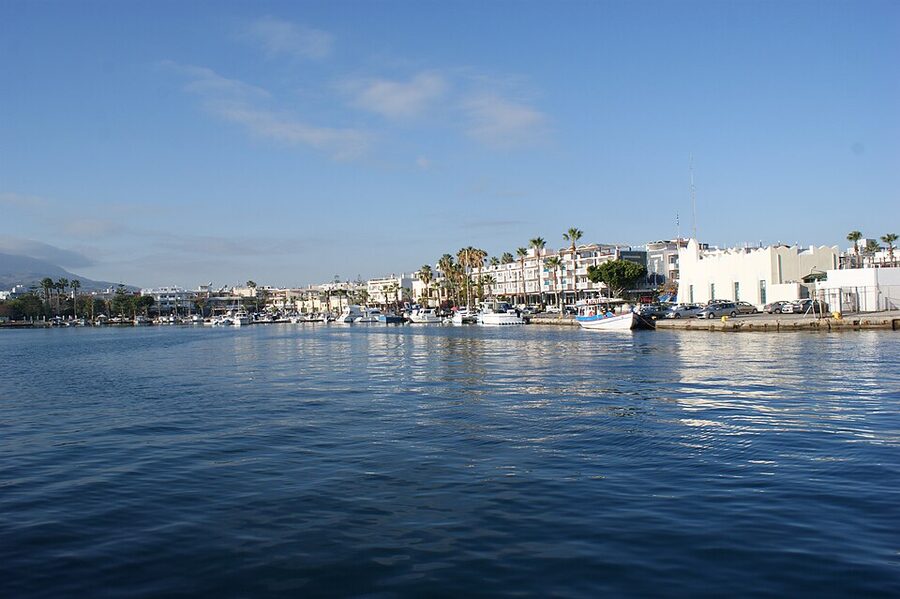
You can stand on the seafront in Kos Town, look across a thin stretch of Aegean, and see the lights of Bodrum in Turkey come on at dusk. Four kilometres of water. That is closer than most people think, and it tells you something about where this island sits. Kos is a Dodecanese border post, not a Cyclades postcard, and the standard 3-island day cruise reflects that. You are not sailing to Mykonos lookalikes. You are visiting Pserimos, Plati, and Kalymnos, three small Greek islands almost no one writes about, plus an active volcano on Nisyros if you pick the alternative route. This is a guide to actually booking the day.
- In a Hurry? My Top 3 Picks
- The Three Islands, Briefly
- The Tours I Would Actually Book
- 1. Kos: Full-Day Boat Cruise to 3 Islands (around )
- 2. From Kos: Nisyros Volcano and Panagia Spiliani (around )
- 3. Kos: 3-Island Pirate Cruise with Lunch and Waterslide (around )
- What the Day Actually Looks Like
- The Sponge-Diving Story on Kalymnos
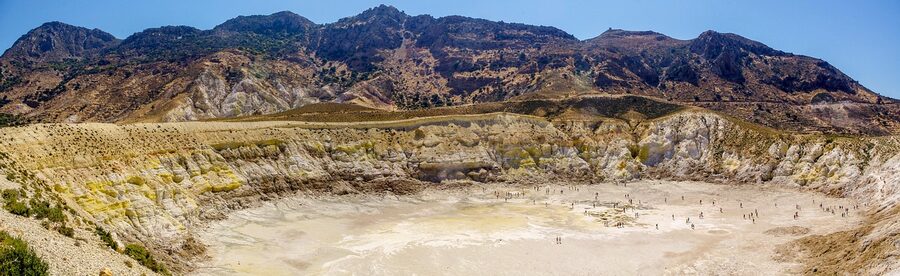
- The Volcano Alternative on Nisyros
- The Bodrum Day-Trip Option
- Vathi Versus Pothia: Which Side of Kalymnos?
- What to Bring
- Sea State, Cancellations, and the Meltemi
- Kalymnos for Climbers
- What I Would Do With a Single Day
- Booking Tips, in Order of Usefulness
- If You Have Two Days
- How This Compares to Other Greek Cruise Days
- Worth a Last Look
- More Greek Islands Worth Pairing With This Day
In a Hurry? My Top 3 Picks
Kos: Full-Day Boat Cruise to 3 Islands, around $35. The flagship of the route. Departs Kos Town harbour around 9am, calls at Kalymnos, Plati, and Pserimos in some order, lunch on board, swim stops, back at the quay by 5pm. The most-booked option on Kos by a wide margin. Check availability and times.
From Kos: Nisyros Volcano and Panagia Spiliani, around $37. Pick this if you would rather walk inside an active volcanic crater than swim a third time. Eight hours, longer crossing, full visit on Nisyros including Mandraki village and the Stefanos crater floor. Different format, completely different day. See dates and price.
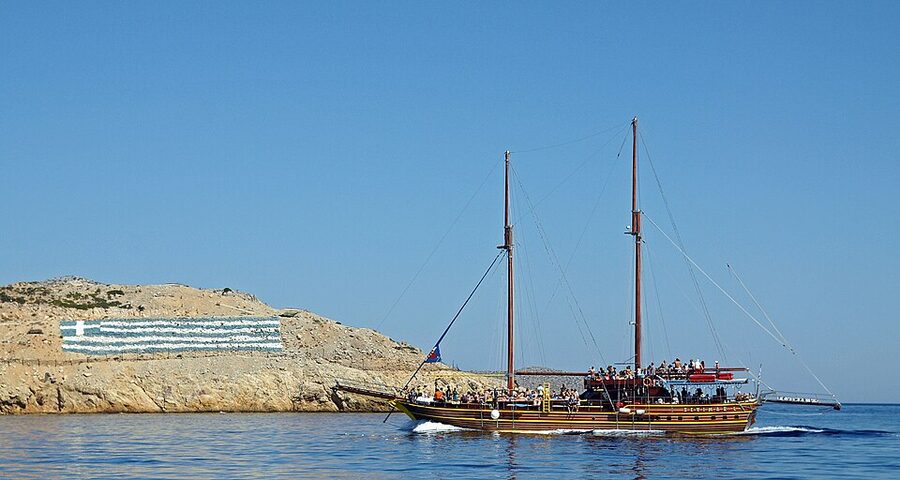
Kos: 3-Island Pirate Cruise with Lunch and Waterslide, around $29. The family pick. Same three-island circuit, but on a galleon-themed boat called the Captain Hook with a deck waterslide and themed photo points. Kids are the target market. Cheapest of the three. Check the listing.
The Three Islands, Briefly
Most people booking this cruise have not heard the names before. That is part of the appeal. They are not Santorini repeats. Each one is small, quiet, and does one thing well.
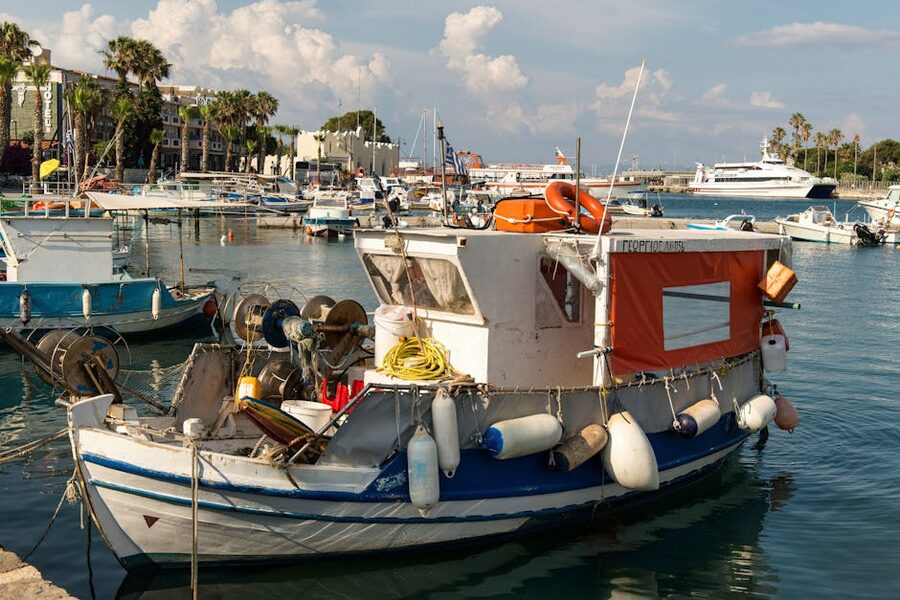
Pserimos is a sand-bottom beach island. Population about 30 in winter, a few hundred in high summer when the tavernas reopen. You drop anchor in the bay, walk straight onto a pale yellow beach, and have an hour or so to swim or sit at one of the four or five waterfront cafes. The water is shallow for a long way out. Children friendly.
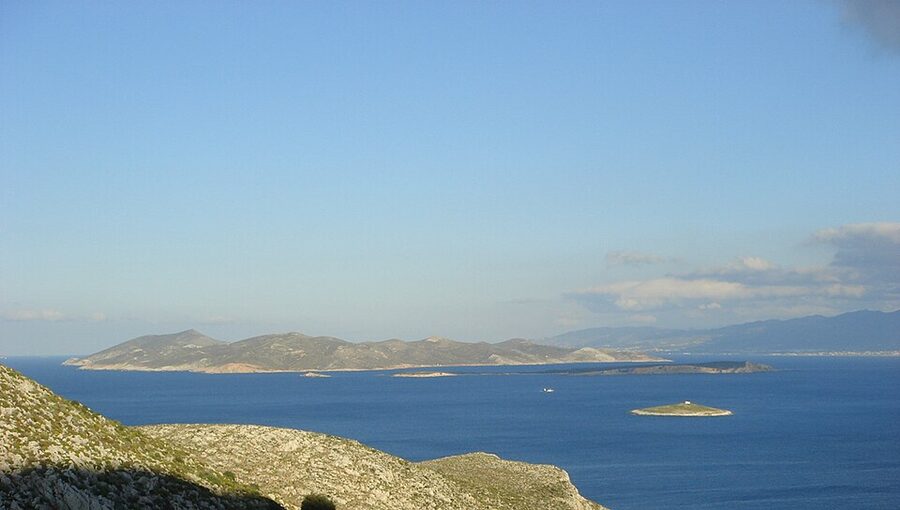
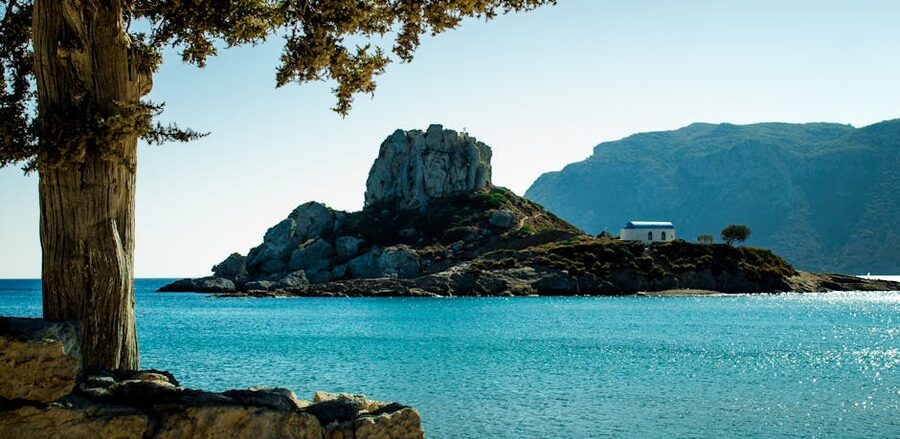
Plati is the swim stop. Not really an island, more an islet between Kos and Kalymnos. Nobody lives there. The boat anchors close enough that you can jump straight off the deck. The water reads as a luminous turquoise on a sunny day because the bottom is white sand, the depth is shallow, and the seabed is uniform. It looks fake from above. It is not fake.
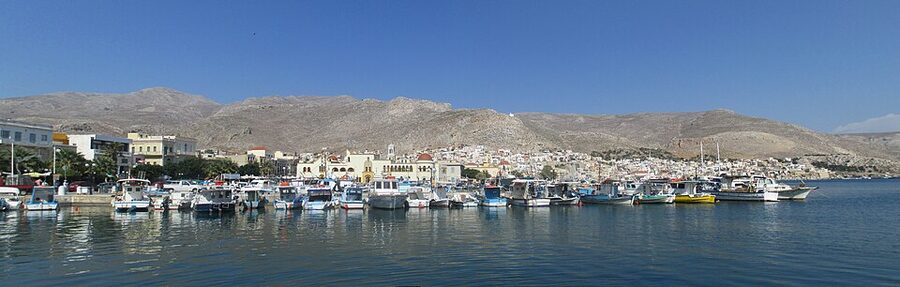
Kalymnos is the headline. The largest of the three by a long way. About 16,000 residents, a real working town called Pothia at the southern end, and a 2,000-year sponge-diving heritage that is still alive. Most cruises put in either at Pothia or, on the smaller boats, at Vathi, a fjord-shaped valley on the east coast. You get an hour, sometimes 90 minutes. Walk around. Eat ice cream. Buy a sponge if you want one. Look at the limestone cliffs that have made Kalymnos a global rock-climbing destination over the past 25 years.
The Tours I Would Actually Book
I have looked at the six main listings on the Kos cruise market. Three stand out for very different reasons. Pick by the shape of your day, not by the headline price.
1. Kos: Full-Day Boat Cruise to 3 Islands (around $35)
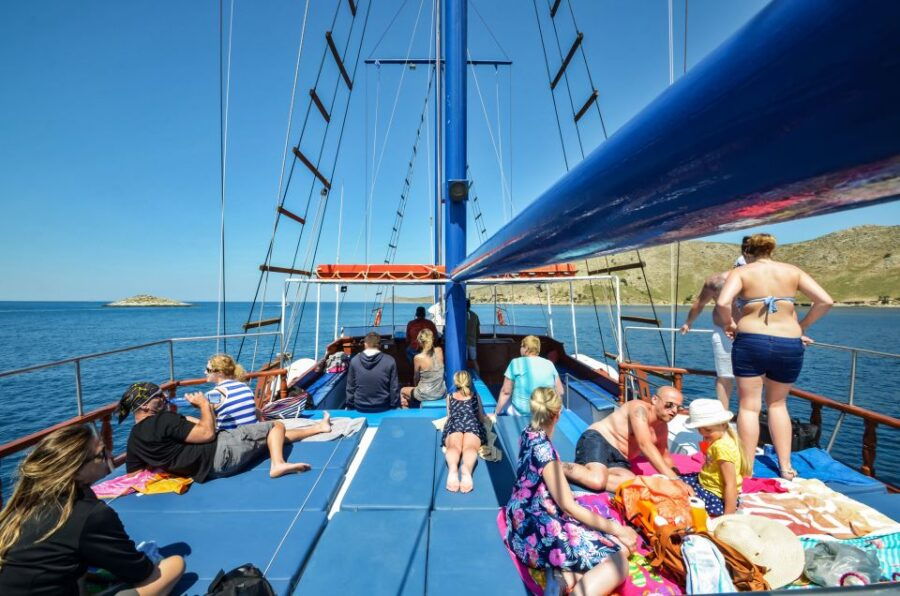
This is the safe pick if you are doing the cruise once and you want the full sweep. Our full review covers which captain runs the most generous lunch buffet and what the swim stops actually look like in mid-July versus shoulder season. The crowd here is mixed. Couples, families, retired groups. The headline weakness is queue size on Pserimos in August, when three boats can land in the same hour and the beach gets busy.
2. From Kos: Nisyros Volcano and Panagia Spiliani (around $37)
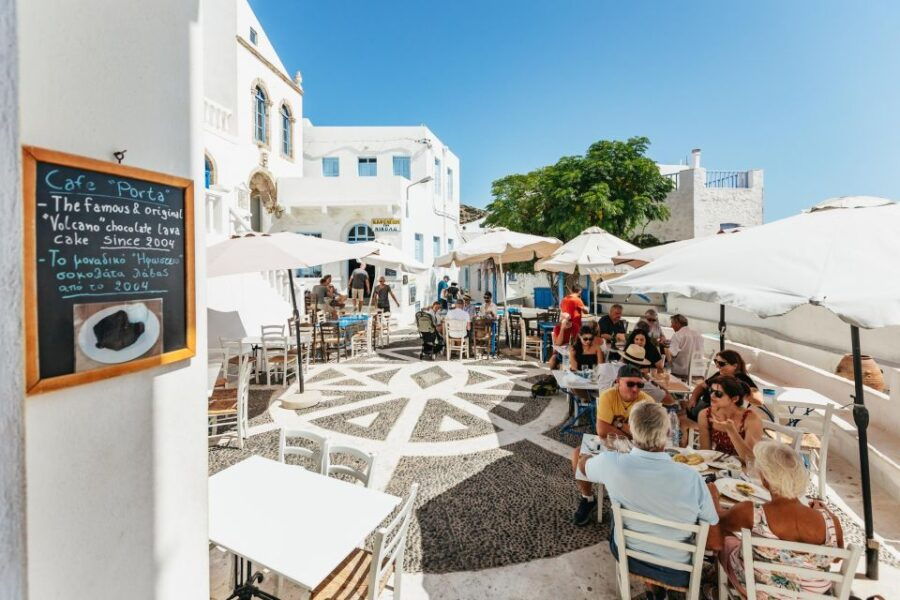
Pick this if you have a free day and you have already done a Greek beach cruise. Our review walks through the bus timing on Nisyros, what the Mandraki tavernas serve at lunch, and how steep the descent into the caldera actually is. The format is completely different. Less swimming, much more walking, and the surprising fact of standing inside an active fumarole field is the kind of thing you talk about long after the holiday.
3. Kos: 3-Island Pirate Cruise with Lunch and Waterslide (around $29)
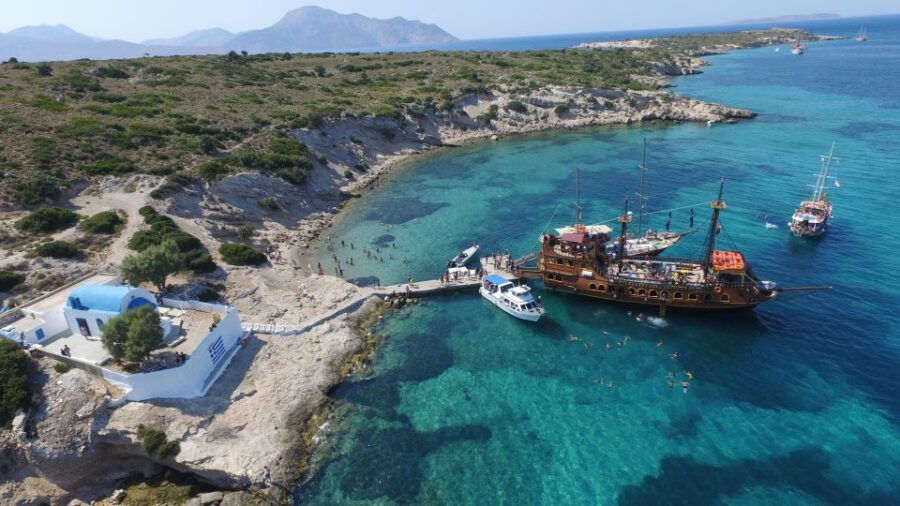
Book this if you have kids between roughly five and twelve. Our review covers what the lunch actually looks like and how busy the waterslide gets during the swim stops. The trade is the noise level. Pirate music plays through the deck speakers most of the day. Adults travelling without kids should look at the flagship or the wooden ship variant instead. There is also a sister listing, the wooden ship Captain Hook, if you prefer a slightly slower setup.
What the Day Actually Looks Like
The shape is roughly the same on every operator. Here is the rhythm of a flagship full-day in mid-summer, hour by hour.
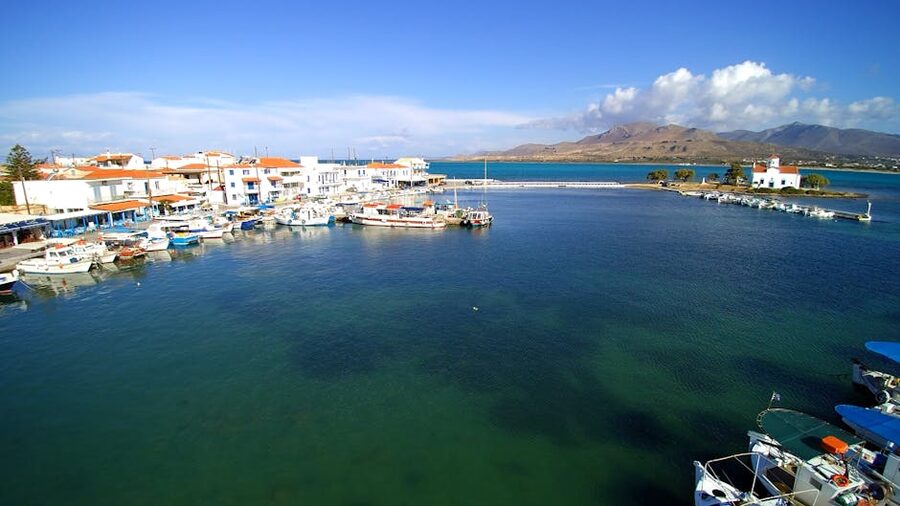
Boarding starts at about 8.40am. Most operators ask you to arrive 30 minutes ahead of sailing. The boat leaves between 9am and 9.30am, swings around the harbour mouth, and sets a course north. The first crossing is about 75 minutes if you go to Kalymnos first, less if the captain swings into Plati for a quick swim warm-up. Captains rotate the order of the stops to spread out the boat traffic, so do not panic if your morning starts at the swim stop instead of the headline island.
By 11am you are usually in Kalymnos, either in the deep horseshoe of Vathi or at the main quay in Pothia. You get one hour. Walk in, eat something, look at the boats. Back at 12pm. Lunch is served as the boat moves to Plati. The standard menu on most cruises is grilled chicken or pork souvlaki, salad, tzatziki, and bread. Vegetarians get beans and dolmades. Drinks at the bar are bought separately and most cocktails are around five euros.
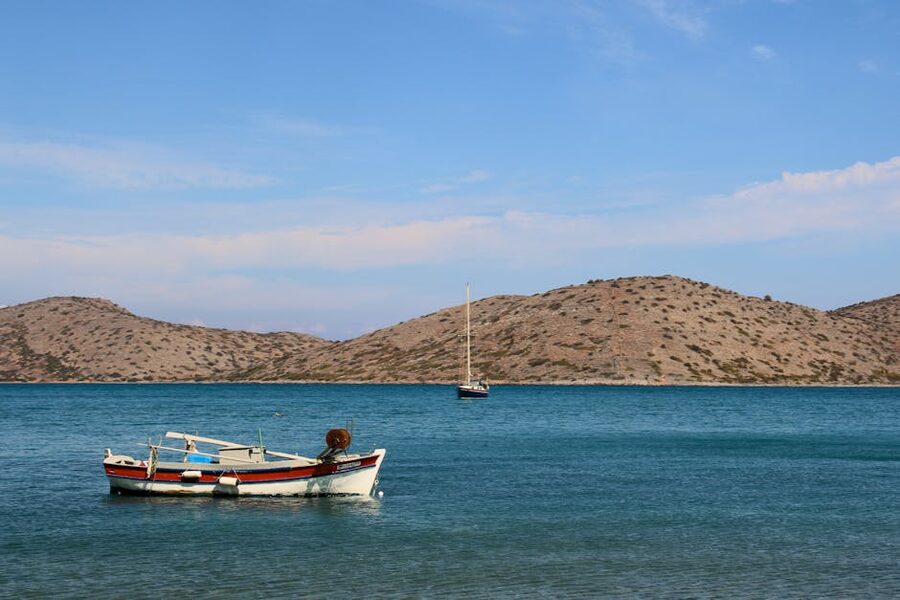
Plati from 1pm to 2.15pm. This is the swim stop and most people stay in the water for an hour. The slide on the back of the family boats opens here. Steps off the side on the older traditional cruisers. Drinks bar runs cocktails through this stretch.
Pserimos from 2.30pm to 3.45pm. The longest land stop. You go ashore by tender and have time to either swim or eat ice cream at the cafes. Both. Probably both. Some captains run a quick stop at the dolphin feeding ground on the way back, where wild dolphins sometimes show up around the fish farms. No promises but it does happen.
Back in Kos Town between 5pm and 5.30pm. Allow yourself a few minutes to dawdle off the boat. The quay can get crowded with three or four cruises offloading at once.
The Sponge-Diving Story on Kalymnos
This is the part most quick guides skip. Kalymnos is not just another stop. It is the historical heart of the Greek sponge-diving industry, and the trade is still alive.
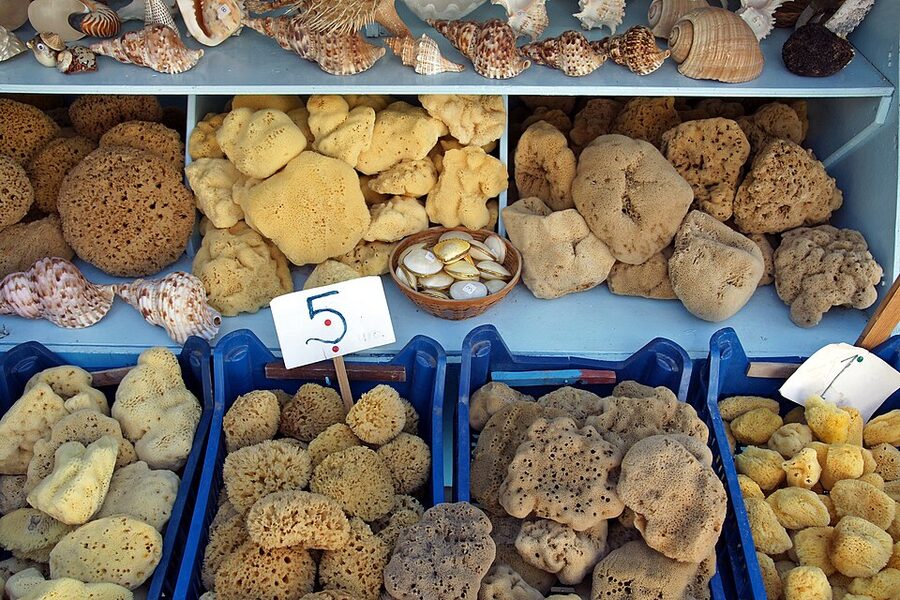
The short version. Kalymniotes have been diving for sponges in the eastern Mediterranean since at least the second century BC. By the late 1800s the island had a fleet of around 300 sponge boats and several thousand divers, working the coasts of Libya, Egypt, Crete, and the Dodecanese for six months a year. A skin-diving man went to 30 metres on a single breath, weighted with a flat marble called a skandalopetra. Then in the 1860s the rubber suit and surface-supplied air arrived and the depths went to 60, then 70 metres. So did the casualty rate. Decompression sickness was poorly understood and many men came home crippled.
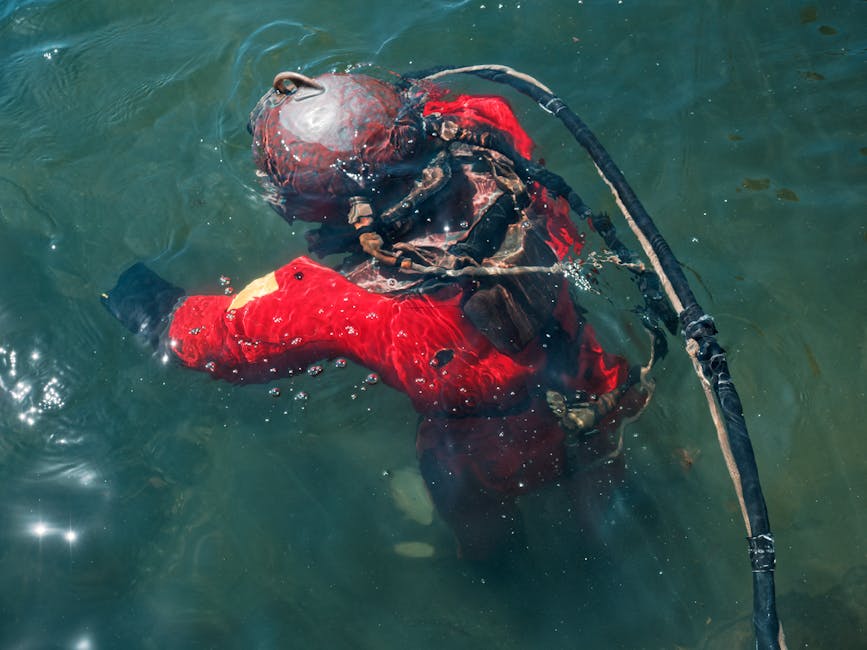
The trade nearly died in the 1980s when a fungus wiped out the eastern Mediterranean sponge beds. It came back. Today there are roughly 30 active sponge boats based on Kalymnos, most owned by family operations going back four or five generations. Some take divers as far as the Libyan coast for a season, others work closer to home. The annual sponge festival in late summer is a real thing, with the boats blessed at the quay before they head out for the season.
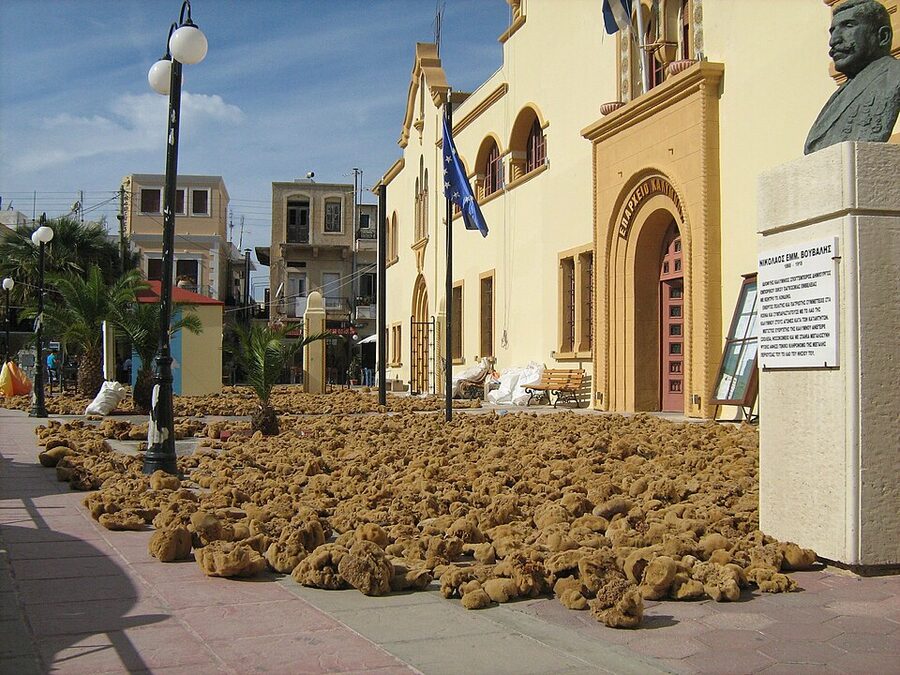
If you have a sponge-diving interest, the smaller cruise that anchors at Pothia and Pserimos with optional transfer spends longer on Kalymnos than the flagship and has the Pothia waterfront within walking distance of the boat. The flagship sometimes uses Vathi instead. Beautiful in its own way, but you do not get the full Pothia harbour walk. Choose your cruise based on which side of Kalymnos you want.
The Volcano Alternative on Nisyros
Worth knowing in detail. Nisyros is a separate cruise, longer, less crowded, and the geology is on a completely different level.
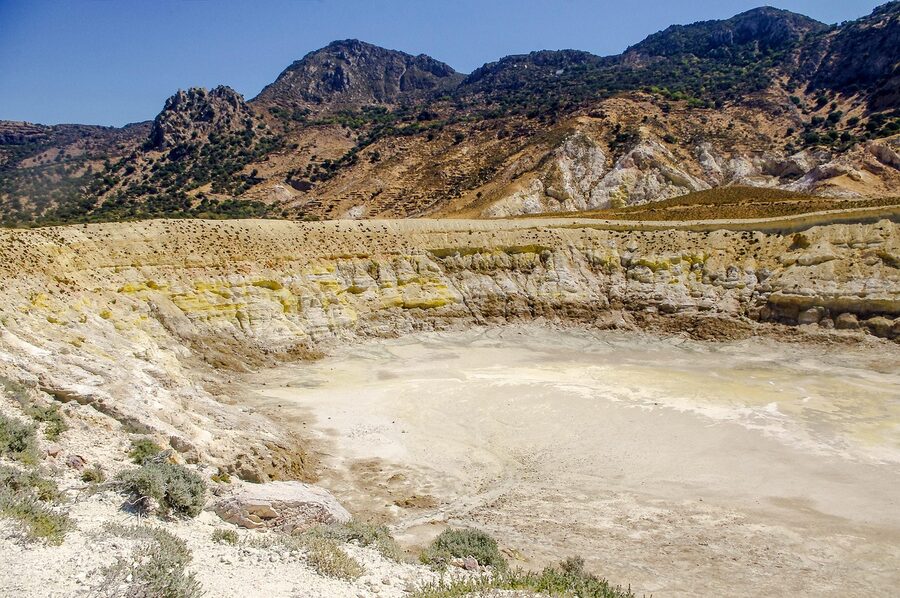
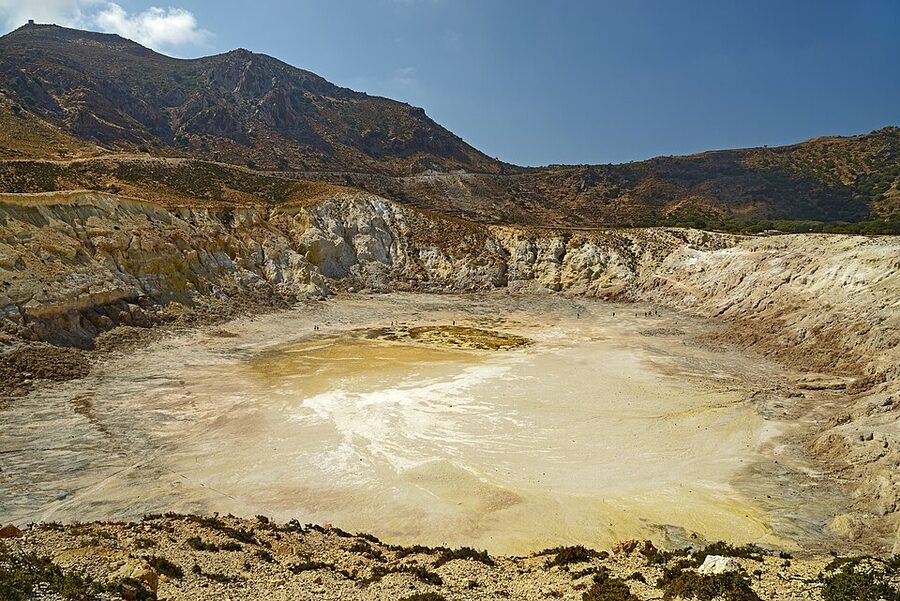
The Nisyros boat leaves Kos around 9am and crosses to Mandraki, the main village, in a bit under two hours. From there, a coach ride takes you up the rim of the caldera and down into Stefanos, the largest of the active fumarole craters. You walk on the crater floor. The ground is cracked, hot in places, and smells of rotten eggs from the sulphur. Children love it. Adults love it. Geology students love it most.
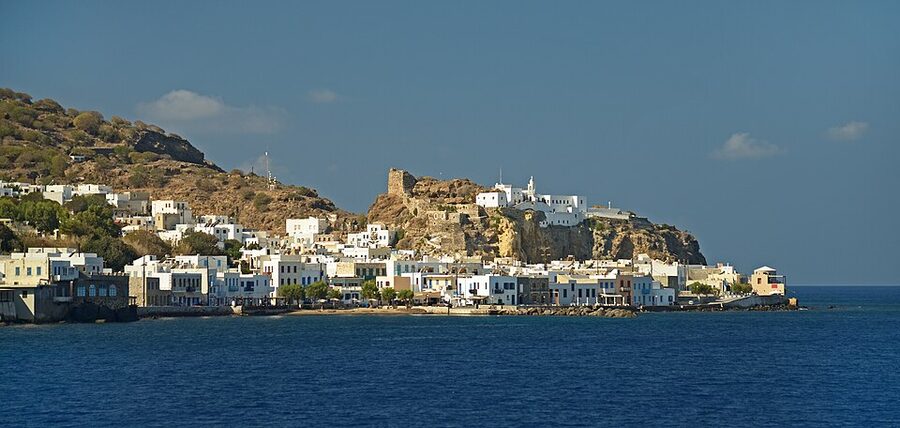
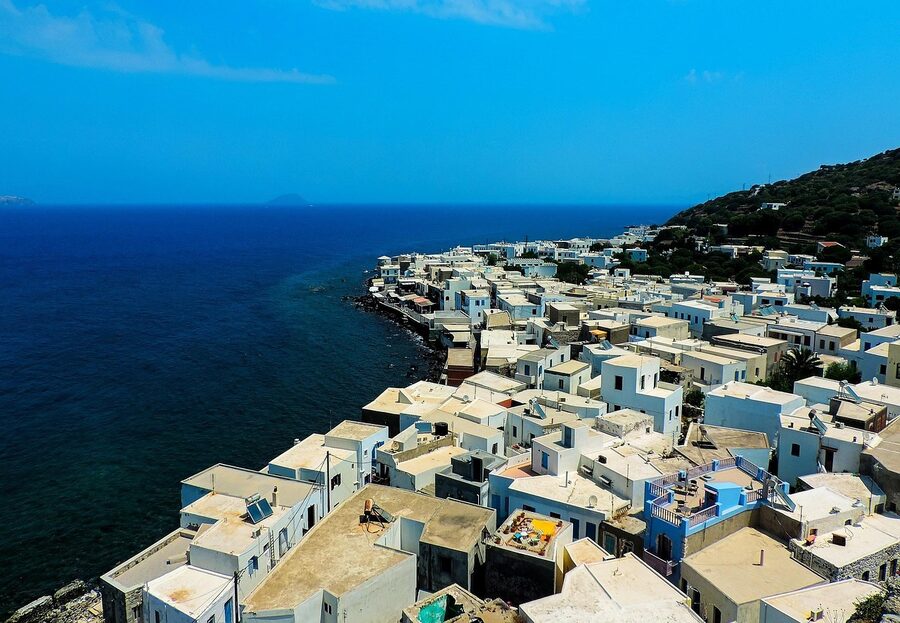
After the crater, the coach drops you in Mandraki for two hours of free time. Lunch is on you, not included. The white-and-blue village has half a dozen good tavernas around the central square and one particularly memorable bakery on the back lane that sells stuffed savoury pies for two euros. Walk up the steps cut into the cliff to the Panagia Spiliani monastery for a panoramic view of the whole bay. Then back to the boat at the quay by 4pm.
One thing to note. Nisyros is hotter than the cruise to the three islands because there are no swim stops to cool you down. Bring a hat, a long water bottle, and shoes you can walk a steep gravel track in. The crater floor pushes 35 degrees in July even when the sea breeze is fine. If you are sailing with a heat-sensitive child or grandparent, the regular 3-island cruise is the safer pick.
The Bodrum Day-Trip Option
Worth knowing about. Kos sits 4 kilometres off the Turkish coast, and one of the popular extras for travellers staying a week or more is a day-trip to Bodrum on the mainland opposite. It is a separate ferry, not the same boat as the cruises, and it leaves from a different quay in Kos Town.
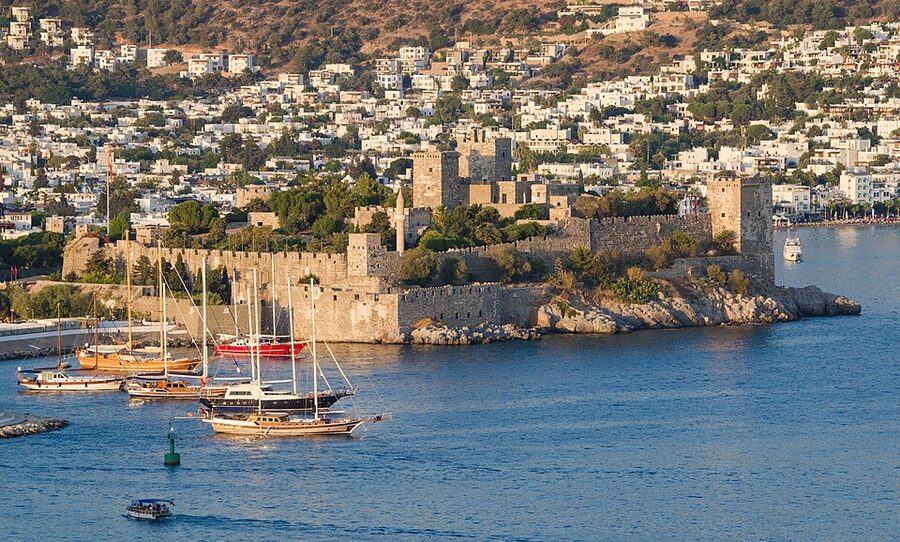
The standard independent day-trip to Bodrum is the round-trip ferry plus a guided port walk. About 50 dollars. You sail at 9am, dock at the Bodrum cruise quay around 9.30am, and you have until the 5pm or 6pm return ferry to do whatever you like. Most people walk the marina, climb up to the 15th-century Castle of Saint Peter, eat at one of the seafront fish restaurants, and shop the bazaar streets behind the harbour. You need a passport. Greek ID cards are not accepted because Turkey is outside the Schengen area, and your passport is stamped on the way in and out. Allow 30 minutes either side at immigration.
Two practical points. Phone roaming charges in Turkey are not on most European plans, so download maps before you leave Kos. And the Turkish lira-to-euro rate moves daily, so if you plan to shop, pay by card rather than cash and do not change money at the bazaar kiosks.
Vathi Versus Pothia: Which Side of Kalymnos?
This is the choice that quietly determines the shape of your day, and the cruise listings rarely flag it.
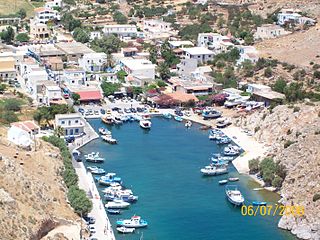
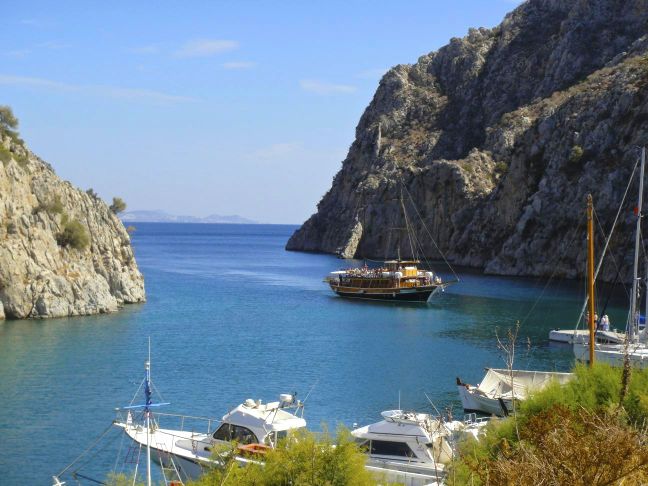
Vathi is a small village at the head of a deep inlet on the east coast of Kalymnos. The boat sails into the fjord with cliffs on both sides for about ten minutes before tying up. It is one of the better arrival sequences on the route. Once you are off, the village has three or four tavernas, an orange juice stand that uses fruit from the valley behind, and a small sponge factory that sometimes opens for visitors. You stay close to the quay because the village is tiny.
Pothia, on the other hand, is a real island town. About 13,000 residents, a long curving harbour, neoclassical houses painted in faded ochre and pink stacked up the hill behind the quay, and a proper main street with shops, the cathedral, and the sponge museum. You get the working-island feel here, not the postcard version. Pothia is the better Kalymnos stop if you have any interest in the sponge industry or in the climbing scene, both of which use the town as a base.
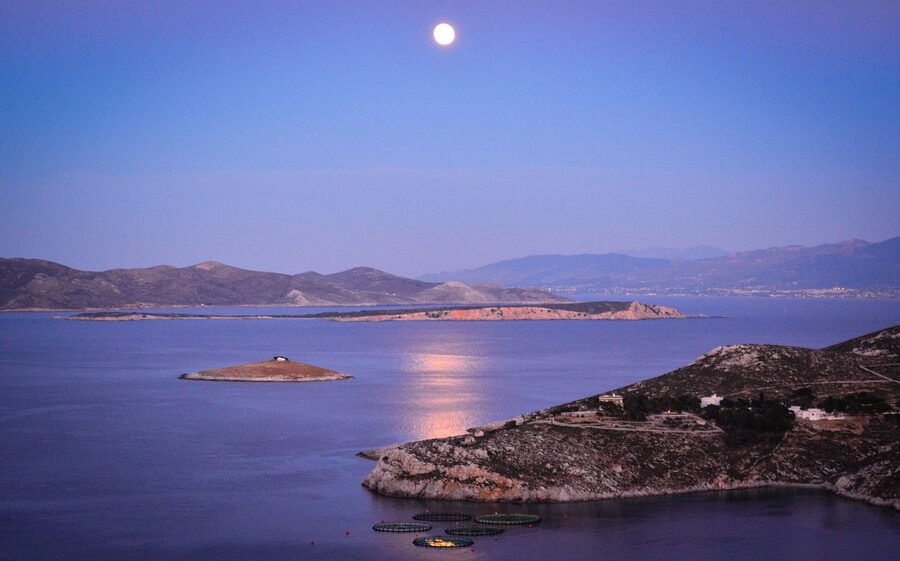
If your operator does not specify which Kalymnos quay they use, ask at the booth before you pay. The flagship usually uses Pothia. Smaller wooden ships, including the Captain Hook wooden ship and the BBQ-and-slide variant, use Vathi more often because the dock is shorter and the inlet is sheltered.
What to Bring
The list is shorter than the cruise pages suggest. Five things actually matter.
A snorkel mask. The water at Plati is shallow, clear, and full of small fish. Most boats sell or rent masks, but the rental ones are scratched. Bring your own from home for under ten euros. This is the single biggest upgrade you can make to the day.
A long-sleeved swim shirt or rash vest. The Aegean sun on a boat deck at midday is brutal. Sun cream rubs off when you swim. A UPF 50 swim shirt costs twenty euros, packs to nothing, and saves you from sunburn on the second swim of the day. I have made this mistake more than once.
Cash in small euro notes. Drinks at the on-board bar take cards on the bigger boats, but tips for the crew are cash only and most of the village cafes on Pserimos and the smaller stops on Kalymnos are cash too. Twenty euros in fives is enough for the day.
A hat that ties under the chin. The wind on the upper deck is the kind that takes hats. I have lost three. Get one with a strap. Pay extra for one with a brim wide enough to shade your shoulders.
A phone in a waterproof pouch. The pictures from the deck and in the water are the ones you will keep. A floating waterproof pouch costs twelve euros on Amazon and means you can take pictures from the swim stops without panicking.
Sea State, Cancellations, and the Meltemi
The cruises run from late April to late October. They are weather dependent. The relevant wind in this part of the Aegean is the Meltemi, a dry northerly that picks up in mid-July and blows hardest in August. Force 5 to 7 days are normal. The 3-island cruises usually run regardless because the route is sheltered by Kalymnos. The Nisyros volcano cruise crosses more open water and gets cancelled on the worst days.
Three things to know. Always book a refundable rate in case the weather turns. The flagship operator and the GetYourGuide listings all offer free cancellation up to 24 hours before departure. Avoid booking for your last day on the island. If the cruise is cancelled you have no flexibility. Mid-trip is the safe slot. Check the forecast on Windy.com the night before. Anything over 25 knots from the north-west and the smaller wooden ships will pull out, even if the larger cruisers run.
Kalymnos for Climbers
One last thing worth knowing if you climb. Kalymnos is one of the four or five most important sport-climbing destinations in the world. The limestone is generous, the routes are bolted, and there are over 4,000 lines spread across about 75 sectors on the west coast around Massouri. If you have ever climbed grade 6a or above, you have probably read about it.
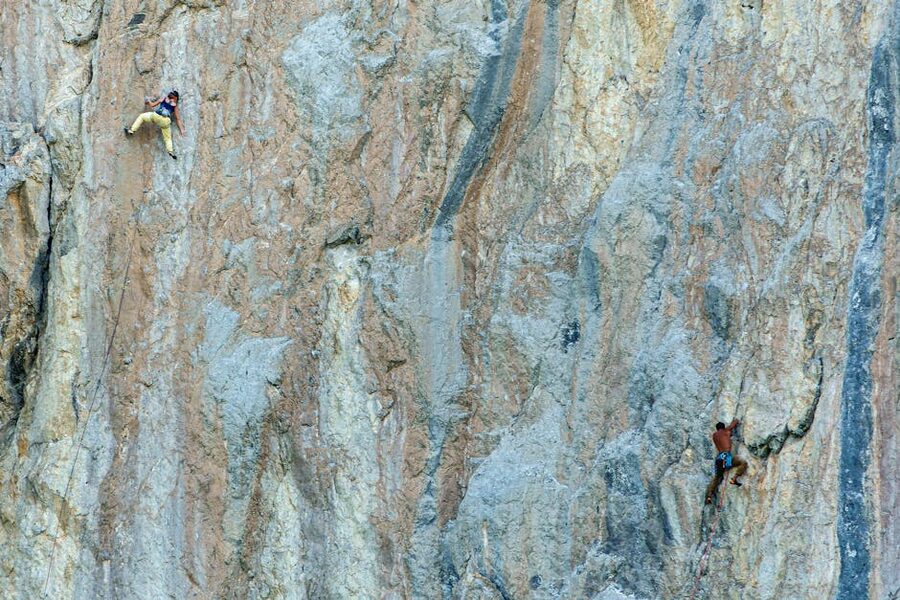
The day cruise does not put you anywhere near the climbing. For that you would come back for a week and stay in Massouri or Armeos with a bolted route guide. But the cruise gives you the geography. From the deck you see the white limestone walls on the west coast of Kalymnos and you understand why so many climbers fly to Kos as the entry airport, take the local ferry across, and stay for a fortnight.
What I Would Do With a Single Day
If I had exactly one day on Kos and I wanted to do this cruise properly, here is the shape.
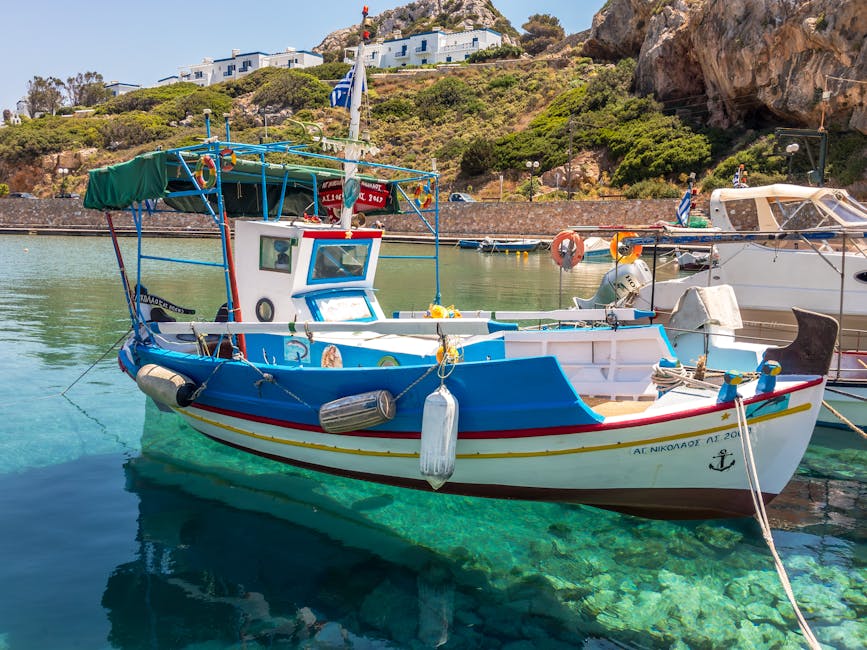
Walk down to the Kos Town harbour by 8.30am. Buy a coffee at the kiosk on the corner of the breakwater. Find your boat. Board, take a deck seat on the upper level, and stay there for the first crossing. By 11am you are at Kalymnos, ideally Pothia. Spend the hour walking the harbour to the cathedral, popping into the sponge stalls, and ordering a small bottle of orange juice from the lane behind the quay.
Back on the boat at noon. Lunch on the move. Plati from 1pm. Swim, snorkel, take pictures. At Pserimos by 2.30pm, an hour on the beach, a swim and an ice cream. The dolphins are a maybe, not a promise. Back in Kos Town by 5pm. Walk straight to one of the seafront tavernas on the south side of the harbour. Order grilled fish, salad, and a half-litre of local white. Watch the boats come in.
That is a complete day with no rushing. Total cost in 2026 prices: around 35 euros for the cruise, 15 euros for drinks at the on-board bar, 5 euros for ice cream and orange juice on the islands, 30 euros for dinner. Call it 90 euros for the full day, including everything.
Booking Tips, in Order of Usefulness
Book at least two days ahead in July and August. The flagship full-day cruise sells out 24 hours in advance most peak summer days. Outside July and August you can usually walk up at the harbour kiosks the morning of, but you will pay slightly more.
If you are travelling as a family, book the pirate cruise or the wooden ship variant. The flagship is fine for kids but the family-themed boats are noticeably louder, livelier, and have the waterslide.
If you are travelling without kids and you want quiet, book the smaller Kalymnos and Pserimos cruise. It skips Plati, runs about an hour shorter, and the boat is a smaller wooden ship rather than the large flagship cruisers. Quieter day, better Kalymnos time.
If the forecast is windy, expect the Nisyros cruise to get cancelled before the 3-island route does. Have a backup. The Santorini caldera cruise is the closest like-for-like if you happen to be combining islands, or if you are connecting through Athens, the Saronic Gulf three-island day is the same shape of trip on a different sea.
Arrive at the Kos quay 30 minutes early on cruise days. The boats leave on time and the queue at the gangway moves slowly when the boat is full.
If You Have Two Days
Worth a paragraph. If you have two cruise days, do the 3-island flagship on day one and the Nisyros volcano on day three (with a beach day in between to recover). The two trips are completely different in shape and rhythm. The 3-island day is for swimming and sunbathing. The Nisyros day is for walking and geology. Together they cover what makes the Kos cruise circuit unusual among Greek island day-trips.
For a third day with similar logistics but a different format, the all-inclusive boat trip with BBQ and water slide works as a more relaxed repeat. Same three islands, longer swim stops, and a beach BBQ instead of the buffet lunch.
How This Compares to Other Greek Cruise Days
If you are travelling around Greece and trying to slot a cruise into a wider trip, three close relatives are worth knowing. The Rhodes to Symi speedboat day is the closest equivalent in shape and price, also a Dodecanese run, and lands you on a postcard-coloured island instead of three small ones. The Corfu to Paxos and Blue Caves cruise is on the Ionian side and trades the volcanic heat for Adriatic-blue grottoes. And on the other big island circuit, the Balos and Gramvousa day from Chania shares the dual-island geometry with a Venetian fortress thrown in.
If your trip starts or ends in Athens, the Cape Sounion sunset run and the Saronic Gulf three-island day are the natural city-side bookends. If you are island hopping further west, the Santorini catamaran is the prettier sister to the Kos flagship. None replace what Kos gives you. The 3-island geography is small, intimate, Dodecanese, and the volcano alternative is in a category of its own.
Worth a Last Look
The reason the Kos 3-island day works is that it does not pretend to be Mykonos or Santorini. The islands it visits are quiet, small, and useful for one specific thing each. Pserimos for a beach hour. Plati for the swim. Kalymnos for the working-island walk and the sponge story. The geometry is tight, the boat ride is short, and the day costs less than dinner for two on Mykonos. If you are on Kos for a week, do this on day three when the airport adrenaline has worn off and you are ready to be on the water for seven hours. Take the early boat, sit on the upper deck, and bring the snorkel mask. The Bodrum extra and the volcano alternative are both worth knowing about for a longer stay, but the standard 3-island cruise is the one that anchors the week.
More Greek Islands Worth Pairing With This Day
If the Kos cruise is the centrepiece of a Dodecanese week, the natural pairing is the Rhodes to Symi speedboat day, a similar shape of trip on a coloured-house island three hours south. For the Ionian leg of a wider Greek summer, the Corfu to Paxos and Blue Caves cruise covers the same kind of full-day boat format with grottoes instead of volcanoes, and on the cross-cluster side, the Ibiza western coast cruise is the closest non-Greek equivalent in mood. Take the early boat, pay the bar tab in cash, bring the snorkel mask. Those three calls are what turn the Kos day from a tour-group rectangle into the one your travel group keeps talking about.