
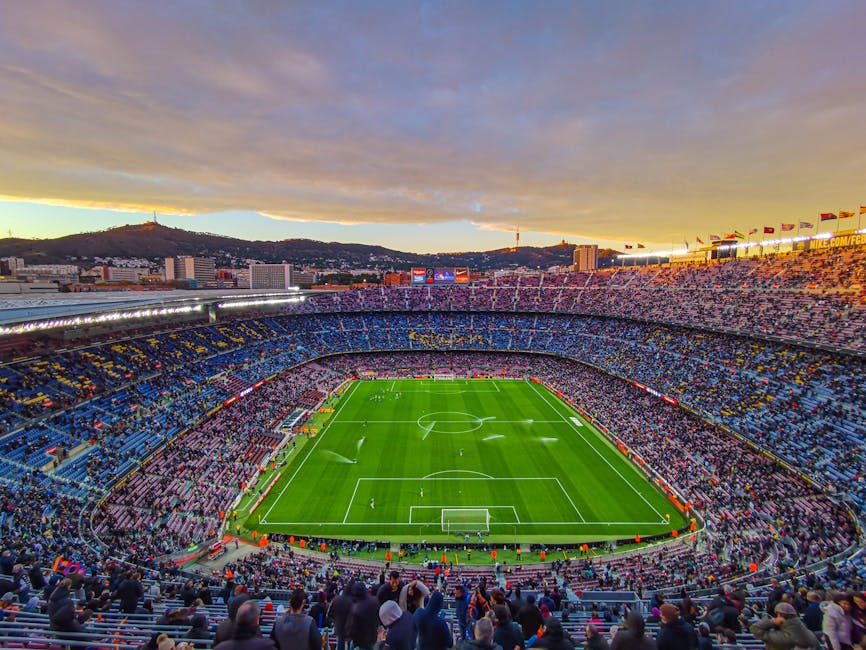
The first thing you notice walking into Camp Nou isn’t the size. It’s the way the noise feels thick, even on a quiet tour day. Old chants seem to live in the concrete, and that strip of grass at the bottom looks impossibly bright after the dim corridor you came through.
This is how to actually visit it in 2026. The stadium is back open after a long renovation, the museum has been rebuilt as the Barça Immersive Tour, and the booking process is messier than it should be. I’ll walk you through what’s worth your time and what to skip.
- In a Hurry? Top Picks
- What Camp Nou Actually Is Right Now
- The Three Ways to Visit
- Booked Through Their Site or Through GetYourGuide?
- The Three Tours Worth Booking
- 1. Barça Immersive Tour Ticket:
- 2. FC Barcelona Museum Total Experience Pass:
- 3. Hop-On Hop-Off Bus + FC Barcelona Immersive Tour:
- What’s Inside the Tour Route
- The Trophy Hall
- The 360º Immersive Room
- The Pitch View
- The Dressing Room and Tunnel (Total Pass Only)
- The Photo Pass and the VR Room
- How Long to Plan
- Getting There
- What Time to Go
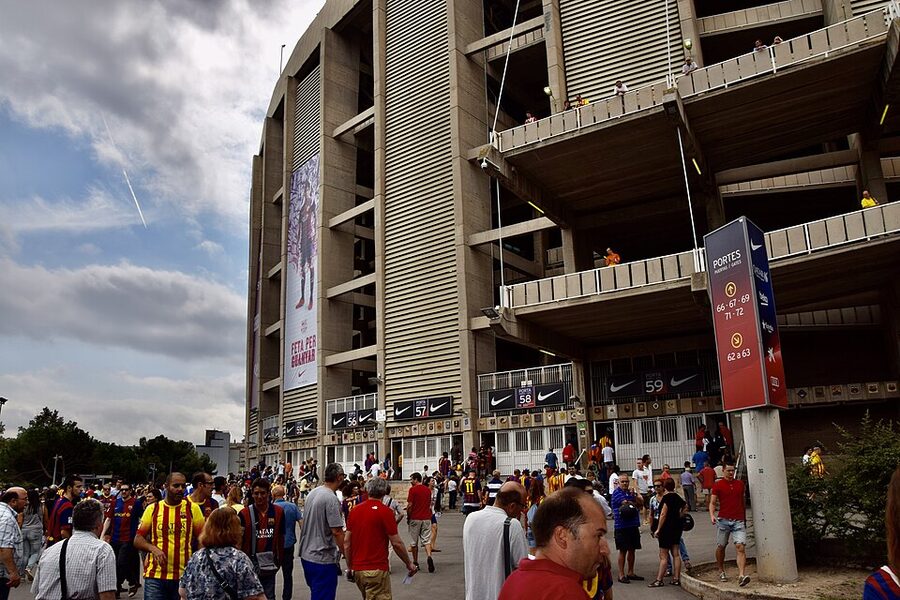
- Matchday vs Tour Day
- The Stadium’s History in Two Minutes
- Photography Tips
- Combining With Other Barcelona Sights
- Eating Around Camp Nou
- What to Skip
- Wheelchair Access and Mobility
- Is It Worth It?
- Where Else to Go in Barcelona
In a Hurry? Top Picks
- Barça Immersive Tour ticket ($35): the standard self-guided museum + stadium ticket. Book on GetYourGuide
- Total Experience Pass ($63): same tour plus the VR room and the player tunnel walk. Book on GetYourGuide
- Bus + Camp Nou combo ($77): pairs the visit with a Barcelona hop-on hop-off ticket if you want one purchase to cover the day. Book on GetYourGuide
What Camp Nou Actually Is Right Now
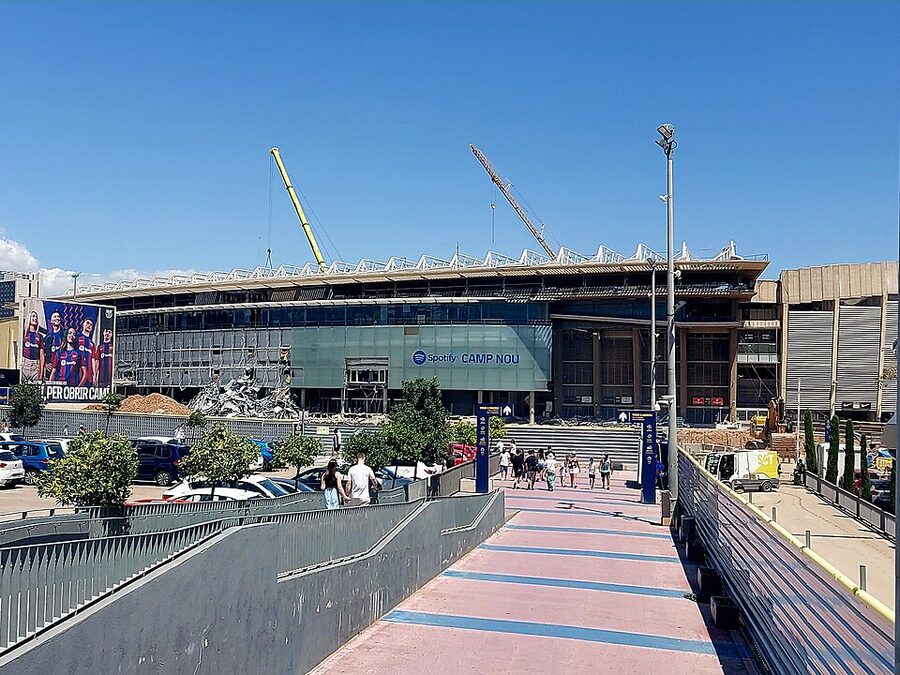
Quick reality check before you book. Camp Nou closed for renovation in 2023. The team played at the Olympic Stadium up on Montjuïc for two seasons. The new Camp Nou partially reopened in November 2025 at reduced capacity, with full completion targeted for June 2026.
What this means for you: when you visit in 2026, you’ll see a stadium that’s working but still finishing. Some sections may be closed off. The exterior still has cranes around it. The official line is that the museum and tour run as normal. Worth knowing before you walk in expecting it to feel pristine.
The Three Ways to Visit
You’ve basically got three options, and they suit different kinds of visitors.
1. The Barça Immersive Tour. This is the standard self-guided ticket and the one most people book. It covers the museum, the trophy room, the stadium views, and the immersive 360º room. Audio guide included. Roughly 90 minutes if you take it slow.
2. The Total Experience Pass. Same as above plus the VR room and the dressing-room-and-tunnel walk. About double the price. Worth it if you’re a real fan or travelling with kids who want the full theatre.
3. A guided combo. Either with a hop-on hop-off bus, a private guide, or a Barcelona city tour that includes Camp Nou. You give up flexibility but you get someone explaining things, which matters more than I expected when I went with my dad, who knew every player from the 90s but had no idea what year the stadium opened.
Booked Through Their Site or Through GetYourGuide?
Both work. The official FC Barcelona site sells the same tickets at the same base price, sometimes a euro or two cheaper. GetYourGuide and Viator add a small markup but offer free cancellation up to 24 hours before, which the official site doesn’t always.
If you’re a planner who books months out, official site for the small saving. If you’re booking three days before arrival and the weather forecast might change your plans, marketplace ticket for the cancellation flexibility. I usually pick the marketplace for the cancellation alone.
One thing to skip: don’t buy from random “Barcelona tickets” resale sites that show up at the top of Google. They mark up 40% for the privilege of an extra middleman.
The Three Tours Worth Booking
Out of the dozens of products that bundle Camp Nou into something, these three actually deliver. I’ve ranked them by how often I’d recommend each one.
1. Barça Immersive Tour Ticket: $35

This is the entry-level ticket and the one I’d start with for almost everyone. The 360º audiovisual room is the highlight, and you get the trophy hall and the field views with it. Our full review goes into the construction caveat. Some sections are still finishing in 2026 and you should know that going in.
2. FC Barcelona Museum Total Experience Pass: $63

Pricier but the better pick if you’re with a serious football fan or you want the full story. The “We Are History” tunnel sequence is genuinely moving and the VR room actually works, which it didn’t always in older versions of the museum. Our review of the Total Experience Pass compares it to the basic ticket so you can decide if the upgrade is worth it for you.
3. Hop-On Hop-Off Bus + FC Barcelona Immersive Tour: $77
This is for the one-day visitor doing Barcelona in a rush. You get a 24- or 48-hour bus ticket plus the Camp Nou immersive entry on the same booking. Practical rather than romantic. We compared it to buying both separately in our combo review and the bundle saves a small amount versus the separate tickets.
What’s Inside the Tour Route
The route is roughly 90 minutes if you take photos and read the panels. Faster if you don’t, slower if you stop in the gift shop. Here’s what you actually walk through, in order.
The Trophy Hall
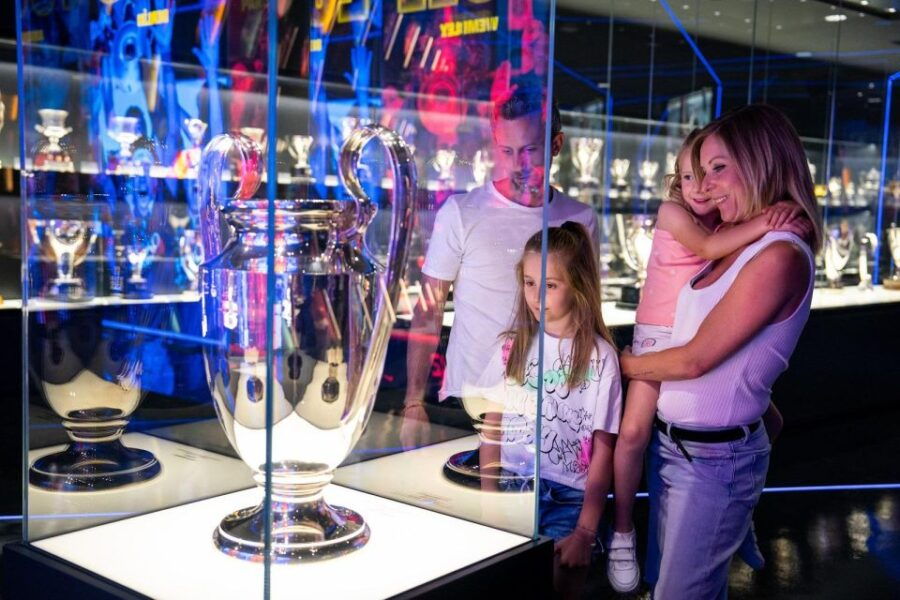
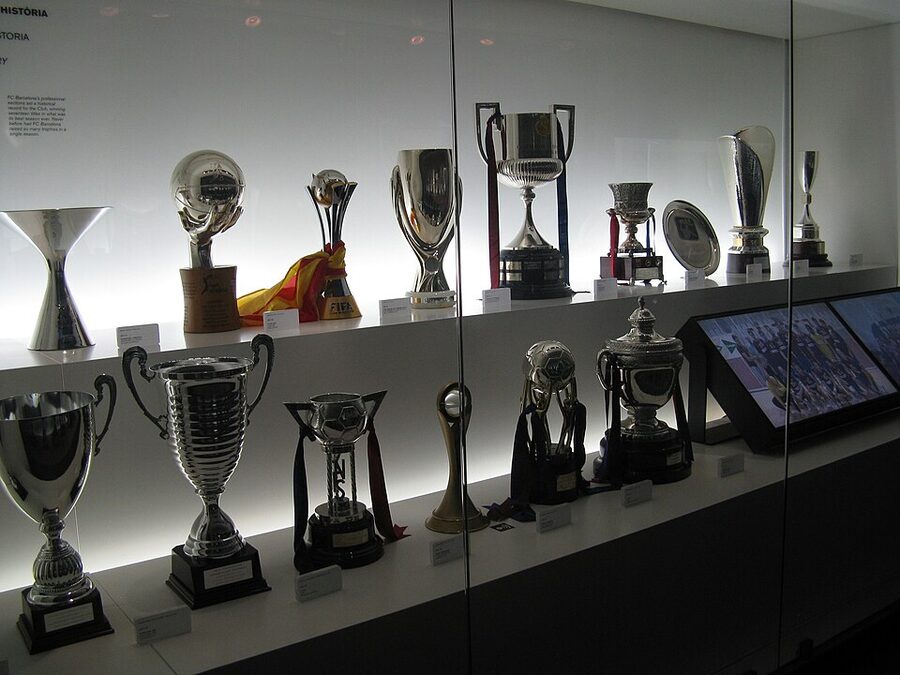
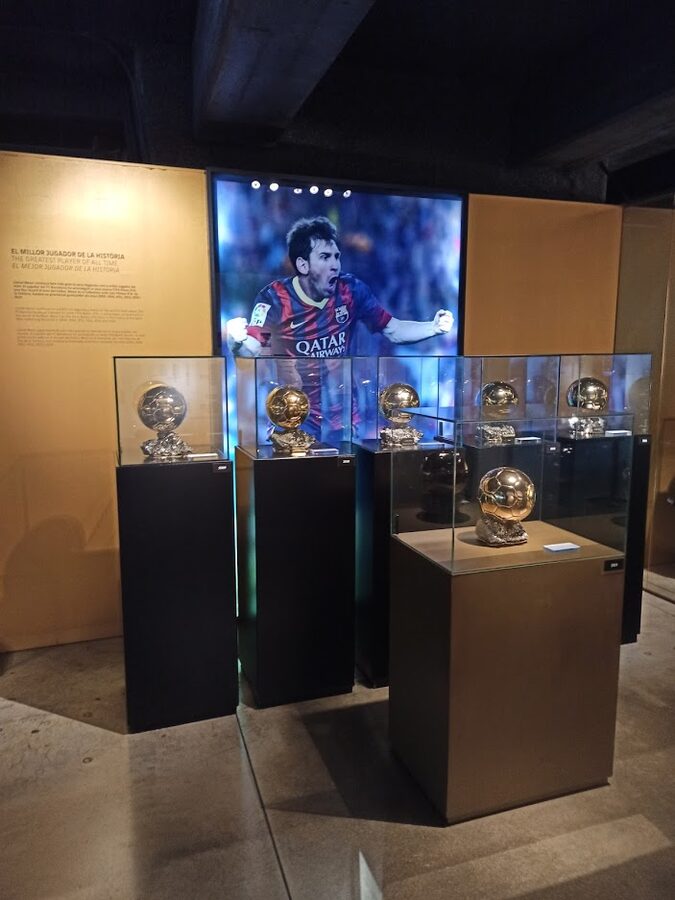
Starts the route. The Champions League trophies sit at one end and the cabinet of Ballon d’Or replicas Messi won here is at the other. It’s smaller than I expected. Ten minutes is plenty.
The 360º Immersive Room
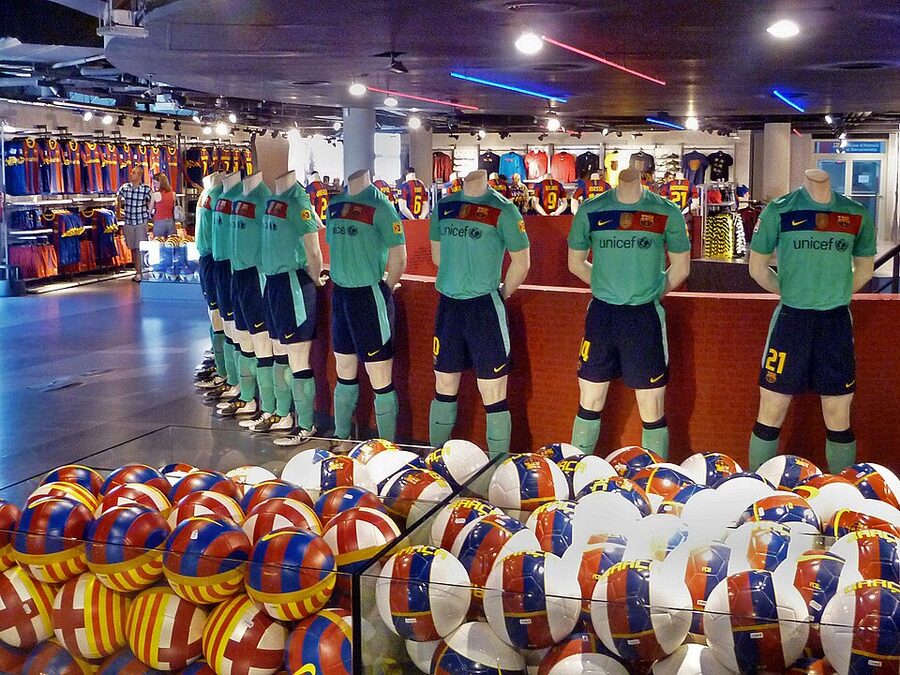
This is the new bit and it’s the reason they renamed the tour. Big circular projection room that runs about eight minutes of footage on loop. Old finals, Cruyff’s goals, Messi’s run against Getafe, the 6-1 against PSG, that kind of thing. It’s surprisingly emotional even if you’re not a Barça fan. Don’t sit too close to the front row, the angle is better in the middle band of seats.
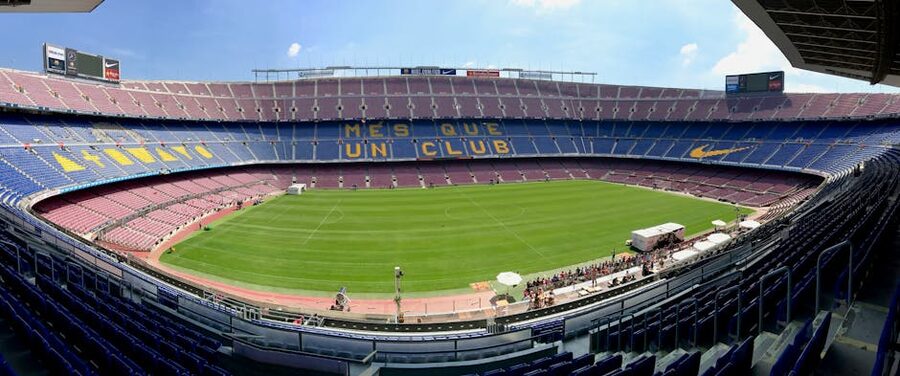
The Pitch View
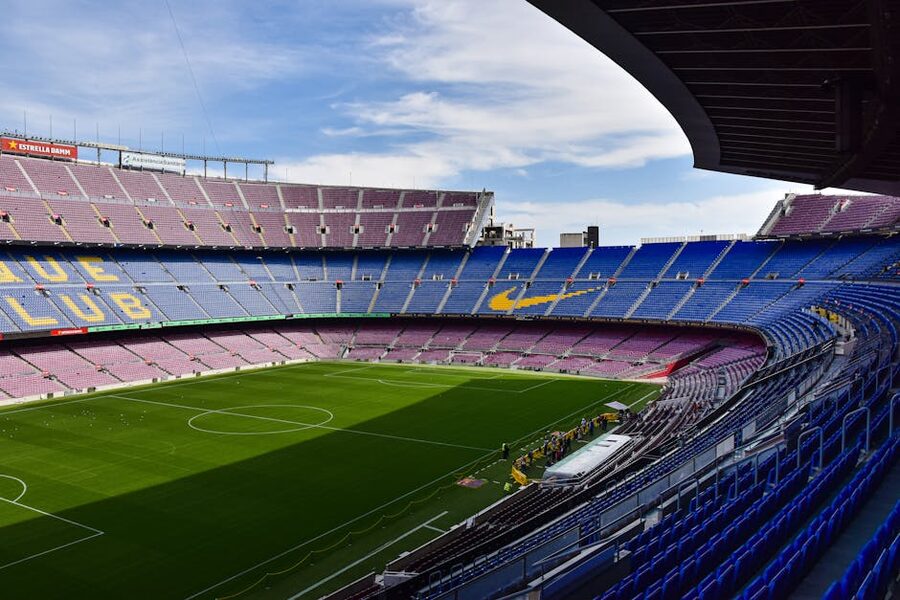
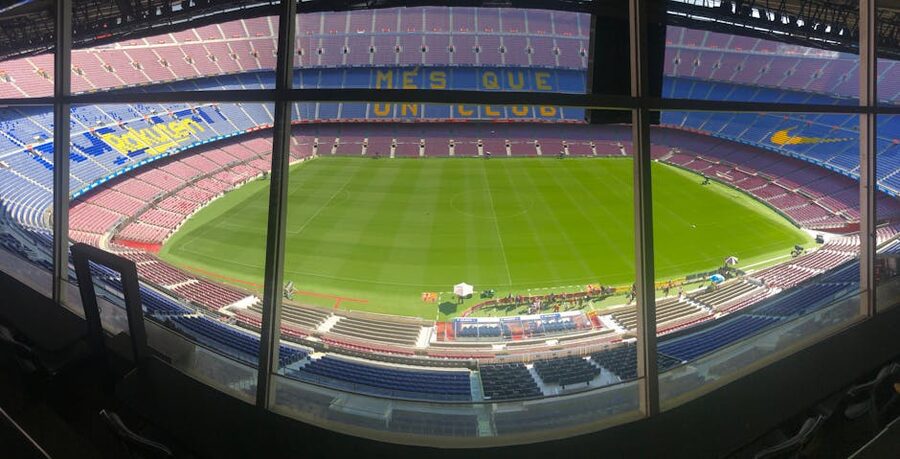
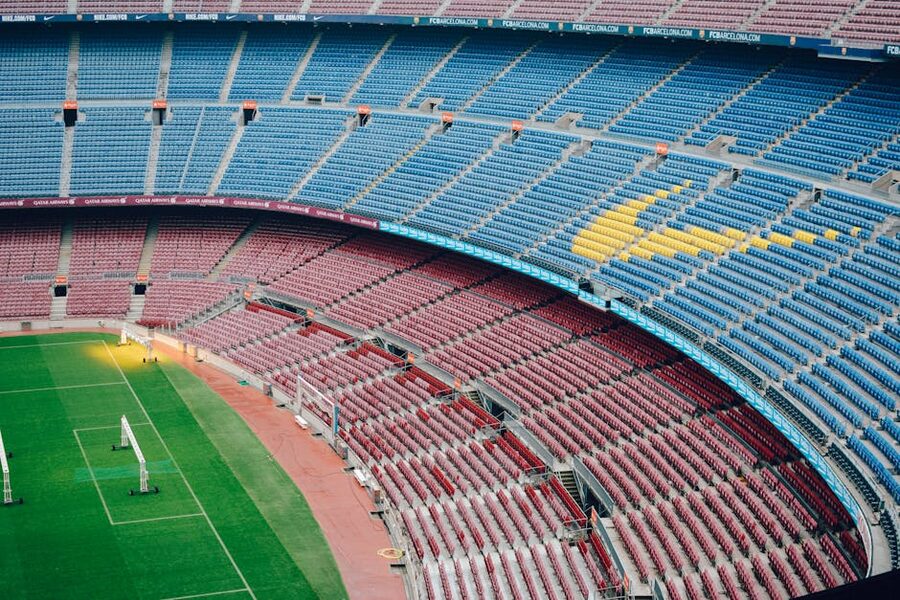
You walk out into the stands at one corner and see the full pitch. This is the moment everyone takes the same photo. With the renovation still ongoing in 2026, the upper rings might look a bit raw. That’s normal, not a fault on your tour.
The Dressing Room and Tunnel (Total Pass Only)
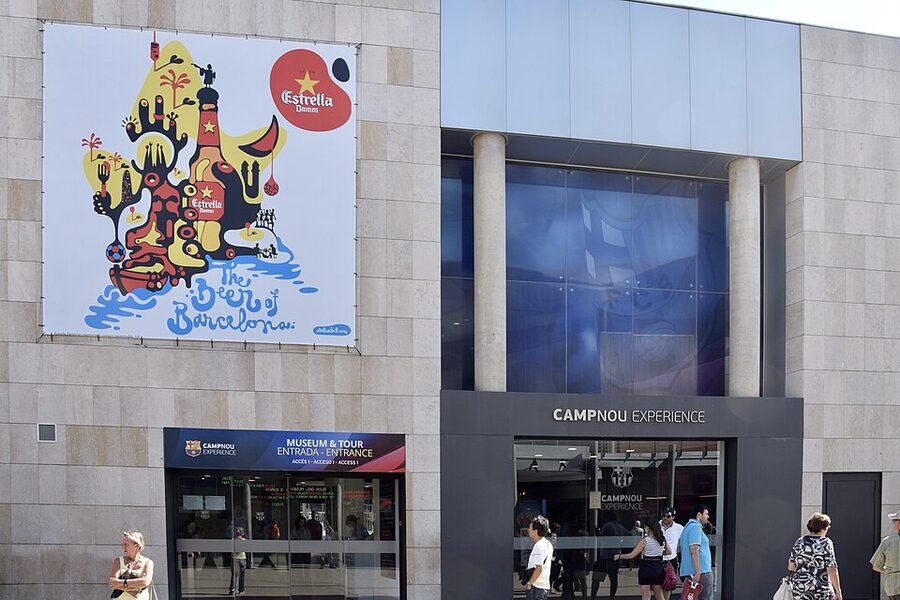
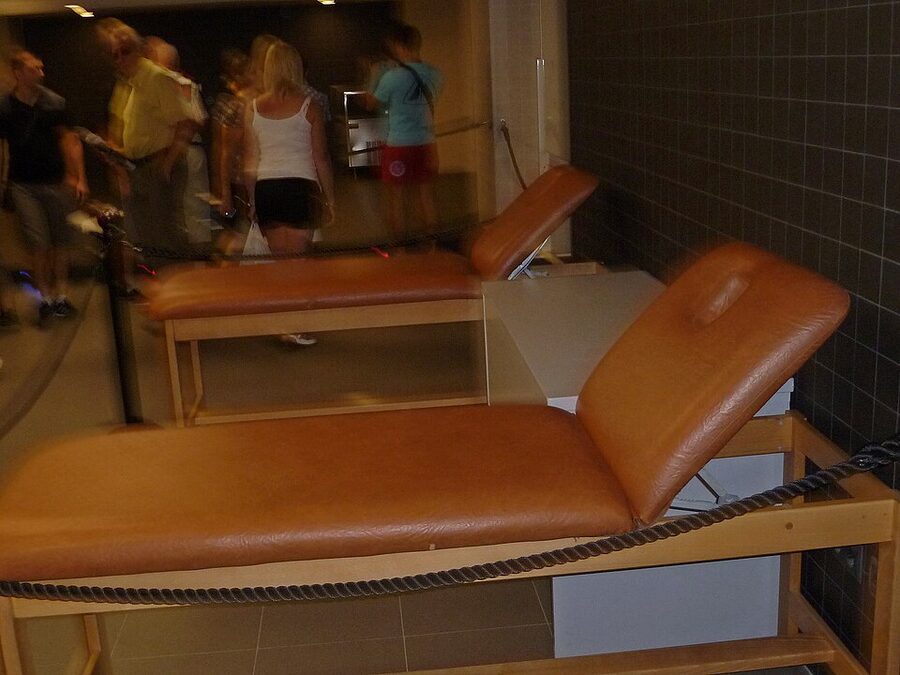
If you’ve upgraded to the Total Experience Pass, this is where the extra money shows up. You go down to the visiting team dressing room, then walk through the players’ tunnel and out toward the pitch. Not the home dressing room. That’s never on the tour, even on private versions. Still, the tunnel walk is the closest you get to feeling like a player on a matchday.
The Photo Pass and the VR Room
Total Pass holders also get the VR Robokeeper challenge. You take penalties against an animated keeper and your “result” gets timed. Eight-year-olds love it, adults pretend not to but stay for two rounds. The photo pass throughout the tour means you can grab those green-screen photos that get printed near the exit. They’re priced like a small souvenir, not like cinema-screen photos. I skipped them and don’t regret it.
How Long to Plan
Two hours is a comfortable visit. That’s enough time for the route plus the gift shop without rushing. If you’ve got the Total Experience Pass, plan two and a half. If you’re with kids who want every interactive station, three.
Avoid arriving in the last 90 minutes before closing. The museum stops admitting new entries and you’ll get pushed through the route. Better to be in by mid-afternoon at the latest.
Getting There
The stadium sits in the Les Corts neighbourhood, west of central Barcelona. From Plaça Catalunya you’ve got three sensible options.
Metro is easiest. L3 (the green line) to Palau Reial or Les Corts, both about a 7-minute walk to the stadium. Or L5 (blue) to Collblanc, also about 7 minutes. From either, you follow the signs and the crowd.
Bus. The H8, V7, and the tourist hop-on hop-off all stop nearby. Useful if you’ve got a bus pass already.
Taxi or rideshare. About 15 minutes from Plaça Catalunya in normal traffic, longer on matchdays. Drop-off is at the Avinguda de Joan XXIII side.
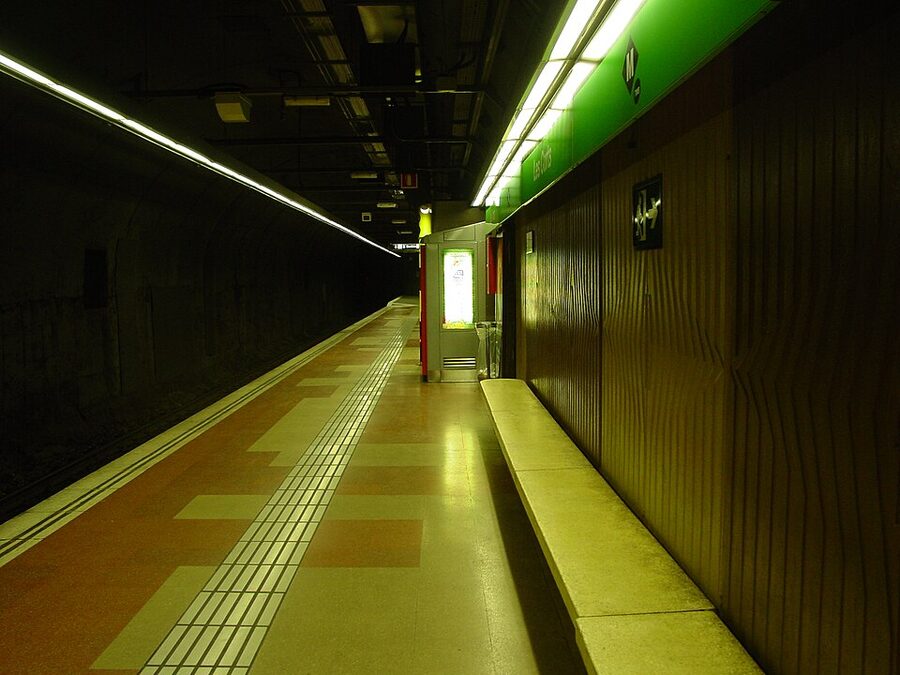
If you’re already planning to use the metro a lot, the Hola BCN transport card is usually cheaper than buying single tickets, especially if you’re combining Camp Nou with another stop in the same day.
What Time to Go
Open most days from 10am to a closing time that shifts with the season. In summer they often run until 7pm. Winter typically wraps by 6pm. Check the day before. The official website is the source of truth and timings change for matchdays.
Tuesday and Wednesday mornings are the quietest slots. Saturday afternoons are the worst, because every cruise-ship day-tripper does Sagrada Família, Park Güell, and Camp Nou on the same day. If your schedule has any flex, pick a midweek morning. The 360º room feels different when there are 40 of you in it instead of 200.
Matchday vs Tour Day

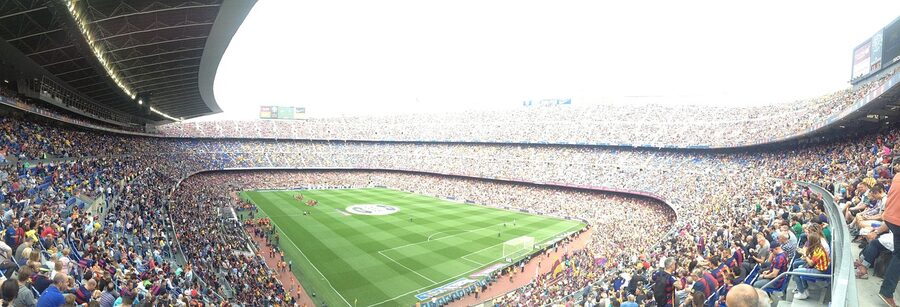
If you can get a match ticket, do that instead. Even if you don’t follow football. The atmosphere when the lights go on and the curve of the stadium fills up is something you can’t reproduce on a tour, no matter how good the museum is.

Match tickets sell on the official FC Barcelona site about three to four weeks before each fixture. Big games (Real Madrid, Champions League knockout rounds) sell to club members first and reach the public market resold. La Liga midweek matches against smaller sides are the realistic target if you’re trying to attend a game without paying scalper prices.
Note: during the 2025-26 season, while construction wraps up, capacity is reduced. That makes tickets harder to get, not easier. Plan ahead if a match is the priority.
The Stadium’s History in Two Minutes
The original Camp Nou opened on 24 September 1957. Before that, FC Barcelona played at Camp de Les Corts a couple of streets away. The new ground was Spain’s first major postwar football stadium and was bankrolled by the club’s then-record member subscription drive. Fans literally paid for it.
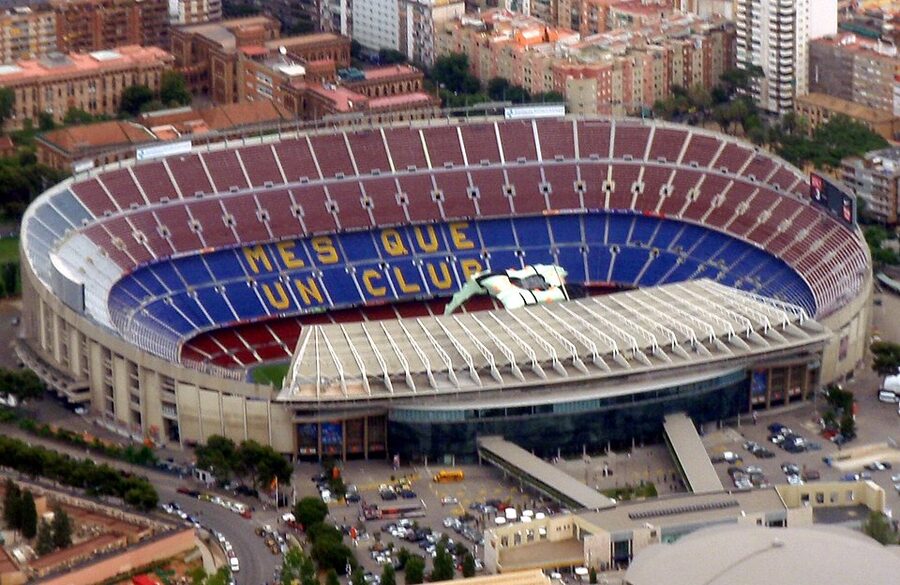
Original capacity was around 99,000. Expanded to 120,000 for the 1982 World Cup, where the opening match was played here. By the 1990s it had been reduced to about 99,000 again as terracing was replaced with seats. The current renovation aims for 105,000, which would make it the second-largest football stadium on Earth.
The “Spotify Camp Nou” naming came in 2022 when the club sold sponsorship rights for the first time. Older Catalans still call it just Camp Nou. Fair enough.
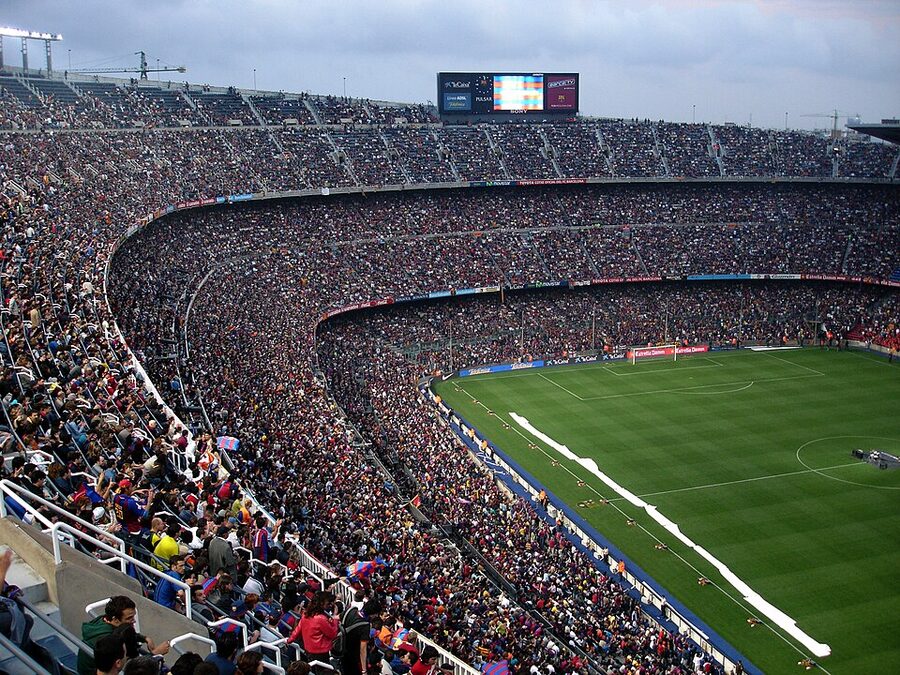
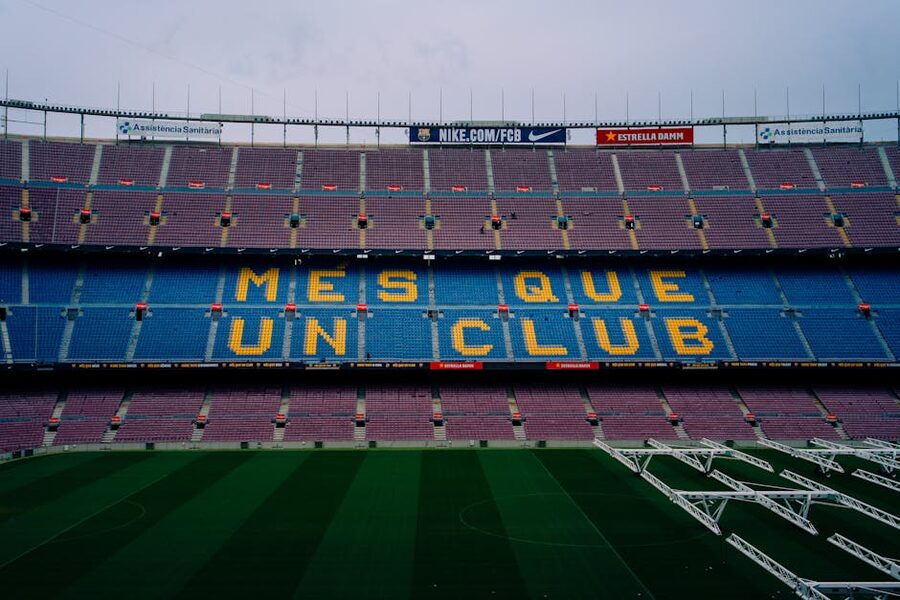
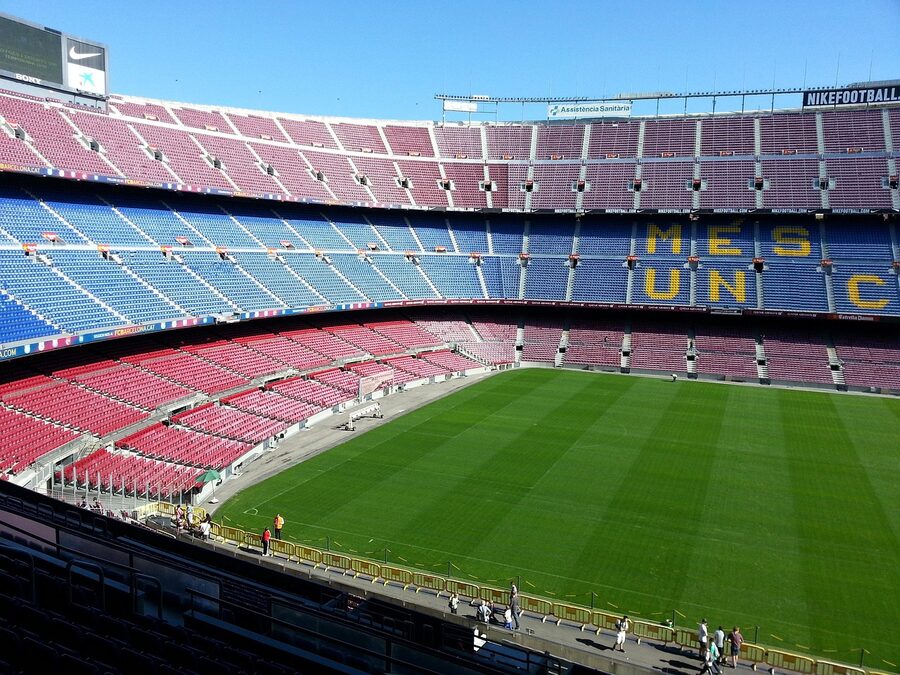
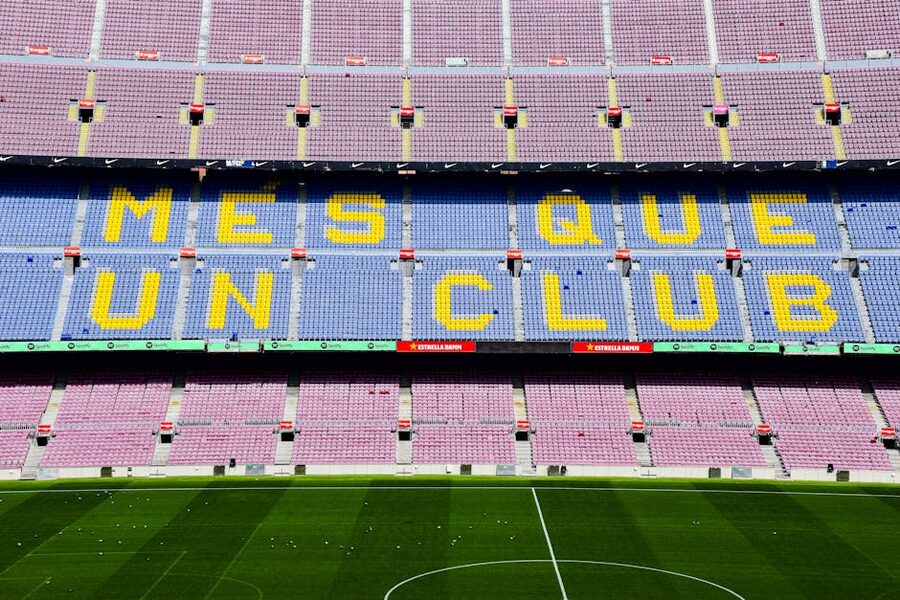
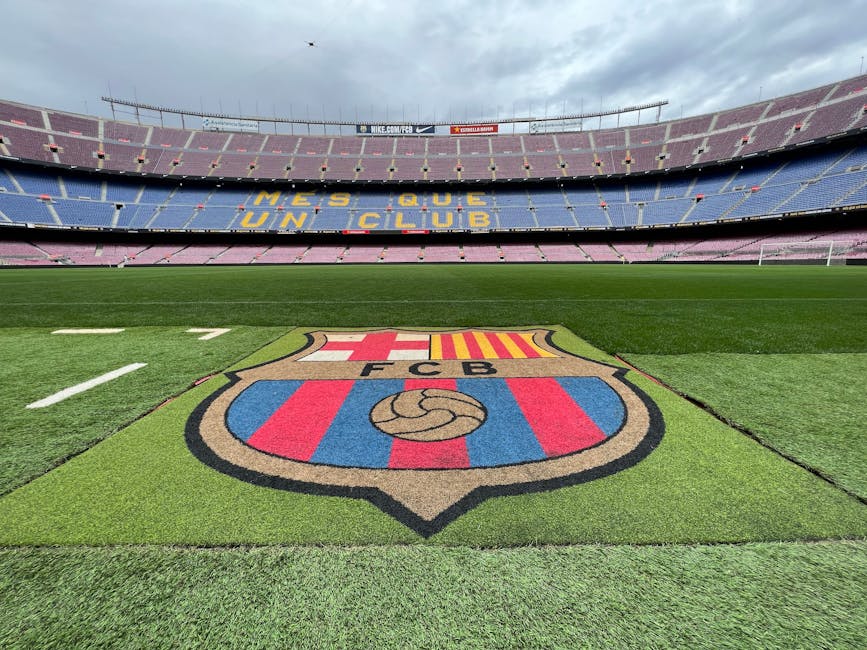
The “Més que un club” slogan painted into the stands isn’t marketing. It dates from a 1968 speech by club president Narcís de Carreras and stuck. Under Franco, Catalan symbols were banned from public life. The stadium became one of the few places where you could shout in Catalan without consequences. Hence the phrase, hence why it’s still painted on the seats.
Photography Tips
You can take photos throughout the tour with a phone. Tripods are not allowed. Flash is fine in the museum but pointless in the 360º room.
The stadium photo most people want is from the route’s exit point onto the stands, where you get the full curve. Stand at the far edge of the railing and use a wide-angle lens or your phone’s 0.5x. Mid-afternoon light hits the slogan side cleanly. If you want the seats empty in your photo, go right at opening or in the last hour before closing.
Combining With Other Barcelona Sights
Camp Nou is in the city’s western half, so it pairs naturally with anything else on that side. Pedralbes Monastery is a short metro ride away. The CCCB and the contemporary art museum are between Les Corts and the city centre.
Most people pair Camp Nou with Park Güell or Sagrada Família on the same day, but that gives you a long, scattered itinerary. If you’ve got the energy for it, fine. I’d usually rather do Park Güell in the morning and Camp Nou in the afternoon, with a long lunch in between. Sagrada Família deserves its own slot earlier in the week, not crammed in alongside the football.

If you’re staying around Eixample or the Gothic Quarter, the easiest way to fit Camp Nou into a Gaudí day is to do a morning Gaudí cluster. Casa Batlló and La Pedrera sit on the same block of Passeig de Gràcia. Then take L3 west to Camp Nou for an afternoon visit. That’s a full day but it works.
Eating Around Camp Nou
Inside the stadium complex, options are limited and tourist-priced. The Barça Café (where the “Discover Messi’s Secrets” experience runs) is a sit-down option but a touch pricey for what it is. The kiosks around the museum exit do snacks and overpriced beer. Skip both if you can.
Walk five minutes east into the Les Corts neighbourhood and you find regular Catalan menús del día for under €15. Try the streets just off Travessera de les Corts. Local lunch crowd, no tourists, real food. If you’re up for a tapas crawl after the visit instead, the guided tapas walk in the old town is a good evening pivot.
What to Skip
The expensive private VIP packages that promise “exclusive locker room access”. They don’t include the home dressing room, no matter what the listing says. The visiting room and the manager’s office are the most you’ll get.
Souvenir kits packaged by third-party sellers near the metro. The official store inside the stadium has the same items at lower prices, plus a much wider range. The fakes near the tourist routes are bad fakes.
The “matchday photo packages” being sold the day after a game online. These are mostly auto-generated stills, not the real photos.
The “VIP early access” tickets that promise to skip the queue. The tour barely has a queue most days. Save the upgrade money.
Wheelchair Access and Mobility
The route is fully wheelchair accessible. Lifts cover the level changes between the museum and the stand exit. The 360º room has dedicated wheelchair spaces on the side. The Total Pass dressing room and tunnel walk are also accessible, though the dressing room itself is a tight space.
If you’re with someone who can’t walk far, plan a 90-minute slow visit rather than the full Total Pass. The extra walking adds up.
Is It Worth It?
If you’re not a football fan, the museum is still interesting but not essential. The history sections are more compelling than I expected, the immersive room is genuinely good, and the stadium view is striking. But you’ll probably leave feeling you spent two hours and got two hours’ worth of value, not blown away.
If you’re a fan, even a casual one, the place delivers more than its surface description suggests. The trophy room is small but the items are real. The tunnel walk on the Total Pass actually feels like something. And the 360º room has the kind of footage that makes you remember games you watched at 2am in another country.
Where Else to Go in Barcelona
If you’ve already got Camp Nou booked, the next things I’d line up depend on what you’ve done already. Sagrada Família is the obvious pairing, but book that for a different morning, not the same day. The Montjuïc cable car is a fun half-day if you’ve got kids in tow, and gets you up to the Olympic Stadium where Barça played during the renovation. If you’re in town for a few days and want a contrast to all the city stuff, a catamaran sunset cruise off the harbour gives you the Barcelona-from-the-water angle that most tour itineraries miss.