
I’m halfway up the central lightwell, neck craned, the tiles overhead shifting from pale aqua to deep cobalt, and the woman beside me whispers “It really does feel like swimming.” That’s the trick of Casa Batlló. You walk in expecting a museum, and within five minutes you’re underwater, inside a dragon, walking through a story Gaudí built out of bone, scale, and ocean light.
In a Hurry? My Top Casa Batlló Picks
- Best overall pick: Casa Batlló Entry With Self-Audioguide Tour from $34, the default ticket most people end up booking, includes the Gaudí Cube and AR experience.
- For early risers: Be The First Entry Ticket from $53, you walk in at 8:30 with maybe 20 other people instead of the usual 200.
- Skip-the-line audio combo: Casa Batlló Admission Ticket With Intelligent Audio Guide from $54, Viator’s option if you prefer their booking flow.
- In a Hurry? My Top Casa Batlló Picks
- What Casa Batlló actually is, in one paragraph
- Which ticket to buy
- About that 2-for-1 promo, and other discounts
- How long the visit takes
- Three tickets I’d actually book
- 1. Barcelona: Casa Batlló Entry With Self-Audioguide Tour:
- 2. Casa Batlló Be The First Entry Ticket:
- 3. Casa Batlló Admission Ticket With Intelligent Audio Guide:
- What you’ll actually walk through
- The Gaudí Cube and Gaudí Dôme experiences
- Photo strategy: when to go for which shots
- Getting there and what’s around it
- A short history, because it’s worth knowing
- Sant Jordi and Christmas: two free spectacles you can plan around
- The free-courtyard hack everyone misses
- Casa Batlló vs La Pedrera: do you need both?
- Practical notes that aren’t on the booking page
- If you’re combining sites: pre-built routes
- What to do once you’re back outside
- Common questions, fast answers
- One more Barcelona reading list
What Casa Batlló actually is, in one paragraph
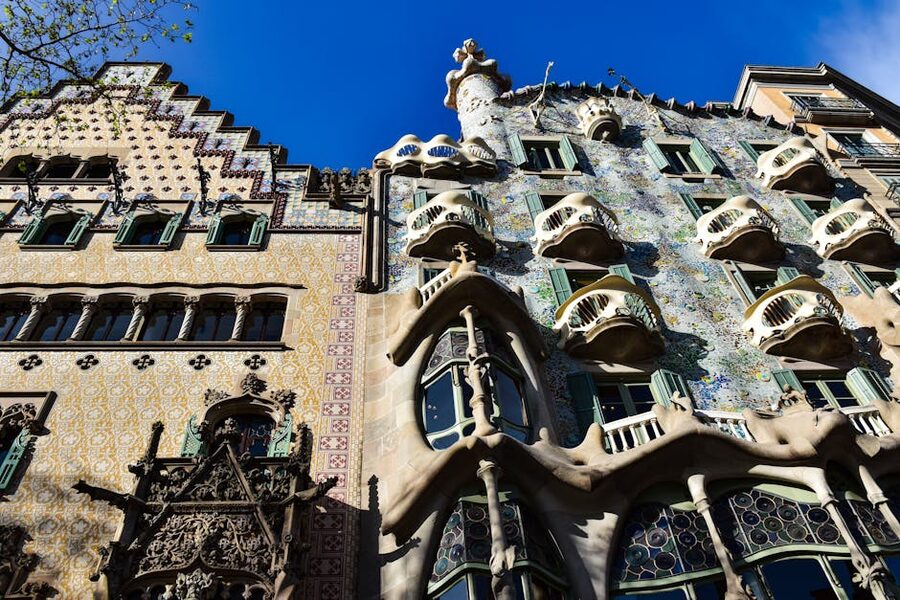
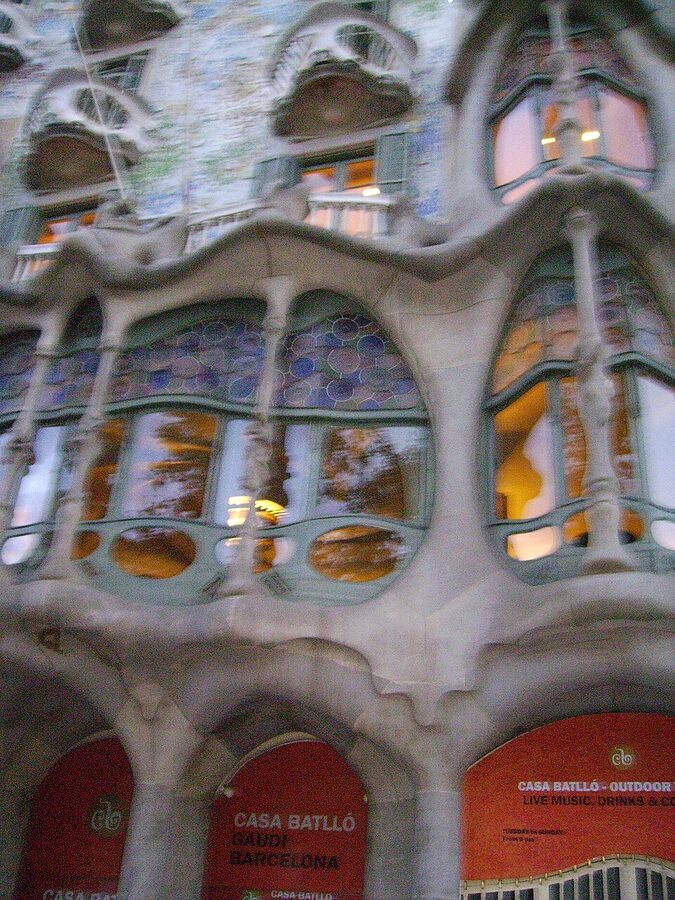
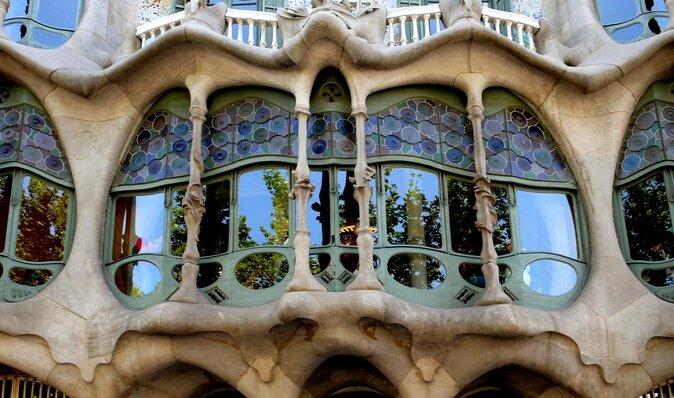
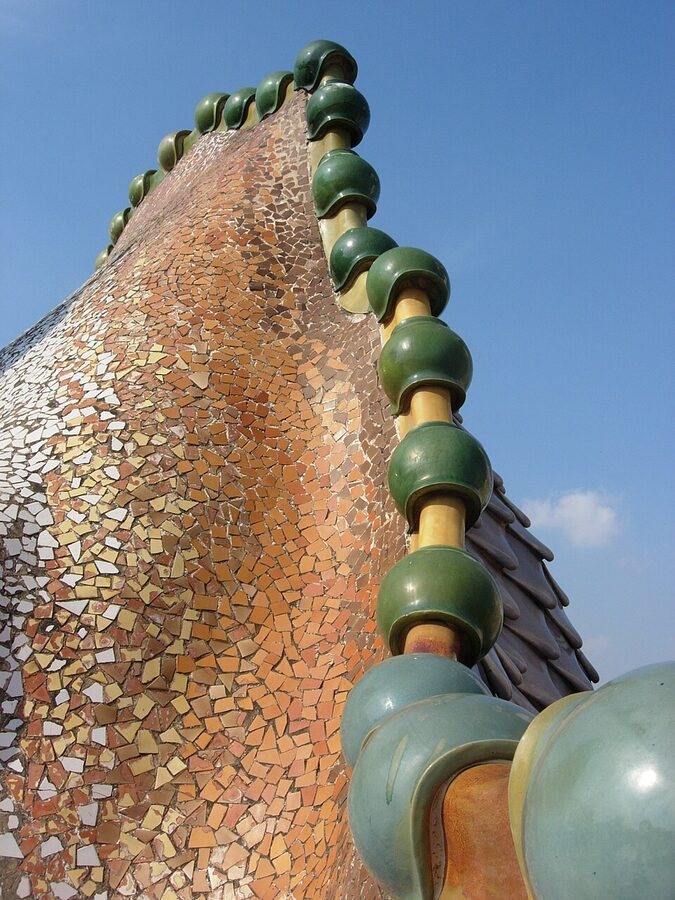
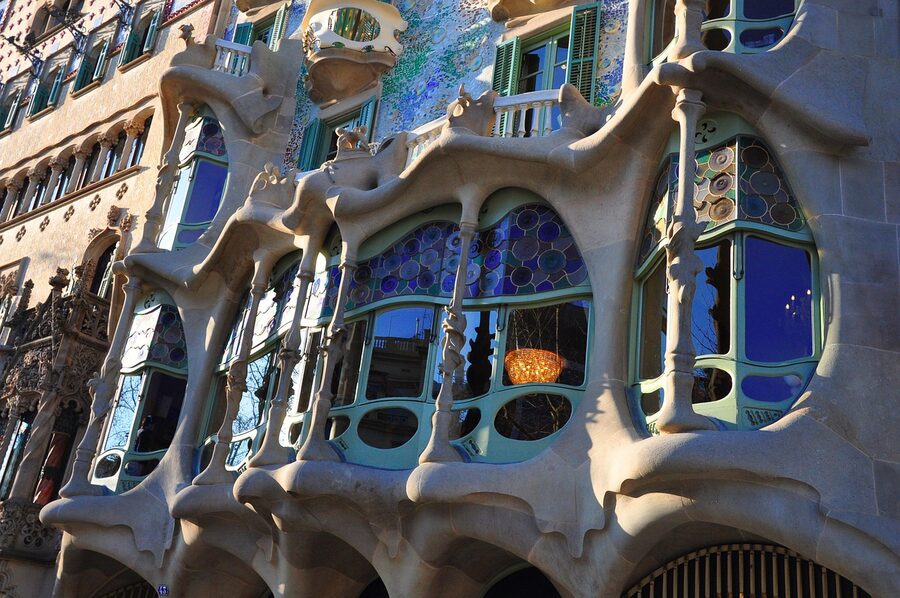
Casa Batlló sits at Passeig de Gràcia 43, in the middle of Barcelona’s most expensive shopping street. Antoni Gaudí remodeled it between 1904 and 1906 for the textile industrialist Josep Batlló, who had bought a fairly boring 1877 building and wanted something extraordinary. He got it. The facade is covered in broken-tile mosaic that shimmers blue and green like fish scales, with balconies shaped like masks and a roof ridge that’s openly meant to be the back of a dragon. UNESCO added it to the World Heritage list in 2005. About a million people a year now go through the front door.
Which ticket to buy
Casa Batlló sells five main tickets, plus seasonal night options. It’s confusing on the official site because they front-load the cheapest tier, then add upgrade screens. Here’s the actual hierarchy.
Blue ticket from 29€. Audio guide on a smartphone-style device, plus the Gaudí Cube at the end. The Cube is a 360-degree video room created by Refik Anadol, the artist who did the moving facade in New York. It’s the right baseline ticket if you’ve never been and just want to see the house.
Silver ticket from 37€. Adds an augmented-reality tablet you carry through the rooms, plus the Gaudí Dôme entrance experience (a moving walkway through a giant dome of LED panels) and the Original Concierge Room. The AR tablet is the upgrade most people don’t realise they want. Without it, you’re looking at empty rooms. With it, the rooms fill with the Batlló family’s furniture, and Gaudí’s design ideas literally jump off the walls.
Gold ticket from 39€. Two euros more than Silver and the only one that includes the private Batlló family apartment. Also gets you fast-track entry, free date changes, and free cancellation. This is the one I’d book. The 2€ jump from Silver to Gold is the best value in the whole pricing tree.
Be The First from 45€. The 8:30 or 8:45 entry ticket. You’re inside before the doors officially open at 9:00. I’ll come back to this one in a minute, because it’s the ticket I’d buy if I were going specifically to take photos.
Magic Nights from 59€ (May to October). Last entry around 8pm, after closing. Live music on the roof, your own table, a drink included, sunset over the chimneys. No Gaudí Cube and no Batlló apartment on this one, they’re closed for operational reasons. Tickets price up to 99€ depending on the act. The musical calendar is published when you pick your date.
A Winter Night from 39€ (November to February). A storytelling visit told through the AR tablets and a soundtrack composed for the experience. First entry 6:30pm, last 8:45pm. If you’re in Barcelona at Christmas, do this instead of the standard daytime visit.
Two things on pricing the official site doesn’t shout about. First, the colour-coded calendar: green time slots are cheaper than yellow ones (yellow means almost full). Pick green and you save a few euros for nothing. Second, buying at the box office adds 4€ “management fee” per ticket, plus you might find your preferred slot sold out. Always book online and as far in advance as you can.
About that 2-for-1 promo, and other discounts
Right now the official site runs a permanent-feeling 2×1 promotion on Blue, Silver, and Gold tickets, but it’s only valid for residents in Spain. You’ll be asked to show ID at the entrance. If you’re a tourist, ignore that banner. It doesn’t apply to you and the promo doesn’t stack with anything else.
What does work for non-residents:
- Children under 12: free. No ticket needed. Just walk in with the parent.
- Ages 13 to 17, students, and visitors with disabilities: 6€ off. Companions of disabled visitors get in free.
- 65 and over: 3€ off.
- Online vs box office: 4€ saved. Same ticket, no booking-counter surcharge.
You apply the discount during checkout, on the same screen where you choose Blue/Silver/Gold. Have your ID handy when you arrive. They do check.
How long the visit takes
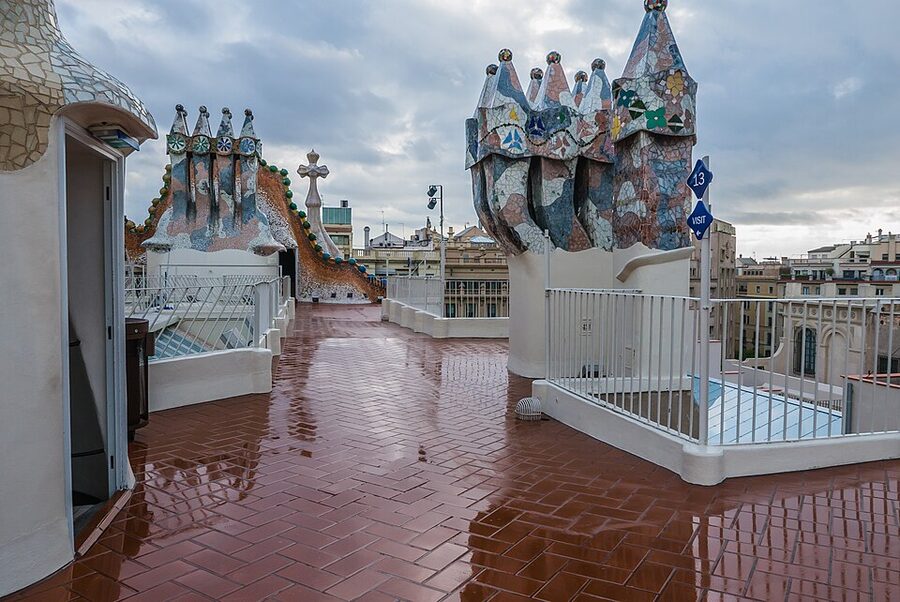
Officially: 1 hour 15 minutes. In practice, plan 1h30 for Silver and 1h45 for Gold. The AR tablet adds time because most people stop and rewind sections. The roof is also where time disappears. The chimneys photograph well from a dozen angles and the views down Passeig de Gràcia are worth lingering on.
If you’ve also booked Sagrada Família, La Pedrera, or Park Güell on the same trip, do Casa Batlló first. It’s the visit where you’ll learn how Gaudí thinks. Once you’ve understood the lightwells, the catenary arches, the way he uses ceramics, every other Gaudí site in Barcelona makes more sense. I cover the same logic in our guide to booking Sagrada Família and our how-to-visit guide for La Pedrera.
Three tickets I’d actually book
The Casa Batlló booking page lists about a dozen tour combinations, plus you can find the same products on Viator, GetYourGuide and Klook. Most of them are repackaged versions of the same Blue/Silver/Gold tickets, sometimes with a guide bolted on. After comparing review counts, prices, and what’s actually included, three keep coming back as the strongest picks.
1. Barcelona: Casa Batlló Entry With Self-Audioguide Tour: $34
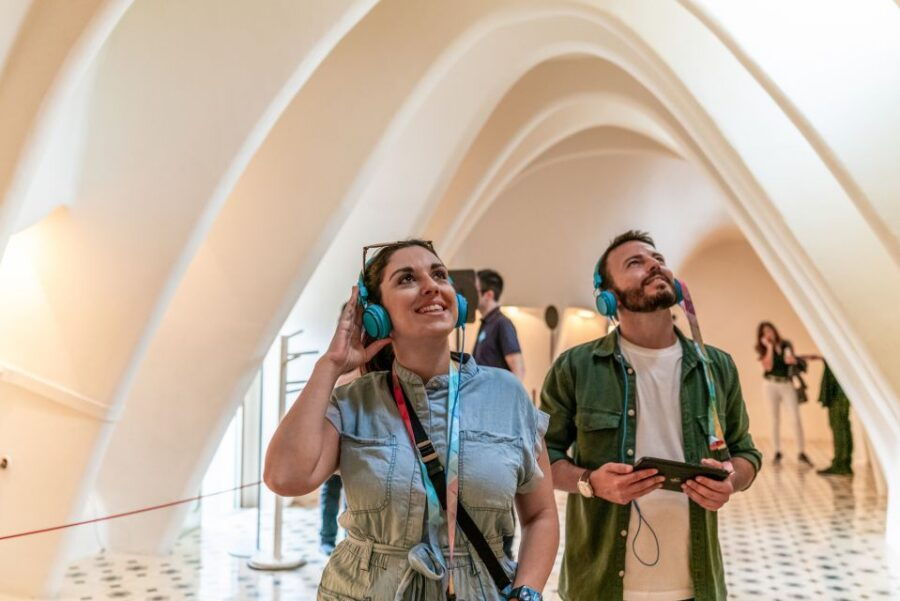
The most-booked Casa Batlló ticket on the market by a long way, and our full review of the self-audioguide tour walks through which tier (Blue, Silver, or Gold) actually makes sense for first-time visitors. The audioguide uses AI to time your commentary to the room you’re in, so you don’t fumble for chapter numbers. If you want one ticket and zero faff, this is it.
2. Casa Batlló Be The First Entry Ticket: $53
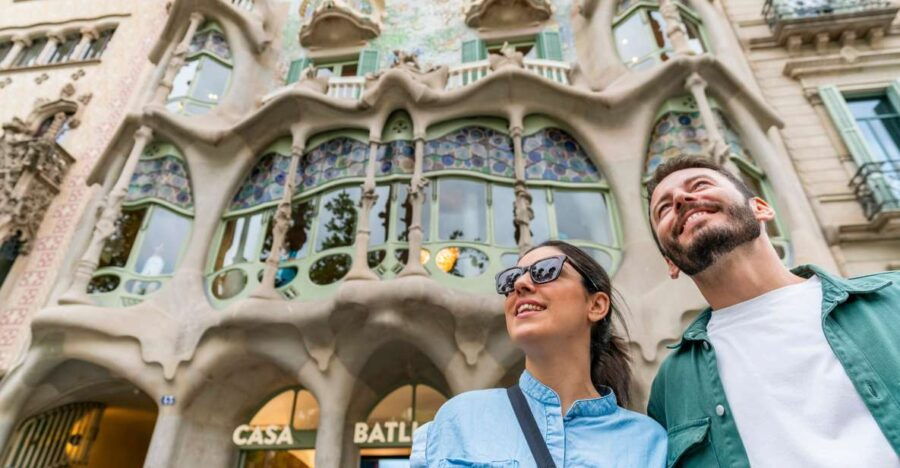
The premium pick for photographers and anyone who finds tourist crowds physically painful. We weigh the trade-offs in our Be The First review, but the short version is yes, the surcharge is worth it once. You won’t book it twice, but the empty rooms with morning sun on the blue tiles are the photo most visitors don’t get.
3. Casa Batlló Admission Ticket With Intelligent Audio Guide: $54
Functionally the same product as pick #1, sold through Viator. We compare both flows in our review of the Viator listing. Choose this if you already have Viator credit, are bundling Casa Batlló with other Viator activities for the trip, or just prefer their app for keeping all your bookings in one place.
What you’ll actually walk through
Casa Batlló is a vertical visit. You start at the Noble Floor (the family’s main living quarters), spiral up through the upper rooms, end on the roof, then come back down through the lightwell and out via the gift shop. The route is one-way, so you can’t double back if you missed a room.
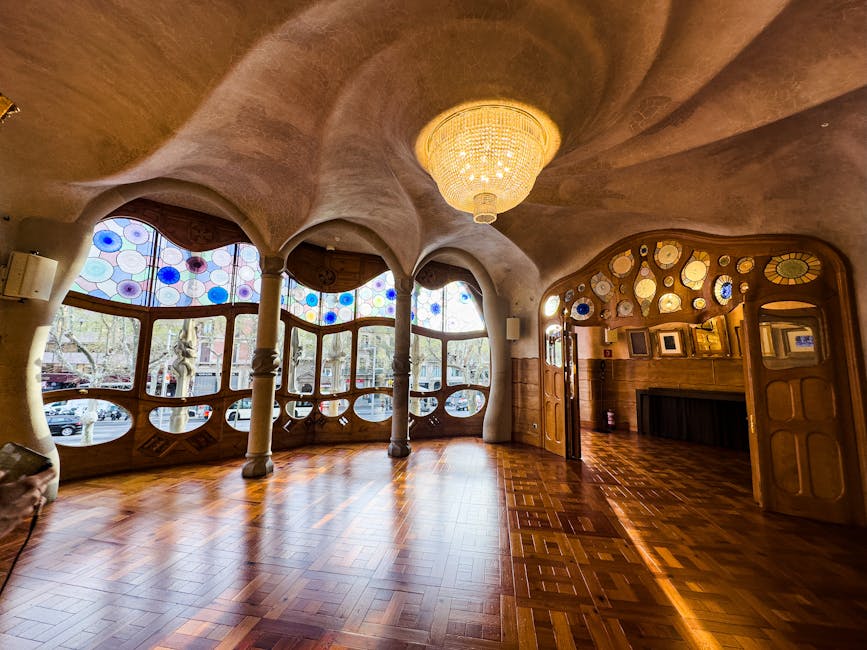
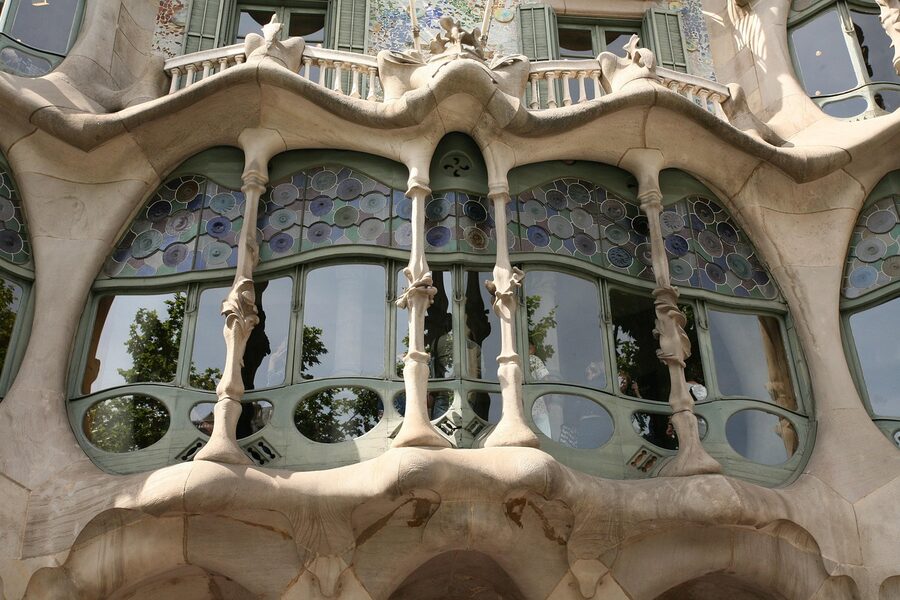
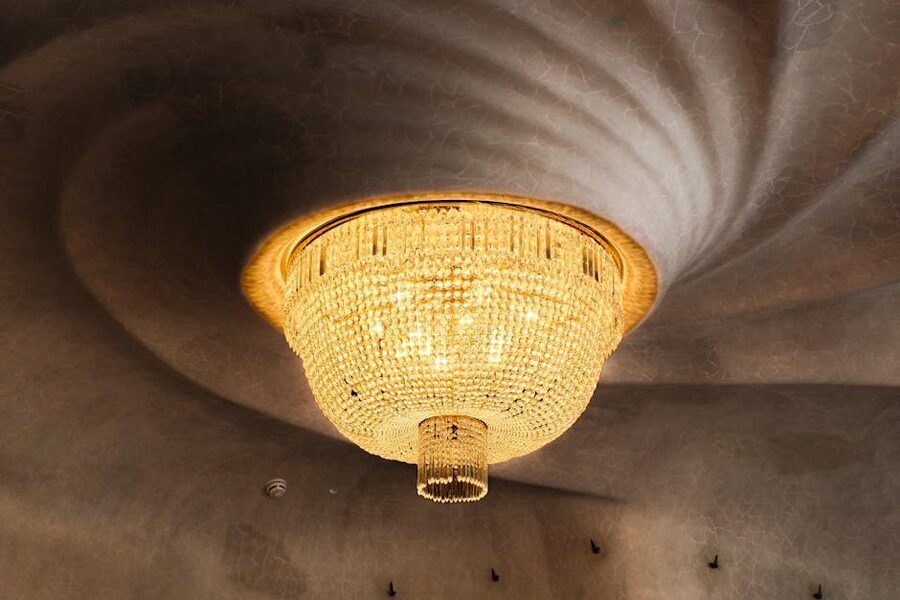
Plan a slow first 15 minutes on the Noble Floor. That’s where the famous bay window faces Passeig de Gràcia, where the dining-room ceiling spirals out from the chandelier, and where the wood and stained glass really pay off in person. Phones drop signal here because of the thick walls, which actually helps. You’re forced to look up.
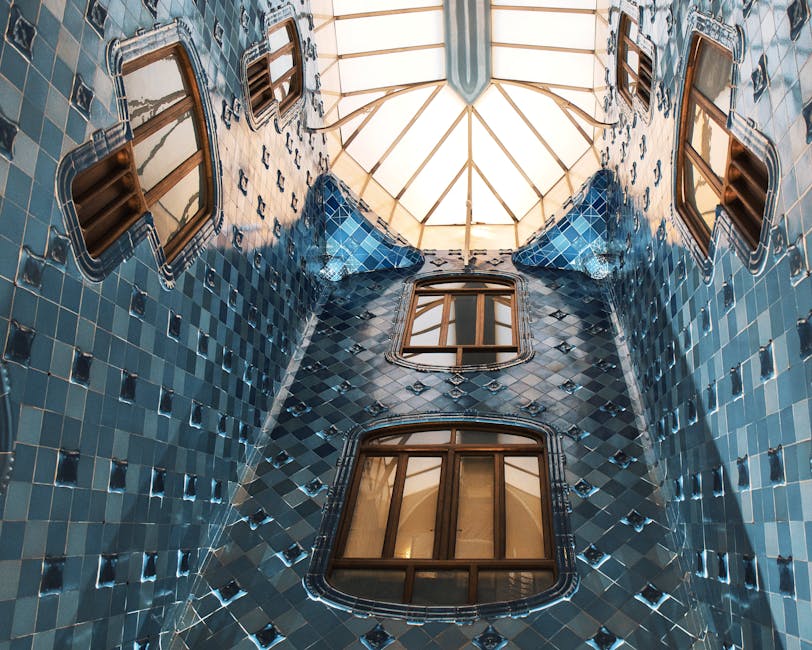
Above the Noble Floor you’ll pass through the family bedrooms (only on Gold tickets), then up the lightwell stairs to the loft. The loft is white, vaulted, and quiet. It’s the easiest room to miss because the AR tablet has fewer prompts here, but it’s the room that explains the dragon’s spine on the roof. The catenary arches you’re walking under are structurally what holds up the dragon ridge.
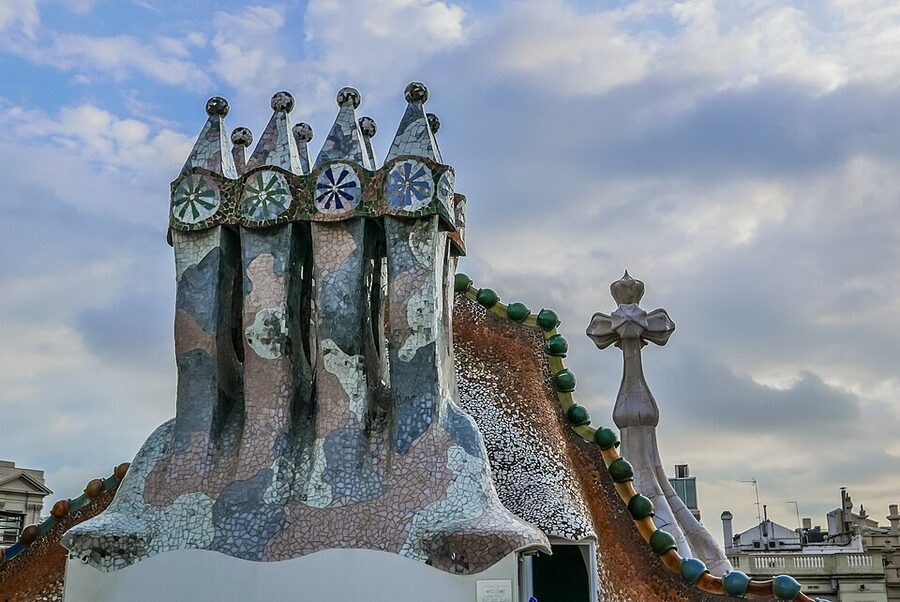
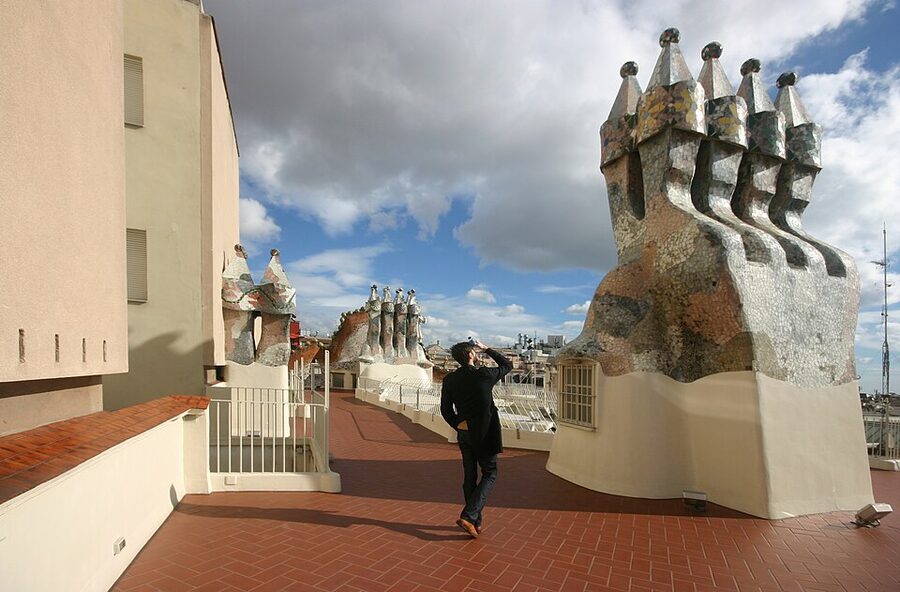
Then the roof. This is where most people slow down, sit on the benches, and just look. Try to catch the chimneys against blue sky, then walk to the back of the roof for the view of the rear courtyard, then come down. Don’t rush this part. You’re paying for the rooftop more than you realise.
The Gaudí Cube and Gaudí Dôme experiences
Two pieces of new tech wrap around the historical visit, and both are worth knowing about.
The Gaudí Dôme is the entry experience for Silver and Gold tickets. You step onto a slow-moving walkway and travel through a rotating dome lined with more than a thousand LED panels. They show natural footage. Water, leaves, light through trees. All of it material Gaudí used as inspiration. It takes about three minutes. It sets the tone, and it’s the only part of the visit where you have time to mentally arrive before the architecture starts demanding your attention.
The Gaudí Cube is the exit experience, included in all tiers. It’s a 360-degree LED room created by Refik Anadol, the digital artist behind the moving Times Square sculptures. Anadol fed Gaudí’s drawings, photos, and biographical material into an AI model, then turned the output into an immersive video. It runs about seven minutes. Some people think it’s the highlight, some think it’s a video at the end of a museum visit. I land in the second camp, but I’m glad I saw it once.
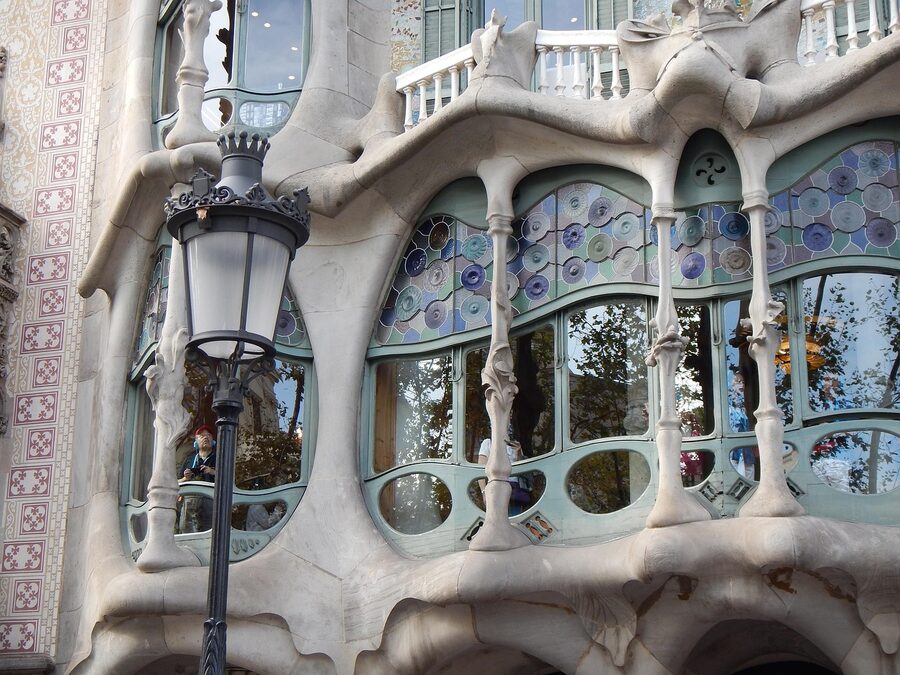
Photo strategy: when to go for which shots
Casa Batlló is one of the most photographed buildings in Spain, and most of the photos look the same because most people visit at the same time of day. A few specifics worth planning around.
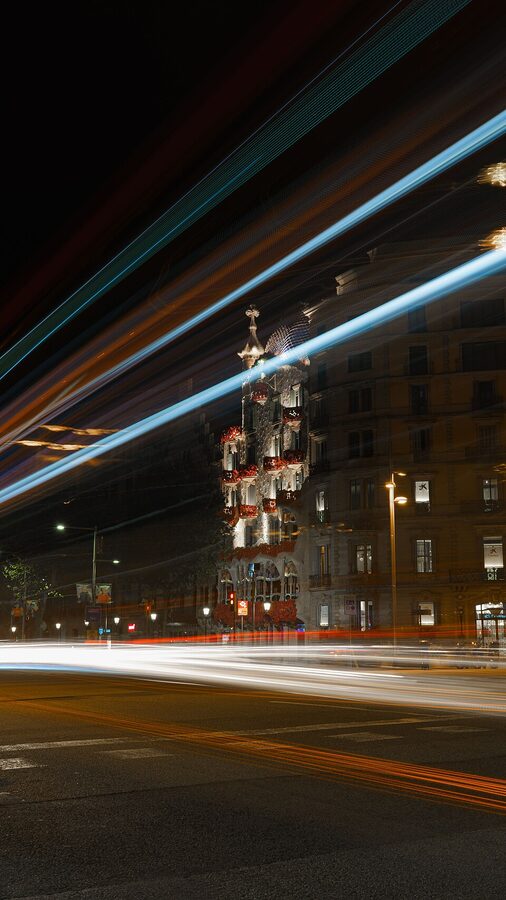
Facade in soft light: Late afternoon, around 5pm in spring or 6:30pm in summer. Golden hour catches the mosaic side-on and lights up the iridescent fragments. From the median strip, you can fit the whole house in one shot without standing in the road.
Interior with no people: Be The First ticket, full stop. Even on a slow weekday, the Noble Floor at 11am has 30 people in it. At 8:35am, you might have it to yourself.
Lightwell looking up: Bring a phone with a wide lens or a small camera. The shaft is narrow and the reflective tiles play tricks. Drop the exposure two stops manually so the highlights at the top don’t blow out.
Rooftop chimneys: Mid-morning if you want sharp shadows on the mosaic. Mid-afternoon if you want the chimneys silhouetted against blue.
Getting there and what’s around it
Casa Batlló is on Passeig de Gràcia 43, a five-minute walk from Plaça Catalunya at the top of La Rambla. Three useful arrival options.
Metro: Passeig de Gràcia station, served by L2 (purple), L3 (green), and L4 (yellow). Use the Aragó/Carrer de la Diputació exit and you’ll come up about 30 metres from the entrance. This is the simplest option from anywhere central.
Bus: Lines H10, V15, V17, 7, 22, and 24 all stop on Passeig de Gràcia. Useful if your hotel is near the seafront.
Hop-on hop-off: Both major Barcelona HOHO loops stop directly outside Casa Batlló. If you’re already using the bus for the day, our guide to the Barcelona hop-on hop-off bus covers the route timings, and the alternative loop if you want to compare.
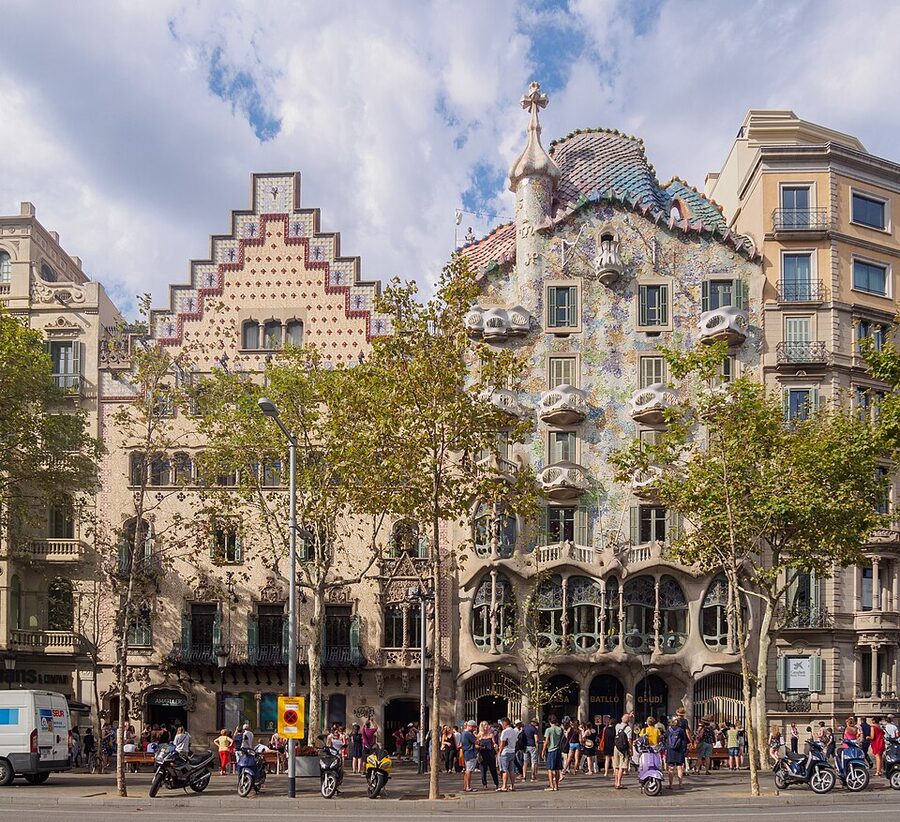
What’s literally next door:
- Casa Amatller (right next to Casa Batlló) by Puig i Cadafalch. Different style, similar period. Small entry fee, much shorter visit, half the crowds. Worth 30 minutes if you’re already on the block.
- Casa Lleó Morera (corner of Passeig de Gràcia and Carrer del Consell de Cent) by Domènech i Montaner. With Batlló and Amatller, it makes up the famous “Manzana de la Discordia”, or Block of Discord. Three modernist masterpieces by three rival architects on one block.
- La Pedrera (Casa Milà): ten minutes’ walk further up Passeig de Gràcia. This is the next-most-popular Gaudí house and the natural double-bill with Casa Batlló. We unpack the whole booking process in our how-to-visit La Pedrera guide.
A short history, because it’s worth knowing
The plot at Passeig de Gràcia 43 had a building on it from 1877. It was unremarkable. Josep Batlló, a textile baron, one of the richest men in Barcelona, bought the lot in 1903 with the original plan of demolishing the existing building entirely.
Gaudí talked him out of it. Knocking it down and starting over would have taken longer than Batlló was prepared to wait, and Gaudí said he could do something more interesting by remodeling. Batlló agreed. Construction ran from 1904 to 1906. The total budget was 350,000 pesetas, which was an enormous sum for a private residence at the time.
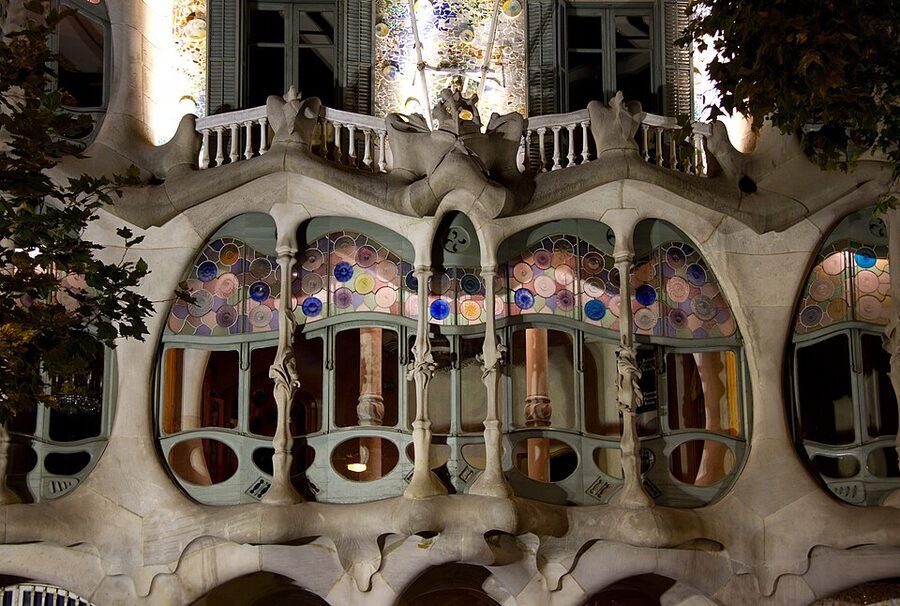
Gaudí kept the original walls and structure of the 1877 building. Almost nothing else. He added two new floors at the top. He cut a new central lightwell from the roof to the ground floor, replacing the small original. He redesigned every facade element, every staircase, every door handle.
The building stayed in private hands for almost a century. The Batlló family lived in it until 1954, when they sold it. It changed owners several times. The Bernat family, of Chupa Chups lollipops fame, bought it in the early 1990s and gradually opened it for visitors. Full public access in its current form started in 2002. UNESCO listed it in 2005, alongside Park Güell, La Pedrera, and Sagrada Família.
Sant Jordi and Christmas: two free spectacles you can plan around
Two days a year, the facade does something nothing else in Barcelona does, and you don’t pay a euro to watch.
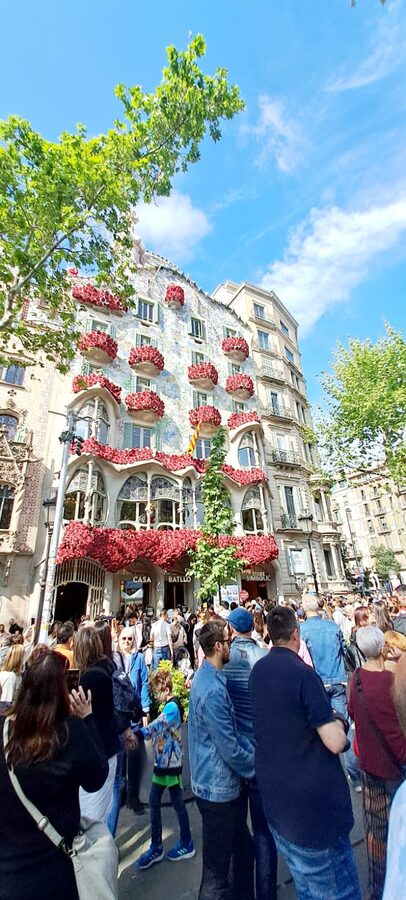
Sant Jordi (April 23rd). Catalonia’s patron saint feast day, also UNESCO World Book Day. The whole facade is dressed in roses for one day only. Catalans flood Passeig de Gràcia carrying books and roses for each other, and the legend of Saint George slaying the dragon is everywhere. The facade itself is a Saint George reference. The tiles are dragon scales, the catenary balconies are the dragon’s belly, and the columns are the bones of the dragon’s victims. On Sant Jordi, the rose bush sprouting from the dragon’s blood becomes literal, with thousands of roses covering the facade. If your trip overlaps April 23rd, plan to be on Passeig de Gràcia that morning.
Christmas season (mid-November to early February). The facade runs a free 7-minute light and music show every 30 minutes from 6:30pm to 9:30pm, daily through January 7th, then weekends only until February 18th. It’s projected onto the existing tiles, so the building shifts colour and pattern in time with the music. The crowds are heaviest right after sundown and again around 8pm, but at 9pm on a weekday in early December you can usually find a clear spot on the median.
The free-courtyard hack everyone misses
You can see the rear modernist courtyard of Casa Batlló, the part most visitors only see from inside on the tour, without buying a ticket. It’s not a secret, exactly, but I had no idea until a Barcelona local mentioned it.
Walk to Servei Estació, a large hardware and stationery store at Carrer d’Aragó, 270, about a block away. Take the lift to the second floor and step out onto the customer terrace. You’re looking straight into Casa Batlló’s interior courtyard from a few storeys up. You’ll need to buy something small from the shop (a notebook, a pen, anything), but the view is genuinely worth it. This won’t replace the ticket, but it’s a free taste if you’re on a tight day or want to scout angles for a return visit.
Casa Batlló vs La Pedrera: do you need both?
This is the question I get most often from people doing a four-day Barcelona trip on a Gaudí pilgrimage. Short answer: yes, but in different ways.
Casa Batlló is the more theatrical visit. Brighter colours, more dramatic interiors, more storytelling tech (AR tablets, Gaudí Dôme, Cube). It’s the one that grabs you emotionally.
La Pedrera (Casa Milà) is the more architectural visit. Stone, light, and structure rather than mosaic and colour. The roof terrace is famous for the warrior chimneys, and the loft is preserved as Gaudí designed it. It’s the one that stays with you intellectually.
If you have to pick one, pick Casa Batlló for the wow factor and Pedrera for the slower, calmer experience. If you have time for both, do Batlló first. It’ll prime you for what’s interesting about Pedrera, which is otherwise a quieter visit. Our La Pedrera booking guide has the equivalent ticket breakdown.
Practical notes that aren’t on the booking page
- Stairs vs lift: There is a lift, but the visit is designed for the stairs and signposting assumes you take them. If you can manage the stairs, you’ll see more.
- Bag policy: No big backpacks inside. There’s a small free locker by the entrance. If you’ve come from the airport with luggage, leave it at your hotel first.
- Photos and video: Allowed everywhere except (oddly) the Cube. Tripods and selfie sticks are not allowed.
- Cash or card: Card is fine everywhere, including the gift shop. Casa Batlló is one of the few attractions in Barcelona where cash adds nothing.
- Audio guide languages: 15 languages on the AR tablet, including Catalan, Spanish, English, French, German, Italian, Portuguese, Russian, Polish, Dutch, Japanese, Korean, Chinese, Arabic, and Hebrew.
- Wheelchairs: The lift goes to most floors, but the rooftop is partly accessible only via a narrow stair. Call ahead if mobility is a concern.
- Children: Genuinely good for kids 8 and over, especially with the AR tablet. Under that, the dragon storyline holds attention for about 20 minutes, then you’ll be carrying them.
If you’re combining sites: pre-built routes
Casa Batlló pairs especially well with two other Gaudí stops on the same day:
Half-day Gaudí walking route: Casa Batlló at 9am (Be The First if you can), walk 10 minutes up Passeig de Gràcia to La Pedrera by 11:00, lunch in the area, then a Bicing or taxi to Park Güell for a 2pm slot. We map this out further in our Park Güell booking guide.
Full-day Gaudí route: Add Sagrada Família last, with a 4pm or 5pm entry. Three Gaudí sites in one day is possible but exhausting. If you’ve never been to Barcelona, split it across two days. Our Sagrada Família guide covers the timing trade-offs in detail.
For prebuilt combo tickets, the most common ones are Sagrada Família + Park Güell combos, but Casa Batlló isn’t usually bundled. The building’s own booking system is exclusive enough that resellers can’t undercut it.
What to do once you’re back outside
You’ll come out of Casa Batlló either on a high or with sensory overload, depending on your tolerance for AR tablets. Either way, two suggestions for the next two hours.
If you have energy: walk five minutes to Carrer Aragó and the Fundació Antoni Tàpies (different artist, but housed in another modernist building, much quieter). Or grab a coffee at one of the cafés on Carrer del Consell de Cent and just look back at the facade for a while. Some buildings reward repeat looks.
If you want food and a guide: a small-group tapas and wine tour starting in the early evening is the natural follow-up. The walking tour version covers L’Eixample, which is the area you’ve just been in. Or for something less planned, our Boqueria market visit + paella class is the slowest, most sensory afternoon you’ll have in Barcelona.
Common questions, fast answers
Is Casa Batlló worth it? Yes, but only if you book Silver or Gold. Blue without the AR tablet undersells the visit.
Best time of day? First thing in the morning for crowds and light. Late afternoon for the facade in golden hour.
How far in advance to book? Two weeks in summer, three to four days in winter. Magic Nights and Be The First sell out further out. Book those a month ahead.
Are kids under 12 actually free? Yes, but you still need to register them when buying tickets so they get a wristband at entry. No additional cost.
Can I just walk up? Sometimes, but the queue at the door is the slowest line in Barcelona. Even if a slot is technically available, you’ll wait 30-90 minutes. Always book online.
Is there a guided tour option? Yes, but it’s expensive and the AR tablet is so good you don’t need a human guide. Save your guide budget for Sagrada Família, where the storyline is denser.
Do I tip? No. Spain doesn’t tip in cultural attractions and Casa Batlló staff don’t expect it.
One more Barcelona reading list
If Casa Batlló was your first Gaudí site, you’ll want to plan the next ones. Start with our how-to-book Sagrada Família guide for the basilica that will be Gaudí’s masterpiece if it ever finishes, and our Park Güell booking guide for the hilltop park that explains how Gaudí thought about colour outdoors. The same week, the Camp Nou immersive tour is worth a half-day even if you don’t follow football, and a Montserrat day trip gets you out of the city for a day among the rocks Gaudí used as inspiration.