
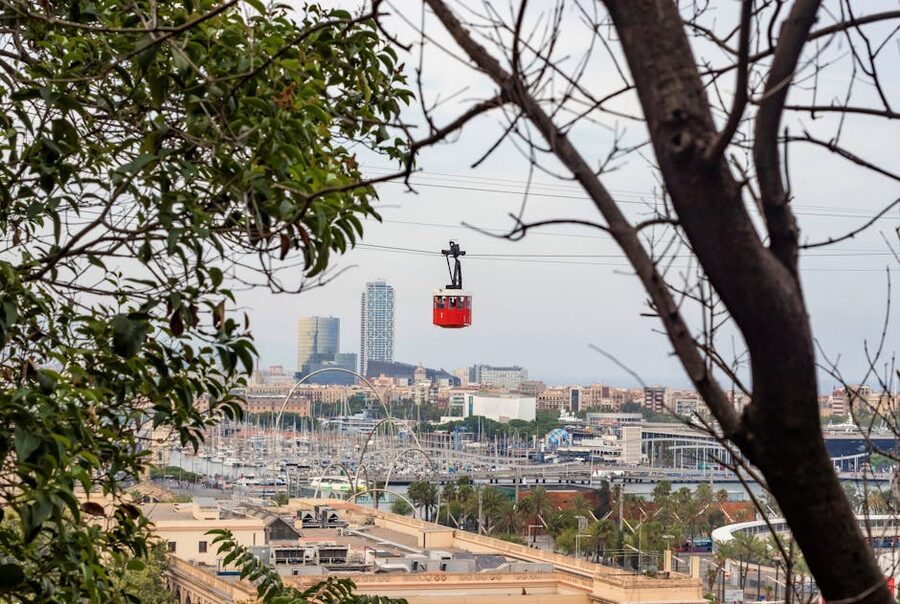
The cabin had just lifted off the platform when the family next to me gasped, all four of them, in unison. Below us the rocky east face of Montjuic fell away. To the right the port turned into toy ships and a yellow harbour bridge. Then someone said “look up” and I saw the castle ramparts, much closer than they had any right to be after twenty seconds of travel.
The Telefèric de Montjuïc is one of those Barcelona experiences that sounds like a tourist trap and turns out to be the real thing. Eight minutes, three stations, and a view that does most of the work for you. This is how to book it without queuing twice.
Short on time? Three quick picks
- Roundtrip ticket, no extras (about €17): the actual cable car ride, base to castle and back. Book on GetYourGuide
- Best-of-Barcelona day with Sagrada, Park Güell, Montjuic and the Gothic Quarter (about €120): the cable car bundled into a guided seven-hour city day. Book on Viator
- Walking tour up to the castle plus the cable car back down (about €64): small group, three and a half hours, with a guide who fills in the history. Book on GetYourGuide
- Short on time? Three quick picks
- What you actually buy when you “buy a Montjuic cable car ticket”
- Should you bother? Honest answer
- How to actually book: three options ranked
- 1. Barcelona: Montjuic Cable Car Roundtrip Ticket, about €22
- 2. Best of Barcelona: Sagrada Familia, Park Güell, Montjuic and Gothic Quarter, about €120
- 3. Barcelona Walking Tour With Montjuic Castle and Cable Car, about €64
- The three stations explained
- Parc de Montjuic (base station)
- Mirador (mid-station)
- Castell de Montjuic (summit station)
- Cabin tips that actually matter
- Getting to the base station: three real ways
- Funicular de Montjuic (the standard route)
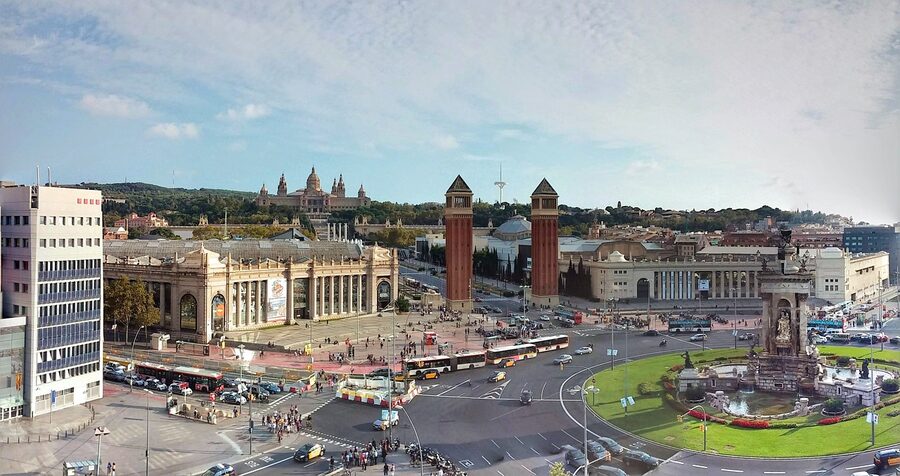
- Bus 150 from Plaça Espanya
- Bus Turistic, with a small warning
- What’s at the top: the castle, briefly
- The other Montjuic cable car: Telefèric del Port
- The hill itself: what else is up here
- Best time of day to ride
- Combining the cable car with the rest of your Barcelona day
- Common mistakes
- Tickets and the queue, in real terms
- For cruise passengers
- Quick FAQ
- Worth doing on the same Barcelona trip
What you actually buy when you “buy a Montjuic cable car ticket”
This is the part that confuses people, so I want to clear it up before you get to a station and bounce between two ticket windows.
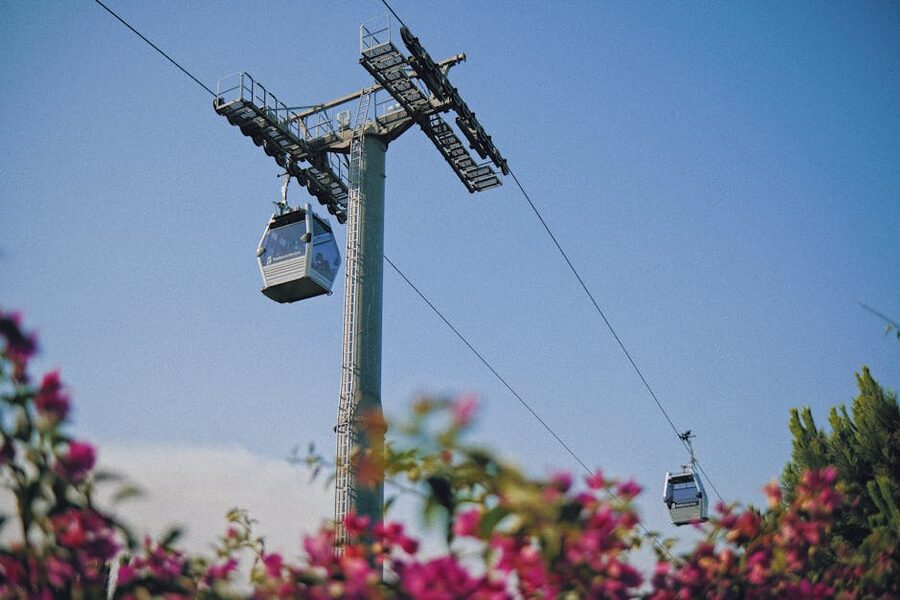
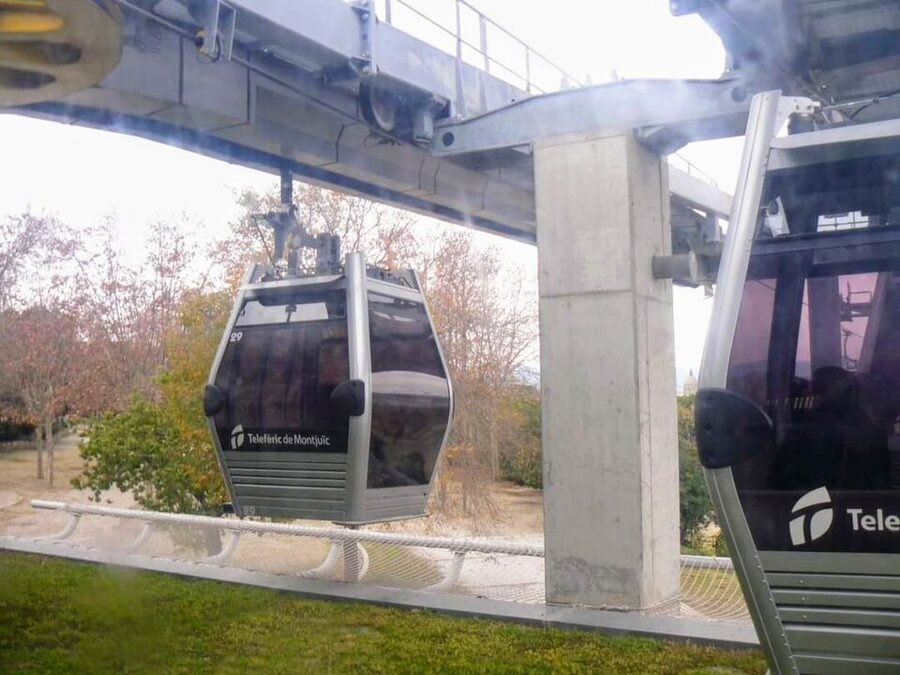
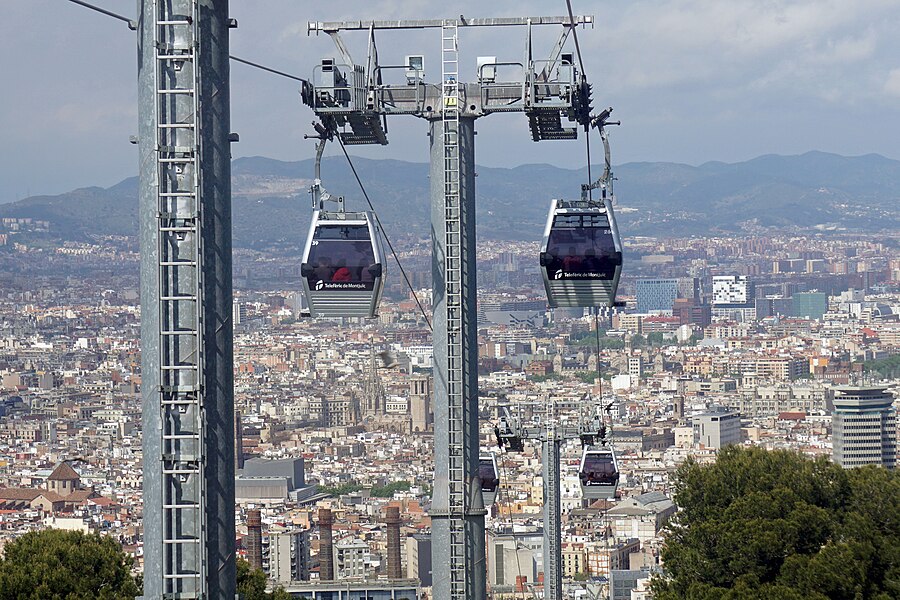
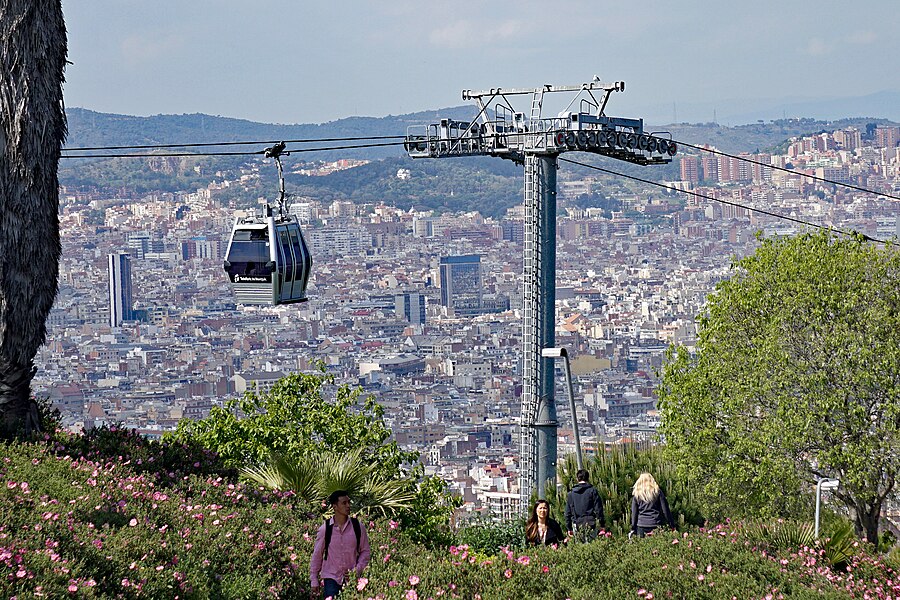
The “Montjuic Cable Car” almost everyone means is the Telefèric de Montjuïc. It is the gondola that runs from the Parc de Montjuïc base station, up past a mid-stop called Mirador, and finishes at the Castell de Montjuïc on the summit. Eight-passenger cabins, modern, refurbished a few years back, total run about five minutes if you don’t get off at the middle stop.
There is a second cable car on the same hill. The Telefèric del Port swings out over the harbour from Barceloneta beach to the Miramar terrace. Different operator, different ticket, different experience. I cover that one further down. If a tour says “Barcelona cable car” without specifying which, ask before you pay.
Tickets for the Telefèric de Montjuïc come in two main flavours. A roundtrip at about €17 for adults online, and a one-way at about €12. The one-way is only sold at the station ticket window, not online, so plan accordingly. Children 4 to 12 pay €11.70 reduced; under 4 ride free. The simplest thing to do is buy the roundtrip in advance through the flagship roundtrip ticket on GetYourGuide, get the QR code on your phone, and walk past the queue.
Should you bother? Honest answer

Yes, if any of these apply: you have not been up Montjuic before, you want to visit the castle, you have kids, you have older relatives who can’t manage the climb, or you are short on time and want a memorable view in under thirty minutes total.
Skip it if: you are on a tight budget and happy to walk up (the path through the gardens is genuinely nice and free), you have already done plenty of viewpoint rides this trip, or you are visiting in the off-season and only have one rainy day in Barcelona. The visibility from the cabin is the whole point.
I have been up three times now and it has been worth the ticket every time. The novelty wears off slightly on the third ride. The view does not.
How to actually book: three options ranked
I have ranked these by how I would book them in different scenarios. The order is not about price. It is about which one matches what you actually want from the day.
1. Barcelona: Montjuic Cable Car Roundtrip Ticket, about €22

This is the one to book if you just want to ride the cable car without commitment. Free cancellation, reserve now and pay later, mobile ticket. The practical stuff is all sorted, and my full review covers the cancellation rules and what the on-site ticket window queue actually looks like in summer. With over twenty thousand reviews this is by far the most-booked option for a reason.
2. Best of Barcelona: Sagrada Familia, Park Güell, Montjuic and Gothic Quarter, about €120
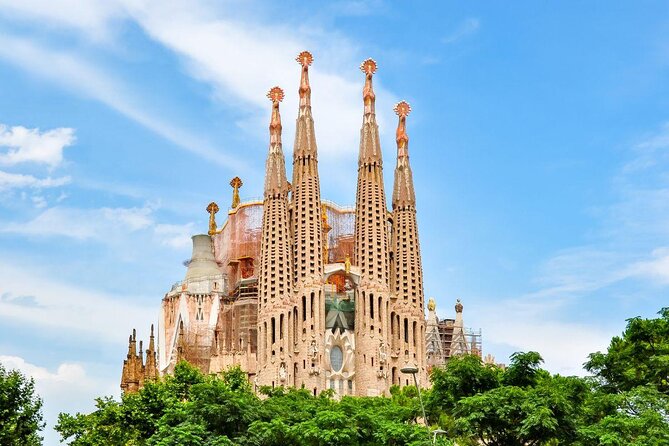
If this is your first day in the city and you want one tour that ticks the big boxes, this is it. Sagrada Familia, Park Güell, the Gothic Quarter and the Montjuic cable car in a guided sweep. Our long-form review goes into how the day flows and where the rushed parts are. Not cheap, but reviewers consistently flag the guide quality and the fact that nothing feels phoned in.
3. Barcelona Walking Tour With Montjuic Castle and Cable Car, about €64

This is the version I would book if I cared about the castle’s actual story. Civil War prison, anti-aircraft battery, Olympic backdrop. Small groups, three and a half hours. The full review goes into the route and the bits the guide skips. One caveat: the Telefèric does close for periodic maintenance, and reviewers have flagged that they weren’t always told before the tour. Check the operating calendar before booking.
The three stations explained
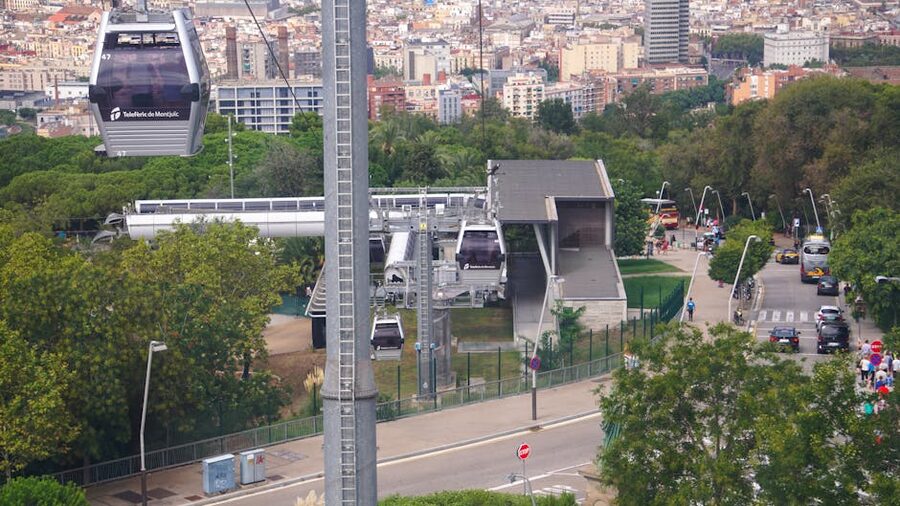
The line has three stops and you can hop off at any of them. People miss this and just ride straight through. Don’t.
Parc de Montjuic (base station)
This is the start. It sits about halfway up the mountain on Avinguda Miramar, next door to where the Funicular de Montjuic drops people off from Paral·lel metro. There is a small ticket office, a couple of benches, and not much else. The gardens around it are the show. Most people arrive here on foot from the funicular or off the Bus Turistic.
Mirador (mid-station)
The middle stop is the one most visitors skip and the one I think makes the trip worth more than its ticket. You step out onto the Mirador de l’Alcalde terrace and you are looking straight down at the cruise port and the Mediterranean. Free. No extra charge. Right next to it are the Mossèn Costa i Llobera Gardens, full of cacti and high-altitude plants. Also free. Twenty minutes here turns the cable car ride into an actual visit to the mountain.
Castell de Montjuic (summit station)
The top stop sits right at the entrance to the castle. You walk maybe forty seconds from cabin to ticket booth. Castle entry is separate. €12 for adults, free under 16, and worth it for the rampart walk alone. If you only have time for one of the two attractions on the hill, do the castle. The view from the moat-side wall, looking south over the port, is the picture of Barcelona that nobody puts on postcards because it doesn’t include Sagrada Familia.
Cabin tips that actually matter
Three things I wish someone had told me the first time:
Sit on the side facing the sea. Going up, that’s the right side. Coming down, the left. The mountain side has trees and not much else. The sea side has the harbour, the Sagrada Familia in the distance, and the city laid flat. People will fight for those windows once the cabin doors close. Get in early or wait for a quieter cabin.
Don’t ride at midday in summer. The cabins are glassed in, the air-con works but isn’t magic, and the queue at the base station can stretch to forty minutes between 12:00 and 14:00 in July and August. First slot at 10:00 is the easiest. Late afternoon, around 17:00, is the prettiest because of the light and you can hold for the sunset. In June through September the line runs until 21:00, which makes evening rides genuinely nice.
Plan for the wait at the top. The top station can get busier than the base because everyone is going down at once. If you want a quick exit, leave before the next bus tour empties into the castle.
Getting to the base station: three real ways
This is where most articles get vague. Here is what actually works.
Funicular de Montjuic (the standard route)
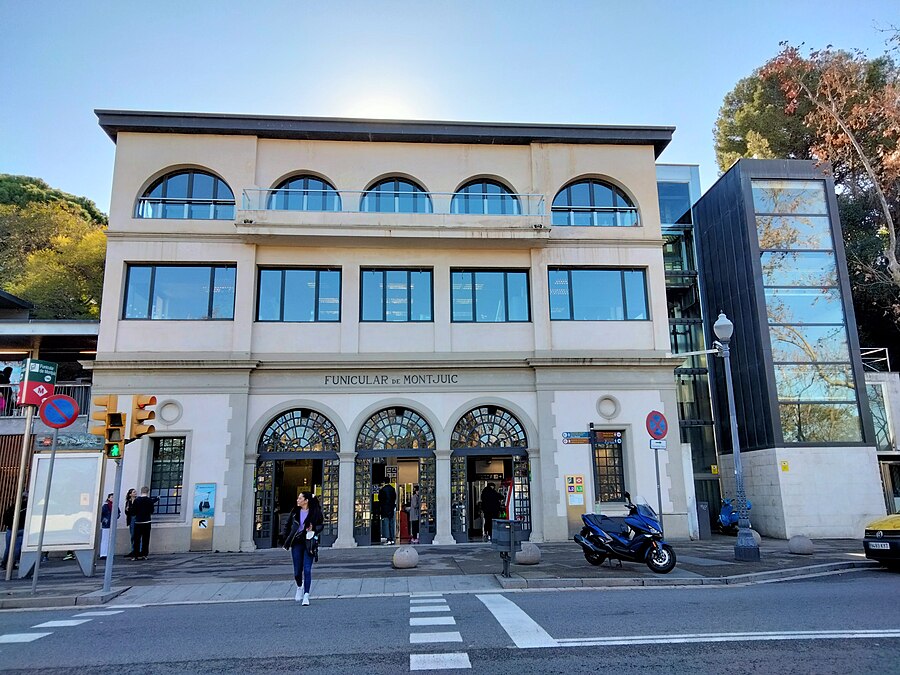
From any metro station, take L3 (green line) to Paral·lel. Inside Paral·lel station, look for the orange Funicular signs. It is part of the integrated metro fare, so a single T-Casual ride covers you. The funicular takes about two minutes to climb the hill and drops you a forty-second walk from the cable car base station. This is what 80% of visitors do, and it is the one that gets you up there fastest.
Catch: the Funicular itself shuts down for maintenance periods, sometimes for months at a stretch. Most recently a five-month closure that caught a lot of cable car ticket holders off guard. If you have booked the cable car in advance, check the TMB site for funicular service before you head out. If it’s down, the alternative is a bus from Plaça Espanya, which adds about twenty minutes.
Bus 150 from Plaça Espanya
If the funicular is closed, or if you want to skip the metro, the 150 bus runs from Plaça Espanya up the hill and stops near the cable car base station. It also continues all the way to the castle, which is useful if the cable car itself is shut. The 150 is part of the same TMB ticket as the metro and funicular.
Bus Turistic, with a small warning
The hop-on hop-off bus has a Telefèric de Montjuic stop, which is convenient but pricey if you are only using it for this one journey. The math only works if you are doing other stops the same day. Which is exactly what the Barcelona hop-on hop-off bus is built for. If you are already considering the bus, fine. If not, the funicular is much cheaper.
What’s at the top: the castle, briefly
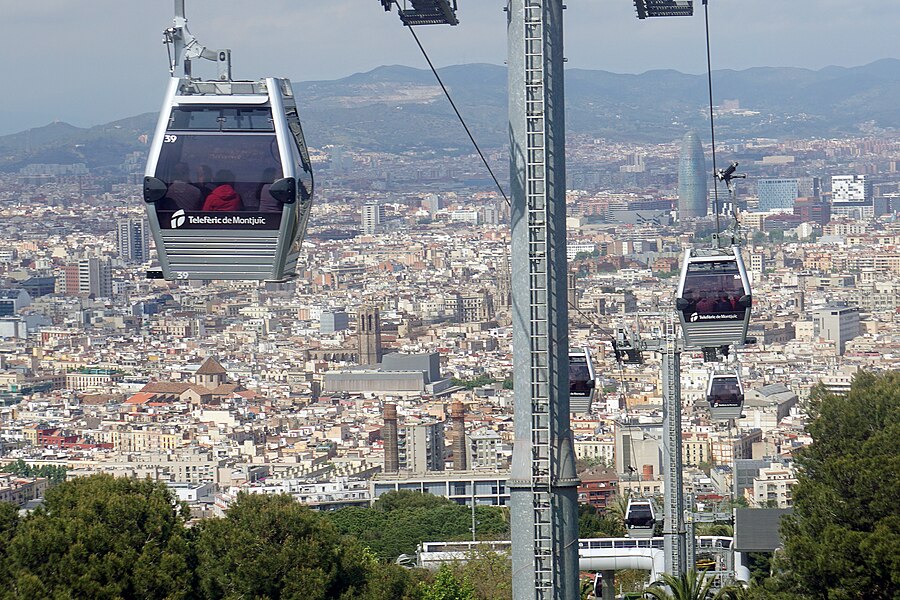
The Castell de Montjuic has been a fortress, a Civil War prison, and an anti-aircraft battery. It is now a museum and a viewpoint, and Barcelona has a complicated relationship with it. The Catalan separatist Lluís Companys was executed inside its walls in 1940. Plaques in Catalan around the moat remember that.
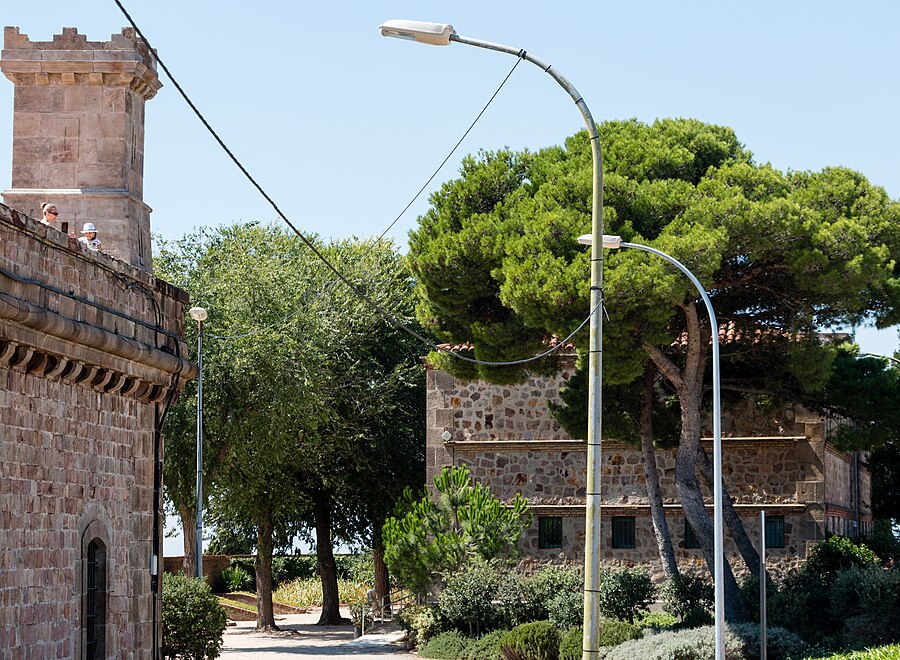
What you actually do here:
- Walk the full ramparts loop. About thirty minutes, almost all of it with sea or city views.
- Visit the small interpretation centre near the entrance for the Civil War story.
- Sit in the moat lawn area, which most people walk straight past. Surprisingly green and quiet.
- Look down at the cruise port from the south-west wall and try to spot which ship is yours, if you came in on one.
Castle entry is €12 for adults and free for under-16s. Allow at least an hour. With the cable car ride either side, you are looking at a two-and-a-half-hour outing minimum if you do nothing else. Half a day if you stop at Mirador and the gardens.
The other Montjuic cable car: Telefèric del Port
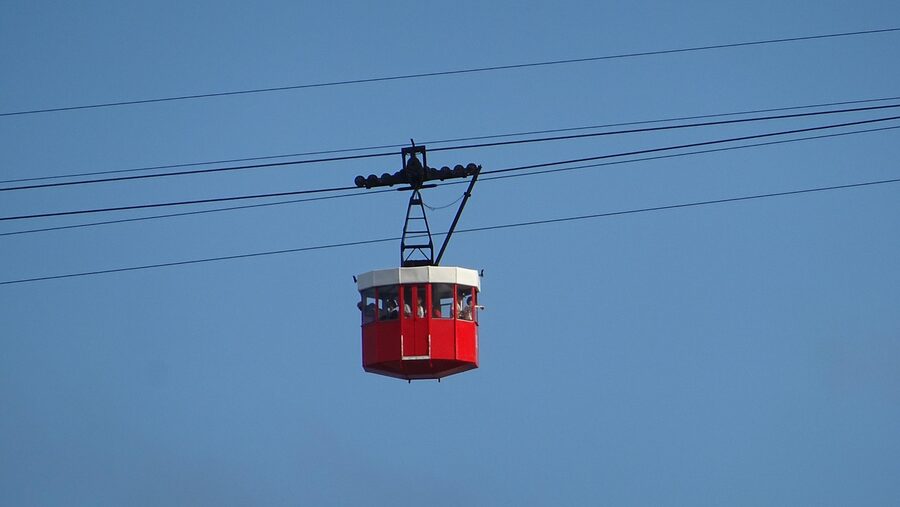
People conflate the two cable cars all the time. The Telefèric del Port is operated by a different company and has its own tickets. It runs between the Sant Sebastià tower at Barceloneta beach and the Miramar tower on Montjuic, swinging right over the harbour and the cruise terminals. Round trip is about €20 and the queue can be brutal in summer.
This is the more dramatic ride. You are over open water and the cabins are higher above the ground than the Telefèric de Montjuic. It is also slower and has fewer departures, so I’d only do it if you are already at the beach end of the city. If you want the classic “cable car to the castle” experience, that’s the Telefèric de Montjuic, not this one.
The hill itself: what else is up here
Worth knowing about, because riders ask:
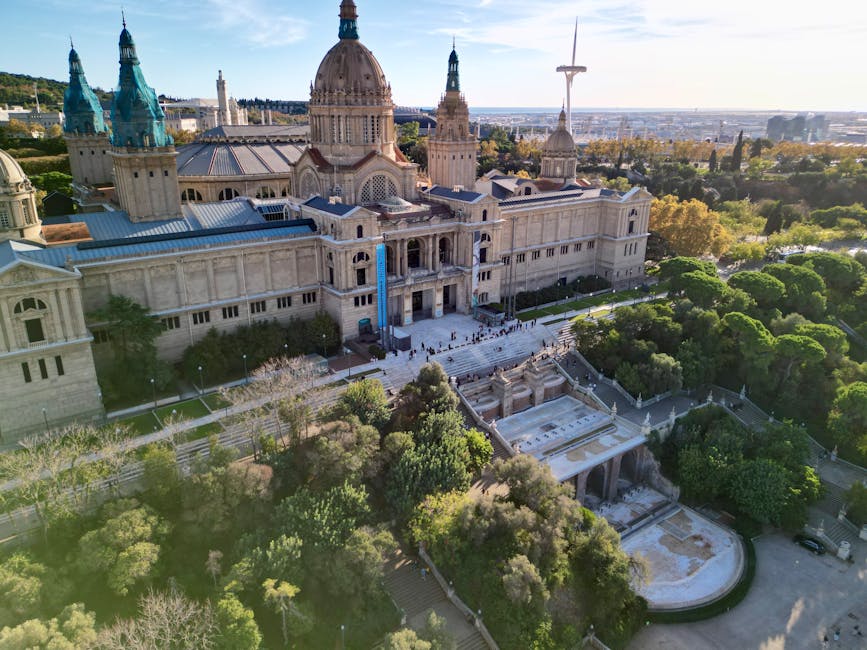
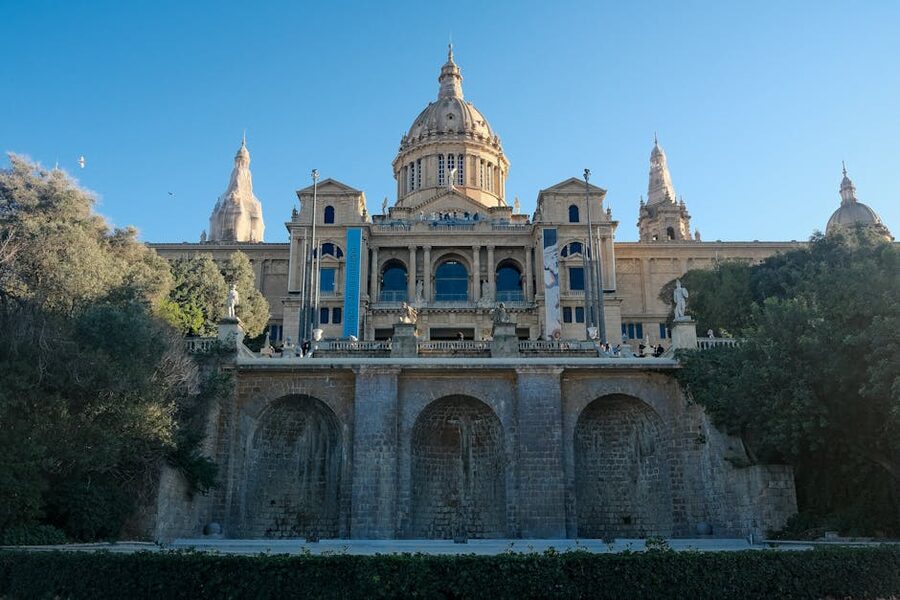
MNAC (Museu Nacional d’Art de Catalunya). Inside the Palau Nacional, this is the best Romanesque art collection in the world. Full church frescoes lifted off Pyrenean walls and rebuilt in the gallery. €12 entry, free first Sunday of the month. Not on the cable car line; you reach it from Plaça Espanya side. Plan it as a separate visit unless you have a full day on the hill.
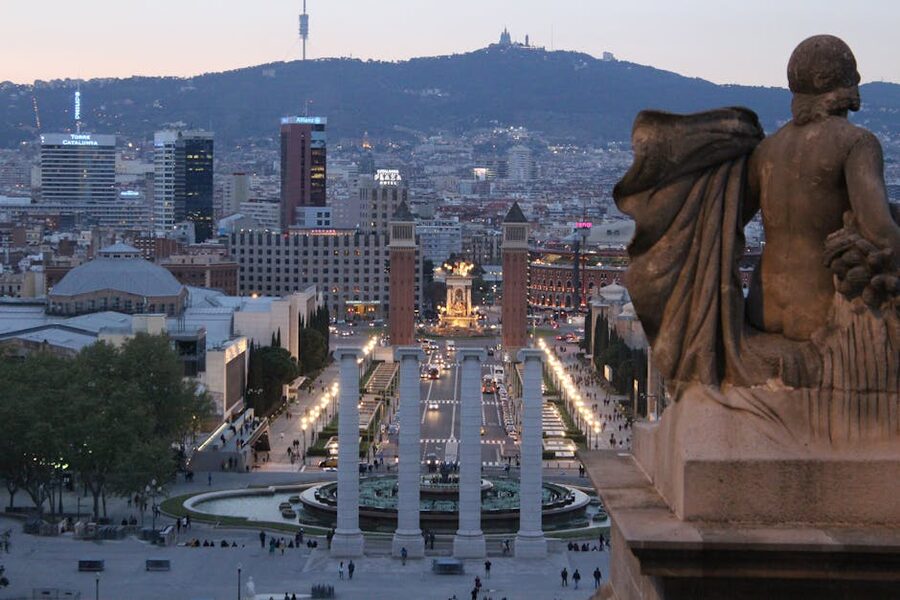
Magic Fountain. The choreographed water-and-light show below MNAC. Free. Runs Thursday to Sunday in season, with reduced hours in winter. It has been suspended for water-saving reasons in dry years, so check the city’s website before you make the trek.
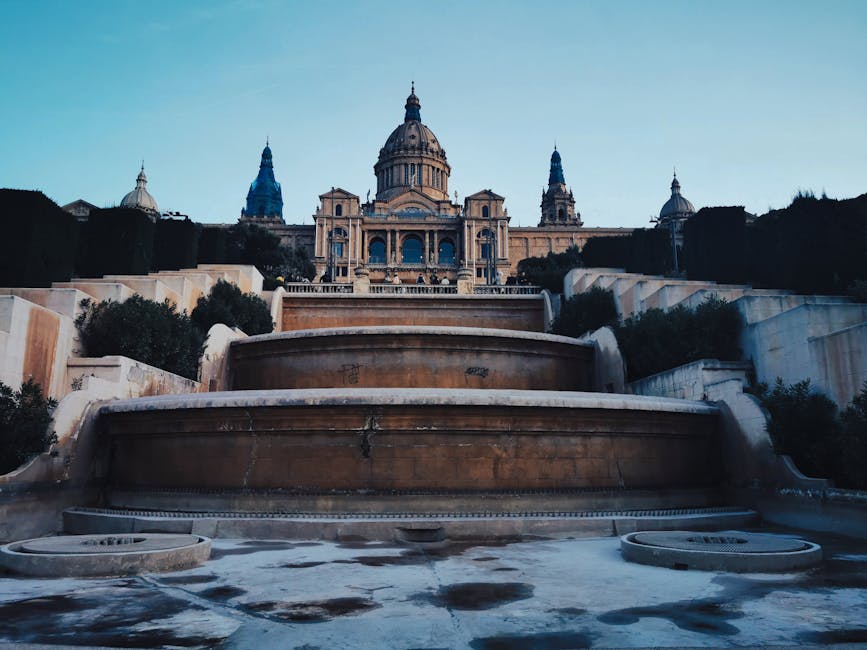
Olympic Ring. The 1992 Olympic stadium, swimming venue and Calatrava telecommunications tower are all five minutes from the upper cable car station. Free to walk through. The stadium feels eerie and empty most days, which is part of why it’s interesting.
Joan Miró Foundation. A short walk from the funicular drop-off. Easy to combine with the cable car if you build a half-day on the hill.
Botanic Garden. Down past the Olympic Ring on the south slope. Less visited, calmer, and a different kind of view from the cable car platforms.
Best time of day to ride
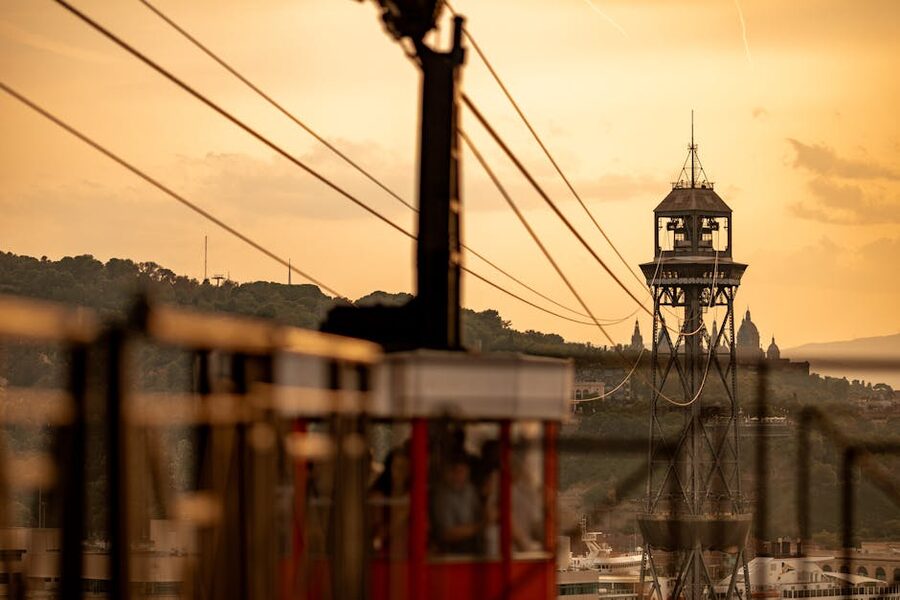
I have been at 10:30, 14:00 and 18:00 across three trips. Here is what I’d actually recommend:
First slot, 10:00 to 10:30. Light is decent, queue is empty, cabins half full. The downside is the morning haze can flatten the view in summer.
Late afternoon, 16:30 onwards in summer, 15:30 in winter. Best light, longest shadows, the city looks dimensional. This is when I would aim if I had one shot.
Avoid 12:00 to 14:00 in July and August. The combination of full queues, harsh overhead light and hot cabins is the worst version of the experience.
The full operating calendar: January and February 10:00 to 18:00, March through May 10:00 to 19:00, June through September 10:00 to 21:00, October 10:00 to 19:00, November and December 10:00 to 18:00. They run every day. Last cabin up usually leaves about thirty minutes before the listed close time, so don’t push it.
Combining the cable car with the rest of your Barcelona day
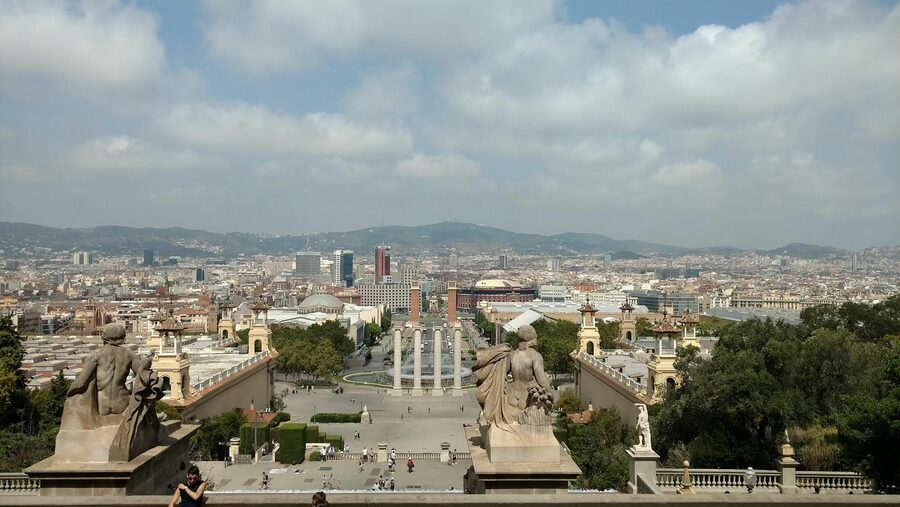
The cable car is two and a half hours of your day if you do it well. That leaves room for one big Gaudí thing in the morning and dinner in the Gothic Quarter or back at Barceloneta in the evening.
If you are doing the Gaudí cluster, Sagrada Familia in the morning pairs with cable car in the afternoon. They are at opposite ends of the metro green line and easy to chain. Park Güell works too if you have an early time slot. Casa Batlló and La Pedrera sit close to each other on Passeig de Gràcia and slot in either side. Casa Vicens, Gaudí’s first house, is in Gràcia and easiest to fit in the morning before you head south to the cable car.
If you are travelling with kids and want the cable car as part of a longer day, the Barcelona Aquarium at Port Vell is a fifteen-minute walk from the lower terminal of the Telefèric del Port. Handy if you are doing both cable cars.
Common mistakes
A short list of things I see people get wrong:
Walking up from MNAC and expecting to find the cable car. The base station is on the other side of the hill from the museum. You have to take the funicular or bus around. Plan accordingly.
Booking the wrong cable car. If your ticket says “from Barceloneta” or “Sant Sebastià tower” you have bought the Telefèric del Port, not the Telefèric de Montjuic. Different ride.
Not checking funicular status. The Funicular de Montjuic has a habit of shutting for long maintenance windows. The cable car operator does not always email ticket holders when this happens. Check the TMB site the night before.
Buying separate castle tickets at both windows. If you are doing both, look for the combo ticket at the base station ticket office. It saves a few euros and a queue.
Riding in heavy wind. The Telefèric closes when winds exceed safety limits. Usually with no warning beyond a sign at the base. If your booked day looks gusty, plan a backup activity.
Tickets and the queue, in real terms
The on-site ticket office sells the same tickets as the online platforms, at a slightly cheaper face price. The trade-off is the queue. In high season the on-site queue at the base station regularly hits 30 to 40 minutes between 11:00 and 15:00. Online tickets are mobile QR codes, scan-and-board. The price difference is small enough that I always recommend booking online unless you happen to walk up at 10:00 and see no queue.
Free cancellation policies vary. The main GetYourGuide listing lets you cancel up to 24 hours ahead with full refund, which is the most flexible. If you are not sure of your dates, that’s the one to book. The alternative roundtrip listing covers similar ground if the main one is sold out. Same product, same operator.
For cruise passengers
If you are off a cruise ship at the Barcelona terminal, Montjuic is the closest big sight to the port. You can grab the port shuttle to Plaça Espanya, take bus 150 up the hill, and be at the base of the cable car within half an hour of disembarking. The cable car ride and a quick castle walk is doable inside three hours, which leaves time for tapas in the Gothic Quarter before you sail. Or you can ride the Telefèric del Port back down to Barceloneta if you want the harbour-aerial-view version.
Don’t try to combine Montjuic with Sagrada Familia and Park Güell on the same day if you only have eight hours off ship. You’ll spend half of it in transit. Pick one Gaudí site or pick the hill, not both.
Quick FAQ

Can I take a buggy or wheelchair? Yes. Cabins are accessible. There is a small ramp at the platform.
Are bags allowed? Yes, but not large suitcases. Day packs and small backpacks are fine.
Is it safe in bad weather? The line closes in high winds and during electrical storms. Light rain is fine.
How long does a return trip take? Allow 30 minutes if you don’t get off, an hour if you stop at Mirador, half a day if you do the castle properly.
Can I bring food? No food or drink in the cabins. There is a café at the top station.
Are dogs allowed? Small dogs in carriers, yes. Larger dogs, no.
Do I need to print my ticket? No. The QR code on your phone is enough. I have ridden three times on a phone screen.
Worth doing on the same Barcelona trip
If you are trying to map a longer Barcelona itinerary around the cable car, here is how I’d think about it. Most people pair the hill with one Gaudí morning. The Sagrada Familia booking guide covers timed entry and how to get the tower add-on, and the Park Güell guide explains the Monumental Zone vs the free park split. If Casa Batlló has caught your eye on Passeig de Gràcia, the Casa Batlló piece walks through the audio-guide options and which ticket tier is worth it. Casa Vicens, Gaudí’s debut house in Gràcia, is the easy add-on if you’ve already done the marquee Gaudí sites. And for getting around between all of this without buying ten metro tickets, the Barcelona hop-on hop-off bus guide compares the two main operators side by side.
The Telefèric de Montjuic is a small thing in the bigger Barcelona day. Eight minutes up, eight minutes down, with one of the better views in the city stretched between them. Book it online, ride it twice if you can. First slot for the empty cabins, late afternoon for the light. And let it slot in around the rest of your trip rather than be the centrepiece of it.