
Park Güell caps entry at 1,400 visitors per hour, and timeslots routinely sell out a week in advance during summer. Walk up without a ticket and you will be turned away at the gate. Booking is the entire game here.
I have been through Park Güell three times now, in three different seasons, and the difference between a great visit and a bad one comes down to two things: which timeslot you grab, and which entrance you walk in through. Get those right and the rest takes care of itself. This guide covers the booking strategy I would actually use, the tours worth paying extra for, and the bits the official ticket page does not tell you.
- In a Hurry? Here Are My Top Picks
- What Park Güell Tickets Actually Cost
- The Capacity Cap Is Real
- Where to Buy: Official Site or Resellers
- Opening Hours and Best Time of Day
- Getting There Without Wasting an Hour
- What You Actually See Inside
- Should You Pay Extra for a Guide?
- Top 3 Park Güell Tours Worth Booking
- 1. Park Güell Admission Ticket:
- 2. Park Güell Guided Tour with Skip-the-Line Entry:
- 3. Park Güell Guided Tour with Skip-the-Line Ticket (Viator): .70
- Combine It With Sagrada Familia (or Don’t)
- The History Most Visitors Skip
- Practical Things the Listing Page Won’t Tell You
- Pairing the Visit With the Rest of Barcelona
- Would I Book Park Güell Again?
In a Hurry? Here Are My Top Picks
- Standard entry, $25: The flagship admission ticket if you just want in the gate. Book on GetYourGuide
- Guided tour, $31: Adds a 75-minute live guide and is the upgrade I would pick. Book on GetYourGuide
- Skip-the-line + guide via Viator, $38.70: Use this if you are already booking other Viator products in Barcelona. Book on Viator
What Park Güell Tickets Actually Cost
The official price is currently €18 for adult general admission. Children 7 to 12 and visitors over 65 pay €13.50. Kids 6 and under enter free, but they still need a booked ticket assigned to them.
Resellers like GetYourGuide and Viator charge a small markup, usually a couple of euros. That is the booking fee for being able to keep your tickets in one place with the rest of your Barcelona plans, and for paying in your own currency without the official site occasionally rejecting foreign cards.
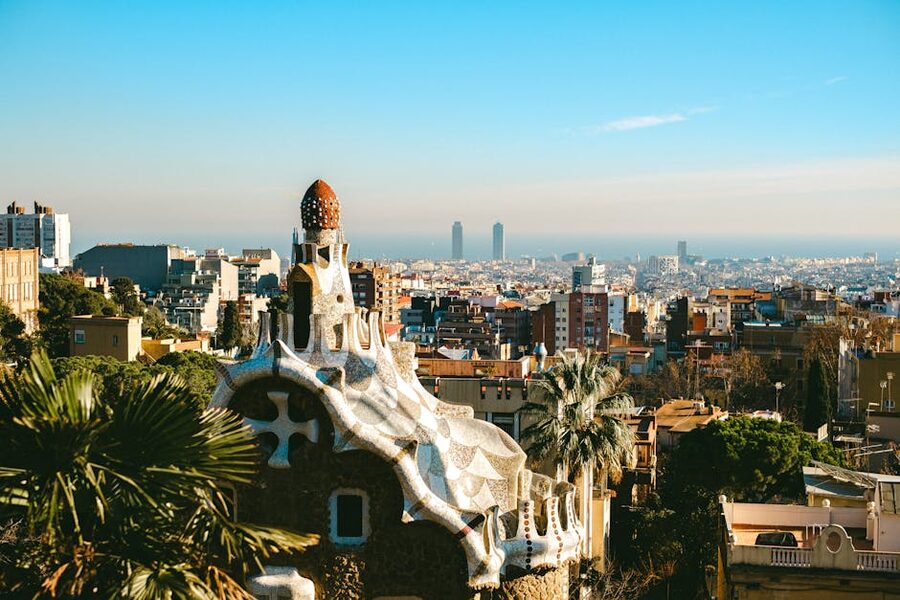
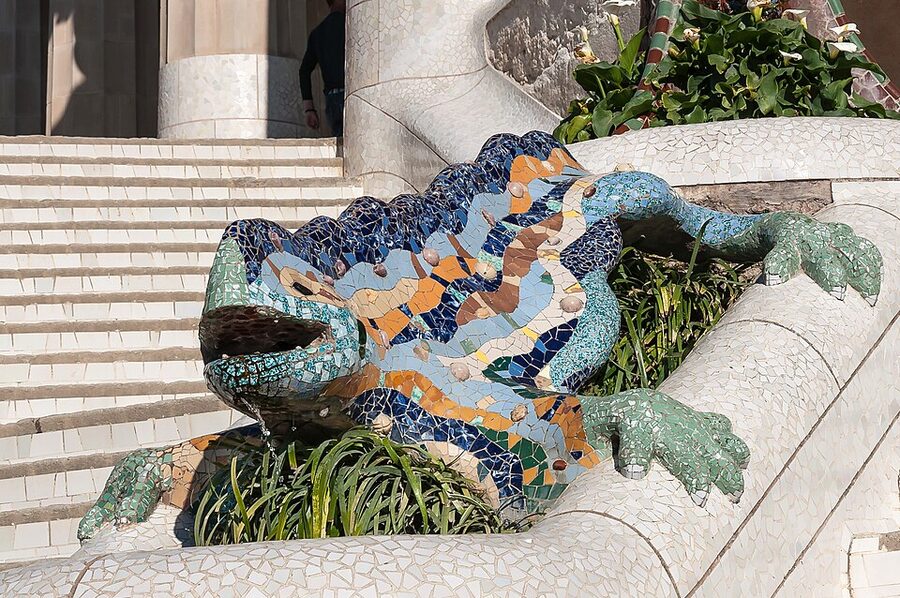
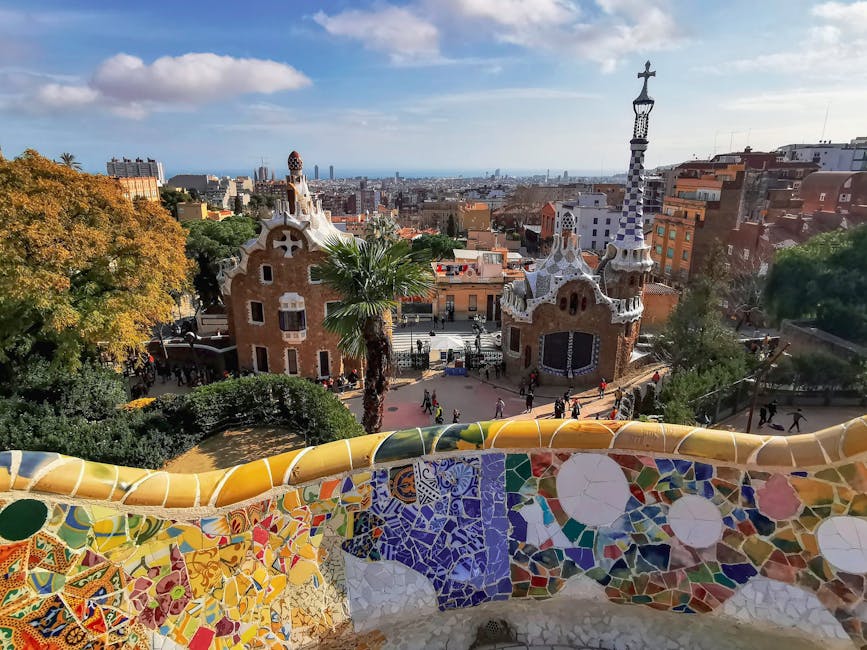
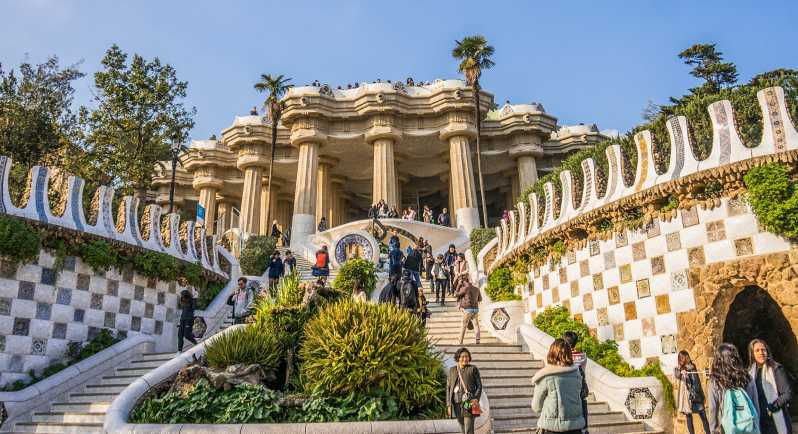
What the basic admission gets you is access to the Monumental Zone. That is the 12-hectare core of the park where every photo you have seen was taken: the main staircase, El Drac, the Hypostyle Hall, the panoramic terrace with the mosaic benches, and the stone viaducts. The wider 17-hectare park around it stays free to enter, but there is not much there for a tourist. Stick with the Monumental Zone ticket and the flagship admission covers everything you came to see.
The Capacity Cap Is Real
Park Güell sells exactly 1,400 tickets per hour. Once a slot is gone, it is gone. The official site releases tickets one calendar month ahead of the visit date, and in July and August whole afternoon blocks vanish within a few days.
I would book at least two weeks out for May through October. For winter you can usually still grab a slot a few days before, but the popular morning windows go first. If your dates are flexible, the 9:30 a.m. or last-hour slots are the easiest to get and also the most pleasant to actually be in.
The tickets come with a 30-minute entry window, not a 30-minute visit. You can show up any time inside that window, then stay as long as the park is open. If you arrive after the window closes, the gate staff will refuse you and there are no refunds. Plan a buffer for the metro.
Where to Buy: Official Site or Resellers
You have three real options.
The official site (parkguell.barcelona): Cheapest by a couple of euros, no booking fee. The catch is that the payment system is fussy with non-EU cards, and the multilingual flow occasionally drops your basket if you switch languages mid-checkout. If you are using a foreign credit card, complete the transaction in Spanish and do not change languages once you have started.
GetYourGuide: What I usually recommend for international travellers. The interface works in your language, the receipts land in the same app as the rest of your trip, and the support actually answers when something goes wrong. The standard admission listing is the closest equivalent to the official ticket. If you also want a guide, the 75-minute guided version is the most-booked guided tour for the park.
Viator: Same product range, slightly higher price most of the time, useful if you already have other Viator bookings.
The Barcelona Pass and Barcelona City Pass also include Park Güell entry. They make sense if you are stacking three or more major attractions. For just Park Güell plus Sagrada Familia, the math rarely works in the pass’s favour.
Opening Hours and Best Time of Day
The park opens every day, all year. Hours shift with daylight:
- 1 January to 19 February: 9:30 a.m. to 5:30 p.m.
- 20 February to 28 March: 9:30 a.m. to 6:30 p.m.
- 29 March to 30 June: 9 a.m. to 7:30 p.m.
- 1 July to 31 August: 9 a.m. to 7:30 p.m.
- 1 September to 29 October: 9:30 a.m. to 7:30 p.m.
- 30 October to 31 December: 9:30 a.m. to 5:30 p.m.
Last entry is one hour before closing. Always re-check the official page a week before your visit, the dates can drift by a day or two.
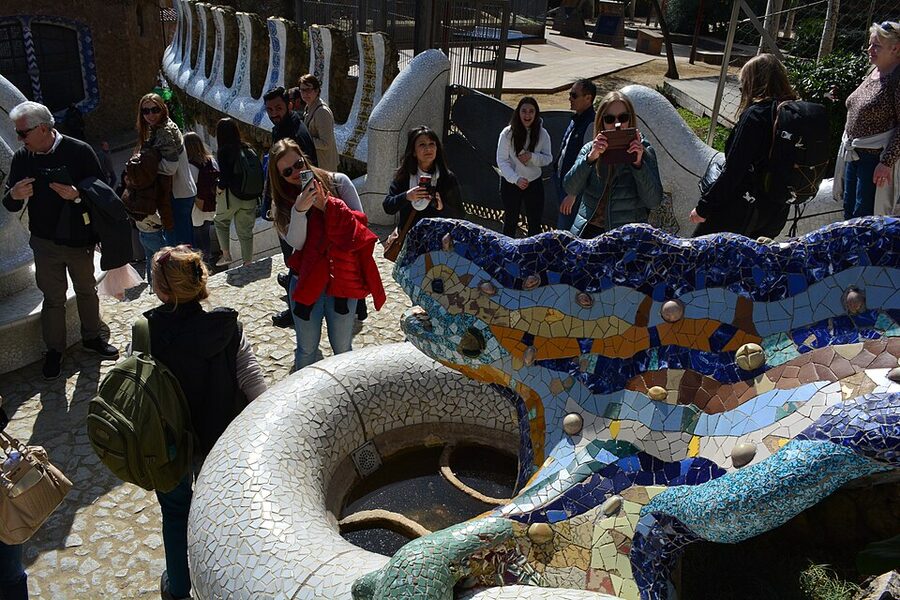
For the best experience, book the first slot of the day or the last two hours before close. The first slot gets you the staircase before the day-trip groups arrive. The last slot gets you the warm light and a thinner crowd, but you do lose access to a couple of the smaller buildings that close before the gates do. Mid-morning is the worst time. The bus-tour groups all funnel in around 10:30 a.m. and the staircase becomes a slow-moving line.
Getting There Without Wasting an Hour
The metro is the simplest option but you need to pick the right station. The park sits on Carmel Hill, which is a real hill.
Lesseps (L3, green line): The most signposted route. From the station it is roughly a 20-minute uphill walk through residential streets. The first 10 minutes are flat, the last 10 are a steady climb. This route delivers you at the main entrance on Carrer d’Olot, which is the one you want for the Monumental Zone.
Vallcarca (L3, green line): Slightly closer to the upper entrance, but the walk includes outdoor escalators that occasionally are out of service. When they work, this is the fastest metro route. When they do not, you are climbing about 200 steps with no shade.
Bus H6 or D40: Drops you closer to the upper entrance than either metro stop. Worth it on a hot day or if you have anyone in the group with knee trouble. The 24 bus also runs near the main entrance.
Taxi or Uber: About €12 to €15 from the city centre, and they can drop you right at the main entrance. On a peak summer afternoon I genuinely think the taxi is worth it. The walk up from Lesseps with a midday sun is brutal.
Avoid the Carmel entrance unless you are arriving on a tour bus. It is on the opposite side of the park from the main entrance and the walk from El Carmel metro is around 20 minutes through quiet residential streets. Group tours use it specifically because it has coach parking, and as an individual visitor you just end up walking the long way around.
What You Actually See Inside
The Monumental Zone is small. You can do the full circuit in 90 minutes if you walk briskly, two hours if you stop for photos, and three if you want to sit on the benches and people-watch like Gaudí intended.
The route most people take, in order:
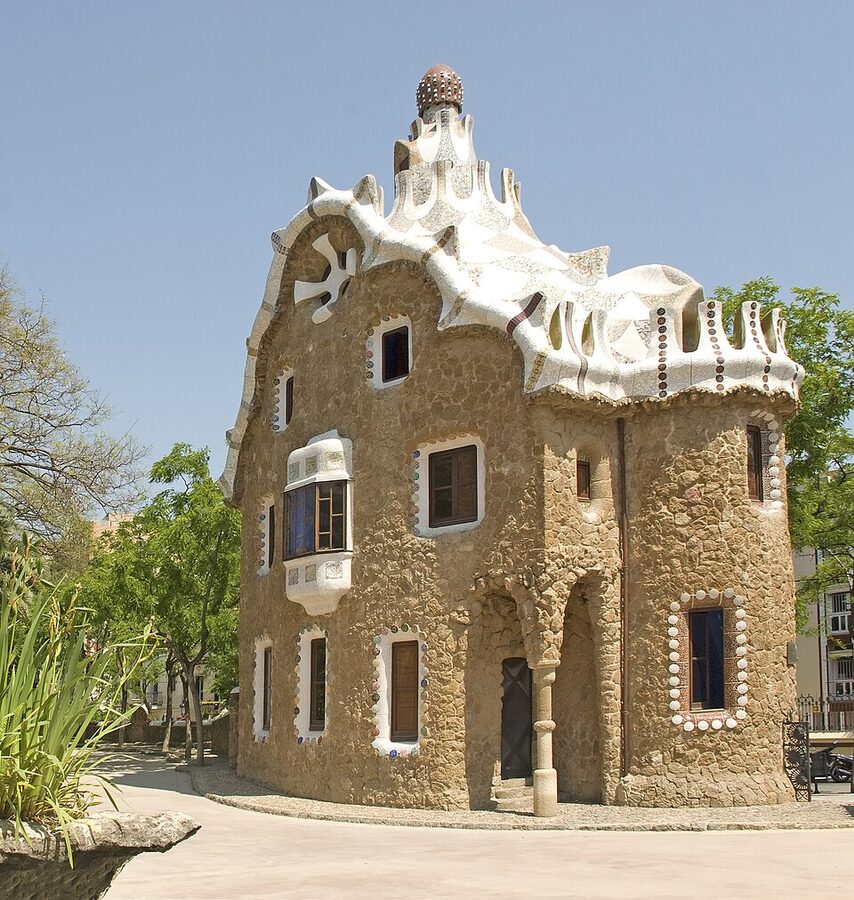
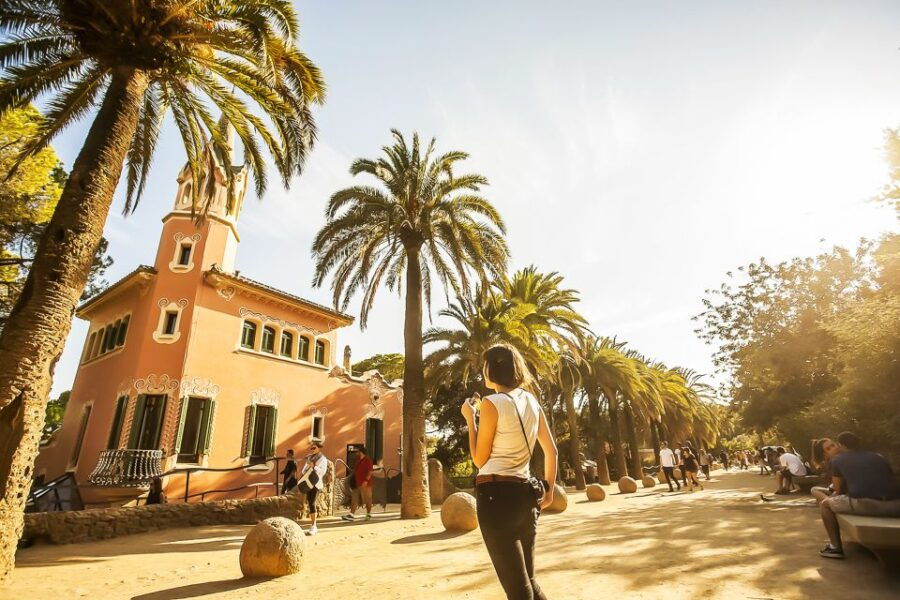
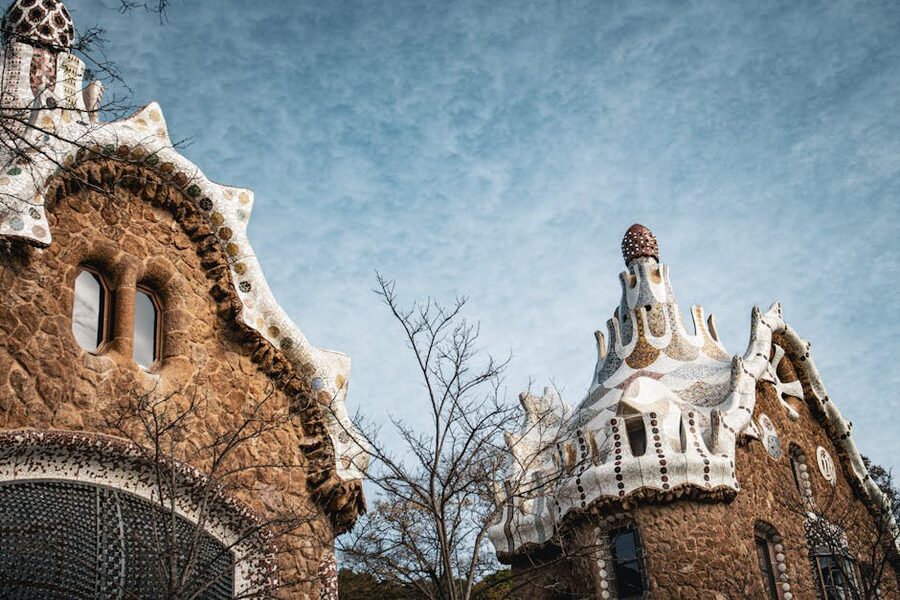
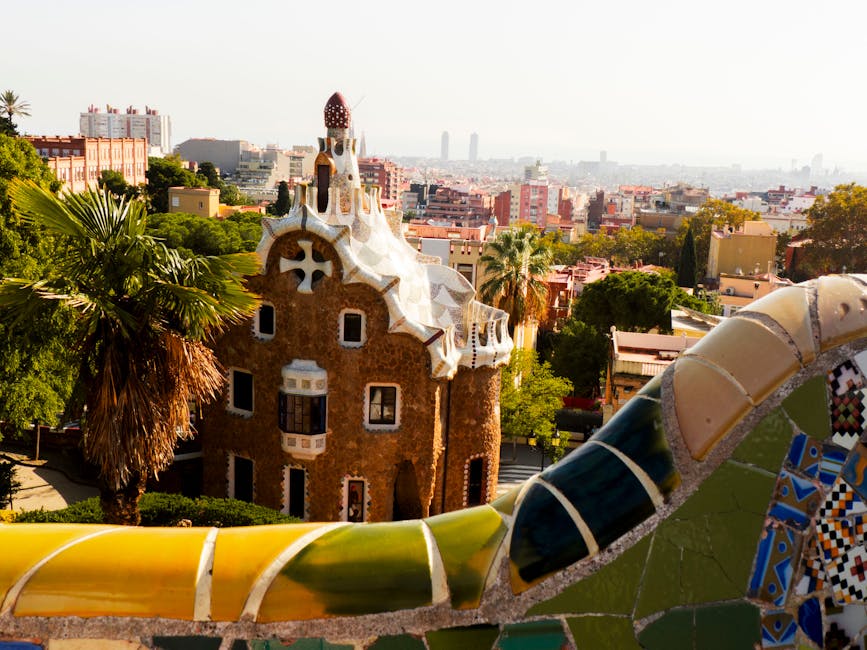
The Porter’s Pavilions. The two “gingerbread” houses flanking the main gate. The one on the right has a small interpretation centre inside. The one on the left is the gift shop. You can step into both, but on a busy morning the queues are not worth it.
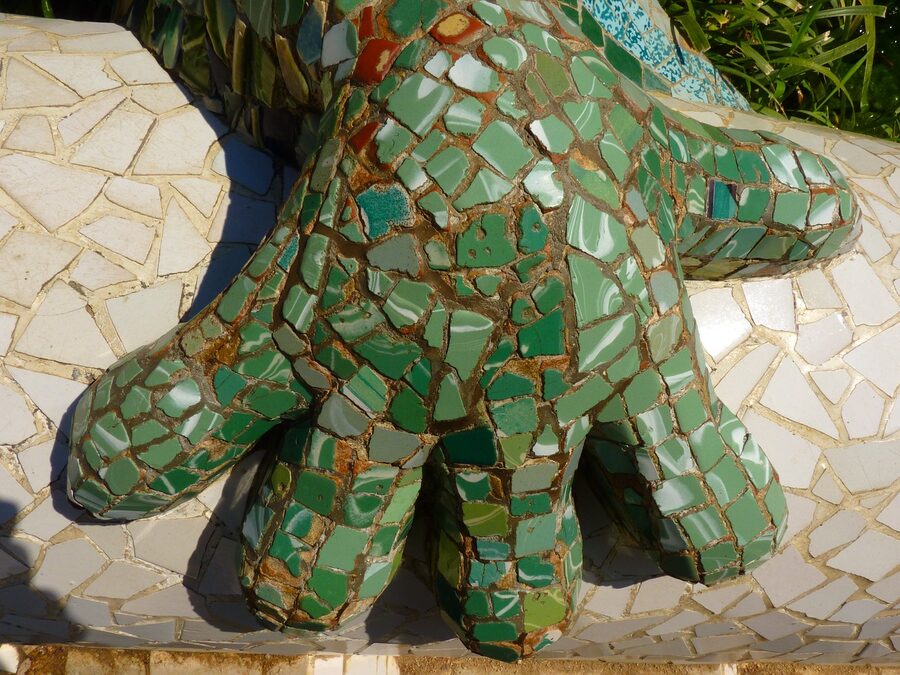
The main staircase and El Drac. The mosaic salamander everyone Instagrams. Stand to the right of the staircase for the cleanest shot, then climb up so the people behind you can have their turn.
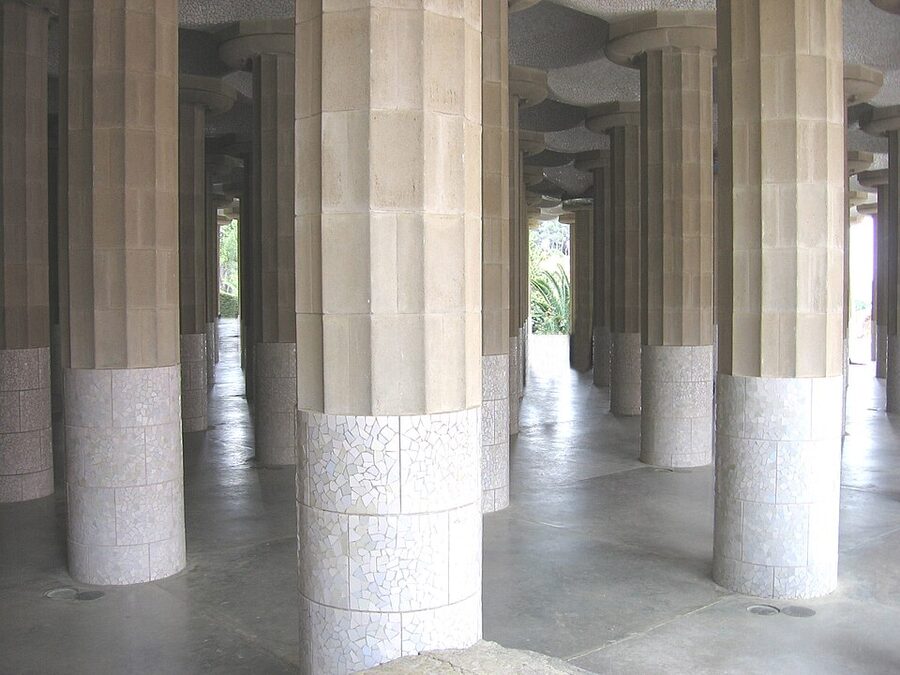
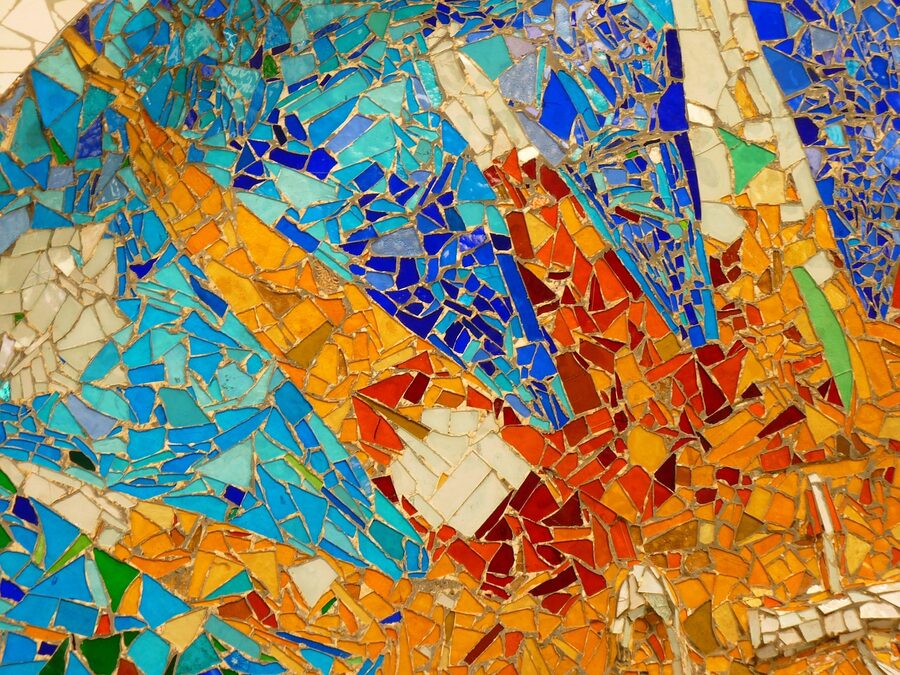
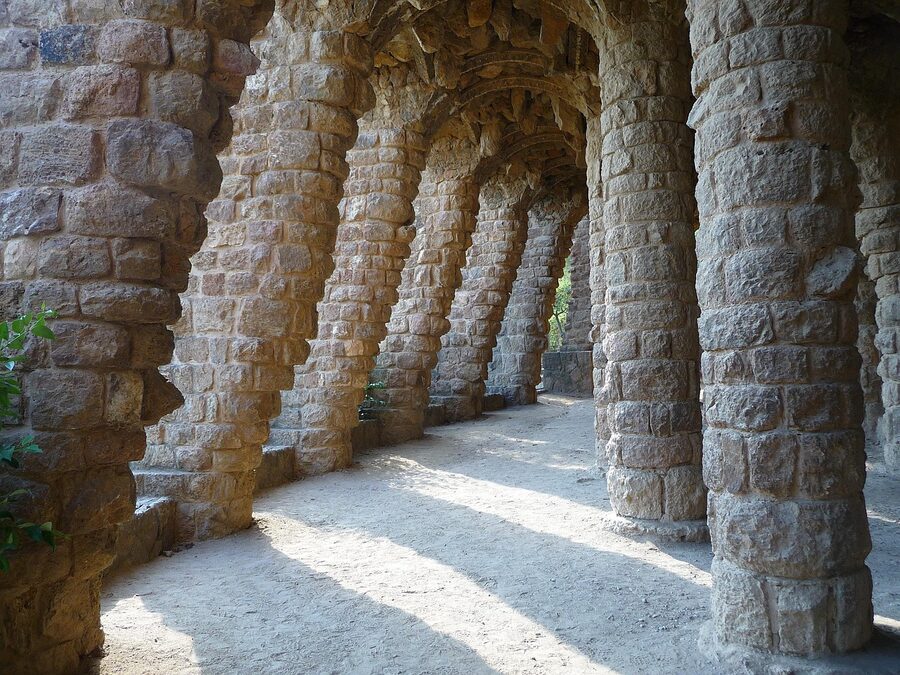
The Hypostyle Hall. Eighty-six Doric columns originally meant to be a covered marketplace for the failed housing development this park was supposed to be part of. The ceiling is studded with small mosaic medallions, including a few signed by Josep Maria Jujol, Gaudí’s collaborator who arguably did the best mosaic work in the park.
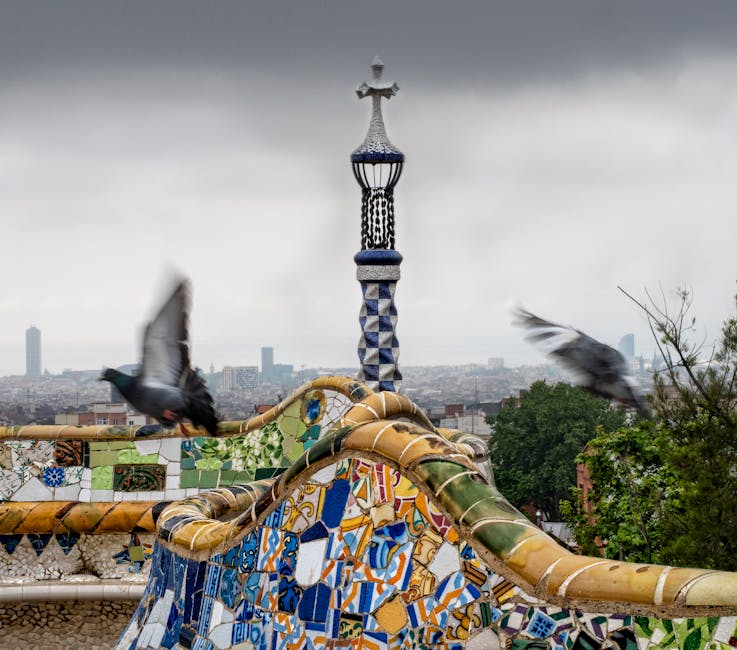
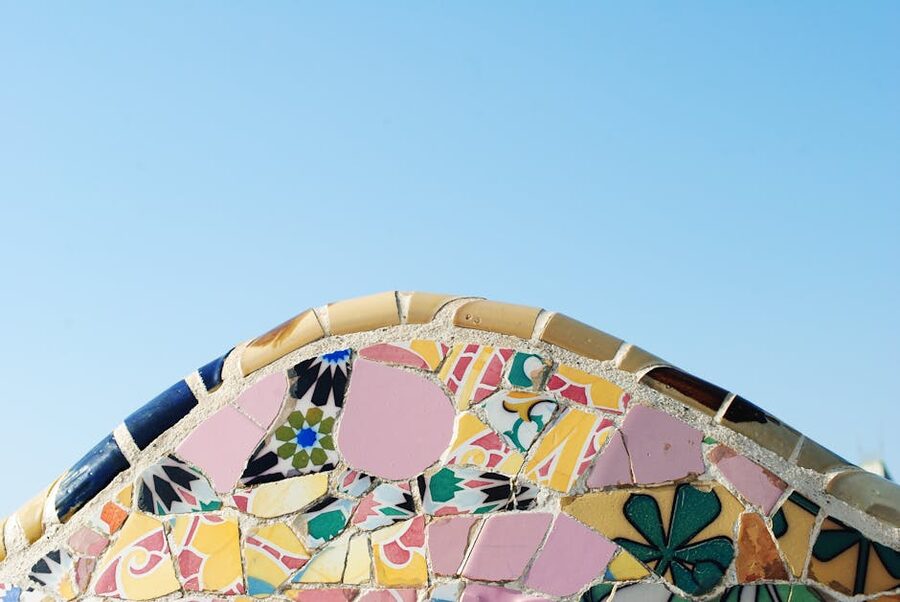
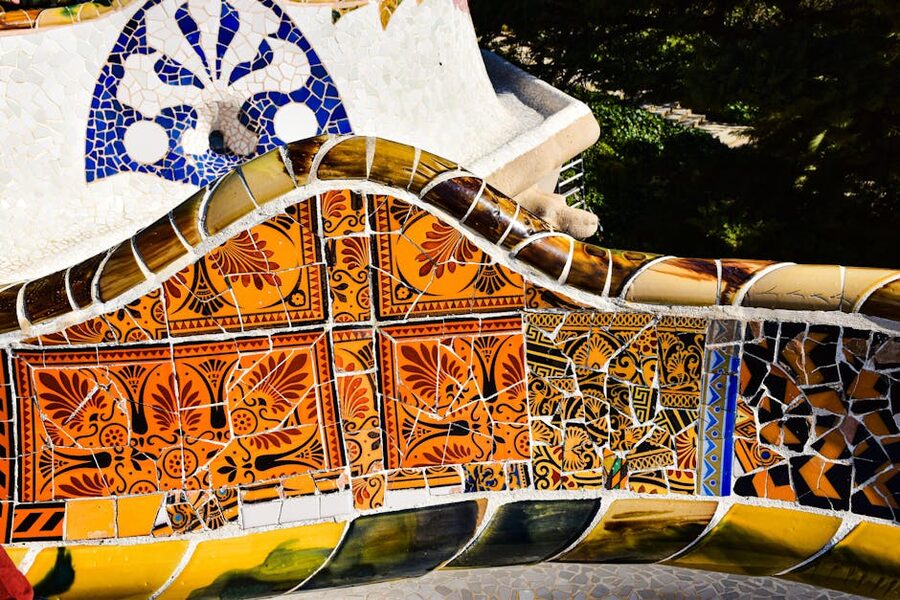
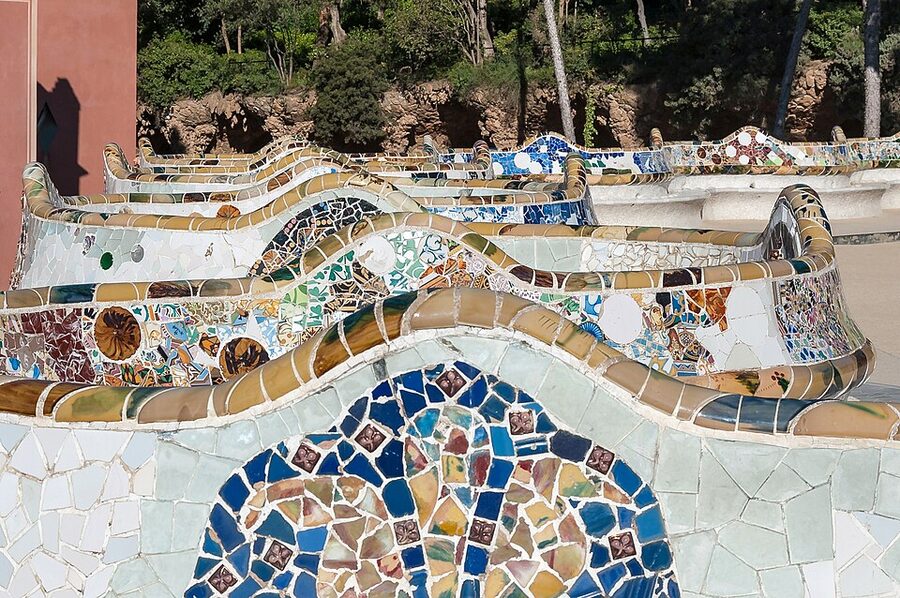
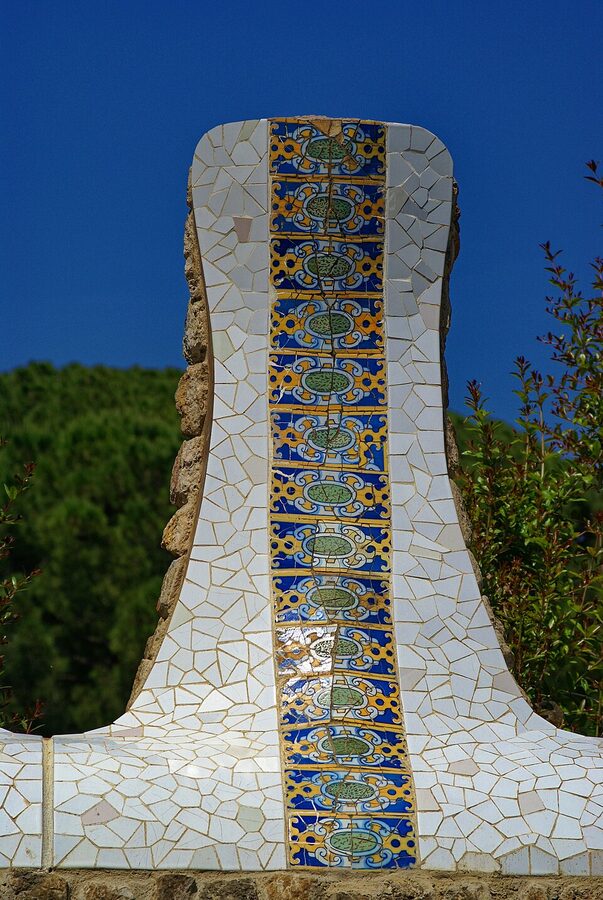
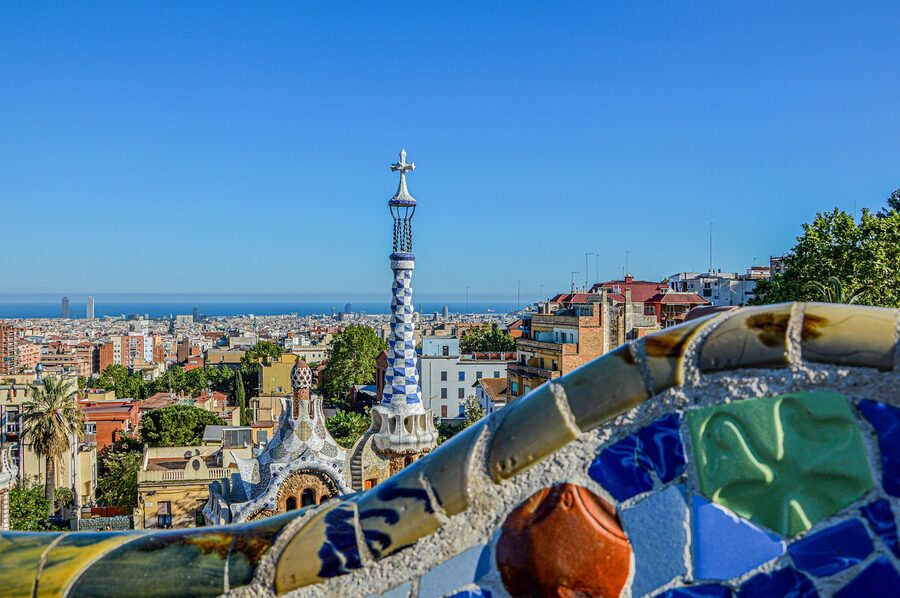
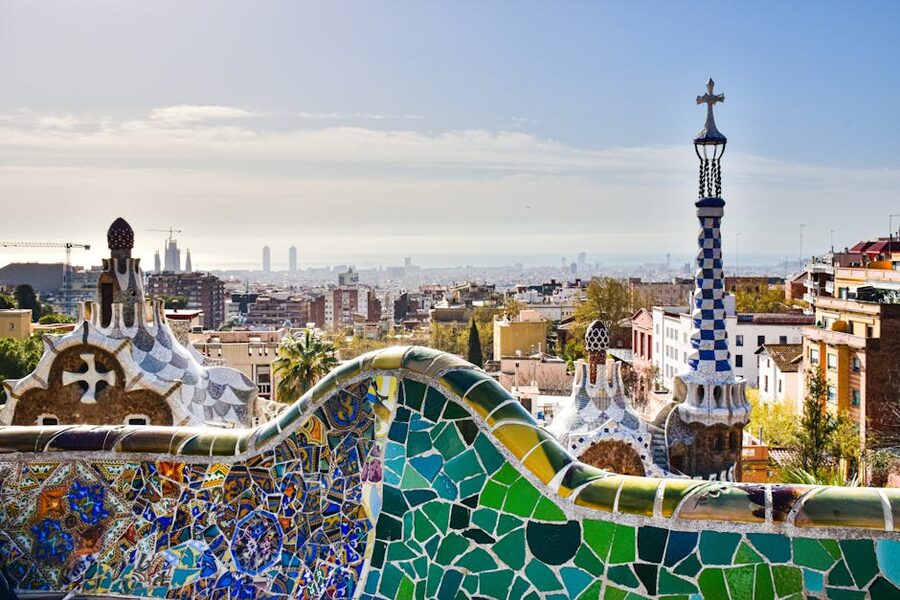
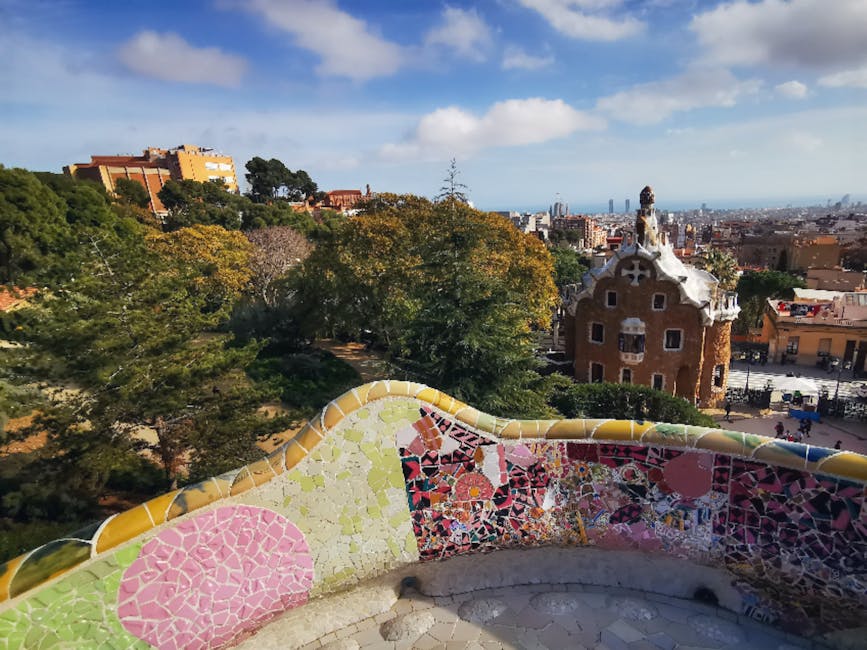
The Nature Square (Plaça de la Natura). Up the next staircase from the Hypostyle Hall. This is the big open terrace that sits on top of the columns. The serpentine bench rings the whole edge and the panoramic view of Barcelona stretches all the way to the sea on a clear day. It is also the busiest single spot in the park, so do not expect to have it to yourself.
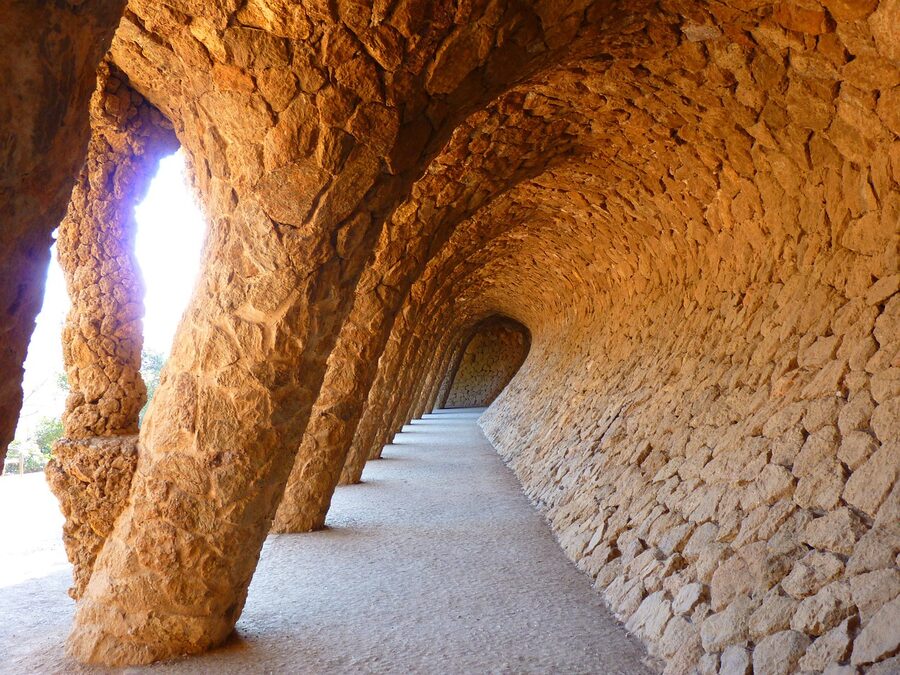
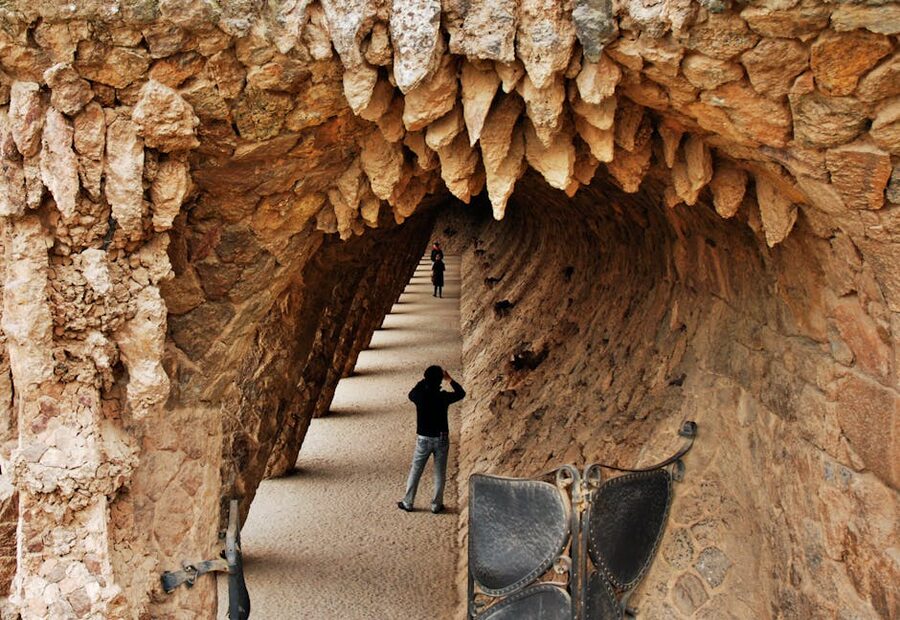
The viaducts and stone columns. The leaning stone walkways that look almost grown rather than built. The Pòrtic de la Bugadera (the “Laundry Room Portico”) is the most photographed of these, with its single twisted column and the carved stone laundress on the far side.
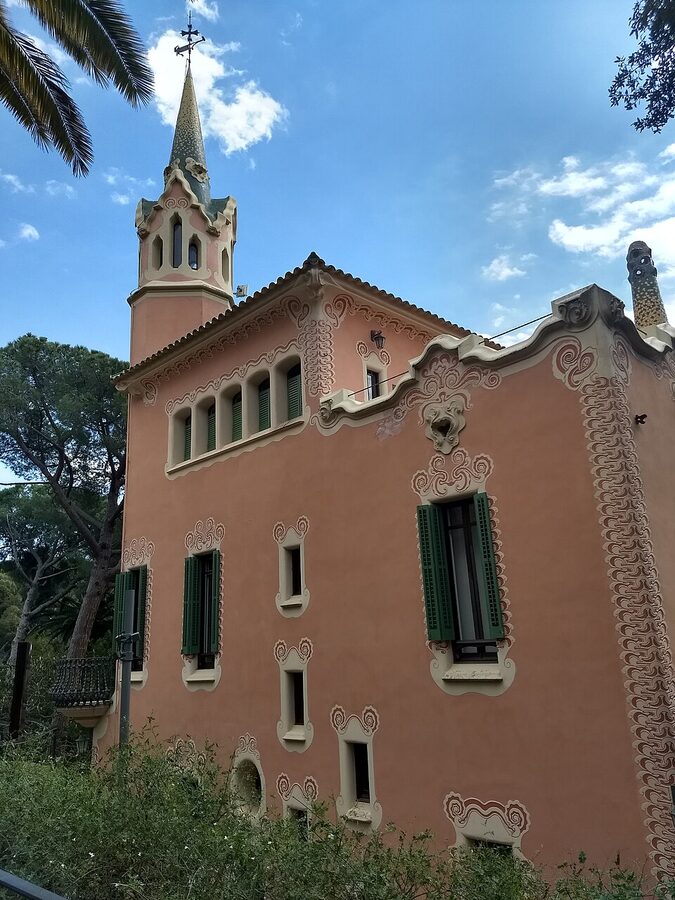
Casa Museu Gaudí. Gaudí actually lived in this pink-and-cream house in the park from 1906 to 1925. It is a separate ticket (€5.50 on the door, you cannot pre-book it with the standard Park Güell admission), and most visitors skip it. If you have an hour to spare and any interest in Gaudí himself, the bedroom and study are surprisingly modest. If you want to book everything together, the combined Park Güell and Gaudí House Museum ticket packages both for one slightly cheaper price than buying separately.
Should You Pay Extra for a Guide?
Honestly, yes, if you have not already done a deep dive on Gaudí. The free signage in the park is sparse and the QR-code audio guide is fine but generic. A live guide gives you the political context: this was meant to be a luxury housing development for Eusebi Güell, only two of the planned 60 houses ever sold, and the whole project was a financial flop that the city of Barcelona bought as a public park in 1922.
The standard guided tours run 75 to 90 minutes and cap at about 25 people. The good ones cover the trencadís technique, the Catalan-nationalism subtext baked into the design, and Gaudí’s relationship with Güell. The bad ones are basically a walking audio file. Reading recent reviews before booking pays off.
If you are short on time and just want priority entry plus a 75-minute walk-through, the priority-access guided tour is a solid pick at the lower end of the price range. For something a bit more in-depth that includes the more obscure corners, the Viator guided version tends to draw the better long-form guides.
Top 3 Park Güell Tours Worth Booking
I have looked through the most-booked Park Güell tours on the market, including the two main marketplaces and the official site, and these are the three I would actually pick depending on what you want.
1. Park Güell Admission Ticket: $25
This is the basic GetYourGuide admission ticket and it is the most-booked Park Güell product on the market by a wide margin. It is the same Monumental Zone access as the official site, just packaged with a mobile voucher and slightly easier checkout. Our full review covers exactly what is included and the few small caveats around timeslot changes.
2. Park Güell Guided Tour with Skip-the-Line Entry: $31
Seventy-five minutes with a live guide who handles the entry queue and walks you through the staircase, the Hypostyle Hall, the Nature Square, and the viaducts. Guides on this one consistently rate among the strongest, and our review picks out the small details (timing, group size, what is and is not covered) that the listing page glosses over.
3. Park Güell Guided Tour with Skip-the-Line Ticket (Viator): $38.70
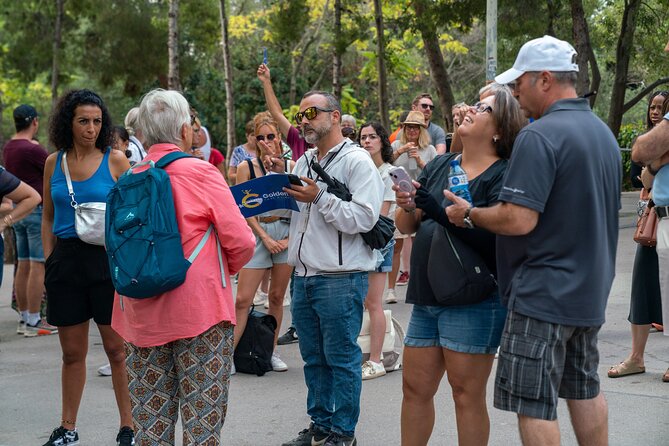
The Viator equivalent of the GetYourGuide guided tour, also clocking in around 75 minutes. Tour quality on this one is consistent and the small-group format means you can actually hear the guide on the staircase, which is half the battle. Our full review compares it head-to-head with the GetYourGuide version.
Combine It With Sagrada Familia (or Don’t)
The single most common Park Güell question is whether to combine it with Sagrada Familia in one day. The answer is yes, but only if you book the right order.
Park Güell first thing in the morning, Sagrada Familia in the afternoon. Park Güell sits roughly 20 minutes by metro from Sagrada Familia, but the climbing is at the Park Güell end. Doing it first while you are still fresh, then descending into the air-conditioned basilica, is the order your legs will thank you for.
If you want the combo handled for you, the combined skip-the-line guided tour covers both with one guide and one transfer. For something fuller that adds the Old Town walking tour, the Barcelona in One Day tour bundles the three biggest Gaudí sights with hotel pickup.
Doing both attractions independently is also fine, and works out cheaper. Just make sure your Sagrada Familia slot starts at least three hours after your Park Güell slot. Two and a half is doable but stressful with the metro.
The History Most Visitors Skip
The whole park exists because of a failed real estate venture. In 1900 Eusebi Güell, Gaudí’s main patron, bought a 17-hectare hillside on the outskirts of Barcelona to build a 60-house gated community for the Catalan upper class. He hired Gaudí to design the infrastructure: the gates, the staircase, the market hall (which became the Hypostyle Hall), the central plaza, the viaducts.
The plan flopped. Only two houses were ever built and sold. Gaudí himself bought one and lived there until shortly before his death in 1926, knocked down by a tram. After Güell died in 1918, his heirs offered the land to Barcelona’s city council, which converted it into a public park in 1922. The Monumental Zone became a protected site, and in 1984 UNESCO inscribed it as a World Heritage Site as part of the Works of Antoni Gaudí listing.
Knowing this changes how the park reads. The Hypostyle Hall was meant to be where the residents bought groceries. The Nature Square was supposed to be the equivalent of a private members’ club for the homeowners. The viaducts were carriage roads. None of it was built for the public. We are walking through what was meant to be the most exclusive postcode in Barcelona, dressed up in mosaic.
Practical Things the Listing Page Won’t Tell You
The shade situation. The Monumental Zone has very little shade. The Hypostyle Hall is the only fully covered space. On a 30°C summer afternoon, plan to use it and the smaller covered viaducts as cool-down stops.
The toilets. One main block near the main entrance, plus smaller ones near the Hypostyle Hall. Free with your ticket. Often a queue at peak times.
Food. One small café near the main entrance, expensive and underwhelming. Eat before you arrive. The neighbourhood around Lesseps metro has plenty of cheap menu del dia options.
Strollers and wheelchairs. The main staircase has no ramp. There is an alternative accessible route from the Carmel entrance up to the Nature Square, and the park does have a free shuttle for visitors with mobility issues, but you have to email ahead. Email [email protected] at least 48 hours before your visit.
Photography. Tripods are not allowed in the Monumental Zone. Phone photography is fine. The lighting is best around 9 a.m. (warm, low) and again about 90 minutes before closing.
Phone reception. Patchy in the Hypostyle Hall and the lower viaducts. Take a screenshot of your ticket QR code before you go in.
Pairing the Visit With the Rest of Barcelona
If Park Güell is on your list, the other Gaudí flagships almost certainly are too. Pair the morning here with an afternoon at the Sagrada Familia, then save Casa Batlló and La Pedrera for another day. The Montserrat half-day with tapas and wine is the day-trip I would line up next.
Would I Book Park Güell Again?
Yes, three times now and probably a fourth. It is not the deepest single attraction in Barcelona, you will not spend a full day there, and the Monumental Zone is genuinely small. But it is the cheapest of the major Gaudí sights, the visual payoff is high, and it is the only place in the world where you can sit on the bench Gaudí himself sat on.
Book the first or last slot. Walk in via the main entrance from Lesseps. Spend an hour and a half. Add a guide if you have not done other Gaudí sights. That is the visit I would tell a friend to plan.
And then go straight to the Sagrada Familia in the afternoon. The two together are the day Barcelona is famous for.