
Here’s something most travelers miss when they plan a Busan trip. Oedo Botania, the tiny offshore garden most Geoje day trips build themselves around, is privately owned. A fisherman and his wife spent forty years turning a rocky, storm-battered islet into one of Korea’s most photographed botanical gardens. Camellias. Cacti. Topiary hedges that the Pacific wind keeps trying to reshape. It’s the kind of place that shouldn’t exist, and it’s a ferry ride from Geoje — itself South Korea’s second-largest island after Jeju, which is another thing most first-time visitors don’t realise until they’re halfway across the Busan–Geoje Fixed Link trying to work out if they’re still on the mainland.
Below is how to book a Geoje and Oedo Botania day trip from Busan without getting the sequencing wrong — and the three tours I’d actually pay for.
Short on time? My three quick picks
- Geoje + Oedo Botania + Cable Car small group — about $101. The fullest version of the day. Small groups capped at seven. Picks up in Busan, does all three headline stops.
- Geoje Coastal Escape + Oedo Botania — about $95. Similar itinerary, slightly different route along the southern coast. Good if the cable car is fogged in (which happens more than you’d think).
- Special Oedo Island Day Tour — about $82. The budget option. Less hand-holding, still covers Oedo + a coastal stop or two. Pick this if you’re fine travelling with a larger group.
- Short on time? My three quick picks
- Why this day trip trips people up
- How the booking actually works
- The three tours I’d actually book
- 1. Busan: Hidden Gem Geoje, Oedo Botania and Cable Car (small group) — about 1
- 2. Busan: Geoje Coastal Escape, Sea Breeze and Oedo Botania — about
- 3. Special Oedo Island Day Tour from Busan — about
- What Oedo Botania actually is
- Best time of year to go
- The Geoje Panorama Cable Car is worth it (if the weather behaves)
- Windy Hill, Sinseondae and the other Geoje stops
- The ferry to Oedo: what to expect
- DIY vs. tour: do the maths
- What to pack for the day
- Connecting this with the rest of your Busan trip
- Honest drawbacks
- Other Busan-area day trips worth stacking with this
Why this day trip trips people up
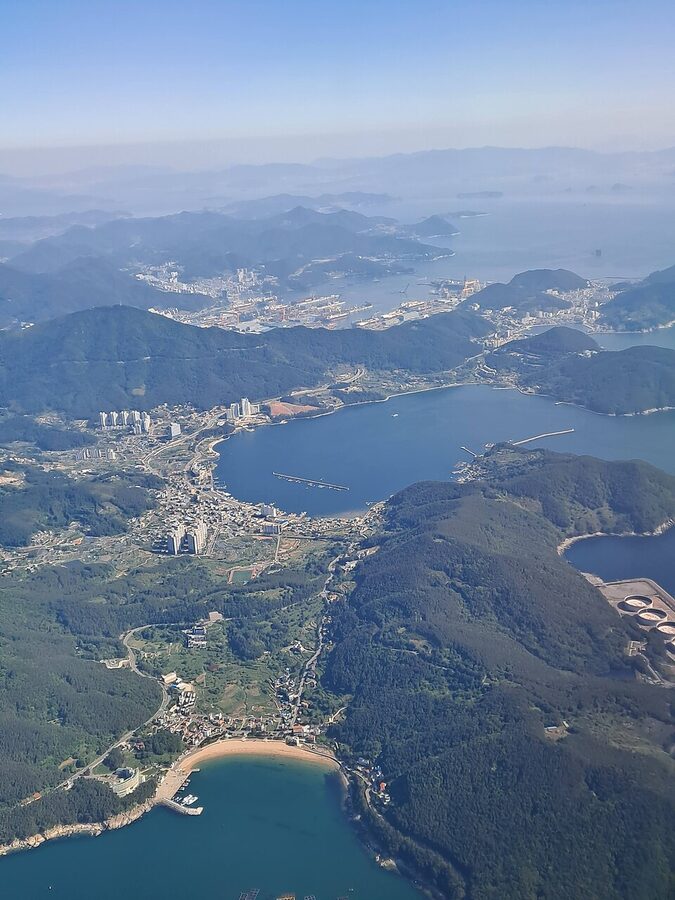
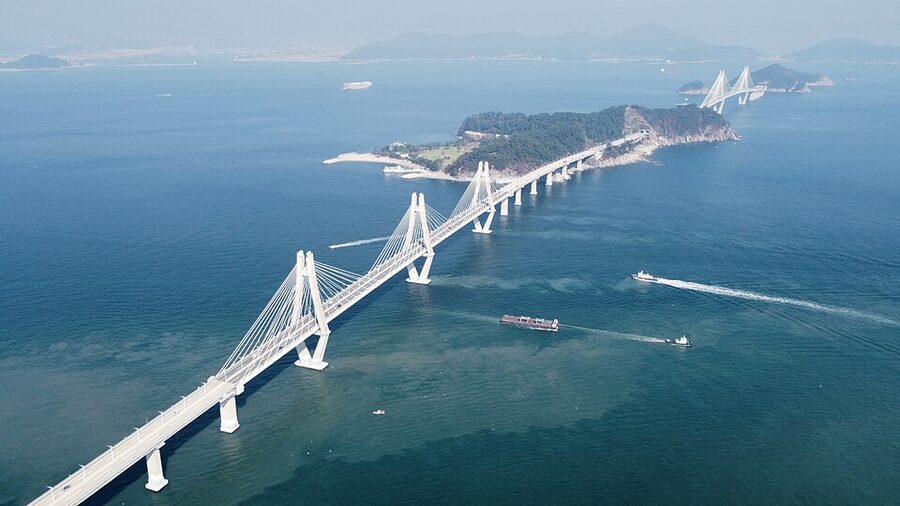
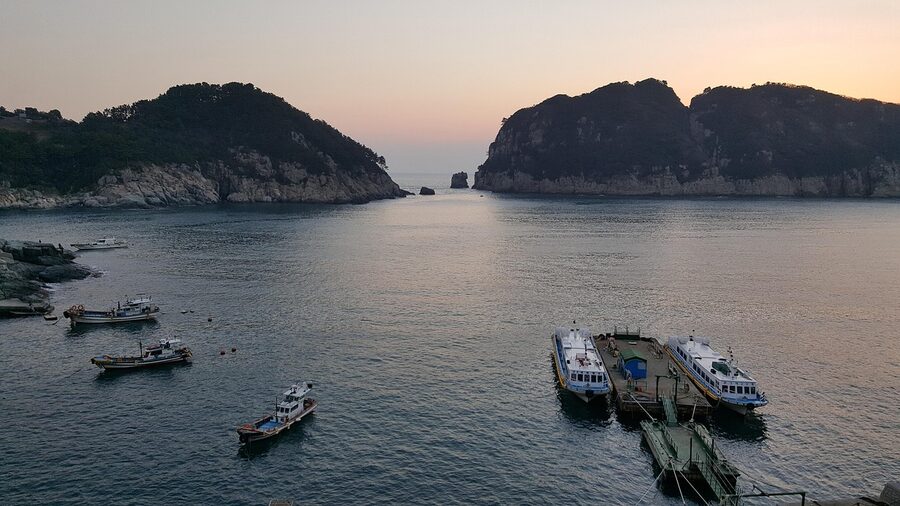
The confusion starts with geography. A “Geoje and Oedo Botania day trip from Busan” is actually three journeys stacked on top of each other. You drive from Busan to Geoje — across a bridge-tunnel combo that dips under the sea and pops back up on the far side. Then you drive across Geoje itself, which is bigger than most people imagine. Then you board a ferry from a Geoje port (usually Haegeumgang or Jangseungpo) and sail out to Oedo Botania, a separate smaller island that you only get about ninety minutes on.
Miss the ferry by thirty minutes and the whole day collapses. This is the main reason I tell people not to DIY this one — the ferry timetables on Korean holidays and weekends are brutal, and the walk-up queues at Jangseungpo Ferry Terminal can mean watching a boat leave without you.
How the booking actually works
Tours leave Busan between 7:30am and 9:00am depending on ferry schedule — the early pickup is non-negotiable in peak season. Most meeting points are around Busan Station or Haeundae, with some tours offering flexible hotel pickup if you’re booking privately. You’re looking at roughly 10 hours door to door for the full Geoje + Oedo + cable car loop.
What to check before you click “book”:
- Is the ferry to Oedo included? On the big group tours it is. On the cheaper shared options, sometimes the ferry ticket is an add-on you pay at the terminal — budget about 18,000–22,000 KRW per person for the round trip.
- Is the cable car included? Geoje Panorama Cable Car tickets run 18,000 KRW round trip for adults. Most small-group tours bundle it. Budget tours don’t.
- Oedo Botania entrance fee. Around 11,000 KRW per adult. Usually bundled but worth confirming.
- Pickup location flexibility. If you’re staying in Seomyeon or Gwangalli, check whether pickup reaches you or whether you’ll need a taxi to the central meeting point at 7am.
- Cancellation window. Weather genuinely kills this trip — high winds suspend ferries to Oedo. A free-cancellation-up-to-24-hours option is worth the few extra dollars.
The three tours I’d actually book
I pulled these from our tour database — the most-booked, highest-rated options that cover the classic Geoje + Oedo Botania + cable car triangle. They each solve a slightly different problem.
1. Busan: Hidden Gem Geoje, Oedo Botania and Cable Car (small group) — about $101
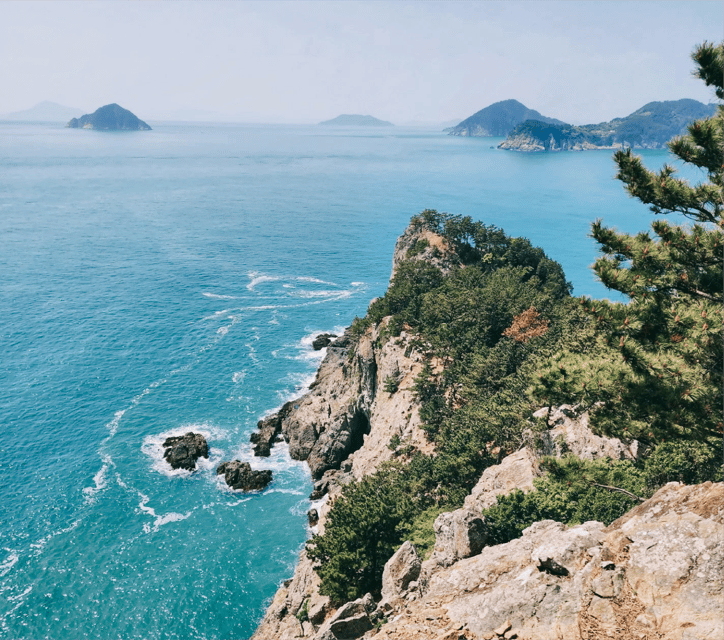
This is the one I’d book first. Our full review of the Hidden Gem Geoje and Oedo Botania tour breaks down what’s included — 10 hours, cable car, ferry, Oedo entrance, hotel pickup in central Busan. The small-group cap (seven max) means you actually get to hear the guide at Windy Hill instead of watching thirty people jostle for the same windmill selfie.
2. Busan: Geoje Coastal Escape, Sea Breeze and Oedo Botania — about $95
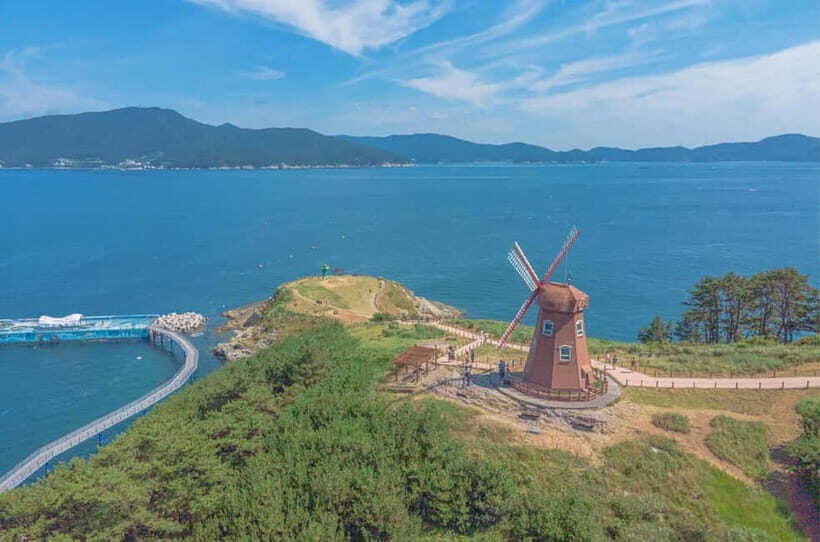
The Geoje Coastal Escape tour trades the cable car for more time along the southern coast of Geoje — Windy Hill gets a proper stop, Haegeumgang gets a proper look. Same ferry, same Oedo, same 10-hour day. I’d pick this one if you’ve done cable cars elsewhere in Korea and would rather see the fishing villages.
3. Special Oedo Island Day Tour from Busan — about $82
If you’re cost-conscious or travelling with a flexible group, the Oedo Island Day Tour is the cheaper entry into the same experience. It’s more of a bus-tour feel — you won’t get the personal guide time — but the core Oedo visit and a Geoje coastal stop are covered. Good if you’d rather save the $20 and spend it on dinner back in Busan.
What Oedo Botania actually is
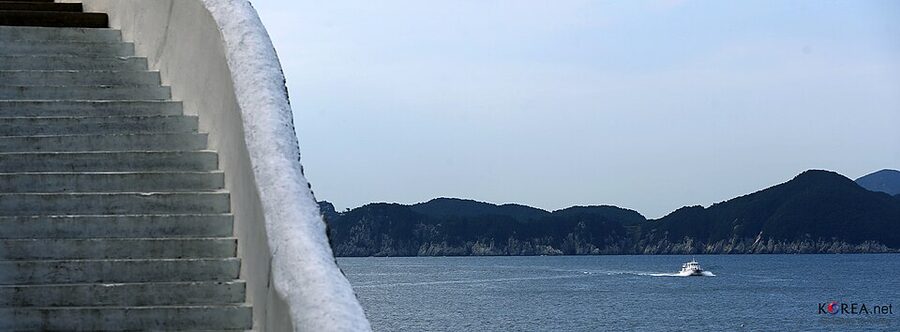
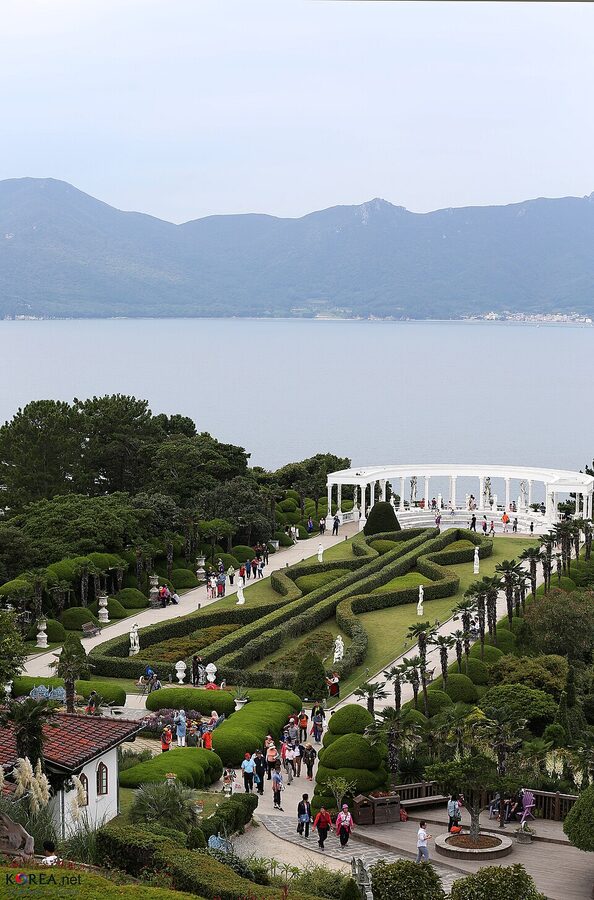
Oedo (“outer”) Island is a 4.3-hectare rock about 4km off Geoje’s southeast coast. In the 1970s a Busan fisherman, Lee Chang-ho, ran into a storm while tending his oyster beds and took shelter on the then-uninhabited islet. He ended up buying it. His wife Choi Ho-sook turned the rocky ground into a garden, plant by plant, over decades. The family opened it to the public in 1995.
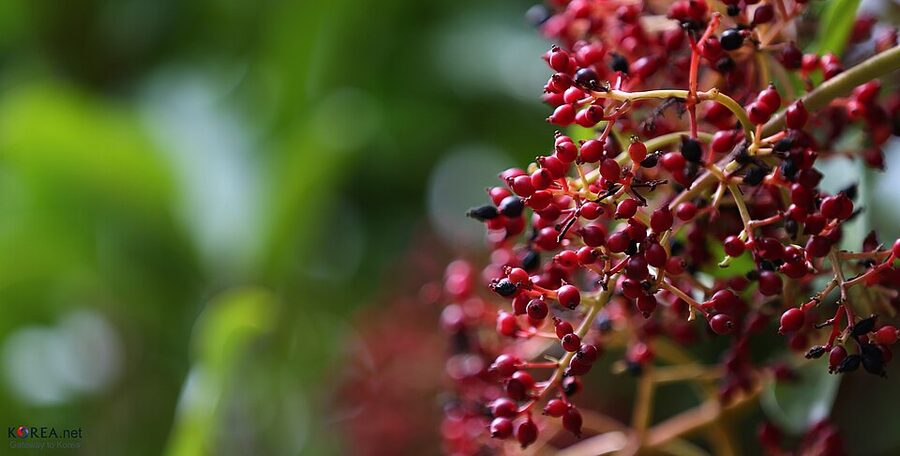
Today it has more than 3,000 species spread across themed sections — Venus Garden with its Greek-style statuary, a cactus garden, a camellia grove, a palm-lined promenade. The whole thing tilts down toward the sea, so every view has the ocean as backdrop. That’s why it photographs so well. That’s also why it’s on every Busan-Geoje day trip itinerary.
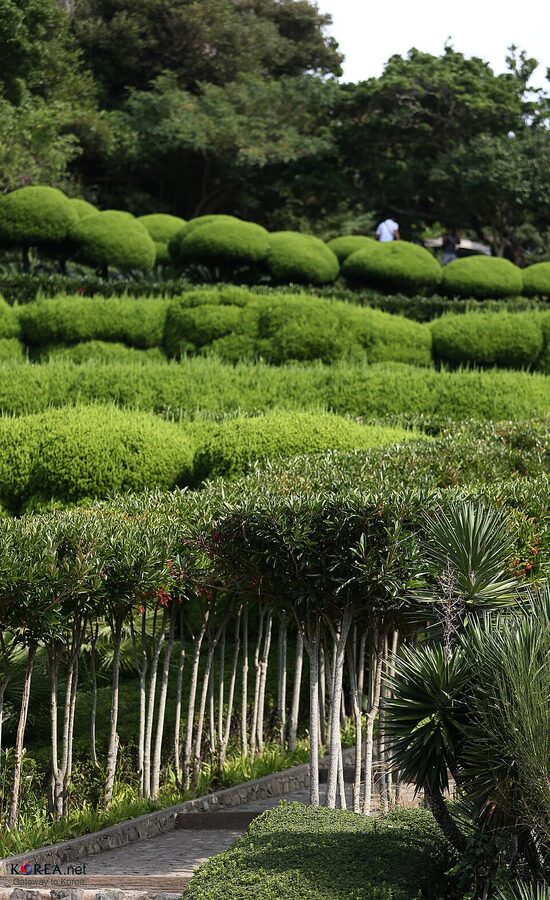
You’ll have about 80–90 minutes on the island. That sounds short, and it is. It’s also enough if you move. The ferry drops you at the main pier. You climb about fifteen minutes of stone steps to the top level. Then the sensible route is to zig-zag down through the themed gardens back to the pier, hitting Venus Garden, the viewpoints, and the camellia grove on the way. Do not try to do the full perimeter — you’ll miss the return ferry and there is no “next one in ten minutes.” The next one is in an hour and a half.
Best time of year to go
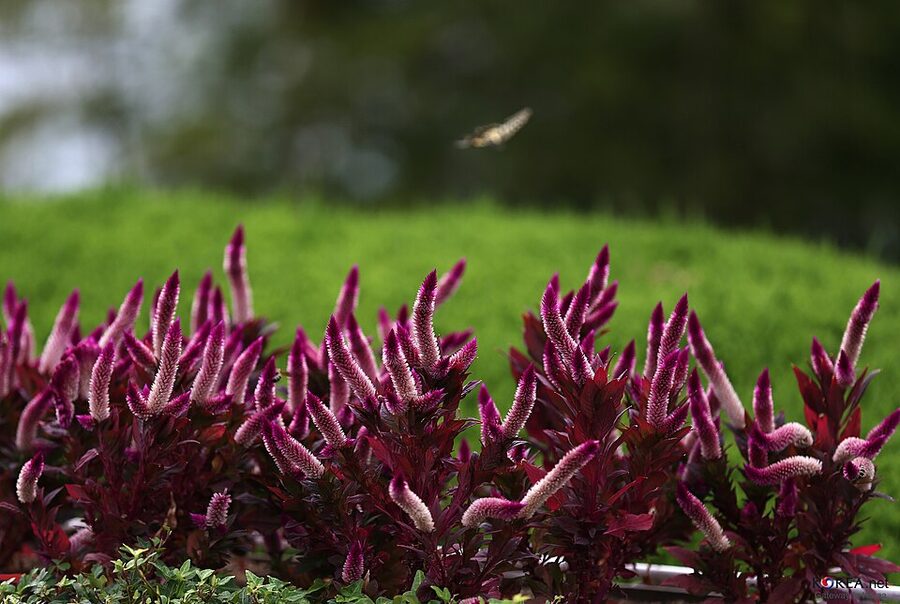
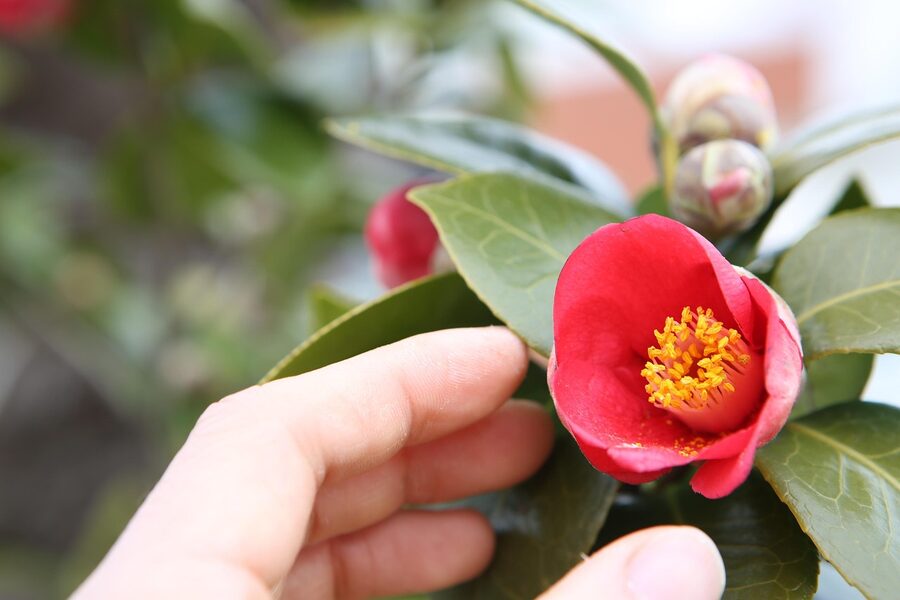
Late April to mid-May is the best window. The camellias are finishing up, the azaleas and tulips are in full push, and the weather is reliable enough that ferries run on schedule. Early April works too if you want to catch it alongside a Jinhae cherry blossom day trip — Jinhae is roughly an hour and a half west of Busan, so you can book both in the same week.
October and early November are the quieter secret — cooler, drier, ocean visibility at its peak. Fewer crowds. Most of the permanent planting (palms, topiary, the sculpted hedges) looks as good in October as it does in May. You miss the big floral moments but gain the clear-water ferry rides.
Avoid July through early September unless you have no choice. The gardens cook, the ferries get cancelled by typhoons, and the return coach to Busan crawls in Friday-afternoon holiday traffic.
The Geoje Panorama Cable Car is worth it (if the weather behaves)
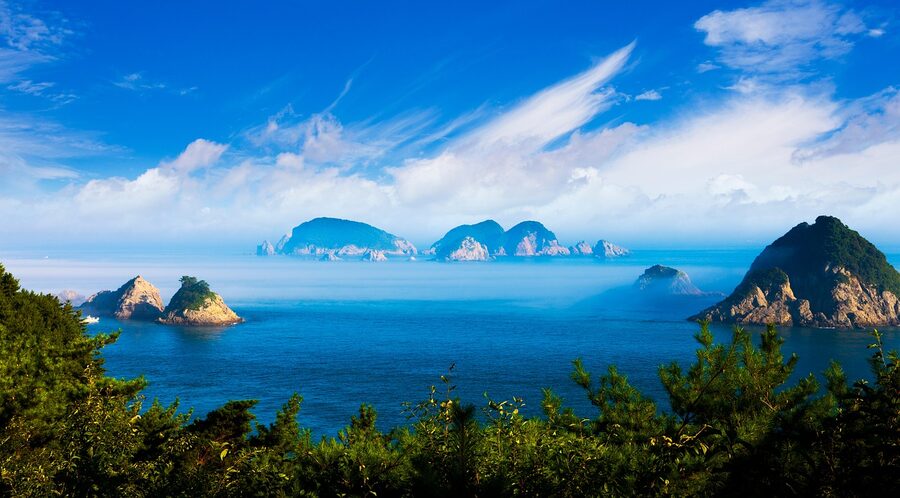
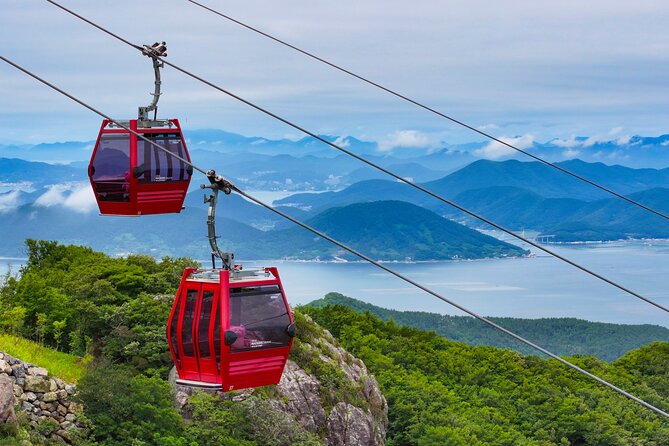
The Geoje Panorama Cable Car opened in 2023 and most of the tours that include it were a bit half-hearted about it for the first year. It’s dialled in now. The route is 1.56km long and climbs to about 580m above sea level. Clear days you can see across to Tsushima in Japan — not kidding, I thought the guide was exaggerating until I saw it.
It’s also the most weather-dependent stop on the day. Winds above about 45 km/h shut the whole thing down. If your tour includes the cable car and the operator pulls it on arrival, most decent tour companies substitute a Windy Hill or Sinseondae stop. Ask what happens in bad weather before you book.
Pro move: if your tour offers crystal-floor or “sky” cabins for a small surcharge, the upgrade is worth it. It’s not about the glass floor — it’s that those cabins tend to load last, which gives you better views on both directions.
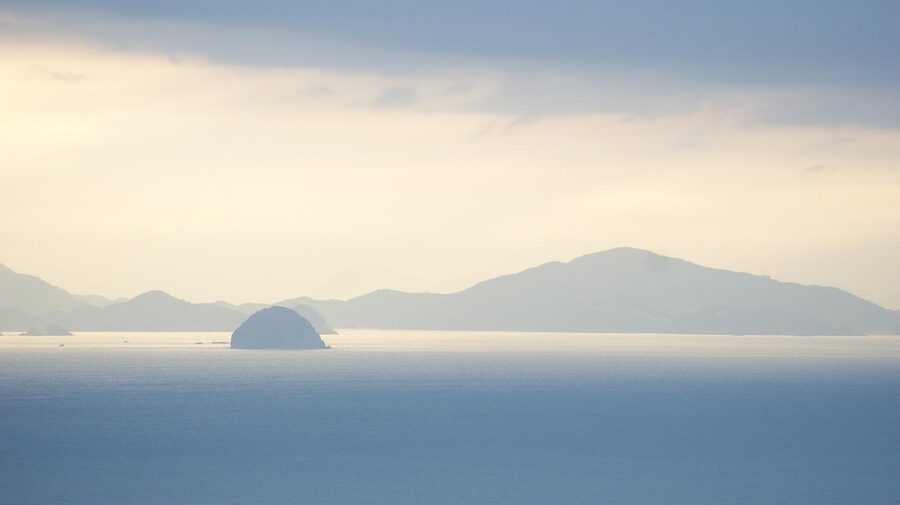
Windy Hill, Sinseondae and the other Geoje stops
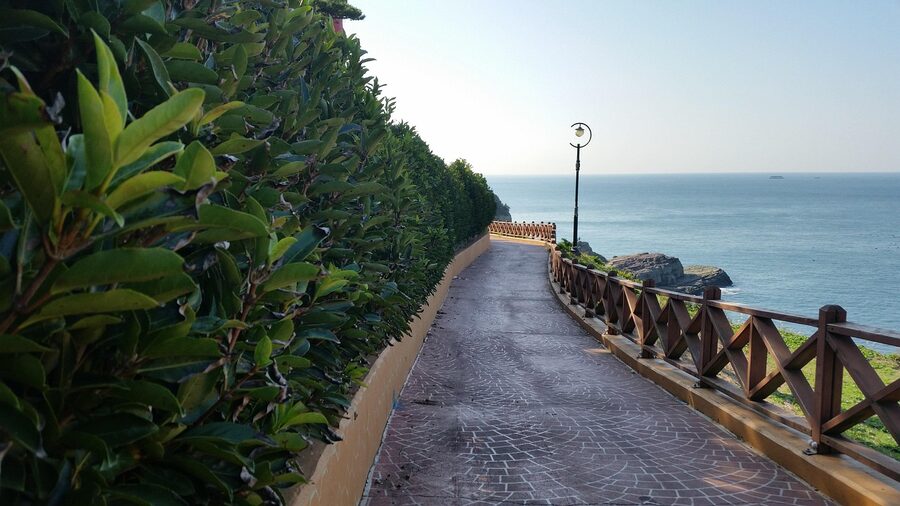
Most day trips squeeze in two of these on the Geoje side. Worth knowing what each one is:
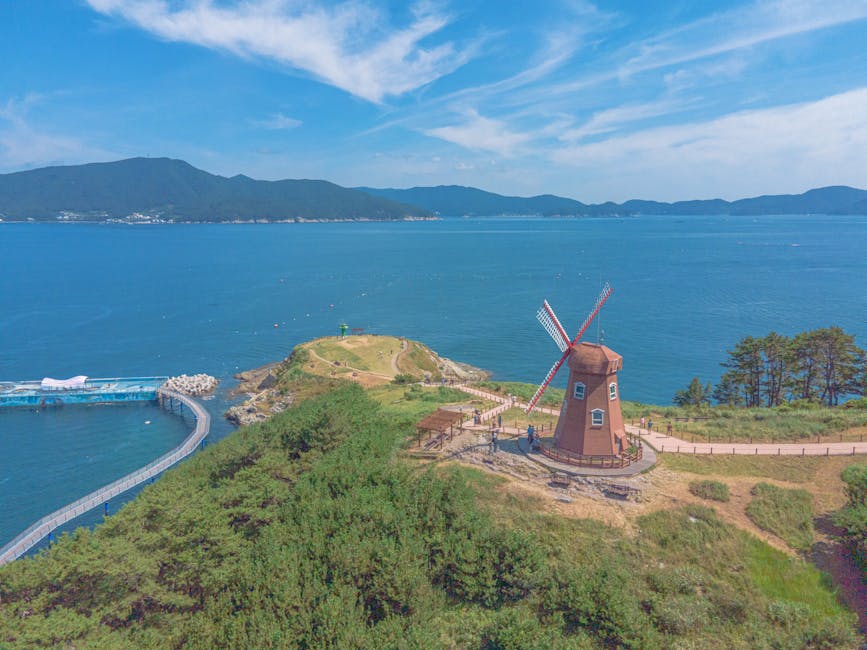
Windy Hill. A grass headland with a single-blade windmill that Korean dramas keep filming at. The walk up is five minutes from the carpark. Photo stop, not a destination. Expect 20–30 minutes here.
Sinseondae (Geoje Shinseondae). A rocky headland with staircases that wrap around pillar-like cliffs. More dramatic than Windy Hill and less crowded because it’s fifteen minutes further south. The “Sinseon” in the name means “the fairy” — local legend says fairies came down from heaven to bathe here.
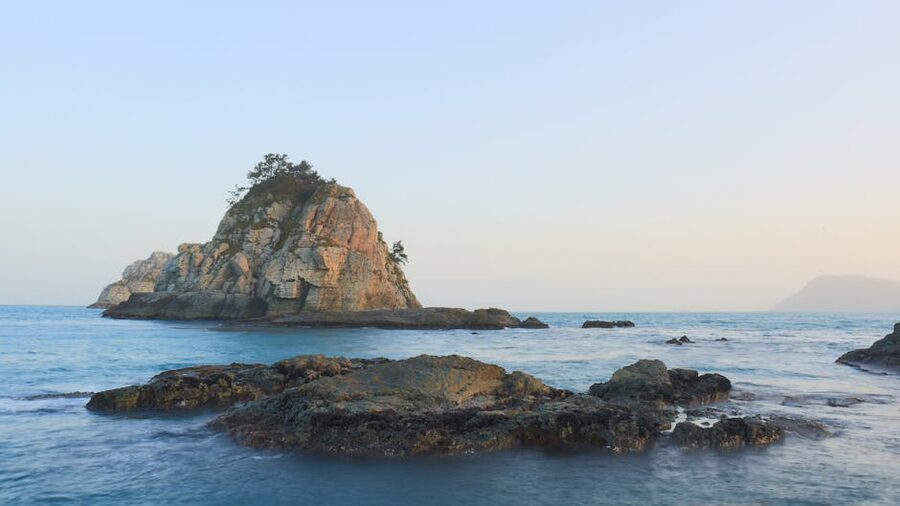
Haegeumgang. The most famous rock formation on Geoje. Two craggy islets about a kilometre offshore, best seen from the Haegeumgang Ferry Terminal viewing point. Some Oedo Botania ferries actually route past Haegeumgang on the way out — ask when you book.
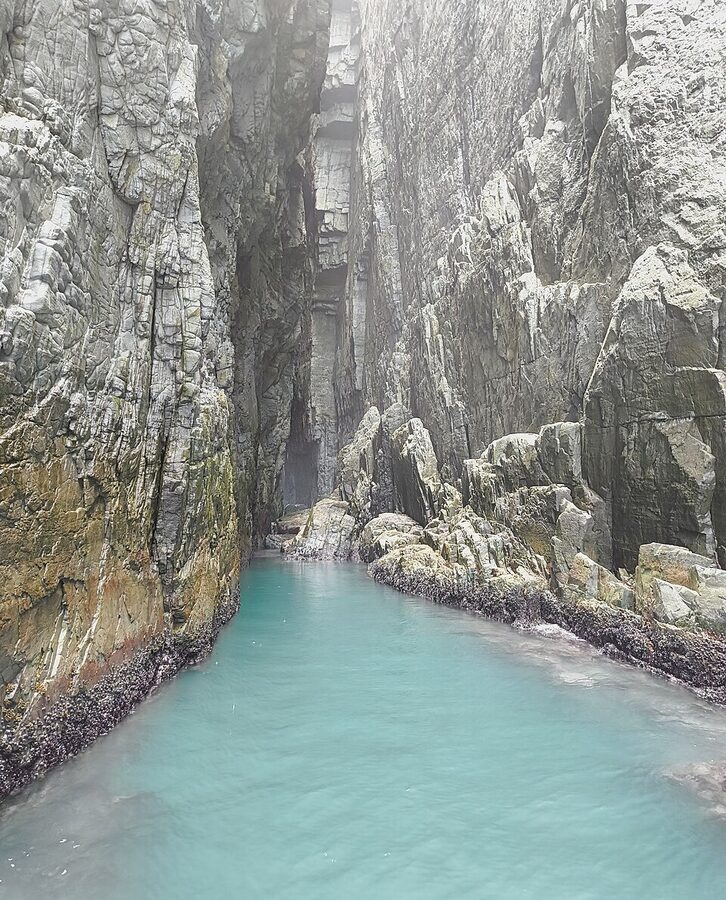
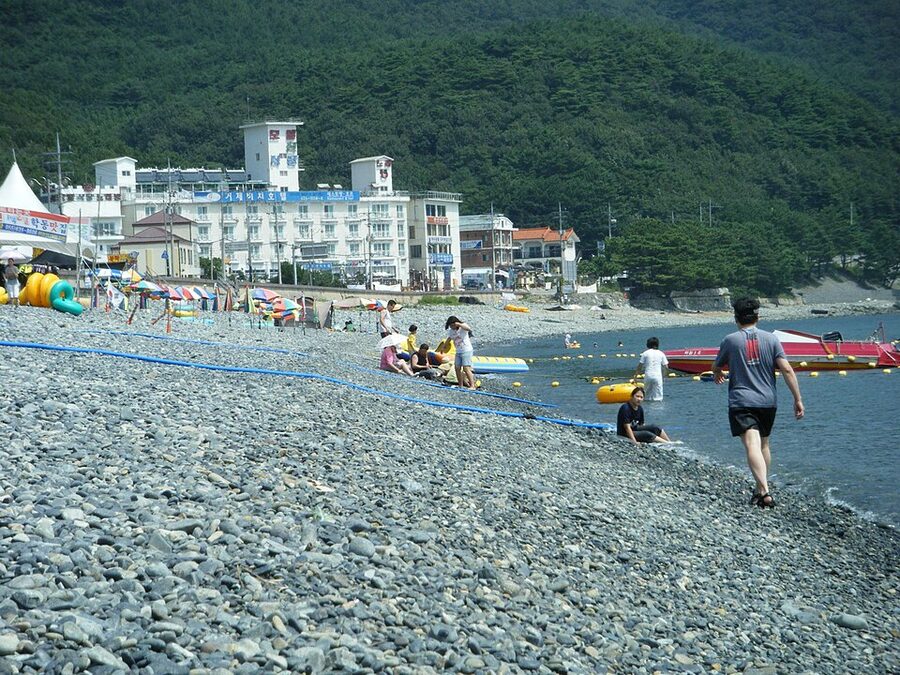
Hakdong Mongdol Beach. A 1.2km-long black-pebble beach, famous in Korea because the round basalt pebbles rattle and sing when the waves pull back. Most group tours skip it in favour of the cable car, but it’s a favourite of private-tour drivers.
The ferry to Oedo: what to expect
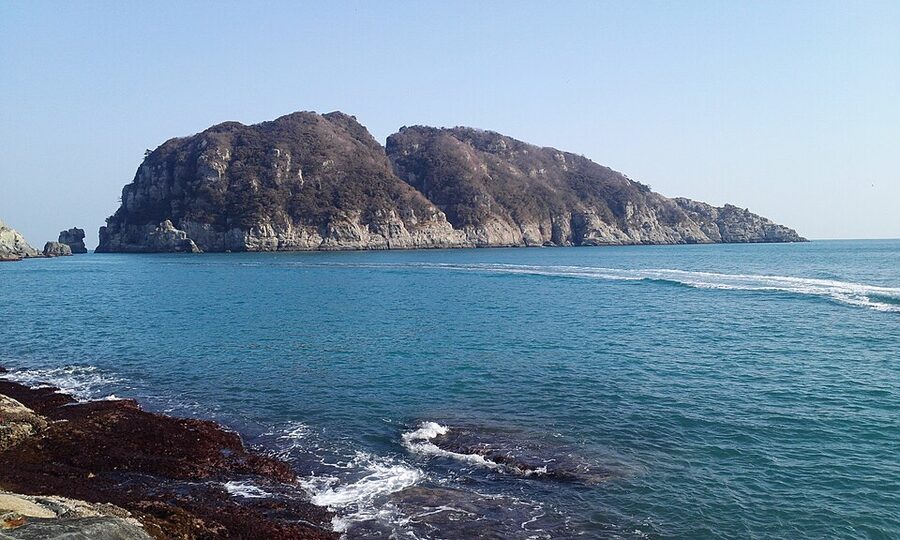
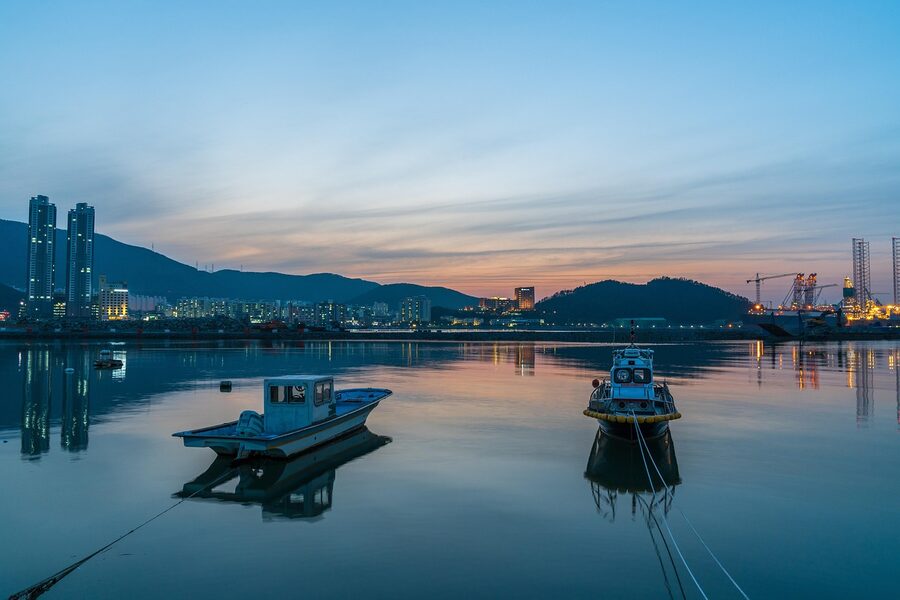
Ferries to Oedo Botania leave from three different Geoje terminals — Jangseungpo, Haegeumgang, and Dojangpo. Your tour picks one, usually based on where the coach is parked. The crossing is 20–40 minutes depending on port.
Seas in this stretch of the South Sea can be genuinely choppy, especially in autumn. I’ve done this crossing both ways — once on a flat-calm summer morning where the ferry felt like a bus, once in November with swell that had half the cabin turning green. If you’re prone to seasickness, take something before you board. The sheltered seating is at the back of the lower deck.
You’ll likely pass floating oyster farms, the occasional hooded fishing boat, and — on the way back — the submerged pillar formations near Haegeumgang if your route runs that way. The ride itself is one of the more underrated parts of the day.
DIY vs. tour: do the maths
A DIY version of this day trip is technically possible. Public buses from Busan to Geoje run regularly, and there’s a bus from central Geoje to Jangseungpo. From there you can buy an Oedo ferry ticket at the counter if there’s space. Total cost: about 50,000 KRW in fares and fees, including the Oedo entrance.
But. The ferries are not reliable to book on the day — weekends in spring sell out by 9am for the full run of sailings. The bus timings don’t mesh with the ferry timings. And you’ll lose either the cable car or Windy Hill because there’s no way to hit both on public transport in one day.
Adding up my own DIY attempts on similar Korean day trips — something always slips. With a packaged tour you’re paying maybe $50 extra for the reliability of a guaranteed ferry seat, a guaranteed cable car ticket, and a coach that actually waits for you. For this particular day I’d always take the tour.
If you’re confident in your navigation, the one scenario where I’d DIY is a multi-day stay on Geoje itself — two or three nights at Hakdong or a Gohyeon hotel, with Oedo as a single-afternoon trip. But that’s a different article.
What to pack for the day
Short list, because this isn’t that kind of article:
- Layers. Even in June the wind on the ferry and the cable car cabin is cold. A light shell over a T-shirt does the job.
- Cash. About 30,000 KRW. Most tours bundle the big fees but the lunch stops and the Oedo souvenir shop are card-optional at best.
- A seasickness tablet. Take it before the ferry, not on it.
- Regular trainers are fine. Oedo’s paths are laid stone and wooden stairs — you don’t need hiking boots.
- A light powerbank. You will run your phone down at Windy Hill, the cable car, and Oedo. All three want photos.
Connecting this with the rest of your Busan trip
The Geoje and Oedo day is usually a 10-hour commitment, which means it eats the day. If you’ve got a week in Busan, I’d sequence it like this:
Day 1 — settle in, do a full-day Busan city tour to hit Gamcheon Culture Village, Beomeosa, Haeundae. Day 2 — Geoje and Oedo. Day 3 — either a Busan to Gyeongju day trip or a private Gyeongju tour depending on whether you want flexibility or coverage. Day 4 — recovery day, maybe a cooking class or a Busan pub crawl at night. Day 5 — Jinhae cherry blossom day trip in April, or a Busan night tour any other time.
Don’t stack Geoje and Gyeongju back-to-back. Both are long days, both involve early starts, and you’ll be useless by the third sunset.
Honest drawbacks
Because I’d rather you book this day trip knowing what it is:
- It’s a long day. 10 hours including the drives. If 7am pickup sounds brutal, this is not the tour for you — the early start is non-negotiable because the first ferries to Oedo fill up.
- The Oedo window is tight. Ninety minutes on the island feels short once you start climbing the steps. Plan the route before you disembark.
- Weather can cancel either the ferry or the cable car. Book a tour with a good rebooking policy, not just a refund policy — you want to be able to reschedule for tomorrow, not argue about a refund.
- It’s not a hidden gem. Despite the marketing. Oedo Botania is one of Korea’s most-visited gardens. Expect company, especially on public holidays.
- The food stops are mixed. Some tours do a lovely Gohyeon seafood lunch. Some dump you at a highway service area. Ask.
Other Busan-area day trips worth stacking with this
If you’re building a week around Busan, the Geoje and Oedo day is one of three headline excursions. The other two are worth knowing about. A private Gyeongju tour gives you the full UNESCO-sites day with pacing that suits your interests — more temples or more tombs, your call. A Jinhae cherry blossom tour is an April-only add that slots in on the days when Geoje is at its floral best anyway. And back in the city, a Busan pub crawl is the painless way to turn the day-trip hangover of aching feet into an actual night out without having to navigate local hof signage yourself.
Don’t over-book. Two big excursions and two nights out is a full week. Three big excursions and you’ll be sleeping on the KTX back to Seoul.
If you’re still deciding between tours, start with the small-group Hidden Gem tour. It’s the most complete itinerary, the group cap keeps it civilised, and if the weather shifts, the small-group operators are the best at pivoting the day. The Coastal Escape is a fine backup. The $82 budget option works if you’re travelling on a tight number. All three get you to Oedo Botania, which is the whole point.
Geoje pairs naturally with the rest of a Busan-anchored week. If you’re still piecing together the trip, a Busan cooking class fills a rainy half-day indoors and a Busan Airport SIM and T-money card handles the data-and-transit logistics you’ll need before the ferry to Oedo.