
We were halfway up the granite stairs at Bulguksa when my guide stopped mid-sentence, turned toward the pagoda, and said, “This one is older than your country by about 1,200 years.” I laughed because he was right. That line pretty much sums up what a Gyeongju private tour does to your head — you arrive thinking you are ticking off UNESCO boxes, and within the first hour a Silla-era story is rewiring the way you read every rooftop for the rest of the day.
Gyeongju is not a city you can casually wing. The temples, royal tombs, palace ruins, and the mountain grotto sit in three separate zones, and a good day has to thread them in the right order. That is exactly the problem a private tour solves.
In a Hurry? Top Private Gyeongju Picks
- Gyeongju UNESCO Sites Private Tour With Licensed Tour Guide — $186.50 per person. The full licensed-guide experience with Bulguksa, Seokguram, and the royal tomb fields explained in historical sequence. Check availability on Viator.
- Gyeongju Private Tour: Uncover the Eternal Beauty — $186.50 per person. Same price point, different operator, flexible itinerary with pick-up from Busan or Singyeongju station. Check availability on Viator.
- Gyeongju Private Car Tour with a Licensed Tour Guide — $399 per group up to 7. The best value if you’re a family or small group — flat-rate car plus guide. Check availability on GetYourGuide.
- In a Hurry? Top Private Gyeongju Picks
- Why a Private Tour Is the Right Way to See Gyeongju
- The Three Private Tour Formats — Which One Fits You
- My Top 3 Private Gyeongju Tours
- 1. Gyeongju UNESCO Sites Private Tour With Licensed Tour Guide — 6.50 per person
- 2. Gyeongju Private Tour: Uncover the Eternal Beauty — 6.50 per person
- 3. Gyeongju Private Car Tour with a Licensed Tour Guide — 9 per group (up to 7)
- How the Day Actually Runs — A Realistic Gyeongju Private Tour Itinerary
- Pick-Up and Where You’re Staying — Three Scenarios
- What a Private Tour Actually Costs — and What You’re Paying For
- Booking Practicalities — Cancellation, Language, Payment
- Best Season for Gyeongju — Honest Answer
- A Little Silla History — What the Sites Actually Mean
- What a Private Tour Includes — and What It Doesn’t
- Gyeongju Private Tours vs. the Alternatives
- Common Mistakes to Avoid
- How Gyeongju Fits Into a Wider Korea Trip
- Practical Odds and Ends
- So Should You Book It?
- If You’re Lining Up a Week in Korea
Why a Private Tour Is the Right Way to See Gyeongju
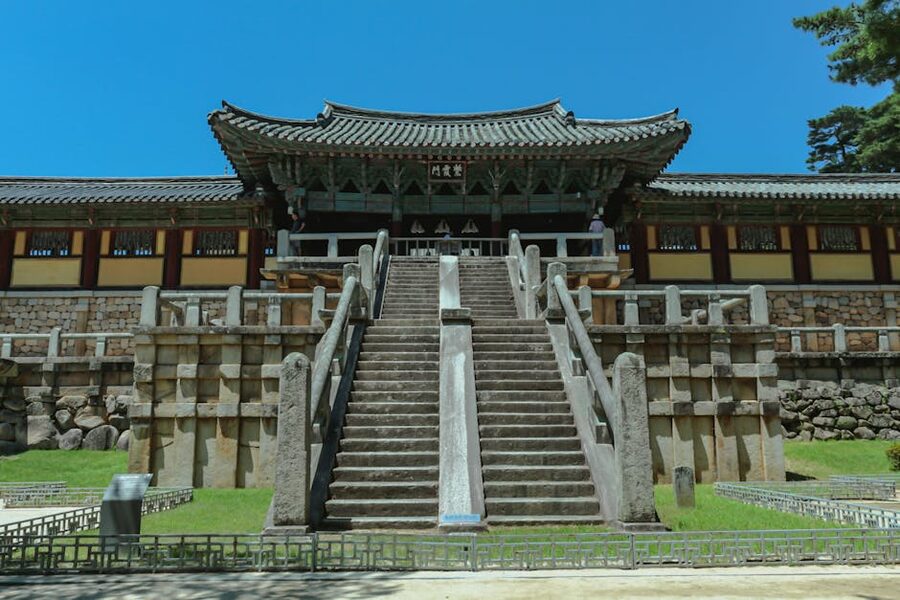
Gyeongju was the capital of the Silla Kingdom for nearly a thousand years, from 57 BCE until the dynasty fell in 935 CE. That is a staggering run. Most ancient capitals are remembered through museum fragments and Wikipedia pages. Gyeongju is different — the tomb mounds, the temple grounds, the observatory, and the palace pond are all still sitting there in the open air, spread across a basin of small hills and rice fields.
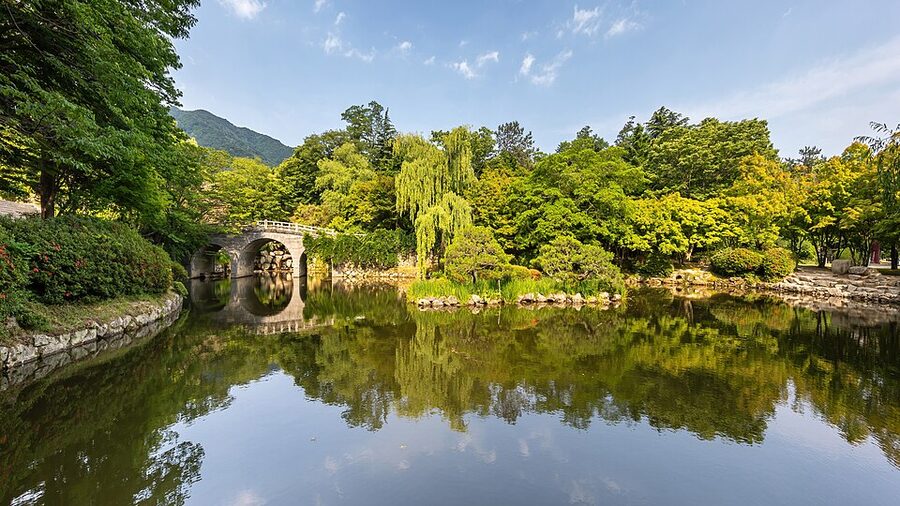
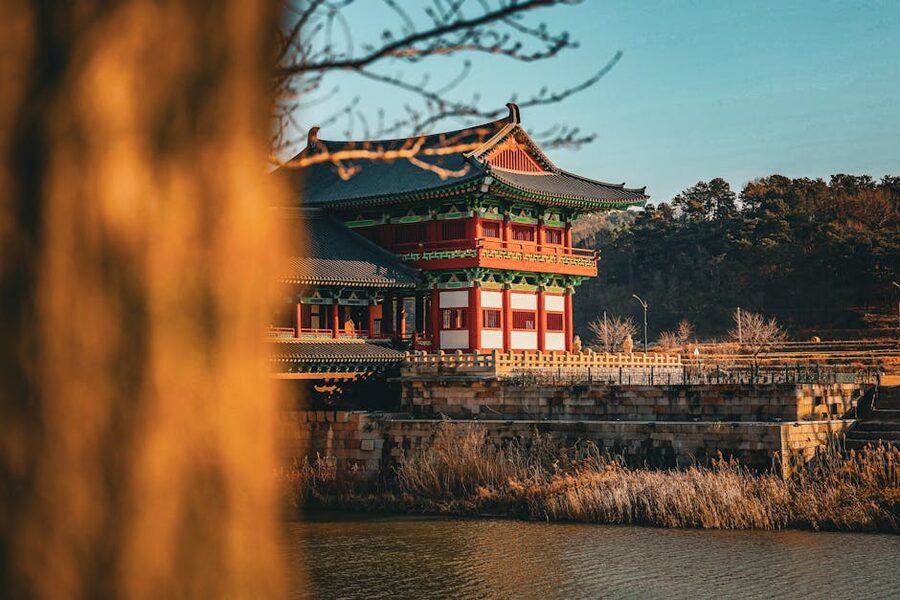
Here is the practical problem. The three must-see zones are not within walking distance of each other. Bulguksa and Seokguram are up on Mount Toham, about 30 minutes east of the city centre by road. The royal tomb park and Cheomseongdae Observatory cluster around downtown Gyeongju. Donggung Palace and Wolji Pond sit a few blocks east of the tombs. Connecting them on public transport eats a huge slice of your day.
A private tour collapses that logistical friction. Your guide picks you up, drives the route in the optimal order, times the lunch break so you are not trapped in a restaurant queue, and — the part you actually remember — explains how Silla Buddhism fed into the temple architecture, why the royal tombs are shaped like sleeping hills, and what the Cheomseongdae stonework actually counted. Without that commentary the sites can feel beautiful but abstract. With it, the whole day clicks into a single story.
The Three Private Tour Formats — Which One Fits You
Before I get into specific tours, it helps to understand the three shapes a private Gyeongju day can take. They are priced differently and they deliver different experiences.
Per-person licensed guide tour ($180–$260 per person). Flat per-head pricing. You get a dedicated licensed guide plus private transport. Best for solo travellers or couples who want the deep historical commentary. Two people ends up around the same total as the car charter below, so for a couple there is no reason not to take the guide.
Private car charter with licensed guide ($350–$450 flat for the vehicle). Group pricing — you pay for the car, not per person. Three or four people and it becomes the best value on the market. A minivan for six or seven travellers makes it an absolute bargain per head.
Driver-led private transport ($150–$250). A private car with a driver but not a full licensed tour guide. The driver knows the route but will not narrate at the level a guide does. This is the option if you have already read up on Silla history and just want an efficient, comfortable way to move between sites.
My honest take: if you have never been to Gyeongju before and you have any interest in Korean history, pay the extra for a fully licensed guide. The temples are beautiful on their own but the context is where the value sits. A driver-only tour turns Gyeongju into a polite sightseeing conveyor. A guided tour turns it into a day you still talk about months later.
My Top 3 Private Gyeongju Tours
I’ve sorted these by the shape of trip they suit, not purely by price. All three are run by operators with long track records and licensed Korean guides.
1. Gyeongju UNESCO Sites Private Tour With Licensed Tour Guide — $186.50 per person
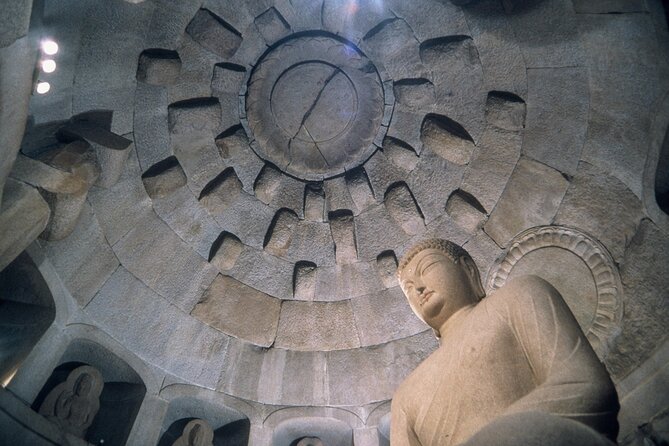
If you want Gyeongju explained as one connected Silla story rather than a list of landmarks, this is the tour to take — our full review breaks down the pacing and pick-up options. The guide meets you at your Busan hotel or at Singyeongju KTX station, and the route threads the mountain zone first, then the downtown cluster. Pick this one if historical interpretation matters more to you than a private vehicle budget.
2. Gyeongju Private Tour: Uncover the Eternal Beauty — $186.50 per person
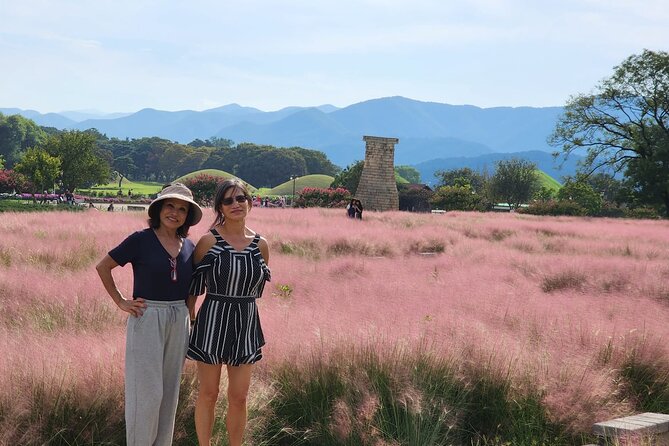
Similar day to the one above but with a different operator that leans more on itinerary flexibility — in our review we noted a guide who rerouted the morning to squeeze in Yangdong Folk Village on request. Pick-up is available from Busan, Daegu, or Gyeongju itself. This is the tour for travellers who want to nudge the plan once they see what catches their eye.
3. Gyeongju Private Car Tour with a Licensed Tour Guide — $399 per group (up to 7)
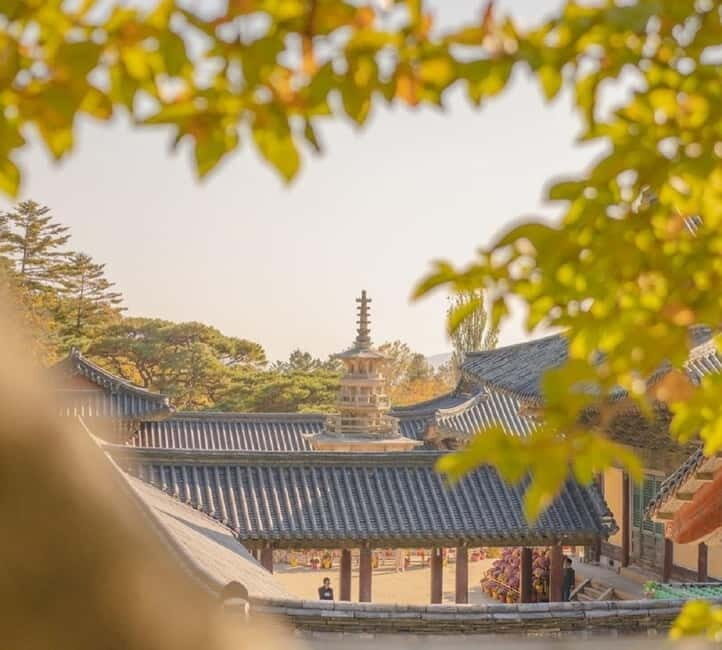
The value pick for families and small groups, booked on GetYourGuide with a flexible 4–9 hour window. Our review walks through the lunch included in the private tour and the car size. If you’re travelling as three, four, five, or more, run the per-person maths against the tours above — this one wins quickly. The certified guide handles both the driving and the narration.
How the Day Actually Runs — A Realistic Gyeongju Private Tour Itinerary
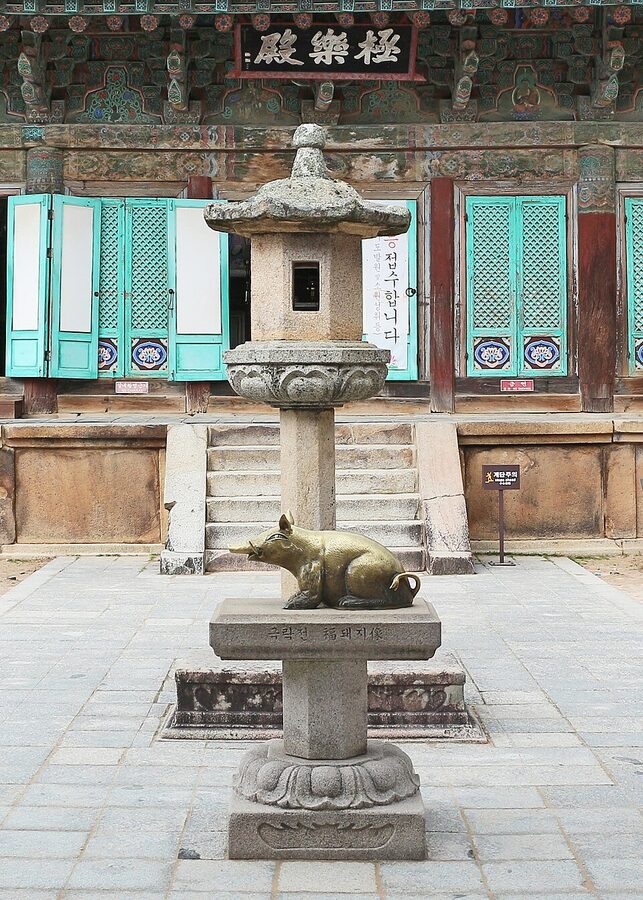
Here is a realistic version of what a good 8-hour private Gyeongju day looks like. Most of the tours above run a version of this sequence, and if you understand the logic of the order you can ask your guide to tweak specific stops without breaking the day.
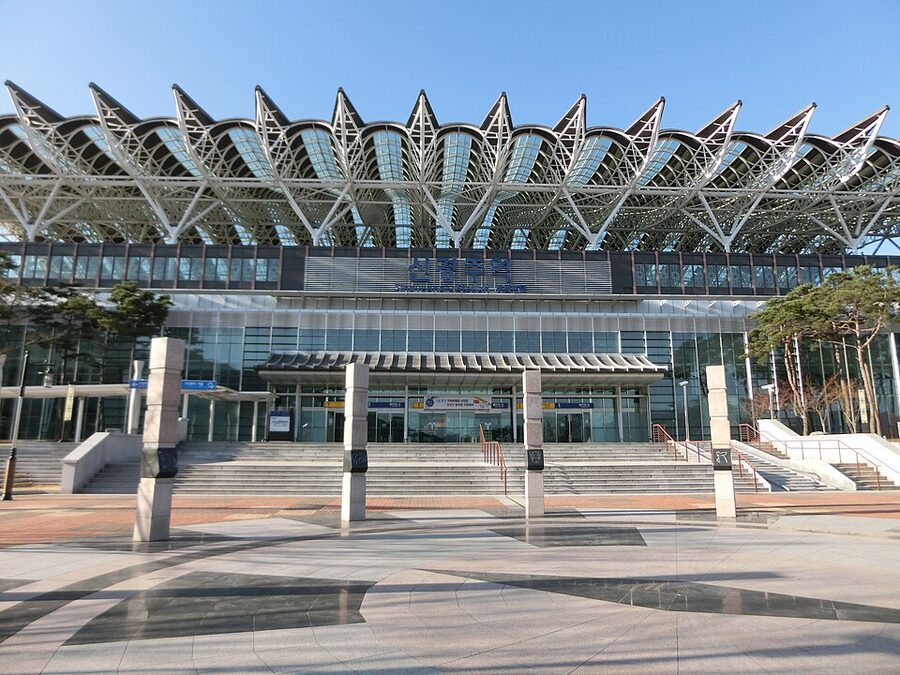
9:00 am — Pick-up. Either at your Busan hotel, Singyeongju KTX station, or a Gyeongju hotel. If you are coming by KTX, take the 7:47 am bullet train from Busan Station. You’ll be in Singyeongju by 8:15 am and meeting your guide inside 45 minutes.
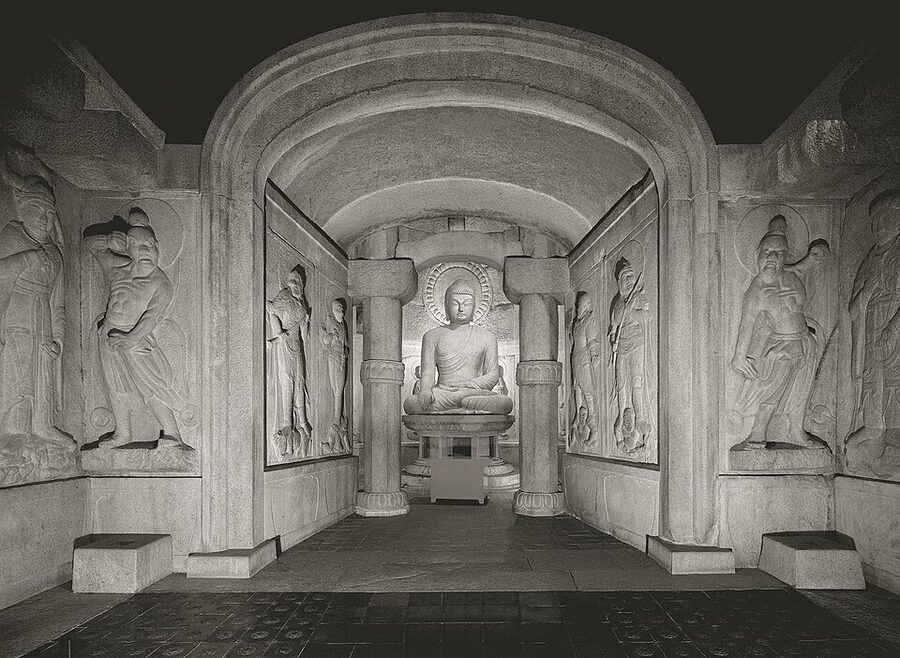
9:30–11:45 am — Bulguksa Temple and Seokguram Grotto. Drive up Mount Toham. Bulguksa first because the morning light on the twin pagodas is softer, and the coach tours from Busan haven’t arrived yet. A proper visit is about 75 minutes. Seokguram is a short drive higher up the mountain — the stone Buddha in the grotto is one of the most revered pieces of Silla Buddhist art and the walk in from the parking area takes about 10 minutes.
12:15–1:30 pm — Lunch in the Hwangridan-gil area. Hwangridan-gil is the old hanok lane that gentrified into Gyeongju’s café and lunch corridor. Your guide will book a table or pick a spot — expect a traditional Korean set meal, often ssambap (lettuce wraps) or a hanjeongsik multi-dish spread.
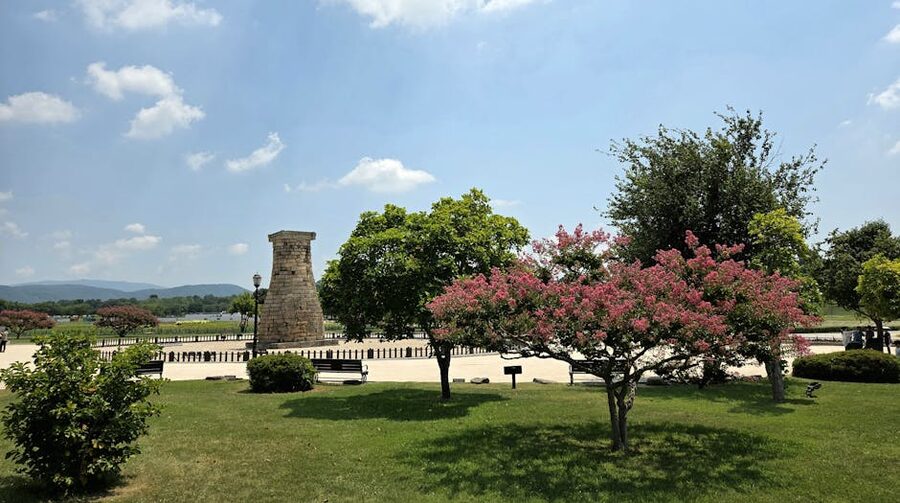
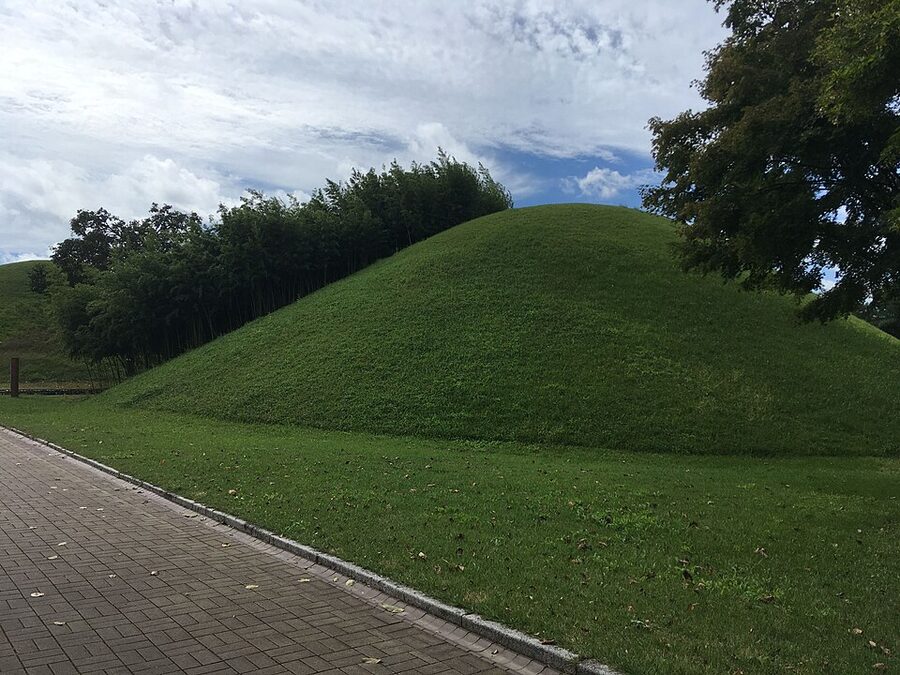
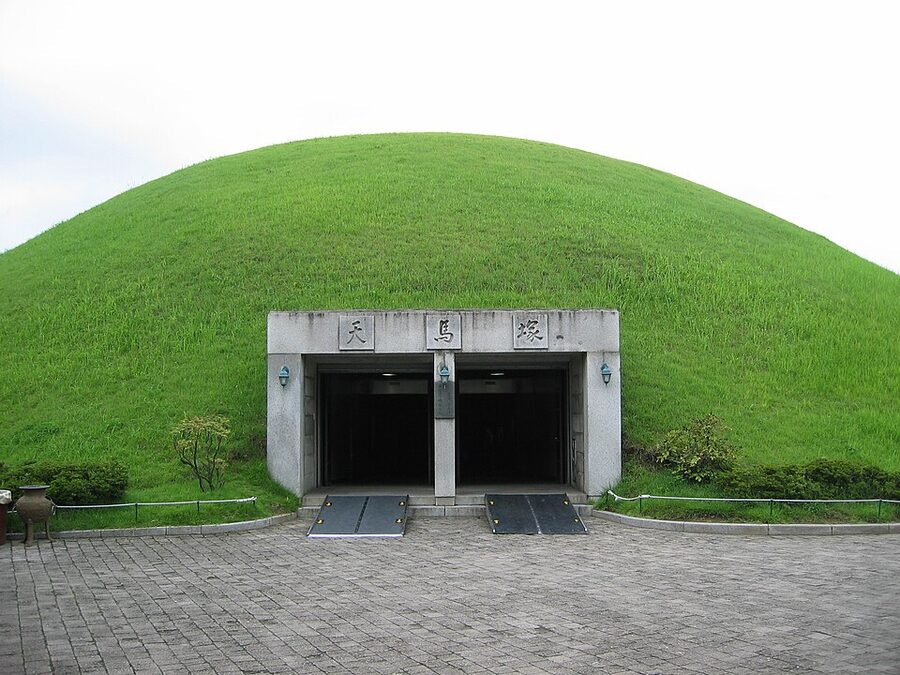
1:30–3:00 pm — Daereungwon Tomb Complex and Cheomseongdae. Walk into the tomb park from the southern gate. The mounds you see covering the grass fields are elite Silla burials — the most famous is Cheonmachong, the “Heavenly Horse Tomb,” where you can actually walk inside a reconstructed burial chamber. Cheomseongdae is a five-minute stroll away on the same park grid.
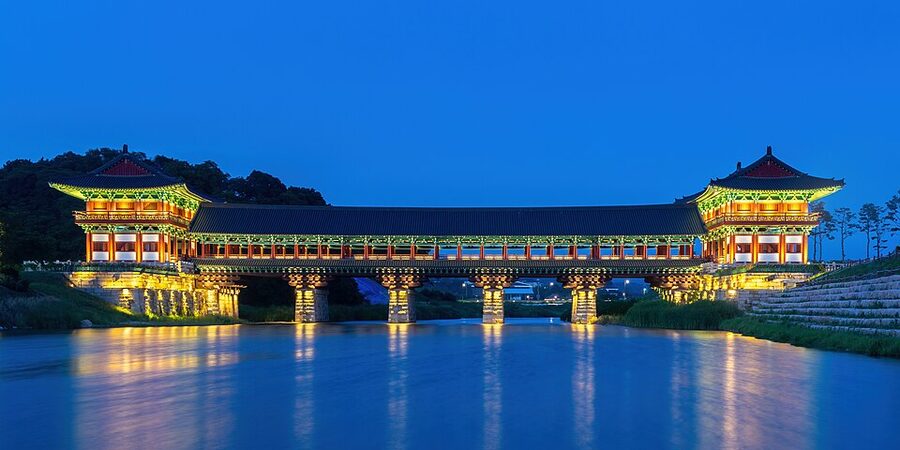
3:00–4:15 pm — Gyeongju National Museum or Woljeonggyo Bridge. Your guide will usually offer the choice. The museum is free and holds the actual Silla crowns recovered from the tombs. Woljeonggyo is a recently reconstructed wooden bridge across the Namcheon river — easier on the feet and photogenic.
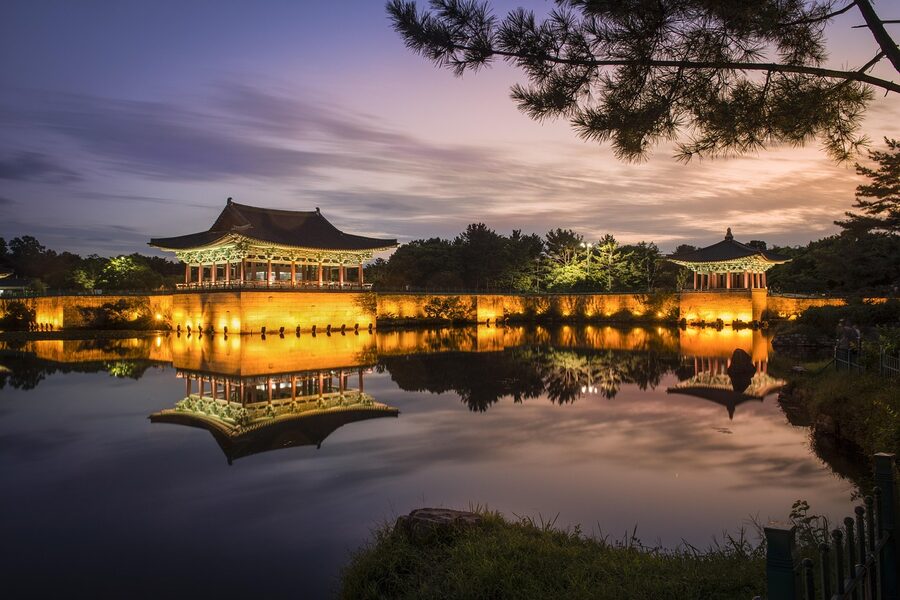
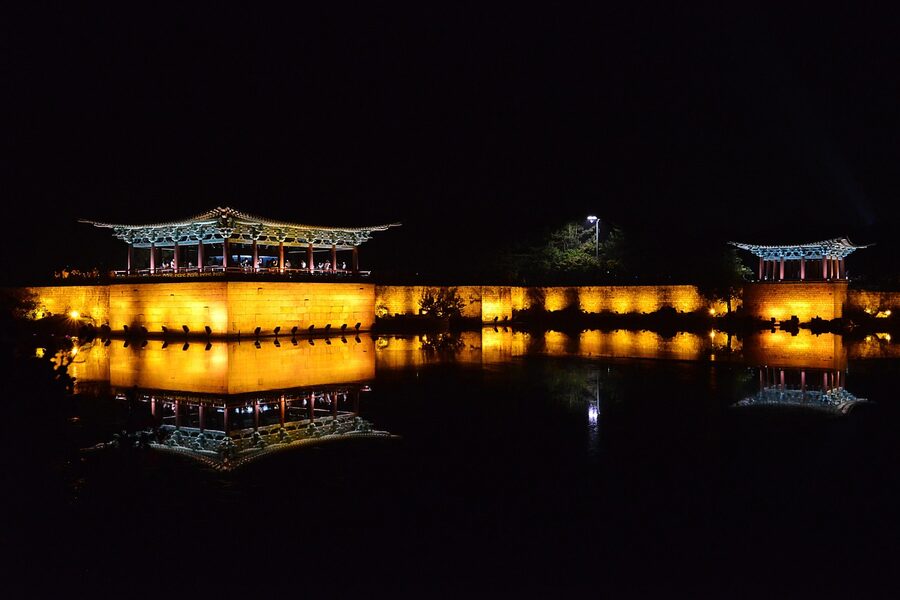
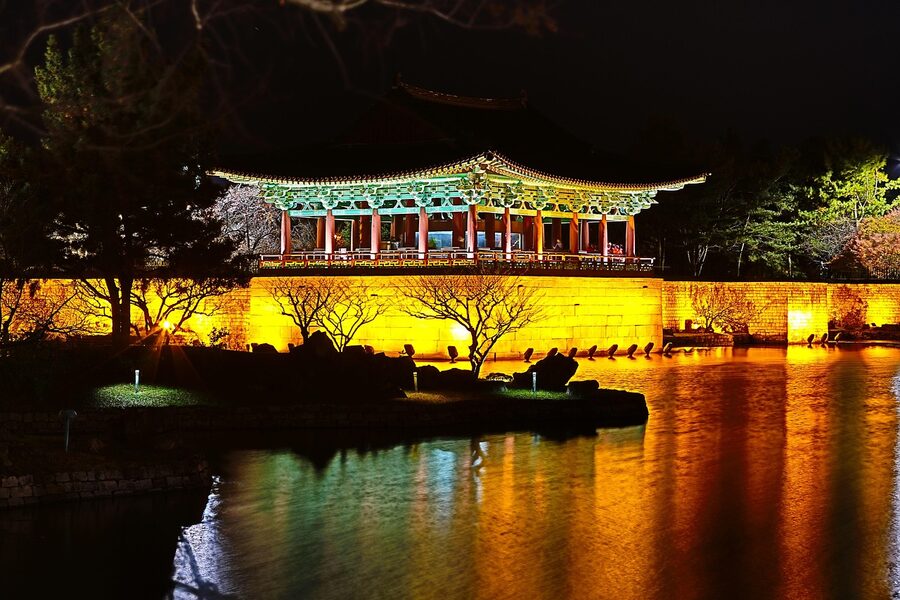
4:30–5:30 pm — Donggung Palace and Wolji Pond. The final stop. In late afternoon the palace reflects in the pond and the light is extraordinary. If you stay until dusk you get the illuminated night view, which is arguably the single most iconic image of Gyeongju. Most private tours run until about 5 pm; if you want the night view, ask in advance about extending.
5:30 pm — Drop-off. Back to your hotel, the KTX station, or — if you based yourself in Busan for the day — the guide drives you all the way back and you’re eating dinner in Nampo-dong by 8 pm.
Pick-Up and Where You’re Staying — Three Scenarios
Where you sleep the night before shapes which tour you want. Three common setups:
1. Based in Busan. This is the most common scenario — most international travellers stay in Busan and do Gyeongju as a day trip. Either your guide drives up from Busan and picks you up at your hotel (cleanest option, adds about 90 minutes each way), or you take the KTX to Singyeongju station yourself. If you prefer the DIY day-trip approach with group transport, our Busan-to-Gyeongju day trip guide covers the bus and train routes.
2. Based in Gyeongju itself. The move that local travel writers keep quietly recommending. Gyeongju has a tidy Hanok Village with traditional courtyard guesthouses, and you wake up walking distance from Daereungwon. Most private tours can start from your Gyeongju hotel, which saves the 90-minute Busan drive and lets you start at Bulguksa by 9:15 am, before the buses.
3. Based in Daegu. Less common, but a handful of operators run private tours from Daegu, which is about an hour north. If you’re already in Daegu for business, it’s a workable half-day into Gyeongju.
What a Private Tour Actually Costs — and What You’re Paying For
Let me break this down honestly because the cost is the number-one question I get in emails.
For a couple, the two per-person tours above come to about $373 total. That is all in — transport, licensed guide, admission to Bulguksa and Seokguram, and usually a lunch at a reputable spot. Split across two people that’s $186 each for an eight-hour day. Gas, tolls, and parking are included, which in Korea is not a trivial line.
For a group of four, the flat-rate car tour at $399 is far better value — about $100 per person. For a family of five or a group of six, it becomes absurd good value (the included group lunch is separate but set meals run $12–$18 per head).
What are you actually buying? Three things. First, route efficiency — the driving between Mount Toham, downtown, and the palace is about 55 minutes of car time over the day, which would be punishing by bus. Second, historical interpretation — the landmarks mean different things and a licensed guide turns them into one coherent story. Third, the small stuff — ticket lines skipped, lunch booked, photo spots timed for the light. The per-minute return on a private tour is better than any other Korean day I’ve paid for.
Booking Practicalities — Cancellation, Language, Payment
Cancellation windows. Both GetYourGuide and Viator offer free cancellation up to 24 hours before the tour start on most of the private Gyeongju products. Read the listing carefully — a few specific operator tours have 48- or 72-hour windows.
Language. All three tours above run in fluent English. Most Gyeongju licensed guides also speak Japanese or Chinese. If you want a specific language (French, German, Spanish), message the operator before booking — availability is real but limited.
Payment. Card is standard through the platform. You don’t tip — service is priced in, though a small thank-you at the end is appreciated. If you want to tip the guide, 20,000–30,000 KRW (around $15–$22) is generous.
Child policy. Family-friendly. Most tours have reduced seat-rate pricing for children under 12, and the car tour takes up to seven people including kids. Bulguksa has a lot of stairs — bring a carrier for toddlers rather than a stroller.
How far ahead to book. For spring (April cherry blossom) and autumn (late October/early November foliage), book at least three weeks ahead. The licensed guide pool in Gyeongju is small. In winter and summer, 3–5 days is usually enough.
Best Season for Gyeongju — Honest Answer
Gyeongju is a year-round destination, but each season delivers something different:
Spring (late March–April). Cherry blossoms along the Bomun Lake area and the Bulguksa approach road. The same short blossom window that makes Jinhae’s cherry blossom festival go viral also paints Gyeongju pink for about ten days.
Summer (June–August). Green and dramatic but hot and humid. Seokguram is mercifully cool — a grotto carved into the mountainside holds its own microclimate. Lotus blooms around the pond temples in July.
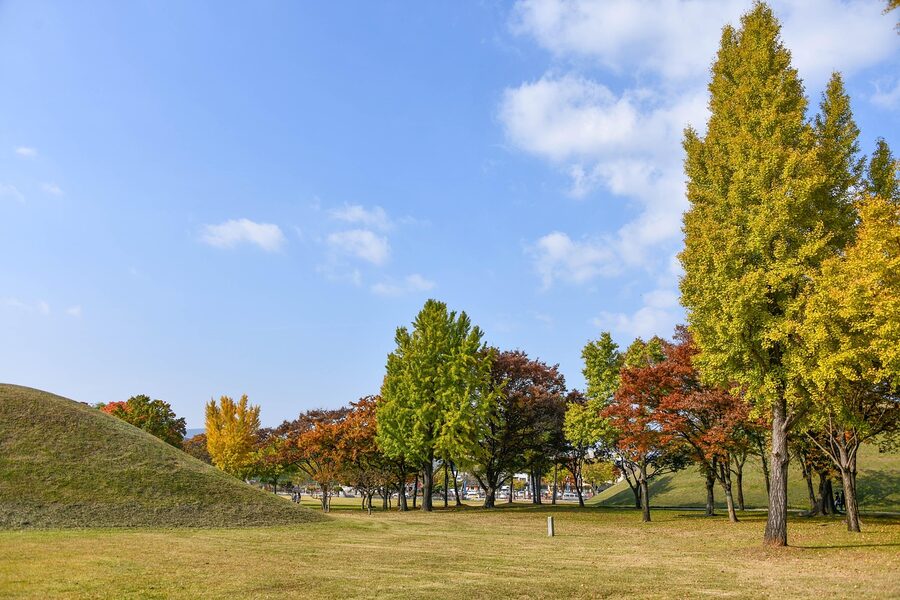
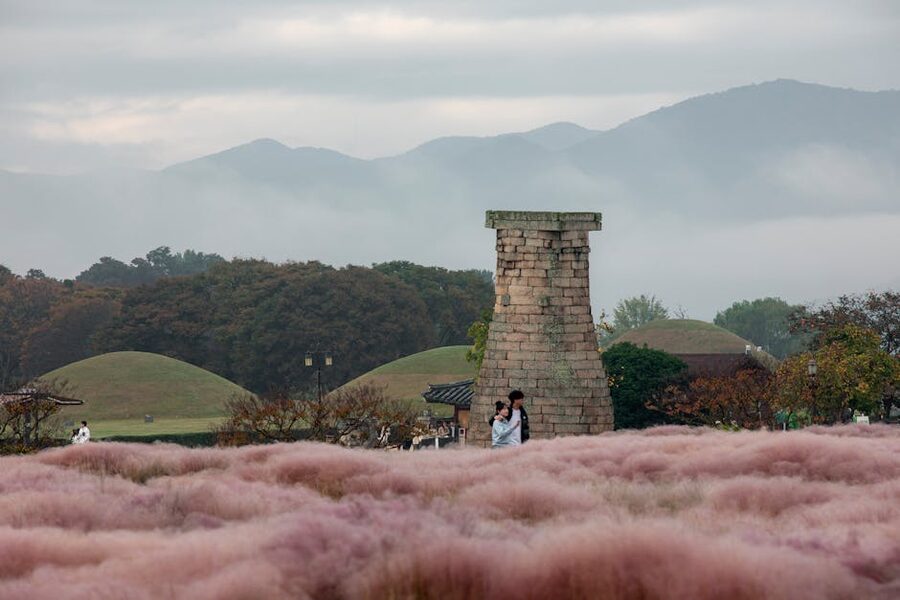
Autumn (October–November). The best season full stop. The tomb mounds turn from green to gold, the maples around Bulguksa are postcard-perfect, and pink muhly grass blooms around Cheomseongdae in late October. This is also when the private tours book out fastest.
Winter (December–February). Cold, quiet, and underrated. Snow on the temple roofs is rare but spectacular when it happens. If you don’t mind the cold, you get Seokguram almost to yourself. If you’re already planning a winter Korea trip, a Korea ski day trip pairs well on the same itinerary.
A Little Silla History — What the Sites Actually Mean
You do not need to read this to enjoy Gyeongju, but knowing even a sliver of Silla history changes what you see. A quick orientation:
The Silla Kingdom ran from 57 BCE to 935 CE — nearly a thousand years. For most of that time Gyeongju (then called Seorabeol) was the capital. By the 8th century it was one of the largest cities in Asia, with over a million residents. Silla unified the Korean peninsula in 668 CE under King Munmu, absorbing the rival Baekje and Goguryeo kingdoms, and the period that followed is known as Unified Silla — the era that produced Bulguksa, Seokguram, and most of the art you’ll see.
Buddhism arrived on the peninsula in the 4th century and by Silla’s peak it was the state religion. That is why the most impressive surviving monuments are Buddhist — the kingdom poured its resources and craftsmen into temple building. Bulguksa, begun in 528 CE and completed in 774 CE under minister Kim Dae-seong, is the architectural masterpiece of the era. Seokguram, carved into the mountain above it, is the sculptural masterpiece.
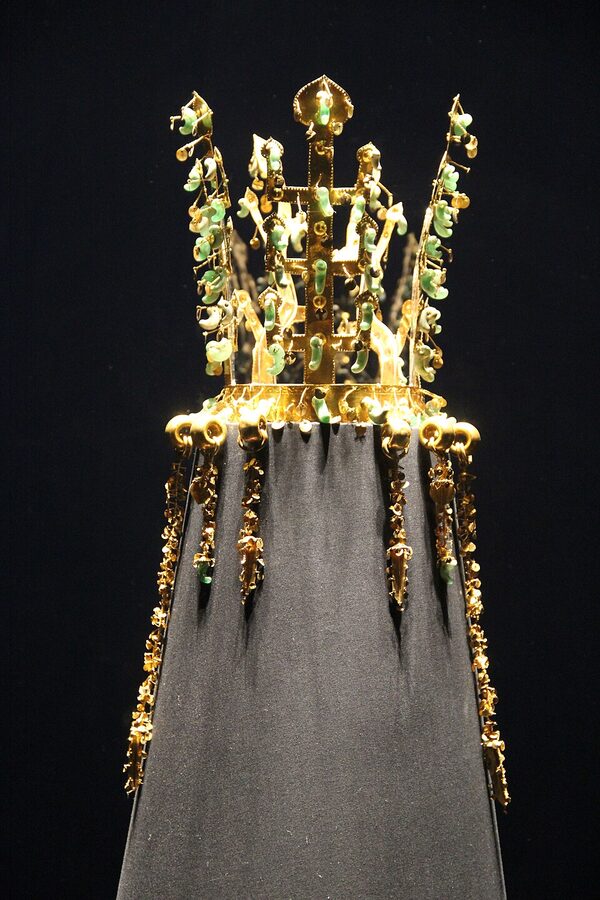
The royal tombs tell a different story. They are not just graves — they were political theatre, visible landmarks that showed the population who held power. The Silla tombs are stone chambers covered by earth mounds, and because they were sealed under tonnes of material rather than accessible corridors like Egyptian tombs, they survived nearly intact. When archaeologists opened Cheonmachong in 1973 they found a golden crown, a gilded saddle, and a birch-bark painting of a heavenly horse still readable after 1,500 years.
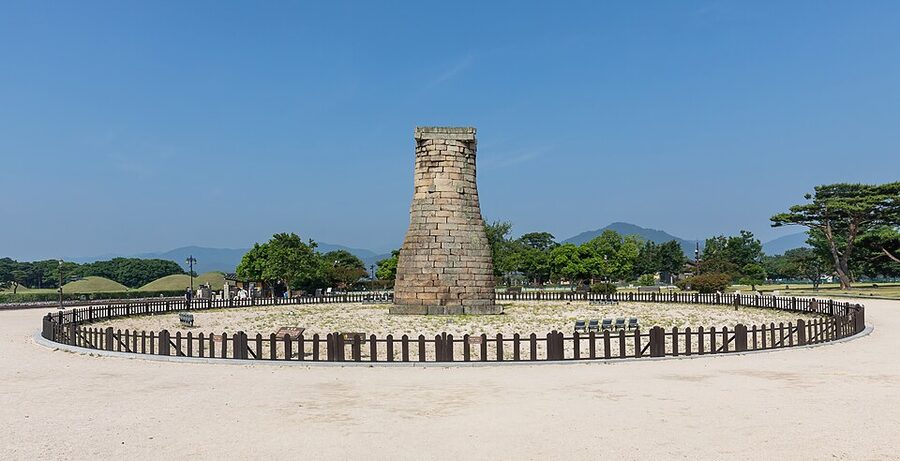
Cheomseongdae, that small bottle-shaped stone tower in the middle of the tomb park, is the oldest surviving astronomical observatory in East Asia. Built around 647 CE under Queen Seondeok, it’s 9.17 metres tall, made of 362 stones (matching the days of the lunar year), with 12 base layers for the months. Silla astronomers used it to track the sun, planets, and stars — not primarily for science but for calendar-making and divination, both of which were imperial duties. The fact it’s still standing, intact, in open air, 1,400 years later tells you everything about Silla stone engineering.
What a Private Tour Includes — and What It Doesn’t
Read the inclusions list carefully when you book. Across the three tours above, here is what’s standard:
Always included: Licensed guide (for the two that specify one), private vehicle and driver, fuel, tolls, parking, admission tickets to Bulguksa Temple and Seokguram Grotto. Pick-up and drop-off at the address you nominate within the operator’s zone.
Usually included: Admission to Daereungwon Tomb Complex (often free anyway) and Donggung Palace/Wolji Pond. Bottled water. Sometimes a lunch at a recommended restaurant — but check the listing; on some Viator products lunch is flagged “at your own expense.”
Not included: Tips. Personal shopping. Specific museum tickets if you add the Gyeongju National Museum separately. Extended evening hours if you want to stay for the Wolji Pond illumination.
Ask about: Child seats (yes for the car tour, with advance notice), languages other than English, vegan or halal lunch options, and extended pick-up outside the standard Busan/Daegu/Gyeongju zone.
Gyeongju Private Tours vs. the Alternatives
Private tours are not the only way to do Gyeongju. Here is a quick honest comparison:
Vs. a group coach day trip from Busan. Group tours run around $60–$90 per person. Cheaper than a private tour, but you’re on someone else’s schedule — 45 minutes at Bulguksa, 30 at Seokguram, photo stops that stop for 15 seconds. If the price gap matters, the Busan-to-Gyeongju day trip options I’ve written about are the way to go. But you lose the narrative and the pacing.
Vs. DIY by KTX and local buses. Possible, and if you’re confident with Korean transit signage it’s fine. The KTX gets you to Singyeongju in 15 minutes from Busan. From there it’s local buses 10 and 700 for Bulguksa, then 12 up to Seokguram, then 60 or 61 back into town. Budget $40 in transport plus three hours of connecting time. You’re also going to miss what the sites actually mean.
Vs. a two-day trip with overnight in Gyeongju. If you have the time, this is the best version — pair a private tour with an overnight at a hanok guesthouse. Day one does the UNESCO sites with a guide. Day two is yours for the slow stuff: tea at a hanok café on Hwangridan-gil, Gyeongju National Museum (free, excellent), the Bomun Lake area.
Common Mistakes to Avoid
Things I wish someone had told me the first time:
Don’t start with Seokguram. Some travellers think of Seokguram as the headline act and want to see it first. But the mountain road is slower in the morning (coach traffic), and Bulguksa is the warm-up the grotto needs — the temple explains the Buddhist context that makes the grotto’s isolated stone Buddha actually mean something.
Don’t skip lunch. This sounds trivial. It is not. Gyeongju is small and the restaurant cluster is centred around Hwangridan-gil. Between 12:30 and 1:30 pm the queues at good spots go out the door. A guide-led tour times lunch properly; a DIY day will have you standing in line at 1 pm hungry and wet-socked.
Don’t underestimate how spread out it is. The whole Gyeongju Historic Area covers about 44 square kilometres. Distance-wise it is not walkable. Even between the downtown cluster (tombs, observatory, Woljeonggyo) you’re looking at 20-minute walks between stops. Plan for transport, not foot traffic.
Don’t photograph inside Seokguram. The grotto is glassed off to protect the granite Buddha from humidity. Photography through the glass is not permitted and there are attendants enforcing it. Accept it, take one long look, and move on.
Don’t climb the tomb mounds. This one’s obvious but every week there’s a tourist doing it. The mounds are royal graves and climbing them is a genuine social mistake, not just a park rule.
How Gyeongju Fits Into a Wider Korea Trip
If you’re piecing together a longer South Korea itinerary, Gyeongju sits naturally on the Seoul–Busan corridor. Most trips look something like this:
Seoul (3–4 nights). Palaces, neighbourhoods, food. If you want it structured, a Seoul private tour will thread the four main palaces plus Bukchon Hanok Village efficiently. Day trips from Seoul to Suwon Hwaseong Fortress or the DMZ make sense here.
Busan (2 nights). The coastal counterweight to Seoul’s density. Gamcheon, Haeundae, the fish market at Jagalchi. If you want the local side that tourists miss, the Busan night tour is a strong pick. Base yourself here for the Gyeongju private tour day.
Gyeongju (day trip or overnight). What this article’s about.
Jeju (2–3 nights, optional). If your trip runs 10+ days, Korea’s volcanic island adds something totally different. Jeju also does private tours well.
Coast and islands (optional). Busan is the gateway to the southern coast. The Geoje and Oedo Botania day trip is a beautiful coastal pairing if you have an extra day in Busan.
Practical Odds and Ends
Cash. Carry 30,000–50,000 KRW for small expenses — the tomb park gift shop, café drinks at Hwangridan-gil, and temple donations (optional, 1,000 or 5,000 won is fine). Most spots take card, but the hanok cafés sometimes don’t.
Shoes. Walkable trainers. Bulguksa has a lot of flat stone courtyard and steps. Seokguram’s approach walk is short but uneven. Running shoes over leather any day.
Weather apps. Korea Meteorological Administration or Naver’s forecast are more accurate than global apps for fine-grained Gyeongju weather. A private guide will adjust the morning/afternoon order based on rain risk.
KTX tickets. Buy in advance through Korail’s English site or inside the KTX app. Singyeongju is the station you want — not Gyeongju station, which is on the older line and is slower.
Accessibility. Most Gyeongju sites are partially accessible but Seokguram’s approach path is not wheelchair-friendly. If accessibility matters, flag it with the operator in advance — the car tour handles it better than the per-person listings.
So Should You Book It?
If you’re only in Korea for a week, going to Busan anyway, and you want to actually understand what you’re looking at — yes. A private Gyeongju tour is one of those trip days that rewrites your sense of the country. The Silla sites are among the few places in Asia where a thousand-year-old capital still physically exists in the landscape rather than in ruins or reconstructions. Having someone explain how the pieces connect turns a long day of sightseeing into one of the best single days of a Korea trip.
Start with the licensed guide option if you’re solo or a couple. Go for the car tour if you’re three or more. Book three weeks out if you’re hitting autumn foliage or cherry blossom season — the guide pool in Gyeongju is small and the good ones book up fast.
If You’re Lining Up a Week in Korea
Gyeongju fits well into the Busan leg of most Korea itineraries. If you’re based in Busan for three or four nights anyway, give one of those days to the UNESCO private tour, then keep an evening for a Busan pub crawl in Seomyeon or Gwangalli to decompress. For the northern leg, a DMZ visit pairs a very different kind of historical weight, and if you’re in Korea during cherry-blossom week, working Jinhae’s blossom tour into the same Busan base saves a lot of transit faff. Folk-culture travellers should also look at Korean Folk Village near Yongin for the living-history angle Gyeongju doesn’t quite cover. The private-tour method — licensed guide, private car, full day — is how I’d approach most of these destinations if I were booking my own trip again.