
Most people who book a Mt Fuji day trip don’t actually see Mt Fuji. That’s not a joke — it’s the conditional probability. Fuji is covered by cloud roughly two-thirds of the year; on the average day, you stand at the viewpoint, look up, and see a grey lid where the mountain should be. The locals even have a word for the rare clear-Fuji day: kanzen na fuji (“complete Fuji”). It’s a minor achievement to have your photo match the postcard.
Which is why the Mt Fuji + Hakone day tour is the smart way to build the trip. Hakone — the hot-spring and volcano district at the foot of Fuji — gives you a full day of worthwhile sights whether the mountain shows up or not: a pirate cruise on Lake Ashi, a ropeway over a sulfur valley, the black-egg stall at Owakudani, and the floating torii gate at Hakone Shrine. If Fuji appears, you get the postcard. If not, you still come home with a good day.
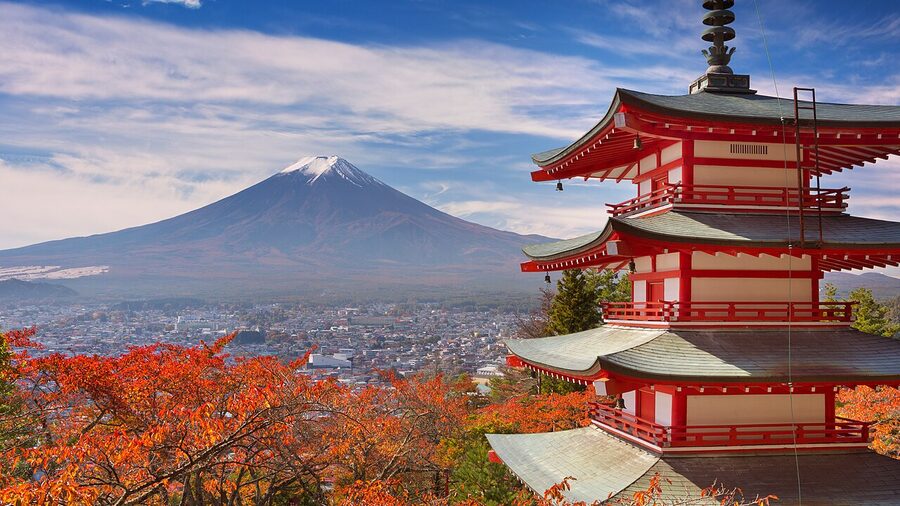
Three tour operators dominate this route, and the differences mostly come down to one decision: do you take a coach back to Tokyo (cheap) or the bullet train back (fast, expensive)?
Short on time? Here are my top picks:
Best all-rounder: Tokyo: Mt. Fuji, Hakone, Lake Ashi Cruise and Bullet Train — the most-booked Japan day tour of any kind. Coach out, shinkansen back, all the Hakone highlights.
Best value: Tokyo: Mt. Fuji Tour, Hakone Ropeway, Owakudani, Lake Ashi — 65% cheaper than the bullet-train version. Same sights, bus both ways.
Best premium option: From Tokyo to Mount Fuji: Full-Day Tour and Hakone Cruise — smaller group, more time at each stop, optional bullet-train upgrade.
- Why Mt Fuji + Hakone Is the Classic Tokyo Day Trip
- The 3 Best Mt Fuji + Hakone Day Tours from Tokyo
- 1. Tokyo: Mt. Fuji, Hakone, Lake Ashi Cruise and Bullet Train — 4
- 2. Tokyo: Mt. Fuji Tour, Hakone Ropeway, Owakudani, Lake Ashi —
- 3. From Tokyo to Mount Fuji: Full-Day Tour and Hakone Cruise — 9
- What You’ll Actually Do: The Hakone Loop
- Lake Ashi Pirate Cruise (25-30 minutes)
- Hakone Ropeway (30-40 minutes)
- Owakudani Valley & Black Eggs (20-30 minutes)
- Hakone Shrine (20-30 minutes)
- The Fuji Viewpoint Itself
- The Cloud Problem
- Bullet Train Back vs Bus Back: The 0 Decision
- Seasonal Timing — When to Go
- Practical Tips
- Day Trip vs Overnight in Hakone
- More Japan Experiences
Why Mt Fuji + Hakone Is the Classic Tokyo Day Trip
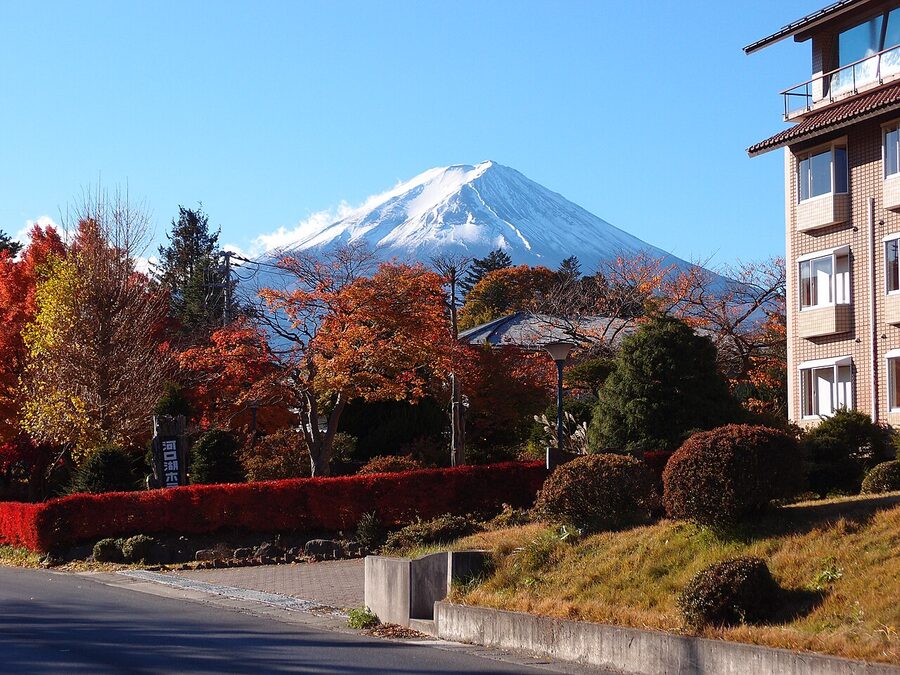
The pairing works because Tokyo-to-Fuji and Tokyo-to-Hakone are roughly the same train ride — 90 minutes to 2 hours each way — but they sit about 40 km apart via the highway that loops around Fuji’s south side. One coach tour can hit both in a single day. Doing it yourself by rail requires separate routes (JR to Kawaguchiko, Odakyu to Hakone), usually an overnight, and careful timing.
Three other things make the combined day work:
Hakone is genuinely varied. It’s not just one attraction. The standard Hakone loop covers five completely different experiences in a few hours: a lake cruise on a pirate-themed ship, a cable-car ride over a volcanic valley, a stop at sulfur vents where vendors sell eggs boiled black by the volcano, a visit to a thousand-year-old shrine with a torii gate standing in the water, and — usually — a pass through Gora or Hakone-Yumoto for quick food or tea. Each takes 20-40 minutes. Collectively they fill a full day.
The Fuji view is a bonus, not the load-bearing element. On a cloud-blocked day — common in summer — you still get all of Hakone, which is plenty for the price.
The tours solve the transport math. Hakone’s individual components are spread across 25 km of mountain road, connected by a switching network of cable cars, buses, and boats. DIY Hakone requires the Hakone Free Pass (¥6,100), at least one timetable-anxiety moment, and full-day luggage management. The coach tour absorbs all of it.
The 3 Best Mt Fuji + Hakone Day Tours from Tokyo
1. Tokyo: Mt. Fuji, Hakone, Lake Ashi Cruise and Bullet Train — $154
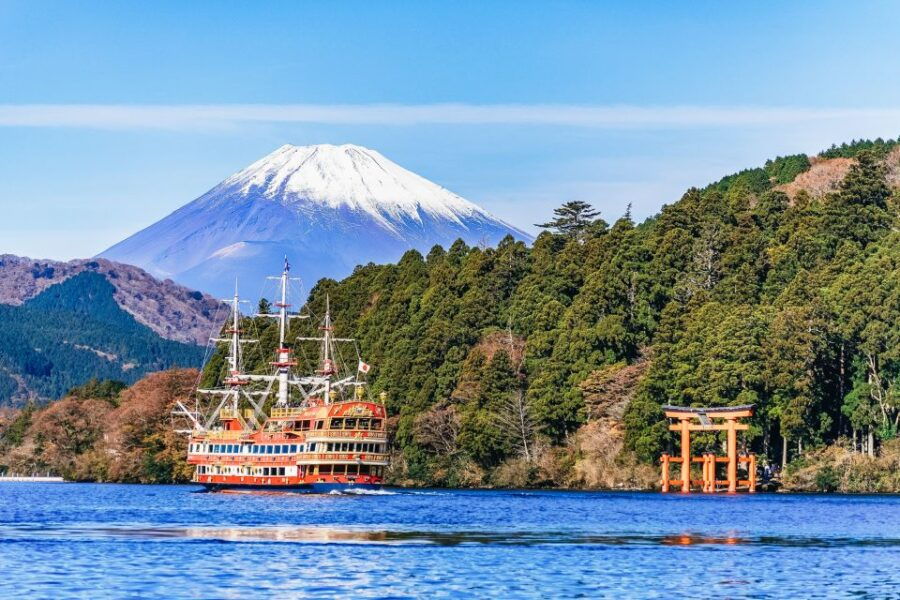
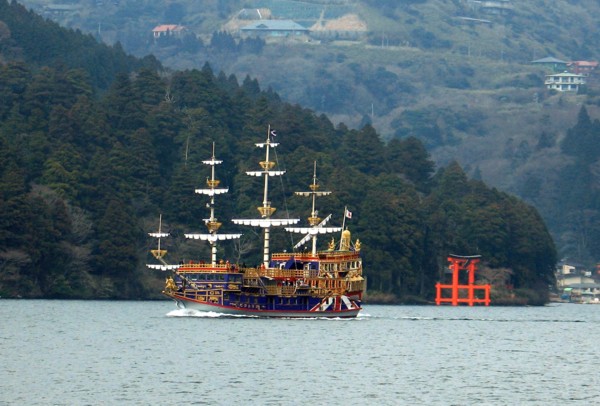
The classic Fuji-Hakone combo and the benchmark every other tour is measured against. You leave central Tokyo by coach around 8am, stop at Mt Fuji 5th Station (weather permitting) for the Fuji photo op, continue to Hakone for the full loop — pirate cruise on Lake Ashi, Hakone Ropeway over Owakudani, black-egg stop, Hakone Shrine — and return to Tokyo on the Tokaido shinkansen from Odawara. The bullet-train leg is the differentiator: you save about an hour on the return compared to bus, and the shinkansen ride is itself part of the Japan experience. 10-11 hours total door-to-door. Lunch is usually in Hakone, own-cost (ring or order a prepared Hakone bento at a rest stop for roughly ¥1,500). Book 1-2 weeks ahead in spring and autumn peak season; weekdays go first for clear-weather chances. Our full review covers the exact schedule, the rest stops, and the seasonal variations.
2. Tokyo: Mt. Fuji Tour, Hakone Ropeway, Owakudani, Lake Ashi — $54
$54 for the entire Fuji-Hakone day trip is one of the best value-for-money bookings in Japan. Same standard itinerary — Fuji 5th Station, pirate cruise, ropeway, Owakudani, shrine — but with coach transport both ways. You give up the bullet train (1 hour saved) and a bit of comfort (the return bus can hit Tokyo traffic on a Sunday evening). What you get is three times the disposable budget for lunch, souvenirs, or a follow-up dinner in Tokyo. Group sizes tend to be slightly larger (35-45 on a full coach vs 25-30 on the premium version), and English commentary is standard but less individual. Book this if the cost difference matters or if you’re on a longer Japan trip and the shinkansen novelty isn’t worth $100. Our review compares this head-to-head with the bullet-train version.
3. From Tokyo to Mount Fuji: Full-Day Tour and Hakone Cruise — $129
$25 less than the flagship bullet-train tour but with the bullet train optional (pay $25-35 extra to upgrade the return). The real value here is the smaller group — usually 15-20 people — which means less time waiting for everyone to get off the bus, more time actually at each stop. You get roughly 10-15 extra minutes at Fuji 5th Station, 15-20 extra at the Hakone Shrine, and a less-rushed lunch. Guide is more interactive. Good option for couples or small friend groups who’d prefer a quieter version of the day. Fills up faster than the bigger tours — book 2+ weeks ahead. Our review covers the small-group experience in detail.
What You’ll Actually Do: The Hakone Loop
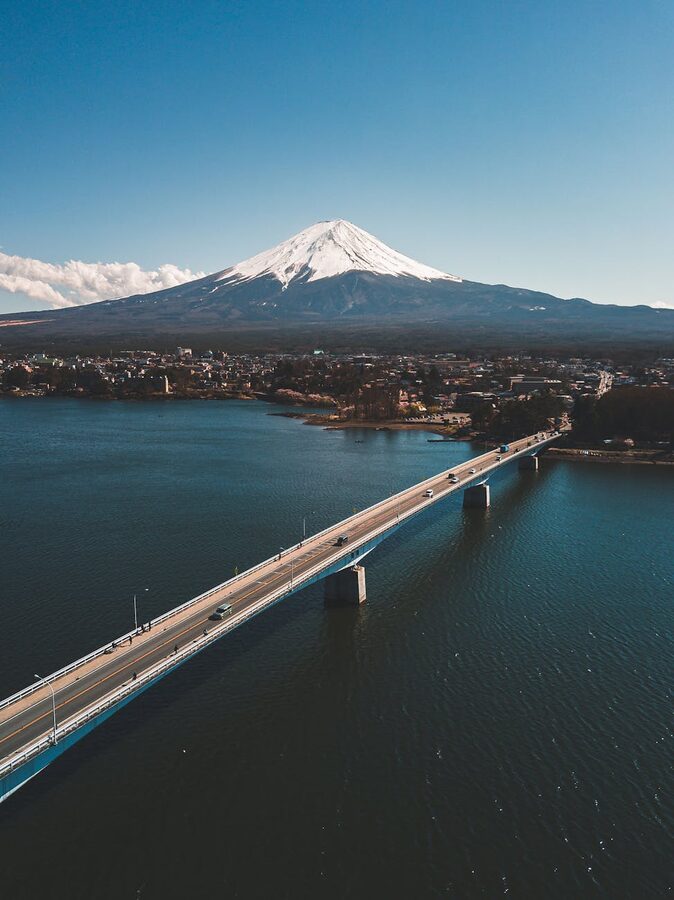
The tours pack five distinct Hakone attractions into roughly four hours. Each one takes a different form, which is why the day doesn’t feel repetitive:
Lake Ashi Pirate Cruise (25-30 minutes)
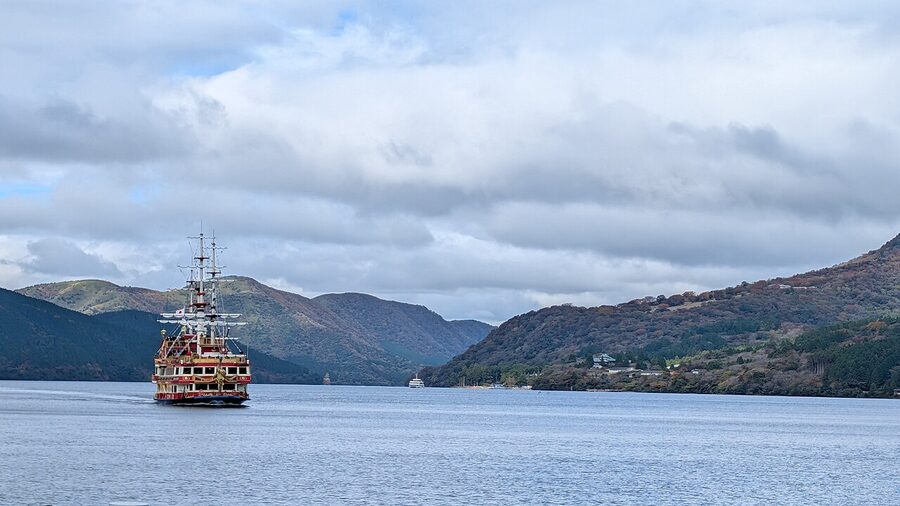
Lake Ashi (Ashinoko) is an 8 km long caldera lake formed about 3,000 years ago when Mt Hakone’s volcano collapsed into itself. The water is cold, deep, and framed on the north end by Mt Fuji on clear days. Three operating pirate-ship replicas ferry passengers between Togendai, Hakone-machi, and Moto-Hakone ports — the tours cross the lake in one leg, usually 25-30 minutes. Stand on the top deck for the best views; the interior cabin is heated but has restricted window angles.
Hakone Ropeway (30-40 minutes)
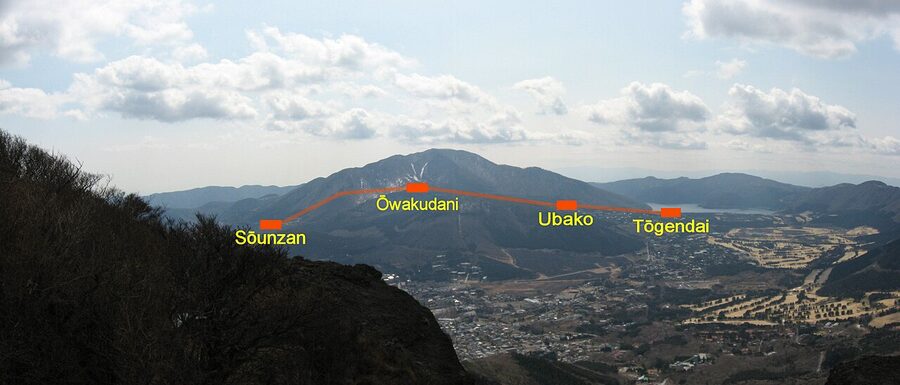
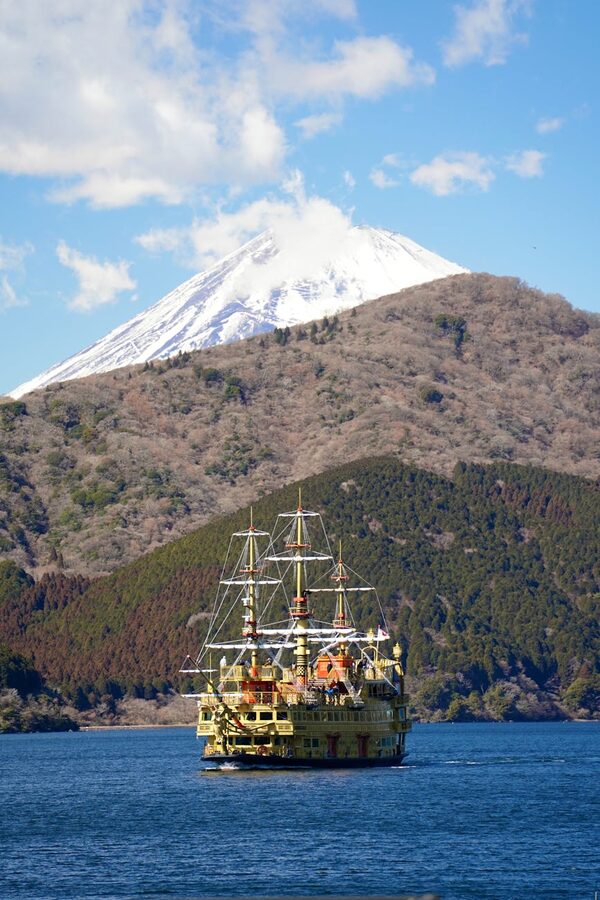
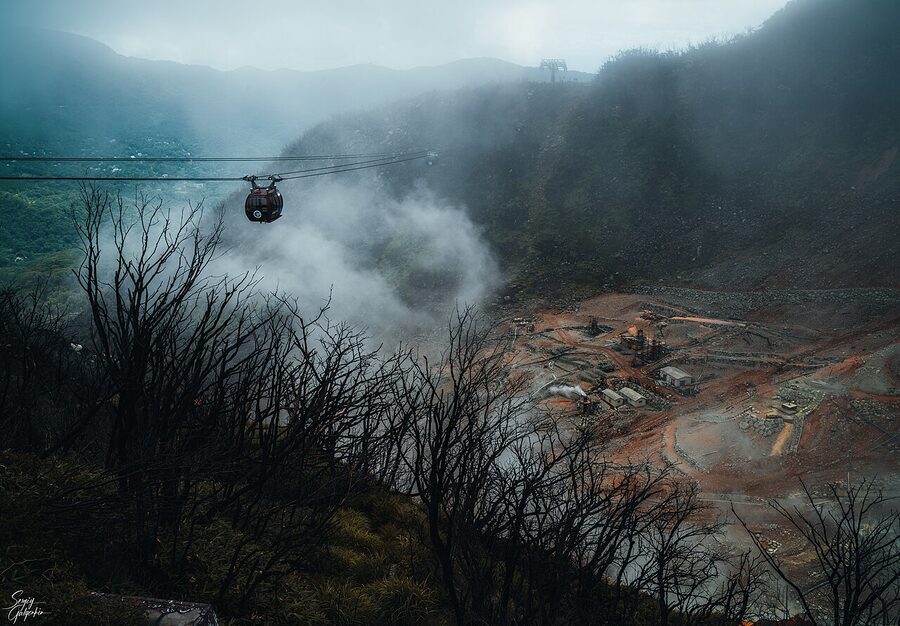
The Hakone Ropeway is a 4 km aerial cable car connecting Togendai (on Lake Ashi) to Sounzan station, passing directly over the Owakudani volcanic valley. The views change dramatically as you climb: lake and forest first, then sulfur steam, then — on clear days — Fuji appearing out the south window. Gondolas leave every minute; the full ride takes about 25 minutes with one switchover at Owakudani station. Some tours get off at Owakudani for the black-egg stop (see below); others ride straight through. If the ropeway is closed for volcanic activity (happens occasionally — 2015-2016 had a long shutdown), tours substitute a coach transfer that bypasses the peak.
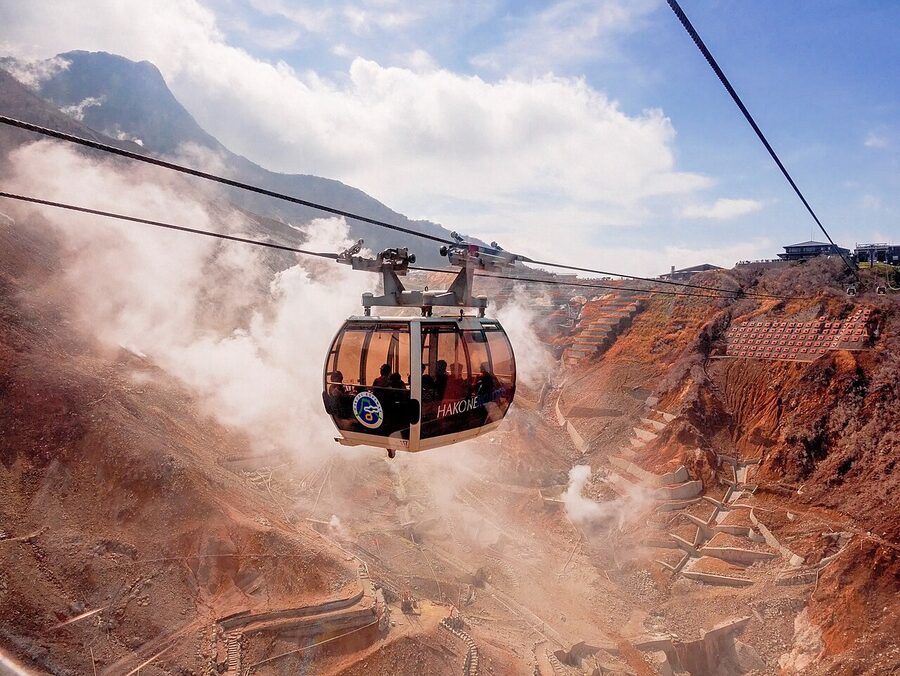
Owakudani Valley & Black Eggs (20-30 minutes)
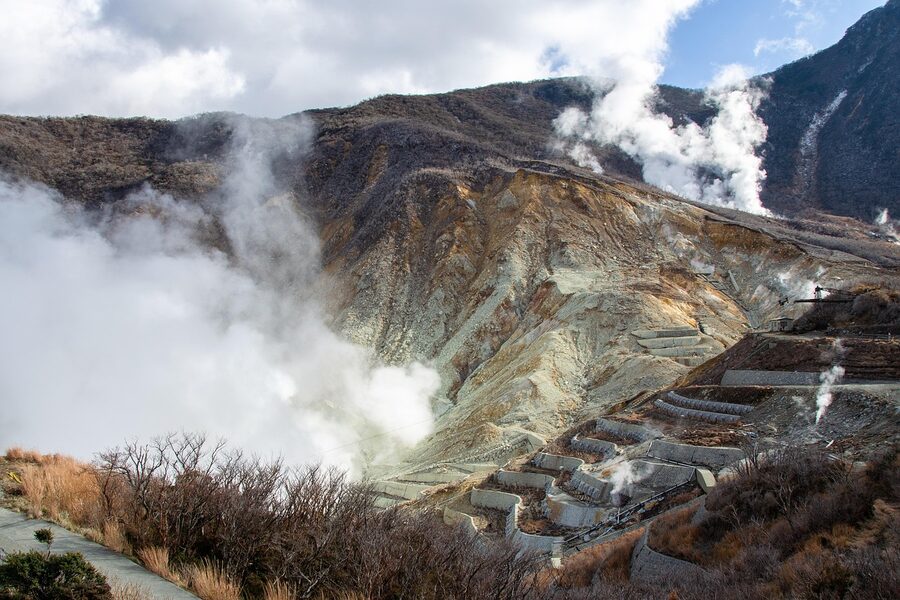
Owakudani — “Great Boiling Valley” — is the volcanic pocket at the centre of Hakone, created by the same 3,000-year-old eruption that formed Lake Ashi. Sulfur steam vents the ground continuously; the smell hits you before you see the valley. This is where you get the Hakone souvenir everyone brings home:
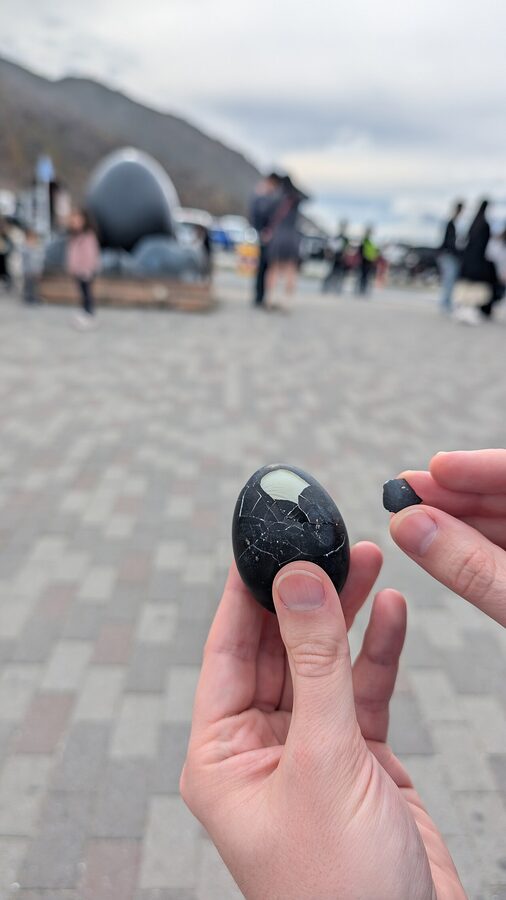
Black eggs are the signature. They’re boiled in the valley’s natural hot springs (about 80°C for 60 minutes), which reacts with the iron sulfide in the water and turns the shells jet black. The egg inside is an ordinary hard-boiled egg — same taste as any other. The magic is the visual. Local legend says each one you eat adds 7 years to your life. Packs of 5 sell for ¥500-600. Visitors buy them for the photo; locals eat them as a protein snack.
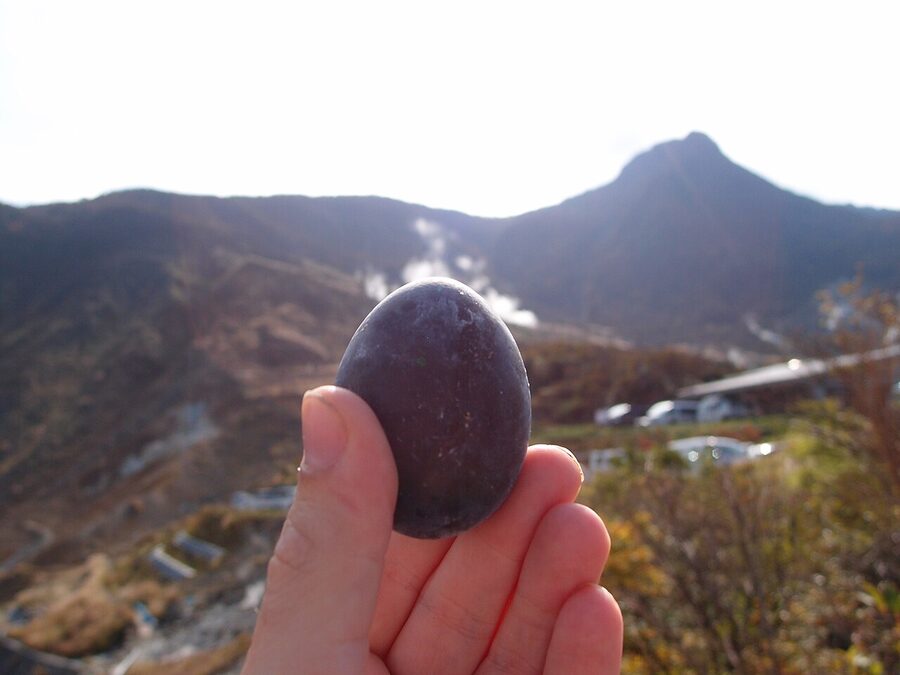
Owakudani has a small visitor centre, a photo platform, and — when volcanic activity allows — a walking path that gets closer to the vents. Tours usually give you 20-30 minutes here; enough for eggs, photos, and a quick look at the steam.
Hakone Shrine (20-30 minutes)
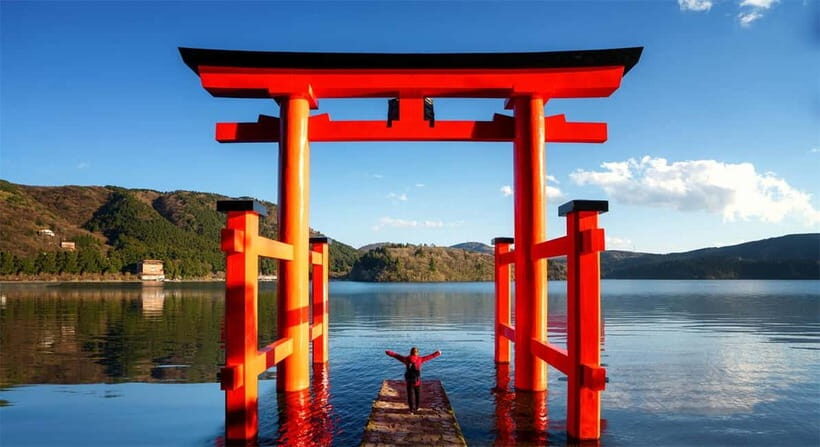
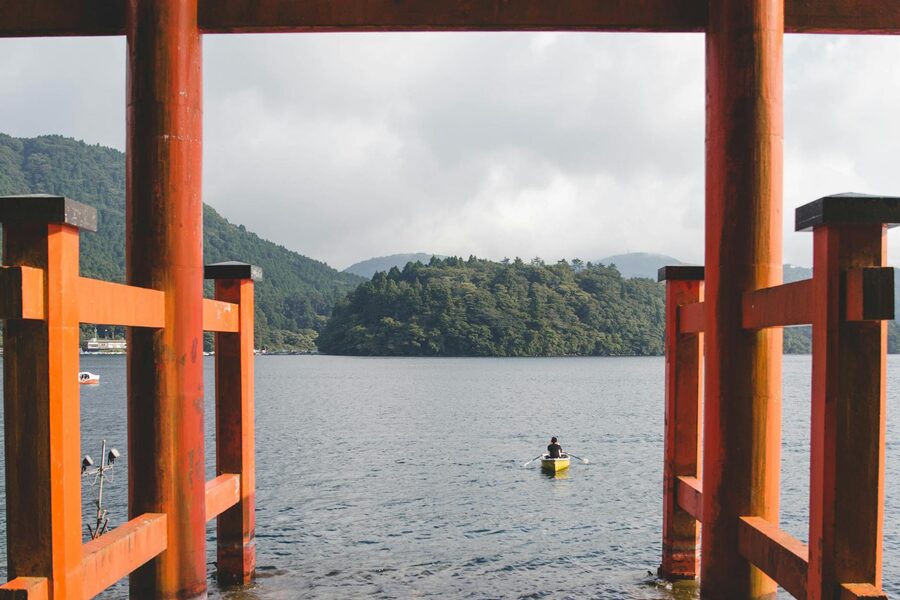
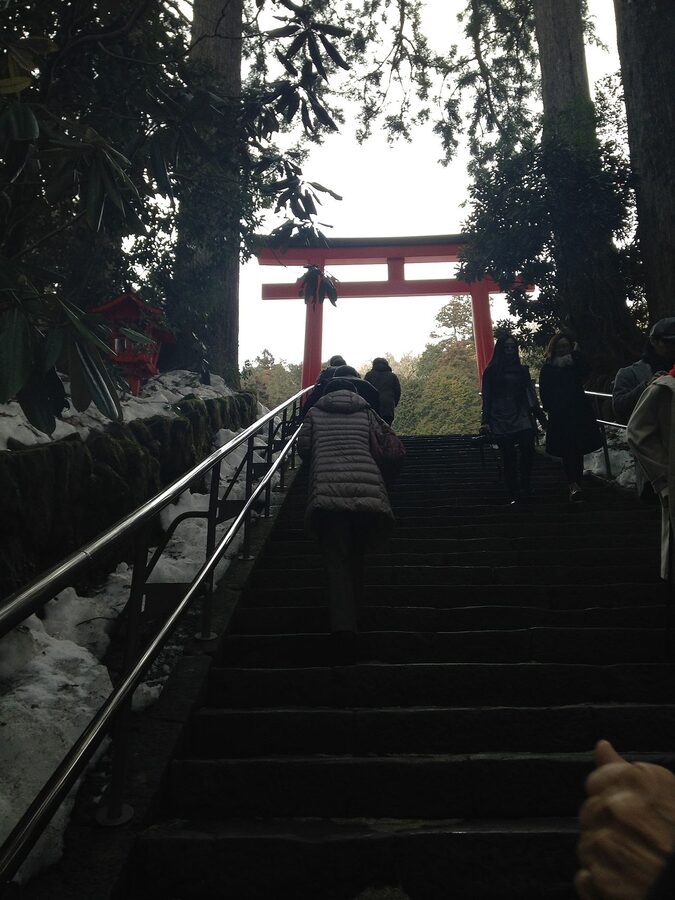
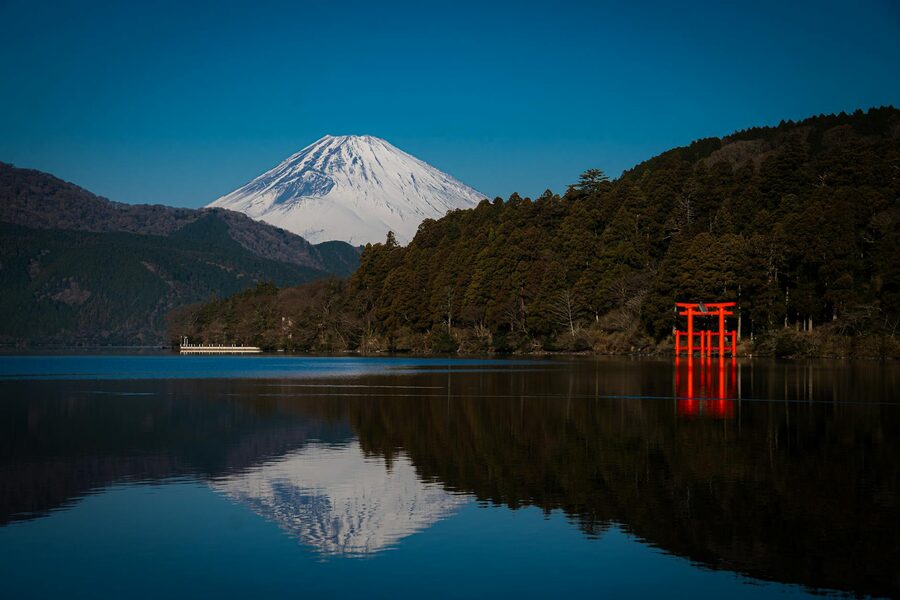
Hakone Shrine is a 1,200-year-old Shinto shrine on the west shore of Lake Ashi, reachable via a forest path through old cedar trees. The main shrine buildings are set back in the woods; the famous part is the Heiwa-no-torii — the “Torii of Peace” — which stands in the lake water at the shrine’s entrance, partially submerged. On clear days Mt Fuji is visible directly behind it.
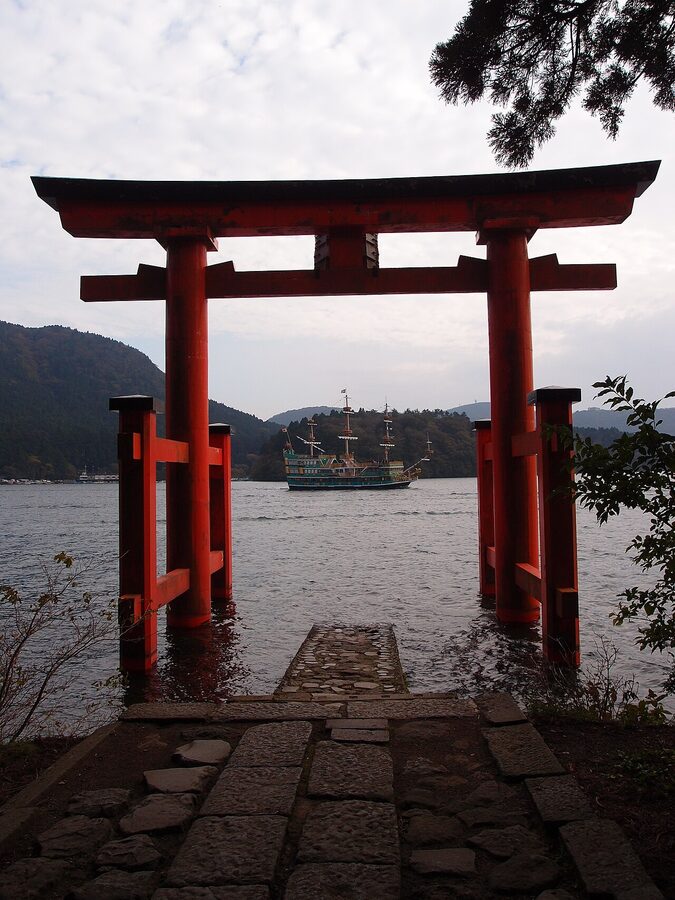
The torii is the single most-photographed object in Hakone. Expect a queue — 15-30 minutes in peak season — for the “standing under the torii” shot. Most tour groups allocate 20-30 minutes total for the shrine, which is tight if you also want to see the main shrine buildings (which are worth a quick look; the cedar forest is genuinely atmospheric).
Tip: the queue is shorter in the late afternoon, but most day tours stop here mid-morning when the light is better. If your tour visits early, expect the wait. If it visits late (4-5pm), the lines are usually minimal but you’re racing the sun for photos.
The Fuji Viewpoint Itself
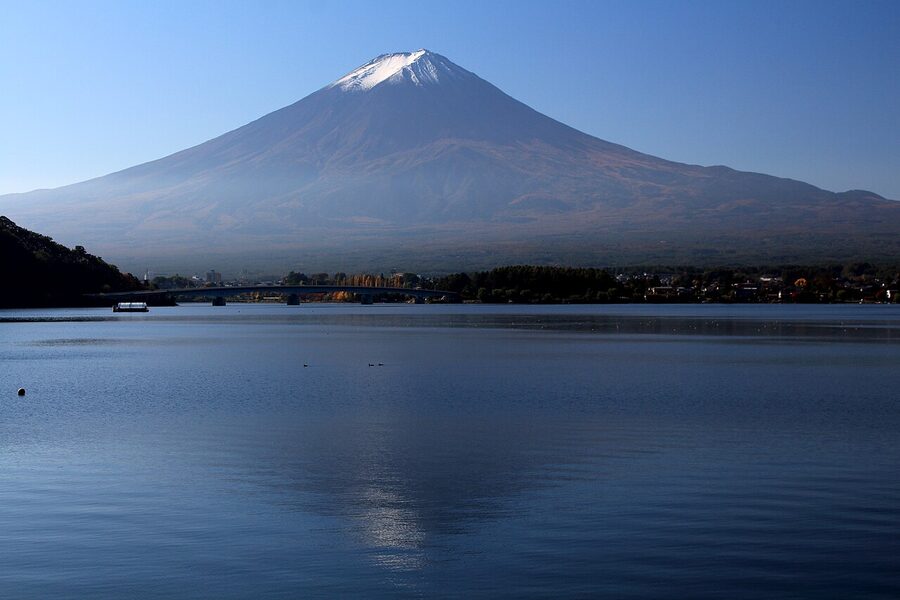
The Fuji-specific stop on these tours varies. Some go to Fuji 5th Station (Subaru Line 5th Station) — 2,300 metres up on Fuji’s north slope, where the forest ends and the lava field begins. Others go to Lake Kawaguchi for the classic reflection view. A few premium tours fit both.
Fuji 5th Station is where the climbing trails begin. You won’t climb — but you’ll stand on Fuji itself, look up at the peak (if the clouds cooperate), and see the craters of the Japanese Alps across the valley. There’s a gift shop and a small shrine. It’s about 30 minutes up and 30 back on the coach from the base of the mountain. Closed November to mid-April due to snow — winter tours substitute alternative Fuji viewpoints at lower elevation.
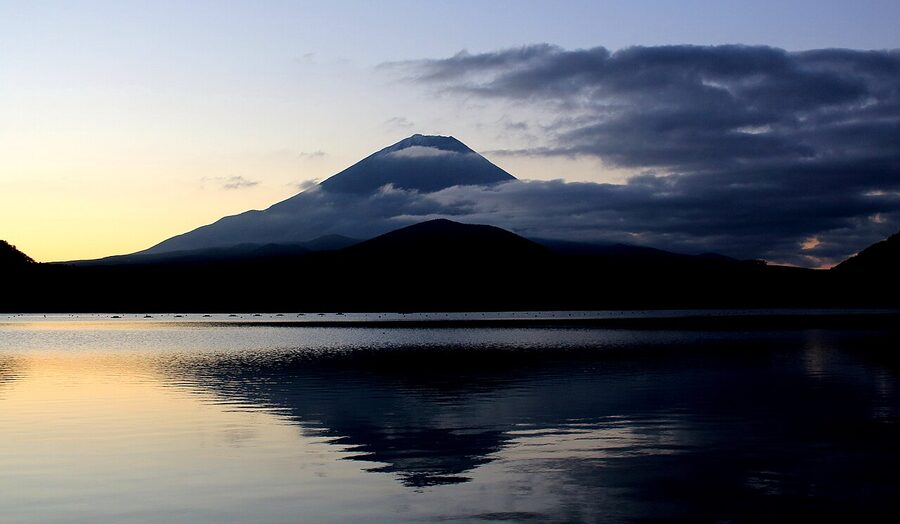
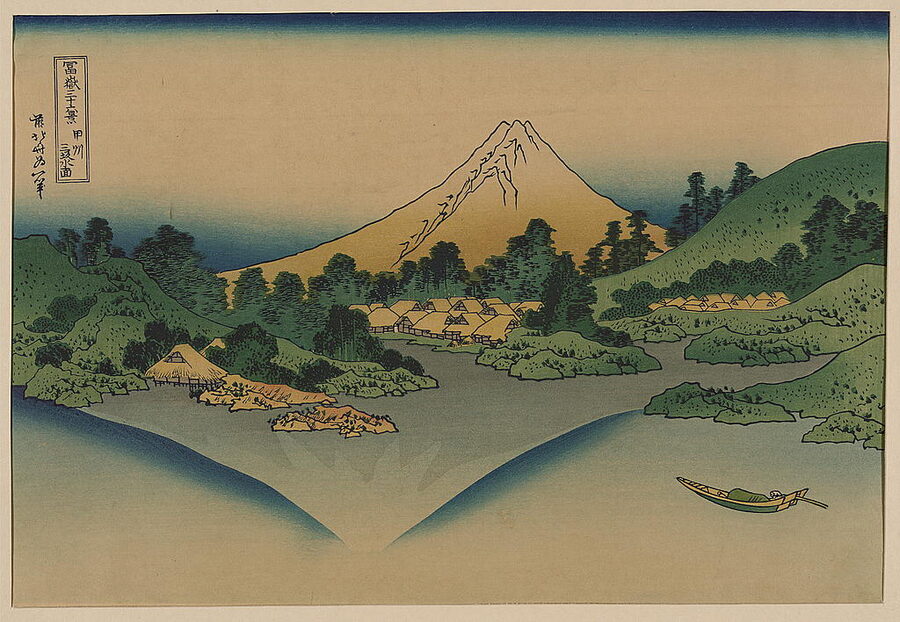
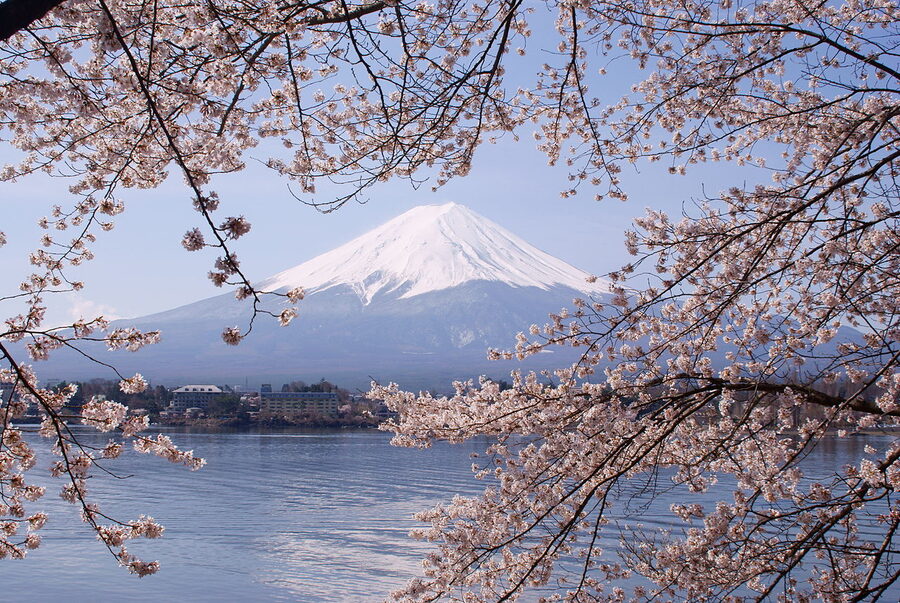
Lake Kawaguchi is the alternative. Lower elevation (800 metres), accessible year-round, and gives you the classic Fuji-reflected-in-water shot that Hokusai painted. Tours that visit Kawaguchi usually stop at the Oishi Park lookout on the north shore, which gives a clean view across the lake with Fuji centred. Flower beds bloom in front of the viewpoint depending on season (lavender in July, cosmos in September).
The Cloud Problem
Fuji is visible from Tokyo area viewpoints roughly 30% of the year — more in winter (up to 50% of days in January-February), less in summer (15-20% of days in July-August). The morning hours give the best odds; by early afternoon, cloud cover builds up against the mountain’s windward side and obscures it even on otherwise clear days.
Tours know this, which is why most depart Tokyo at 7:30-8:30 am and try to hit the Fuji viewpoint between 9 and 11 am. If you have two days to spare and you’re serious about the photo, book a tour that visits Kawaguchi in the morning rather than Fuji 5th Station — Kawaguchi’s lower elevation means it’s less cloud-prone.

If the clouds win — and they often do — most tour companies will say outright during the drive that “we may not see Fuji today.” They’re managing expectations correctly. The Hakone loop is the consolation prize, and it’s a good one.
Bullet Train Back vs Bus Back: The $100 Decision
This is the single biggest choice between the top two tours. The premium ($154) version returns from Odawara Station on the Tokaido shinkansen — the main Tokyo-Osaka bullet train line. The budget ($54) version returns by coach. Both start by coach out of Tokyo.
Time saved: About 1 hour. Bullet train is 35 minutes Odawara-Tokyo; coach is 90-120 minutes depending on traffic.
Experience: The shinkansen ride is genuinely different. If this is your first time on a bullet train, it’s worth the extra money as a novelty. If you’re already shinkansen-ing around Japan on a JR Pass, it’s a duplicate experience.
Traffic risk: The coach back can hit Tokyo-area traffic on Sunday evenings (30-60 minute delays possible). The shinkansen doesn’t get stuck in traffic. If you have dinner plans in Tokyo or an early morning flight the next day, the shinkansen buys you predictability.
Bottom line: If this is your only Fuji-Hakone tour and you’ve never been on a shinkansen, take the bullet-train version. If you’re on a JR Pass already or just want maximum value, the bus-both-ways version is the right call — you’ll have spent one full day in Hakone either way.
Seasonal Timing — When to Go
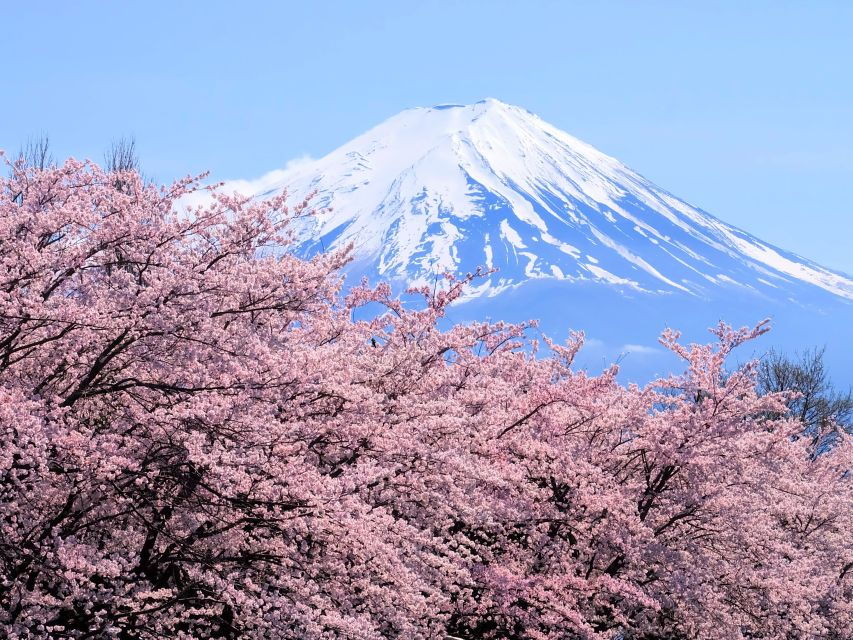
Spring (late March-May): Cherry blossoms at Lake Kawaguchi (early-mid April), pleasant temperatures, busy. Peak season — book 3+ weeks ahead. Fuji visibility is moderate (20-30% of days).
Summer (June-August): Hakone hills are green, temperatures warm. Fuji visibility is at its lowest (15-20%). If you’re tolerant of cloud-blocked Fuji, summer works well because the Hakone stops are the real attraction anyway. Also Fuji climbing season (July 1 – September 10) if you’re curious to watch climbers at the 5th Station.
Autumn (September-November): Best weather. Foliage peaks mid-November around Hakone. Fuji visibility is strong (30-40%). The single best month is probably late October-early November.
Winter (December-February): Snow on Fuji is at its peak, which means the postcard-perfect version of the mountain is available if the sky is clear. Fuji visibility is highest in winter (40-50% of days). Downsides: Fuji 5th Station is closed, some ropeway service is reduced for weather, and Hakone can be properly cold — dress for mountain temperatures, not Tokyo’s.
Practical Tips
What to bring: Layers (the mountain is always colder than Tokyo; temperatures can be 10-15°C lower at Fuji 5th Station than in central Tokyo). Walking shoes for the shrine path. A charger — most tours don’t have bus wifi or power outlets. Cash for the black-egg stall and for any lunch you haven’t pre-booked (~¥1,500-3,000 recommended).
What to wear: Smart casual. The Hakone Shrine is a working religious site — no swimwear, visible underwear, or shoes inside the inner halls (you won’t be going inside on a day tour, but respect the mood).
What to eat: Lunch is usually own-arrangement at a rest stop or in Hakone-machi/Moto-Hakone. Hakone specialties are yuba (tofu skin), soba noodles in mountain-water broth, and Hakone-style bento (often built around duck or trout). Budget ¥1,500-2,500 for a proper lunch.
Cancellation: All three tours offer free cancellation up to 24 hours. Weather cancellations (ropeway closed for volcanic activity, snow closing mountain roads) trigger full refunds.
Accessibility: Lake Ashi cruise has wheelchair access on the lower deck. Hakone Ropeway gondolas have step-on access but the platform at Owakudani involves uneven terrain. Fuji 5th Station has some walking on uneven volcanic rock. Mention mobility needs at booking — tour operators can sometimes reroute or provide assistance, but only if they know in advance.
Photography: Fine everywhere except the inner shrine halls. No drones — Hakone is mostly a restricted zone under Japan’s drone rules, and Fuji is entirely off-limits.
Book timing: 1-2 weeks for normal months; 3+ weeks for cherry blossom (early-mid April) and late autumn foliage (mid-November); 4+ weeks if you specifically want a weekend winter date for the best Fuji visibility odds.
Day Trip vs Overnight in Hakone
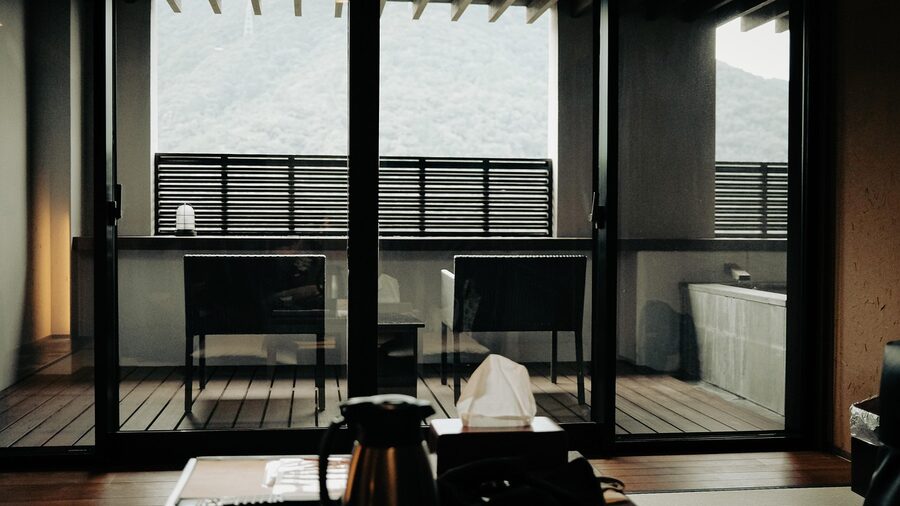
Worth knowing: Hakone rewards an overnight stay more than most Japan day-trip destinations. It’s a traditional onsen (hot-spring) region with dozens of ryokan — traditional inns with hot-spring baths, tatami rooms, and multi-course kaiseki dinners. The day tour shows you the attractions; an overnight shows you the atmosphere.
If you only have one day, book the day tour. If you have two days, do the day tour as day 1 and stay overnight in Hakone for day 2 (ryokan check-in after the tour, morning onsen, quiet bus back to Tokyo). If you have three days, add a Fuji-Kawaguchi overnight for a second attempt at the clear-Fuji photo. The Hakone ryokan guide covers the overnight option specifically.
More Japan Experiences
Mt Fuji-Hakone is the classic Tokyo-based day trip, but it’s not the only one. If you want a different style of day tour from Tokyo, our Nagoya to Takayama and Shirakawa-go day trip covers the alternative UNESCO-village format. Our Mt Fuji private tours guide is the companion for travellers wanting a private vehicle and flexible pacing instead of a coach. Our how to visit Mt Fuji by bus guide covers the DIY highway-bus option for independent travellers. If you’re stringing together the classic Tokyo-Kyoto-Osaka route, our Kyoto Gion food tour and Osaka Kuromon Market cover the food anchors for the other two cities. For Tokyo itself, the Asakusa Sensoji walking tour pairs well with a post-Hakone recovery evening, and our Tokyo ramen tasting is a good “we got back at 7pm and we’re starving” follow-up. If the pirate-cruise aspect of the Hakone trip grabs you, our Tokyo Yakatabune dinner cruise is the urban-water version. Tokyo JDM car experience and Tokyo pub crawl fill out the evenings. Kanazawa tea ceremony and Takachiho Gorge are the slower-paced counterparts. Most travellers do Fuji-Hakone in the first 2-3 days of a Tokyo visit — early enough that a clouded-out Fuji day can be retried later in the trip from a different angle.