You climb the last narrow flight of stairs, push out through a small marble doorway, and the whole rooftop opens up around you: a forest of carved spires, statues on every pinnacle, and the city of Milan pulled out flat in every direction. On a clear day you can see the Alps. That moment is the entire reason to buy a Duomo ticket, and it is genuinely worth the climb.
The Milan Duomo is two visits dressed up as one. There is the cathedral floor, which is mostly free to walk into, and there is the rooftop terraces section, which is what most travellers actually come for. This guide walks through what you need to book, how the ticket types overlap, and the small timing decisions that make or break the visit.
In a Hurry? My Top Picks
- Best overall, the full pass: Cathedral and Rooftop Ticket with Audioguide ($30). Skip-the-line entry to the cathedral, the rooftop terraces, the museum, and the archaeological area. Two days to use it.
- Just want the rooftop: Milan Cathedral Rooftop Terraces Ticket ($22). Cheapest way up. No church floor, no museum, just the views.
- Want a guide on the roof: Fast-Track Milan Cathedral and Terraces Guided Tour ($46). 90 minutes to two hours with a licensed guide who can point out the statues that look like aliens.
- In a Hurry? My Top Picks
- What You’re Actually Buying
- Stairs or Elevator: Pick One Before You Book
- The Three Tours I Actually Recommend
- 1. Cathedral and Rooftop Ticket with Audioguide:
- 2. Milan Duomo Rooftop Terraces Ticket:
- 3. Fast-Track Cathedral and Terraces Guided Tour:
- The Cathedral Floor: What’s Worth Slowing Down For
- The Madonnina, and Why She Matters
- The Spires, the Statues, and the One That Looks Like Sylvester Stallone
- How to Time the Visit (and Why Mornings Win)
- Dress Code and Bag Rules
- A Quick Bit of History
- What to Pair It With
- Photography Notes
- Common Mistakes That Cost You Time
- Where the Duomo Fits in a Wider Italy Trip
- More Italy Reading from Around the Site
What You’re Actually Buying
The Duomo complex sells tickets that overlap in confusing ways. Strip it down and there are really three things you might want to pay for: the cathedral floor, the rooftop terraces, and the museum and archaeological area underneath. Most tickets bundle two or three of these. A few do one only.
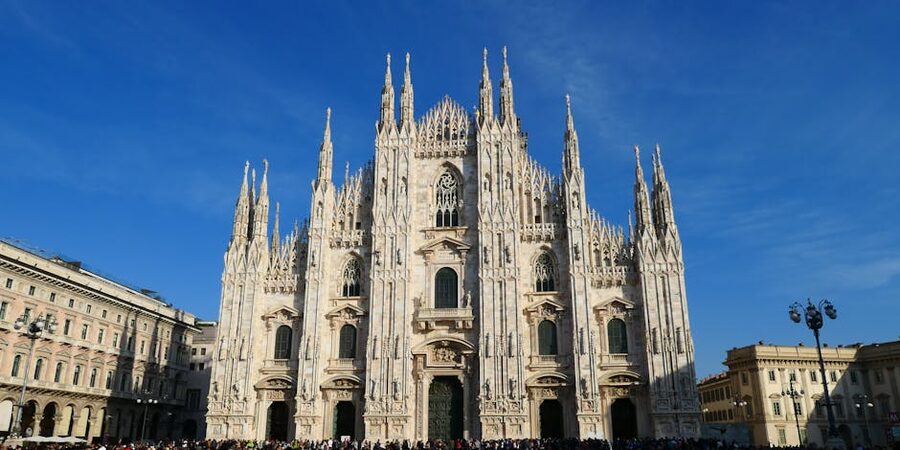
The standard Cathedral and Rooftop ticket is the most-booked option for a reason. It bundles skip-the-line entry to the church, the rooftop terraces by lift, the museum, the archaeological zone under the church, and the small San Gottardo chapel. You get two days from your first scan to use it all, which is generous if you are splitting Milan over a weekend.
If all you care about is the view, the cheaper terraces-only ticket exists for that. No cathedral floor access, just the rooftop. It saves you about eight dollars and skips a section of the visit you might not have wanted anyway.
The official site sells a Culture Pass and a Duomo Pass that look similar to the affiliate options. The catch is that they are not skip-the-line. You buy the ticket online for a fixed entry slot, but you still join the regular security queue, which can be 30 to 45 minutes in summer. The third-party tickets give you a separate, faster line. That is the only practical difference, and on a hot August afternoon it is the one that matters.
Stairs or Elevator: Pick One Before You Book
You can climb the rooftop or take the lift. The price gap is real. Stairs are cheaper, the elevator costs more or less the price of a sandwich extra, and the route the two send you on is slightly different.
The stair route is 251 steps and takes you up a tight stone staircase that wraps inside the south corner of the building. It is not a hard climb compared to, say, Brunelleschi’s dome in Florence, but it is enclosed and slow and you cannot turn around if you change your mind. Pick stairs if you are reasonably fit and you like the idea of arriving on the roof a bit out of breath.
The elevator drops you directly onto a side terrace and saves the legs. It also fills up on a fixed schedule, which means the lift queue at peak times can be longer than the stair queue. If your booking has a specific entry slot, pick the lift. If you are flexible, the stairs often move faster between 10am and 1pm.
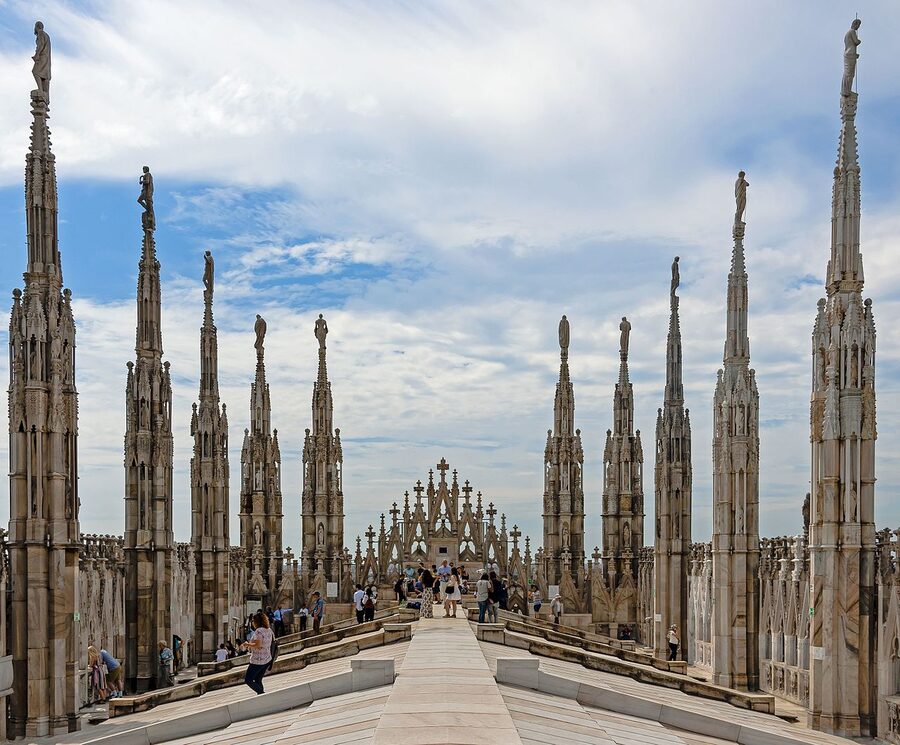
One thing nobody tells you. The rooftop has two levels. The lower terrace is what you reach first, and most people stop there because the view is already spectacular. The upper terrace is reached by another small set of steps tucked behind the central spires. Walk to it. The angle on the Madonnina up close is completely different from the lower deck and almost no tourist groups bother with the second level.
The Three Tours I Actually Recommend
I sorted through the Milan Duomo tour options on the major booking platforms by review count and quality, and most of the volume sits with three. Here is who I would book if a friend asked me tonight, and why.
1. Cathedral and Rooftop Ticket with Audioguide: $30

This is what I’d point at if a friend asked me what to book. It is the most-reviewed Milan Duomo product on the market with over sixty thousand reviews, and the reason is simple: it covers everything you actually want to see in one barcode. Our review of this ticket goes into how the audioguide works on your own phone and why the two-day window is more useful than the official Duomo Pass. At thirty dollars for skip-the-line plus the lift, the markup over the official price is fair.
2. Milan Duomo Rooftop Terraces Ticket: $22

Rooftop only, no church floor, but the photos you came to take are all up there anyway. Our review of this terraces ticket covers when it makes sense to skip the cathedral interior and just spend the time on the marble walkways. At twenty-two dollars it is genuinely the cheapest dignified way to do the rooftop without queuing at the official window.
3. Fast-Track Cathedral and Terraces Guided Tour: $46
This is the upgrade pick. You get fast-track entry through a separate channel, plus a licensed English-speaking guide who walks you through the cathedral floor and onto the rooftop. Our take on this guided tour is that the value is in the rooftop portion: there are stories tied to specific statues and spires that you cannot pick up from any audioguide. Sixteen-dollar premium over the audioguide ticket buys you a real human, which is a fair trade for a building this dense with detail.
The Cathedral Floor: What’s Worth Slowing Down For
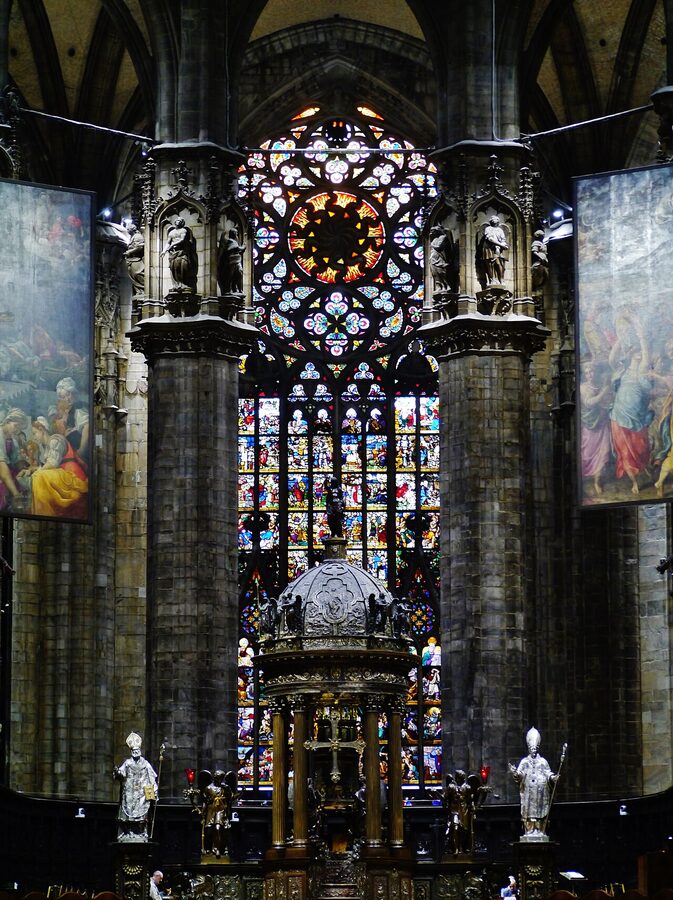
Most travellers blow through the cathedral floor in fifteen minutes on the way to the rooftop. Mistake. The interior is darker than you expect, and that is part of the design. Your eyes adjust, the stained glass starts to glow, and the apse at the far end pulls you down the nave even if you didn’t mean to walk that way.
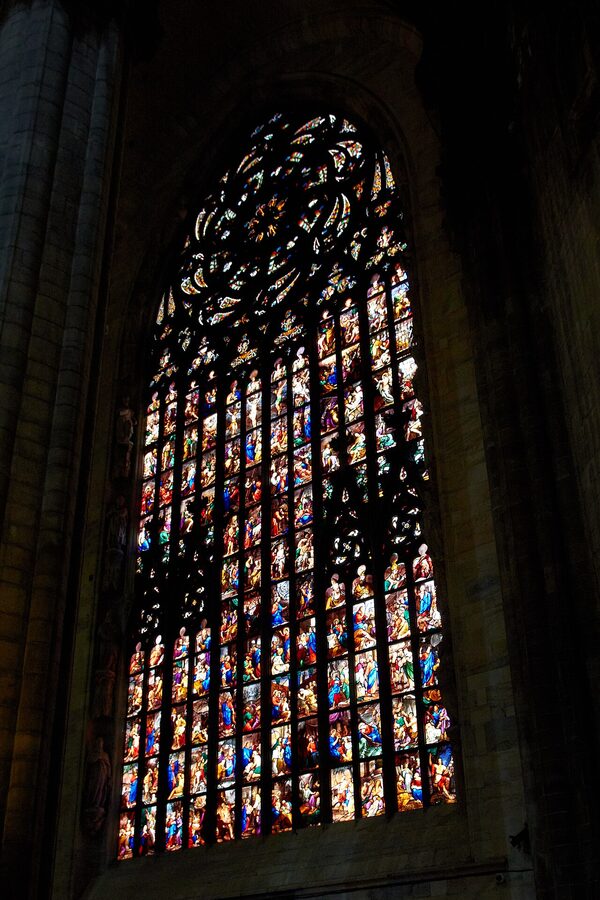
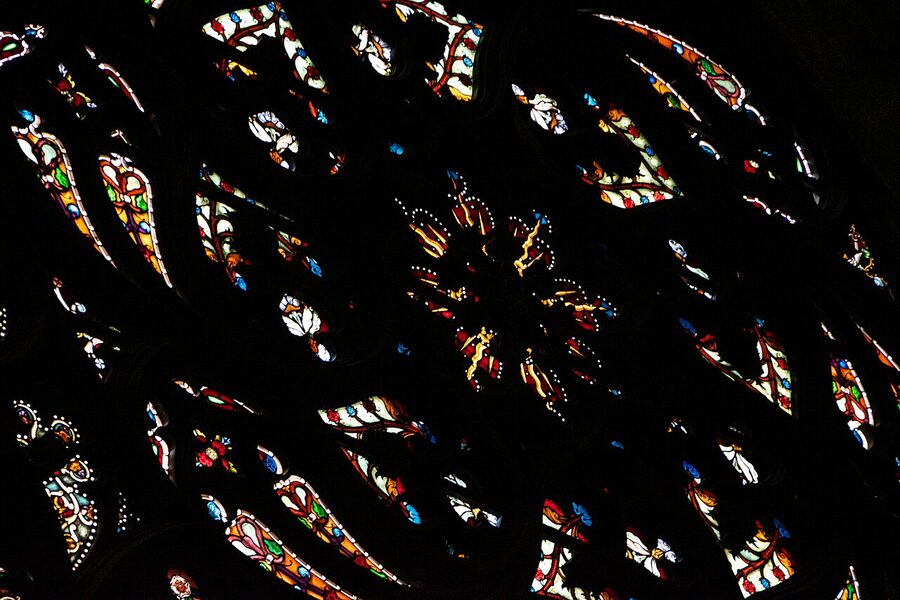
The stained glass on the apse end is the highlight. Some of the windows go back to the 15th century, and a few panels were replaced after the bombing damage in 1943. On a sunny morning the light cuts down across the choir in red and gold strips. Stand near the central altar railing and look back up the south wall to catch it best.
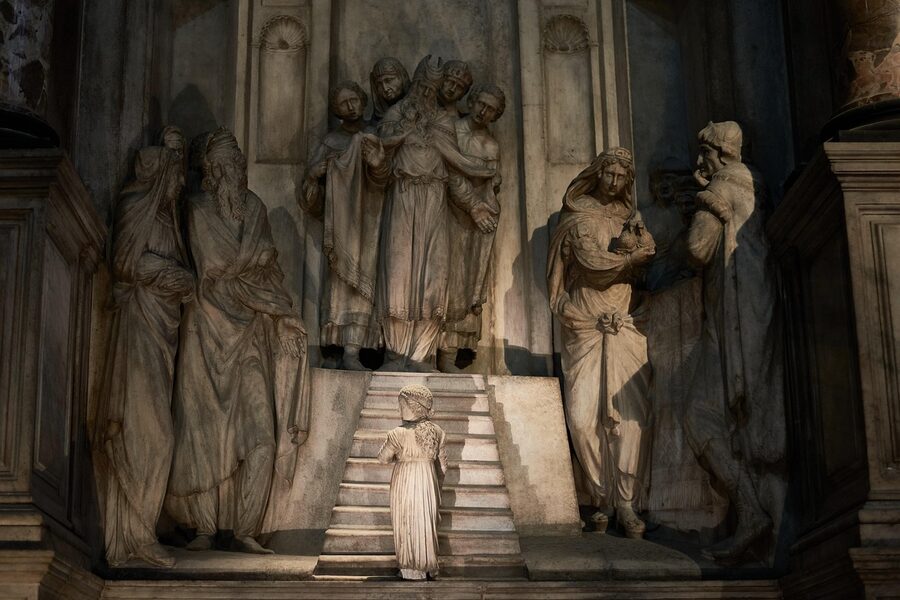
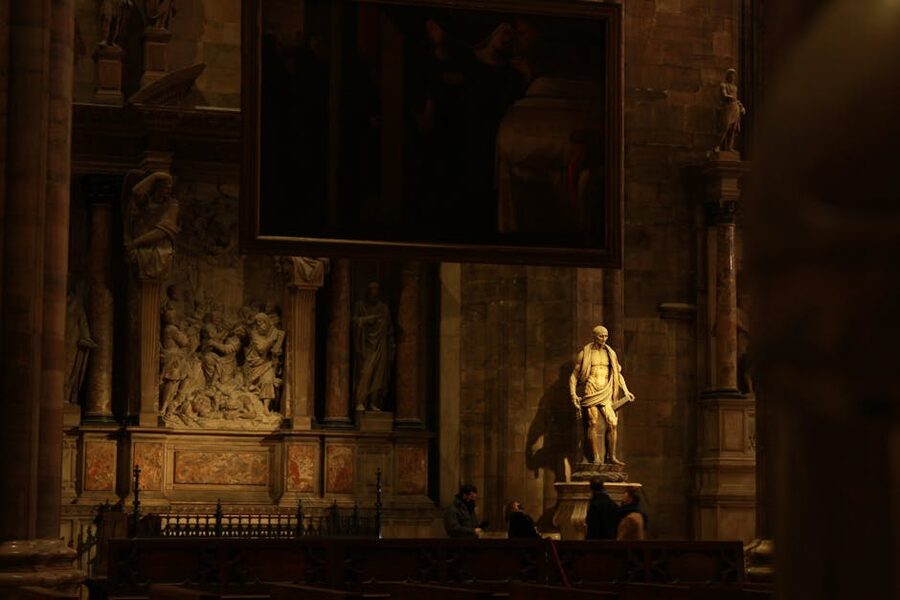
Look for the statue of San Bartolomeo on the south transept. He is the apostle who was flayed alive, and the statue depicts him holding his own skin draped over one shoulder. It is grim and incredibly detailed and most groups walk past it without registering what they are looking at. Marco d’Agrate carved it in 1562. The Latin inscription on the base translates roughly as ‘I was not made by Praxiteles but by Marco d’Agrate’. He was proud of it. He had reason to be.
The Madonnina, and Why She Matters
Every photo of the Milan rooftop has the gilded statue at the top. That is La Madonnina, a four-metre-tall statue of the Virgin Mary that has stood at the highest point of the cathedral since 1774. She is the unofficial symbol of the city. There is a Milanese rule that no building should be built taller than her head, and for a long time that was respected literally; when modern skyscrapers like the Pirelli Tower and the Unicredit Tower went up, each one had its own miniature Madonnina installed on the roof to keep her technically the highest.
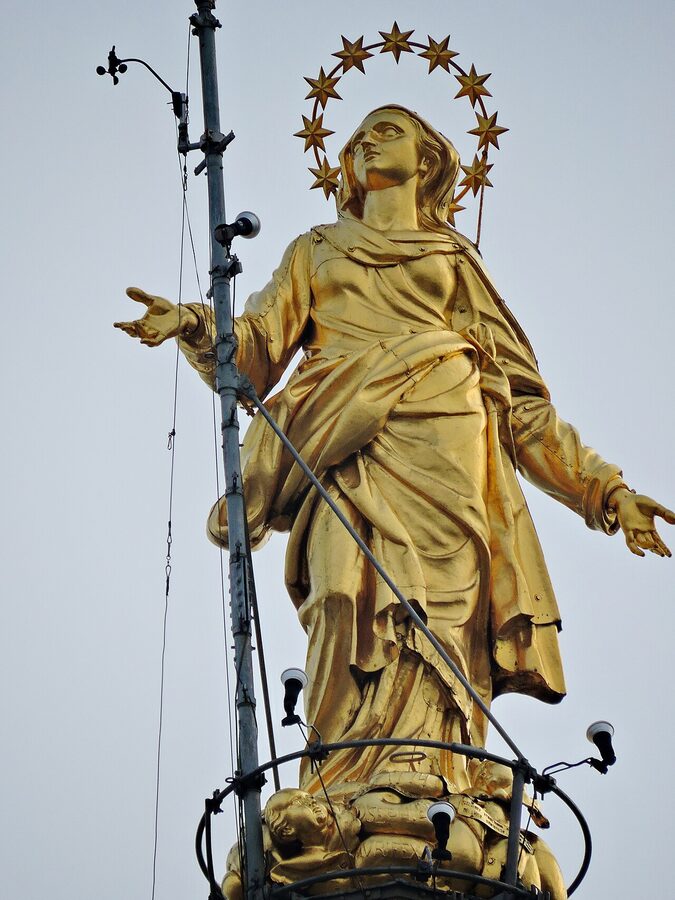
You can see her clearly from the lower terrace, but the upper terrace puts you almost level with her base. From there you can pick out the gilding work in detail and you can see how the lightning rod runs down behind her. Photogenic, particularly with the Alps behind on a clear day.
The Spires, the Statues, and the One That Looks Like Sylvester Stallone
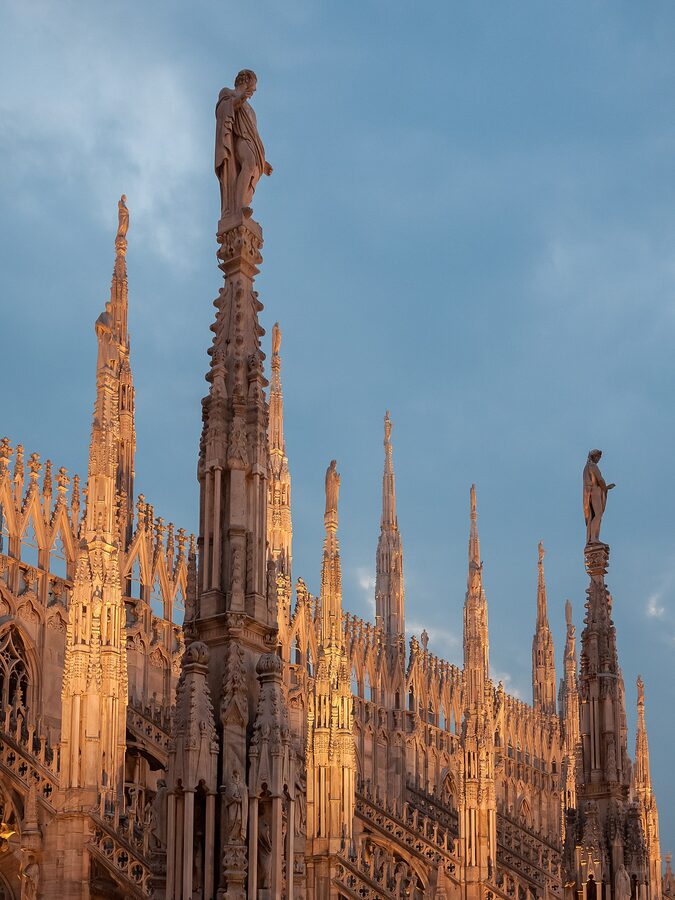
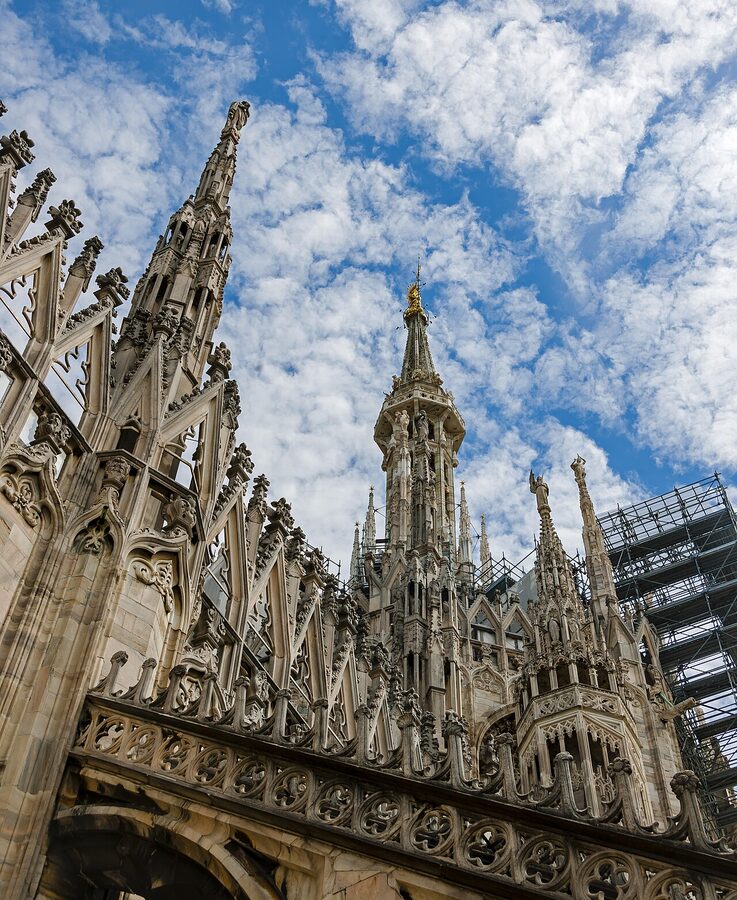
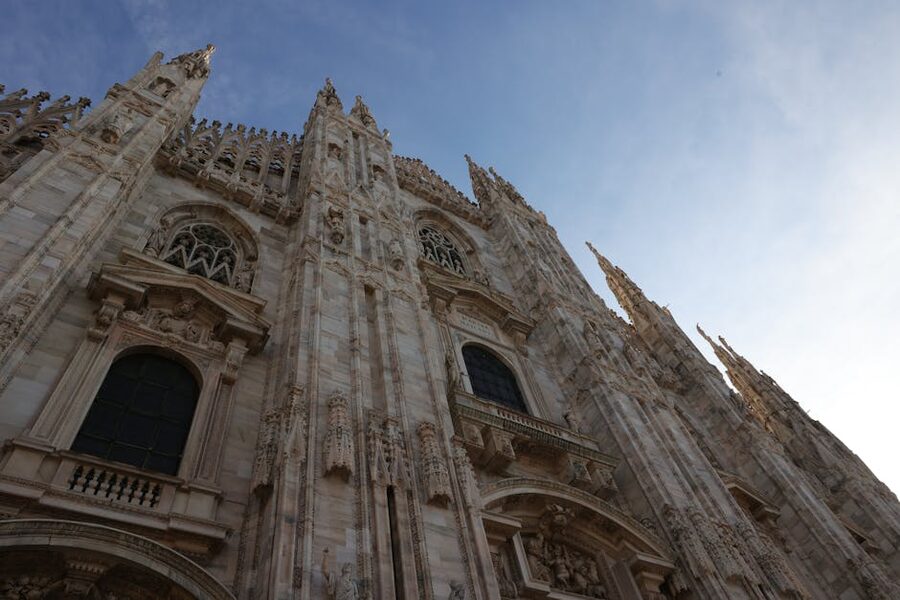
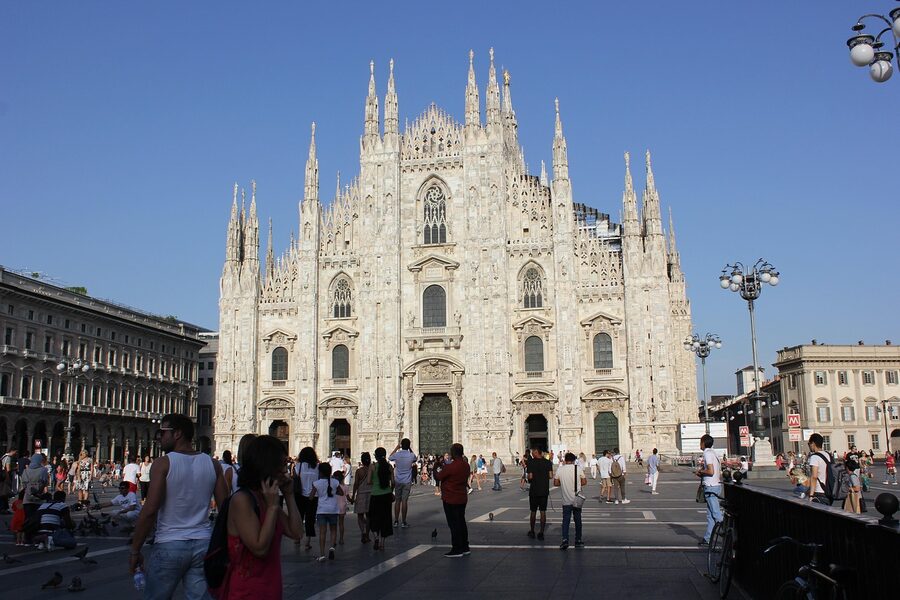
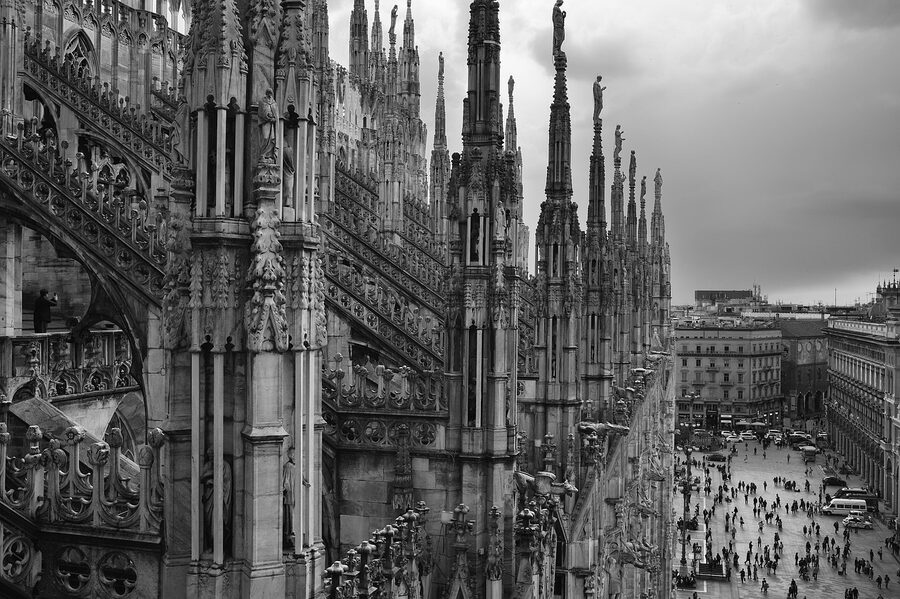
The rooftop is essentially a forest of carved marble. There are 135 spires and around 3,400 statues distributed across the building. They were carved across six centuries by hundreds of different sculptors. Quality varies wildly. Some are 14th-century saints with delicate features. Others are 20th-century replacements that do not even pretend to match the originals.
There is a famous boxer statue on one of the spires that locals call “the Stallone statue” because the resemblance to Sylvester Stallone in Rocky is, frankly, uncanny. It was carved in 1928 by Luigi Secchi, decades before Stallone was born. The cathedral foundation insists it is not a boxer at all, but the figure is shirtless, in a fighting stance, and the nose is unmistakable. Ask your guide to point him out, or scan the eastern spires from the upper terrace.
The statues that catch the light best are the ones along the apse wall on the east side. Morning light hits them dead-on between about 9am and 11am. By midday they are in shadow. If you came up the elevator on the south side, walk all the way around to the east. Most tour groups skip that section.
How to Time the Visit (and Why Mornings Win)
The cathedral opens at 8am and admits the last visitors at 6:10pm. The rooftop opens slightly later in winter, around 9am, and closes earlier. Tickets are sold for fixed half-hour entry slots.
Best slot to book: 9:00 to 9:30am. Light hits the south facade beautifully at that hour, the rooftop is quiet because the buses have not arrived yet, and you’ll be on the floor inside the cathedral by 10am with the morning sun cutting through the apse stained glass. Worst slot: 1:00 to 3:00pm. Bus tour groups peak then, the marble gets uncomfortable in summer, and the queue for the lift can be 25 minutes even with a skip-the-line ticket.
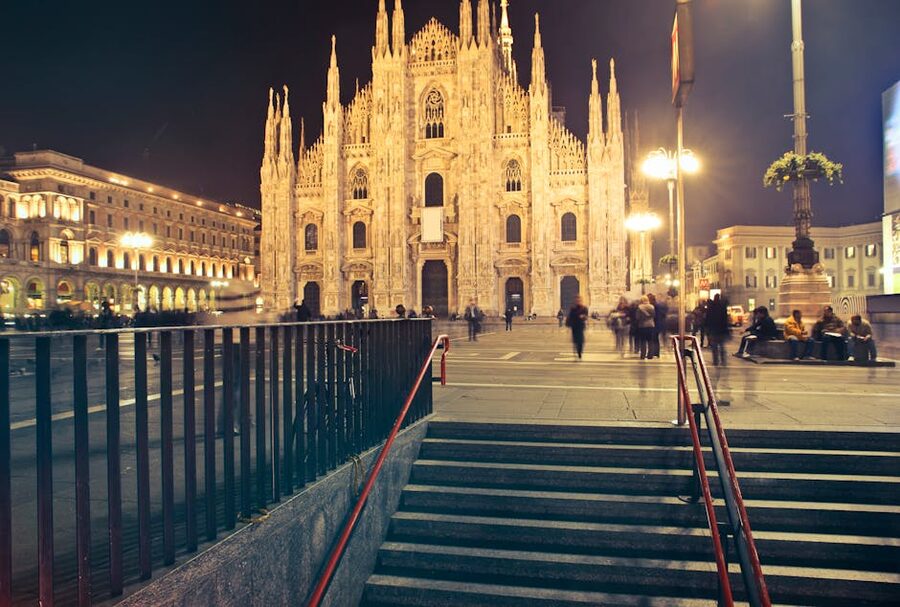
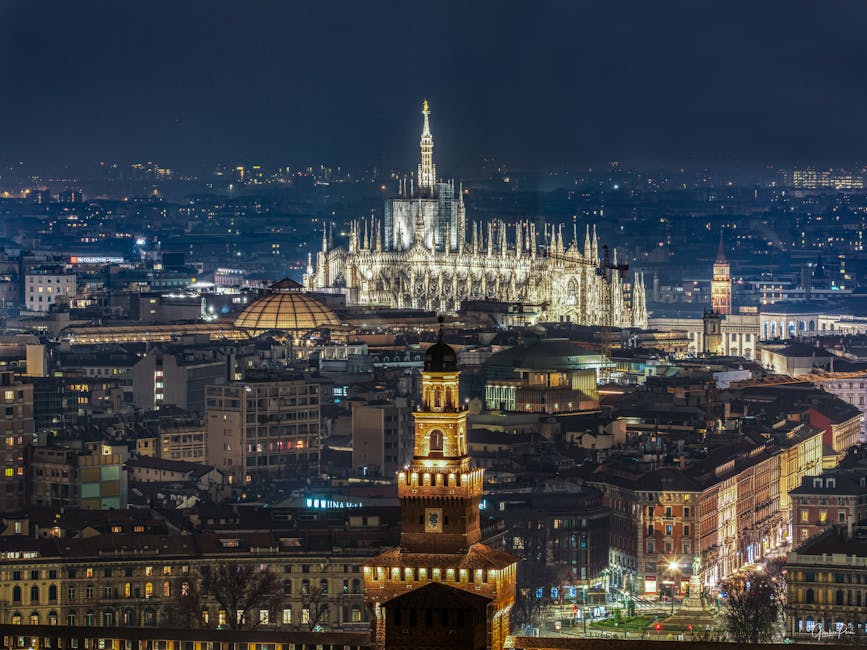
Best slot for photos: 30 minutes before sunset. You can request a sunset slot when you book; they sell out a week or two ahead in summer, much faster than the morning equivalents. The floodlights come on while you are still up there, and the colour shift between gold-hour and blue-hour on the marble is spectacular. Bring a warm layer, because the wind on the upper terrace gets cold the moment the sun drops.
The cathedral is closed to tourists during Mass on Sundays from roughly 10am to noon. You can still attend the service, but you cannot wander, and the rooftop is closed alongside it. Mass times are also when locals show up; if you want to see the cathedral as a working church and not a tourist attraction, this is the slot, but you will not get rooftop access.
Dress Code and Bag Rules
It is a working cathedral, so the dress code applies the moment you walk in. No bare shoulders, no shorts above the knee, no tank tops. Hats off. Security will turn you back at the entrance if you arrive in a vest top. There are no shawls for hire on site, so wrap something around your shoulders before you queue.
Big bags get refused at security. The cutoff is roughly carry-on size, and there is no left-luggage on site. If you are arriving from Milano Centrale with a roller bag, drop it at the station’s KiPoint left-luggage on the lower level (about 6 euros for the first five hours) before walking down. The walk from Centrale to the Duomo is twenty minutes, or two metro stops on the M3 yellow line.
A Quick Bit of History
Construction started in 1386 and finished, technically, in 1965. Almost six hundred years end to end. The cathedral was commissioned by Gian Galeazzo Visconti, the Lord of Milan, partly out of religious devotion and partly because he wanted the biggest church in Italy. The original architect was Simone da Orsenigo, but more than seventy people had a hand in the design across the centuries, including (briefly) Leonardo da Vinci, who consulted on the structural problems of the dome.
The marble was a logistical headache. Every block came from Candoglia, on the north shore of Lake Maggiore, almost 100 kilometres from Milan. The Visconti family donated the quarry to the cathedral chapter in 1387 with the condition that the marble be used only for the Duomo. That arrangement still holds: the same Candoglia quarry supplies the stone used for restoration today. Every patch of marble you see has come down the same waterway for six centuries.
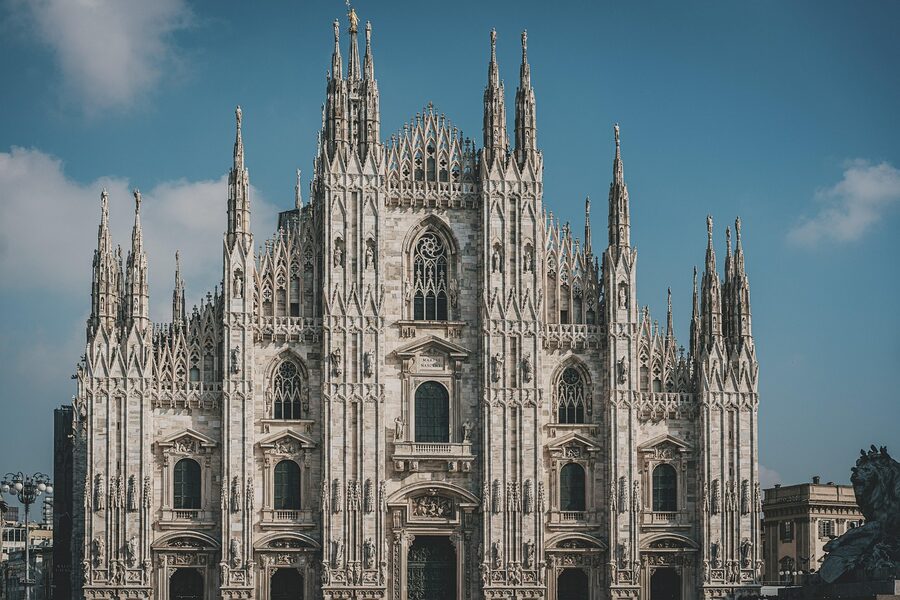
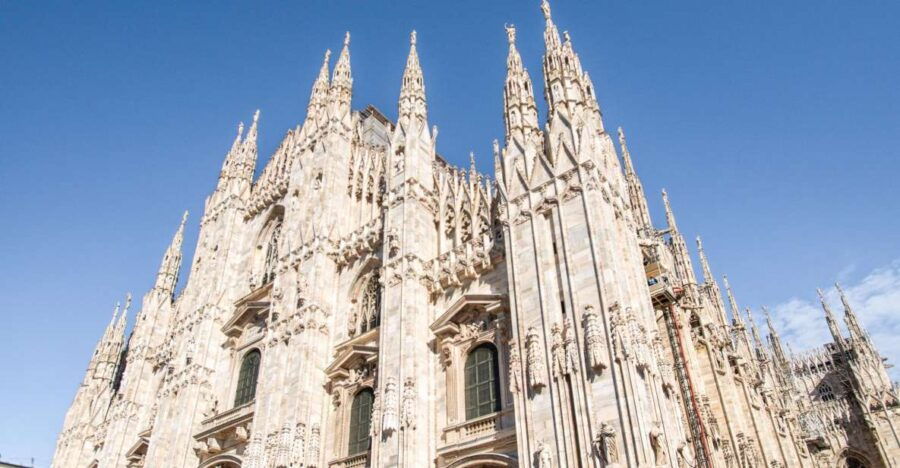
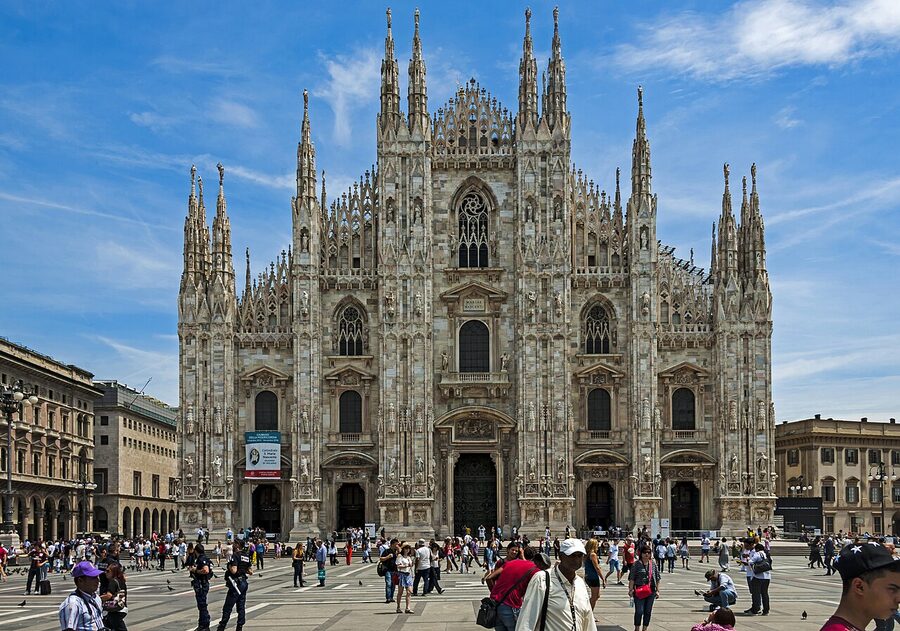
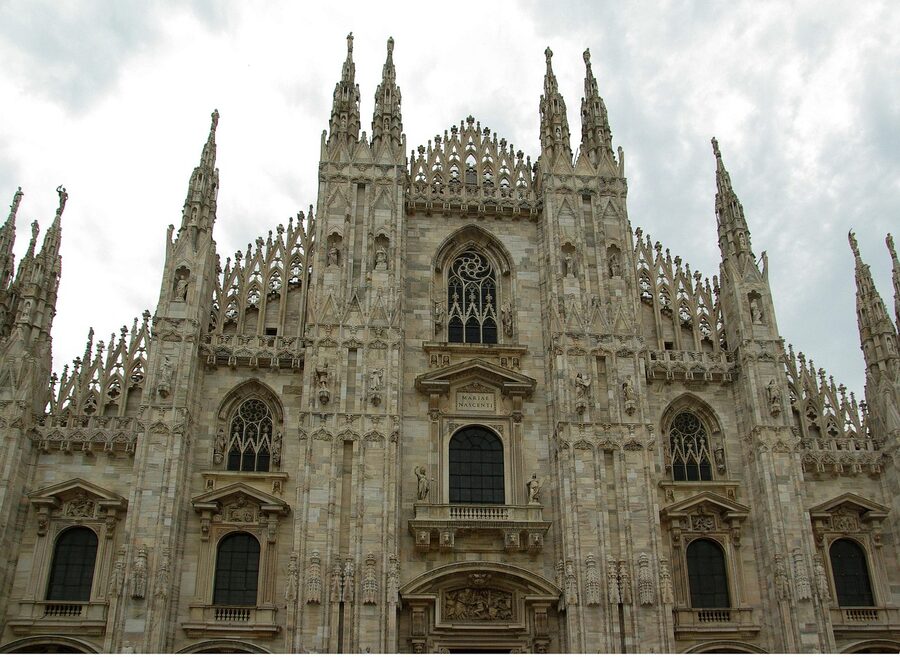
The famous facade was the part that took longest. The lower section was finished by the 17th century, but the upper portion, with all the spires, is mostly Napoleonic-era. Napoleon rushed the front because he wanted to be crowned King of Italy at the Duomo in 1805, and the cathedral could not be missing its face for the ceremony. The bronze doors are 19th and 20th century, mostly. The whole building is younger than it looks.
What to Pair It With
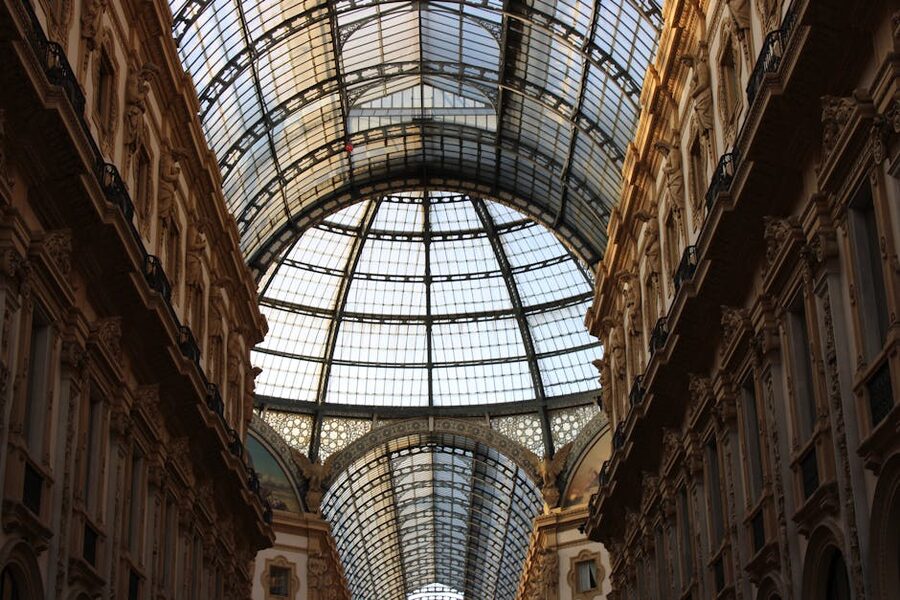
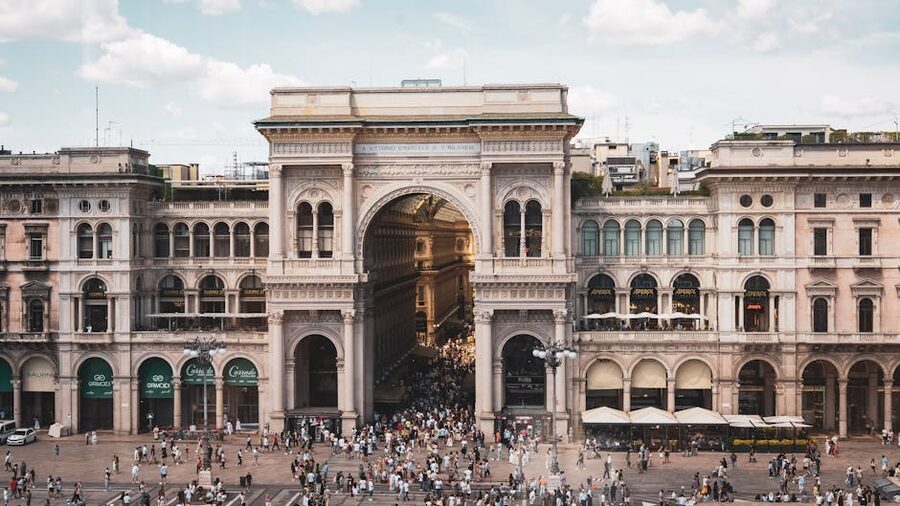
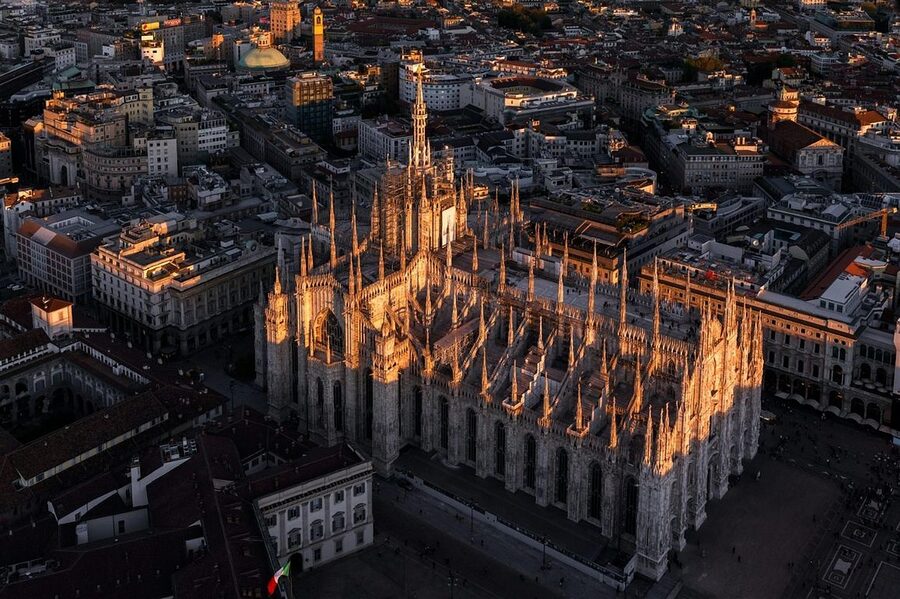
The Duomo sits at the absolute centre of Milan. Within a five-minute walk you have the Galleria Vittorio Emanuele II, La Scala opera house, and the Royal Palace. Half a day in the area is comfortable. A full day is not absurd if you are also doing the museum and the archaeological zone properly.
If you have a half day before or after the Duomo, the Last Supper is the most-asked-about extra. It needs its own ticket booked weeks in advance. Our Last Supper booking guide covers the timing problem in detail; it is not the kind of thing you can drop into the same morning. A combined Duomo plus Last Supper guided tour is the cleanest way to do both in one day if you can find a slot, because the Last Supper end of the booking is the constrained side and a tour operator usually has access when individual booking does not.
If you are extending the visit beyond a day, the day-trip options out of Milan are excellent. Lake Como is about 50 minutes by train, and a guided day trip is the easiest way to combine the train ride with a private boat across to Bellagio. The Bernina Express to St. Moritz is the more unusual choice and worth a full day if you have one to spare; the train climbs from lakeside altitude to over 2,200 metres in the Swiss Alps.
Photography Notes
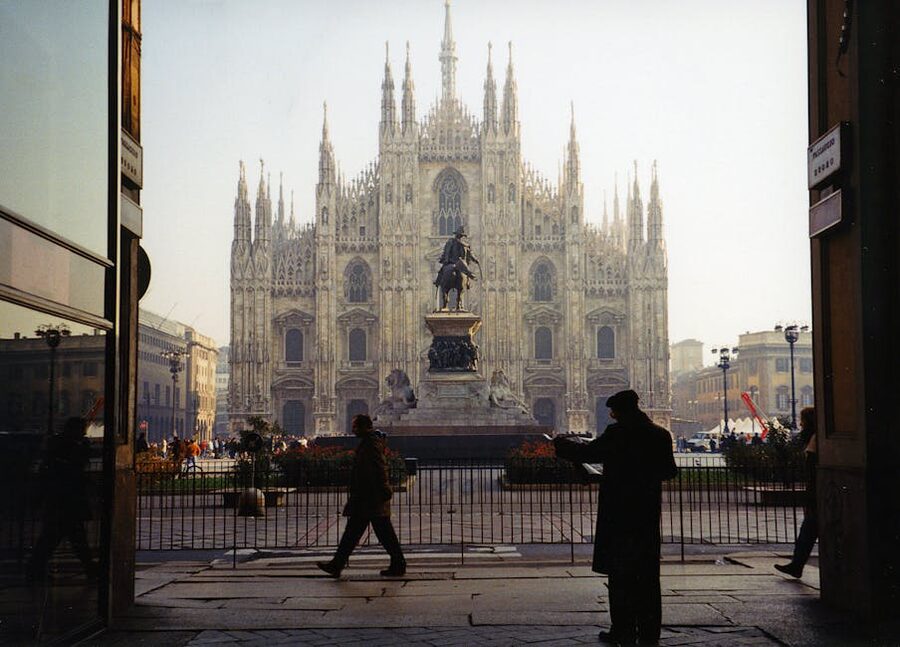
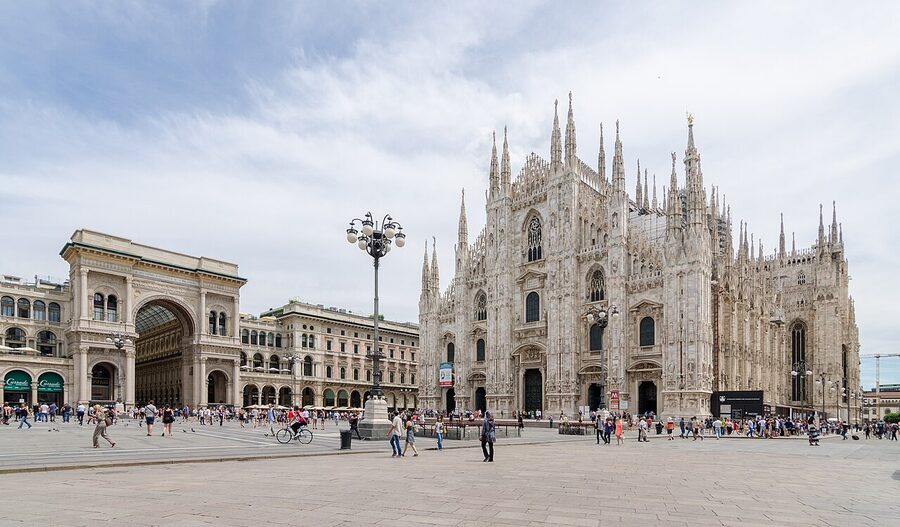
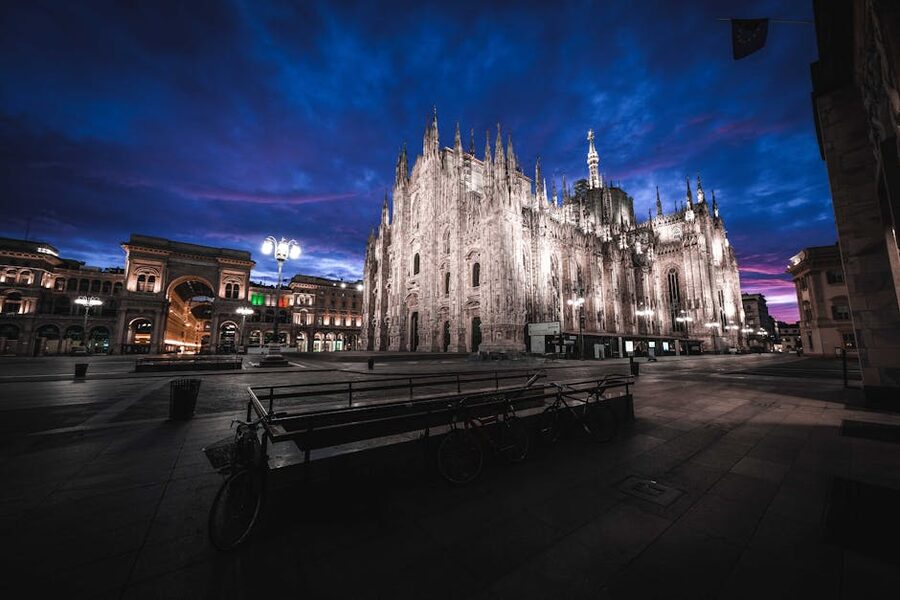
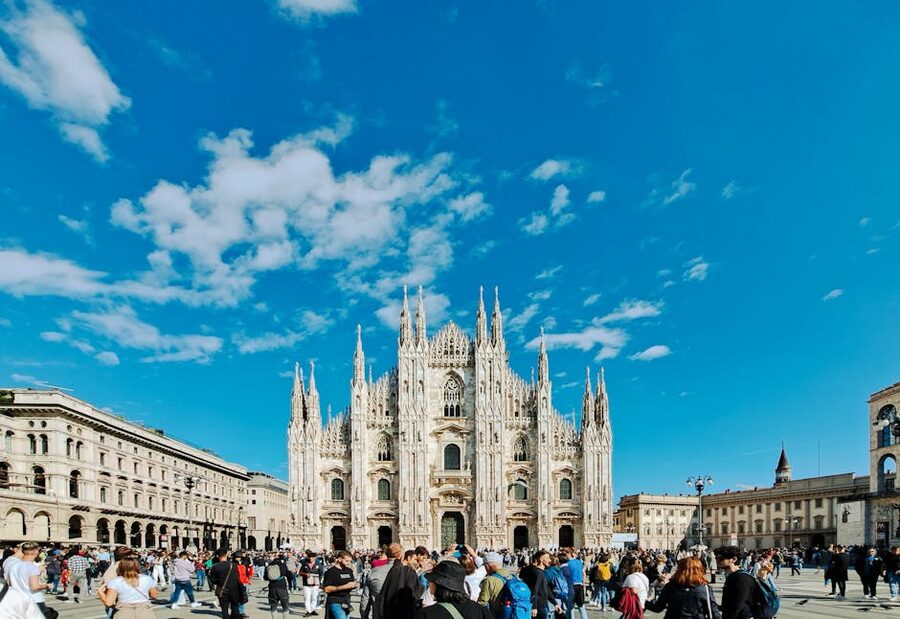
The piazza shot everyone wants is taken from the south corner of the square, where the Galleria meets the Royal Palace. Step back as far as you can and shoot wide, because the cathedral is wider than you think and tighter framing crops out either the bell tower side or the Galleria.
The rooftop shots split into two camps. There is the wide spires-and-skyline composition, which works best from the upper terrace facing east toward the apse. And there is the carved-marble close-up, which is everywhere; pick a saint with strong directional light on the face and shoot tight. Both are good. The wide shots are best at sunset, the close-ups any time the marble is in direct sun.
Drone photography is banned over the Duomo. The piazza is in central Milan’s restricted airspace, and aside from the rules, security on the rooftop will tell you to put any drone away within thirty seconds of you taking it out. Do not bother bringing one to the rooftop.
Common Mistakes That Cost You Time
Booking the cheapest no-skip ticket through the official Duomo site and then queuing in summer. The official site sells legitimate tickets, but they go through the same security line as walk-ups. You save eight or nine dollars and lose 45 minutes on a hot day. Not a good trade.
Picking the elevator slot when you are physically fit. The lift queue moves slower than the stairs at peak times because lift slots are timed and stair entries are continuous. If you can climb 251 steps, the stairs are usually faster end-to-end.
Buying the rooftop-only ticket and assuming you can also walk into the church floor. You cannot. The terrace ticket is exit-only on the cathedral side; once you come down off the roof you exit through a side door, not into the nave. If you want both, buy the combined Cathedral and Rooftop pass. It is only eight dollars more.
Not booking the museum even though it is included. The Duomo Museum sits on the south side of the piazza in the Royal Palace building. Most ticket holders never go in. It is small, but it has the original Madonnina from before the 1939 replacement, plus the original wooden facade model from the 16th century. Worth twenty minutes if you have the energy after the rooftop.
Where the Duomo Fits in a Wider Italy Trip
If Milan is one stop on a longer Italy run, the obvious comparisons are the other big cathedrals. The Florence Duomo is older in spirit and more compact; the climb up Brunelleschi’s dome there is harder than the Milan stairs and the views feel more medieval because Florence is smaller. St. Mark’s in Venice is the opposite end of the spectrum: Byzantine, gold, and dense, where Milan is Gothic, white, and airy. St. Peter’s in Rome is a different category entirely and a different kind of climb. None of them is a substitute for the others.
For a comfortable Milan visit, think two days. Day one Duomo and the Galleria area, with the cathedral, the rooftop, and the museum done thoroughly. Day two the Last Supper in the morning and a half-day trip to Lake Como in the afternoon if the weather is good, or the Sforza Castle and a wander around Brera if not. Three days lets you fold in the Bernina Express, but the train day is long, so start early.
More Italy Reading from Around the Site
If you are still mapping out the trip, our Last Supper booking guide is the next thing to read because that is the part of Milan that needs the most advance planning. Beyond the city, the Lake Como day trip guide covers the easiest one-day escape, and for travellers looking further south, our Colosseum guide and Uffizi guide walk through the same kind of skip-the-line decisions you’ve just made for the Duomo. Different city, same pattern.