
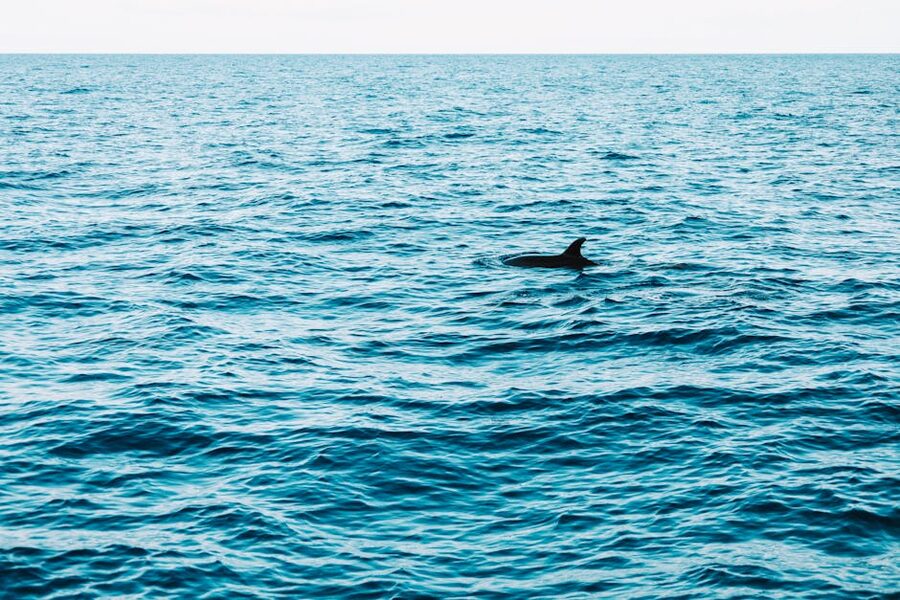
The blow-spray hits the Atlantic surface a second before you hear it. Your skipper has already cut the engine. Then the back of a sperm whale rolls forward, the fluke arcs up into a dripping V, and the animal is gone, dropping a thousand metres straight down to chase squid in the dark.
That is the version of Madeira whale watching nobody puts in the brochure copy, and it is the reason this is one of the better cetacean trips in Europe. The water is deep right off the harbour, the operators run on no-chase rules, and the cast keeps rotating. I have done this twice from Funchal and I would do it again on the next visit.
Eco-certified flagship, around $41. Three hours, silent-engine catamaran, swim stop near Cabo Girão. The most-booked dolphin and whale trip out of Funchal. Book the eco catamaran.
Standard catamaran cruise, around $41. Three hours, swim stop, slightly larger boat, more daily departures, easy walk-up booking. Book the catamaran cruise.
Luxury catamaran, around $47. Smaller passenger cap, padded seating, prosecco on the deck, same wildlife. Book the luxury option.
- What you can actually see out there
- Why the operators here are different
- How the trip actually runs
- The three trips worth booking
- 1. From Funchal: Ecological Catamaran Dolphin Whale Watching:
- 2. Funchal: Dolphin and Whale Watching Catamaran Cruise:
- 3. Funchal Bay: Dolphin and Whale Watch Luxury Catamaran Cruise:
- Sunset variants are worth the swap
- When to book and what month to come
- What to pack for the boat
- Pairing the boat with the rest of your Madeira week
- How Madeira compares with the Canary Islands
- Practical bits people get wrong
- One last thing about the swim stop
- Other Portugal trips worth lining up
What you can actually see out there
Madeira sits on a steep underwater drop. Inside two miles of the harbour the seabed plunges past 800 metres, and that means deep-water species are within an easy boat ride of the marina. Researchers logged 27 cetacean species in these waters over the last twenty years. You will not see all 27 on a three-hour trip. You might see four or five.
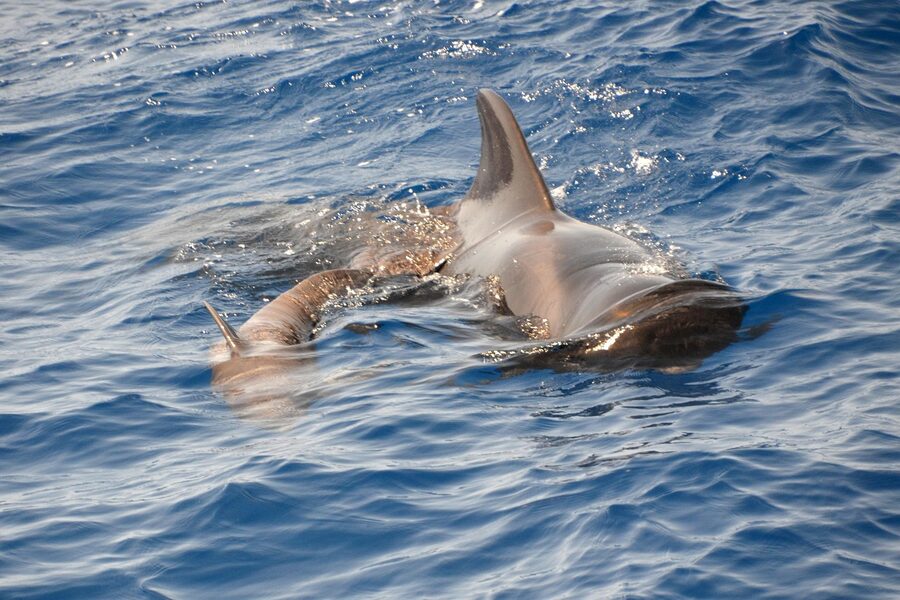
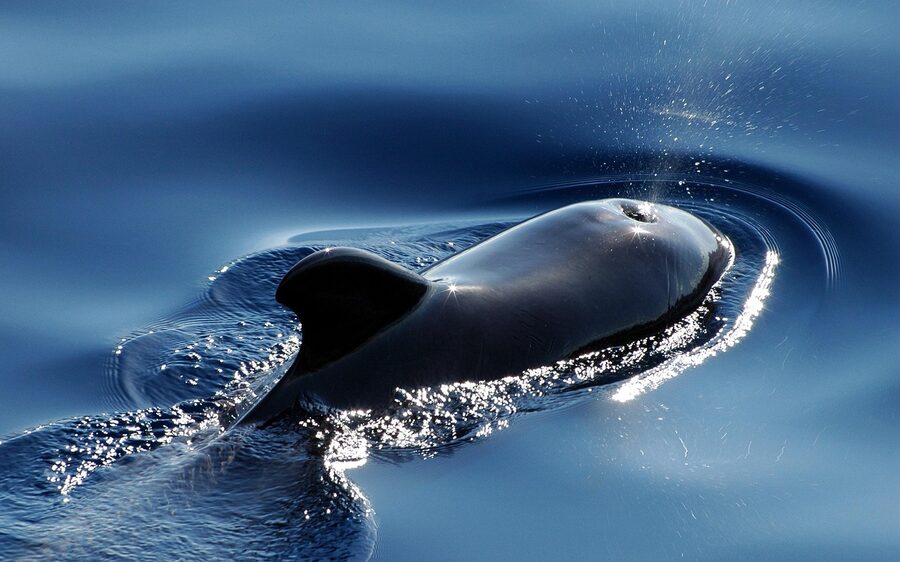
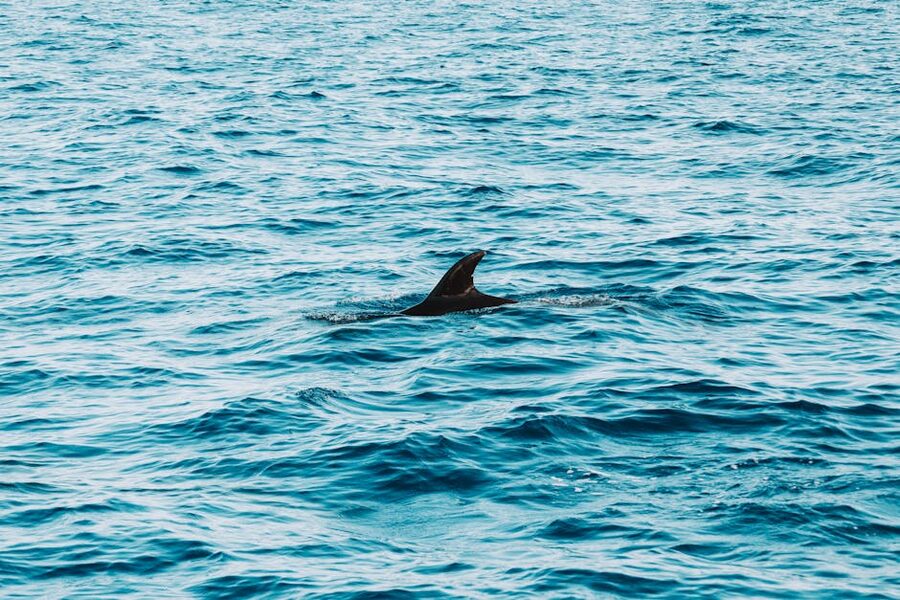
The two locals are short-finned pilot whales and bottlenose dolphins. Both stay in Madeiran water year-round. Pilot whales are technically large dolphins, blunt-headed and dark, and they tend to loaf at the surface in a way that makes them easy to photograph. Bottlenose dolphins are bigger here than the Mediterranean variety, and the resident pods are well known to skippers, who often recognise individuals by fin scars.
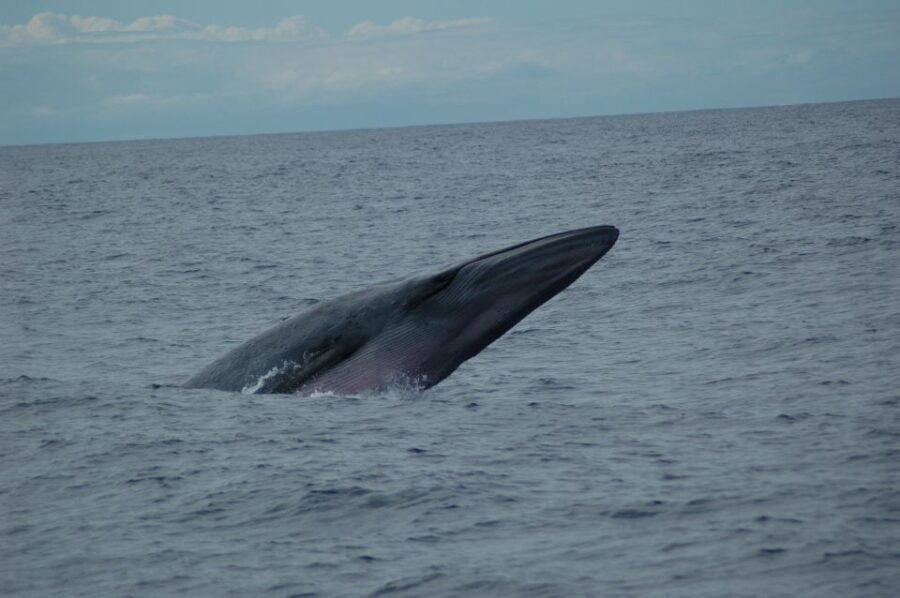
The seasonal cast adds the better postcards. Sperm whales pass through from spring into autumn, and a sighting almost always ends with that dripping fluke arc as the animal sounds. Fin whales (the second-largest animal alive after the blue whale) cruise through April to June. The eco-flagship trip from Funchal logs the best sperm whale strike rate in summer, partly because the captain works closely with the shore-based observation network.
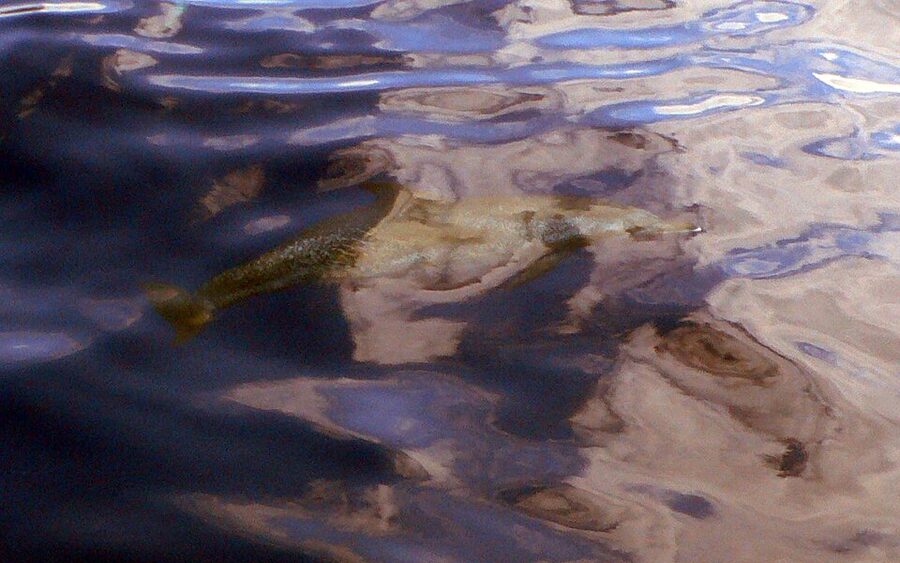
Atlantic spotted dolphins arrive in summer. They are the bow-wave riders, the pod-of-twenty species that turns up in the YouTube clips. If you are picking your trip month for a single dream sighting, July to September is the answer.
Why the operators here are different
Madeira’s whale watching scene is small enough to police itself. The licensed boats run on a no-chase principle agreed with the regional government. That means once an animal is spotted, the boat slows to under four knots, never closes the distance below 50 metres, and never gets between a mother and a calf. If two boats are at a pod, a third has to wait. Engines often go off entirely.
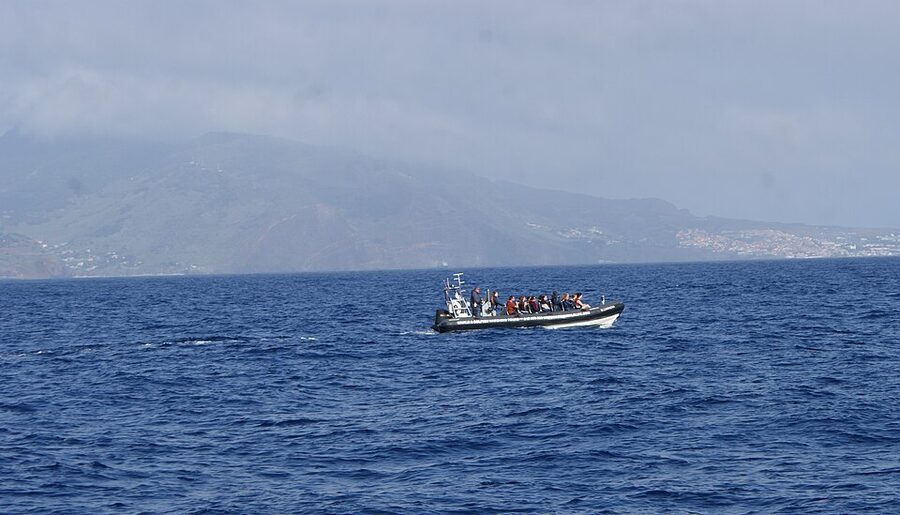
This sounds dry. In practice it is the difference between five-star and one-star tours. I have been on chase-style dolphin boats in other parts of the world and the animals scatter. Here they often hang around for ten to fifteen minutes because the boat is not stressing them. Several operators carry a marine biologist on board for a running commentary, and almost all of them work with the regional cetacean monitoring programme. If you go with one of the eco-certified catamarans, your sighting data ends up in the research record.
The other practical effect is that nobody promises a sighting. They promise a search. Most operators offer a free repeat trip if you see nothing on day one, which is rare but does happen on rough-sea days when the spotters cannot work the surface. Ask about the policy when you book. The flagship eco trip and most of the standard catamaran cruise operators honour it without quibbling.
How the trip actually runs
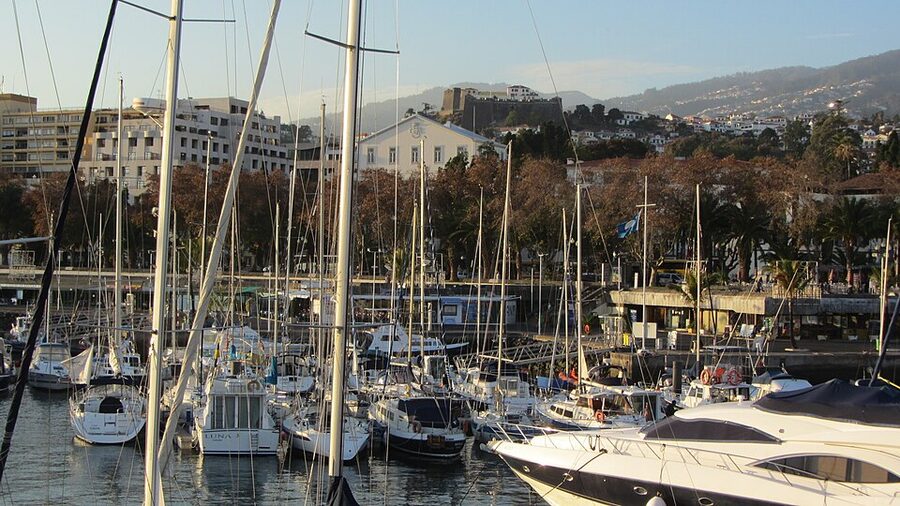
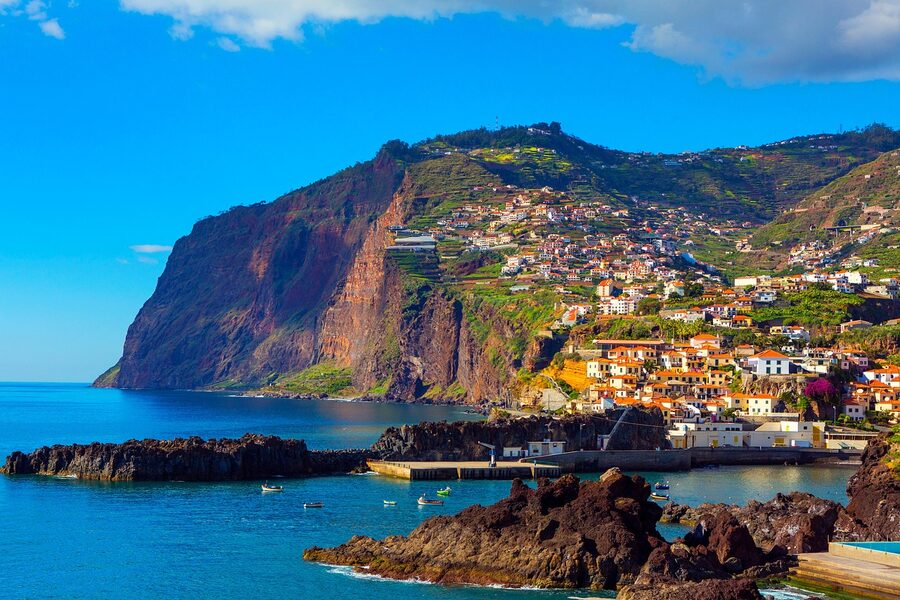
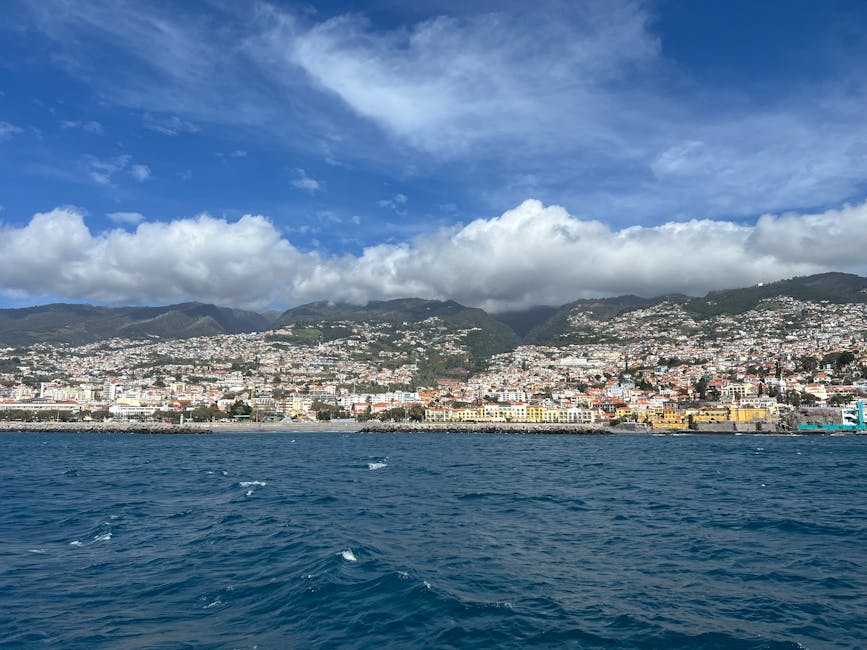
You meet at the marina an hour before high tide on a typical morning departure. Funchal’s harbour is on the south coast and the cliffs roll west toward Cabo Girão, so the boats steam in that direction for the first forty minutes. The reason is straightforward: the deep water lies west of the harbour and that is where pilot whales feed.
Spotters work in shifts up on the higher deck. They use binoculars, and on the better operators they keep in radio contact with land-based watchers up at Ponta do Pargo or Garajau. When a sighting comes in, the boat tilts on a course change and the captain throttles back to a creep. You will be told to stay where you are and let the animals come to the boat, not the other way around.
Most trips run three to four hours total. The bigger catamarans add a swim stop on the return leg, which is the bit competitors leave out of their listings. You stop in calm water near Garajau or Caniço marine reserve, drop the swim ladder, and you can snorkel for twenty minutes with parrotfish and the occasional curious bream. The water in late summer sits around 23 degrees Celsius. Bring your own mask if you are particular about fit, the on-board sets are basic.
The three trips worth booking
I narrowed the catamaran list to three. They cover the price range and the experience range, and any of them gets you out on the right water with a licensed skipper.
1. From Funchal: Ecological Catamaran Dolphin Whale Watching: $41
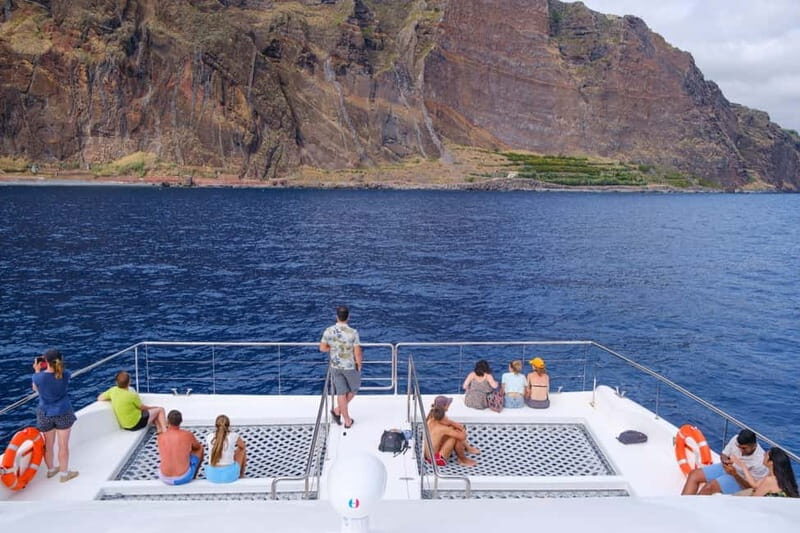
This is the one I would book first. Three hours, silent-engine running on the approach, marine biologist on the deck, and a swim stop near Cabo Girão on the way back. Our full eco-catamaran review covers the wet-weather backup policy and how the on-board hydrophones work.
2. Funchal: Dolphin and Whale Watching Catamaran Cruise: $41
Same price as the eco trip, more departure slots, and easier same-day booking if you are planning on the fly. The route mirrors the eco-trip but the boat is conventional diesel, so engines are off rather than silenced when whales are near. Read our take on the catamaran cruise for the breakdown on what is included in the included drinks.
3. Funchal Bay: Dolphin and Whale Watch Luxury Catamaran Cruise: $47
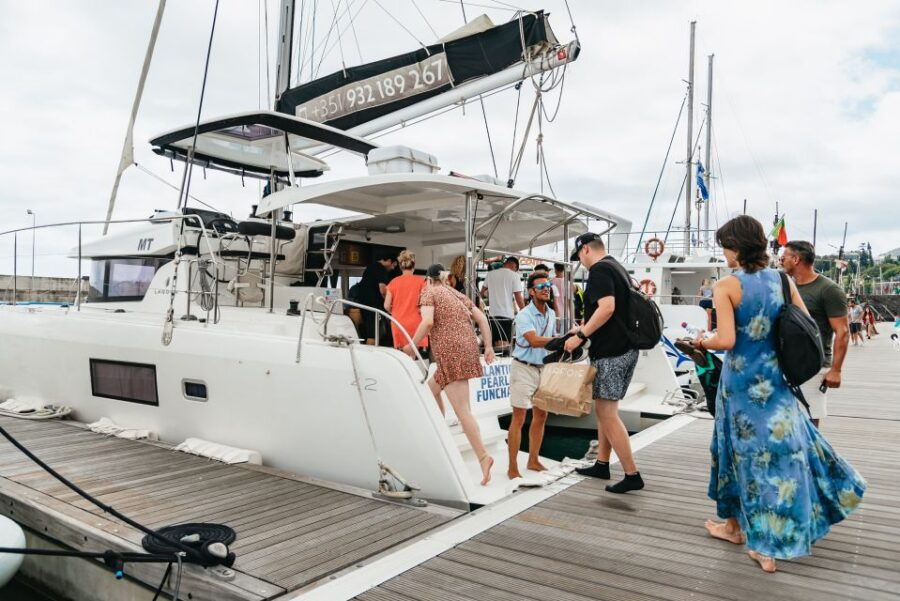
For six dollars more you get a smaller crowd, padded seating, prosecco poured for you, and a slightly less hectic photo scrum at the rail. Same wildlife, calmer experience. Worth it on a high-season trip when the standard boats are full. Our luxury catamaran walkthrough shows how the smaller cap changes the on-deck rhythm.
Sunset variants are worth the swap
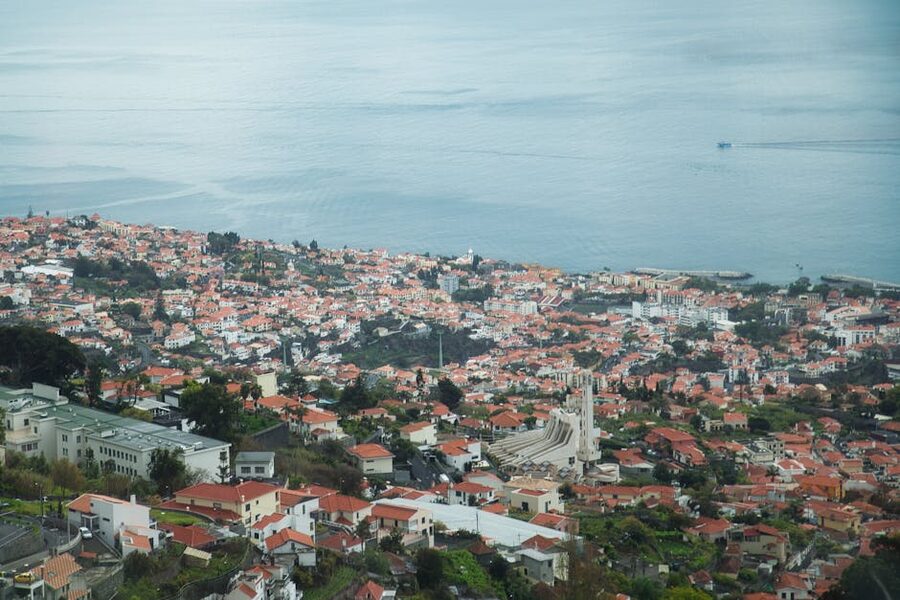
If your dates are flexible, the late-afternoon catamaran is the better option in summer. Animal activity picks up after the sun drops below the harshest light, the boat rides home with Funchal’s amphitheatre of houses lit up behind you, and you skip the cruise-ship-day morning crowds.
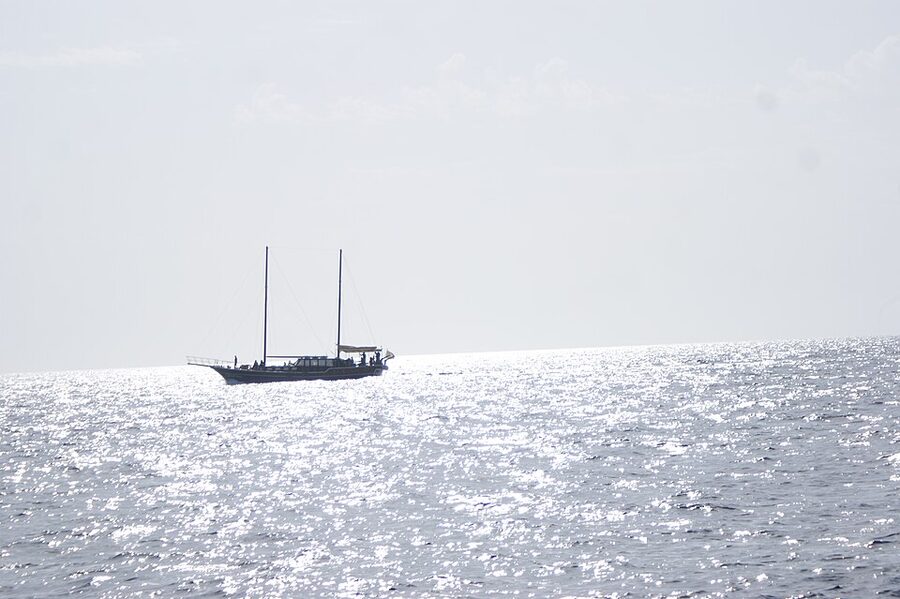
Two operators run dedicated sunset variants. The traditional sailing-yacht sunset trip uses a tall-mast wooden boat with the engines off whenever the wind cooperates, and it tends to be quieter on the deck because the size cap is smaller. The Funchal sunset catamaran is the cheaper alternative if you want a wider deck and a buffet snack. Neither is markedly better at finding whales (the timing matters more than the boat) but the yacht is the more atmospheric ride.
When to book and what month to come
Year-round is the short answer, with caveats. The pilot whales and bottlenose dolphins do not migrate. They are around in February as much as August. What changes is the supporting cast and the sea state.
April to June is fin whale season. May and June are the best months for sperm whales staying close to shore. July to September is when Atlantic spotted dolphins arrive in numbers and the bow-riding shots happen. October and November bring rougher seas but also pilot whale gatherings on the deeper banks. Winter (December to March) can be brilliant on a calm day and a write-off on a windy one. Atlantic swells from the north hit the east coast hardest, so south-coast trips out of Funchal still run on most winter days.
For booking lead time, two days is usually fine in shoulder season. In high summer, especially July and August, the eco-flagship sells out a week in advance. The luxury option books up faster than the standard catamaran because the passenger cap is smaller. If you want a specific morning slot to dovetail with a Madeira Skywalk and Fanal 4WD day tour the next day, lock in the boat first and the jeep tour second. The boat schedules have less flex.
What to pack for the boat
This is where most readers’ phones go in the wrong direction. The Atlantic off Madeira is reliably colder than the air feels on the marina. You step off a thirty-degree pier onto a moving boat in twenty-three-degree water and the wind does the rest.
The non-negotiables: a windproof layer, polarised sunglasses (not regular shades, the glare on the water erases dorsal fins for the unaided eye), proper sunscreen, and seasickness tablets if you are remotely susceptible. Take the tablet 45 minutes before departure, not on the boat. Skippers will tell you the same thing every trip.
The optionals worth packing: a swim layer for the Garajau stop, a quick-dry towel, a real camera or at least a phone with optical zoom because dolphins look small from 50 metres on a wide-angle lens. Binoculars change the experience entirely. Even cheap 8x25s mean you can pick out fluke patterns and dorsal scars instead of seeing a generic dark shape.
Skip: heavy bags, anything you would mind getting splashed, hard-soled shoes (decks get slippery). Most operators provide drinks but the snacks are usually a basic biscuit and fruit, so a pastel de nata from a Funchal bakery in your bag is a small upgrade.
Pairing the boat with the rest of your Madeira week
Half a day at sea works best as the centrepiece of an active Madeira itinerary, not a standalone. The morning catamaran wraps up around 1pm, which leaves the rest of the day for a coastal walk or a swim at one of the natural pools. The sunset trip finishes around 8pm, perfect to roll into a Funchal old town dinner without changing pace.
The classic two-trip Madeira combo is one day at sea and one day in the laurel forest. The Skywalk and Fanal 4WD circuit covers the inland half of the island in eight hours. Boat first, jeep second works better than the reverse, because tired legs from the forest day don’t want to stand on a swaying deck. If you have three days, add Pico Arieiro for the sunrise hike.
How Madeira compares with the Canary Islands
If you have already done a cetacean trip in the Canaries, Madeira is similar enough that you know the format and different enough to be worth a second go. The Canary chain (Tenerife, La Gomera, La Palma, Fuerteventura, Gran Canaria) has the same volcanic-deepwater geography that puts whales close to shore. They share several species. The differences are in the cast and the operator scene.
The Canary Islands deliver the highest pilot whale density on the planet in the strait between Tenerife and La Gomera. Tenerife’s southern coast catamarans and the Costa Adeje fleet work that strait every day, and the strike rate on pilot whales is close to 100 per cent. Fuerteventura’s Morro Jable boats have a slightly different cast (more bottlenose dolphins, fewer pilot whales), and Gran Canaria’s catamaran scene sits somewhere between the two.
Madeira’s edge is the seasonal sperm whales and the smaller, less-crowded operator pool. Funchal sees five or six licensed boats out at once on a busy day. Costa Adeje can have twenty. If you have done one and want to do another, pick Madeira for sperm whales in summer, the Canaries for guaranteed pilot whale numbers and easier flight connections from northern Europe.
Practical bits people get wrong
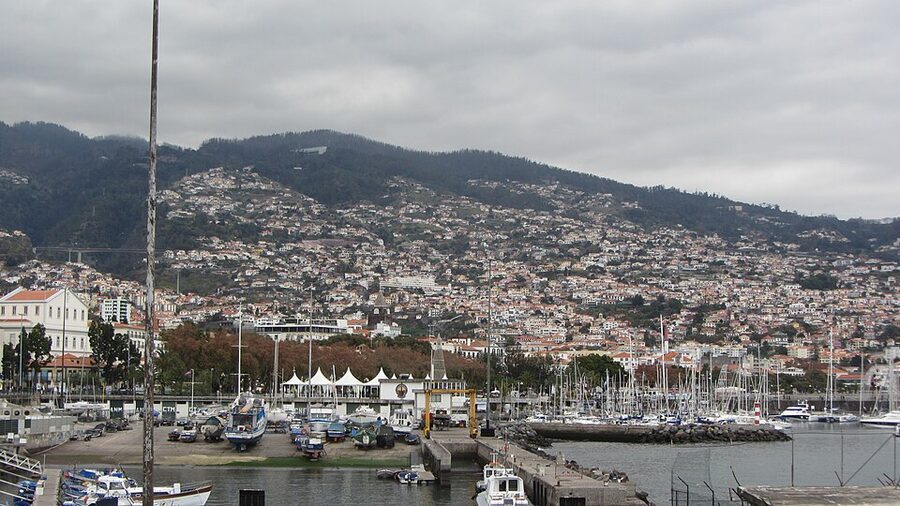
The marina is not the cruise terminal. Catamaran kiosks are clustered on the western side of the Funchal marina, a five-minute walk from the cruise ship docks. Show up at the wrong gate and you will sprint. Allow an extra fifteen minutes if you are coming off a cruise ship for the first time.
Parking near the marina is metered and limited. If you are driving in from a hotel outside Funchal, use the Almirante Reis underground garage and walk the five minutes downhill. Coming from the east coast, the parking situation is worse and arriving by taxi or bus is genuinely easier.
Children under six often go for free and a child rate (around half) applies up to twelve, but rules vary by operator. The eco-catamaran has a strict no-under-three policy because of the swim stop. Bring photo ID for the boat manifest, the operators check it now under tighter Portuguese maritime rules.
Refunds for no-shows are unusual. Cancellation policies are usually 24 hours for a full refund. Bad-weather days are decided by the operator on the morning of the trip and you get a free reschedule or a refund if they cancel. If the boat goes out and you don’t see anything, the free-repeat policy is the standard remedy.
One last thing about the swim stop
It is the part of the trip nobody photographs and the part you remember. After two hours of leaning over the rail looking for fins, you peel off the windbreaker and drop into 23-degree Atlantic water with a marine reserve under your feet. There are sea bream that do not bother to swim away. The catamaran sits twenty metres off, half the passengers are still on deck with cameras, and you have a fifteen-minute window of pure blue light and silence. That is the bit nobody describes in a brochure.
Other Portugal trips worth lining up
If Madeira is one stop on a longer Portuguese itinerary, the obvious pairings are an Algarve coast day and a couple of mainland city tours. The Benagil Caves speedboat from Portimão and the dolphin-and-caves combo from Albufeira cover the south-mainland marine angle, and on the cultural side a Douro Valley trip from Porto pairs nicely with a Sintra and Pena Palace day from Lisbon for the inland balance to your week at sea.