
Most travellers who book a Costa Adeje dolphin cruise filter by price and click the cheapest option on the first booking page they open. That’s how you end up on a chasing boat. The kind that revs its engine at a pod of pilot whales, scatters them, and ruins the encounter for every other operator working the same patch of water that morning. The fix is small. Look for the eco-certified flag (locally called Barco Azul) before you book, and skip anything without it.
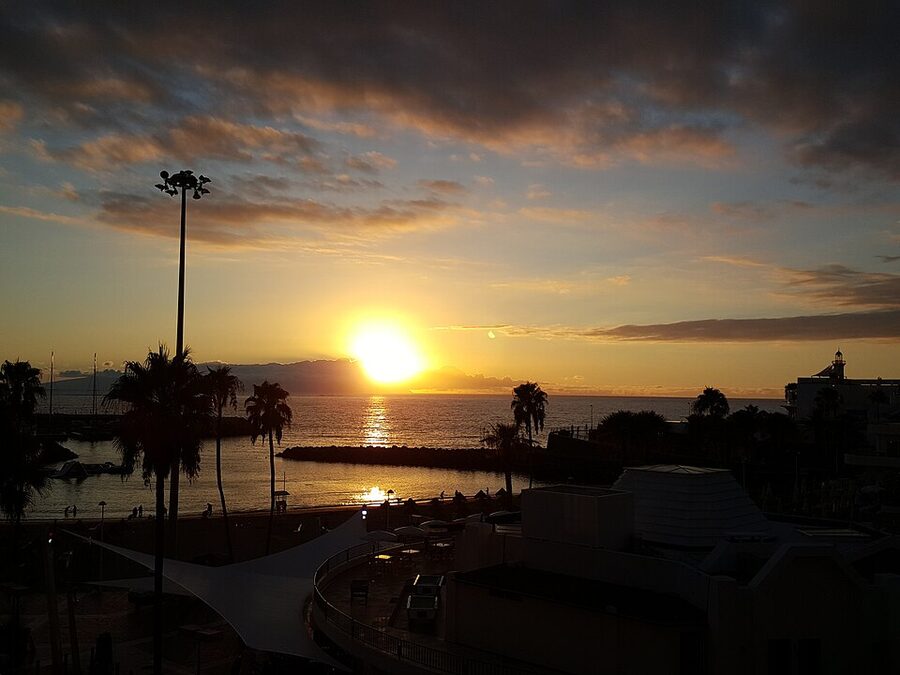
I’ve watched both kinds of boat work the Strait between Tenerife and La Gomera. The eco-certified ones cut their engines, drift, and let the pilot whales come to them. The chasing ones don’t. The wildlife you see is the same species either way. The experience is not.
- In a Hurry? My Top 3 Picks
- Why Costa Adeje and Not Los Cristianos
- The Mistake: Chasing Boats vs. Eco-Certified
- What You’ll Actually See
- My Three Picks for Costa Adeje
- 1. Costa Adeje Dolphin & Whale Eco-Cruise with Snacks & Drinks:
- 2. Costa Adeje Whale Watching Catamaran Tour with Drinks:
- 3. Small-Group Dolphin and Whale Watching with Biologist:
- The Honourable Mention: Submarine Vision
- What to Expect on the Day
- Best Time to Go and What to Pack
- If You Have Kids
- Booking and Price Notes
- What If You Don’t See Anything
- The View From the Boat
- How Costa Adeje Compares to Other Canary Cruises
- Practical Things Nobody Tells You
- One Last Thing About the Animals
- More Spain Watery Adventures
In a Hurry? My Top 3 Picks
- Costa Adeje Eco-Cruise with Snacks & Drinks ($52). The flagship for a reason. Three to five hours, hydrostatic underwater microphone, sighting guarantee or you go again for free. Check availability
- Whale Watching Catamaran with Drinks ($41). The family pick. Two to three hours, stable double-hull, kids can move around. Check availability
- Small-Group Tour with Marine Biologist ($71). The premium. Twelve guests max, biologist guide, hydrophone audio, the closest you’ll get to a research trip. Check availability
Why Costa Adeje and Not Los Cristianos
The two ports are basically next door. Puerto Colón sits about three kilometres south of Los Cristianos harbour, and both fleets work the same Teno-Rasca marine zone. The difference is the boats themselves. Los Cristianos leans toward eco-yachts and traditional sailboats; my Tenerife whale watching guide for Los Cristianos covers that fleet in detail.
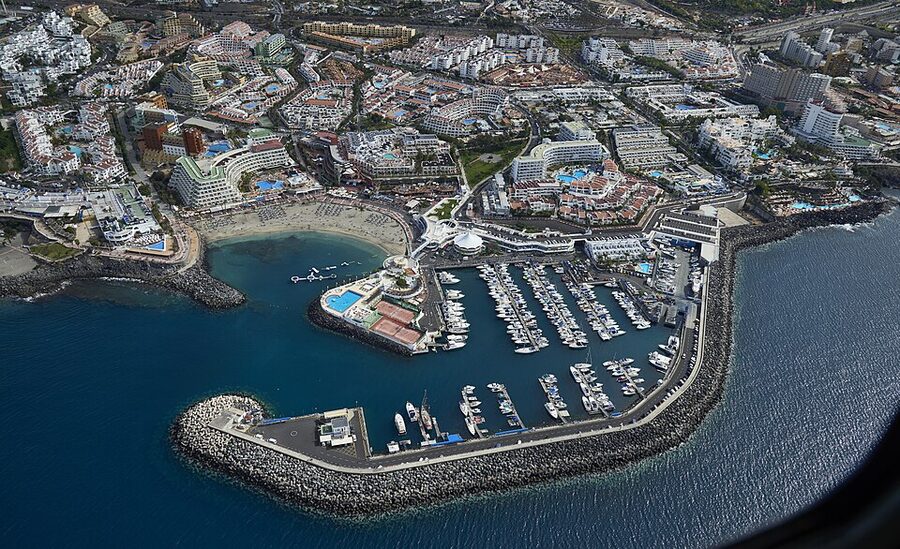
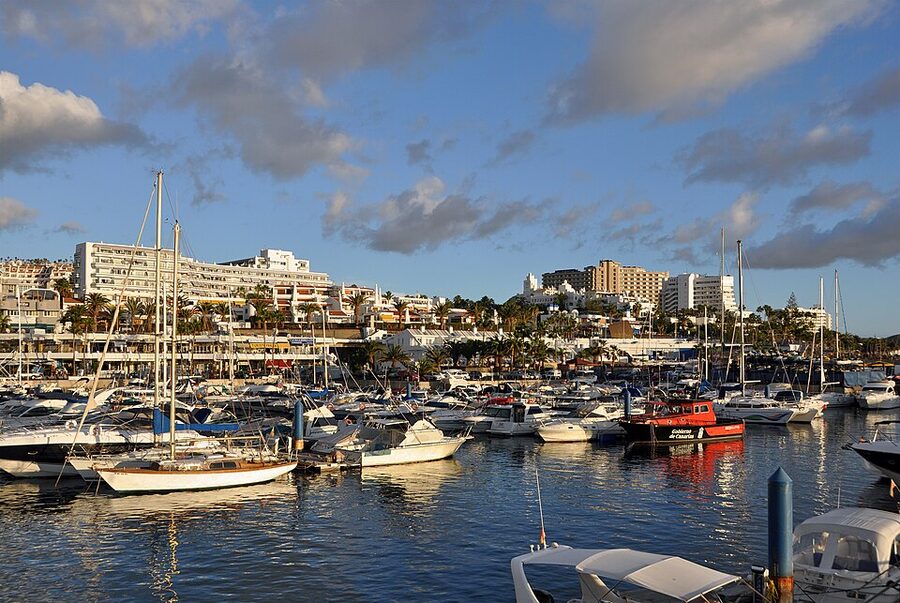
Costa Adeje is the more polished side of the south coast. Bigger catamarans, food-and-pickup combos, family-friendly schedules, and a marina you can actually find without circling the car park three times. The eco-yacht and pirate-cruise options that Los Cristianos is famous for don’t really exist here. What you get instead are the larger sailing catamarans, a small-group RIB option with a marine biologist, and one quirky semi-submersible boat with an underwater viewing chamber.
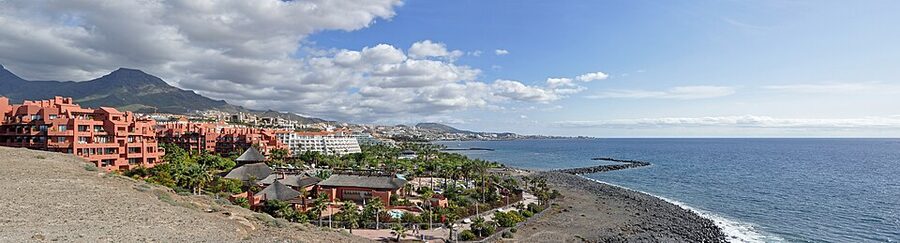
If you’re staying at one of the resort hotels in Adeje, Fañabé, or Torviscas, Puerto Colón is a five to fifteen minute taxi. From Los Cristianos itself it’s roughly six minutes by car. From Las Américas, ten. Most operators throw in hotel pickup if you ask, and a few include it by default.
The Mistake: Chasing Boats vs. Eco-Certified
This is the part nobody on the booking platforms explains clearly, so I’ll spell it out. The Strait of La Gomera is a marine area of special conservation (ZEC Teno-Rasca). Operators that hold the Canary government’s whale-watching permit fly a small blue flag with a yellow whale tail on the bow. The locals call it Barco Azul, which means “blue boat.” It means the captain has signed up to a code: stay sixty metres from the animals, never cut across them, kill the engine when they’re close, and hold the position while they decide whether to come over.
Boats without the flag aren’t bound by any of that. Some are fine. Many aren’t. The cheapest options on the booking sites tend to be unflagged, and the warning sign is usually price. If you see a two-hour Costa Adeje “dolphin tour” advertised for under twenty euros, that’s a chasing boat almost every time. Skip it. The few extra euros for a flagged operator is the difference between watching wild pilot whales surface a metre from your hull and watching them flee.
The three tours I list below all hold the certification. So do the ones in my Los Cristianos guide. Booking from either of those write-ups removes the guesswork.
What You’ll Actually See
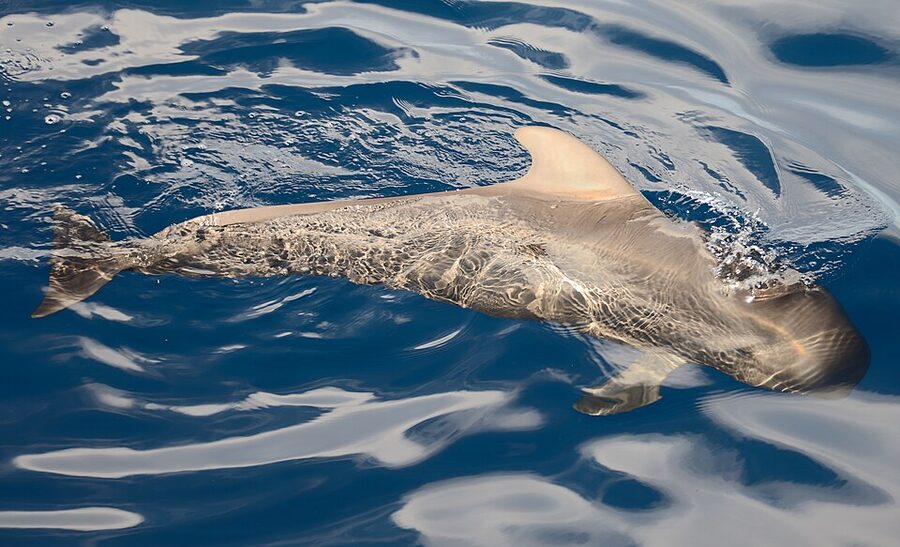
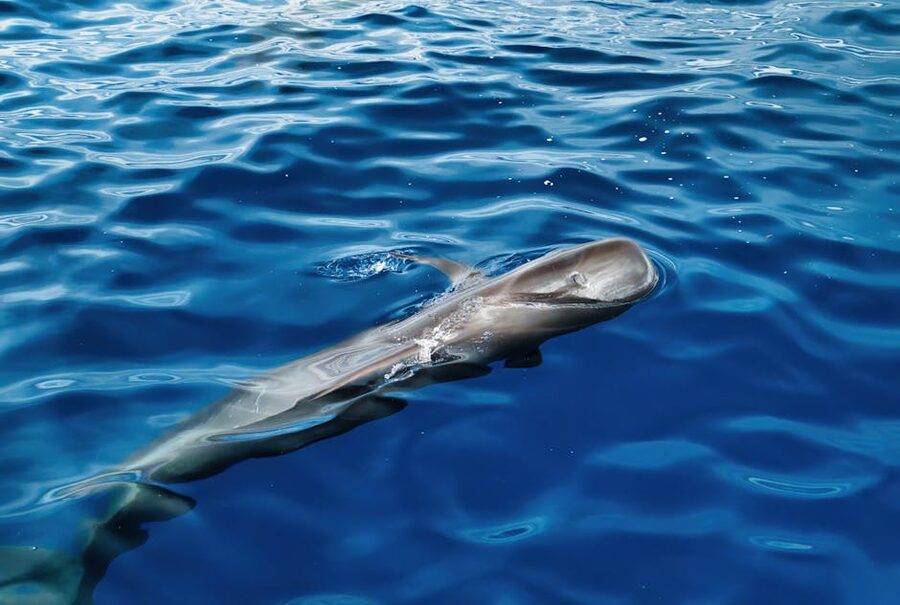
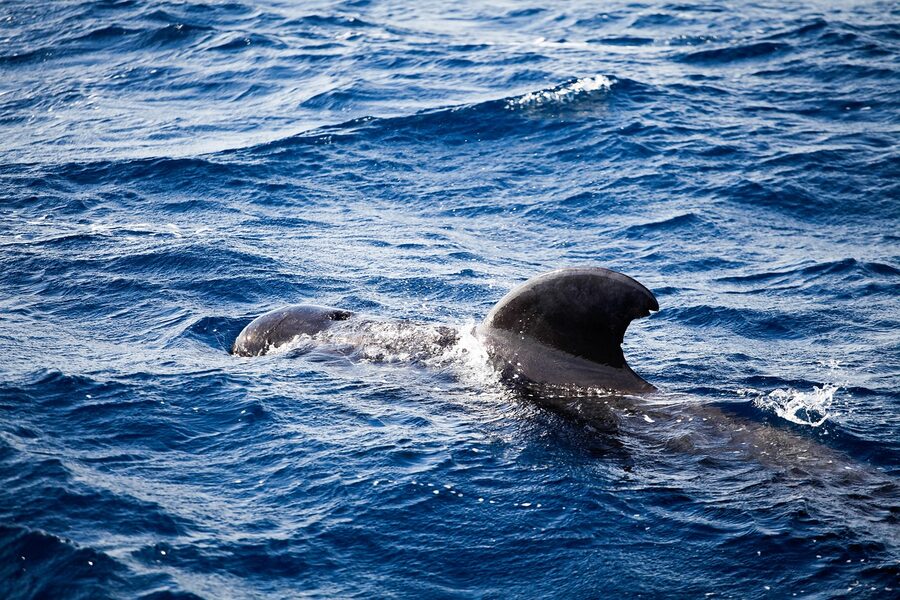
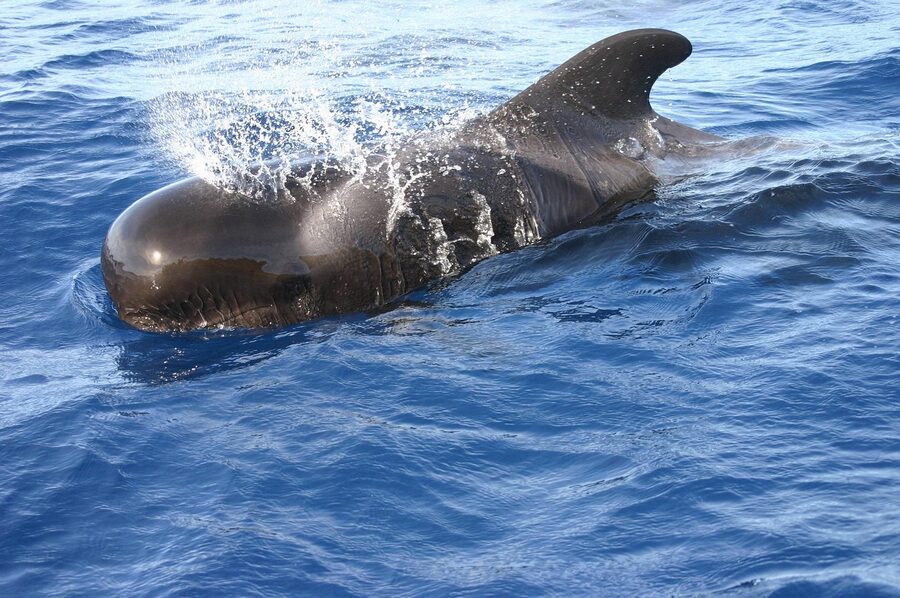
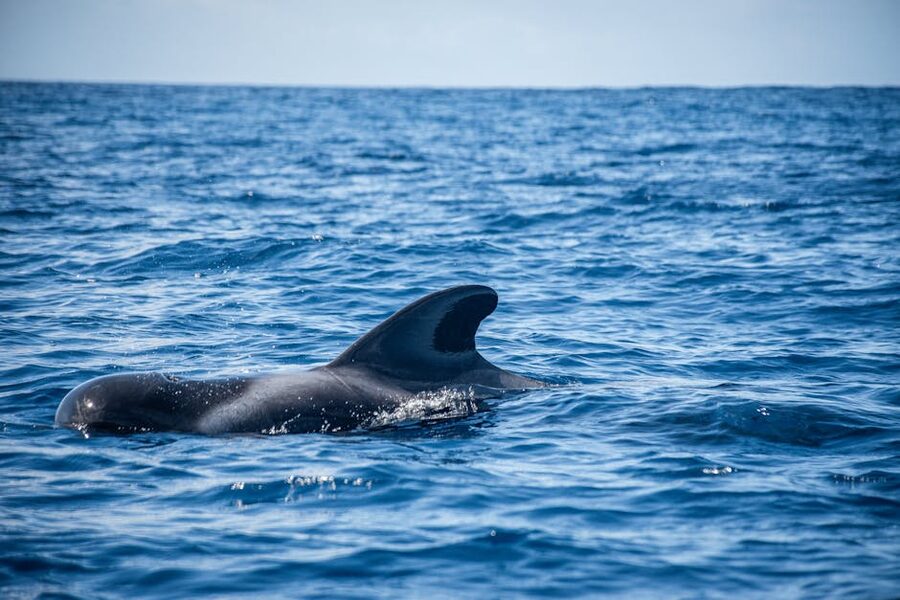
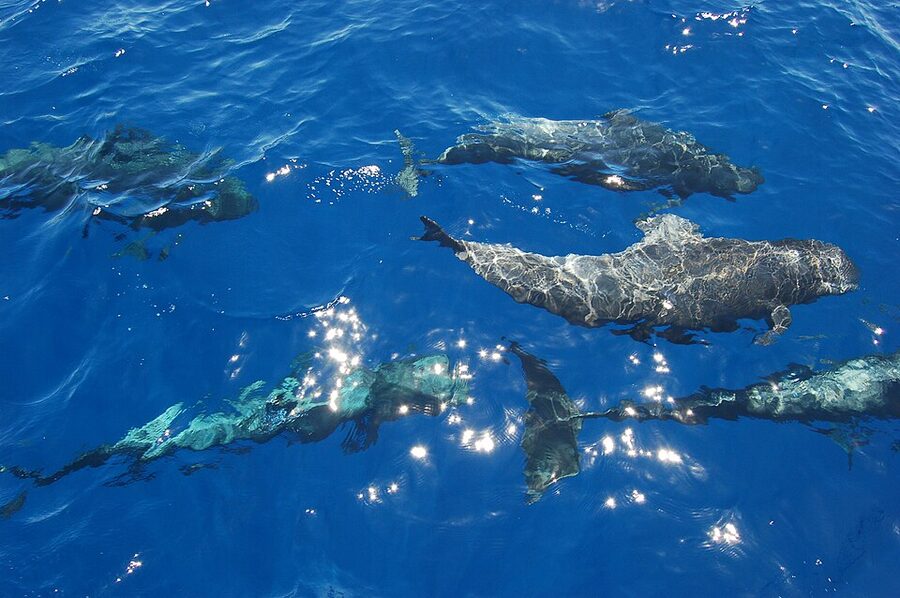
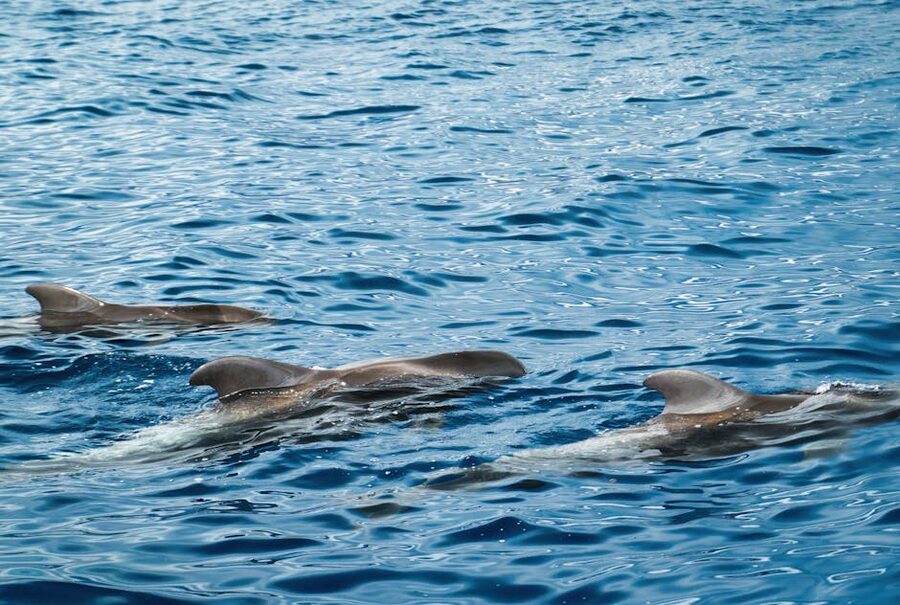
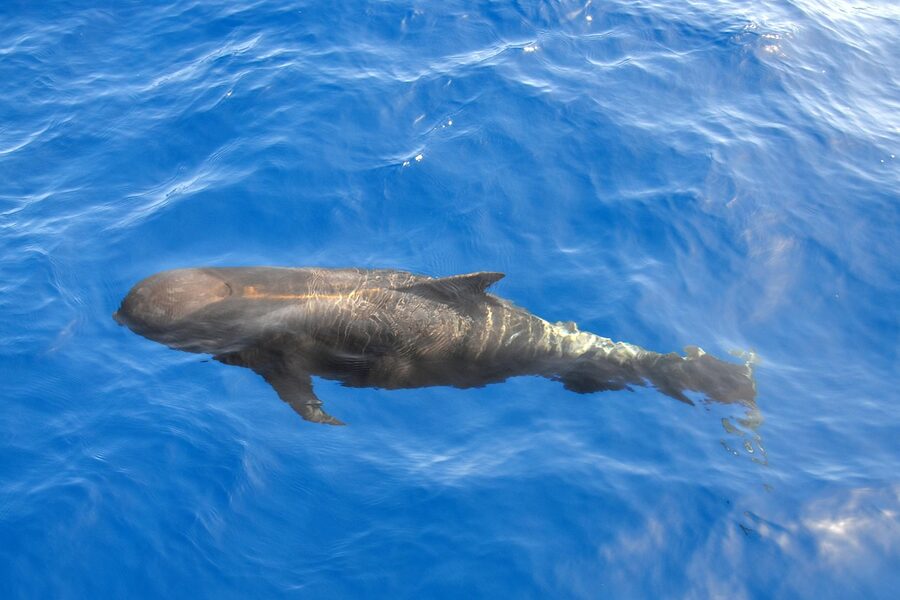
The headline species is the short-finned pilot whale. Around 250 of them live year-round in the strait between Tenerife’s southwest coast and the cliffs of La Gomera. They’re not the size most people imagine when they hear “whale.” Adults run four to six metres, dark grey, with a bulbous forehead. They surface in family groups of six to fifteen. Sightings on a flagged Costa Adeje cruise hit something close to a guarantee. Operators quote ninety-nine percent and that matches what I’ve seen.
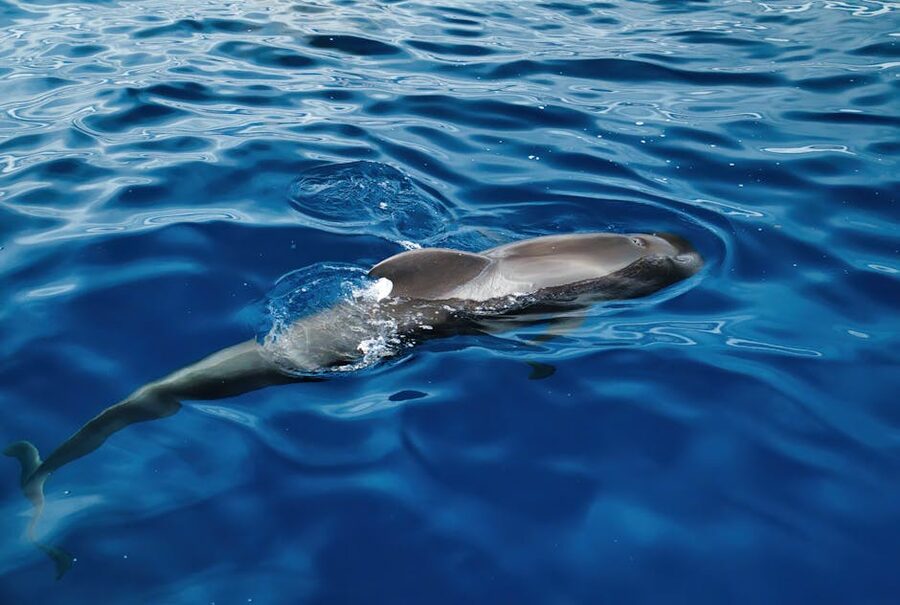
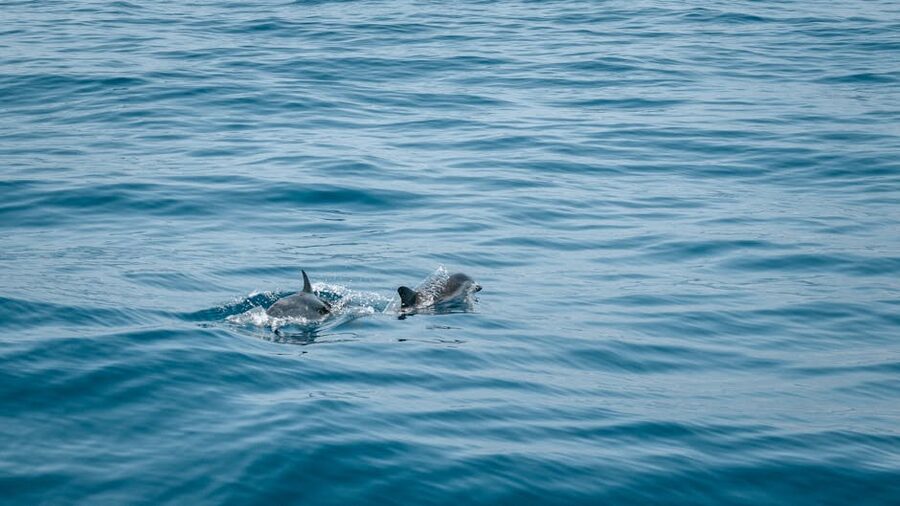
The second resident species is the bottlenose dolphin, and Costa Adeje’s stretch of coast has a particularly good population, with two distinct eco-types, the coastal group and the oceanic group, sometimes both showing up on the same trip. They’re the dolphin most people picture: sleek, grey, social, and curious. Bottlenose pods will often come to the boat to bow-ride, which is the bit kids never forget.
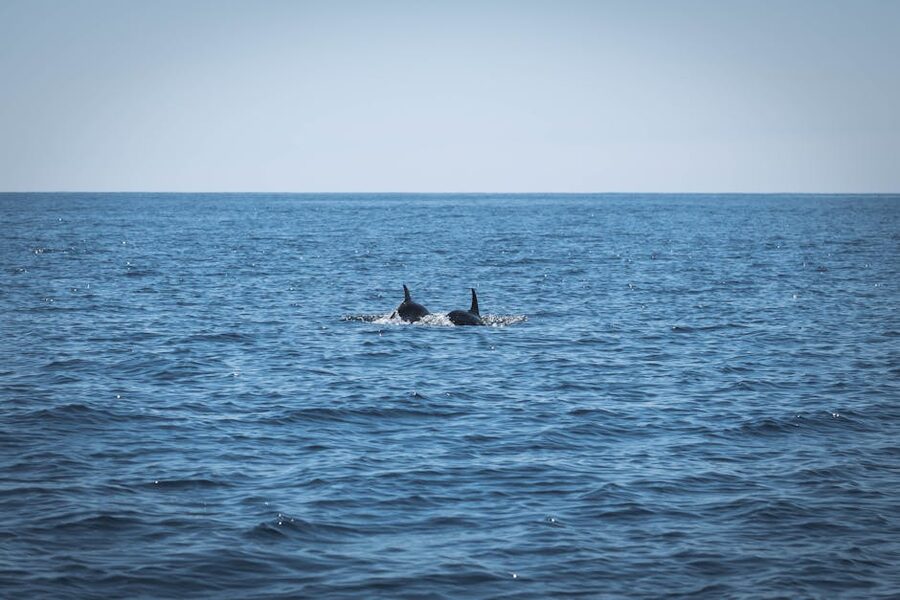
Beyond those two, the strait gets seasonal traffic. Atlantic spotted dolphins pass through from late summer into autumn. Common dolphins occur in winter. Sperm whales transit the channel and are picked up roughly twice a month on the longer 5-hour cruises. Sei whales and Bryde’s whales show up rarely. Orcas in May and June some years. None of those are guaranteed, but if you want a chance at the rarer animals, the longer the trip, the better.
My Three Picks for Costa Adeje
I’m only listing three. The Costa Adeje fleet has a couple dozen boats running daily and most are fine, but these are the ones I’d put friends on. They’re sorted by what you’re optimising for: best all-rounder, best for families, best for serious wildlife watchers.
1. Costa Adeje Dolphin & Whale Eco-Cruise with Snacks & Drinks: $52
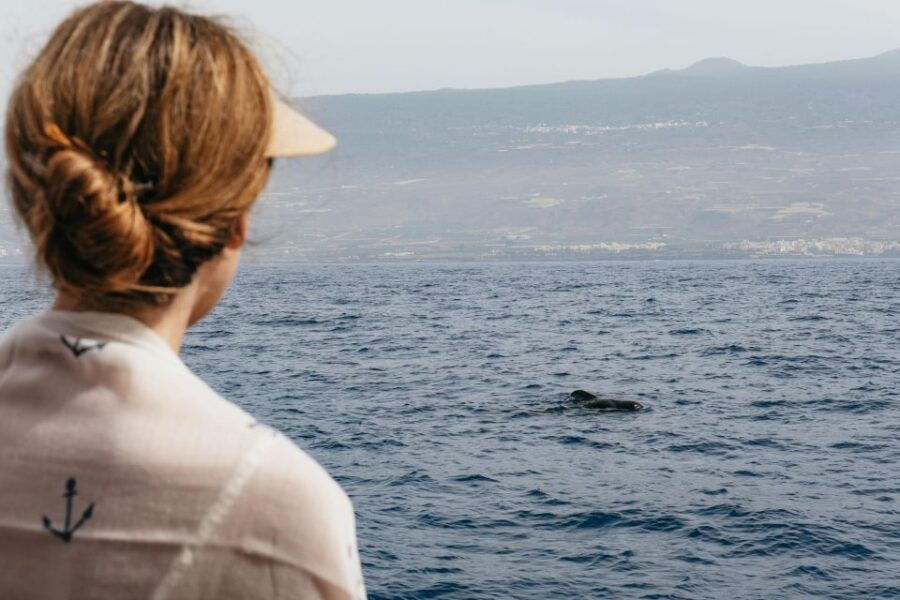
Three to five hours on the water, real underwater hydrophone gear so you can hear the pilot whales’ whistles and clicks, and a free re-do if you don’t get a sighting. The boat is mid-sized, not huge, so it’s never crammed. My full review covers the swim stop and snack quality in more depth. This is the all-rounder I’d book if I were doing it once.
2. Costa Adeje Whale Watching Catamaran Tour with Drinks: $41
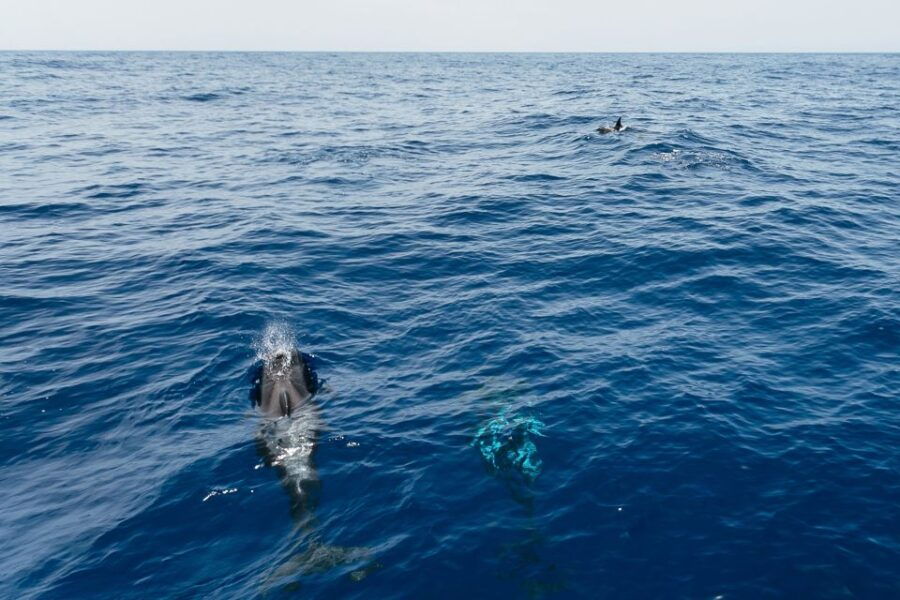
If you’re travelling with children or anyone prone to seasickness, this is the boat. The double hull is much steadier than a single-hull craft, drinks are included, and the shorter window means you’re back ashore before lunch. Our review goes into the deck layout and the swim stop. Pilot whale sightings are still solid on this one, since the boat works the same patch of sea, just for less time.
3. Small-Group Dolphin and Whale Watching with Biologist: $71
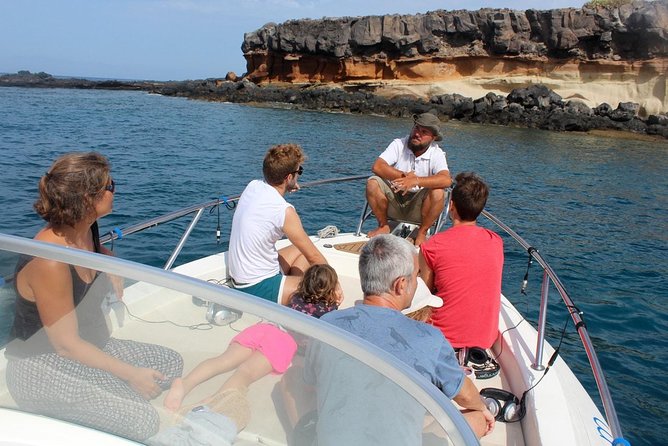
This is the one I’d book if I cared more about the wildlife than the swim stop. Twelve guests max, marine biologist on board talking through behaviour and identification, hydrophone live-streamed through the speakers, and free photos of your encounters emailed afterward. My full review explains why the smaller boat changes the encounter. The price is double the catamaran, but you’re getting a research-style trip rather than a tourist boat.
The Honourable Mention: Submarine Vision
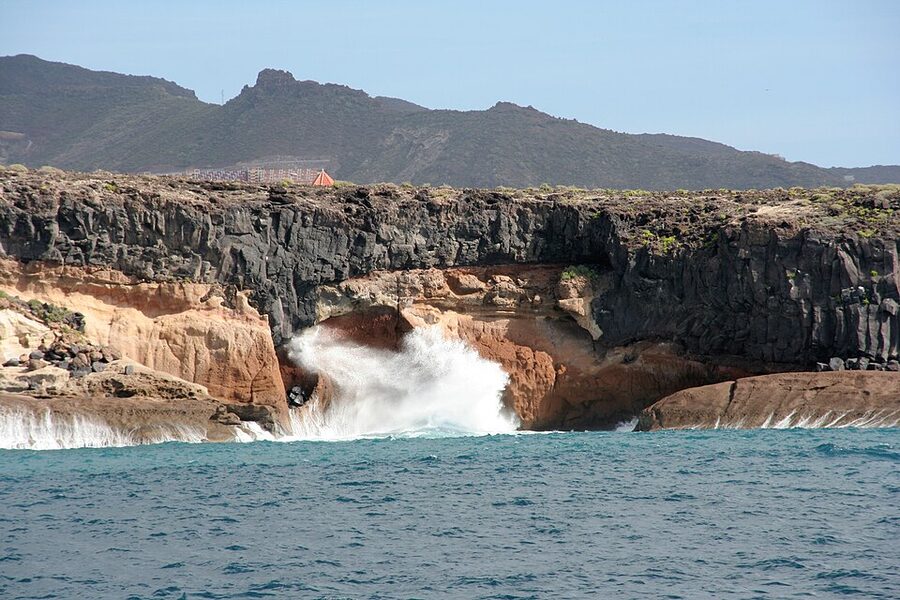
One option that doesn’t quite fit the three-pick list is the Costa Adeje Whale & Dolphin Submarine Vision Mini Cruise. It’s a semi-submersible, which looks like a normal boat from above, but you sit in a viewing chamber below the waterline and look out through portholes. At $35 it’s the cheapest of the four certified options I trust, and at two hours it’s the shortest. Don’t expect to see whales through the windows. That’s a stretch. The pilot whales surface to breathe, so the topside view is what you book it for. But for kids who want a “submarine” experience without committing to a longer trip, it works.
What to Expect on the Day
Boarding is at the Pantalán 3 gate, which is the third pier on the right as you walk into Puerto Colón marina. Most operators meet you fifteen minutes before departure with a clipboard and a stack of life jackets. Bring your booking confirmation on your phone; some captains check it, most don’t.
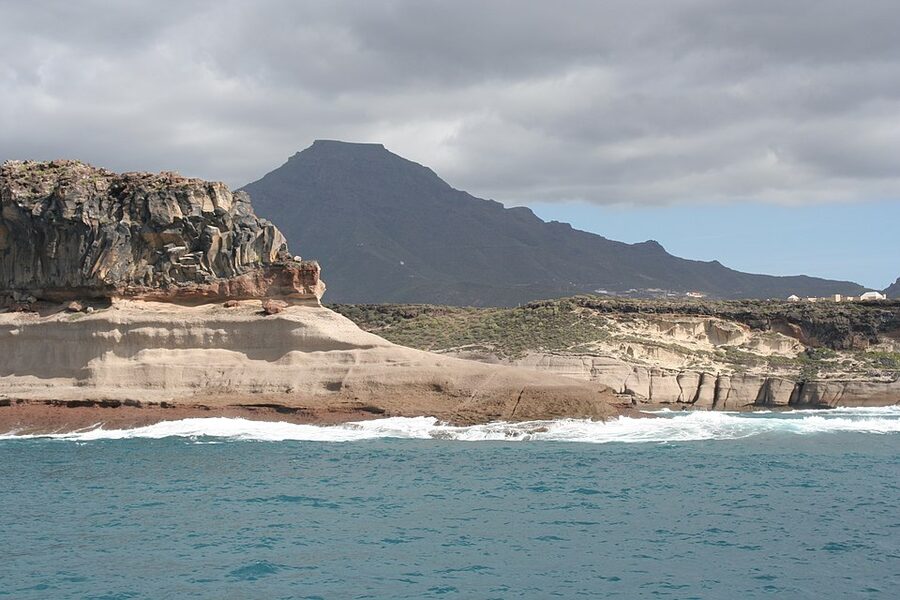
The boats turn left out of the marina, hug the coast for about ten minutes, then push out to roughly the halfway point between Tenerife and La Gomera. That’s where the pilot whales live, and it’s where the captain kills the engine. From the moment the engine cuts to the moment it restarts is the sighting window. Usually fifteen to forty minutes, depending on how cooperative the pod is.
Most cruises include a swim stop on the way back, in a sheltered bay closer to shore. The water temperature sits between 19°C and 23°C year-round. Bring a swim costume even if you’re not sure you’ll use it. The catamaran options usually have a ladder off the back; the small-group RIB doesn’t always include a swim stop, so check before booking.
Best Time to Go and What to Pack
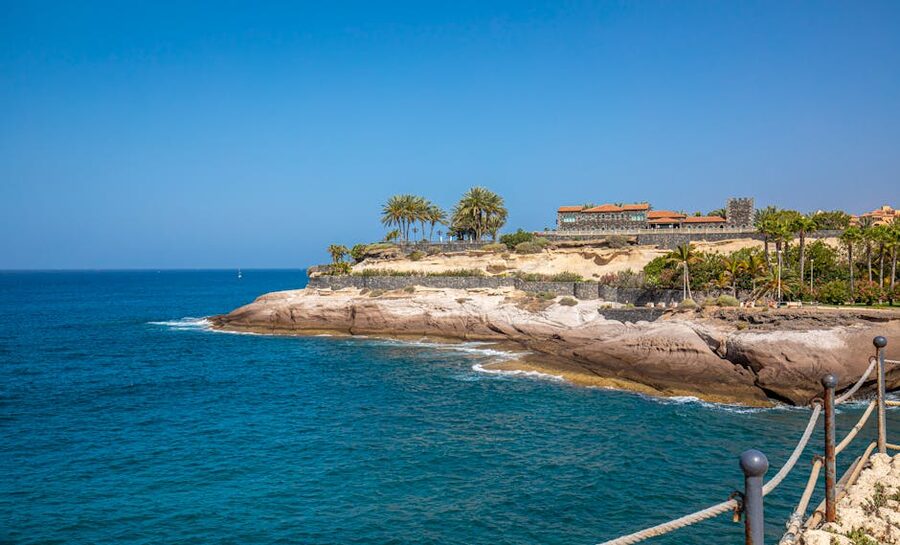
Pilot whales and bottlenose dolphins are resident, so any time of year works for the headline sightings. That said, the sea is calmest from April to October, which makes the swim stop more enjoyable. Winter trips (November to March) sometimes get cancelled for swell, but the operators run a free reschedule policy, so it’s not a deal-breaker, but plan a buffer day in your itinerary if you’re booking December through February.
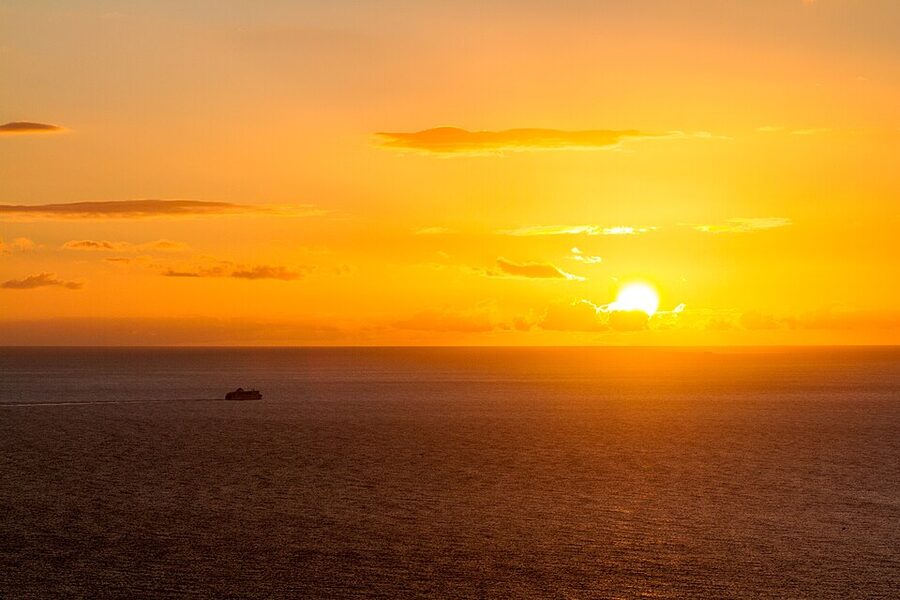
If sun-trapping in the south is the main reason you booked Tenerife, mid-morning departures (around 10:00) tend to have the smoothest water and the most active pilot whale pods. The 14:30 slot has a slightly higher chance of dolphin activity but rougher conditions some days. The 09:30 trip is the one I’d book if I had a choice.
Pack a hat. The deck shade on most catamarans is partial. Pack reef-safe sunscreen (Tenerife has been pushing this lately and some operators check). A windbreaker for the morning departures. Seasickness tablets if you’re remotely prone, taken thirty minutes before boarding. Don’t bother with a fancy camera. The pilot whales surface for two seconds at a time and a phone burst is the right tool. Polarised sunglasses help you spot fins through the surface glare.
If You Have Kids
The catamaran option is the clear winner for under-tens. The deck space is roomy, there’s shade, the bathroom is below, and the boat barely rocks. Most operators take kids from age three. Pregnant women and anyone with serious neck or back problems should skip the small-group RIB, since it’s a low-sided rigid inflatable and the chop translates directly into the seats.
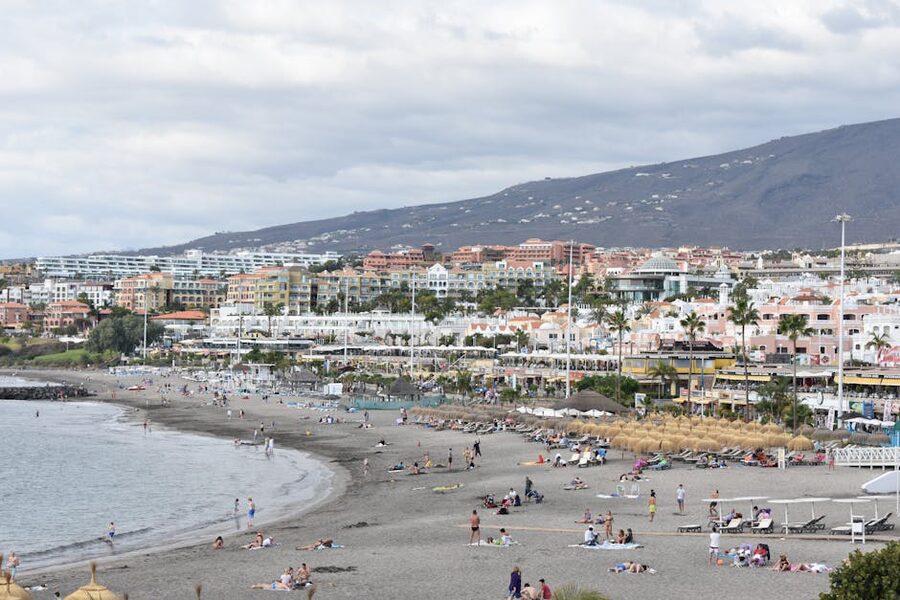
For active families, you can pair a half-day catamaran with an afternoon at Playa de Fañabé or El Duque beach, both within walking distance of Puerto Colón. If your kids are older and you want a second water-based activity, the kayak and turtle snorkel from Las Vistas sits twenty minutes away by car and books up fast in summer, so reserve ahead. For a non-water day in the same area, Siam Park is a five-minute taxi from Costa Adeje.
Booking and Price Notes
Prices have been stable around the figures above for the last two seasons. The eco-cruise sits in the $50 range, the catamaran around $40, the biologist-led trip in the $70s, and the semi-submersible around $35. Children’s rates run roughly half adult. Most operators cap kids’ tickets at age 11; over that, full price.
I book through GetYourGuide for the catamaran and the eco-cruise, since they have free cancellation up to 24 hours before, which matters when the wind picks up. The biologist tour I book direct on Viator. Booking on the day at the marina is cheaper on paper but riskier; the good operators sell out by mid-morning in summer, and you’ll often get bumped onto a chasing boat that has space.
What If You Don’t See Anything
The flagged operators all run a “no sighting, free re-do” policy. In practice, you’ll get sightings. The pilot whales are resident and the sea conditions have to be unusually rough for the boats to lose them. In four trips I’ve done from Puerto Colón, I’ve never had a no-show. The reschedule policy still matters because if a cruise gets cancelled for weather, your booking holds.
If you’re a serial unlucky, the longer 5-hour trips have a much higher hit rate for the rarer species. Over an hour or two you’re really only going to catch the residents. Three hours and you start picking up dolphin pods. Five hours and you’ve got a real shot at sperm whales or migrating species. The eco-cruise option above can run up to five hours depending on the pod. That’s why I default to it.
The View From the Boat
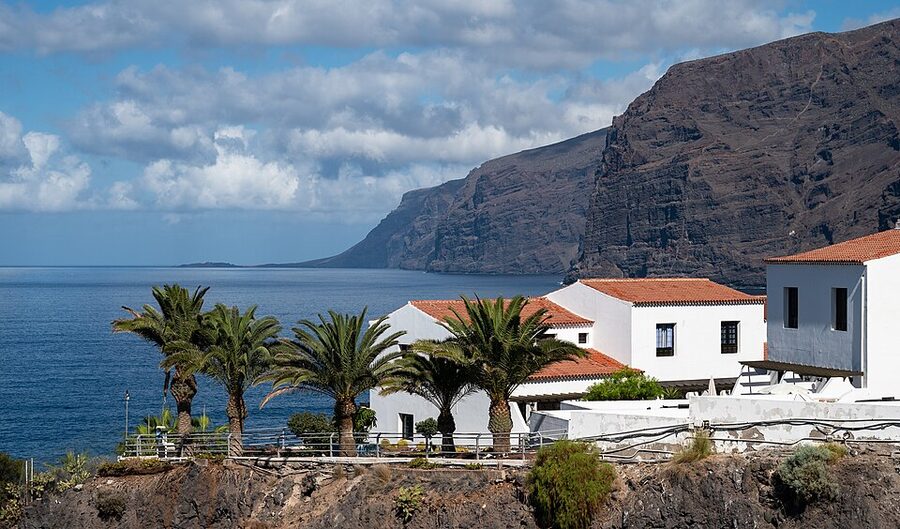
One thing the booking sites don’t show you is the topography. From the deck you’ll have La Gomera ahead. A steep, dark, tall island that looks dramatic in any light. To your right, the cliffs of Los Gigantes rise eight hundred metres straight out of the water. They’re only really visible from the longer cruises that work the western edge of the strait. If a 5-hour eco-cruise picks the western route on your day, you get them included. The view alone is worth the extra time.
The eastern side of your view is Tenerife itself, with Mount Teide poking above the cloud line on clear mornings. If you’re heading inland after the cruise, the Mount Teide cable car and summit guide is the natural pairing. Costa Adeje to Teide base station is roughly an hour by car.

How Costa Adeje Compares to Other Canary Cruises
If you’re island-hopping, the same species exist around Fuerteventura, but the boat scene is quieter. Morro Jable on Fuerteventura has lighter crowds and a different mix of dolphin species (more common dolphins). Mallorca is a different ocean and a different fleet. See my Palma catamaran cruise write-up if that’s where you’re heading.
For pure dolphin density rather than pilot whales, Costa Adeje wins. For the dramatic scenery you remember, the Los Gigantes-side trips win. For the smallest crowd on the water, Fuerteventura wins. For aquarium-quality close-ups of marine life with kids who can’t sit still on a boat, the indoor route at Valencia’s Oceanogràfic is a good rainy-day plan, though you trade wild for captive.
Practical Things Nobody Tells You
The marina has a coffee place at the entrance that opens at 7:30. It’s the only one. If you’re on the 09:30 cruise, line up for coffee at 09:00 because by 09:15 there are forty people in front of you. Toilets are on the ground floor near the harbour office and they cost €0.50. Bring change.
Parking at Puerto Colón is paid (about €2 per hour). The pay machine doesn’t always work; the attendant on weekends will sometimes wave you through if it’s broken. Free parking exists about ten minutes’ walk west, behind the C/Galicia roundabout, and it’s how most locals do it.
Tipping isn’t expected but isn’t refused. The crew on the smaller boats remember faces, and €5 to €10 is a fair gesture if the trip was good. The catamaran crews don’t usually expect anything because they’re on a regular wage.
The biologist tour throws in free photos via WeTransfer link within forty-eight hours. The catamaran boats sometimes do, sometimes don’t. Ask before you book. The eco-cruise generally doesn’t include photos but the crew’s phone shots are usually shareable on the WhatsApp group they create for each trip.
One Last Thing About the Animals
The pilot whale pod off Costa Adeje is one of the most-studied resident cetacean populations in Europe. They’re tagged, named, and tracked. When the captain says “that’s Mira coming up on the right,” he’s not making it up. The biologist tour will show you the catalogue of identified individuals on a laminated card if you ask.
If you wanted one reason to skip the cheap chasing boats, that’s it. The animals you’re watching are individuals the local researchers have known for twenty years. The flagged code exists to protect them. Booking with a flagged operator means the next person sees them too.
More Spain Watery Adventures
If you’ve got more days on Tenerife, the natural pair to a Costa Adeje cruise is the kayak-and-turtle snorkel out of Las Vistas, same coast, different wildlife, much shallower. For a different angle on the same animals, the Los Cristianos eco-yacht fleet sits a few kilometres up the road and runs longer trips toward Los Gigantes. Crossing islands? Morro Jable on Fuerteventura works the cleaner, quieter Atlantic between Fuerteventura and Gran Canaria, with a different dolphin mix and far fewer boats. And for a saltwater day on Mallorca, the Palma catamaran cruise is the Mediterranean equivalent.