
Here’s something I didn’t know before my first trip to Bali: the food you eat in Indonesian restaurants at home — nasi goreng, satay, gado-gado — is mostly Javanese, not Balinese. The real Balinese kitchen runs on a different engine entirely. It’s built around a spice paste called basa gede, which takes about an hour to grind by hand and contains around 15 ingredients most Westerners have never cooked with.
That paste is the reason every cooking class in Ubud starts with the same humbling sentence: “okay, first we make the base.” You don’t make a Balinese curry. You make the paste, and then you make the curry.
I’ve done three cooking classes in Ubud across two trips, and I’ve sent friends to half a dozen more. Below is everything I’d tell you before you book one — which classes are actually worth the money, how booking works, what to expect on the day, and the three tours I’d recommend depending on your budget.
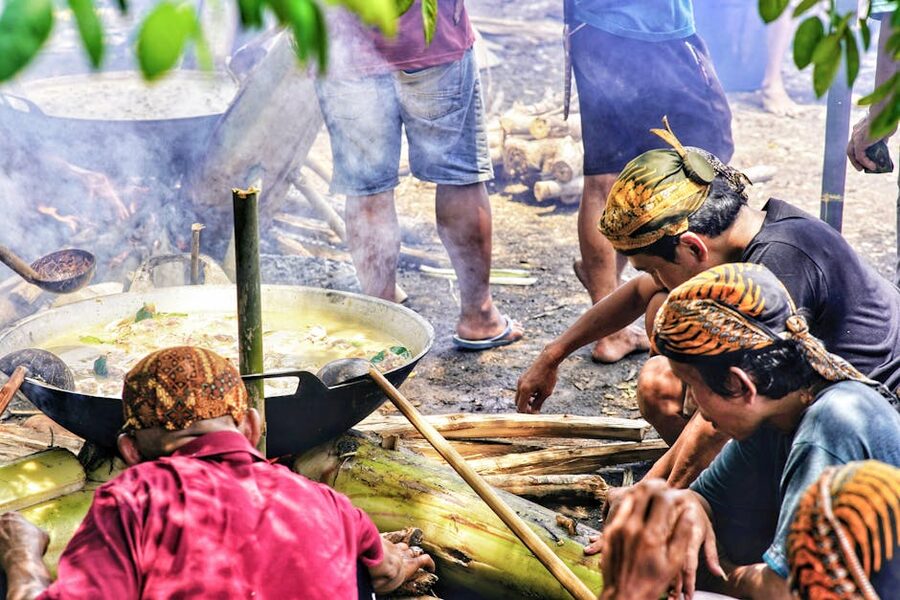
Short on time? Here are my top 3 picks:
Best overall: Ubud Cooking Class with Balinese Chef — $35.79. Morning market visit plus private car transfer plus a village tour. The one I’d send my parents to.
Best budget: Ubud Cooking Class with Optional Market Visit — $21. Two to three hours, smaller scale, still hands-on. Great if you just want the cooking part without the logistics.
Best premium: Private Cooking Class in a Family Home — $75. Just you (or your group), a multi-generational Balinese family, and their actual home kitchen. Not for everyone, but unforgettable if it’s your thing.
- How Booking a Cooking Class in Ubud Actually Works
- Morning vs. Afternoon Classes
- What a Typical Cooking Class in Ubud Actually Looks Like
- The 3 Best Ubud Cooking Classes to Book
- 1. Ubud Cooking Class with Balinese Chef — .79
- 2. Ubud Cooking Class with Optional Market Visit and Meal —
- 3. Private Balinese Cooking Class in a Family Home —
- What You’ll Actually Cook (And What It Tastes Like)
- The Market Visit — What to Expect
- How to Get to Ubud from Elsewhere in Bali
- Tips That Will Save You Time (And Regret)
- When to Book Your Cooking Class During Your Bali Trip
- Cancellation, Refunds and What Goes Wrong
- What to Do in Ubud Before and After Your Cooking Class
- Planning the Rest of Your Ubud and Bali Trip
How Booking a Cooking Class in Ubud Actually Works
You have three booking options, and they’re not equivalent.
The first is to book through Viator or GetYourGuide, which is what most travellers do and what I’d recommend for a first timer. You pay online, you get a confirmation PDF, you turn up (or get picked up) at the stated time, and if anything goes wrong you have a platform to complain to. Prices start around $21 and climb to about $85 depending on what’s included. Free cancellation up to 24 hours before is standard.
The second is to book directly with the cooking school through their own website. Places like Paon Bali, Casa Luna and Pemulan Bali Farm have their own booking pages. This is cheaper by a couple of dollars and the money goes more directly to the host family, which some people care about. The downside is zero customer protection if there’s a mixup — and there are more mixups than you’d think when your booking confirmation goes to an Instagram DM.
The third is to walk in and book same-day through your hotel or a street agent in central Ubud. This works maybe 60% of the time. Classes are small (often capped at 8 or 10), popular ones sell out two or three days ahead, and you’ll pay the same price anyway because the agent takes their cut from the school, not from you. I wouldn’t rely on it unless you’re already in Bali and decided spontaneously.
My honest recommendation: book online a few days out. Lock in a morning slot (more on why in a minute), confirm whether transfers are included, and show up fifteen minutes early with an appetite.
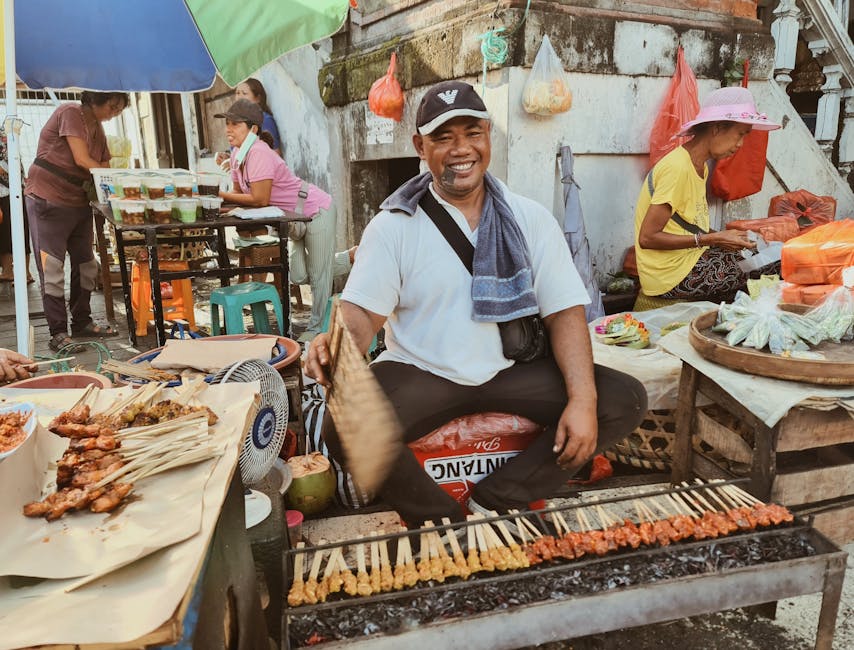
Morning vs. Afternoon Classes
Most cooking schools offer two slots: a morning class (roughly 8am to 1pm) and an afternoon class (roughly 4pm to 8pm). The morning class is objectively better and here’s why.
Morning classes include the market visit, which is half the point of doing a cooking class in Bali. Afternoon classes skip the market because by 2pm the good stalls have packed up and the remaining produce is wilting. If you pick an afternoon class thinking you’ll sleep in and still get the full experience, you won’t. You’ll just cook.
The second reason is heat. Morning classes run through the cool hours of the day. Afternoon classes have you chopping chillies and stirring sambal in 32°C heat with no aircon because most Ubud kitchens are semi-open to the rice fields. This sounds romantic until you’re sweating into your own curry.
The one exception is if you want a sunset dinner setting — a handful of classes finish with a candlelit meal in a bamboo pavilion overlooking the paddies, and that is genuinely lovely. But you lose the market.
What a Typical Cooking Class in Ubud Actually Looks Like
The advertised schedules look identical across most providers, but the rhythm on the day varies. Here’s what a standard five-hour morning class usually includes:
7:30–8:00am: Hotel pickup. If you’re staying in central Ubud you’ll get picked up; if you’re in Seminyak or Canggu the cooking class probably isn’t running transfers that far. Some do, for an upcharge of around $15 each way.
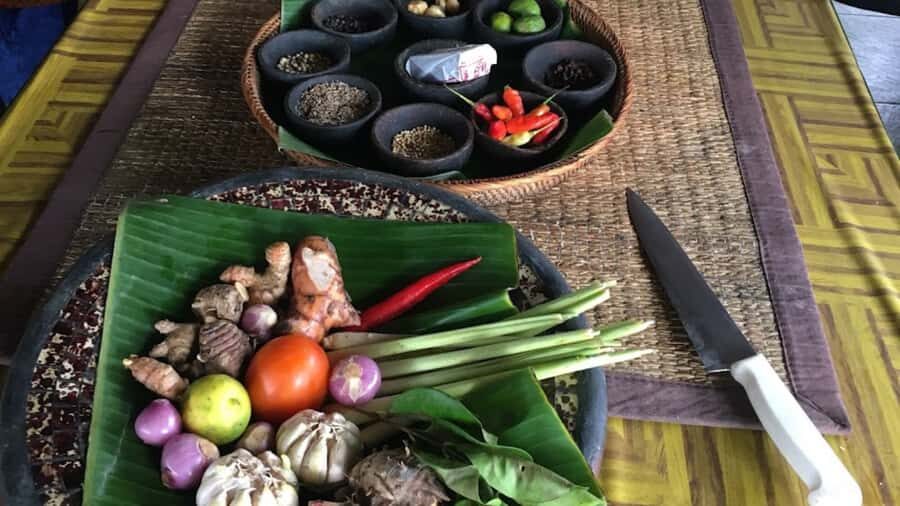
8:30–9:30am: Market visit at Ubud Traditional Market or a smaller village market. Your instructor walks you through maybe 20 ingredients you’ll use later — galangal, turmeric, torch ginger, lemongrass, kaffir lime leaves, salam leaves, candlenuts, shrimp paste, palm sugar. You’ll sample a few fruits you’ve probably never tried.
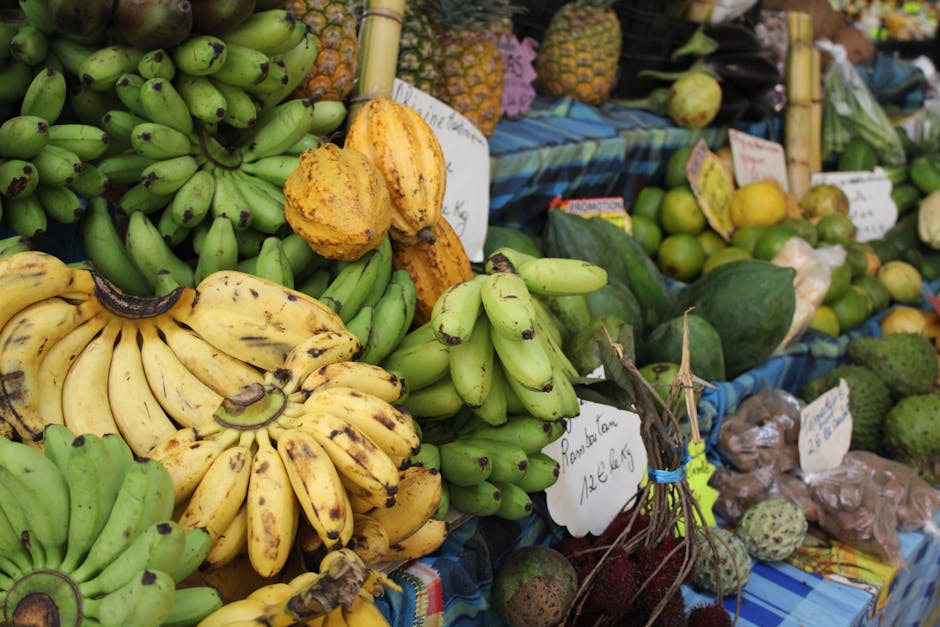
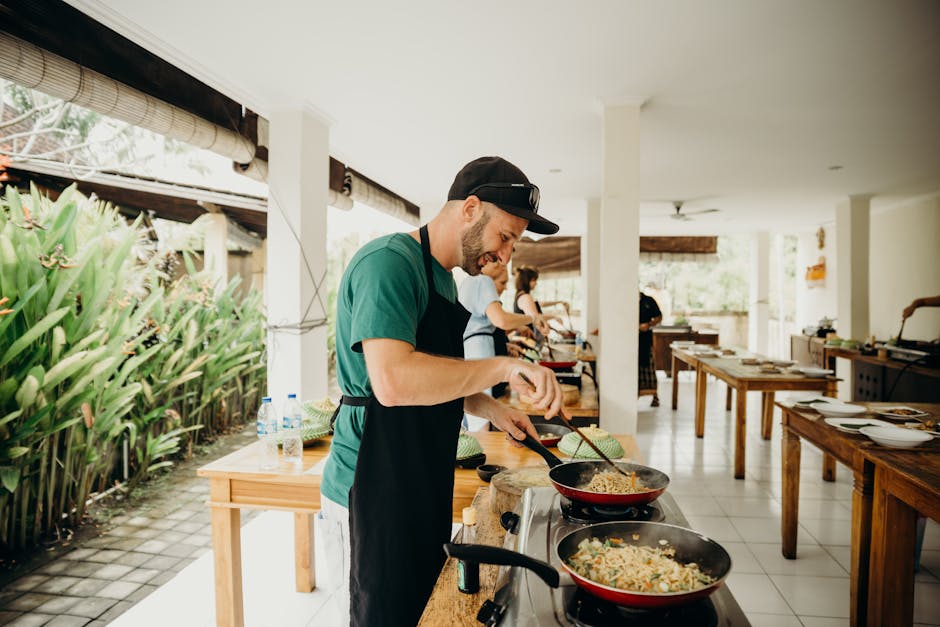
10:00am: Drive to the cooking school, usually 15 to 30 minutes outside central Ubud in a village surrounded by rice paddies. Most schools have an open-air pavilion kitchen with a row of prep stations and a demo table at the front.
10:30am–12:30pm: Cooking. You make somewhere between 5 and 8 dishes depending on the school. A typical menu:
- Base gede (the yellow spice paste)
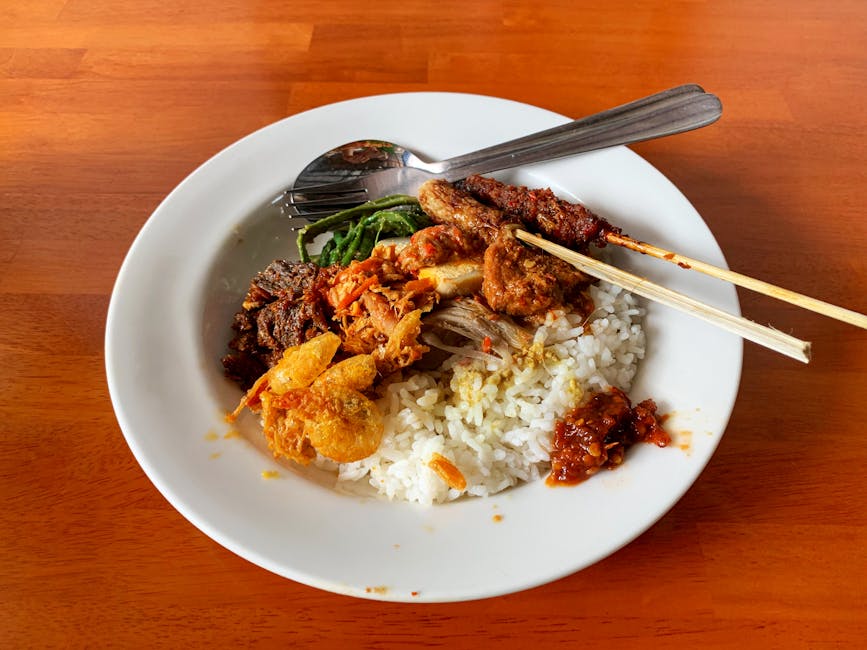
- Sate lilit (minced fish or chicken wrapped on lemongrass skewers)
- Lawar (vegetable and grated coconut salad)
- Ayam betutu or curry chicken
- Tempe manis (sweet tempeh)
- Urap (blanched vegetables with coconut dressing)
- Nasi goreng or nasi kuning (yellow rice)
- Dadar gulung (pandan crepes with palm sugar coconut filling) for dessert
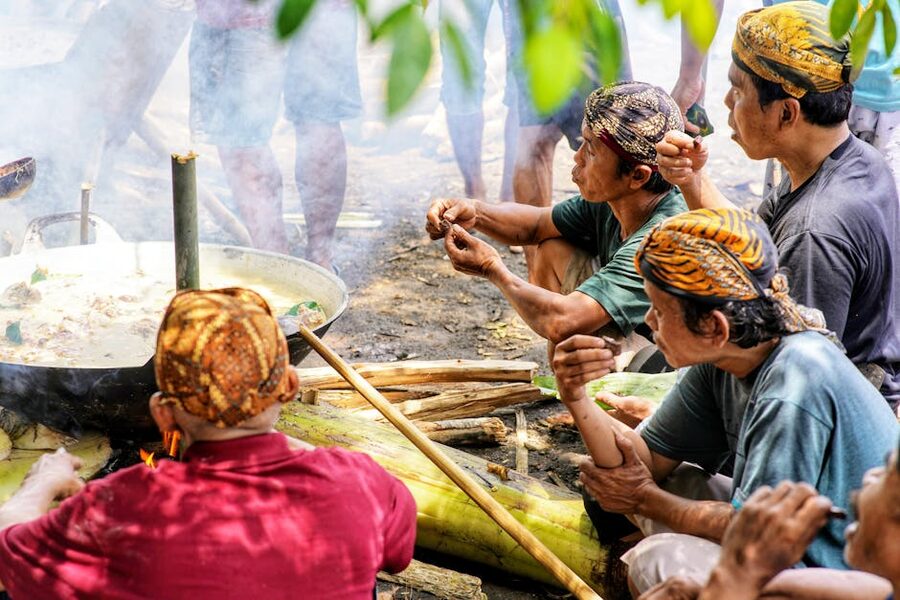
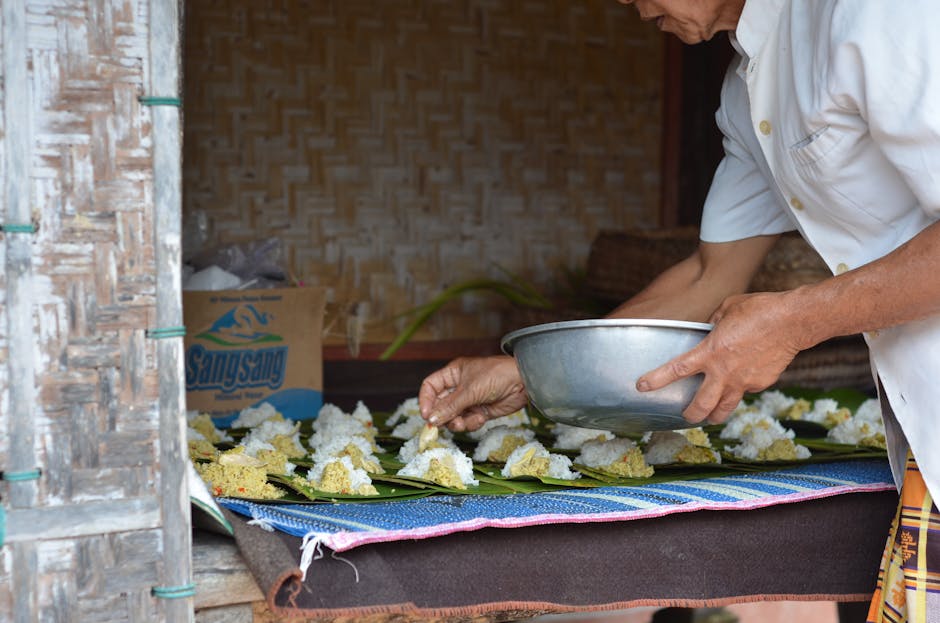
12:30–1:30pm: You eat everything you made. This is usually served banana-leaf style on a long communal table, and it’s more food than most people can finish.
1:30pm: Drop-off back in Ubud. Most schools also hand you a printed recipe booklet so you can attempt (and fail at) the dishes back home.
The 3 Best Ubud Cooking Classes to Book
These are the three I’d actually send someone to, in order of how I’d rank them for different travellers. I’ve kept it to three on purpose — there are fifty cooking classes in Ubud and most of them are fine, but if you’re just trying to pick one, start here.
1. Ubud Cooking Class with Balinese Chef — $35.79

This is the one I recommend most often, and the one with the most reviews by a large margin — over 1,600 of them, rated a near-perfect five stars. For $35.79 you get the market visit, the full cooking class, the meal, a printed recipe book, private car transfers, and — the detail that makes it worth the extra cash — a short Ubud village tour built into the day.
The private car transfer matters more than it sounds. Other classes cram you into a shared minivan that stops at seven hotels before reaching the school, which kills the morning. Here you get picked up directly and driven straight there. And the village walk at the end gives you something to do before the driver heads back to town, instead of awkwardly waiting around once the cooking is done.
This is the class for people who want the full experience without having to think about logistics. It’s also the one with the strongest reviews for food quality — guests consistently call out how hands-on the instructors are and how much they learned about the spice paste specifically.
2. Ubud Cooking Class with Optional Market Visit and Meal — $21
At $21, this is the cheapest good cooking class I’ve found in Ubud. It runs two to three hours — shorter than the full-day options above — which sounds like a drawback until you realize you’re paying less than half the price and still learning to make four or five proper dishes from scratch. The 824 reviews are almost all five-star, and the market visit is optional (as the name says), so you can skip it if you’ve already done one.
This is the one to book if you’ve already spent $200 on tours this week and your budget is getting tight, or if you’re in Ubud for only two days and can’t spare a five-hour morning. The instructor runs the class at a slightly faster pace to cover the essentials, but it’s still hands-on — you’re not watching someone else cook.
The catch: no transfers included. You’ll need to Grab or walk to the school, which is a few minutes from central Ubud. That’s fine if you’re staying in the town centre, a hassle if you’re up in the rice terraces or down by the Monkey Forest.
3. Private Balinese Cooking Class in a Family Home — $75

This one is different, and whether you’ll love it or feel awkward depends entirely on your travel style. Instead of a commercial cooking school, you’re welcomed into a multi-generational Balinese family home — the host’s name is Putu in most of the reviews — and you cook alongside her in the same kitchen her family uses every day. It’s private, so it’s just you (or your group) and the family.
The experience includes a walk around the family’s garden where they grow most of the ingredients, a quick tour of the household temple (every Balinese compound has one), the cooking class itself, and the meal. You’re not pointed at a prep station and left to follow instructions. You’re cooking with someone who’s been doing this her whole life, which is a completely different vibe.
At $75 it’s the most expensive of the three — roughly double the standard class — but you’re paying for privacy, intimacy, and direct contact with a family rather than a school. If you’re traveling as a couple or small group and you want the version of this experience that feels least like a tour and most like a visit, this is the one. The 644 reviews are a perfect five stars for a reason.
What You’ll Actually Cook (And What It Tastes Like)
If you’ve never eaten Balinese food before, a few things will surprise you.
First, it’s not as spicy as you’re expecting. Balinese cooking is built around fragrance more than heat. The base paste has chillies in it, but it’s balanced by galangal, turmeric, lemongrass, kaffir lime, coconut, and shrimp paste — the result is warm and aromatic rather than blazing. If you want heat, you add sambal matah (raw chilli sambal) on the side, which every class will teach you. That’s where the fire comes from.
Second, coconut is everywhere. Grated coconut in the salads, coconut milk in the curries, coconut cream in the desserts, coconut sugar in the sambal. By the end of the class you’ll understand why every Balinese kitchen has a coconut grater bolted to the counter — and why fresh coconut ruins the canned stuff at home forever.
Third, meat is used sparingly. A typical Balinese family meal has one meat dish and four or five vegetable dishes. The vegetables aren’t garnish — they’re the main event. This is great news if you’re vegetarian or vegan; almost every cooking class in Ubud offers a veggie track and the dishes are just as interesting as the meat versions.
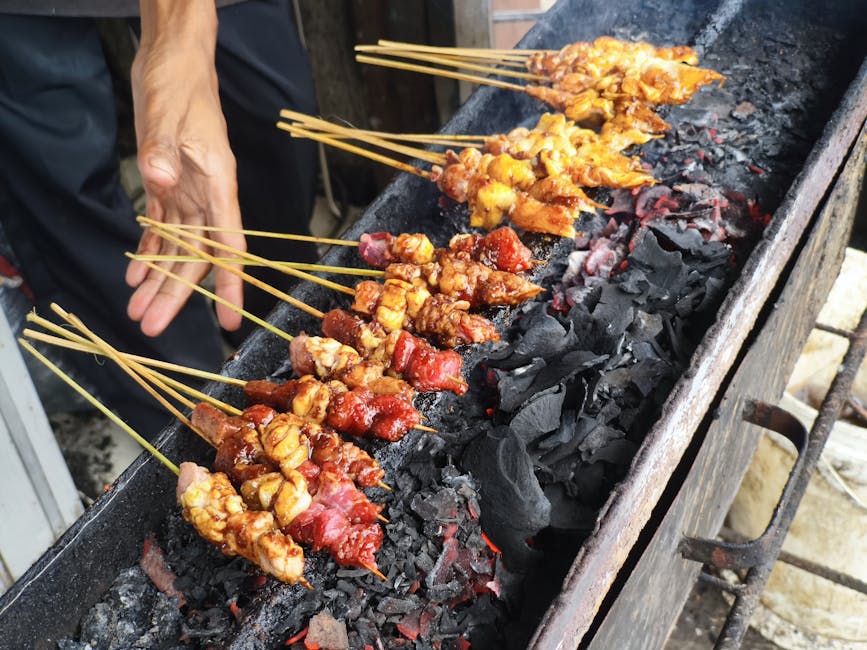
Fourth, and this is the big one: sate lilit is the best thing you’ll eat all week. It’s minced fish or chicken mixed with coconut, lime leaf and the spice paste, then moulded around a stalk of lemongrass and grilled over charcoal. The lemongrass becomes the skewer and the flavouring — you eat the meat directly off it. Every cooking class makes it and every traveler leaves obsessed.
The Market Visit — What to Expect
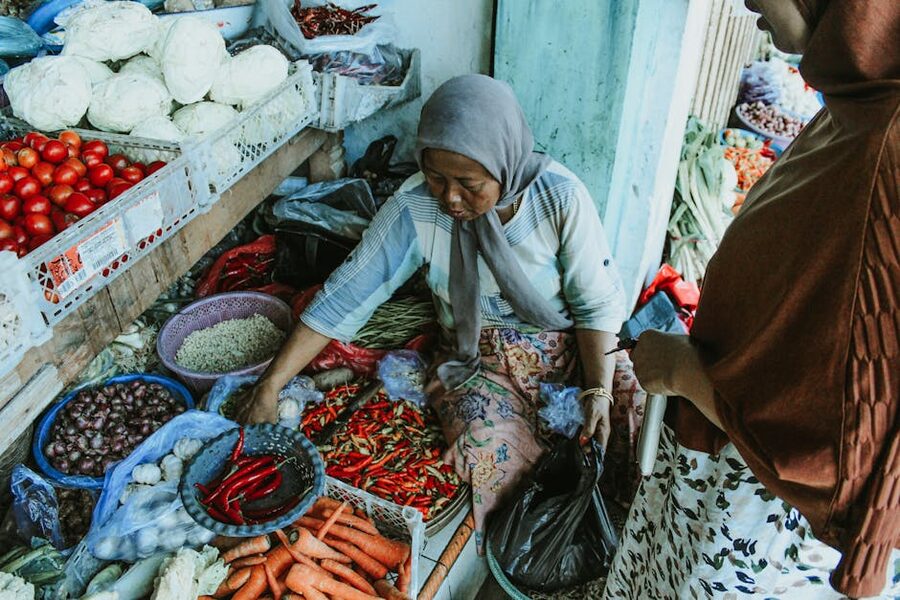
If you’ve never walked through an Asian wet market before, Ubud’s traditional market (Pasar Ubud) is a reasonable introduction — less overwhelming than Bangkok’s Khlong Toei, less touristy than Chiang Mai’s Warorot. It’s busy, smells strongly of incense and fish, and moves fast. Your instructor will walk you past maybe 15 stalls and buy the ingredients you’ll use in class.
A few things to know before you go:
- Wear closed shoes. The floor is wet, sometimes very wet. Flip-flops are a mistake you only make once.
- Bring small rupiah. Your instructor will be doing the shopping, but you’ll probably want to buy spices or a wooden pestle to take home, and no stall takes card.
- Don’t take photos of vendors without asking. Some are happy to pose, some hate it. Ask your instructor — they know who’s who.
- It’s humid. Even at 8am. Bring water and don’t wear anything you mind sweating into.
The fruit section is the highlight. Ask your instructor to pick out salak (snake fruit — looks like a dragon scale, tastes like a sour apple), mangosteen (thick purple shell, white sweet segments inside), rambutan (red spiky balls with lychee-like flesh), and soursop if it’s in season. Most cooking classes will buy a few of these for you to try as a snack before you start cooking.
How to Get to Ubud from Elsewhere in Bali
Cooking classes in Ubud almost always assume you’re staying in Ubud. If you’re based in the south (Seminyak, Canggu, Kuta, Sanur), getting to the class becomes part of the logistics.
From Seminyak or Canggu, Ubud is about 75 to 90 minutes by car in morning traffic. A private driver costs around 400,000 IDR ($25) for the round trip if you book through your hotel. Grab and Gojek work but drivers get cagey about the return leg — you may need to book two one-way rides.
From Sanur, it’s about an hour. Easy and cheap (around 250,000 IDR return).
From Kuta or the airport area, it’s 90 minutes to two hours. Consider staying in Ubud the night before instead of making it a day trip — cooking classes start early and the morning traffic is brutal.
If you’re already staying in Ubud, everything is walkable or a 5-minute Grab ride away. This is one of many reasons I tell people to spend at least two nights in Ubud on any Bali trip.
Tips That Will Save You Time (And Regret)
- Book a morning class, not afternoon. Market visits happen in the morning. I’ve said this three times already because it genuinely matters.
- Eat a light breakfast. You’re going to finish with a 7-course meal around noon. Don’t show up full.
- Bring a notebook or phone. The printed recipe sheet most schools give you is a summary — the real tips come out while you’re chopping, and you’ll forget them by the airport.
- Ask about dietary restrictions when you book. Every school can handle vegetarian. Vegan, gluten-free, nut-free need advance notice (shrimp paste and peanuts are in half the dishes).
- Wear something you can wash. Turmeric and spice paste will find your shirt. Don’t wear white.
- Don’t schedule anything after. Most classes run an hour longer than advertised. Planning a sunset hike after? You’ll miss it.
- Tip the instructor directly. 50,000–100,000 IDR ($3–$6) is appreciated. The tour platform doesn’t pass tips through automatically.
- Buy a bottle of sambal on the way out. Most schools sell their house-made sambal in small jars for $3. It doesn’t survive international flights if uncapped in checked luggage — carry-on only.
When to Book Your Cooking Class During Your Bali Trip
My strong recommendation: do the cooking class in the first half of your trip, not the last day. Here’s why.
If you take the class early, you’ll spend the rest of the week recognizing dishes on restaurant menus. You’ll know what base gede tastes like, you’ll understand what makes a lawar a lawar, and you’ll notice that the nasi goreng at the beach warung is actually quite different from the one you made in class. Every meal after the class becomes more interesting because you now have context.
If you take the class on your last day, you’ve already eaten every dish blind, you don’t have time to see your own cooking in the wild, and you leave the island without the satisfaction of recognizing an ingredient you learned to grind by hand.
The ideal slot is day two or three of your trip — after you’ve acclimatized, before you’ve over-eaten. Book it for a morning when you have nothing planned in the afternoon, because you’ll be full and want to nap.
Cancellation, Refunds and What Goes Wrong
Booking through Viator or GetYourGuide gets you free cancellation up to 24 hours before the class, and I’d advise you to actually use that window if you wake up sick. Balinese cooking classes are physical — you’re standing for four hours, handling raw seafood, eating a lot of food. Doing one when you’re not feeling 100% is a waste of money and a miserable morning.
Things that can go wrong:
- Rain. Most classes run rain or shine because the kitchens are covered, but the market visit gets grim in a downpour. November to March is wet season. Book a morning class and you’ll usually beat the afternoon storms.
- No-show pickup. This happens maybe 5% of the time with shared transfers. Always WhatsApp the school the night before to confirm the pickup location and time.
- Over-large groups. A few schools will pack 16 people into a class advertised as “small and intimate.” The ones I’ve recommended above don’t do this, but always check the “max group size” on the listing before you book.
- Language barriers. Instructors’ English varies. All three classes I’ve recommended have strong English reviews; some of the cheaper walk-in options do not.
What to Do in Ubud Before and After Your Cooking Class
A cooking class fills a morning, not a day. Here’s what pairs well with one depending on which direction your energy is going.
If the class is in the morning and you want something relaxed in the afternoon: The Ubud Ubud half-day tour covers the key stops (Tegallalang rice terraces, the Monkey Forest, Goa Gajah) without feeling rushed. Or just book a massage — a proper Balinese massage is $8–$15 for an hour and you’ve earned it after standing over a hot wok.
If you want to use the afternoon to go adventure: The Bali waterfalls tour picks you up from Ubud and hits Tibumana, Tukad Cepung, and Tegenungan — three of the most photogenic waterfalls on the island, all within an hour of town.

If you want a creative day: Pair the cooking class with a silver jewelry making workshop in Ubud — cook in the morning, make a ring in the afternoon. Ubud is the craft capital of Bali and these two experiences bookend the day beautifully.
If you want to get out on the water: Drive north or east for Blue Lagoon snorkeling. Or skip cooking class for the morning and do the Mount Batur sunrise hike (2am pickup) the day before, so the cooking class falls on a rest day.
Planning the Rest of Your Ubud and Bali Trip
If you’re building a longer Bali itinerary, a cooking class is one piece of a broader food-and-culture week in Ubud. The Lempuyang Gates of Heaven tour and Tanah Lot and North Bali tour both pair well for a temple-and-landscape day, while the Uluwatu Kecak fire dance and Jimbaran dinner gives you a seafood-and-performance evening on the opposite side of the island.
For first-time Bali travellers, I usually suggest pairing a cooking class with the Nusa Penida day trip and a day on the Gili Islands — cooking for the culture, the other two for the postcards. And if you want to head east for the volcanoes, our guide to the Mount Bromo sunrise tour covers the overnight option from Java.