
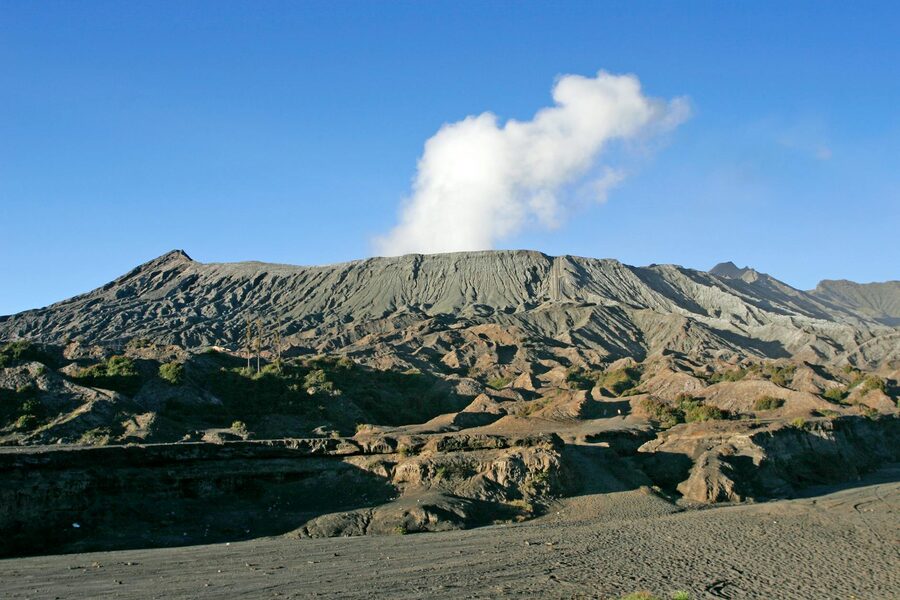
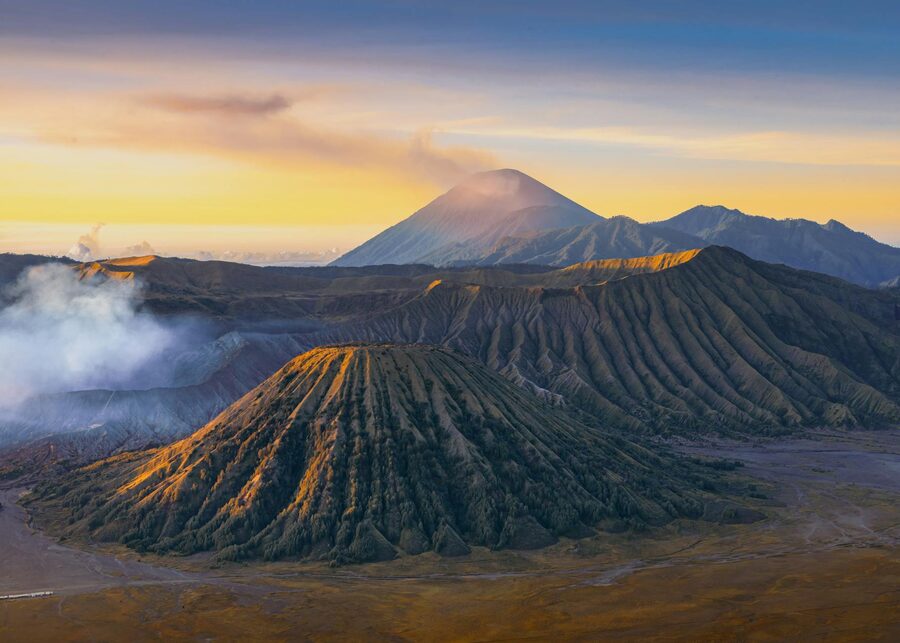
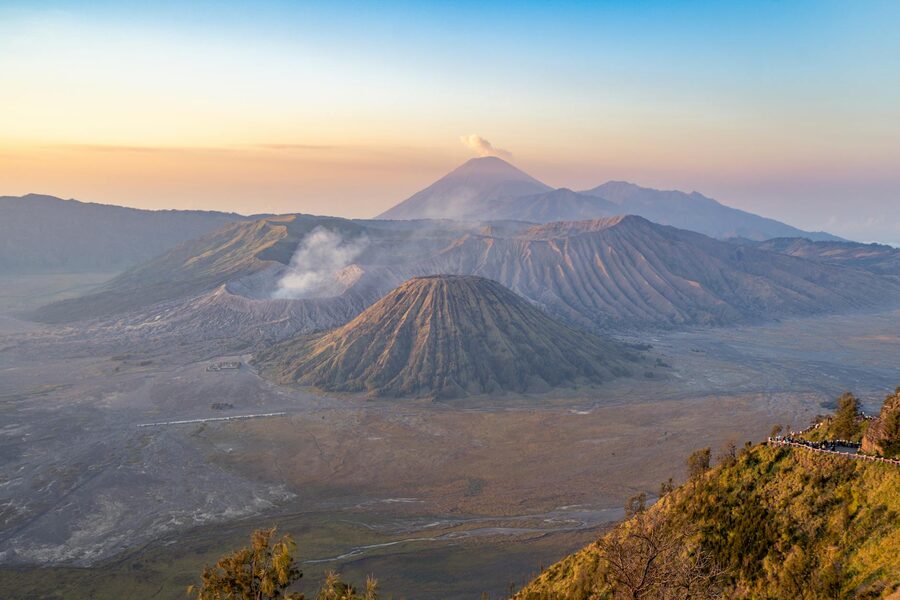
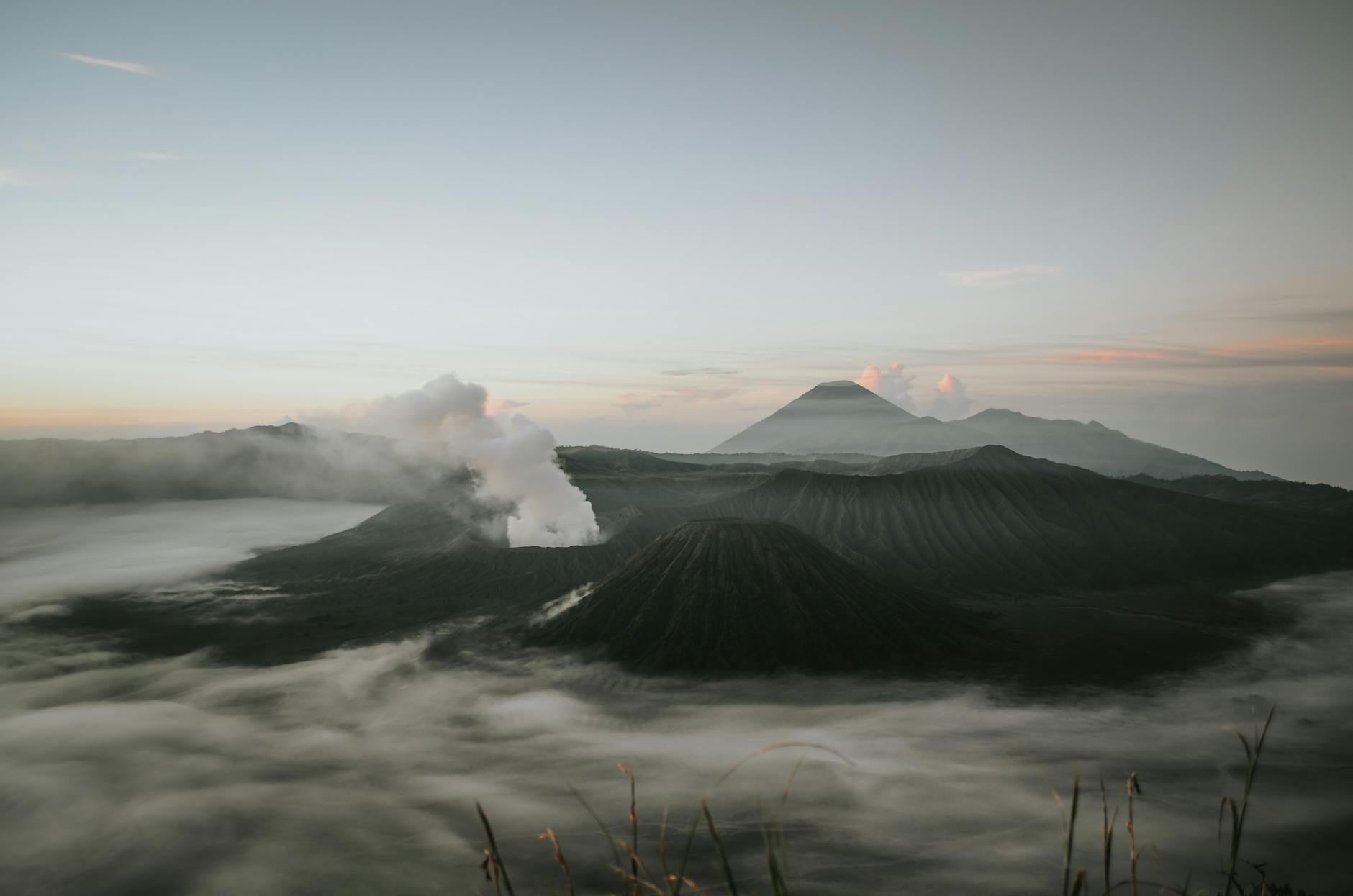
Picture this: a charcoal-grey moonscape stretching in every direction, a flat ocean of volcanic ash thirty square kilometres wide, ringed by jagged caldera walls that used to be one giant mountain 45,000 years ago. At the centre, a squat cone still belches white steam into a sky that is turning from navy to orange to gold.
That is the Tengger caldera at dawn, and Mount Bromo sits right in the middle of it, doing what it has been doing for centuries — smoking, hissing, and drawing travellers from Surabaya, Malang, and half of East Java up its ashy flanks before the sun comes up.
If you are looking into how to book a Mount Bromo sunrise tour and feeling a bit lost in the tangle of options — midnight pickup from Surabaya, shared jeep from Malang, two-day combo with Mount Ijen, private driver, hostel walk-up — this is the guide you want.
We have sorted through what actually gets booked, what the cancellation terms look like, which pickup city makes more sense for your itinerary, and which operators consistently get the logistics right. Three tours in particular keep surfacing as the ones worth paying for, and we have laid them out in plain terms at the top so you can compare before scrolling through the rest.
- Quick picks: the three Mount Bromo sunrise tours worth booking
- 1. Mount Bromo Sunrise Tour From Surabaya or Malang 1 Day — Viator
- 2. From Malang 1-Day Mount Bromo Shared Trip — GetYourGuide
- 3. Semeru National Park Mount Bromo Day Trip From Malang City — Viator
- Surabaya or Malang? The pickup city question
- What the tour actually covers — a minute-by-minute breakdown
- What to wear (seriously, bring layers)
- Best months to go
- How Bromo compares to Mount Batur in Bali
- Combining Bromo with Yogyakarta and Borobudur
- Cancellation, weather, and what to do if the volcano acts up
- Getting there without a tour (if you insist)
- Night sky above the Tengger caldera
- The Teletubbies savannah
- Food and coffee on the drive
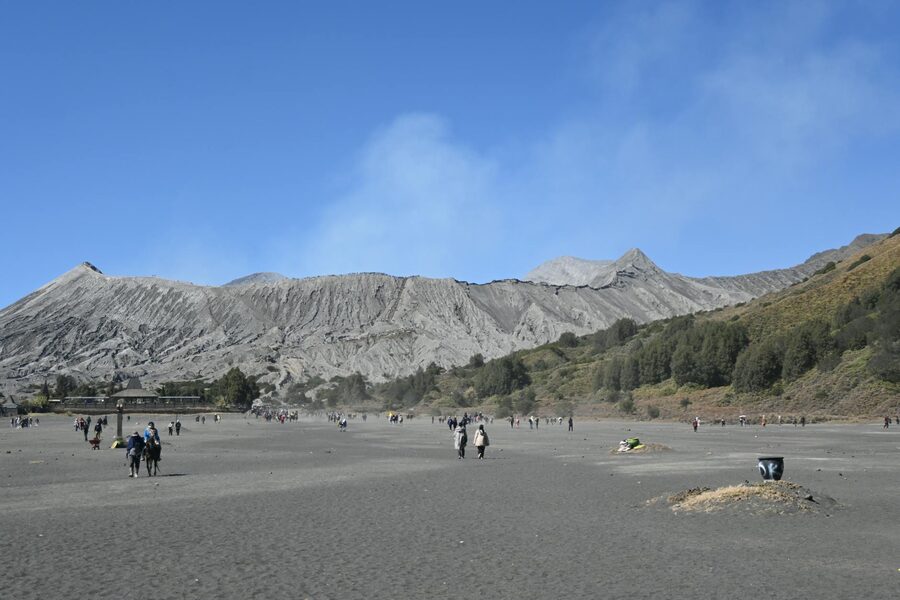
- The sea of sand
- Comparing Bromo to other volcano experiences in Southeast Asia
- Booking tips — what to look for when you click through
- A few practical odds and ends
- The short version
Quick picks: the three Mount Bromo sunrise tours worth booking
These three tours between them cover almost every scenario — coming in from Surabaya on a red-eye, basing yourself in Malang for the shorter drive, or wanting a longer day that takes in Mount Semeru and the ash-field viewpoints. Pick the one that matches your logistics.
1. Mount Bromo Sunrise Tour From Surabaya or Malang 1 Day — Viator
The top-rated Bromo tour on Viator, and the one most travellers coming in from Surabaya airport end up on. Pickup is around midnight from your Surabaya or Malang hotel, the drive gets you to Cemoro Lawang before 3 a.m., and you are at the Penanjakan viewpoint well before the first light hits the caldera rim.
After sunrise you cross the sea of sand by 4×4 jeep, walk or ride a small horse up to the crater staircase, and peer into the sulphur-belching throat of the volcano. Drop-off is usually back in Surabaya or Malang by early afternoon.
What makes it stand out: the 5.0-star average from 1,759 reviews is the highest of any Bromo product on Viator, and the operator handles both cities which saves you having to self-transfer if your flight lands in Surabaya but your onward train leaves from Malang. Pickup times, jeep transfers, and the Penanjakan entrance fee are all bundled. Free cancellation up to 24 hours before the tour starts, which matters when volcanic activity or weather can shift plans fast.
- 1,759 reviews, 5.0-star average
- From $153 per person
- Midnight pickup, afternoon drop-off (roughly 14 hours door-to-door)
- Both Surabaya and Malang hotel pickups included
- Free cancellation up to 24 hours before the start
2. From Malang 1-Day Mount Bromo Shared Trip — GetYourGuide
The budget-friendly option for travellers already in Malang, and the one we would send solo backpackers to first. It is a shared-group format, which is how the price stays at around $36 — you are pooled into a 6-person jeep once you reach Cemoro Lawang, rather than getting a private vehicle.
Malang is only about a 2.5-hour drive from Bromo (versus 4+ from Surabaya), so pickup is a more reasonable 12:30 a.m. rather than a brutal midnight departure from the coast. You still hit all four classic stops: Penanjakan viewpoint for sunrise, the sea of sand crossing, the crater staircase climb, and the Teletubbies savannah on the way back out.
What to know before booking: the 4.7-star average across 1,001 reviews is strong for a group tour at this price, and the 10-hour duration means you are back in Malang by around lunchtime with the afternoon free. Because it is shared, the jeep won’t wait on one slow person, so pace yourself on the crater climb. English-speaking drivers are standard.
The trade-off versus the Viator option above is simply flexibility — the shared jeep follows a fixed sequence, whereas private tours can linger longer at spots you like.
- 1,001 reviews, 4.7-star average
- From $36 per person — the best value on this list
- 10-hour duration, Malang pickup only
- Shared 6-person 4×4 jeep with English-speaking driver
- All four viewpoints: Penanjakan, sea of sand, crater rim, Teletubbies savannah
3. Semeru National Park Mount Bromo Day Trip From Malang City — Viator

The 7-spot version — if you want to see more of Bromo Tengger Semeru National Park than just the crater itself. Where the standard tours hit 3 or 4 stops, this one strings together seven viewpoints across the park, including the less-visited angles over the caldera and a longer run through the Teletubbies savannah on the Semeru side.
It also starts from Malang (the closer city), so the pickup time is more humane, and the 5.0-star average across 879 reviews is rare for a tour that packs this much into a single morning.
Best for travellers who: have already done Mount Batur in Bali and want something bigger, or who want the photographer’s version of Bromo rather than the rushed-tourist version. The price is almost identical to the GYG shared tour ($40.93 vs $36) but you get three extra stops, which is exceptional value.
Free cancellation up to 24 hours before the start time, and the operator has been running this exact route for years, so they know which viewpoints catch the best light at which moment.
- 879 reviews, 5.0-star average
- From $40.93 per person
- 7 viewpoints (versus the usual 3-4)
- Malang pickup, Bromo Tengger Semeru National Park
- Free cancellation up to 24 hours before the start
Surabaya or Malang? The pickup city question
This is the first decision worth thinking through before you click book, because it determines how much sleep you lose. Surabaya is East Java’s main air hub — Juanda International has direct flights from Singapore, Kuala Lumpur, Jakarta, and Denpasar — which is why so many travellers arrive there first.
But Surabaya to Cemoro Lawang (the village perched on the caldera rim where the jeeps wait) is roughly 4 hours by road, which is why Surabaya-based tours leave around 11 p.m. or midnight. You will be on the road for most of the night.
Malang, by contrast, is a 2 to 2.5-hour drive from Cemoro Lawang, and it is a more pleasant city to actually spend time in — cooler, greener, with a walkable colonial core.
Trains from Surabaya to Malang run several times a day and take about 2 hours, so a common itinerary is: fly into Surabaya in the afternoon, hop the train to Malang, sleep in Malang, do the Bromo sunrise tour the next morning with a much more humane 12:30 a.m. pickup, then return to Malang and catch the train to Yogyakarta or back to Surabaya in the afternoon.
If you are flying in and out the same day, the Surabaya option exists and works — the Viator 1-day tour listed above handles it — but expect to be awake for 24 hours straight and to be legitimately exhausted at the crater. If you have any flexibility at all, build in a night in Malang.
What the tour actually covers — a minute-by-minute breakdown
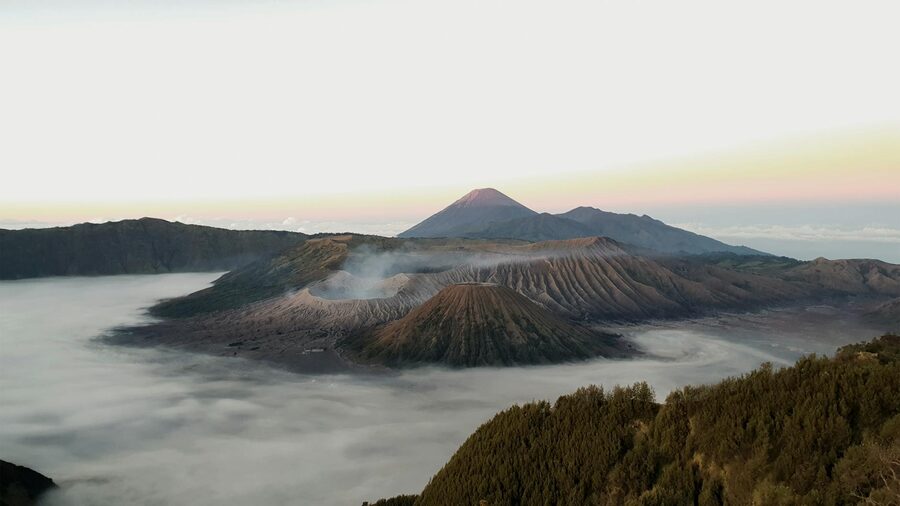
Every Bromo sunrise tour follows roughly the same arc, so once you understand the sequence, you can compare operators more easily. Here is what a standard day looks like from pickup to drop-off:
12:00 a.m. — Pickup. Driver arrives at your hotel in Surabaya or Malang. You are half-asleep, grateful for the bottle of water on the seat, and immediately wishing you had worn warmer clothes. Drive to Cemoro Lawang begins.
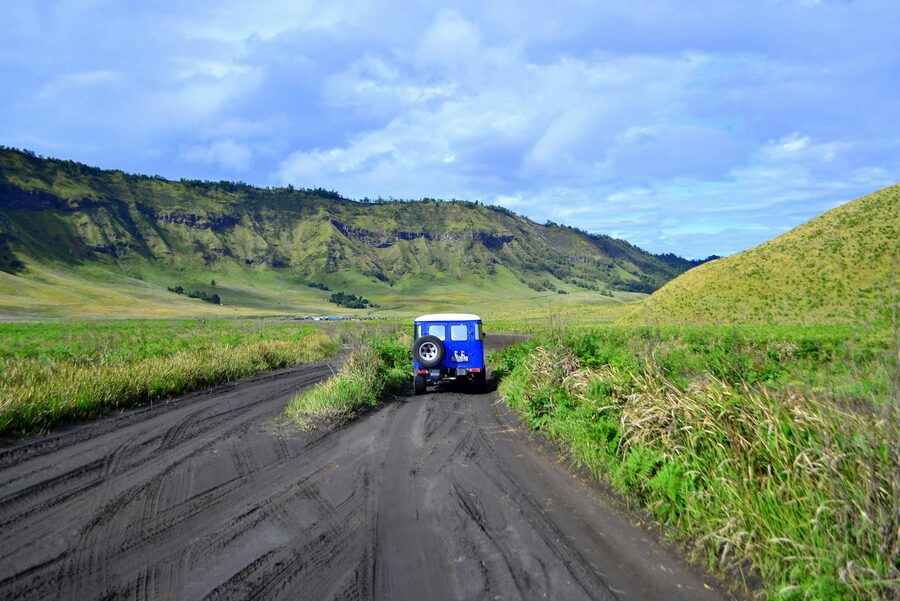
2:30–3:00 a.m. — Arrival at Cemoro Lawang. This is the transfer point from minivan to 4×4 jeep. The jeeps are open-sided Toyota Land Cruisers from the 1980s that have seen thousands of sunrise runs. You climb in with 5 other passengers (shared tour) or alone with your group (private).
3:30 a.m. — Arrive at Penanjakan viewpoint. This is the main sunrise platform at 2,770 metres, looking across the caldera toward Bromo, Batok, and distant Semeru. It gets crowded. Bring a head-torch, get a spot on the railing, and wait. The temperature is often 5–8°C and the wind bites.
5:00–5:30 a.m. — Sunrise. The sky runs through every shade of orange and pink. Bromo smokes below. Cameras click. This is the money shot.
6:00 a.m. — Cross the sea of sand. The jeep rumbles down into the caldera floor and crosses the vast ash plain. Dust clouds trail behind every vehicle. On clear mornings the light is surreal.
6:30 a.m. — Base of Bromo. The jeep parks about 1 km from the crater. You walk (or hire a horse for around 150,000 IDR) across the sand to the base of the volcano, then climb 250 concrete steps to the crater rim.
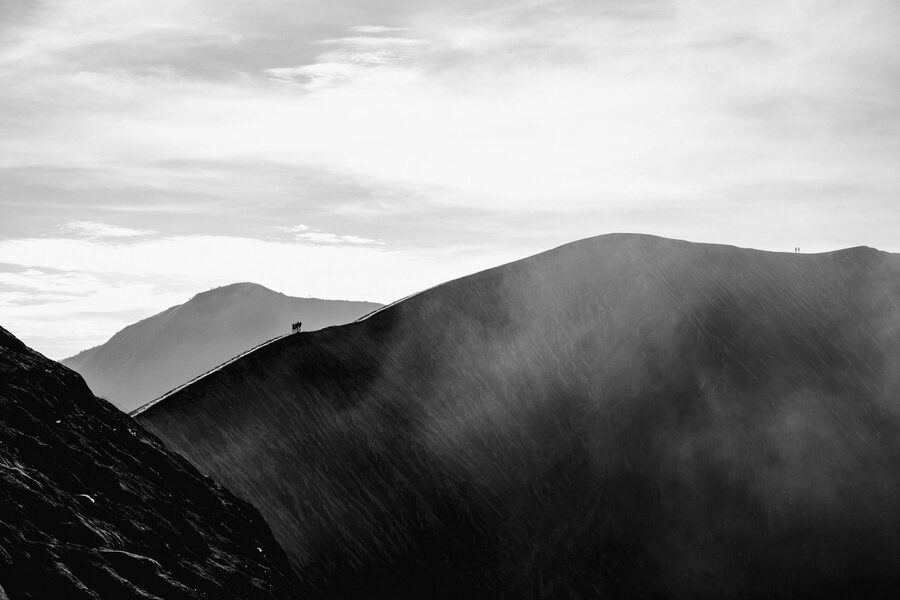
7:00 a.m. — The crater rim. Sulphur and steam hit you first. The crater is a near-perfect circle about 800 metres across, with grey-yellow walls and a rumbling, active vent in the middle. You walk along the narrow rim as far as your nerve allows.
8:00 a.m. — Back to the jeep. Cross the sand again, sometimes with a stop at the Teletubbies savannah — a rolling green area that contrasts sharply with the ash field and makes for the best photos of the day.
9:00 a.m. onward — Return drive. Back to Cemoro Lawang, transfer to minivan, drive home. Most Malang-based tours drop you off by noon; Surabaya tours typically get back between 12:00 and 2:00 p.m.
What to wear (seriously, bring layers)
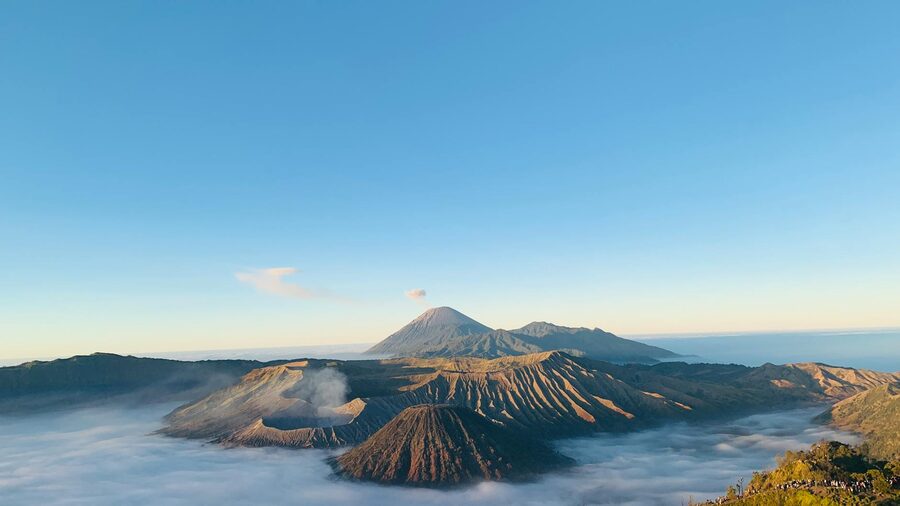
The single biggest mistake first-time Bromo visitors make is underdressing. The caldera sits at 2,400–2,770 metres, and pre-dawn temperatures regularly drop to 3–8°C between May and September (the dry season, which is also when most people visit). The wind on the Penanjakan viewpoint is relentless. You will be outside, standing still, for at least 45 minutes while waiting for the sun.
Pack like this: a warm layer (fleece or down jacket), a windproof outer, long trousers, closed shoes (the ash is fine and gets everywhere), a hat, a scarf or buff, and gloves if you have them. Many Cemoro Lawang guesthouses rent out beanies and scarves for a few dollars at the trailhead, but if you are prone to cold, don’t rely on rentals.
Also: the sulphur fumes near the crater rim can catch in the throat. A lightweight mask or buff pulled over your nose helps. Take water, but not too much — there are no toilets between the jeep park and the crater.
Best months to go
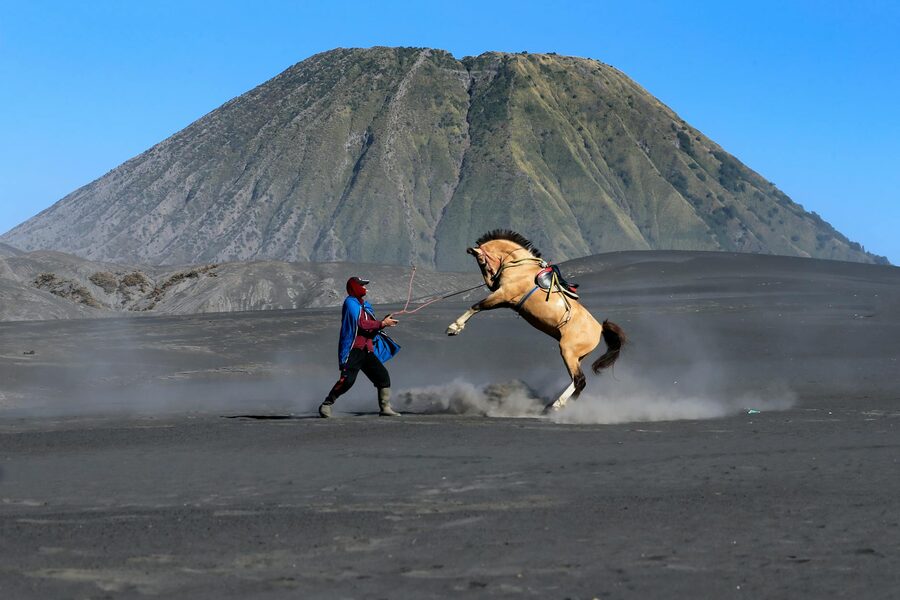
May through October is the dry season in East Java, and this is when Bromo is at its most reliable. Skies are usually clear, the jeeps can move freely across the sea of sand, and the chance of actually seeing sunrise (rather than a wall of cloud) is at its highest. July and August are peak months — weekends at Penanjakan can be elbow-to-elbow with domestic Indonesian travellers, so if you can swing a Tuesday or Wednesday, do it.
November through March is the wet season. The jeep tracks get muddy, morning cloud cover is more common, and there are days when the sunrise is simply not visible. It is still worth going if that is when you happen to be in East Java — the caldera is dramatic in any weather — but the odds of a picture-perfect morning drop significantly. April and October are the shoulder months and often deliver the best combination: fewer crowds, still-clear skies.
One thing to check before booking: Mount Bromo is an active volcano, and the park occasionally closes the immediate crater area when activity rises. The park service posts updates, and reputable operators will adjust routes (viewpoints stay open even when the crater itself is off-limits). Your tour’s cancellation terms matter here.
How Bromo compares to Mount Batur in Bali
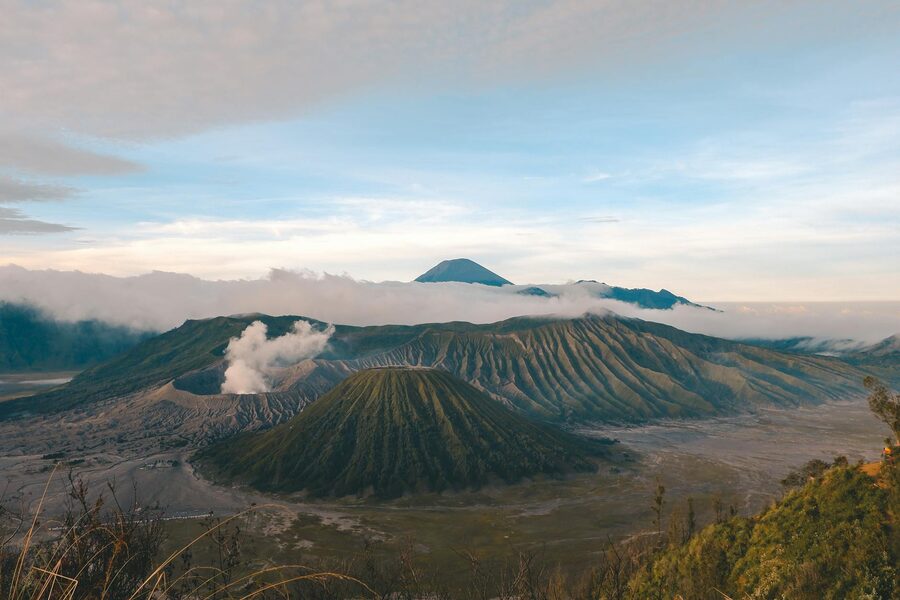
A lot of travellers doing Indonesia end up asking whether to do Mount Bromo or Mount Batur in Bali, and the honest answer is that they are very different experiences. If your itinerary already includes a few days in Ubud, the Ubud countryside tour also pairs well as a low-intensity day to balance out the pre-dawn volcano starts.
Batur is a hike — you walk up a volcanic cone in the pre-dawn darkness for about 2 hours, sit at the summit, watch the sun rise over Lake Batur, and walk back down. It is strenuous but achievable for anyone reasonably fit. Bromo is not a hike in the same sense — the jeep does almost all the work, and the only actual climbing is 250 steps at the end.
Where Bromo wins is scale and strangeness. You are not just looking at a volcano, you are standing inside a caldera that contains three other volcanoes. The sea of sand is a landscape unlike anywhere else in Southeast Asia. Batur is a classic one-cone sunrise hike; Bromo is an alien planet. If you only have time for one, pick based on whether you want the hike (Batur) or the scene (Bromo).
If you have time for both, do Batur first — it is the warm-up act. Bromo is the headliner.
Combining Bromo with Yogyakarta and Borobudur
East Java and central Java stitch together neatly if you are spending a week or more on the island. A common loop looks like this: fly into Surabaya, train to Malang, Bromo sunrise tour, train back to Surabaya, train to Yogyakarta (about 5 hours), two to three days in Yogyakarta for Borobudur and Prambanan temples, then fly out of Yogyakarta. That is seven days end-to-end and it hits Java’s two biggest draws without backtracking.
If you are adding Bali on either end, fly Bali → Surabaya for the Bromo portion, then Yogyakarta → Bali to finish, rather than looping back. Domestic Indonesian flights are cheap and frequent, and the time saved on overland travel is worth the ticket price.
One thing to know: Bromo Tengger Semeru National Park is often paired with Mount Ijen — the famous blue-fire crater further east — in two-day combo tours. If you have the stomach for back-to-back pre-dawn starts, Ijen after Bromo is spectacular. If you only have energy for one volcanic experience, Bromo is the more accessible pick.
Cancellation, weather, and what to do if the volcano acts up
Every tour in our top three lets you cancel free up to 24 hours before the start — this is the standard across Viator and GetYourGuide, and it is the single most important thing to check when you are browsing other operators too. Bromo weather can turn fast, and volcanic activity does rise and fall. A free cancellation clause is your insurance.
If activity rises and the park closes the crater rim, most operators will still run the Penanjakan viewpoint portion of the tour — which is honestly the best part — and simply skip the crater walk. Check with your operator whether they will refund partially in that case, or whether the tour proceeds as is. The top-rated ones handle this gracefully.
Weather cancellations are rarer than you might think. Cloud is common, but it is usually broken, and the caldera floor itself is often clear even when the viewpoints are wrapped in mist. Go in expecting that any dry-season morning will deliver something worth seeing, even if it is not the postcard sunrise.
Getting there without a tour (if you insist)
Yes, you can do Bromo independently — backpackers have been doing it for years. The method is: bus or train to Probolinggo, local minivan (bemo) from Probolinggo to Cemoro Lawang (2 hours, crowded, departs when full), overnight in a Cemoro Lawang homestay, walk to the Penanjakan viewpoint at 3 a.m. (about 45 minutes uphill in the dark), sunrise, then walk down to the sea of sand and across to the crater on foot.
It is cheaper by a good margin — figure $25–40 all-in versus $40–150 for a tour — and it rewards the patient. But you lose the jeep experience, which is genuinely fun, and the walk across the sand in the dark is longer than it looks on a map. If you have more time than money and you are comfortable with rough overnight transport, go for it.
If you are on a tight schedule or flying in and out, the tour route is vastly easier and the 12-hour door-to-door window is hard to replicate on your own.
Night sky above the Tengger caldera
One detail nobody mentions on tour listings: on a clear, moonless night in dry season, the stars above Bromo are something else. You are at 2,400 metres, far from any significant light pollution, and the 45-minute wait at the Penanjakan viewpoint before sunrise is the best stargazing window you will get in East Java. The Milky Way arcs right across the caldera between April and October.
If you have any interest in astrophotography, bring a tripod and a lens that opens wide — f/2.8 or faster — and check the lunar calendar before you book.
If stargazing matters to you, target a pickup on a new-moon morning. Even regular phone cameras with night mode will pick up the band of the Milky Way if the sky is clear.
The Teletubbies savannah
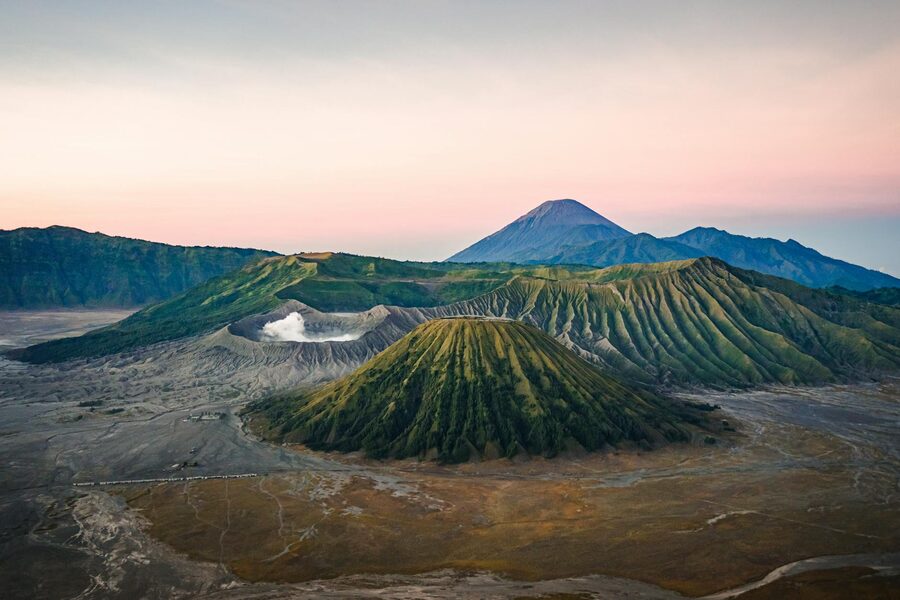
Most tours include a stop here on the way back out, and it is probably the single most photogenic spot in the entire park after the sunrise itself. On the eastern side of the caldera, past the sea of sand, the landscape transforms — rolling green hills covered in short grass, more like New Zealand than Indonesia, with Mount Batok and Bromo visible behind them.
The contrast between the grey ash and the bright green grass is startling, and the locals call it the Teletubbies savannah because the hills look like the ones from the children’s show.
Sunlight is at its best there around 7:30–8:30 a.m., which is usually when the jeeps swing through on the return leg. Ask your driver to give you 10 minutes to walk out into the grass for photos — most are happy to oblige as long as the group is together.
Food and coffee on the drive
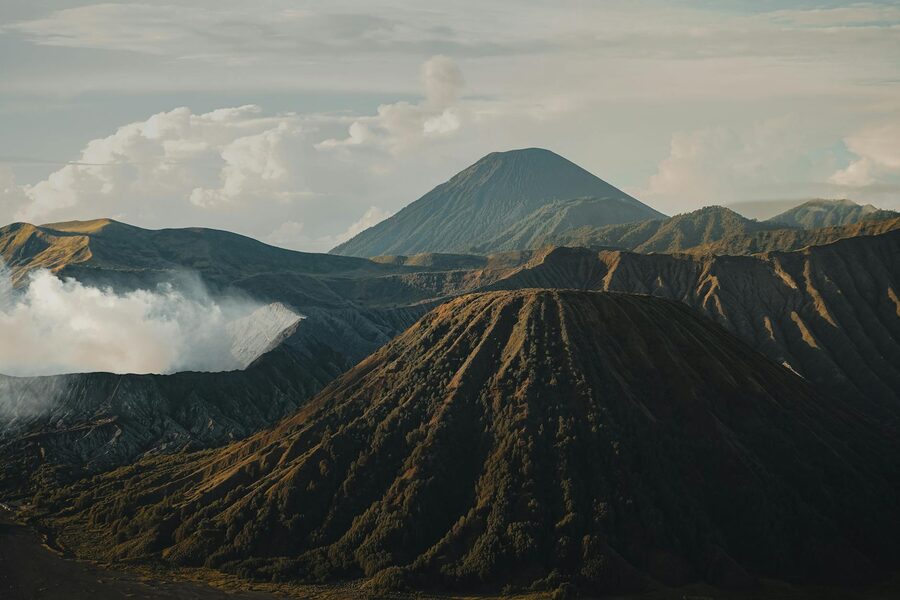
Most tours don’t include meals, but they will stop at warungs (small roadside restaurants) on the route. Expect to pay 20,000–50,000 IDR ($1.30–3.30) for a bowl of soto ayam, nasi goreng, or mie goreng — standard Javanese road food, all tasty, all filling. A cup of black local coffee is around 10,000 IDR. Bring cash in small denominations because card machines are rare out there.
Some of the better operators include a simple breakfast — toast, an omelette, coffee — at a Cemoro Lawang homestay after the sunrise leg. Check the inclusions section of your chosen tour. If it says “breakfast included,” you will eat; if it doesn’t, budget for a warung stop.
The sea of sand
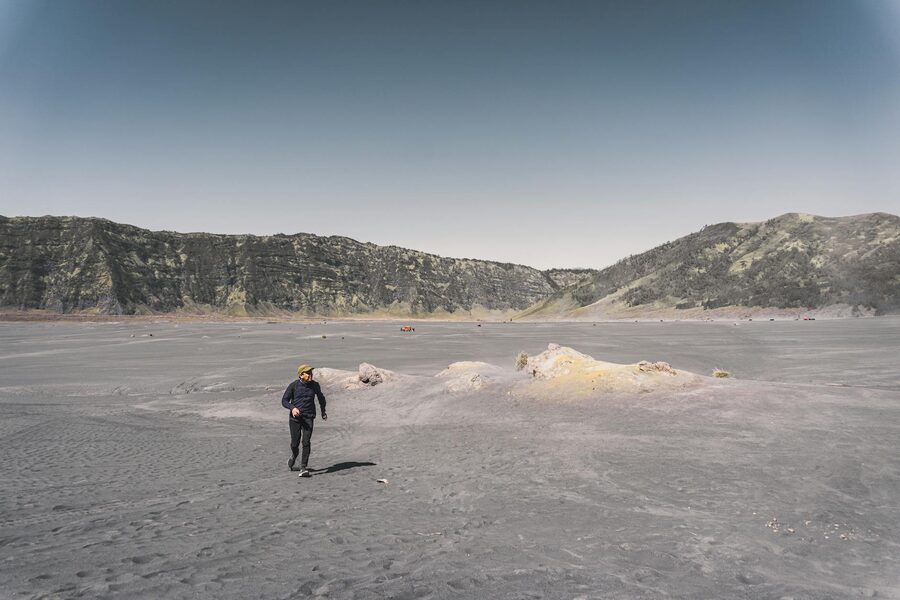
A brief note on the geography, because it is what makes Bromo unlike anywhere else. The flat ashy plain you cross by jeep is called the Laut Pasir — the sea of sand — and it covers about 30 square kilometres of the caldera floor. It is the result of centuries of eruptions from Bromo and Batok, laying down layer after layer of fine grey tephra.
The Tengger people, who have lived on the caldera rim for 500 years and consider Bromo sacred, cross the sand on foot during the annual Yadnya Kasada ceremony, when offerings of rice, fruit, livestock, and money are thrown into the crater.
If you happen to visit during the full moon of the Kasada month (typically around August), the ceremony is extraordinary — locals descending from the rim at dawn, climbing the crater in traditional dress, throwing offerings into the smoking vent. Tour operators will usually arrange a special Kasada-day itinerary if you ask in advance.
Comparing Bromo to other volcano experiences in Southeast Asia
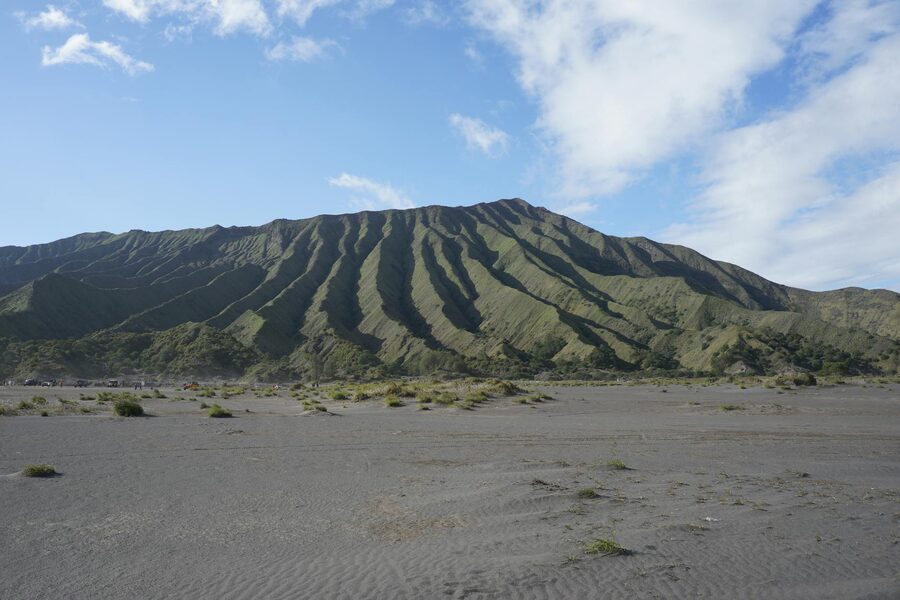
Bromo is part of a broader Southeast Asian volcano circuit that includes Mount Batur in Bali, Mount Rinjani in Lombok, Mount Merapi near Yogyakarta, Mount Ijen in East Java, Mount Kelimutu in Flores, and Taal in the Philippines. Each delivers a different flavour:
Bromo vs Batur: Bromo is easier physically (jeep does the work) but logistically harder (further from most travellers’ base). Batur is a genuine hike, shorter on scale, closer to an existing Bali itinerary.
Bromo vs Ijen: Ijen has the famous blue fire and a turquoise sulphur lake, but the hike is steeper and the sulphur fumes are significantly more intense. Many people do both in a 2-day combo.
Bromo vs Rinjani: Rinjani is a proper 2-3 day trek to the summit of a 3,726 m volcano — a completely different commitment level. Bromo is a half-day outing.
Bromo vs Merapi: Merapi near Yogya is usually visited by 4×4 Lava Tour rather than summit hike, and the experience is more about the 2010 eruption aftermath than the sunrise.
If you have done any of Mount Batur, Nusa Penida, the Bali waterfall circuit, or the Uluwatu Kecak fire dance on a previous Bali trip, Bromo is the obvious next step up in scale — different geography, different feel, and a landscape that genuinely does not exist anywhere else in Indonesia.
And if you are building a broader Bali itinerary around the Bromo leg, the Ubud day tour, the Tanah Lot and north Bali loop, and the Bali ATV quad bike adventure are all worth slotting in around the volcano sunrise days.
For island-hopping off Bali’s east coast, the Gili Islands snorkelling trip pairs perfectly with a post-Bromo recovery week — something calm, flat, and reef-focused after the volcanic drama.
Booking tips — what to look for when you click through
When you open any of the three tour pages linked above, scan for these five things before you commit:
1. Pickup city. Make sure it matches where you actually are the night before. Surabaya and Malang pickups are not interchangeable — the driver will show up at only one of them.
2. Total duration. 10–14 hours is normal for a 1-day Bromo sunrise. Anything longer is usually a 2-day combo with Ijen. Anything shorter is missing stops.
3. Jeep type. Shared 4×4 (6 passengers) is standard and fine. Private 4×4 costs more but means the vehicle waits on your pace.
4. Inclusions. Entrance fees to Bromo Tengger Semeru National Park should be included (they are around 220,000 IDR per person on weekdays, 320,000 on weekends). If they are listed as “pay on arrival,” add that to your budget.
5. Free cancellation window. 24 hours before start is standard and protective. Anything shorter is a red flag.
Once those five boxes are ticked, the review count and star rating will tell you the rest. All three of our picks above clear those bars with room to spare — that is why they made the list.
A few practical odds and ends
Mobile signal on the caldera is patchy — fine at Cemoro Lawang, spotty at Penanjakan, basically absent on the sea of sand. Download your offline maps before you leave your hotel.
ATMs in Cemoro Lawang are limited and sometimes empty. Bring enough cash (in rupiah) for tips, warung meals, horse rides (if you want one), and park fees that aren’t bundled. Figure 500,000–700,000 IDR per person as a cushion.
Travel insurance is worth having — not because anything is likely to go wrong, but because volcanic activity can scrub a day and you might want to claim back non-refundable costs. Check the small print of your policy for active-volcano clauses before you travel.
Finally: whatever you do, don’t skip the crater staircase because you are tired. It is 250 concrete steps, and at altitude it feels like more, but you did not travel to East Java to stop 1 km short of the rim of an active volcano. Climb it. Stand on the edge. Listen to the vent hiss. That is why you came.
The short version
If you are flying in and out of Surabaya the same day and want the top-rated operator on the platform, book the Viator 1-day tour from Surabaya or Malang — 5.0 stars across 1,759 reviews is not an accident.
If you are basing yourself in Malang and want the best value, go with the GetYourGuide shared trip from Malang at $36. Solo travellers and backpackers, this is your tour.
If you want more stops, more time in the national park, and the 7-viewpoint version, the Semeru National Park day trip from Malang is almost the same price as the shared group tour but squeezes considerably more Bromo into your morning.
Whichever you pick, aim for dry season if you can, a weekday if possible, and a new-moon night if you care about the stars. Wear more layers than you think you need. Bring cash. And when you reach the crater rim, take a minute before you start taking photos — stand there and just look at it. The Tengger caldera has been doing this show for tens of thousands of years. You are the guest.