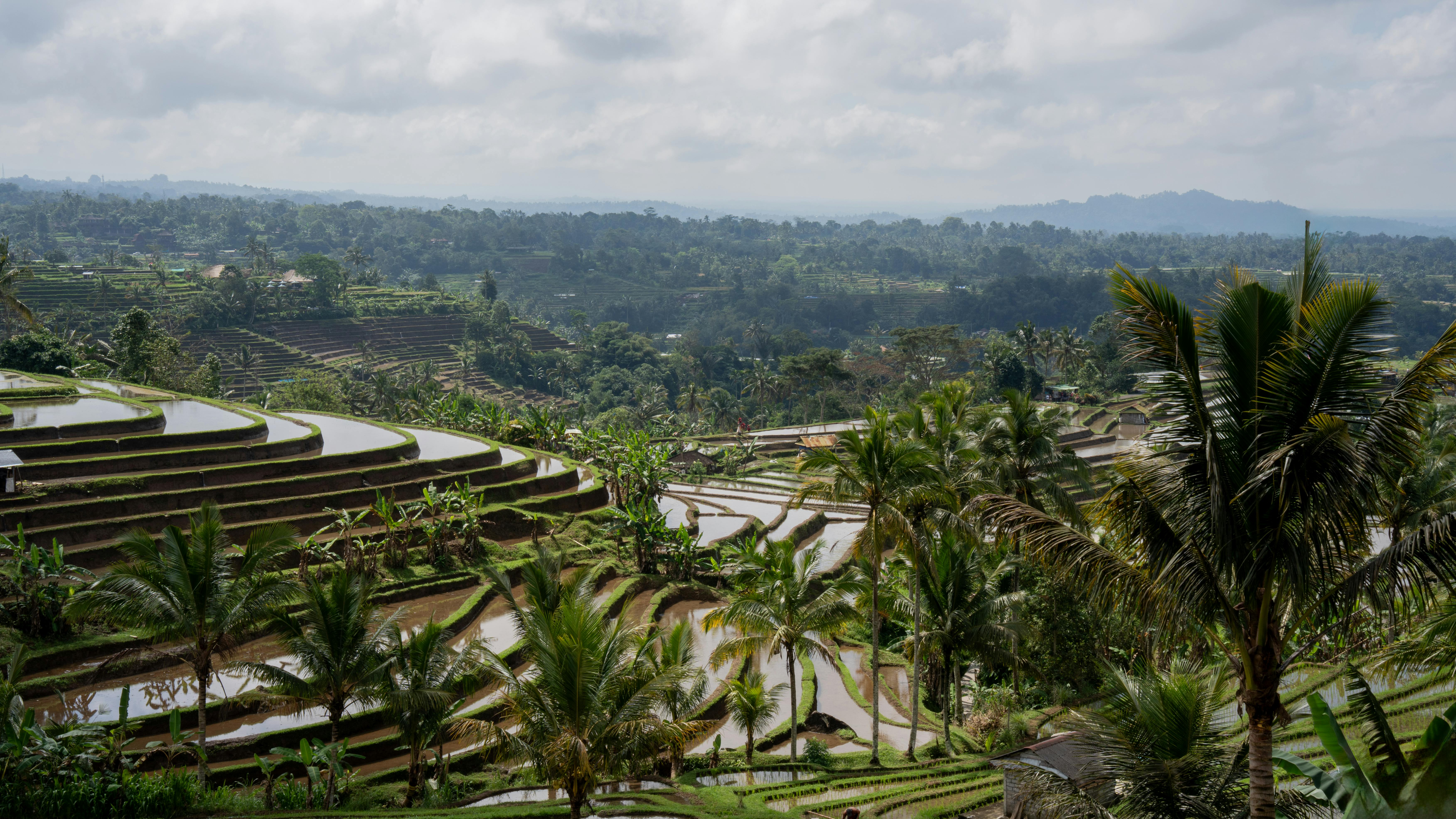
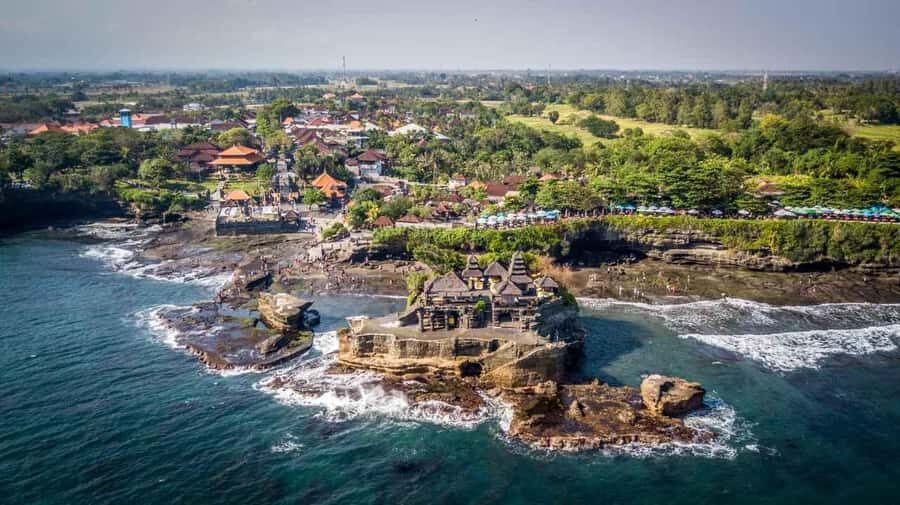
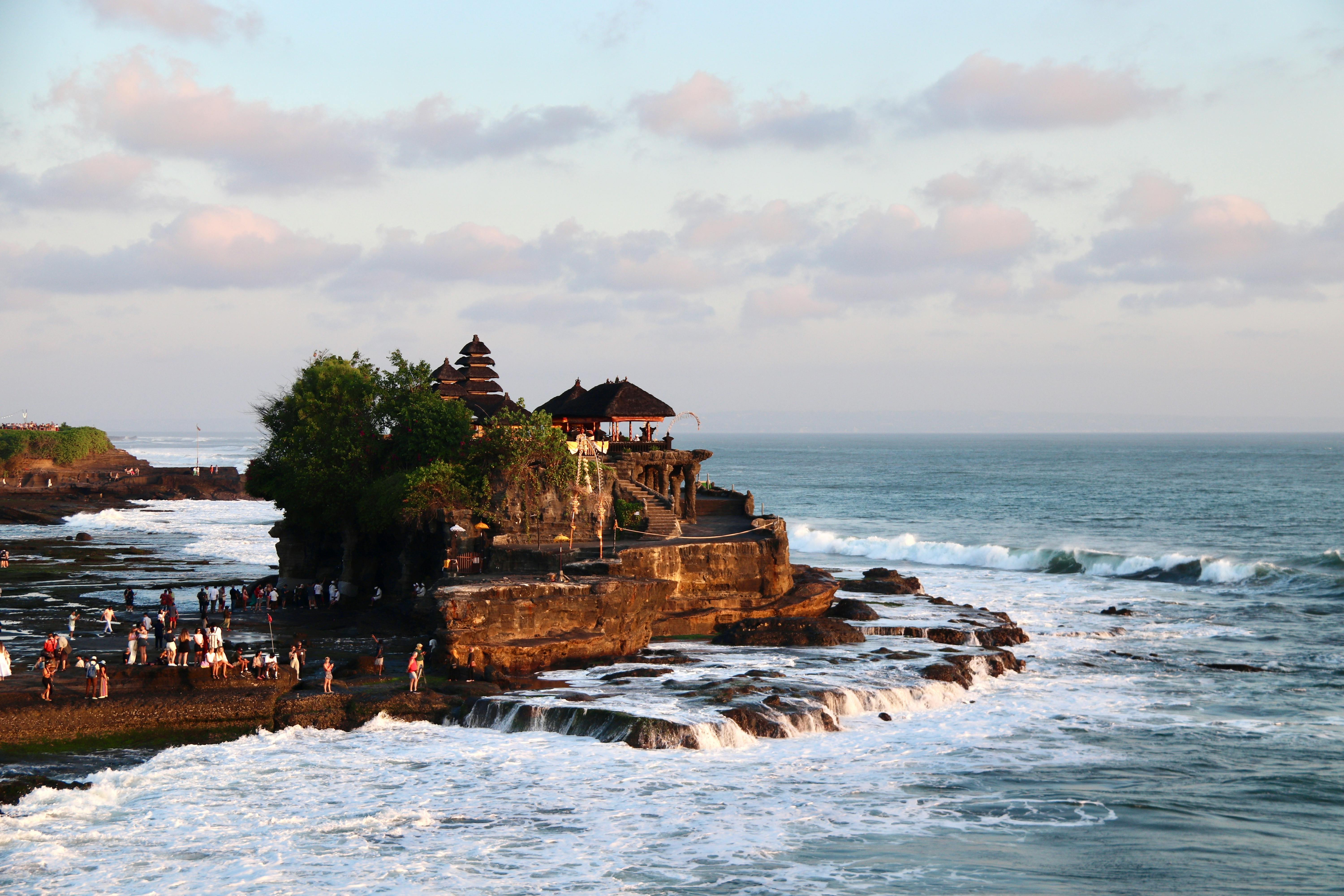
Tanah Lot looks like a postcard. A black volcanic tower in the Indian Ocean, a small pagoda on top, waves exploding against the cliffs below. That’s what brought you here.
What the postcard doesn’t show is the five thousand other people standing shoulder-to-shoulder on the viewing platform at sunset, elbows up, phones up, all pointing at the same square of sky. Tanah Lot at 6pm is not a serene spiritual experience. It’s Times Square with a temple in the middle.
This is why the smartest way to see it is as part of a North Bali loop — where Tanah Lot is the sunset grand finale, not the whole show. The real magic of the north side is the stuff you’ve probably never heard of: the lake temple floating in the highlands, the UNESCO rice terraces that make Tegalalang look like a garden plot, a volcano lookout where the air smells like pine instead of scooter exhaust. You book one private driver for ten hours and they handle the whole thing.
I’ll walk you through exactly how to book the right version of this tour, which three tours are actually worth your money, and the things nobody tells you about Tanah Lot before you go. If you’ve already been to Ubud and you’re hunting for something different, this is your day.
Short on time? Here are my top 3 picks:
Best overall: Tanah Lot & North Bali Tour Scenic Journey — $100. Private driver, all four north sights plus Tanah Lot, most flexibility.
Best value: Bali Tanah Lot UNESCO World Heritage Sites Full-Day Tour — $40. Ten hours, same highlights, hard to beat for the price.
Best if you want to customize: Bali Full Day North Bali Private Customized Tour — $35. Pick your own stops — swap temples for waterfalls if you want.
- How Booking a Tanah Lot Tour Actually Works
- Ticket Prices at Each Stop (Pay on Arrival)
- Group Tour vs Private Driver — Which to Pick
- The Best Tanah Lot & North Bali Tours to Book
- 1. Tanah Lot & North Bali Tour Scenic Journey — 0
- 2. Bali Tanah Lot UNESCO World Heritage Sites Full-Day Tour —
- 3. Bali Full Day North Bali Private Customized Tour —
- When to Visit Tanah Lot (And When Not To)
- Best Months
- How to Get to Tanah Lot on Your Own (If You Skip the Tour)
- Tips That Will Save You Time and Money
- What You’ll Actually See in North Bali
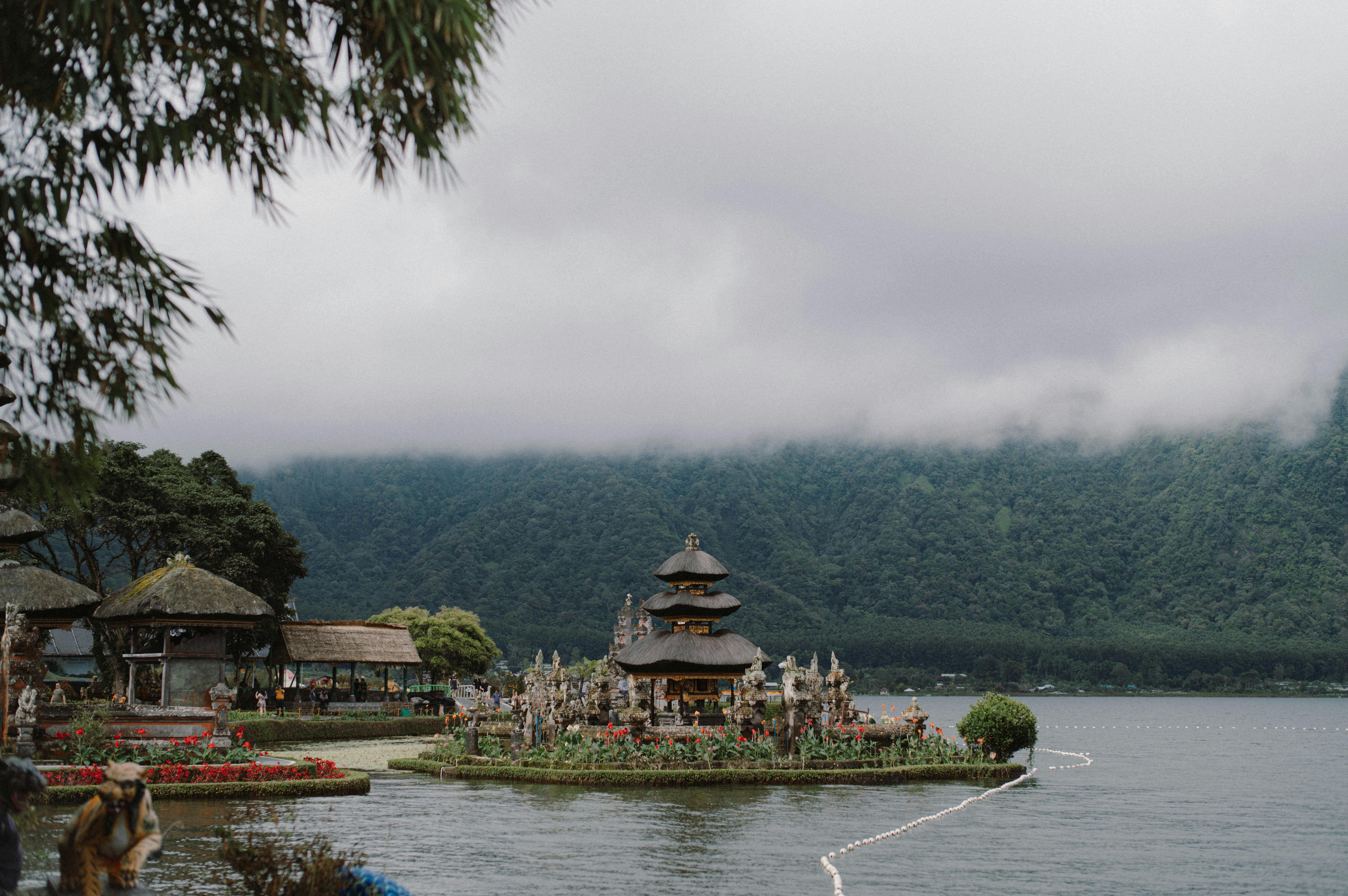
- Ulun Danu Beratan — The Floating Lake Temple
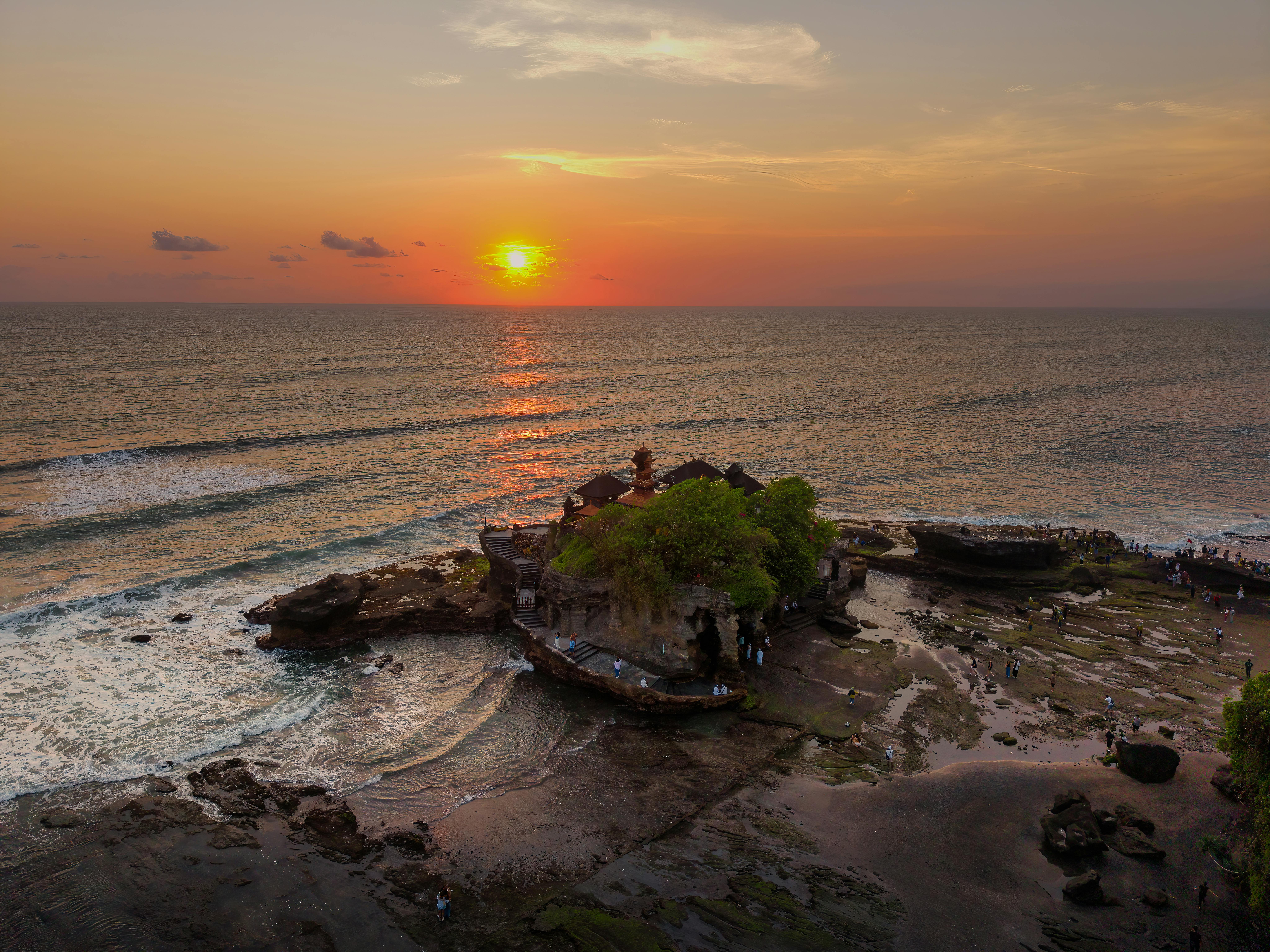
- Jatiluwih Rice Terraces — The UNESCO One
- A Waterfall Stop (Usually Git Git or Banyumala)
- Tanah Lot — The Main Event
- A Few Things Nobody Tells You About Tanah Lot
- While You’re Planning the Rest of Bali
How Booking a Tanah Lot Tour Actually Works
You can’t really do Tanah Lot and North Bali on public transport. There’s no direct bus from Ubud or Seminyak, the nearest Grab drivers won’t take you on a multi-stop day trip, and renting a scooter to cover 150+ kilometers on Bali’s roads is not something I’d wish on anyone.
Your options come down to three:
- Private driver by the day. You hire a car with driver for 8-10 hours and design your own route. Costs around $35-60 if you book local, $80-110 if you book through Viator or GetYourGuide.
- Join-in group tour. A mini-bus, fixed itinerary, 8-14 other people. Cheaper on paper but you’re on someone else’s schedule and you stop at souvenir shops you don’t want.
- Custom private tour. Same as option one but with a guide who actually explains what you’re looking at. This is what the better operators sell.
My honest take: go private. A shared mini-bus will cost you 30% less and 200% more frustration. Waiting for the slowest person at every stop, sitting through stops at batik factories and coffee plantations that exist purely for commission — it’s not worth the $15 you save. And once you’re paying for private, going through a trusted platform like Viator or GetYourGuide gets you the booking protection, the English-speaking driver, and the reviews you can actually trust.
Ticket Prices at Each Stop (Pay on Arrival)
Your tour price almost never includes entry tickets. Budget separately for:
- Tanah Lot entry: 75,000 IDR (~$5) per adult
- Ulun Danu Beratan: 75,000 IDR (~$5)
- Jatiluwih rice terraces: 40,000 IDR (~$2.50)
- Bedugul botanic garden (if included): 30,000 IDR (~$2)
- Lunch: 80,000-150,000 IDR (~$5-10) at a local warung, more at tourist restaurants
All in, expect to spend another $20-30 per person on top of the tour price for entries and food. Carry small rupiah bills — nobody at the temple gates takes cards.
Group Tour vs Private Driver — Which to Pick
If you hate waiting for strangers, go private. If you don’t mind a slower pace and you’re trying to stretch a backpacker budget, the join-in options work.
Here’s what actually happens on a group tour. The mini-bus picks up at 8am. First stop is a coffee plantation at 9am that nobody asked for — 45 minutes of your life watching a luwak in a cage and being pressured to buy $30 bags of coffee. Then batik factory at 11am. By the time you get to Ulun Danu it’s noon and the light is flat. By Jatiluwih it’s 2pm and you’re starving. Tanah Lot at 5pm, but so is everyone else.
On a private tour, you tell the driver: skip the coffee plantation, skip the batik place, straight to Ulun Danu at 10am when it’s emptier, lunch at 1pm somewhere you actually want to eat, Tanah Lot at 4:30 to beat the rush. Day looks completely different.
Private is worth the money if: you’re two or more people, you want to actually enjoy the stops, you hate sales pressure, or you’re adjusting to Bali jet lag and want control over the pace.
Group is fine if: you’re solo, broke, and you’d rather pay $25 and put up with the inefficiency than $40-100 and have a proper day.
The Best Tanah Lot & North Bali Tours to Book
I’ve narrowed the field down to three. All of them include Tanah Lot plus the real North Bali highlights — skip anything that only takes you to Tanah Lot as a standalone sunset stop, because you’ll be on the bus for three hours round-trip to see one temple, and that’s a poor trade.
1. Tanah Lot & North Bali Tour Scenic Journey — $100

This is the one I’d book if I were going back tomorrow. It’s the most-reviewed Tanah Lot tour on Viator’s Bali page, and it’s held a perfect 5.0 rating across thousands of reviews, which is genuinely rare for a day tour that covers this much ground.
What you get: a private car with driver for the full day, pickup from almost anywhere in south Bali (Seminyak, Kuta, Ubud, Canggu, Nusa Dua), and the classic north loop — Ulun Danu Beratan, Jatiluwih, Gitgit waterfall (or similar), then Tanah Lot for sunset. The driver handles everything. You’re not herded through souvenir stops, you’re not sharing the car with strangers, and you can ask to adjust the order if the weather demands it.
At $100 it’s the priciest of the three, but you’re getting the private-car experience with the most-trusted operator on the platform. If budget is not the absolute deciding factor, this is the pick. I break down the full itinerary in our full review of the Scenic Journey tour, including the pickup logistics and what hotel zones they cover.
2. Bali Tanah Lot UNESCO World Heritage Sites Full-Day Tour — $40
This is the best-value option on the list. It runs on GetYourGuide for $40, clocks in at a full 10 hours, and hits the same four headline stops: Ulun Danu Beratan, Jatiluwih, a waterfall, and Tanah Lot at sunset. The rating sits at 4.7 stars across nearly two thousand reviews, which is a legitimate endorsement rather than a new-listing anomaly.
What you give up for the lower price is flexibility. The itinerary is set. You can’t easily swap one stop for another, and the route tends to include a quick botanical garden or coffee stop that the $100 version might skip. For most travellers this is fine — you came to see the big four, and that’s exactly what you get.
One quirk worth knowing: GetYourGuide tours on this route sometimes consolidate two bookings into one vehicle if you’re solo. If you booked assuming private-only, double-check the operator confirmation email. Our full UNESCO tour review has the pickup-time details and what to expect at each stop.
3. Bali Full Day North Bali Private Customized Tour — $35

The cheapest option on the list is actually the most flexible. This one is a fully private car and driver on GetYourGuide for $35, eight hours, and you tell the driver what you want to see. The default loop includes Ulun Danu and Tanah Lot, but you can swap in Banyumala waterfall, Gitgit waterfall, the Banjar hot springs, or Lovina Beach for dolphin viewing (if you stay the night).
The rating sits at 4.9 stars — higher than the UNESCO option above — and the reviews consistently praise the drivers for being flexible, patient, and actually knowledgeable about each stop. The trade-off: you need to do a bit more research yourself. You’re telling the driver where to go, and if you don’t have a plan, you end up at whatever he suggests.
I’d book this one if you’ve already seen Tanah Lot before and you want to focus on the waterfalls and less-known spots. It’s also the best pick if you’re the kind of traveler who reads blogs like this and has a list of things you want to see. Our customized North Bali tour review has a sample itinerary you can hand the driver.
When to Visit Tanah Lot (And When Not To)
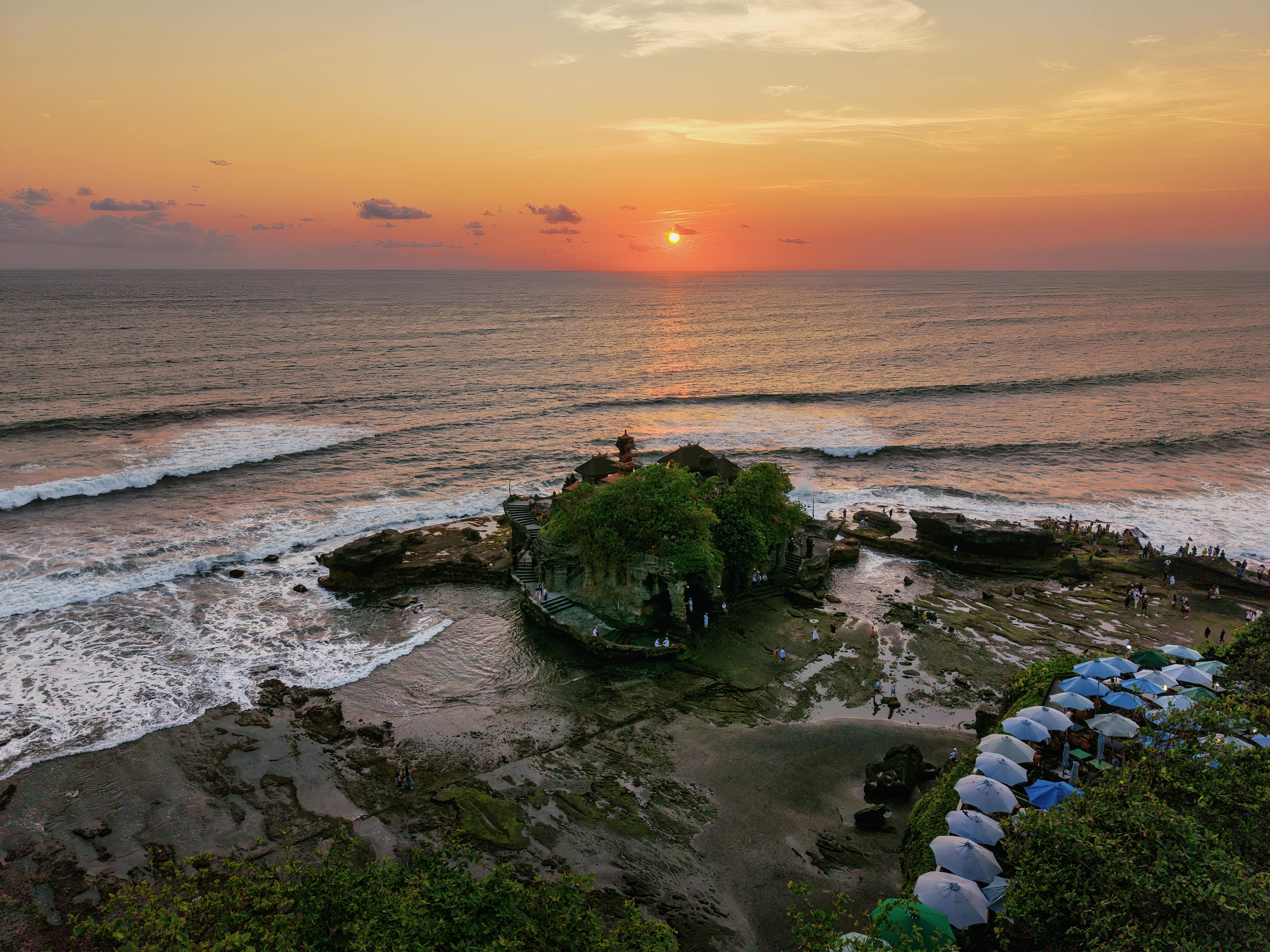
The headline rule: come for sunset, but not only for sunset. Tanah Lot at golden hour is genuinely beautiful, but the crowds are brutal between 5pm and 6:30pm. The trick is to arrive at 3:30 or 4pm when the light is already warm, walk the full coastal path, see the Batu Bolong shrine to the north (most tours skip it), and be positioned at your sunset viewpoint by 5:15pm instead of fighting for it at 5:45pm.
Tide matters too. At high tide, Tanah Lot becomes a true island — the causeway is underwater and you can only admire it from a distance. At low tide, you can walk right up to the base of the cliff, see the small holy spring cave, and get blessed by a priest with a sip of the “holy water” (worth the 10,000 IDR donation if you’re into that sort of thing). Check the tide chart for your visit date. Low tide = better access, high tide = better photos.
Best Months
Dry season runs April through October, and that’s when you want to be here. Peak visibility, best sunsets, minimal chance of a tropical downpour wiping out the sunset entirely. July and August are busy but the weather is reliable.
Wet season (November to March) has its own upside — fewer travellers, greener rice terraces, and the clouds can create dramatic skies at sunset when they break. But you’re gambling on whether Tanah Lot will be visible at all. I’ve had both: a December visit with pink-and-gold clouds that outshone any dry-season sunset I’ve seen, and a February one where the rain closed in at 4pm and we sat in the car watching wipers slap.
How to Get to Tanah Lot on Your Own (If You Skip the Tour)
If you’re determined to DIY, here’s the breakdown. Tanah Lot is about 20 km from Seminyak, 30 km from Kuta, and 50 km from Ubud. On paper that’s nothing. In practice, Bali traffic turns 50 km into a two-hour slog.
- From Seminyak / Canggu: 45 minutes to 1.5 hours depending on time of day. A Grab car costs around 150,000 IDR (~$10) one way. Do NOT Grab on the way back at sunset — they won’t pick up from Tanah Lot, you’ll be stranded. Hire a round-trip driver.
- From Kuta / Legian: 1 hour. Same Grab advice — arrange the return before you go.
- From Ubud: 1.5 to 2 hours through heavy traffic. At this distance the private-driver tour makes way more sense than DIY.
- Parking: 10,000 IDR (~$0.70) for a car, 5,000 IDR for a scooter. The lot is huge but fills up by 4:30pm.
The thing nobody warns you about: there’s a 700-meter walkway from the parking lot to the temple viewing area, and it’s lined with souvenir stalls, snack carts, and extremely persistent vendors. Headphones in, don’t make eye contact, keep moving. You can browse on the way out when you have more time and better lighting.
Tips That Will Save You Time and Money
- Carry small rupiah bills. 50,000 and 20,000 notes. Temple entry, parking, the holy water donation — nobody breaks a 100,000.
- Wear a sarong or bring one. Many Balinese temples require them for entry. Tanah Lot provides free loaners at the gate, but Ulun Danu and some others are stricter. A cheap sarong costs 50,000 IDR and lasts your whole trip.
- Eat at Jatiluwih, not at Tanah Lot. The warungs along the Jatiluwih rice terraces serve excellent local food with million-dollar views for 40,000-60,000 IDR. The restaurants around Tanah Lot are tourist traps charging triple for mediocre nasi goreng.
- Skip the fake coffee plantation. If your driver insists on a “mandatory” luwak coffee stop, politely refuse. It’s a commission scheme. Real coffee culture in Bali is at places like Seniman Coffee in Ubud, not a roadside pen with a caged civet.
- Bring bug spray to Jatiluwih and the waterfalls. Mosquitoes are fine in the dry season but can be aggressive if you go right after rain.
- Charge your phone. You’re going to take two hundred photos, you’re going to use Google Maps, and there’s no outlet in the car. Bring a power bank.
- Book through the big platforms. I know the local operators on Instagram look cheaper. They also have no cancellation protection, no insurance, and no recourse if the driver no-shows. Viator and GetYourGuide cost 10-15% more for a reason.
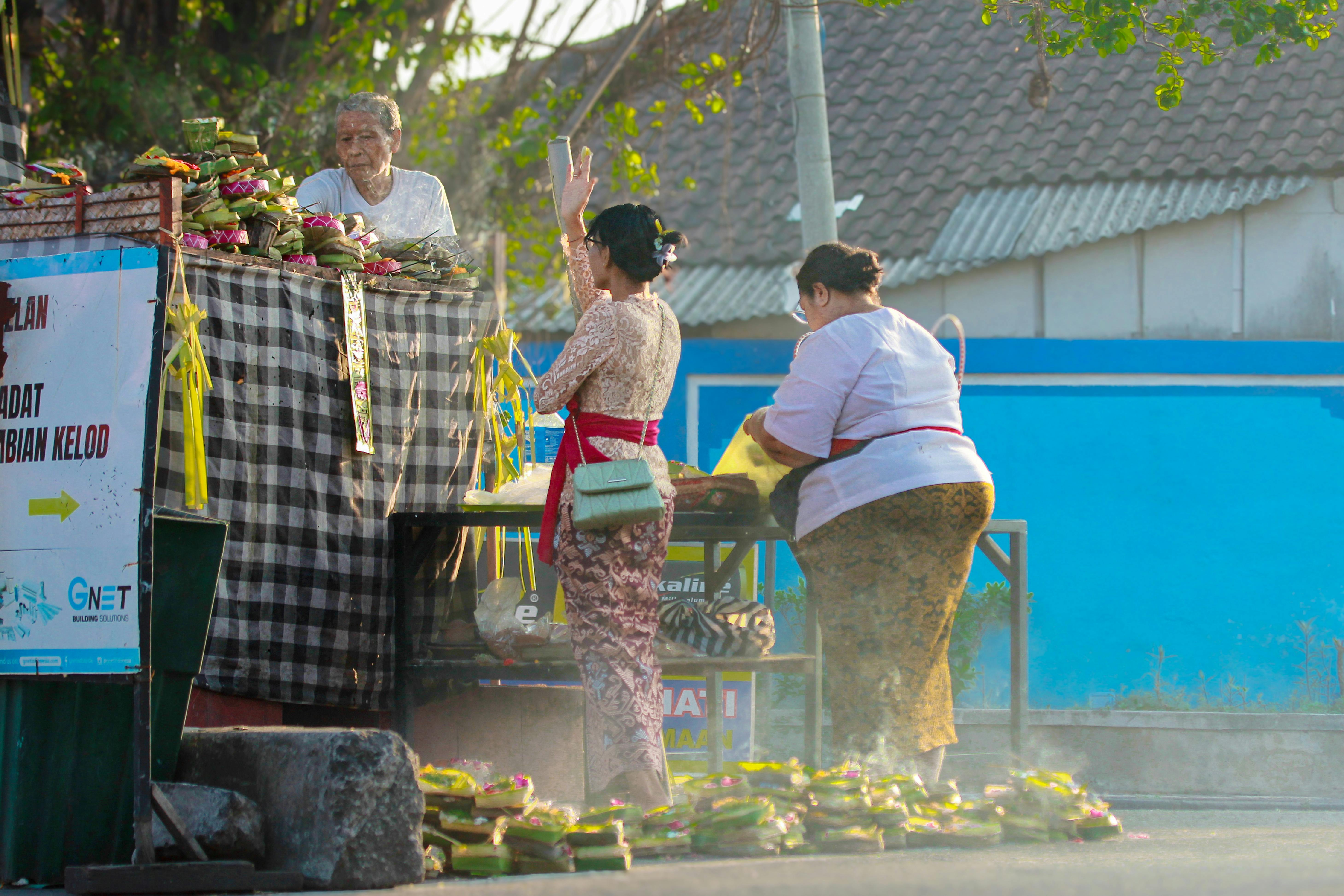
What You’ll Actually See in North Bali
The reason “Tanah Lot and North Bali” works as a combo tour is that the four main stops hit completely different landscapes. You’re not seeing four versions of the same temple.
Ulun Danu Beratan — The Floating Lake Temple
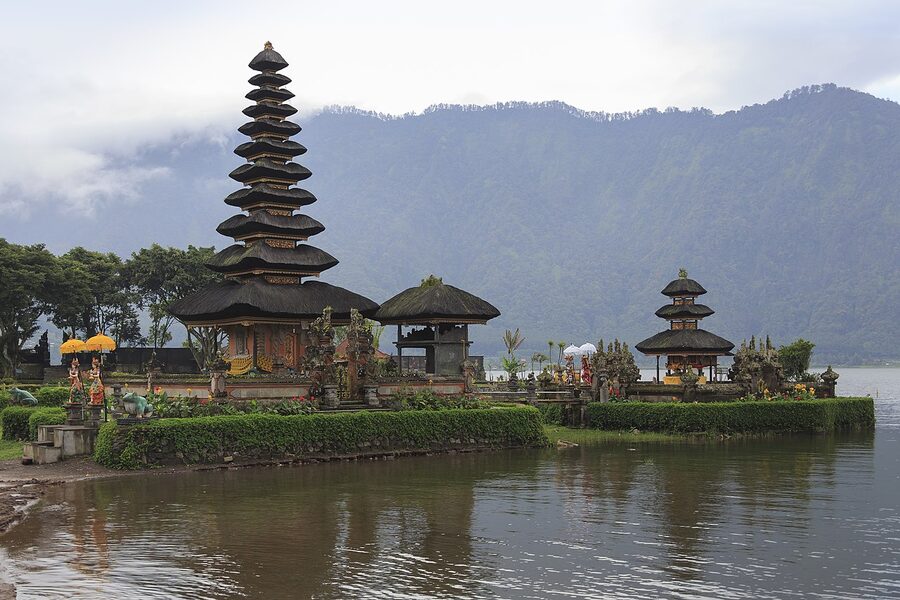
This is the one on the 50,000 rupiah note. A Shivaite water temple sitting on a small island in Lake Bratan, backed by the caldera walls of an extinct volcano. The air up here is 15-20°C cooler than the coast, the water is glass-still on calm mornings, and the temple’s tiered meru towers look like they’re floating.
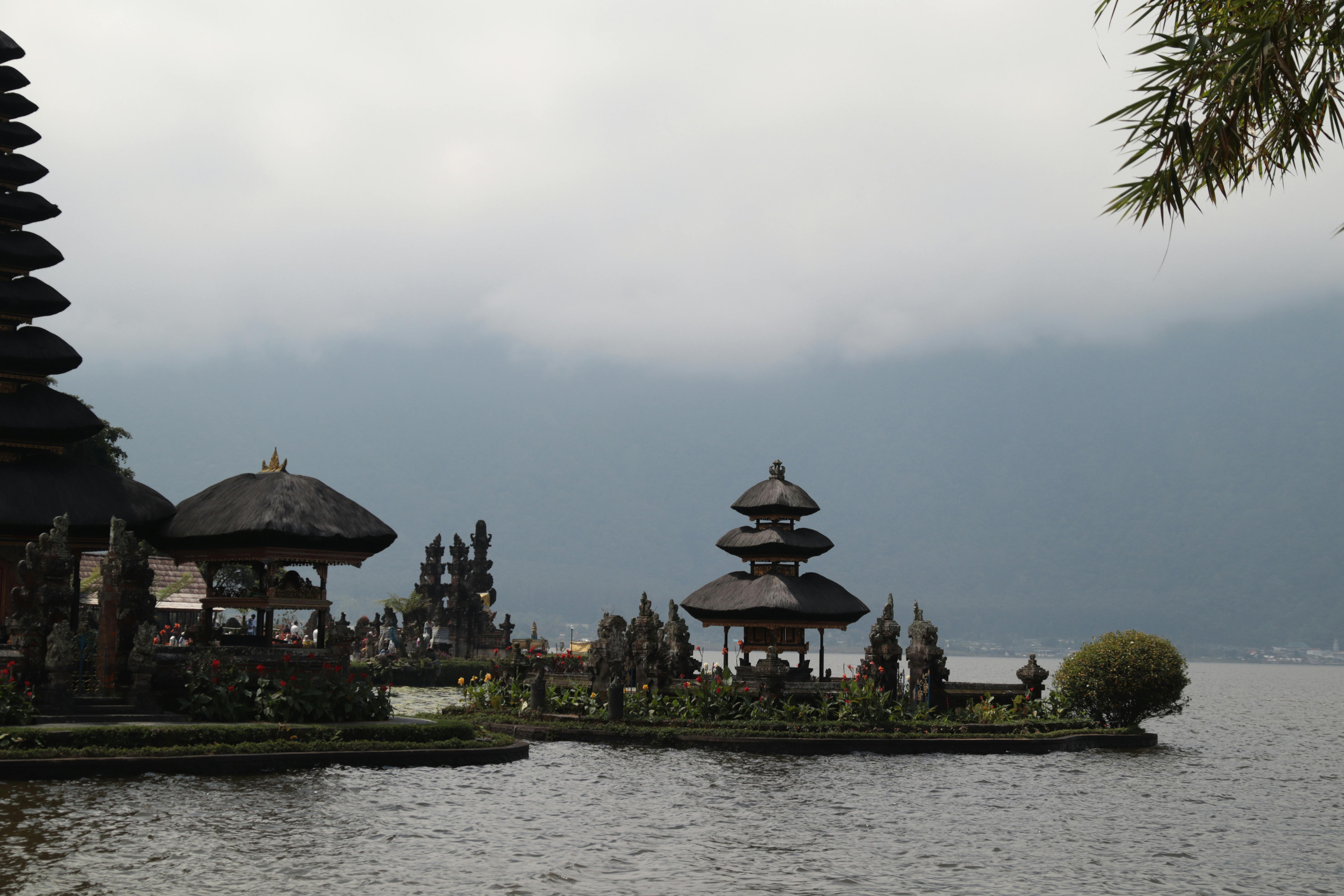
Allow 45-60 minutes here. The grounds are bigger than they look from the parking lot, and there’s a little gateway at the far end that frames the temple beautifully if you walk past the main viewpoint.
Jatiluwih Rice Terraces — The UNESCO One
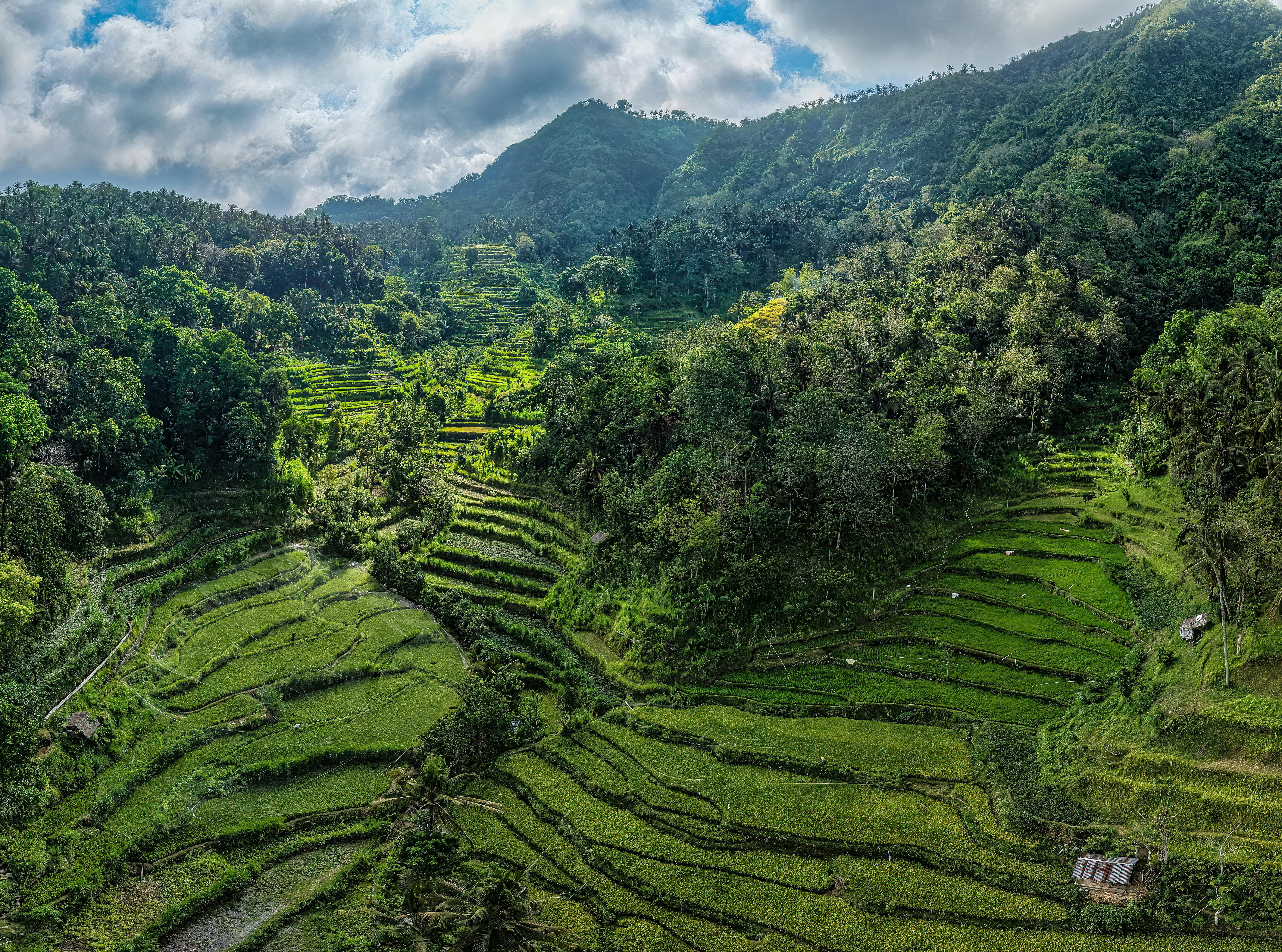
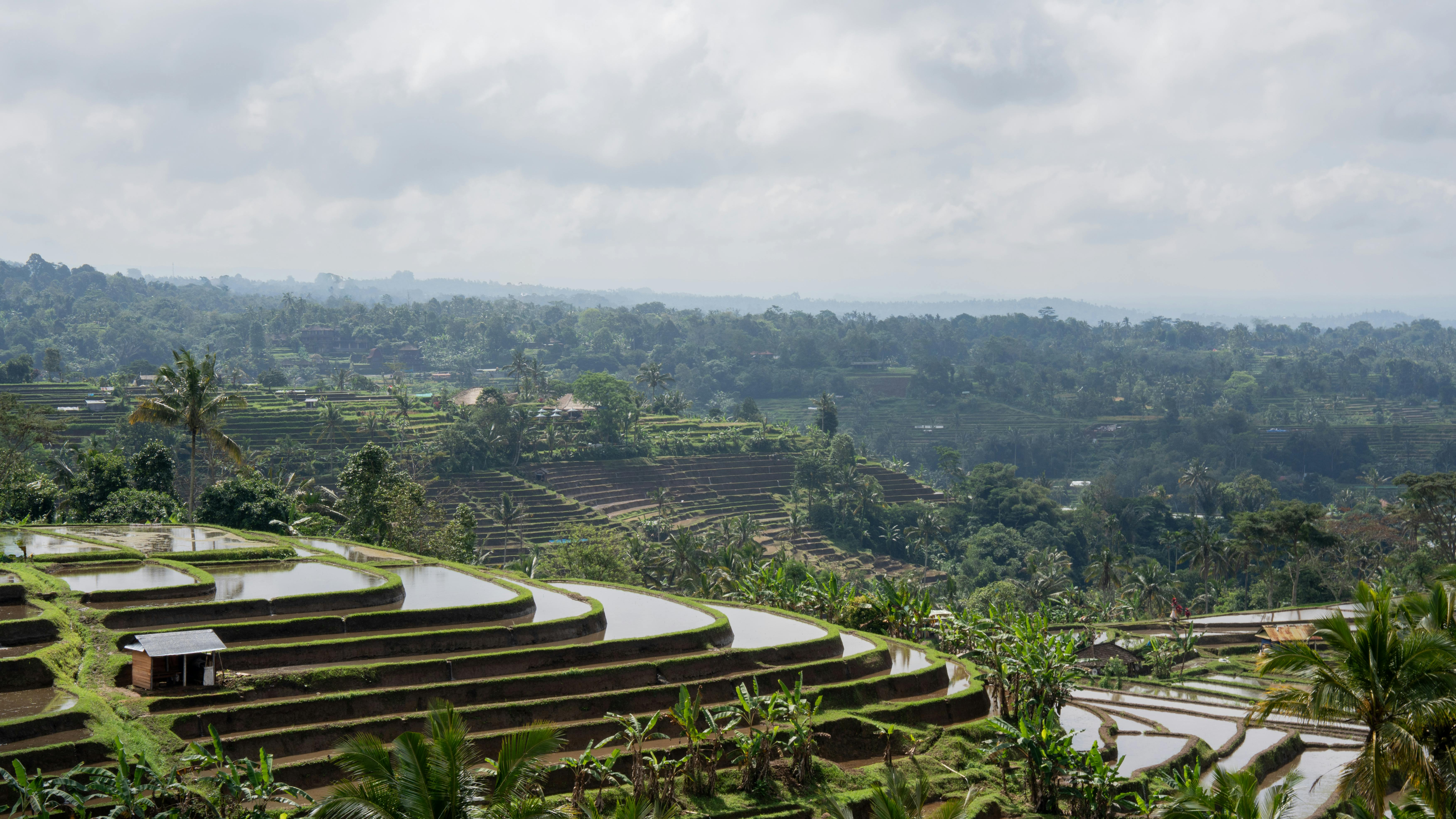
Forget Tegalalang. Tegalalang is the rice terrace your Instagram friend went to, the one with the swings and the photo stands and the $5 entrance fee per photo angle. Jatiluwih is the real thing. It’s a UNESCO World Heritage Site, it covers 600 hectares (not 60), and it’s a working community of farmers using the ancient Subak water-sharing system.
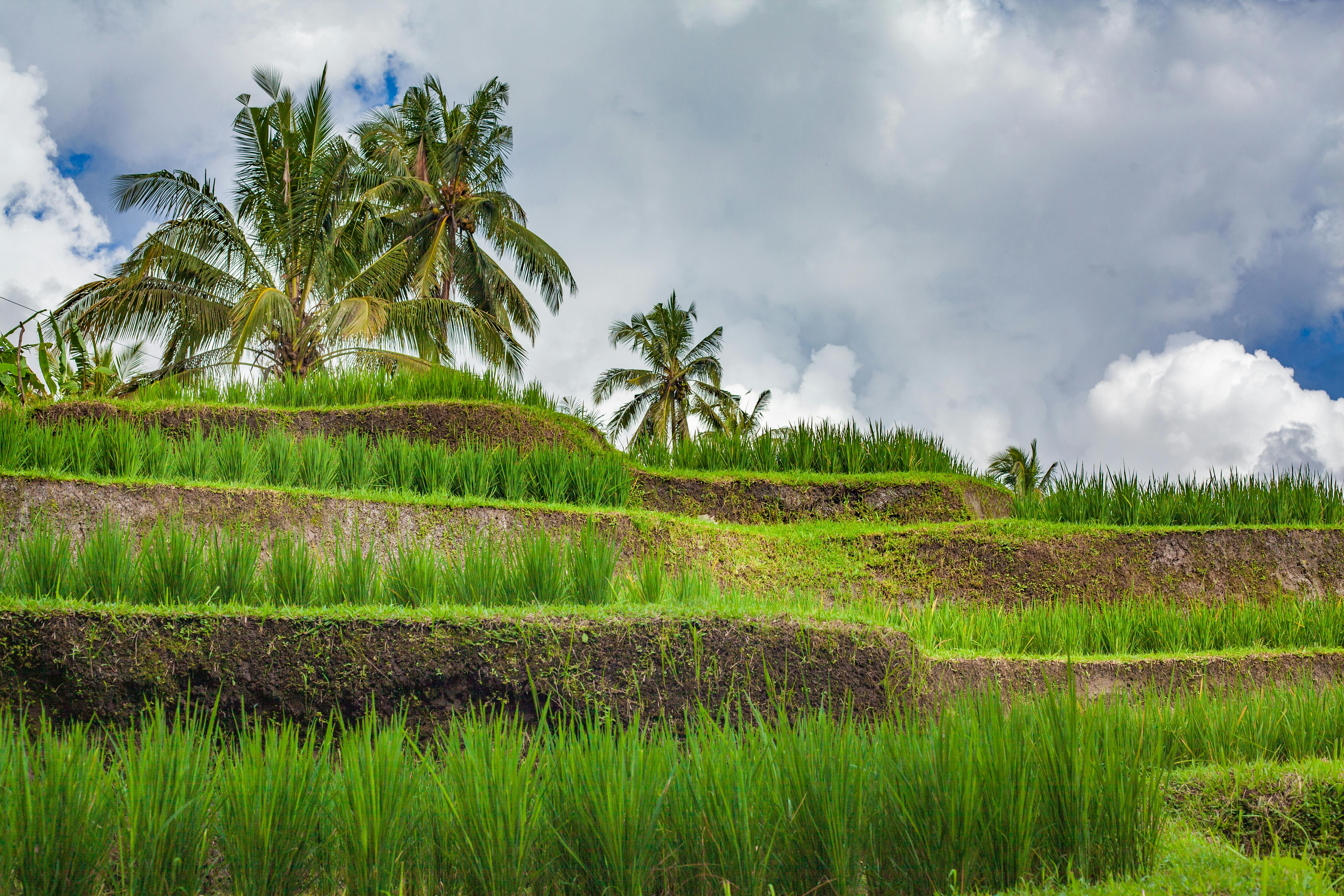
There’s a walking loop of about 2 km that takes you down into the terraces, past the farmers’ huts, along irrigation channels that have been engineered the same way for a thousand years. If you’re pressed for time you can do a 30-minute shortcut. If you want the full experience, allow 90 minutes plus lunch at one of the hillside warungs.
A Waterfall Stop (Usually Git Git or Banyumala)
Which waterfall you get depends on the operator and the weather. Git Git is the classic — a 40-meter drop in thick jungle, a 15-minute walk from the parking lot, swim-friendly pool at the base. Banyumala is the twin-fall option, prettier in photos, but a tougher hike down.
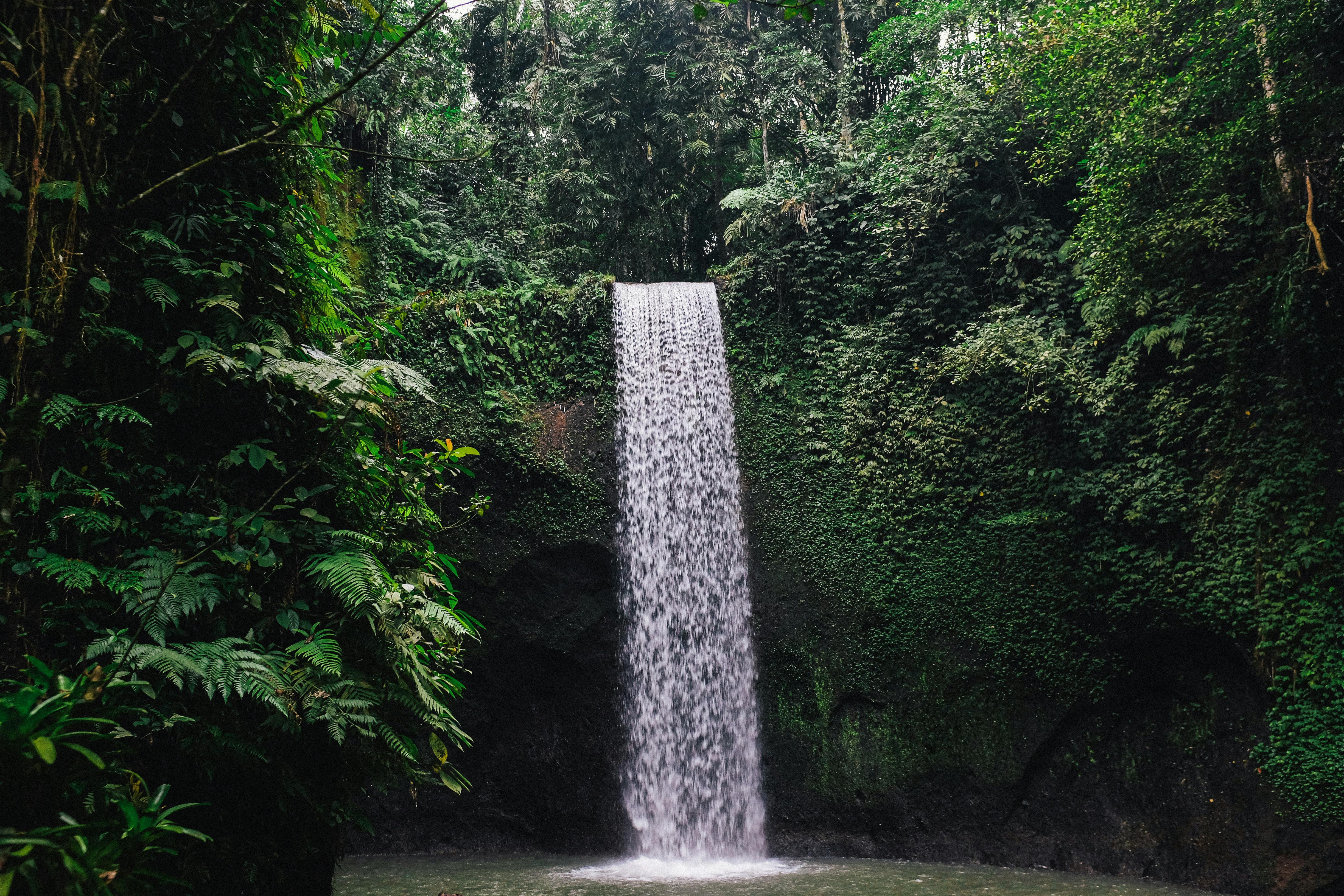
Bring a swimsuit. Wear shoes you don’t mind getting wet. The water is genuinely cold at this altitude — refreshing after the humidity, but it’s not a warm bath.
Tanah Lot — The Main Event
And then you finish at Tanah Lot for sunset. After the quiet of the rice terraces and the lake temple, arriving at Tanah Lot is a shock — the crowds, the noise, the vendors. But that’s why you save it for last. You’ve already had the spiritual calm at Ulun Danu, the natural beauty at Jatiluwih, the adventure at the waterfall. Tanah Lot is the big photographic payoff.
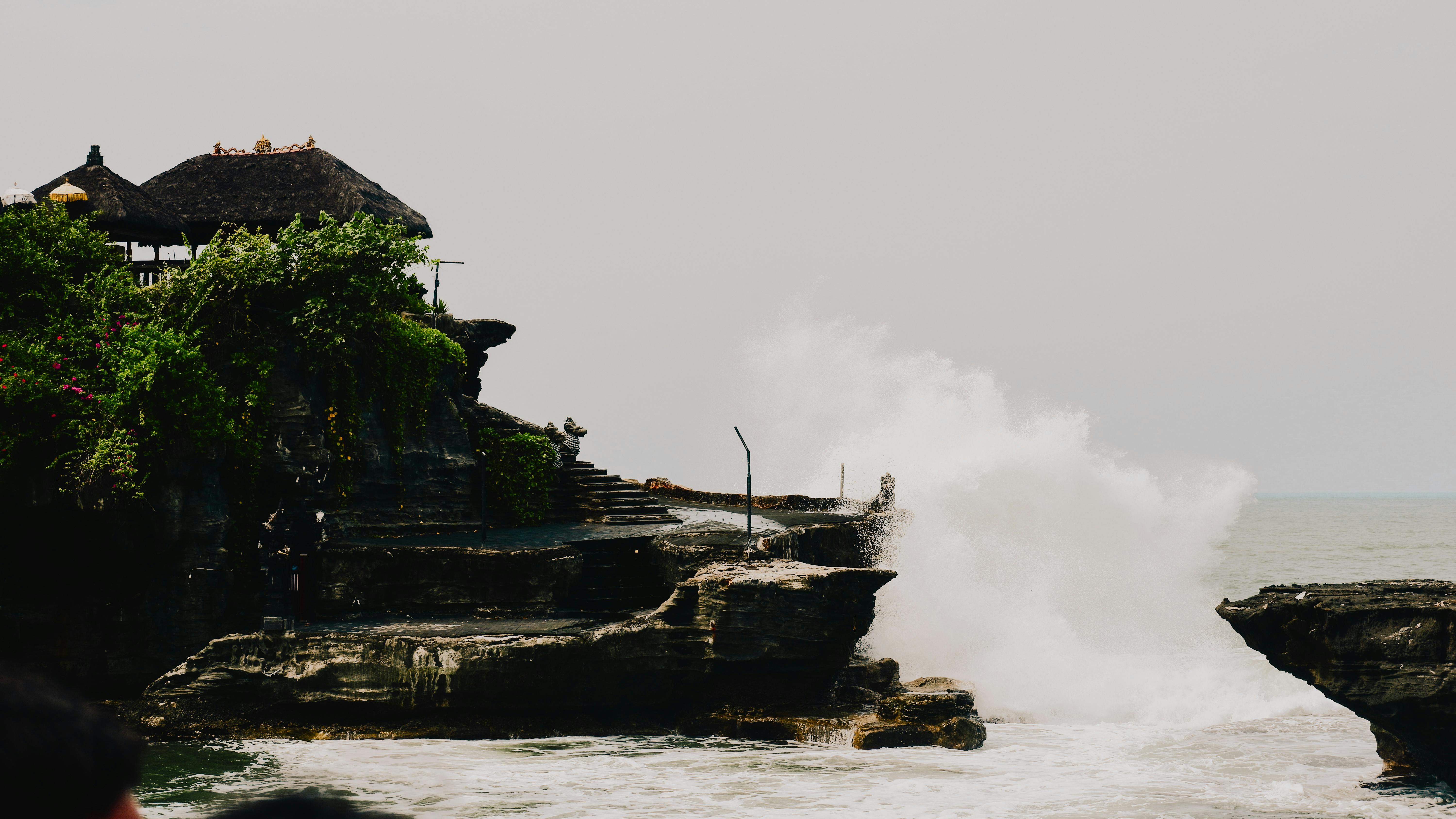
The temple itself dates to the 16th century, built by the Javanese holy man Nirartha, who is said to have chosen the rock because it already felt sacred. Non-Hindus aren’t allowed inside the main shrine, but you can get close enough to see the priest, hear the gamelan, and understand why this spot has pulled pilgrims for 500 years.

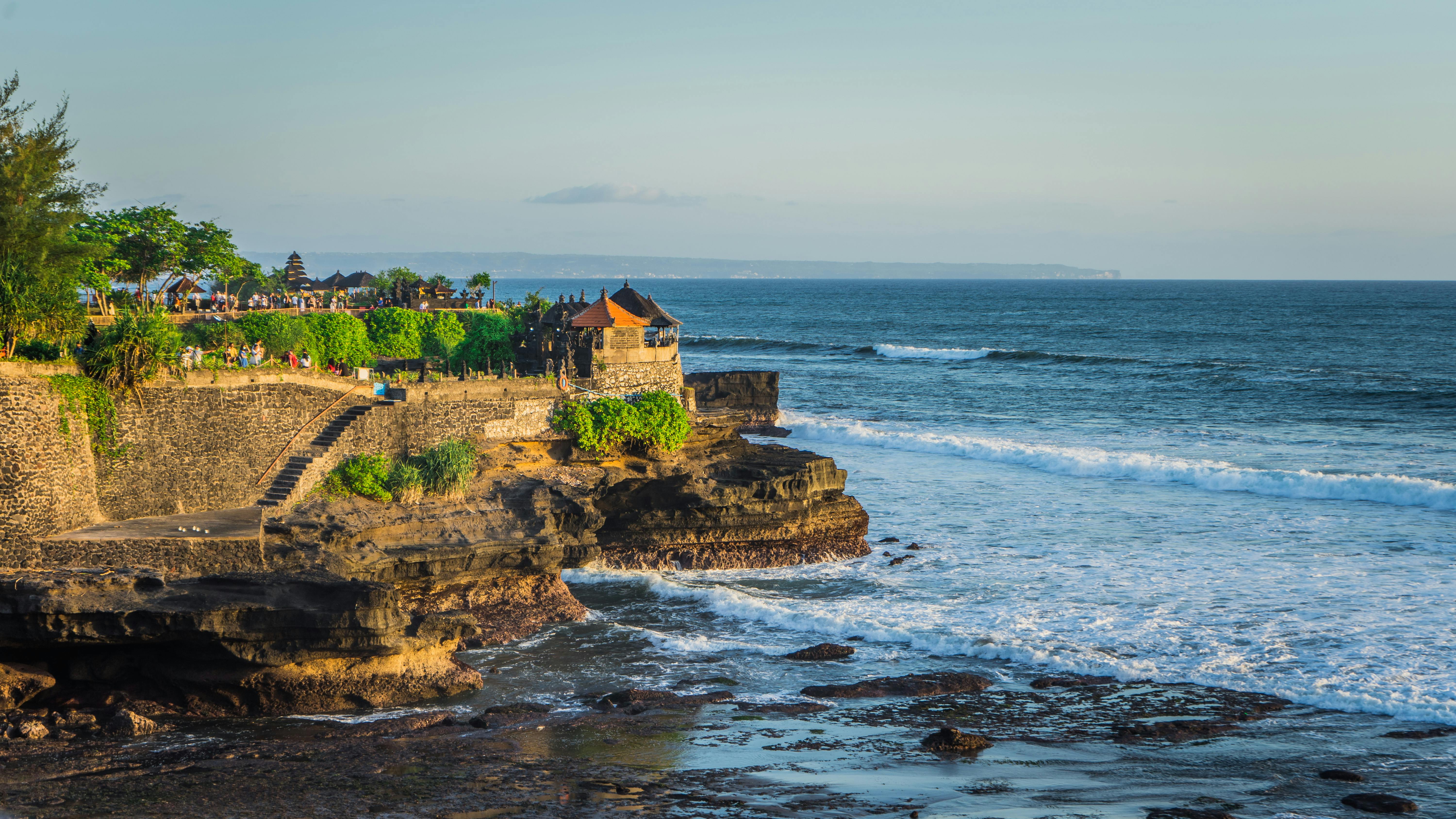
A Few Things Nobody Tells You About Tanah Lot
First: there are actually seven sea temples along Bali’s southwest coast that form a ritual chain, each one visible from the next. Tanah Lot is the most famous, but you can see Batu Bolong and Pakendungan right next to it, both free to walk into, and both empty while everyone piles onto the Tanah Lot viewing platform. If you arrive early, take the 20-minute clifftop walk north to Batu Bolong. It’s the same ocean, the same black rocks, the same sunset — without the crowd.
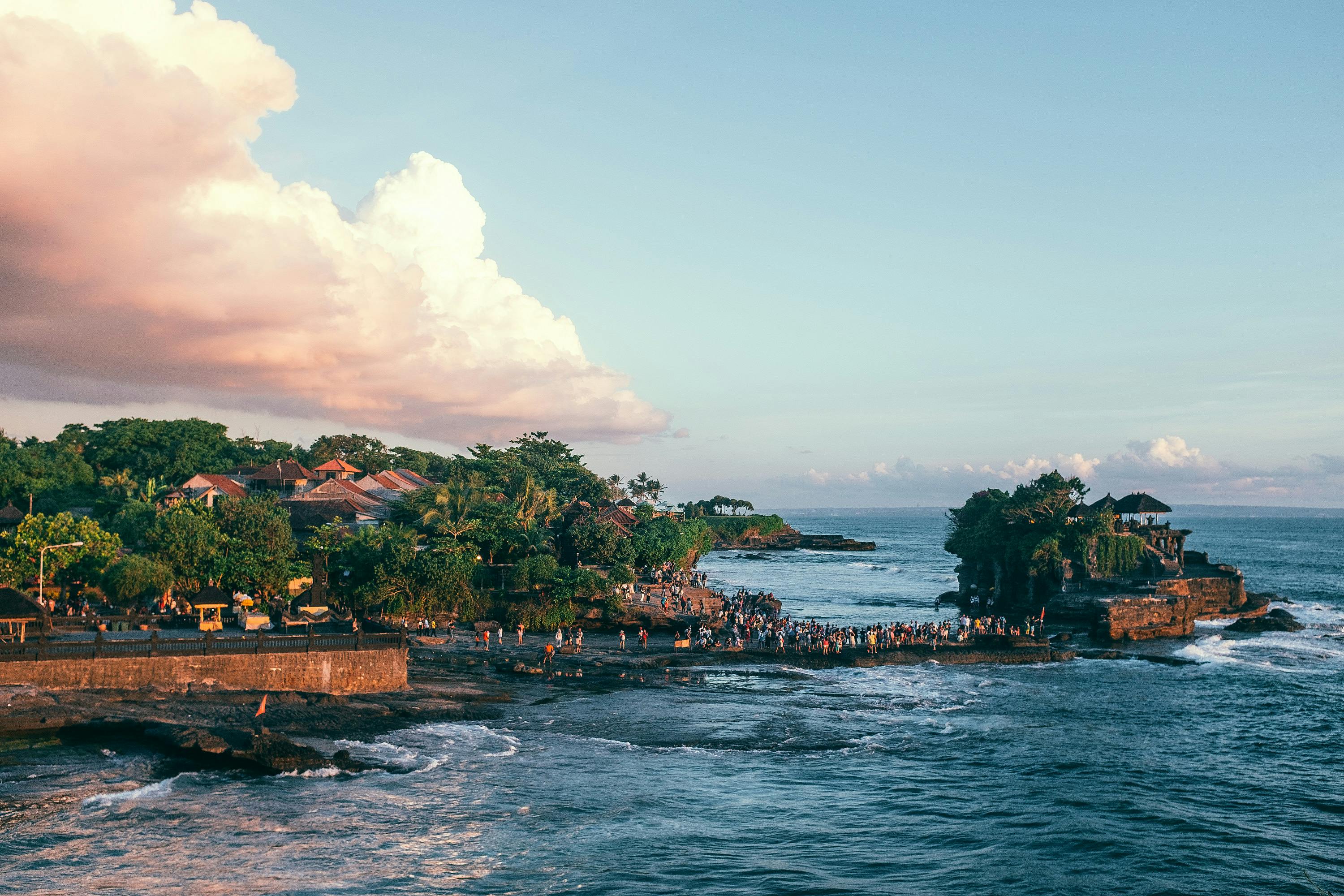
Second: the “sea snakes” at the holy cave are a thing. There’s a small cave at the base of the rock (accessible only at low tide) where priests keep a pair of striped water snakes that are said to guard the temple. You can pay a small donation to see them and receive a blessing. Whether you believe in the spiritual side or not, it’s the kind of specific cultural detail that makes the trip memorable.
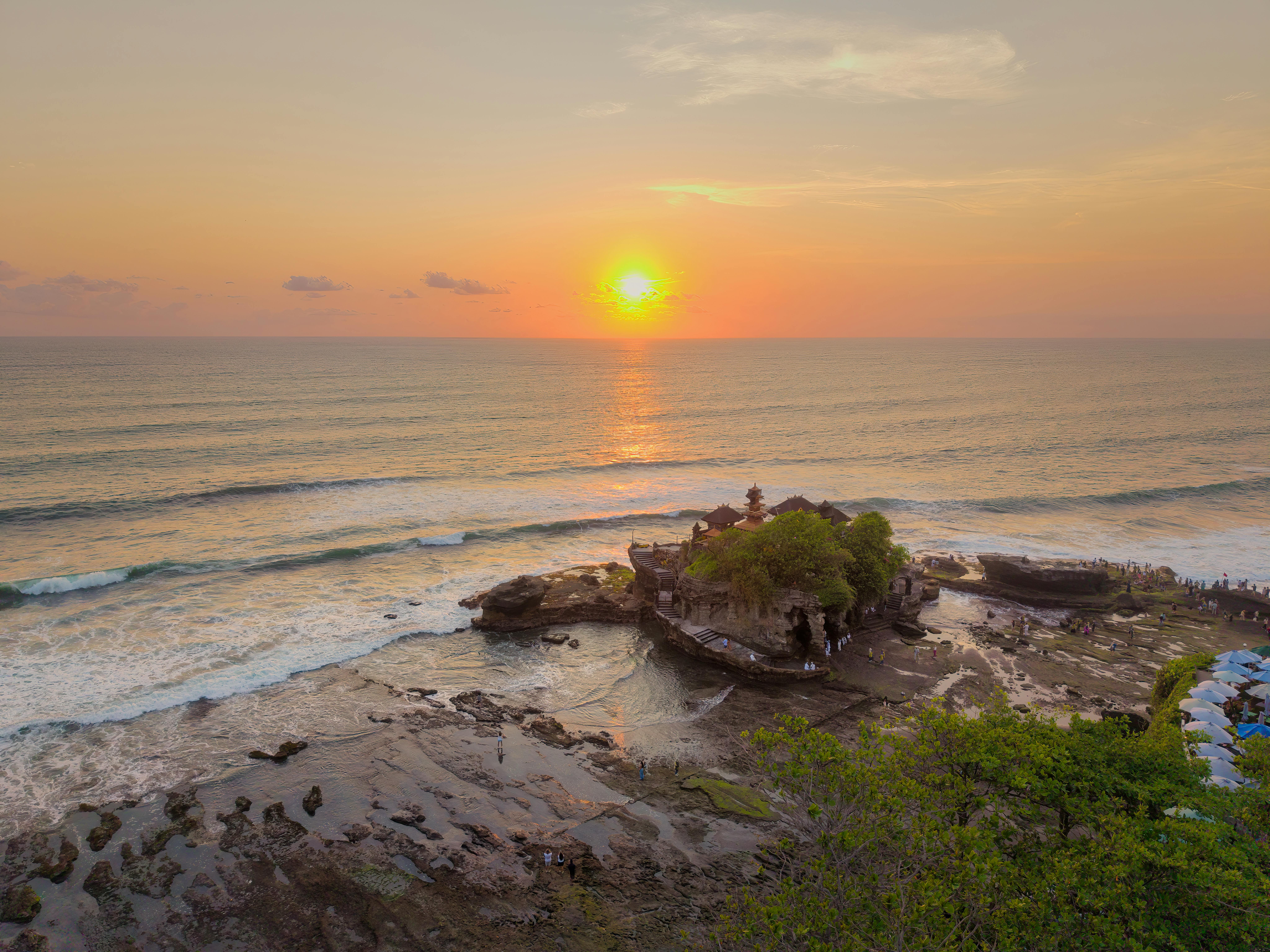
Third: the sunset is statistically better in the shoulder season than peak. Dry-season sunsets are clean but often hazy. Wet-season sunsets (when the rain holds off) have the dramatic cumulus clouds that make the golden hour photographs look like paintings. My best-ever Tanah Lot sunset was in late October, right at the edge of the rainy season.
While You’re Planning the Rest of Bali
A Tanah Lot and North Bali day pairs really well with a few other trips I’ve written about. If you’re already planning a full Ubud day, my guide on how to book an Ubud tour covers the south-central loop that’s the natural complement to this one — Tegalalang, monkey forest, Tirta Empul. And the early start that works best for this tour also sets you up for the Mount Batur sunrise hike, which is the other must-do day trip from Ubud or Seminyak.
If waterfalls are what hooked you about this article, my separate Bali waterfalls tour guide goes deep on the best three-waterfall circuit in central Bali — it’s the better option if you want to focus on jungles and swimming holes instead of temples.
For your last day on the island, the Uluwatu Kecak fire dance and Jimbaran seafood dinner combo is the mirror-image of this tour: clifftop temple instead of sea temple, southern peninsula instead of the north highlands, a different Bali. And if you’ve got even one extra day to spare, take the Nusa Penida day trip — it’s the island everyone wishes they’d given two days to.