
Is the Leonardo Interactive Museum in Florence actually worth the detour from the Uffizi queue? After a couple of hours pulling levers on Renaissance war machines, cranking gear systems, and watching kids genuinely lose their minds over a wooden tank, the answer is yes. With one big caveat about which Leonardo museum you’re booking.
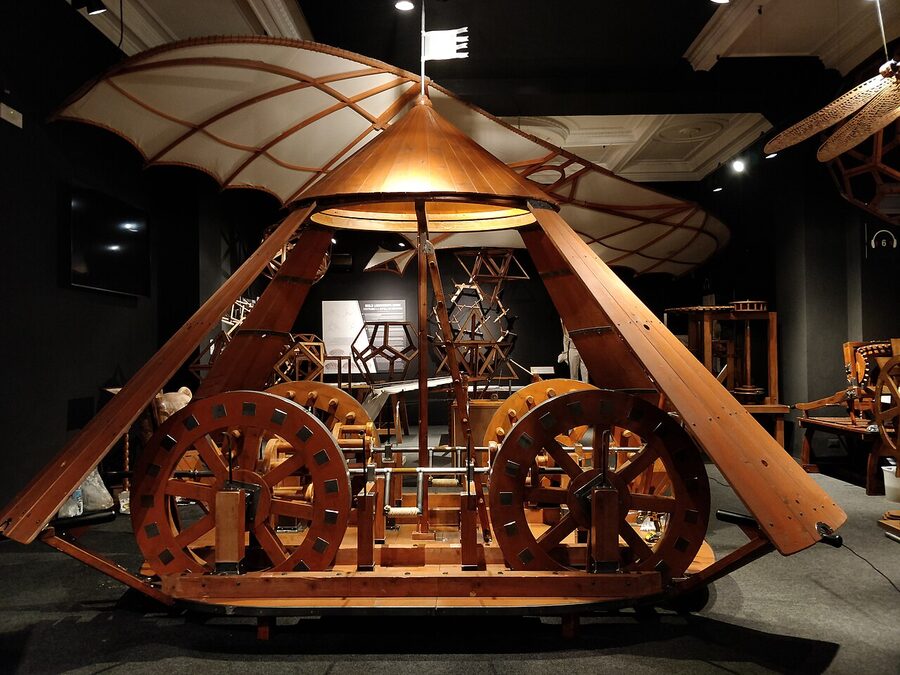
Quick reality check before you book. There are at least four museums in Italy with “Leonardo” in the name. Florence has two within walking distance of each other, both legitimate, both interactive, both confusing. This article is about the Leonardo Interactive Museum at Via dei Servi 66/R, near the Duomo. It is the one with the heavy hands-on focus on Leonardo’s machines and inventions.
Short on time? Here are my picks:
Best value: Leonardo Interactive Museum Entry Ticket, $9. The flagship GetYourGuide listing with 11,000+ bookings. Cheapest entry, simple timed ticket, no extras.
Skip-the-line via Viator: Leonardo Interactive Museum Entrance Ticket, $11.95. Same museum, Viator booking platform if that’s what your travel app preferred.
Bigger collection visit: Visit to the Interactive Leonardo Da Vinci Museum, $11. Newer GYG listing covering the museum that markets itself as the largest Leonardo collection in Europe (120+ models, 50 interactive).
- Which Leonardo Museum Are You Actually Booking?
- Where the Museum Sits in Your Florence Day
- Tickets, Discounts, and What Actually Costs What
- Best Tickets for the Leonardo Interactive Museum
- 1. Leonardo Interactive Museum Entry Ticket:
- 2. Leonardo Interactive Museum Entrance Ticket (Viator): .95
- 3. Visit to the Interactive Leonardo Da Vinci Museum:
- What You Actually Touch Inside
- The War Machines
- The Flying Machines
- The Civil Engineering
- How to Actually Get There
- Hours, Best Times, and Worst Times
- Is It Worth It for Adults Without Kids?
- Pairing It With Other Florence Attractions
- What to Skip and What to Spend Time On
- A Brief Bit of History (Without Padding)
- Practical Things Worth Knowing
- One Common Booking Mistake to Avoid
- Where to Go Next After the Museum
- Final Take
Which Leonardo Museum Are You Actually Booking?
This is the most common booking confusion in Florence and it’s worth ten minutes of your time before you click buy.
Florence has two Leonardo-themed interactive museums. They are different businesses, in different buildings, with different ticket platforms.
Leonardo Interactive Museum (Via dei Servi 66/R, near the Duomo). This is the one with the giant body of online reviews, the official site at leonardointeractivemuseum.com, and the museum that pops up first on every search engine. It’s the one most tourists end up at. It’s the focus of this guide.
Museo Leonardo da Vinci (also called Museo Leonardiano in some listings). A separate operation, also in central Florence, also packed with interactive models. Confusingly, this one sometimes also gets listed as “Leonardo da Vinci Museum” on Viator and GetYourGuide.
To make it worse, there are also Leonardo museums in Milan, Venice, Rome, and the town of Vinci itself. The Vinci one (in Leonardo’s actual birthplace) is the academically respected one. The big-city ones are tourist-focused interactive experiences.
None of them are scams. All of them are honest about what they offer. But if you book the wrong one and walk three blocks over, that’s a wasted afternoon. Always check the address on your booking confirmation. Via dei Servi 66/R is the one this guide covers.

Where the Museum Sits in Your Florence Day
The Leonardo Interactive Museum is a 60 to 90 minute visit. Some people stretch it to 2 hours if they read every panel. Most kids cycle through every interactive exhibit twice in 45 minutes and then ask if there’s a gift shop.
That makes it a perfect filler activity. It slots between the bigger attractions you’ve pre-booked, and it’s indoor, so it works in any weather.
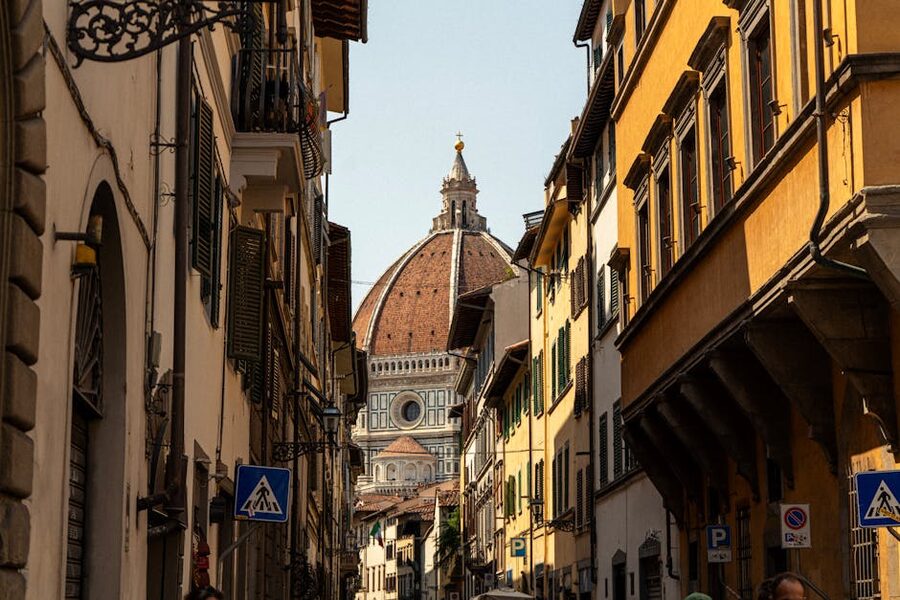
Here’s how it tends to fit in a Florence day. Morning at the Uffizi Gallery, lunch nearby, then walk five minutes to Via dei Servi for Leonardo. From there it’s another five minutes to the Accademia, which means you can hit three of Florence’s most-booked attractions in one afternoon. The walk between them is the easiest part of the day.
If you’ve got kids, this matters even more. The Uffizi is a sit-still-and-look-at-paintings experience. Leonardo is a touch-everything experience. Pairing them in one day means kids stop asking when they can leave the Uffizi because they know the gear-cranking is coming next.
Tickets, Discounts, and What Actually Costs What
The ticket pricing on this museum is genuinely confusing because there are several legitimate listings at slightly different prices, plus a “50% off” promotion the official site runs nearly all year, plus separate Viator and GetYourGuide platforms.
Here’s what to actually expect.
Walk-up tickets at the door. Around €13-15 standard adult, €10 reduced (kids, students, seniors). The museum is not large enough that walk-up is impossible, but you might wait 15-20 minutes during peak hours.
Online via the museum’s official site. They run an aggressive 50% discount that brings entries to roughly €7-8. This is the cheapest option on paper. The catch: it’s a non-refundable timed ticket, and the website is in mixed Italian and English, with a UI that hasn’t been updated since around 2018.
GetYourGuide and Viator. Around $9-12 USD. More expensive than the official 50%-off price, but the booking flow is cleaner, the cancellation policy is more flexible, and you get the same skip-the-line entry. Worth the small premium for most travellers.
The 50%-off gimmick on the official site means you should never pay full price. Either book direct for the discount or use a third-party platform for convenience. Paying €15 walk-up when the same ticket is €7 online is the most common mistake at this museum.
Best Tickets for the Leonardo Interactive Museum
I’ve ranked these by who they suit, not by price. All three are legitimate listings for the same museum (or its sibling listing in the same Florence circuit), just on different booking platforms.
1. Leonardo Interactive Museum Entry Ticket: $9

This is the most-booked option among readers, and it’s the one I’d point most readers to first. At $9 per person, it’s the cheapest of the three Florence Leonardo Interactive Museum listings on GetYourGuide, with the broadest base of reviewers. Suitable for ages 7+. You get skip-the-line timed entry, full access to all 50+ interactive workshops covering bridges, domes, polyhedrons, war machines, and Leonardo’s anatomical work. Our full review of this listing covers what’s worth lingering at and what’s a quick walk-past.
One reviewer put it best: “Leonardo was very talented, and to see and touch his inventions was amazing.” That’s the entire pitch in one sentence.
2. Leonardo Interactive Museum Entrance Ticket (Viator): $11.95
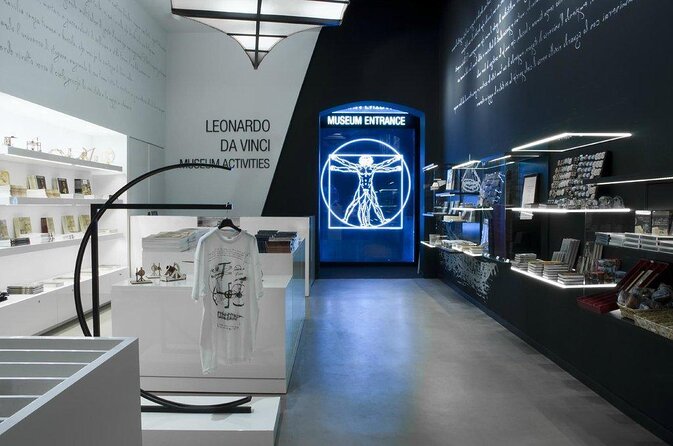
Same museum, same skip-the-line access, just on Viator at $11.95. Worth booking through here only if you’re consolidating everything on one platform for travel-rewards points or expense-tracking reasons. The visit length runs 1 hour to 1.5 hours per the listing’s official duration. Reviewer Josephine summed up the appeal: “Great museum, not too big, very hands on, friendly staff. Good for kids and focuses on Da Vinci’s inventions with the possibility of building some models too.” That last bit is real, several stations let kids assemble small mechanical components themselves. Our review breaks down the Viator-specific cancellation terms.
3. Visit to the Interactive Leonardo Da Vinci Museum: $11
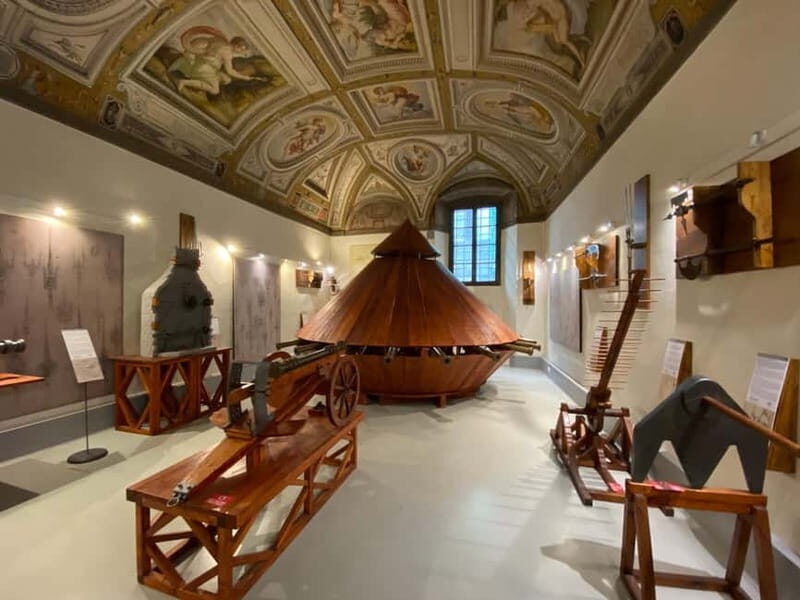
This is the listing for the related Leonardo museum that markets itself as having Europe’s largest Leonardo collection (120+ models, 50 interactive). At $11 it’s a slight premium over the flagship listing, with a smaller and newer reviewer base, since it’s a newer GYG product. Worth picking if you specifically want the larger collection and you’re a Leonardo completionist who’s already seen the Vinci birthplace museum and the Milan science museum’s Leonardo wing. For a first-time Florence visitor with one Leonardo afternoon to spend, the $9 flagship listing covers the bases. Our review explains the differences between the listings and which one matches which physical museum.
What You Actually Touch Inside
The thing nobody tells you about the Leonardo Interactive Museum is that “interactive” is meant literally, not as marketing copy.
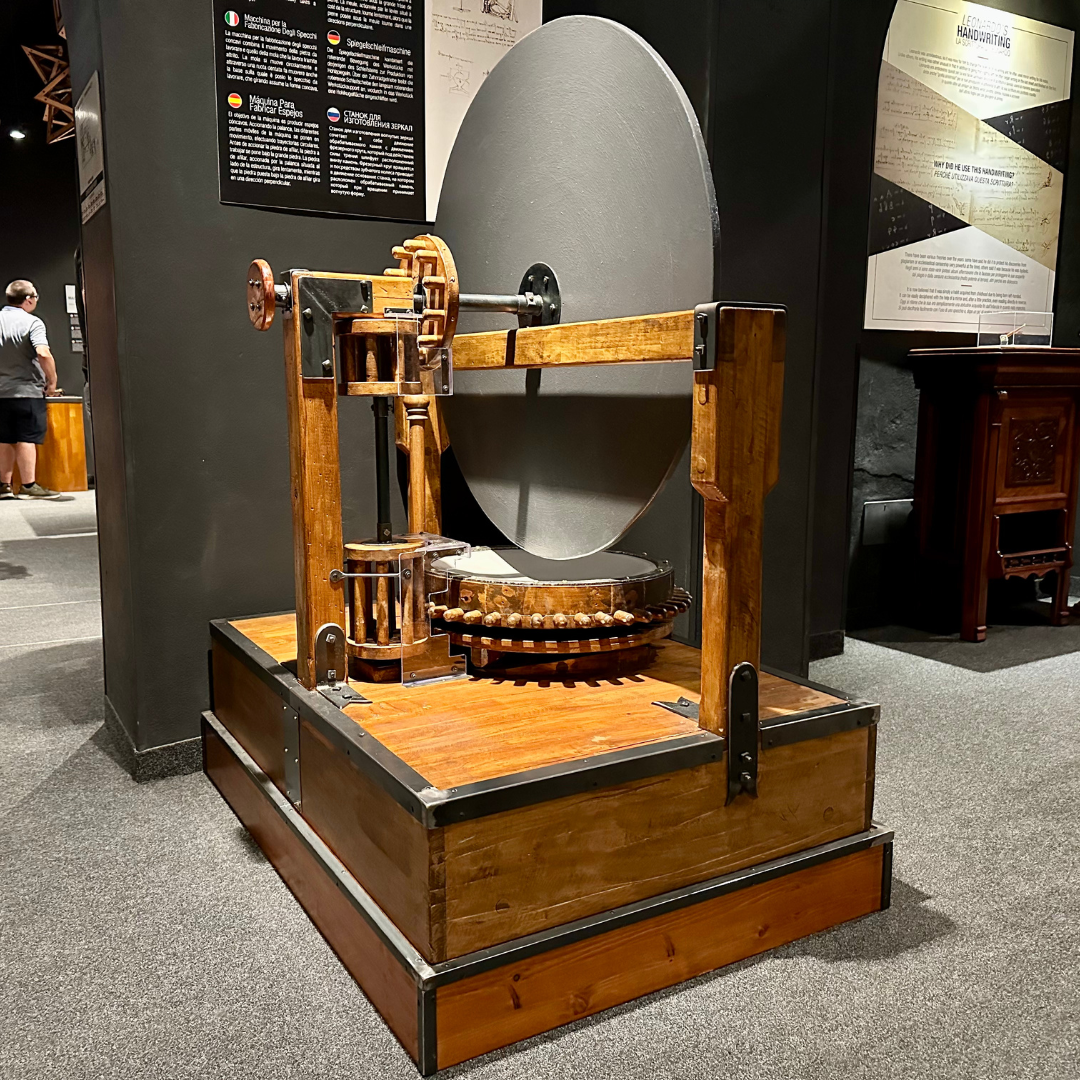
Most exhibits in most museums are interactive in the sense that you can press a button and a video plays. Here, you crank gears. You turn levers. You climb partway into the giant crossbow frame. You assemble small wooden gear systems with your hands, working from Leonardo’s actual sketches.
The museum staff don’t hover. There are no “do not touch” signs on the working machines. The polite expectation is you’ll figure out which exhibits are operational from context (the explanatory plaques say “TRY ME” or similar in obvious places).
Here’s what the rooms cover.
The War Machines
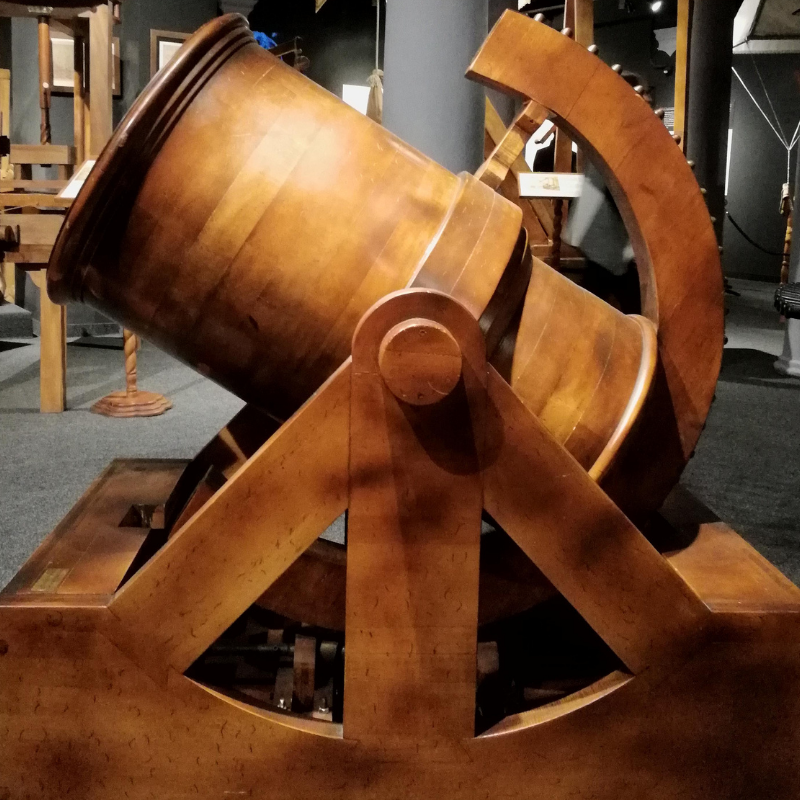
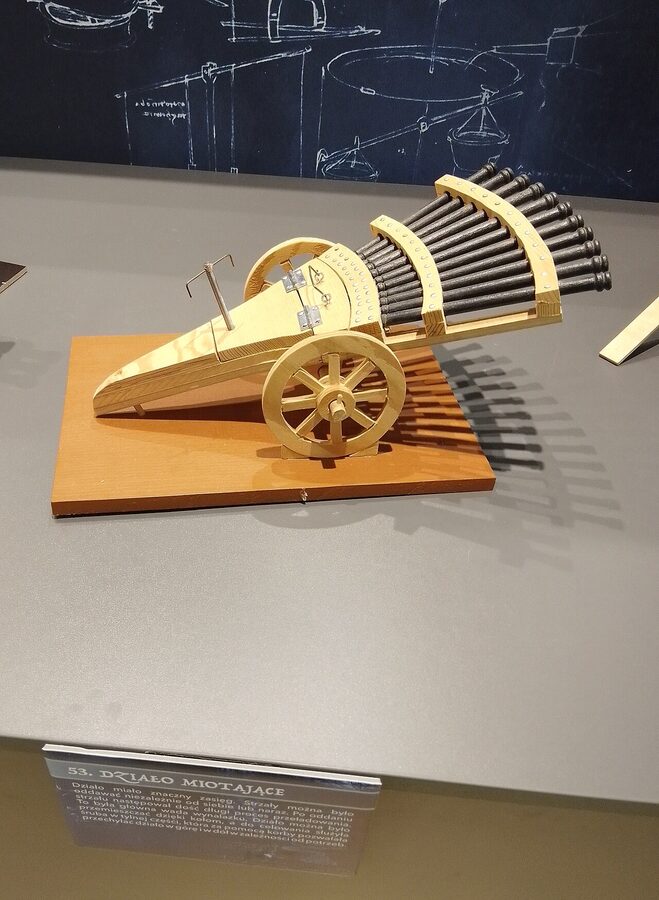
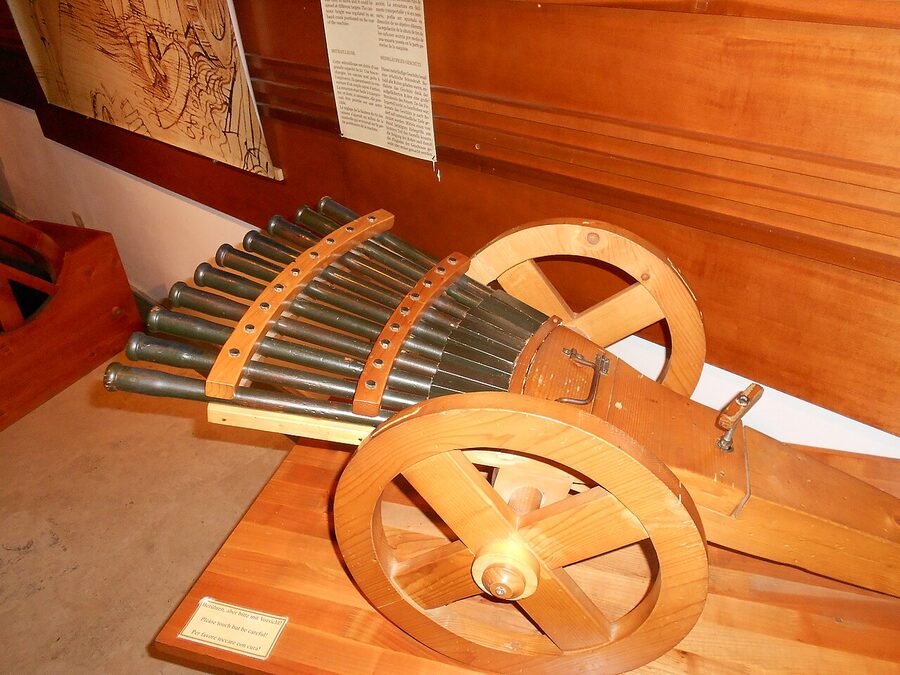
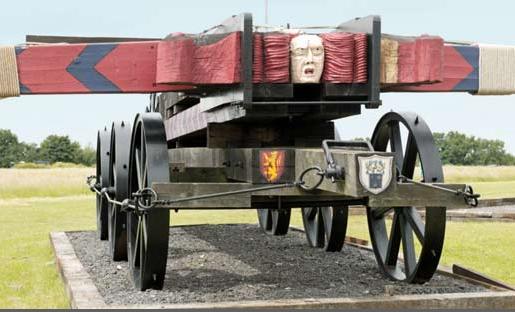
This is the most-photographed section and the one kids gravitate to first. Leonardo’s tank, the multi-barrel cannon (called a mitrailleuse), the giant scaling ladder, the bridge that builds itself, and the famous machine gun design that looks like nothing the 15th century ever produced.
None of these were ever built in Leonardo’s lifetime. He sketched them for patrons (mostly Ludovico Sforza in Milan) who were considering hiring him. The reproductions here are built to his exact specifications, scaled down where needed.
The Flying Machines
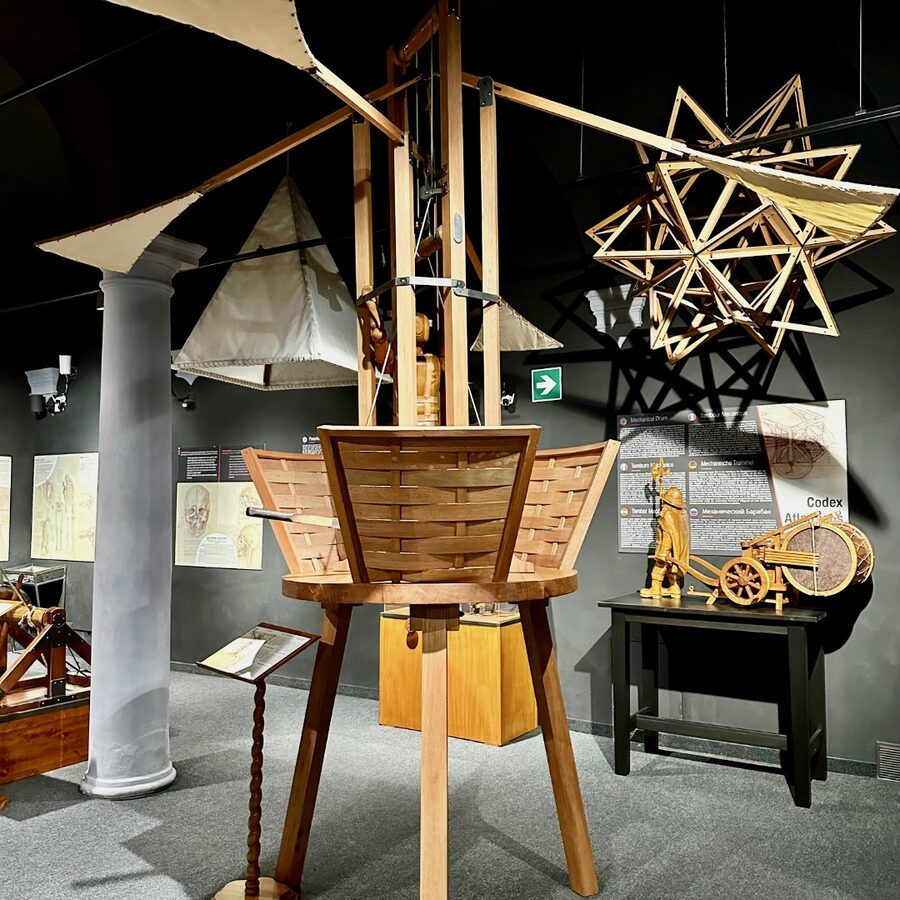
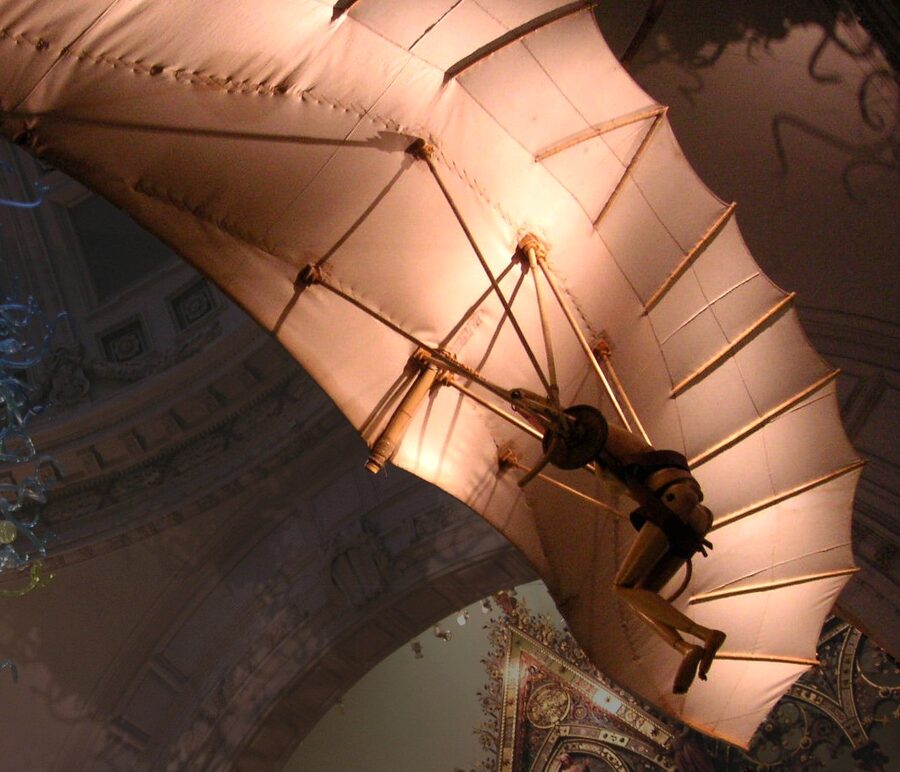
Leonardo’s flying machine sketches are the museum’s signature. The vertical ornithopter (proto-helicopter) sits at the back of the main hall, and there’s a glider model nearby that you can compare to a hang glider’s modern frame.
What’s striking is how close he came. The ornithopter’s lift principle is sound. Leonardo just couldn’t build a power source light enough to spin the screw fast enough. He needed a small petrol engine, which wasn’t going to exist for another 380 years.
The Civil Engineering
Less photogenic but actually more impressive. Leonardo designed canal locks, mobile bridges, hydraulic pumps, and city planning systems that nobody implemented in his lifetime but which engineers still recognise as genuinely innovative.
The self-supporting bridge is the most fun in this section. It’s a stack of beams that holds itself up under tension without any nails, glue, or pins. You can build a small one yourself at the workshop station. It takes about ten minutes if someone helps you with the first beam, and watching it stand up at the end is genuinely satisfying.
If you’ve already done the booking guides for Palazzo Vecchio or Pitti Palace, you’ll notice both buildings sit on top of older medieval foundations that involved exactly the kind of structural engineering Leonardo was sketching. He was the period’s bridge between the Renaissance painters and the working architects of Florence.
How to Actually Get There
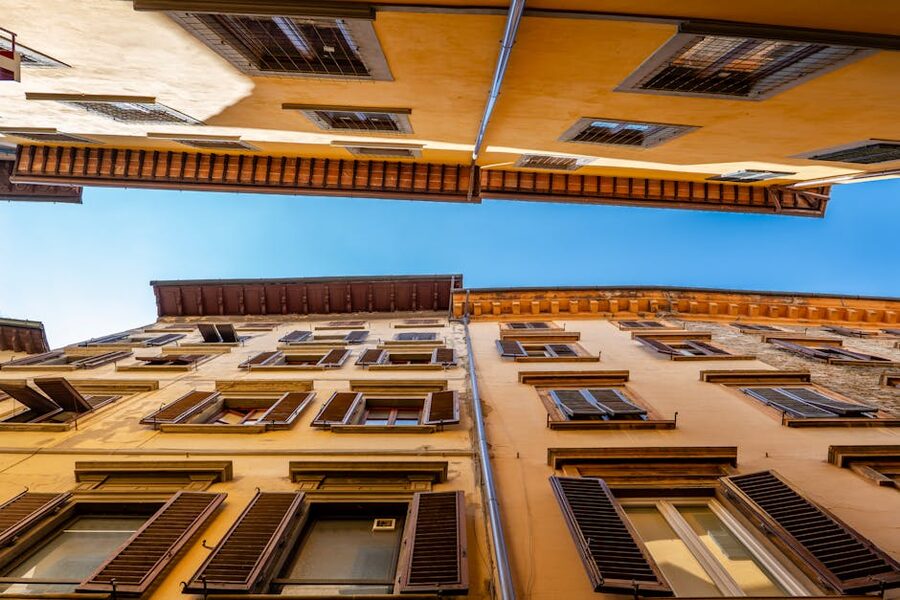
The address is Via dei Servi 66/R, 50122 Florence. The “/R” means red-numbered (Florence has parallel street numbering for residential and commercial addresses, with commercial getting an “R” suffix). The museum is the commercial address.
From the Duomo, walk north up Via dei Servi for about three minutes. You’ll see the entrance on the right. There’s a small black plaque, no flashy signage. If you reach Piazza Santissima Annunziata, you’ve gone about 100 metres too far.
From the Accademia (David), it’s a 5-minute walk south. Exit the Accademia, head down Via Ricasoli toward the Duomo, turn left onto Via degli Alfani, then right onto Via dei Servi. The museum is about 30 metres in.
From the Santa Maria Novella train station, it’s a 15-minute walk through the historic centre. Head east toward the Duomo, then continue past it onto Via dei Servi.
Driving is not realistic. The historic centre is a ZTL (Zona a Traffico Limitato), which means cars without a permit will be photographed and fined automatically. The nearest paid parking is at Piazza della Libertà or Parterre, both about a 15-minute walk away.
Hours, Best Times, and Worst Times
The museum is open every day of the year, including Christmas, with varying hours. Standard is 9:30 AM to 7:30 PM. During peak summer (June through August) and Christmas/Easter holidays, it sometimes extends to 8 PM.
The best time to visit is late afternoon, around 4 PM to 6 PM. Most tour groups have moved on to the Accademia or back to their hotels by then, and the museum is quietest. Mid-morning (10 AM to noon) is the worst time, especially in shoulder season, because that’s when the school groups arrive in waves of 30 children at a time.
If you have kids, lean into the school-group rhythm. Either get there at 9:30 AM opening before the groups arrive, or after 4 PM when they’ve left. The middle of the day is when the museum is loudest and the interactive stations have queues.
Rainy day strategy: this is one of the best rainy-day stops in Florence. It’s small, indoor, dry, and entertaining. If your Duomo dome climb gets cancelled by weather, the Leonardo museum is the obvious substitute. It’s also a 5-minute walk from the Duomo entrance.
Is It Worth It for Adults Without Kids?
Honest answer: depends on how much you already know about Leonardo.
If your reference for Leonardo is the Mona Lisa and not much else, this museum will surprise you. You’ll come out understanding that he was an engineer first and a painter second, and that his sketchbooks contain hundreds of designs for things that didn’t get built for centuries.
If you’ve already read Walter Isaacson’s biography or visited the Codex Atlanticus exhibits at the Ambrosiana in Milan, this museum is going to feel light. It’s pitched at general visitors, not specialists. The explanatory text is two paragraphs per exhibit, in Italian and English, occasionally Spanish.
For most adult travellers, particularly anyone who liked the engineering side of school subjects, an hour here is genuinely good value. For Renaissance-period historians, you’ll spend more time at the Uffizi looking at Leonardo’s actual paintings (the Annunciation and Adoration of the Magi are both there).

Pairing It With Other Florence Attractions
The museum’s location is genuinely useful for sequencing your day. Within 5 minutes’ walk you have the Duomo, the Accademia, the Uffizi (8 minutes), and the Mercato Centrale food hall (7 minutes).
The most efficient half-day sequence: Accademia at 9:30 AM (David takes 45 minutes), Leonardo Museum at 10:30 AM (75 minutes), lunch at Mercato Centrale at noon, Duomo dome climb at 2 PM, Baptistery at 3:30 PM. That’s five attractions in six hours, with reasonable walking between each.
If you’re packing in the Uffizi on the same day, swap the Duomo dome for an Uffizi visit and start earlier. The Uffizi takes 2-3 hours minimum.
For families with kids, the Leonardo Museum should be the post-lunch slot. Kids burn off energy here. After this they’ll be calm enough for the David viewing at the Accademia, where they need to walk quietly past hushed groups looking at sculptures.
If you’re spreading the visit over two days, pair the Leonardo Museum with the Palazzo Vecchio on day one, and save the Uffizi/Accademia for day two. Palazzo Vecchio is also surprisingly hands-on for a town hall (the secret passages tour is the standout), so day one becomes the engineering/active day.
What to Skip and What to Spend Time On
If you only have an hour, here’s the priority list for what’s worth lingering at.
The interactive bridge construction station gets the most time from the museum’s regulars. It’s the one exhibit where you genuinely build something with your hands and walk away having understood a piece of Leonardo’s structural thinking.
The flying machines section is worth ten minutes for the photos and the engineering chat. The vertical ornithopter is the must-see, but the parachute and glider models are also there.
The war machines section is the loudest and most popular, so it’s worth visiting either first (when you arrive) or last (after others have moved on). Mid-visit, it’s usually busy enough that you can’t get to the cranks.
What to skip: the painting-related exhibits. The museum has reproductions of some of Leonardo’s notebooks and a few small works on paper, but these are not originals and the lighting is poor. Save your art viewing for the Uffizi where the actual Leonardo Annunciation hangs.
A Brief Bit of History (Without Padding)
Leonardo da Vinci was born in Vinci (a village 30km west of Florence) in 1452, moved to Florence around 1466 to apprentice with Andrea del Verrocchio, and worked here until 1482 when he relocated to Milan. He came back to Florence briefly in the early 1500s, then moved between Milan, Rome, and France for the rest of his life.
His Florence years are when most of his foundational work happened. The notebooks where he sketched flying machines, war engines, and engineering schemes were started here. The first Annunciation was painted here. The lessons he learned in Verrocchio’s workshop, particularly about anatomy and perspective, all came out of Florence.
That’s why a Leonardo-focused museum makes sense in this city. It’s not arbitrary marketing. He genuinely was a Florentine for his most formative years, and the Renaissance environment shaped everything he later did in Milan and France.
The museum’s collection is built from Leonardo’s actual sketchbooks (the Codex Atlanticus, the Madrid Codices, the Codex Leicester, etc.) and contemporary engineering writing. The reproductions are made by Italian craftsmen using period-appropriate methods where possible. Some are on permanent display and some rotate seasonally.
Worth flagging: Leonardo’s St. Jerome painting lives at the Vatican Museums in Rome, not in any Florence collection. If you’re an actual Leonardo completionist on an Italy trip, a Florence Interactive Museum visit pairs naturally with the Vatican stop on a later day. And Rome’s Colosseum shows you the kind of engineering Leonardo was studying when he wrote his sketchbook notes on Roman building methods.
Practical Things Worth Knowing
Bags and coats. There’s no formal cloakroom, but small bags are fine. Big rucksacks are awkward in the narrower sections, so leave them at your hotel.
Photography. Allowed throughout, including flash. The Wikimedia images you’ve seen scattered through this guide were all taken inside the museum by visitors.
Audio guides. Available in Italian, English, French, German, Spanish, Russian, Japanese, and Chinese. Worth the small extra cost (around €4) if you want context for the exhibits beyond the text panels.
Accessibility. The building has an internal lift but the entrance has a small step. Wheelchair users can access most of the museum, but the upper floor (where some interactive exhibits live) is harder to reach. Check with the museum directly before booking if accessibility is critical.
Toilets. Yes, on the ground floor. Free to museum visitors. Italian-style (small, basic, but functional).
Café or shop. A small gift shop near the exit. No café inside, but Via dei Servi has multiple coffee bars within 50 metres of the museum, and any of them are better than what a museum café would provide.
One Common Booking Mistake to Avoid

The museum has a sister listing online called “Tour Leonardo” which is a 2-hour walking tour that includes the museum entry plus a guided walk past Leonardo-related Florence sites (Verrocchio’s school location, Ponte Vecchio’s golden bridge connection, Piazza Signoria’s Leonardo plaques).
This is a separate product from the standard entry ticket. It costs around €25-30. If you book it expecting just museum entry, you’ll be confused when the booking confirmation says to meet a guide somewhere.
The walking tour is genuinely fun if Leonardo is a special interest of yours, and the route is good. But if you just want the museum entry to slot between the Uffizi and the Accademia, book the standard entry ticket, not the tour.
Where to Go Next After the Museum
The Leonardo museum sits in walking range of basically everything. If you’ve already booked the Accademia for the David, this slots in right next door. If your Florence weekend includes a half-day across the Arno at the Pitti Palace and Boboli Gardens, the Leonardo Museum is the perfect rainy-Saturday backup if the gardens get washed out.
If Florence is your jumping-off point for Tuscany, this museum pairs well with a Vinci day-trip (Leonardo’s birthplace village, 45 minutes by car or train). Florence in the morning, historical Vinci in the afternoon, full Leonardo day done.
Final Take
The Leonardo Interactive Museum is a niche activity that punches above its weight. It’s not on most “top 10 Florence attractions” lists, and that’s exactly why it’s worth booking. You’ll get an hour of hands-on Renaissance engineering for $9, sandwiched between the bigger ticketed attractions, in a perfect central location.
If you have kids, this is a top-three Florence stop. If you’re an adult travelling without kids, it’s a good filler that’s better than skipping or doing yet another church. If you’re a Leonardo specialist, you’ve probably already been.
The thing this museum does that nothing else in Florence does: it lets you actually touch the Renaissance. The Uffizi has the paintings behind glass. The Duomo has the dome you can’t go close to. The Accademia has David roped off. Here, you turn the cranks. That counts for something.