
Here is the part of Red Light Secrets that nobody warns you about. The recreated window booth has a panic button under the stool, and a screen the size of a real window plays back exactly what a sex worker sees from the inside: the leering, the laughing, the women who shake their heads and walk past faster. You sit there for about ninety seconds and you stop thinking of De Wallen as a tourist photo op.
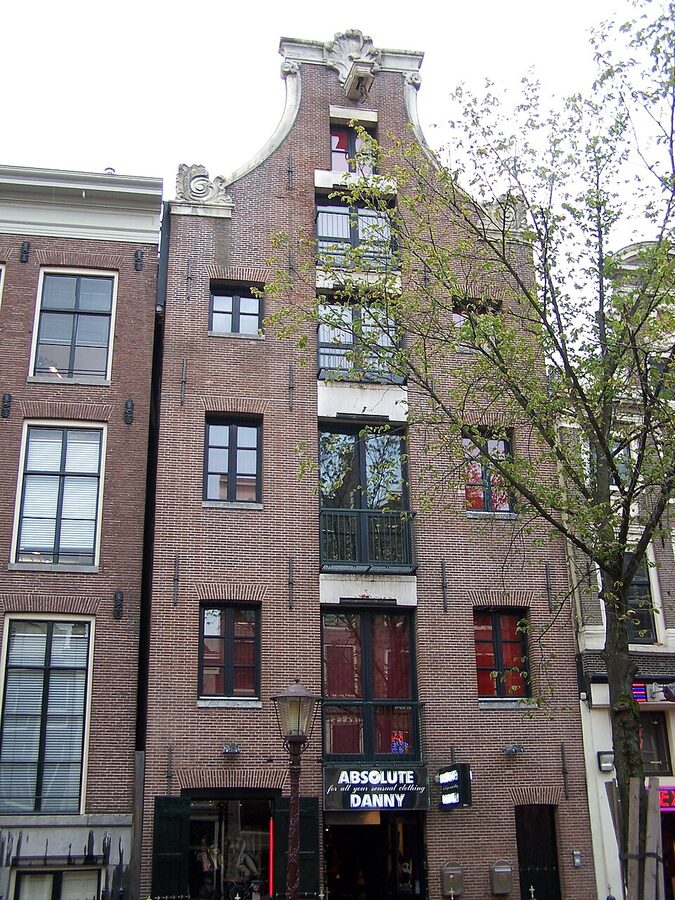
The museum sits at Oudezijds Achterburgwal 60H, in a converted 17th-century canal house that used to be a working brothel. It is the only Museum of Prostitution in the world. About forty-five minutes inside is enough for most people. You walk out a bit quieter than you walked in.
- In a hurry? Quick picks
- What Red Light Secrets actually is
- The booth, the panic button, and what a worker sees
- How booking works (the boring but useful part)
- The three tickets I’d actually book
- 1. Red Light Secrets Museum Entry Ticket: from
- 2. Red Light District Walking Tour: from
- 3. Red Light District & Coffee Shop Tour: from
- Museum vs walking tour: what to pick
- The history room (the part most visitors skim)
- The 10 commandments
- Where it sits in De Wallen
- What surprised me, what disappointed me
- Practical things, in one place
- Etiquette walking the district afterwards
- Sealed-time history museum cousins
- Common questions I get about visiting
- What to do for the rest of the evening
- More Amsterdam guides worth your time
In a hurry? Quick picks
Skip-the-line entry ticket from around $17. Audio guide on your phone, valid all day, by far the simplest way in. Book on GetYourGuide
Walking tour of the district from around $28, ninety minutes, real guide. Better paired with a museum visit than done alone. Book the walking tour
Coffee shop combo tour from around $29, two hours, covers cannabis culture and the district together. Book the combo tour
What Red Light Secrets actually is
It is small. Two floors, a handful of rooms, no audio tour blasted into your ears unless you want one (the audio is on your phone, and you choose which stories to play). The original house was a 17th-century canal home that operated as a brothel for decades before the museum took it over in 2014.
The founder is the part nobody puts on the brochure. He was a Dutch real-estate developer who started buying buildings in De Wallen for normal commercial reasons, met the women working in his properties, and ended up funding the museum as a sex-worker advocacy project. His name is Melcher de Wind. The whole place was his money and his idea.
Inside, you get five distinct experiences, none of them long. The recreated window booth is the headline room. There is a history wall covering Amsterdam’s prostitution laws from 1830 to now. There is a client psychology room with the things customers have left behind, including, on the day I went, a fully readable national ID card. There is a wall of confessions written on slips of paper by museum visitors. And there are short interview videos with current Amsterdam sex workers, faces blurred or off-camera, voices kept whole.
The booth, the panic button, and what a worker sees
The recreated window booth is the bit you came for, even if you didn’t know it yet. You step into a small alcove behind a real red-fringed curtain. There is a high stool, the kind with the metal footrest that everyone in the district uses. Sit down. The lighting is the same red gel they use on the actual street.
Then the screen turns on, and you are looking out into the Achterburgwal at three in the morning. It is filmed from a real working window. Drunk men gawk. A bachelor party laughs and points. A couple of women cross the street to avoid eye contact, then turn back to stare. One man stops, leers for a long beat, makes a gesture, walks off. Another taps the glass. The footage runs roughly ninety seconds.
Under the seat, on your right hand side, there is a small red panic button. It is wired to a fake emergency display in the next room, and the museum lights the display whenever a visitor presses it. Real working windows in Amsterdam have the same button. It connects to a private security service, not the police. A worker can hit it and have someone at her door inside two minutes. The museum tells you that. They tell you the button gets pressed about a dozen times a day in De Wallen.
How booking works (the boring but useful part)
Three ways in, in order of how I’d rank them.
Online ticket through a third party is what most visitors do. GetYourGuide, Tiqets, and Viator all sell the standard entry ticket for around $17 to $19. You get a QR code. You skip the on-site queue. You pick a date, but not a time slot, so you can show up any time the museum is open. This is the easiest option, and the cancellation policies are usually flexible (free cancellation up to 24 hours before on most listings). I’d book online and not think about it again.
Walk up and pay at the door works fine on weekday afternoons. Friday and Saturday nights, you will queue ten or twenty minutes outside on the canal. The on-site price is about a euro higher than the online price. They take card, no cash needed.
The off-peak ticket is a third option people miss. It is a discounted entry valid only between 11 a.m. and noon, when the museum is almost empty. It is around $10 instead of $17. If you can be there at opening, take this. The booth has no queue and you get the videos to yourself.
Opening hours run 11 a.m. to 10:30 p.m. Sunday through Thursday, and 11 a.m. to 11:30 p.m. on Friday and Saturday. Last entry is 45 minutes before close. You must be 16 or older. The building is a 17th-century canal house with steep narrow stairs, so it is not wheelchair accessible. There is no luggage storage, so do not show up with a suitcase straight from Centraal.
The three tickets I’d actually book
Below are the three I send people to. The first one is the museum entry on its own. The other two pair the museum with a walking tour or a coffee-shop tour, since you tend to want context after you walk out of the booth room.
1. Red Light Secrets Museum Entry Ticket: from $17
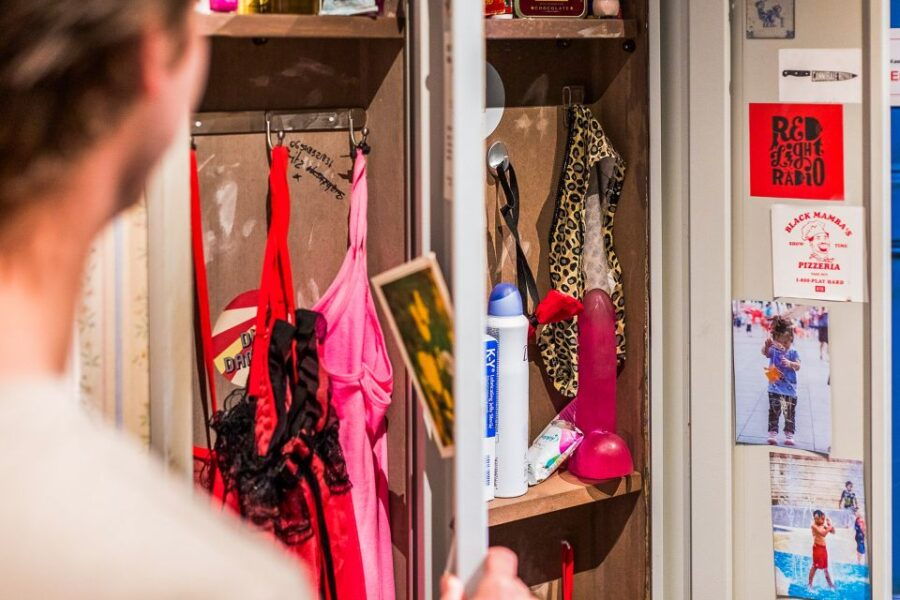
The straight entry ticket. You scan a QR at the door, the audio plays through your phone with twelve free stories (the headline narrator is Olga, “Amsterdam’s most famous lady of the night,” who is exactly as theatrical as that sounds). Our full Red Light Secrets review gets into how good the audio actually is, and why I think the off-peak slot is the smarter buy. Pick this if you want the museum on its own and nothing else.
2. Red Light District Walking Tour: from $28
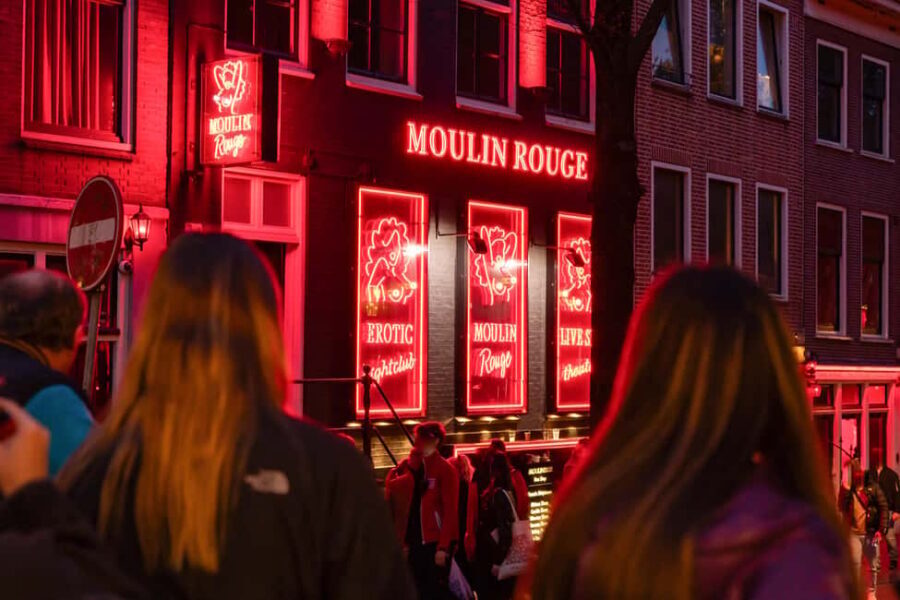
Indoor museum plus outdoor walking tour is the combination that actually teaches you something. Different angles on the same district. The walking tour fills in the things you can only see standing on the cobblestones (which canal blocks are still legal-window, which ones the city is buying out, where the 1300s housing context begins). Our full walking-tour review covers what to expect and what guides won’t let you photograph. Book the museum for the morning, this for the early evening.
3. Red Light District & Coffee Shop Tour: from $29
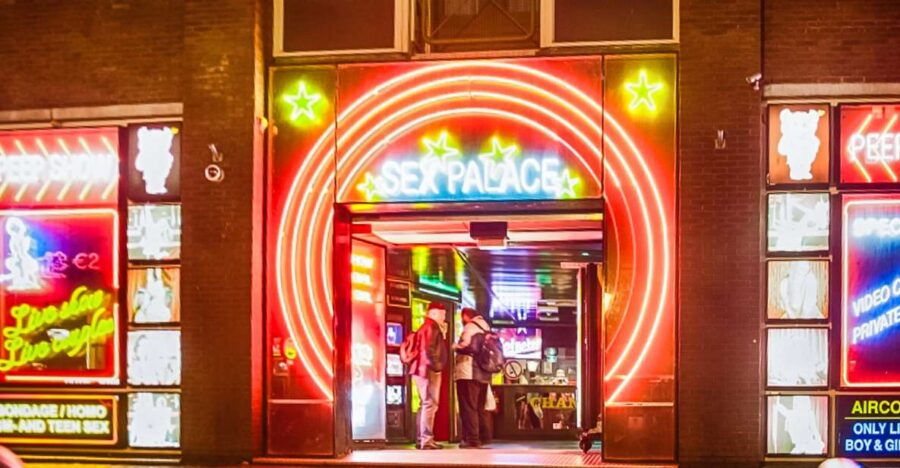
This is the one I’d pick if you only have a single night in town and want both the cannabis culture and the district context wrapped up. The guide explains why coffee shops sell weed but not coffee, why the Dutch tolerated it before they regulated it, and how that history sits next to the prostitution laws. Our combo-tour review goes into which shops the guide actually walks you into. Not a museum substitute, but a strong companion if you do both.
Museum vs walking tour: what to pick
People ask me this constantly. Short answer: do both, in that order, on the same day.
The walking tour gives you the outside view. The streets, the church, the canal water, the social-housing context, the law as it stands on the cobblestones. The museum gives you the inside view. The booth, the videos, the artefacts left behind, the actual financial and emotional shape of the work. One without the other is incomplete.
If you genuinely have to pick one, pick the museum. The walking tour is something you can read about and roughly imagine. The booth video and the panic-button display are not. They land differently in person.
If you have already done the museum and want to return for something extra, the coffee shop combo tour is the better evening companion than the standard walking tour. It widens the scope.
The history room (the part most visitors skim)
Most people walk past the history wall in eight seconds and miss the actual point of the museum. Slow down.
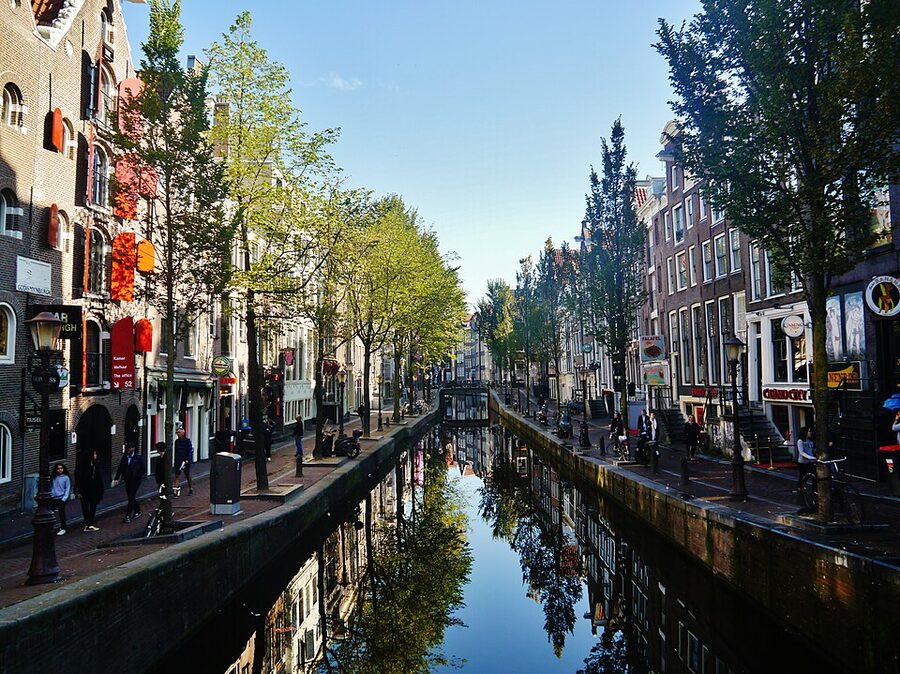
Prostitution in the Netherlands has been formally regulated since 1830. That date matters. While the rest of Europe was banning it, alternating between moral panics, and pretending the trade did not exist, the Dutch decided to write rules. Working hours. Health checks. Window rental ceilings. Client behaviour codes. The rules have rolled forward in waves since then, with the biggest revision in 2000, which made running a brothel legal as long as the operator was licensed.
The museum walks you through the timeline with original documents, archive photos of the same canal you just walked down, and a frankly deadpan running commentary on what was legal in which decade. The tone is matter-of-fact. No sermons. No moral grandstanding. Just dates and laws.
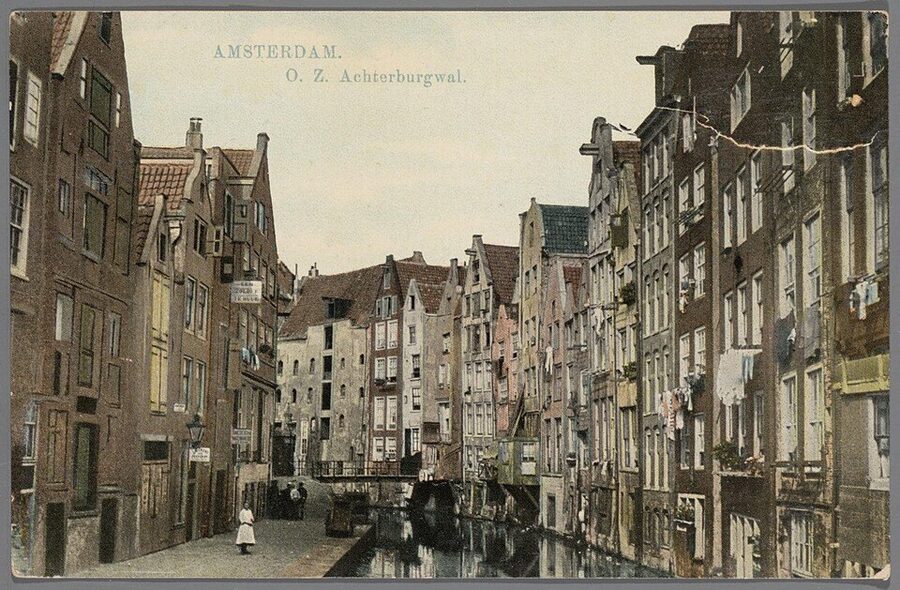
One detail that stays with me: the museum points out, with documents, that the same buildings used as brothels in 1850 are still used as brothels now. Same addresses. Same red windows on the ground floor. The trade has continued without a real break for nearly two hundred years on these specific streets. That is not a fact you absorb walking around outside. That is a museum-room fact.
The 10 commandments
One of the museum walls is taken up by a poster the city itself has used. It is called the 10 Commandments of Prostitution, and it lists the rules visitors to the windows are supposed to follow. The wall reproduces it verbatim. It reads like a series of small disciplinary lessons:
- Do not take photographs or film.
- Do not tap or spit on the window.
- Be respectful toward the workers.
- Do not peek through cracks in the curtains.
- Do not stand directly in front of the doors.
- If you visit, agree on price and conditions in advance.
- No unprotected sex.
- Be hygienic and not intoxicated.
- Call the police on 0900 8844 if you suspect coercion.
- Aggression is not tolerated, in the room or on the street.
The fact that this list has to exist tells you what the workers deal with daily. The museum lets it sit there without comment. You read it and draw your own conclusions.
Where it sits in De Wallen
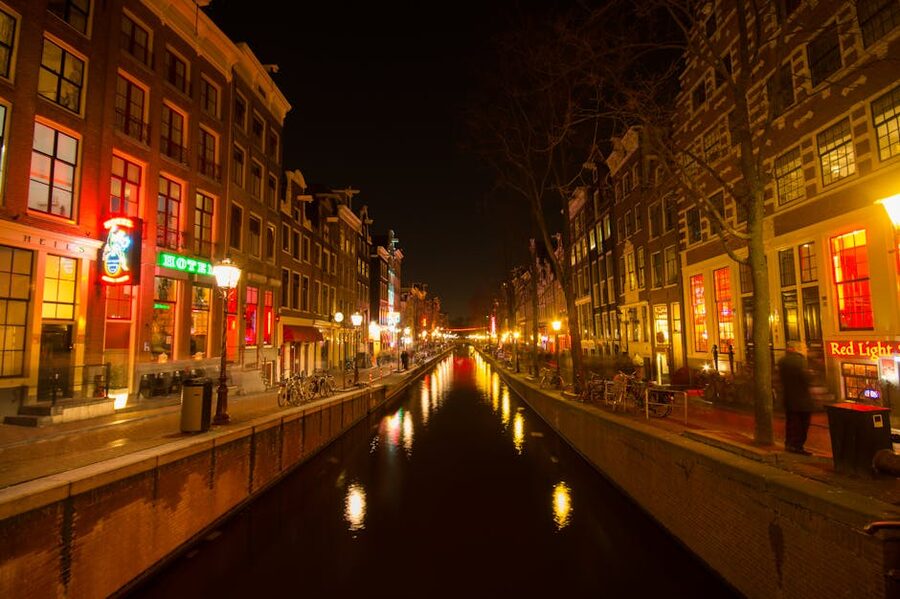
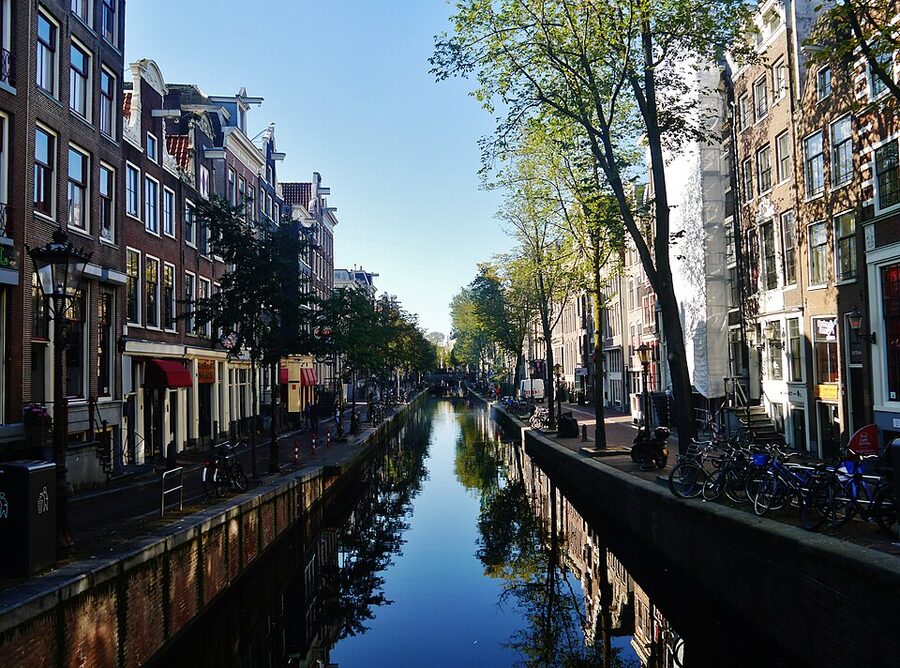
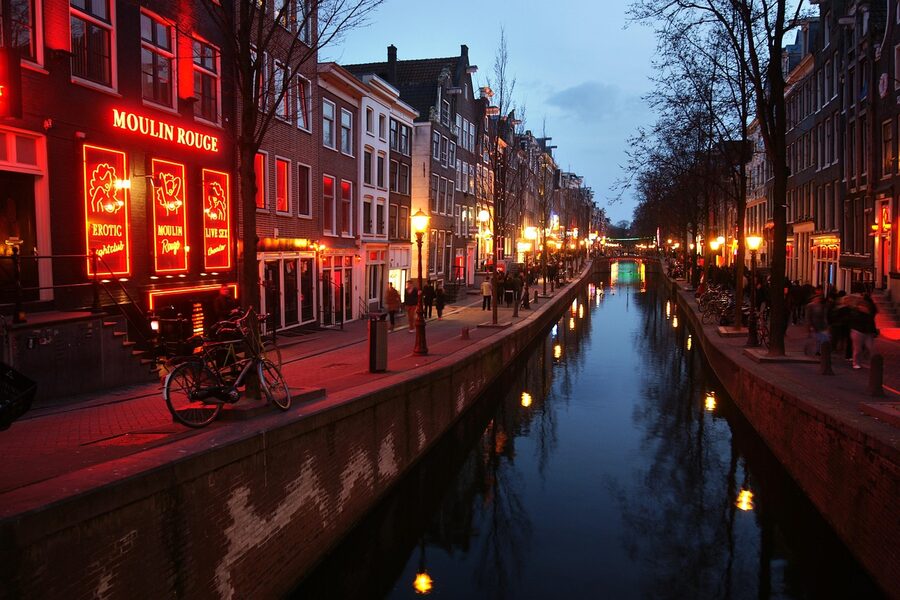
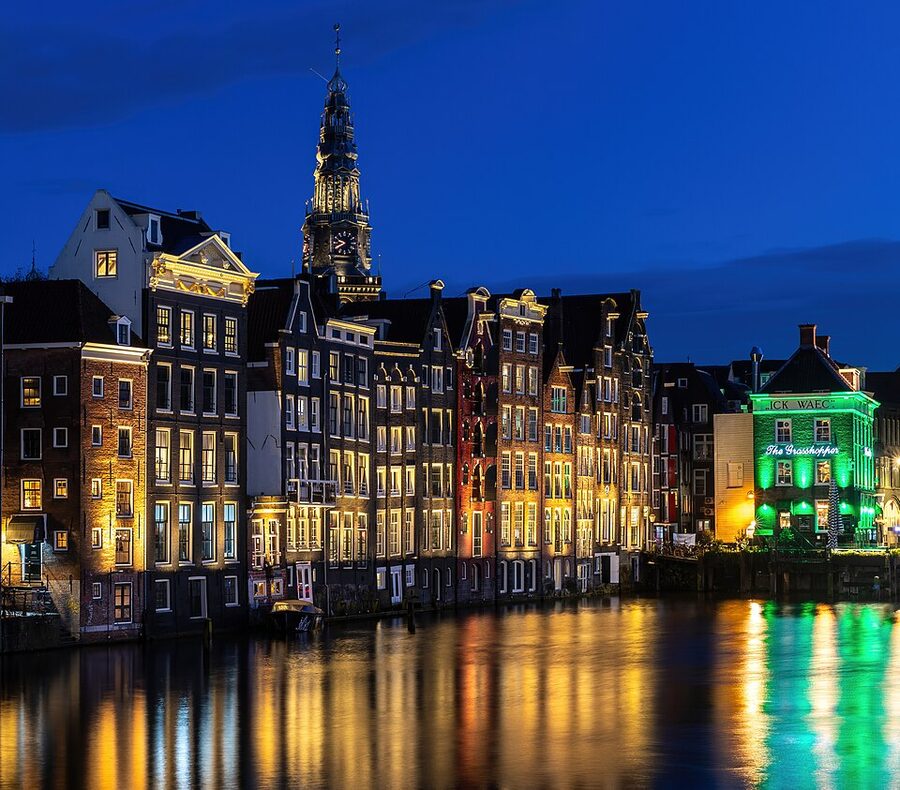
The museum is roughly in the middle of the working district. North of you, the Achterburgwal continues for two more blocks of canal-side windows. South of you, the canal opens out into Damrak and the tourist core. The Oude Kerk, Amsterdam’s oldest building (built around 1306), sits one canal west, surrounded on all four sides by red windows, which is exactly the juxtaposition the city is famous for.
The walk from the museum door to Centraal Station takes about ten minutes north along the canal. Nieuwmarkt metro (lines 51, 53, 54) is a five-minute walk east. Trams do not enter De Wallen itself. The closest tourist attractions are the Erotic Museum (across the canal, smaller, sillier, skip if you only have one evening) and the Cannabis Museum (two blocks south, more interesting than it sounds).
What surprised me, what disappointed me
The booth was the surprise. I expected something gimmicky and got the most quietly affecting thing in the building. The history wall was the second surprise: I had walked in expecting titillation and got a 200-year legal lecture done in the most no-drama Dutch tone imaginable.
The disappointment was the interview videos. They are good, but there are only four of them, and they cycle on a short loop. You leave wishing the museum had twenty more. The voices of current workers are the most interesting thing in the place, and the room dedicated to them is the smallest. If the museum ever does a refresh, that is where the budget should go.
The other thing worth flagging: the museum has been criticised by some active sex workers for presenting the work as uniformly sad. There is a worker-advocate take that the museum overplays the victimhood angle and underplays the agency angle. I think that critique is fair. The booth video and the murder-victim altar both lean dark. There is no equivalent room for “and here are workers who are doing fine, by choice, and earning a living.” If you go in knowing the museum has a particular framing, you’ll get more out of it.
Practical things, in one place
- Address: Oudezijds Achterburgwal 60H, 1012 DR Amsterdam
- Hours: Sunday-Thursday 11:00-22:30, Friday-Saturday 11:00-23:30. Last entry 45 minutes before close.
- Duration: Allow 45 to 60 minutes. People who read every panel can stretch it to 90.
- Age limit: 16+. ID checks happen on busy nights.
- Accessibility: Steep canal-house stairs, no lift, not wheelchair accessible.
- Photography: Allowed inside the museum, including the booth. Not allowed in the working windows of the surrounding district.
- Audio guide: Free, on your phone, twelve stories, plug in your own headphones.
- Best time to visit: 11 a.m. on a weekday for the off-peak ticket. Worst time: Saturday after 9 p.m.
- Languages: English, Dutch, German, French, Spanish, Italian on the audio.
- Bag policy: Small bags are fine, no real luggage storage.
Etiquette walking the district afterwards
You’ll come out of the museum more aware of the rules than most tourists, which is the point. Three things to keep in mind once you are back on the cobblestones.
Phones away around the windows. Photographing or filming a working window is illegal, and bouncers from neighbouring buildings will confront you if they see a phone go up. The fines are small but the confrontation is unpleasant. The museum drives this home so you do not become the tourist they spend the audio guide complaining about.
Walk past, do not gawk. Standing in front of a window for more than a few seconds is a violation of commandment number five and the workers will close the curtain. If a curtain is closed, the worker is with a client. Move along.
The 0900 8844 number is real. If something looks wrong (a worker who appears coerced, a man behaving aggressively at a window), the police line is the right call. The museum genuinely wants visitors to know this exists.
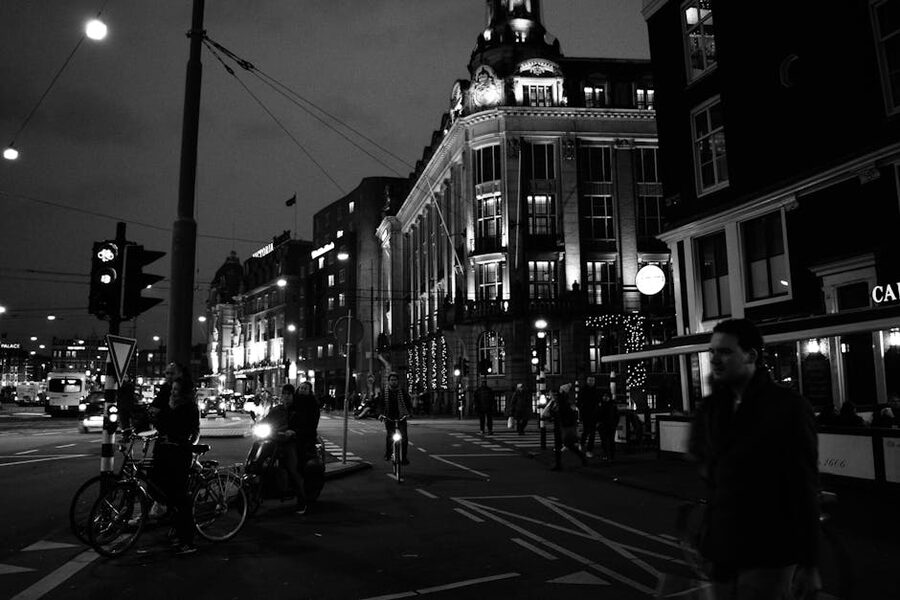
Sealed-time history museum cousins
Red Light Secrets is part of a small family of museums that take you inside one preserved sliver of urban history and let you live in it for an hour. They are some of my favourite stops in any European city, partly because they don’t stretch the visit longer than the subject can carry.
The closest cousin is Mary King’s Close in Edinburgh, a sealed 17th-century street under the Royal Mile that you walk through with a costumed guide. Same tight, intimate footprint. Same focus on the actual lives of the people who lived there. If you liked Red Light Secrets, you’ll like Mary King’s Close, and vice versa.
The other one is the Jack the Ripper walking tour in Whitechapel, which is technically outdoor but uses the same trick: it picks a piece of urban history (the 1888 East End killings, in that case) and walks you through the actual streets where it happened, with archive photos and primary sources. Whitechapel and De Wallen share an unlikely amount of historical DNA: both Victorian poor districts, both sites of regulated and unregulated sex work, both heavily mythologised by tourism.
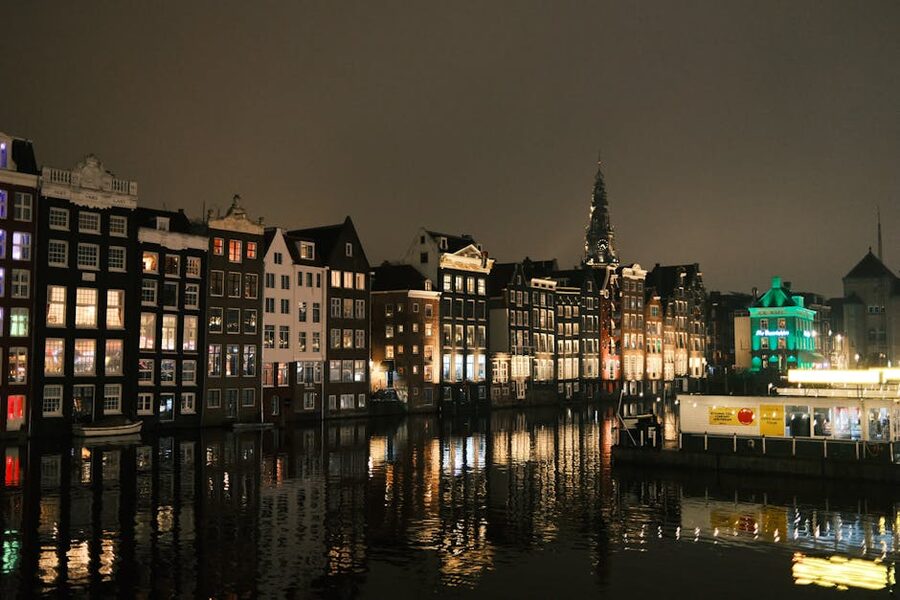
Common questions I get about visiting
Is it for everyone? No. If you are easily upset by frank discussion of sex work, sexual violence, or human trafficking, this is not your museum. The bondage room is the easiest one to skip, and it is signposted.
Can I bring a teenager? The age cut-off is 16. Sixteen and seventeen-year-olds with appropriate context handle it fine. Younger than that, no.
Is it tacky? Less than you’d expect. The exterior signage and the marketing lean a bit lurid (the Olga audio character is a choice). The interior itself is more measured than the website suggests.
Should I do this or the Sex Museum on Damrak? Red Light Secrets, every time. The Sex Museum is older, smaller, and leans into novelty. Red Light Secrets is a real museum. They are not the same kind of place.
Is it open in winter? Year-round. December and January are quieter. The walk over from Centraal in winter is freezing but the museum is warm.
Can I combine it with the Anne Frank House? Yes, and many visitors do, but space them out. Anne Frank is a heavy morning. Red Light Secrets is a heavy evening. Put a canal cruise or a beer at the Heineken Experience in between if you can.
What to do for the rest of the evening
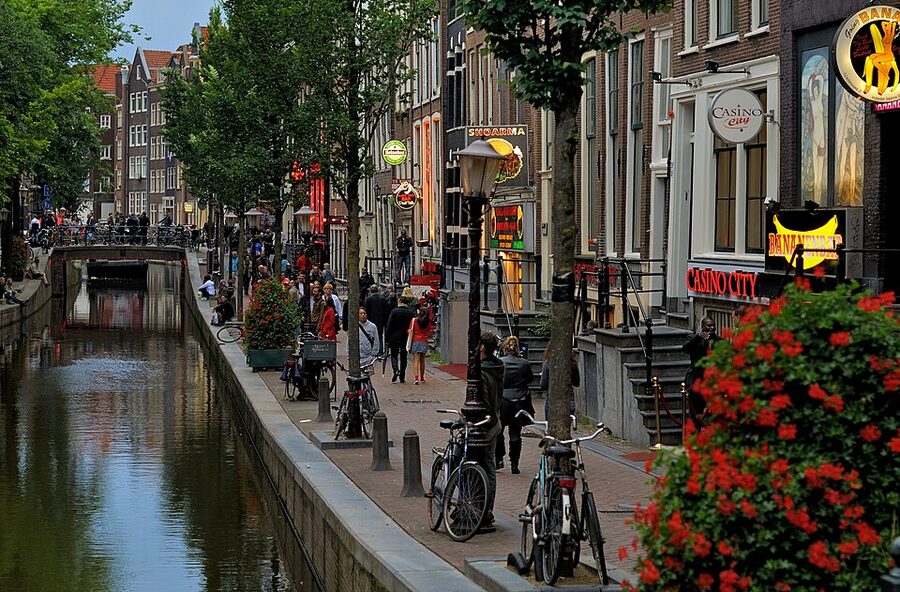
You walk out of the booth room around 9 p.m. and the canal is loud and bright. Do not eat in De Wallen itself: the food is engineered for drunk tourists and the prices reflect that. Walk eight minutes south to the Spuistraat for a proper Indonesian rijsttafel, or ten minutes west to the Jordaan for a brown café. Both reset the evening.
If you would rather keep moving, an open-boat canal cruise from Centraal pier will take you back through the same district from the water, which is a different way to see the same canal you just walked along. In November and December, the Amsterdam Light Festival boats route partly along the Achterburgwal and you can see the museum’s outside lights from the water.
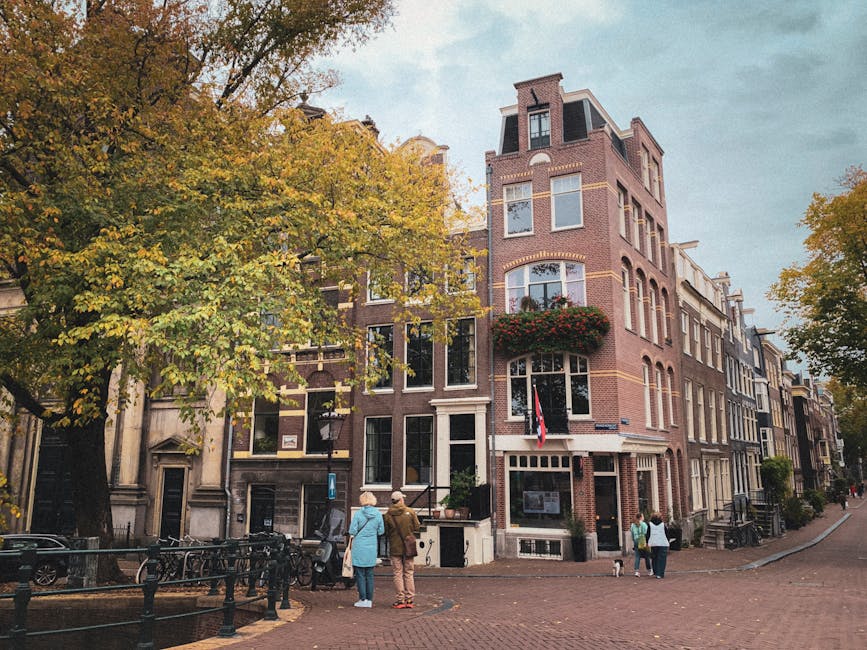
More Amsterdam guides worth your time
Build the day around it. A morning at Anne Frank House pairs naturally with an evening at Red Light Secrets, since both trade in difficult history without flinching. The Rijksmuseum and a slow lunch at the Museumplein gives you the daylight buffer you’ll want in between. Save the walking tour of De Wallen for late afternoon as a primer, and finish the night with a quiet open-air canal ride. That is the shape of a properly-paced single-day Amsterdam, and the museum is the strongest evening anchor in town.