
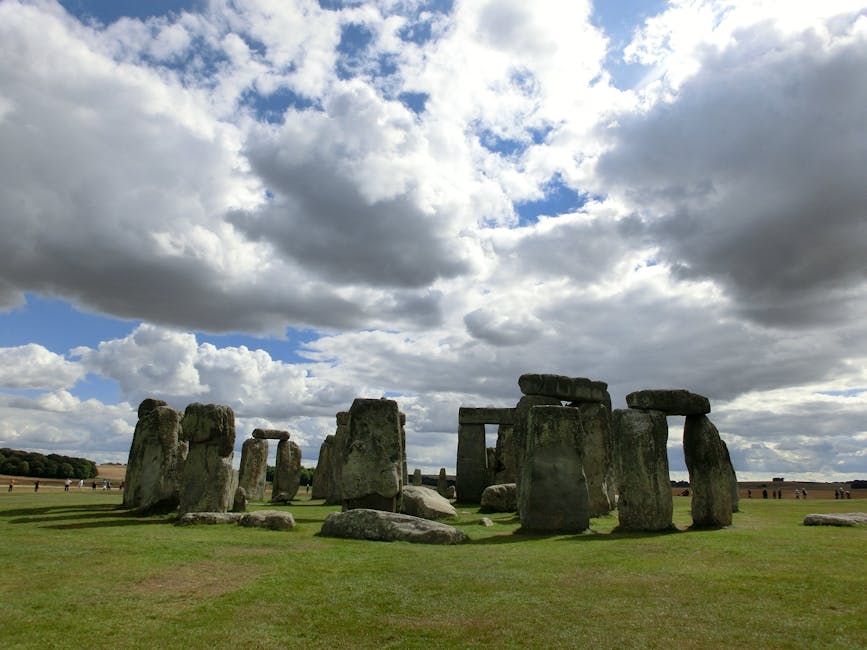
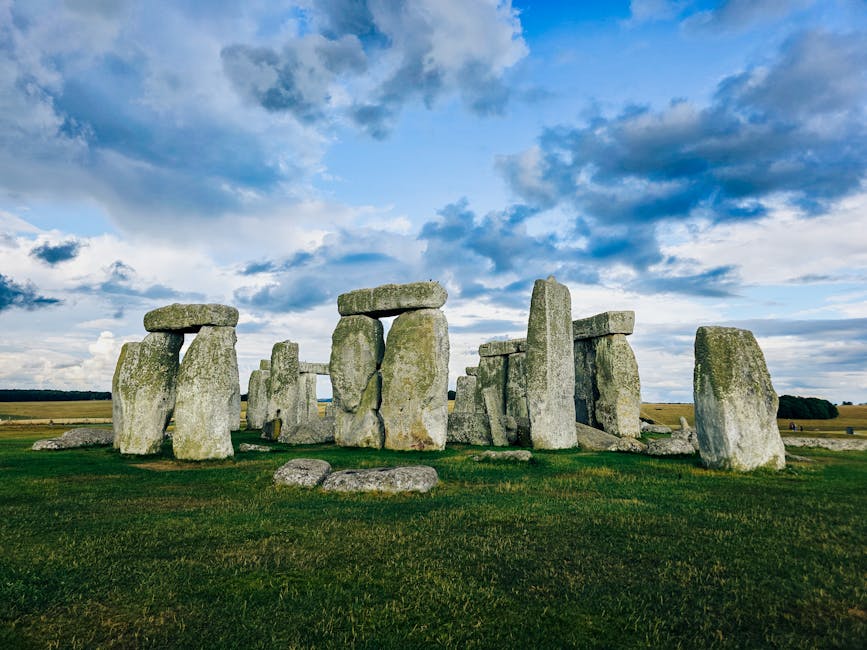
Stonehenge is older than the pyramids of Giza. Construction on Salisbury Plain began around 3000 BCE, the great trilithons went up around 2500 BCE, and Khufu’s pyramid only got going about fifty years later. The stones in the field you stand next to on this day trip have been there longer than every famous building in Egypt.
Then you drive ninety minutes northwest and step into a Roman bathhouse built over Britain’s only natural hot springs. Same day. About ten hours start to finish, give or take.
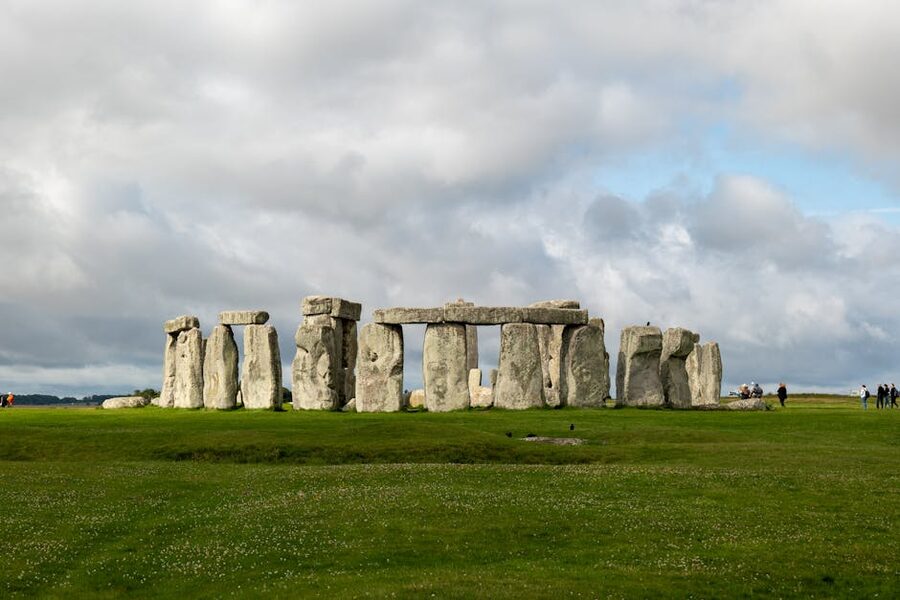
Stonehenge and Bath day trip with ticket, around $114. Coach with audio guide, Stonehenge entry included, free time in Bath. The most-booked combo on the route. Book the Stonehenge and Bath day trip with ticket.
Stonehenge and Bath full-day with live guide, around $101. Same circuit but with a guide on the coach for the whole run instead of an audio handset. Book the Stonehenge and Bath guided tour.
Stonehenge and Roman Baths full-day, around $97. The version that bundles the Roman Baths entry into the ticket so you don’t have to queue separately at the door. Book the Stonehenge and Roman Baths combo.
- What this trip actually is, and what it isn’t
- The Stonehenge stop: ninety minutes is enough
- Bath: what to do with your three or four free hours
- Roman Baths: book the entry, or don’t
- The Royal Crescent and the city walk
- The three tours actually worth booking
- 1. From London: Stonehenge and Bath Day Trip with Ticket: 4
- 2. From London: Stonehenge and Bath Full-Day Tour with Guide: 1
- 3. From London: Stonehenge and Roman Baths Full-Day Trip:
- The Lacock and pub-lunch variants
- Stonehenge plus Bath, or one of the bigger combos?
- Practical bits before you book
- Best months to do this trip
- What to read next
What this trip actually is, and what it isn’t
Two stops in one day. A coach picks you up in central London at around 8am, runs you west on the M3, drops you at Stonehenge for ninety minutes to two hours, then carries on to Bath where you get roughly three to four hours of free time. Back in London by 7pm. That’s the format and almost every coach operator runs a near-identical version of it.
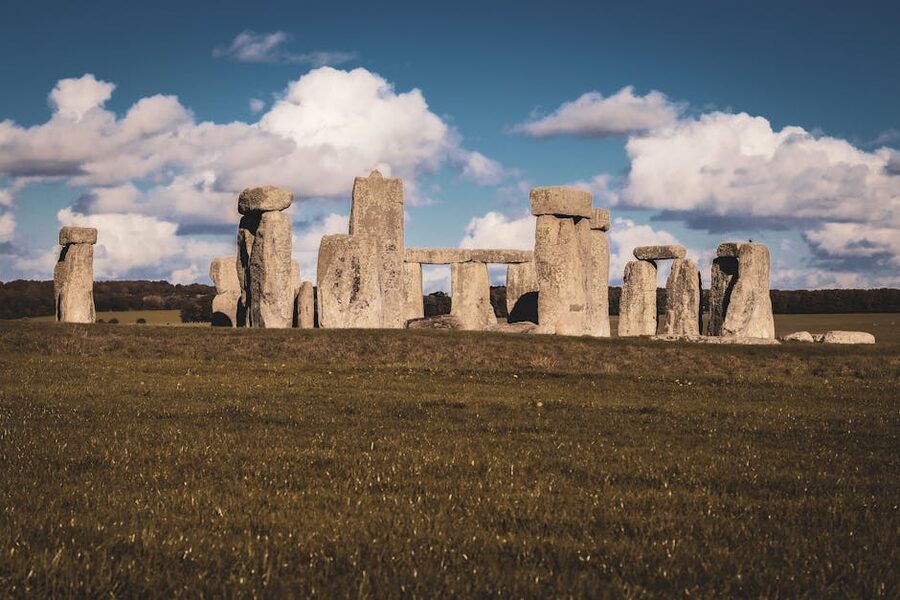
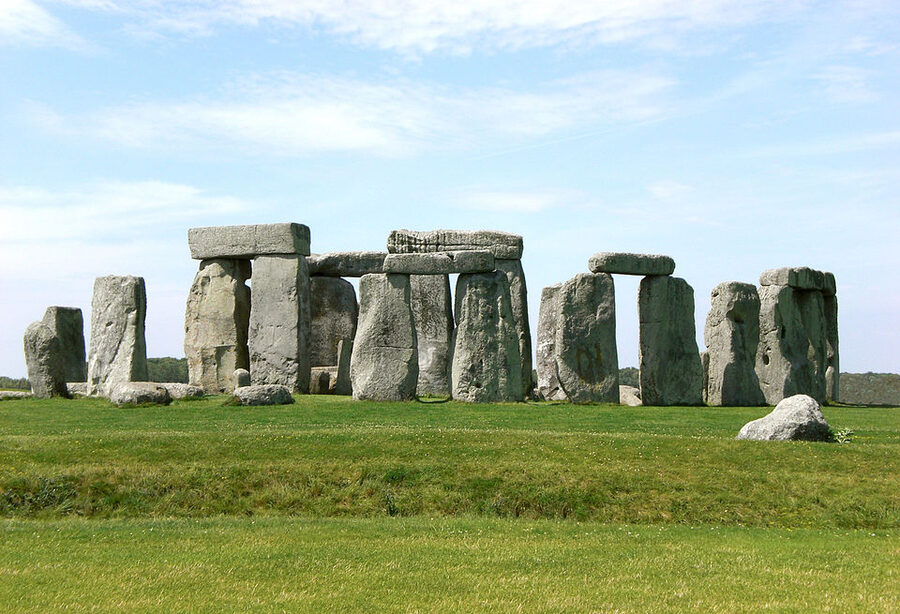
What this trip is not: a deep look at either site. You get enough Stonehenge to walk the full circuit on the rope path, listen to the audio guide, and take all the photos you want. You get enough Bath to see the Roman Baths if you’ve added the entry, walk the Royal Crescent, peek inside Bath Abbey, and grab lunch. You don’t get an evening in Bath. You don’t get to see Stonehenge at sunset. You don’t go inside the stone circle.
If that sounds thin, do an overnight in Bath instead. If you only have one day to spare and you want the headline experience of both, a coach tour is the right call. Doing this on public transport (train to Salisbury, bus to Stonehenge, train to Bath, train back) costs almost as much, takes longer, and gets you less free time at both stops. I’ve tried it. The coach wins on a single day.
The Stonehenge stop: ninety minutes is enough
Stonehenge entry on every coach tour I’m aware of is the standard ticket. You ride a shuttle bus from the visitor centre out to the stones (about a kilometre, ten minutes), walk the rope path that loops around the outside, and walk back. The rope path keeps you about thirty metres from the closest stone at the nearest point. That’s actually fine. The henge wasn’t built to be looked at from inside, it was built to be approached up the avenue from the northeast, and the path roughly follows that arc.
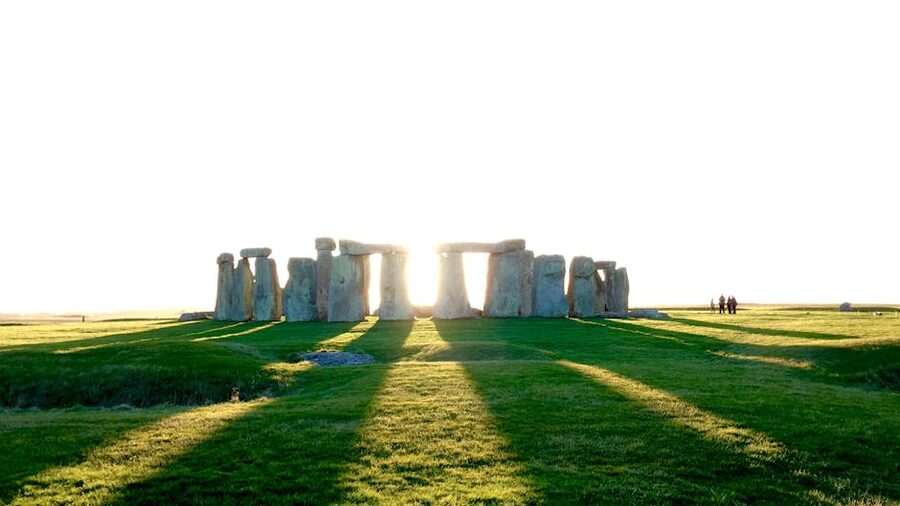
The audio guide is included with every coach combo I’ve checked, which matters because the visitor centre is otherwise pretty bare. Without the audio you’re looking at five-thousand-year-old rocks with no context. With it, you get the construction sequence (the bluestones from Wales came first around 3000 BCE, the bigger sarsens went up around 2500 BCE), the alignment with solstice sunrise and sunset, and the burials around the perimeter. Listen to it.
The visitor centre itself is a separate building back near the road. It has a small museum, a Neolithic house reconstruction outside, and a cafe. Coach groups usually skip the museum unless you push the limits of the time slot. If you’ve got the slot, the museum is worth twenty minutes for the actual artefacts (a 5,500-year-old wooden post hole, a forensic facial reconstruction of a Neolithic man buried nearby).
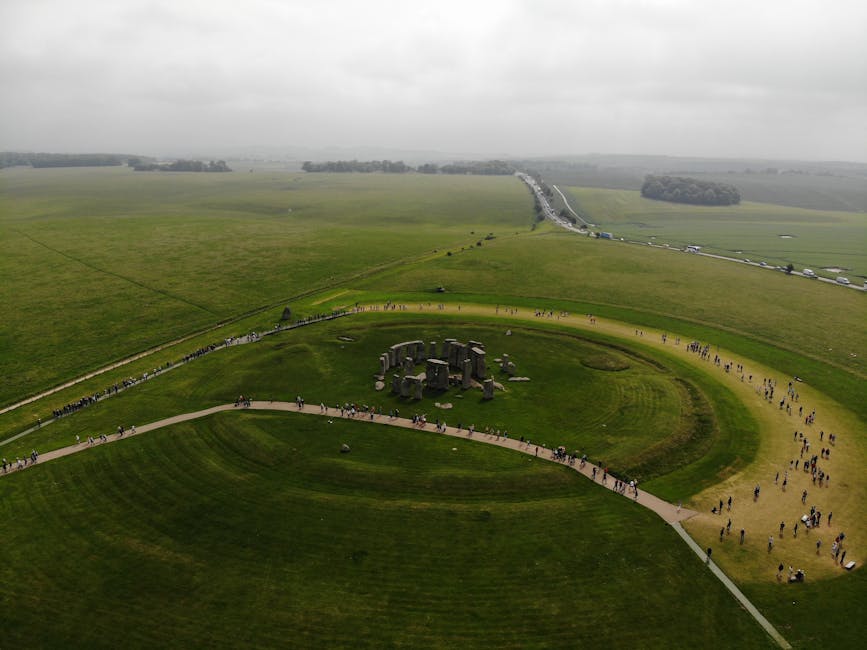
Don’t expect any food at the stones themselves. The cafe is at the visitor centre, not out by the henge, and the queue at lunch can swallow your whole shuttle window if you’re not careful. Most coach groups run the morning slot and bus you straight to Bath for lunch. That’s the better play.
Bath: what to do with your three or four free hours
Bath is small and walkable. The coach drops at one of two points, usually the bus station near Bath Spa railway station or a coach park slightly east of the centre. Either way you’re inside the World Heritage core within ten minutes of stepping off. Three things matter for your free time: the Roman Baths, the Royal Crescent, and lunch. The order depends on what you’ve prebooked.
Roman Baths: book the entry, or don’t
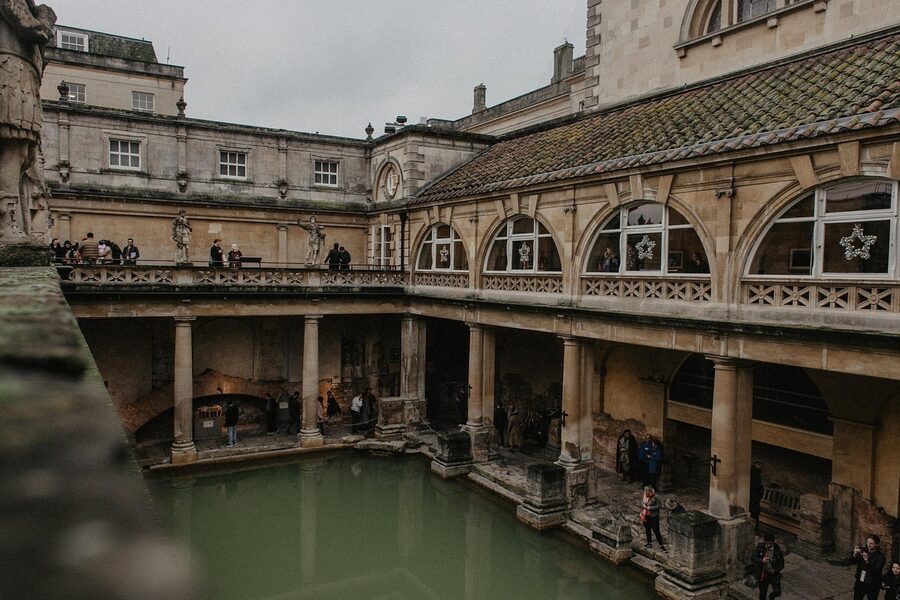
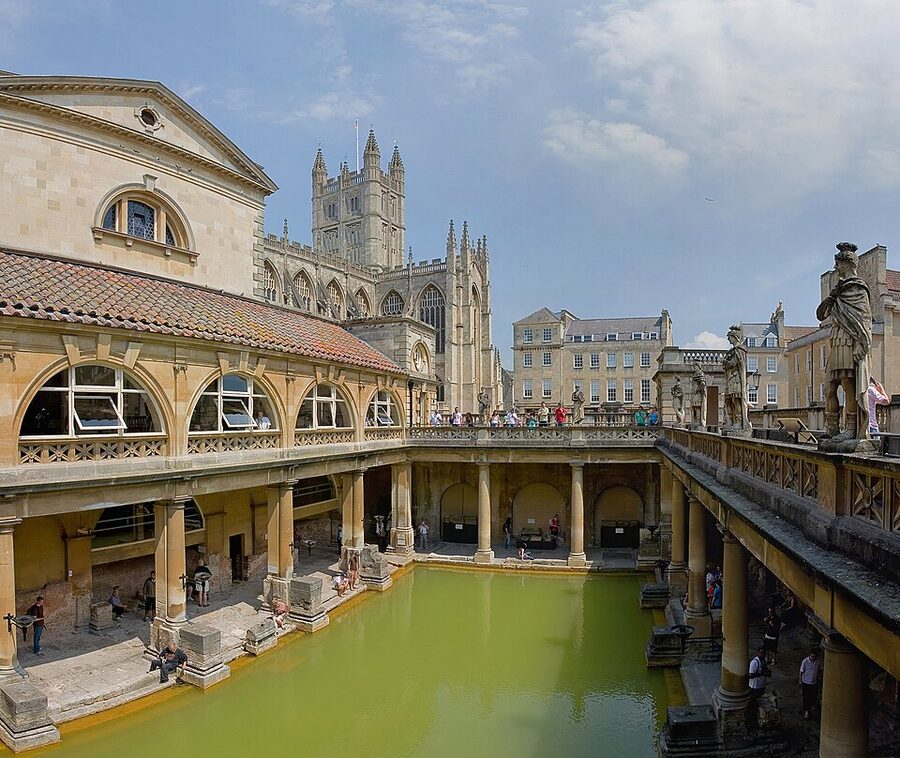
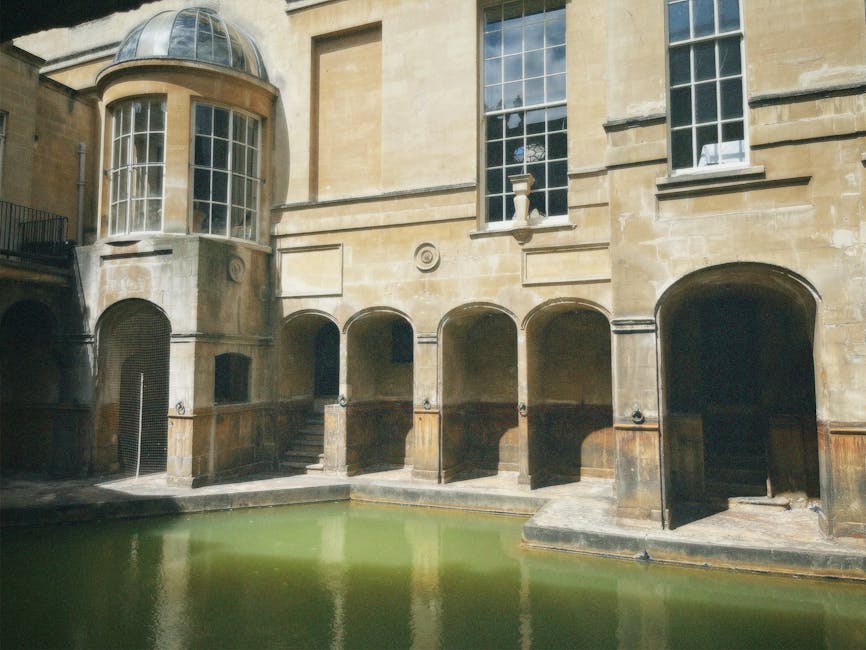
The Roman Baths is the only ancient bath complex in Britain still standing on its original site. It sits on top of Britain’s only natural hot springs. The water comes out at about 46°C (115°F) and it’s been doing that continuously for two thousand years. You can’t swim in it on your day-trip visit, the actual Roman pool is closed to bathers, but you can dip a hand in the spring overflow at the King’s Bath if you fancy.
The thing nobody mentions about this water: it fell as rain about 10,000 years ago. It percolates two kilometres down through the limestone, gets heated geothermally, and resurfaces here. Every drop bubbling up under the colonnade is older than every civilisation we know about. That’s the bit that gets me, more than the architecture.
Booking the entry as part of your coach combo is genuinely worth it. Walk-up tickets cost about £30, the queue at the door can hit forty-five minutes in summer, and the timed entry slots fill from around 10am. If your coach gets to Bath at 1pm and you’ve got three hours, an unbooked queue can eat half of that. The combos that bundle the entry skip the queue entirely. The Stonehenge and Roman Baths combo is the one I’d pick if you know you want to see inside.
Audio guides at the Roman Baths are included with every entry, and they’re good. There’s a Bill Bryson voiceover option and a kids’ version. The standard route takes about ninety minutes and runs you down past the Sacred Spring, the Temple of Sulis Minerva, and the Roman heating system before depositing you at the gift shop near the Pump Room.
The Royal Crescent and the city walk
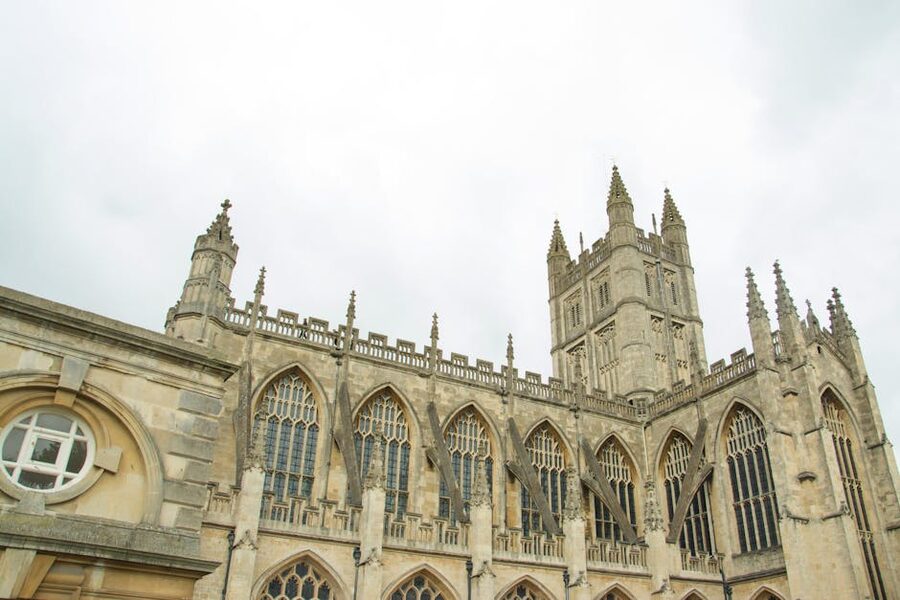
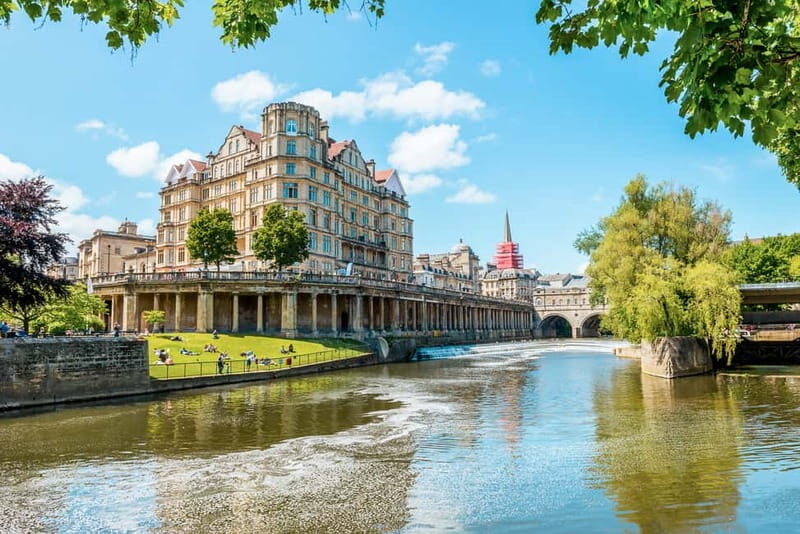
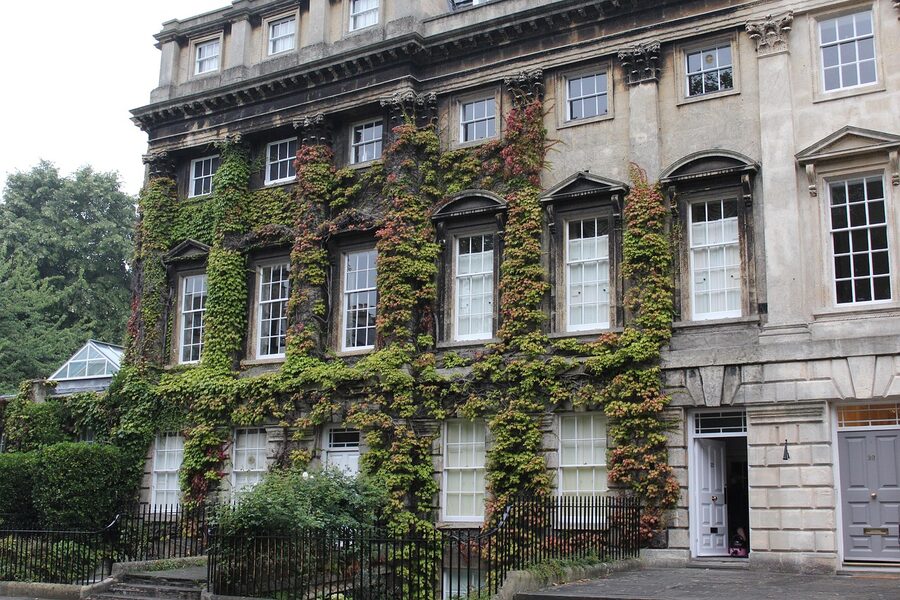
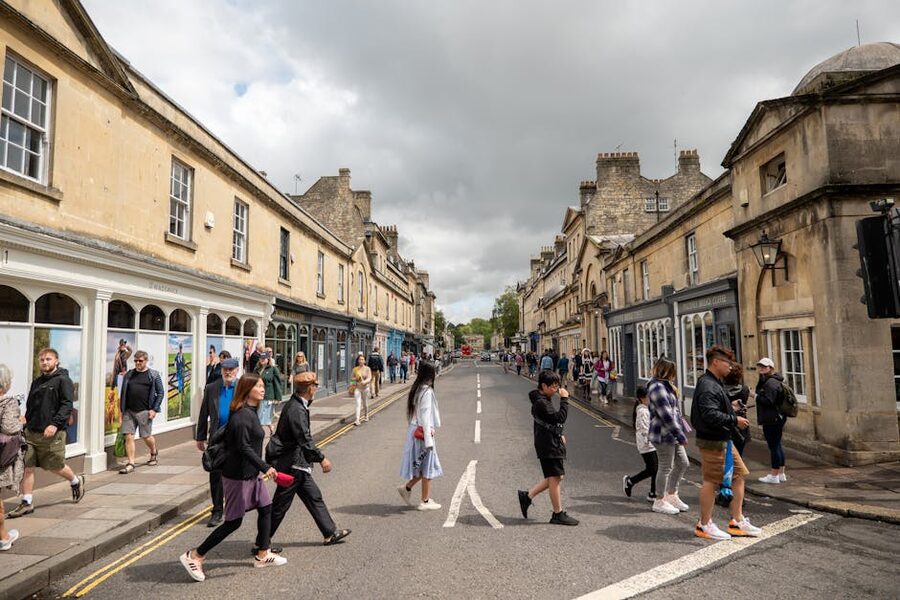
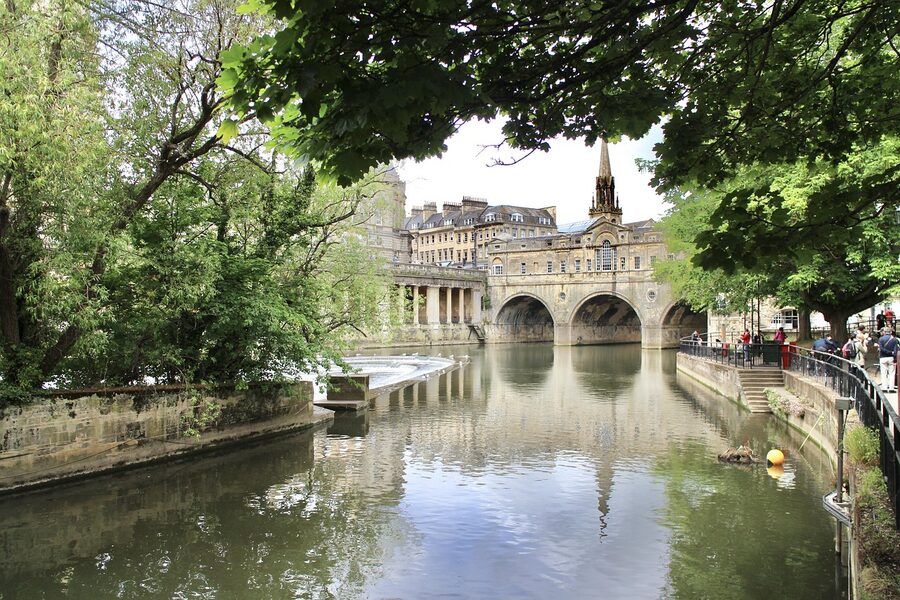
If you don’t book the Roman Baths entry (or you’re saving the time for lunch), use the free hours to walk the Georgian city instead. Bath was the spa town the British aristocracy decamped to in the 1700s and the result is the most consistent stretch of Georgian architecture in Britain. Honey-coloured Bath stone, terraces that curve, sash windows, the lot.
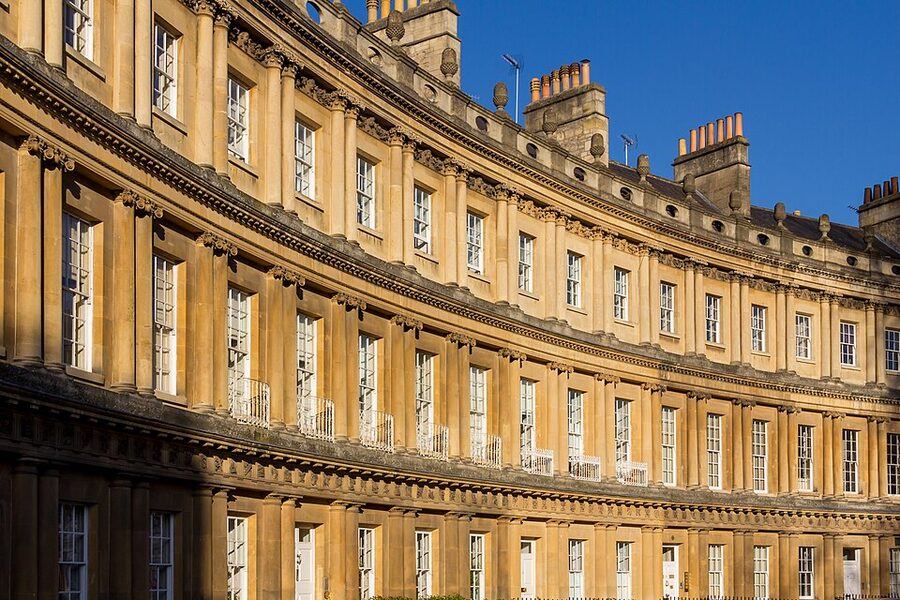
The walk I’d do with three free hours: Roman Baths quarter, Bath Abbey courtyard (free to look in, the fan-vaulted ceiling is stunning), past the Pump Room, up Milsom Street, into the Circus (a circular Georgian terrace, also by John Wood the Elder), then a five-minute walk to the Royal Crescent. Total walk is about a mile and you can do it in seventy-five minutes if you don’t stop, or stretch it to two and a half hours with proper photo time.
Lunch on the day trip is best done quick. The coach group splits and most people grab a sandwich-and-sit option rather than a sit-down. Sally Lunn’s near the Abbey does the famous Bath bun, an oversized brioche split and topped, and is fast enough to fit. The covered Guildhall Market has takeaway pies and pasties. Skip anything claiming “traditional cream tea” off Stall Street, the queue is half tourists who’ve been bussed in.
The three tours actually worth booking
Half a dozen operators run a near-identical Stonehenge plus Bath day trip out of London. The differences are in the entry tickets included, if you get a live guide or audio, and the pickup point. These are the three combos I’d send people to depending on how they want the day to feel.
1. From London: Stonehenge and Bath Day Trip with Ticket: $114
This is the combo I’d point a first-timer at. The Stonehenge entry is included so you don’t have to queue separately at the gate, and the coach has air conditioning, USB ports, and a working loo, which is not always the case with cheaper operators. Our full review of this Stonehenge and Bath day trip covers the morning pickup logic, the lunch stop quirks, and what the audio guide actually says. The free time in Bath is enough for the Roman Baths if you book the entry on the door, or for a Royal Crescent walk if you skip it.
2. From London: Stonehenge and Bath Full-Day Tour with Guide: $101
If you respond better to a person on a microphone than to an audio handset, this is the version. The live guide does the historical context on the coach, points out details on the Salisbury Plain approach, and runs a forty-five minute walking tour around Bath after the Stonehenge stop. Our full review of the guided Stonehenge and Bath tour goes into how the walking-tour portion compares to navigating Bath on your own. Worth the slight premium if you want the day to feel hosted rather than self-serve.
3. From London: Stonehenge and Roman Baths Full-Day Trip: $97

Pick this one if you already know you want to see inside the Roman Baths. The combo includes both Stonehenge and Roman Baths entry tickets, an audio guide on the coach, and a fast-track door at the Baths. Our full review of the Roman Baths combo covers what the timed entry actually feels like and how to use the rest of your Bath free time around it. This is the combo I’d choose if I was doing the trip in summer when the Bath queue gets brutal.
The Lacock and pub-lunch variants
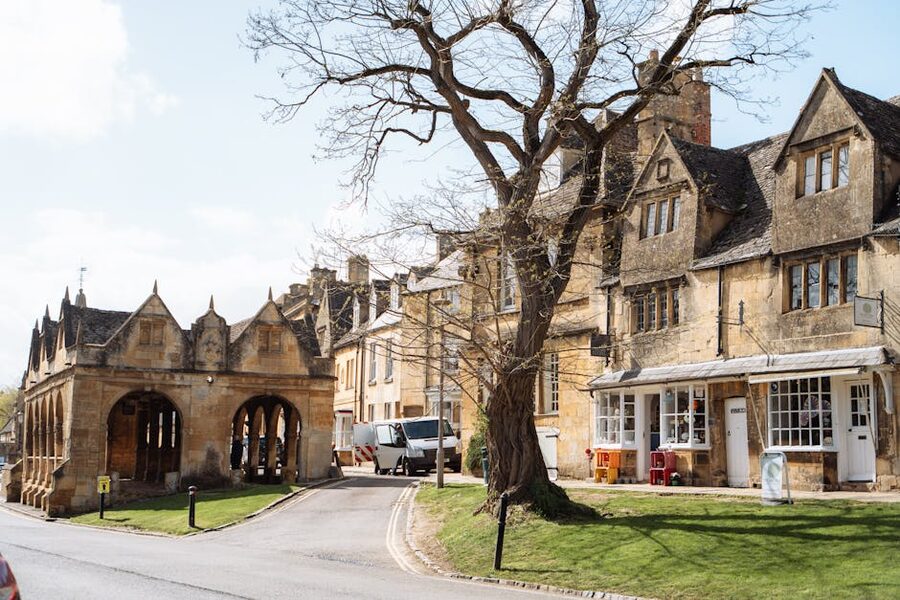
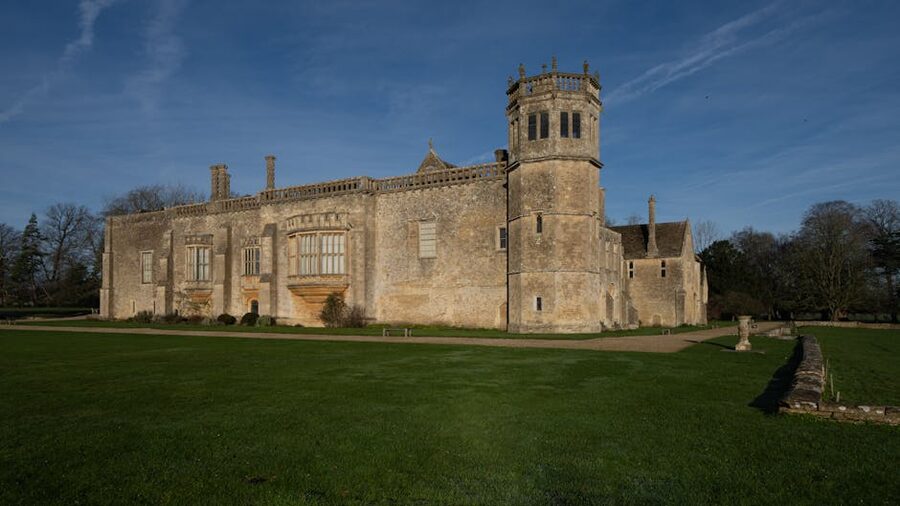
Some operators add a third stop at Lacock, a National Trust village about thirty minutes’ drive north of Bath. This is where the cottages outside the Bennets’ house in the 2005 Pride and Prejudice were filmed, and where the Slug Club scenes from Harry Potter and the Half-Blood Prince were shot. Lacock Abbey, the medieval cloister attached to the village, doubled as Hogwarts’ classrooms in the first two films.
The pub lunch variants stop at the Red Lion or the George in Lacock for a sit-down lunch as part of the day. These run about $130 to $150 versus $97 to $114 for the standard combo, and they steal an hour or so off your Bath free time. Worth it if you’re doing the day for the Pride and Prejudice angle. Skip it if you came for the headline sites, because Lacock at thirty minutes is a flying photo stop and Bath at two hours instead of three feels rushed.
If you specifically want Lacock plus pub lunch, look at the variants tagged with pub lunch in Lacock. Most of those bundle Windsor Castle as a third stop too, which pushes the day past eleven hours and means even less Bath time. The Stonehenge, Windsor and Bath day trip guide covers the three-stop versions in detail.
Stonehenge plus Bath, or one of the bigger combos?
The Stonehenge plus Bath combo is the right pick if you want to give both sites room to breathe. Adding Windsor Castle (a third stop, typically slotted before Stonehenge in the morning) compresses everything: forty-five minutes at Windsor instead of two hours, ninety minutes at Stonehenge instead of two, and Bath shrinks to two hours instead of three or four. You see more, but each site gets less.
If you want maximum royal-history density, the Stonehenge, Windsor and Bath three-stop tour is the call. If you want academic-and-medieval history instead of Roman-and-prehistoric, the Windsor, Oxford and Stonehenge variant swaps Bath for Oxford. The two-stop Stonehenge plus Bath that this guide covers is the most balanced of the lot if you’re picking a single day-trip combo from London.
Worth comparing this format to other capital-and-day-trip pairings to know what you’re buying. Madrid does a single-stop day trip to Toledo that’s tighter and more compact, and a three-city Avila, Segovia and Toledo combo that’s the Spanish equivalent of the three-stop UK days. Lisbon’s Sintra day trip is another two-stop format with one prehistoric-feeling site (Cabo da Roca) and one heritage town (Sintra), which is the closest analogue to Stonehenge plus Bath. The Roman element here is closest to a Granada Alhambra day, and the deep-history feeling comes nearest to an Athens to Meteora coach day.
Practical bits before you book
Pickup is from one of three or four central London points. Most operators leave from a coach station near Victoria, with optional pickups at Park Lane, Marble Arch or Hyde Park. The alternative full-day tour and the cheaper coach-only version both run similar pickup points but with slightly different timings.
What to wear: layers, even in summer. Salisbury Plain is open and exposed, the wind cuts across it most of the year, and the Stonehenge visitor centre is twenty minutes’ walk from the coach drop-off. A waterproof outer is sensible for any month from October through April. Bath is a city walk so trainers are fine.
What to bring: a snack for the coach, water, and a coat with pockets for the audio handset. The Stonehenge handset goes round your neck and is awkward with bigger cameras. If you want to take photos with a DSLR or a long lens, factor in the audio guide as a one-handed exercise.
Cancellation is the bit that catches people. Most coach combos run rain or shine, but if Stonehenge closes for high winds (it happens, the rope path becomes unsafe), the operator usually swaps to a Salisbury or West Country drive-by and you don’t get a refund. Read the small print on the booking page. The flagship combo I linked above has the most flexible cancellation of the three and that’s a real factor in winter.
Best months to do this trip
April through mid-October is the easy answer. Stonehenge is open all year but the daylight matters: a December coach gets you to the henge around 11am with sunset by 4pm, which is fine but the light is flat and you’re back in Bath in twilight. May through September is when you get full afternoon light at both sites.
Avoid the solstice if you don’t have a specific Inner Circle ticket. Stonehenge closes to general visitors on the morning of the summer solstice (around 21 June) and the day-trip coaches don’t run that day. The autumn equinox in late September is open and quieter. Bath is fine year-round but the Christmas Market in late November and early December turns the centre into a four-hour queue, and the day-trip free time is barely enough to fight through it.
What to read next
If this combo is just one piece of a longer London visit, our St Paul’s Cathedral booking guide pairs well with a half-day in the city before or after, and the Tower of London ticket guide is the other obvious morning before you point the coach west. For the bigger day-trip family, the three-stop Stonehenge, Windsor and Bath comparison is the next thing to read if you’re still picking between formats. Beyond that, the Madrid Avila and Segovia day-trip guide is the closest European cousin in terms of pacing, if you ever do this format from another capital.