
On paper, doing Toledo, Segovia, and Ávila in one day from Madrid sounds like the kind of plan a stressed manager makes at 2am the night before a wedding. Three medieval cities. Three regions. About 380 kilometres of driving. And yet, this is one of the most-booked day trips in central Spain, year after year, with five-star reviews stacked higher than any of the city walls.
The contrast is the whole point of this guide. The trip looks insane on a map and works in practice, but only if you book the right operator and know what each stop actually delivers. Below is how the day really runs, what gets cut, and which of the three city-combo tours I’d put your money on.
- In a hurry? Three picks for booking right now
- The contrast that makes this trip work
- Why Ávila is the city most travellers underestimate
- Toledo, the slot the day usually opens with
- Lunch: the part nobody warns you about
- Segovia in 90 minutes: what’s actually possible
- The afternoon push to Ávila
- The actual best tours to book
- 1. Three Cities in One Day: Segovia, Ávila and Toledo from Madrid: 7
- 2. Toledo and Segovia Full-Day Tour with an Optional Visit to Ávila:
- 3. Three Cities in One Day: Toledo, Segovia, and Ávila from Madrid:
- Three cities versus two: should you really do all of them?
- Pacing and physical reality
- When to go: not all months are created equal
- The history that helps you understand what you’re looking at
- Common mistakes to avoid
- Practical booking tips
- Should you do this trip at all?
- Where the day fits in your wider Spain trip
In a hurry? Three picks for booking right now
Best overall (the most-booked combo): Three Cities in One Day: Segovia, Ávila and Toledo from Madrid. Around $127. Twelve hours, the established benchmark, and the only one most agents will quote you by name.
Best value if you can drop one city: Toledo and Segovia Full-Day Tour with an Optional Visit to Ávila. Around $46. Eleven hours and you only pay extra if you actually opt into the Ávila stop.
Best small-group alternative: Three Cities in One Day: Toledo, Segovia, and Ávila from Madrid. Around $96. Thirteen hours, slightly slower pace, less elbow-jostling at the photo stops.
The contrast that makes this trip work
Toledo is south of Madrid. Segovia is northwest. Ávila is west. They are not on a tidy circuit. Going to all three in one day means doing the equivalent of Madrid → south → northwest → west → Madrid, and that’s a lot of motorway.
So why does it work? Two reasons. First, the medieval cores of all three cities are tiny. Toledo’s tourist heart is maybe 20 minutes across at a normal walking pace. Segovia is similar. Ávila is even smaller. You don’t need eight hours in any of them to see the headline acts. Second, the coaches use express lanes between Madrid and each town and the drives between cities are mostly empty motorway. You’ll spend about four hours in transit total, distributed in chunks where you can nap.
The two-city combo, Toledo and Segovia, is the standard. The three-city version adds Ávila and tightens every other slot. If your time in Spain is short and you want the medieval-Spain image you came for, the third city is what makes it special. If you have an extra day to spare, splitting it differently is the move. We’ll get to that.
Why Ávila is the city most travellers underestimate
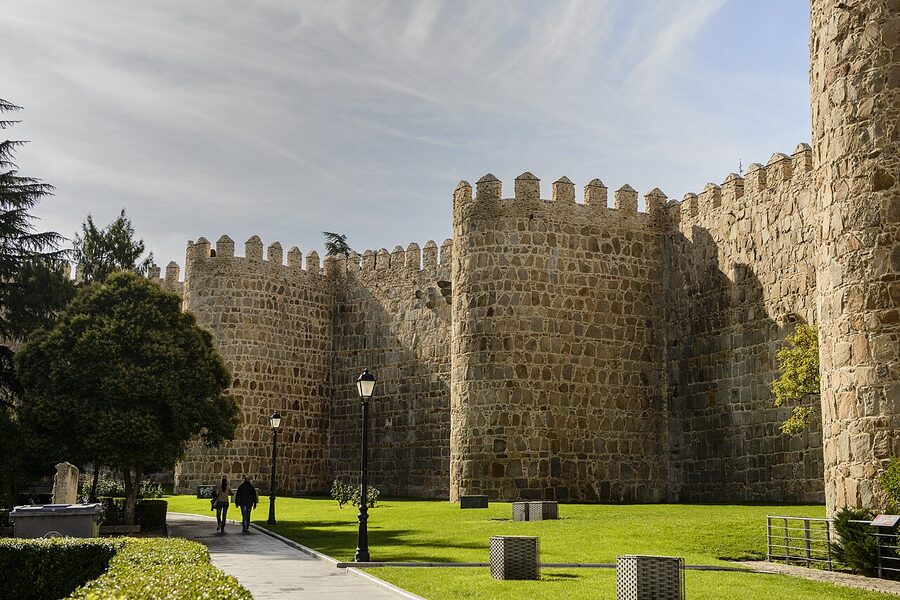
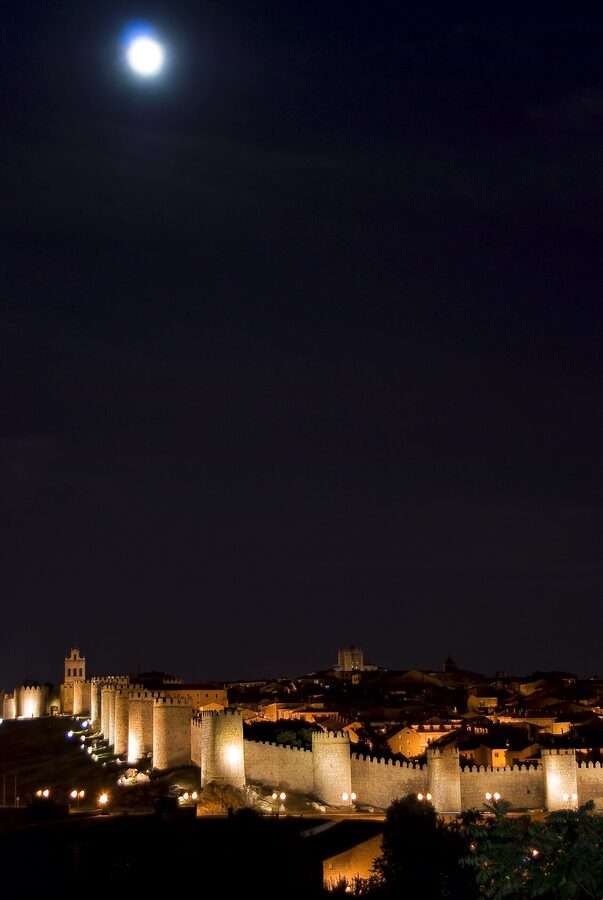
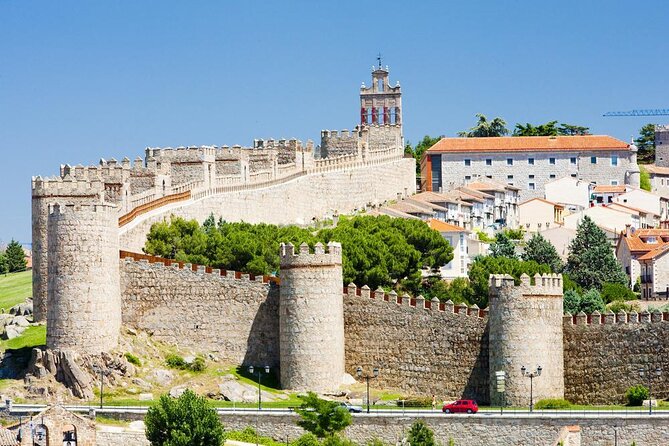
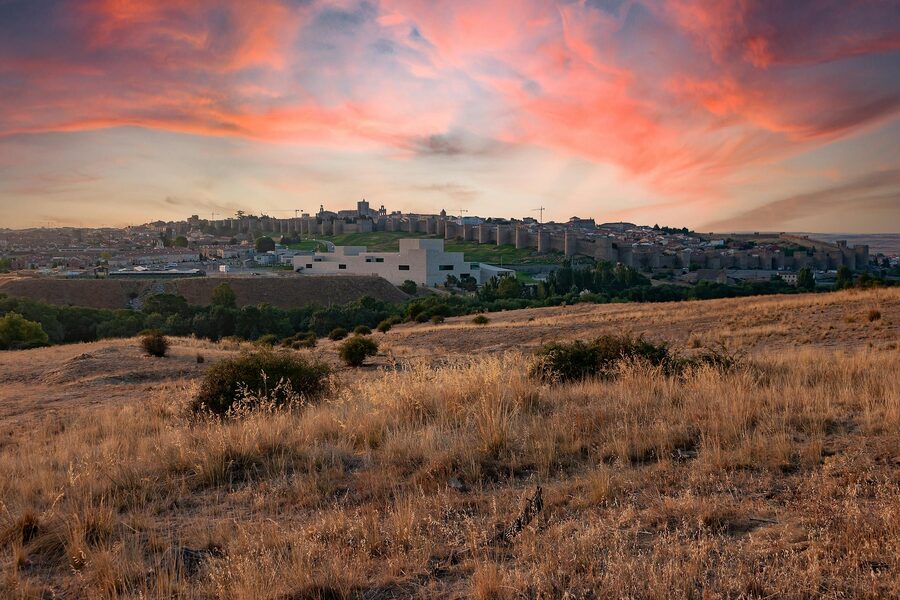
If you’ve researched this trip at all, you’ve probably read someone saying “skip Ávila, it’s just walls.” That advice is wrong, and it’s wrong specifically because of this trip. On a stand-alone visit, Ávila might feel quiet. But as the third stop on a packed day, it’s a relief. You arrive in late afternoon when most of the day-trip buses heading to Toledo and Segovia have already gone. The walls are golden. The streets are empty. You stand on the ramparts and look out over the Castilian plain and the contrast with the chaos of Toledo at midday is genuinely moving.
You also get the medieval-walled-city photograph that no other Spanish city can give you. Toledo has the skyline. Segovia has the aqueduct. Ávila has the walls, and the walls are the entire point. The city was a frontier fortress in the 11th century and the defences have stayed standing for nearly a thousand years. Most of central Spain’s medieval defences were demolished in the 19th century. Ávila’s survived because it stayed poor enough that no one bothered.
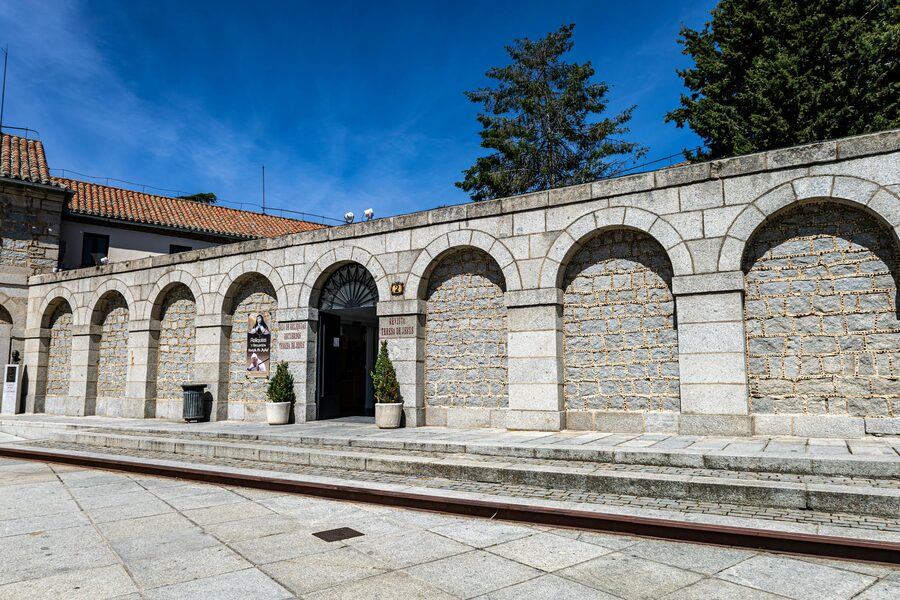
One mood note: Saint Teresa of Ávila was born here in 1515. The city is dotted with sites tied to her life and the convent she founded is open to visitors. Some tours include a brief mention as you walk past the Convento de Santa Teresa. Most just point and keep moving. If you want to dig deeper into Teresa, you’ll need a return trip.
Toledo, the slot the day usually opens with
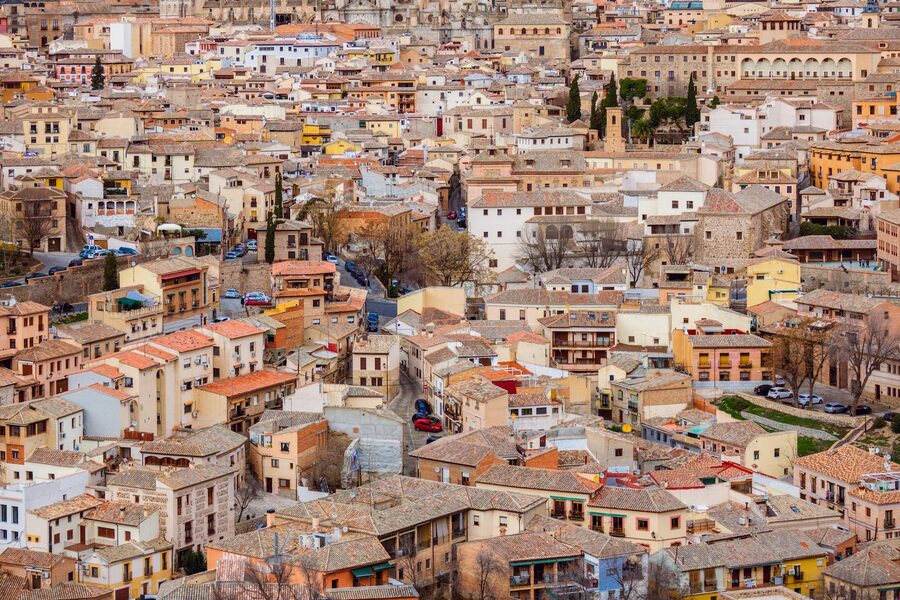
Most three-city tours start with Toledo. The reasoning: get the largest, most complex old town done while everyone’s energy is fresh. By 9:30 you’re walking past the Cathedral. By 11 you’re on the bus to Ávila or Segovia.
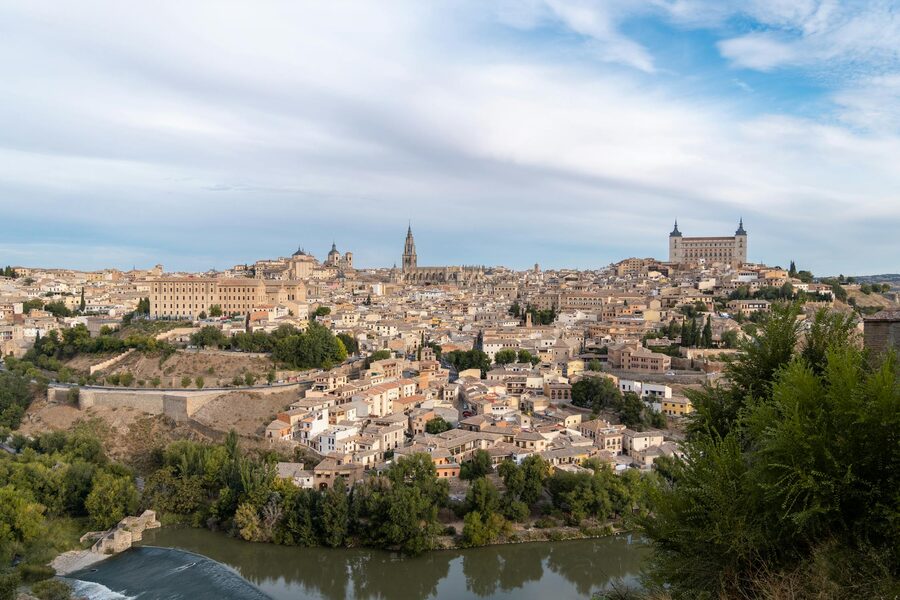
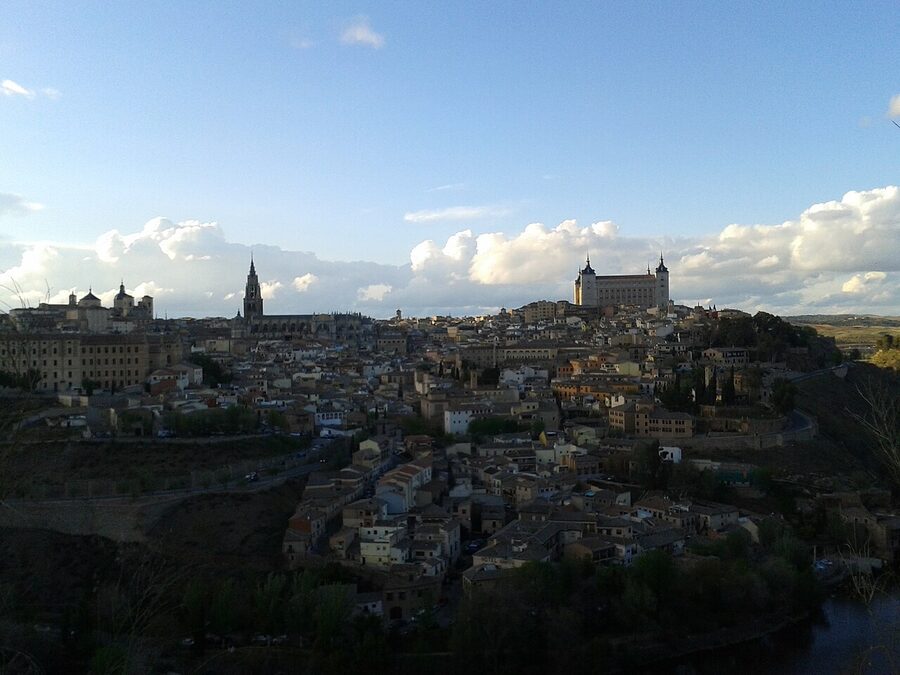
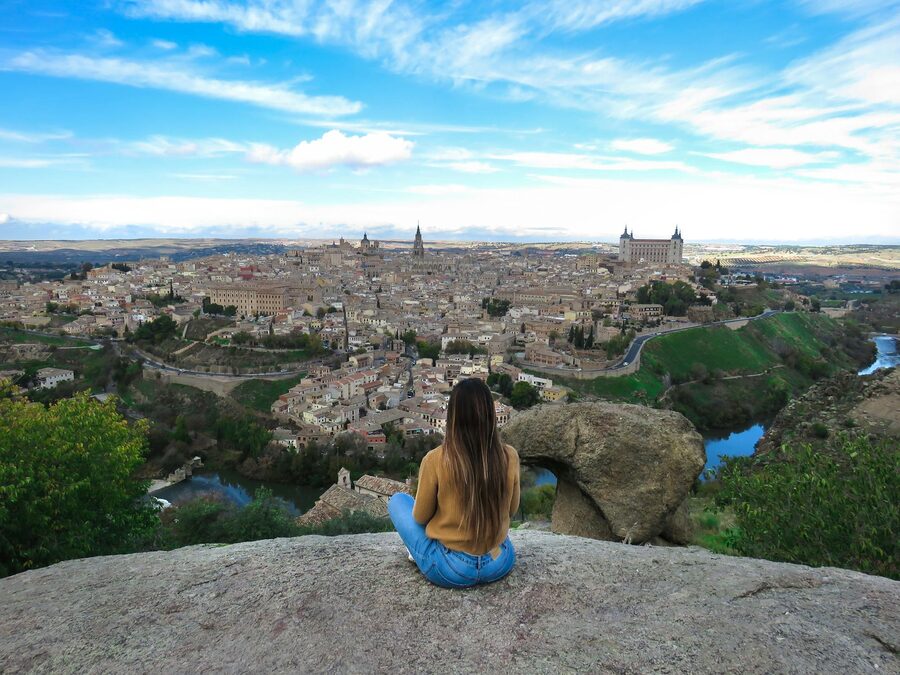
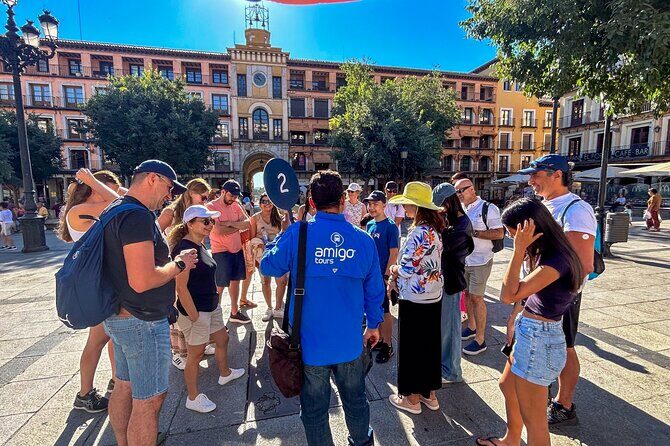
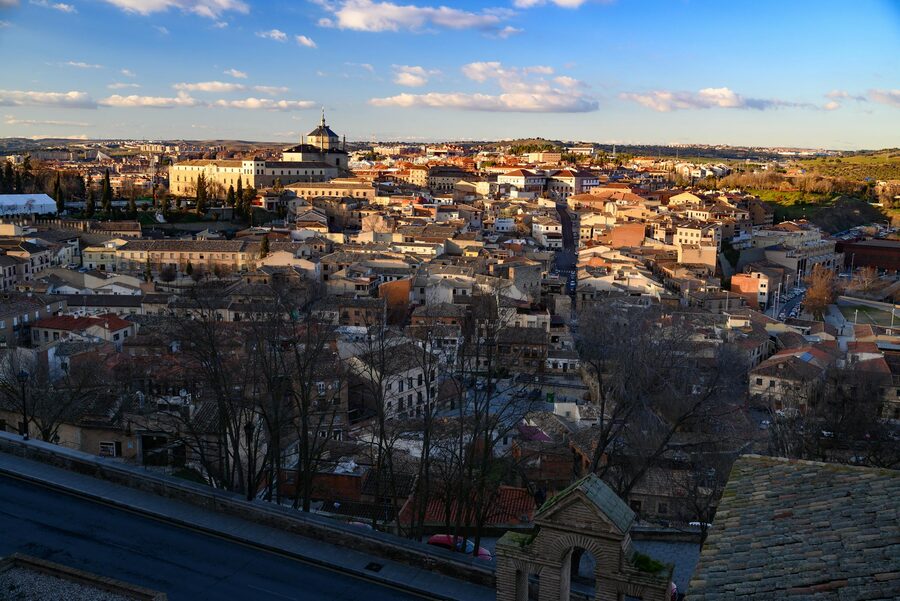
The standard Toledo loop on a three-city day looks like this. Photo stop at the Mirador del Valle on the south side of the river for 10 minutes. Drive across the Tagus. Drop off near the Puerta de Bisagra and ride the outdoor escalators up to the old town. Walking tour through the Jewish quarter, past Santa María la Blanca synagogue, around the exterior of El Greco’s parish church, into the Plaza de Zocodover. Free time of about 30 minutes. Back to the bus.
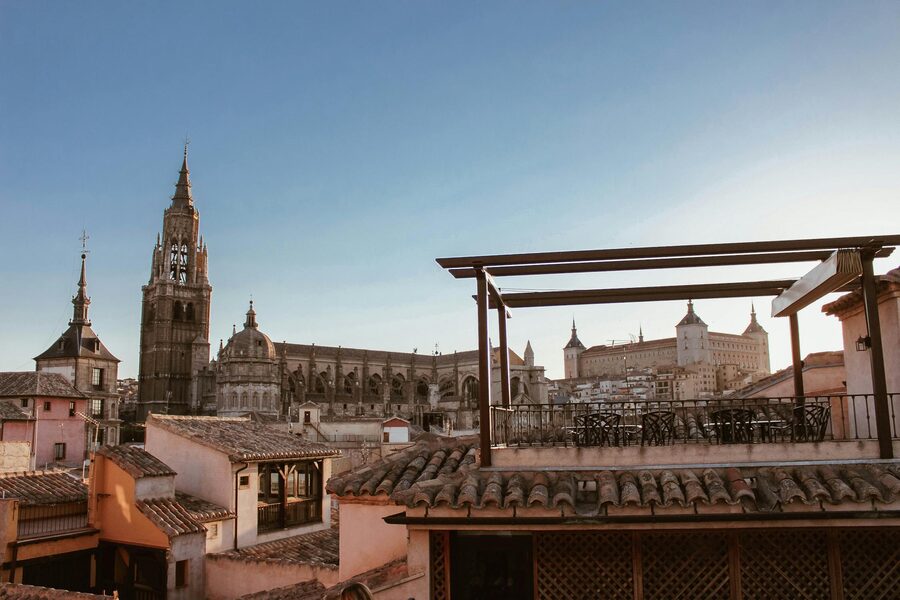
Note carefully: most three-city tours do NOT include the interior of the Cathedral of Toledo. That visit takes 90 minutes minimum to do justice. The day doesn’t have it. If seeing inside the Cathedral is a non-negotiable for you, you should book a Toledo-only or two-city trip instead. We’ll cover the alternative routes near the end.
What you do get in Toledo on the three-city day: the skyline shot, the medieval atmosphere, a Jewish-quarter walk that genuinely gives you the “city of three cultures” feel, and free time to grab a marzipan pastry (the Toledan specialty, sold at every other shop in the old town for around 2 euros each). If you’ve already done a morning at the Prado Museum the day before, the El Greco references on the Toledo walk will land harder. Toledo is where El Greco painted, and the Prado holds a chunk of his best work.
Lunch: the part nobody warns you about
Lunch is in Toledo for almost every three-city tour. The geography forces it: Toledo has the most restaurants and the easiest bus parking, and pulling everyone back to the coach by a fixed time is easier when the bus is parked 200 metres away.
You have three lunch realities to plan for. Most tours give you 60 to 90 minutes. That’s enough for a menú del día (the Spanish set lunch, usually around 15 euros for two courses, bread, and a drink) but not enough for cochinillo asado, the Segovian specialty, which takes about two hours to do properly. If cochinillo is on your Spain bucket list, this trip won’t deliver it. You’ll see the menus advertised in Segovia. You won’t have time to sit and eat one.
The two solid lunch strategies. First, eat near Plaza de Zocodover. Half a dozen menú del día spots cluster around the square and the side streets. Skip the cafés directly facing the cathedral; they charge a tourist tax. Second, grab a sandwich and a coke from a panadería and eat at one of the south-side overlooks. You save 30 minutes that you can spend back inside the old town. I’ve done both and the panadería option is underrated.
Segovia in 90 minutes: what’s actually possible
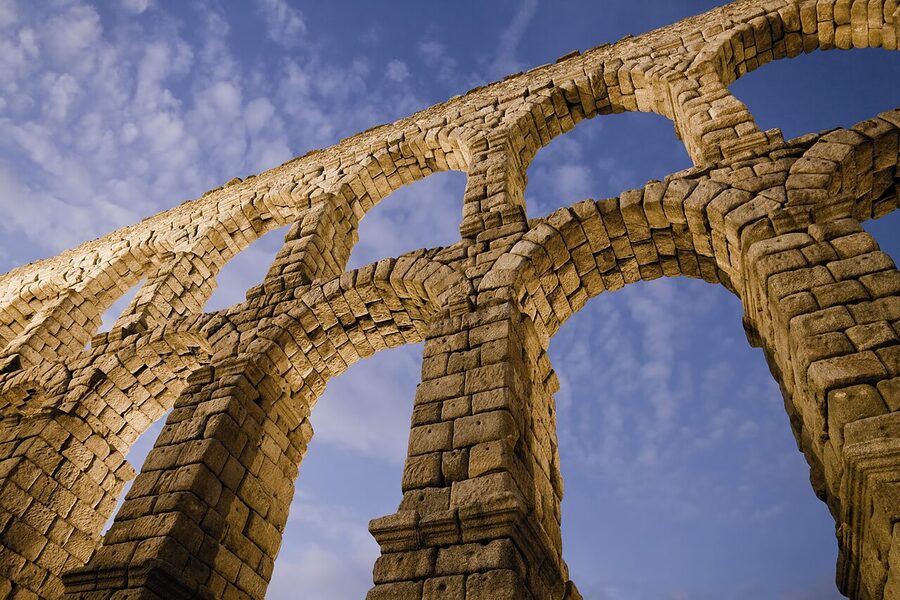
Segovia is the second city for most operators. By 3pm you’re rolling into Plaza del Azoguejo and the Aqueduct is right there in front of you. From here you walk uphill through the old town to the Alcázar. The walk takes about 20 minutes if you don’t stop. Most groups stop. Fine, but watch your time.
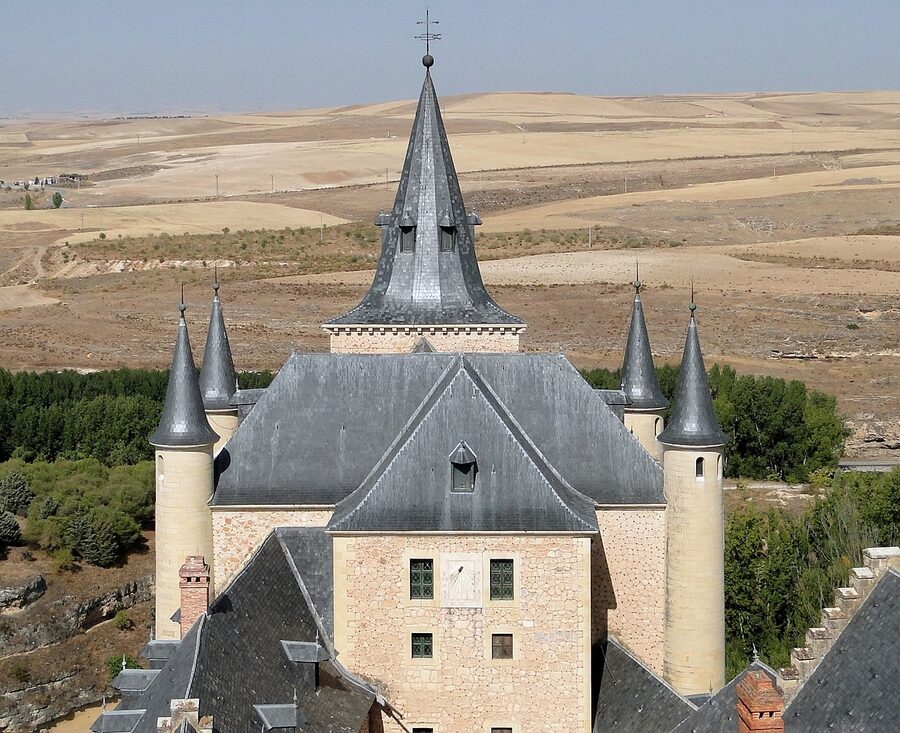
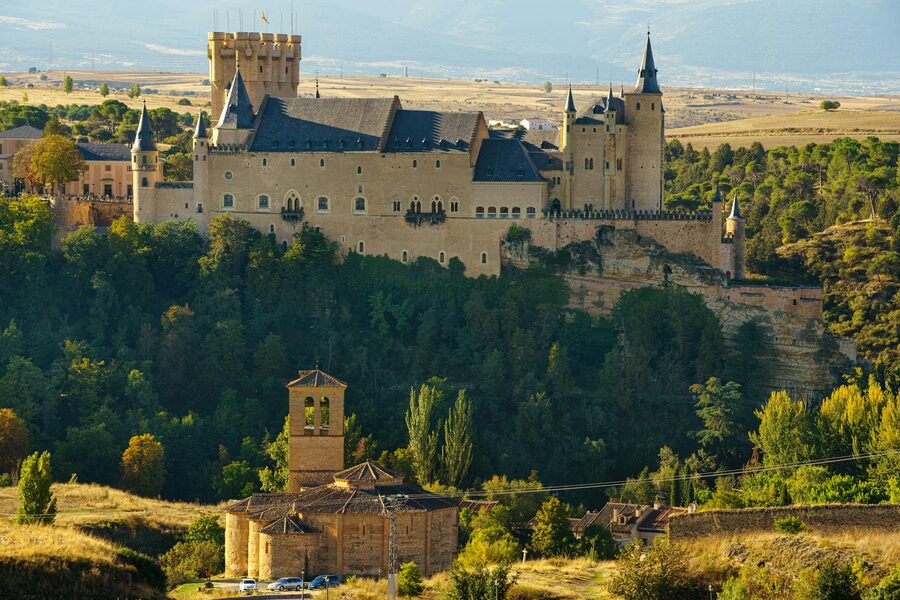
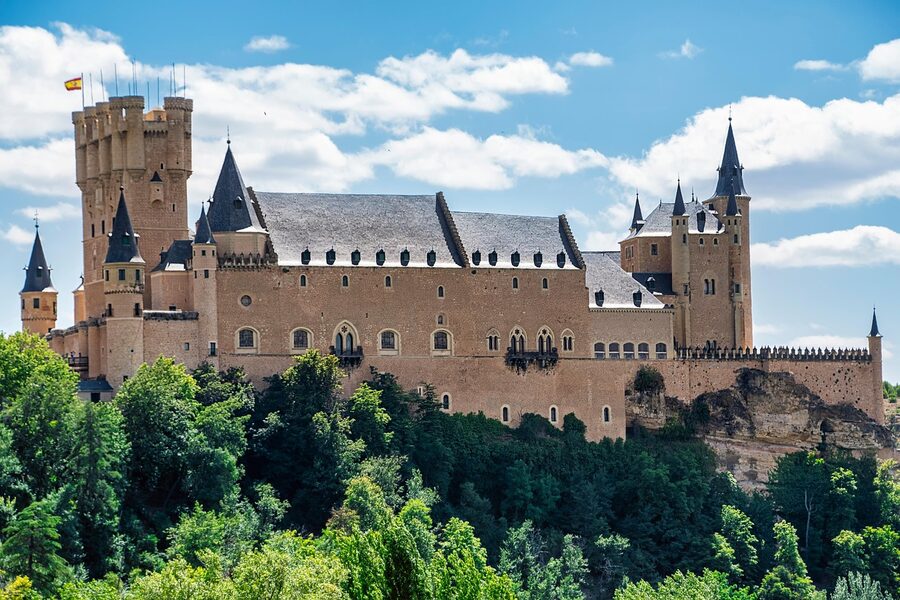
The Alcázar is the question mark. On a three-city day, most tours include the entrance ticket but not all do. Read your booking carefully. The interior takes about 45 minutes to walk through, including the Throne Room, the Hall of the Kings, and the armoury. The keep tower (152 stone steps up) is usually NOT included and costs 2.50 euros extra at the desk. Bring coins. The view from the keep is the best in town.
Skip the keep if you’re claustrophobic or short on time. The lower halls already give you a Spanish royal palace experience, and they pair well with a separate visit to the Royal Palace of Madrid if you want the Bourbon-era follow-up to this Castilian one. Take the keep if you can. The Castilian plain stretching out from a 90-metre-high tower is the kind of view that justifies the calf burn.
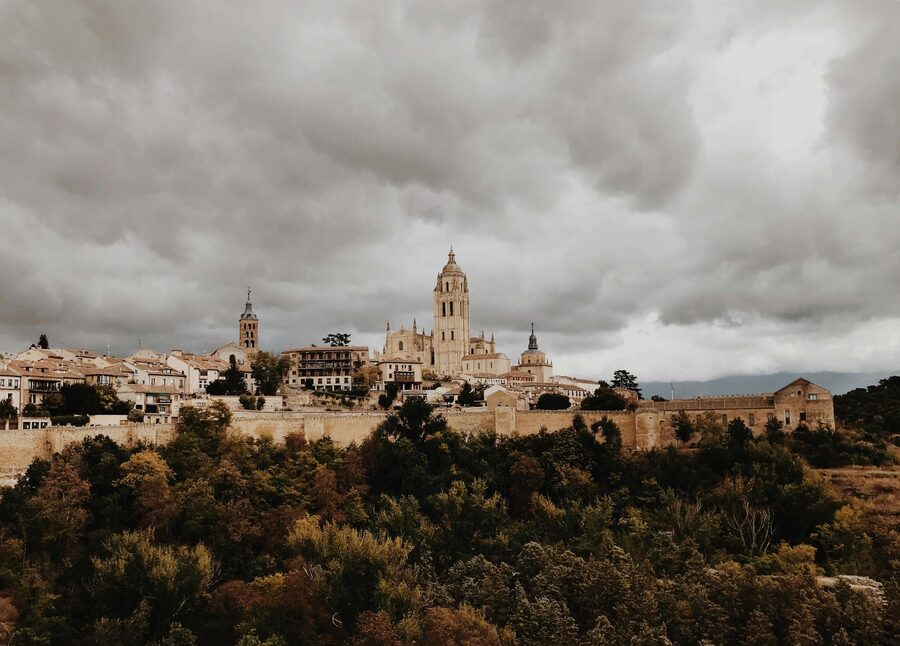
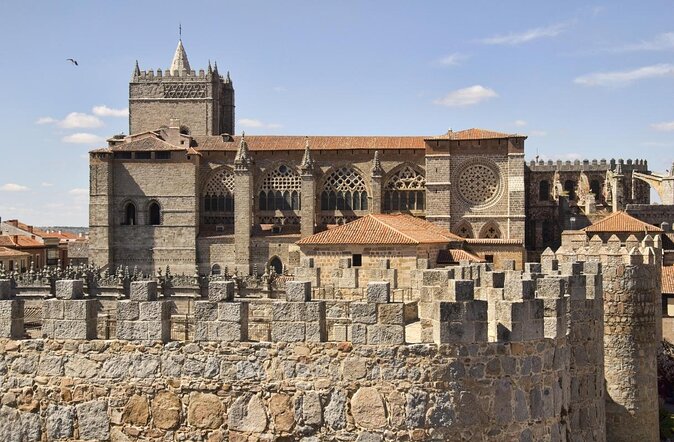
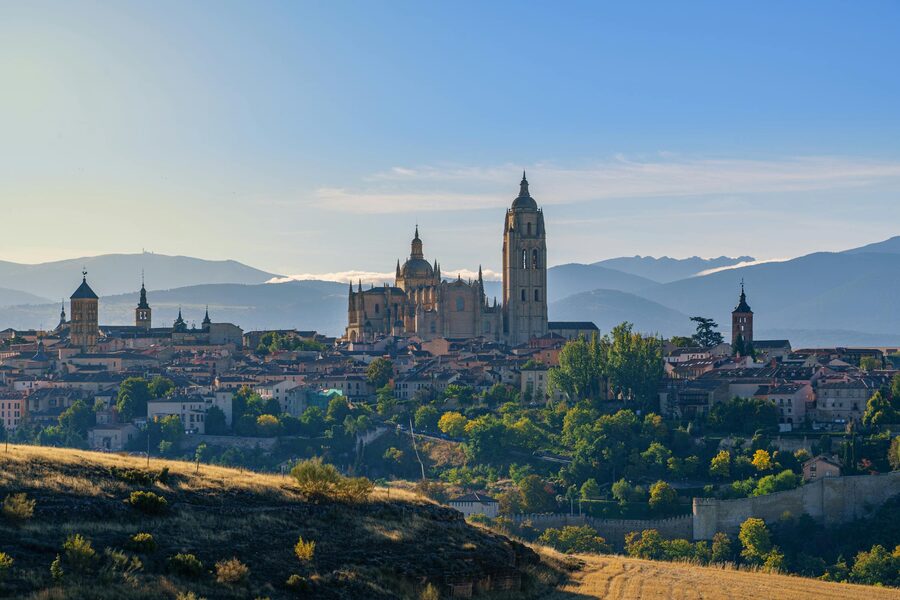
The Cathedral of Segovia is the city’s third major sight and almost no three-city tour includes the interior. Same problem as Toledo: not enough time. Most groups walk past it on the route between the Aqueduct and the Alcázar, you get a photo, and that’s that. If you really want the inside of Segovia Cathedral, plan a separate trip.
One quirk of Segovia worth knowing about. The town is at 1,000 metres altitude. Even in late spring the wind off the Sierra de Guadarrama can be sharp. A windbreaker matters here in a way it doesn’t in Toledo. I once watched a group in linen shirts visibly regret their layering choices on the walk up to the Alcázar.
The afternoon push to Ávila
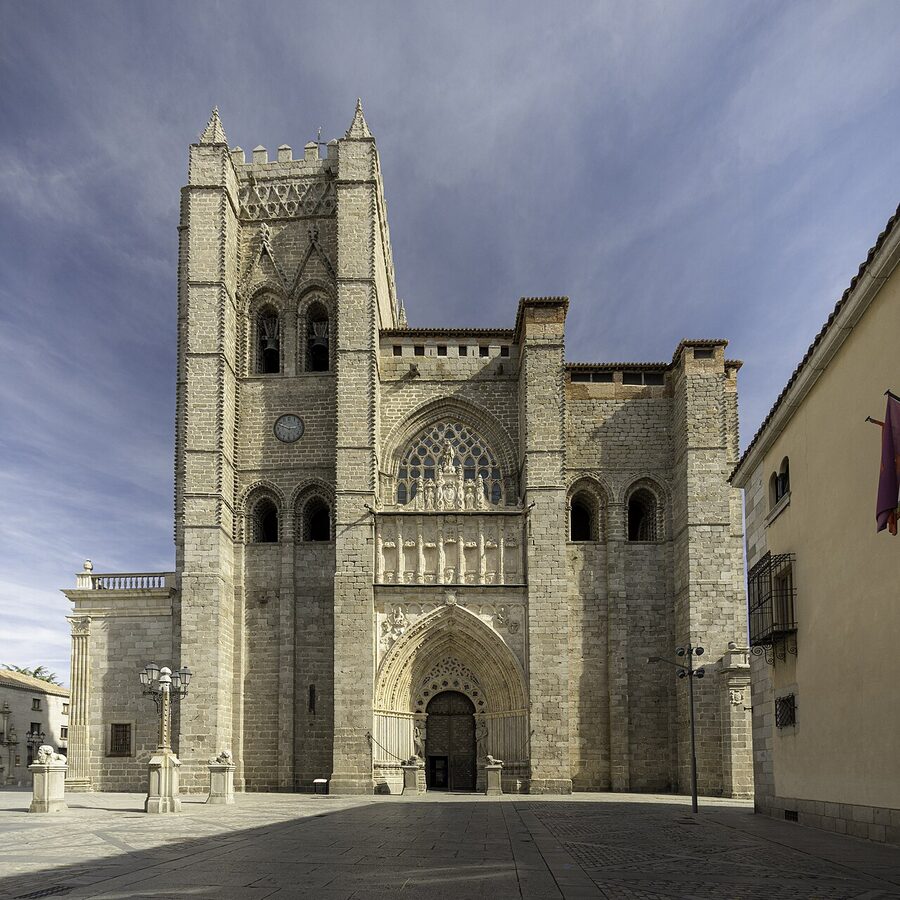
By 5pm or 5:30 you’re rolling into Ávila for the third stop. This is where the day’s pacing actually gets interesting. The town is small and the walls are right there from the moment you step off the bus. There’s no schlep into a complex old town. Everything is contained.
The standard Ávila stop on a three-city tour runs about 60 to 90 minutes. The pattern: photo stop at Los Cuatro Postes for the wide framed view of the walls (10 minutes). Drive into the city and park near Puerta del Alcázar. Walking tour past the Cathedral, into the old quarter, free time near the Basílica de San Vicente. Back to the bus.
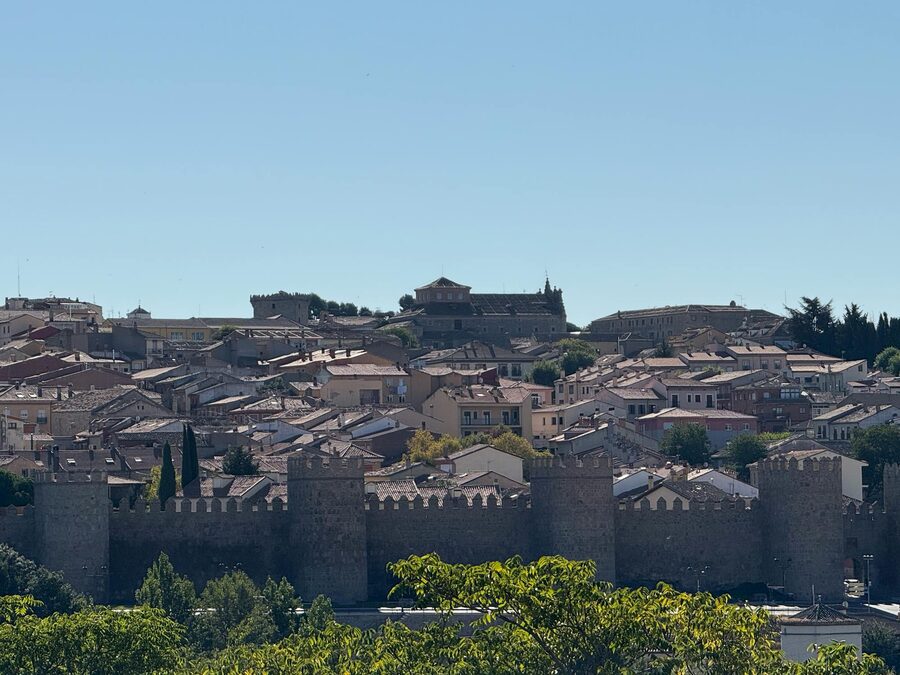
Ávila’s wall walk (€5 for two sections, €13 for the wall and several other monuments) is technically open to the public, but on a three-city day you almost certainly won’t have time to climb up. The 60-minute window doesn’t allow it. If you want to actually walk the ramparts, that’s another reason to consider a two-city trip and a separate Ávila day.
That said, the ground-level view is enough to understand what you’re looking at. Your guide will point out the towers, explain the 11th-century Reconquista context, and walk you through the gates. By the time you’re back on the bus, you’ve got the photos, the context, and a sense of how three cities can fit into one day without anyone losing their mind.
The actual best tours to book
I’ve narrowed this to three based on review depth, what’s actually included, and the tone of the company running it. All three are full-day round trips from a central Madrid meeting point, and all three include both Toledo and Segovia plus Ávila in some form. The differences come down to price, group size, and how much padding the day has built in.
1. Three Cities in One Day: Segovia, Ávila and Toledo from Madrid: $127
This is the established three-city benchmark. Twelve hours, English guide on a comfortable coach, lunch on your own in Toledo, photo stops at all the iconic spots, and Alcázar entry in Segovia. My full review walks through the timing of each stop and what gets cut at the busiest moments. If you want the most-vetted choice and don’t mind paying more for a more polished operation, this is the pick.
2. Toledo and Segovia Full-Day Tour with an Optional Visit to Ávila: $46
This is the smart-money pick if you want to keep options open. The advertised price covers Toledo and Segovia. Adding Ávila is a paid bolt-on you decide on the day or at booking. Our review covers what gets trimmed from Toledo or Segovia when you add Ávila to the route. If you’re price-sensitive or unsure about the pace, this is the more flexible choice.
3. Three Cities in One Day: Toledo, Segovia, and Ávila from Madrid: $96
The longer-day, smaller-group alternative. Thirteen hours instead of twelve, more breathing room at each stop, and the price sits between the two options above. The review details how the extra hour shows up at Ávila in particular. Pick this one if you’ve read about the rushed pacing on three-city tours and want a buffer.
Three cities versus two: should you really do all of them?
Here’s where I’ll get opinionated. If your trip to Spain is short (four days in Madrid or fewer), book the three-city option. You’re not coming back to Ávila in a hurry. The contrast of seeing all three in a day, however rushed, will stay with you longer than you think.
If you’ve got more time, do the two-city Toledo and Segovia trip on one day and a separate Ávila and Segovia day if Ávila keeps calling you. You’ll see more of each, you can do interior visits to the cathedrals, and you can sit down properly for cochinillo in Segovia. The trade-off is two early starts instead of one.
I’ve also seen travellers split it differently: a three-city day plus a separate slow Toledo day trip the next afternoon. That gives you the medieval-Spain summary on day one and the Cathedral interior on day two. Of all the splits I’ve seen people pick, this is the one that produces the fewest “I wish we had longer” comments at the end.
Pacing and physical reality
This trip is a long day. You’re picked up between 7am and 8am. You’ll be back in Madrid between 8pm and 10pm depending on which operator you book. Twelve to fourteen hours on your feet, off and on. Three medieval old towns, all on cobbles, mostly uphill in places.
What this means in practice. Real walking shoes are not optional. Heels will betray you within an hour. Sandals will be fine in summer but not on Segovia’s morning cobbles in May. A daypack with water, a snack, and a light jacket covers you for the day. Don’t bring a giant rucksack; cathedrals and the Alcázar have bag limits and you’ll be queuing at cloakrooms while your group moves on.
Cash matters. The keep at Segovia’s Alcázar takes coins and there’s no easy ATM nearby on the route. A 5 euro note and a couple of coins solve it. Most other purchases (coffee, marzipan, postcards) work fine on card.
One last thing: the bus has a toilet, and you’ll appreciate it. The drives between cities are 90 minutes to 2 hours each. Taking a 30-minute pre-coach coffee is allowed. Drinking another in the first stop hour is your call.
When to go: not all months are created equal
April to early June is the sweet spot. Wildflowers are out around the Cuatro Postes. Cathedrals are still cool inside. Cobbled streets aren’t blazing. The afternoon light catches the Avila walls in a way that’s worth booking the trip for on its own.
July and August are the punishing months. Toledo’s old town is basically a stone oven by 2pm and the only shade is inside cathedrals you mostly aren’t visiting. If you’re going in summer, book the earliest tour available so the Toledo walking tour happens before noon.
October and November are quietly brilliant. The crowds are thin, the cathedrals are empty enough to actually pause inside without holding up traffic, and you’ll occasionally get clear cold mornings that make the photos sharper than they have any right to be. The trade-off is rain risk, but most operators run regardless of weather.
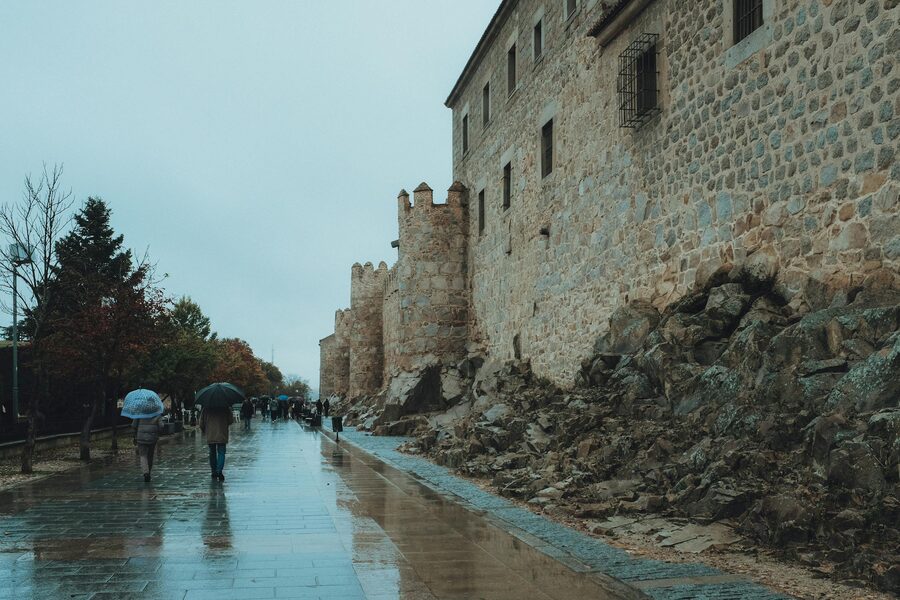
December has a quieter charm. Toledo runs a Christmas market in Plaza de Zocodover, the cathedrals look stunning at dusk, and Ávila’s walls in low winter light are dramatic. Bring a real coat. At 1,100 metres altitude, Ávila in December genuinely is winter.
The history that helps you understand what you’re looking at
Toledo was the capital of Visigothic Spain (5th to 8th centuries) and then the capital of Castile from the 11th century until Philip II moved court to Madrid in 1561. For 500 years before that move, Toledo was the place where Christian, Jewish, and Muslim scholars worked side by side translating Arabic philosophy and Greek classics into Latin. That coexistence is the layer you’re walking through. The tangled streets and surviving synagogues aren’t decorative; they’re the architectural memory of a multi-religious medieval state.
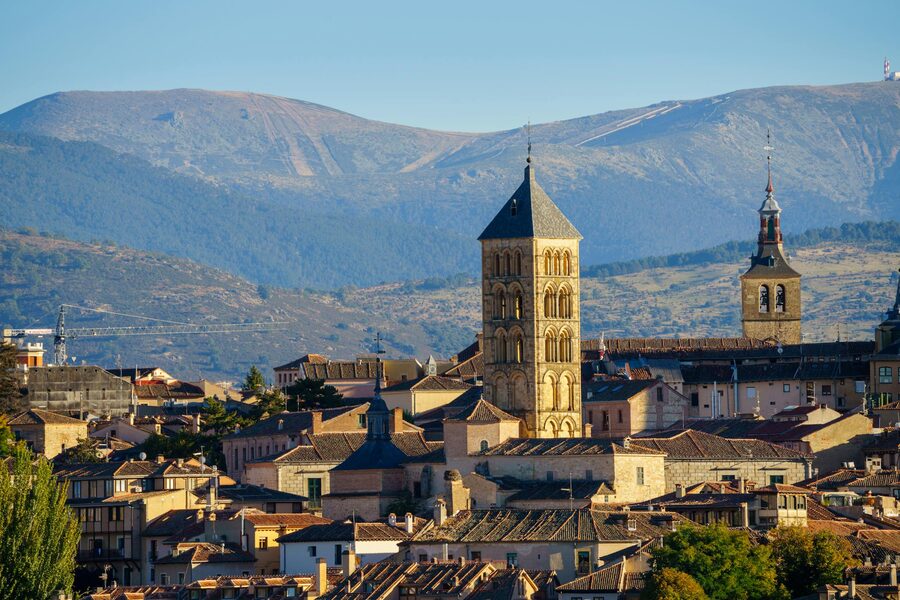
Segovia was a Roman city, then a Visigothic stronghold, then a Castilian royal seat where Isabella I was proclaimed queen in 1474. The royal seat connection is why the Alcázar was so well-preserved relative to other castles in central Spain. It was rich enough to keep maintaining. The Aqueduct is older still: built around 50 AD by Roman engineers to carry water from the Acebeda river 17 kilometres away into the city, and it stayed in continuous use until the late 19th century. Two thousand years of working infrastructure.
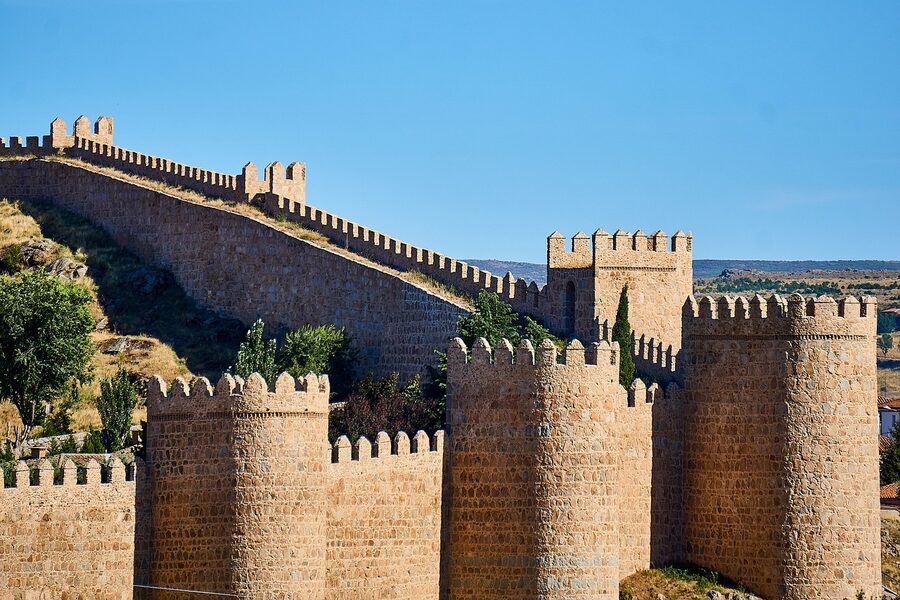
Ávila is the youngest of the three in some ways. The walls began going up around 1090 as part of the Reconquista, the centuries-long effort by Christian kingdoms to retake Iberia from the Moorish caliphates. The town became a frontier fortress and stayed one until the front lines moved south. By the 16th century it was best known for its mystics: Saint Teresa of Ávila and her contemplative reform of the Carmelite order. UNESCO listed the walled city in 1985.
Knowing this changes the trip. The walls of Ávila aren’t a tourist set piece; they’re 11th-century military infrastructure that survived because the wars stopped before anyone bothered to demolish them. The Alcázar of Segovia isn’t just a fairy-tale silhouette; it’s the room where a Castilian queen took the throne and reshaped Spain. Toledo’s tangle of synagogues isn’t quaint medievalism; it’s what a multi-faith capital city actually looked like before 1492.
Common mistakes to avoid
Don’t try to visit cathedral interiors. Three-city days do not include interior cathedral visits. Some travellers book this trip thinking they’ll see inside Toledo Cathedral or Segovia Cathedral. They won’t. If a cathedral interior matters to you, do a two-city trip or a single-city day.
Don’t pick the cheapest option without reading the inclusions. Some sub-$40 listings cover transport only and skip the Alcázar entry. The Alcázar interior is one of the genuine highlights. Add it back yourself and the savings disappear.
Don’t expect a full sit-down lunch. Tour stops are 60 to 90 minutes. That’s a menú del día, not a tasting menu. Cochinillo is two hours of waiting. You won’t have it.
Don’t bring a hard-shell carry-on or a giant rucksack. Cathedrals and the Alcázar limit bag size to roughly 25 litres. Anything bigger and you queue at the cloakroom while the group moves on.
Don’t underestimate the altitude difference. Madrid is at 650m. Ávila is at 1,100m. Segovia at 1,000m. The temperature drop is real. A windbreaker matters even in May.
Practical booking tips
Book at least a week ahead in spring and summer. Ten days ahead is safer for May, June, and September. The standard Viator listings sell out on busy weekends.
Confirm the meeting point on your voucher the night before. Most three-city tours leave from a central point near Plaza Mayor, Atocha, or one of the larger central hotels. Get there 15 minutes early. Tours sometimes leave on time and almost never late. If you arrived in Madrid the night before and haven’t oriented yourself yet, a quick panoramic city tour on your first afternoon makes the next morning’s pickup point feel familiar instead of disorienting.
If you’re staying outside the centre, check if your tour offers hotel pickup. Some do, some don’t. The dedicated three-city benchmark tour does offer pickup from select hotels, which can shave 30 minutes off your morning.
Cancellation policies vary. The major operators on Viator and GetYourGuide are usually 24 hours for a full refund. Smaller agencies sometimes have stricter terms. Read before you click pay.
Should you do this trip at all?
Yes, with one caveat. If you’re new to Spain and have a short trip, do all three cities in one day. You’ll get the medieval-Spain summary you came for, you’ll have done the most-booked day trip in central Spain for under $130, and you’ll be back in Madrid with a clear head about what you’d want to spend more time on if you ever return.
If you’re a slow traveller who hates rushed tours, skip this and split the cities across multiple days. The contrast that makes this trip work, three cities in twelve hours, is the same contrast that defines its limits. You will not get cathedral interiors. You will not eat cochinillo. You will not walk the entire Ávila wall. What you will get is three medieval cores in one day, photographed at the right times, with a guide who explains why each one matters.
For most first-time visitors to central Spain, that’s the right trade. For everyone else, there are better-paced options.
Where the day fits in your wider Spain trip
This trip works best as the medieval-Spain summary in the middle of a longer Madrid stay. If your route then carries you south, the same religious-architecture thread continues at the Seville Cathedral and Giralda, and the Royal Alcázar of Seville is the natural southern bookend to the Castilian fortresses you saw on this day. If you’re back in Madrid for a slower day, a flamenco show in the evening is the easiest way to fix your legs after the coach.