
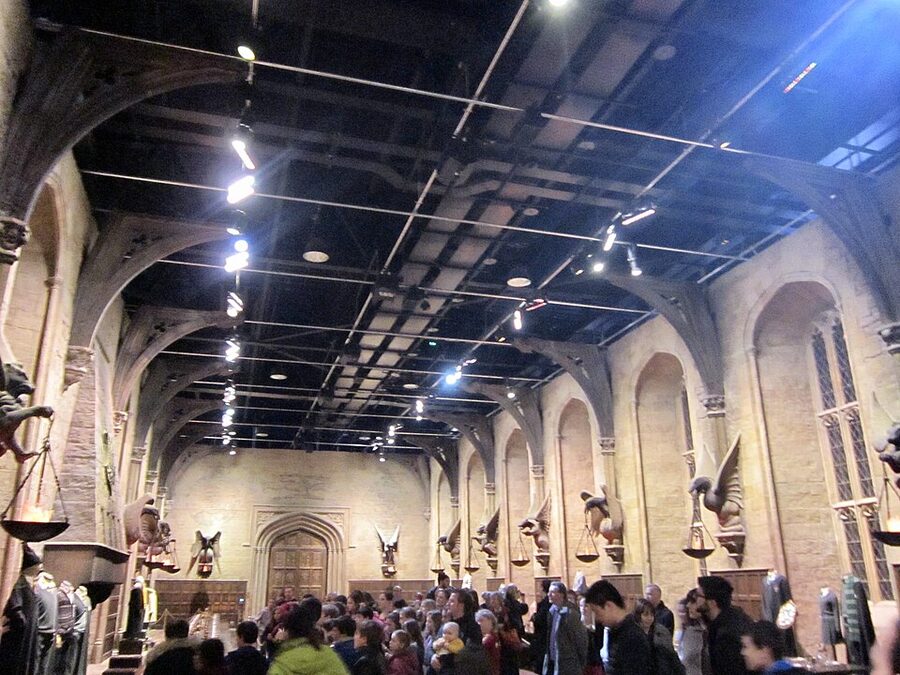
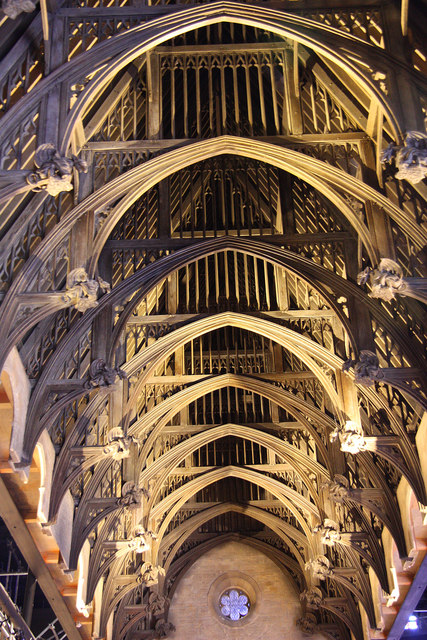
You step through the heavy oak doors and the ceiling vanishes into nothing. The floating candles aren’t real, of course, but at this distance and at this angle they may as well be, hovering above the four long tables and the worn benches the actors actually sat on for ten years of films. The Great Hall is the first set you walk into at Warner Bros. Studio Tour London, and the first sign that this isn’t a theme park.
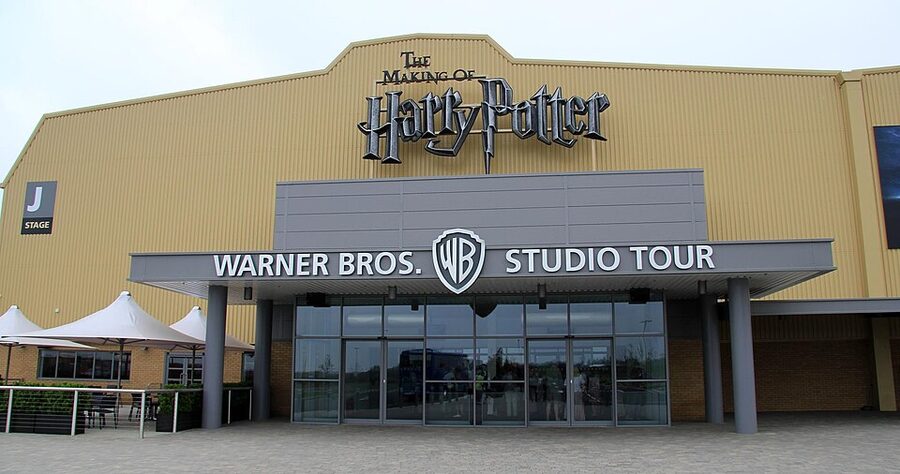
This is the actual filming location. Not a recreation, not a copy in Florida or Osaka, but the original sound stages at Leavesden, about thirty minutes north of central London. Tickets are timed, sell out two to three months ahead in school holidays, and the only way in is via the official site or a branded coach package that bundles the ticket with transport. I’ll walk you through what each route looks like, which add-on tour I’d actually pick, and what to expect once you’re inside.
- In a hurry? My three picks
- Why this is the real one
- Where the studio actually is
- The flagship coach package: how the easiest route actually works
- The branded Hogwarts bus version
- The transfers-only middle path
- The King’s Cross alternative
- Tickets only, no transport
- The three tours I’d actually book
- 1. Flagship Coach From Central London: 7
- 2. Branded Hogwarts Double-Decker Coach: 1
- 3. Studio Tour with Transfers: 4
- What’s actually inside
- The Great Hall
- Diagon Alley
- The Hogwarts Express and Platform 9¾
- Privet Drive and the cupboard
- The Forbidden Forest
- The Hogwarts model
- Costumes, props, and the design corridor
- The Hogwarts bridge and the outdoor backlot
- The Backlot Café and Butterbeer
- The food situation generally
- Getting tickets when everything is sold out
- What to bring, what to skip
- Best time of year to go
- Combining with the rest of London
- The two best-kept secrets
- Photographing the tour without ruining your visit
- Accessibility and family logistics
- The mistake almost everyone makes
- If London isn’t your first European stop
- Quick FAQ
- Where to next
In a hurry? My three picks
Coach from central London (the easy default): the flagship coach pickup from Victoria. Studio ticket included, no train hassle, just turn up. Around $117.
Branded Hogwarts double-decker (the experience version): the themed bus pickup with full Harry Potter livery. Same studio ticket, more fun on the road. Around $151.
Studio entry plus transfers (the cheapest with transport sorted): the transfer-only package if you don’t need the themed bus. Around $144.
Why this is the real one
There are Wizarding World theme parks in Florida, Hollywood, Osaka, and Beijing. Those are great. They’re also rebuilds. The studio tour at Leavesden is the actual film set, the actual props, the actual costumes worn by the actual cast over ten films and twelve years of production. Daniel Radcliffe walked these floors. The set decorators kept everything because they had to keep continuity for a decade, and when the films wrapped in 2010 the decision was made to open the lot to the public rather than break it down.
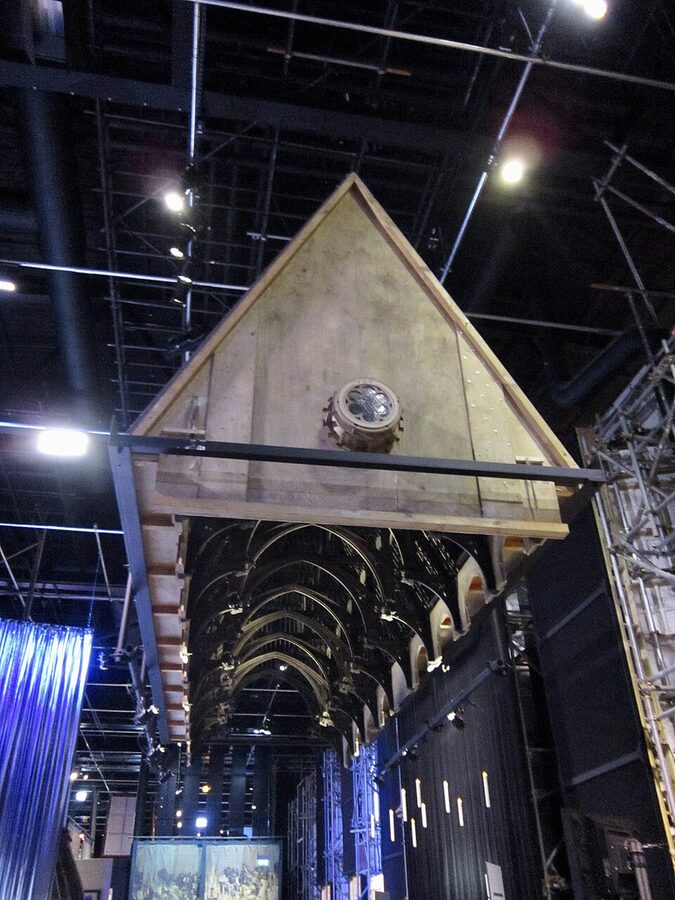
That matters more than you’d think. The Diagon Alley you walk down is the Diagon Alley. The Knight Bus is the actual prop bus. The Ford Anglia hanging from the ceiling at the entrance is the car they suspended from cranes for filming. If you’re a fan of behind-the-scenes craft, this is closer to a museum of British film-making than a tourist attraction. If you’re traveling with kids who just want to see Hogwarts, it works on that level too. Both audiences leave happy, which is unusual.
Where the studio actually is
Warner Bros. Studios Leavesden sits in Hertfordshire, just outside Watford, about 20 miles northwest of central London. It’s not in London proper. People assume it’s a tube ride away and then realise the morning of that they’re heading out to the M25. Plan accordingly.
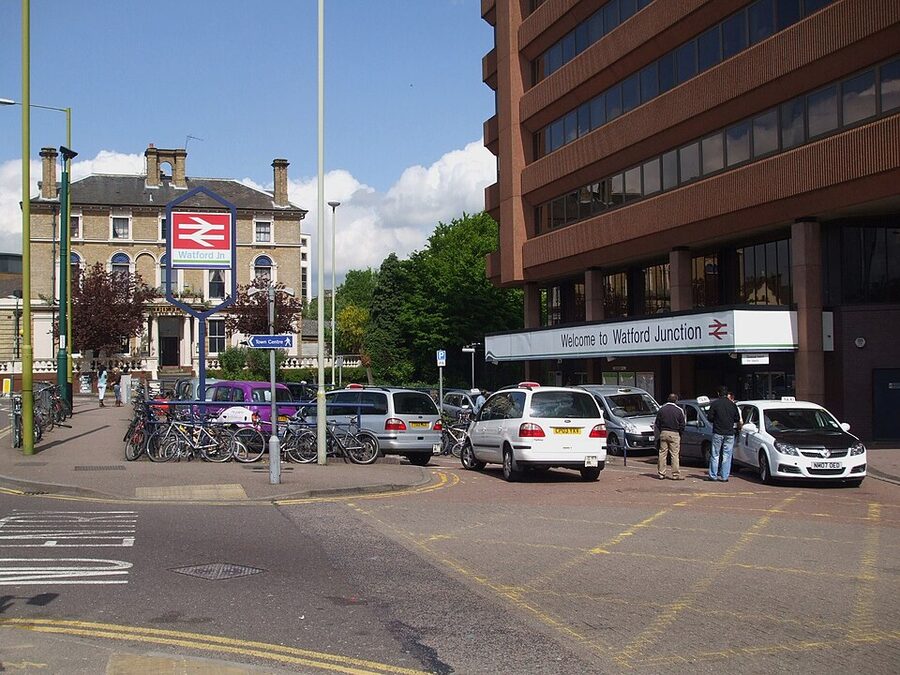
You have three real options for getting there. The DIY route is the train from London Euston to Watford Junction, then a paid shuttle from outside the station to the studio gate. The shuttle is liveried with film art so you won’t miss it, runs every twenty minutes or so, and takes another fifteen minutes to reach Leavesden. The branded coach option leaves from central London (usually around Victoria or King’s Cross) and bundles the studio ticket with door-to-door transport. The third is driving yourself and parking on site, which is fine if you’ve got a rental and the studio still has parking slots for your time.
Total round-trip time from central London is four to five hours of travel plus three to four hours inside the studio. That means a full day. You won’t want to fit anything else in afterwards beyond a quiet dinner. Tower of London is a much shorter day if you’ve only got eight hours and want a heritage hit; the Eye works as a casual thirty-minute add-on the next morning.
The flagship coach package: how the easiest route actually works
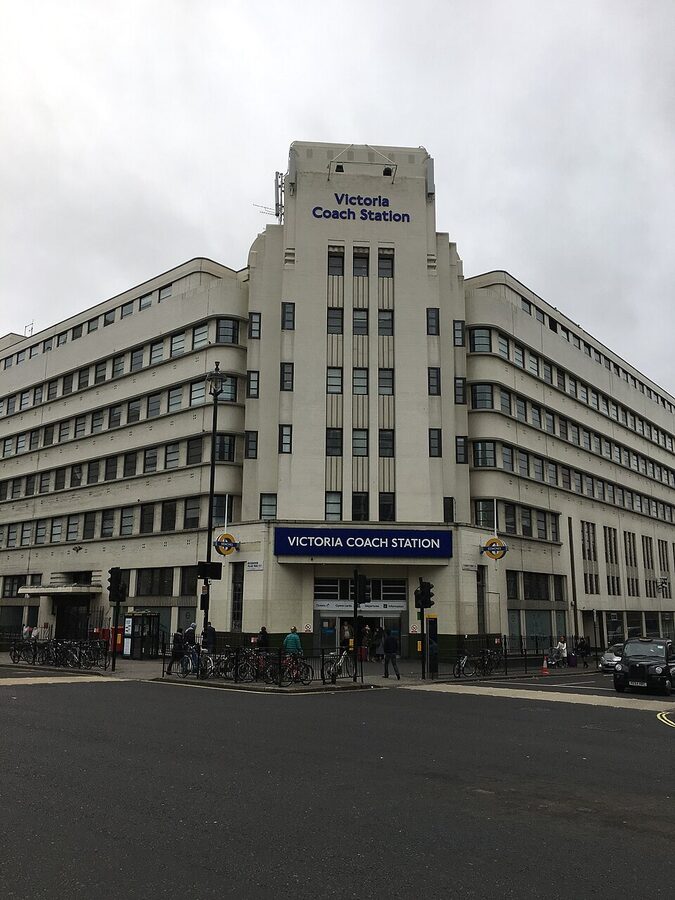
If you only want to deal with one booking and no logistics, this is the one to take. The central-London coach package meets at Victoria, runs you out to Leavesden in about ninety minutes depending on traffic, drops you at the studio gate, and brings you back to central London at the end. Studio entry is included in the price, you don’t pay separately at the gate. Total time block including the studio visit is around seven hours.
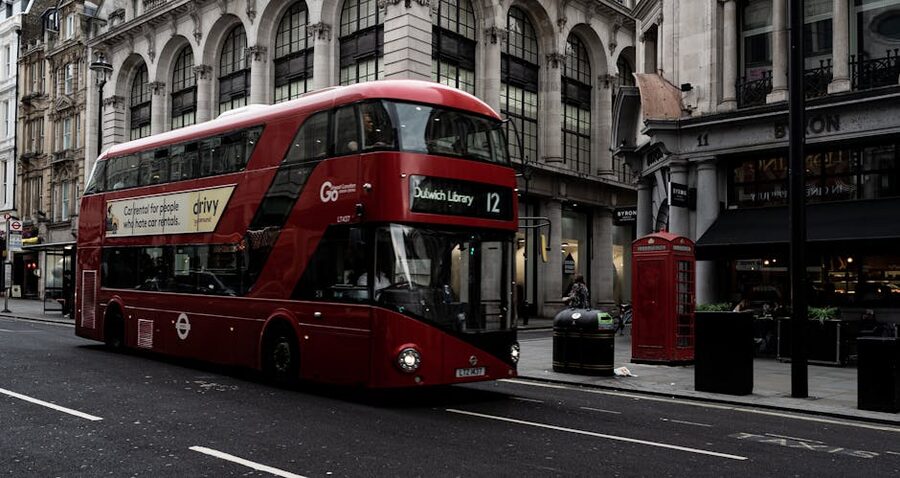
The catch is what you’d expect: a coach has a fixed return time. If you’re the kind of visitor who wants to spend six hours inside reading every plaque and watching every video, this isn’t your pick. The studio doesn’t kick you out, but your bus does leave at a set hour. Most people are out within four hours and the coach time works fine. If you suspect you’ll be a five-plus-hour studio visitor, the train route gives you full flexibility on when you head back.
The branded Hogwarts bus version
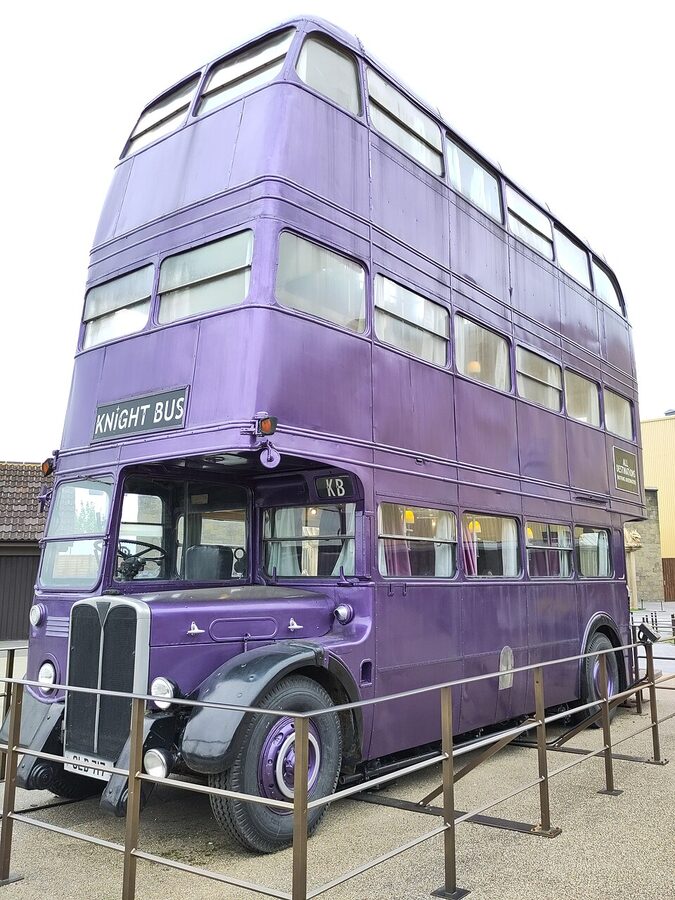
The same operator runs a fully wrapped Hogwarts-themed double-decker for guests who want the journey to feel like part of the experience, not just transport. The branded bus package covers the same studio entry plus the same return service, but you spend the road time on a bus painted in film livery with on-board video commentary covering the production history before you arrive. It costs a bit more than the standard coach. Worth it if you’re traveling with younger kids who’ll lose patience on a plain coach. Less obviously worth it if you’re a solo adult or a couple.
If you want to compare, the alternate branded bus pickup covers a different morning slot and tends to be slightly cheaper, with the same overall experience. Either works.
The transfers-only middle path
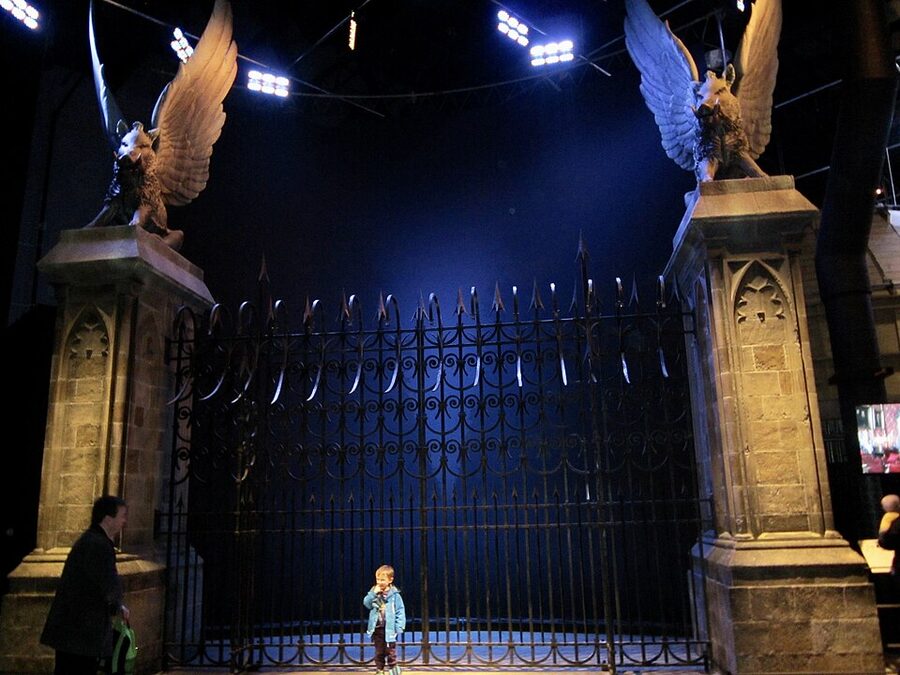
If you don’t care about the themed bus and just want a straightforward studio ticket plus return transport, look at the studio tour with transfers. It’s effectively the same product as the flagship coach but priced just slightly lower, with a plain touring coach instead of a branded one and fewer add-on extras. The pickup point is still central London. Studio entry, transport, and a return time slot are all bundled. This is what I’d pick if I were on a budget but didn’t want the train logistics.
The King’s Cross alternative
One small variant worth knowing about: there’s a King’s Cross departure version that pulls in the Platform 9¾ photo-stop at the real King’s Cross Station before heading out to the studio. King’s Cross is a genuine working London terminus and the platform-trolley setup is on the main concourse, free to walk past, but the queue for the staffed photo with the trolley is forty minutes plus on weekends. If you’d rather get the photo as part of the package and skip your own logistics, this is the variant for you.
Tickets only, no transport
If you’ve got a car, are staying near Watford, or genuinely want full control over your day, you can book the bare studio ticket on the official Warner Bros. site. Note: tickets aren’t sold at the gate. They never have been. You walk up to the door without a booking and you don’t get in. School holidays and any weekend you’re picturing are usually sold out about two months ahead, sometimes three. Don’t leave it.
The three tours I’d actually book
I’ve narrowed this down to three picks across all the available studio tour bookings. These are the most-booked options and each one solves a different version of the same problem.
1. Flagship Coach From Central London: $117
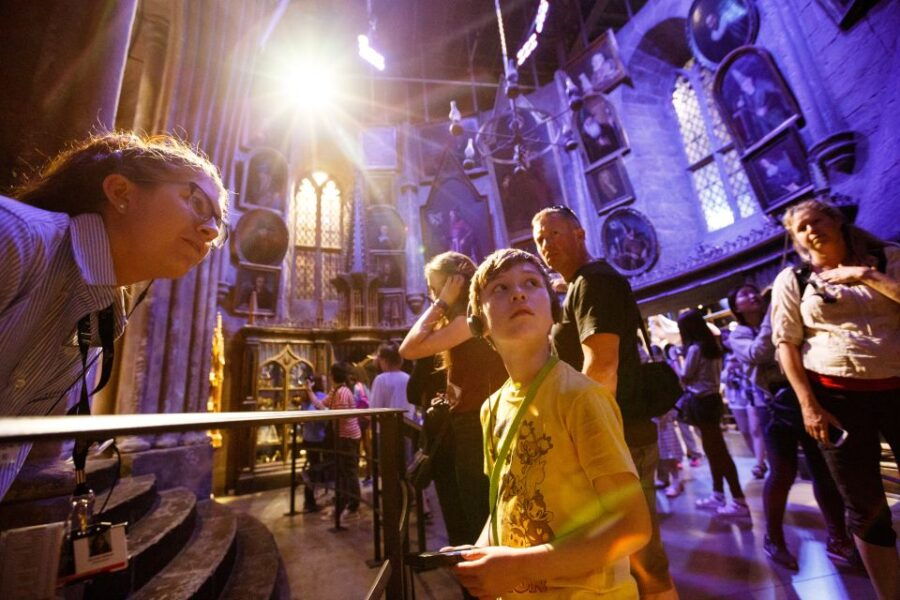
This is the no-brainer pick if you want the simplest version of the day. Pickup from Victoria Coach Station, return to central London, studio ticket included; our full review walks through which morning slot is least crowded and which seat row to ask for on the coach. Pacing is firm but not rushed, and you get a fixed seven-hour day that you can plan around. If you’ve never done it before and you’re on a one-week London trip, book this one.
2. Branded Hogwarts Double-Decker Coach: $151
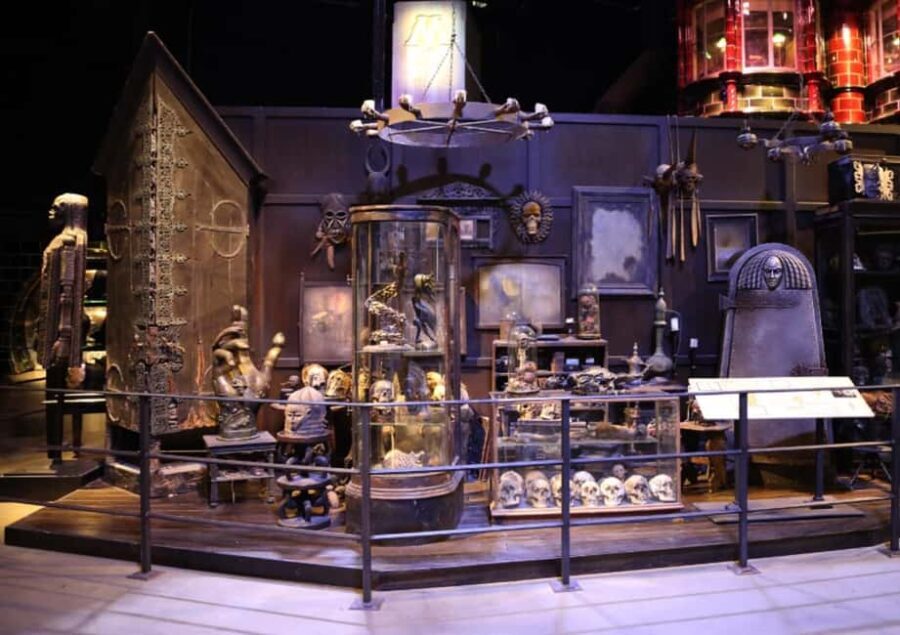
The themed double-decker version. Same studio ticket, same return service, but the road time runs on a fully wrapped Hogwarts-livery bus with on-board commentary; our review of the branded bus goes into how the upper deck compares to the lower deck for views and what age range gets the most out of the theming. Usually books out earlier than the plain coach for school-holiday weeks.
3. Studio Tour with Transfers: $144
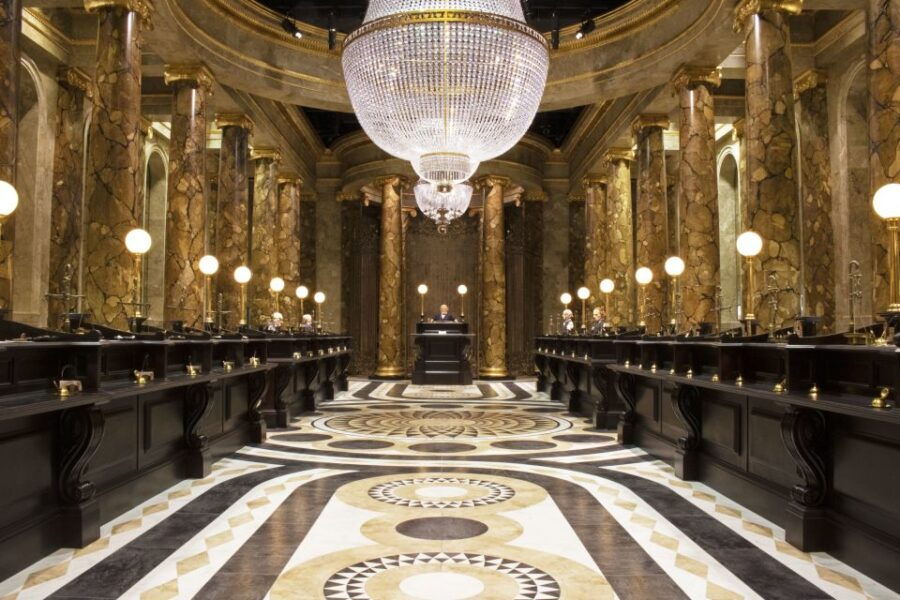
The pragmatic pick. Plain touring coach, studio entry included, central London pickup, fixed return time; our transfers review covers how the schedule lines up with the gentler late-morning studio entry slots, which is what I’d recommend if you’re not a morning person. Cheaper than the branded version. If you don’t want themed transport, take this one.
What’s actually inside
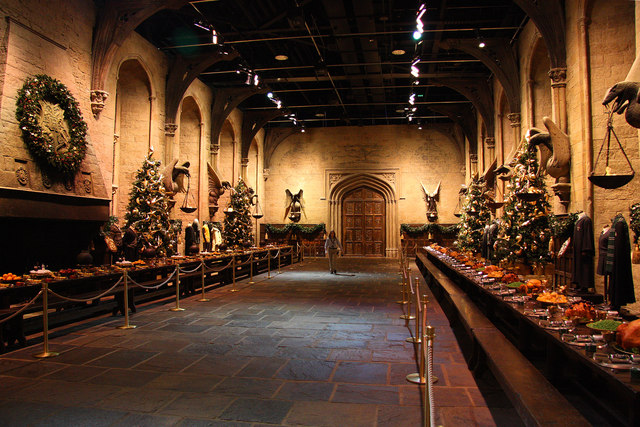
The route is one-way and self-paced, which is the right call. You start in a small theatre with a short film. The Great Hall doors open. From there you wander through a long sequence of sets, props, costume galleries, and behind-the-scenes displays. There are no time limits between rooms, no guides marching you through. You can sit on a bench in front of Dumbledore’s office for ten minutes if you want.
The Great Hall
You’ve already seen the photos. The thing the photos don’t catch is the smell of the wood and the way the light from the high windows hits the long tables. The set was built once and used for ten years. The floor is genuine flagstone and you can walk along the head table where Dumbledore stood. Get there early, the room thins out within the first twenty minutes. If your booking is the second or third group of the morning you’ll wait three to five minutes for the doors to open, then have a clean run.
Diagon Alley
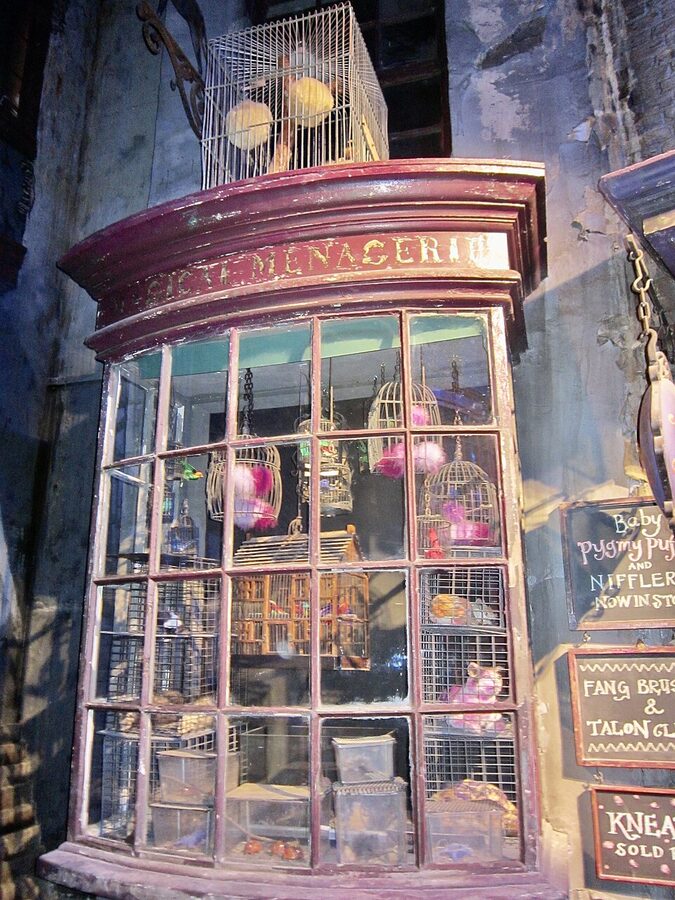
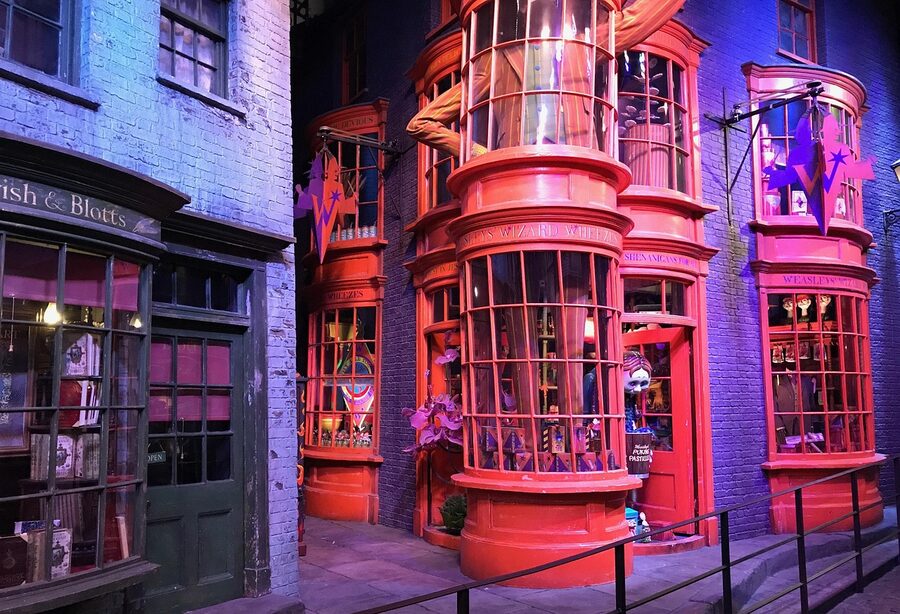
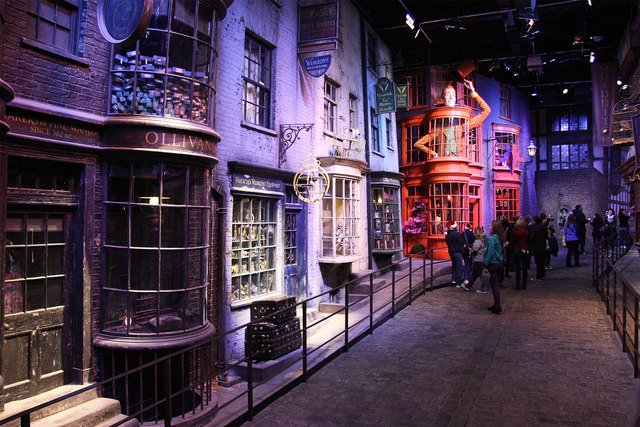
This is the second-best part of the tour and arguably the most photogenic. A full cobblestoned street with all the shop facades you remember: Ollivanders, Florean Fortescue’s, Weasleys’ Wizard Wheezes with the giant rabbit-pulling-itself-from-a-hat sign. The set is curved so you can never see the whole street at once, which gives it the cluttered medieval feel it has on screen. The shops aren’t just facades; many have full dressed interiors visible through the windows.
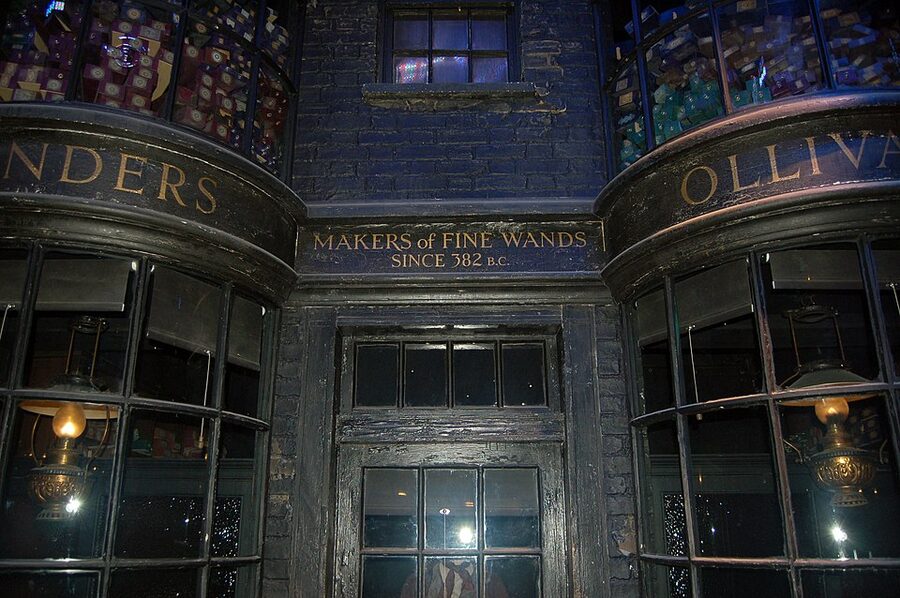
Step into Ollivanders and the first thing you notice is the smell. Old wood, paper, dust. They built a wall of 17,000 hand-labelled wand boxes for one or two scenes in Philosopher’s Stone, and instead of letting them go they stored, repaired, and re-stacked them for a decade. Each box has a name written on the end. They’re real members of the production crew. If you have time, find the few labelled with cast members; people who’ve done their reading hunt for them.
The Hogwarts Express and Platform 9¾
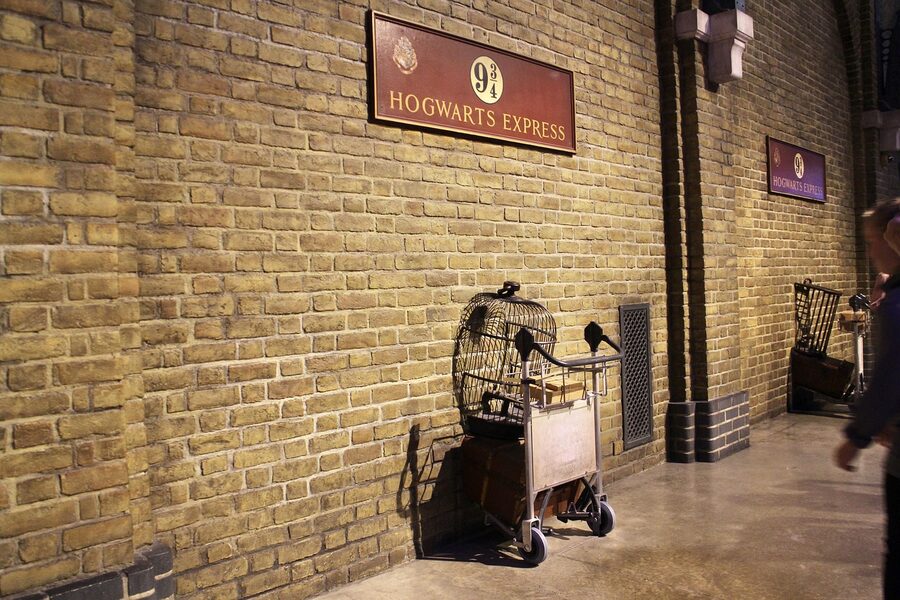
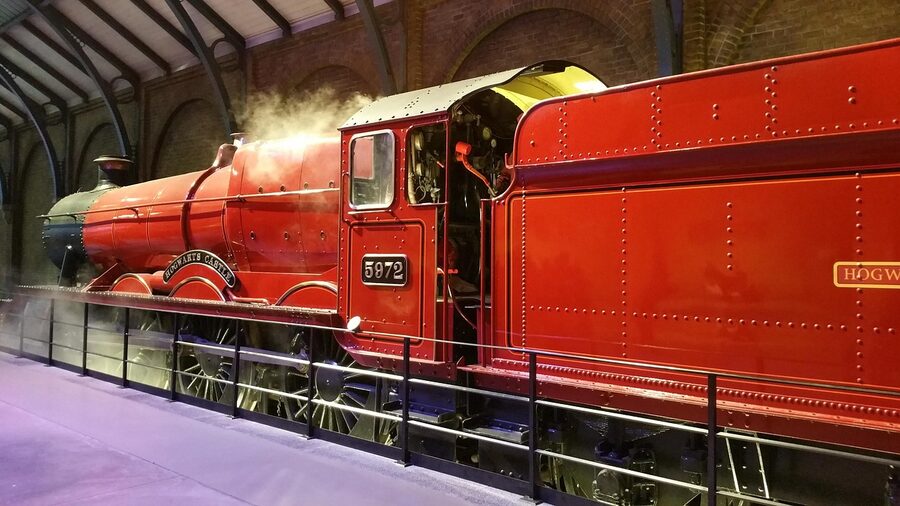
About halfway through the tour you cross into a second sound stage and emerge onto the Platform 9¾ set. The Hogwarts Express is a working steam locomotive, GWR Hall Class number 5972 Olton Hall, painted in maroon Hogwarts livery. The platform recreation includes the trolley-through-the-wall photo opportunity (yes, you can do this; yes, the staff will photograph you for an extra fee or you can hand them your phone) and full carriage interiors. You walk through the compartments where the Honeydukes trolley scenes were filmed.
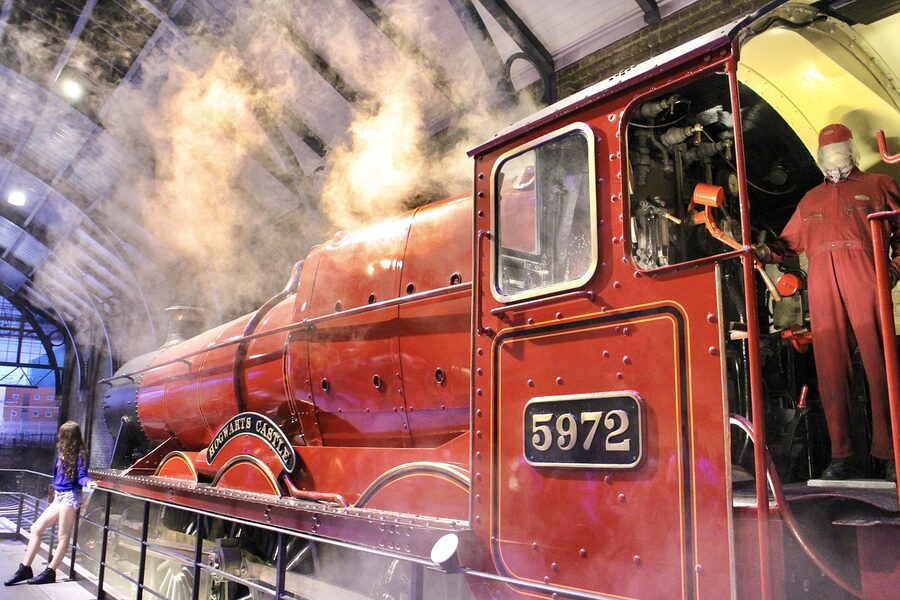
If you’re a railway nerd as well as a Potter fan this section will eat an extra forty minutes of your day. Take the time. The locomotive itself runs on the heritage rail circuit when it’s not at the studio, and the maintenance team will sometimes be working on her in full view. Ask, they’ll talk.
Privet Drive and the cupboard
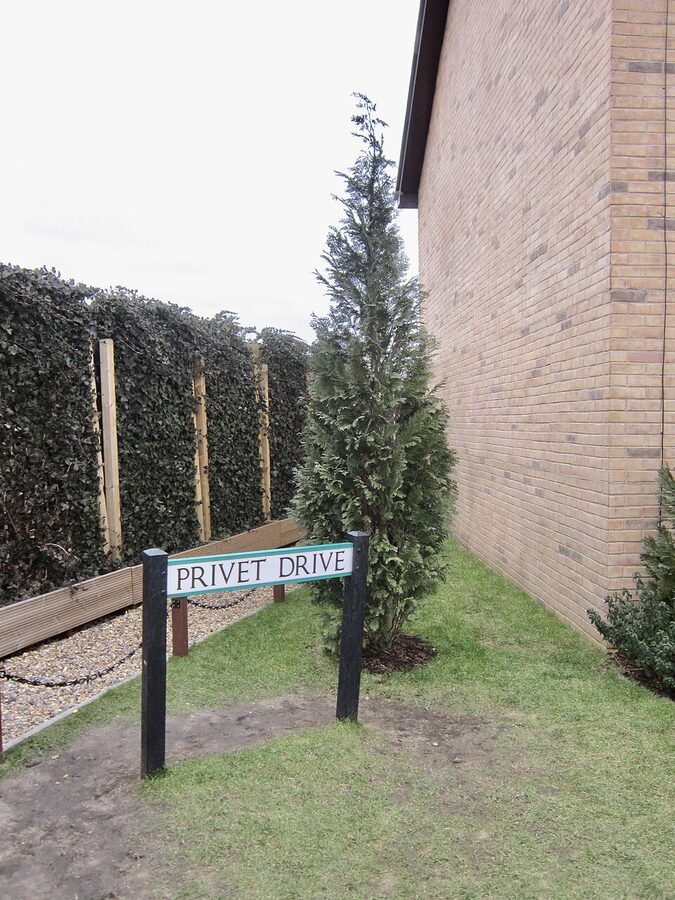
The Privet Drive section is set up so that you can stand in the road and photograph the Dursleys’ suburban semi the way the Privet Drive establishing shots framed it. They built four houses for the original shots so the street had perspective; you can walk along the row.
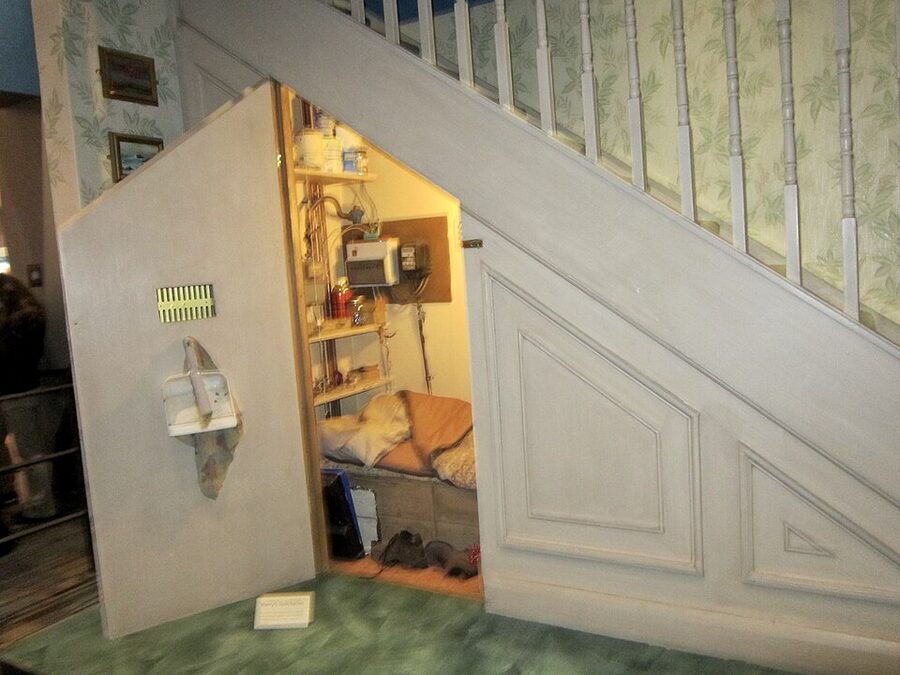
Inside number four, you can stand in front of the cupboard under the stairs. It’s smaller than you expect. Look at the shelf above the bedroll; the toy soldiers Harry was given for his eleventh birthday are still there. Set decoration left them in place after filming and they’ve never moved.
The Forbidden Forest
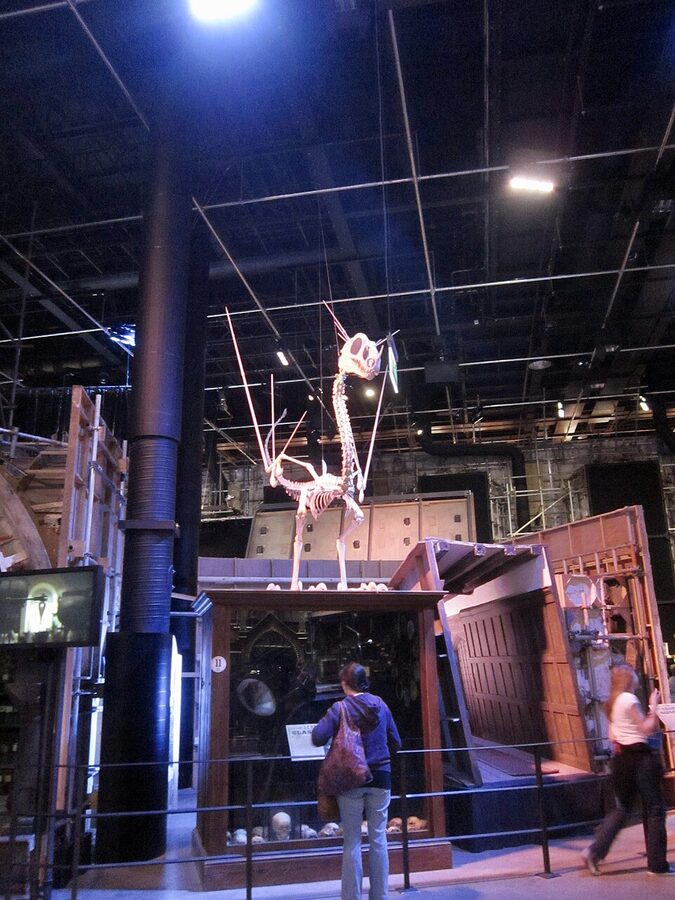
The Forbidden Forest set is its own dim sound stage between the indoor and outdoor sections. They built it dark on purpose, full of fog effects, real moss, real bark. Aragog the giant spider is suspended from above, animatronic, and yes, he twitches. The forest section is short on photo-ops because the lighting is genuinely dim, and that’s the point. It’s worth slowing down here even if you don’t take a single picture; this is the section that looks the most like the films because the films were shot in the same lighting.
The Hogwarts model
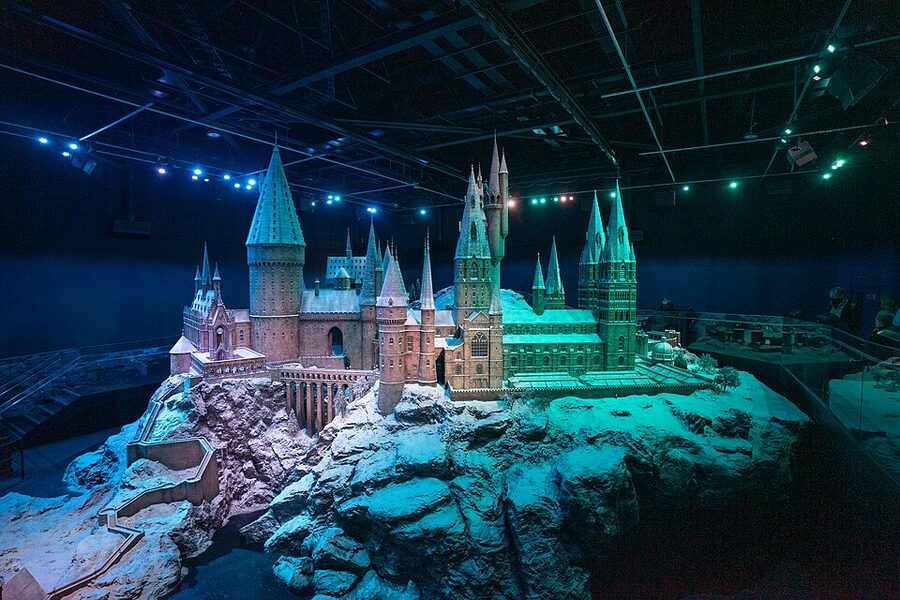
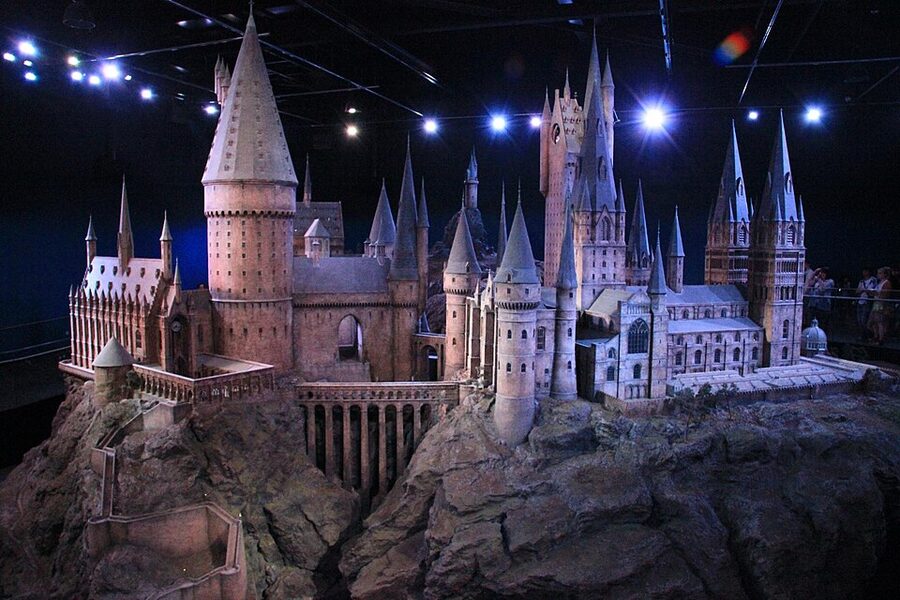
This is what people stay longest for, and rightly. The 1:24 scale Hogwarts model is the actual physical castle used for establishing shots in all eight films. It’s huge, lit dynamically through a full dawn-to-night cycle that takes a few minutes, and it sits in a circular gallery so you can walk all the way around it. There are benches. Sit. Most people don’t realise it’s a real model; CGI handled the close-ups, but every wide shot of Hogwarts in the films is this model. Eighty-six artists worked on it for over seven months. It’s the kind of thing you walk past, then stop, then walk back and stay for half an hour.
Costumes, props, and the design corridor
The middle stretch of the tour is a long gallery of original costumes worn on screen by the cast: school robes, Yule Ball formal wear, Death Eater masks, the Triwizard outfits. They’re roped off but close enough to see stitching detail. Every label tells you which actor and which scene. If you’ve watched the films enough that you can place the scenes from glance, this section moves slowly because every costume cues a memory.
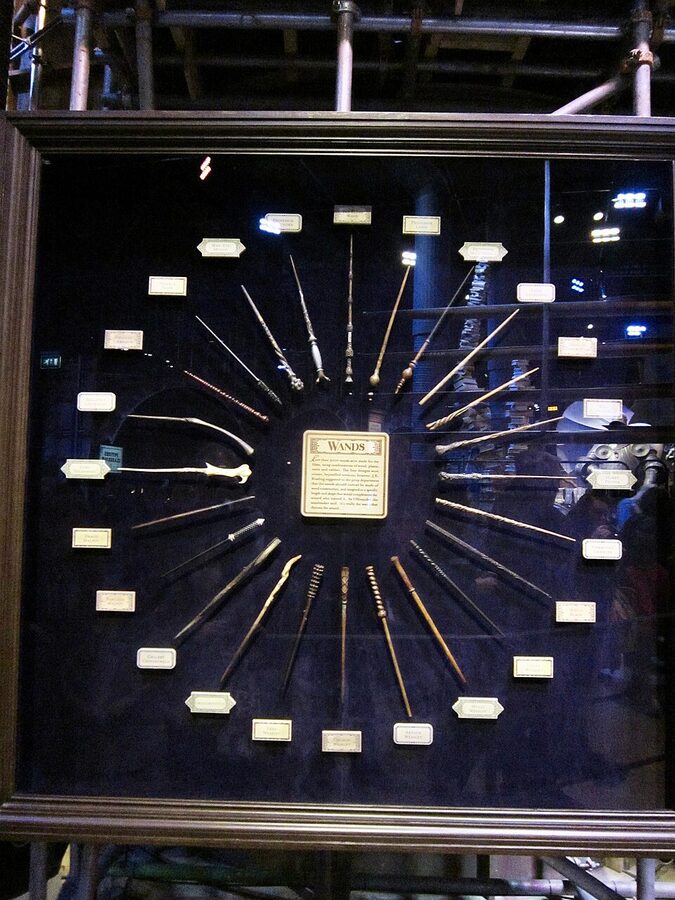
The prop section sits parallel to the costumes and is similarly close-up: the Marauder’s Map, Tom Riddle’s diary, a Horcrux locket, the Goblet of Fire. The Goblet is the actual prop used to throw fire effects in Goblet of Fire; you can see the scorch marks. The Time-Turner is impossibly small and impossibly fiddly. They built dozens of these for one or two takes each.
The Hogwarts bridge and the outdoor backlot
About two-thirds of the way through, you exit into the outdoor backlot. The wooden Hogwarts bridge is here, a real walking-length structure you can cross. So is the Knight Bus, the Potter cottage from Godric’s Hollow (post-attack ruins), the Privet Drive houses, and the Hogwarts express set. The lot is open to the sky so check the weather before you book. In rain it stays open but visitors thin out and you can get clean photo lines.
The Backlot Café and Butterbeer
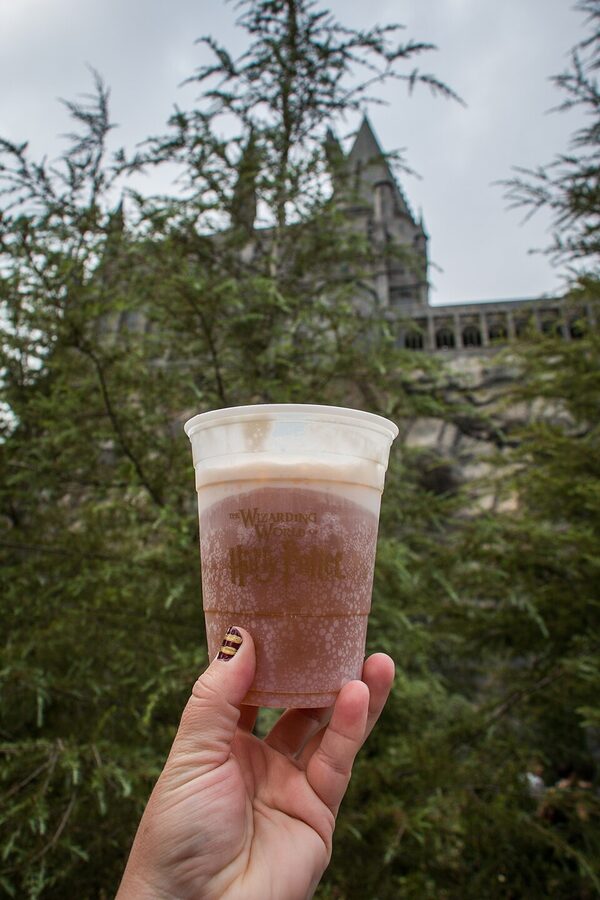
The mid-tour café is at a natural break point on the outdoor lot. They sell Butterbeer (non-alcoholic, butterscotch and cream-soda flavour, very sweet) for about a fiver in a plastic cup or a few quid more in a souvenir tankard. Most visitors get the tankard once and never again. It’s on the sweet side, more dessert than drink. Try it once. There’s a sit-down food option here too, but the menu is overpriced and the queues are long. Eat before you arrive, or after.
The food situation generally
Food at the studio is fine but not what you came for. The cafe is functional, kid-friendly, and pricey. If you’ve got snacks in a small bag they let you bring them in (no large packs, no hot food) and there’s a designated lunchroom. I’d eat properly before the morning train and use the café only for Butterbeer.
Getting tickets when everything is sold out
This is the most-asked question and the answer is genuinely useful: tickets are released by the studio in batches, usually a few months out. School holidays and weekends in summer go first. If your dates are within the next two months and the date you want shows sold out, check daily; cancellations and additional release blocks happen.
If your date is genuinely sold out and you can’t shift, the branded coach packages sometimes have stock when the official site doesn’t. The reason: package operators hold ticket allocations separately. If the official site is empty, run a search on the flagship coach for the same date and it might come up. Same studio entry, same time slot, just bundled with transport.
What to bring, what to skip
Camera. Not just your phone, an actual camera if you have one. Most of the indoor sets are well-lit but Forbidden Forest, the Hogwarts model gallery, and a few other dim sections handle a lot better on a real camera. Phones will work but will struggle in the model room. Bring a charger or power bank; you’ll be photographing constantly for three to four hours.
Comfortable shoes. Genuinely. The route is over a mile of walking on flagstones, concrete, and outdoor paths.
Water. The studio sells it but it’s marked up.
Skip: a guidebook. The on-site signage and the digital guide app are good enough. The official paper guide is sold separately and adds nothing if you’ve watched the films.
Best time of year to go
The studio runs themed seasonal overlays that genuinely change the experience. Christmas (mid-November to mid-January) dresses the Great Hall with the snow-covered tables and the actual ceiling-tree props from Philosopher’s Stone, plus four foot of fake snow on Privet Drive and Diagon Alley. Hogwarts in the Snow is the busiest period of the year. Tickets for that overlay sell out three months ahead.
October runs Dark Arts, with the Death Eater masks more prominent and lighting tweaked to match the later films. Easter has a mid-tier overlay with a flying broom photo activity. Outside those windows the standard tour runs, which is what most visitors get. The standard tour is excellent. Don’t feel you need to chase a seasonal overlay.
Combining with the rest of London
This eats a full day. Plan it for early in your London trip, ideally day two or three when you’ve already done the central walking sights. If you arrive late afternoon Friday and head back to your hotel, you’ve still got Saturday and Sunday for the central core: a morning at the Tower of London works well as a contrast (heritage versus film set), an afternoon on a Westminster-to-Greenwich Thames cruise ties up the river views, and a sunset slot on the London Eye closes out the city sweep.
If you’re traveling on past London, the studio works as a hard pivot point. Day-trip out, day-trip back, then onwards. You can swap the studio day for any other London day-trip but few of them deliver the same emotional punch for fans.
The two best-kept secrets
First: the gift shop is the largest in any film studio anywhere in the world. Wands, robes, branded sweets, replica props, books in different languages. You can spend an hour here. They take card, they ship internationally, and if you forget to buy anything you can order online afterwards from the shop pages on the official site. So don’t panic at the till.
Second: there’s a paid extra for a behind-the-scenes broomstick filming experience inside the tour. They put you on the actual broom rig with the green screen behind, then composite you into a flying scene. It’s about thirty quid, takes ten minutes, and you walk out with a personalised video. Worth it if you came for the experience and not just the sets. Skip it if you came for the design and history.
Photographing the tour without ruining your visit
You will photograph everything. Everyone does. Two suggestions to actually enjoy it:
One, do the first room (Great Hall) in two passes. The first pass: phone away, eyes on the room, walk it slowly. Second pass: photograph it. Most people skip the first pass and shoot from the door, then leave. The room rewards a slow look.
Two, the Hogwarts model needs your attention more than your camera. Sit on a bench, watch the lighting cycle through dawn, day, dusk, night. The whole cycle takes about four to five minutes. Most photos of the model look the same; the experience of watching the lighting shift doesn’t.
Accessibility and family logistics
The route is largely flat and step-free with lifts where needed. Wheelchair access is good throughout. Pushchair-friendly, though some narrow sections (Diagon Alley shop interiors, the Knight Bus) are pram-only at the entrance. If you’re traveling with very small children, the dim sections (Forbidden Forest, the Hogwarts Express compartments) can be intimidating; the Forest in particular leaning more atmospheric than friendly. Skip-or-walk-through is fine, no one minds.
Toilets are at three points along the route, including the mid-tour café. There’s no exit-and-return; once you leave the studio you can’t come back without a fresh ticket. Use the loos at the café break point.
The mistake almost everyone makes
Booking the earliest available slot, which is usually 9am or 9:30am, then realising you have to be at Watford Junction or Victoria Coach by 7:30am, then panicking. Don’t book the first slot of the day unless you’re staying in central London and you’re a morning person. The 10am to 11:30am slots are quieter than the absolute first slots anyway because the tour groups have largely cleared the first rooms by mid-morning. Aim for 10:30am if you’ve got a choice.
The afternoon slots (1pm onwards) clear out by 3pm and the late afternoon hours are the calmest of the day. If you want to photograph the Great Hall completely empty, book the latest slot the studio offers, walk through to the far end first, then double back. By the time you’re at the entrance, your group is the only one in the room.
If London isn’t your first European stop
The studio tour works well for travellers stitching together a couple of European film and culture days. If you’ve already been to Jerónimos Monastery in Lisbon for the architecture and craft side, or you’re heading from London to Spain to do the Royal Palace in Madrid, the Alcázar in Seville, or the Alhambra in Granada for serious heritage, the studio slots in nicely on the playful end of the same trip. It’s also a strong first day for Potter-fan teenagers who’ll otherwise drag through the cathedrals; do the studio first, you’ve earned the heritage days afterwards. An evening of Madrid flamenco later that same week is the kind of pivot that gets a teenager re-engaged.
Quick FAQ
How long is the actual tour? Three to four hours self-paced. Most visitors are out within four. Allow more time on weekends.
Can I rebook if my plans change? Official site tickets are non-refundable but rescheduling is allowed up to a window before your visit (check at booking). Coach packages have their own policies, more flexible for the operator-bundled options.
Is it worth it for kids under seven? Yes, with caveats. The Forbidden Forest and the Death Eater displays scare some smaller kids. Have a chat first. The Great Hall, Diagon Alley, Hogwarts Express and the model are all gold for any child who’s seen at least the first film.
What if I haven’t read or watched any of it? Don’t book this. There are better London day-trips for non-fans. The studio’s emotional pull depends on having watched the films; without that you’re walking through really impressive but contextless film sets for four hours. Try a Thames cruise instead.
Cash or card? Card everywhere inside, including the café and shop. The Watford Junction shuttle bus traditionally took cash only; check at booking time.
Can I take photos? Almost everywhere. No flash inside the Forbidden Forest or the dim sections. No tripods. Phones are fine.
Where to next
If the studio tour anchored your London trip, the natural follow-on days are the central core. Tower of London is a good contrast for the morning after, you go from a film set built in 2010 to a fortress built in 1066, and both work because they’re meticulously preserved. A Westminster-to-Greenwich Thames cruise is the relaxed afternoon option, and the London Eye rounds out the day with the city laid out at thirty floors up. If you’ve got a longer trip and want a different cultural register entirely, an evening of flamenco in Seville on a hop south is the kind of pivot that makes a good week into a great one.