
The Royal Palace of Madrid has more than 3,000 rooms. That makes it the largest functioning royal palace in Western Europe, bigger than Buckingham, bigger than Versailles. The kicker? The Spanish royal family doesn’t actually live here. Hasn’t since 1931.
It’s the official residence on paper only. In practice it’s a working museum, a state ceremony venue, and one of the best uses of a half-day in Madrid. Booking is straightforward once you know which ticket gets you what. Below is exactly how to do it.
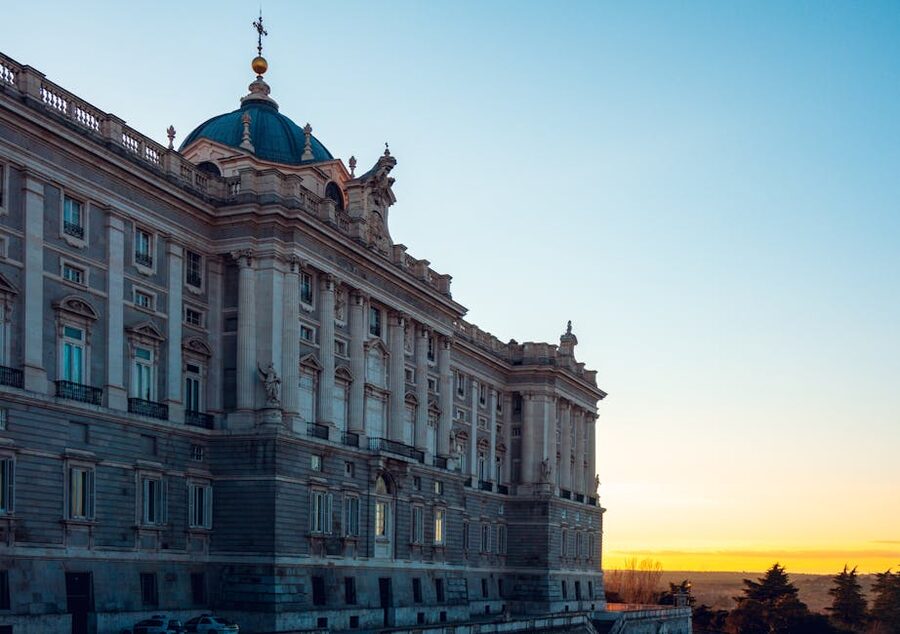
- In a Hurry? Top Three Picks
- What You’re Actually Buying a Ticket For
- Ticket Types and What They Cost
- The Free Hours: Should You Bother?
- Three Tours I’d Actually Book
- 1. Royal Palace Fast-Access Admission Ticket:
- 2. Royal Palace Expert Guided Tour with Skip-the-Line:
- 3. Royal Palace Tour with Optional Royal Collections:
- Inside the Throne Room
- The Royal Armoury Most People Skip
- The Royal Kitchen: Worth €3 Extra?
- The Royal Collections Gallery (And Why It’s New)
- Changing of the Guard: When and Where
- Best Time of Day to Visit
- Closed Days and Awkward Dates
- How to Actually Get There
- What’s Actually in the Building
- The Sabatini Gardens (Free, Underrated)
- Campo del Moro Garden
- What to Pair It With
- Practical Things People Get Wrong
- Other Madrid Bookings Worth a Look
In a Hurry? Top Three Picks
- Fast-Access Admission Ticket, $26. Skips the main queue, lets you wander the State Rooms at your own pace.
- Expert Guided Tour with Skip-the-Line, $46. Two hours with a real historian. The rooms make sense once someone explains them.
- Tour with Optional Royal Collections, $40. Combines the palace with the brand-new Galería next door. Best deal if you have a full afternoon.
What You’re Actually Buying a Ticket For
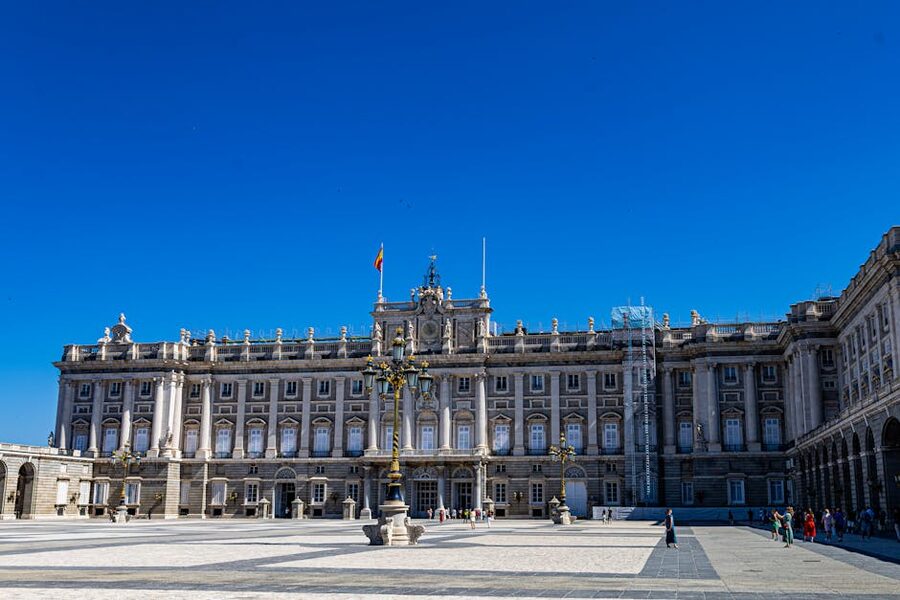
The basic palace ticket gets you the official tourist route. That’s the State Rooms, the Royal Armoury, and the Painting Gallery. About 50 rooms out of those 3,000.
You see the Main Staircase (designed by Sabatini, 70-odd steps, more theatre than function), the Hall of Halberdiers, the Throne Room with its Tiepolo ceiling, the Gasparini Room, the Royal Chapel with its Stradivari instruments, and the Royal Pharmacy. As of March 2025 the Sacristy is now part of the route too. From mid-September 2025 they added the Fine Woods Room, which was Charles III’s private office.
The Royal Kitchen and the Royal Collections Gallery are separate tickets. So is the seasonal Campo del Moro garden. More on those below.

Ticket Types and What They Cost
Patrimonio Nacional, the agency that runs the palace, sells five main ticket variations on its official site. Here’s the lay of the land in plain English.
Self-Guided Standard (€14): The base ticket. Tourist route only, no audio guide, no skip-line. You wait in the queue with everyone else. Fine if you’ve planned ahead and the weather isn’t punishing.
Self-Guided + Royal Kitchen (€17): Adds the cocinas reales in the basement. Worth it if you care about the working life of the palace, less so if you only want to see the showy bits.
Combined Tour (€24): Palace plus the new Royal Collections Gallery (Galería de las Colecciones Reales) right next door. This is the move if you want value. The Galería opened in 2023 and most visitors haven’t done it yet.
Reduced (€12): Students, retirees, large families. Bring proof.
Free admission window: Monday to Thursday from 5pm to 7pm in summer (4pm to 6pm in winter), but only for EU citizens, EU residents, and citizens of Ibero-American countries. You queue with the proof-of-status crowd. The line is real and it’s long. I’ve sat in it. Worth it if you’re not in a hurry, miserable if you are.
The Free Hours: Should You Bother?
Short answer: only if you live in Europe and time isn’t an issue.
The free window is 5pm to 7pm Monday to Thursday in summer, 4pm to 6pm in winter. EU passport, residence permit, or Ibero-American passport required. They check at the door.
The queue starts forming about an hour before. By the time you actually get in, you have maybe 45 minutes inside before they start herding everyone toward the exit. That’s fine for the State Rooms but you’ll rush the Throne Room and skip the Armoury entirely.
If you’re a tourist on a four-day Madrid trip, paying €14 for a fast-access ticket and walking in immediately is the better trade. Your time is worth more than €14. If you’re a Madrid local or living in Spain, the free hours are obviously the play, just go on a Tuesday in February when it’s drizzling and almost empty.
Three Tours I’d Actually Book
I’ve sorted these by popularity, which on this site means how many actual buyers have left a review. The fast-access ticket is the runaway number one. The expert-guided is what I’d personally book if I were going for the first time.
1. Royal Palace Fast-Access Admission Ticket: $26
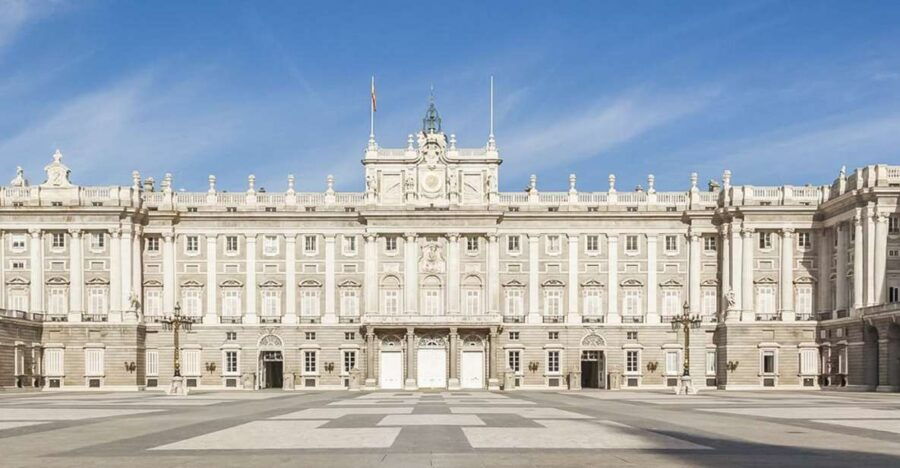
This is the runaway most-booked option for the palace, and it’s easy to see why. Same access as a self-guided standard ticket, but you skip the main entrance line, which on a Saturday morning can stretch 200 people deep. Our full review of the fast-access ticket covers the entrance procedure and what’s included. No guide, no audio, just freedom to wander.
2. Royal Palace Expert Guided Tour with Skip-the-Line: $46
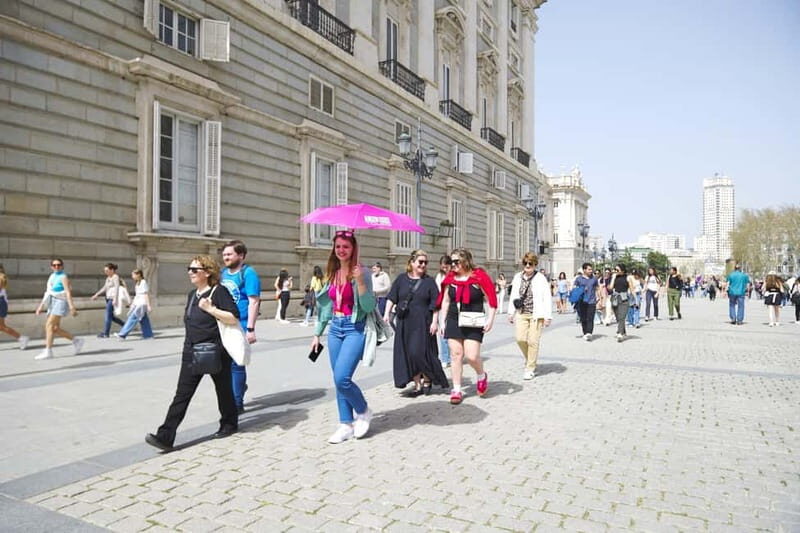
Two hours with a guide who actually knows what they’re talking about, including the Goya pieces and the Giordano frescoes most people walk straight past. Our writeup of the expert guided tour goes into the early-morning slot, which I’d strongly suggest if it fits your schedule. Calmer, better light through the windows, and the guide isn’t fighting six other groups.
3. Royal Palace Tour with Optional Royal Collections: $40
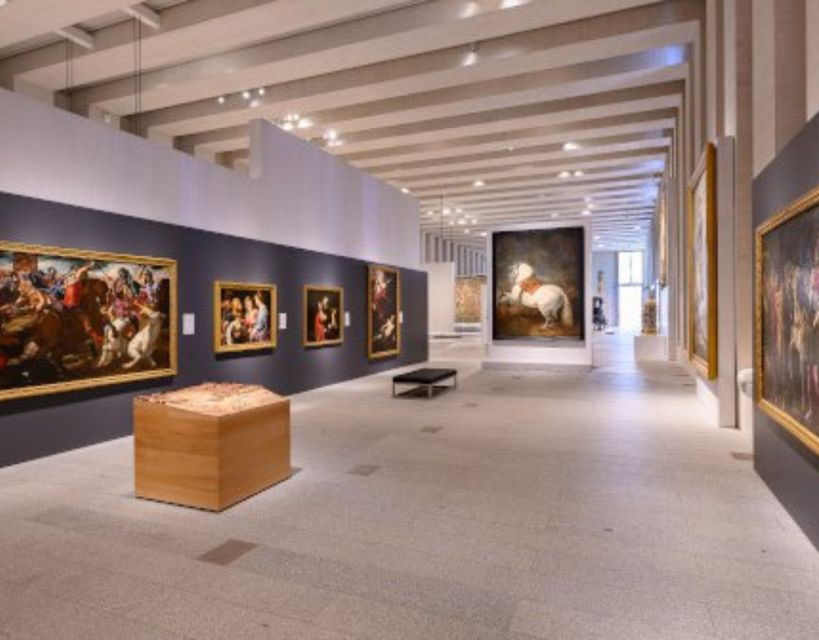
The two-to-four-hour version pairs the palace with the new Galería de las Colecciones Reales, which has the Goya, Velázquez, and Caravaggio pieces that aren’t on the standard route. Our review of this combined option details how the timing works. If you’re going to do both anyway, doing them on one ticket saves the price of a coffee. And you walk between the two without leaving the complex.
One more worth a mention even though I haven’t slotted it as a top three: the smaller-group skip-the-line guided tour sits at $42 with a near-perfect rating from a smaller pool of buyers. Better if you actively dislike larger groups. You can also browse our broader Royal Palace tour comparison page for every variation we’ve reviewed.
Inside the Throne Room
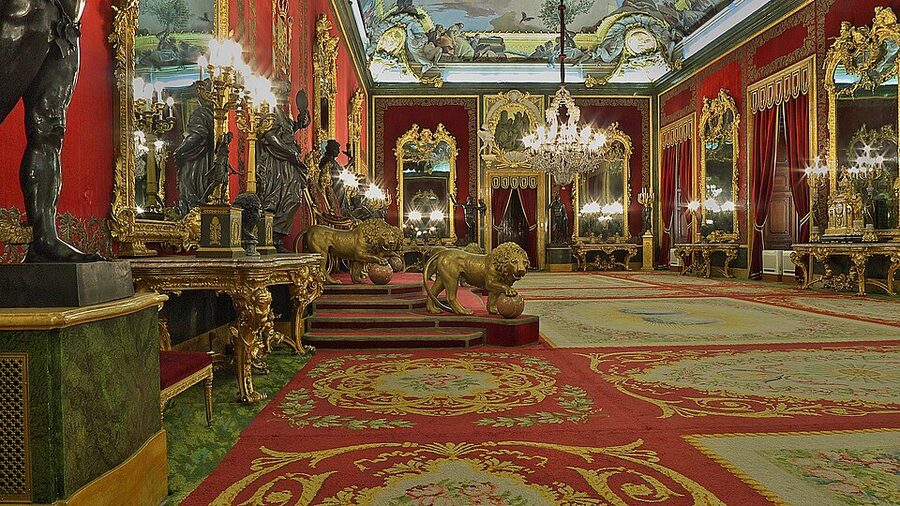
The room itself is tight. Crimson velvet on the walls, four mirror-and-console pairs, two thrones at the far end. What stops you in your tracks is up.
Tiepolo’s Glory of Spain covers the entire ceiling. He painted it in 1764 at age 70, on commission from Charles III, and it was the last major commission of his career. Spain personified as a woman in the centre, surrounded by allegories of every Spanish kingdom and colony. The detail you can pick out from below is staggering, especially the rendering of the New World figures along the southern edge.
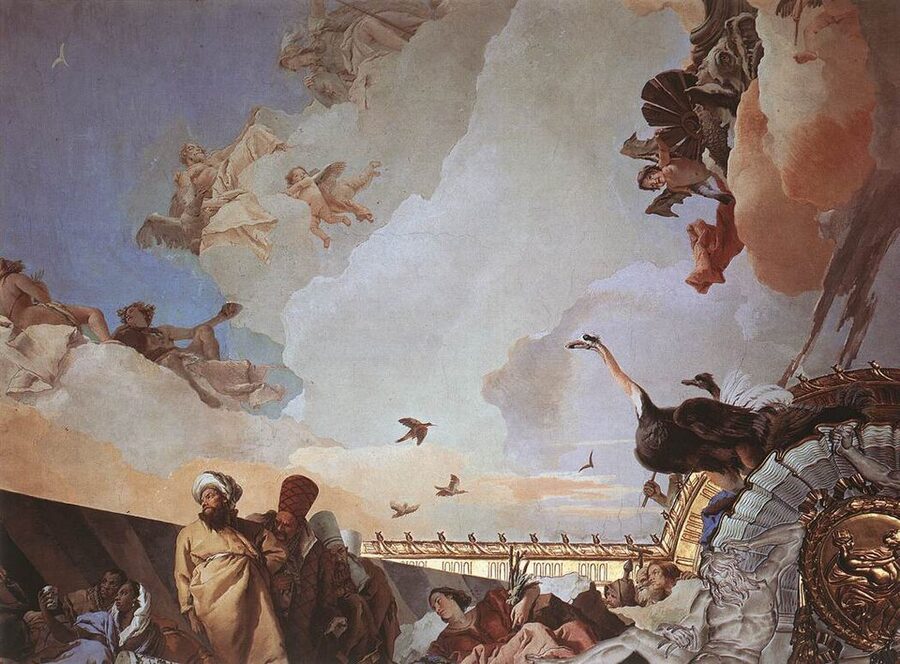
Guards keep the room moving on busy days, so you get maybe two minutes to crane your neck. If you can, hang back near the entrance and let a tour group pass; you’ll get a clearer look once they’ve shuffled through.
The Royal Armoury Most People Skip
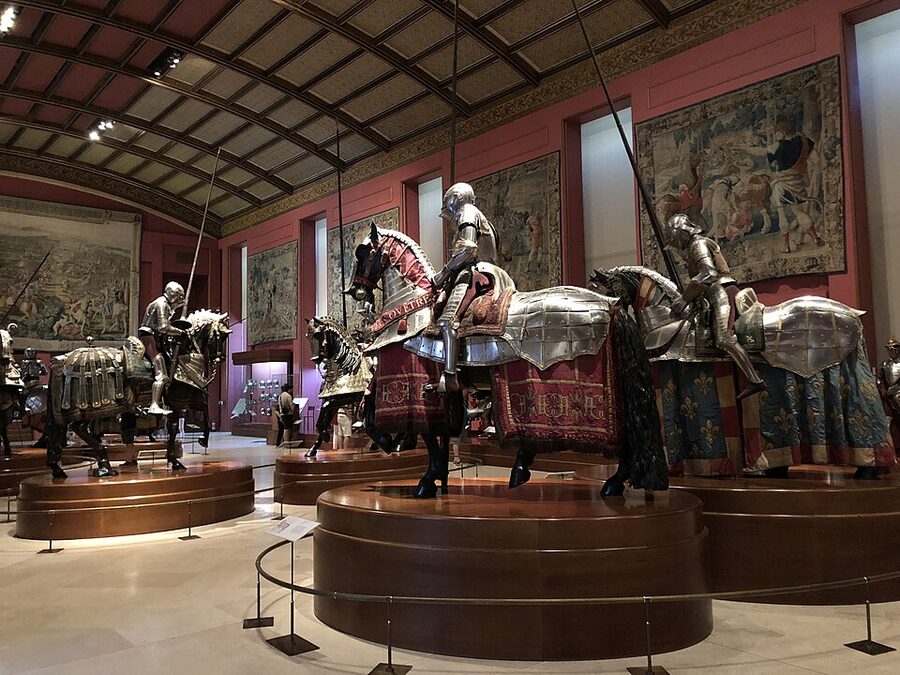
The Real Armería sits just off the Plaza de la Armería on your way out. Most rushed visitors miss it. They shouldn’t.
It’s one of the two great surviving royal armouries in Europe (Vienna’s is the other). Charles V’s tournament armour is here, plus Philip II’s, plus the kit of every Habsburg and Bourbon for about four centuries. Two newish display cases were added when it reopened in 2024: one focused on Madrid and the Bourbons, one on Lepanto and Japan. The Lepanto exhibit has actual relics from the 1571 sea battle.
Even the kid-with-no-interest-in-history demographic perks up here. Real swords, real lances, full horse armour mounted as if mid-charge. Allow 30 minutes. You’ll want more.
The Royal Kitchen: Worth €3 Extra?
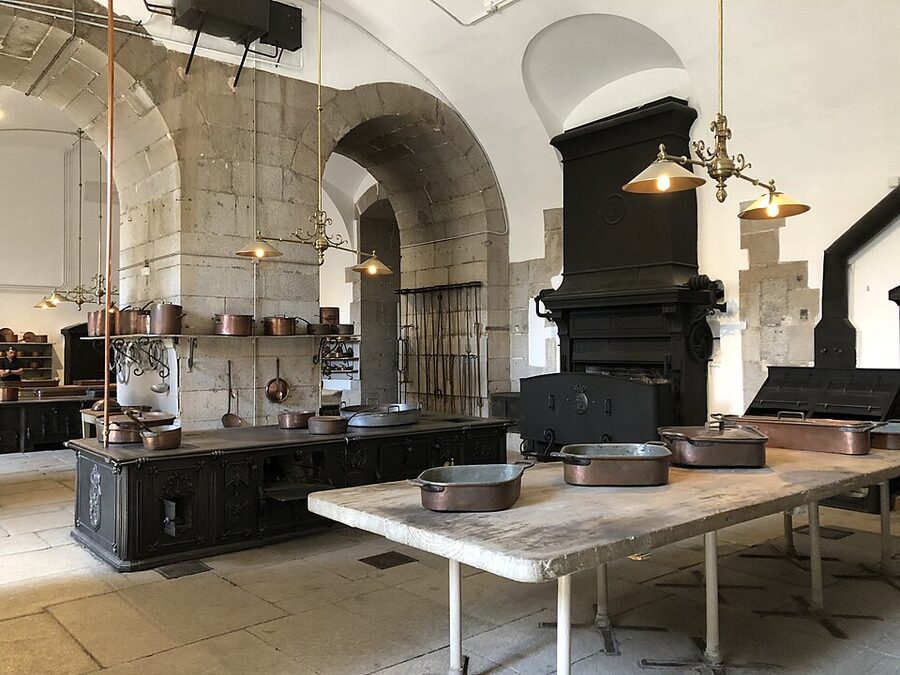
Yes. Easy yes if you have any interest in working-life history. The Real Cocina is the oldest well-preserved royal kitchen in Europe, and the current decor is pretty much how Isabella II and Alfonso XII left it in the 1880s.
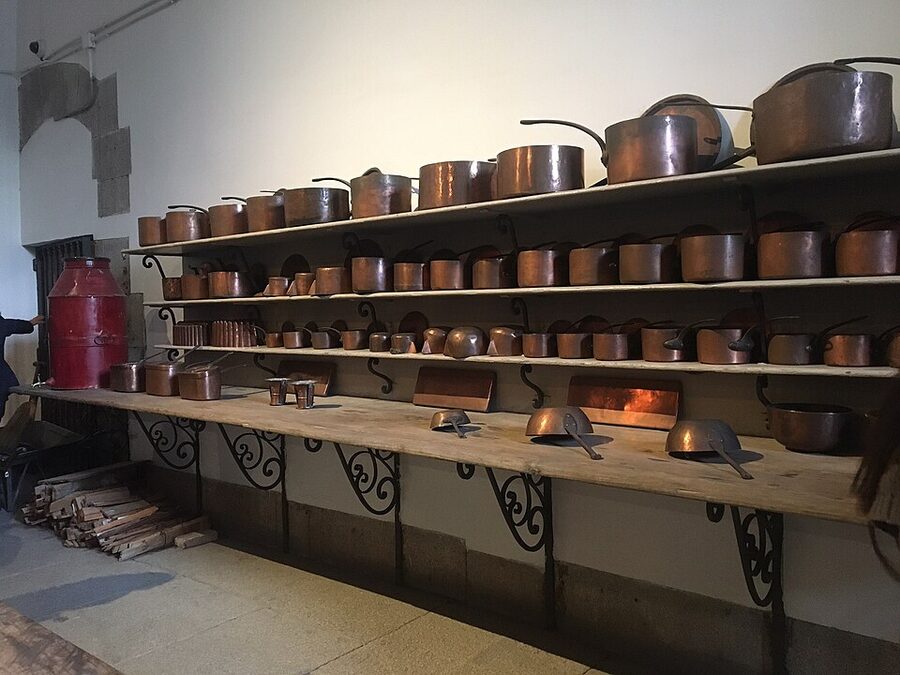
The walls are lined with copper pots, hundreds of them, each stamped with a royal cipher. The main range could feed banquets of 200. Service tunnels connect down to the storehouses and up to the State Rooms. It’s the kind of space that makes you think about how many people it actually took to keep one royal family fed and impressed.
It opens at 10:15am, an hour and a quarter after the palace itself. Stays open every day until 5pm in winter, 7pm in summer. Last admission is one hour before close. If you’re doing the full circuit, save the kitchen for last; it’s a natural exit point.
The Royal Collections Gallery (And Why It’s New)
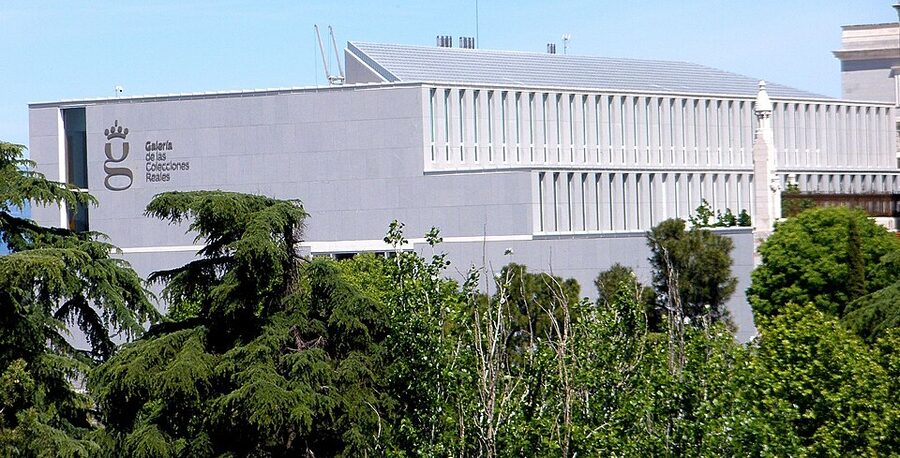
The Galería de las Colecciones Reales opened on 28 June 2023, and most visitors still don’t know it exists. It’s tucked between the palace and the Mirador de la Cornisa observation deck.
The collection is what Patrimonio Nacional considered too important or too fragile to leave in the working palace and other sites. So you get Velázquez, Goya, Caravaggio’s Salome with the Head of John the Baptist, royal carriages, Stradivari instruments, and tapestries the size of bedsheets.
It needs about 90 minutes on its own. If you’ve already seen the Prado that morning, your eyes will be tired, but the Galería is laid out chronologically and the lighting is genuinely good. Tickets are €14 standalone or €24 combined with the palace. Combined is the obvious play.
Changing of the Guard: When and Where
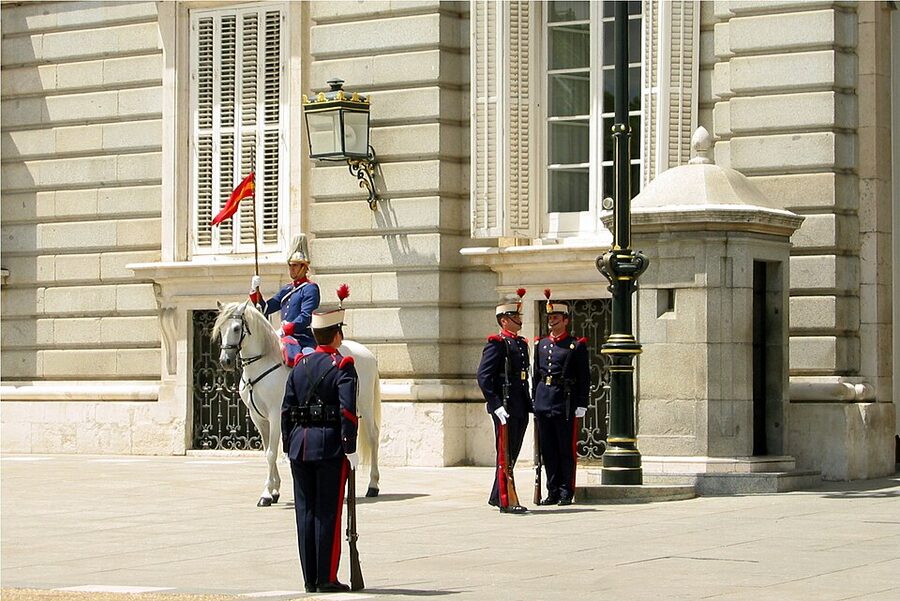
Two ceremonies, both free, both in the Plaza de la Armería.
Standard Changing of the Guard: Every Wednesday and Saturday, weather permitting. Runs in 30-minute slots from 11am to 2pm, with the actual change happening on the hour and half-hour. You get a couple of guards swapping at the sentry boxes flanking the main palace door. Pleasant, low-stakes, takes ten minutes to watch.
Solemn Changing of the Guard: First Wednesday of every month at 12pm, except January, August, and September. This is the show. About 400 soldiers from the Royal Guard, plus 100 horses, plus a brass band, plus pikes and halberds. It runs nearly an hour. Get to the plaza by 11:15am to claim a viewing spot near the railings.
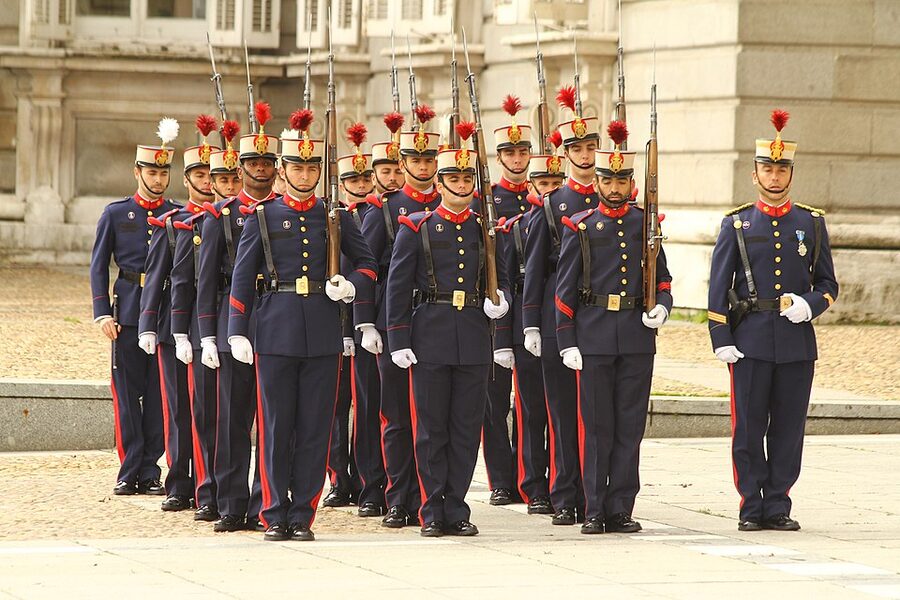
It can be cancelled with no warning if it’s raining hard or windy. Check the Patrimonio Nacional site that morning. The next confirmed Solemn date as I write is 13 May 2026.
Best Time of Day to Visit
Open from 10am, last admission an hour before closing. So 10am to 5pm in winter, 10am to 6pm in summer, with Sunday and bank-holiday closing brought forward to 4pm year-round.
The honest best slot is right at opening. Tour groups don’t usually start arriving until 10:45 or so, and you get the State Rooms close to empty for the first 20 minutes. That’s worth more than you’d think.
Worst slot is 11am to 1pm on a weekend, especially if a Solemn Changing of the Guard is happening. The combination of palace tourists and ceremony spectators creates a queue out into Plaza de Oriente.
Late afternoon (3pm onward) thins out as people go for siestas or head to lunch. Light is also better through the western-facing windows by then. If a 10am start is too early, aim for 3pm.
Closed Days and Awkward Dates
Fully closed: 1 January, 6 January, 1 May, and 25 December. Half-day on 12 October (open from 5.30pm only) and 24 and 31 December (open until 3pm only). The site can also close at short notice for state events; the king occasionally hosts visiting heads of state or hands out medals here. They post 24 to 48 hours’ warning on the official site.
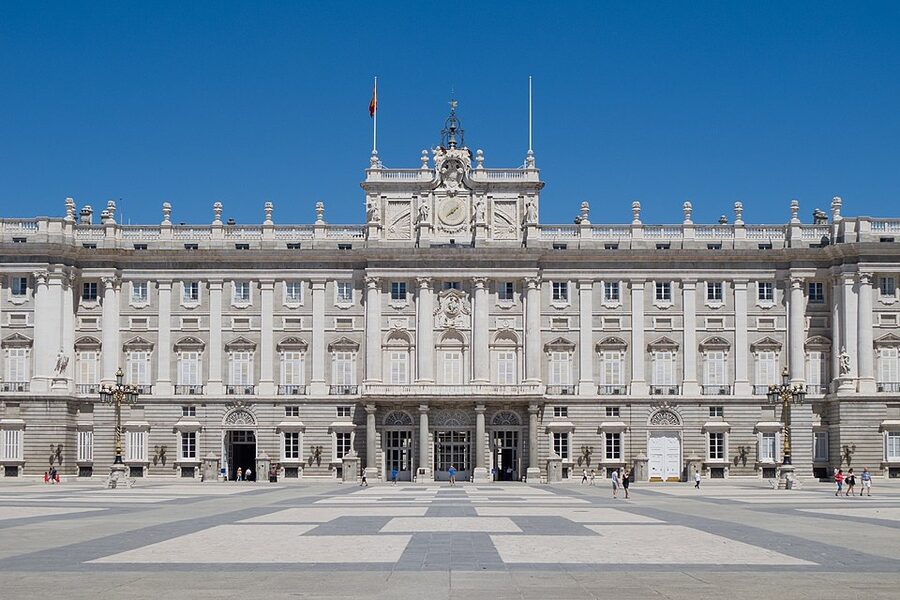
The renovations on the main facade run through 2026 and have shifted the entrance to the Calle Bailén archway near Calle Requena. Doesn’t affect what you see inside, but worth knowing if you’re following older directions.
How to Actually Get There

Metro: Ópera (lines 2, 5, and the R branch) is the closest stop. Three minutes walking. Plaza de España (lines 2, 3, 10) is the next-closest, about seven minutes south through some pretty residential streets.
Bus: Lines 3, 25, 39, 46, 50, 62, 75 and a dozen others stop within a five-minute walk. The C1 and C2 circular routes both swing past.
Cercanías local train: Madrid-Sol works, but you walk about 12 minutes through Calle Mayor. Madrid-Príncipe Pío is closer if you’re coming from the north or northwest of the city.
BiciMAD bike-share docking stations sit at four spots within 200 metres: Plaza de la Encarnación 3, Palacio de Oriente on Calle Santa Clara, Plaza de Ramales, and Calle Segovia 26.
Driving is possible but I’d skip it. The car parks in the area are pricey, the streets are tight, and the metro is faster.
What’s Actually in the Building
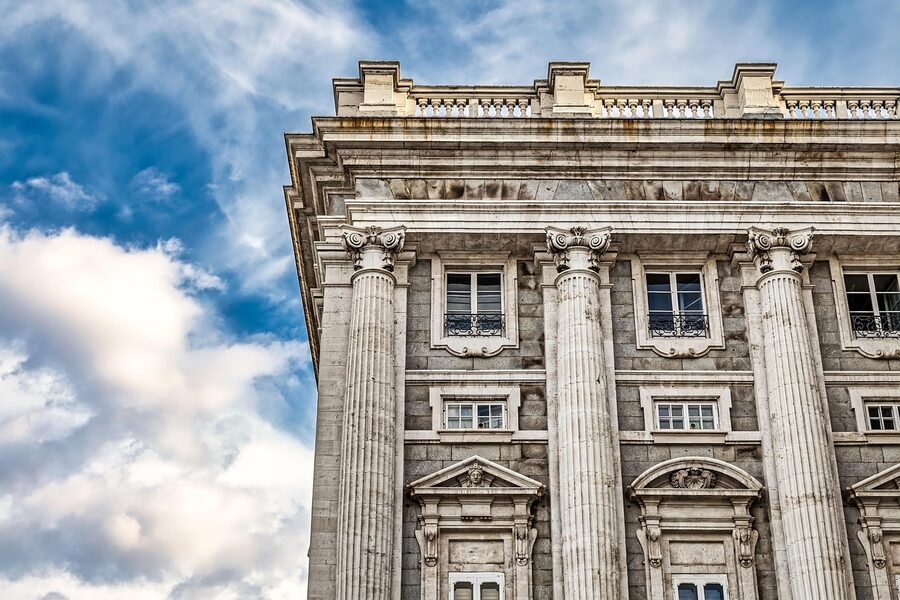
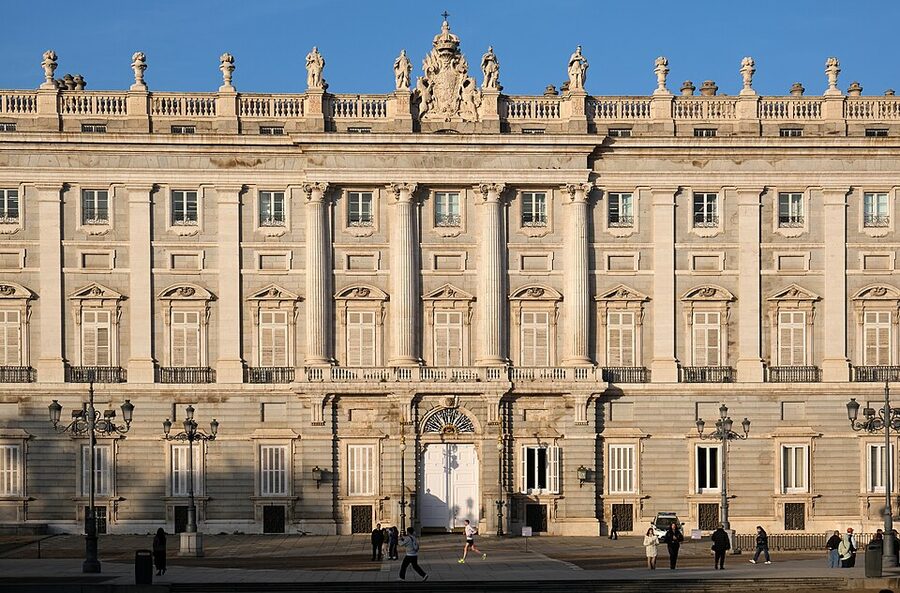
The structure you see today was started in 1738 by Philip V after the previous Habsburg-era Alcázar burnt to the ground in 1734. Filippo Juvara was supposed to design it, but he died, so the job went to his pupil Juan Bautista Sachetti.
Charles III moved in first, in 1764. He brought Tiepolo from Venice to do the ceilings, Mengs to handle other rooms, and Mattia Gasparini to design the stupendously over-the-top decorative scheme that the Gasparini Room is named for. Charles IV added the Hall of Mirrors. Ferdinand VII piled in the clocks and the chandeliers.
Alfonso XIII was the last king to actually live here, until he abdicated in 1931. Since then it’s been a state-ceremony venue. King Felipe VI uses it for receptions, audiences, and the occasional banquet, but he and his family live at the much smaller Zarzuela Palace on the outskirts of Madrid.
The Sabatini Gardens (Free, Underrated)
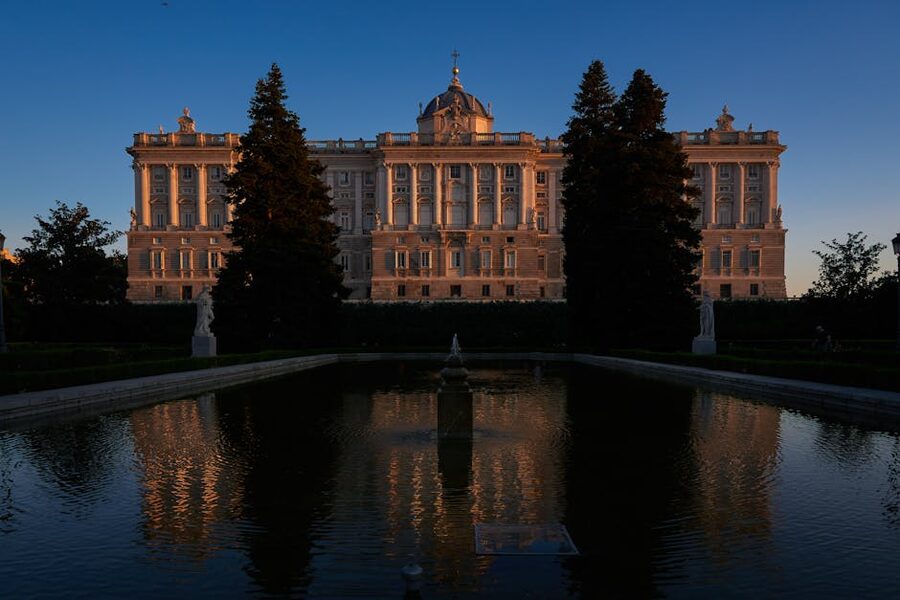
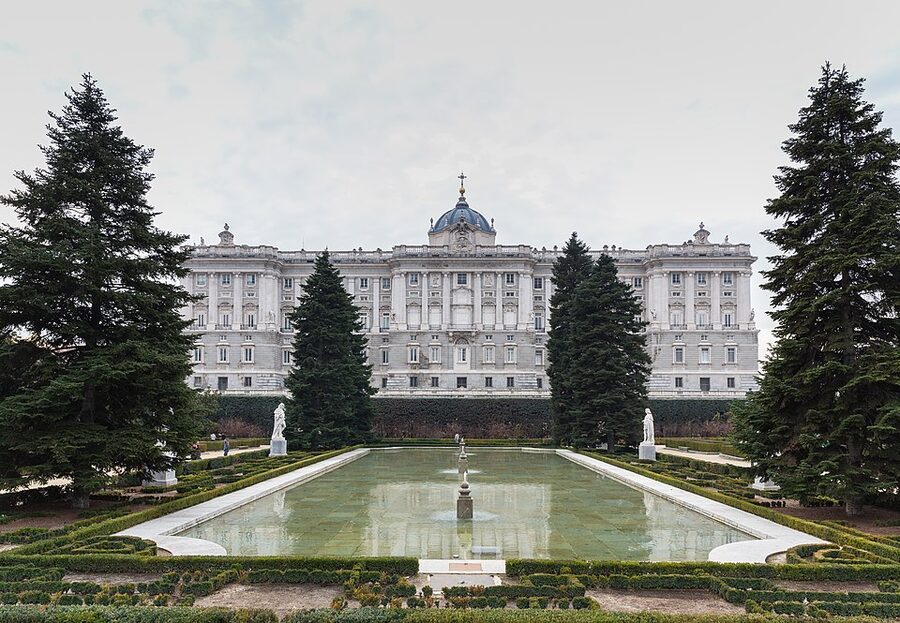
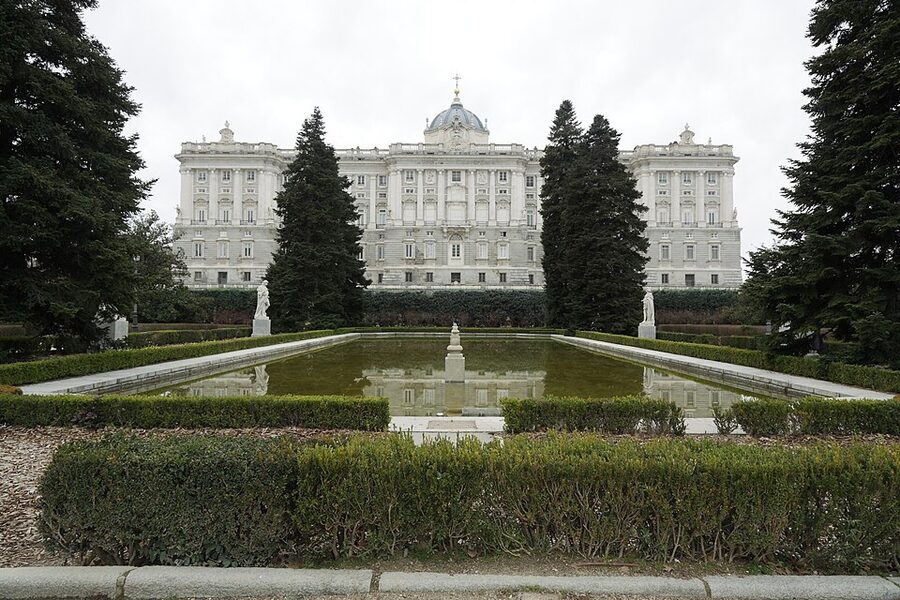
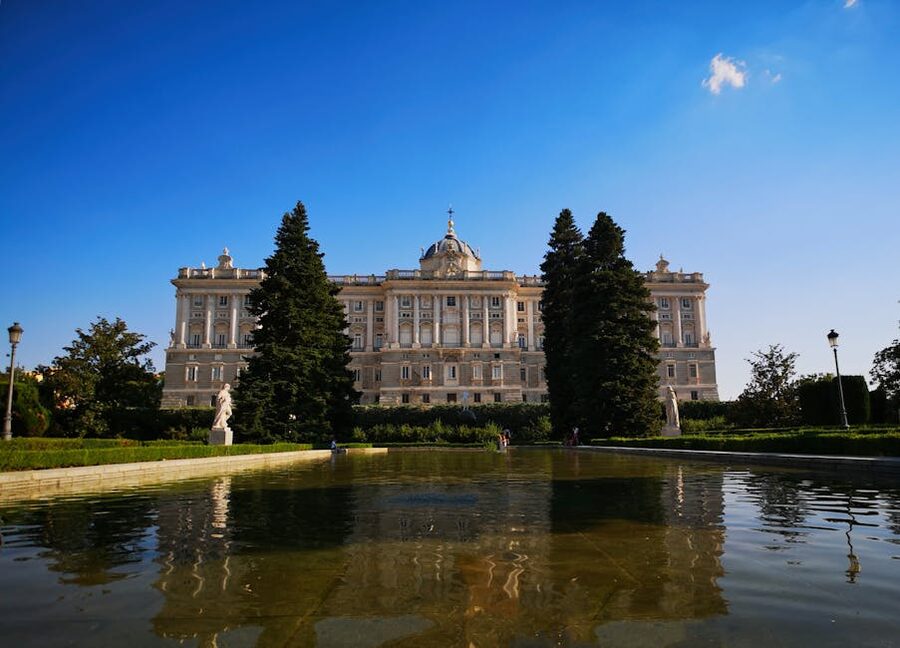
The Sabatini Gardens sit on the north side of the palace, free, open daily from 9am till 9 or 10pm depending on season. Most visitors don’t realise they’re a separate space and just wander past on Calle Bailén.
Stone-pine alleys, a long reflecting pool, neat Baroque parterres. They were laid out where the royal stables used to stand, designed in the 1930s to a plan inspired by Sabatini’s original 18th-century sketches. About 4 hectares, easy to walk in 20 minutes.
Best access is from the gate on Calle de Bailén. There are docking stations for BiciMAD literally at the gate.
Campo del Moro Garden
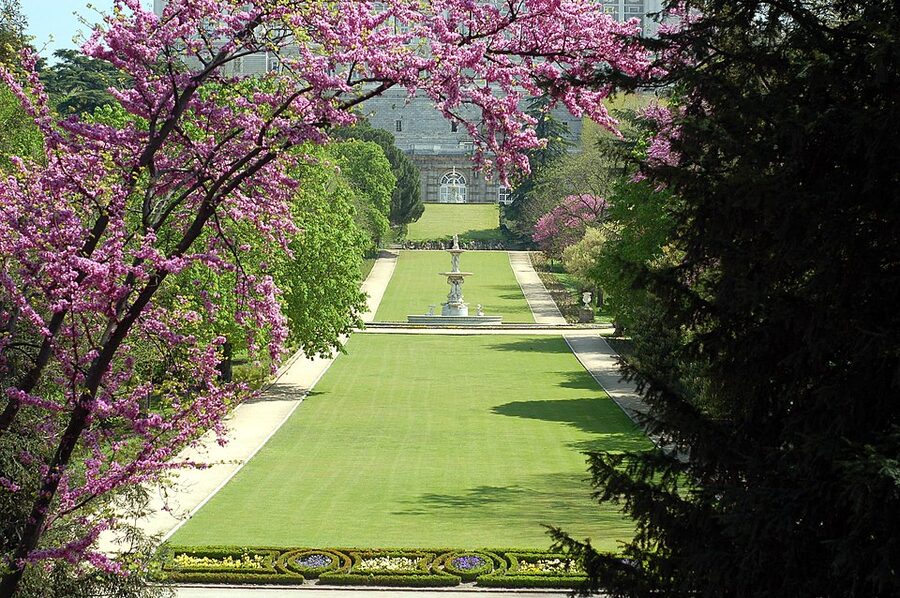
Down the hill, on the western side of the palace, you have Campo del Moro. This is the original royal park, dating to the 1480s. Free, but the entrance is on Cuesta de la Vega and easy to miss because there’s no metro right outside.
It’s substantially bigger than Sabatini and feels almost like a botanical garden. Eighty-eight species of tree, two ornamental fountains, peacocks roaming free, and the best low-angle photo of the palace exterior you can get without a drone.
Hours: 10am to 6pm in winter, 10am to 8pm in spring and autumn, 10am to 10pm in midsummer (May through August). Worth the detour if you’ve got an extra hour and the weather’s holding.
What to Pair It With
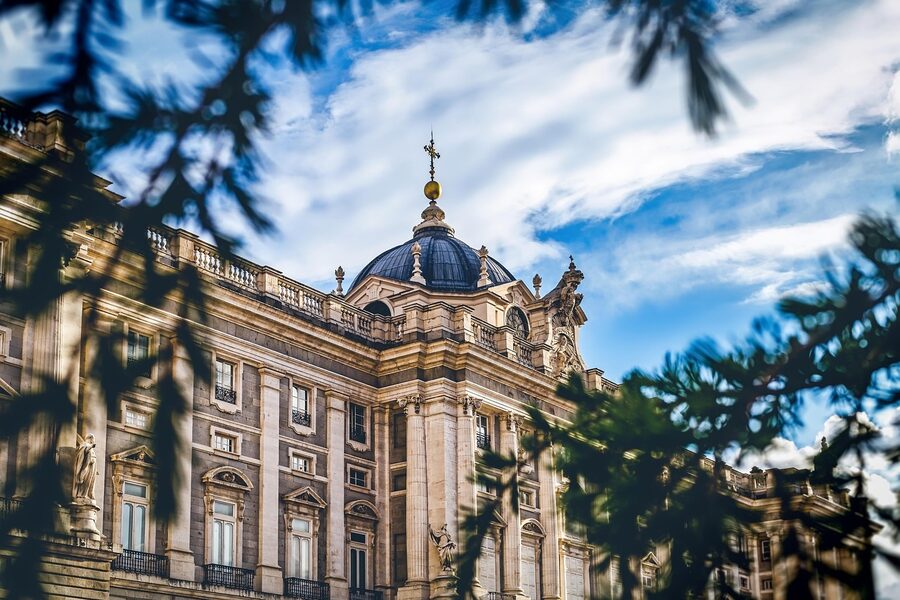
The palace sits at the western edge of the Madrid de los Austrias district. From the front gate you can walk to Plaza Mayor in 12 minutes, the Mercado de San Miguel in 10, the Almudena Cathedral in 30 seconds, and the Templo de Debod (a real Egyptian temple, also free) in 15. It’s the easiest neighbourhood in the city to put together a half-day on foot.
If you’re combining with another flagship Madrid attraction, the Prado Museum is a 25-minute walk east via Calle Mayor and Carrera de San Jerónimo. Doable but I’d metro it (Sol, then walk the last 6 minutes from the Banco de España station). The Reina Sofía is a bit further south, near Atocha, and easier by metro line 1. Both work as morning-pair-afternoon combos with the palace.
Football fans, the Santiago Bernabéu Stadium tour is on the other side of town entirely, near Nuevos Ministerios on metro line 10. Don’t try to do it the same morning as the palace. Pick a day for each.
Practical Things People Get Wrong
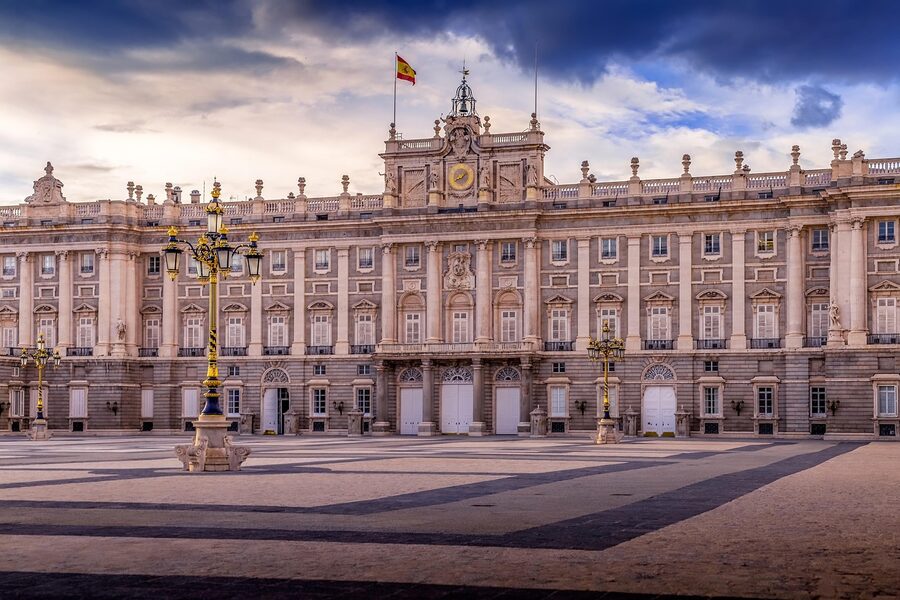
Lockers: Yes, there are free cloakroom lockers near the entrance. Bags larger than a small daypack must go in.
Photos: Allowed in most rooms. No flash, no tripods, no selfie sticks. The Throne Room sometimes restricts photos when ceremonial guards are stationed there.
Audio guides: Available for €5 at the main desk in 8 languages. Decent but not great. If you’re not on a guided tour, I’d skip it and read the room placards.
Time inside: Allow 90 minutes minimum for the palace alone. Two hours if you’re including the Royal Kitchen. Three to four if you’re combining with the Royal Collections Gallery.
Toilets: Two sets, one near the entrance, one halfway through the route just before the Hall of Halberdiers. Use the second set; the first gets crowded.
Wheelchair access: Mostly good. The State Rooms are level once you’re up the main staircase, and there’s a lift that bypasses Sabatini’s staircase. The Royal Kitchen has limited access because of the basement layout. Wheelchairs are available to borrow at the entrance.
Kids: The Royal Armoury is the win. The Throne Room and gilded apartments don’t hold their interest beyond the first room. Plan accordingly. Under-fives are free.
Other Madrid Bookings Worth a Look
If you’ve already worked the palace into your day, a guided Prado tour the following morning lines up nicely. The two are bookend art experiences, one giving you the royal staging and the other showing what was actually being painted at the same time. Reina Sofía is the modernist counterweight if you’ve had enough of gold leaf for one trip. And for a complete change of tone, the Bernabéu stadium tour is the obvious afternoon move on a Real Madrid match-day weekend.