
The driver killed the throttle halfway up the steps. We were maybe a meter and a half wide, the alley was maybe two, and the wheels were inches from the white-and-azulejo wall on my left, sun bouncing off the tiles bright enough to squint through. Then he pulled over without saying anything, leaned out, and pointed at a stone inscription cut into the doorpost above us. “1583,” he said. “Plague house. They marked it so the wagons would skip it.” The little electric motor was still ticking. A grandmother on a balcony two stories up watched us, unbothered, like this was Tuesday.
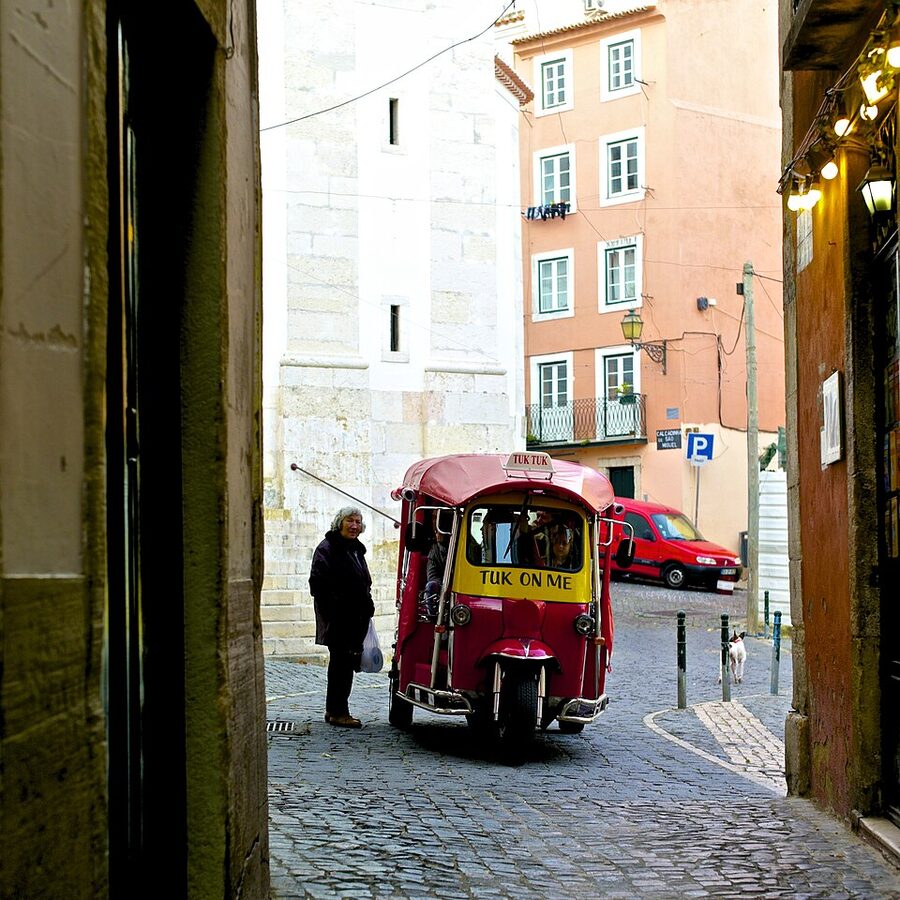
This guide is about booking a private tuk-tuk tour of Lisbon. Not the ones that hawk on the corner of Praça do Comércio at 50 euros and improvise. The pre-booked, GPS-routed, licensed-driver kind, where you pick a duration and a theme and your driver-guide actually knows what’s behind the doors. I’ll walk you through the formats, the price ranges, the electric-vs-petrol question, and which three I’d book first.
Short on time? My three picks:
- Lisbon Private Guided Tuk-Tuk Tour with Hotel Pickup, around $153 for up to four people, 2 to 4 hours. The default for first-time visitors who want flexibility and a hotel collection.
- Lisbon by Tuk-Tuk: 2-Hour Guided Tour, around $28 per person. The cheaper, shorter, group-friendly run if you just want a fast loop of the old quarters.
- Lisbon: 2 or 3-Hour Historical Vintage Tuk Tuk Tour, around $159 for up to four. Heavier on storytelling, runs in a vintage-styled tuk-tuk if you want photos that don’t look like everyone else’s.
- Why tuk-tuks dominate Alfama, Bairro Alto and Mouraria
- The four standard formats
- The 1-hour Belém quickie
- The 2-hour historical loop
- The 3-hour food and history hybrid
- The 4-hour private custom
- Electric or petrol: it matters more than you think
- The driver-guide is the whole product
- My three private tuk-tuk picks
- 1. Lisbon: Private Guided Tuk-Tuk Tour with Hotel Pickup, 3 for up to 4
- 2. Lisbon by Tuk-Tuk: 2-Hour Guided Tour, per person
- 3. Lisbon: 2 or 3-Hour Historical Vintage Tuk Tuk Tour, 9 for up to 4
- How to choose between the three
- Tuk-tuk vs walking tour vs hop-on hop-off bus
- Where the routes actually go
- Alfama
- Mouraria
- Bairro Alto and Chiado
- Belém and the river run
- Practical bits
- Booking timing
- Age, seatbelts, child seats
- Weather and roof shields
- Tipping and what’s included
- The on-the-spot trap
- One last thing about Lisbon tuk-tuks
- Other Lisbon guides worth a look
Why tuk-tuks dominate Alfama, Bairro Alto and Mouraria
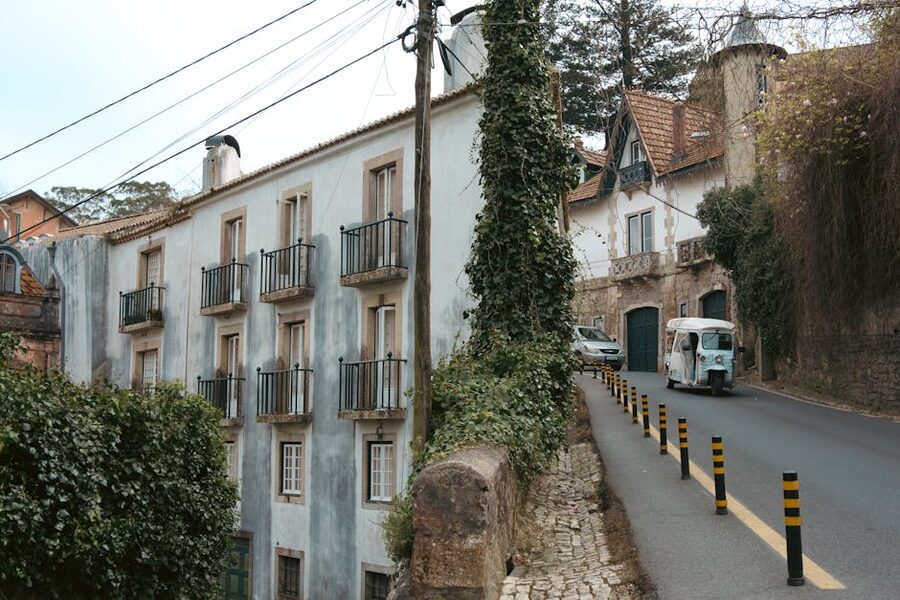
Lisbon is built on seven hills and the medieval quarters were laid out by people who never imagined a Mercedes Sprinter. The streets in upper Alfama, the spine of Mouraria, and most of Bairro Alto are narrower than a parked car and tilt at angles that would shame San Francisco. So a coach tour drops you at a viewpoint, points at a rooftop, and never goes inside the actual neighborhoods. A walking tour gets you into them but takes three hours to cover what a tuk-tuk does in one.
Tuk-tuks slot into this geometry in a way nothing else does. They are about 1.4 meters wide, electric versions weigh under 600kg, and they climb a 20% gradient with four adults aboard without complaining. The drivers know which alleys can handle them and which dead-end against laundry lines. You stop wherever the driver wants to stop, which is usually somewhere a bus has never been. If you’ve done a Lisbon city-center walking tour and want to see the bits that walk leaves out, this is the move.
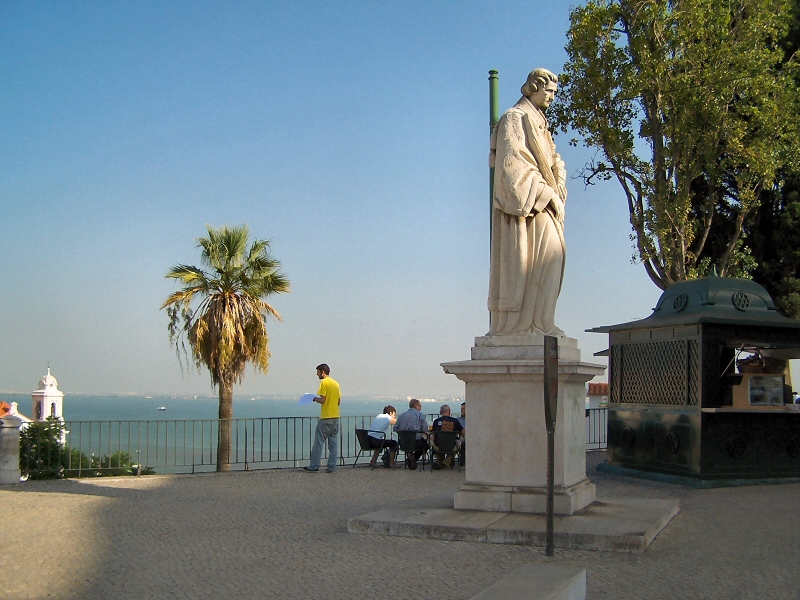
One more thing. The tuk-tuk is not enclosed. You hear the city as you ride. Bells from Sé. A guitar leaking out of a fado house in the late afternoon. A woman calling her cat in from a third-floor window. On a hop-on hop-off bus you hear a recorded narration through scratchy speakers. On a tuk-tuk you hear Lisbon.
The four standard formats
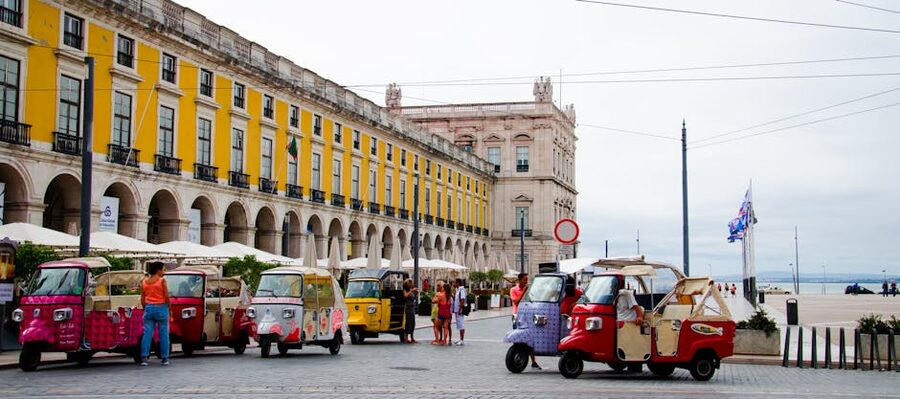
You’ll see four basic durations on every booking platform. Pick by what else you’re doing that day, not by what’s marketed as the “complete experience.”
The 1-hour Belém quickie
One hour, almost always Belém-focused. Pickup near the monastery or Praça do Comércio, a fast loop past the Belém Tower, the Padrão dos Descobrimentos, the gardens, and a 10-minute pastel de nata stop if your driver is generous. Around $20 per person on average, group tuk-tuk. Good if you’ve already bought a Lisbon Card for transit and just want a tuk-tuk experience for the photos. Bad if you actually want to learn anything: an hour is barely long enough for the driver to stop arguing with traffic on Avenida da Índia.
The 2-hour historical loop
Two hours covers the old town properly. You start in the Baixa, climb into Alfama via Sé and Largo das Portas do Sol, sweep through Mouraria, and finish either at the Castle gates or back at Praça do Comércio. About $28 per person on a shared tuk-tuk and roughly $80 to $160 for a private one depending on group size. This is the sweet spot for first-timers, and it’s what I’d book if I had one morning in Lisbon and no other plans.
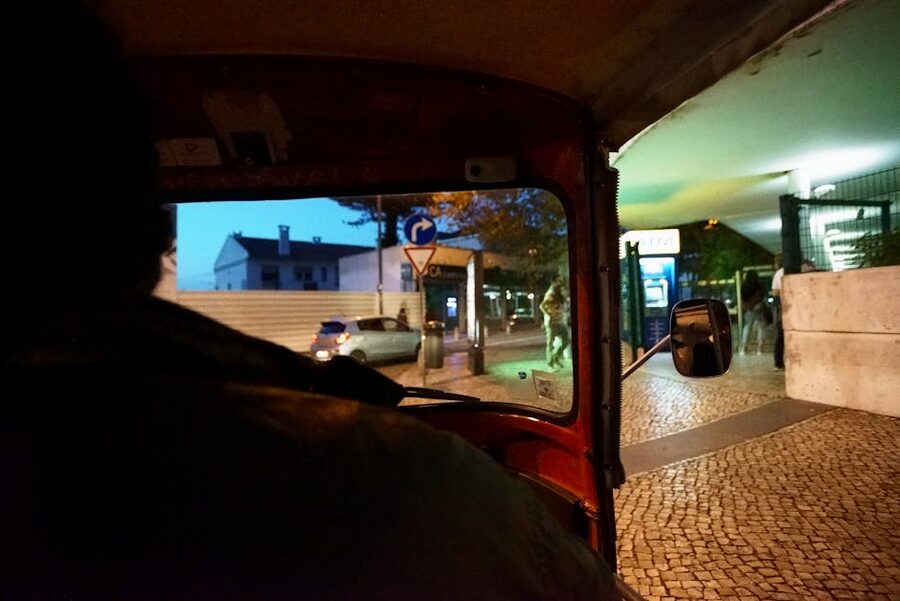
The 3-hour food and history hybrid
Three to four hours, blends the historical loop with two or three food stops. Pastel de nata at one bakery, ginjinha at a hole in the wall in Rossio, sometimes bacalhau or sardines at a tasca. Prices jump because food is included: budget $130 to $180 per person for the small-group ones, more for private. I like these in shoulder season when the food stops aren’t packed. In July and August they get logistically painful because the queues at famous bakeries eat half the booked time.
The 4-hour private custom

Four hours, fully private, route negotiable. You give the driver a brief (we want photos at three viewpoints, my partner wants to stop at LX Factory, my mother wants to find that azulejo workshop she read about) and they build the day around it. This is where tuk-tuk tours actually justify their price. Expect $150 to $280 for the tuk-tuk plus driver, regardless of group size, so the cost-per-head drops if there are four of you. If you’re traveling with kids or grandparents, this is the only format that lets the schedule breathe.
Electric or petrol: it matters more than you think
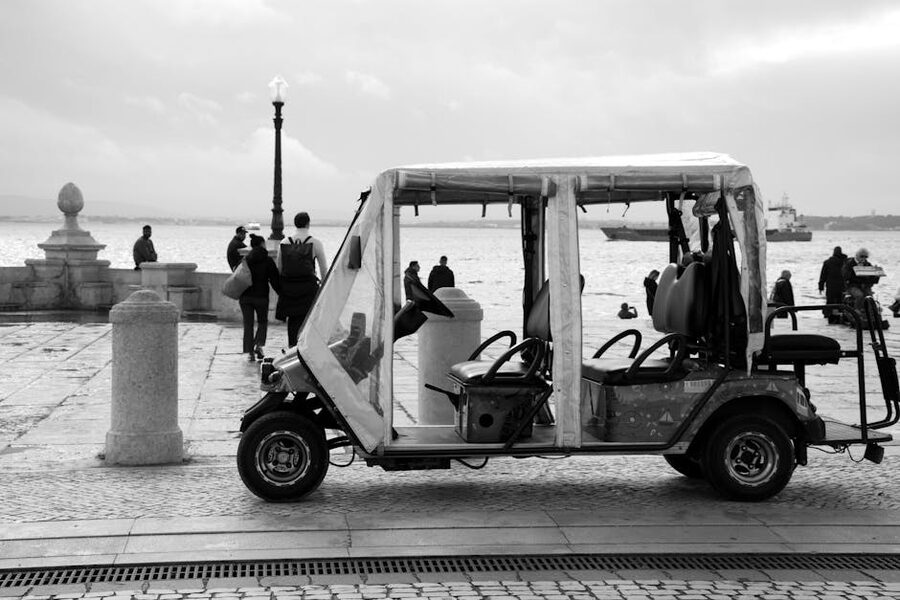
Maybe 80% of Lisbon’s licensed tuk-tuks are now electric. The remaining 20% are either older Piaggio Ape conversions running on petrol or vintage-styled vehicles that prioritize aesthetic over silence. The differences are real, not marketing.
Electric tuk-tuks are quieter, which is the whole reason you can hear what your guide is saying as they drive. They climb hills in eerie silence. Their batteries last a full 4-hour shift in summer and they’re allowed in zero-emission zones that some petrol vehicles get fined for entering. The downside is that on a 6-hour or 8-hour booking, some operators have to swap vehicles mid-tour to recharge. Ask before you book if you’re going long.
Petrol tuk-tuks are louder and slower up steep hills. The advantage is range: they don’t run out, and they can go further afield (Cascais, Sintra-direction lookouts). If your operator only runs petrol and you want a long route out of central Lisbon, that’s a fit. For old-town loops, electric wins on every count.

Vintage-styled tuk-tuks are a third category. These are usually petrol or electric but with retro bodywork, wooden bench seats, and sometimes a canvas roof. They cost more, photograph better, and are slightly less comfortable on bumpy cobbles. If your priority is the ride experience and the photos, they’re worth the premium. If you just want to see the city, a standard electric does the same job for less.
The driver-guide is the whole product
Here’s the thing nobody tells you on the booking sites. Two tuk-tuks could leave from the same stop on the same morning, follow the exact same route, and one would be the highlight of your trip while the other was a waste of two hours. The vehicle barely matters. The driver-guide is the product.
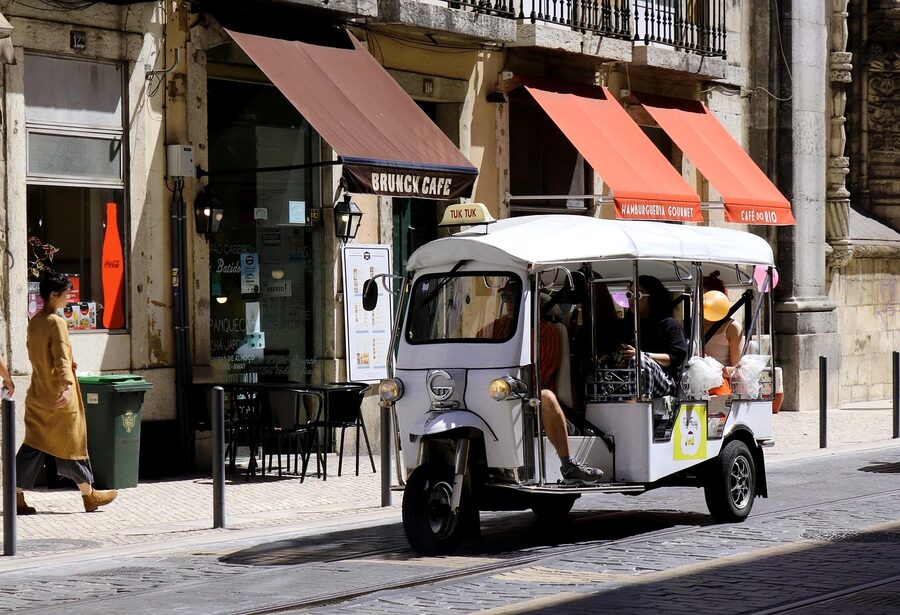
Good Lisbon driver-guides know the 1755 earthquake story cold, can tell you which fado houses still have real Coimbra-style nights, and will physically stop the tuk-tuk to point at something nobody asked about because they think you’ll like it. Bad ones recite three facts about Vasco da Gama and spend the rest of the time complaining about scooter traffic. The difference is enormous and it’s almost impossible to predict from the operator’s marketing copy.
Read recent reviews. Not the operator’s overall score, the actual recent ones. Look for guide names that come up repeatedly and book directly with that operator if their platform lets you request a specific driver. The flagship private tuk-tuk operator I recommend below has guides named in nearly every review by happy guests, which is a good sign. Generic five-star reviews that say “great tour, recommended” are almost meaningless. Detailed ones that mention a guide by name and a specific stop are gold.
If you’re booking through a marketplace and the operator has more than one driver, your assigned guide is more or less random. Most are fine. A few are exceptional. Almost none are bad enough to ruin the day, but the difference between “fine” and “exceptional” is what you remember a year later.
My three private tuk-tuk picks
These are the three I’d actually book, in order. Pricing varies by group size and season, so the numbers below are typical, not promises.
1. Lisbon: Private Guided Tuk-Tuk Tour with Hotel Pickup, $153 for up to 4
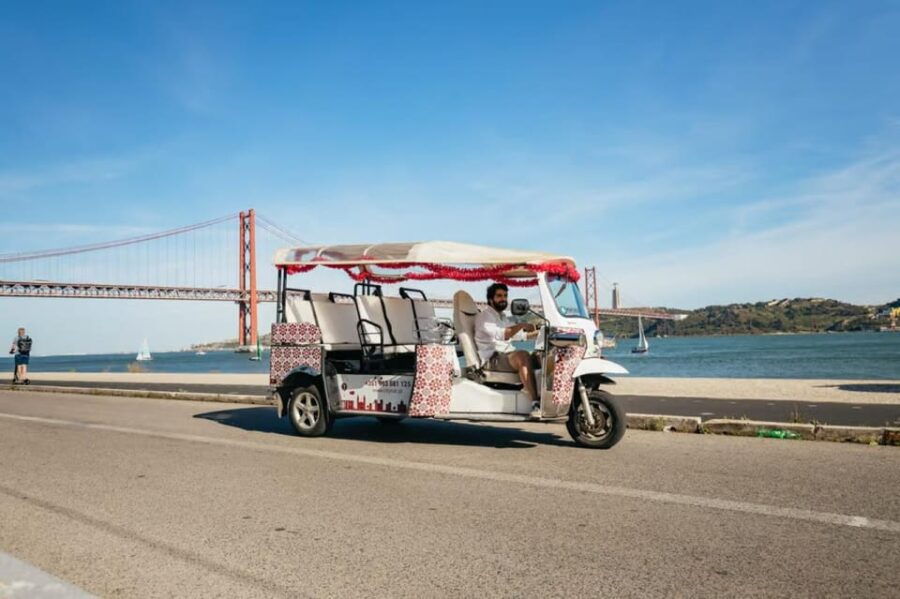
This is the most-booked private tuk-tuk in Lisbon by a clear margin and it’s the one I send first. You pick the duration when you book (2, 3, or 4 hours), the operator collects you from your hotel, and the route is shaped to whatever you say you want to see. Our review of this tour goes into the driver line-up and the typical 3-hour route. Pick this if you want flexibility and a polished operator.
2. Lisbon by Tuk-Tuk: 2-Hour Guided Tour, $28 per person
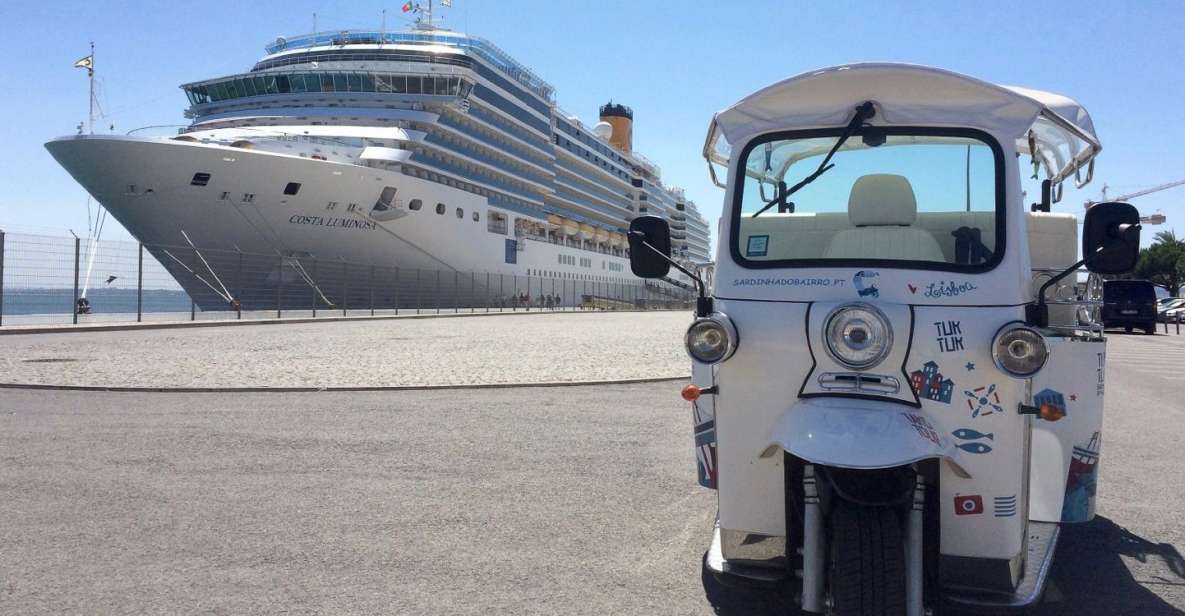
If the flagship is over your budget or you only want a quick orientation, this is the alternative. Two hours, group format meaning you’ll share with up to two other people, and a driver-guide who covers the standard old-quarter loop in English or Portuguese. Our review of the 2-hour tour notes the meeting point near the city center and the typical stop list. Pick this for a cheap first day.
3. Lisbon: 2 or 3-Hour Historical Vintage Tuk Tuk Tour, $159 for up to 4

If your priority is the photos and a guide who genuinely loves old-town history, book this one. The vehicle is a vintage-styled tuk-tuk with a wooden interior, the route weighs Bairro Alto and Alfama equally, and the storytelling is denser than the budget tours. Our review of the vintage tour covers the meeting point in Bairro Alto and what gets traded off versus the modern electric version. Pick this if you’ve got photographers in the group.
How to choose between the three
Three filters. If you want hotel pickup and a polished private operator with named guides, pick the flagship. If you want the cheapest tuk-tuk experience that still has a real guide, pick the 2-hour. If you want vintage aesthetic and history-heavy storytelling, pick the vintage option.
Two more variables that matter. Group size: the flagship and the vintage are private (you and yours, no strangers), the 2-hour is a shared tuk-tuk so you’ll share the back row with people you don’t know. Pickup: only the flagship collects you from your hotel. The other two have meeting points you walk to. If you’re staying near Praça do Comércio, that’s nothing. If you’re up in Príncipe Real or down in Belém, the meeting-point walk can sting.

One more sub-pick worth flagging. There’s also a private city tour by tuk-tuk at a lower per-person price, an hour-long private tuk run for very short windows, and an old-town focused option that doubles as a deeper Alfama dive. If the three above are sold out for your dates, those three are the next layer.
Tuk-tuk vs walking tour vs hop-on hop-off bus
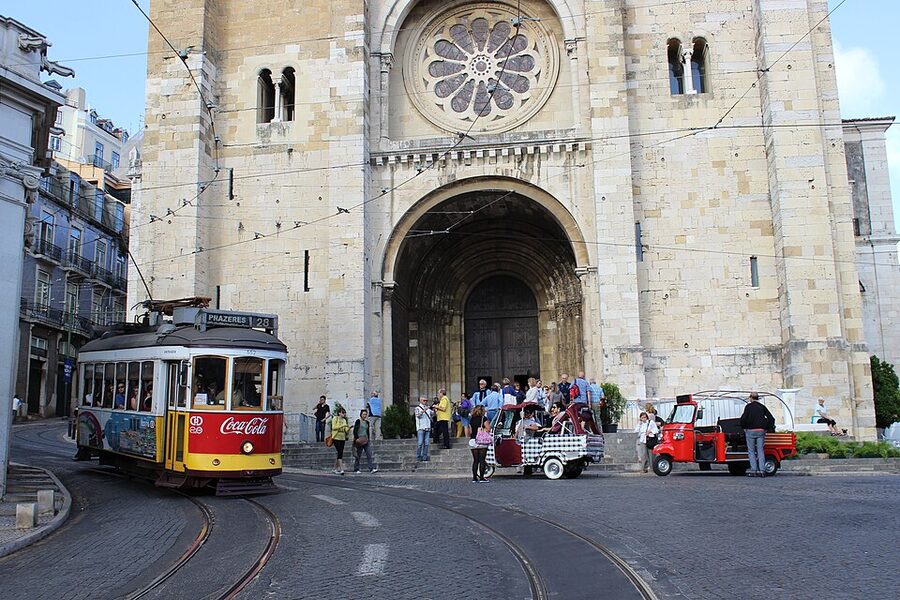
People ask me which is best, and the truthful answer is they do different jobs. Here’s how I’d split them.
A city-center walking tour is slower (three hours covers maybe 4km) but more intimate. You stop, you read inscriptions, you go inside the Convento do Carmo, you smell the bakery you walk past. The guide reads the room. If you have functional knees and three free hours, walk first, tuk-tuk second.
A hop-on hop-off bus is cheaper per hour (around 22 euros for a day pass versus 28 to 80 for a tuk-tuk run) but route-locked. You can’t ask the driver to take you somewhere. Most HOHO buses physically can’t enter Alfama or Bairro Alto, so they circle the lower town and Belém. They’re a pure transit pass with audio commentary, not a tour. They make sense if you’re staying mid-priced and want to bounce between Belém, the city center, and Parque das Nações on your own schedule. We covered the equivalent product in the same family on routes like the Seville HOHO, the Barcelona one, the Valencia version, and the Palma loop; the format is consistent across cities.
A tuk-tuk slots between the two. More flexible than a HOHO, faster than a walking tour, and the only one of the three that gets you into the actual medieval streets. If you can only do one, do this. If you’re in Lisbon for three days, do all three on different mornings.
Where the routes actually go
Most operators run a similar core loop with detours bolted on. Knowing the geography helps you ask sensible questions when you book.
Alfama

The oldest neighborhood, Moorish in bones, basically untouched by the 1755 earthquake. Tuk-tuks climb up Travessa do Chão da Feira, swing past the Sé cathedral, stop at Miradouro de Santa Luzia (azulejos and bougainvillea), and again at Largo das Portas do Sol for the postcard rooftop view. From there it’s down through laundry-strung alleys to São Jorge Castle’s gates. Routes vary, but Portas do Sol is non-negotiable.
Mouraria
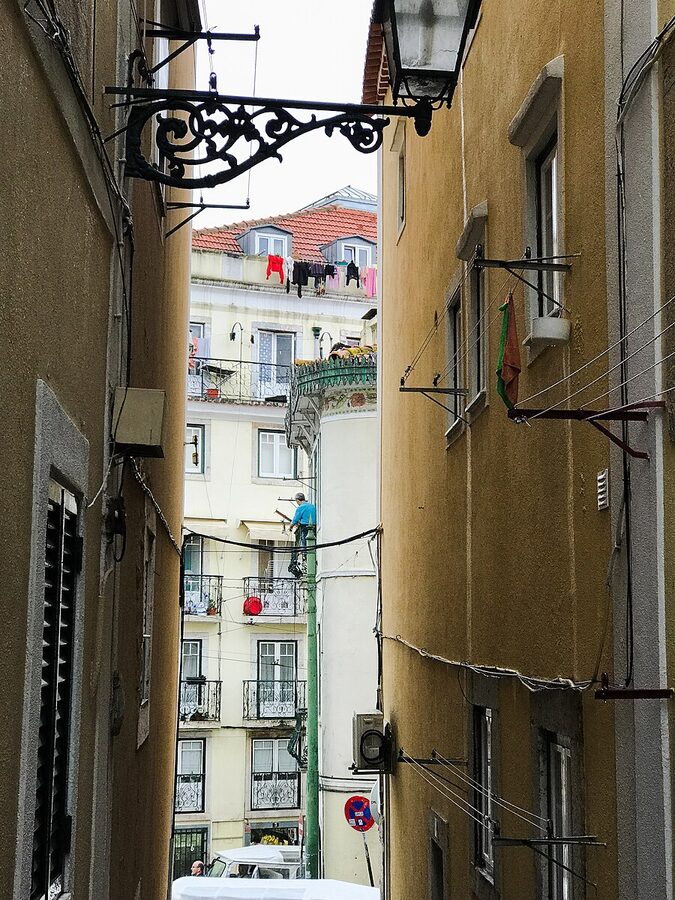
The lesser-known northern slope of the castle hill. Born of the 12th-century Moorish quarter and modern home to a Cape Verdean and South Asian immigrant community. This is where fado actually started, in tabernas that nobody tourists into. Good drivers will take you up Rua de São Cristóvão, point out the Severa mural (the queen of fado, dead at 26), and stop at the tiny Largo do Caldas where the genre’s plaque sits. If you’re booking a fado show for the same trip, ask the driver to give you the geography first.
Bairro Alto and Chiado
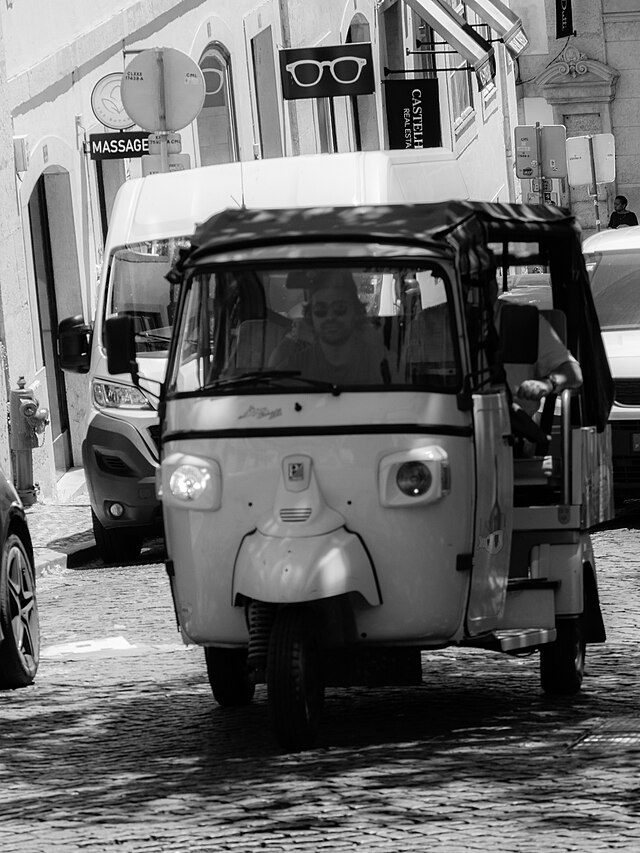
The tuk-tuk goes where the tram won’t fit. Up through Calçada do Combro, into the grid of bar-by-night, café-by-day streets, past the Convento do Carmo open to the sky, and a stop at Miradouro de São Pedro de Alcântara for the view back toward the castle. Half-day tours add São Roque (smell the gold leaf) and the Bertrand bookshop in Chiado, which has been open since 1732 and has a Guinness certificate to prove it.
Belém and the river run

If you book three or four hours, Belém usually goes in. You ride along the Tagus from Praça do Comércio, past the LX Factory turn-off, and out to the riverside trio: Jerónimos Monastery, the Padrão dos Descobrimentos, and Belém Tower. A good driver will skip the famous Pastéis de Belém queue and take you to Manteigaria’s Belém branch where the line is shorter and the custard is, in my view, better. The river run itself is uneventful, but it’s the only flat stretch in most routes and a good place to chat with the driver.
Practical bits

Booking timing
Book the flagship 2 to 4 days ahead in shoulder season (April-May, September-October), a week ahead in summer. The cheaper 2-hour shared runs you can usually book the night before. The vintage tuk-tuk has fewer vehicles in rotation and sells out earlier, especially mornings. December through February is genuinely quiet and you can walk up to a meeting point and join the next slot in most cases.
Age, seatbelts, child seats
Most operators take ages 3 and up. A few take infants in arms but won’t seat them properly, which I find sketchy. Seatbelts are mandatory in Portugal and good drivers won’t pull away until everyone is clipped in. Child seats are not provided as standard. If you’re traveling with a toddler, message the operator before you book and ask about an age-appropriate booster. The flagship private operator can usually arrange one with 24 hours notice.
Weather and roof shields
Tuk-tuks have a roof and most have plastic rain shields that drop down on the sides. Lisbon weather is mild but the wind off the Tagus in winter is colder than the temperature suggests, and the spring drizzle is sneaky. If your forecast is rain, the tour usually still runs. If it’s a downpour, the operator will offer to reschedule. Summer is the opposite problem: the open sides are great until you’re stuck in noon traffic on Avenida 24 de Julho with the sun on your knees. Book mornings or late afternoons in July and August.
Tipping and what’s included
Tipping is appreciated but not expected. Five to ten euros at the end of a 2-hour tour is generous, ten to twenty for a private 3 to 4-hour run if your guide was good. Entry fees to the Sé, the Castle, or museums are not included unless your specific package says so. Pastel de nata stops are usually on you (one euro each), unless it’s a food-themed tour. Carry a small euro float because card readers exist but they’re not universal.
The on-the-spot trap

The tuk-tuks parked in Praça do Comércio waving at tourists are not all licensed. Some are. Many quote double the online rate, then negotiate down. The licensed operators have a number on the side of the vehicle and a registration sticker on the windshield. If you’re going to walk-up book, ask to see them. If they’re missing, walk on. Booking online via GetYourGuide or Viator gives you a cancellation window, the operator’s review history, and a price that doesn’t depend on how tired you look.
One last thing about Lisbon tuk-tuks

I’ve been on tuk-tuk tours in Bangkok and Mumbai and Marrakech and Lisbon, and Lisbon’s are different in one specific way. The drivers are not just drivers. Many of them are ex-history teachers, ex-architects, fado musicians who needed a day job, retired sailors, and grandkids of fishermen who grew up running these alleys. The vehicle is the excuse. The conversation is the product.
So when you book, don’t optimize for cheapest or fastest. Optimize for the operator with the most named-driver mentions in recent reviews. Add a buffer hour in your day so you don’t have to rush the driver. And accept that the best stops on your tuk-tuk run are going to be ones that aren’t on the printed itinerary.
Other Lisbon guides worth a look
If you’re building a wider Lisbon plan, our guide on the Lisbon Card walks through whether the transit pass is worth it for your specific itinerary. The Jerónimos Monastery booking guide covers the Belém ticket question that comes up on every 4-hour tuk-tuk route. For evenings, the fado show guide sits naturally next to a Mouraria-heavy tuk-tuk afternoon. And if you’ve got a free day, the Sintra day trip is the obvious pairing.