
Walking Barcelona is romantic on day one. By day three, with the Sagrada Família at one end of the city and Park Güell stuck on a hill at the other, you’re checking transit apps mid-blister and wondering why a 22,000-step day looked like a good idea. The hop-on hop-off bus is the boring, sensible answer to that, and after using it twice now I’ve stopped pretending I’m above it.
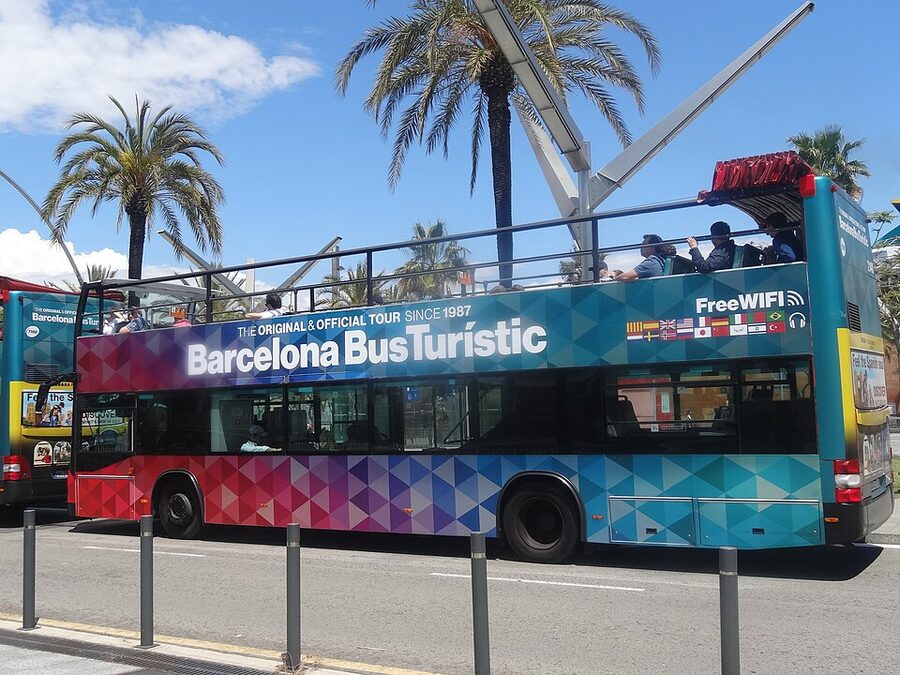
Two companies run hop-on hop-off buses in Barcelona, and most visitors don’t realise that until they’re already standing at a stop staring at the wrong logo. The official one is Barcelona Bus Turistic (run by TMB, the city transport authority, in turquoise/blue). The competitor is City Sightseeing Barcelona in red. Different stops, different routes, no transfers between them.
This guide covers how to pick between them, what each route actually shows you, what tickets cost, and which tour I’d book if I were doing this for the first time. Skip down if you only want the price and the link.
- In a Hurry? My Top Picks
- Which Operator Should You Pick?
- Bus Turistic vs City Sightseeing at a glance
- The Two Bus Turistic Routes Compared
- Red Route (West loop)
- Blue Route (East loop)
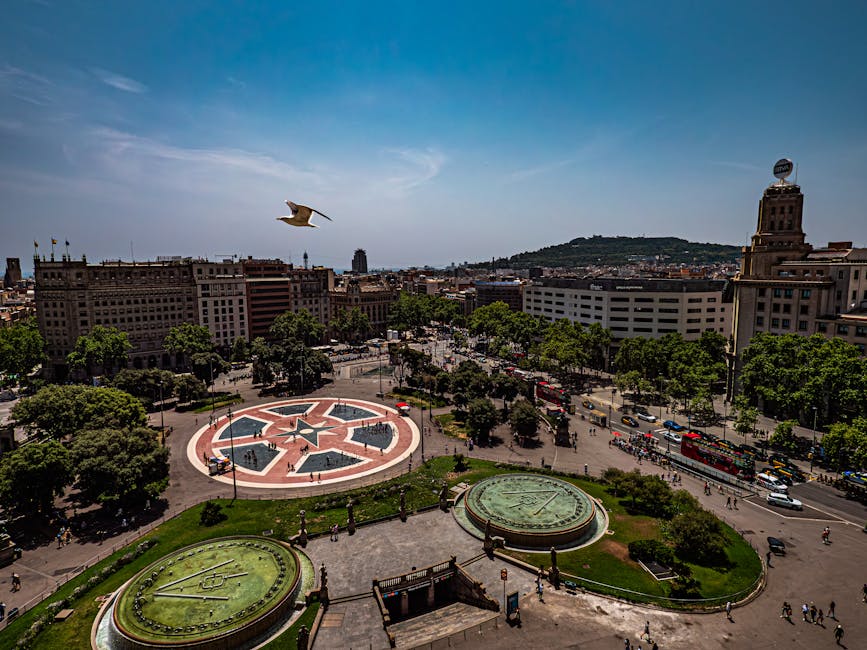
- Where to Get On (Plaça de Catalunya is the Answer)
- What Tickets Actually Cost
- Booking direct vs through a marketplace
- The Three Tours I’d Actually Book
- 1. Barcelona 24 or 48-Hour Hop-On Hop-Off Bus Tour: from
- 2. Barcelona City Sightseeing Hop-On Hop-Off Bus Tour: from
- 3. Barcelona City Tour Hop-On Hop-Off With Optional Catamaran: from
- How to Use the Bus Without Wasting Time
- Stops That Are Actually Worth Hopping Off At
- Worth a real stop
- Photo from the bus, stay seated
- Cruise Passengers, Day-Trippers, and the Time-Crunched
- What the Bus Doesn’t Do
- Should You Even Book This?
- Where to Go Next
In a Hurry? My Top Picks
- Barcelona 24 or 48-Hour Hop-On Hop-Off Bus Tour: from $39. The official Bus Turistic with two routes covering everything from Sagrada to Camp Nou. Check availability.
- Barcelona City Sightseeing Hop-On Hop-Off Bus Tour: from $39. The red-bus alternative, useful if you’re staying near a City Sightseeing stop. Check availability.
- Barcelona City Tour Hop-On Hop-Off With Optional Catamaran: from $40. Same bus principle plus a 1-hour catamaran cruise off Barceloneta if you want to break up the city day. Check availability.
Which Operator Should You Pick?
Short version: book the Barcelona Bus Turistic (official, blue/turquoise) unless you have a specific reason not to. It runs on two longer routes, has more frequent buses, and the audio commentary in 16 languages is a notch better than the City Sightseeing equivalent.
City Sightseeing’s red buses are perfectly fine. If your hotel sits closer to one of their stops than to a Bus Turistic stop, that alone is reason enough to switch. The price difference is essentially zero.
The catch I wish someone had told me on my first visit: your ticket is not valid on the other company’s buses. If you buy a Bus Turistic ticket and the next bus rolling up is red, you wait. Don’t get on assuming it’ll be sorted at the next stop. It won’t.
Bus Turistic vs City Sightseeing at a glance
Bus Turistic runs two big loops (Red and Blue) that between them cover essentially every landmark you came to see. Frequency is roughly every 5 to 20 minutes depending on season. The audio guide hands out earbuds and runs in English, Catalan, Spanish, French, German, Italian, Portuguese, Dutch, Russian, Japanese, Chinese, Arabic, Hebrew, Turkish, Norwegian, and Swedish. Free Wi-Fi. Plaça de Catalunya is the central hub.
City Sightseeing also runs two routes (East and West) that hit the headline sights, though the loops are tighter and you spend a touch less time on the bus per circuit. The same earbud audio guide system, similar language coverage, similar price band. They tend to have a more visible street presence around La Rambla and the harbour, which is why a lot of first-timers end up on a red bus by accident.
Both the official Bus Turistic and City Sightseeing have strong reputations and deep reviewer pools, so neither score is a fluke.
The Two Bus Turistic Routes Compared

The two Bus Turistic routes both start and finish at Plaça de Catalunya. They share that hub and a stretch of central stops, then split off in opposite directions. Don’t try to do both back to back without a break unless you want bus fatigue to overwrite the actual sightseeing.
Red Route (West loop)
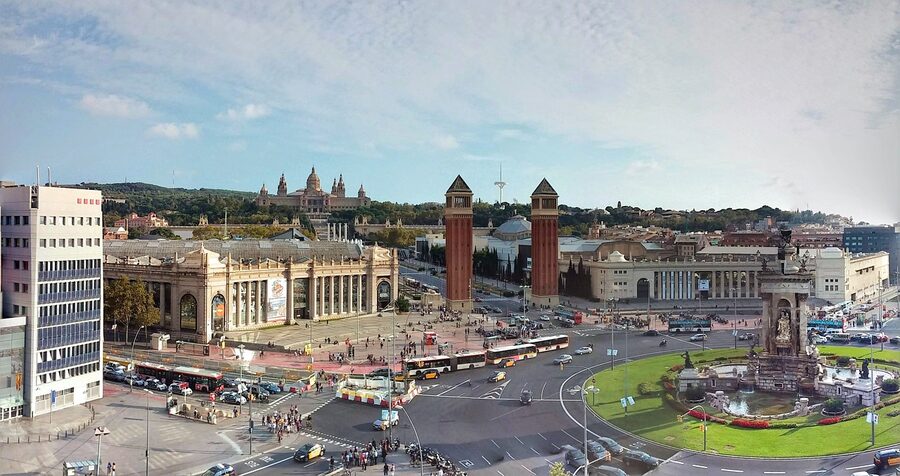
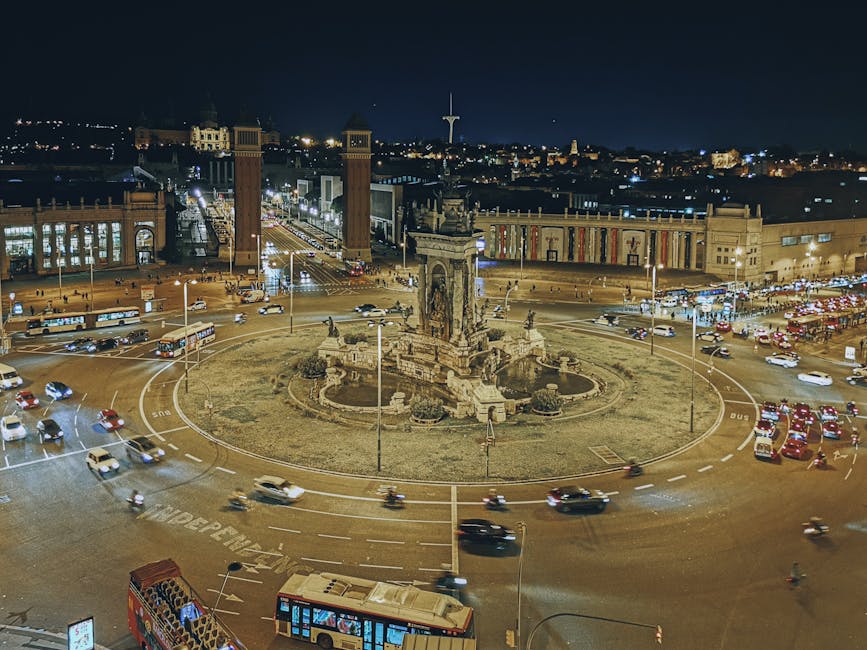
This one heads south and west out of the centre. The signature stretch is the climb up Montjuïc, which is genuinely the best reason to take a bus rather than the metro. The road switchbacks past the Magic Fountain at Plaça d’Espanya, the Palau Nacional (home of the MNAC art museum), the Olympic ring from 1992, and the Castell de Montjuïc up top. From the upper deck you get views over the harbour and the cruise terminals that you simply cannot get from any metro line.
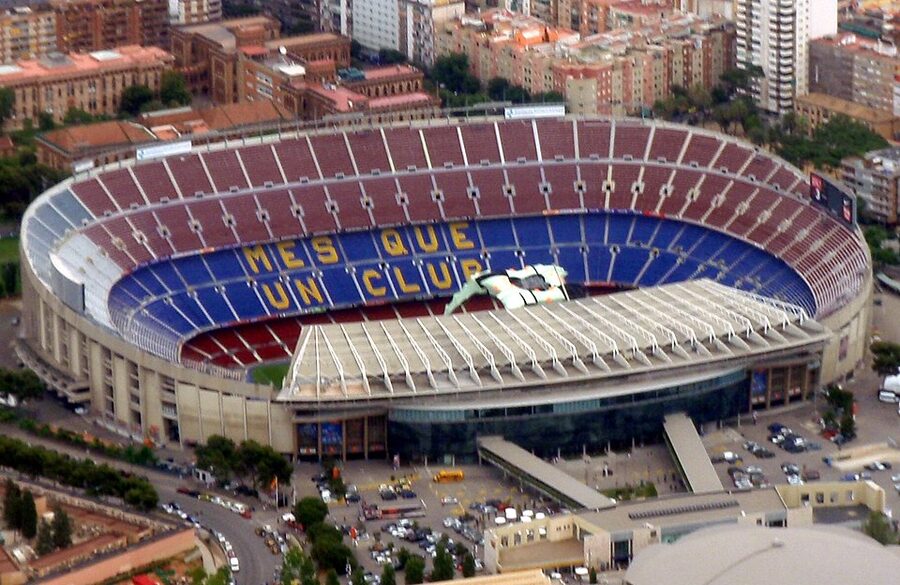
It also passes Camp Nou on the way back down, which matters if you’ve got a stadium tour booked. We’ve got a separate guide on the FC Barcelona Museum and Barça Immersive Tour that pairs neatly with this stop.
One annoyance: the route only goes one way. If your hotel is at stop 4 and your dinner reservation is at stop 22, you can’t just hop on the next bus going back. You either ride the whole loop forward (about 2 hours) or grab the metro. Plan the order of your stops accordingly.
Blue Route (East loop)
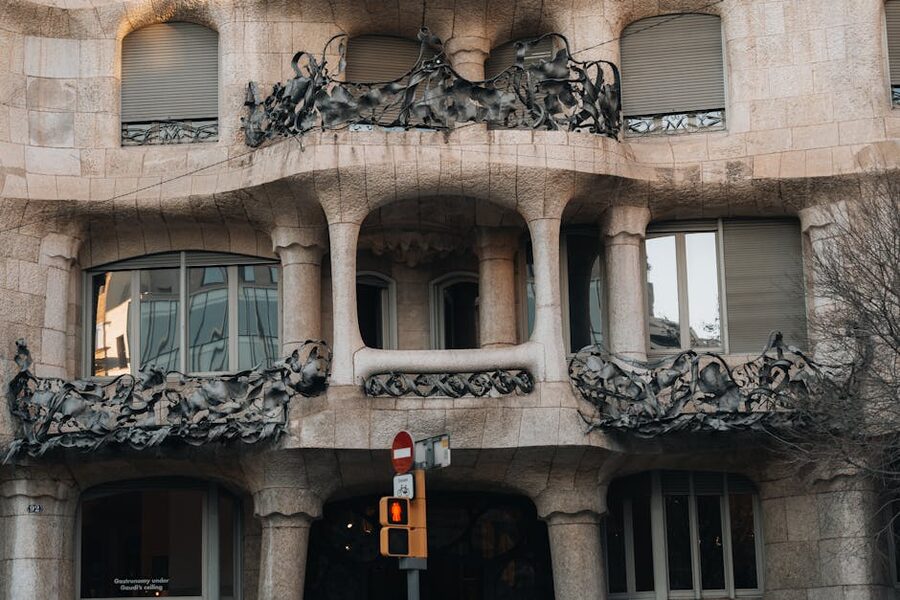
The Blue Route is the Gaudí route, in practice. It pulls out of Plaça de Catalunya and runs east up Passeig de Gràcia, where it stops within a short walk of Casa Batlló and La Pedrera (Casa Milà). Then it makes the run across to the Sagrada Família, north up to Park Güell, and onward to Tibidabo if you want to make a full day of it.
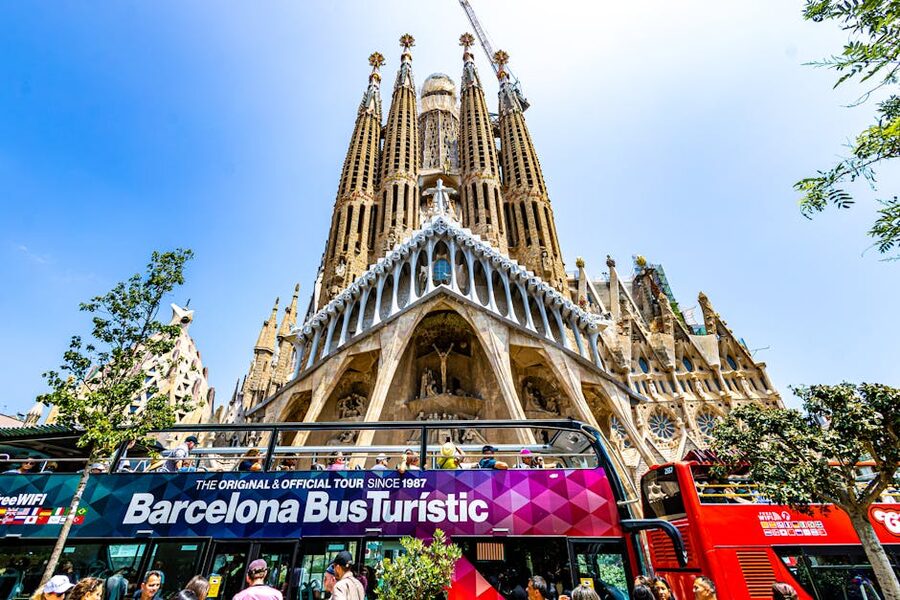
The Blue Route is the more useful of the two if you’ve only got one day. Most people’s Barcelona must-see list is heavy on Gaudí, and this loop hits more of those buildings in sequence than any other transport option in the city.

I’d still ride the Red Route too if I had a 48-hour pass, but if I had to pick one, Blue.
Where to Get On (Plaça de Catalunya is the Answer)
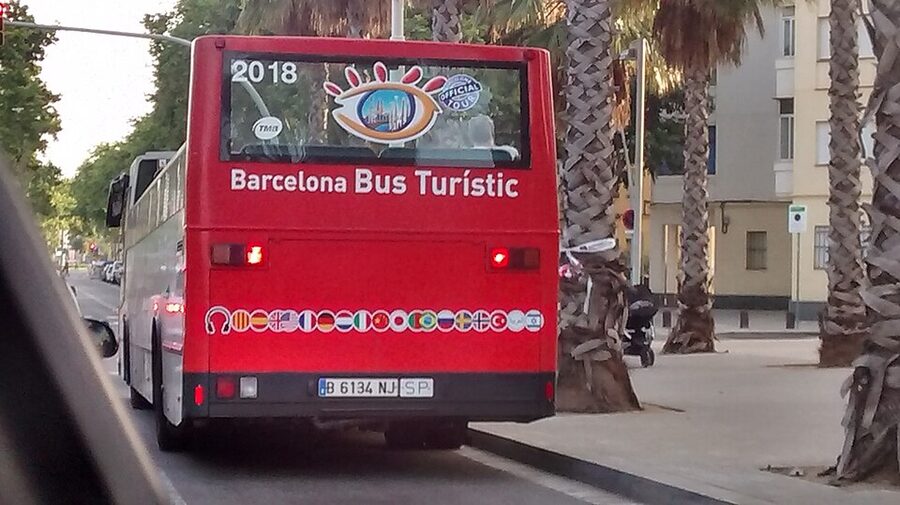
The simplest plan is to walk to Plaça de Catalunya and start there. Both routes leave from this square, the staff selling tickets are visible, and the audio guides and maps are handed out at the boarding point. If you’ve prepaid online (which you should), the QR code goes straight to a tablet at the door and you walk on.
The other natural starting points if you’re staying outside the centre:
- Plaça d’Espanya for the Red Route. This is the second-busiest hub on the whole network. Useful if you’re staying in Sants or the Fira area.
- Sagrada Família for the Blue Route. If your day starts with Sagrada tickets, get off the metro at L5 Sagrada Família, see the church, then board the bus a couple of streets over for the rest of your loop.
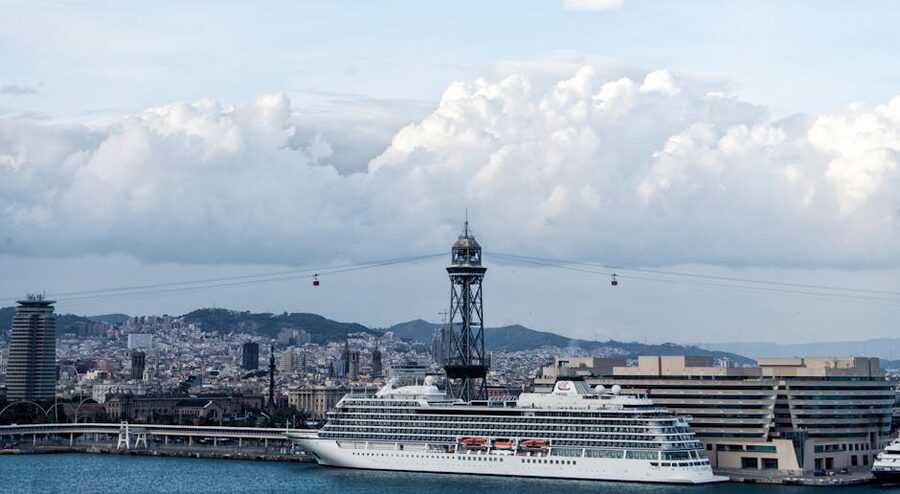
- Port Vell / Colom for either route. Convenient if you’re staying near the cruise terminal or doing a one-day stop from a ship. You can be on a bus within ten minutes of stepping off the gangway.
What Tickets Actually Cost

Prices on GetYourGuide for the official Bus Turistic come in around $39 per adult for a 1-day ticket and roughly $50 for the 48-hour version, depending on season and currency. Direct from Bus Turistic the equivalents are about €33 and €44.
Concessions: children 4 to 12 pay around €18 (24h) or €23 (48h). Seniors 65+ and disabled passengers get a similar reduction, roughly €28 and €39. Under-4s ride free.
City Sightseeing prices come in at almost the same numbers. There is no meaningful saving by switching operators. Pick the one with the better stop near you.
What’s worth knowing: every Bus Turistic ticket comes with a discount voucher booklet worth up to €250. It includes 10–20% off entries to museums (MNAC, Picasso Museum, Aquarium, etc.), some restaurants, and odd extras like luggage storage. You won’t use the full €250 unless you have a week, but I usually claw back €15-25 just from the museums I was going to visit anyway.
Booking direct vs through a marketplace
If you book straight from Bus Turistic the prices are quoted in Euros and you skip the marketplace markup. If you book via GetYourGuide or Viator you pay in your home currency, get free cancellation up to 24 hours, and the QR ticket sits in the same app as the rest of your Barcelona bookings. I usually go GetYourGuide for the consolidation alone.
Whatever you do, don’t buy on the bus. The price is the same but the queue at Catalunya for cash sales can run twenty minutes deep in summer.
The Three Tours I’d Actually Book
Three options, ranked by what I’d recommend to a friend who only has one or two days in the city.
1. Barcelona 24 or 48-Hour Hop-On Hop-Off Bus Tour: from $39
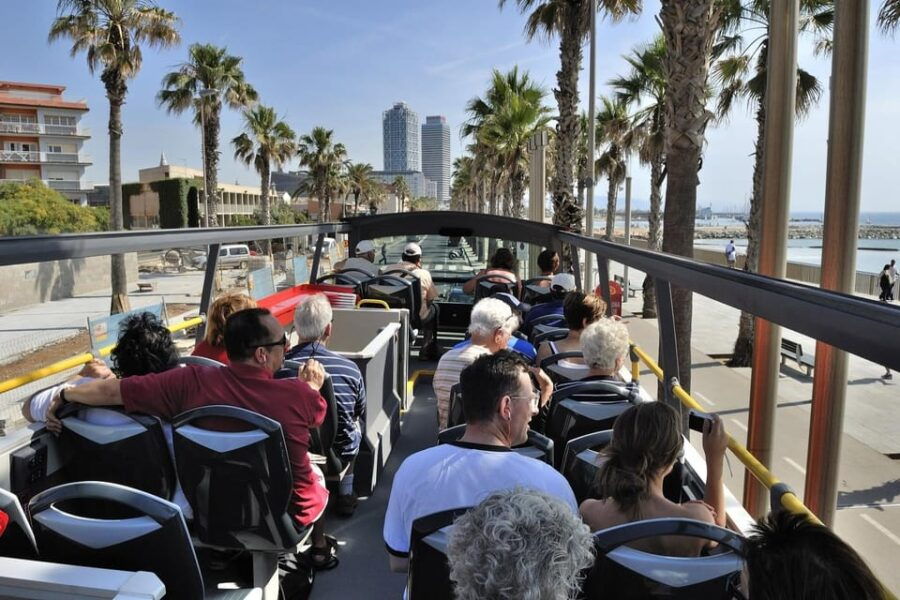
This is the official Bus Turistic ticket and it’s the one I’d book. Both routes (Red and Blue) on one ticket, audio in 16 languages, and the discount booklet that pays for a chunk of itself. Our full review goes deeper on the route map and what each stop looks like in practice. Pick 48 hours if you’re on holiday for at least three days.
2. Barcelona City Sightseeing Hop-On Hop-Off Bus Tour: from $39

If your hotel is on a City Sightseeing stop and not a Bus Turistic one, this is your pick. The product itself is on par. Two loops, audio guide, similar prices, free cancellation through GetYourGuide. We weighed the differences in our review, and the answer mostly comes down to where you’re sleeping.
3. Barcelona City Tour Hop-On Hop-Off With Optional Catamaran: from $40
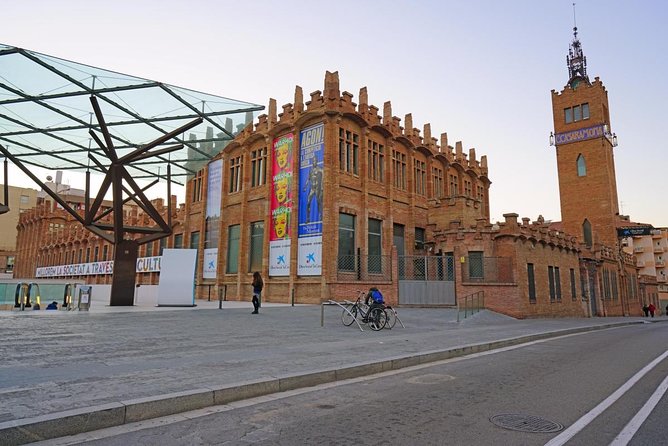
This Viator product packages the bus loop with a 1-hour catamaran cruise from the Old Port. The catamaran adds a real perspective change after a morning of city streets, and at $40 the marginal cost over a plain bus ticket is essentially zero. Our full review covers what to expect on the catamaran half.
How to Use the Bus Without Wasting Time
A few mistakes I made the first time, so you don’t have to.
Ride the full loop once before hopping off. The first ride orients you, lets you hear the audio guide build context for the whole city, and shows you which stops actually matter. Get off at the second go-round to actually visit places.
Reverse the obvious order. Most people start at Plaça de Catalunya, ride to Sagrada Família first thing, queue, and then realise it’s 1pm and they’ve burned half their daylight. Better: take the early bus all the way around once, then double back to your priority stops with a plan.
Book Sagrada and Park Güell tickets separately. Both are timed entries, both sell out, both are independent of your bus ticket. The bus drops you nearby. It does not get you in.
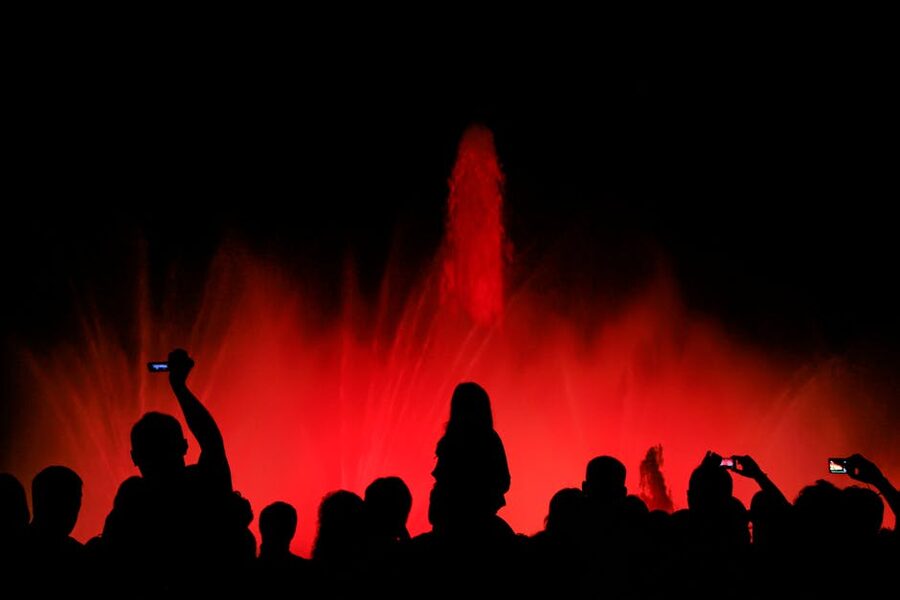
Get off at the Magic Fountain in the evening. If you’re on the Red Route on a Thursday/Friday/Saturday between April and December, the fountain show at Plaça d’Espanya runs Friday and Saturday evenings (9pm in summer, earlier in shoulder seasons). It’s free, it’s in the middle of the loop, and the Bus Turistic stop is a 5-minute walk from the show.
Don’t bother on rainy days. The whole point is the open top. If the forecast is more than 30% rain, swap your bus day for a Gaudí interior day and put the bus on a different morning. Tickets are date-locked but the cancellation window on GetYourGuide is generous.
Stops That Are Actually Worth Hopping Off At

Some bus stops are where you take a photo from the bus and stay seated. Others are full half-day visits. Here’s the rough sort.
Worth a real stop
- Sagrada Família: minimum 90 minutes. Pre-booked timed ticket required.
- Park Güell: 90 to 120 minutes. The bus drops you at the lower entrance, and there’s a steep walk up to the Monumental Zone. Timed ticket required for the paid section.
- Casa Batlló / La Pedrera: shared stop on Passeig de Gràcia, both visit-able in an afternoon if you start early. Casa Batlló is the more theatrical of the two; La Pedrera the more architectural.
- Camp Nou (FC Barcelona Museum): ongoing renovation may shift this stop’s exact placement. Check the current status before you go.
- Montjuïc / Palau Nacional: budget at least an hour for the views, or three hours if you’re going inside the MNAC.
Photo from the bus, stay seated
- Arc de Triomf: pretty enough but a five-minute look from the top deck is the right amount of time.
- Casa Vicens: technically a real Gaudí site, but the Blue Route stop is a few blocks away and the visit is only worth it if you’re a Gaudí completist (we covered that one in our Casa Vicens guide).
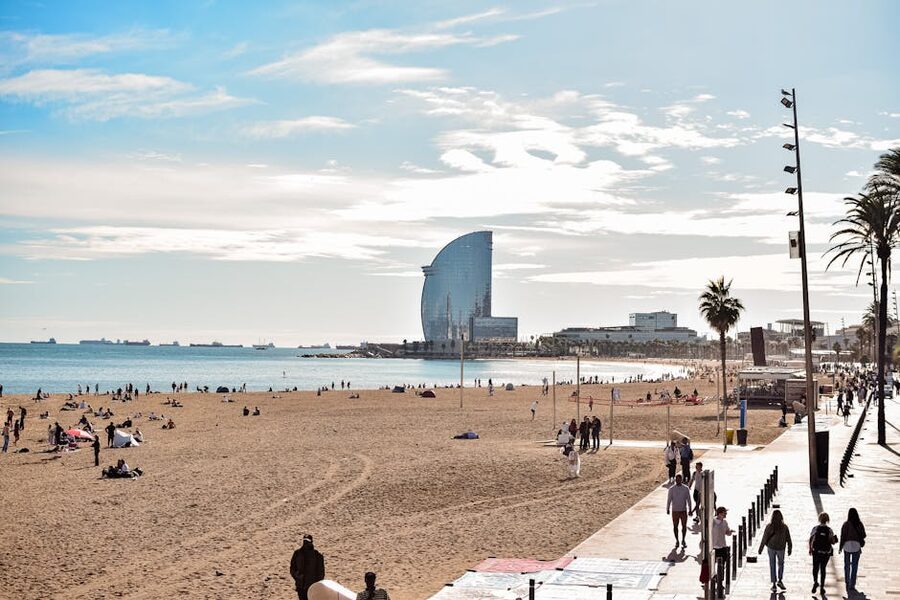
- Port Olímpic: take the photo, move on. Unless you actually want to swim at Bogatell beach there’s not much to do.
- Pedralbes / Diagonal: residential. Pretty trees, no actual sightseeing.
Cruise Passengers, Day-Trippers, and the Time-Crunched

The hop-on hop-off bus is most useful when time is short. A few specific scenarios.
Cruise day stops: if you’re docking for 8 to 10 hours, the bus is the most efficient way to actually see Barcelona without booking a private guide. From the Port Vell / Colom area you can be on a Bus Turistic within ten minutes. Plan the loop in advance: Sagrada plus Park Güell on the Blue Route eats most of the day, or Montjuïc plus Camp Nou on the Red Route is the alternative. Don’t try to do both routes in one cruise day. You’ll spend the entire visit on the bus and see nothing properly.
One-day visit (not cruise): 24-hour ticket, Blue Route, hit Sagrada in the morning and Park Güell in the afternoon, then ride the rest of the loop back to Plaça de Catalunya for tapas. We’ve got a separate Barcelona tapas and wine walking tour guide that pairs neatly as an evening activity.
Two-day visit: 48-hour ticket, Blue Route on day one, Red Route on day two. You get Gaudí on day one, Montjuïc and the harbour on day two, and you have time to actually sit somewhere with a drink between stops.
Three-day or longer visit: the bus is much less essential. You have time to walk, take the metro, and the sightseeing pace can drop. Use a 24-hour ticket strategically on the day with the longest gap between major sights, and forget about it the rest of the time.
What the Bus Doesn’t Do
A few real limits.
It doesn’t go to the airport. El Prat is on the airport bus or the train, not the tour bus. If you’re hauling luggage from BCN, take the Aerobús (€7.25 one way) or the R2 train.
The routes only run one way. If you’re at stop 18 and your hotel is at stop 4, you either ride forward through the rest of the loop or grab the metro. There is no reverse direction.
It stops running by 8pm. Roughly 9am to 8pm in summer, slightly shorter hours in winter. Last buses can be earlier in January and February. If you want a sunset ride, plan for late summer or pivot to a different evening activity.
The audio guide is fine, not great. The information is solid and accurate, but it’s not the kind of running narration you’d get from a real human guide. If you want depth on a specific landmark, layer a walking tour onto your bus day. The Best of Barcelona small-group day tour is the version of this with a guided element if you want it.
It’s not a substitute for understanding the metro. Once you’re committed to a specific spot, especially after the bus stops at 8pm, the L3 (green) and L5 (blue) metro lines are still the fastest way to move around. Buy a T-casual 10-trip ticket on day one regardless.
Should You Even Book This?
I get a lot of “is the hop-on hop-off bus actually worth it?” questions, usually framed as if it’s a tourist trap.
Short answer: it’s worth it if your itinerary is sight-heavy and time-tight. A 1-day Bus Turistic ticket at €33-39 is the price of two and a half metro tickets at €2.55 each, plus the time saved walking between sights, plus the discount booklet, plus the upper-deck views. For most first-time visitors with two days or fewer, the math works.
It’s not worth it if you’re staying for a week, you’ve already been to Barcelona, or your idea of a good city day is wandering El Born without a plan. In those cases the bus is a constraint pretending to be a feature.
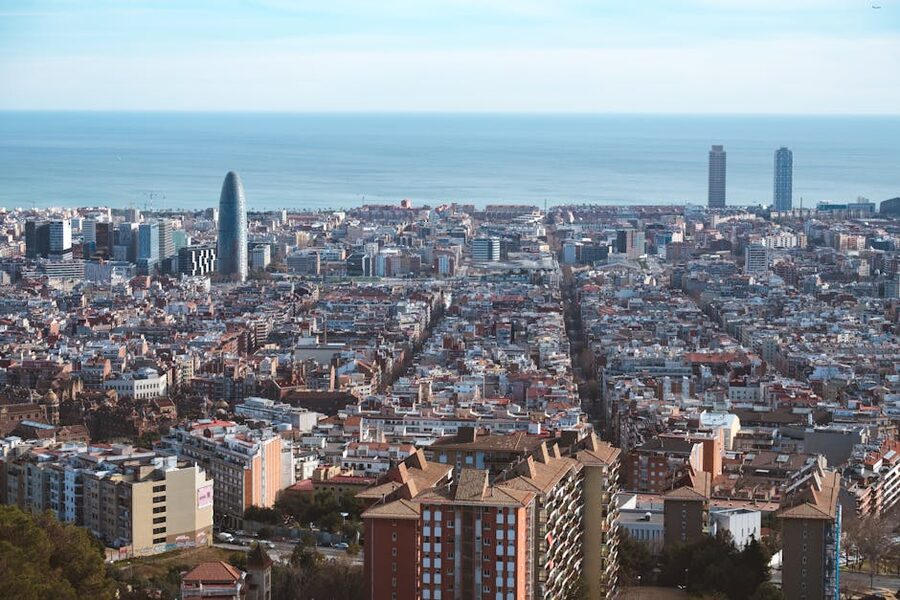
I’ve taken hop-on hop-off buses in cities where they don’t make sense (Paris, where the metro is faster than anything on wheels). Barcelona isn’t one of those cities. The geography here, with the major Gaudí buildings spread across a 6-kilometre arc, genuinely benefits from the bus model.
Where to Go Next
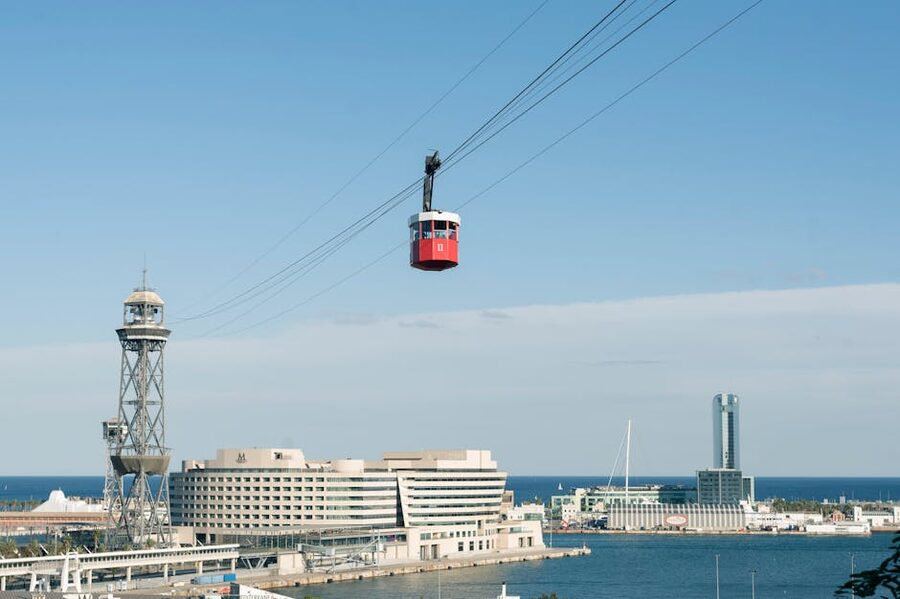
If the bus has confirmed for you that Gaudí is the reason you came, the next steps are timed-entry tickets for the actual buildings. Our Sagrada Família guide is the priority booking. Park Güell is the second. Casa Batlló and La Pedrera are afternoon-friendly and book up less aggressively. If you want to extend the bus-loop logic to a different transport mode, the Montjuïc Cable Car is the next-best aerial-view ticket in the city, and the Barcelona Aquarium at Port Vell is a good rainy-day pivot if your bus day washes out.