
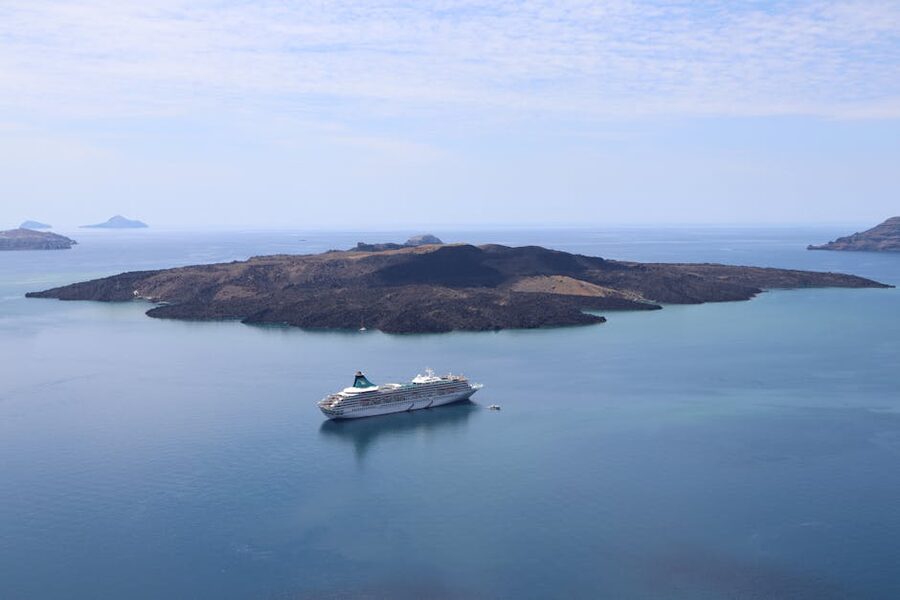
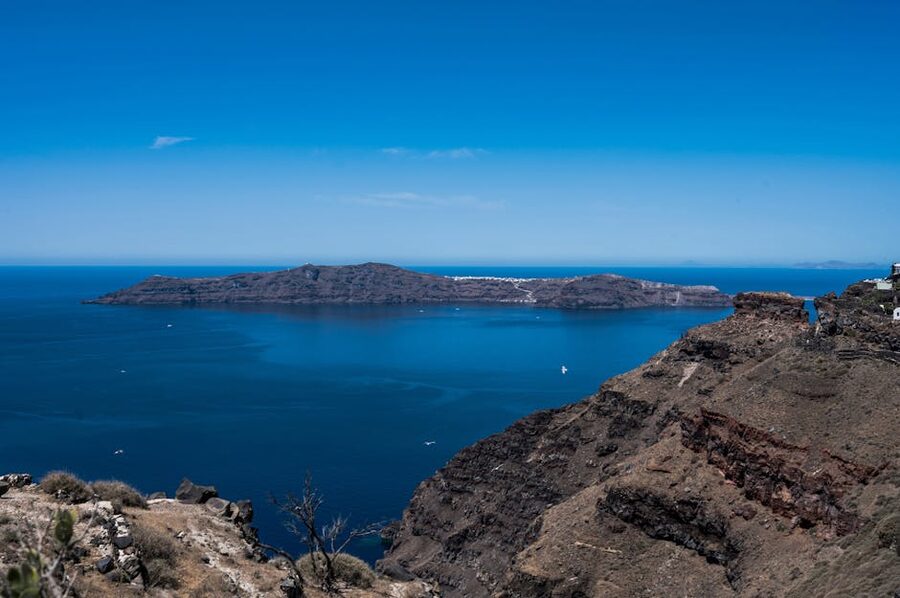
Here is the part most visitors miss when they pose for the caldera shot. The thing they are standing on is the rim of an active volcano. The five-mile-wide bay between Fira and Oia is not a bay. It is a flooded crater, blown open in 1600 BC in one of the largest eruptions in human history, the same blast that some classicists tie to Plato’s account of Atlantis.
The little black islands in the middle of that bay are where the volcano is still cooking. A boat day out to walk on the lava and swim in the sulphurous hot springs is the closest most travellers will ever get to a live caldera. Below is how to actually book it.
- In a Hurry? My Top 3 Picks
- What This Cruise Actually Is
- Why Santorini Is a Volcano (the Short Version)
- Nea Kameni: The Walk on the Volcano
- Palea Kameni: The Hot-Springs Swim
- Thirasia: The Lunch Stop Most People Skip
- Oia Sunset from the Water
- The Tours I Would Actually Book
- 1. Volcano and Hot Springs Sunset Dinner Cruise (around 6)
- 2. Santorini Port Cruise to Volcano, Hot Springs and Thirasia (around )
- 3. 1-Day Boat Trip: Santorini Volcano, Thirasia and Oia Sunset (around )
- The Mistakes That Ruin This Day
- How This Fits Into a Bigger Santorini Trip
- Worth It or Not
- Other Greece Days Worth Pairing
In a Hurry? My Top 3 Picks
Volcano and Hot Springs Sunset Dinner Cruise, around $106. The classic format with a sunset dinner on board. Nea Kameni hike, hot-springs swim, Thirasia stop, then the Oia sunset from the deck. Eight hours total. Check availability and times.
Santorini Port Cruise to Volcano, Hot Springs and Thirasia, around $41. The cheapest decent run on the route. Six hours, all the same stops, no dinner. The bargain pick if you only want the geology and not the sunset show. See dates and price.
Full-Day Boat Trip with Volcano, Thirasia and Oia Sunset, around $67. The same loop, twelve hours, ends with the boat parked off Oia for the sunset rather than racing back to port. Best value if you want the full day on the water. Check the listing.
What This Cruise Actually Is
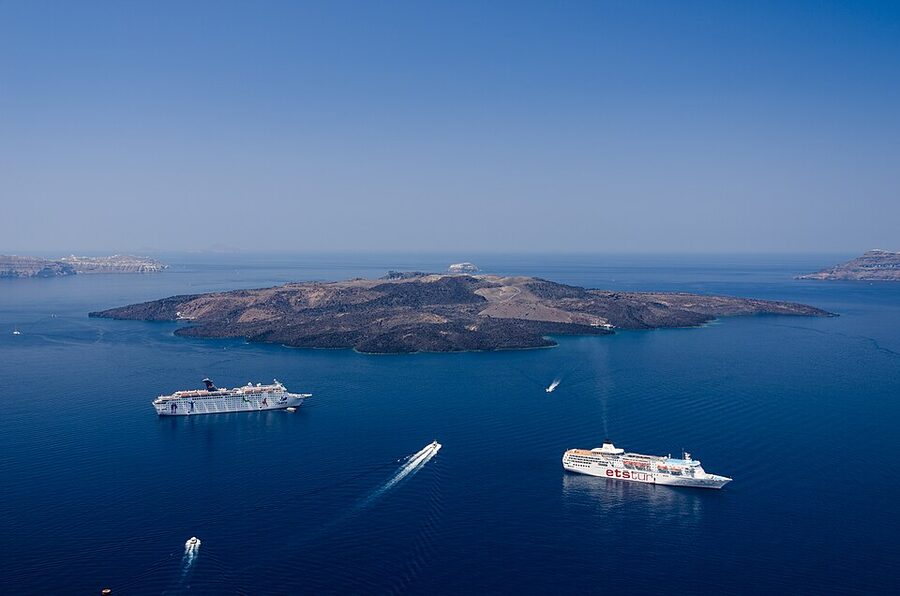
The Santorini volcanic-islands cruise is one trip running on roughly half a dozen boats, all leaving the old port at Fira (the one at the bottom of the cable car) or Athinios ferry port a bit further south. The shape is the same on every operator. Five to six hours total on the short version, eight to twelve on the dinner and sunset versions.
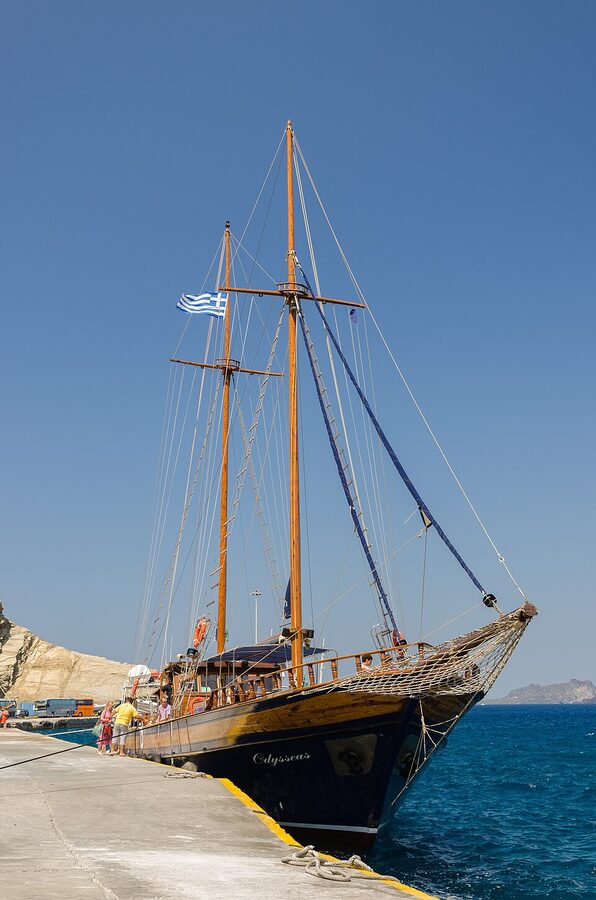
The boats are not catamarans and not sailing yachts. They are diesel motor boats, sometimes wooden traditional kaikia, sometimes bigger excursion ferries with two decks and a saloon. You sit on benches around the rail, the engine drones, and the wind picks up the moment you clear the cliffs. If you want the sailing-and-sunbathing experience instead, our Santorini BBQ catamaran guide covers the other format, with the caldera meal-and-drinks cruise as the most-booked sailing alternative on the same water. This piece is about the volcano.
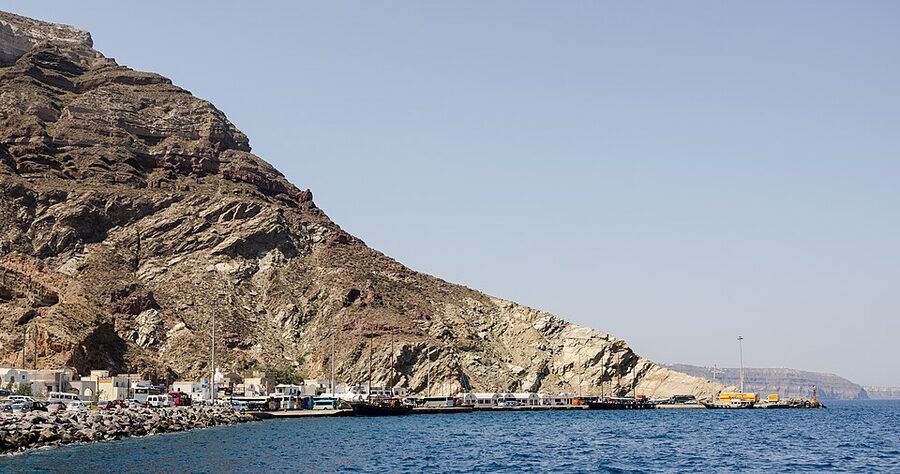
The sequence on most boats is Nea Kameni first (the black volcano you can see from your hotel), 25 to 30 minutes across the caldera. Then Palea Kameni next door for the hot-springs swim. Then Thirasia, the small inhabited island opposite Oia, for lunch and free time. Then either back to Athinios on the short tour, or a long looping return up to Oia for sunset. Add 30 to 90 minutes of swim time and a fair bit of waiting at the small Nea Kameni jetty if you go in July or August.
Roughly $35 to $110 depending on length, food, and whether sunset is included. Tickets to land on Nea Kameni cost an extra €5 in cash at the pier, paid separately. None of the listings mention this and people get caught every day. Bring a five-euro note.
Why Santorini Is a Volcano (the Short Version)
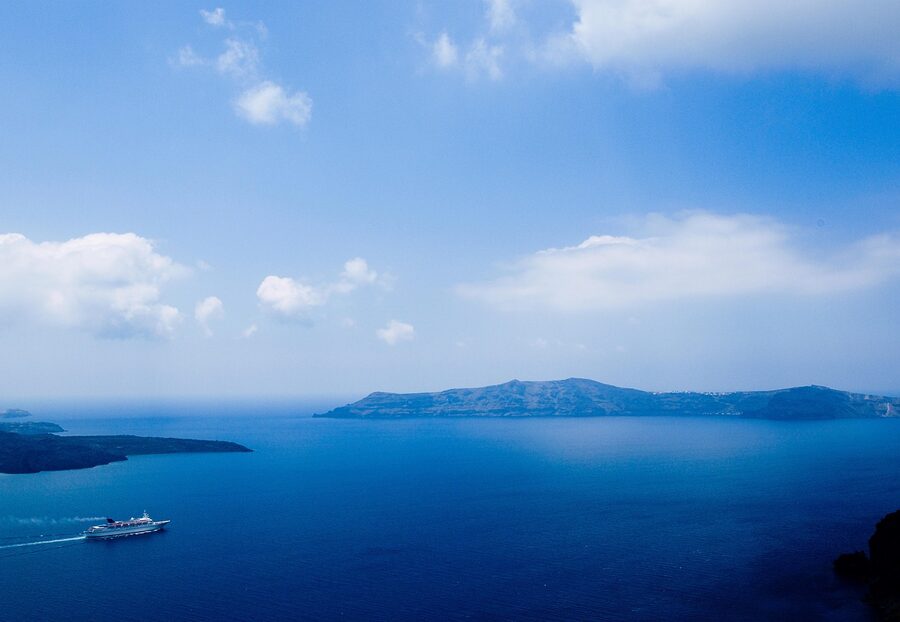
The whole island is the rim of one. Around 1600 BC, give or take a century, a Plinian eruption blew the centre of the old round island sky-high, deposited a 60-metre layer of pumice across the surviving rim, and dropped the new sea floor 400 metres below water. What you call Santorini today, the crescent of cliffs running from Fira to Oia, is the western half of the rim. Thirasia opposite is a chunk of the same rim. Aspronisi is a smaller chunk in between. The flat circle of water in the middle is the collapsed magma chamber.
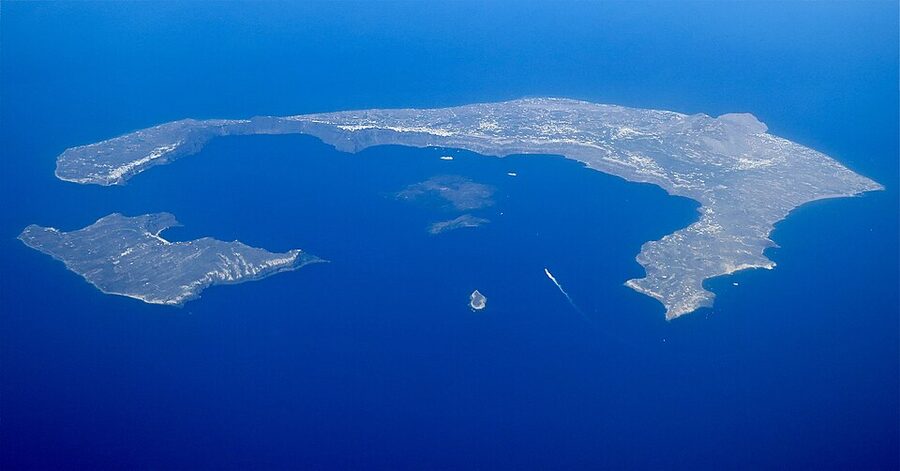
The Minoan eruption is the one with the famous Atlantis link. The 1600 BC date lines up roughly with the destruction of the Minoan civilisation on Crete a couple of generations later, and Plato’s description of an island empire swallowed by the sea in a single day, with cliffs and a central plain, fits the rim-and-flooded-crater shape too neatly to ignore. The Minoan town buried at Akrotiri, on the south coast, was preserved Pompeii-style under the pumice and is the strongest piece of physical evidence we have for what got hit.
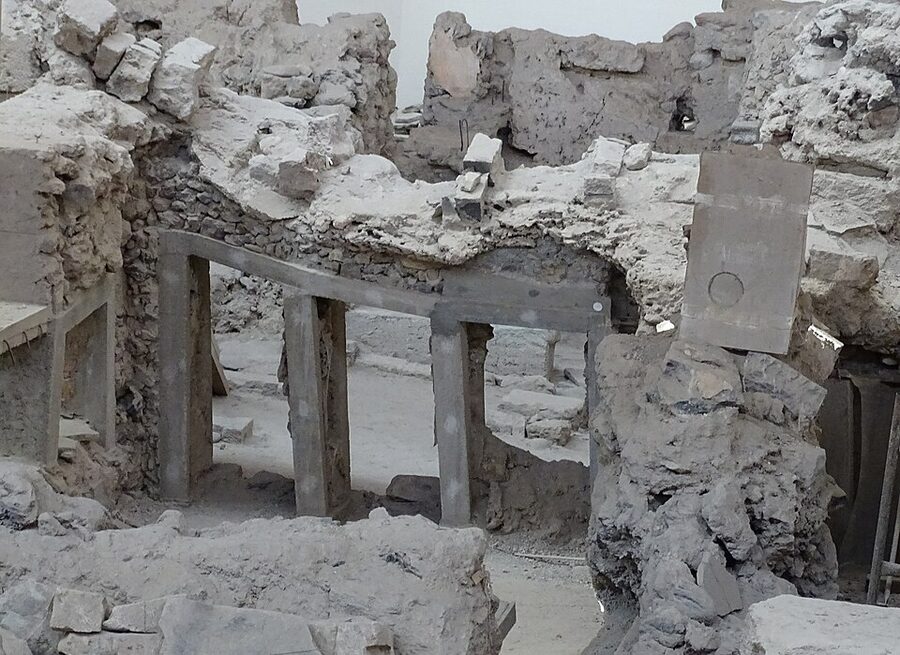
The volcano did not stop in 1600 BC. It started building two new cones in the centre of the flooded caldera. Palea Kameni, the older one, surfaced around 197 BC. Nea Kameni grew between 1570 and the 1950 eruption, the most recent on record, in a series of slow lava-and-ash episodes. The lava field you walk on is from the 1925-1950 phase. The fumaroles still vent hot sulphurous gas. The whole complex is monitored constantly. There has been seismic activity in the caldera as recently as early 2025, but no eruption.
Nea Kameni: The Walk on the Volcano
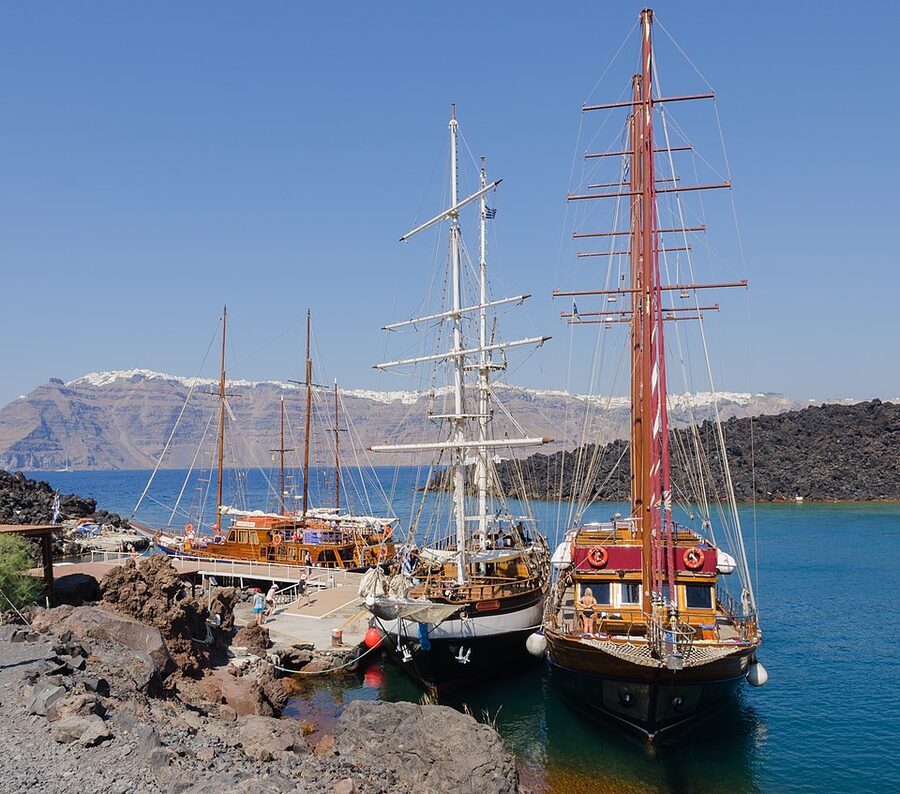
Boats land at the small concrete jetty on the east side. You pay your €5 island entry to a man at a tin booth, he hands you a paper ticket that no one ever checks again, and you start walking. The trail is volcanic gravel, loose underfoot, and it climbs about 130 metres in roughly 30 minutes of steady uphill. There is no shade. None. If you do this in July or August at midday, it is cooking.
The trail forks twice. Most cruise groups take the longer loop that touches the summit crater, drops past two active fumarole fields, and circles back to the jetty in about an hour and ten. A few skip the summit and just visit the lower fumaroles. If your guide says you have 90 minutes on the island, plan for 70 of them moving and 20 standing at the rim of the crater taking photos.
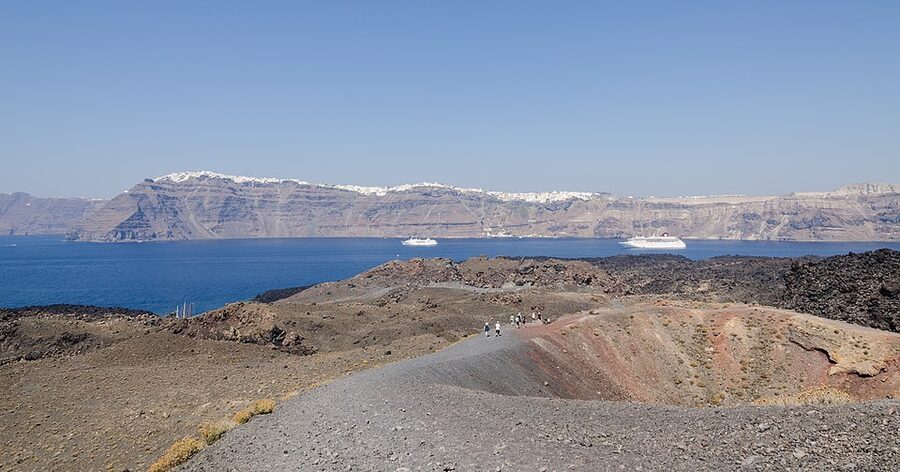
The summit crater is a shallow bowl of red and black scoria with a rim path you can walk all the way around. It is younger than the church on Mount Athos. From the high point you get the full caldera laid out: Fira on the rim to your right, Oia at the far end, Thirasia opposite, Akrotiri lighthouse to the south. It is the best single view of Santorini’s geology, hands down. You will spend ten minutes up there and want longer.
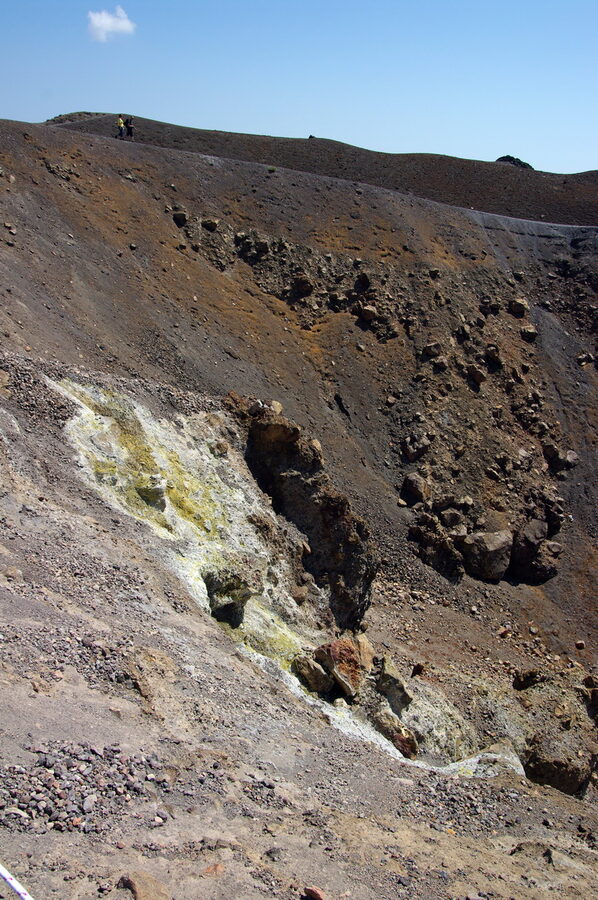
The fumaroles are the bit that gets people. Small cracks in the slope vent steam and hydrogen sulphide gas. The rocks around them are stained yellow with sulphur crystals. The smell is rotten eggs at low concentration, and rotten eggs at higher concentration if the wind is wrong. You can put a hand 30 cm above the vent and it is uncomfortably hot. Closer than that and you will burn yourself, so do not. The guides repeat this and people still try.
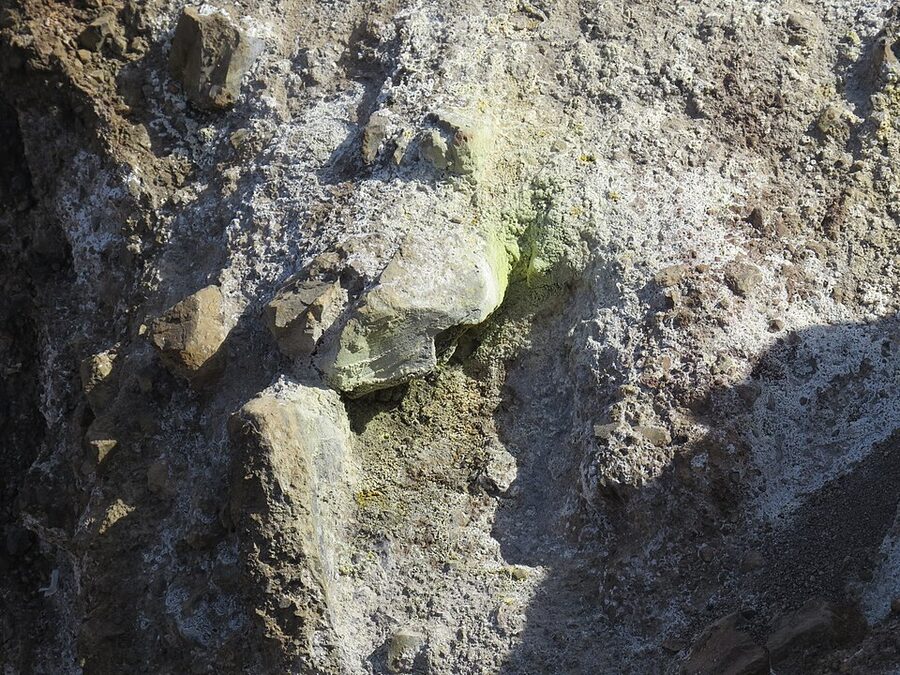
The lava you walk over for most of the loop is from the 1925 to 1950 eruption phase. It is rough aa lava, the kind that tears up the soles of cheap shoes. The texture is a clue. Smooth ropy ridges mean cooler, slower lava. The crumbly black clinker means it cooled fast above ground. Most of what is under your feet is the second kind.
Palea Kameni: The Hot-Springs Swim
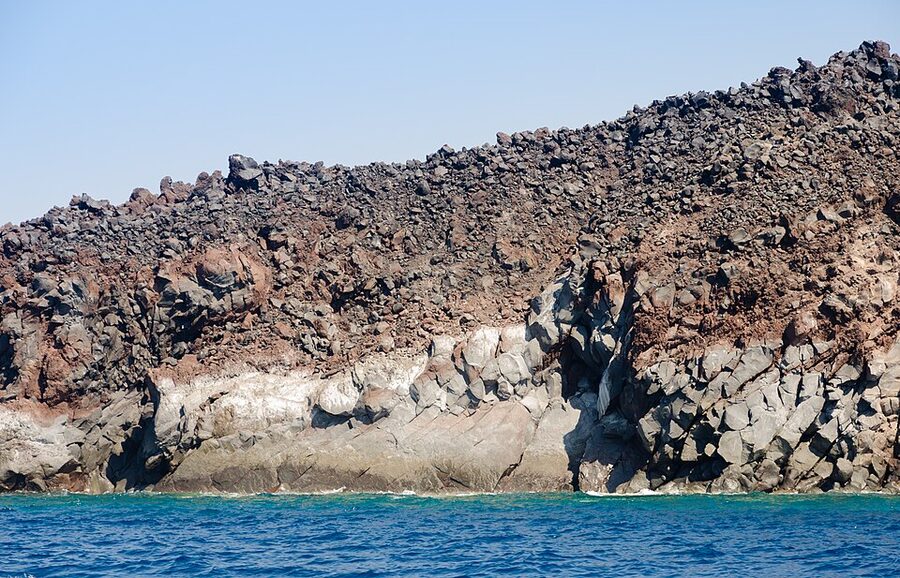
Back on the boat, you steam ten minutes across to Palea Kameni, the older and smaller of the two black islands. The boat does not dock. It anchors in a small horseshoe bay on the north side, and you swim in. That is the bit no one mentions. There is no jetty, no ladder, no shallow beach. You jump off the back of the boat into the cold sea and swim about 80 to 120 metres to the warm yellow patch under the cliff.
The water in the bay starts at Aegean cold. Around 18 to 20 degrees in summer, colder in shoulder season. Then about halfway across you start to feel warmer water mixing in from the springs, and within 30 metres of the cliff it is genuinely warm. Maybe 30 to 35 degrees right under the source. The water turns yellow-orange from the iron oxide. The smell is sulphurous, lighter than at the fumaroles but still there. People stand in the warm patch with their backs against the rock for as long as the boat lets them, which is usually 15 to 20 minutes.
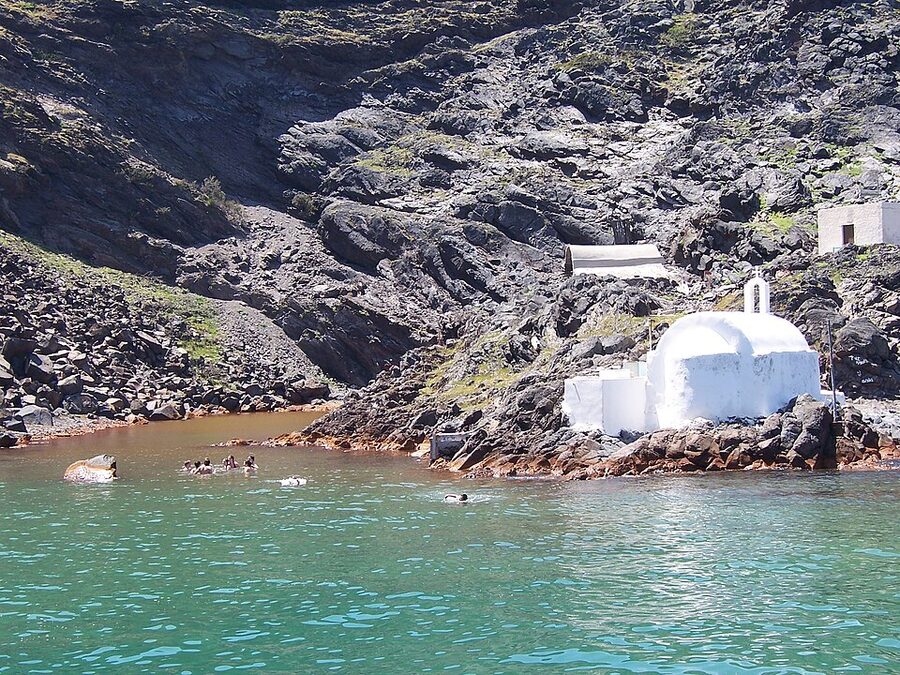
Two warnings. One, the iron oxide stains light-coloured swimwear. Anything pale blue, pale pink, or white will come out yellow-brown and stay that way. Wear dark colours or something cheap. Two, the swim back is upstream against the wind in a lot of conditions, and it is further than it looks. People underestimate this and panic halfway. Do not bring a non-swimmer or a tired child. The boat will not come and pick you up. If you are not a confident open-water swimmer, sit this part out and watch from the deck.
Thirasia: The Lunch Stop Most People Skip
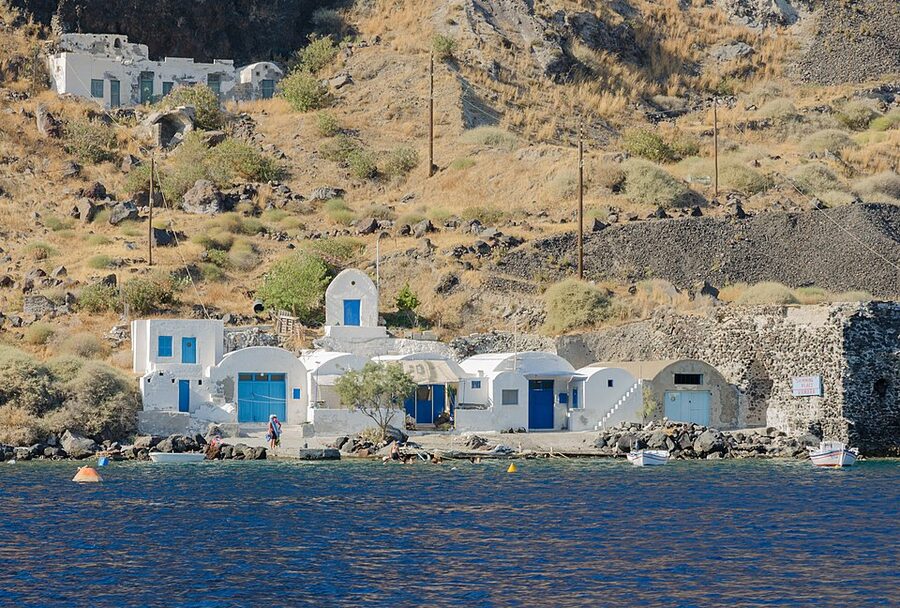
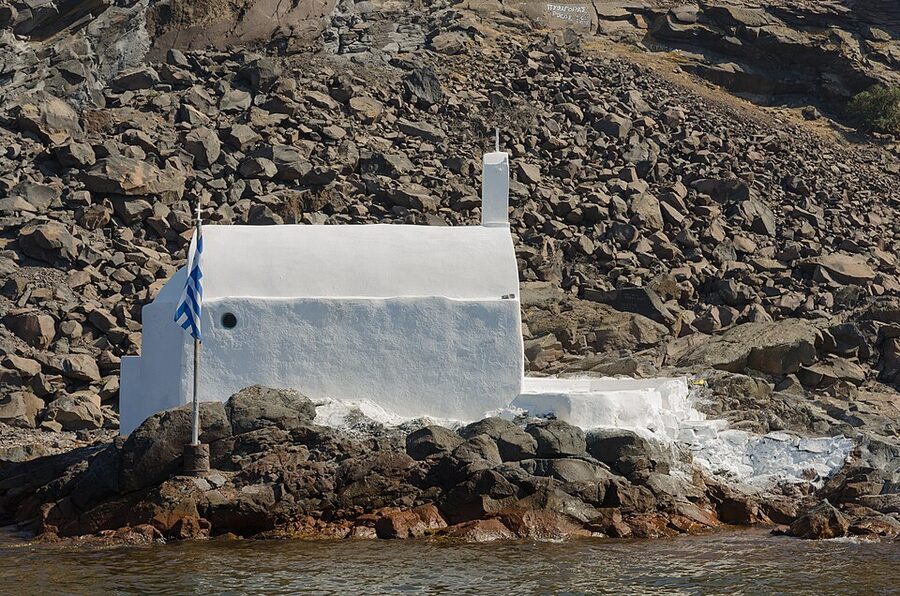
Thirasia is the second-largest piece of the old caldera rim, sitting opposite Santorini’s main island, separated by a strip of water you could swim across in the days before the volcano blew. About 250 people live there year round. Two villages, three tavernas, one road, no bus. Most cruise stops give you 90 minutes here, which is enough for lunch and a coffee and not much else.
The boat ties up at Korfos, the small harbour on the east coast. You can either eat at one of the four tavernas right on the harbour, all of which exist for cruise passengers and are priced accordingly, or you can climb the 270-step cliff path to the upper village (also called Korfos, confusingly) for a slightly cheaper meal and a much better view. The climb takes 15 to 20 minutes one way at a normal pace. In August heat it will take longer and you will arrive sweating.
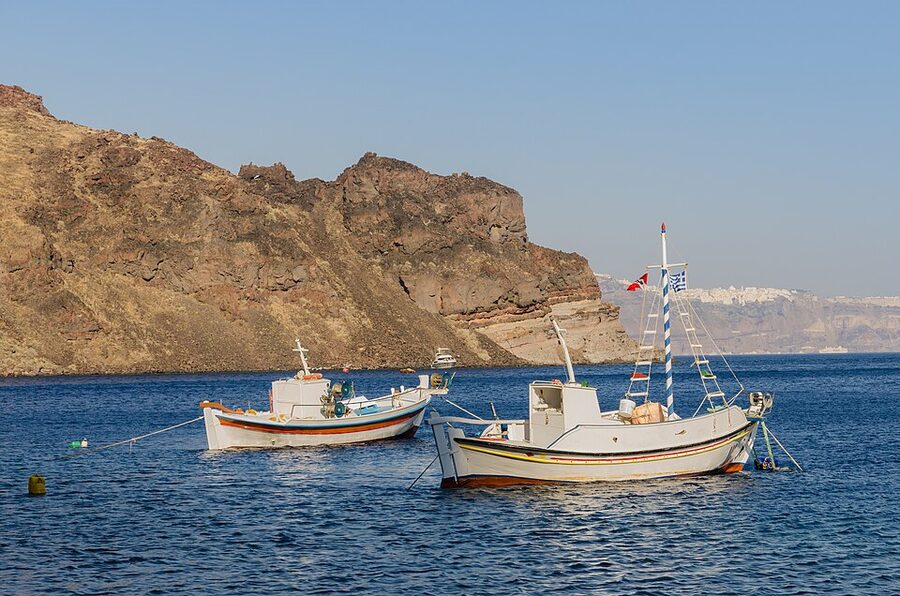
The food at the harbour tavernas is fine. Grilled fish, Greek salad, fava beans, tomato fritters. About €15 to €25 per person for a real lunch with a glass of wine, which is reasonable by Santorini standards. The fava is the local thing to order. Thirasia and Santorini together produce the protected-origin yellow split pea variety that gets puréed with onion and lemon, and the version on Thirasia tends to be less tourist-friendly and better than what you get in Fira. If you only have 60 minutes off the boat, eat at the harbour. If you have 90, climb the steps.
The other option is to do neither and just swim. There is a small pebble beach 200 metres south of the harbour. Cold water, no shade, almost no one on it. I have done this on a 35-degree August day and it was the best stop of the cruise.
Oia Sunset from the Water
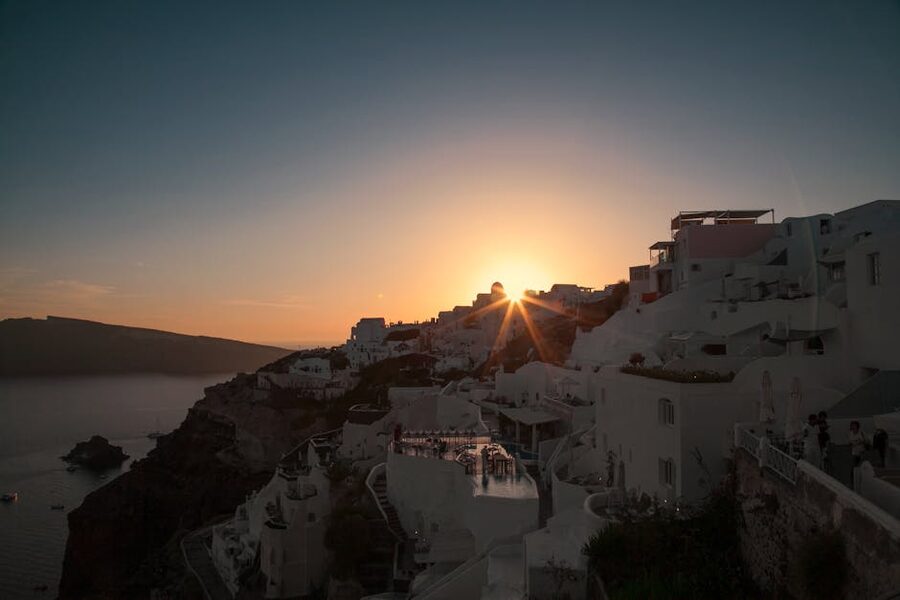
If you booked the long version, the boat does a slow loop up the inside of the caldera in the late afternoon and parks somewhere off the Oia headland for the sunset. This is the bit the Instagram crowd does not have access to. From the water you get the sun setting behind Thirasia, the white cliff towns of Oia lit pink and orange on your right, and the open Aegean to your left. No crowds. No selfie sticks. About 200 boats float in formation off the headland and watch.
It is a real Oia sunset, not a hyped one. The colour of the cliff faces is genuinely different in the last half hour, and from the water the geology is more visible than from the village. You can see the layers of pumice, the dark basalt at the base, the black lapilli halfway up. It is the best sunset I have had on Santorini and it cost me $67 instead of $400.
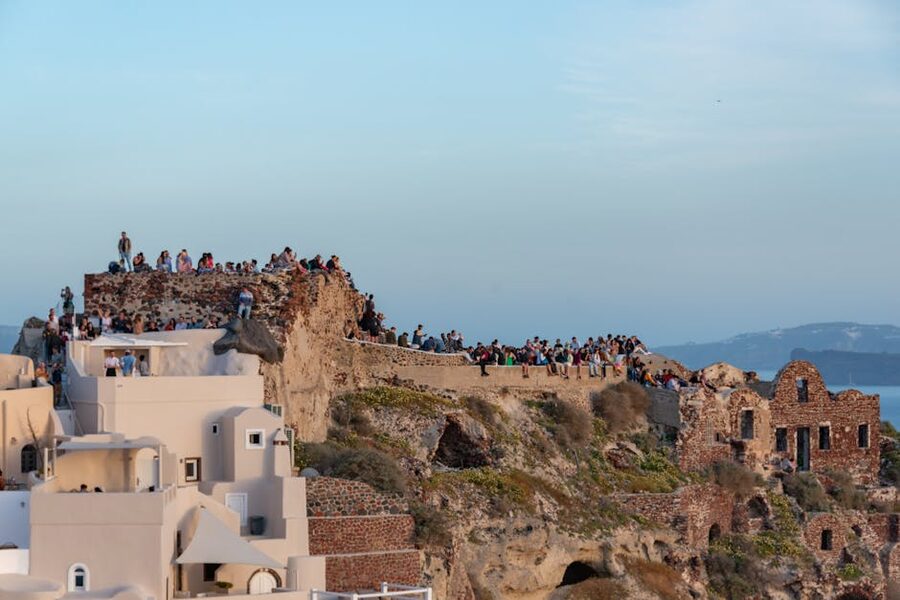
Two things to know. The sunset version finishes around 9 to 9:30 pm in summer, and the boat then either drops you back at Athinios or, on a few operators, transfers you on a tender to the small port at Ammoudi at the bottom of Oia. The Ammoudi drop is a nicer end but adds a 200-step climb up to Oia village, or a €20 taxi back to your hotel. Read the operator notes before you book.
The second thing is that the sunset version costs roughly $30 to $40 more than the no-sunset version and runs four to six hours longer. If you have already done the Oia sunset from land or you are not fussed, the short cruise is genuinely good value.
The Tours I Would Actually Book
I have run my own picks against our review database to find the three I would book if I were going next month. There are about a dozen volcanic-cruise operators on Santorini and the gap between them is narrower than the listings make it look. Boat condition and guide quality matter more than the price.
1. Volcano and Hot Springs Sunset Dinner Cruise (around $106)
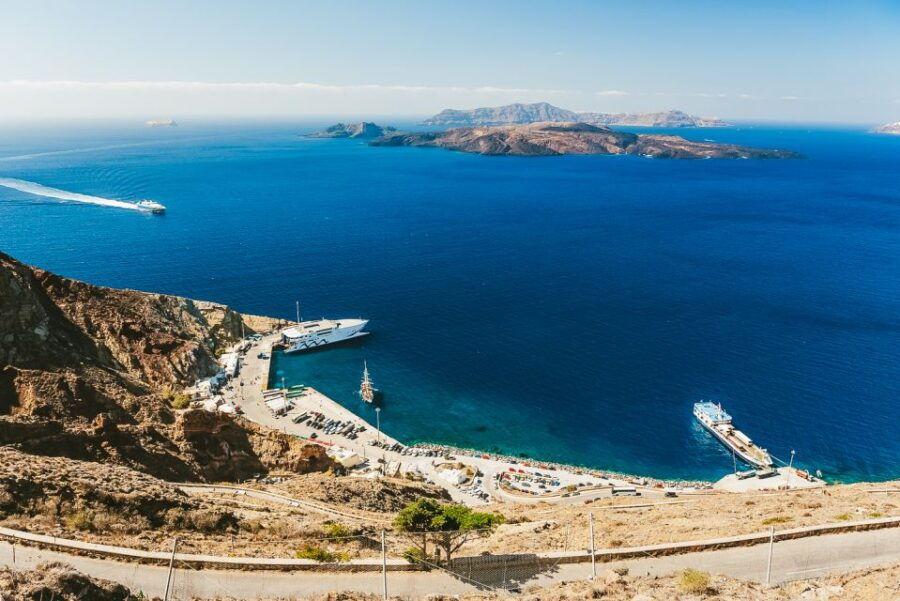
This is the one I would book first. Eight hours, the full Nea Kameni walk, the Palea Kameni swim, a real Thirasia lunch, then the slow sunset loop with dinner served on deck. Our full review covers what is and is not in the dinner upgrade, and notes that the crew tend to be the most-mentioned strength on this run. The trade-off is the day length. By 9 pm you are tired and the return leg in the dark feels longer than it is.
2. Santorini Port Cruise to Volcano, Hot Springs and Thirasia (around $41)
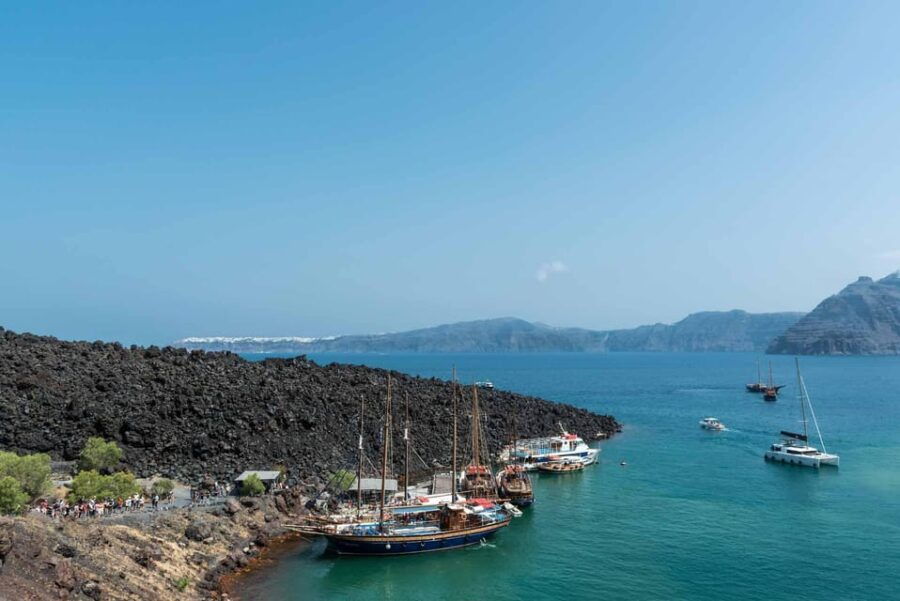
This is what I would pick if I had already done the Oia sunset on a previous trip and only wanted the volcano. Six hours, port to port, all the same stops as the longer cruises, no padding. Our review of this run walks through the hotel-pickup add-on, which I would take. One passenger in our notes called it well organised end to end and singled out how much you actually learn from the guide on the Nea Kameni walk, which lines up with what I have seen.
3. 1-Day Boat Trip: Santorini Volcano, Thirasia and Oia Sunset (around $67)
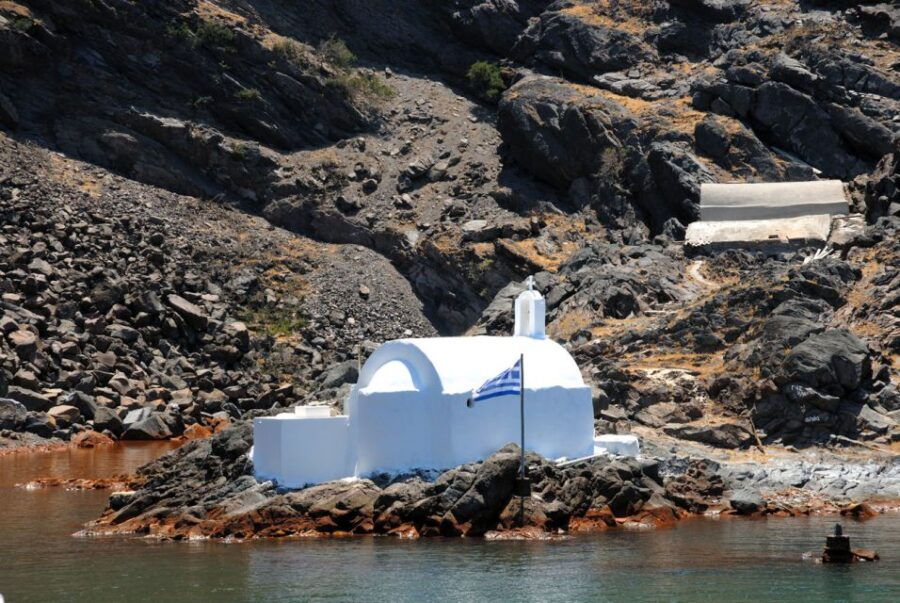
The compromise pick. You get the sunset finale without paying the dinner-cruise premium. Hotel pickup is included on most departures, which removes the Athinios-versus-Fira-old-port confusion that catches people out. Our review covers the swim-stop timing and the late return logistics. The downside is the day really is long, twelve hours from pickup, and the lunch is at your own expense rather than included. Bring more cash than you think you need.
The Mistakes That Ruin This Day
Six things I see people get wrong on the volcano cruise, in rough order of how badly they hurt the day.
Doing it in flip-flops. The Nea Kameni trail is loose volcanic gravel and sharp lava. Sandals come off, get filled with grit, and rub blisters within ten minutes. Trainers or proper hiking sandals only. I have seen people abandon the climb because their footwear failed.
Not bringing the €5 cash for the island fee. No card machine on the jetty. People queue up, get told they cannot land, and have to wait on the boat while everyone else does the walk. Bring exact change.
Wearing white swimwear. The iron-oxide hot springs at Palea Kameni stain. Permanently. Wear something dark or something cheap. I have a pair of yellow-stained black trunks I keep specifically for return visits.
Underestimating the swim. The hot-springs cliff is further from the boat than it looks, the wind matters, and the cold sea between you and the warm patch is real. If you have not swum 200 metres in open water in the last year, sit this stop out.
Booking peak August at midday. The Nea Kameni hike at 1 pm in August is brutal. No shade, no water on the island. Aim for a morning departure or a sunset version, not a midday short cruise.
Skipping the Thirasia upper village climb. If you have 90 minutes on Thirasia, the climb is the best 40 minutes of the cruise. The lower harbour is fine. The upper village is genuinely beautiful, almost empty, and the view back across the caldera is the one that does not appear on Instagram because nobody bothers to walk up.
How This Fits Into a Bigger Santorini Trip
If you have three days on Santorini, this cruise is the day-one move. It gives you the geography of the island in a way that no other tour does. After this you will look at every cliff-edge sunset photo and actually understand what you are looking at. Pair it with a half-day at Akrotiri to see the Minoan town the eruption preserved, and a wine tour up in the volcanic-soil vineyards on day three, and you have done Santorini the way it makes sense. The guided Thirasia and volcano version is worth a look if you want the same loop with a proper geologist on board, which makes a real difference at the fumarole stops.
The other format on the same water is the catamaran day, which is a different trip entirely. Where the volcano cruise is motor-boat, geology, and history, the BBQ catamaran tour is sailing, snorkel stops at the coloured beaches, lunch on deck, sunset from the south coast. Same caldera, totally different rhythm. Most people who have a week on the island do both.
If you are coming through Athens first, the volcano day pairs naturally with the Saronic islands cruise from Athens. Both are caldera-and-island days but on different geological scales. Saronic is the gentle one with the buffet and the dancing, Santorini is the geology lecture with a swim. The two together give you the Aegean in a week. Slot in an Acropolis walking tour the day before your flight to Santorini, and an Athens food walking tour on the night you fly back, and the trip closes itself.
The same lunch-and-music day-boat template runs all over the Mediterranean, mostly without the geology. We have looked at the equivalent days on the Guadalquivir from Seville, off Barcelona at sunset, around Palma in Mallorca, off Valencia at sunset, and along the western Ibiza coast. The Santorini volcano version is the one that earns its price on substance rather than the buffet alone, which is the point.
Worth It or Not
Yes. With one caveat.
It is worth it if you are on Santorini for two days or more, you have any interest in geology or history, and you are a strong enough swimmer for the Palea Kameni leg. The volcano walk gives the island a context the cliff hotels do not, and the hot-springs swim is the only naturally heated open-water swim you will do in the Mediterranean. The combination is unique on this scale anywhere I have been.
It is not worth it if you cannot or will not do the swim, you have only one day on the island, and you are choosing between this and a sailing catamaran. In that case, take the catamaran. The volcano view from a sailing boat under the cliffs is also great, and you will get more sun, more food, and more beach time. The volcano cruise rewards the effort. If you are not in the mood for effort, pick the other one.
For everybody else, take a morning departure if you can, wear dark swimwear, bring cash, and climb the Thirasia steps. The day on the water gives you a Santorini almost no land-based visitor sees, and it is the closest most of us will get to standing inside a working volcano.
Other Greece Days Worth Pairing
The volcano cruise sits naturally alongside the rest of the Greek-island tour mix. If your trip routes through Athens, the Meteora monasteries day trip is the inland counterpart, dramatic in a totally different way. The Cape Sounion sunset run is the closest thing on the mainland to the Oia format. And if you are pairing Santorini with Crete on the same trip, our Balos and Gramvousa day cruise guide covers the equivalent boat day on the other end of the Aegean.