
The chairlift stopped halfway up the mountain. My skis dangled over a snowfield the colour of fresh sheet metal and the wind started to push the chair sideways in a slow, patient arc. That was my welcome to Elysian Gangchon, about ninety minutes from Seoul. You can get from Hongdae to a ski slope before lunch in Korea. Most people don’t realise that until they see it on a booking page.
This guide is for first-time ski day trippers out of Seoul. I’ll cover how the tours actually work, which resort fits which kind of skier, and three specific bookings I’d send a friend to. Let’s start with the shortest possible answer, then go deeper.
Short on time? Book one of these.
- Elysian Gangchon + Nami + Morning Calm — $48. The classic combo. Ski in the morning, wander an island in the afternoon. Check availability.
- Yongpyong Full Day from Seoul — $99. Bigger mountain, longer runs, proper ski day for anyone past pure beginner. Check availability.
- Jisan Forest Shuttle — $39. Cheapest way to a slope. Pick your own package level. Check availability.
- Short on time? Book one of these.
- How a Korea ski day trip from Seoul actually works
- What you actually need to bring
- Which Korean ski resort should you actually pick?
- Elysian, Yongpyong, Jisan: my actual picks
- 1. Elysian Gangchon + Nami Island + Garden of Morning Calm —
- 2. Full Day Ski Tour from Seoul to Yongpyong —
- 3. Jisan Ski Resort from Seoul by Shuttle —
- When to go: the Korean ski season, honestly
- How cold does it actually get?
- Getting there: transport options unpacked
- Skier vs snowboarder: what’s different in Korea
- Lessons and language
- The combo tours: ski + what else?
- Gear rental: what to check at the desk
- What most first-timers get wrong
- Night skiing: worth doing?
- Booking timeline: when to book what
- Hidden costs nobody mentions
- If the weather breaks the plan
- Can you ski in Korea without a tour?
- Planning the rest of your Seoul winter trip
- The short answer, one more time
How a Korea ski day trip from Seoul actually works
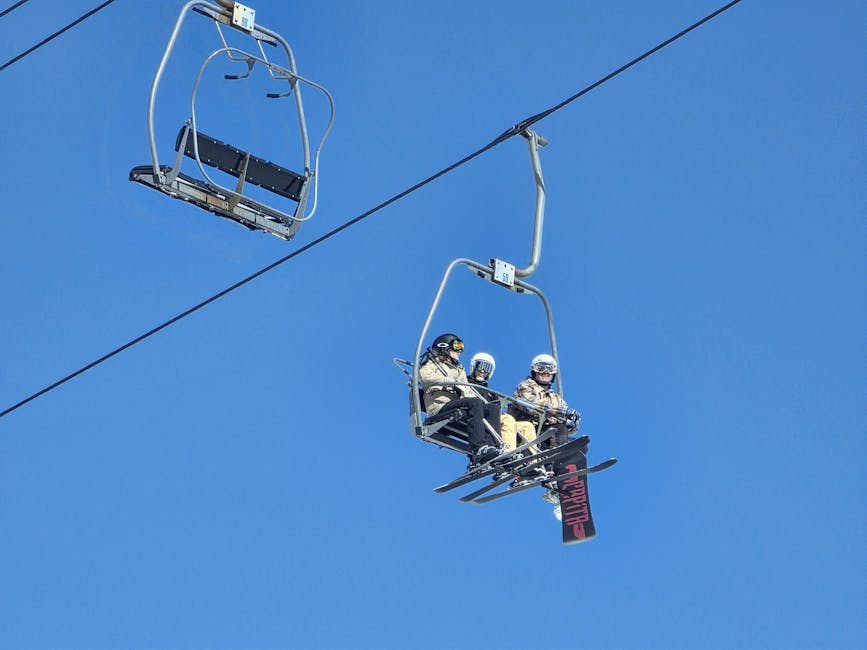
Skiing from Seoul is a pre-packaged day. You’re picked up in central Seoul, bused to a resort in Gangwon or Gyeonggi Province, handed rental gear, and driven home in the dark. The whole thing is designed so you don’t have to rent a car, translate an ajumma at the rental desk, or figure out where to buy a lift ticket in a resort that assumes you already know.
Most operators leave Seoul between 6:30 and 8am from a hotel pickup point or a set meeting spot near Hongdae or Myeongdong. Transit to the mountain is 1.5 to 3 hours depending on the resort. You’re on the snow by late morning, back in the van by late afternoon, and in Seoul again by early evening. Dinner in Myeongdong is still on the table.
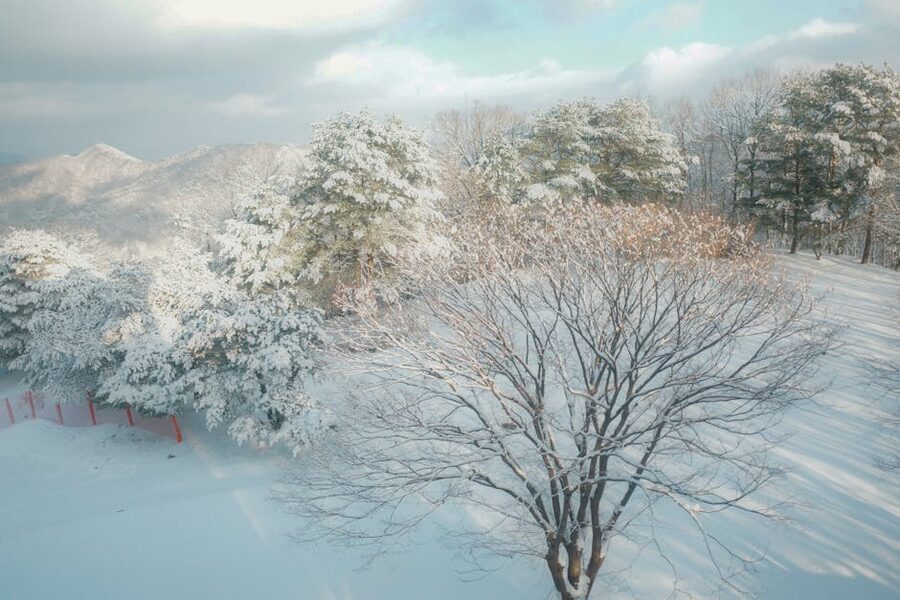
What’s included varies but the standard package is transport, lift pass, and rental skis or snowboard plus boots. Ski clothing rental is usually an add-on for around $15. Lessons are a separate add-on too — typically around $30-50 for a 90-minute group session. Lunch is almost never included. You eat at the resort cafeteria, which is fine and roughly city-priced.
What you actually need to bring
Less than you think. Gloves and a hat are not always in the rental package, so bring your own. Sunglasses help even on grey days — the reflected glare off Korean snow is brutal. Cash for lunch, in small notes. A backpack you can stash in a locker. That’s it.
Leave the ski pants at home if you’re only going once. The rental pants are scratchy but warm, and trying to get Korean-sized rental boots over your own waterproof trousers is a comedy routine nobody needs.
Which Korean ski resort should you actually pick?
There are about a dozen ski resorts within day-trip range of Seoul. Only four show up on nearly every tour listing: Elysian Gangchon, Yongpyong, Jisan Forest, and Vivaldi Park. Pick one based on ability, not marketing photos.
Elysian Gangchon is the closest to Seoul — about 1.5 hours by road or the Gyeongchun Line metro plus a resort shuttle. It’s small by Korean standards: 3 beginner slopes, 3 intermediate, and 1 advanced. The beginner zone is physically separated from the intermediate runs, which matters more than it sounds when you’re still learning to turn and somebody’s bombing past you on a black. If this is your first time on snow in years, Elysian is the answer.
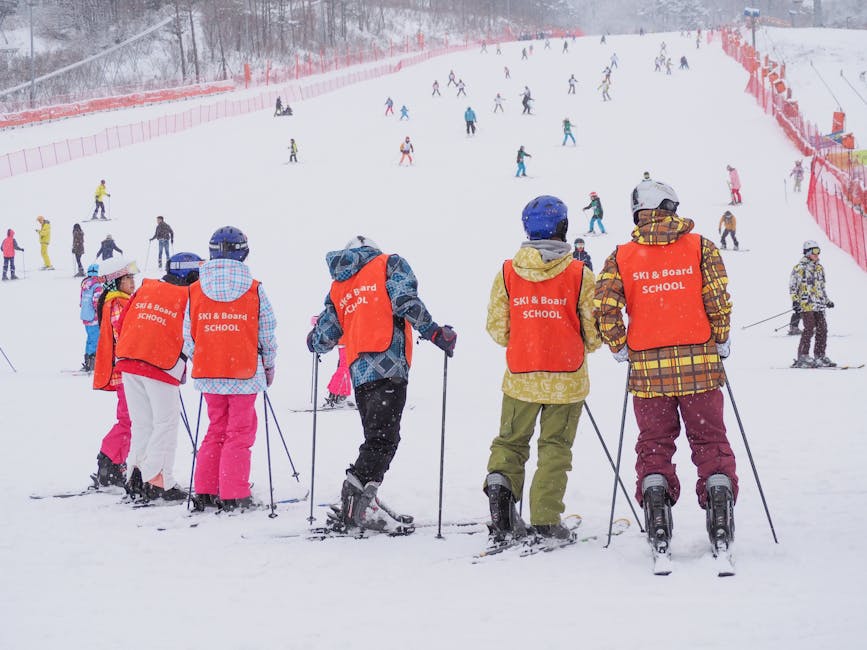
Yongpyong is the bigger, serious-skier resort. It’s the one used in the 2018 Winter Olympics for slalom events, it’s about 2.5 hours from Seoul, and it has 28 slopes running up to 1,458 metres. If you ski blues and reds at home and you want an actual day of variety, not the same green run eight times, Yongpyong is the pick. You pay for it — the tour is roughly double Elysian’s — and you lose an extra hour in the van. Worth it.
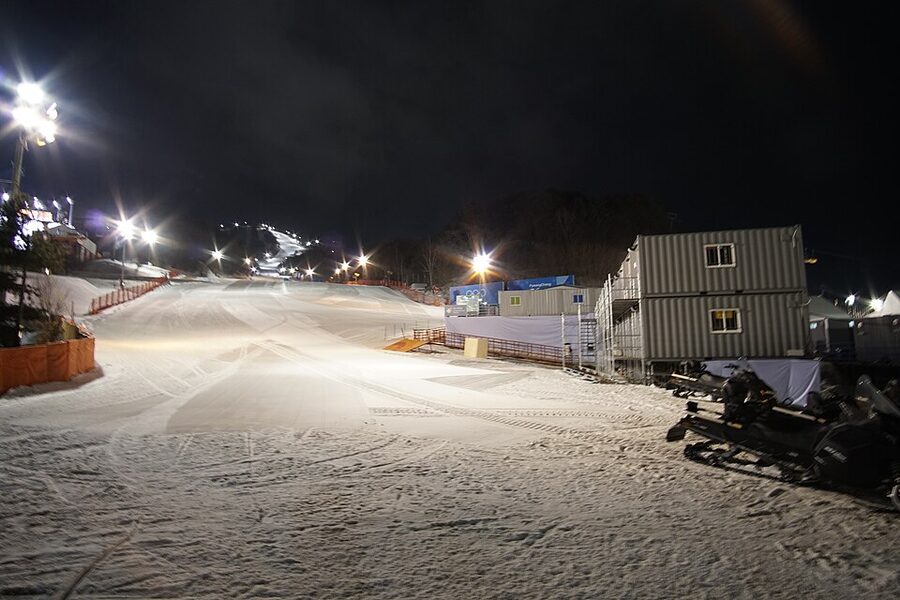
Jisan Forest is the cheap-and-close play. It’s in Gyeonggi Province, about 90 minutes south of Seoul, and has 10 slopes that skew beginner and intermediate. The shuttle-only tours start around $39, which is the lowest real price you’ll find in this market. Jisan suits anyone who wants to try skiing once without committing a whole $100+ tour. The slopes are shorter than Elysian’s but there are more of them.
Vivaldi Park has 12 slopes and is the busiest of the four on weekends. It has the most variety for mixed-ability groups — a family with a beginner and an advanced skier can actually stay close together here. The downside is queue time. At peak season lift waits can push 20 minutes on the popular lines. Midweek Vivaldi is great. Saturday Vivaldi is a trial of patience.
Elysian, Yongpyong, Jisan: my actual picks
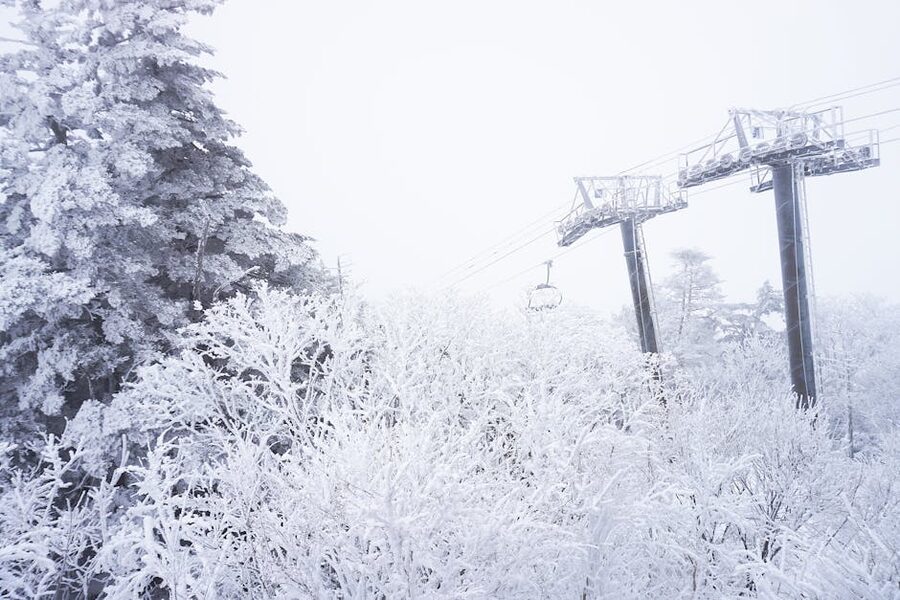
I’ve sent more people to these three tours than any other combination. Each one solves a different problem.
1. Elysian Gangchon + Nami Island + Garden of Morning Calm — $48
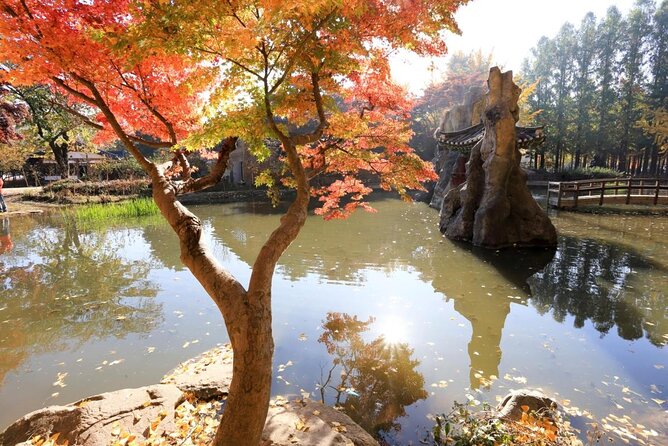
This is the tour I book when someone says “I want to try skiing but I also want to see Korea.” Our full review of the Elysian combo covers what the morning on the slopes actually looks like — short runs, forgiving beginner terrain, lift pass included. The ski portion is half a day, then you spend the afternoon on Nami and end at the illuminated gardens at Morning Calm, which are worth the late afternoon on a cold day.
2. Full Day Ski Tour from Seoul to Yongpyong — $99

Book this one if you’ve actually skied before. Our Yongpyong tour review gets into what the full-day schedule looks like — you leave earlier, you ski longer, you get more runs. The tour includes transport, lift pass, and rentals; gear and lessons are separate add-ons. The guides I’ve had were all ski instructors by trade, not bus escorts, which shows up in how they help you with fit at the rental desk.
3. Jisan Ski Resort from Seoul by Shuttle — $39
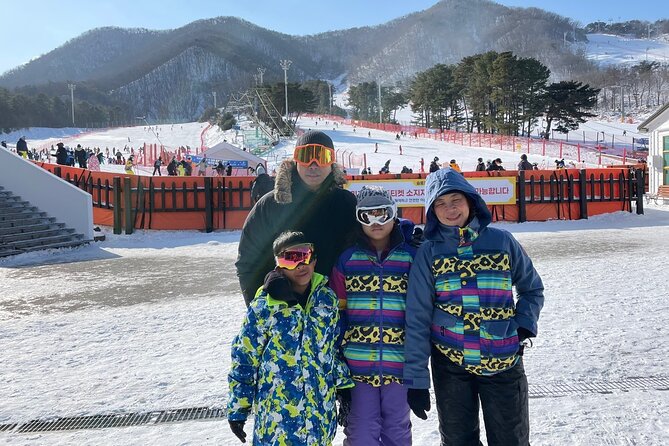
Book the Jisan shuttle if your budget is tight or you want a half-day on snow without an all-day tour commitment. Our Jisan tour review explains the modular pricing — you pick the level (shuttle only, shuttle + rental, shuttle + rental + lesson) and pay accordingly. The guides here are specifically good with nervous first-timers. The downside is the slopes are short compared to Yongpyong.
When to go: the Korean ski season, honestly
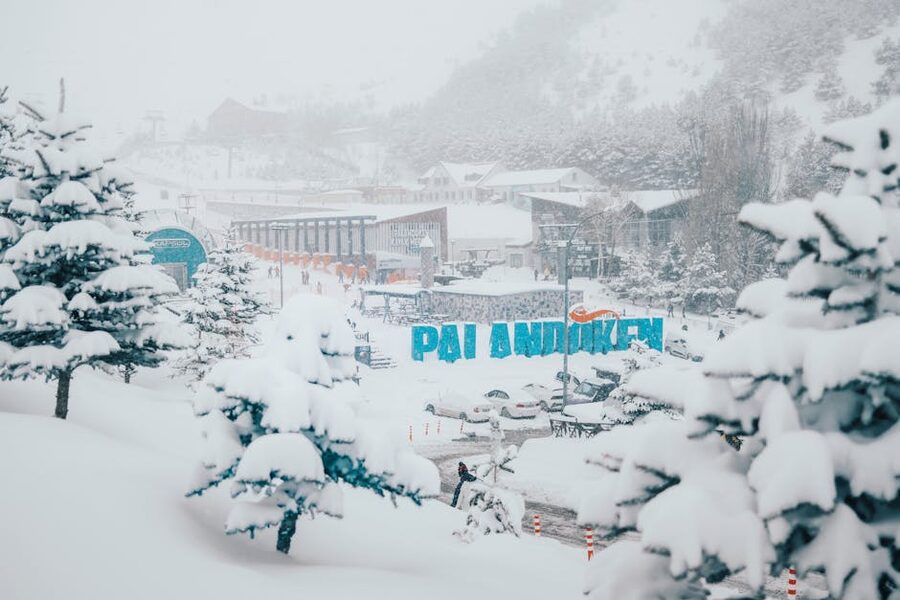
The Korean ski season is shorter than most people assume. Most resorts open mid-December once they’ve had enough nights below -5C to run snow cannons. They close in early March. The real sweet spot is January — by mid-January the snow base is deep, the school-break crowds have thinned, and the weather is cold enough that the snow stays crisp all day.
December is a gamble. If winter arrives late, the early-December dates will be open but running on thin, heavily-groomed artificial snow only. Late December fills up with Seoul residents and expats taking winter holidays. Book at least a week ahead for any dates between December 22 and January 5 or you will see tours sold out on the days you want.
February is reliable. Lunar New Year shuts down a few mid-week dates when the resorts themselves close, but around that window it’s the best combination of snow quality and moderate crowds. March is tempting because prices drop, but slushy spring snow is miserable if you’re learning.
How cold does it actually get?
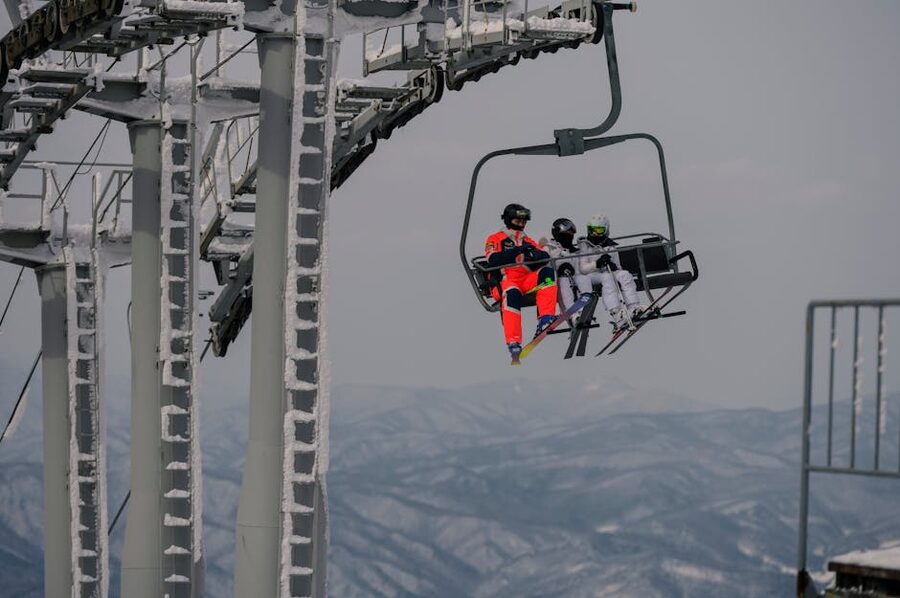
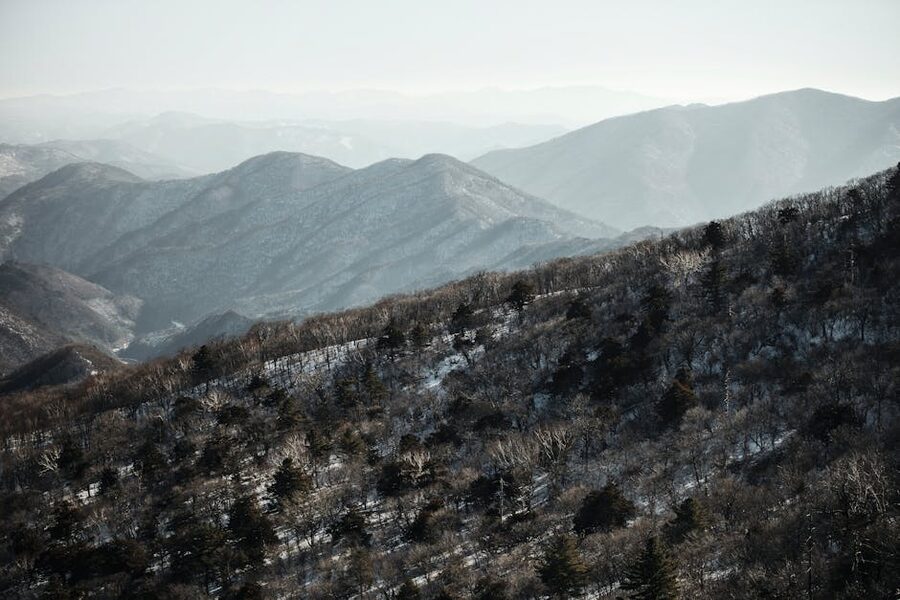
At the Korean resorts in Gangwon Province, daytime temperatures in January run between -10C and -3C. That’s cold but not dangerous if you’re dressed correctly. On a really cold Siberian push, -16C happens. I’ve been at Oak Valley on a -16C day and it was genuinely hard to feel my feet in rental boots, even with heat packs.
Wind is the bigger problem. Korean ski resorts don’t have the tall sheltering peaks of Japan or Europe. The wind rips across from the northwest, and on exposed chairlift rides the wind chill can push real feel to -25C or lower. A neck gaiter or buff that you can pull over your nose for the lift ride changes your day. Pocket hand warmers are sold at every resort shop.
Getting there: transport options unpacked
There are three ways to get from Seoul to a ski resort and they’re not equally good.
Day tour with shuttle included. Most tours use a 15-seater van or a full-size coach. Pickup is from a central Seoul hotel or a designated stop near Hongdae, Myeongdong, or the Dongdaemun Design Plaza. Drop-off is the same point at the end of the day. This is the default and the easiest. Book this unless you have a specific reason not to.
Public transport + resort shuttle. For Elysian Gangchon only, you can take the Gyeongchun Line from Sangbong or Cheongnyangni to Baegyang-ri station and then a free resort shuttle. It costs about 3,000 KRW total and takes roughly two hours. Skis and boards are allowed on the train. The downside is you carry your gear, you do all the rental arrangements yourself, and nobody speaks English at the rental desk.
KTX to Pyeongchang + shuttle. For Yongpyong and Alpensia. The KTX from Seoul Station to Jinbu takes 85 minutes. Free shuttle buses run from Jinbu to the resort in winter. The KTX tickets aren’t included in the tours, so if you want to skip the van ride this is the way. KTX is fast, comfortable, and expensive — about 27,000 KRW one way.
The van tours are typically cheaper overall because the tour companies buy group lift passes at wholesale rates that offset the transport cost. Self-organising is only worth it if you already live in Seoul and you ski often.
Skier vs snowboarder: what’s different in Korea
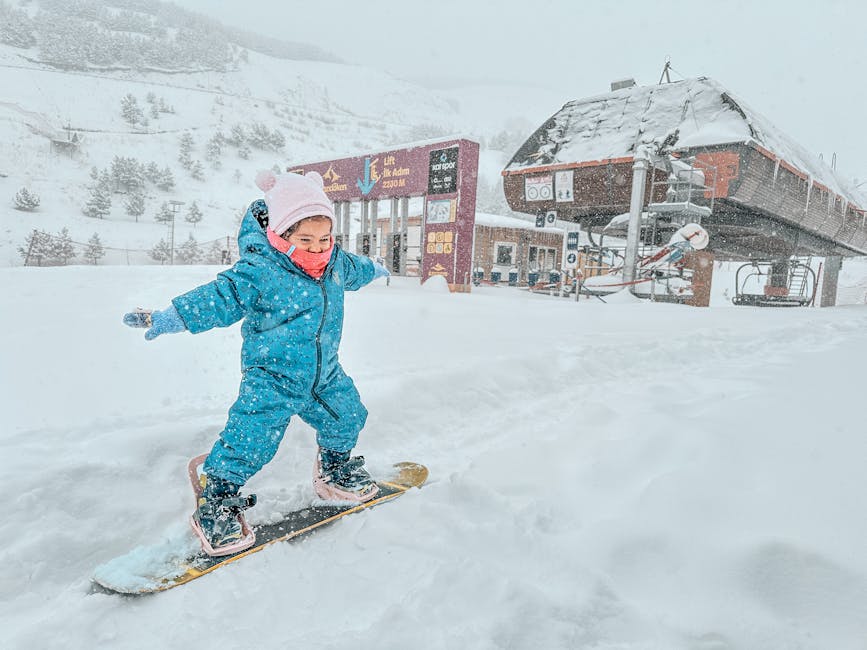
Korea is a snowboarding country more than a skiing country. At Vivaldi and Jisan, boarders often outnumber skiers. That changes the etiquette on the mountain — more people sitting down on the piste after a fall, more groups congregating at the top of lifts. Nothing dangerous, just different from the ski-dominant feel of French Alps resorts.
Most tours let you swap skis for a snowboard at the same price. If the tour page doesn’t say, message the operator before you book. Snowboard boots in Korea tend to run small — if you’re a European 45 or US 11+ bring your own. I’ve seen rental desks run out of anything over a Korean 280mm by late morning.
Beginners often find snowboard lessons harder than ski lessons on Korean slopes. The beginner runs are wide and long, which is great for snowboarding, but the slopes have a slightly steeper pitch than typical Japanese beginner hills. Four or five falls and your tailbone will let you know about it.
Lessons and language
English lessons are standard at all four big resorts on the tour circuit — Elysian, Yongpyong, Vivaldi, and Jisan. Chinese and Japanese lessons are also available if you book ahead. Tour operators book group lessons at 9:30am or 1:30pm typically, with 6-10 students per instructor. Private lessons are double the price and worth it if you’re on a tight learning curve.
Booking the lesson alongside the tour is the move. Walk-up lessons at the resort are cash-only, often sold out by late morning, and not always in English. The tour operator books you in advance.
The combo tours: ski + what else?
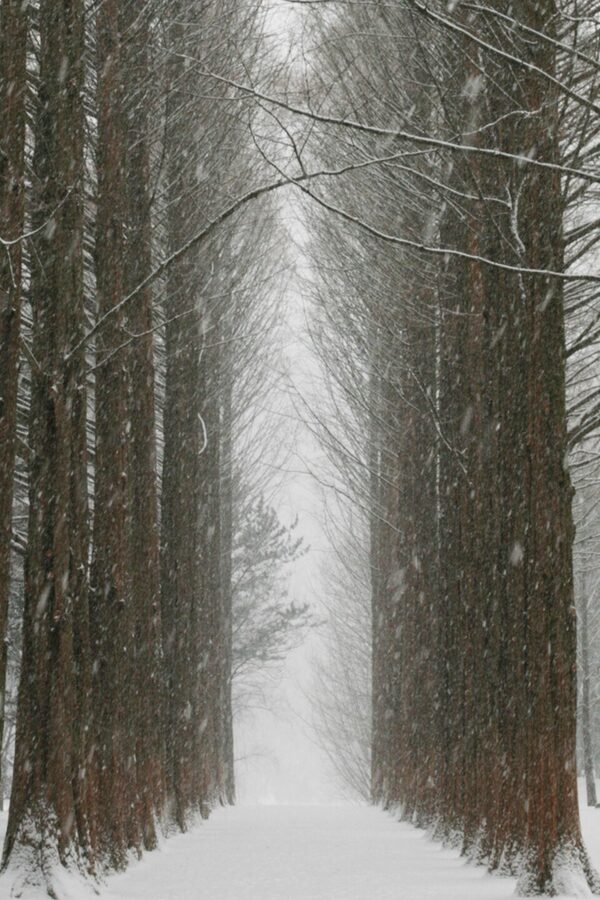
The Elysian + Nami + Morning Calm combo is the most-booked Korea ski day trip for a reason. Half a day of skiing is enough for most first-timers, and the afternoon gives you two culturally interesting stops without feeling like you’ve overpacked the day.
Nami Island is the second stop. It’s a small crescent-shaped island in the Han River that became famous because of the K-drama Winter Sonata. In winter the metasequoia lane looks like a fairy-tale illustration. Allow an hour to walk the loop, longer if you want coffee and a cultural nap.
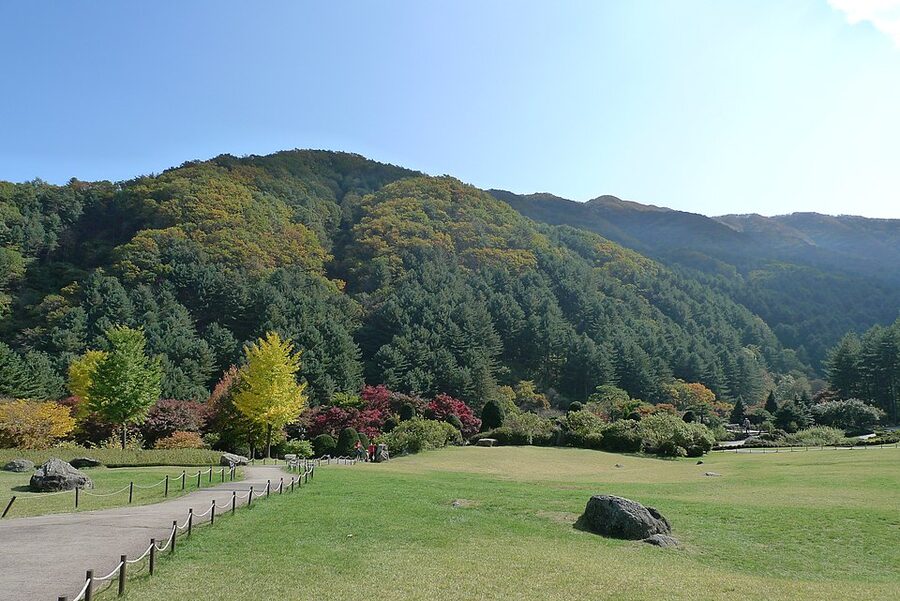
The Garden of Morning Calm is the final stop. In winter they run a Lighting Festival from early December through late March with something like 30,000 illuminated installations across the garden paths. Tours typically arrive near sunset so you see the garden go from late-afternoon light to full illumination. An hour is plenty.
If you don’t want the cultural extras, the pure ski tours exist too. Yongpyong and Jisan are both available as ski-only day trips. The combo only makes sense if you genuinely want to see Nami and Morning Calm — otherwise you’re rushing through each stop.
Gear rental: what to check at the desk
Rental gear in Korea is fine but not premium. The skis are mid-range Atomic, Volkl, or Rossignol in the 150-175cm range. Snowboards are K2 or similar. The boots are the weak link — worn-in, sometimes with broken buckles, and sometimes a size off because the earlier renter returned to a different desk.
Things to check before you leave the rental desk:
- Boot fit. Korean rental boots often run narrow. Walk around the shop for a full minute before you commit. If the buckle pinches at minute one, it’ll be agony by 2pm.
- Ski length. The rental staff will put you on skis roughly to shoulder height. That’s normal. If they push you onto shorter skis because they’ve run out of your size, push back.
- Binding release check. Ask them to demonstrate the binding release. If they wave you off with “it’s fine,” insist.
- Pole height. Ski poles should reach the bottom of your ribcage when planted. Rental poles are often too tall.
Don’t bother with helmet rentals if you have a beanie you like — most tours don’t require helmets for adults. Children almost always do require them. Helmet rental is typically 5,000 KRW.
What most first-timers get wrong
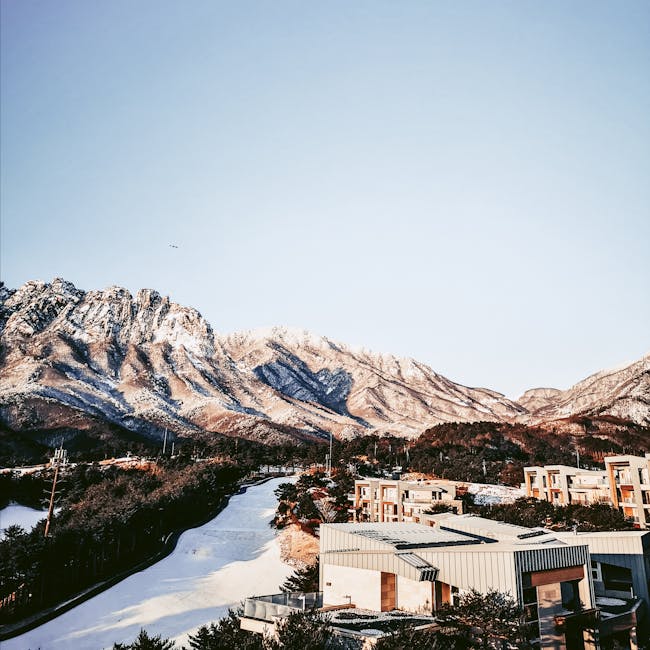
Three things I see visitors get wrong on a first Korean ski day trip.
First, they dress for the city, not the mountain. Seoul in January is cold but dry, and most people wander around in a thick down coat and sneakers. At the resort you will be outside, standing still on a chairlift, actively sweating under a jacket that was fine on the subway. Layers you can shed matter more than a single heavy coat.
Second, they try to do too much on day one. A first-time skier does not need a full-day tour at Yongpyong. Four hours of skiing is the upper limit for beginners before exhaustion turns into injuries. If this is your introduction to snow, book the half-day combo and spend the afternoon on Nami.
Third, they underestimate the morning. Korean ski tours leave early because they have to — the bus has to be on the highway before rush hour. If you’re picked up at 6:30am and you had dalkjuk at midnight in Itaewon, you will regret your life for the first two hours of the van ride. Drink water the night before and pack a coffee for the van.
Night skiing: worth doing?
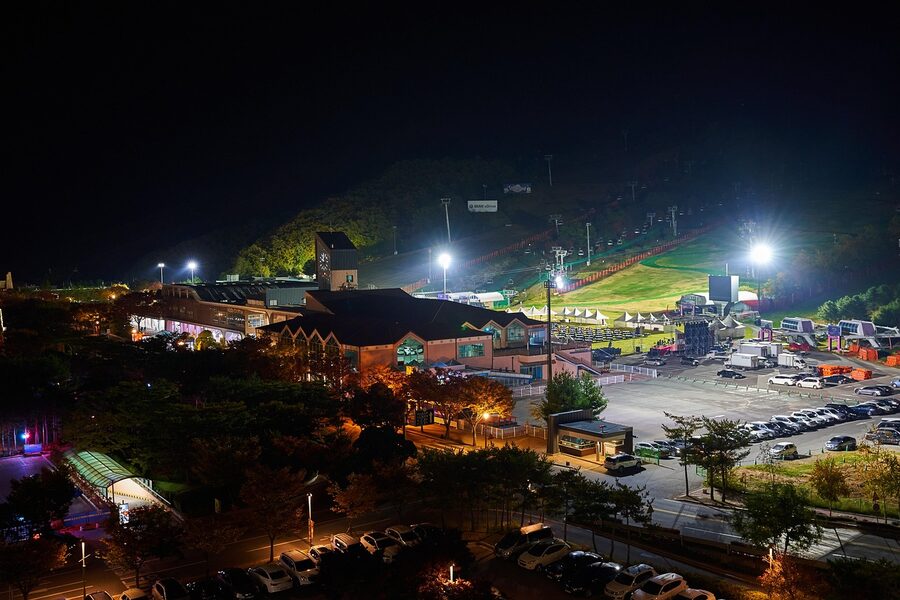
Korea is one of the few places in the world where night skiing is mainstream rather than novelty. Vivaldi Park, Yongpyong, and Alpensia all run night sessions that go until 10pm or later. Day tours don’t include night skiing — they’re built around the daylight window and the drive home — but there are specific night-ski tours from Seoul if this is what you want.
Night skiing is worth doing once. The slopes are quieter after 8pm, the floodlights give the snow an eerie blue glow, and the cold is surprisingly manageable because you’re moving constantly. The caveats: visibility is worse than daylight, and the apres-ski ambience is weaker because most restaurants shut at 9pm.
Booking timeline: when to book what
Korea ski tours are not quite same-day bookable most of the time. The operators need to confirm pickup spots, reserve group lift passes, and allocate rental gear. Here’s the timeline that works:
3-4 weeks out: book if you’re going over Christmas, New Year, or Lunar New Year. The combo tours sell out first. Check availability on Viator or GetYourGuide; both list the same tour inventory.
1 week out: book for any weekend date. Saturday Yongpyong and Saturday Elysian combo fill up fast in peak season.
2-3 days out: fine for weekdays. The van tours often have space.
Same day: don’t. Even when a tour shows availability, the confirmation loop with the rental desk and the pickup logistics break down if you book too late. You’ll often get a “sorry, closed out” email at 6am.
The flexible cancellation policies are usually 24 hours for a full refund. If the weather is completely awful (rare — Korean snow cannons can run on almost any below-freezing day), operators will often offer a reschedule rather than force you to ski in bad conditions.
Hidden costs nobody mentions
The sticker price on a Korea ski day trip is never the total cost. Things that will add up:
- Ski clothing rental: around 15,000-25,000 KRW. Bring your own jacket and pants if you have them.
- Lunch at the resort: budget 12,000-15,000 KRW for a cafeteria bowl of ramyeon or bibimbap. Not overpriced but not cheap.
- Lesson add-on: 35,000-60,000 KRW depending on group size.
- Locker rental: 3,000-5,000 KRW. You need this if you’re not leaving stuff on the bus.
- Resort snacks and drinks: 5,000-8,000 KRW for hot chocolate or a small meal. Bring a thermos if you’re cost-conscious.
- Hand warmers and any forgotten gear: the resort shop is not generous on prices. Buy hand warmers at a CU or GS25 before pickup.
Budget roughly an extra 40,000-70,000 KRW on top of the tour price. A $48 combo tour becomes a $90-100 day once you include lunch, locker, and clothing rental. Still a bargain compared to European equivalents, but worth factoring in.
If the weather breaks the plan

Operators cancel in two scenarios: genuine blizzard conditions that make the highway unsafe, and temperatures so warm that the snow cannons can’t maintain the base. The first is rare — Korean highways are cleared aggressively. The second is more common in late December or late February.
If they cancel, you get a full refund or a reschedule. If you cancel and they’re still running, the 24-hour rule applies. Travel insurance won’t cover a “the weather was a bit meh” judgement call on your side; it will cover a storm that shuts a resort.
The lift-stops-working scenario is also worth mentioning. In January 2024 a 30-minute chairlift stop at Elysian due to high winds cost me half my morning. Tours don’t refund for that because the resort was open and operating. Build slack into any day you’re relying on a tour to sync with your evening plans.
Can you ski in Korea without a tour?
Yes, but it’s a hassle. For Elysian Gangchon specifically, the Gyeongchun Line plus resort shuttle gets you there cheaply. Rental gear and lift passes are bookable at the desk. Lessons are trickier without Korean language help.
For Yongpyong or Alpensia, the KTX + shuttle is the way, and it’s comparable in cost to a tour once you factor in the lift pass, rental, and KTX tickets. You lose the lesson and gain the flexibility to stay overnight if you want.
For Jisan or Vivaldi, without a car the public transport options are slow and require multiple transfers. Just book the tour.
The one reason to self-organise is if you want to ski two or more days at the same resort. Most tours are day trips; if you want a weekend you’re better off taking the KTX, booking a resort hotel, and skiing from the door.
Planning the rest of your Seoul winter trip
One ski day leaves four or five days in Seoul to fill. The cluster that works best with a ski day is a dedicated Nami Island and Garden of Morning Calm day if the combo tour didn’t give you enough time at either stop, plus a Mt Seoraksan day trip for more serious winter hiking. If you’re extending to Busan, pair the ski day with a Busan night tour on the back end of the trip — the city’s waterfront glow contrasts nicely with a silent ski mountain.
Culture-wise, a K-drama filming location tour pairs especially well with the Elysian + Nami combo since Nami itself is the most famous Winter Sonata location. If you’re a K-pop fan, a BTS ARMY footsteps tour gives you a Seoul day that isn’t just palaces and museums. For something more local, a Seoul night walking tour and a Hongdae pub crawl both work well on the evening after a ski day when you’re too tired to plan much.
The short answer, one more time
If you’re reading this and you want a recommendation: book the Elysian Gangchon + Nami + Morning Calm combo at $48. It’s the most forgiving, most scenic, most reasonably-priced option. Go in January, on a weekday if you can. Bring your own gloves and hat. Skip the clothing rental if you own a proper winter jacket.
If you’ve skied before and want a proper day on snow, the $99 Yongpyong full-day is the upgrade. Bigger mountain, longer runs, a real ski day with decent variety.
Either way, you’ll be back at a Seoul barbecue joint by 8pm eating samgyeopsal with tired legs. That’s the shape of a Korea ski day trip from Seoul. It’s a good shape.