
So you want to sit through a proper Japanese tea ceremony in Tokyo — but how do you actually book one that isn’t a tourist trap? The short answer is that the good ones fill up two to six weeks out, they split into a few very different styles, and price is a weak predictor of quality. This guide walks you through what to book, where, and what to expect when you walk in the door.
In a Hurry? Top 3 Picks
- Maikoya Tea Ceremony with Kimono — $55.81 — the popular Asakusa session, full kimono dressing included.
- Tokyo Traditional Tea Ceremony with a Tea Master — $38 — small-group, 60 minutes, rare teas like Gyokuro and wakocha included.
- Practicing Zen With a Japanese Tea Ceremony — $63 — 75 minutes, focused on the Zen Buddhist roots rather than the photo ops.
- In a Hurry? Top 3 Picks
- The short version: how tea-ceremony booking in Tokyo actually works
- What type of tea ceremony do you actually want?
- 1. The tourist-friendly workshop (45 minutes, –)
- 2. The small-group traditional session (60–90 minutes, –)
- 3. The garden tea house (30 minutes, –)
- The three tours I’d actually book
- 1. Tea Ceremony and Kimono Experience at Tokyo Maikoya — .81
- 2. Traditional Tea Ceremony with a Tea Master —
- 3. Practicing Zen With a Japanese Tea Ceremony —
- How far in advance do you need to book?
- Where in Tokyo should you go?
- Asakusa
- Shinjuku
- Shibuya / Meguro / Nezu
- What actually happens in the room
- Entry
- The sweet
- The preparation
- The drink
- The inspection
- A short history: why this ritual exists at all
- Costs, etiquette, and what to wear
- What to wear
- Phones and photos
- Common questions I get about Tokyo tea ceremonies
- Can kids do a tea ceremony?
- Is matcha safe for pregnant women?
- Can I do a tea ceremony in English?
- What if I’m in Tokyo for only one afternoon?
- Can I book a private ceremony?
- Should I learn the etiquette before I go?
- Where to go next in Tokyo
The short version: how tea-ceremony booking in Tokyo actually works
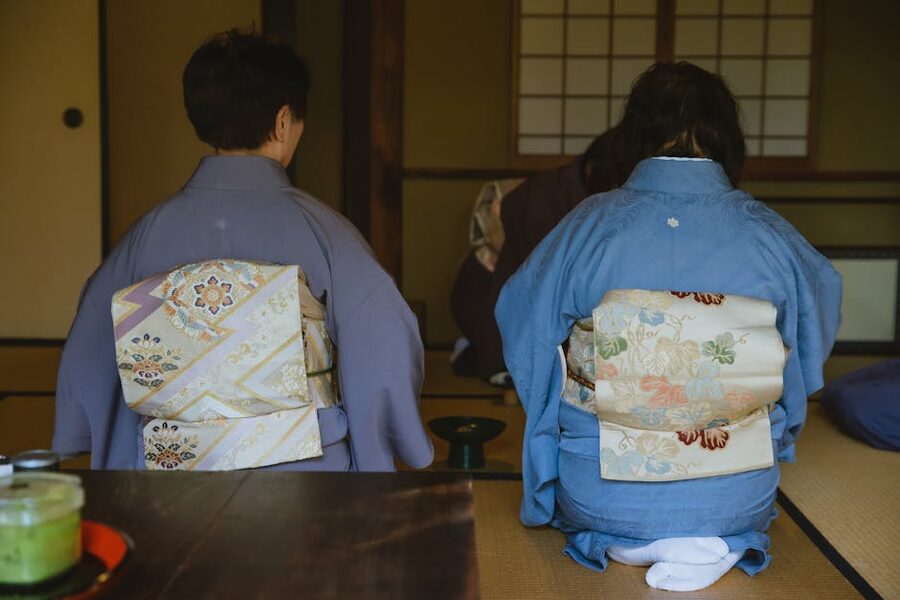
Most authentic Tokyo tea ceremonies run 45 to 90 minutes, cost between $25 and $80, and take place in tiny rooms that seat 4 to 15 people. You book online through GetYourGuide, Viator, or Klook for the tourist-friendly ones. For the traditional tea-school experiences — the ones run by actual sensei with decades of training — you either book direct through the school’s website or by phone/email about a week ahead.
The booking page usually asks for a date, a time slot, and the number of guests. A few schools ask if anyone in the group has knee problems, which is their polite way of asking whether they need to prepare chairs. Say yes if you’re over 40 and haven’t sat on the floor in a year. It saves you a very long forty-five minutes.
Walk-ins are rare and usually a bad idea. Even the spots that technically accept walk-ins turn away most people they don’t have room for. The popular Asakusa studios near Sensō-ji run sessions every 30 to 60 minutes during peak season, but those slots book out days in advance. The traditional tea houses in Hamarikyu and Happō-en work on a smaller scale and don’t advertise much — you find them by searching the garden’s English site, not the big marketplaces.
What type of tea ceremony do you actually want?
This is the decision that matters more than price. A “tea ceremony experience in Tokyo” can mean three very different things, and the Google results don’t really tell you which you’re looking at.
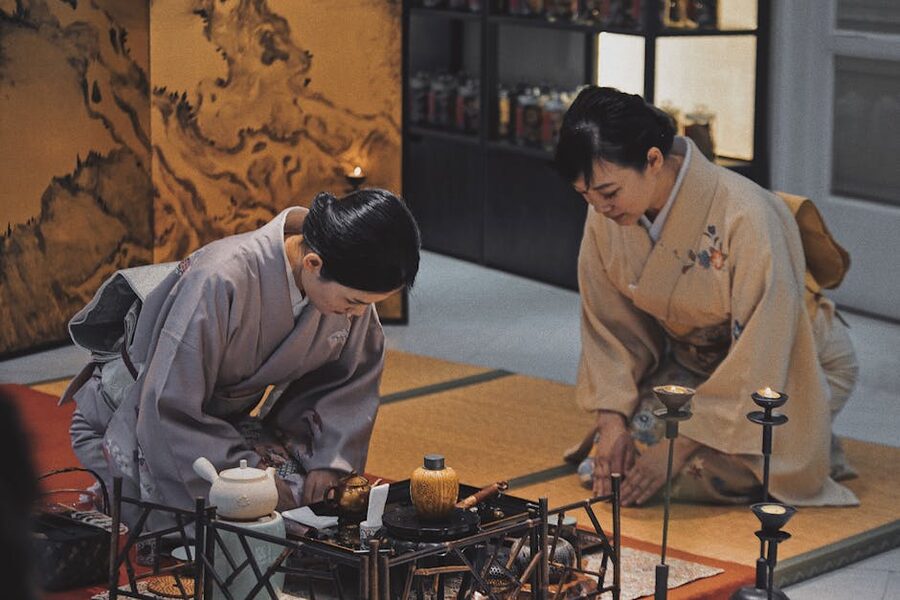
1. The tourist-friendly workshop (45 minutes, $25–$55)
These are the Asakusa and Shinjuku studios — Maikoya, Nadeshiko, Japan Localized. The host speaks fluent English. You sit on cushions (often with back support), get a short explanation of the tools, watch a demonstration, make one bowl of matcha yourself, and eat a wagashi sweet. Great if you have 90 minutes of your Tokyo day to spare and want the photos. If you want something a little more hands-on than a demonstration, a dedicated Tokyo matcha class goes deeper on the tea side and skips the ceremony formalities.
2. The small-group traditional session (60–90 minutes, $35–$80)
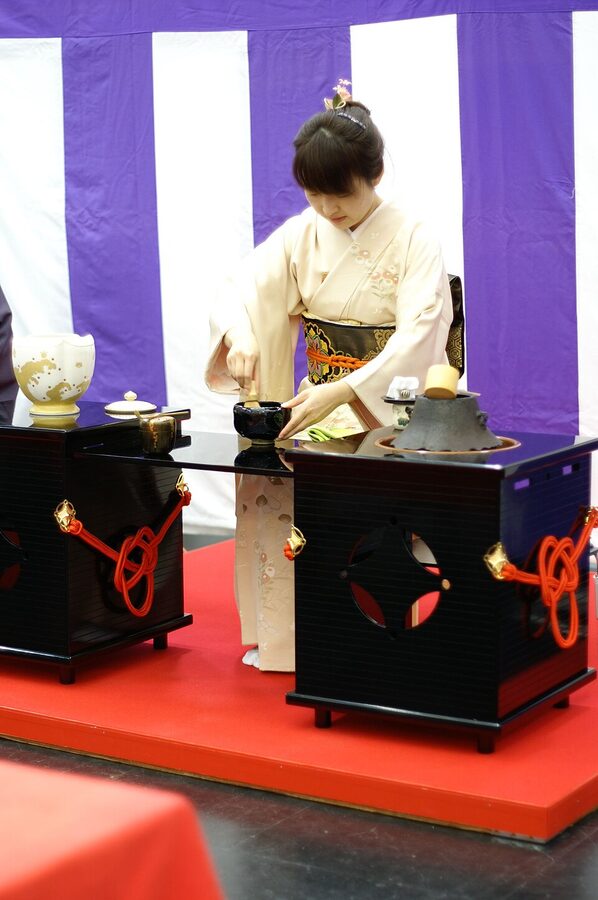
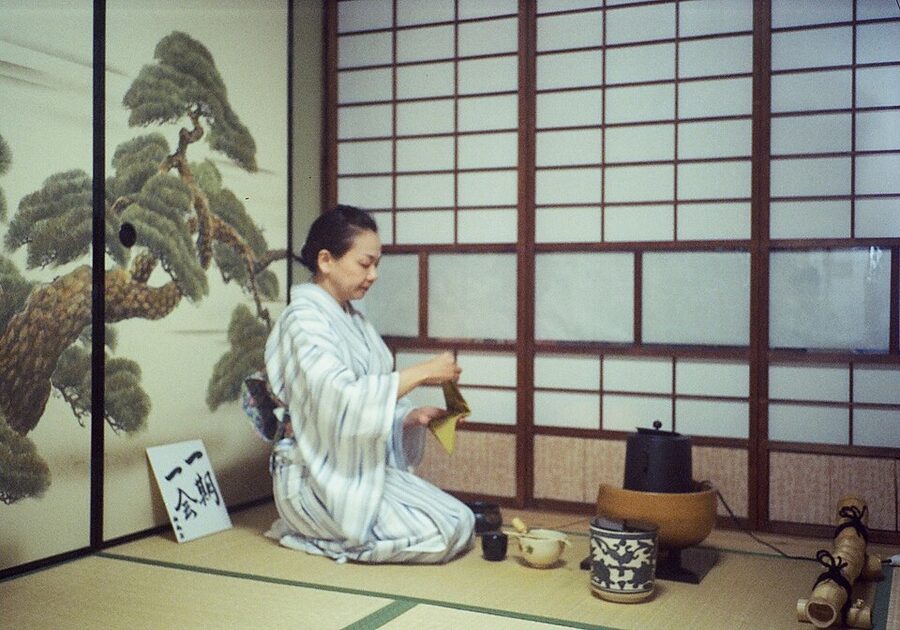
Run by a qualified tea master — often a single instructor hosting four to eight guests in a proper tea room with a tokonoma alcove and a scroll. Less hand-holding, more actual ritual. You’ll get a deeper history lesson and often a tasting of two or three teas instead of one. The pace is slower. Your phone stays in your pocket longer.
3. The garden tea house (30 minutes, $10–$15)
This is the hidden option most guides skip. Hamarikyu Gardens has a 350-year-old tea house called Nakajima-no-Ochaya, built on a platform over the pond. Happō-en in Shirokanedai has a similar setup. You pay the garden entry (300 yen for Hamarikyu), walk to the tea house, and order a bowl of matcha with a seasonal sweet for about 850 yen. No English narration, no kimono, no ritual explanation — just tea, silence, and the view.
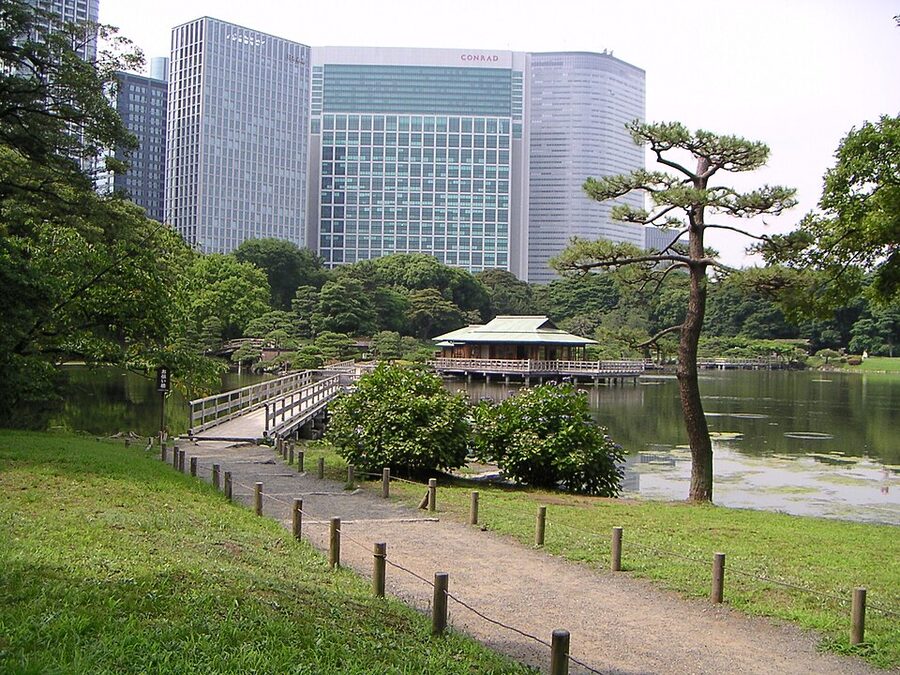
If you’re short on time, the garden option delivers 80% of the atmosphere at 20% of the price. You just don’t get the instructor explaining anything. Bring a friend and read about the history beforehand on the train.
The three tours I’d actually book
These are the three I’d send someone to depending on their budget and patience. Each one represents a different category above.
1. Tea Ceremony and Kimono Experience at Tokyo Maikoya — $55.81
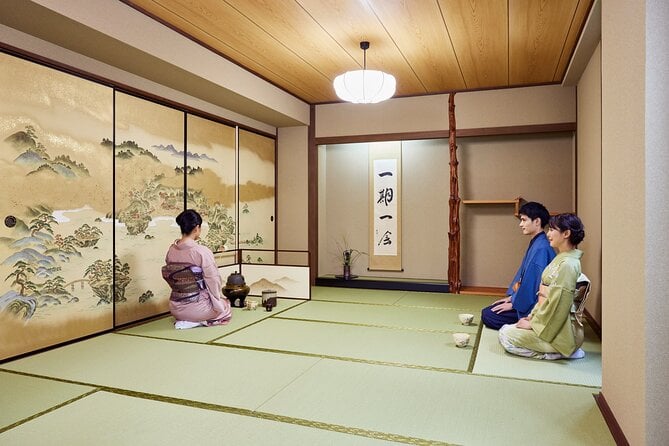
This is the Tokyo tea ceremony that 638 people on our books have actually done, and it holds up — our full review digs into how the kimono fitting and tea lesson combine. The instructors get the history across in English without dumbing it down, and the kimono part takes real care (allow a full 30 minutes for dressing alone). If you only book one tea thing in Tokyo, pick this one.
2. Traditional Tea Ceremony with a Tea Master — $38
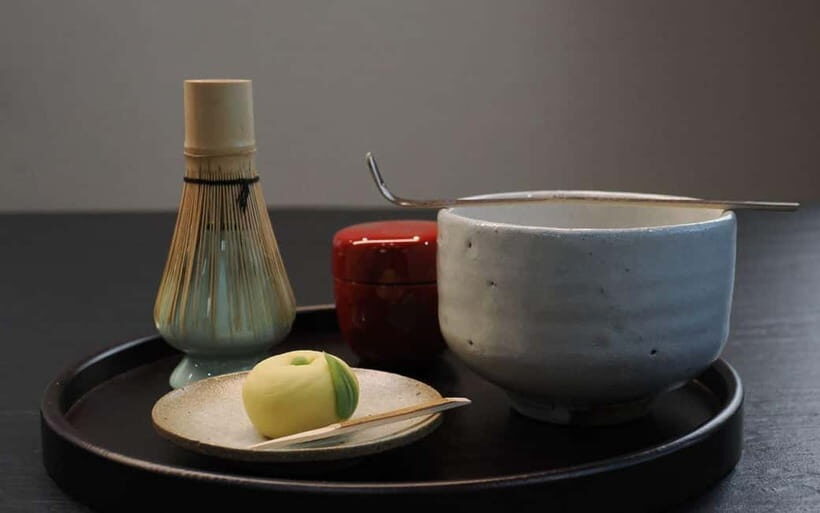
For the money, this is the best value on the list. An hour with a real tea master, a group capped small, and you get to taste wakocha and Gyokuro alongside the matcha — our review breaks down what each of those rare teas actually tastes like. No kimono, no photo theatre, just the craft. The only catch is the venue isn’t wheelchair accessible.
3. Practicing Zen With a Japanese Tea Ceremony — $63
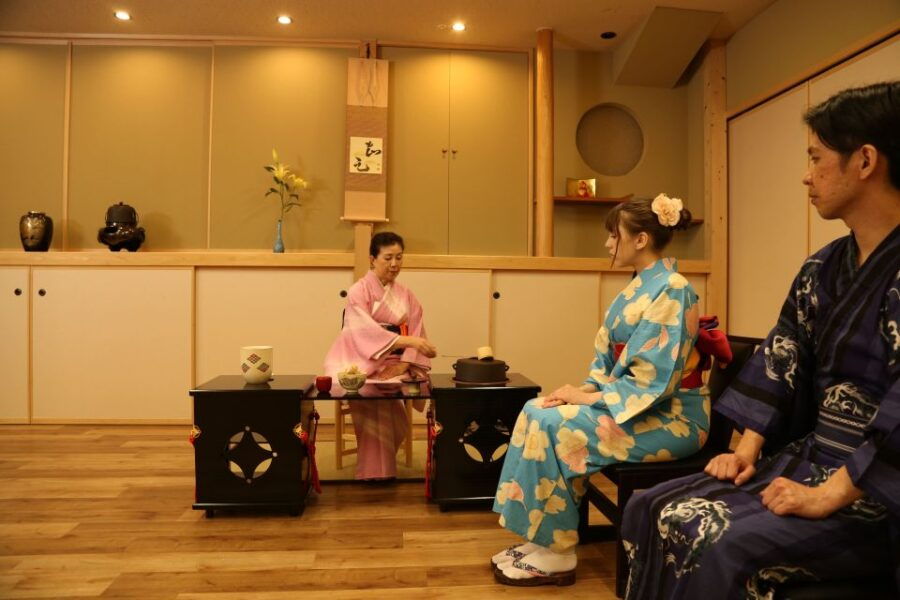
This one is for anyone who’s read a little about Zen already and wants the tea ceremony framed that way, not as a cultural-costume experience. It’s 75 minutes with a single instructor, genuine context on the Buddhist roots, and a proper taste of traditional sweets — our review has more on what to expect from the Zen framing. It costs more than the Maikoya one, but you’re paying for depth, not dress-up.
How far in advance do you need to book?
Two to three weeks is the safe window in peak season (March–May for cherry blossoms, October–November for autumn leaves). For everything else, a week usually works. The small-group traditional sessions sell out faster than the big Maikoya workshops because they only seat six people.
If you’re booking within 48 hours, skip GetYourGuide’s filter and go straight to the operator’s own website. A handful of Tokyo tea schools hold back one or two slots for direct bookings right up to the morning of. The marketplaces cut off sales 24–72 hours ahead automatically.
Cancellation is usually free up to 24 hours before. A few high-end spots like Park Hotel Tokyo require a 7-day notice and take a fee below that. Always scroll to the bottom of the booking page before you confirm.
Where in Tokyo should you go?
Location drives the booking more than people expect. Most tourist-friendly ceremonies cluster in three neighbourhoods.
Asakusa
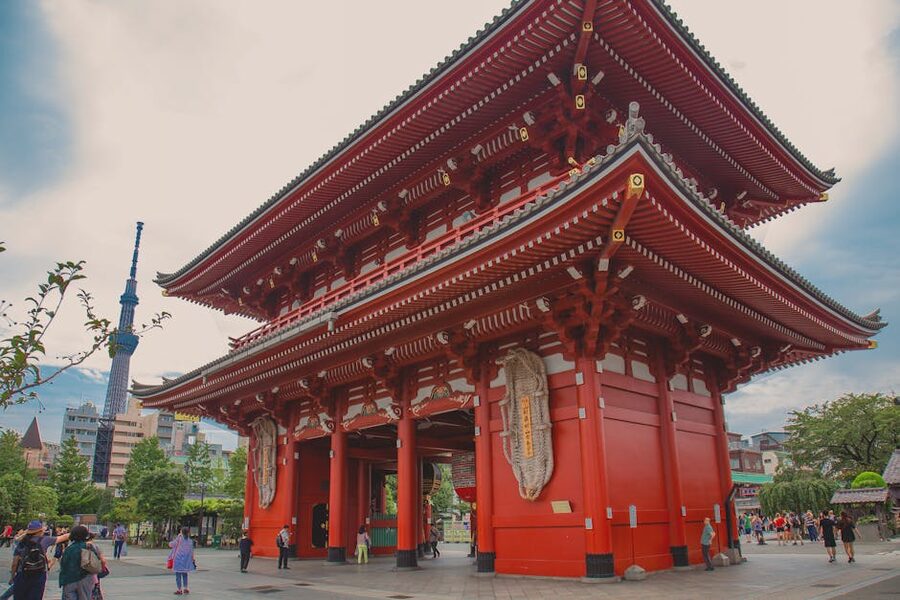
Maikoya, Nadeshiko (at the Hanayashiki amusement park of all places), and a dozen smaller studios. You’re walking distance to Sensō-ji, Nakamise-dōri, and the kimono rental shops. If you want the whole day to feel “traditional Tokyo,” start and finish here.
Shinjuku
More hotel-based options. Park Hotel Tokyo does a formal reservation-required ceremony in a traditional washitsu room — you need to book 30 days ahead. Shinjuku Gyoen’s Rakuu-tei tea house serves matcha with a park view for about 700 yen, no booking needed. Shinjuku is the easiest to reach from most hotels, and pairs naturally with a Shinjuku night walking tour if you want your tea-ceremony afternoon to bleed into a Golden Gai evening.
Shibuya / Meguro / Nezu
Smaller independent tea schools, less tourist-polished. The Shibuya studios at tokyo-chaan and Chazen run multilingual sessions in proper tea rooms. Less Instagrammable, more atmospheric. Harder to combine with other sightseeing unless you’re already staying in that part of the city.
What actually happens in the room
The ritual follows a set sequence that’s been refined over five centuries. You won’t remember it all the first time. But the broad shape helps you know when to bow, when to drink, and when to just sit still.
Entry
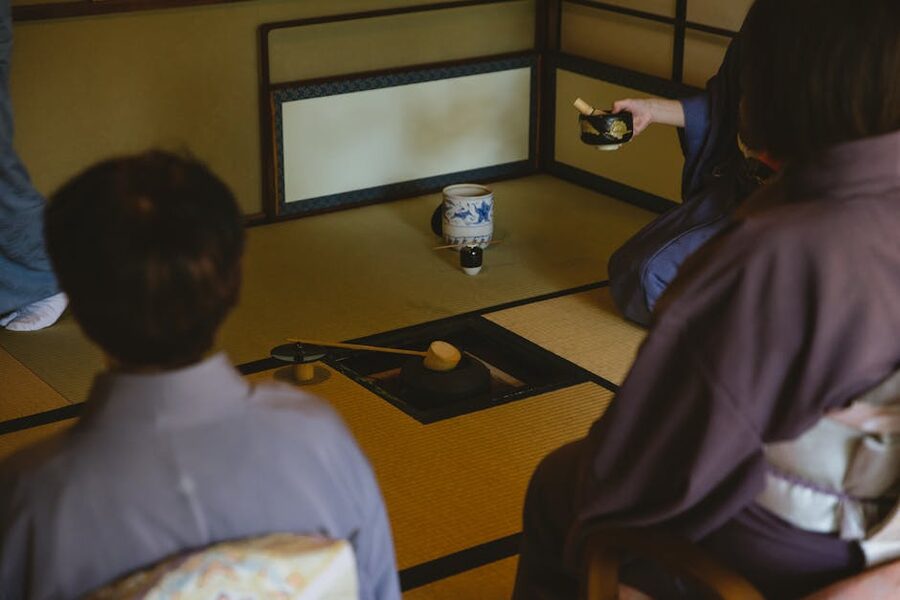
You remove your shoes at the door. In a formal room you also duck through a low entrance called the nijiriguchi — a 70cm doorway designed to force humility regardless of your samurai rank. Modern tourist venues skip this. If yours has one, you’re in a serious room.
The sweet
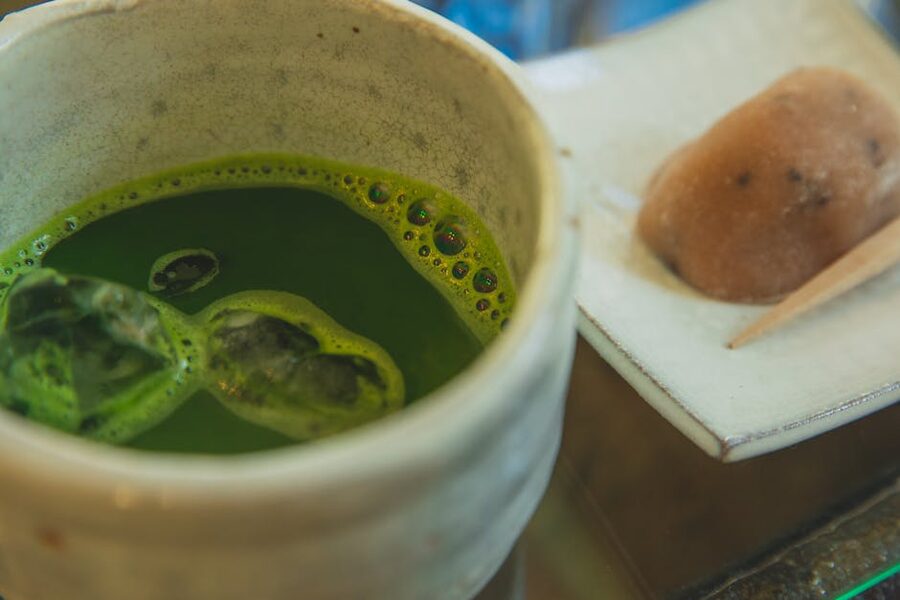
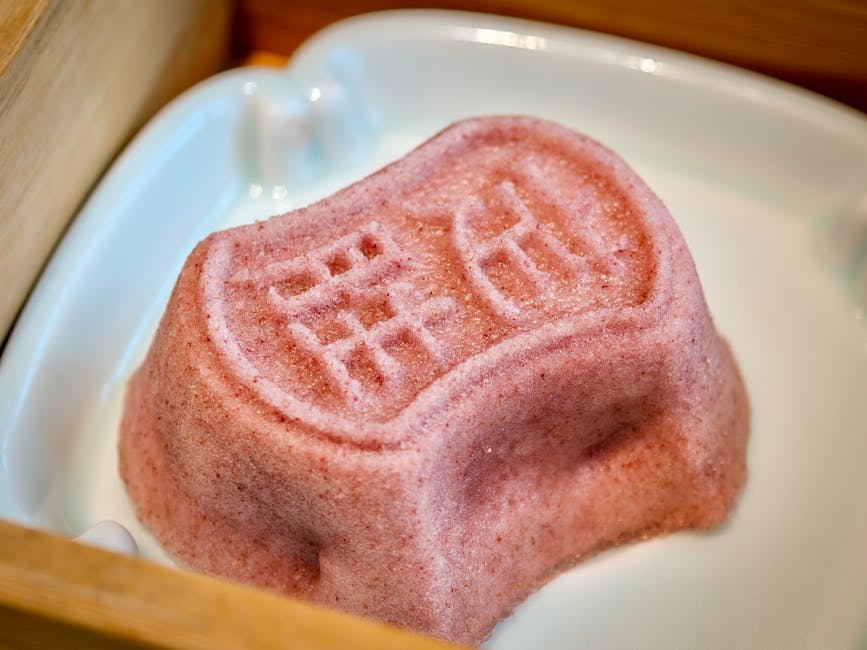
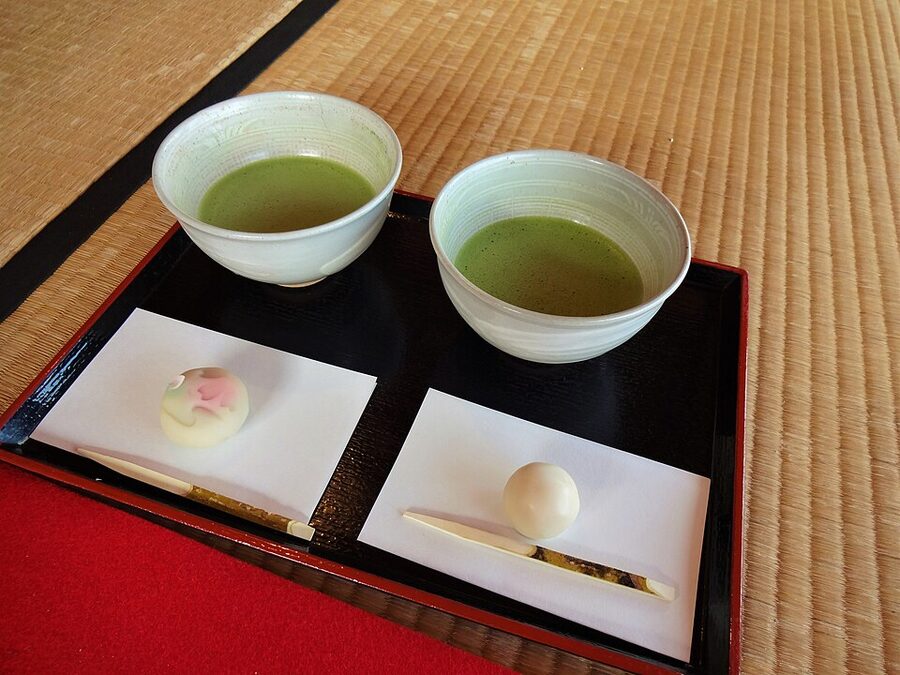
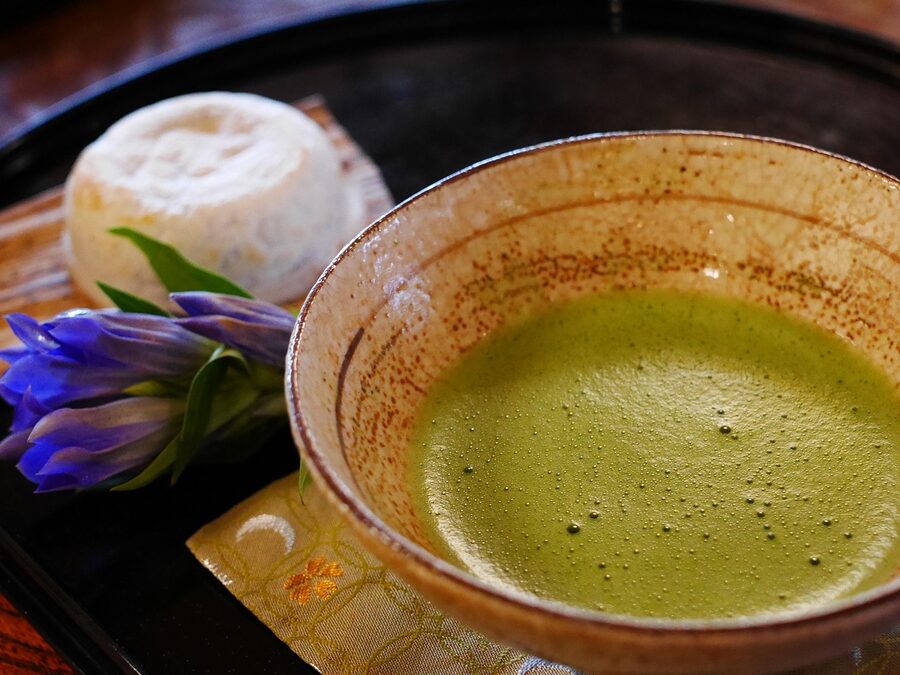
The host brings out a wagashi — a seasonal Japanese sweet made of rice flour and red bean paste. You eat the whole thing before the tea arrives. This is not an option; the bitterness of matcha needs the sugar as a counterweight.
The preparation
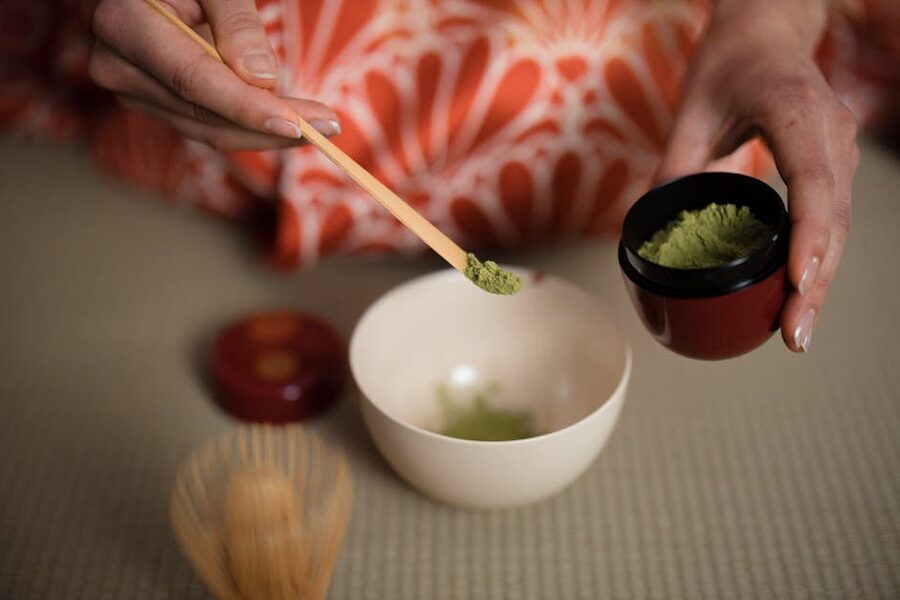
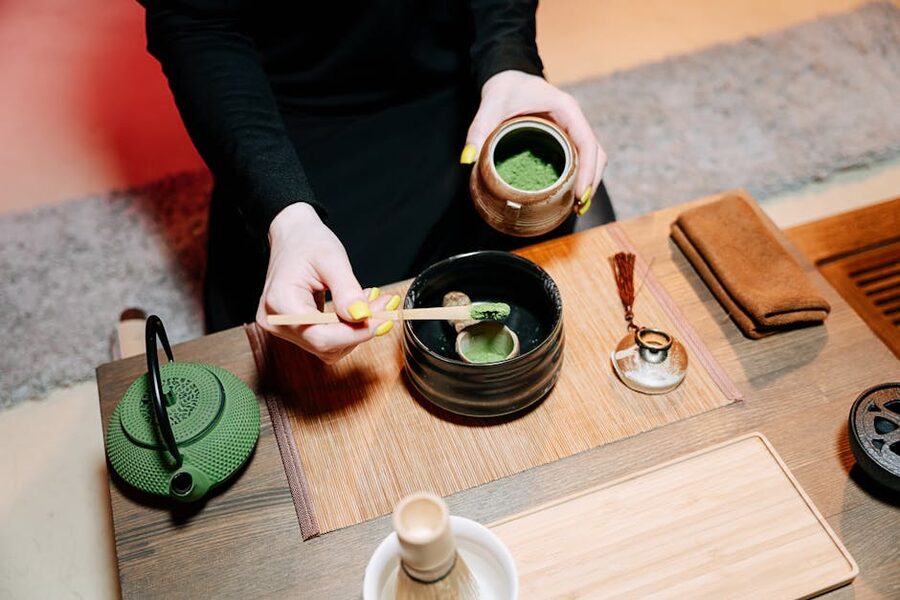
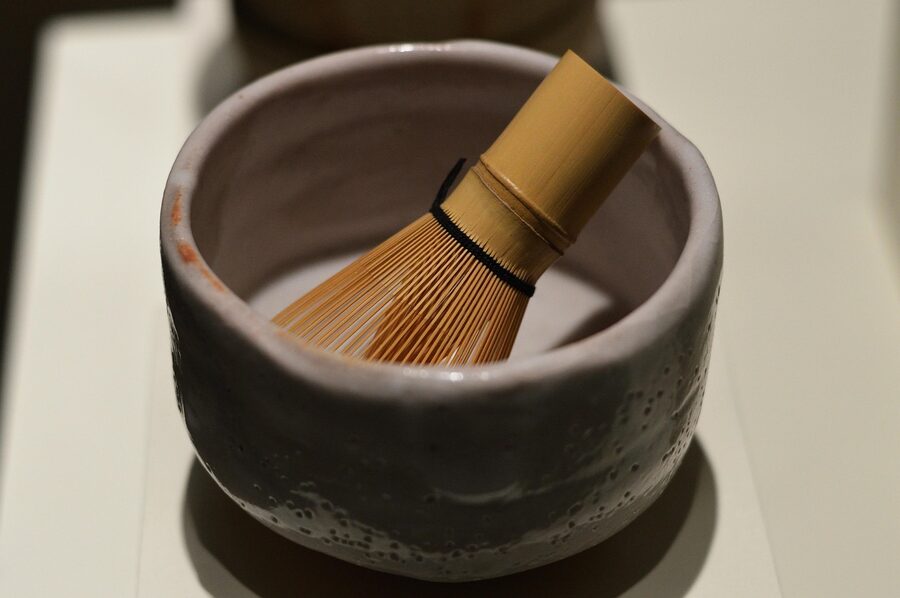
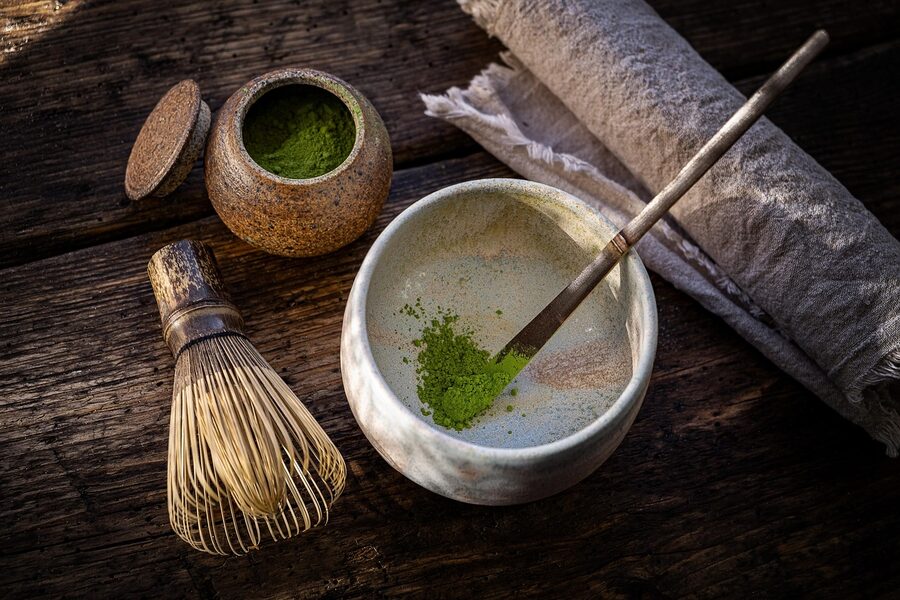
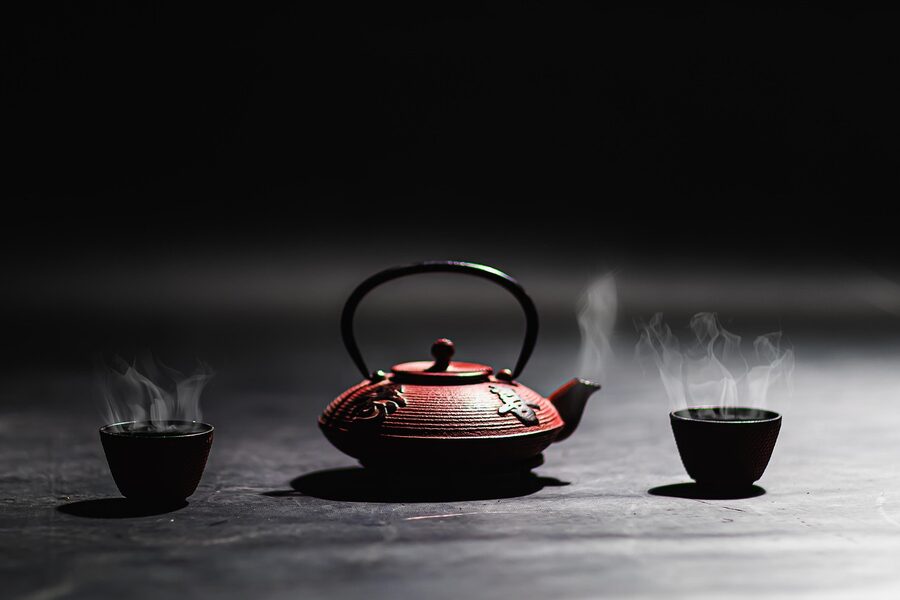
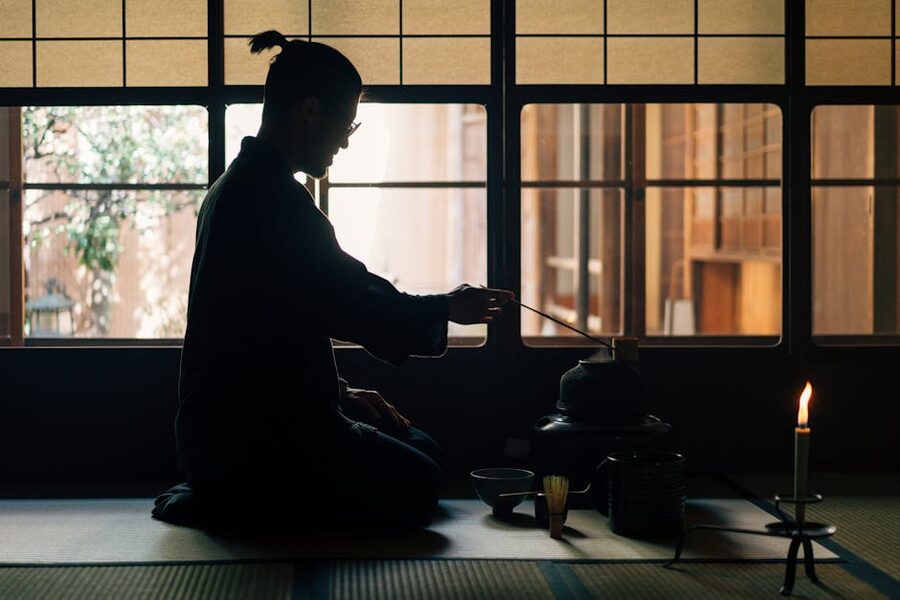
The host warms the bowl (chawan), scoops matcha powder with a bamboo scoop (chashaku), pours hot water from the iron kettle, and whisks with the bamboo chasen. This takes three to four minutes. Watch the hands. The movements look simple but each one is prescribed — angle of wrist, speed of whisk, timing of the bow.
The drink
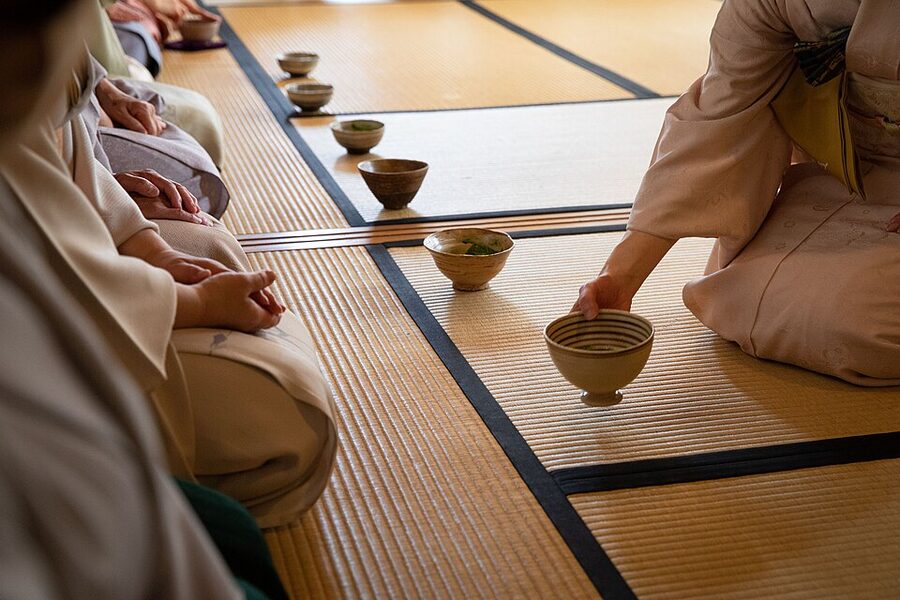
Receive the bowl with both hands. Bow to the host, then to your neighbour if you’ve got one. Rotate the bowl 90 degrees clockwise so the front design doesn’t face your lips (this is a courtesy to the maker of the bowl). Drink in three or four sips. The last sip should be an audible slurp — that’s the signal you’ve finished.
The inspection
Once everyone’s drunk, the host may offer the bowl for inspection. Turn it slowly in your hands. Ask a question about it if you can — the host will usually know where it was made and how old it is. This is when you get to ask the questions you’ve been saving.
A short history: why this ritual exists at all
The tea ceremony (chanoyu or sadō) arrived in Japan from China in the 9th century as a Buddhist monks’ practice. For three hundred years it stayed inside temples. In the 15th and 16th centuries it migrated into the samurai class — tea rooms became neutral ground where rival warlords could meet without armour, and tea gatherings turned into political theatre.
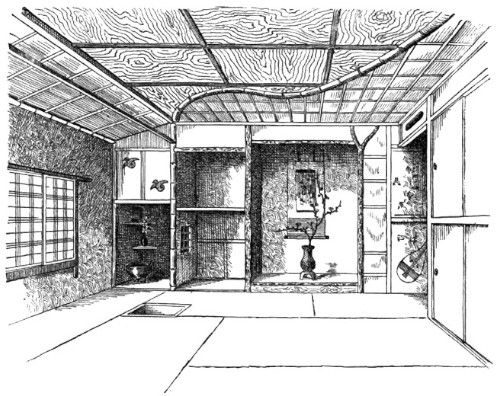
The man who gave the ceremony its modern shape was Sen no Rikyū (1522–1591). He stripped out ornament, made the rooms smaller, demanded humility from every guest regardless of rank, and distilled the practice down to four principles: wa (harmony), kei (respect), sei (purity), and jaku (tranquillity). He was eventually ordered to commit ritual suicide by his patron Toyotomi Hideyoshi. The ceremony outlived him by five hundred years.
That history sits quietly in every proper Tokyo tea session. When your instructor seems to move slowly, they’re not performing for you — they’re inside a lineage that takes twenty years of practice to master. Matcha has become an Instagram drink. But the ceremony hasn’t changed.
Costs, etiquette, and what to wear
Roughly, you’re looking at:
- Garden tea house matcha (no ceremony) — 700 to 900 yen (~$5–$7)
- Basic tourist workshop — 3,000 to 5,000 yen (~$25–$35)
- Workshop with kimono dressing — 6,000 to 10,000 yen (~$40–$70)
- Small-group traditional session — 8,000 to 15,000 yen (~$60–$100)
- Private hotel ceremony — 15,000 to 30,000 yen (~$100–$200)
Tipping is not expected anywhere. Tipping a tea master is actively rude — the ceremony is explicitly outside of money transactions once you’ve paid for the session.
What to wear
Clean socks with no holes. You’ll be sitting cross-legged on tatami with your feet visible to everyone. Skirts above the knee don’t work well for seiza — bring pants or a long skirt. If you’re adding a kimono fitting, leave a light base layer only; you’ll be dressed from the skin out.
Phones and photos
Almost every Tokyo venue allows photos before and after the tea preparation, but not during it. Watch your instructor for the signal — they’ll usually nod once you can take out your phone. Shutter sounds during the whisking will get you a polite but firm reminder.
Common questions I get about Tokyo tea ceremonies
Can kids do a tea ceremony?
Most studios accept children from age 6 upwards. Maikoya has a specific kids’ kimono option. The ritual is long and quiet for a young child, though — if yours can’t sit still for 45 minutes, book the garden tea house option instead.
Is matcha safe for pregnant women?
A single bowl of matcha contains about 30–70 mg of caffeine — roughly a third of a coffee. Most doctors consider this fine occasionally. If you’d rather avoid caffeine, ask the host about hojicha (roasted green tea, very low caffeine) or genmaicha. Many studios will swap on request.
Can I do a tea ceremony in English?
Yes. Every tour I’ve recommended in this guide runs in English. The hotel-based ones at Park Hotel Tokyo and Hotel Chinzansō also provide bilingual hosts. Only the tiny tea-school sessions aimed at serious students tend to be Japanese-only — those aren’t the ones on GetYourGuide.
What if I’m in Tokyo for only one afternoon?
Book the 1-hour tea master session with GYG, or walk into Hamarikyu’s Nakajima-no-Ochaya without a booking. Both slot into half a day. The 90-minute kimono bundles eat too much time if you’ve only got one afternoon free.
Can I book a private ceremony?
Yes, and the price jumps from $40-per-person to $150-per-person. Park Hotel Tokyo and Hotel Chinzansō both offer private sessions in their washitsu rooms. You need to book at least a week ahead, sometimes 30 days for the hotel ones. For a couple or a small family of 3–4, the per-head price isn’t wild. For one person, stick with a small-group session.
Should I learn the etiquette before I go?
The host will walk you through everything. But reading the Wikipedia page for “Japanese tea ceremony” on the train there gives you context that makes the whole thing click faster. If you have ten minutes, learn the two-hand grip and the 90-degree rotation. That covers 80% of what you need to know.
Where to go next in Tokyo
If the tea ceremony has got you curious about the broader Tokyo experience, the three most natural follow-ons are a private Osaka tour if you’re heading west next — Osaka has its own, slightly more boisterous tea culture that’s a good counterpoint to Tokyo’s formality. Or if you liked the idea of a structured Japanese experience and want something with more movement, a Kyoto samurai experience is the same principle — a ritual with a history, taught by specialists — with swords instead of whisks. And for a total tonal shift, book an Osaka go-kart tour; doing matcha on Tuesday and Mario Kart costumes on Thursday is the Japan travel whiplash that makes the country memorable. All three are covered in our other how-to-book guides on this site.