
The bar seats five, and one of them just became yours because the man next to you stood up. He is not leaving. He is finishing his highball, settling the paper slip on the counter, and with a small tilt of his head he gestures at the curtain over the door. Come on. We are going to the next place. You have known him for exactly seventeen minutes.
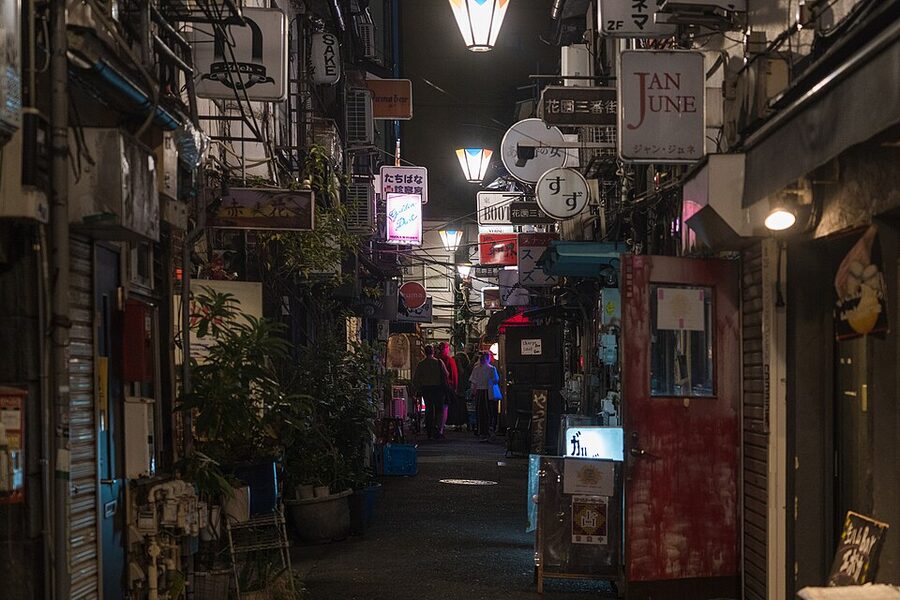
This is the part of a Shinjuku bar hop that no travel article prepares you for, and the part that every returning visitor wants to talk about. Here is how to book one, what the three main nightlife alleys are actually like, and how the tour formats compare so you end up in the right kind of evening.
- In a Hurry? My Top Picks
- Why Book a Tour Instead of Going Alone
- The Three Alleys You Will Visit
- Golden Gai
- Omoide Yokocho
- Kabukicho
- What a Three-Hour Tour Usually Looks Like
- The Best Shinjuku Bar Hopping Tours I Would Actually Book
- 1. Tokyo Bar Hopping Night Tour in Shinjuku — 6.36
- 2. Bar Hopping Tour in Shinjuku “Only Locals Know” — from .55
- 3. Tokyo: Shinjuku Bar Hopping Night Tour in Shinjuku — from 1.30
- How to Book, Step by Step
- What the Tour Does Not Include
- What to Eat at Each Stop
- Cover Charges and Bar Etiquette
- Who This Tour Is For (And Who Should Skip It)
- Neighbourhood Comparison: Shinjuku vs Other Tokyo Nightlife
- Safety and the Kabukicho Question
- Best Time of Year and Night of the Week
- Bringing It All Together
- Other Guides You Might Use This Week
In a Hurry? My Top Picks
- Tokyo Bar Hopping Night Tour in Shinjuku — $106.36. The flagship. Three hidden bars, food and drinks included, three and a half hours, reviews in the thousands. Book on Viator.
- Bar Hopping Tour in Shinjuku “Only Locals Know” — from $69.55. The cheaper GetYourGuide option, same three-stop idea, 3.5 hours, izakaya-focused. Book on GetYourGuide.
- Shinjuku Bar Hopping Night Tour — from $121.30. Smaller group (ten max), three hours, starts and ends near Shinjuku Station. Book on GetYourGuide.
Why Book a Tour Instead of Going Alone
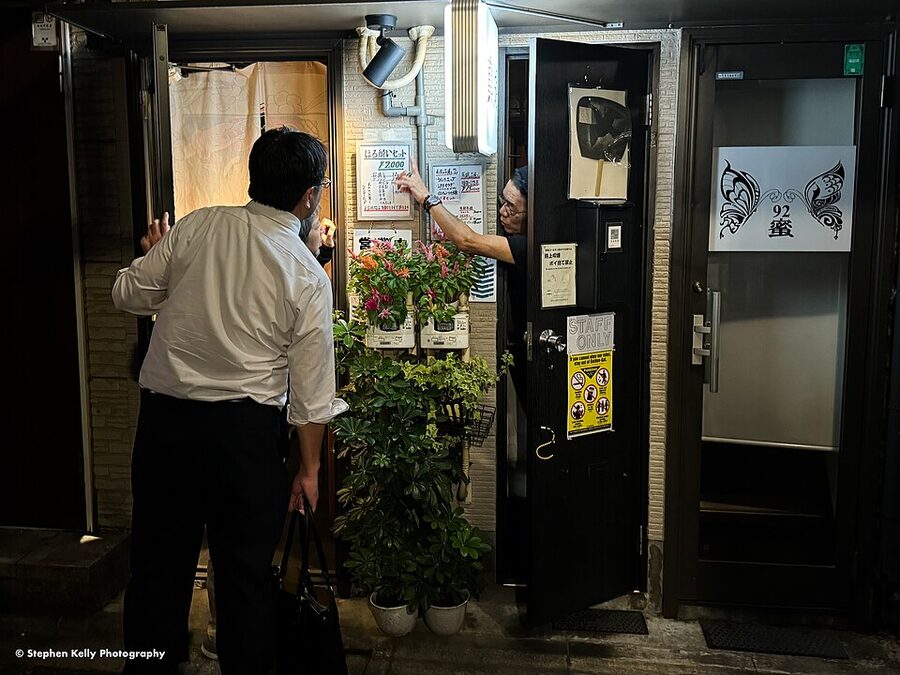
A fair question. Shinjuku is walkable, the bars are right there, and Google Maps will get you to the front door. Why pay someone to do it for you?
The straight answer is the threshold. A Shinjuku bar is not a pub. It is a room the size of a small kitchen, with a single counter, run by an owner who has been there for thirty years and whose regulars sit in the same stools every week. Some of them welcome strangers. A lot of them have a cover charge (called otoshi or seki-ryo) that never appears on the door, and a price list nobody shows you. Some have a small sign in Japanese that says members only. Visitors who wander in cold have a wildly uneven time.
A guide gets you through the curtain, translates the menu, handles the cover charge conversation, and chooses bars where the owner is happy to see foreign visitors. You are paying for the social lubrication, not the drinks. Three or four beers at neighbourhood prices would cost about the same as a cheap tour anyway — the tour price is really the fee for being in the right rooms in the right order.
If you have lived in Japan and you are fluent, skip the tour and go on your own. If this is your first or second trip, book one. It is the single most useful guided experience for nightlife I have ever paid for, and I say that having also taken the Shinjuku food tour the next evening.
The Three Alleys You Will Visit
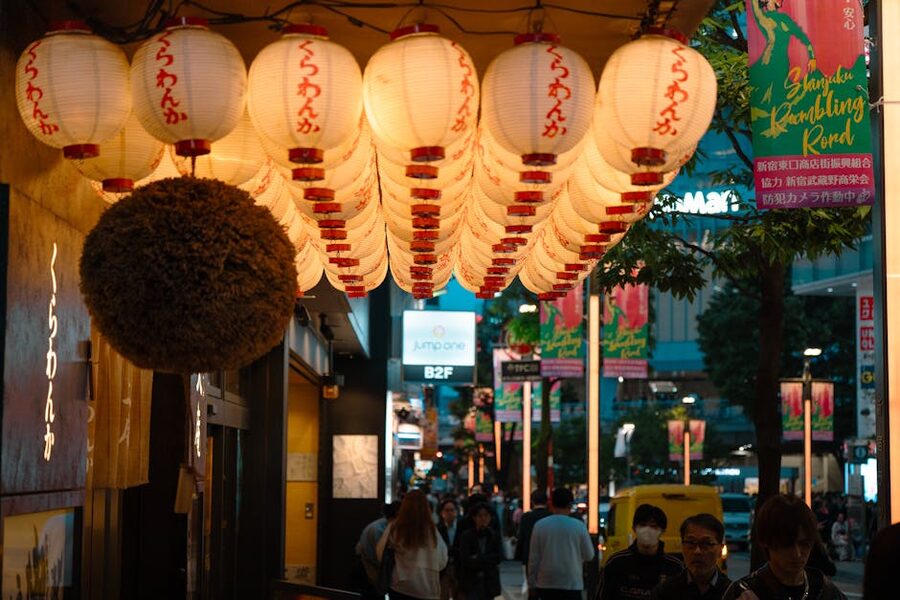
Every Shinjuku bar hop, whatever the operator, walks through two or all three of the same pocket districts. Each has a completely different feel. Worth knowing in advance so you can ask what your tour covers.
Golden Gai
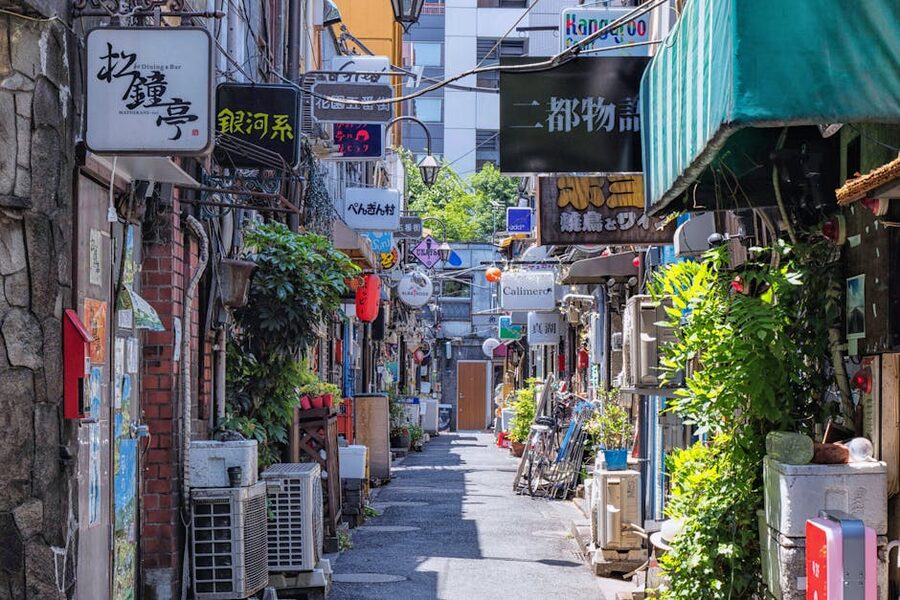
Six narrow alleys, about 200 bars, all inside a single block that is smaller than a football pitch. Golden Gai is what people mean when they say Shinjuku has the densest drinking district on earth. The buildings are two storeys, wooden, held together by habit and paint. Many were put up as temporary shacks in the late 1940s after the area served as a black-market zone. The plan was to knock them down. Then the owners refused, and seventy years passed.
Each bar has a theme. Jazz, horror films, 1970s pop, punk, literature, flamenco. The bartender often owns the place and hand-picks who can sit down. Cover charges of 500 to 1,500 yen are normal, drinks sit around 800 to 1,200 yen, and most rooms hold five to ten people. Some display a friendly OK sign for foreign visitors. Some do not. A tour will only take you into the ones that do, which saves an awkward walk back out.
Omoide Yokocho
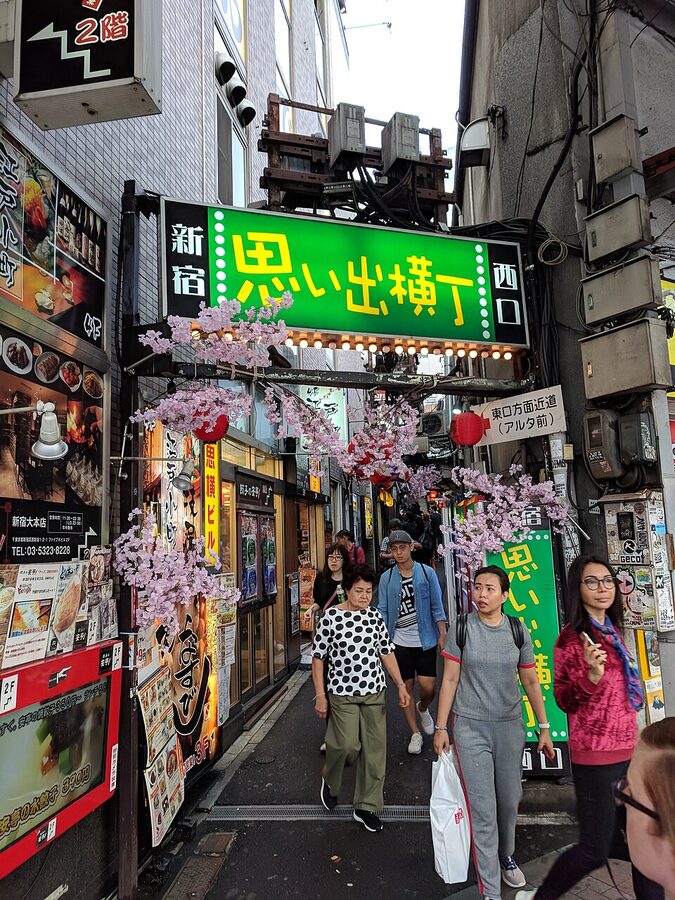
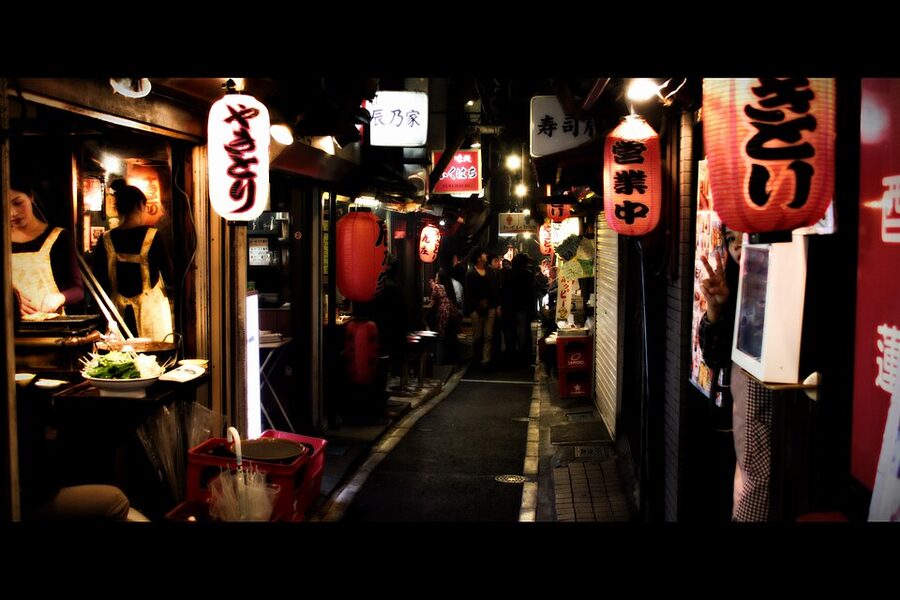
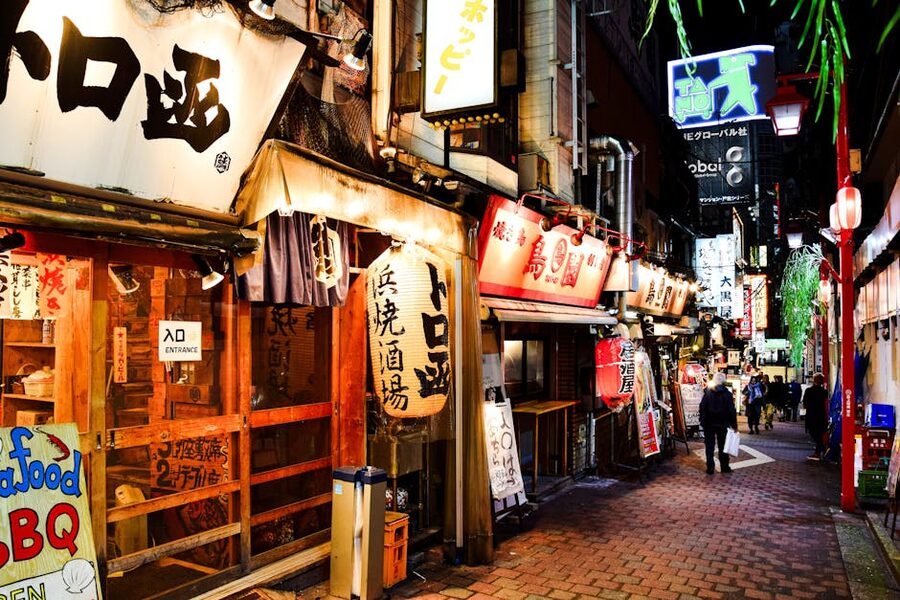
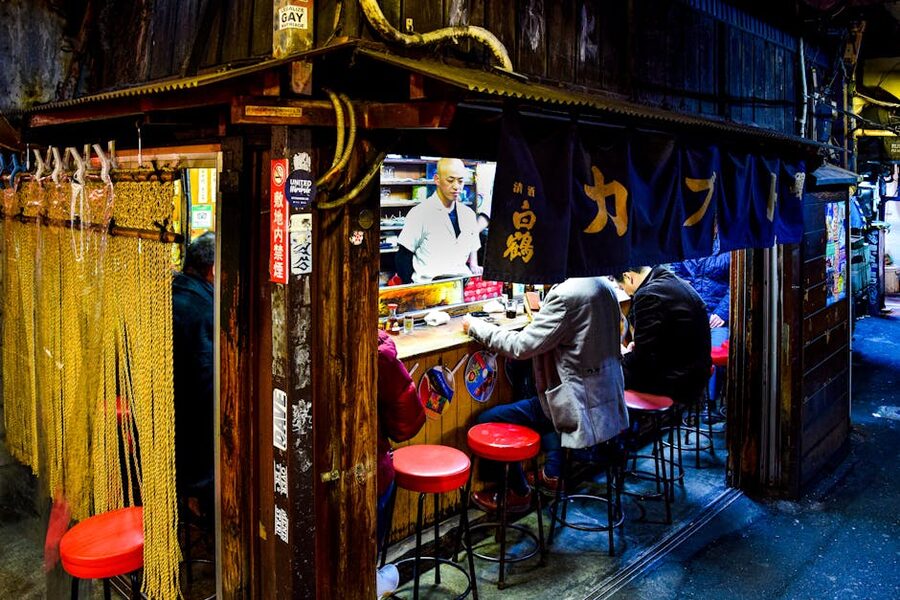
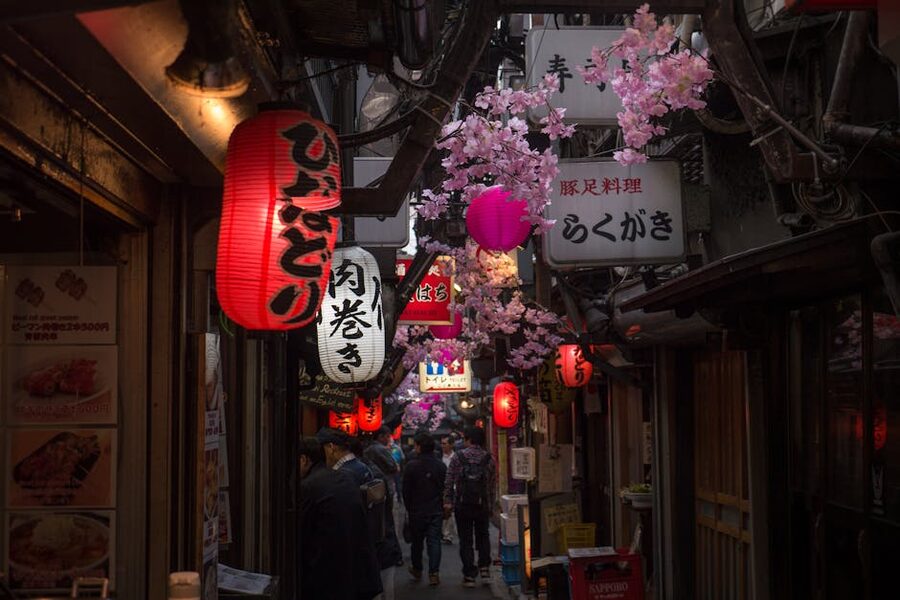
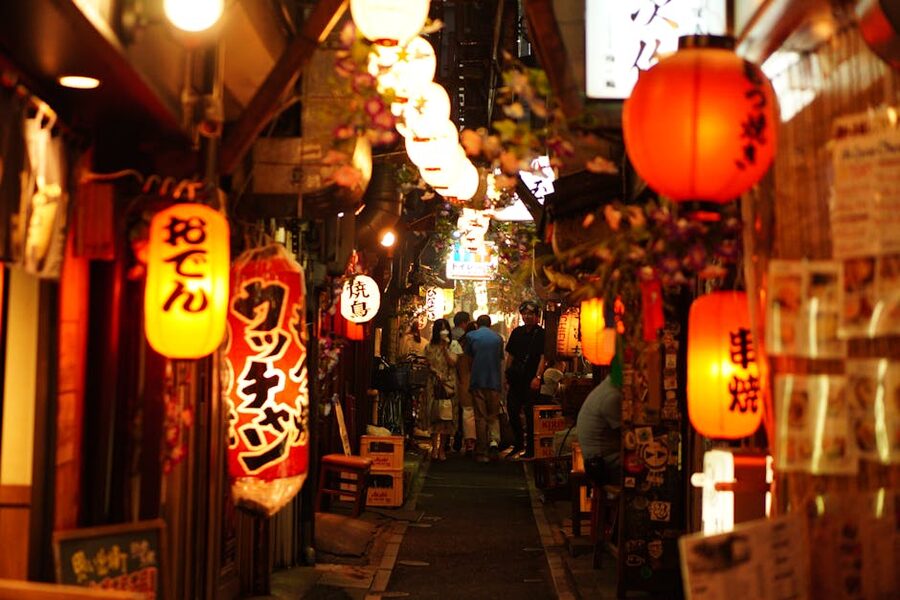
Officially Shinjuku West Omoide Yokocho, usually just called Memory Lane or Piss Alley (the old nickname, earned in the 1950s, that has mostly been paved over). It runs for about 100 metres along the west side of Shinjuku Station. The bars and yakitori counters here are even smaller than in Golden Gai, some of them six seats along a single bench with the chef’s grill pressed up against your knees.
Omoide is noisier, smokier, and more crowded than Golden Gai. It is the one you smell before you see — charcoal, beer, and grilled chicken skin — because most places are open-fronted or have a curtain pushed aside. This is where bar hops go for food first and drinks second. If you have already done the Shinjuku food tour, there is a good chance you have already been in the alley, but not necessarily sat and drunk in one.
Kabukicho
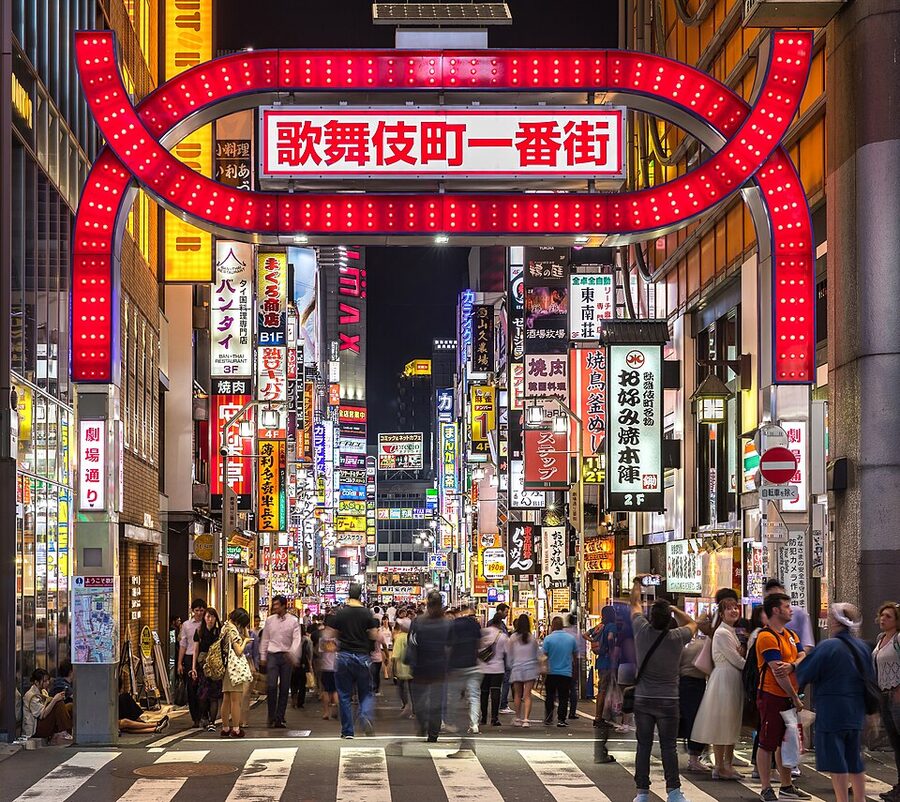
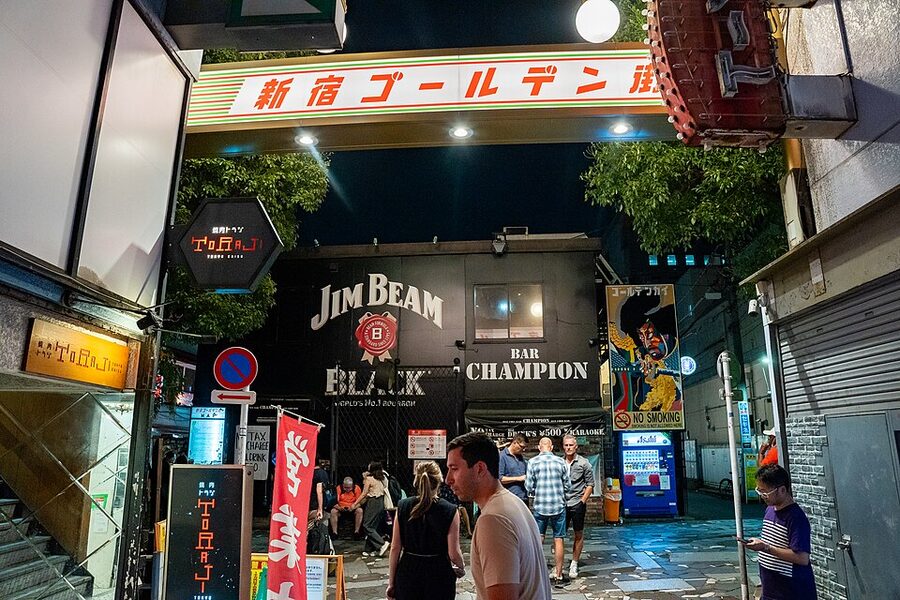
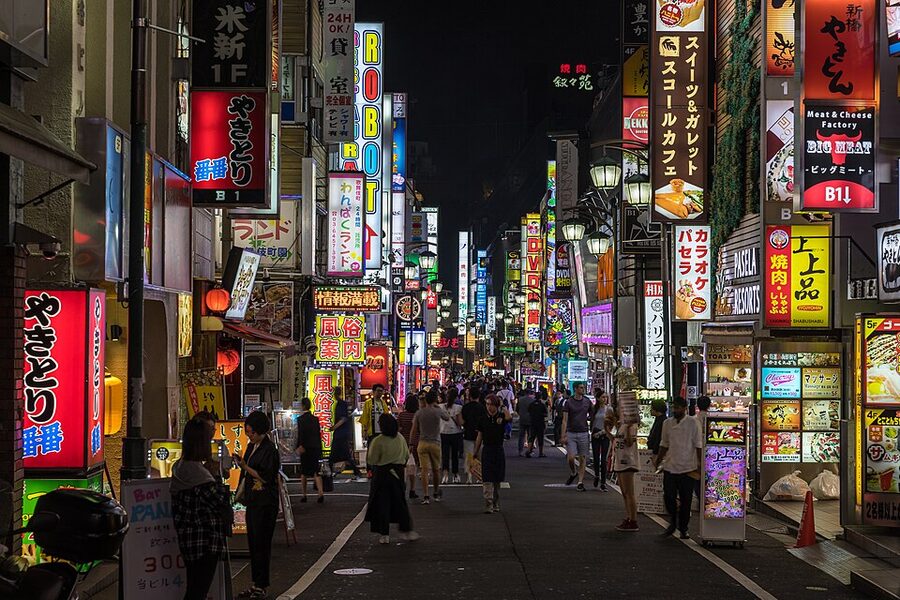
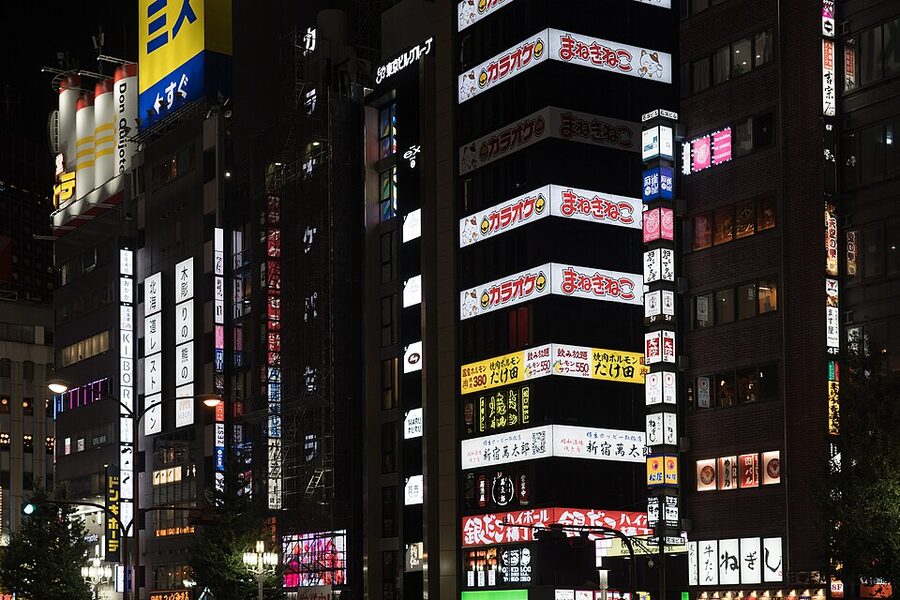
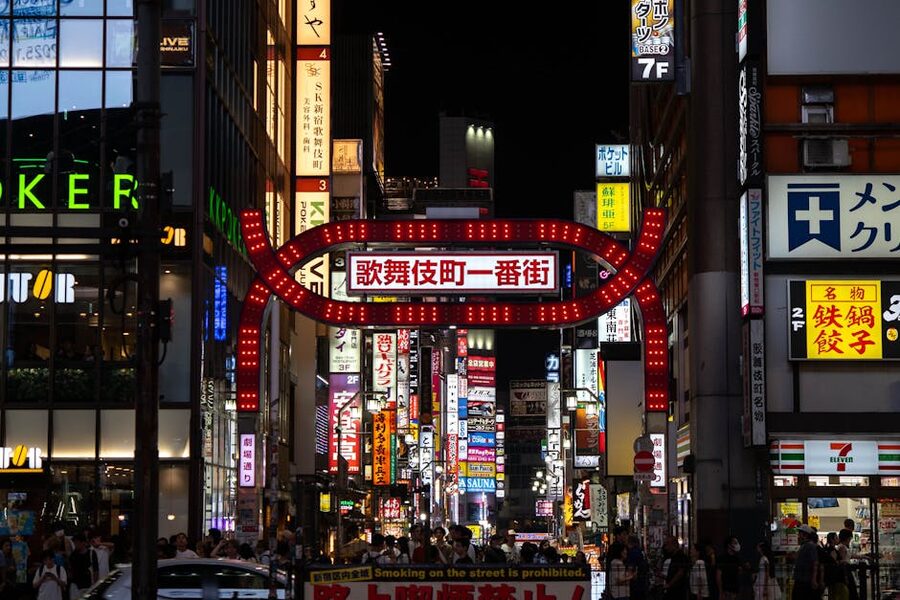
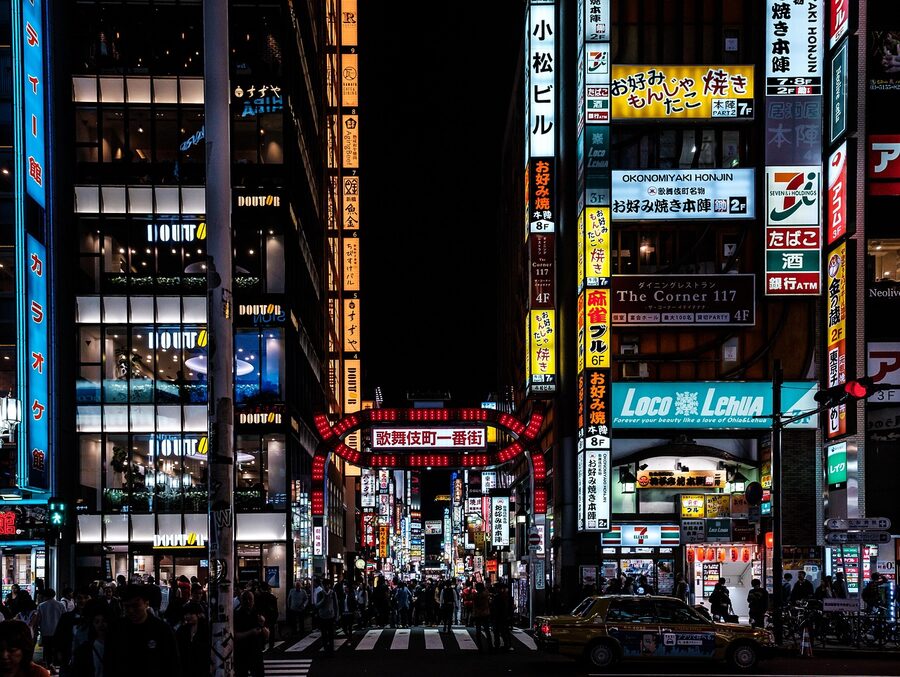
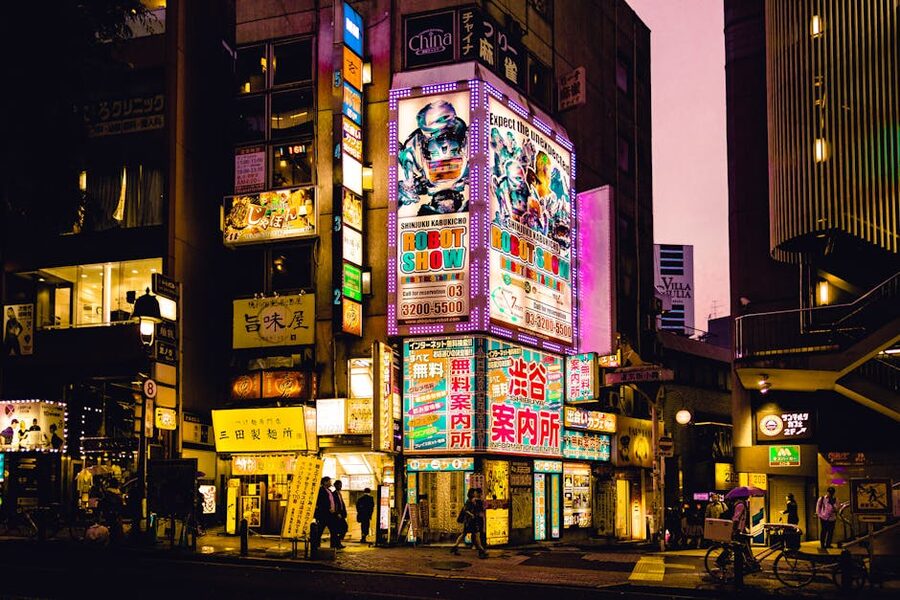
Bigger streets, bigger buildings, much bigger signs. Kabukicho is the classic neon Shinjuku — the one on the postcards. It is also where the adult entertainment industry sits, and where touts on the pavement will try to pull you into host clubs or massage parlours that charge wildly more than they claim to. Pay no attention to anyone on the street offering you a menu. None of them lead anywhere good.
Most bar tours take Kabukicho as a walkthrough rather than a drink stop. You cross under the red gate, see the giant Godzilla head on the Toho building, and keep moving. The actual bars you sit down in will be in the quieter streets just off the main strip, which is usually safer and more interesting anyway.
What a Three-Hour Tour Usually Looks Like
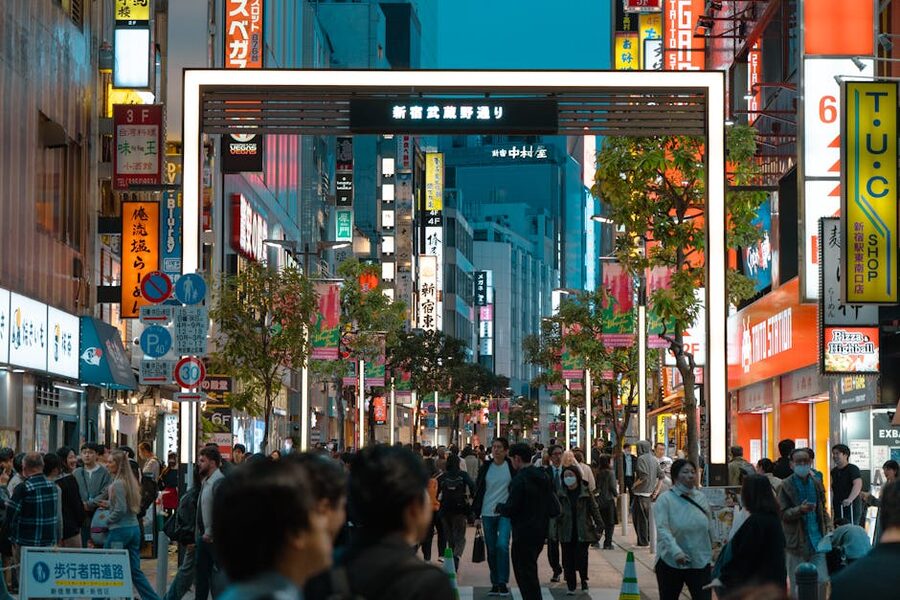
Almost every Shinjuku bar hop runs a similar shape. Three bars, roughly thirty to forty-five minutes per bar, one walk between each. Start time is usually 6.30 or 7pm, finish around 10pm. Groups are capped at eight to ten people. Drinks and a small plate are included at each stop. You often pay the first bar directly at the end; the tour fee covers the entry and the guide, not always the full bar tab.
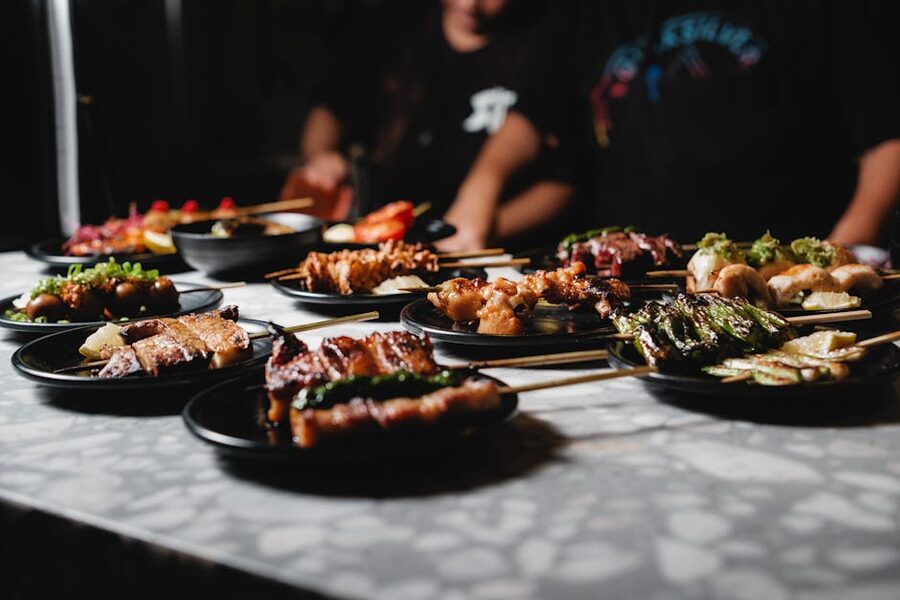
Bar one is the ice-breaker. A slightly bigger izakaya with room for everyone, a round of introductions, sake or beer, and a plate of yakitori or karaage. Your guide explains kanpai (never pour your own drink), otoshi (the seated cover charge that arrives without you ordering it), and the no-tipping rule. The food here is the most substantial of the night — think of it as dinner.
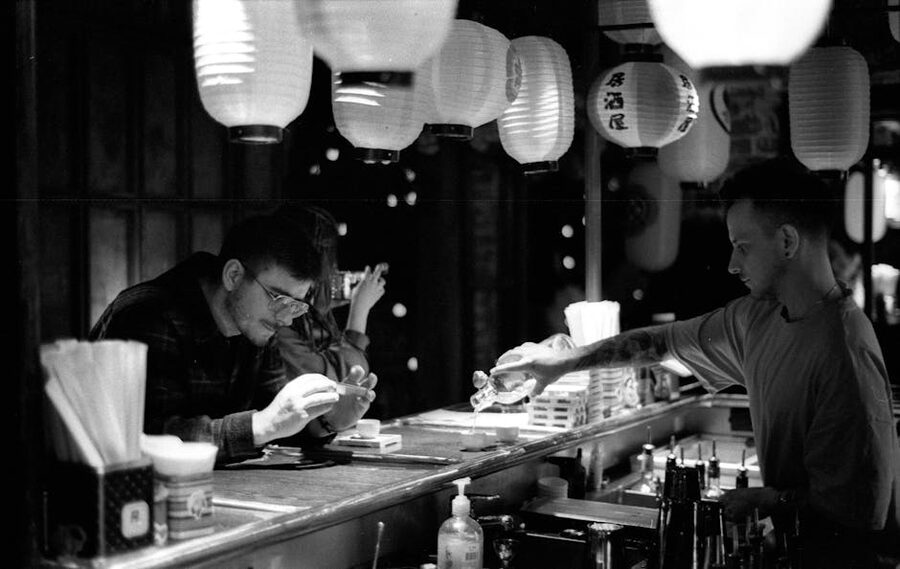
Bar two is the character bar. This is the smallest room of the evening, usually in Golden Gai, picked for theme. Jazz on vinyl, or a Showa-era horror film loop, or a wall of autographed polaroids. The guide opens the curtain, confirms the otoshi charge, and you squeeze onto stools. Drinks take longer here because the bartender is pouring one at a time. You talk to whoever is sitting next to you.
Bar three is the nightcap. Often on the Omoide side, or a standing-only spot (tachinomi) where you lean against a counter. The food is smaller — pickles, a piece of grilled fish, maybe one last skewer. The guide wraps up, points you at the station, and leaves you to either go home or keep going on your own. Several of my group on one tour carried on until after midnight.
The Best Shinjuku Bar Hopping Tours I Would Actually Book
Three options that I would put in front of a friend. The first is the volume leader that I would book if I had one night and wanted the safest version. The second is the cheapest. The third is the smaller-group one for travellers who do not want a ten-person crowd squeezing into a five-seat bar.
1. Tokyo Bar Hopping Night Tour in Shinjuku — $106.36
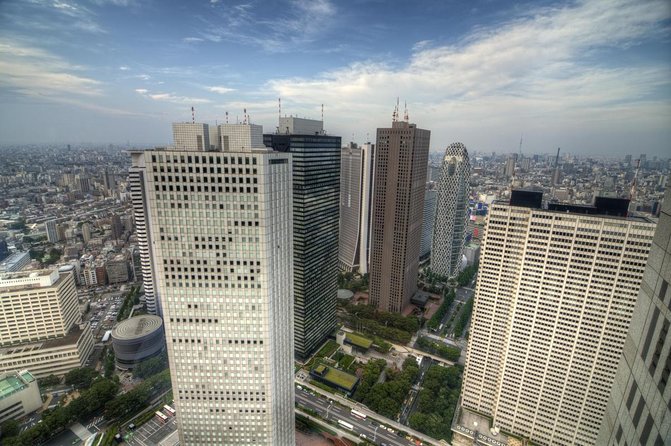
This is the one with thousands of reviews, and when you read them the same phrase keeps coming up — guests say they never would have found these places on their own. Our full review goes into the three-stop Golden Gai itinerary, and the short version is that it is the easiest, most hand-held version of the Shinjuku bar experience. Food and drink are included, which matters because it means the cover charge surprises do not land on you at the end.
2. Bar Hopping Tour in Shinjuku “Only Locals Know” — from $69.55
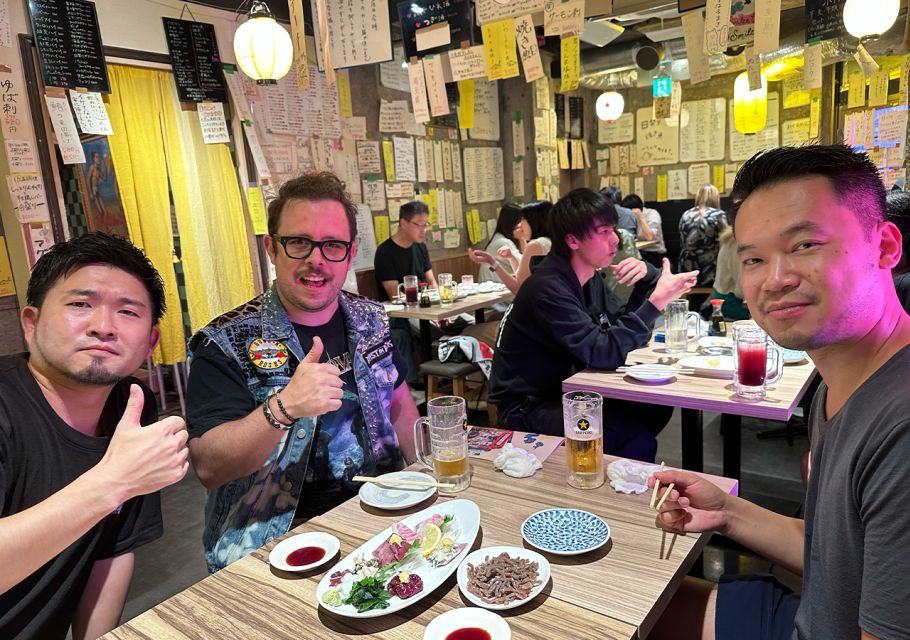
The GetYourGuide option that comes in at roughly two-thirds of the flagship price. It leans more on sake and izakaya culture than on the theme-bar hunt, and the interpreter role is more explicit — your guide is there to translate the conversations with other drinkers, not just the menu. Our review notes that it is 3.5 hours and usually runs in a smaller group, which suits shy travellers better than the ten-person tours.
3. Tokyo: Shinjuku Bar Hopping Night Tour in Shinjuku — from $121.30
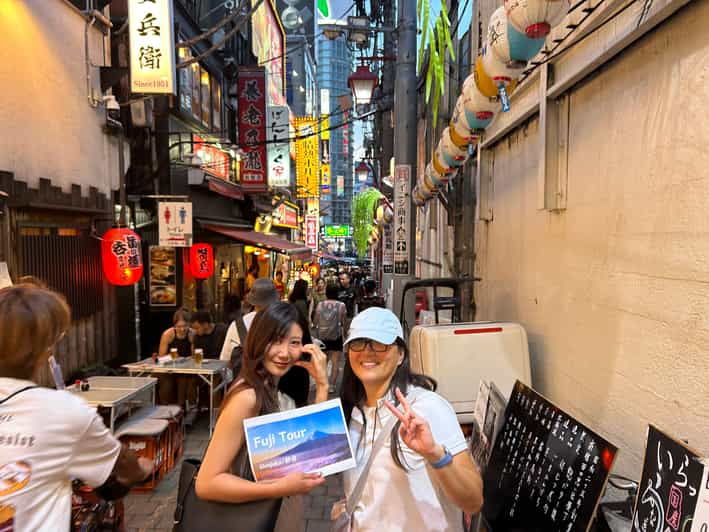
The most expensive of the three but the most intimate. Runs for three hours from Shinjuku Palette and hits three venues, including at least one pick that is outside the main visitor trail. Our write-up goes into the solo-female-traveller emphasis, which matters for anyone nervous about Kabukicho after dark — the route is designed to keep you in the safer streets and end at the station, not scattered.
How to Book, Step by Step
Booking is straightforward. The three big platforms — Viator, GetYourGuide, Klook — all carry these tours. Prices are almost identical across them. What varies is the cancellation policy and the payment timing. GetYourGuide is the easiest to cancel (free up to 24 hours for most tours). Viator is usually free up to 24 hours too but check the listing. Klook sometimes runs slightly cheaper promotions but can be stricter on refunds.
Book the tour for your second or third night in Tokyo, not your first. Jet lag plus three bars plus late public transit is not a combination you want. If you arrive on a Monday, book for Wednesday evening. You will enjoy it more and remember more of it.
Use the hotel booking confirmation as your meeting-point buffer. Every Shinjuku tour meets around the station. Arrive fifteen minutes early, find the exact exit (they will specify — usually the east exit near the Studio Alta screen), and stand where the guide holds up the clipboard with the company logo. No need for complicated pickups.
What the Tour Does Not Include
Two things worth knowing. First, your ticket usually covers a set number of drinks and one snack per venue. If you order extra, that is your tab. This is a feature, not a bug — if you are someone who stops at two drinks, the tour works out to good value. If you are the person who always orders the second and third round, bring more yen than you planned.
Second, the tour does not include after-tour transport. Shinjuku Station runs trains until around 12.30am, and the last trains are often packed. Taxis from Shinjuku to most central hotels run 2,000 to 4,000 yen at that hour. If you are staying on the other side of Tokyo, keep an eye on the clock. The guide will remind you once, usually around 9.30pm, then leaves you to make the call.
What to Eat at Each Stop
You will not go hungry, but you will not get full either. Each bar serves a plate of something — yakitori skewers, a small bowl of edamame, pickles, a piece of grilled fish. Plan to eat a light meal before the tour starts or commit to a proper dinner around 11pm afterwards. A ramen stop on the way back to the hotel is traditional. So is a dedicated ramen tour on a separate evening if you really want to do it properly.
Drink things you cannot easily get outside Japan. Nama biiru (draft Asahi or Kirin) is standard. Highballs (whisky and soda) are everywhere, cheap, and very drinkable. Ask for a junmai sake (rice sake, no added alcohol) if you want to understand the spectrum from dry to sweet; ask for a shochu if you want the Japanese equivalent of a clear spirit. Avoid ordering wine. It is expensive and the selection at tiny bars is rarely interesting.
Cover Charges and Bar Etiquette
This is the part that catches visitors off guard more than anything else. Many small Shinjuku bars charge a seat fee that appears as a small dish of pickles or a boiled peanut, arrives without you ordering, and gets added to your tab. It is called otoshi or seki-ryo, and it usually runs 300 to 1,500 yen per person. This is normal, legal, and non-negotiable. Do not refuse the dish or try to send it back.
A few other rules that keep you out of trouble:
- Never pour your own drink. Pour for the person next to you; they will pour for you. It is the basic social contract of a Japanese bar.
- Do not tip. Rounded cash is normal. Tipping embarrasses the staff.
- Cash beats cards. Many Golden Gai bars still only accept 1,000 yen notes and coins. Bring 10,000 yen in cash for the evening.
- Ask before photographing. Some owners say no. Respect it.
- Keep voices down. The rooms are tiny. A normal outdoor volume is a shout indoors.
Who This Tour Is For (And Who Should Skip It)
Good fit: First-time Tokyo visitors. Solo travellers (especially women — the smaller group tours are a soft entry into Shinjuku after dark). Couples who want a proper night out rather than a dinner reservation. Anyone who has done the full-day sightseeing tour during the day and wants a contrasting evening. Travellers who enjoy talking to strangers but do not speak Japanese.
Poor fit: People who do not drink at all. The tour is possible as a designated driver equivalent — you can order soft drinks — but you are paying for the social experience, and two hours sober in a bar where everyone is loosening up is not fun. Families with kids under 20 (the legal drinking age in Japan). Groups of four or more who want a private experience; you are better off booking a dedicated private guide.
Possible fit: Friends on a stag or hen trip. The small-group tours allow it but the atmosphere is not rowdy. If you want a loud night, you will not get it here — the rooms are too small and the etiquette is too strict. Plan a bigger bar for after.
Neighbourhood Comparison: Shinjuku vs Other Tokyo Nightlife
A quick comparison because the question “why Shinjuku specifically” comes up a lot.
Shinjuku (this article) is the classic choice. Densest bars per square metre, the most variety, the most photogenic alleys. It is also the most visitor-friendly — the bars that welcome foreign visitors are clearly marked and the tour operators know them.
Shibuya is younger and louder. Bigger bars, more standing space, more clubs. A Shibuya bar hop feels more like a Saturday night in a university town. Good if you are in your twenties and want volume. Skip if you want intimacy.
Ebisu and Nakameguro are the opposite — residential, quiet, trendy, pricier. More like Brooklyn in character. The bars are bigger, the menus more designed, the prices around 30% higher. Good for date nights or quieter evenings, not for the alley-hopping experience.
Ginza is the luxury tier. Bartenders in white jackets, 5,000 yen cocktails, immaculate service, zero casual atmosphere. Book here for a special occasion, not for a bar crawl.
Asakusa is the retro option. Older crowd, more traditional izakaya, less neon. Worth a separate evening if you are in Tokyo for more than a week. For a single night, Shinjuku wins on intensity.
Safety and the Kabukicho Question
Shinjuku has a reputation and it is partly earned. Kabukicho has organised touting scams where a visitor gets pulled into a “bar” that turns out to be a hostess club with a 30,000 yen bottle charge. This is the famous Shinjuku trap and it is real. It is also avoidable with a single rule: do not follow anyone from the street.
The scam requires you to walk into a place you did not choose. A guided tour eliminates the problem by taking you only to pre-vetted bars. Women on the small-group tours have repeatedly told me the guide made the difference between a good evening and a nervous one. If you have any hesitation about Shinjuku after dark, a tour is the answer — not the thing to worry about.
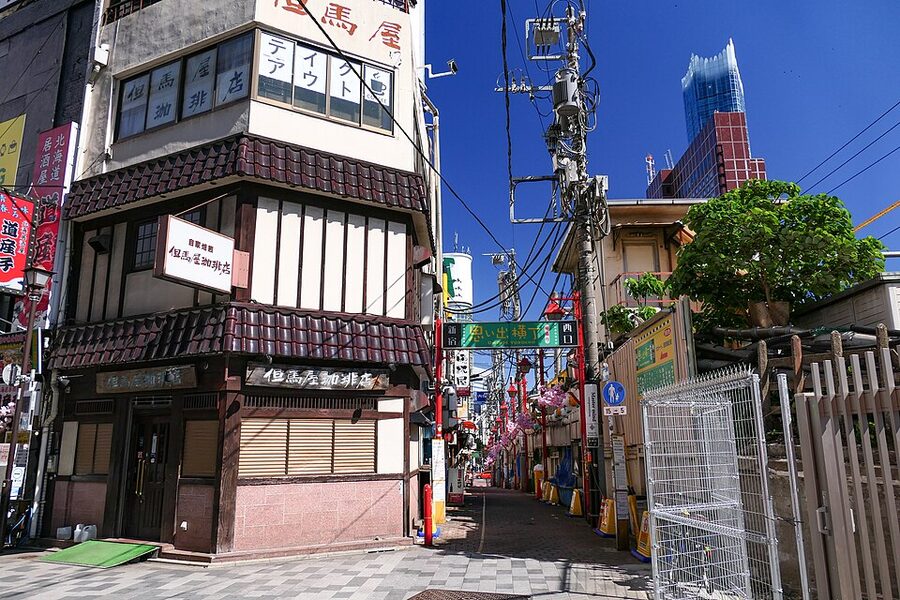
Once you are out of Kabukicho proper and into Golden Gai or Omoide, the atmosphere shifts completely. Those alleys are full of older regulars, artists, and salarymen unwinding. They are some of the safest and friendliest drinking streets in Tokyo. The worst thing that usually happens is someone buys you a drink and you cannot politely refuse.
Best Time of Year and Night of the Week
Any time of year works. Shinjuku is an indoor experience. Summer is the most uncomfortable because Tokyo gets sticky and the tiny bars run hot; bring a small towel. Winter is the most atmospheric — steam off the ramen counters, kerosene heaters on under the bar stools, cold draft beer hitting harder.
Book Tuesday, Wednesday, or Thursday evening if you can. Weekends fill faster, the bars are more crowded, and some Golden Gai owners only take regulars on Friday and Saturday nights because the alley gets too busy. Monday is quiet but some of the best bars close. Tuesday to Thursday is the sweet spot.
Avoid the week of New Year. Shinjuku empties out as locals go home to their families, and some bars shut from December 30 to January 5. The city has a strange hollow feeling in that week. Good for photos, bad for bar hopping.
Bringing It All Together
Book one of the three tours above for your second or third night in Tokyo. Arrive fifteen minutes early. Carry cash. Do not pour your own drink. Say yes to the otoshi. Accept that you will be in a room the size of a garden shed and that this is the point. If a stranger at the counter nods at the curtain and gestures, follow them. You are now doing it properly.
And if the tour works for you and you want more Tokyo guided evenings, the samurai restaurant show in Kabukicho is a very different flavour on the same map, the ramen tasting tour pairs well for a following night, and the sumo show gives you a third slice of Tokyo evening culture that has nothing to do with drinking.
Other Guides You Might Use This Week
If you are still planning the rest of the Tokyo itinerary, there are three guides that fit naturally around a Shinjuku bar hop. The Tokyo hop-on hop-off bus guide covers the daytime logistics — it is genuinely useful for hitting Shibuya, Asakusa, and Meiji Shrine without burning a full day on the Yamanote Line. For a proper guided sightseeing day before the bar night, look at the Tokyo full-day sightseeing tour, which leaves you fresh enough to enjoy the evening. And if Osaka is on your route, the Osaka walking tour guide is the same style of small-group local-led format — think of it as the daytime cousin of the Shinjuku bar hop.
For the rest of the Tokyo evening calendar, the Shinjuku food tour is the closest neighbour to this one, the street go-kart tour is the loudest and silliest Shinjuku-after-dark option, and the Asakusa walking tour is the calm retro counterbalance if you want one non-neon night. Pick any two and you have a solid Tokyo week.