
An admission: driving a go-kart through Tokyo traffic is completely absurd. You sit about twenty centimetres off the pavement in an unroofed open vehicle, costume rented (Mario, Pikachu, Spider-Man — the operators have lost the legal right to use Nintendo IP specifically, which only makes the tenuous costume inventory funnier), being passed by articulated buses on your left and reading actual Tokyo traffic lights at actual Tokyo speeds. Your helmet cam is running. The guide in front of you has done this route five hundred times and motions with his left hand for “lane change” at precisely the right moments. You survive. You return three hours later with the most memorable Tokyo photographs of your trip and a strong urge to do it again the next day.
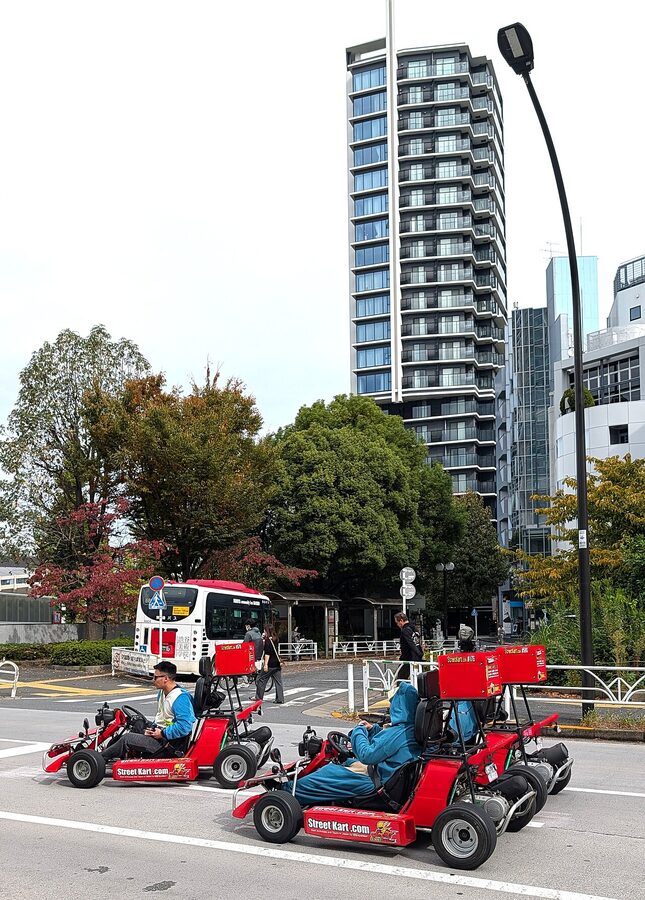
This isn’t something most Tokyo visitor lists include — it’s not cultural, it’s not historical, and it carries a real dose of risk (a few accidents per year; nothing major, but enough that the operators are strict about briefings). Three main operators run the tours, clustered in Shibuya, Shinjuku, and the eastern districts around Asakusa. Each covers a different Tokyo route, which is actually the main variable when you’re picking which to book. The costume angle and the photo opportunities are consistent across all three; the neighbourhoods you drive through are not.
Short on time? Here are my top picks:
Best for the Shibuya experience: Tokyo: Street Kart Experience in Shibuya — $74, the most-booked version. Drives across Shibuya Crossing and through the famous Scramble intersection.
Best for smaller groups: Private Go-Karting Tour of Shinjuku — $99, private booking through Shinjuku and Harajuku. Slightly more expensive, more tailored pacing.
Best for eastern Tokyo route: Tokyo: Asakusa, Skytree, and Akihabara Go-Kart Tour — $96, a longer route across historic Asakusa, the Skytree district, and Akihabara’s Electric Town.
- Wait, Legally?
- The 3 Best Tokyo Go-Kart Experiences
- 1. Tokyo: Street Kart Experience in Shibuya —
- 2. Private Go-Karting Tour of Shinjuku with Cartoon Costumes —
- 3. Tokyo: Asakusa, Skytree, and Akihabara Go-Kart Tour —
- The Routes — Which Neighbourhoods You Actually Drive
- The Costume System
- What to Expect During the Tour Itself
- Weather, Time of Day, and Seasonal Windows
- Safety Reality Check
- Children, Couples, and Everyone Else
- Booking Tips
- More Tokyo Experiences
Wait, Legally?
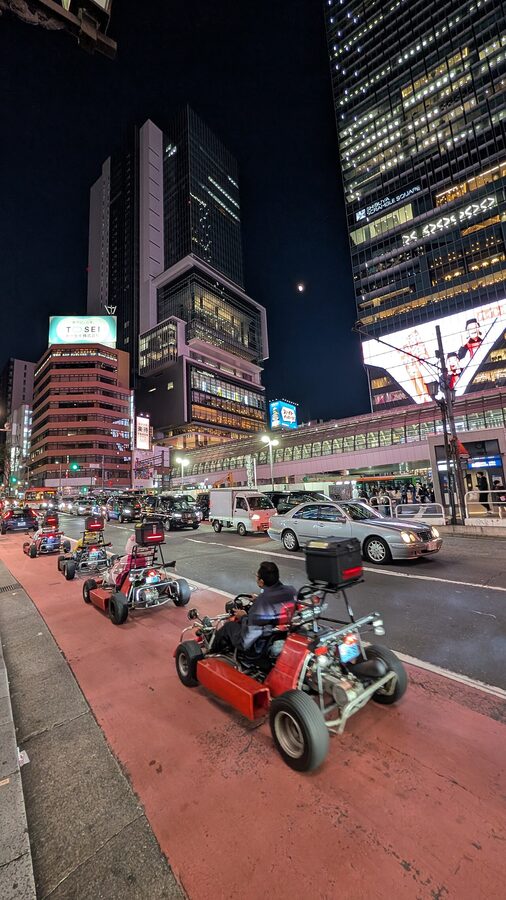
Yes. The karts are registered as “mini cars” (minicar) under Japanese road law — a specific classification for small vehicles under 50cc engine size, or electric equivalent. They have legitimate number plates, legal headlights and brake lights, and signal indicators. The operators maintain fleets of 20-50 karts each and have been running public-road tours since about 2014.
The license requirements are real: you need a valid driving license from your home country AND an International Driving Permit (specifically, a 1949 Geneva Convention IDP; the 1968 Vienna Convention IDP that many European countries issue does NOT work in Japan). American, Canadian, Australian, UK, and most European drivers can get the right IDP from their home country’s automobile association. If yours doesn’t cover Japan (check before booking), your only option is a short Japanese driving license conversion which takes weeks.
The kart operators check documentation at the start of each session and will refuse the booking (with refund) if the paperwork doesn’t check out. Save yourself the frustration and verify your IDP before booking.
The 3 Best Tokyo Go-Kart Experiences
1. Tokyo: Street Kart Experience in Shibuya — $74
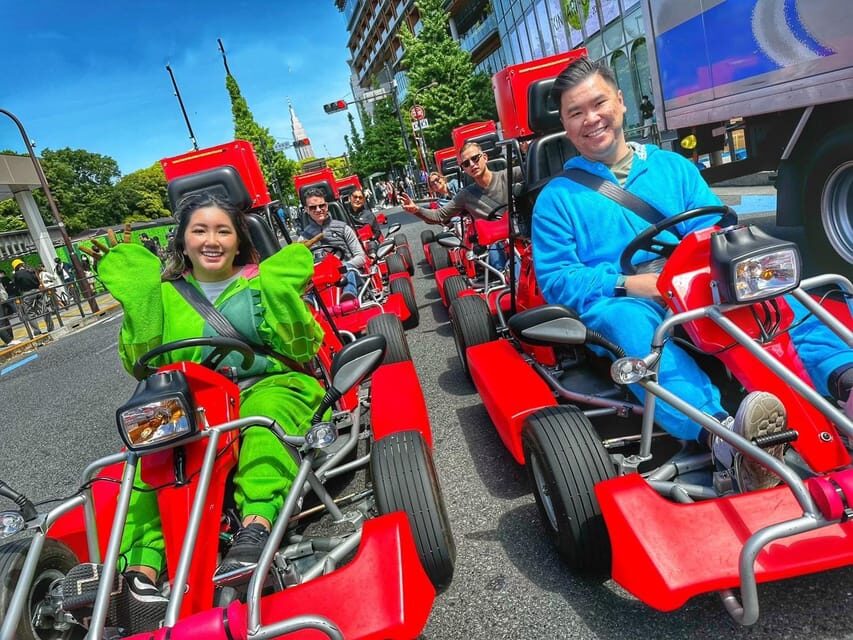
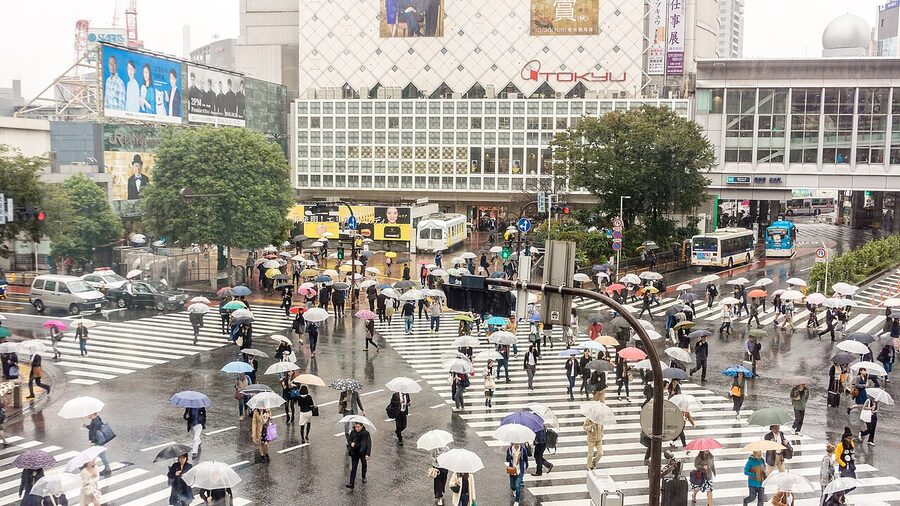
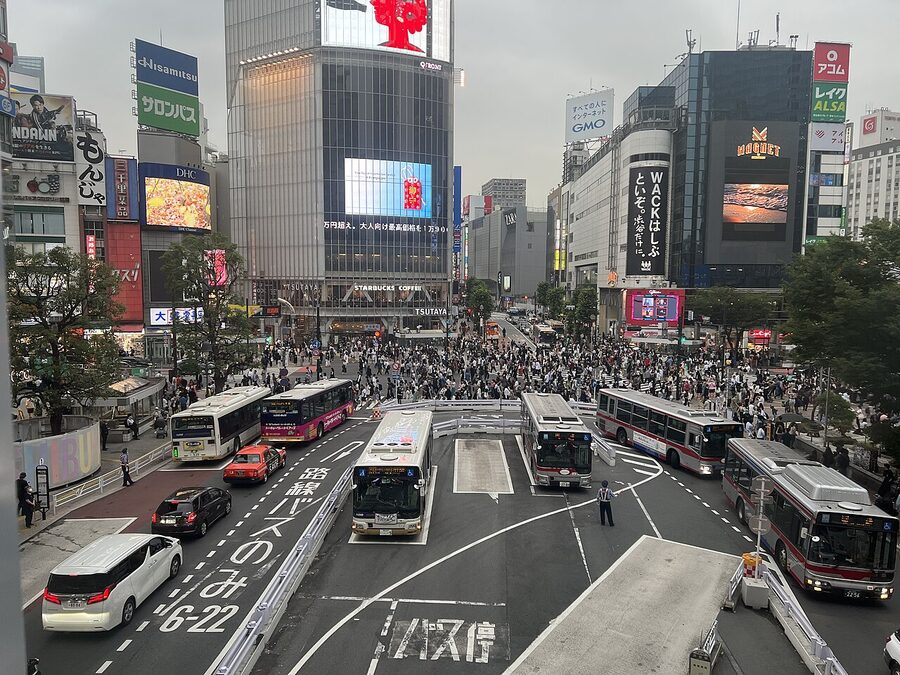
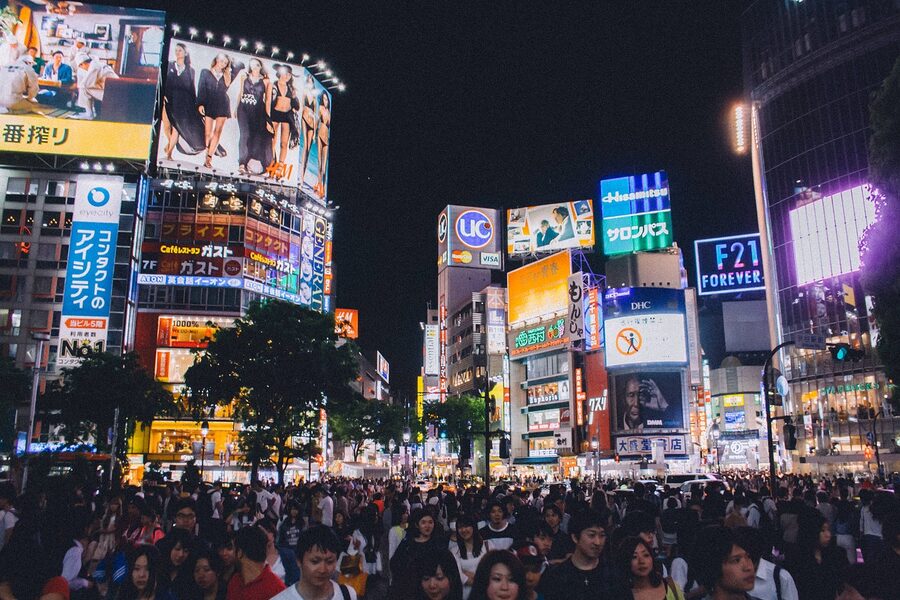
This is the most-booked go-kart tour in Tokyo. The route covers about 15-18 km across Shibuya and the adjacent Harajuku/Omotesando districts, including the full pedestrian-crossing pass through Shibuya Scramble at a precise moment — a pause for the light change, then 40 seconds across the crossing with all the cameras trained on your group. The kart fleet is electric (quieter) at most recent versions. Tours run 90-120 minutes; meeting point is a garage near Shibuya Station. Guided in formation (you follow a lead instructor with a hand-held signal radio). Costume rental is included. Our full review covers the route specifics and costume selection.
2. Private Go-Karting Tour of Shinjuku with Cartoon Costumes — $99
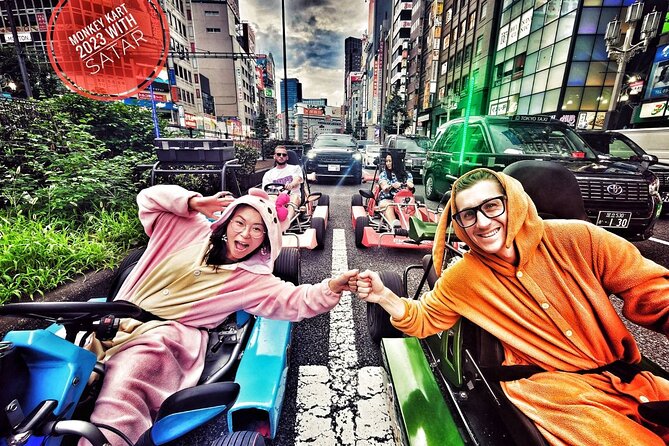
This is the premium option — you book the whole tour for your group (1-4 people), so the pacing is yours. The route covers Shinjuku, Yoyogi Park, Harajuku, and Omotesando — different from the Shibuya version in that you get more of Shinjuku’s neon-district atmosphere (particularly at night), and you pass fewer crowded crossings and more open-road stretches. The slower pace compared to a group tour means more stopping for photographs and more time choosing your own angles at the interesting sites. At $99 per person for a group of 2 (total $198), the private format runs about 30% more than two separate spots on the Shibuya tour. For couples who want the photo set, it’s often worth the premium. Our review compares the private vs group formats.
3. Tokyo: Asakusa, Skytree, and Akihabara Go-Kart Tour — $96
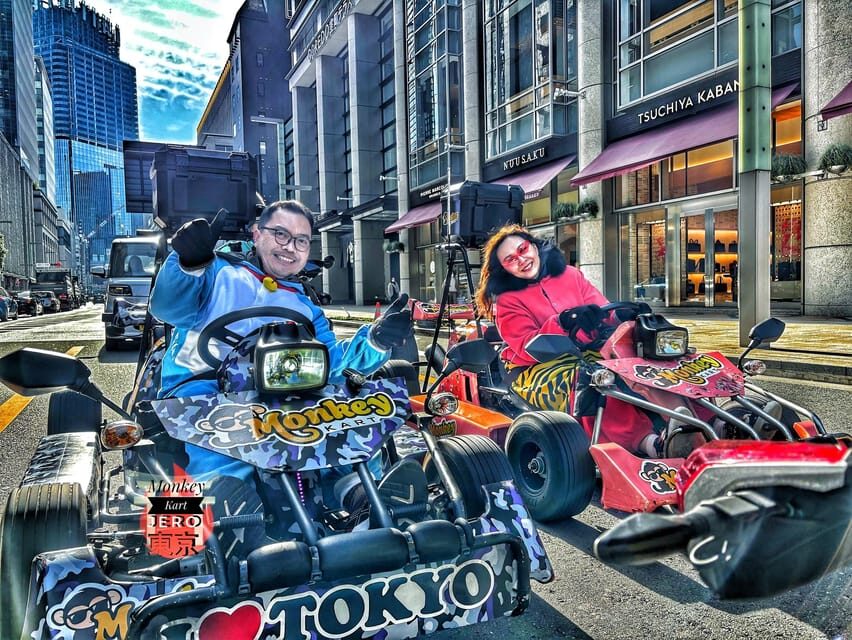
The route difference is what makes this worth the extra $20 over the Shibuya standard. Instead of the fashion districts, you get traditional old Tokyo (Asakusa with its temple gate), then modern Tokyo (the Skytree looming above the route for a full kilometre), then geek Tokyo (Akihabara’s Electric Town in its late-afternoon sign-lit form). The tour runs 2-3 hours with several short pausing points for photographs. The eastern districts have less traffic and slightly more predictable driving conditions than Shibuya, which some nervous first-time karters actually prefer. Start and end point is near Asakusa. Our review covers the specific neighbourhood transitions.
The Routes — Which Neighbourhoods You Actually Drive
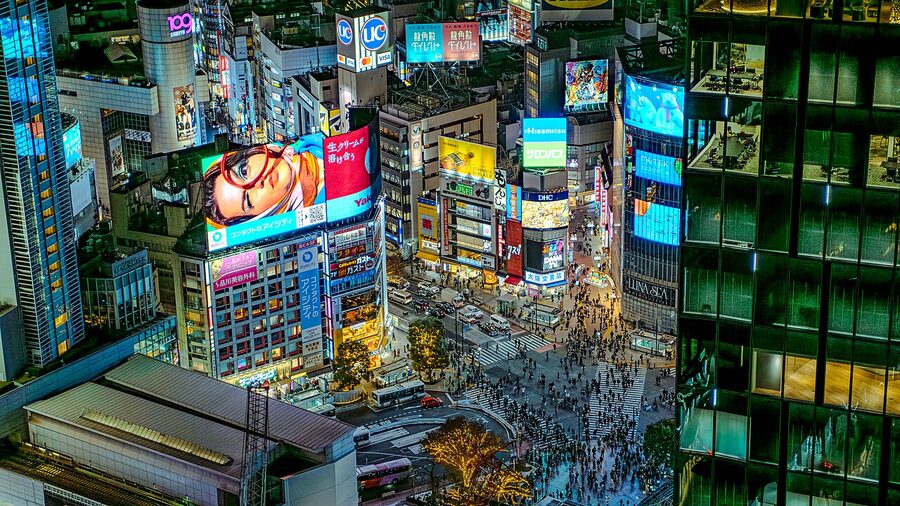
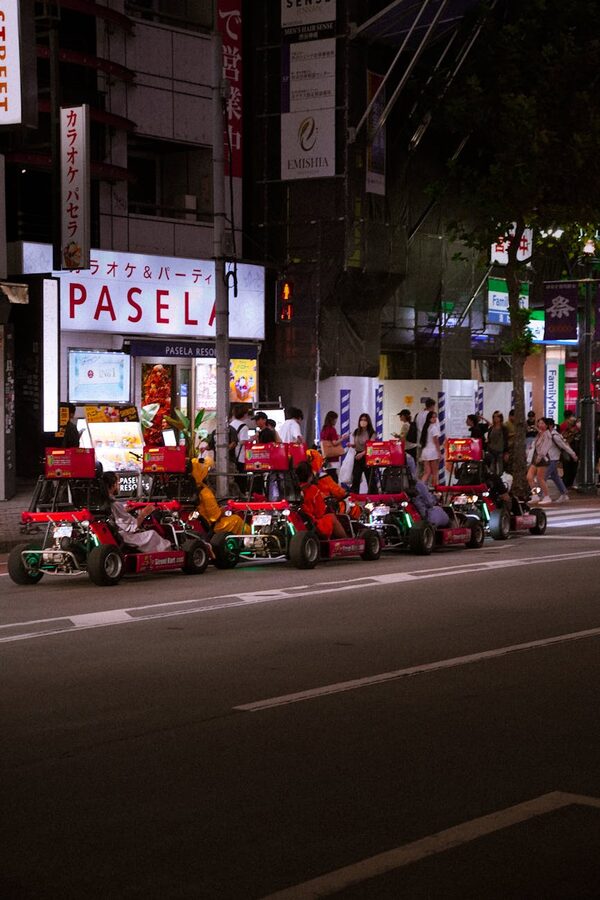
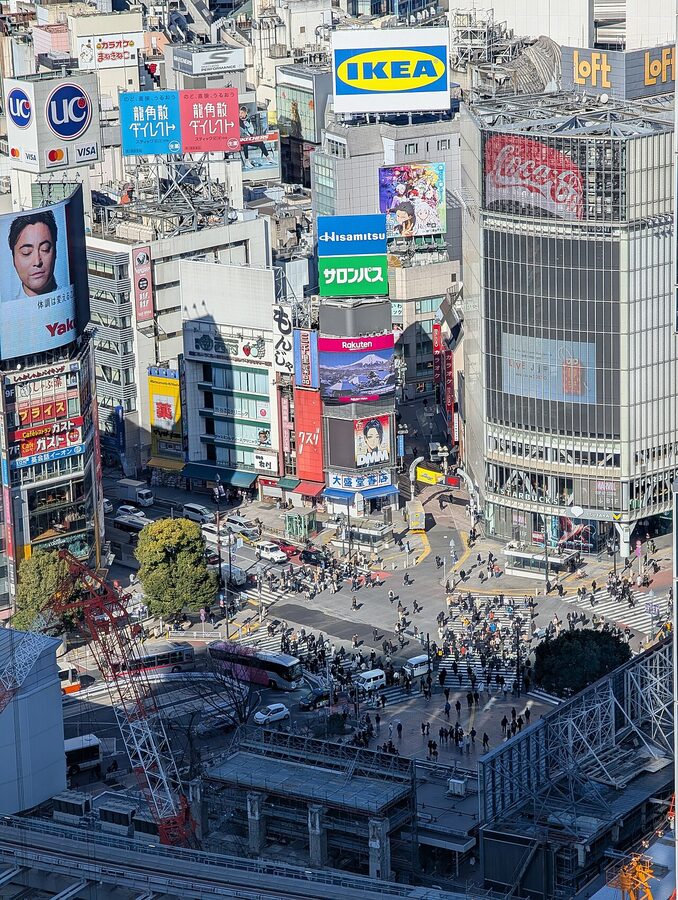
The Shibuya route (Tour 1) starts at a garage near Shibuya Station, loops through Omotesando-dori, cuts into Harajuku’s narrow Takeshita-dori (where the karts slow to single-file pace for the pedestrian-heavy zone), crosses back through the main Shibuya intersections, and returns to the starting garage. The route is concentrated — about 12-15 km over 90 minutes — and includes the single most-photographed moment of the tour: the pass through Shibuya Scramble.
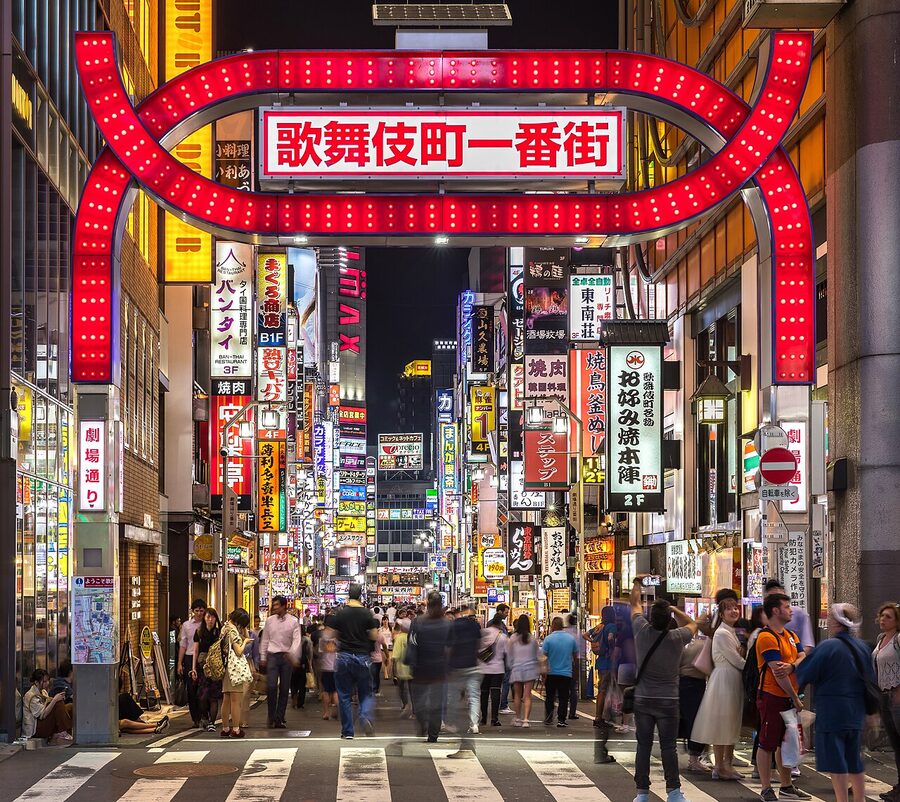
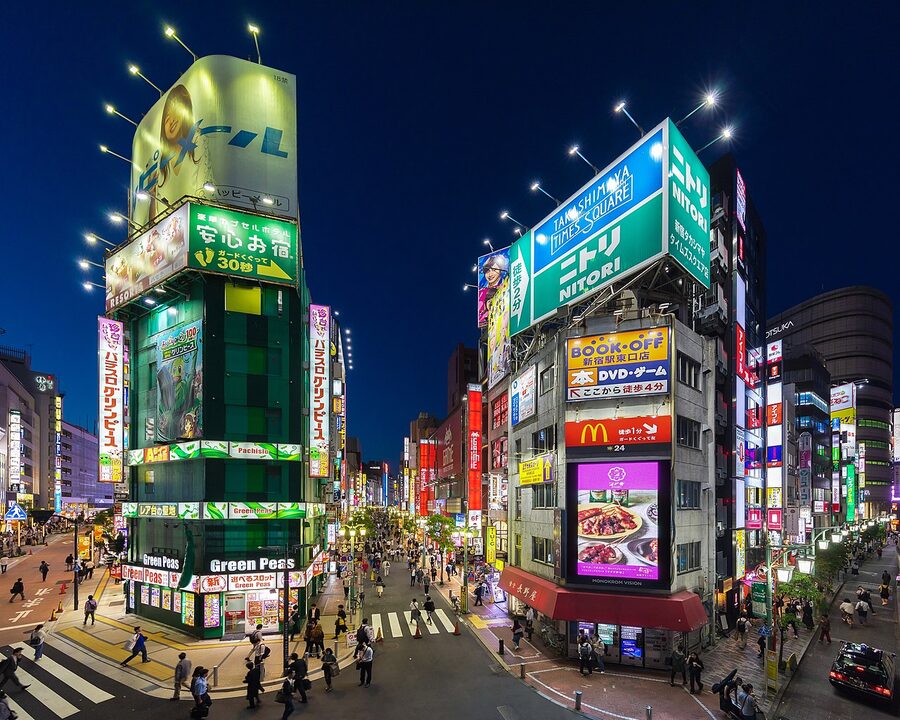
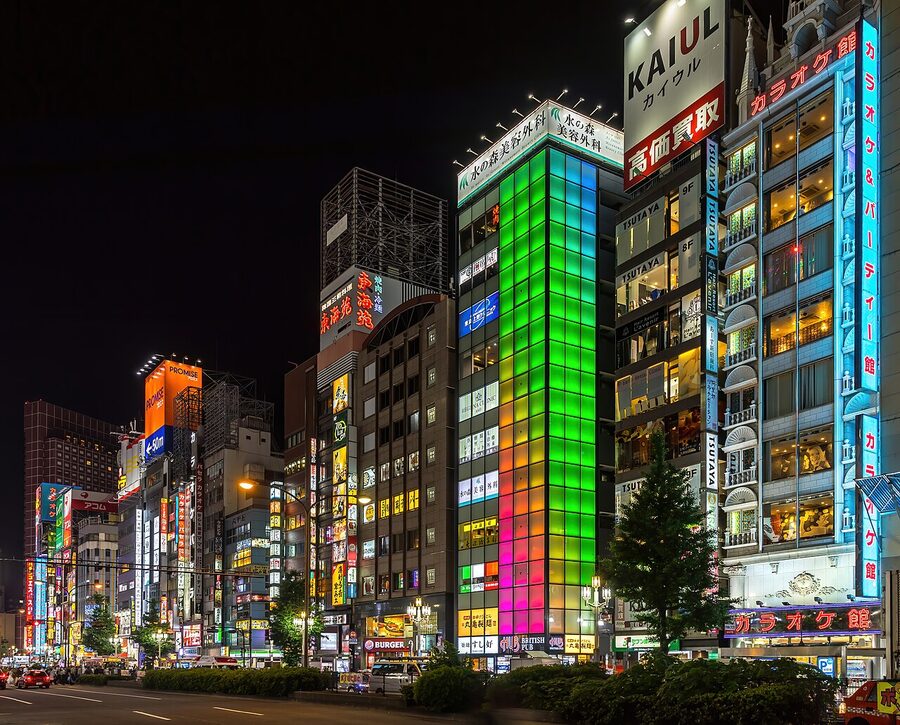
The Shinjuku route (Tour 2) focuses on the west-side entertainment district and the adjacent green spaces. You start near Shinjuku Station, cross into Kabukicho (the neon-heavy red-gate district), drive past the Shinjuku Golden Gai alleyways, out into Yoyogi Park and around Harajuku, and back. The route is less intensely photographed — you don’t get the single-icon Shibuya Scramble moment — but the variety is higher. Kabukicho at dusk is spectacular from a kart seat.
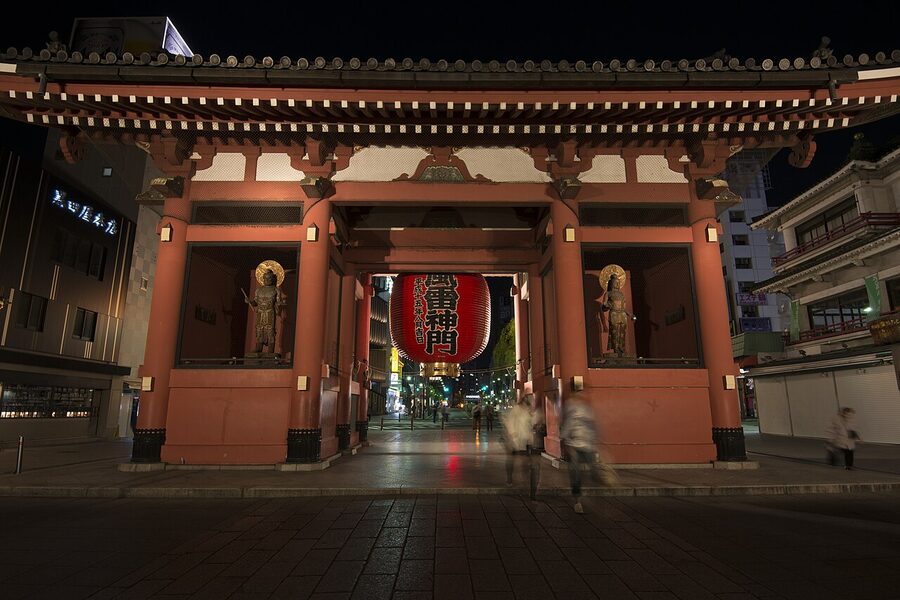
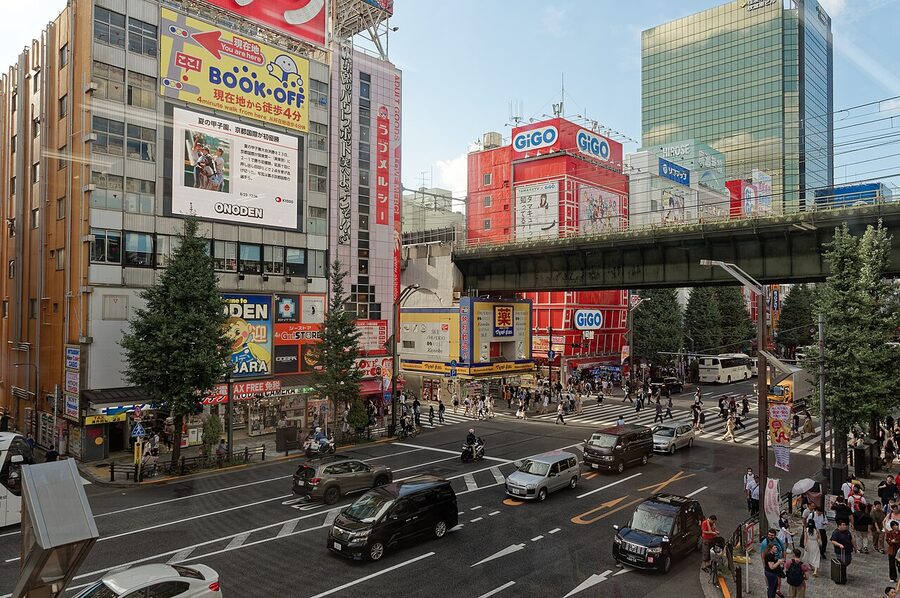
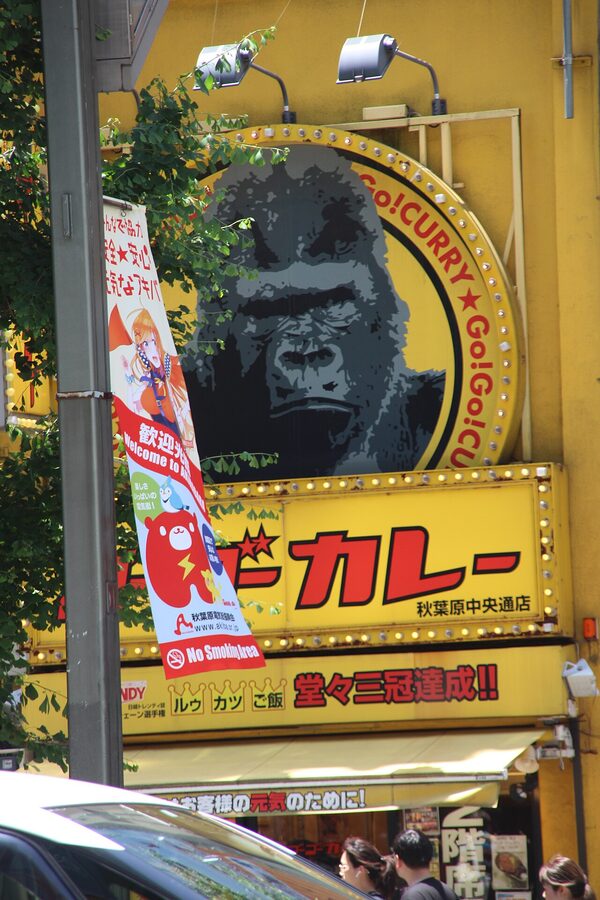
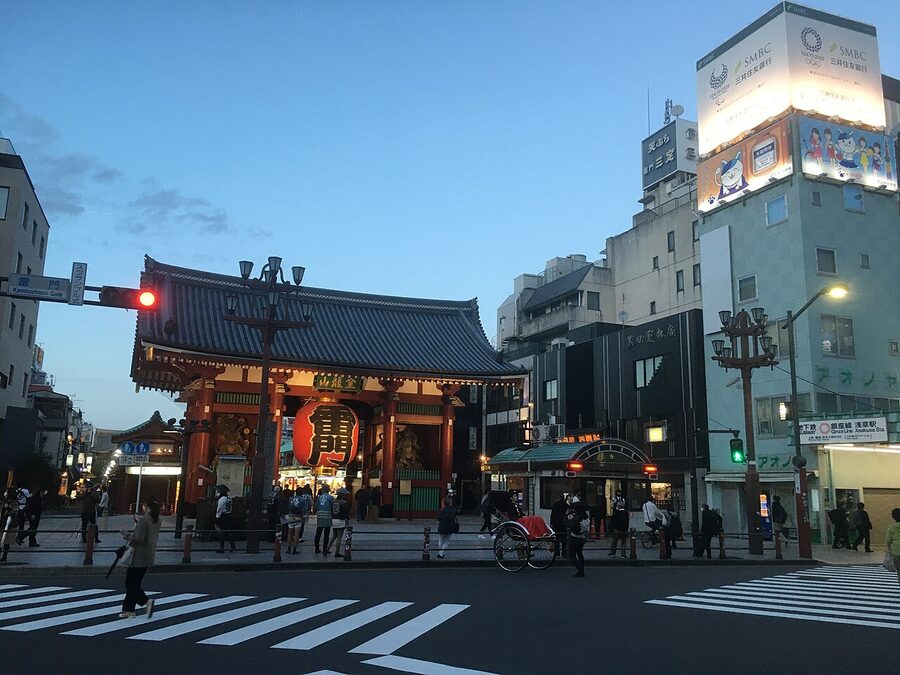
The eastern Tokyo route (Tour 3) covers a wider geographic spread: Asakusa’s Senso-ji Temple gates, across the Sumida River with the Skytree visible to your left the whole time, into Akihabara’s Electric Town with its rolling walls of anime and electronics signage, and back via the Imperial Palace moat. Longer tour (roughly 2.5 hours) with more distance covered but less iconic pedestrian-crossing moments. Good pick for travellers who want the variety pack rather than the single headline shot.
The Costume System
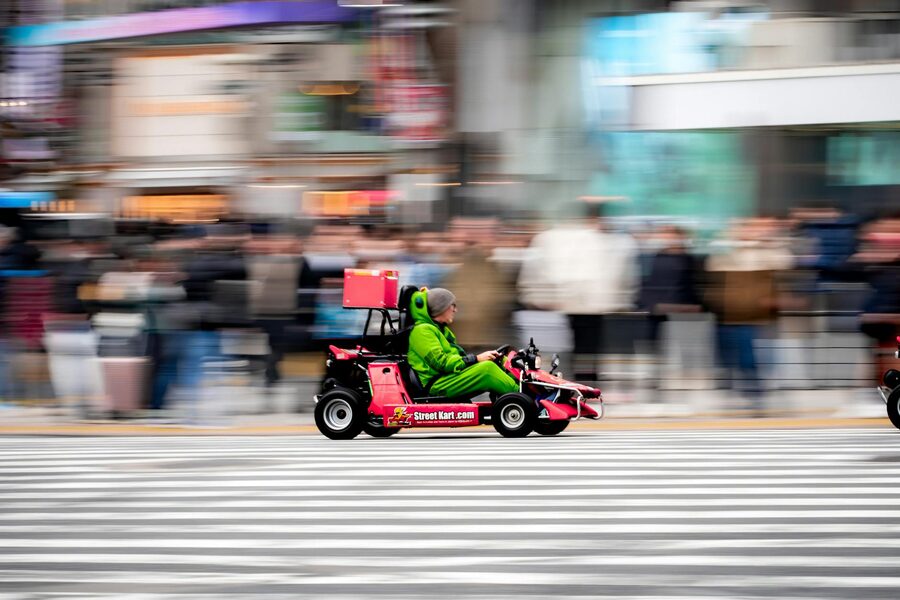
The costumes are included in all three tour prices. Operators maintain a closet of 15-30 options per branch, typically including superhero riffs (Spider-Man, Batman, Wonder Woman), general cartoon figures, and anime-inspired jumpsuits. Famously, the operators lost a lawsuit brought by Nintendo in 2018 that prohibited them from using Mario, Luigi, Pikachu, and similar specifically-licensed characters — so the current costumes are careful not-Mario, not-Pokémon designs that evoke the style without the trademarks.
Practically: pick a costume that fits well and is comfortable. You’ll wear it for 2-3 hours, sweating under a helmet. Thinner costumes are preferable in summer; heavier costumes in winter. Many operators now offer themed package combinations (costume + group uniform + photo package) at a small upcharge.
What to Expect During the Tour Itself
The full tour day looks roughly like this. Check-in is 30 minutes before the scheduled start — you present your passport, international driving permit, and home-country license. A 10-minute safety briefing covers hand signals, formation rules, what to do if you fall behind, and emergency procedures. A 5-minute test lap in a closed lot lets the instructors verify you can actually drive the kart.
Then the road tour begins. The instructor leads from the front; you follow 5-8 metres behind. Traffic lights, lane changes, and turn signals are communicated by the lead kart’s radio-connected hand signals. The tour stops 2-4 times at specific photo points — usually a scenic crossing, a park, or a famous intersection — for 5-10 minute breaks where you can dismount and take group shots.
Your helmet camera runs the whole tour; most operators include the video footage as part of the post-tour package (a small USB stick you pick up at the end, or a cloud link emailed within 24 hours). The photography from other karters — everyone gets candid shots of everyone else — is the real souvenir.
Tour ends at the same garage you started. You return the kart and costume, sign out, and you’re done. Allow 30-45 minutes at the end for paperwork and photo transfer.
Weather, Time of Day, and Seasonal Windows
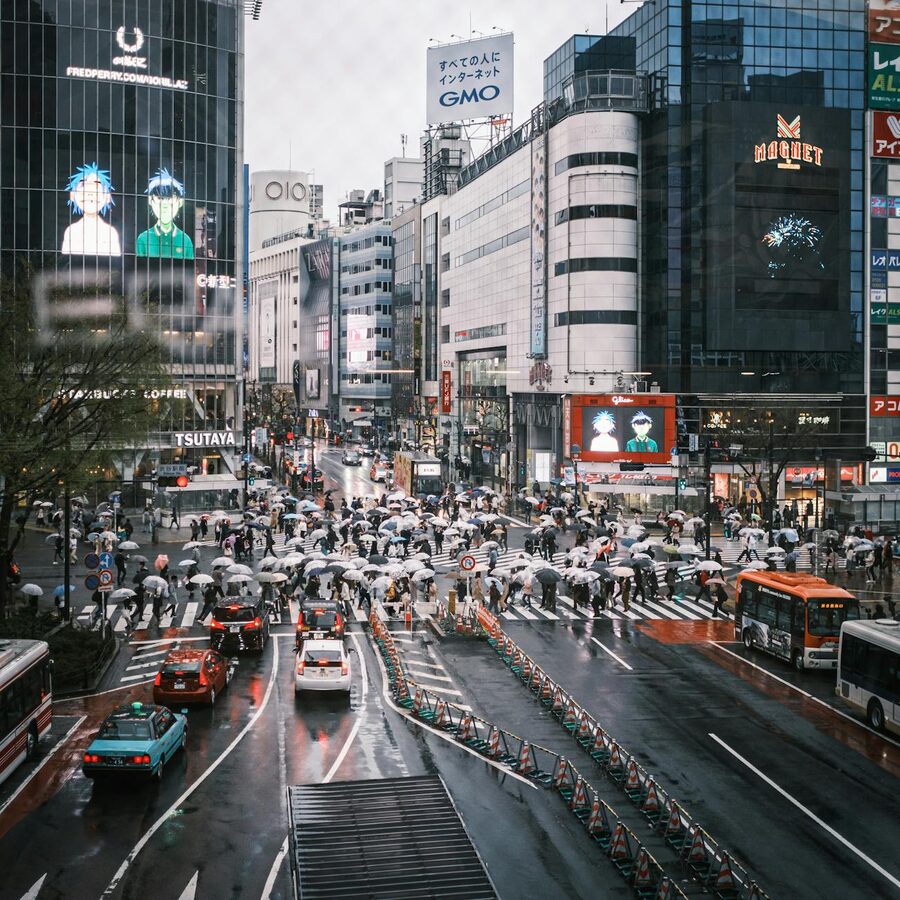
Light rain is fine; heavy rain usually triggers postponement. Snow shuts the tours down completely (rare in central Tokyo but occurs 1-3 days per winter). The karts are unroofed, which makes rainy rides genuinely uncomfortable. Most operators offer free rescheduling for weather cancellations.
The best time of day depends on which route you pick. The Shibuya route works best mid-afternoon (2-4 pm) when traffic is lightest and the Scramble Crossing still has pedestrian density for the photograph. The Shinjuku route works best in evening (5-7 pm) to hit Kabukicho at blue hour. The eastern Asakusa route works in either morning or afternoon — the sunlight angles favour 10-11 am for Asakusa specifically.
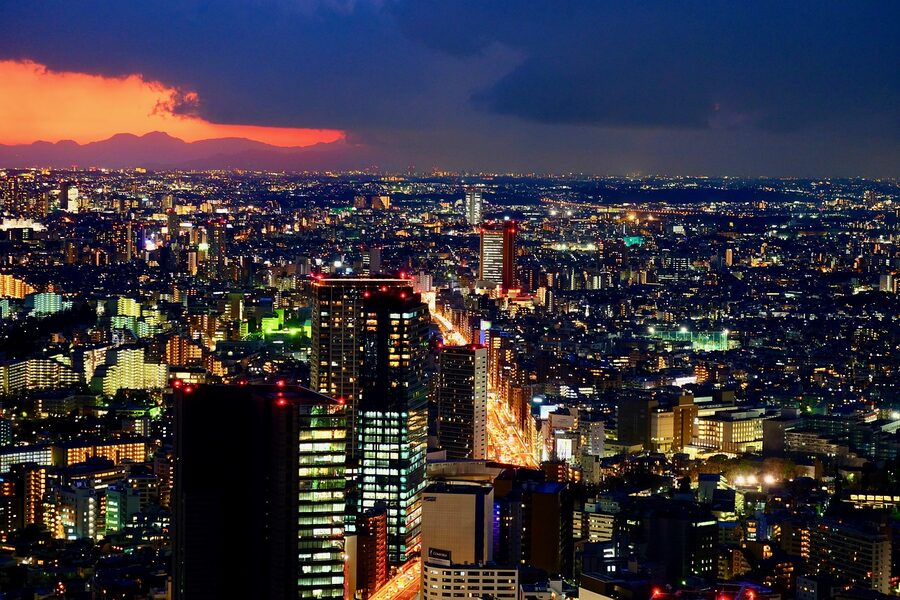
Seasonally, the kart tours run year-round but are clearly optimised for spring and autumn. Summer (July-August) has high humidity that makes the costume uncomfortable, and the asphalt heat makes the ride noticeably warmer. Winter (January-February) is cold at kart seat level — pack a warmer jacket than you’d think from the temperature forecast; the wind chill on a moving kart is meaningful.
Safety Reality Check
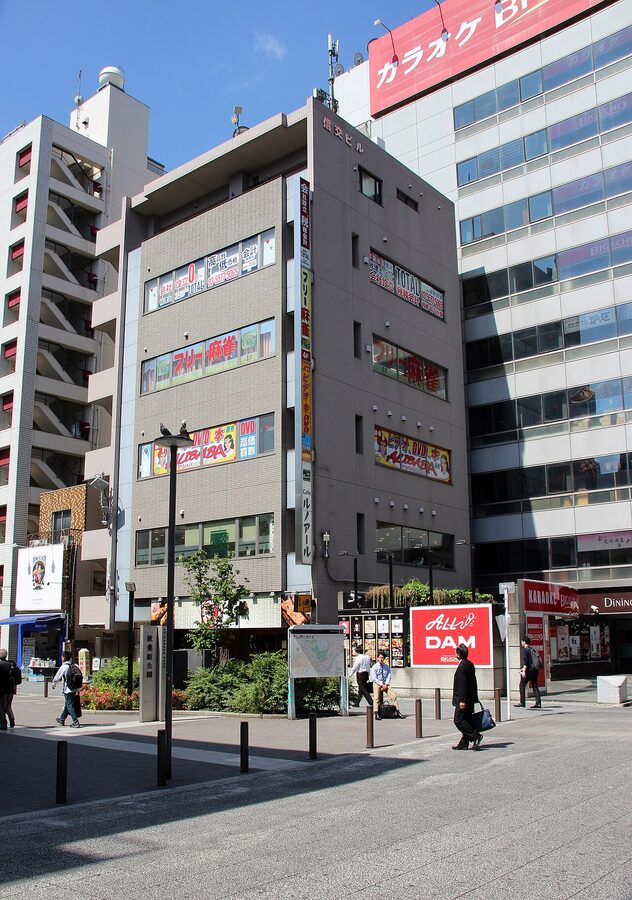
Accidents happen. Over the past decade of operation, there have been several incidents — usually minor collisions with street furniture or between karters, occasionally more serious involvement with other vehicles. The tour operators maintain insurance, but you’re driving your own vehicle and bear liability risk. Read the waiver carefully before signing it.
Practical safety notes: wear closed-toe shoes (sandals will not be permitted), keep the helmet strap tight, follow the instructor’s hand signals literally, and don’t check your phone while driving. The karts accelerate faster than you expect at first — give yourself 10-15 minutes of the test lap to calibrate your reflexes.
Alcohol before a tour is strictly forbidden and operators do check. Arrive sober. Having a drink after is fine, but the kart keys aren’t coming out of the garage if you’ve been drinking beforehand.
Children, Couples, and Everyone Else
Minimum age is typically 18, with some operators accepting 16+ with a parent’s co-signature on the waiver. Passengers are not allowed on the kart — it’s a single-seat vehicle only. If you’re travelling as a family with younger children who want the costumed-kart experience, the commercial go-kart tracks around Tokyo (not street tours, fixed-track racing) are a better option for under-18s.
Couples book this tour constantly — the photo set is a perfect anniversary souvenir, and the shared experience is unusually memorable. Groups of friends book it as a bucket-list Japan activity. Solo travellers can book and will be slotted into a group tour; the instructor-led format means you’re not alone on the road.
Booking Tips
Book 5-7 days ahead in normal months; 2-3 weeks ahead for cherry blossom season, Golden Week, and other peak periods. The Shibuya tour fills first; both the private Shinjuku and eastern Asakusa tours usually have more near-term availability.
Before you pay, confirm three things: your IDP is the 1949 Geneva Convention version, your home driving license is currently valid and not suspended, and you have at least one year of driving experience (most operators require this though they don’t check it in detail). The operators will not issue refunds if you fail documentation at check-in.
What to wear: closed-toe shoes (trainers work fine), comfortable clothes that the costume goes over easily (a simple t-shirt and pants are ideal), and a light layer for winter tours. Leave bulky items at your hotel; the operators provide lockers for your passport and phone during the ride.
Bring your phone (for photos at stops) and a portable charger. The helmet-cam footage captures the road view; your phone photos are the dismounted group shots and the selfies at checkpoints.
More Tokyo Experiences
A go-kart tour pairs well with other Tokyo experiences depending on timing and energy. Our Tokyo Skytree guide is the natural eastern-Tokyo pairing — kart tour in late afternoon, Skytree at sunset. Asakusa Sensoji walking tour covers the same eastern neighbourhoods at walking pace, which is a good contrast. Tokyo Shibuya walking tours cover Shibuya on foot after you’ve seen it from kart level. Tokyo teamLab Planets is the high-stimulus alternative indoor experience. Tokyo ramen tasting tour is the standard post-kart food recovery. Tokyo sumo show is the completely-different traditional counterpart for a same-week Tokyo plan. For day trips beyond the city, Mt Fuji + Hakone day trip is the classic option, and Mt Fuji private tours the upgrade. If you’re heading to Kyoto, Kyoto UNESCO bus tour and Kyoto tea ceremony are the recommended first-day Kyoto pair. Most kart-tour bookers place this as a day-one arrival-energy activity — you’ve just landed, the adrenaline hits, and the photographs establish the rest of the Tokyo trip. It’s a calibration experience for what the rest of your itinerary can expect to feel like.