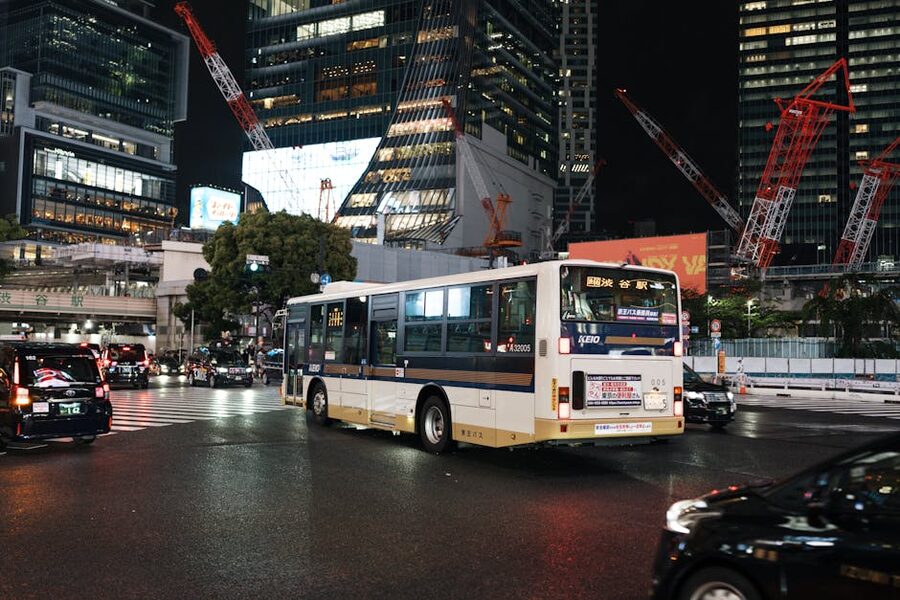
The public Toei bus costs 210 yen a ride and drops you where the schedule says, no narration, no flexibility. A Sky Hop pass runs 4,800 yen for the day and lets you stop wherever you want along three routes that hit Tokyo Tower, Asakusa and Shibuya. A full-day Hato Bus coach tour costs roughly 15,000 yen, picks the order for you, and feeds you lunch in between.
Which one is right depends on how much of the day you’re willing to spend figuring things out. The hop-on pass sits in the middle. Below is what it actually gets you, and what it doesn’t.
- In a Hurry?
- What the Hop-On Hop-Off Pass Actually Is in Tokyo
- The three routes
- What the ticket gets you
- How It Compares to the Alternatives
- Versus the public Toei bus
- Versus the coach day tour
- Best Tokyo Hop-On Hop-Off Tickets to Book
- 1. Tokyo: Hop-On Hop-Off Sightseeing Bus Ticket — from
- 2. Hop-On Hop-Off Tokyo Bus by Skyhop Bus (Viator) — from .99
- 3. Tokyo: Open Top Sightseeing Bus with Audio Guide — from
- Where to Board: The Main Stops
- First time tip
- How Long to Budget for a Full Circuit
- What the Three Routes Actually Look Like
- Red Route — old Tokyo
- Blue Route — the view route
- Green Route — the night route
- Is the Sky Hop Ticket Worth It?
- Practical Things Nobody Tells You
- One Day of Tokyo With and Without the Pass
- A Short Bit of Sky Hop History
- More Tokyo Booking Guides
In a Hurry?
1. Tokyo Hop-On Hop-Off Sightseeing Bus Ticket — from $30. The Sky Hop flagship ticket in English. Three routes, unlimited rides for 24 hours, buy on the bus or online.
2. Hop-On Hop-Off Tokyo Bus by Skyhop (Viator) — from $48.99. Same physical bus, sold through Viator with a 2-day option built in. Good if you want the flexibility across two travel days.
3. Tokyo Open Top Sightseeing Bus with Audio Guide — from $11. Not hop-on, but the cheapest open-top ride in Tokyo. 70 minutes, fixed loop, eleven-language audio.
What the Hop-On Hop-Off Pass Actually Is in Tokyo
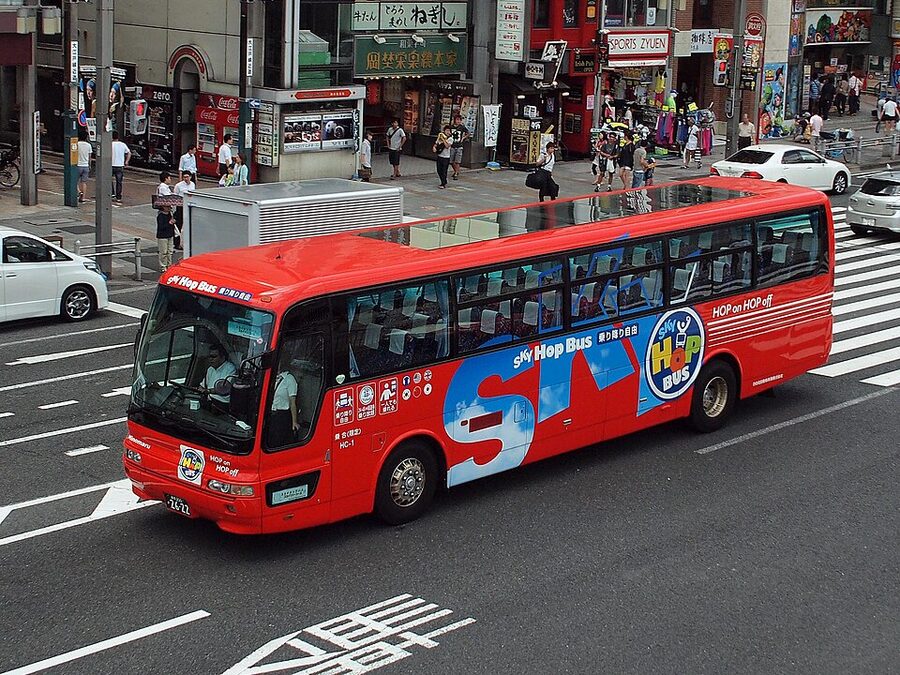
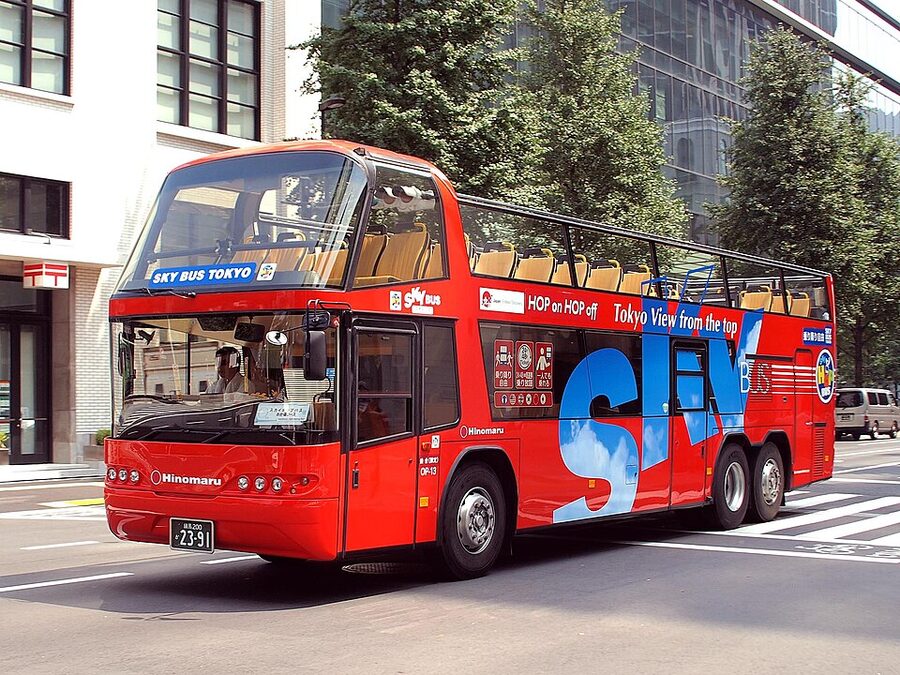
One operator runs the whole hop-on hop-off network in Tokyo: Hinomaru Jidosha Kogyo, the same company that operates the SKY BUS open-top and the SKY Duck amphibious buses. They brand the hop-on service SKY HOP BUS (same thing whether you book it via GetYourGuide, Viator, Klook, or the official site).
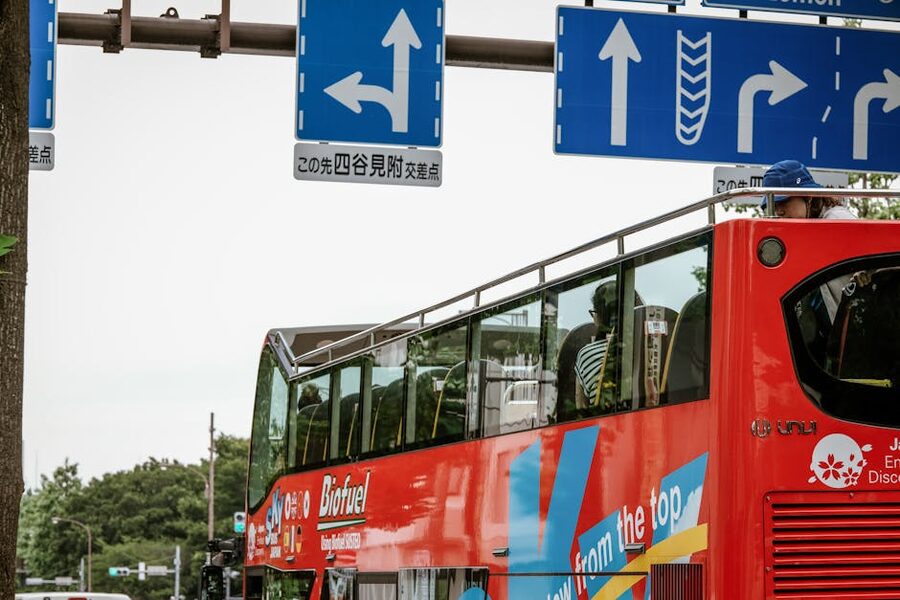
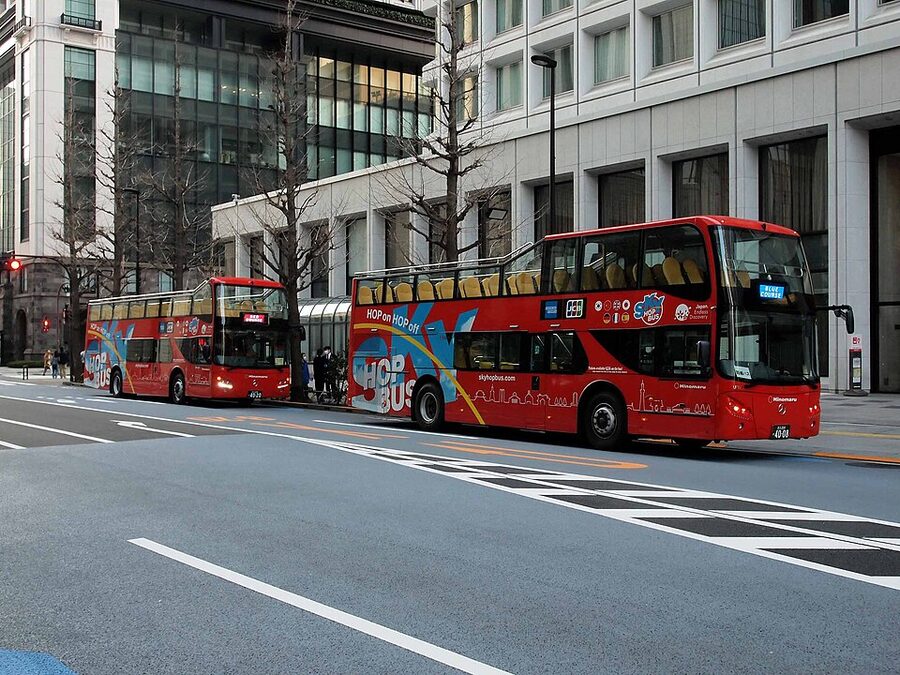
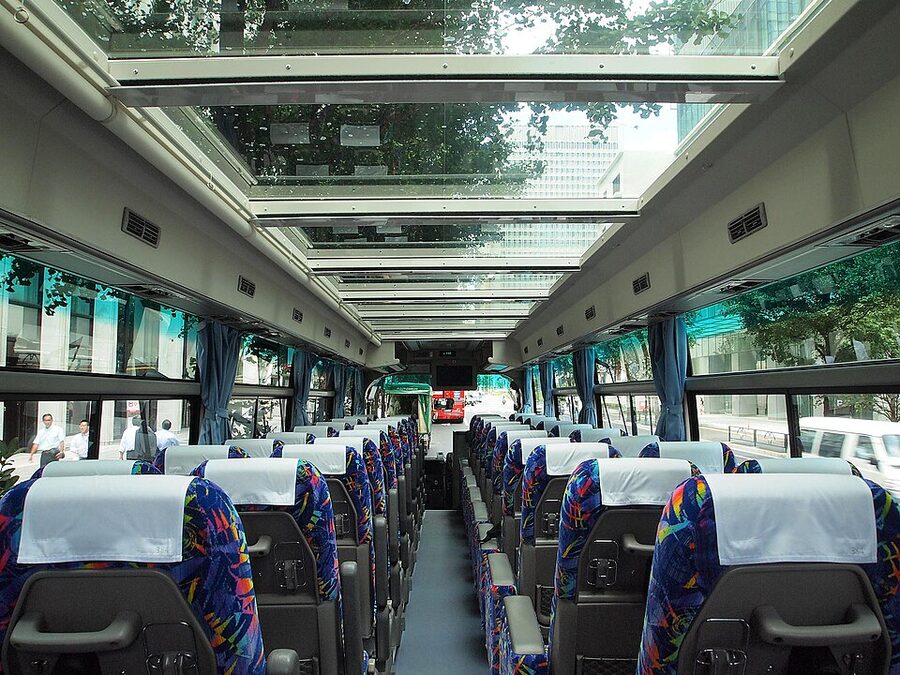
The bus is a red double-decker. The top deck is open-air — no roof, just a glass windbreak in front. When it rains they usually give out ponchos, but the top stays open unless weather gets genuinely rough.
The three routes
You get three colour-coded loops, all departing from Marunouchi Mitsubishi Building next to Tokyo Station. One ticket covers all three — you’re not locked into one route.
- RED — Asakusa and Tokyo Skytree loop. This one loops north-east through Akihabara, Ueno, Asakusa (Sensoji temple), and past Tokyo Skytree. It’s the route most first-timers care about.
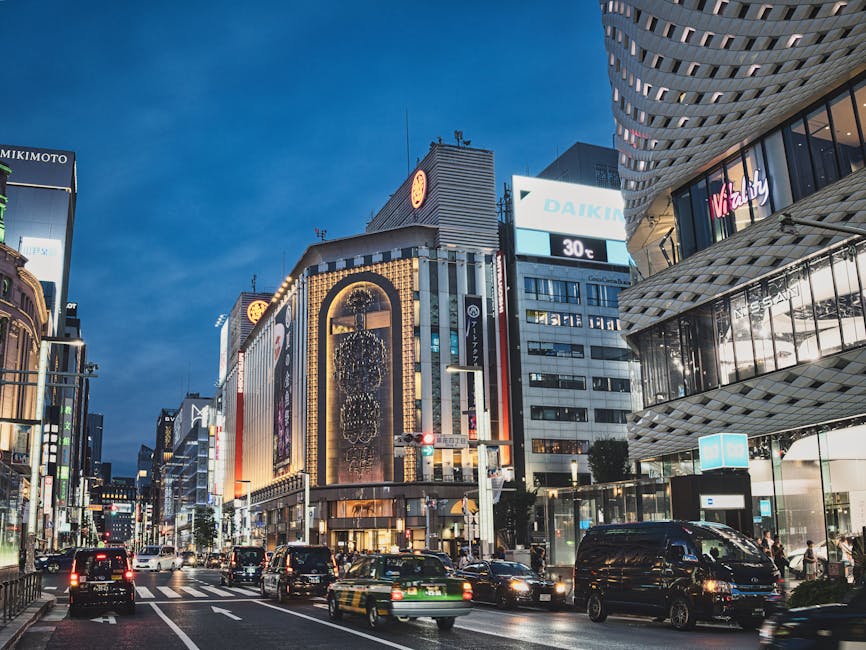
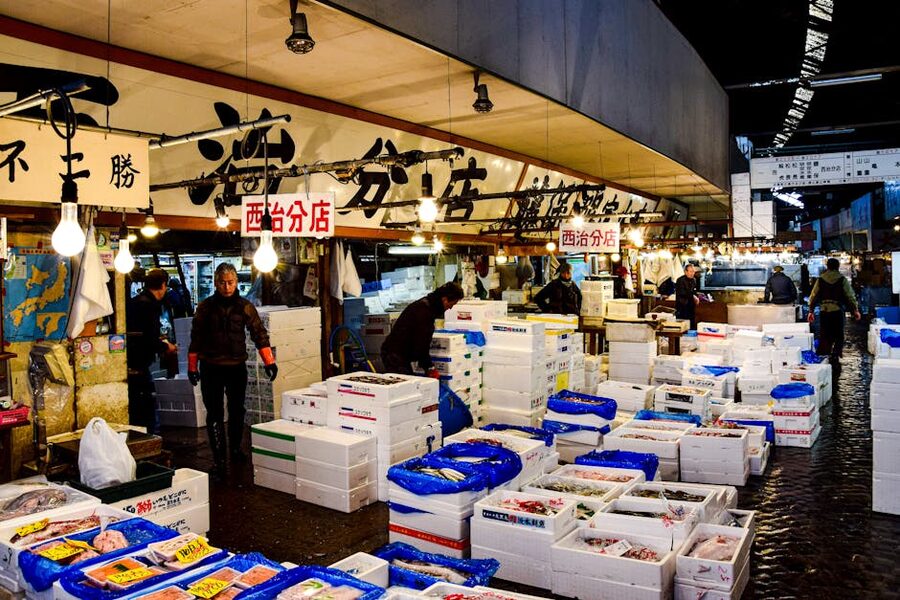
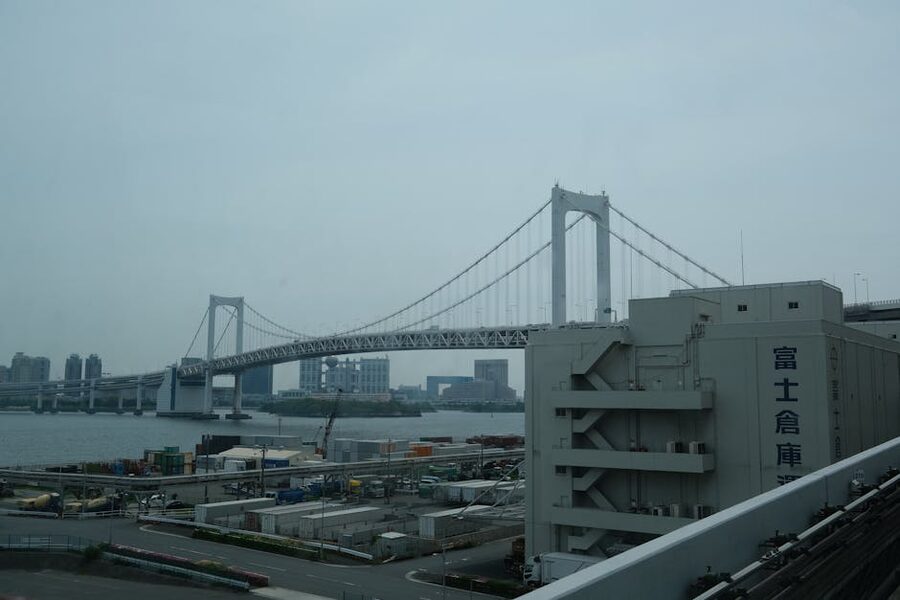
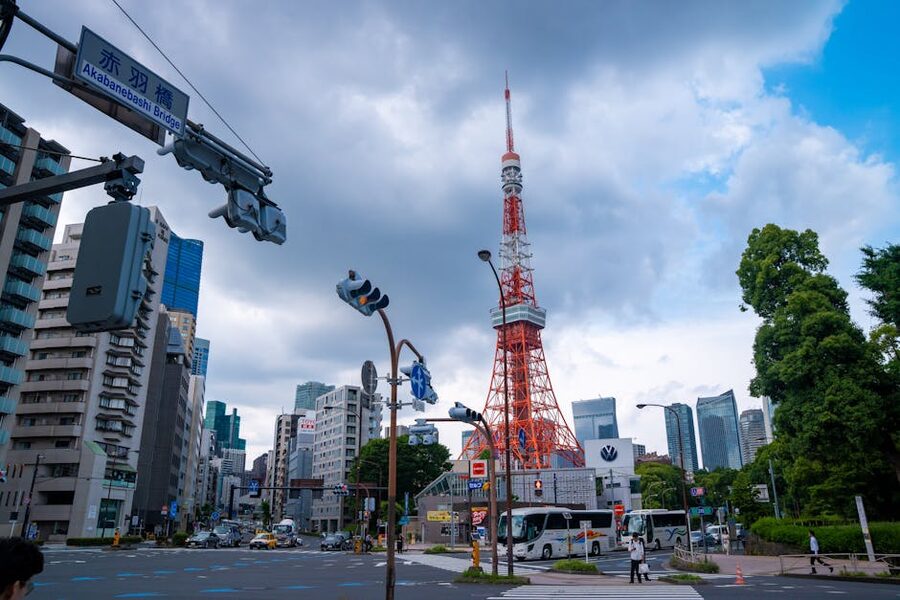
- BLUE — Tokyo Tower, Tsukiji, Odaiba loop. Goes south through Ginza, Tsukiji Outer Market, Tokyo Tower, then across Rainbow Bridge to Odaiba Teleport before looping back. This is the most scenic route for photos from the top deck.
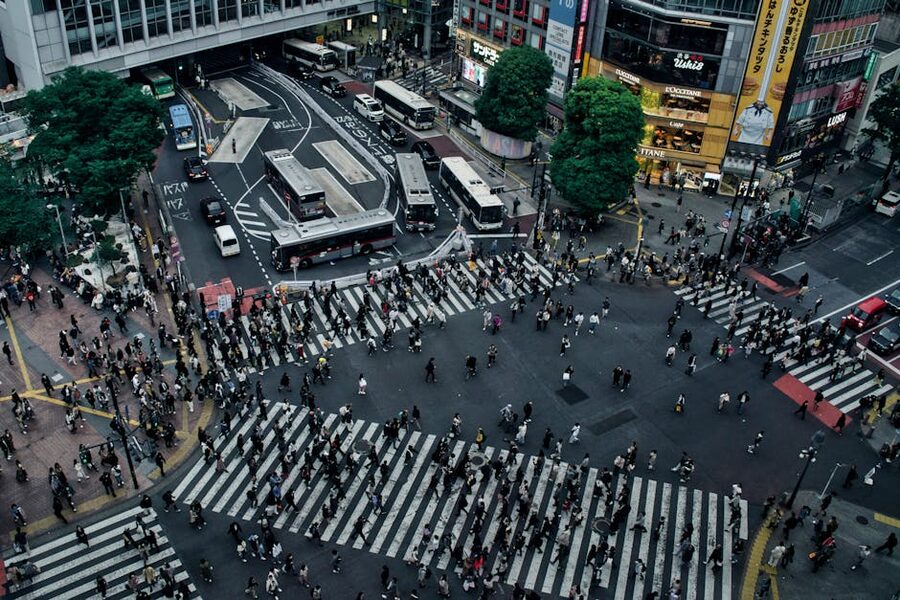
- GREEN — Shinjuku and Shibuya loop. Cuts west through Shibuya Scramble Crossing, Harajuku, and Shinjuku. The route designers know exactly what people want — the bus crosses Shibuya Scramble twice, and you’re riding on the top deck both times.
What the ticket gets you
- Unlimited rides for the ticket window (24-hour or 48-hour)
- All three routes on one ticket
- Audio commentary in 11 languages through earbuds the driver hands out — English, Chinese (simplified and traditional), Korean, Japanese, French, Spanish, Italian, Thai, Portuguese and Indonesian
- Free Wi-Fi on board (useful, slightly temperamental)
- A QR ticket you show on the reader when you board
The 24-hour clock starts from the first time you scan, not from the start of the day. Board at 2pm and you have until 2pm the next day.
How It Compares to the Alternatives
Versus the public Toei bus
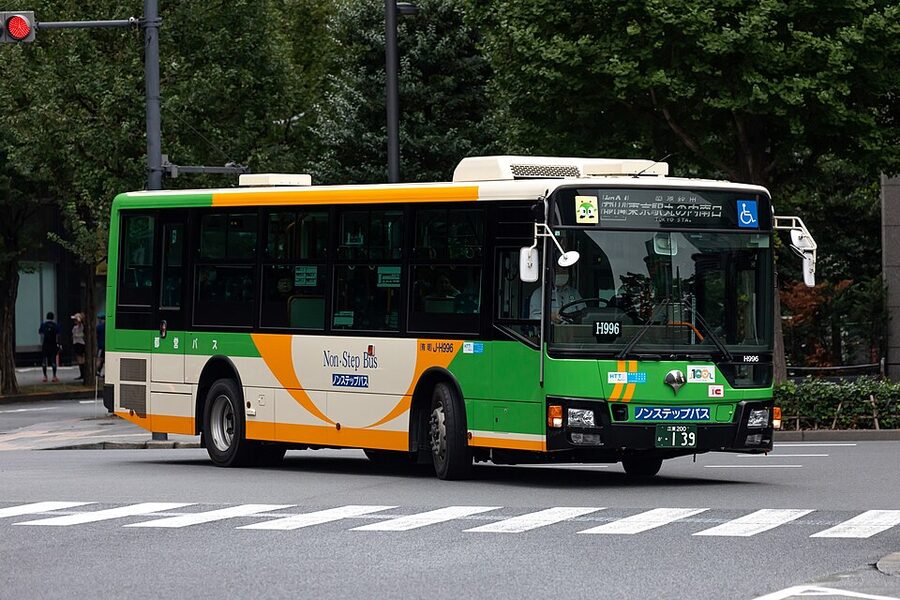
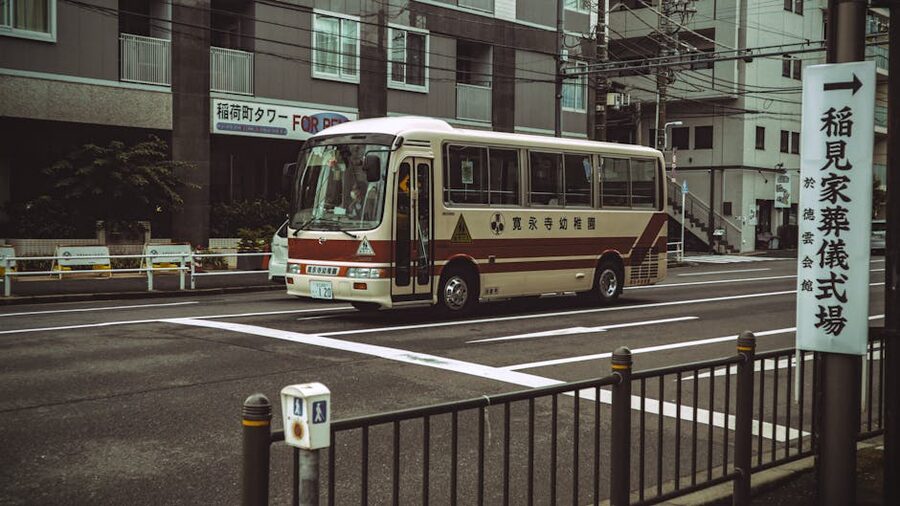
Toei city buses cost 210 yen flat per adult ride and hit many of the same stops — Tokyo Tower, Shinjuku, Asakusa. Break-even point is about 23 rides before the hop-on pass pays off in raw yen. Nobody takes 23 city buses in one day.
The reason you pay more for Sky Hop isn’t the rides. It’s:
- The open top (Toei is all enclosed commuter buses)
- Routes that actually string sightseeing stops together in the right order
- Audio commentary so you know what you’re looking at
- English signage and staff who expect visitors
If you already know Tokyo and just need transport between three specific spots, Toei wins easily. If it’s your first day and you want to orient yourself visually, it doesn’t.
Versus the coach day tour
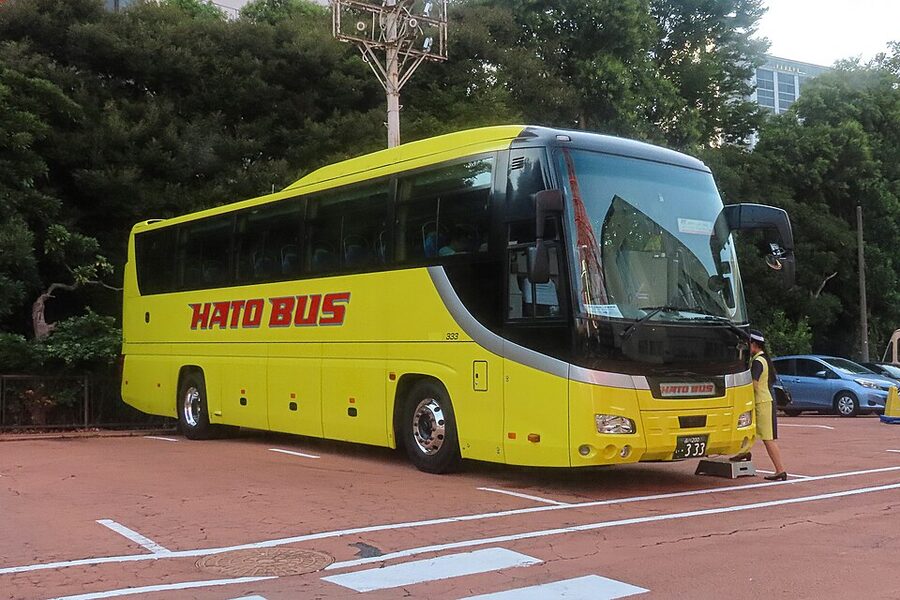
The other option people weigh is a full-day guided coach tour — think Hato Bus or the GetYourGuide coach-with-lunch formats. Those run 12,000 to 16,000 yen, come with a live English guide, and include entry tickets and lunch. You’re on a schedule. The coach picks the order and the duration at each stop.
That’s a separate product. If you want hand-holding on a busy first day, the coach is better — I’ve written a full breakdown of that format in how to book a Tokyo full-day sightseeing tour. If you want to linger at Sensoji for 90 minutes instead of 30, or skip Tokyo Tower entirely because you’re going up Skytree later, the hop-on pass is the one that lets you do that.
Best Tokyo Hop-On Hop-Off Tickets to Book
Three tickets cover almost every way people actually use this format. The first two are the same physical bus sold two ways — so you’re really choosing a booking platform and a duration, not a different experience. The third is a completely different product for people who want the open-top experience for under $15.
1. Tokyo: Hop-On Hop-Off Sightseeing Bus Ticket — from $30
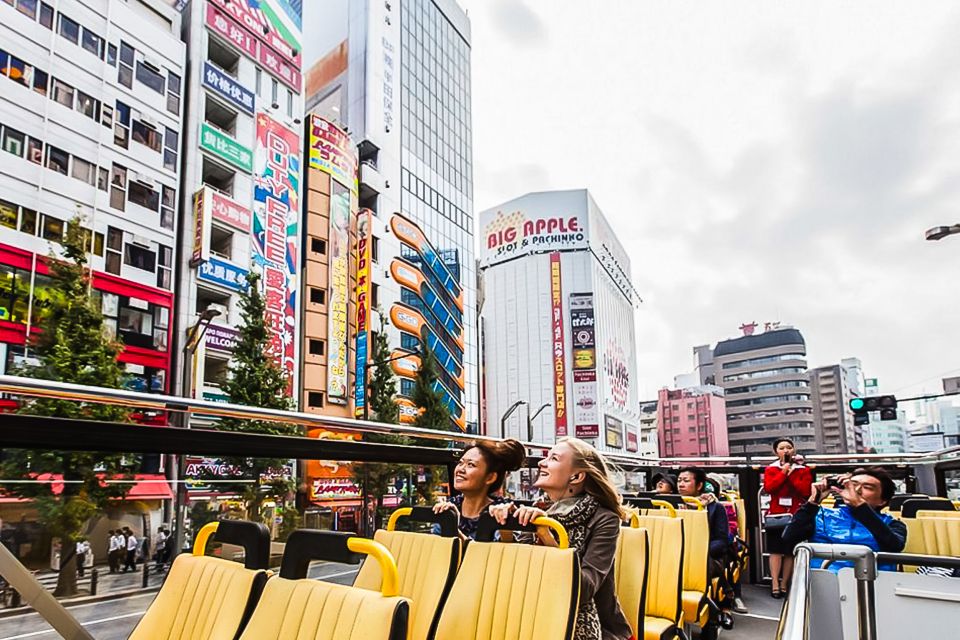
This is the GetYourGuide-sold flagship, the cheapest and most-booked way to get the Sky Hop ticket. Free cancellation up to 24 hours ahead, reserve-now-pay-later, and you can still buy it directly on the bus if you change your mind on the day. Start from Marunouchi or jump on at any of the 18 stops and buy from the driver.
2. Hop-On Hop-Off Tokyo Bus by Skyhop Bus (Viator) — from $48.99
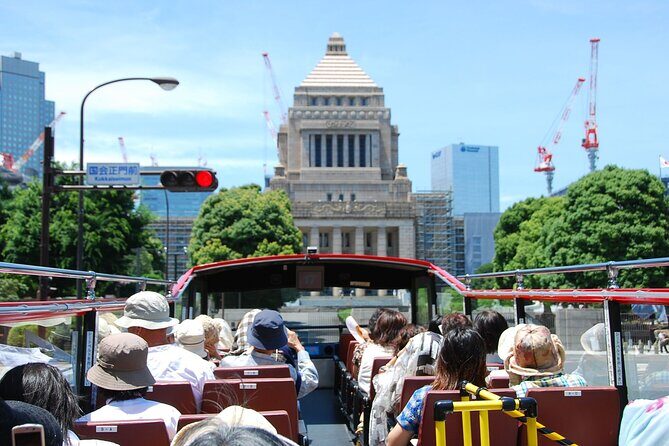
Same buses, same routes, same driver. Where this one earns its price is the 2-day validity — useful if you arrive in the afternoon and want the Red loop the next morning for Asakusa. The Viator listing has 24 reviews so far, not the review cluster of the GYG version, but some readers prefer Viator’s voucher and customer-support style. If you’re already booking the rest of your Tokyo trip on Viator, keeping everything on one dashboard is worth the few extra dollars.
3. Tokyo: Open Top Sightseeing Bus with Audio Guide — from $11
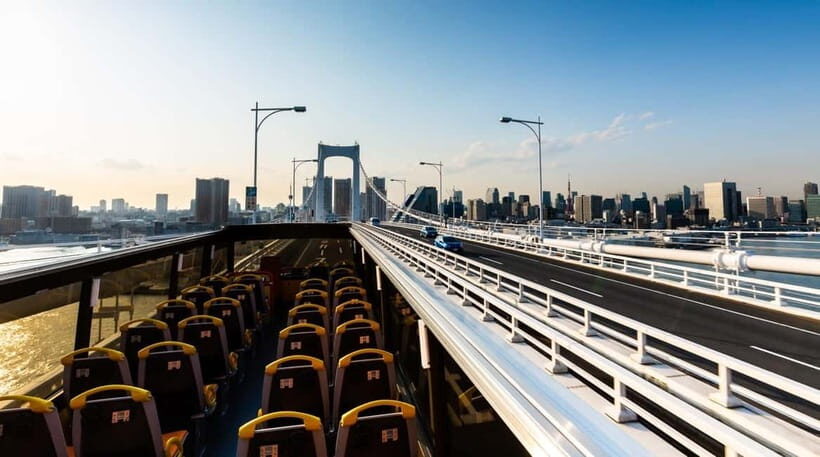
This is the right pick if you don’t need to stop anywhere, you just want the top-deck view of Tokyo with commentary. It’s a 70-minute guided loop with GPS-triggered audio in multiple languages. Reviewer feedback is clear — the background music between announcements can be intrusive, and the fixed route means you ride past Shinjuku rather than get out in it. For $11 those trade-offs are fine.
Where to Board: The Main Stops
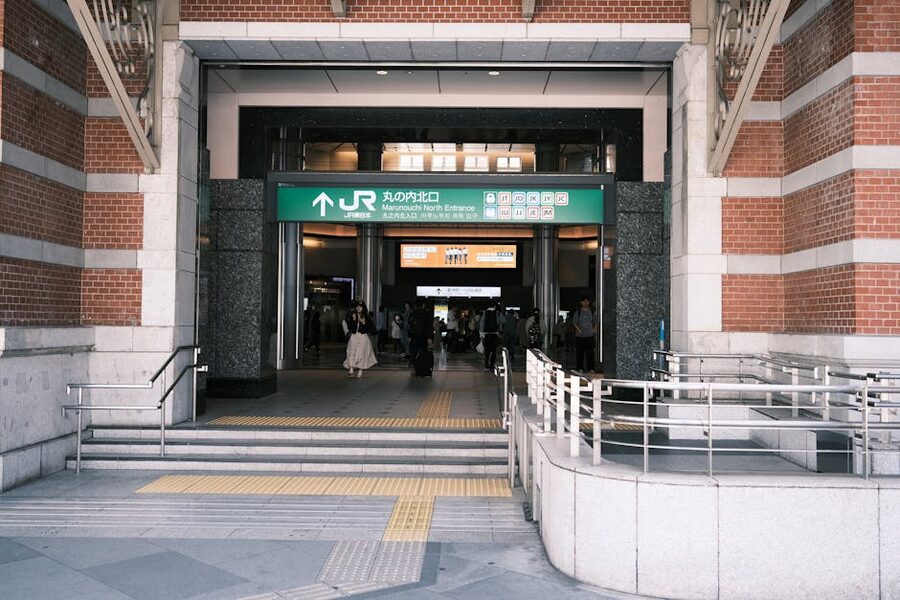
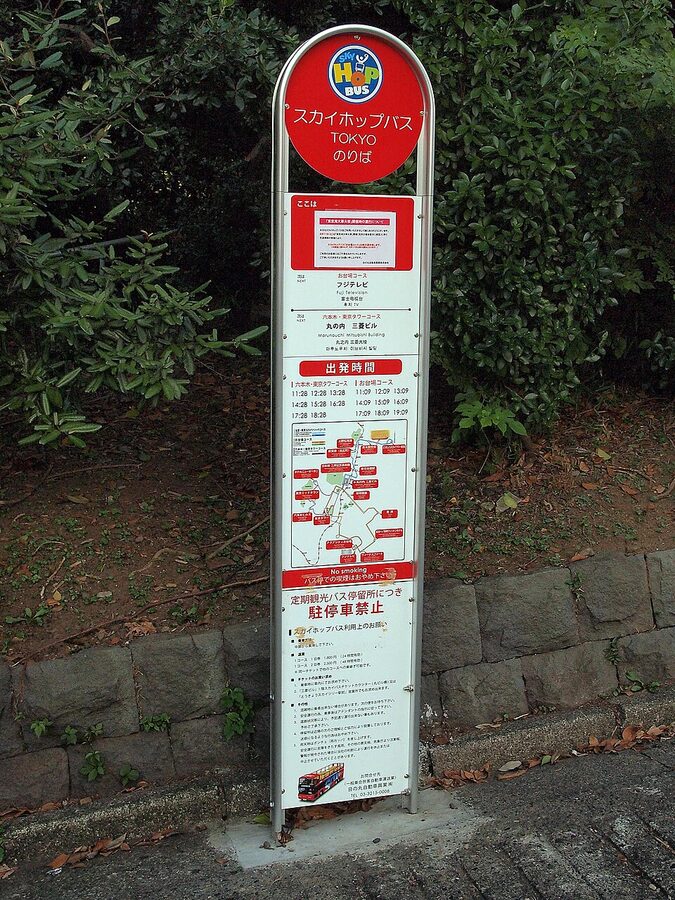
Sky Hop has 18 stops across the three routes, all marked with red Sky Hop signs. The main ones you’ll actually use:
- Marunouchi Mitsubishi Building (Tokyo Station) — headquarters of the service, all three routes depart here
- Tokyo Skytree Station — ticket office upstairs at the tower if you want to combine the ride with a Skytree observation ticket
- Asakusa Kaminarimon — drops you almost at the big lantern
- Tokyo Tower — right at the base, ticket counter in Foot Town
- Odaiba Teleport — the furthest Blue route stop
- Shinjuku West and Shibuya Hikarie — the two Green route anchor stops
First time tip
If you land at Narita or Haneda in the morning, drop your bags at your hotel, walk to the nearest Sky Hop stop and start there. The 24-hour window means a 1pm start buys you until 1pm tomorrow. Plenty of time to do the Blue loop that afternoon and the Red loop the following morning.
How Long to Budget for a Full Circuit
The timings are roughly:
- Blue route (Tokyo Tower, Tsukiji, Odaiba) — 60 minutes non-stop. Plan 3-4 hours if you get off at two or three stops.
- Red route (Asakusa, Skytree, Akihabara) — 50 minutes non-stop. Plan 3 hours with a real Asakusa stop because Sensoji deserves 90 minutes at minimum.
- Green route (Shibuya, Shinjuku) — 50 minutes non-stop. Plan 2-3 hours — Shibuya alone swallows an hour if you cross the scramble and do the Hachiko statue.
A realistic full-circuit day covers two routes comfortably. Three routes is doable if you treat stops as quick drop-bys rather than proper visits. If you want to actually see Asakusa and also the Shibuya scramble in one day, do them on route hops, not drop-off visits. The commentary as you cross Shibuya Scramble is enough of an experience by itself — you can always come back on foot.
What the Three Routes Actually Look Like
Red Route — old Tokyo
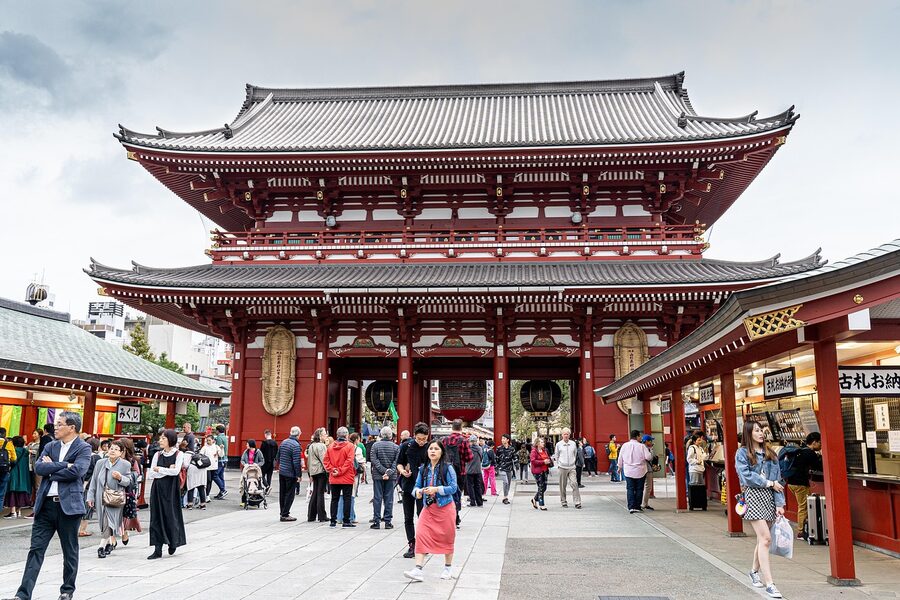
Red cuts north-east from Tokyo Station through Akihabara and Ueno before reaching Asakusa. Asakusa is where you get off. Sensoji Temple, the Nakamise shopping street leading up to it, the five-storey pagoda — this is old Tokyo’s greatest hits.
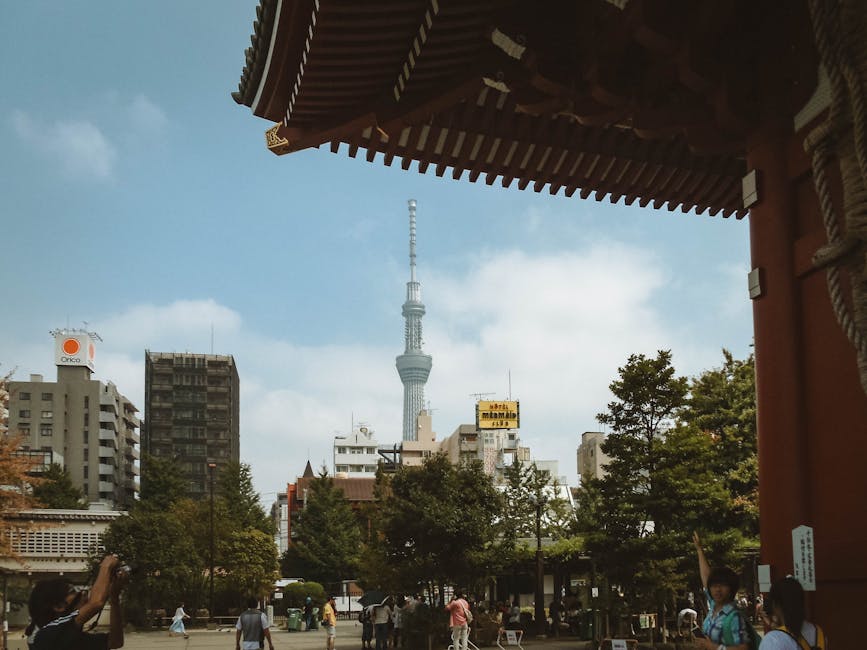
After Asakusa the bus crosses the Sumida River and passes Tokyo Skytree. You can stay on or get off — the Skytree observation deck is a separate ticket and it’s worth pre-booking rather than queuing. I’ve written a dedicated guide to that at how to book Tokyo Skytree admission.
Other anchor stops on Red: Akihabara Electric Town (get off here if you want anime/electronics), Ueno Park (museums, pond, shrines — whole day’s worth of stuff if you want it). If you’re treating Akihabara as a deeper stop, a guided evening works better than a daytime drop-by, which is why Tokyo’s go-kart tours start from that neighbourhood around sunset.
Blue Route — the view route
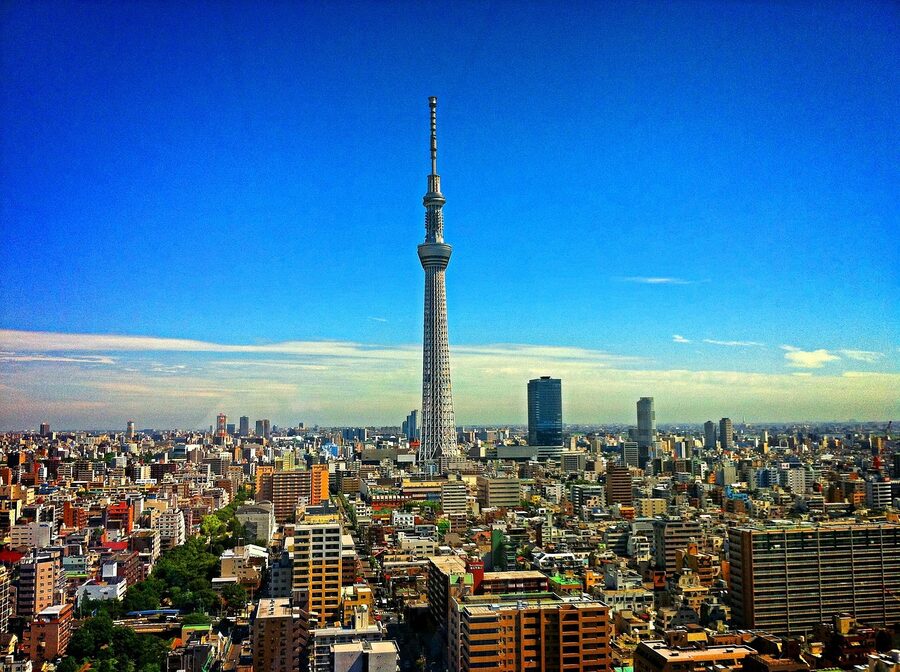
Blue is the route I’d pick if I had to do only one. It strings together the scenery you actually want photos of: Hibiya, Ginza, Tsukiji Outer Market, Tokyo Tower, Rainbow Bridge, Odaiba. Tokyo Tower is an obvious stop; Odaiba is worth it for the Rainbow Bridge crossing even if you don’t get off.
Green Route — the night route
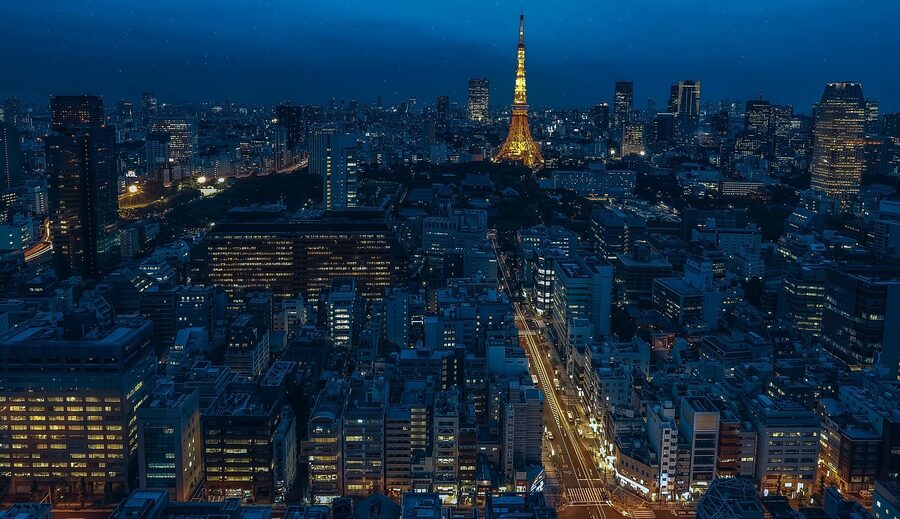
Green is the shortest loop and also the one that’s most worth doing after 5pm. Shibuya Scramble looks good in daylight but is a completely different scene at night — the neon turns on, and you’re up on the top deck looking down at the crossing while commentary explains why 3,000 people cross in one 90-second window.
Shinjuku is the other Green anchor. The bus swings past the Tokyo Metropolitan Government Building (free observation decks, worth a separate visit) and through Shinjuku’s skyscraper district before heading back through Harajuku.
Is the Sky Hop Ticket Worth It?
It depends entirely on how you’d use the day otherwise.
Worth it if: You have one or two days in Tokyo, you want to see the famous stops without planning the train routes, you like open-top photos, and the $30 doesn’t sting.
Not worth it if: You already know Tokyo’s subway system and are efficient on it — you’ll cover more ground faster on the Yamanote line for a fraction of the cost. Or if you want expert guiding and skip-the-line perks, in which case the coach tour is the better product.
My own take: the pass is overpriced relative to what the public transport gives you in Tokyo (the Yamanote line alone hits Shibuya, Shinjuku, Ueno, Akihabara for 210 yen a pop). What the pass wins on is the top-deck view and the orientation — you come away with a mental map of the city that no subway ride gives you. For a first-time visitor with jet lag who doesn’t want to read a route map, that’s worth the premium.
Practical Things Nobody Tells You
Buy online, not on the bus. The bus-purchase option exists but you’ll get stuck at the back of the queue at the popular stops. A GetYourGuide QR code scans in under five seconds; handing over cash and getting a printed ticket takes a minute or more.
Get on at a less popular stop. Marunouchi is always busiest because it’s stop 1. If you’re staying near Shibuya, start at Shibuya — you’ll often get a top-deck window seat that a Marunouchi boarder wouldn’t.
Weather matters. Rainy days are still okay because the roof is glassed on many models, but a true downpour turns the top deck into a poncho party. Check the forecast and pick the least-rainy day of your Tokyo window if you can.
Summer heat is brutal on the open-top models. July-August afternoons on the glass-roof buses are hot even with windows open. Ride before 10am or after 5pm in summer.
Bring earbuds you trust. The audio jacks accept standard 3.5mm plugs. Provided earbuds are fine but most people find their own more comfortable.
Top deck fills first. If it matters to you, arrive 10 minutes before a bus is due. Timetable is every 30-40 minutes during the day; every hour after 5pm.
One Day of Tokyo With and Without the Pass
A concrete example. Say you want to see Asakusa, Tokyo Tower, and Shibuya in a single day.
With the pass: Red loop to Asakusa — get off, spend 90 minutes at Sensoji and Nakamise. Back on Red to Marunouchi. Switch to Blue, ride to Tokyo Tower — 60 minutes at the tower. Back on Blue to Marunouchi. Switch to Green, ride to Shibuya, get off and stay for dinner. Pass cost: 4,800 yen. Mental load: zero — the bus tells you where you are.
Without the pass: Ginza line to Asakusa (210 yen), Sensoji, Ginza line back to Shimbashi, change to Oedo line, one stop to Akabanebashi, walk to Tokyo Tower (410 yen total). Tokyo Tower. Then Oedo line to Aoyama-itchome, change to Hanzomon line, one stop to Shibuya (210 yen). Total: about 830 yen plus the cognitive cost of three line changes with luggage or tired kids.
The maths of the pass comes down to what your time and attention are worth. If you’re solo, mobile-first and happy with a transit app, the subway wins on cost. If you’re with family or on day one and dazed, the bus wins on everything except raw cost.
A Short Bit of Sky Hop History
Hinomaru Jidosha Kogyo launched the first hop-on hop-off service in Tokyo in 2014. Before that, Tokyo’s sightseeing buses were either the Hato Bus coach-tour style (fixed itinerary, guided, expensive) or Toei city buses (cheap, no commentary, not designed for visitors). The open-top double-decker format was common in London and New York but hadn’t worked in Tokyo — partly because Japanese cities weren’t designed for them, and partly because liability rules made glass roofs a regulatory headache.
The first Sky Hop buses were converted Mitsubishi Fuso Aero Bus coaches — the roof was sawn off and replaced with a custom glass ceiling by Tokyu Techno System. The Neoplan Skyliners came later. The newest UNVI Urbis models (the orange-lettered ones) are the first that were purpose-built for the service.
One quirk: Tokyo’s overhead rules mean the top deck has to clear under bridges with about 4 metres of headroom. That’s why the three routes avoid certain tunnels and why Odaiba only works via Rainbow Bridge’s upper deck, not the lower. The route map looks like it’s been drawn around traffic, and in a way, it has been — around the physical clearance of every road.
More Tokyo Booking Guides
If you’re piecing together a Tokyo week, the hop-on pass usually slots in around other bookings. A typical pattern: hop-on day early in the trip for orientation, then specific experiences — Tokyo Tower admission and Tokyo Skytree both make sense as follow-ups because you’ve already seen them from the bus and picked which view you want to pay for. A guided walk of Sensoji pairs well with a Red loop day. For evenings, Shinjuku bar hopping picks up exactly where the Green route drops you off at sunset, and a ramen tasting tour makes a solid dinner after a day of bus-deck photography. If digital art is on your list, teamLab Planets sits near an Odaiba Blue-route extension and is a better use of an evening than another city drive.
Travelling on to Osaka afterwards? The logic flips — Osaka is walking-friendly in a way Tokyo isn’t, and the equivalent of the hop-on day there is a guided walking tour between Dotonbori and Shinsekai. Different city, different tool.