
Fushimi Inari Taisha has 10,000 torii gates. Most visitors see about 200 of them, snap a photo near the bottom, and leave. The full hike to the summit of Mount Inari takes roughly two to three hours, covers around 5 kilometers, and passes through sections of the mountain where you won’t see another person for ten minutes at a stretch.
That’s the version of Fushimi Inari worth your time. And booking a guided hiking tour is the fastest way to find it.
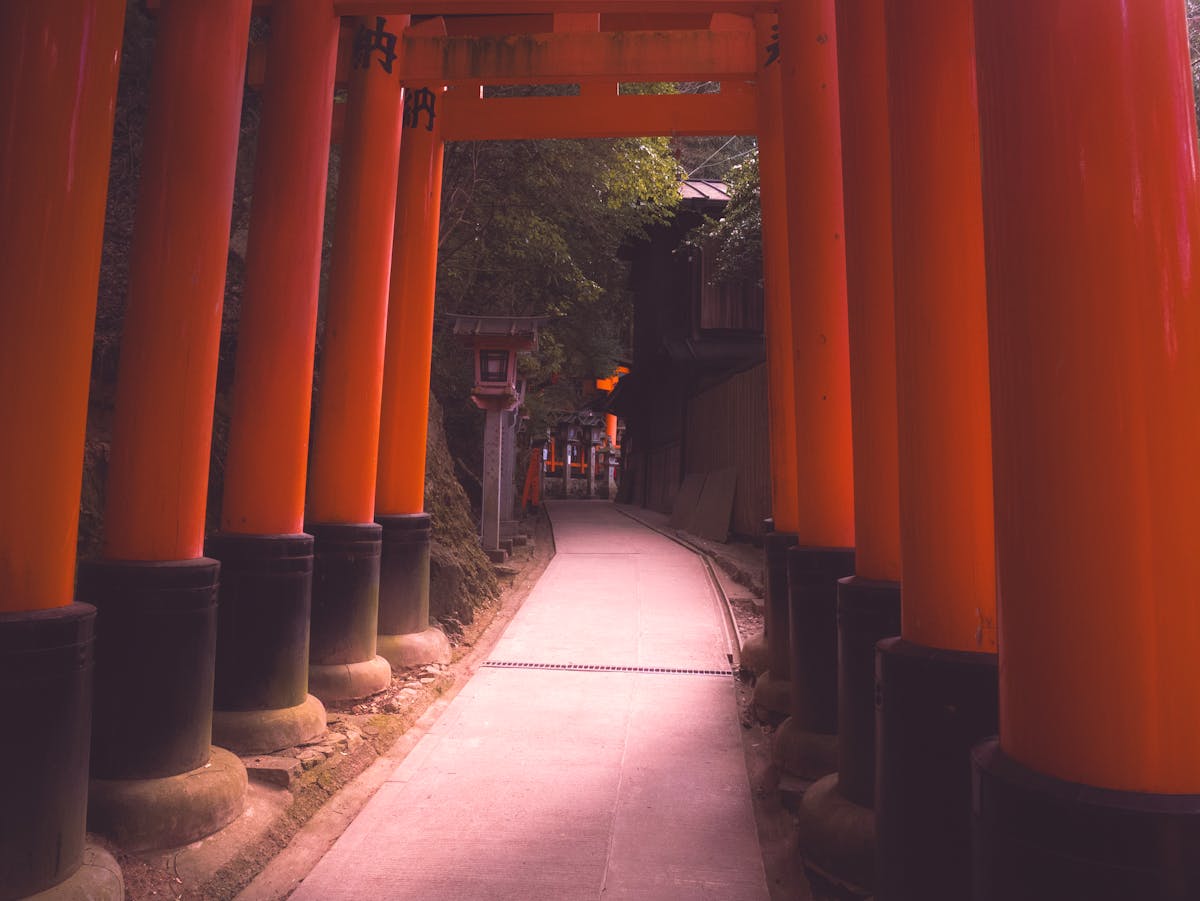
The shrine is free to enter, open 24 hours, and doesn’t require tickets. So the question isn’t whether you can visit on your own — it’s whether you’ll actually find the parts that make the hike worth doing. The hidden shrines tucked behind bamboo groves, the panoramic viewpoint most travellers walk right past, the fox statues with weathered stone offerings that haven’t been cleaned in decades.
I’ve done this hike four times now, twice with a guide and twice solo. The guided version was better both times. Not because the trail is hard to follow (it isn’t), but because you miss the context. The fox symbolism, why certain torii are clustered together, the Edo-period merchant traditions behind the donations — a good guide turns a pretty walk into something you’ll actually remember.
Short on time? Here are my top picks:
Best overall: Fushimi Inari Hidden Hiking Tour — $63. Small group, goes beyond the tourist trail, covers the full mountain loop.
Best full-day combo: Nara + Fushimi Inari + Arashiyama Bus Tour — $52. Hits three major attractions in one day if you’re short on time.
Best with Kyoto highlights: Kyoto Full-Day Highlights Tour — $54. Nijo Castle, Kiyomizu-dera, Arashiyama, and Fushimi Inari all in one packed day.
- How Visiting Fushimi Inari Works
- Self-Guided vs Guided Hiking Tours
- The Best Fushimi Inari Tours to Book
- 1. Fushimi Inari Hidden Hiking Tour —
- 2. Nara, Fushimi Inari & Arashiyama Bus Tour —
- 3. Arashiyama, Nara Park & Fushimi Inari Tour —
- 4. Kyoto Full-Day Highlights: Nijo Castle, Arashiyama, Kiyomizu-dera & Fushimi Inari —
- When to Visit Fushimi Inari
- How to Get to Fushimi Inari
- Tips That Will Save You Time
- What You’ll Actually See on the Mountain
- More Kyoto Guides
How Visiting Fushimi Inari Works
Here’s what most travel guides don’t make clear: Fushimi Inari doesn’t have tickets. There’s no entry fee, no timed slots, no reservation system. The shrine grounds and the entire mountain trail are open around the clock, 365 days a year.
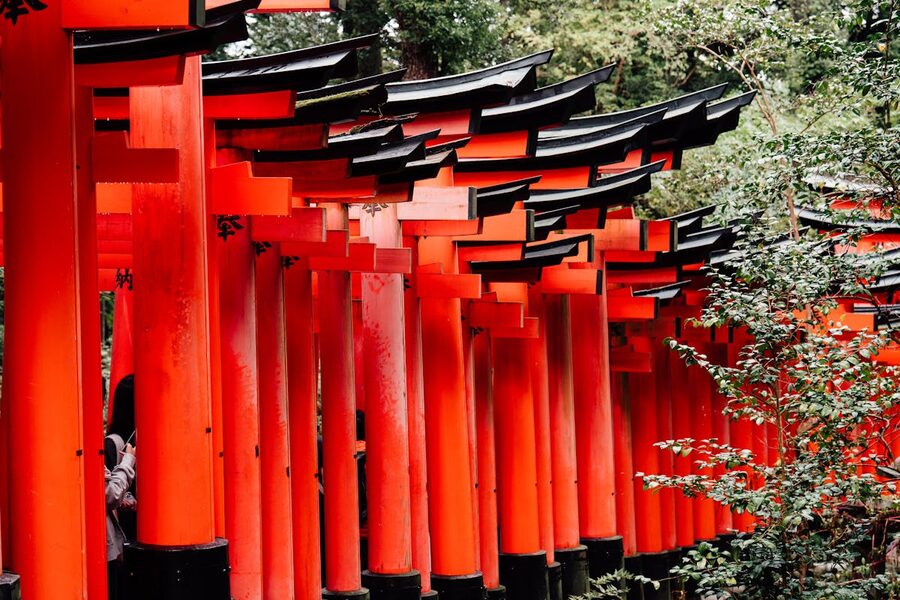
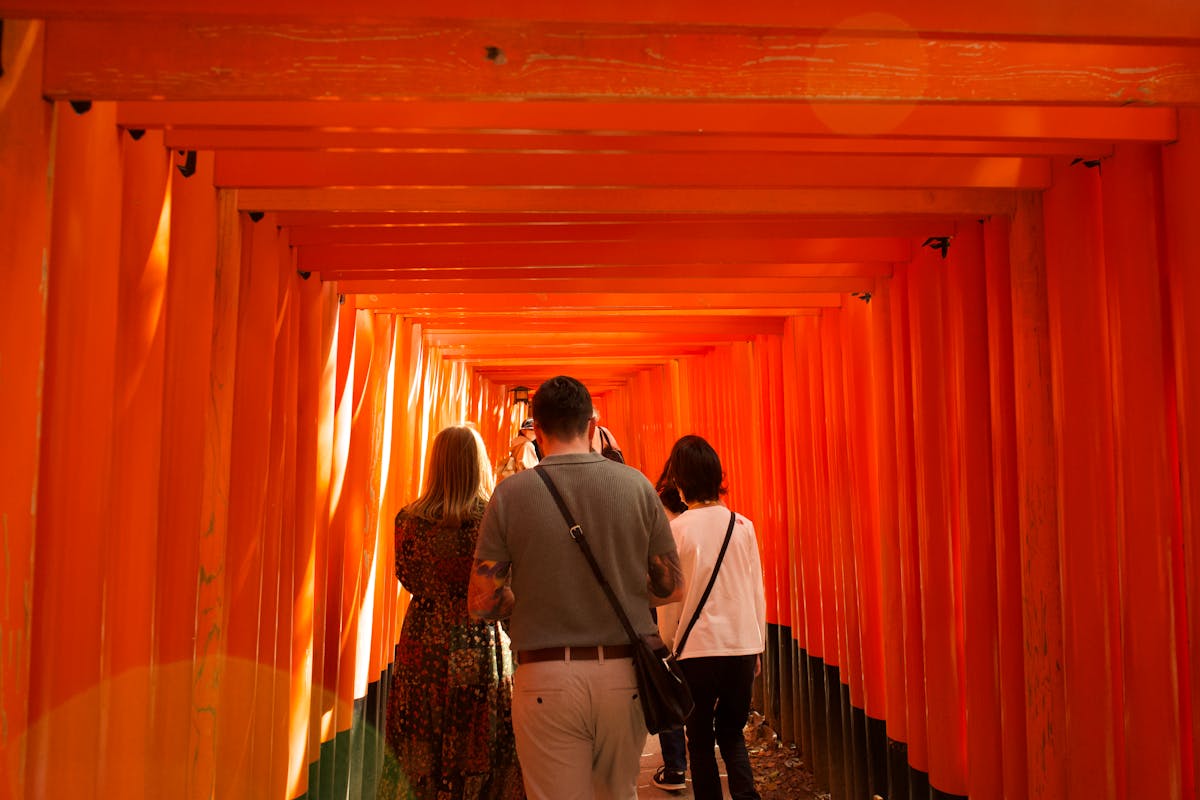
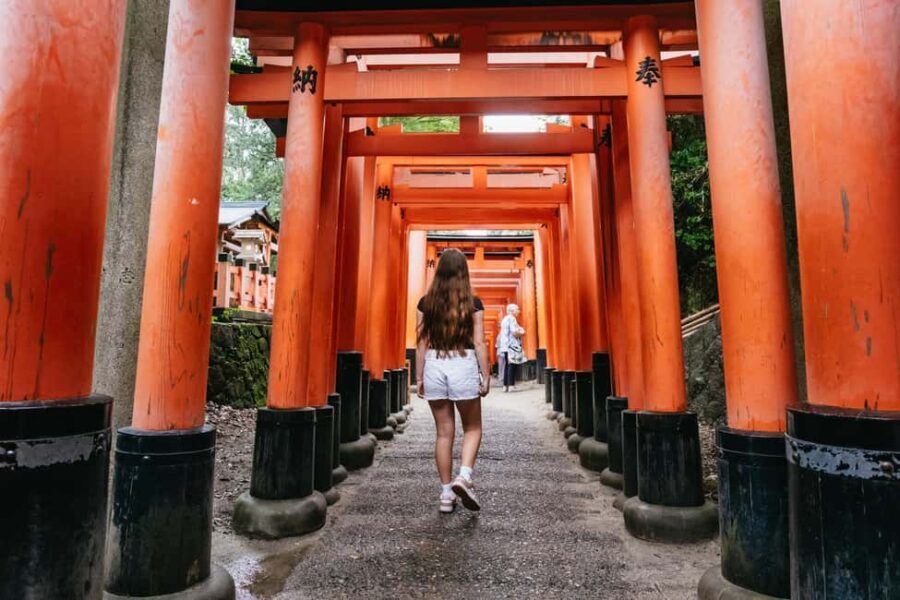
That sounds great on paper. In practice, it means the lower sections get absolutely crushed between 10am and 4pm. Tour buses unload at the main gate, everyone funnels through the same Senbon Torii (the famous two-row torii tunnel), takes photos, and turns around.
The main trail sections:
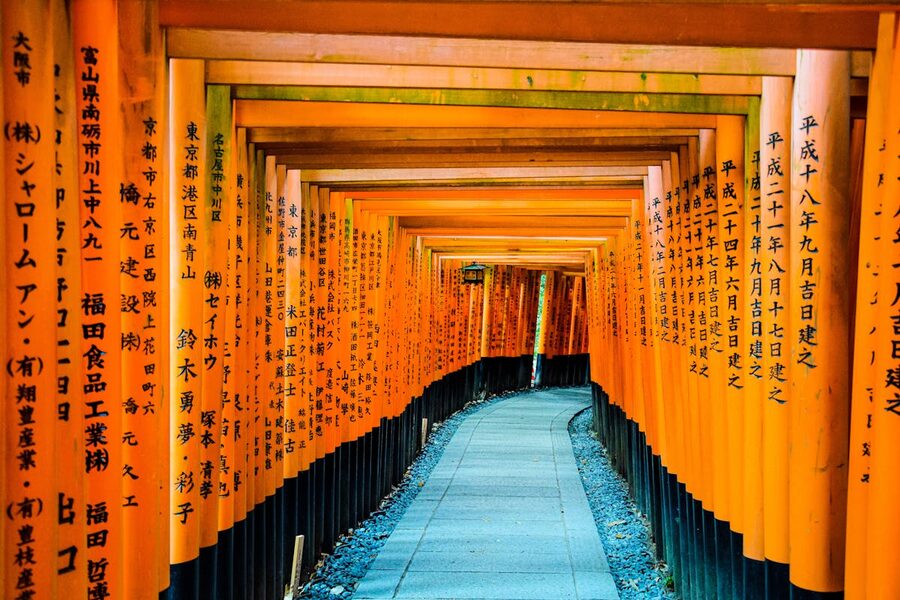
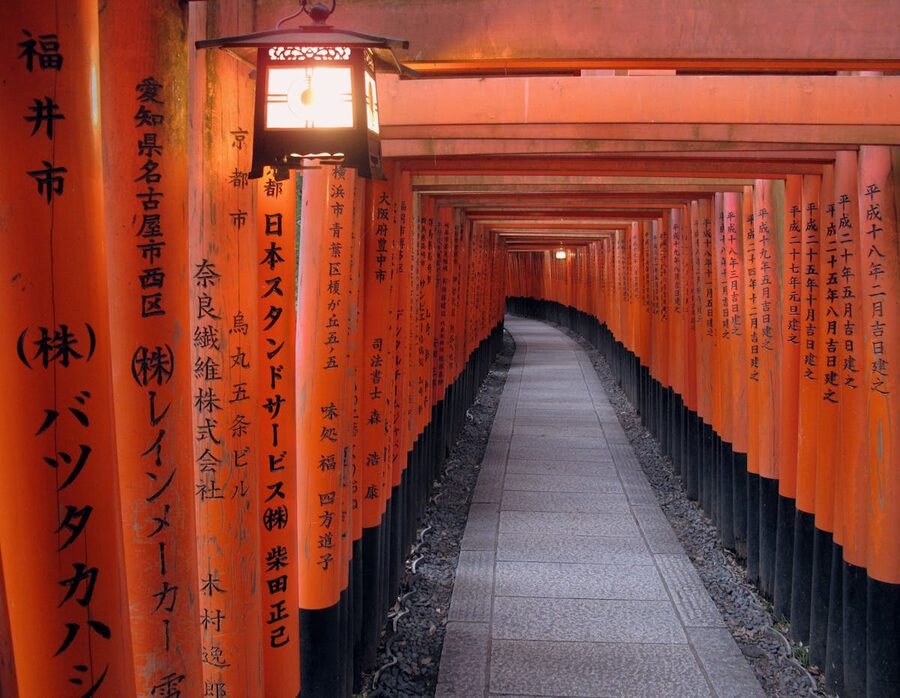
- Romon Gate to Senbon Torii — the iconic double row of torii, about a 5-minute walk from the entrance. This is where 80% of visitors stop
- Senbon Torii to Yotsutsuji intersection — another 20-30 minutes of climbing through more torii. This is the panoramic viewpoint over southern Kyoto, and roughly where the crowds start to thin
- Yotsutsuji to the summit — the real hike. About 45-60 minutes through increasingly quiet sections with dozens of small sub-shrines, fox statues, and hidden worship spots
- The loop back down — a different return path (don’t go back the way you came) that passes through bamboo groves and quieter hillside shrines
The entire loop takes 2-3 hours depending on your pace and how many times you stop.
Self-Guided vs Guided Hiking Tours
You can absolutely do Fushimi Inari on your own. The trail is well-marked, there are vending machines along the route (yes, even partway up the mountain), and you won’t get lost. But here’s why I’d still recommend booking a tour, especially for your first visit.
Going solo works if:
- You’ve already been once and just want the exercise
- You prefer complete silence and going at your own pace
- You’re visiting at dawn or after dark (most tours run daytime only)
A guided tour is worth it because:
- Guides know which side trails lead to hidden shrines that aren’t on any map
- You’ll learn why there are 10,000 torii and who paid for them (it’s a surprisingly interesting story about Edo-period merchants)
- They time the visit to avoid the worst crowds — most good tours start early
- The fox symbolism, the meaning behind the offerings, the sub-shrine hierarchies — none of this is explained with signage in English
The price difference is relatively small. A guided Fushimi Inari hiking tour runs $53-65 per person, which is reasonable for a 2-3 hour experience with a local expert. Compare that to a Kyoto tea ceremony which costs about the same for 45 minutes. A Kyoto bike tour covers even more ground if you want to combine temples with cycling.
The Best Fushimi Inari Tours to Book
I’ve gone through the available options and narrowed them down to the tours actually worth booking. Some are focused specifically on Fushimi Inari, others bundle it with other Kyoto highlights — which makes sense if you’re trying to cover a lot of ground in limited time.
1. Fushimi Inari Hidden Hiking Tour — $63
This is the one to book if Fushimi Inari is the main event of your day, not just a checkbox. At $63, it’s the most focused option — the entire tour is dedicated to the shrine and mountain, with no rushing to fit in other attractions.
What sets this apart is the route. Instead of sticking to the main tourist path, the guide takes you through side trails and lesser-known sections of the mountain where the torii gates are older, the moss is thicker, and you’ll actually hear birds instead of selfie sticks. With close to 1,750 reviews and a perfect 5.0 rating, it’s the most battle-tested Fushimi Inari experience available.
The small group format matters here. Large bus tours dump 40 people at the entrance and herd them through the Senbon Torii — you can do that for free. This tour earns its price by going where the buses can’t.
2. Nara, Fushimi Inari & Arashiyama Bus Tour — $52
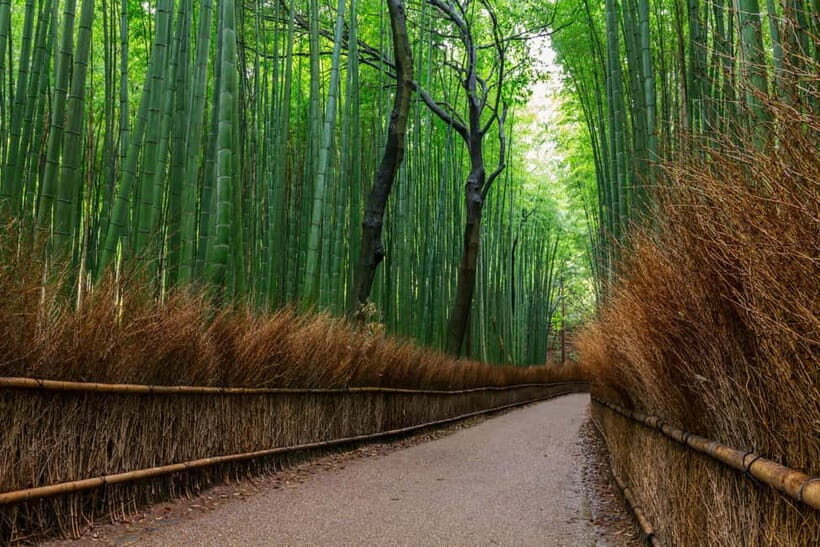
If you’re trying to see Nara, Fushimi Inari, and Arashiyama in one day — and you don’t want to spend the entire day figuring out train connections — this is the practical choice. At $52 for a full 9-10 hour day, the per-hour value is hard to beat.
The trade-off is obvious: you get less time at each stop. Fushimi Inari on this tour means the lower trail and Senbon Torii, not the full mountain hike. But for many visitors, that’s enough. You see the gates, you get the photos, and then you’re on to Nara’s famous deer and Arashiyama’s bamboo forest. With over 1,275 reviews and a 4.7 rating, the logistics are well-oiled.
3. Arashiyama, Nara Park & Fushimi Inari Tour — $52
Very similar to the tour above, but with pickup available from Osaka — which matters if that’s where your hotel is. The $52 price point is identical, and the itinerary covers the same three stops: Arashiyama bamboo grove, Nara’s deer park, and Fushimi Inari.
The 4.5 rating from 935 reviews is still solid, though slightly lower than the alternative combo tour. From what I’ve seen, the difference usually comes down to the specific guide you get — the route and timing are nearly identical. If you’re staying in Osaka and want to avoid an extra train ride to Kyoto Station, this is the cleaner option.
4. Kyoto Full-Day Highlights: Nijo Castle, Arashiyama, Kiyomizu-dera & Fushimi Inari — $54
This is the “I only have one day in Kyoto” nuclear option. At $54 for 11 hours, it packs in Nijo Castle (with its famous nightingale floors), Arashiyama, Kiyomizu-dera, and Fushimi Inari. Entrance tickets are included, which alone would cost you around $15-20 if bought separately.
The downside? You’re moving fast. Fushimi Inari gets maybe 45 minutes, which limits you to the lower sections. But 700 reviews at a 4.7 rating says the pacing works for most people. This is the tour for someone who wants to see Kyoto’s greatest hits efficiently, not for someone who wants to get lost on a mountain for three hours.
When to Visit Fushimi Inari
Timing matters more here than at almost any other Kyoto attraction. The shrine is open 24/7, which gives you options that most temples don’t.
Best times:
- Before 7am — the absolute best. The lower torii tunnels are nearly empty, the light filtering through the gates is golden, and you’ll have the mountain essentially to yourself. The shrine office doesn’t open until 8:30am, but the grounds are accessible
- After 5pm in summer — the day-trippers have left, and the sunset light on the orange gates is spectacular
- Night visits — yes, people do this. The trail is dimly lit by stone lanterns in places, and the atmosphere shifts completely. Bring a flashlight for the upper sections. It’s genuinely eerie and beautiful
Worst times:
- 10am-3pm on weekends — shoulder-to-shoulder in the lower sections. The Senbon Torii becomes a slow shuffle
- Golden Week (late April/early May) and New Year’s (Jan 1-3) — Fushimi Inari is one of Japan’s most visited shrines for hatsumode (first shrine visit of the year). Millions of people come during these periods
- Cherry blossom season weekends — Kyoto is at maximum capacity
Spring (March-May): Comfortable temperatures for hiking. Cherry blossoms don’t really feature at Fushimi Inari — it’s more about the torii than the trees — but Kyoto in general is packed during late March through mid-April.
Summer (June-August): Hot and humid. The mountain is shaded by forest canopy which helps, but the climb will leave you drenched. Bring water — there are vending machines at the halfway point, but they sometimes sell out on busy days.
Autumn (October-November): The best season overall. Cool temperatures, some autumn color on the mountain (mixed in with the evergreens), and generally clear weather. Late November weekends are crowded because of koyo (autumn leaf) season.
Winter (December-February): Cold but quiet. Snow occasionally dusts the torii gates, which is strikingly photogenic. The lack of crowds makes this an underrated time to visit.
How to Get to Fushimi Inari
Getting there is straightforward from central Kyoto. Two train options:
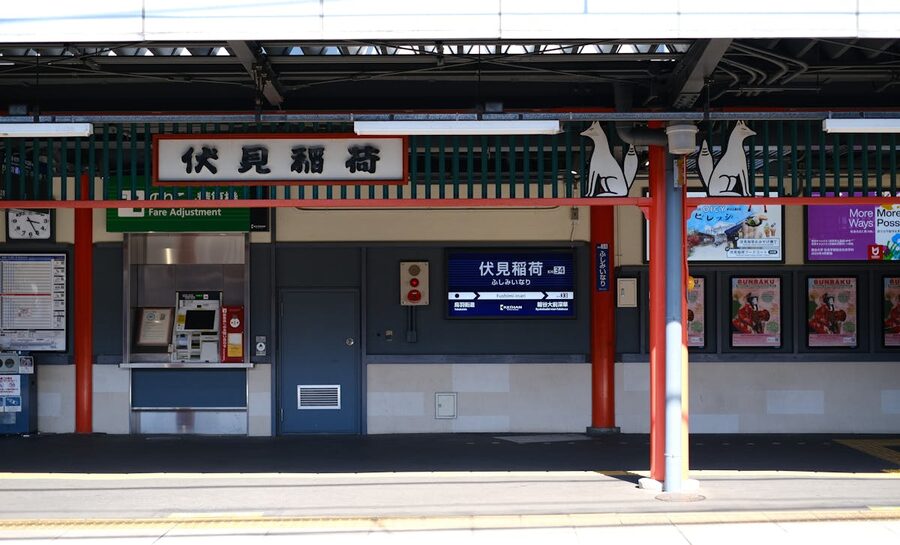
JR Nara Line (fastest):
Take the JR Nara Line from Kyoto Station to Inari Station. It’s just two stops, takes 5 minutes, and costs 150 yen. The shrine is literally across the street from the station exit — you can see the main torii gate from the platform. Covered by the Japan Rail Pass.
Keihan Line:
Take the Keihan Line to Fushimi-Inari Station. It’s about a 5-minute walk from the station to the shrine entrance. This is better if you’re coming from eastern Kyoto (Gion, the Geisha District) or from Osaka via the Keihan Main Line.
By bus: The full-day Kyoto bus tours include a Fushimi Inari stop, though the time is limited. Kyoto City Bus #105 stops at “Fushimi Inari Taisha Mae” but takes longer than the train and gets stuck in traffic. Not recommended.
Walking from Kyoto Station: About 25 minutes on foot, following the JR tracks south. Actually a pleasant walk if the weather is good.
Tips That Will Save You Time
- Wear proper shoes. The trail has stone steps, some uneven. Sandals and heels are a bad idea, especially after rain when the stones get slippery
- Bring 100-yen coins. Vending machines on the mountain only take coins or IC cards (Suica/ICOCA). No PayPay, no credit cards
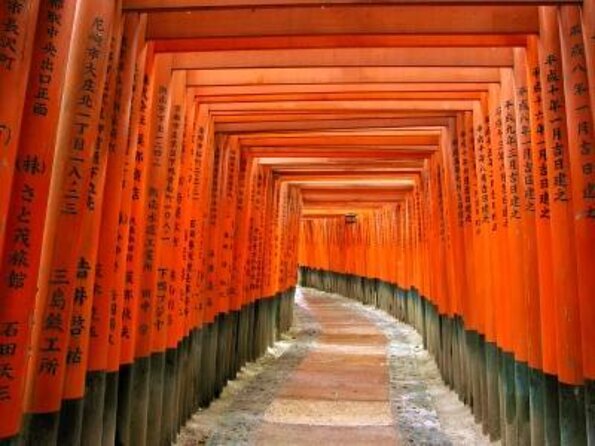
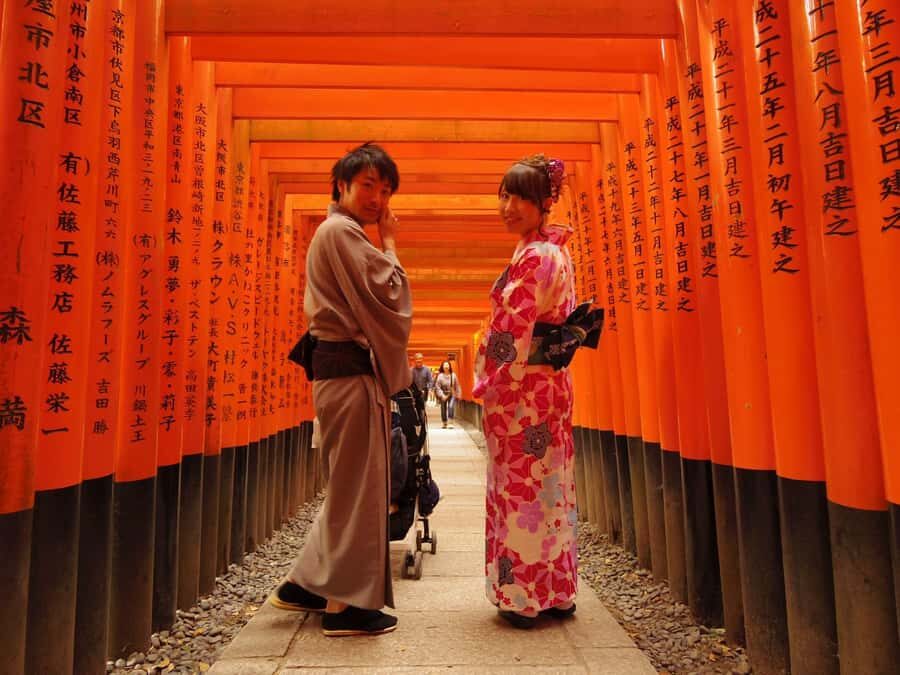
- Don’t stop in the Senbon Torii for photos. Or rather, if you do, step to the side. The tunnel is narrow and stopping in the middle blocks everyone behind you. The back side of the torii — where the donor names are inscribed — makes a better photo anyway
- The Yotsutsuji viewpoint has a tea house. Good place to catch your breath and grab a drink before deciding whether to continue to the summit or turn back. The view over southern Kyoto is the best on the mountain
- Return via the loop, not the same way. At the summit, take the left fork to descend via a different route. You’ll see shrines and sections you’d otherwise miss, and it’s less crowded going down this way
- Combine with southern Kyoto. Tofuku-ji Temple (famous for autumn leaves) is a 15-minute walk from Fushimi Inari. The Fushimi sake brewery district is also nearby — a natural afternoon pairing after a morning hike. If you’re visiting in November, do both
- Lockers at the station. JR Inari Station has coin lockers. Drop your bags before the hike — you don’t want to carry a suitcase up a mountain
What You’ll Actually See on the Mountain
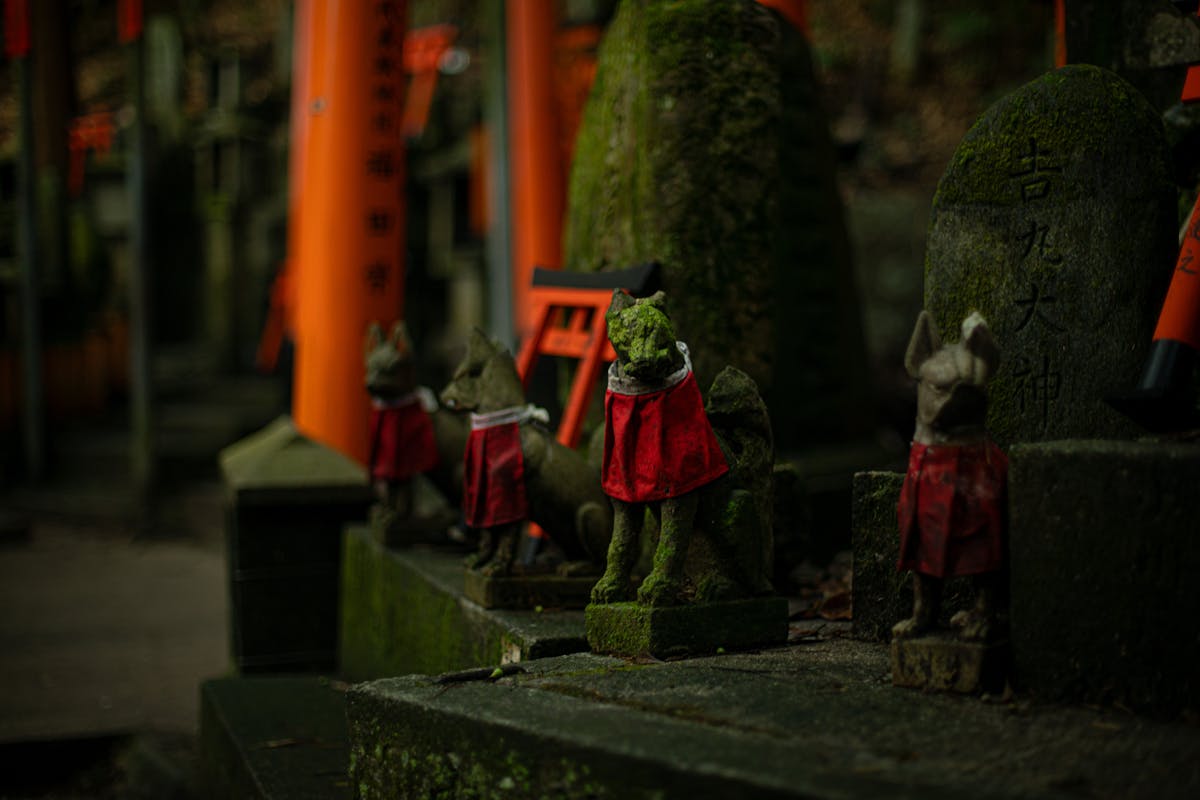
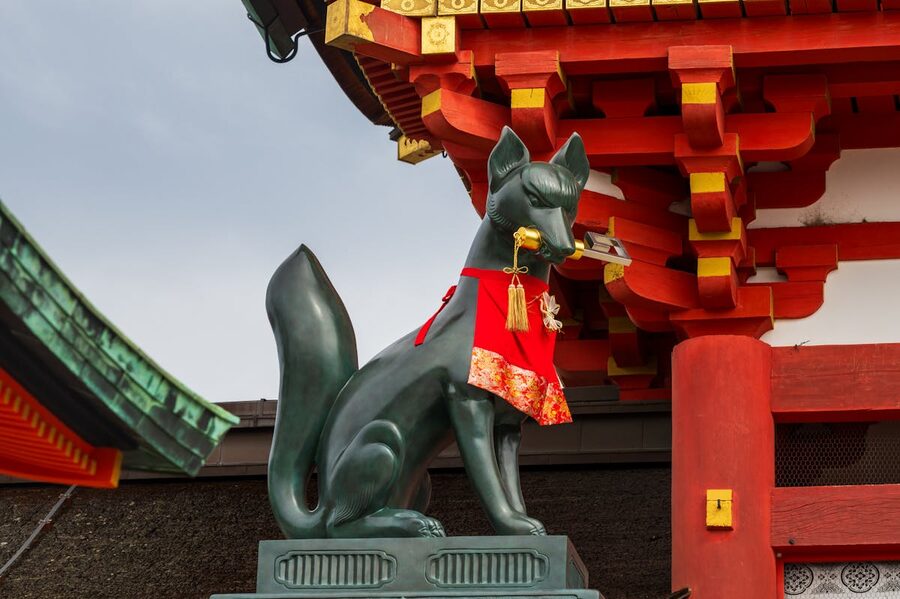
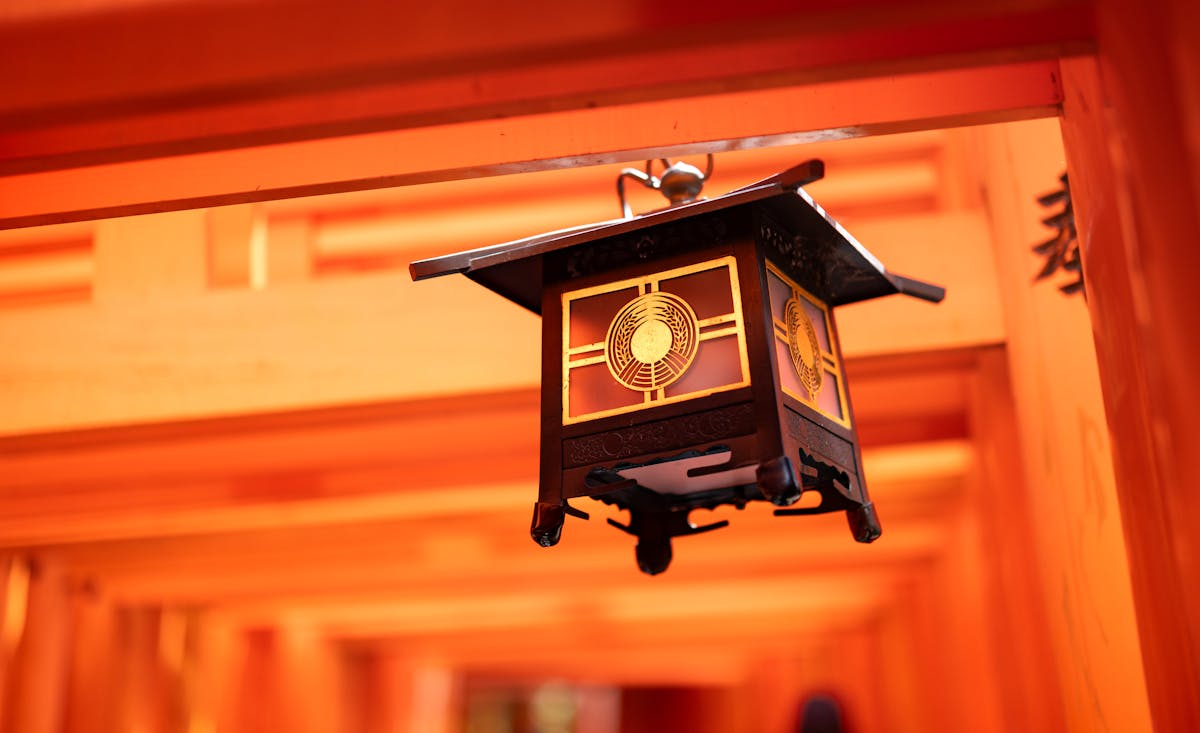
Fushimi Inari Taisha was founded in 711 CE — making it over 1,300 years old — as the head shrine of Inari, the Shinto deity of rice, sake, tea, and business prosperity. The fox (kitsune) statues you see everywhere are Inari’s messengers, not the deity itself. Each fox holds a symbolic item: a key to the rice granary, a jewel representing spiritual power, a sheaf of rice, or a scroll of Buddhist sutras.
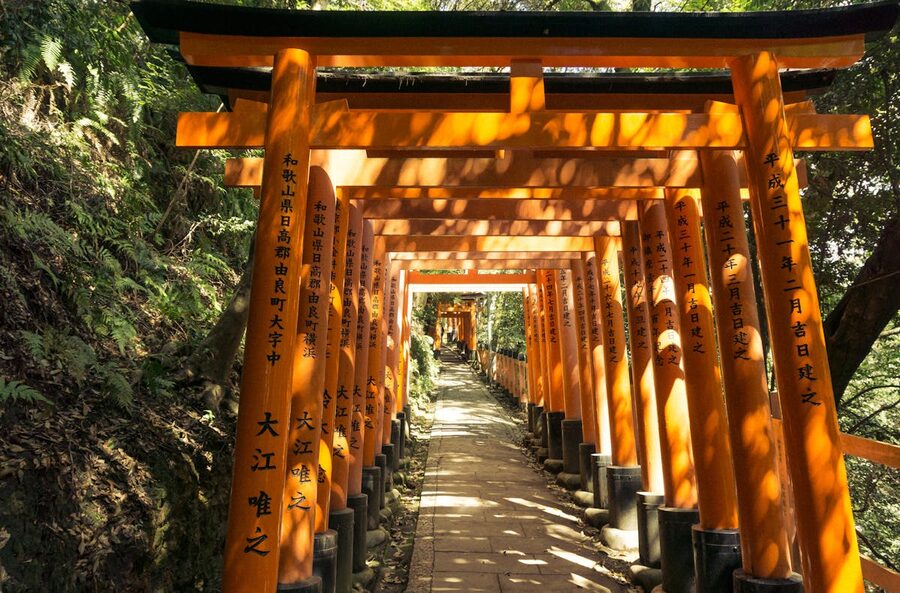
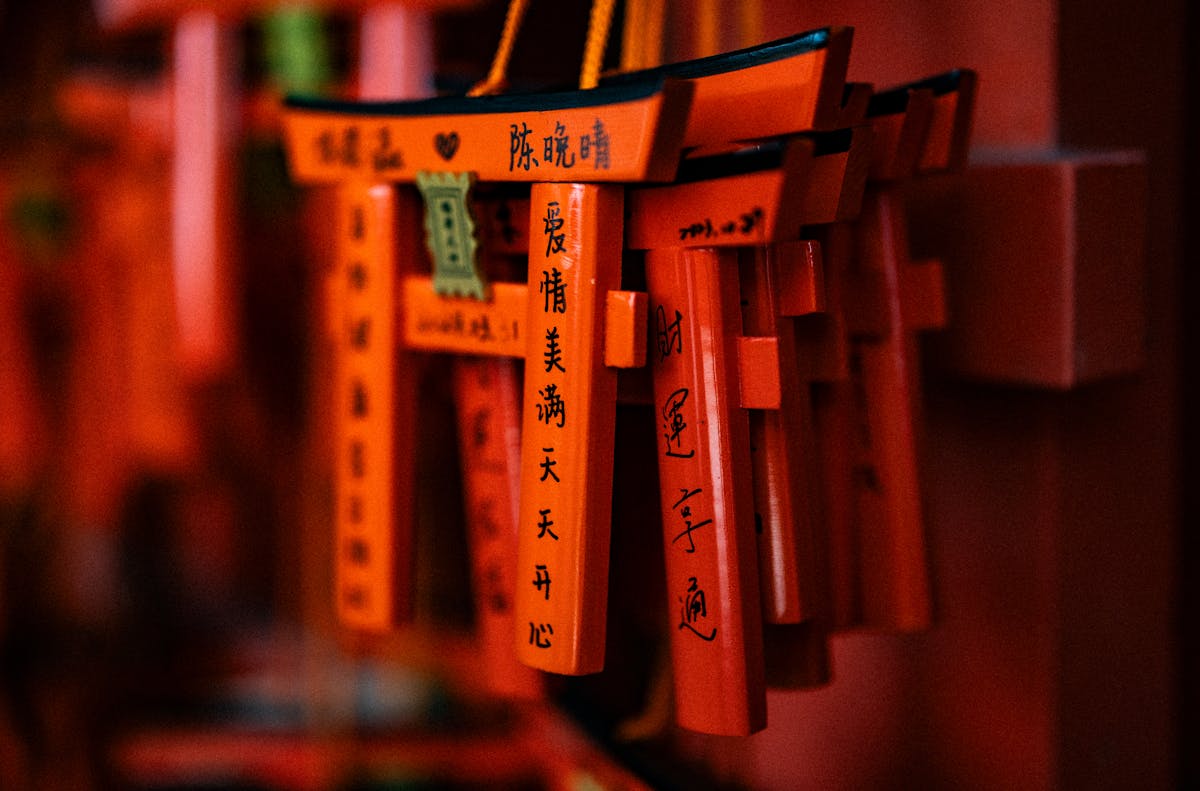
The torii gates are donations. Businesses and individuals pay to have a gate erected as thanks for prosperity or to pray for future success. Prices range from about 175,000 yen for a small gate in a quiet spot to over 1.3 million yen for a large gate in a prominent position along the main trail. The oldest gates date back centuries; the newest are still being erected today. If you look at the back of each gate, you’ll find the donor’s name and the date of donation.
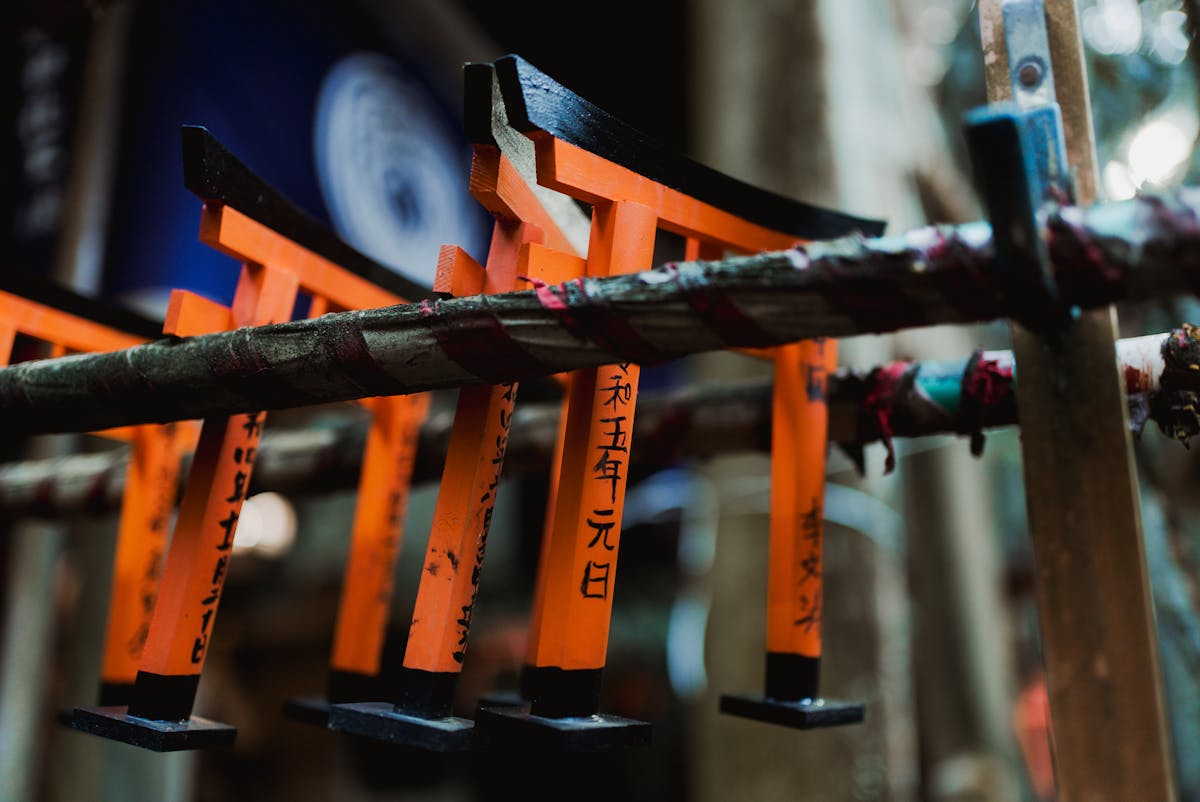
Beyond the torii, the mountain is scattered with dozens of sub-shrines (sessha and massha), each dedicated to a different aspect of Inari’s domain. Some are well-maintained with fresh offerings and flowers. Others — the ones higher up — are crumbling and overgrown, with faded red paint and fox statues worn smooth by weather.
The Gion District is only 20 minutes away by Keihan train, and a traditional tea ceremony pairs naturally if you want a cultural double-header. The hidden hiking tour focuses on the mountain sections that most travellers skip, which is exactly the kind of deeper experience that makes Kyoto worth more than a quick day trip from Osaka.
More Kyoto Guides
Fushimi Inari works well as a morning activity, leaving your afternoon free for the other side of Kyoto. The Arashiyama Bamboo Forest is the natural pairing — you can take the Keihan Line to JR and be in Arashiyama within 40 minutes. If you haven’t booked a tea ceremony yet, the Higashiyama area between Fushimi Inari and Arashiyama is the best place to do it.
The sake breweries in nearby Fushimi are a 25-minute walk from the shrine and make for a fun afternoon if you want to stay in the area. A Gion walking tour covers the geisha district’s backstreets that you’d miss on your own, and Kyoto bike tours thread through the quiet residential neighborhoods that connect all these spots.
For day trips, Nara is just one train line south, and Osaka’s food scene is only 15 minutes away.
This article contains affiliate links. If you book a tour through one of these links, I earn a small commission at no extra cost to you. I only recommend tours I’ve personally researched and verified.