Kintsugi turns a break into part of a pot’s story. In this Tokyo workshop, you join ceramic fragments, then trace the cracks with gold rather than trying to hide them. It is a small, hands-on way to meet a Japanese craft and its idea of finding beauty in repair.
I like two things here: you make something yourself, not just watch a demonstration, and the instructor explains the craft’s links to wabi-sabi and Japanese aesthetics as you work. The English-speaking teachers named by participants include Noemi, Sui, April, and Keisha.
One consideration: 45 minutes is a short introduction, not a course in traditional, long-form restoration. The plate is decorative only, and premium plate upgrades cost extra. Arrive on time, since people more than 15 minutes late may be asked to reschedule.
- A plate is included: You repair one ceramic plate with the supplied tools and materials.
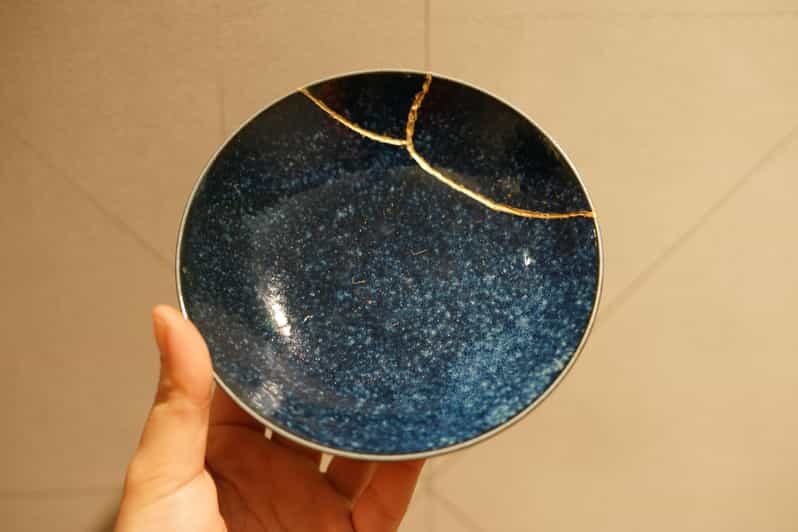
- The cracks become the design: Gold follows the joins, making each finished piece personal rather than factory-perfect.
- English instruction is available: The teacher guides you through the steps and shares context about kintsugi.
- The listed duration is 45 minutes: Some sessions have lasted longer, so leave a little breathing room in your plans.
- The basic experience is listed at $10 per person: Check the price of any premium plate before choosing one.
- Your finished plate is decorative: The workshop materials do not make it safe for food.
- Kintsugi begins with the break
- A calm studio, a focused hour
- From fragments to a finished design
- What 45 minutes can, and cannot, do
- Why the price can be good value
- The teachers shape the experience
- Who should book this workshop
- Should you book?
- FAQ
- How long does the workshop last?
- What is included in the price?
- Can I choose a different plate?
- Is the repaired plate safe to use for food?
- Do I need experience with pottery or kintsugi?
- What language is the workshop taught in?
- Is the workshop suitable for children?
- What happens if I arrive late?
- What payment methods are accepted?
- The Best Of Tokyo!
- More Workshops & Classes in Tokyo
- More Tours in Tokyo
- More Tour Reviews in Tokyo
- Not for you? Here's more nearby things to do in Tokyo we have reviewed
Kintsugi begins with the break
 1 / 7
 2 / 7
 3 / 7
 4 / 7
 5 / 7
 6 / 7
 7 / 7
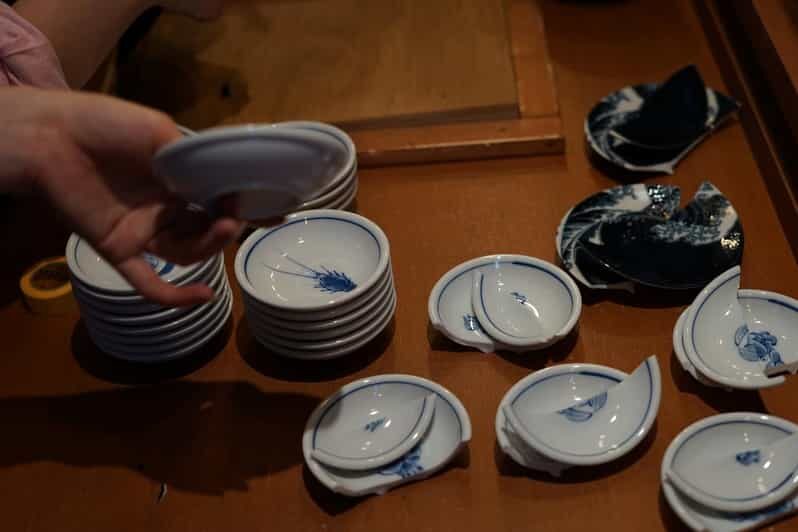
Kintsugi is a pottery repair art that treats a crack as part of an object’s history. Instead of covering damage or pretending it never happened, the craft draws attention to the joins with gold. The result can be a useful reminder of resilience, but you do not need to arrive with a philosophical agenda. It is also simply a satisfying, tactile craft to try in Tokyo.
The workshop introduces this idea before you start handling the ceramic. Your instructor explains the cultural roots of kintsugi and its connection to wabi-sabi, an aesthetic that finds value in imperfection and change. That context helps the activity feel more meaningful than gluing a plate and adding a decorative line.
You should keep expectations in proportion to the time. This is a short, guided version designed for a one-hour experience, not a full traditional restoration project. You will learn the basic sequence and make your own piece, but the class is meant as an accessible introduction rather than professional training.

👉 See our pick of the 25 Best Guided Tours In Tokyo
A calm studio, a focused hour
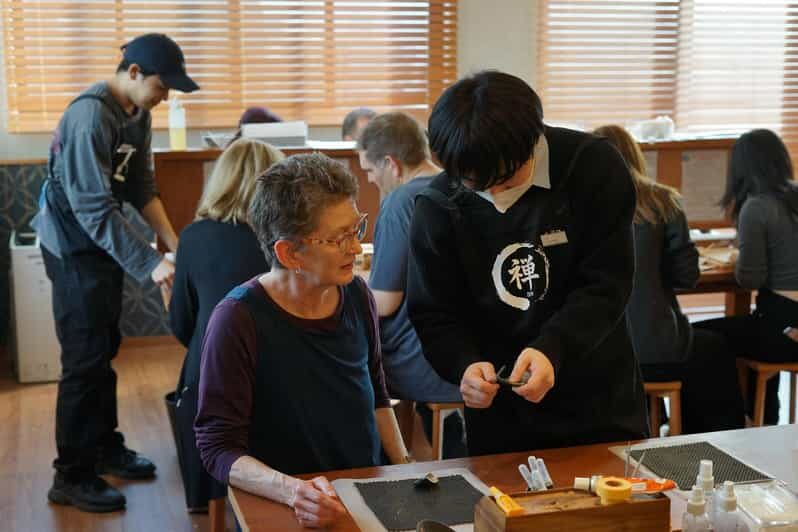
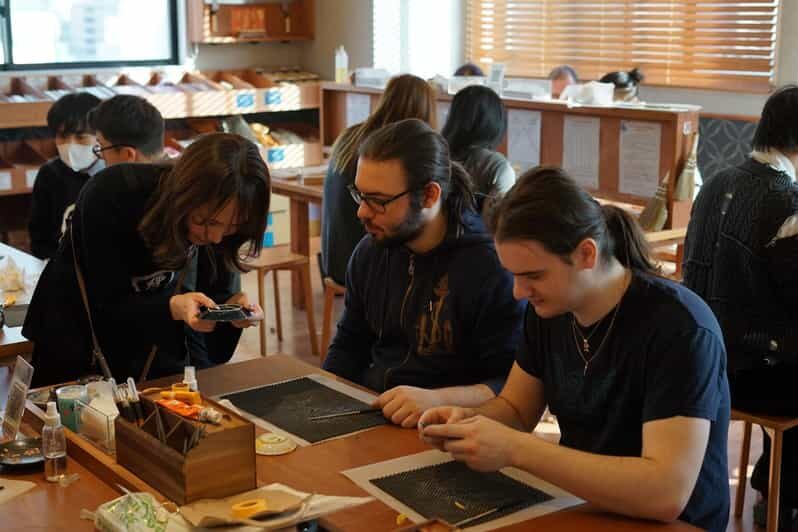
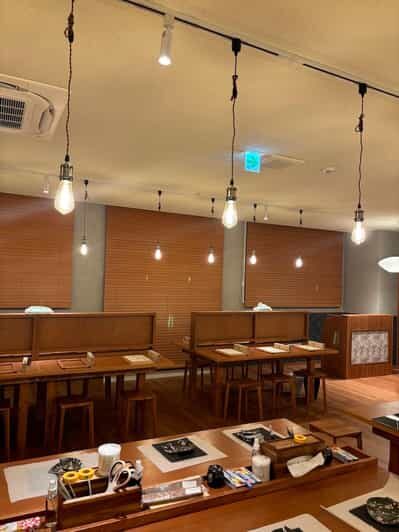
The studio is described as calm and thoughtfully arranged, a welcome contrast to Tokyo’s faster pace. You can settle in, listen to the instructor, and concentrate on the small decisions involved in putting a ceramic piece back together. The setting is part of the appeal: this is a quiet, hands-on pause, not another attraction to rush through.
The venue is associated with Asakusa in one detailed account, and one participant noted that the workshop was on the 10th floor, reached by elevator. Since the exact directions are not included here, confirm the meeting point when you book rather than relying on a street-level entrance. That small bit of preparation can save you a last-minute search.
The class is conducted in English. Several instructors are named by people who have taken part, including Noemi, Sui, April, Keisha, Koko, Serena, and Lika. Names may vary by session, so there is no need to expect a particular teacher. What matters is the format: an instructor shows the process and helps you through each stage.
You can also read our reviews of more tours and experiences in Tokyo


From fragments to a finished design
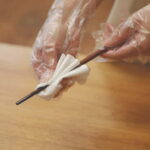
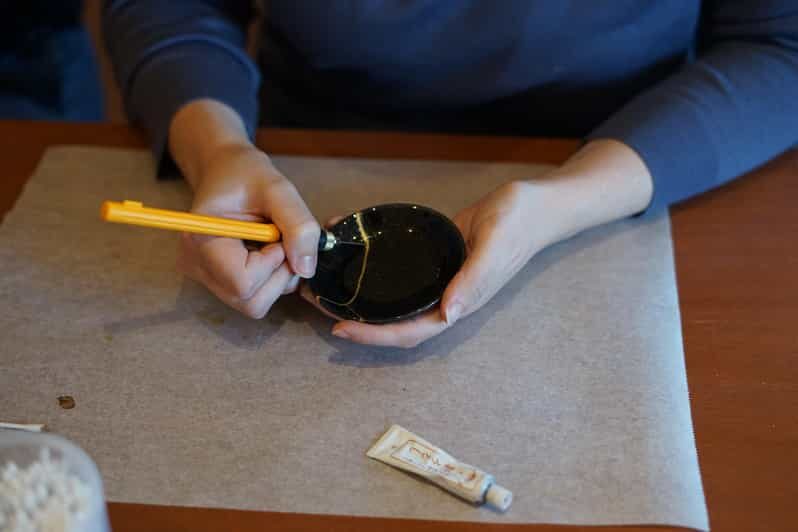
The work starts with a ceramic plate and the materials and tools needed for the class. A basic plate is included in the listed price. You can join the pieces with lacquer, then apply gold along the cracks, following the instructor’s steps. The point is not to make every line look identical. The joins give your piece its character, and the finish will reflect the way you choose to work.
This suits beginners. You do not need previous pottery or repair experience, and the instructions are broken into manageable stages. The instructor can help if you make a mistake or need a hand. That makes the activity a good fit if you like making things but would rather not spend the day worrying about whether you have the right technique.
The gold is more than a flourish. It makes the repaired lines visible, turning damage into the feature of the object. You leave with a plate that is both a souvenir and a record of the time you spent making it. It will not look like a mass-produced keepsake, and that is the point.
Keep the safety limit in mind: the repaired plate is not food-safe and should be displayed rather than used for serving food. If you are hoping to mend a cherished family bowl for everyday use, this quick workshop is not the right setting for that job. Here, the supplied materials are chosen for a short experience, and the finished piece is decorative.
What 45 minutes can, and cannot, do
The advertised duration is 45 minutes, which makes this easy to fit around a day of sightseeing. You get an introduction to the philosophy, guided hands-on work, and a plate to take home without setting aside half a day. That compact format is especially useful if you want a cultural activity but have a full Tokyo itinerary.
Allow for the possibility that the session may take closer to an hour or, in some cases, longer. People have described spending around an hour to an hour and a half at the workshop. That does not change the stated duration, but it is practical to avoid scheduling a tight connection or a timed ticket immediately afterward.
There is also a trade-off in the shorter format. You get a clear, guided taste of kintsugi, not an exhaustive lesson in every traditional material or method. The description refers to urushi lacquer and gold powder, while the workshop notes specify materials designed for a one-hour experience. If your main interest is mastering traditional restoration, ask what the class covers before booking.
Why the $10 price can be good value
At a listed price of $10 per person, the workshop offers more than a souvenir purchase: the basic plate, tools, materials, instruction, and the chance to make the piece yourself are included. For a short activity, that is a modest outlay, especially if you value the cultural explanation as much as the object you carry home.
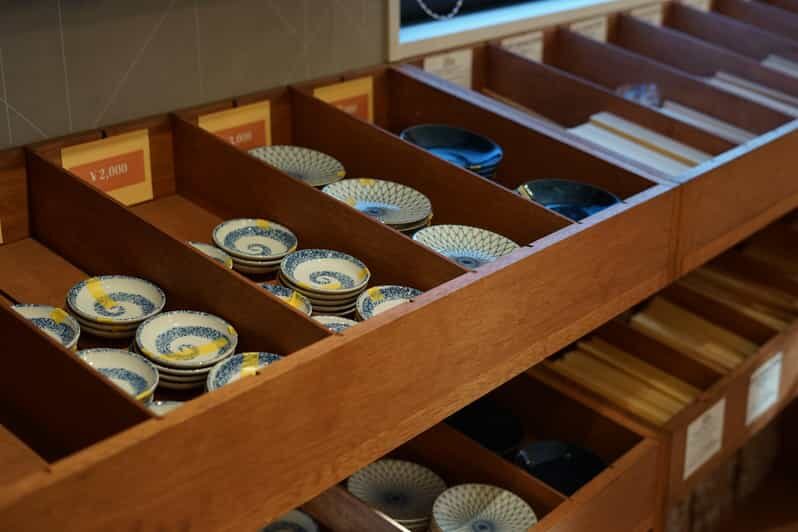
The price is not necessarily the whole cost if you want a different plate. Premium designs are available for an additional charge, so decide whether the included option is enough before upgrading. The basic version is the straightforward choice if your aim is to try the technique and leave with a personal memento. If the shape or design matters to you, ask about the extra charge on site.
The value also depends on what you want from the hour. This is not a museum visit or a polished performance. You take part, make small decisions, and have time to chat with your teacher. People have found the instructors warm and patient, and one participant appreciated the chance to talk with a local teacher about life in Japan. That conversational element can make the session feel more personal than a craft kit at home.
The experience is particularly appealing as a rainy-day plan. It is indoors, does not take up much of the day, and gives you something more active to do than wait for the weather to clear. It can also work as a gentler break between more demanding sightseeing stops.
More Great Tours NearbyThe teachers shape the experience
The instructor is central to a short workshop. Names that come up include Noemi, Sui, April, Keisha, Koko, Serena, and Lika, among others. Participants have singled out patient explanations, helpful step-by-step guidance, and a friendly atmosphere. That matters when you are working with small fragments and unfamiliar materials: clear direction lets you relax into the process.
Expect the teaching to combine practical instruction with cultural background. Your teacher explains the steps and the meaning behind highlighting a break, and may share a little history along the way. The amount of conversation can vary with the class and instructor, so think of the cultural material as a useful introduction rather than a long lecture.
The workshop has also welcomed Japanese participants, with an instructor able to explain in Japanese as well as English in one case. The activity is presented primarily in English, but it is not described as being restricted to visitors from abroad. If you need Japanese instruction, confirm that directly when arranging your session.






Who should book this workshop
I would put this near the top of the list if you want an approachable cultural activity with a tangible result. It works well for people who enjoy making things, visitors seeking a meaningful souvenir, and anyone curious about Japanese craft but short on time. You do not need prior experience, and the instructor-led format removes much of the guesswork.
It can also suit a parent and child, provided the child is at least 12. One family enjoyed taking the class together, but the stated minimum age means it is not an activity for younger children. The short duration may appeal to teens who would rather make something than sit through a long talk.
Choose something else if you need a functional plate, want to restore a treasured object, or expect a full technical course in traditional kintsugi. The finished piece is for decoration, and the quick format has clear limits. It is best approached as an introductory craft session with a personal takeaway.
Before you go, be punctual. Arrivals more than 15 minutes late may be asked to reschedule because they can affect later bookings. Payment is cashless, with Visa, Mastercard, American Express, JCB, Diners Club, and Discover accepted. You can cancel up to 24 hours ahead for a full refund, and the reserve-now, pay-later option keeps you from paying at the time of booking.
Should you book?
Book this if you want a compact, hands-on introduction to a Japanese art form and like the idea of taking home a one-of-a-kind keepsake. The combination of guided making, cultural context, and an accessible starting price makes it an appealing use of an hour in Tokyo. Just remember the plate is decorative, the basic experience is brief, and upgrades cost extra. If those limits suit your plans, this is a thoughtful alternative to buying another ready-made souvenir.
Tokyo: Kintsugi Gold Repair Workshop
FAQ
How long does the workshop last?
The stated duration is 45 minutes. Some sessions may take around an hour or longer, so leave a little extra time in your schedule.
What is included in the price?
The workshop, required tools and materials, one plate, and an English-speaking instructor are included.
Can I choose a different plate?
Premium plate upgrades are available for an additional charge. The basic plate is included.
Is the repaired plate safe to use for food?
No. The plate repaired in this workshop is not food-safe and should be used for decorative purposes only.
Do I need experience with pottery or kintsugi?
No prior experience is specified as necessary. The instructor guides you through the process step by step.
What language is the workshop taught in?
The instructor teaches in English. One Japanese participant also noted that their instructor could speak Japanese, but Japanese instruction is not guaranteed for every session.
Is the workshop suitable for children?
It is not suitable for children under 12.
What happens if I arrive late?
If you arrive more than 15 minutes late, you may be asked to reschedule because late arrivals can affect later reservations.
What payment methods are accepted?
The workshop is cashless. Accepted cards are Visa, Mastercard, American Express, JCB, Diners Club, and Discover.
You can check availability for your dates here: