
I almost skipped the hop-on hop-off bus in Tokyo. I figured it was for people who didn’t know how to use the metro — tourist-trap stuff, the kind of thing you do in London because it’s raining and you’ve run out of ideas. Tokyo has one of the best public transit systems on the planet. Why would anyone need a bus?
Turns out, I had it backwards. The metro is incredible for getting between points. But you spend the entire time underground. You surface at your stop, walk three blocks, see the thing, then descend again. After two days I realized I’d been to a dozen neighborhoods and had no sense of how they connected. I couldn’t picture the city.
The hop-on hop-off bus fixed that in about four hours.
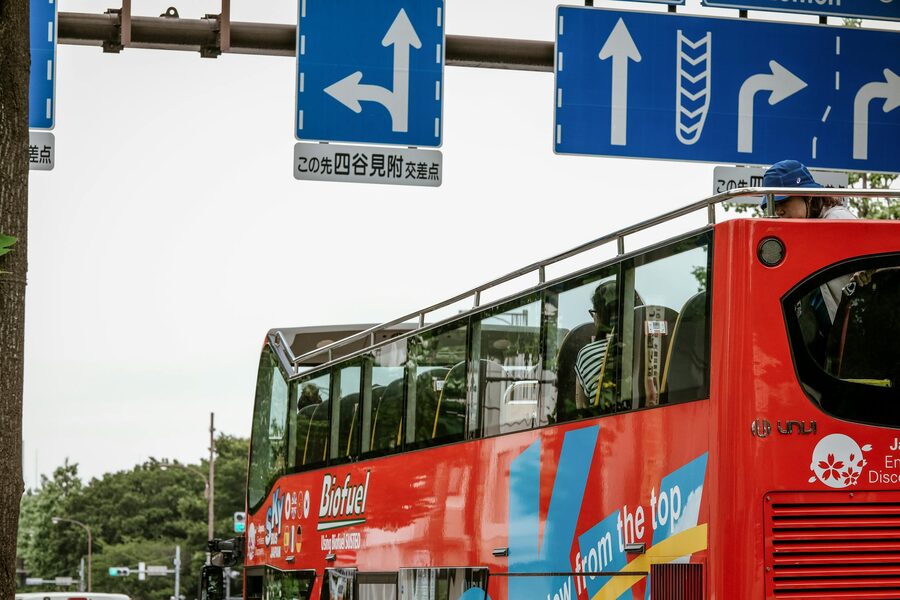
The Sky Hop Bus runs three color-coded routes across central Tokyo, and for about $30 per person you can ride all day, hopping off at any stop and catching the next bus when you’re ready. It covers Asakusa, Shibuya, Shinjuku, Tokyo Tower, Odaiba, and a bunch of neighborhoods in between — basically the entire greatest-hits list in one ticket.
Here’s how to book it, which route to pick first, and whether it’s actually worth it (spoiler: it depends on how you use it).
Short on time? Here are my top picks:
Best for first-timers: Tokyo Hop-On Hop-Off Sightseeing Bus Ticket — $30. All three routes, all day. The one most people should book.
Best guided full-day: Tokyo Full-Day Sightseeing Bus Tour — $122. Guided, structured, covers everything with lunch included. No planning required.
Best for short stays: Tokyo Half-Day Morning Bus Tour — $40. Four hours, hits the highlights, done by lunch.
- How the Sky Hop Bus System Works
- Ticket Types and Prices
- How the QR Ticket Works
- Bus Types
- Hop-On Hop-Off vs Guided Bus Tours — Which One?
- The Best Tokyo Sightseeing Bus Tours to Book
- 1. Tokyo Hop-On Hop-Off Sightseeing Bus Ticket —
- 2. Tokyo Full-Day Sightseeing Bus Tour — 2
- 3. Tokyo Half-Day Morning Bus Tour —
- 4. Tokyo 1-Day Bus Tour with Meiji Shrine, Odaiba, Lunch and Skytree —
- Which Route to Ride First
- When to Ride
- How to Get to the Starting Point
- Tips That Will Save You Time
- What You’ll See on Each Route
- Red Line: Asakusa and Skytree
- Blue Line: Tokyo Tower and Odaiba
- Green Line: Shibuya and Shinjuku
- What People Get Wrong About the Tokyo Hop-On Hop-Off
- Is the Tokyo Hop-On Hop-Off Bus Worth It?
- Beyond the Bus
How the Sky Hop Bus System Works
The Sky Hop Bus is Tokyo’s only real hop-on hop-off sightseeing bus. It’s operated by a company called — you guessed it — Sky Hop Bus, and they run open-top double-decker buses on three fixed routes around central Tokyo. You buy a pass (one day or two days), and you can get on and off at any stop on any route as many times as you want.
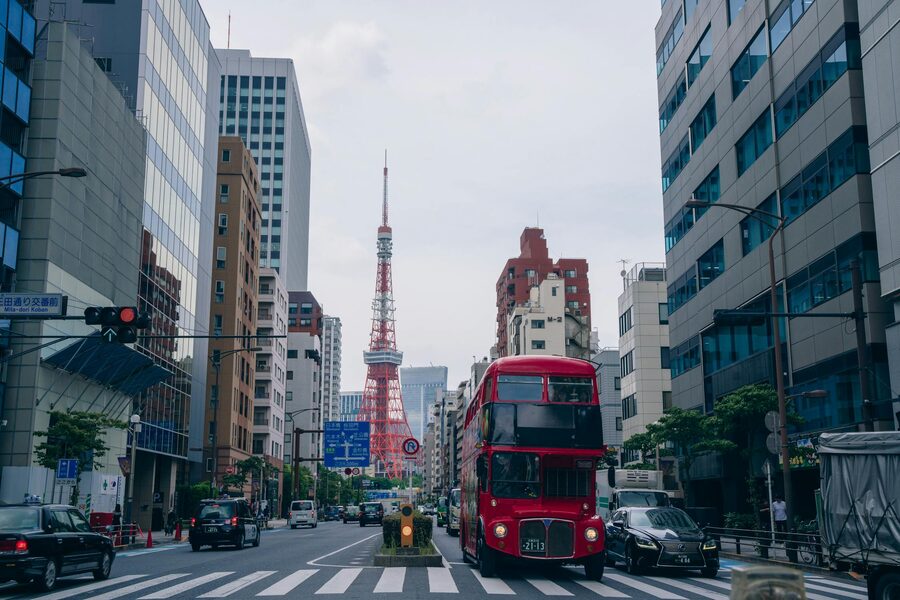
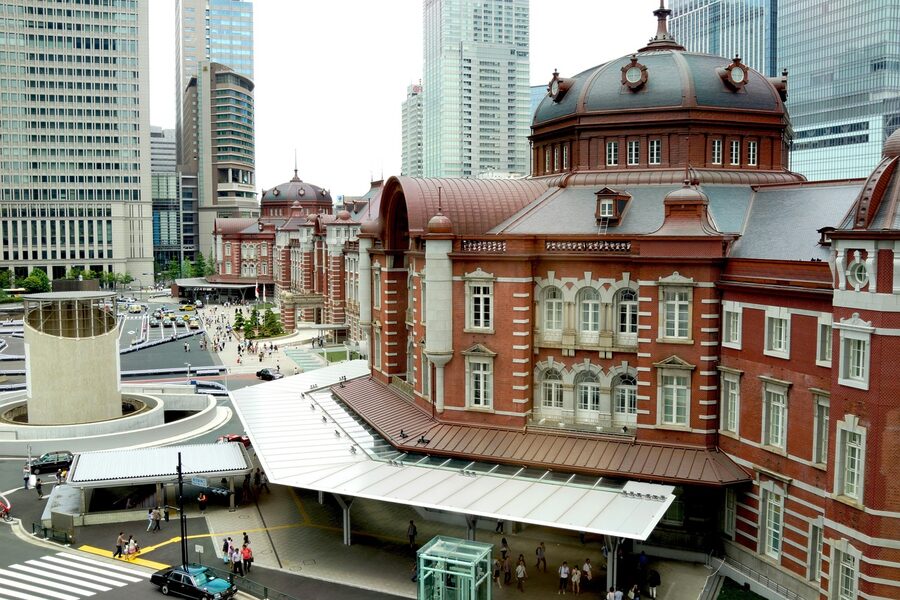
All three routes start and end at the Marunouchi Mitsubishi Building, which is directly next to Tokyo Station’s Marunouchi exit. This is your home base. You check in here, grab the bus, and it loops around before bringing you back.
The three routes are:
- Red Line (Asakusa/Skytree Route): Sensoji Temple, Tokyo Skytree, Ryogoku (sumo area), Ueno Park, Akihabara. This is the “old Tokyo” route — temples, traditional shopping streets, and the massive Skytree tower.
- Blue Line (Tokyo Tower/Odaiba Route): Tokyo Tower, Tsukiji area, Ginza, and across to the Odaiba waterfront. This one mixes the classic postcard views with the futuristic man-made islands of Tokyo Bay.
- Green Line (Shinjuku/Shibuya Route): Shibuya Crossing, Harajuku, Meiji Shrine, Shinjuku, and Yoyogi Park. The “modern Tokyo” route — fashion, nightlife districts, and the world’s most famous pedestrian crossing.
Buses run from roughly 9 AM to 5 PM, with one departing every 30-60 minutes depending on the route and time of year. Each full loop takes about 60-80 minutes if you stay on without hopping off.
Ticket Types and Prices
The pricing is straightforward:
- 1-Day Combo Pass (all 3 routes): Around $30 / ~4,500 yen for adults. This is what most people should buy. It gives you unlimited rides on all three routes for the entire day.
- 2-Day Combo Pass: Around $45-50 / ~6,500 yen. Worth it if you want to ride one day and explore your favorite stops the next.
- Single-Line Pass: Cheaper if you only want one route, but the combo is better value since you’ll want to try at least two.
- Children (6-11): Usually half price. Under 6 ride free.
You can buy tickets online through platforms like GetYourGuide or Klook (I recommend this — instant QR code, no language barrier at the counter), or at the Marunouchi ticket counter, or even on the bus itself if seats are available.
How the QR Ticket Works
When you buy online, you get a PDF with a QR code. Screenshot it or keep the PDF accessible on your phone. Show it to the staff when you board, they scan it, and you’re on. Each time you hop off and back on, just show the same QR code again. Simple.
Bus Types
They rotate between a few different bus styles depending on the weather:
- Full-Open: Classic open-top double-decker — all seats on the upper deck are exposed. Used in spring and autumn when the weather cooperates. Best for photos.
- Cabriolet: Has a retractable hood that closes if it starts raining. Good for the unpredictable summer months.
- Crystal: Glass roof, air-conditioned. Used in rain or cold. You still get the views but stay dry.
- Half-Open: Covered section on part of the upper deck plus wheelchair access on the lower deck. The winter option.
You don’t get to choose which bus type shows up — it depends on the day’s weather forecast. But honestly, even the Crystal bus with its glass roof is a good experience.
Hop-On Hop-Off vs Guided Bus Tours — Which One?
This is the real question, and the answer depends on what kind of traveler you are.
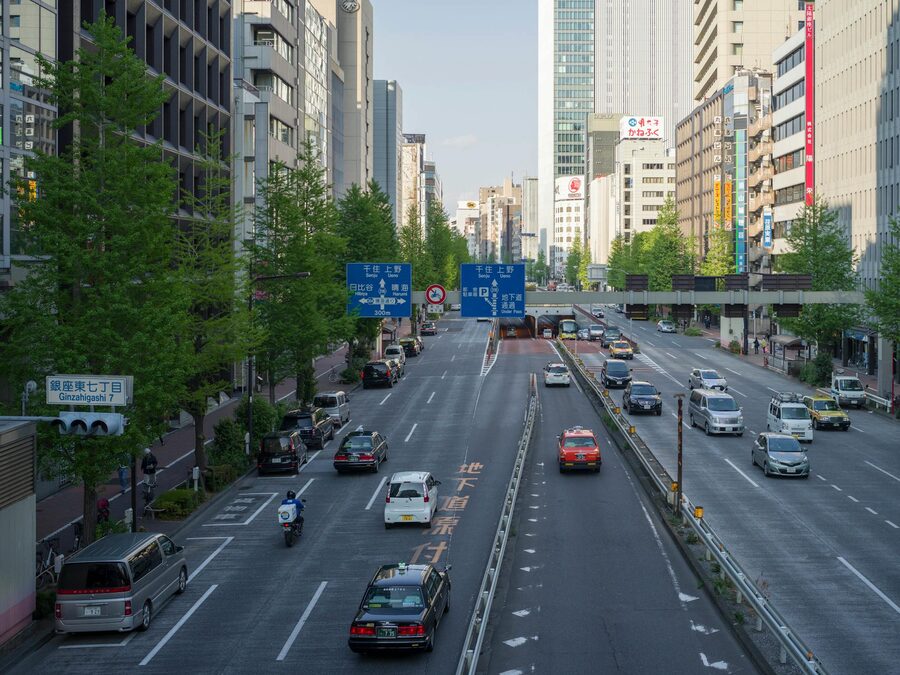
The hop-on hop-off bus (Sky Hop Bus) gives you freedom. You ride at your own pace, get off wherever looks interesting, spend as long as you want, then catch the next bus. There’s a recorded audio guide in seven languages that uses GPS to trigger descriptions as you pass landmarks. It’s self-directed — you’re in control.
A guided bus tour (like the full-day or half-day options below) is structured. A guide tells you where to go, what to look at, and handles all the logistics. You stop at specific spots for set amounts of time, and some include lunch. You don’t get to freelance, but you also don’t have to think.
My take: if this is your first time in Tokyo, the hop-on hop-off bus is better. You need the freedom to go “wait, what is this neighborhood?” and jump off to explore. Tokyo rewards spontaneity. If you’ve already been and just want a structured day of sightseeing without any planning, the guided tours are excellent and save mental energy.
The Best Tokyo Sightseeing Bus Tours to Book
I’ve gone through the available options and narrowed it down to four — ranging from the self-guided hop-on hop-off pass to fully guided full-day experiences. Each serves a different need, so pick the one that matches your schedule and travel style.
1. Tokyo Hop-On Hop-Off Sightseeing Bus Ticket — $30
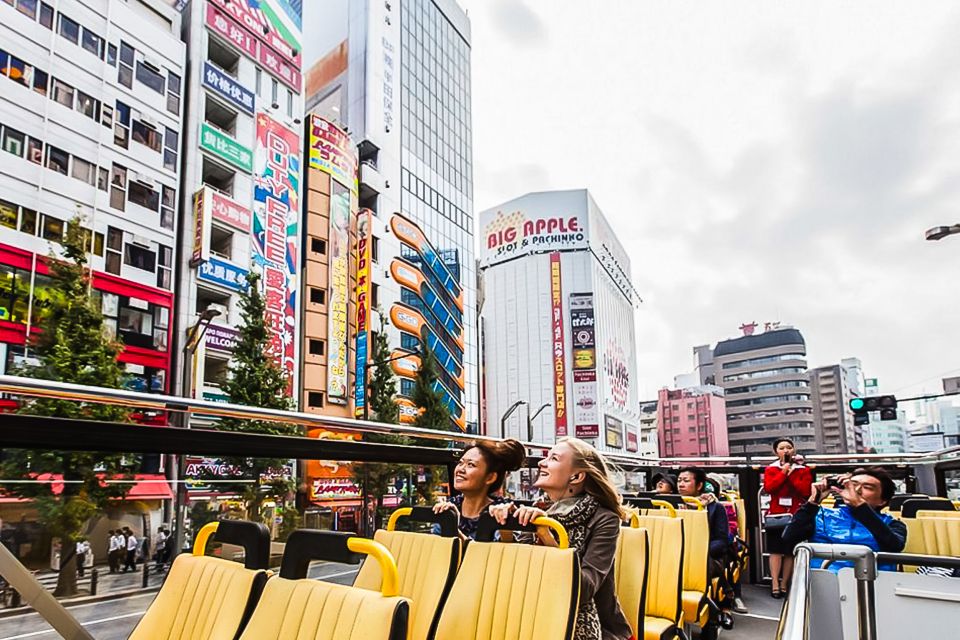
This is the standard Sky Hop Bus pass that I’ve been describing above, and it’s the one I’d recommend for most visitors. At $30 per person for a full day on all three routes, it’s the cheapest way to see a huge chunk of Tokyo from an open-top bus. The GPS audio guide covers the basics of each landmark you pass, and you can hop off at any stop to explore on your own schedule.
It’s also the most popular Tokyo bus tour on the market — one of the most reviewed options across every booking platform, which tells you something about how many people find it useful. The 3.9 rating is lower than the guided tours (more on that in a second), and most complaints are about the wait times between buses or stops being tricky to find. Fair criticism. But for the price, the freedom you get is hard to match.
This is the right pick if you want to move at your own pace and don’t mind a little improvisation. If you want everything planned for you, keep reading.
2. Tokyo Full-Day Sightseeing Bus Tour — $122
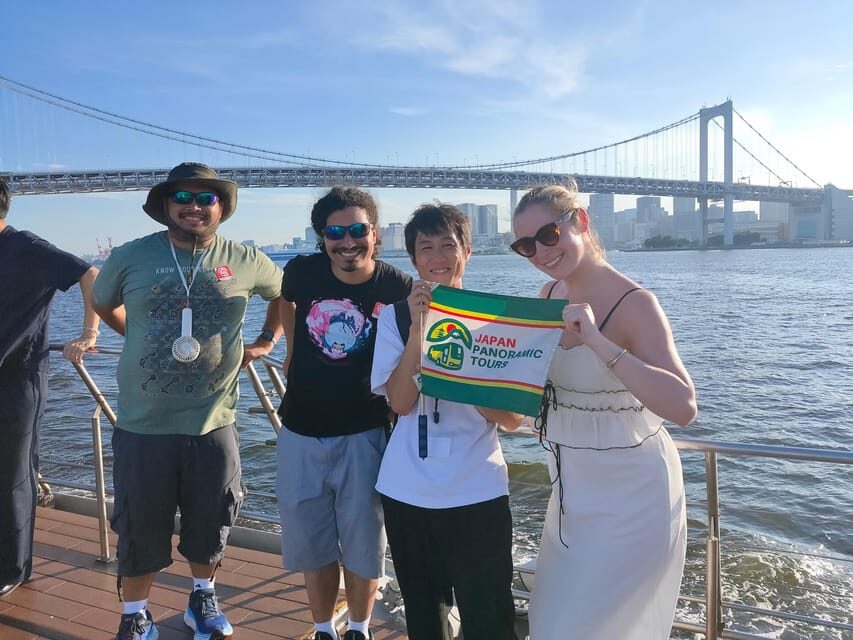
Run by Japan Panoramic Tours, this is a completely different experience from the hop-on hop-off. It’s a 10-hour guided coach tour that hits the major sights in a single day — think Meiji Shrine, the Imperial Palace East Gardens, Asakusa, and more, with lunch included and a guide handling every transition. No guesswork, no figuring out which bus stop to find.
At $122 it’s four times the price of the hop-on hop-off, but you’re getting a full day of guided content with a 4.7 rating from close to two thousand reviews. The guides are consistently praised, the schedule is tight but well-paced, and the lunch stop is actually decent (not a tourist trap cafeteria). This is the one I’d tell my parents to book — people who want quality sightseeing without stress.
The tradeoff is obvious: no flexibility. You go where the bus goes, when the bus goes. If you see something interesting along the way, you can’t jump off. But for a lot of travellers, that structure is exactly the point.
3. Tokyo Half-Day Morning Bus Tour — $40
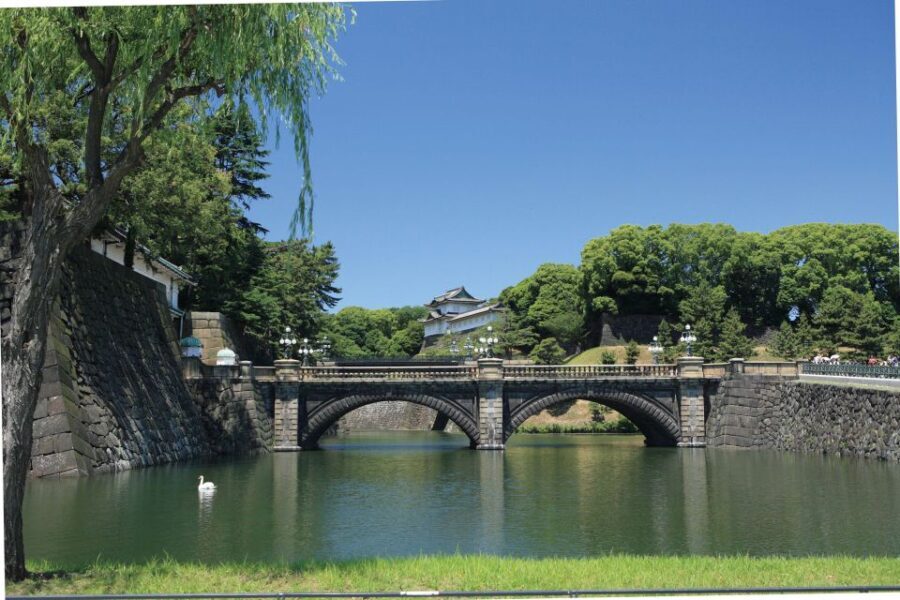
Operated by Hato Bus — a Tokyo institution that’s been running sightseeing coaches since 1948 — this is the smart pick if your time is limited. It’s a 4-hour morning tour that covers the Imperial Palace, Tokyo Tower, and Asakusa before dropping you back by lunchtime. At $40 per person, it sits right between the budget hop-on hop-off and the premium full-day option.
What I like about this one is the efficiency. You see three of Tokyo’s biggest landmarks in four hours with a guide, then you have the entire afternoon and evening free for the things that don’t need a bus — ramen hunting, shrine hopping, getting lost in Akihabara. For people on a tight itinerary who are only in Tokyo for two or three days, this is the goldilocks option.
The 4.6 rating reflects the Hato Bus quality — they’ve been doing this for decades and the operation is polished. The buses are comfortable, the guides know their stuff, and the timing is tight without feeling rushed.
4. Tokyo 1-Day Bus Tour with Meiji Shrine, Odaiba, Lunch and Skytree — $83
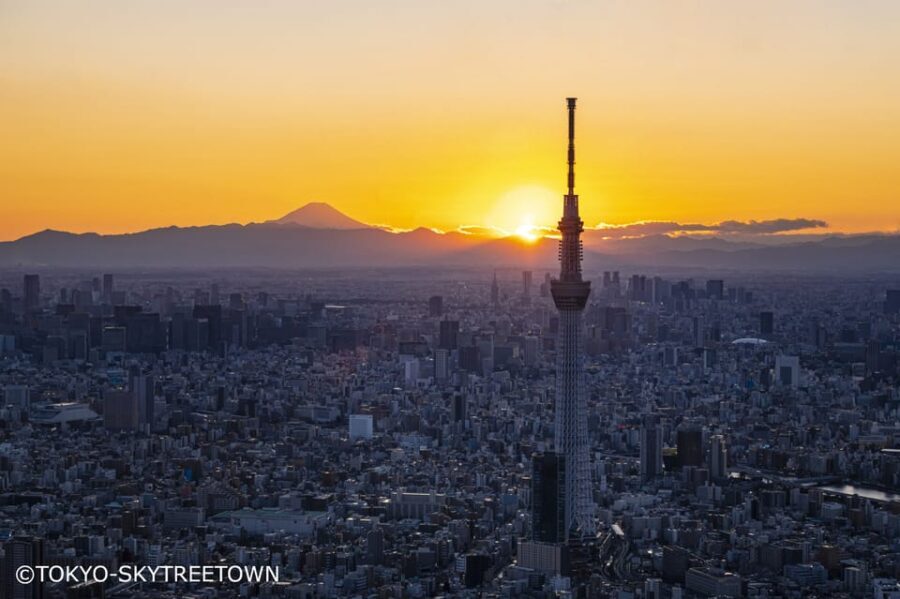
Also run by Hato Bus, this is their full-day option and it covers a different set of landmarks than the Japan Panoramic tour above. The itinerary includes Meiji Shrine, Odaiba (Tokyo’s waterfront entertainment district), Nakamise shopping street in Asakusa, and ends with a visit to Tokyo Skytree — all with lunch included. Nine hours, $83 per person.
What makes this one worth considering is the Odaiba section. Most Tokyo bus tours skip the bay area entirely, and it’s a genuinely interesting part of the city — the Rainbow Bridge crossing, the replica Statue of Liberty, the futuristic architecture. If the standard “temples and towers” route doesn’t excite you, the Odaiba detour adds a different flavor.
At $83 with lunch, it slots between the half-day and the premium full-day. The 4.6 rating from Hato Bus means you get the same reliable operation, just with a different itinerary. It’s a solid middle ground if you want a full day of guided sightseeing without the $122 price tag.
Which Route to Ride First
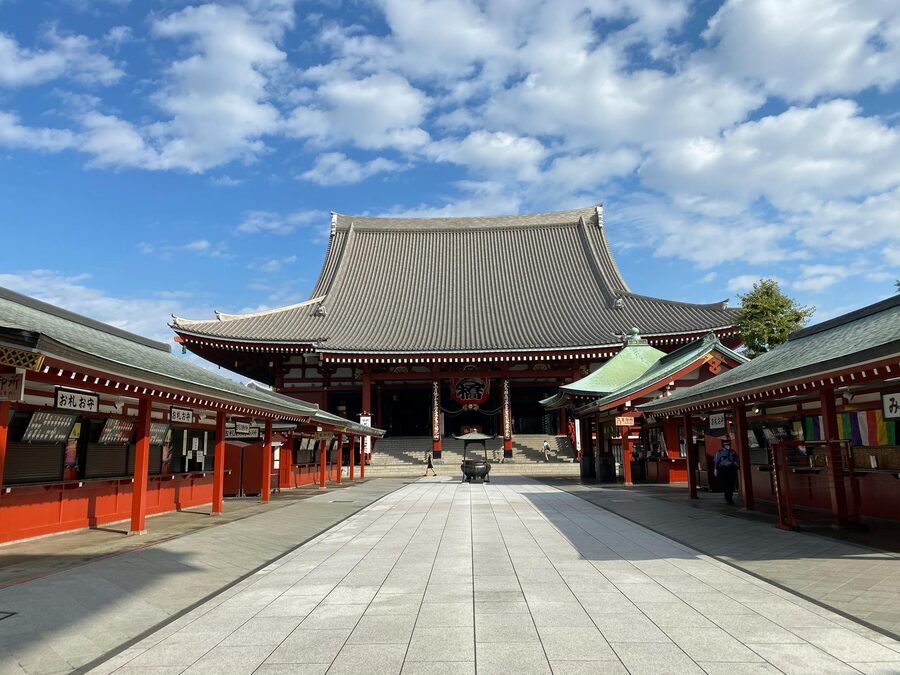
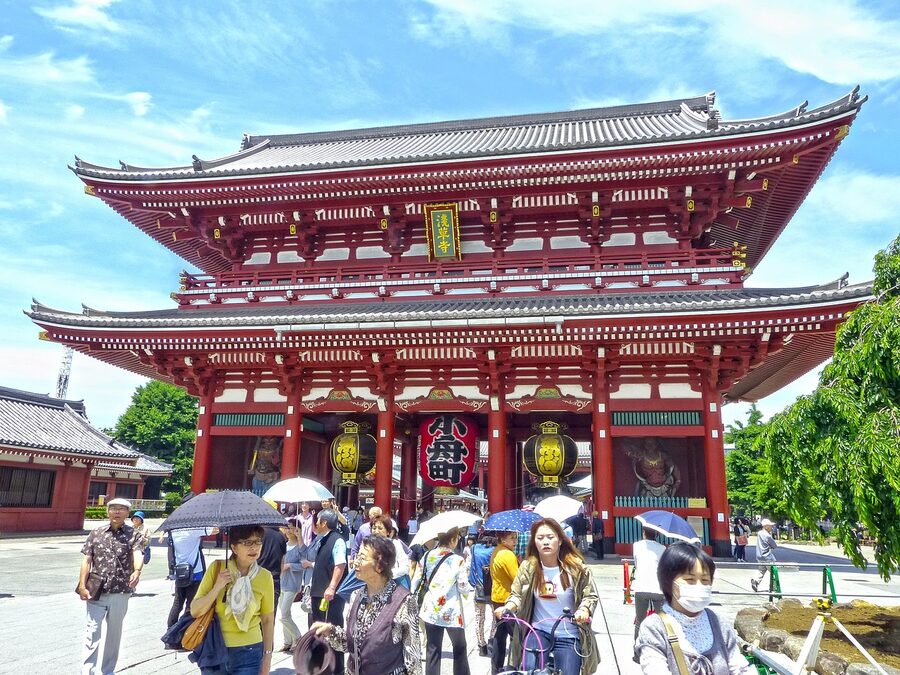
If you only have time for one route, take the Red Line (Asakusa/Skytree). Here’s why: it covers the part of Tokyo that feels most different from any other major city. Sensoji Temple, the traditional shopping streets, the Skytree looming over old low-rise neighborhoods — it’s the Tokyo that made you want to visit in the first place. The contrast between the ancient temple complex and the space-age tower just behind it is striking, and you get it all on one route.
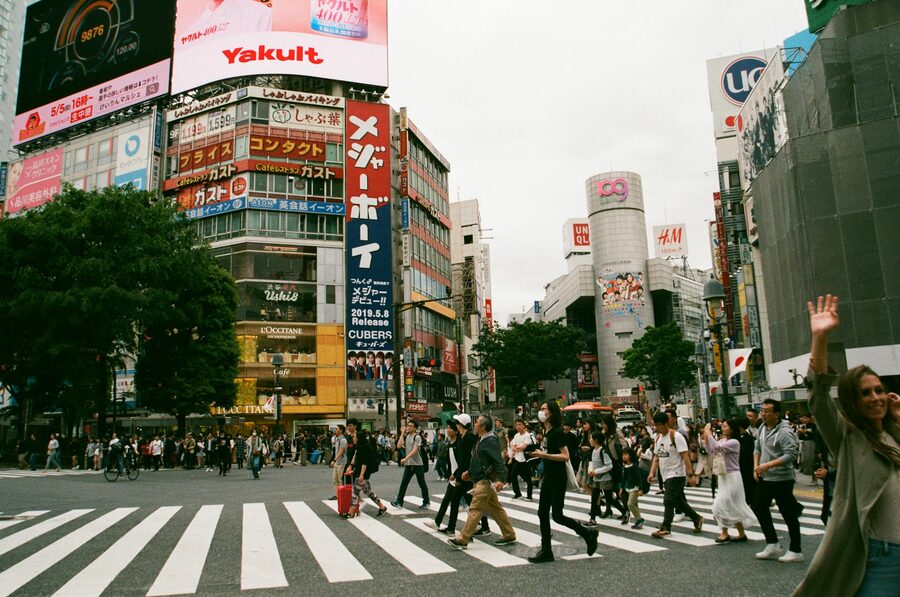
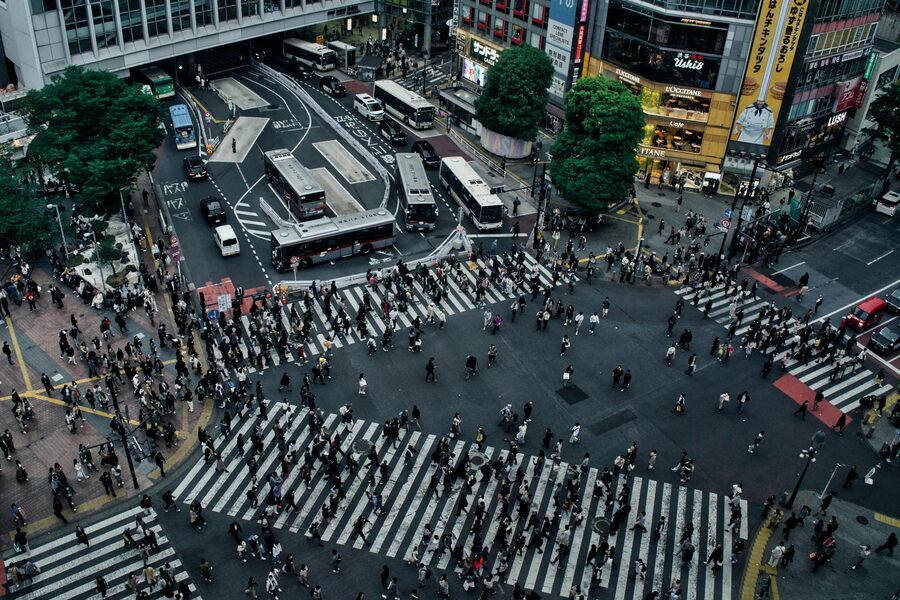
If you have time for two, add the Green Line (Shibuya/Shinjuku). Riding through Shibuya Crossing from above is genuinely worth it — you see the scale of it in a way that’s impossible at street level. Plus the Harajuku and Meiji Shrine stops let you jump off into completely different worlds within a few minutes of each other.
The Blue Line (Tokyo Tower/Odaiba) is great if you’re interested in the waterfront and Tokyo Bay, or if you want the classic Tokyo Tower photo op. But if time is tight, the other two routes cover more diverse ground.
When to Ride
The Sky Hop Bus runs year-round, but the experience changes a lot with the seasons.
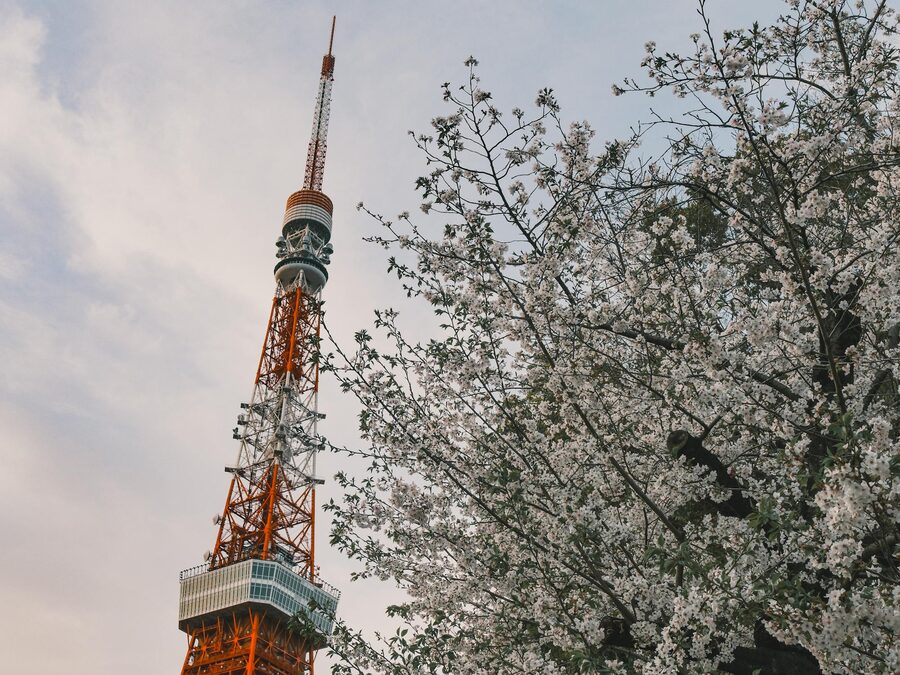
Best time: Spring (late March to May) and autumn (October to November). The weather is mild, the open-top deck is comfortable, and if you hit cherry blossom season or autumn foliage season, the bus routes pass through some gorgeous tree-lined streets. Late March to early April is especially good — the Mt. Fuji day trip from Tokyo is also at its best during cherry blossom season.
Worst time: Mid-June to mid-July (rainy season) and August (extremely hot and humid). The buses still run, but they’ll use the enclosed Crystal or Cabriolet types, and sudden cancellations happen. Summer heat on an open-top deck can be brutal — bring water, sunscreen, and a hat if you ride between June and September.
Winter (December to February): Totally fine if you dress warmly. They use the Half-Open buses with covered sections. Fewer travellers, shorter wait times at stops, and the winter light in Tokyo is beautiful. The downside is shorter daylight hours — the bus stops running around 5 PM, and it gets dark by 4:30 PM in December.
Time of day: Take the first bus (around 9 AM) if you can. The morning routes are nearly empty, the light is good for photos, and you avoid the crowds that build up by noon. By early afternoon, especially on weekends, the popular stops get noticeably busier.
How to Get to the Starting Point
All three routes depart from the Marunouchi Mitsubishi Building, which is on the Marunouchi (west) side of Tokyo Station. Here’s how to get there:
- From Tokyo Station: Take the Marunouchi Central Exit. The Mitsubishi Building is about a 2-minute walk — you’ll see it immediately. Look for the bus stop signs or the ticket counter on the ground floor.
- From Shinjuku/Shibuya: Take the JR Chuo Line or Marunouchi Line to Tokyo Station, then walk out the Marunouchi exit.
- From Asakusa: Take the Ginza Line to Nihonbashi, then walk 10 minutes, or take the Asakusa Line to Higashi-Nihonbashi and transfer.
- From your hotel: Honestly, almost any hotel in central Tokyo is within 15-20 minutes of Tokyo Station by metro. It’s one of the most connected stations in the city.
One thing worth noting: the bus stops along the routes are not always easy to find using Google Maps. They’re marked on the Sky Hop Bus route map you get with your ticket, but the physical stops can be tucked around corners or behind buildings. Download the map to your phone before you start.
Tips That Will Save You Time
- Do the full loop first, then hop off. This is the single best piece of advice I can give. On your first ride, stay on the entire route without getting off. Use it as a scouting mission. Take notes on which stops look interesting, then use the rest of the day (or the next day with a 2-day pass) to hop off at your favorites. You’ll waste less time this way.
- Buy tickets online in advance. The QR code system is seamless. Buying on the bus means you might not get a seat if it’s busy, and the counter at Marunouchi can have a line. Book through GetYourGuide or Klook and you’re sorted.
- Sit on the left side for the Red Line. The Skytree views are better from the left when heading toward Asakusa. For the Blue Line, the right side has better Tokyo Tower angles.
- Bring a portable charger. You’ll be taking a lot of photos from the open deck. Between GPS maps, camera use, and the audio guide app draining your battery, a power bank is essential.
- Don’t plan to switch routes quickly. The schedules don’t align perfectly, so transferring back at Marunouchi between routes can mean a 20-30 minute wait. Factor this in. Bring a snack and use the waiting time to explore the Marunouchi area — it’s full of shops and restaurants.
- Get a mobile SIM with data. Tokyo’s free public Wi-Fi is patchy at best. You’ll need data for Google Maps to find the less obvious bus stops, and for the audio guide if it runs through an app. A Japanese tourist SIM is cheap and saves headaches.
- Use the bus to plan a sumo experience. The Red Line passes through the Ryogoku district — if you see the sumo area and it interests you, book a separate visit. The bus gives you a preview of neighborhoods you might otherwise skip.
What You’ll See on Each Route
Let me break down each route in a bit more detail so you know what to expect.
Red Line: Asakusa and Skytree
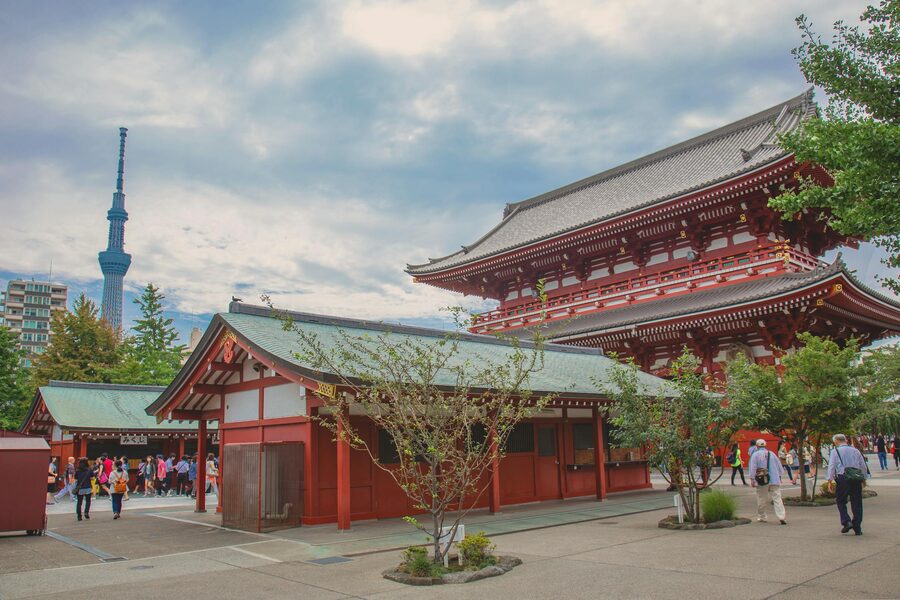
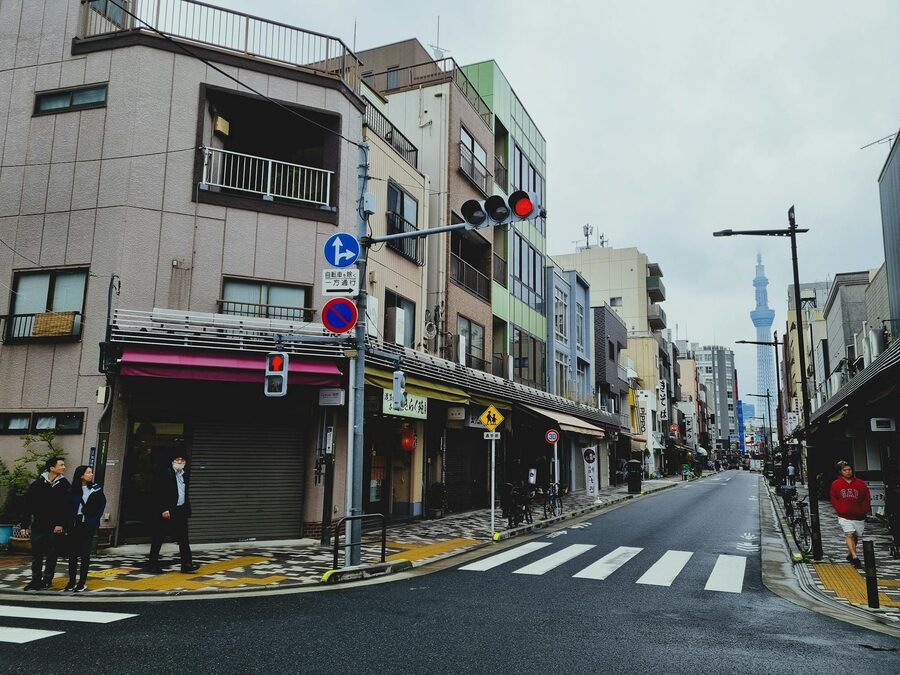
This route heads northeast from Tokyo Station into the older districts of the city. The highlight is undoubtedly Asakusa — home to Sensoji Temple, Tokyo’s oldest and most visited Buddhist temple. The approach through Nakamise Street (a traditional shopping arcade selling snacks, souvenirs, and local crafts) is one of those walk-through-it-at-least-once experiences.
The bus drops you close enough to walk in, explore, grab some fresh senbei (rice crackers), and be back at the stop within 45 minutes.
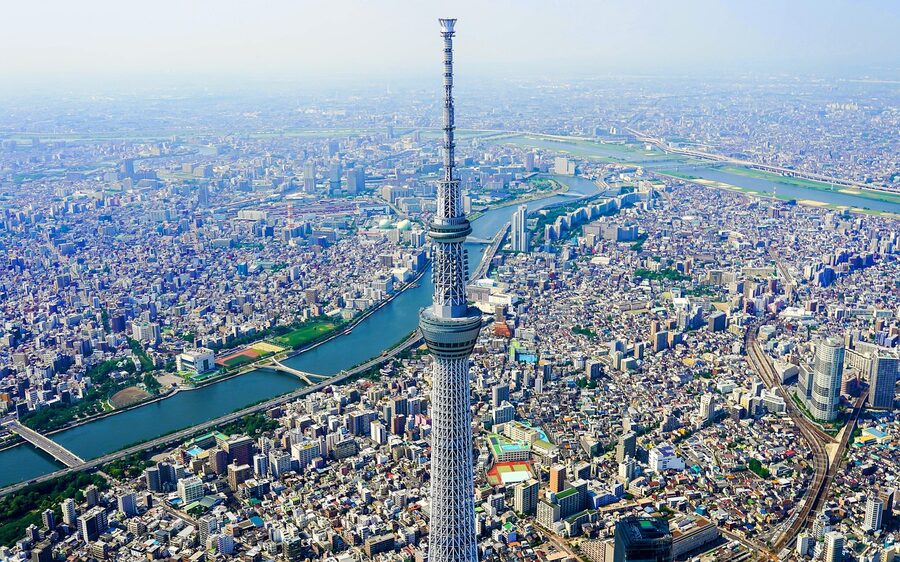
From the bus, the Tokyo Skytree gradually appears and grows as you approach it. At 634 meters, it dominates the skyline in a way that photos don’t fully convey. If you want to go up, you’ll need separate Skytree tickets — the bus ticket doesn’t include observation deck access.
The route also passes through Ryogoku, which is the sumo wrestling heartland of Tokyo. You’ll see the Kokugikan arena (where the official sumo tournaments happen) and sumo stables in the neighborhood. If watching sumo is on your list, the bus gives you a good preview of the area.
Blue Line: Tokyo Tower and Odaiba
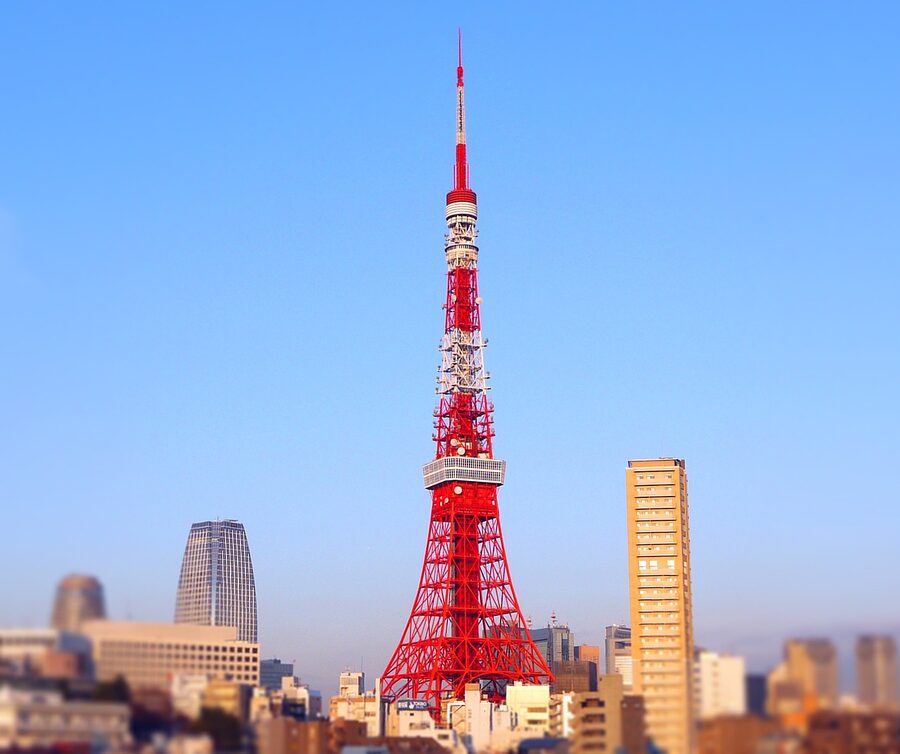
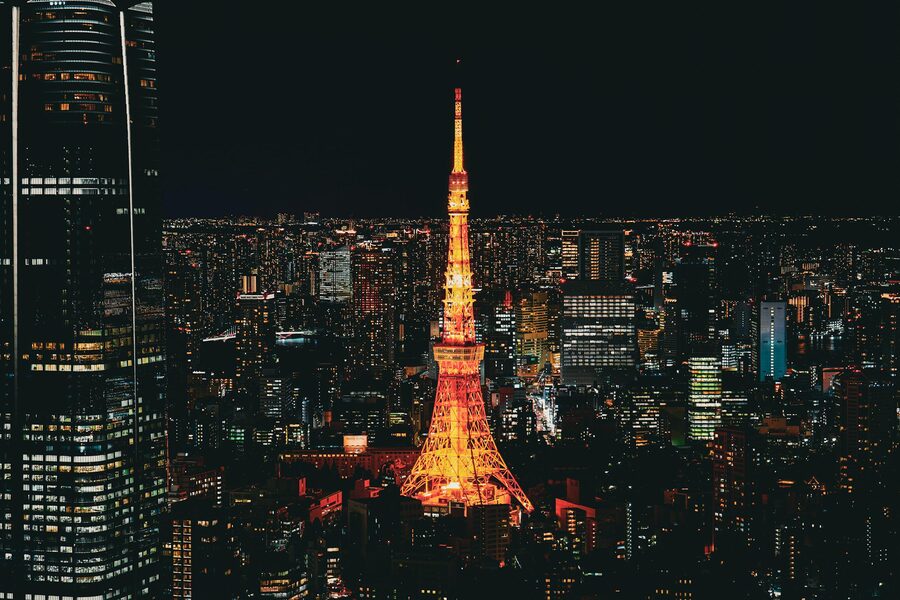
The Blue Line heads south from Tokyo Station and loops through some of the most recognizable landmarks in the city. Tokyo Tower is the obvious star — the 333-meter orange-and-white steel tower that’s been Tokyo’s symbol since 1958. The bus passes close enough to get great photos from the open deck, and if you want to go up, the stop is walkable to the entrance.
The Tsukiji area — the neighborhood that still carries the energy of the old fish market (the wholesale market moved to Toyosu, but the outer market is alive and well) — is a great hop-off spot for lunch. Some of the best sushi in Tokyo is within a five-minute walk of the bus stop.
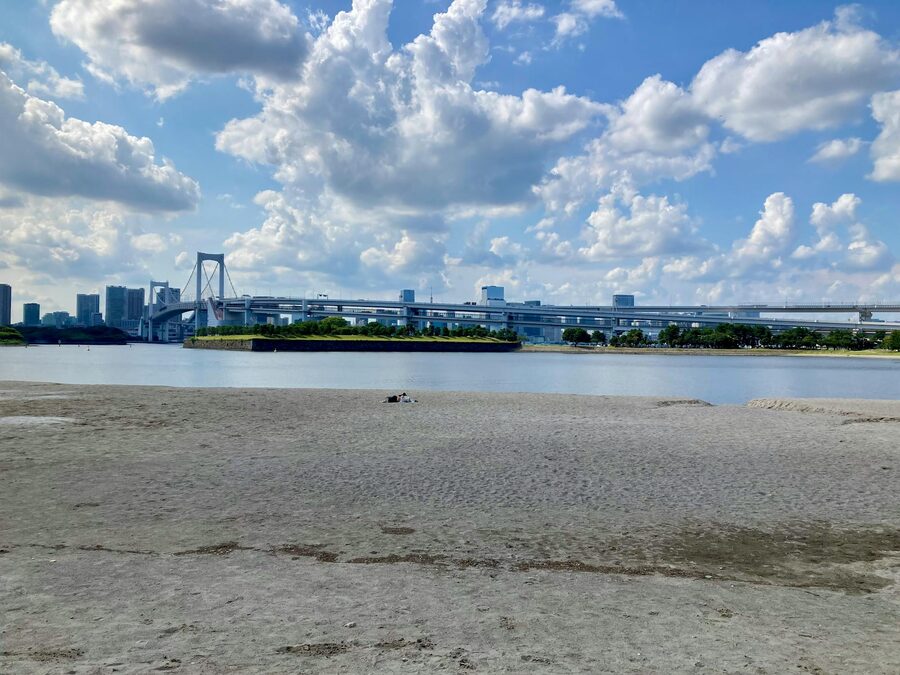
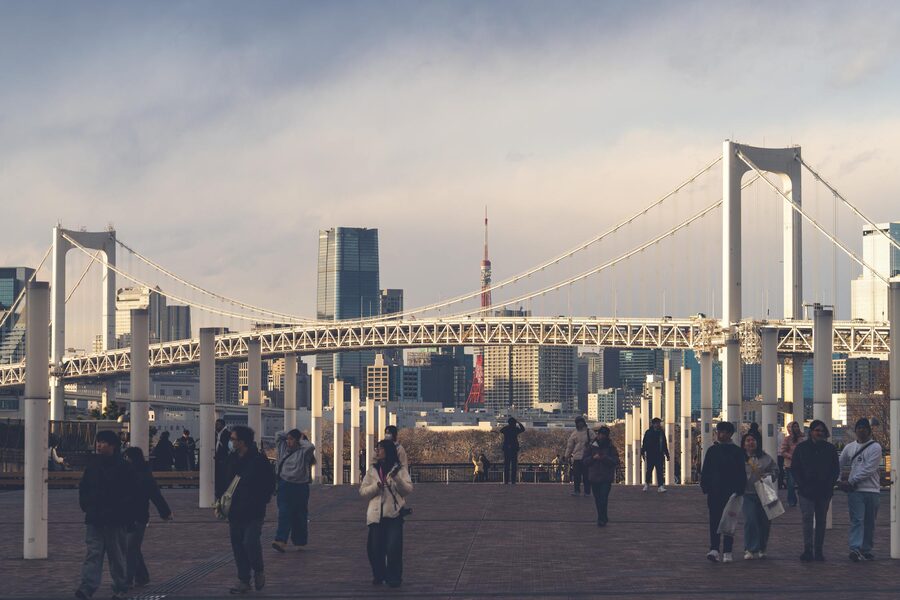
The route continues through Ginza (Tokyo’s upscale shopping district — think Fifth Avenue but cleaner) and across to Odaiba, the man-made island in Tokyo Bay. Crossing the Rainbow Bridge by bus gives you sweeping views of the Tokyo skyline that you won’t get anywhere else. Odaiba itself has the teamLab exhibitions, a replica Statue of Liberty, and the Gundam statue — it’s Tokyo’s futuristic playground.
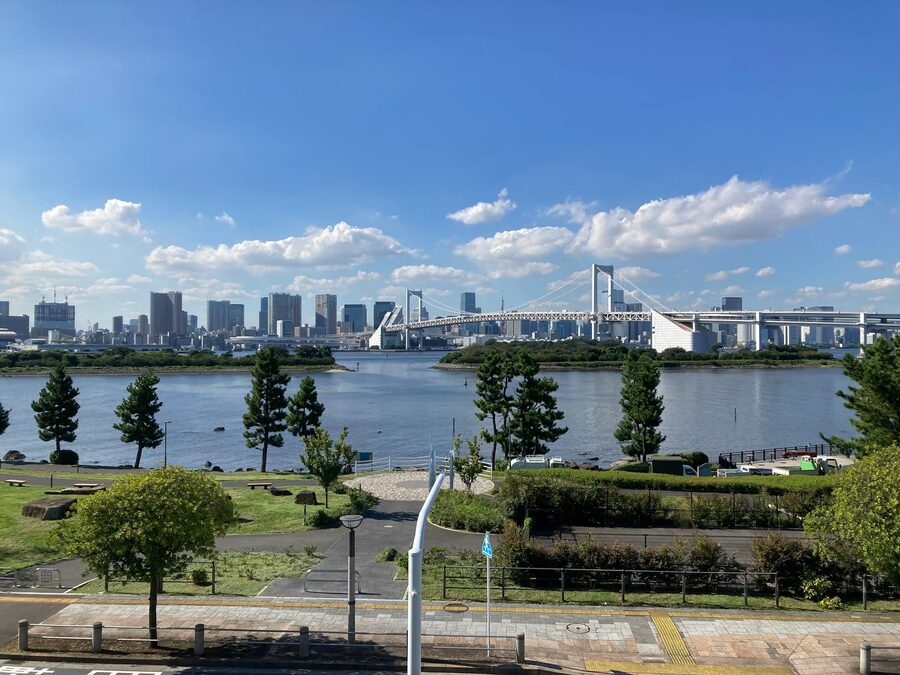
If you’re planning to visit teamLab Planets, the Blue Line gets you close — though you’ll still need to walk or take a short train ride from the nearest stop.
Green Line: Shibuya and Shinjuku
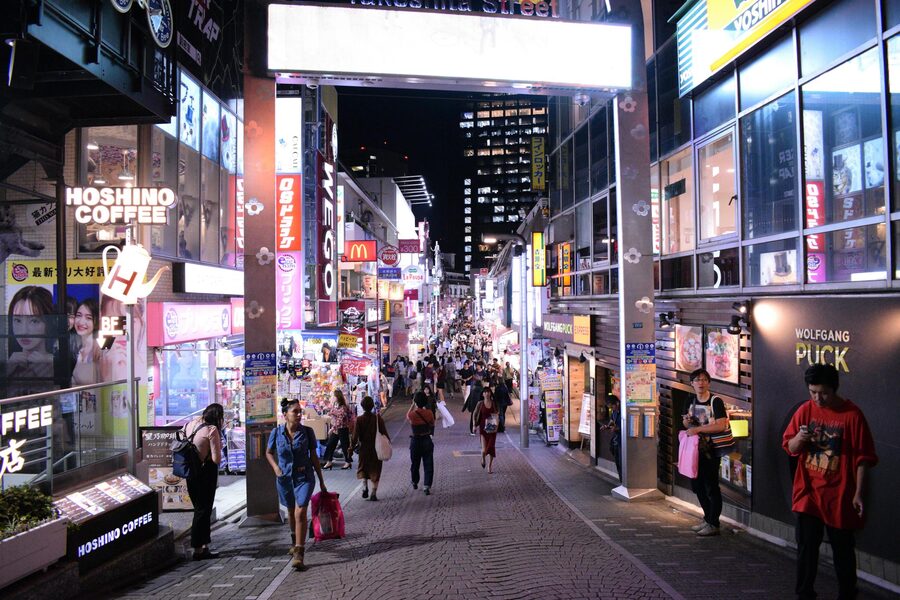
The Green Line is modern Tokyo at its most electric. Shibuya Crossing — the world’s most famous pedestrian intersection where up to 3,000 people cross at once — is genuinely impressive from the elevated bus deck. You can see the full scramble pattern from above, which is impossible at street level where you’re just part of the crowd.
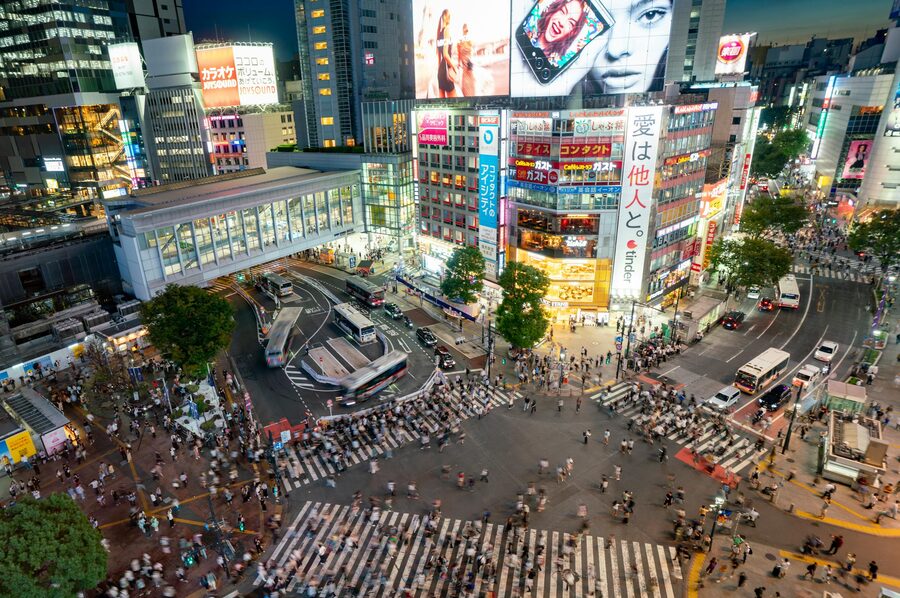
Harajuku is a five-minute walk from one of the Green Line stops, and it’s one of those places where even a quick 30-minute hop-off feels worthwhile. Takeshita Street is packed with fashion shops, crepe stands, and general sensory overload. Right next to it, Meiji Shrine is the complete opposite — a serene forest walk leading to one of Tokyo’s most important Shinto shrines. The contrast is pure Tokyo.
Shinjuku wraps up the Green Line with its wall of skyscrapers, the famous Kabukicho entertainment district (worth seeing even in daylight), and the Tokyo Metropolitan Government Building — which has free observation decks on the 45th floor. This is a tip most travellers miss: you don’t need to pay for Skytree or Tokyo Tower to get a panoramic city view. The government building does it for free.
The Green Line also passes through Yoyogi Park, which on weekends often has street performers, food stalls, and local events. It’s a good hop-off if you want to see how Tokyoites spend their weekends.
What People Get Wrong About the Tokyo Hop-On Hop-Off
Let me address the common complaints, because they’re not wrong — they’re just missing context.
“The rating is only 3.9.” True. And that’s because a lot of people treat it like a guided tour, then get frustrated when there’s no guide. It’s a different product. It’s a transportation pass with commentary, not a curated experience. Set your expectations accordingly and it’s perfectly good.
“The routes stop too early.” Also true. The last buses leave around 5 PM, which means you miss Tokyo’s legendary nighttime scenery. This is a genuine limitation. Use the bus during the day and plan separate evening walks in Shinjuku, Shibuya, or Akihabara — the go-kart tours are a fun alternative for seeing Tokyo after dark.
“The stops are hard to find.” Yes. Google Maps doesn’t always show them clearly, and the physical signage can be subtle. Download the official route map to your phone before your first ride and you’ll be fine. Or just ask — the Japanese are exceptionally helpful when you look confused.
“The buses can be crowded.” Midday, especially on weekends and during cherry blossom season, they can fill up. This is why I recommend the first bus of the day. Early morning rides are practically empty.
Is the Tokyo Hop-On Hop-Off Bus Worth It?
Here’s my honest take: yes, but only if you use it right.
If you treat it as a lazy way to see the sights from a bus seat, you’ll be disappointed. If you use it as a scouting tool on Day 1 — riding the full loops to get oriented, then spending your remaining days exploring the stops that caught your attention — it’s one of the best $30 you’ll spend in Tokyo.
Tokyo is so spread out that even seasoned travellers struggle with the “where do I even start?” question. The hop-on hop-off bus answers that question in about four hours. After one loop, you understand the geography. You know which neighborhoods are close to each other. You know where you want to come back to. That’s worth the price of admission on its own.
For travellers with only one or two days in Tokyo, the Kyoto bus tour approach works well here too — use the bus to maximize what you see in limited time, hopping off only at your top priorities.
Beyond the Bus
The hop-on hop-off bus gives you the overview, but the real Tokyo is in the details. For views from above, the Skytree observation deck is a natural addition if you are already on the Red Line route. The teamLab Planets museum near Odaiba on the Blue Line is worth a half-day on its own.
After dark, the bar hopping tours through Golden Gai and Kabukicho take you into the narrow alleys that no bus could fit through, and the sumo shows running nightly near the Red Line’s Ryogoku stop are genuinely entertaining. If you want a deeper food experience, the Shinjuku food tours and Tsukiji market tours cover ground the bus only passes through. For a day outside the city, the Mt.
Fuji and Hakone day trip is the classic escape.
This article contains affiliate links. If you book through our links, we may earn a small commission at no extra cost to you. This helps us keep creating free travel guides.