Pompeii isn’t fully excavated. Roughly a third of the 160-acre city is still buried under volcanic rock from the 79 CE eruption, and archaeologists are still pulling new frescoes out of the dirt every year. That alone should change how you visit. You’re not just walking through ruins; you’re walking through an active dig where the next room over might be sealed up because someone found something last week.
I’ve put together what you actually need to know to visit, what’s worth your money, and where most first-time visitors waste half their day. Tickets, trains, the best tours, and a handful of things I wish someone had told me before I went.
- In a Hurry? Top Pompeii Picks
- Pompeii in 79 CE: Why This Place Exists
- Tickets: What You Actually Pay
- Opening Hours
- The Three Tours Worth Booking
- 1. Pompeii: Entry Ticket and Guided Tour with an Archaeologist:
- 2. Pompeii: Entry Ticket with Audio Guide:
- 3. Pompeii: Small-Group Tour with an Archeologist:
- What about audio guide vs guided tour?
- Getting to Pompeii from Naples
- Coming from Rome?
- Coming from Sorrento or the Amalfi Coast?
- Combining Pompeii with Mount Vesuvius
- What to Actually See Inside
- The Forum
- The Lupanar (the Brothel)
- House of the Faun
- Garden of the Fugitives
- Villa of the Mysteries
- The Amphitheater
- The Bakeries
- Stabian Baths and Forum Baths
- Tips From Going Wrong the First Time
- What to Pack
- How Long Do You Need?
- Best Time to Visit
- What I Wish I’d Skipped
- Should You Add the Naples Archaeological Museum?
- Pairing Pompeii With Other Naples Sights
In a Hurry? Top Pompeii Picks
Most people pick from these three:
- Entry + 2-hour archaeologist tour ($35): the most-booked option for a reason. Skips the line, hits the highlights. Check availability
- Entry + audio guide ($40): for self-paced visitors who want to linger. Skip-the-line included. Check availability
- Small-group archaeologist tour ($40): capped numbers, deeper context, the choice if you actually like history. Check availability
Pompeii in 79 CE: Why This Place Exists
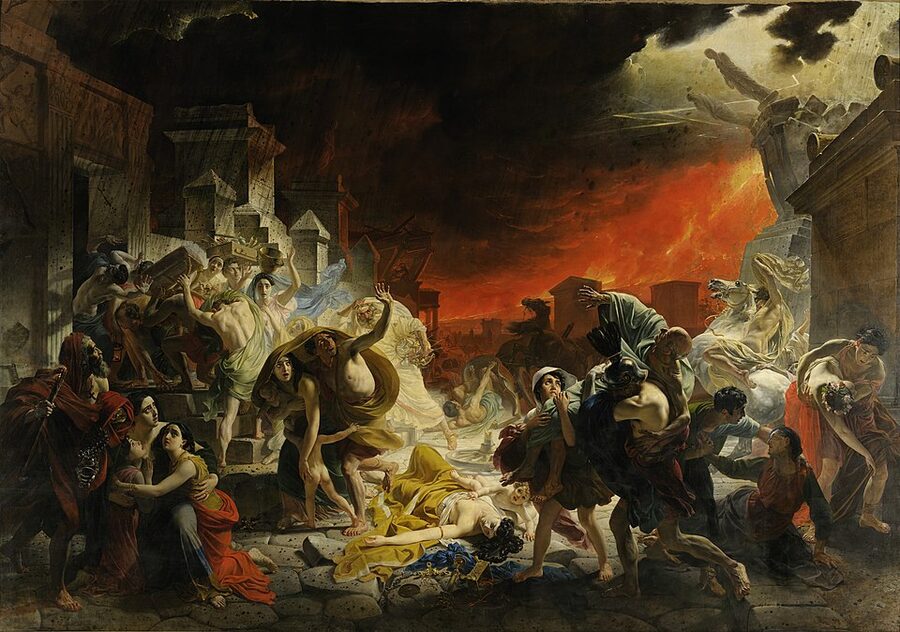
The Mount Vesuvius eruption of 79 CE buried Pompeii under 4 to 6 meters of ash and pumice over roughly two days. Most of the city’s 20,000 residents had time to flee during the first 18 hours. About 1,150 didn’t, and you’ll see their casts later. The same ash that killed them also preserved frescoes, mosaics, loaves of bread, and graffiti almost perfectly. That’s the whole reason this place is still here in this state.
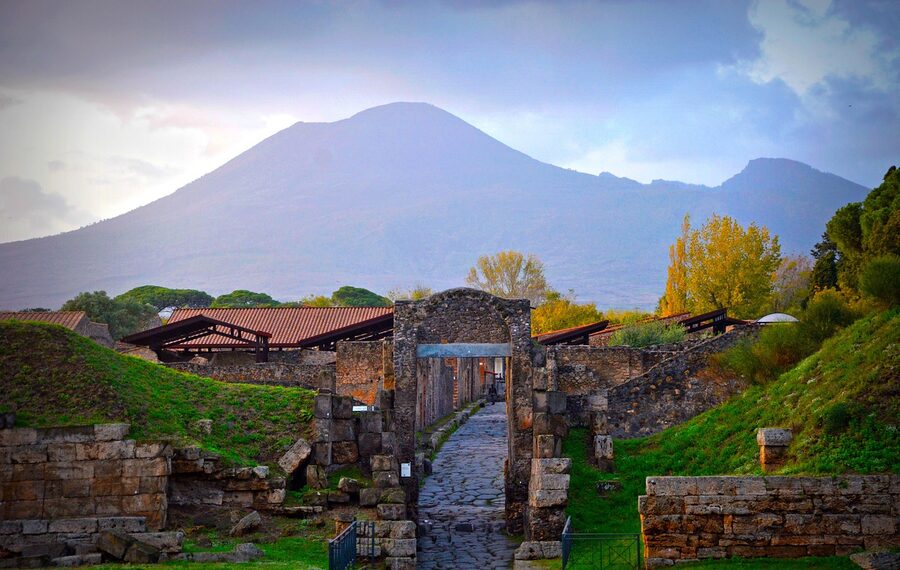
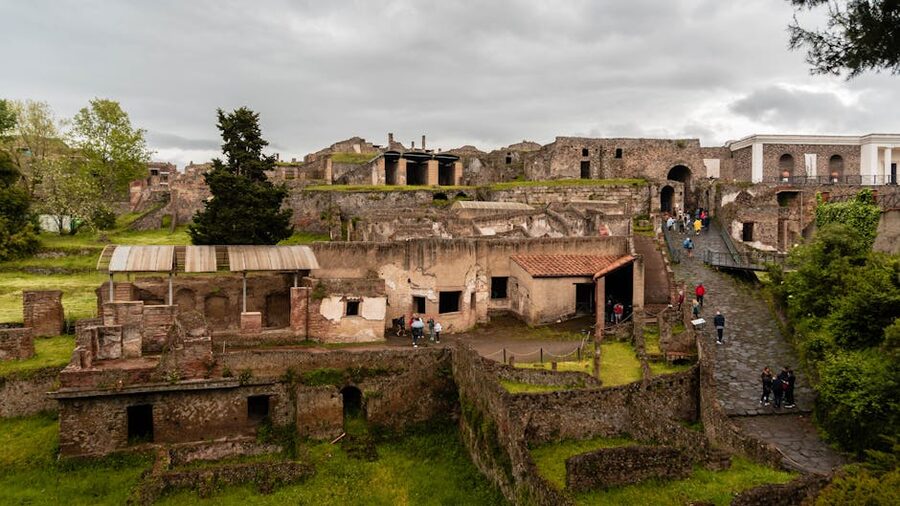
Pompeii was rediscovered in 1748, almost by accident, and has been excavated continuously since. The result is a 160-acre open-air museum that gets over 2.5 million visitors a year. Even with that traffic, parts of it still feel empty if you know where to walk. The far edges, especially the residential blocks on the eastern side, are nearly always quiet.
Tickets: What You Actually Pay
The basic ticket is around 18 EUR and covers the main archaeological park. The “Pompei+” ticket runs about 22 EUR and bundles in the Villa of Oplontis and the Villa of Boscoreale. Unless you’re a Roman archaeology obsessive, the basic ticket is fine. You won’t have time for the satellite villas in one day anyway.
The catch in 2025 and now: there are daily entry caps. From 9am to 1pm, only 15,000 people get in (12,000 on the basic ticket, 3,000 on Pompei+). From 1pm to 5:30pm it drops to 5,000 total. If you’re going on a Saturday, Sunday, or any Italian public holiday, you must book online in advance. The booth at the gate sells out by mid-morning on busy days.
If you’re doing a guided tour or audio guide ticket, the price already includes entry. Don’t double-buy.
Opening Hours
- April 1 to October 31: 9am to 7pm, last entry 5:30pm
- November 1 to March 31: 9am to 5pm, last entry 3:30pm
Individual buildings (the famous houses, the Lupanar, Villa of the Mysteries) close 60 to 90 minutes earlier than the whole site. So if you turn up at 4pm in summer hoping to see the Villa of the Mysteries, you’ll find it locked. Plan accordingly.
The Three Tours Worth Booking
I’ve been through dozens of Pompeii tour options and these are the three I’d actually recommend, sorted by how the visitor feedback shakes out.
1. Pompeii: Entry Ticket and Guided Tour with an Archaeologist: $35
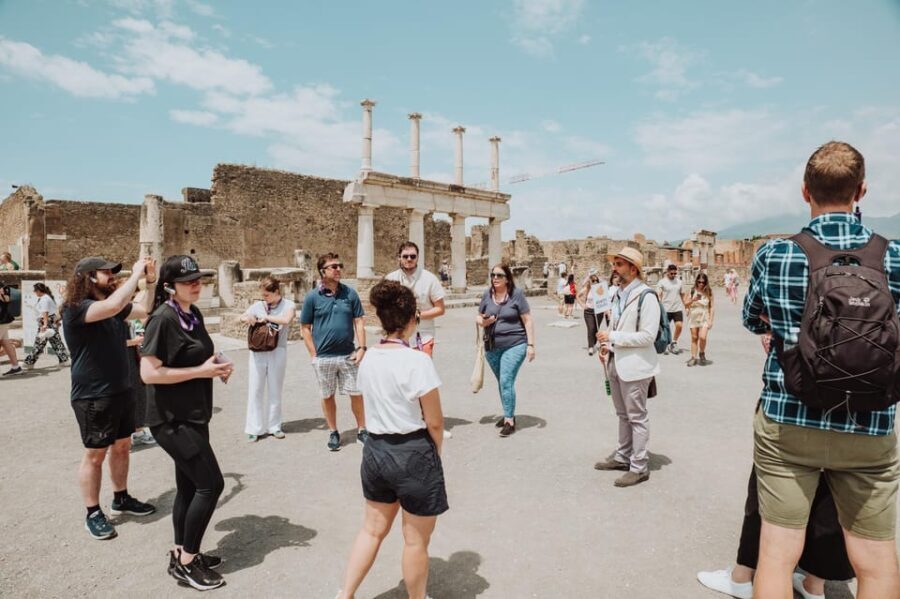
This is the one I’d put first. Two hours with an actual archaeologist as your guide, skip-the-line entry rolled in, and a price that undercuts most of the alternatives. Our full review goes into how the route is structured (Forum to brothel to baths to amphitheater) and why the 2-hour length is actually the sweet spot for staying focused in the heat.
2. Pompeii: Entry Ticket with Audio Guide: $40
Some people don’t like being herded around with a guide. If that’s you, the audio guide ticket is the move. You bring ID to pick up the device, then you’re free to roam for the day. The audio is decent enough; not as good as a guide, but you can pause, repeat, and skip what bores you.
3. Pompeii: Small-Group Tour with an Archeologist: $40
Small group means capped numbers (typically under 15), which means you can actually ask questions and hear the answers. Enters via Porta Marina Superiore so you avoid the main bottleneck. Our review covers the route through the Great Theatre, Forum, and frescoed houses, and which guides come up repeatedly in the feedback.
What about audio guide vs guided tour?
If you’ve never been to Pompeii before, take a guide. The signage inside is minimal, the maps are useless, and most of the buildings have nothing to tell you what you’re looking at. A two-hour archaeologist tour is the cheapest way to come away actually understanding what you saw. The optional audio guide ticket exists if you want to add audio after a tour, but I’d save the money.
Getting to Pompeii from Naples
Take the Circumvesuviana train from Napoli Porta Nolana or Napoli Garibaldi station. Get off at Pompei Scavi – Villa dei Misteri. Not Pompei. There are two stations and the wrong one drops you in the modern town, a 25-minute walk from the entrance you actually want.
From Pompei Scavi station, the Porta Marina entrance is a 5-minute walk. There’s a smaller entrance at Piazza Anfiteatro on the opposite side, useful if you’re starting your day at the back of the site (more on that below). The Circumvesuviana isn’t fancy. It’s old, often crowded, and stops at every village. Just board it and put your headphones in.
Coming from Rome?
Take the high-speed train (Frecciarossa or Italo) to Naples Centrale, then the Circumvesuviana from there. Total time about 2 hours each way, which makes a Rome day trip technically doable but rough. If you only have one day from Rome, a day-trip tour with transport included is the easier play. You skip the train transfer, get an English-speaking guide, and they handle the timing.
Coming from Sorrento or the Amalfi Coast?
Sorrento is actually the easiest base for Pompeii. Same Circumvesuviana line, only 30 minutes. The Sorrento-origin combo tour picks you up directly and includes Vesuvius after Pompeii, which is a smart way to do both in a day.
Combining Pompeii with Mount Vesuvius
Most people who do Pompeii also climb Vesuvius. It’s the most-asked question I get and the math is simple: you’re already next to a famous active volcano that erupted on the city you just walked through. Why wouldn’t you?
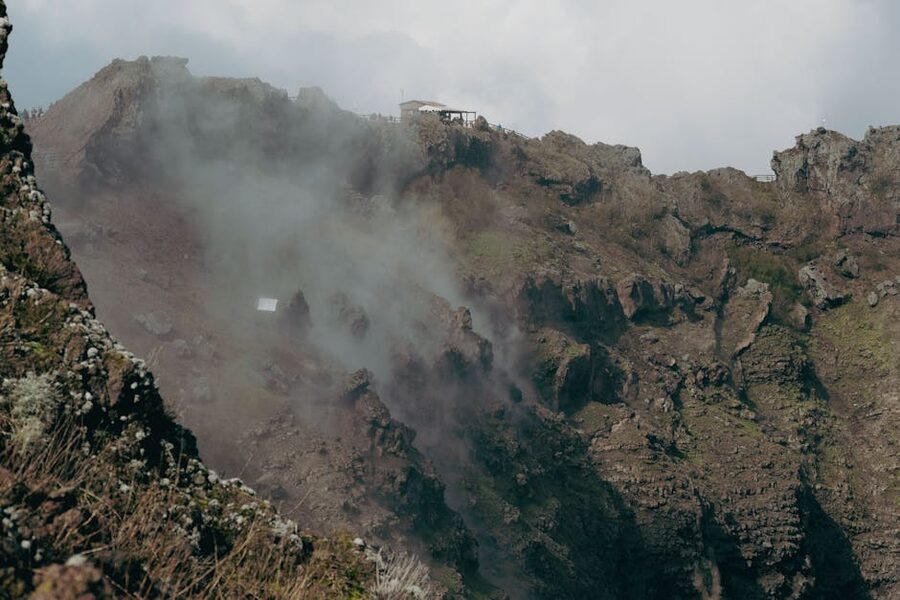
The hike itself is short. About 30 minutes up a gravel path from the car park to the crater rim, then 30 back. The view across the Bay of Naples is the actual reason to do it. Bring water and a windbreaker; it’s cooler at altitude.
If you’re doing both in a day, the smart order is Pompeii in the morning (cooler, quieter) and Vesuvius in the afternoon. The Naples combo day tour handles transport between the two for you, which is the friction point if you do it independently. Public transport from Pompeii to Vesuvius is awkward and you’ll lose hours waiting for buses. The all-inclusive option bundles in lunch and skip-the-line tickets, so you spend zero time queuing on either site.
For a slower-paced version, the combo with pizza or wine tasting adds a stop on the volcano slopes for lunch. Vesuvius vineyards produce Lacryma Christi, a wine that’s been made in the same spot for 2,000 years, and it’s actually good. Worth the slight upcharge.
What to Actually See Inside
You can’t see everything in one visit. Don’t try. Pick a route and stick to it. Here’s what I’d prioritize and why.
The Forum
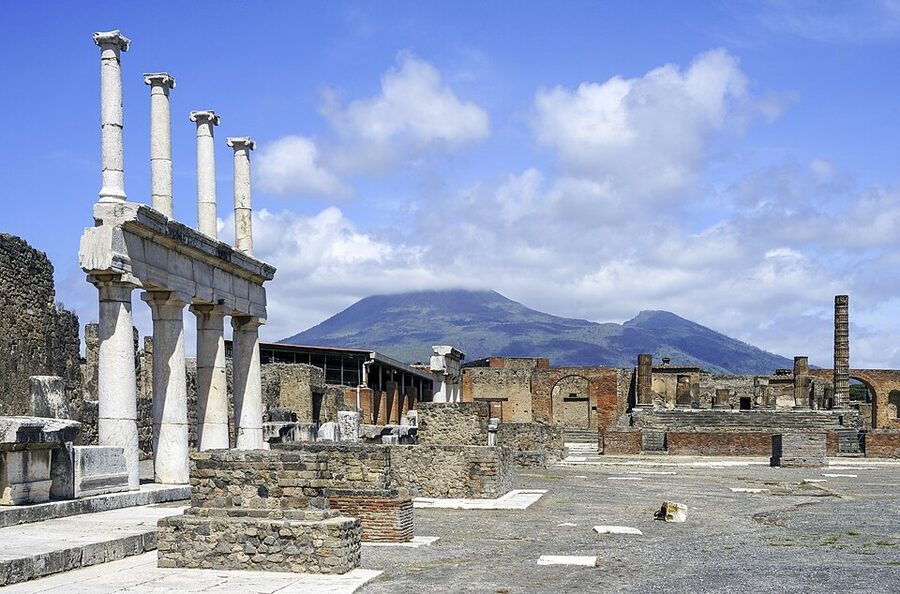
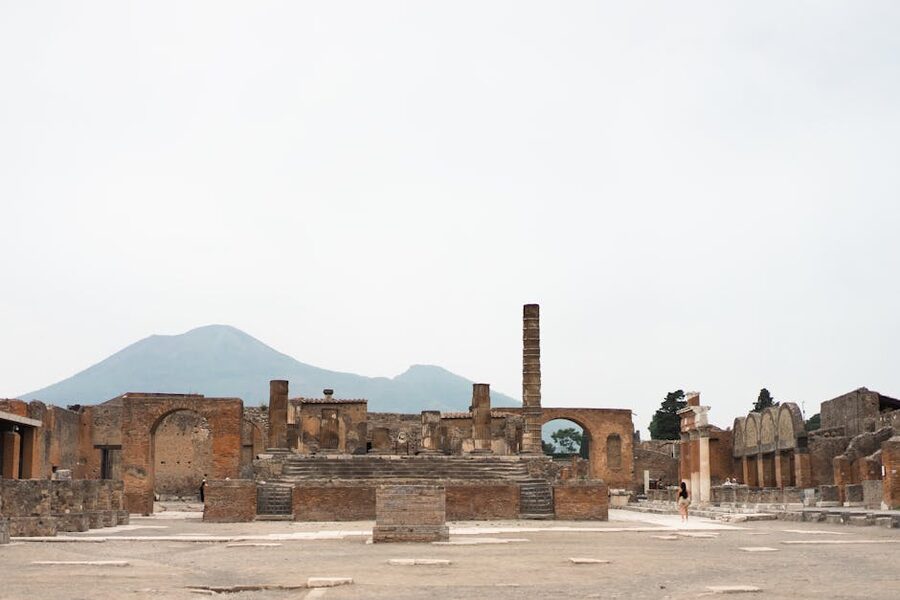
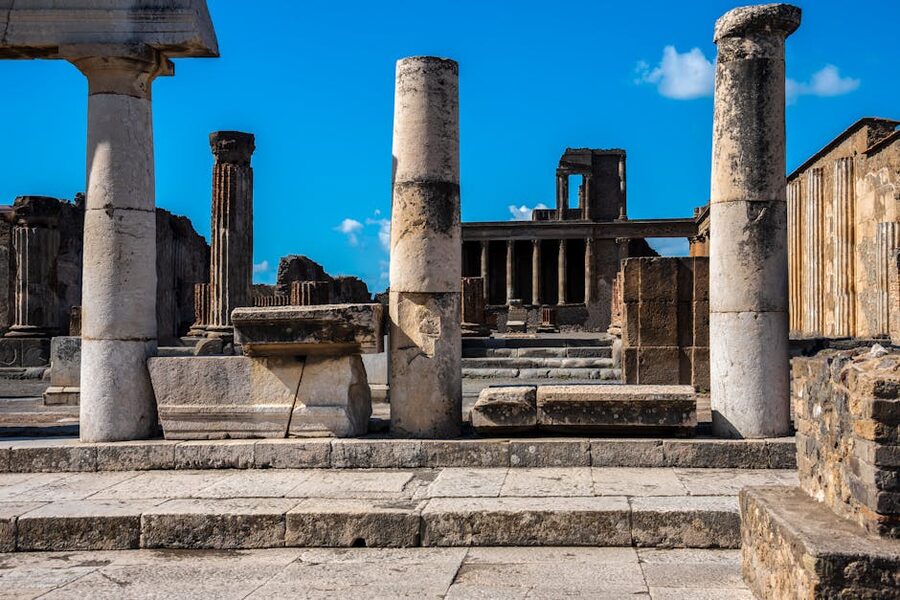
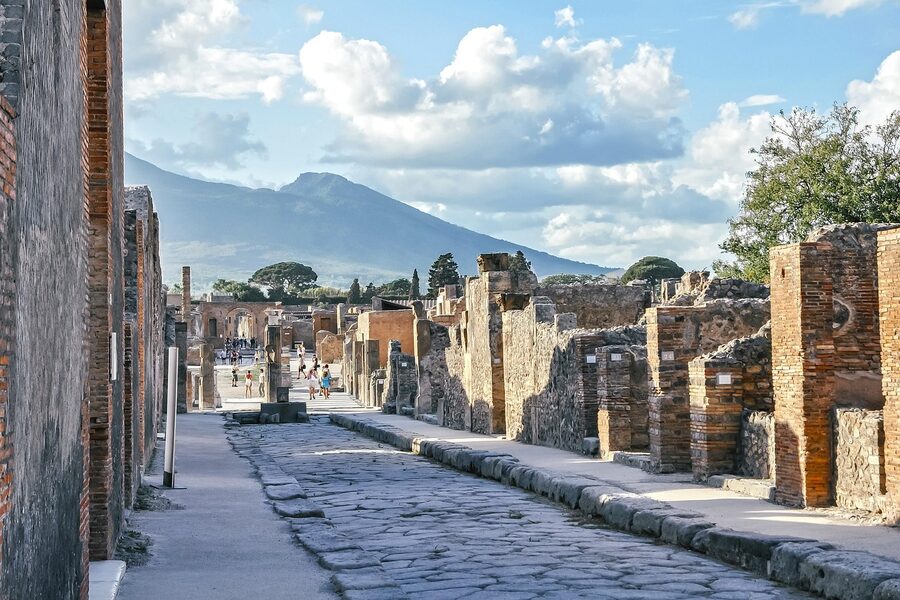
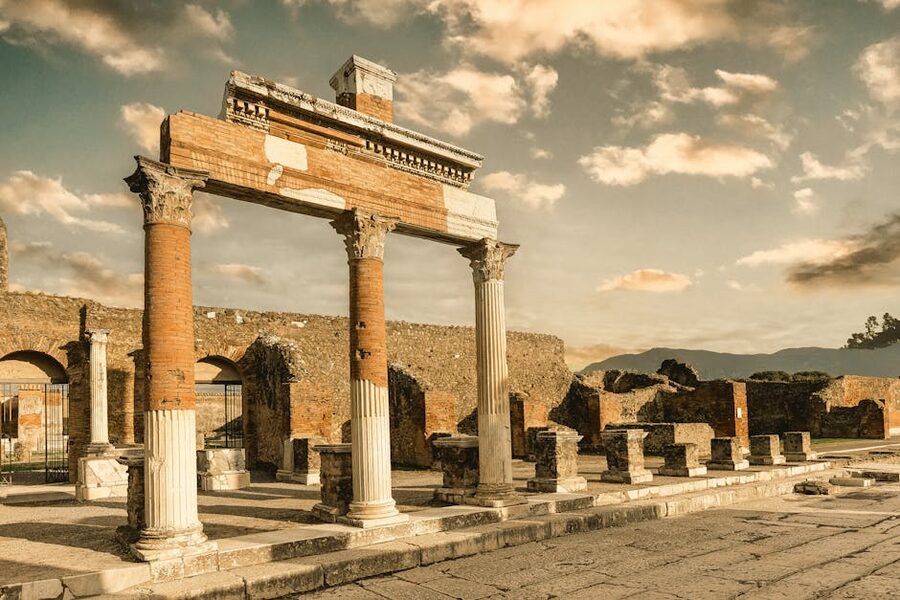
Right inside the main entrance and the busiest spot in the city. This was the civic and religious center, where laws were passed, gods were worshipped, and grain was sold. The Temple of Jupiter at the north end has Vesuvius framed perfectly behind it, which is the photo every guide shows you. It’s also where the morning crowds congregate, so see it first thing or save it for late afternoon.
The Lupanar (the Brothel)
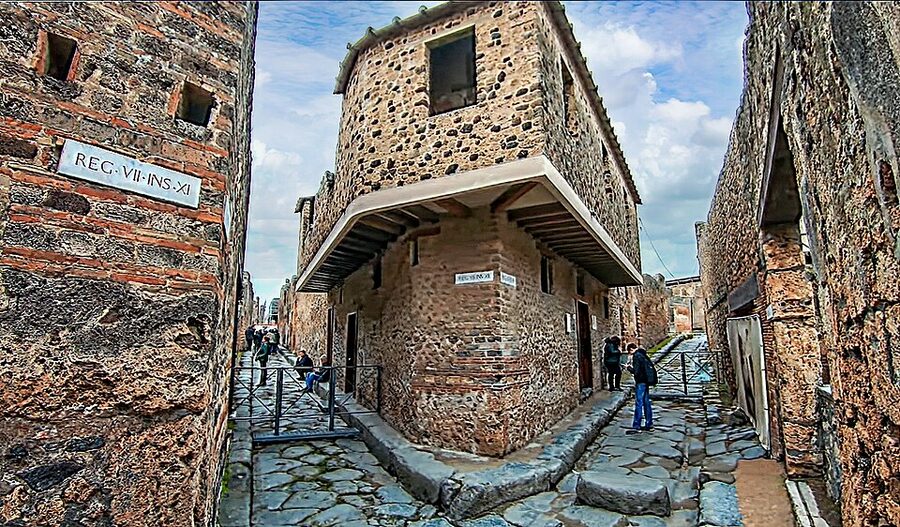
Yes, it’s the brothel, and yes, everyone wants to see it. Frescoes above each cell depicted what was on offer, essentially a menu in pictures, partly because customers were often foreign sailors who didn’t speak Latin. There are stone beds, a few graffiti messages from clients, and a tiny entrance hallway. Expect a queue, especially mid-morning. It’s worth ten minutes but not the 45 some people wait.
House of the Faun
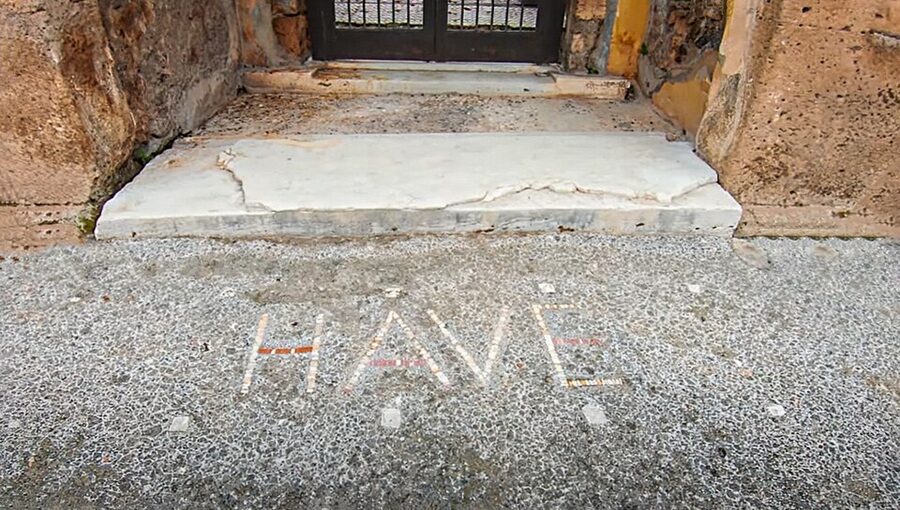
Biggest house in the city, named after a small bronze statue of a dancing faun in the courtyard (the original is in the National Archaeological Museum in Naples). The famous Alexander Mosaic depicting Alexander the Great fighting Darius III at the Battle of Issus was uncovered here. What you see in the floor today is a replica; the original was lifted in the 1840s and is now in Naples. Worth seeing both if you have a spare half-day.
Garden of the Fugitives
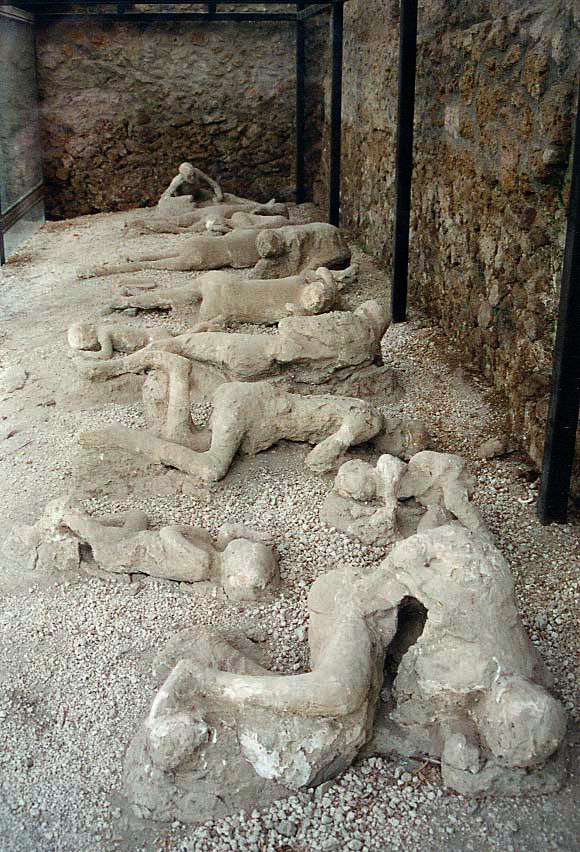
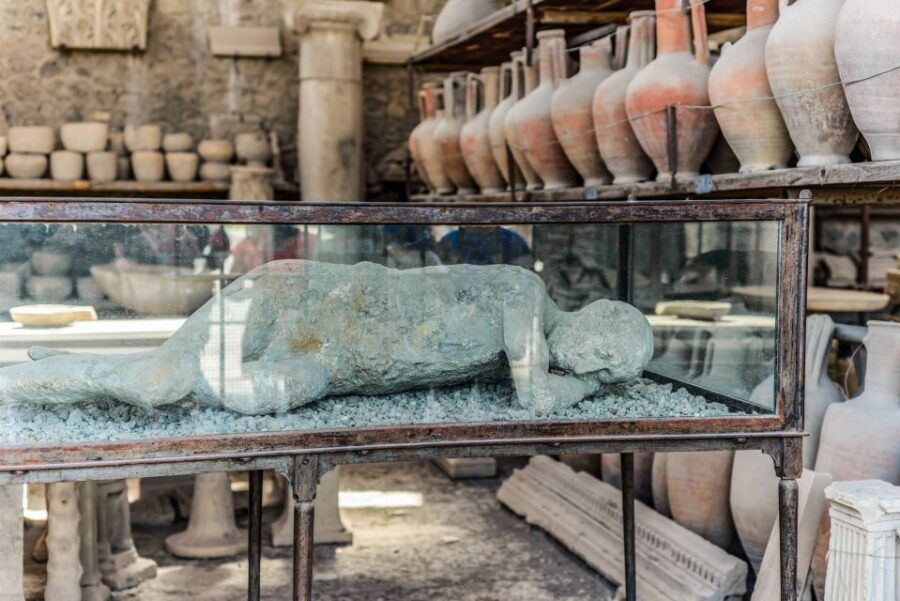
This is the one that hits hardest. Thirteen plaster casts of people who tried to escape the eruption and didn’t make it. You can see their final positions: a child clinging to an adult, a man covering his face, a woman curled forward. The casts were made by Giuseppe Fiorelli in the 1860s using a clever technique of pouring plaster into the cavities left in the ash. It’s not a comfortable visit. It’s also the one most people remember.
Villa of the Mysteries
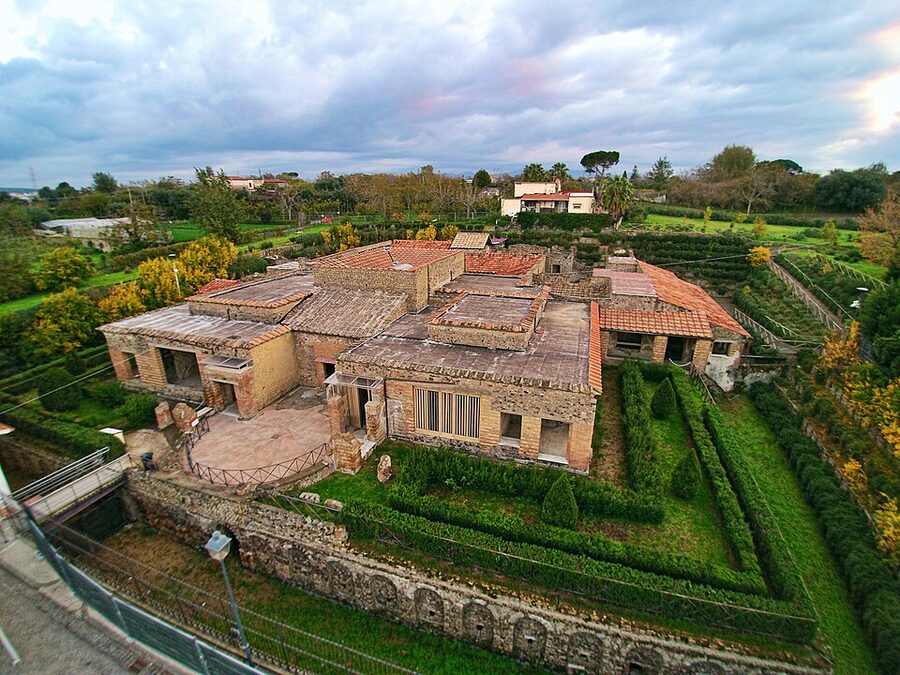
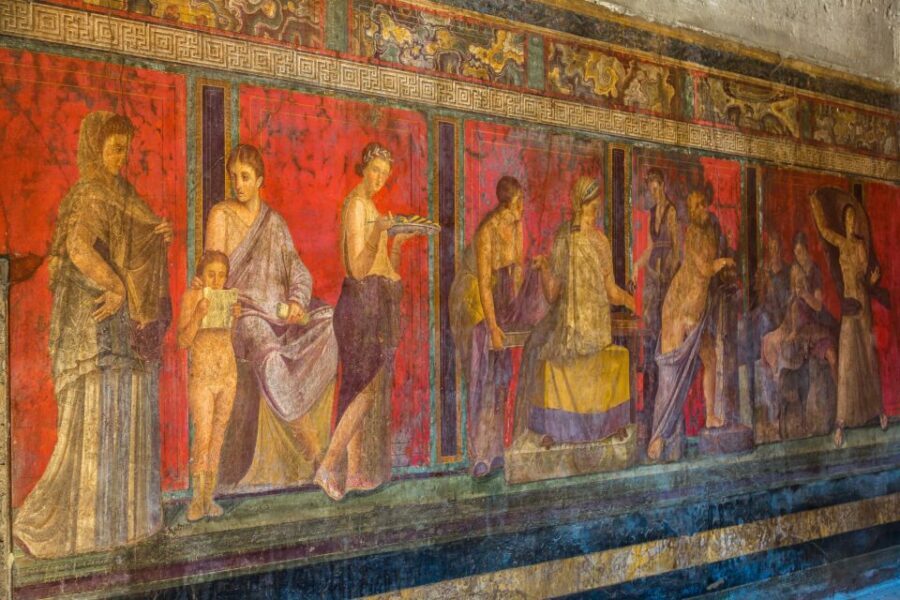
This is the other one I’d insist on. It’s a 15-minute walk from the main entrance, outside the city walls proper. Most people skip it because they’re already tired. Don’t. The frescoes here are some of the best Roman paintings still in existence anywhere, with full color and intact narrative scenes. The “mysteries” are an initiation rite into a Greco-Roman cult, and the painting walks you through the stages. Closes earlier than the rest of the site, so see it first if you can.
The Amphitheater
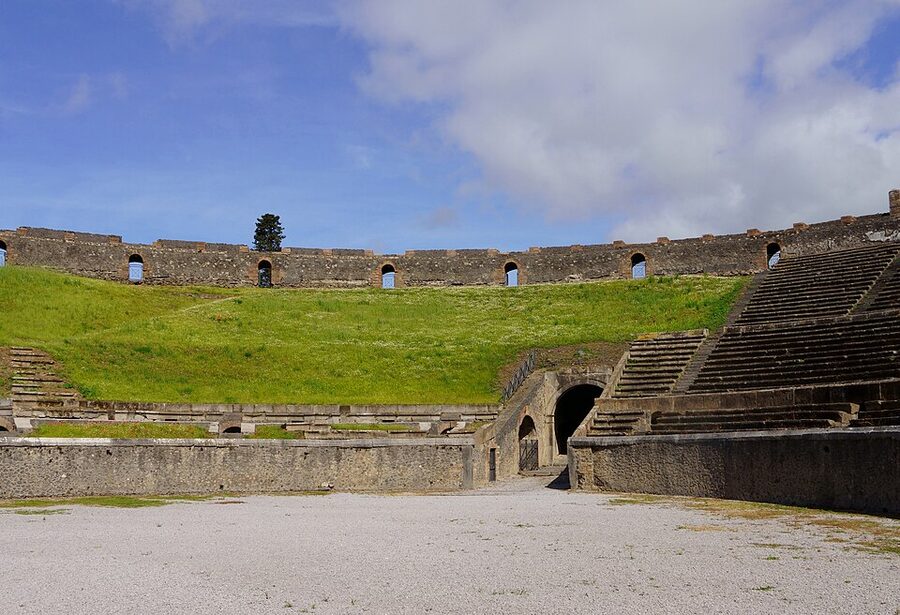
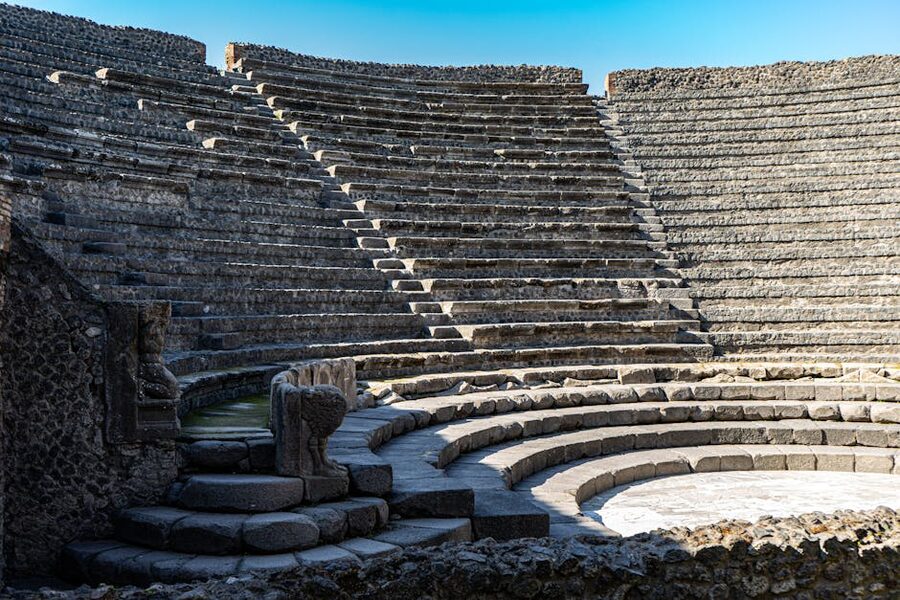
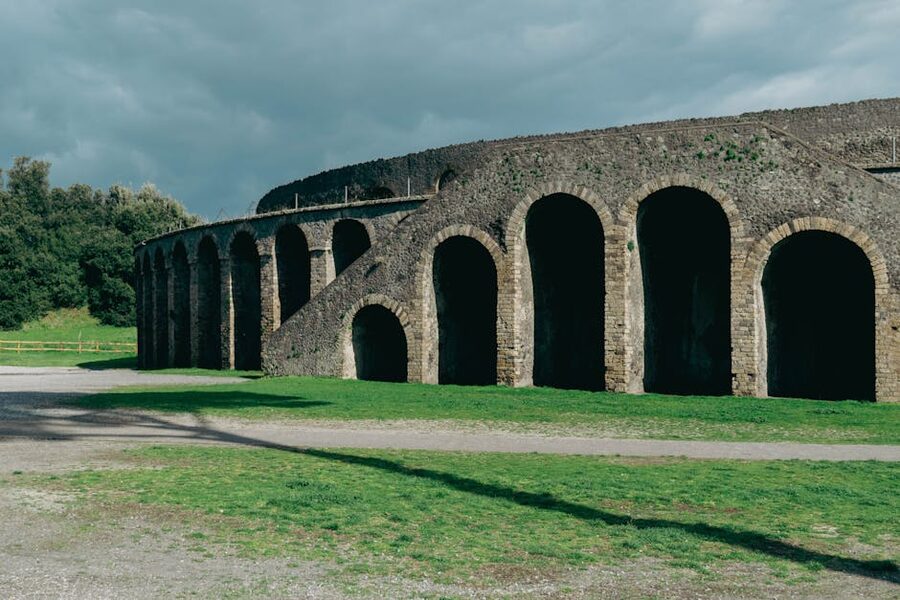
At the eastern end of the city. Built in 70 BCE, which makes it the oldest surviving stone amphitheater in the Roman world (older than the Colosseum by about 150 years). It’s also where Pink Floyd filmed their famous 1971 concert if you want a piece of trivia for the trip. Almost always quiet because it’s so far from the main entrance.
The Bakeries
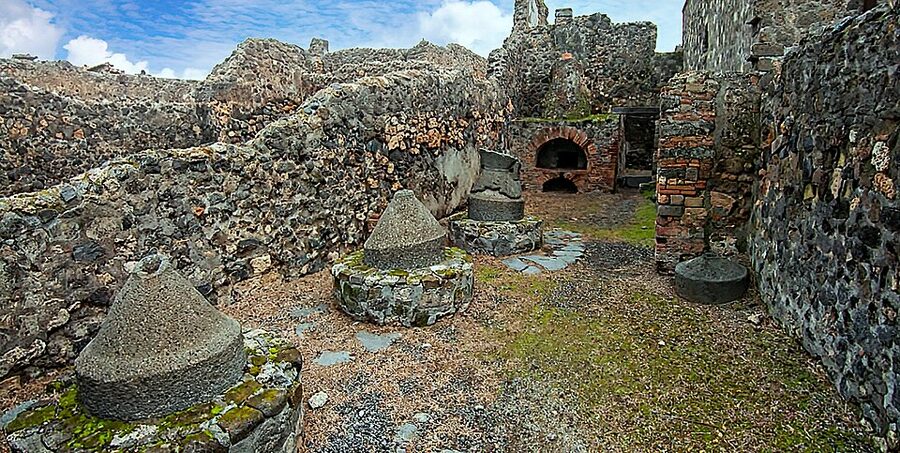
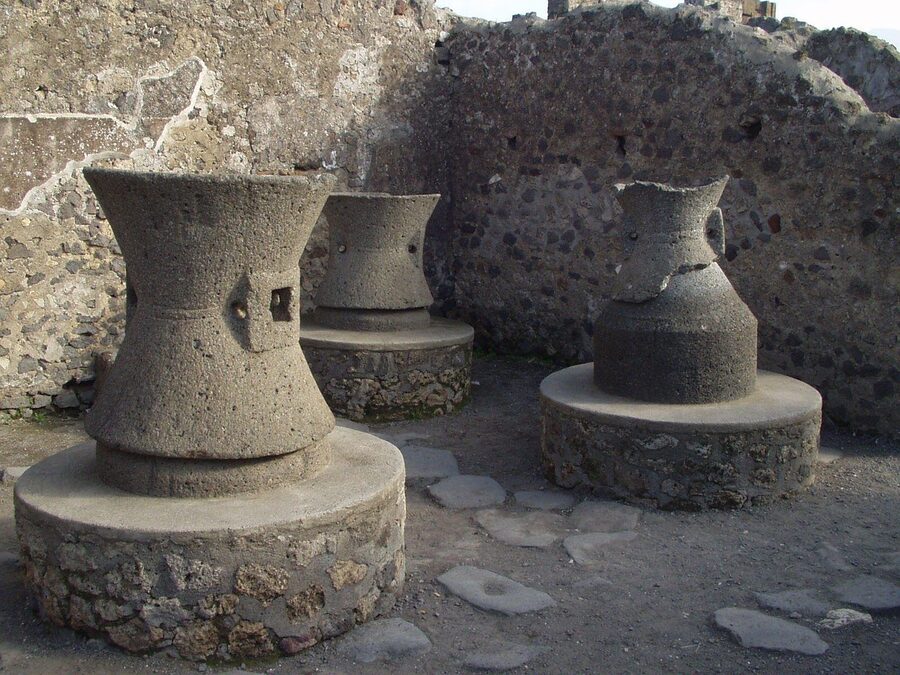
The bakery scattered around the city are some of the more underrated stops. The volcanic-stone millstones, the brick ovens, even the patterns of wear on the floor where bakers stood, all in place. One bakery was excavated with 81 loaves still inside the oven, carbonized in the heat. The loaves now live at the National Archaeological Museum in Naples, but the bakery itself is still here.
Stabian Baths and Forum Baths
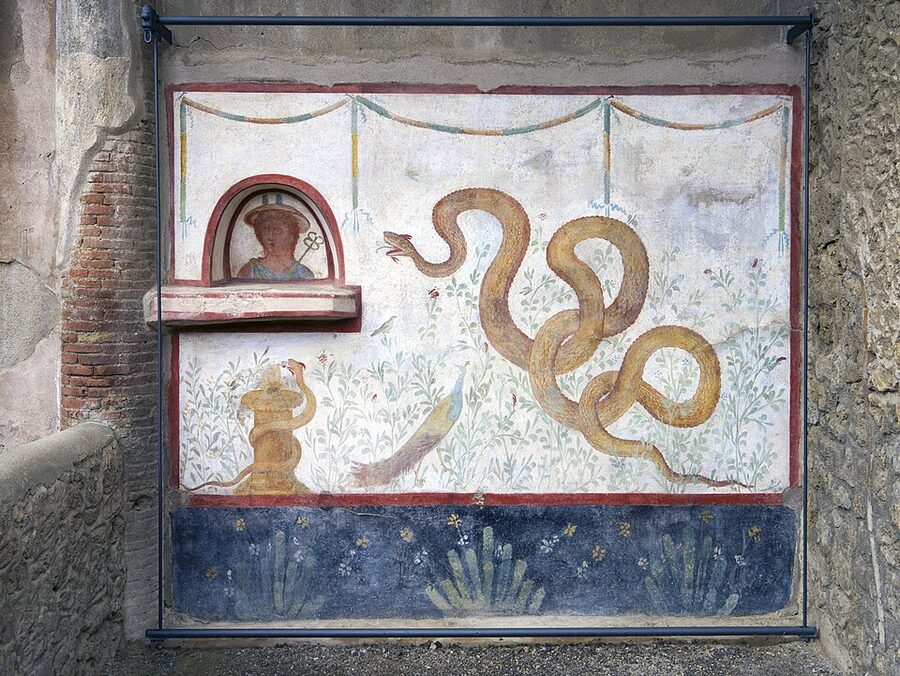
Pompeii had at least four bath complexes. The Stabian Baths are the oldest and largest, with a swimming pool, gym area, and separate men’s and women’s sections. The Forum Baths are smaller but more elegant. You can see the heating system architecture in both. Hollow walls and raised floors with hot air piped underneath. It’s clever engineering for the 1st century BCE.
Tips From Going Wrong the First Time
- Arrive at opening or after 3pm. The site is busiest 11am to 2pm. The first hour and the last two are when it actually feels visitable. Tour groups dominate the middle of the day.
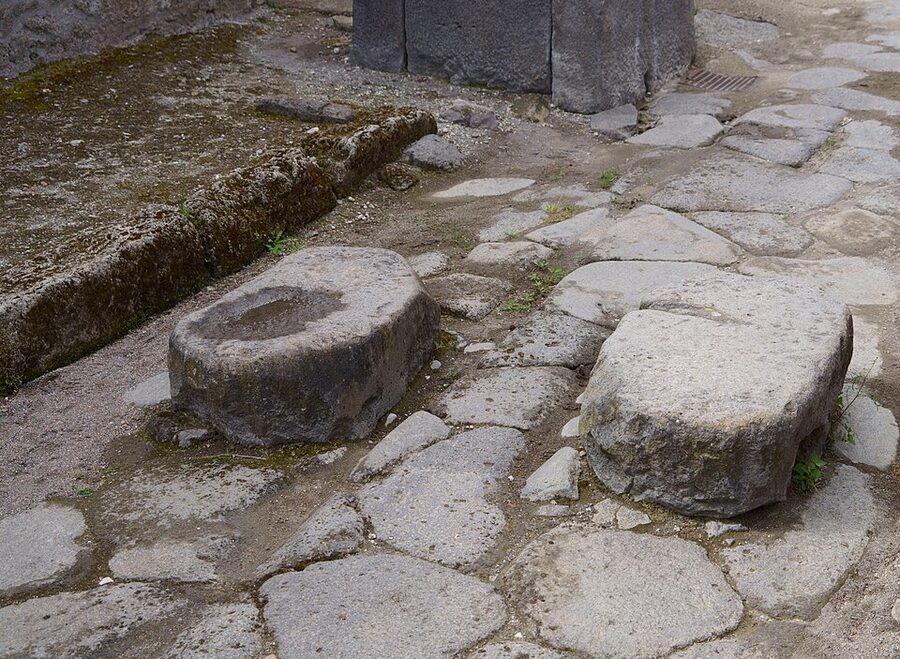
- Wear real shoes. The streets are uneven lava-stone paving and the houses have raised thresholds. Trainers or sturdy walking shoes only. I’ve seen people in flip-flops crying by hour two.
- Don’t bring a big backpack. Anything bigger than a daypack won’t pass security. There’s a free luggage drop at the entrance but the queue can take 20 minutes.
- Bring water and a snack. The two cafes inside the site are expensive, often crowded, and far from each other. A 1.5L water bottle and a sandwich saves you both time and money.
- Hat and sunscreen, year-round. There’s almost no shade. Even in October the sun bouncing off the stone gets uncomfortable.
- Use the Piazza Anfiteatro entrance to start at the back. Most tours start at Porta Marina near the Forum. If you enter at the eastern Piazza Anfiteatro gate, you can do the amphitheater, gladiator barracks, and Garden of the Fugitives before anyone else gets there.
- Skip the audio guide if you have a guidebook. The free site map is decent. The audio guide adds maybe 20% more info than the map for 8 EUR. A good guidebook is better value if you want depth.
- Watch out for fake guides at the entrance. Anyone soliciting you outside the gate is freelance and unregulated. Book online or with the official ticket booth inside.
What to Pack
- 1.5 liters of water (more in summer)
- Sandwiches or fruit, kept in a small backpack
- Sun hat and sunscreen
- Walking shoes with grip
- A printed copy of your ticket or skip-the-line voucher (signal in the park is unreliable)
- Small change for tips if you have a guide
How Long Do You Need?
It depends on how into ruins you are. Three to four hours covers the highlights at a brisk pace. A full day (six to seven hours) lets you breathe and sit and actually absorb the place. If you only have a half day, take a guided tour. It forces you to see the right stuff in the time you have. If you have all day, mix two hours of guided then four hours wandering on your own.
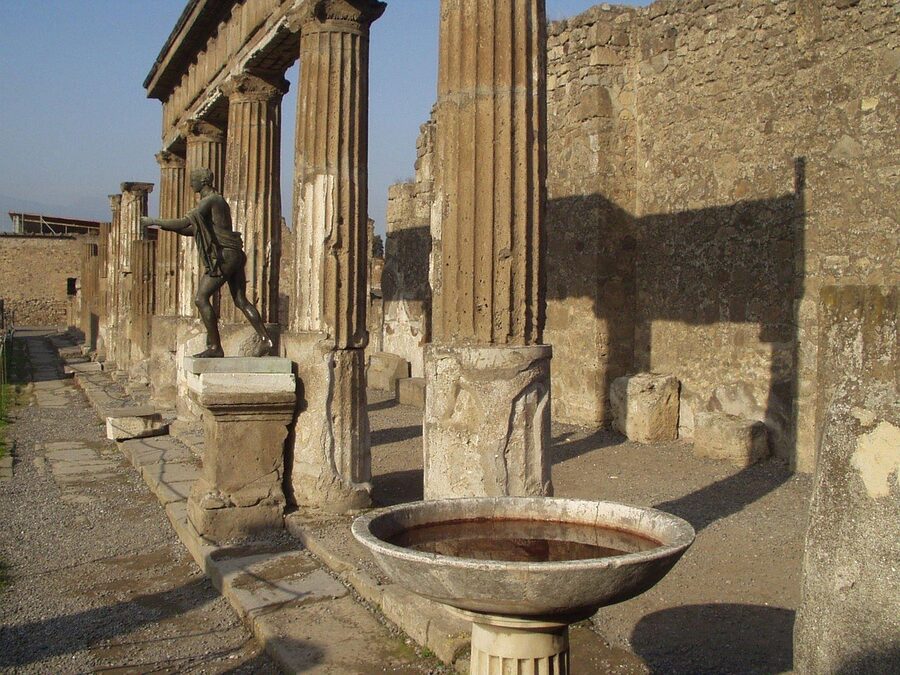
People who do a tour and then keep wandering on their own ticket usually leave most satisfied. The tour gives you context for the rest of the day.
Best Time to Visit
April and October are the best months. Temperatures are 18 to 24 degrees, the light is good for photos, and crowds are well below summer peak. Avoid July and August if you can. The site is exposed, the heat regularly hits 35 degrees, and the queues at popular houses (Lupanar, House of the Faun) get out of hand. Winter is fine for crowds and very atmospheric, but a lot of side streets and minor houses are closed for conservation work between November and March.
Saturdays and Italian public holidays are the busiest single days. Tuesday and Thursday are usually the quietest weekdays.
What I Wish I’d Skipped
The Antiquarium museum at the main entrance is a small collection of artifacts and a quick history primer. It’s free with your ticket. Skip it if you’re short on time, you’ll get more from the actual buildings outside. The on-site cafe near the Forum has predictably mediocre, predictably expensive food. Eat outside the gate before or after.
The audio guide, as I said earlier, isn’t great. The free site map is enough if you’ve read up beforehand or you’re with a guide.
Should You Add the Naples Archaeological Museum?
Yes if you have an extra day in Naples. The MANN (Museo Archeologico Nazionale di Napoli) holds most of the actual artifacts, mosaics, and frescoes that were lifted out of Pompeii in the 19th and 20th centuries. The Alexander Mosaic, the Secret Cabinet of erotic art, the small bronze faun statue from the House of the Faun. They’re all there, not in Pompeii itself. Pompeii without MANN is the building shells; MANN without Pompeii is the contents. Together they’re the full picture.
Pairing Pompeii With Other Naples Sights
If you’re spending a few days based in Naples, Pompeii is one of three big day trips most people do. The other two are climbing Vesuvius itself (which I’ve covered above as a same-day combo) and going underground in central Naples. The city’s underground tunnel network dates back to Greek aqueducts, served as WWII bomb shelters, and is genuinely worth a couple of hours. The Catacombs of San Gennaro are the third one I’d put on a longer itinerary, especially if Pompeii’s burial-and-preservation theme grabs you. They’re early Christian rock-cut tombs with frescoes from the 2nd to 5th centuries CE, very different feel from Pompeii but the same idea of a city below a city. Three days in Naples lets you do all four properly.