
Our guide stopped under a stone arch and pointed at a smudge of ochre paint on the wall. “A neighbour did this,” he said, half-laughing. “Not a Roman, I mean. A kid from upstairs. Seventeen years old. He learned restoration in a workshop the priest set up so the local boys would stop hanging around on the corner.”
That’s the thing nobody tells you about the Catacombs of San Gennaro. The frescoes are over 1,500 years old, sure. But the people walking you through them grew up two streets away, and the cooperative that runs the site is the reason this neighbourhood has tourists in it at all.
- In a Hurry? Pick a Tour
- Where Are They, Actually?
- Getting There
- How the Tour Actually Works
- The Cooperativa La Paranza Story
- What You’ll See Down There
- The Frescoes Worth Slowing Down For
- The Tomb of San Gennaro Himself
- The Best Tours to Book
- 1. Catacombs of San Gennaro Entry Ticket and Guided Tour:
- 2. Catacombs of San Gaudioso Guided Tour:
- 3. Naples Underground (Napoli Sotterranea) Guided Tour:
- The Practical Stuff
- A Bit of Context You Won’t Get from the Sign Outside
- Around 200 Oil Lamps
- What to Pair It With on the Same Day
- Capodimonte Museum (10 min uphill)
- Rione Sanità Walk and Lunch
- Cimitero delle Fontanelle
- Pompeii or Vesuvius the Next Day
- When to Go and Other Small Things
- If You’re Building a Naples Day Around This
In a Hurry? Pick a Tour
Catacombs of San Gennaro Guided Tour ($15). The one almost everyone books. Book on GetYourGuide
Catacombs of San Gaudioso Guided Tour ($15). Sister catacombs under Santa Maria della Sanità. Book on GetYourGuide
Naples Underground (Napoli Sotterranea) ($18). The city’s other underground site, very different. Book on Viator
Where Are They, Actually?
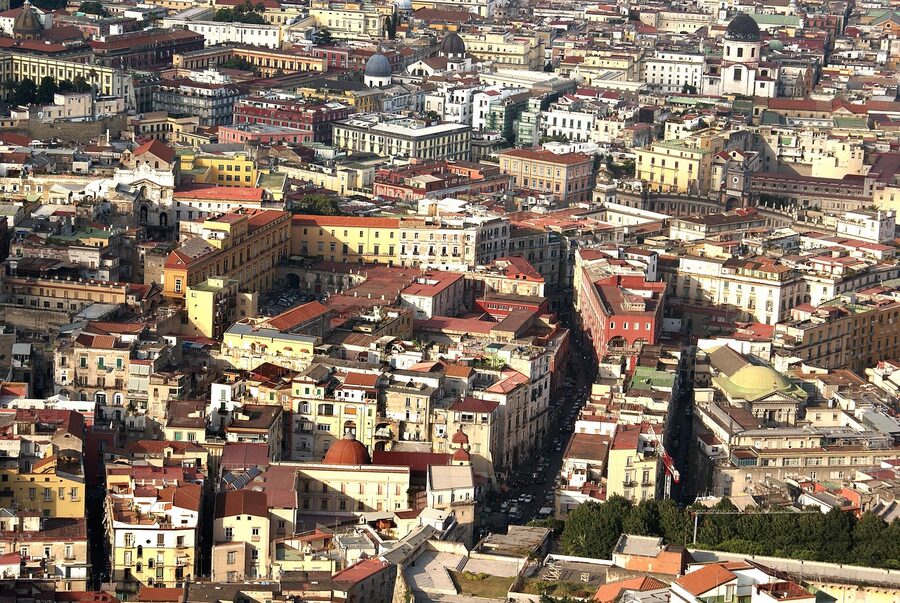
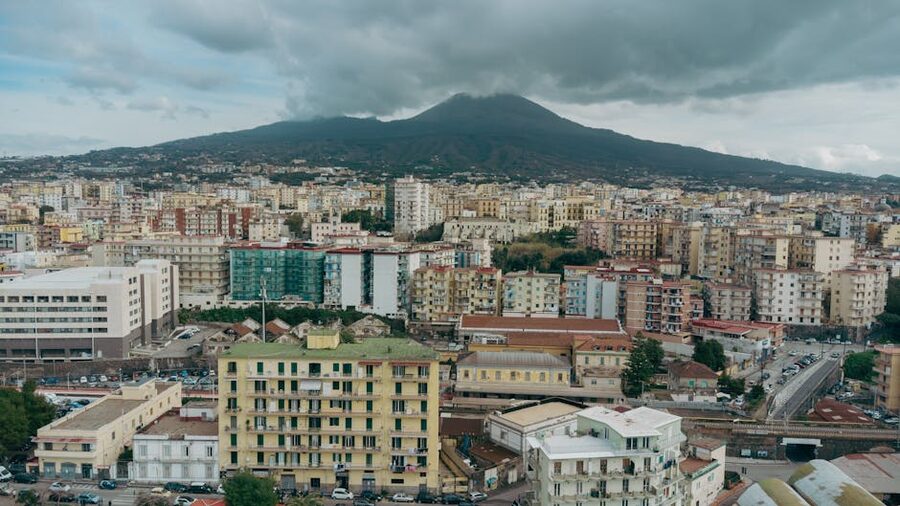
The entrance is at Via Capodimonte 13, right next to the Basilica del Buon Consiglio, in a part of Naples called the Sanità. The Sanità is a working-class district built into a deep ravine on the way up to the Capodimonte palace. Most tourists never cross the Ponte della Sanità bridge that arches over it. You’re going to.
The catacombs themselves sit underneath the Basilica. You don’t descend a long flight of steps the way you do at the Roman ones. The lower level here is at street level because the catacombs were carved into the side of a hill. That alone makes them feel different.
Getting There
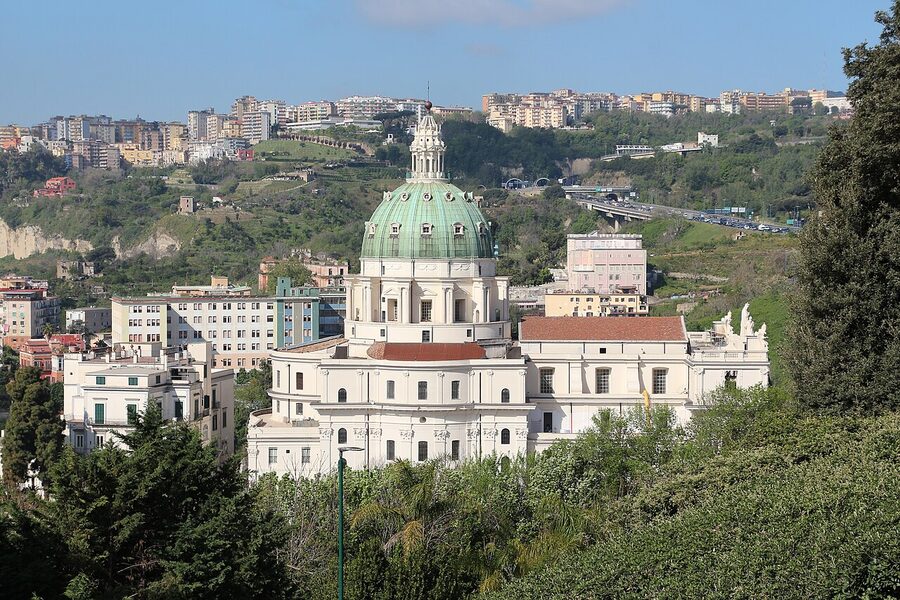
From the city centre take bus C63, 168, 178, 204, 3M or 650 to the stop called Basilica dell’Incoronata – Catacombe di San Gennaro. The ride is about 15 minutes from Piazza Dante. A single trip is €1.10 and a 90-minute pass is €1.60, both bought from a tabacchi or via the GiraNapoli app. If you’re already at Capodimonte after the museum, walk down. It’s about 12 minutes downhill and you’ll see the basilica’s pink-and-grey façade from the road.
I wouldn’t recommend driving. Parking near the basilica is technically free but the streets are narrow and the locals park three-deep. Just bus it.
How the Tour Actually Works
Tickets only get you in with a guide. There’s no self-guided option, which sounds annoying but is actually the right call here. The site is huge and a lot of what makes it worth visiting is the explanation. The standard tour is one hour and runs in English and Italian. You buy your ticket online or at the door and wait in a small courtyard until your slot is called.
Adult tickets sit between €11 and €13 depending on the day. Students and over-65s pay around €10. Under-6s and disabled visitors are free. The price gets you a combined ticket that’s also valid at the San Gaudioso Catacombs across the valley, valid for 12 months. So if you’re staying more than a day, build that in.
Inside, the temperature sits at a steady 15-22°C year-round. In August this feels like air conditioning. In February you’ll want a sweater because you’re underground for an hour and even Naples gets cold below the surface.
The Cooperativa La Paranza Story
This is the part that most articles skip and that I think changes the whole visit. Until 2006 the catacombs were practically abandoned. Maybe 5,000 people came a year, mostly on private requests through a parish office. The Sanità was famous for two things: organised crime and being broke.
A local priest named Don Antonio Loffredo started a youth cooperative called La Paranza with a handful of teenagers from the neighbourhood. The deal was simple. The Church and the city would let them run the site. They’d train as guides, learn restoration, build the visitor experience from scratch. Anything they earned went back into the neighbourhood.
Twenty years later they pull around 130,000 visitors a year. The same kids run the lighting design, the bookshop, the website, the conservation work. Your guide is almost certainly someone who learned to read frescoes here as a sixteen-year-old and still lives a five-minute walk away. It’s worth listening for the personal asides because they slip out constantly.
What You’ll See Down There
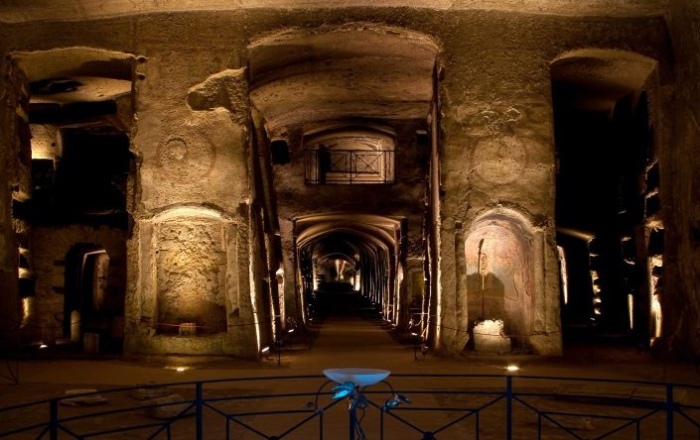
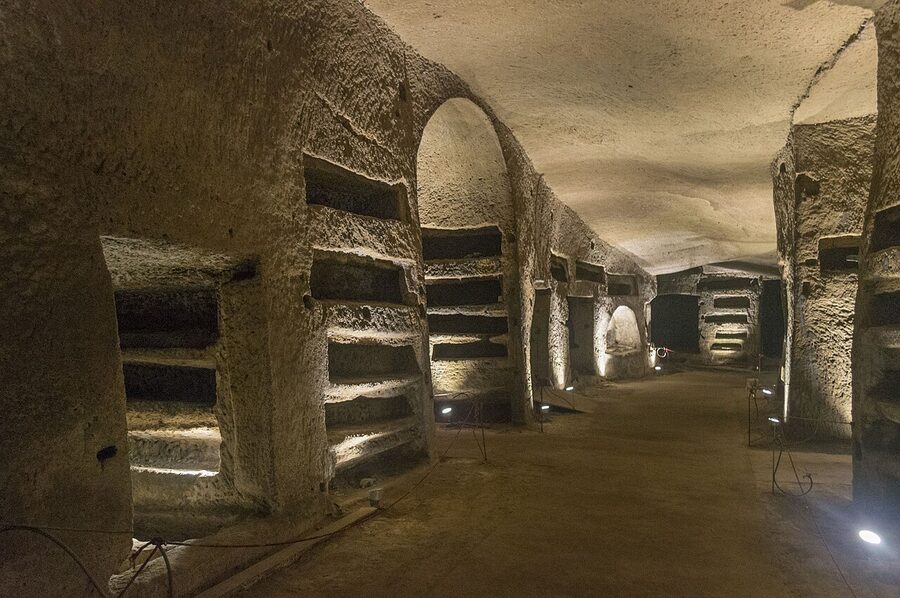
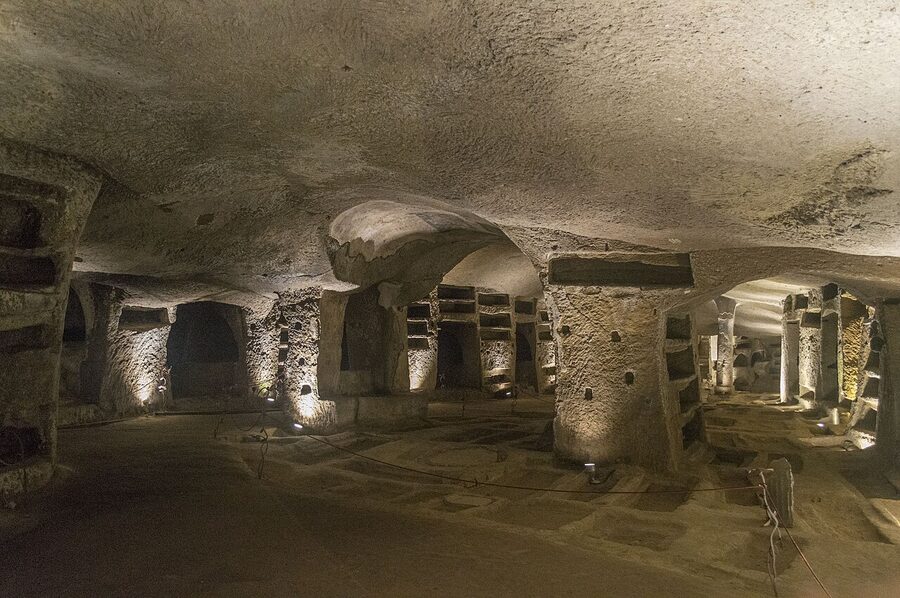
Two levels, both spacious, both dug out of soft yellow tufo stone. The lower level came first, in the second or third century AD, around an aristocratic family tomb that was donated to the Christian community. The upper level expanded in the fourth and fifth as more burials piled up.
You move through arched corridors lined with loculi, the rectangular wall niches where ordinary Christians were buried. Whole families slot into the floor as well, so watch your step on the older paths. The wealthy got arcosolia, the bigger arched recesses with painted ceilings. Then there are the cubicula, private rooms for entire dynasties, sometimes with three or four generations layered into the same wall.
The Frescoes Worth Slowing Down For
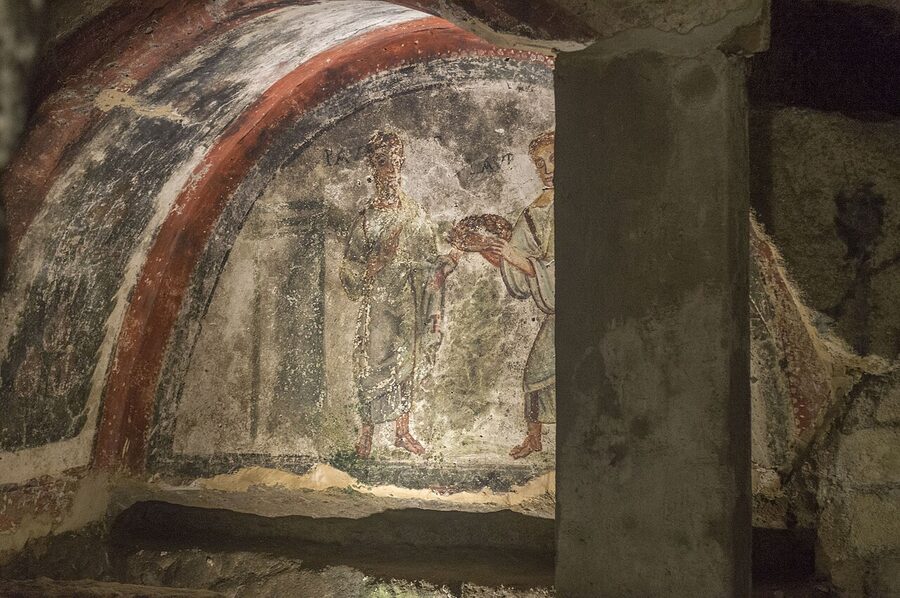
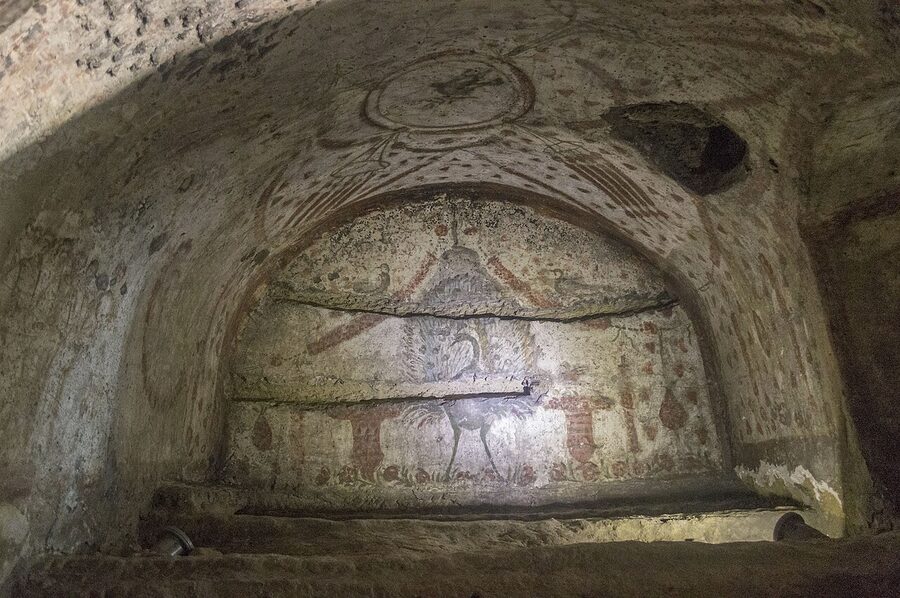
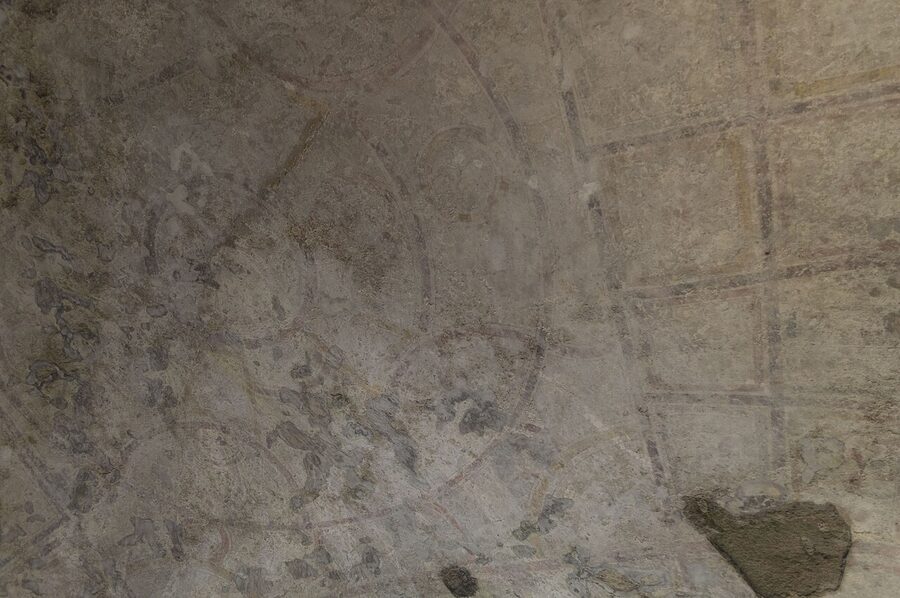
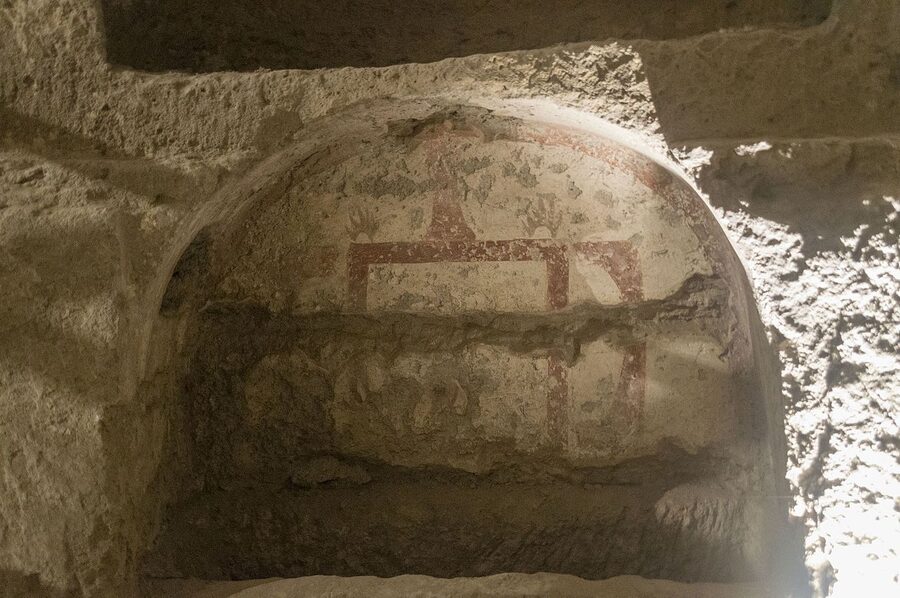
Three things to actually look for. First, the peacock in one of the upper-level cubicula. Early Christian symbol of resurrection. The colours are absurdly vivid for something painted around 400 AD. Second, the family arcosolium with three layers of paint visible at the edges. Each generation buried inside repainted the wall, so you can read it like tree rings. The guide will point this out. Third, the toga-wearing portraits, where Romans are dressed exactly the way they would have been on the surface. It’s strange seeing classical clothing in a Christian context, but in this period the line wasn’t drawn yet.
One thing that catches first-timers off guard: the frescoes aren’t behind glass. You stand right next to them. Don’t touch, obviously. The cooperative did all the conservation work themselves and they get nervous about sweat and fingertips, fairly.
The Tomb of San Gennaro Himself
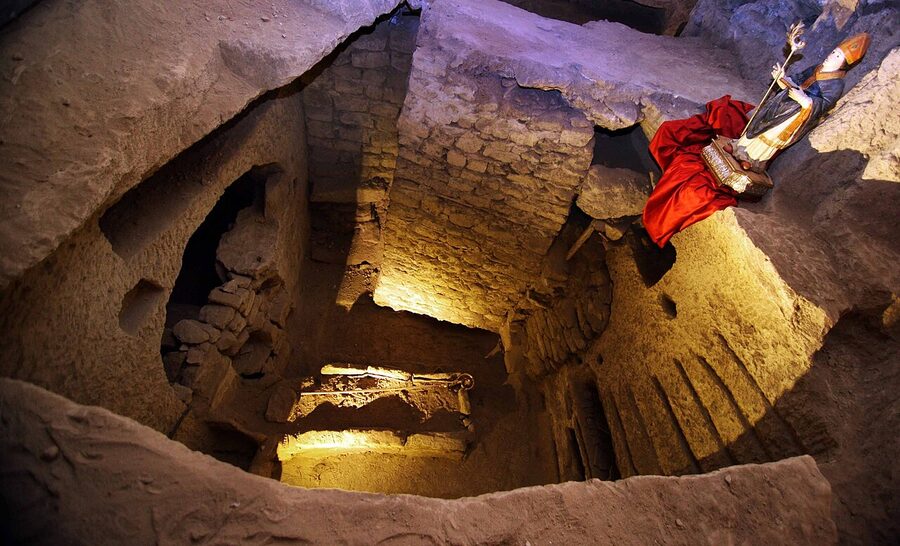
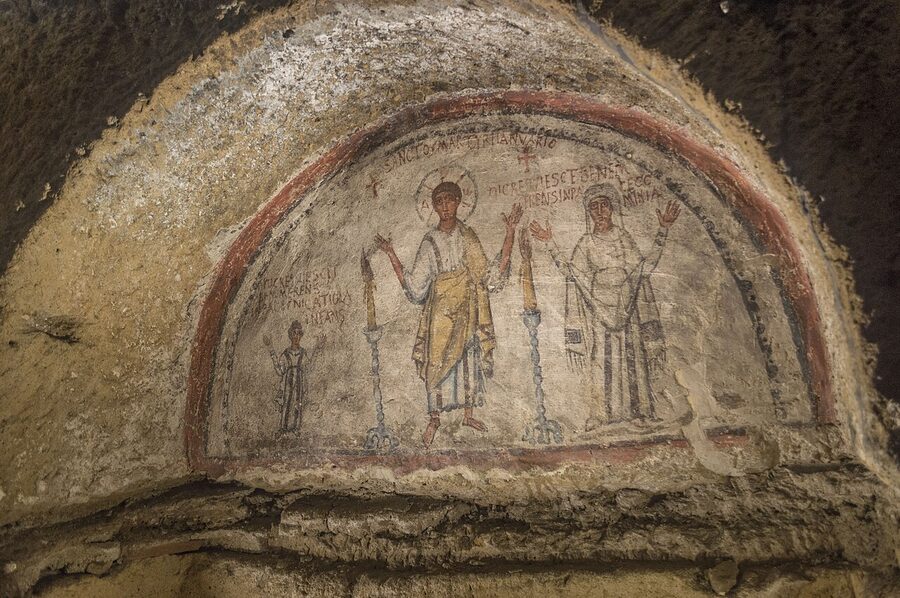
Gennaro himself didn’t start out here. He was beheaded in Pozzuoli in 305 AD during the Diocletian persecution. His body got moved to these catacombs around the year 431 by the bishop of Naples and stayed for roughly 400 years. That’s when the catacombs took on his name.
Then in the ninth century the Lombard prince Sicone of Benevento raided Naples and stole the relics. The body bounced around southern Italy for centuries before being returned to Naples in 1497, where it sits in the duomo today. The blood vials that famously liquefy three times a year are downtown in the cathedral. But the empty tomb up here, painted with the saint’s face and the bishops who came after, is still the spiritual heart of the site.
Worth knowing: the tour pauses here for a few minutes longer than at most spots. If you’re agnostic, use it to read the inscriptions. If you’re Catholic, this is where it hits.
The Best Tours to Book
There’s really only one organised tour you can book online for San Gennaro and that’s the official one through the cooperative, sold via GetYourGuide. Every tour at the site is run by the same staff regardless of the platform. The other two picks below are the most natural complements: the sister catacombs across the neighbourhood, and the unrelated underground tunnels under the city centre.
1. Catacombs of San Gennaro Entry Ticket and Guided Tour: $15

This is the GetYourGuide listing for the official Cooperativa La Paranza tour. Same site, same guides, same one-hour itinerary, just bought online. The combined ticket gets you into San Gaudioso as well, which is the main reason most people book it. Our full review goes into how the bundling works in practice.
2. Catacombs of San Gaudioso Guided Tour: $15
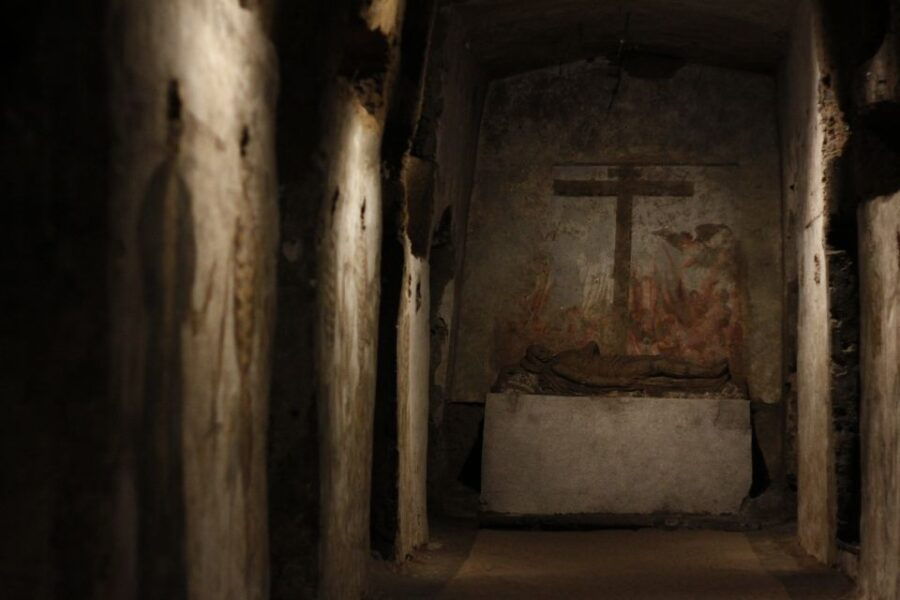
The combined ticket includes this one, so use it. San Gaudioso sits underneath the Santa Maria della Sanità basilica down in the valley and is much smaller, much weirder. Skull-shaped niches where 17th-century aristocrats had their bodies dried out. Our review covers exactly how the macabre cantarelle burial process worked.
3. Naples Underground (Napoli Sotterranea) Guided Tour: $18

This is the other Naples underground. Not catacombs at all but a network of Greco-Roman aqueducts, WWII shelters, and Renaissance cisterns under the old city. If you’ve already done San Gennaro and want a second underground hit on the same trip, this is the one. Our full guide explains exactly how the two compare.
The Practical Stuff
Opening hours: 10:00 to 17:00, last admission 17:00. Closed Wednesdays. Closed Christmas Day. Booking is mandatory.
Tour duration: One hour for the standard visit. There’s a longer “Holy Mile” tour on Saturdays and Sundays at 9:00 (Italian) and 9:30 (English) that connects this site with the Sanità basilica via the historic pilgrimage route.
Languages: English and Italian on the standard tour. The guides speak both fluently because they grew up bilingual through tourism work. Spanish, French and German are sometimes available but only by request and not guaranteed.
Photos: Allowed without flash. Don’t even try with flash. The frescoes are too fragile and the guide will stop you politely the first time and less politely the second.
Accessibility: The upper level is fully step-free and barrier-free, which is rare for a site this old. There’s a tactile relief tour for blind and low-vision visitors that needs to be booked in advance. The lower level has some access issues at the moment due to ongoing groundwater work. Ask at booking if it matters to you.
A Bit of Context You Won’t Get from the Sign Outside
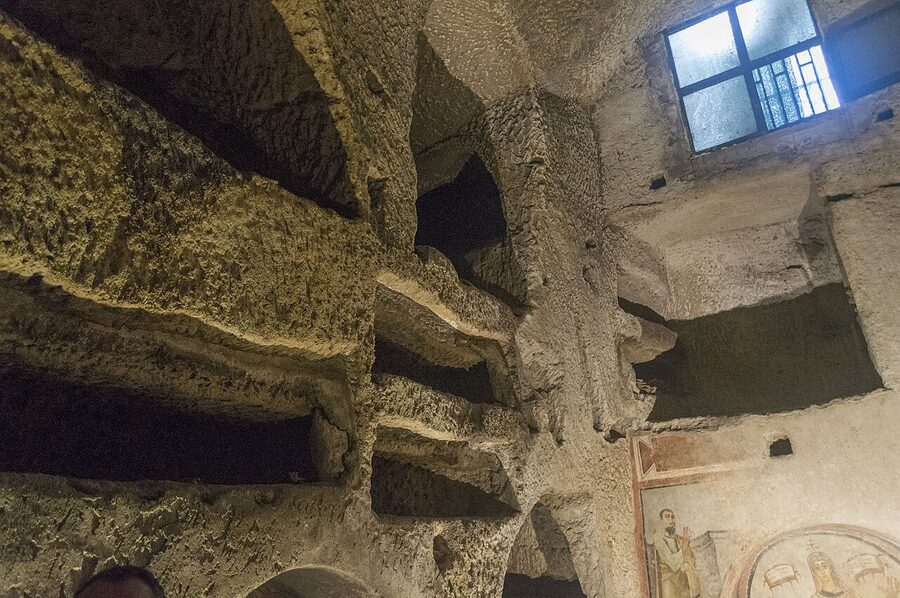
San Gennaro isn’t actually the first saint buried here. The original honoured tomb belonged to Saint Agrippinus, a third-century bishop of Naples and the city’s first patron saint. His tomb is still in the lower level and predates Gennaro’s arrival by more than a century. The shift in name happened gradually as Gennaro’s cult grew, especially after the blood-liquefaction miracle started being recorded in the fourteenth century.
The catacombs were used for active burials until the eleventh century, which is much later than the Roman ones. After that they were abandoned, partially filled with rubble, then rediscovered piecemeal. The proper modern excavations started in 1969 and the cooperative didn’t take over until 2006. Some sections were also used as bomb shelters during World War II. A few of the older locals still remember sleeping down here in 1943.
Among the more unusual residents: Quodvultdeus, the bishop of Carthage. He was exiled by the Vandals in 439 AD and put on a leaky boat with his entire congregation. They drifted across the Mediterranean and ended up in Naples, where the locals took them in. Quodvultdeus died in 450 AD and was buried in these catacombs, which is how a North African bishop ended up under a Neapolitan basilica.
Around 200 Oil Lamps
The conservators have catalogued roughly 200 ceramic oil lamps recovered from the floors and niches. Most date between the third and the seventh centuries. The earliest were locally produced; the later ones include 54 imported African red slip lamps from North African workshops. They were left as offerings during burial visits. The catacombs functioned a bit like a cemetery you’d return to with food and light, not a one-and-done crypt.
What to Pair It With on the Same Day
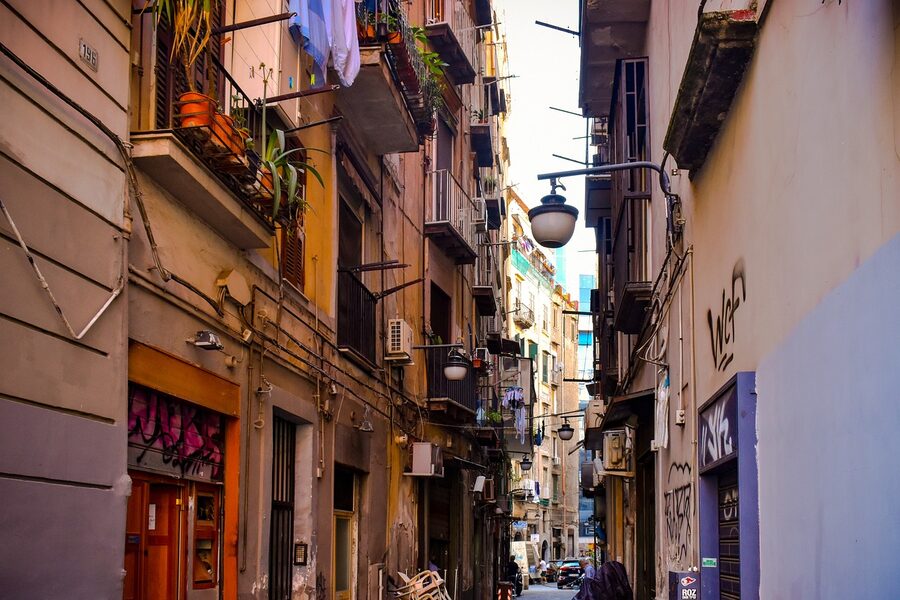
The catacombs take an hour. You’re north of the centre with most of the day still in your hands. A few sensible pairings depending on what you’re up for.
Capodimonte Museum (10 min uphill)
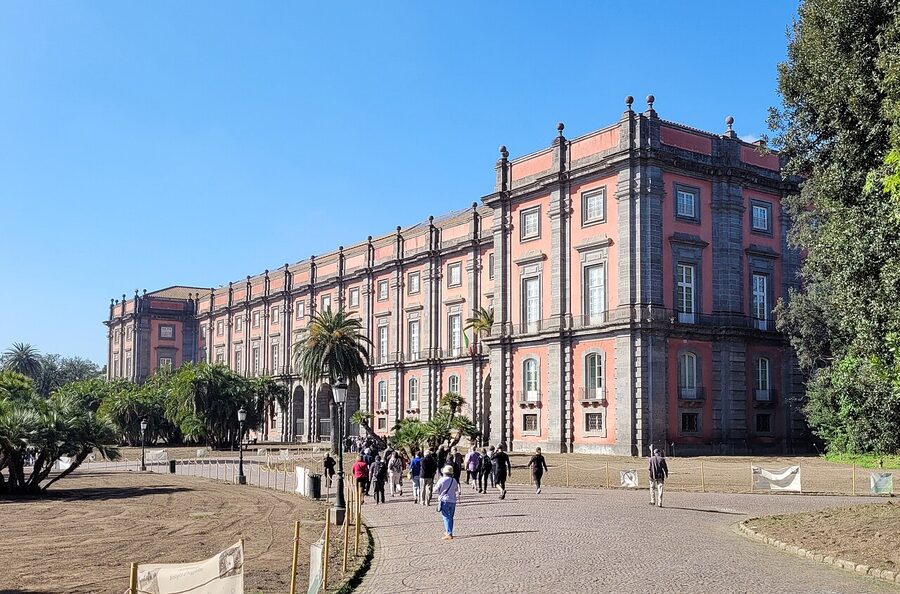
Walk up Via Capodimonte from the basilica and in about ten minutes you reach the royal palace and one of the best art collections in southern Italy. Caravaggio’s Flagellation is here. So is a Bruegel and a small Titian collection. The grounds are a free public park if you don’t want to commit to the museum.
Rione Sanità Walk and Lunch
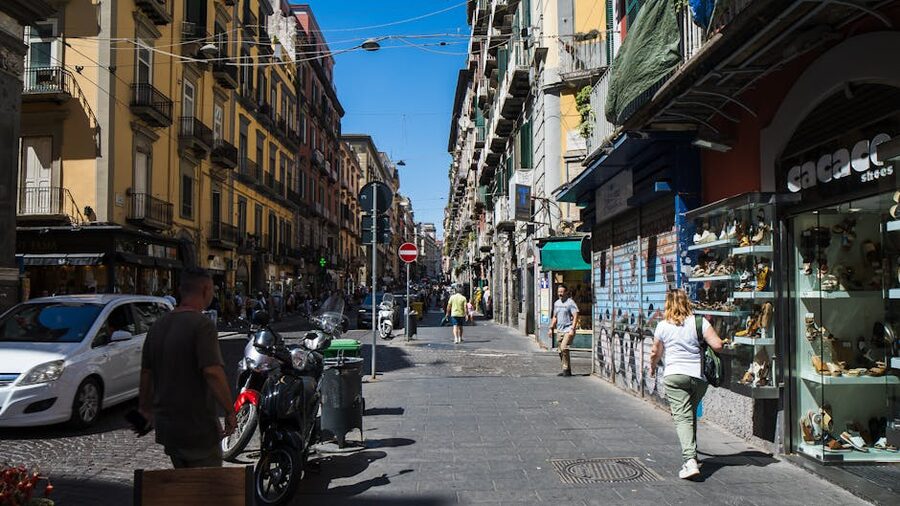
If you want to actually understand the neighbourhood the cooperative is changing, take a guided walk through the Sanità streets after the catacomb tour. Don Antonio’s project went well beyond the catacombs. There are now several restaurants, ateliers and a music school all run by neighbourhood youth co-ops. Lunch at Concettina ai Tre Santi (Pierfrancesco Daniele’s pizzeria) is the obvious pick. Book ahead because it’s busy.
Cimitero delle Fontanelle
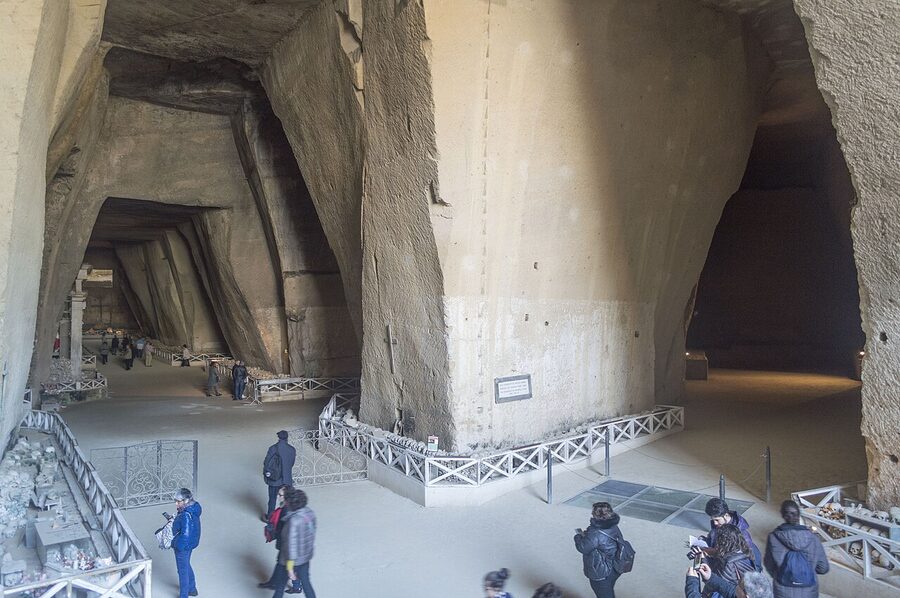
Five minutes’ walk from San Gaudioso, this is the bone-stacked cemetery in a quarry that gave Naples its peculiar 19th-century cult of skull-adoption. Free entry. Open in the morning only. It’s not the same as the catacombs and it’s not for everyone, but if you found San Gaudioso interesting this completes the trilogy.
Pompeii or Vesuvius the Next Day
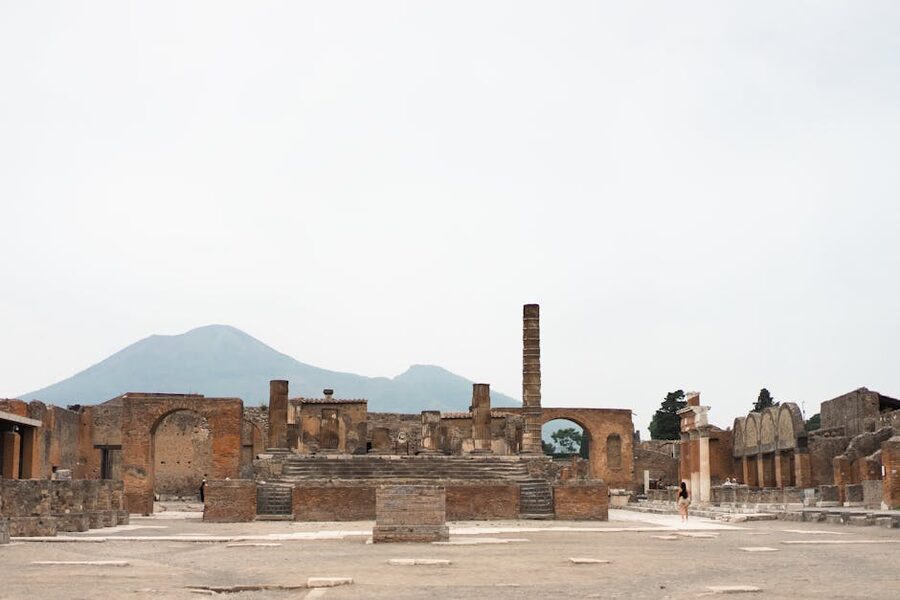
Don’t try to do the catacombs and Pompeii on the same day. Pompeii is half a day on its own and you’ll be exhausted. Same goes for Mount Vesuvius. The catacombs work much better as a half-day in Naples itself, ideally on arrival or departure day when you’ve got a few unstructured hours.
When to Go and Other Small Things
Mornings are quieter. The 10:00 and 11:00 slots are usually almost empty in winter and only half full in summer. The afternoon slots from 14:00 onwards fill up, especially in July and August when cruise ships dump people into Naples. If you can pick, pick early.
September 19th is San Gennaro’s feast day. The whole city gets weird and good in equal measure. The catacombs run extended tours that day and it’s worth booking weeks ahead if you want a slot. They sell out quickly.
The standard tour is fine for kids over 7 or 8. Younger than that and the dim light plus the talk of bones starts to bother some children. Strollers can navigate the upper level but not the lower. Babywearers are fine.
Cash is helpful for the bookshop on the way out, which sells things the cooperative makes. There are some nice ceramics and a small zine about the neighbourhood. The till takes cards but the small purchases run faster on cash.
If You’re Building a Naples Day Around This
One reason this site sticks with people is that it doesn’t feel like a tourist attraction. You’re walking through a working-class neighbourhood that decided to save its own past and is doing it with the people who grew up here. The frescoes are beautiful, the basilicas are quietly impressive, and the story of how the cooperative pulled this together is the kind of thing you remember a year later when most other museums have blurred together.
If you’ve got two underground hours in your Naples plan, do this and the connected San Gaudioso. If you’ve only got one, do San Gennaro. If you want a totally different underground experience under the old city centre, save Napoli Sotterranea for a separate afternoon. It’s a great pairing but a different mood entirely. And if you’re doing the full Bay of Naples, line up Pompeii and Vesuvius on a separate day so you can give the catacombs the slow, surprised hour they deserve.