
The nickname for Shinsekai is retoro — retro. Locals use it affectionately.
The district was built in 1912 to showcase Osaka’s modern industrial future, modelled on turn-of-the-century Paris and New York. Its centrepiece Tsutenkaku Tower was Osaka’s first skyscraper.
Then the 20th century rolled over Osaka. The tower burned in 1943, the district fell into decline, and by the 1970s Shinsekai had become a working-class drinking neighbourhood that most outsiders avoided. The comeback started around 2000 and is still in progress.
The district today reads as that entire layered history at once — 1910s architecture, 1960s signage, 2020s visitors, and a food culture that’s functionally unchanged since the 1950s.
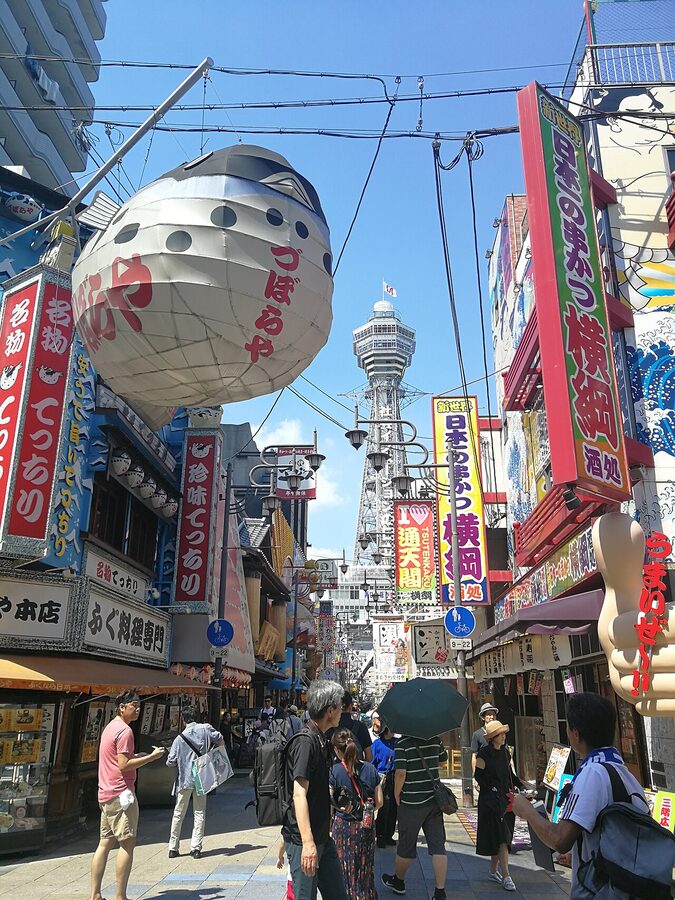
Shinsekai’s food is its identity. The signature dish — kushikatsu, a deep-fried skewer of meat, fish, or vegetable served with a communal dipping sauce — was popularised here in the 1920s, and the “no double-dipping” rule that most Kushikatsu restaurants still enforce comes from the Shinsekai shops’ original hygiene protocol. The district has a working-class food-as-affordable-pleasure culture that Kyoto specifically doesn’t have. A typical Shinsekai meal for two, drinks included, runs ¥3,000-5,000 — impressive value for what’s genuinely excellent food. The food tours systematise this: three or four shops, a guide who explains each dish’s role in Shinsekai’s history, and a tempo that lets you actually understand what you’re eating rather than rushing between locations.
Short on time? Here are my top picks:
Best value all-rounder: Osaka: Shinsekai Food Tour With 13 Dishes at 5 Eateries — $53, the most-booked Shinsekai tour. Five shops, 13 dishes, 3 hours.
Best combined Dotonbori-Shinsekai: Osaka Local Foodie Walking Tour in Dotonbori and Shinsekai — $111, covers both of Osaka’s food districts in one evening.
Best smaller-group pick: Osaka Foodie Tour Shinsekai (13 Dishes) — Feast Like a Local — $91, similar scope to Tour 1 with a smaller group size and more local context.
- What Shinsekai Is
- The 3 Best Shinsekai Food Tours
- 1. Osaka: Shinsekai Food Tour With 13 Dishes at 5 Eateries —
- 2. Osaka Local Foodie Walking Tour in Dotonbori and Shinsekai — 1
- 3. Osaka Foodie Tour Shinsekai (13 Dishes) — Feast Like a Local —
- Kushikatsu — Shinsekai’s Signature Dish
- Takoyaki and Okonomiyaki
- The Billiken, the Tower, and the Walking Route
- When to Go, What to Wear
- What’s Near Shinsekai
- Shinsekai vs Dotonbori — The Quick Comparison
- Booking Tips
- More Osaka and Japan Experiences
What Shinsekai Is
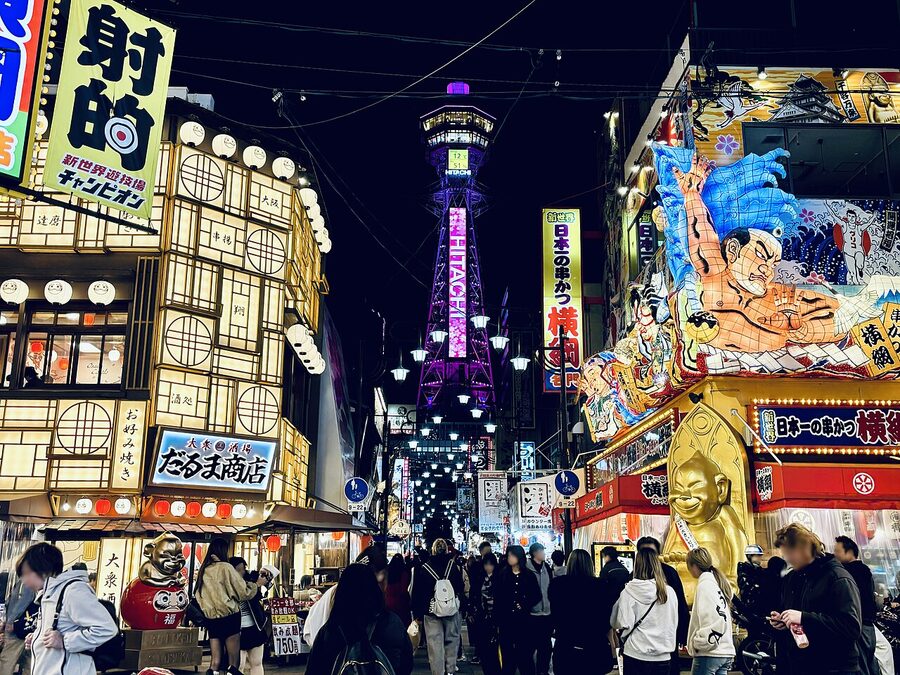
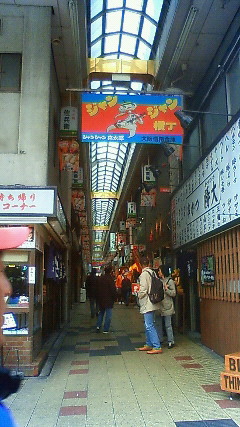
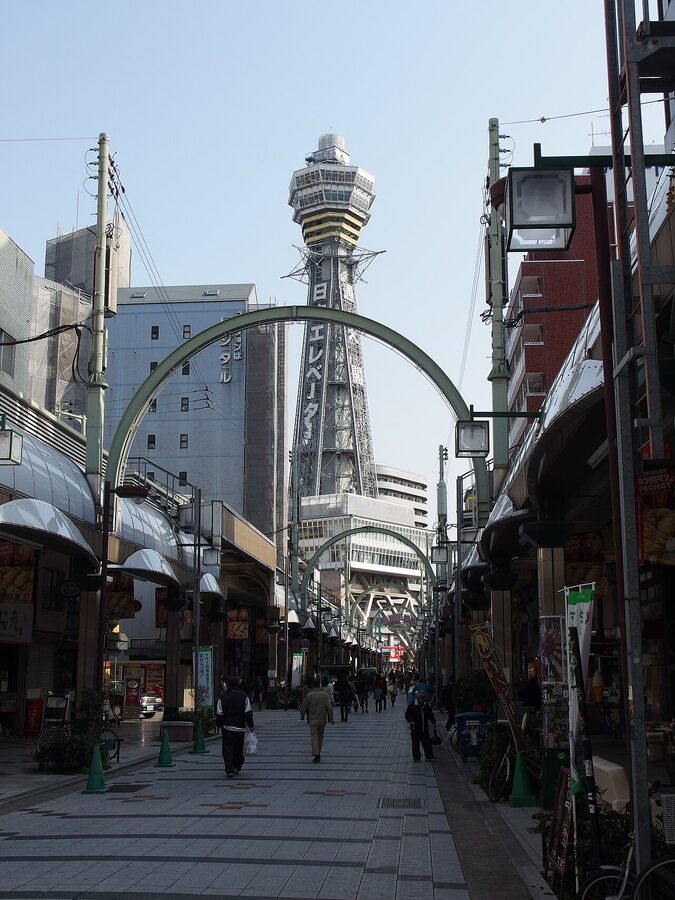
Shinsekai sits in the Naniwa ward of Osaka, about 10 minutes south of Namba by subway and directly accessible from Dobutsuen-mae Station on the Midosuji Line. Physically it’s a roughly 500m x 500m district centred on Tsutenkaku Tower, with two main shopping/eating strips: Tsutenkaku-hon-dori (the road running north from the tower) and Jan-Jan Yokocho (the narrow covered alley running south).
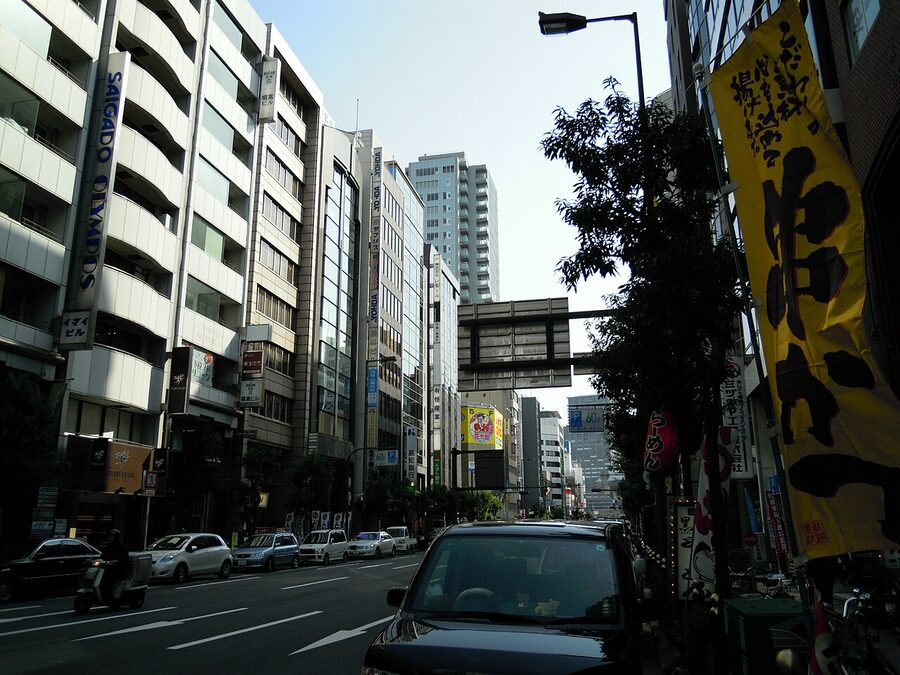
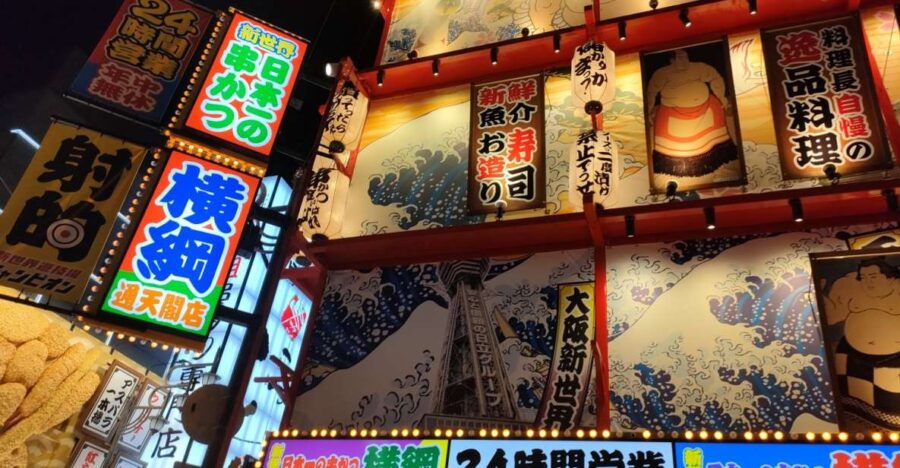
The district has a specific aesthetic: everything is slightly too loud, the signage leans on primary colours, and the architecture blends 1920s concrete with 1960s-era fluorescent additions. Unlike the polished, upscale feel of Ginza or even Dotonbori’s main strip, Shinsekai feels unselfconsciously working-class. That’s the draw. It’s one of the few Osaka neighbourhoods that hasn’t been smoothed over for the international visitor flow.
The 3 Best Shinsekai Food Tours
1. Osaka: Shinsekai Food Tour With 13 Dishes at 5 Eateries — $53

This is the default Shinsekai pick. The format is tight — 3 hours, 5 shops, 13 dishes, small group (6-12 people) — and the guide walks the route in a loop that covers most of the district’s essential food stops. You start at Tsutenkaku, move through the main shopping strip, dip into Jan-Jan Yokocho for a kushikatsu stop, cross to the Tennoji-park-adjacent side for a different take on Osaka street food, and finish near the tower. Food and drinks are included in the price; you don’t spend anything more on the actual experience. The guide explains each dish’s history, which is more interesting than you’d expect — kushikatsu, takoyaki, and okonomiyaki all have specific Shinsekai/Osaka origin stories that most visitors don’t know. Our full review covers the specific shops and dish highlights.
2. Osaka Local Foodie Walking Tour in Dotonbori and Shinsekai — $111

If you only have one evening in Osaka and want to see both food districts, this is the pick. The tour starts in Dotonbori for the earlier neon-and-canal dinner phase (takoyaki, okonomiyaki, a casual sit-down set menu), then walks south to Shinsekai as the evening progresses for kushikatsu and late-night snacks. About 4 hours total. The pacing is slightly faster than the standalone Shinsekai tour because you’re covering more ground, but the total dish count is similar. Good pick for efficiency-focused travellers who’d rather do everything in one night than split it across two evenings. Our review compares the combined format to the standalone Shinsekai tour.
3. Osaka Foodie Tour Shinsekai (13 Dishes) — Feast Like a Local — $91
This is the premium version of the same Shinsekai format. Dish count is similar (13), shops are similar (5), but the group size is smaller (max 8) and the pacing allows more time for questions and conversation at each stop. The guides here tend to be actual Osaka residents with deeper local knowledge rather than professional food-tour employees; you get more idiomatic commentary about the district’s history, neighbourhood dynamics, and which specific shops the host personally goes to on their off-days. The price premium is meaningful ($38 more than Tour 1), so it’s worth it if you’d otherwise spend that money on a separate sit-down dinner. Best pick for food-focused travellers and for solo travellers who want more engaged conversation during the tour. Our review covers when the premium pays off.
Kushikatsu — Shinsekai’s Signature Dish
Kushikatsu — literally “skewer cutlet” — was invented in Shinsekai around 1929 at a shop called Daruma, which still operates today (now with several branches across the district). The original dish was a simple pork cutlet on a bamboo skewer, battered and deep-fried, designed as an affordable lunch for factory workers in the adjacent industrial zone. The concept expanded rapidly: within a decade, Shinsekai shops were serving 40-60 different skewer varieties — chicken, fish, eggplant, quail eggs, even cheese.
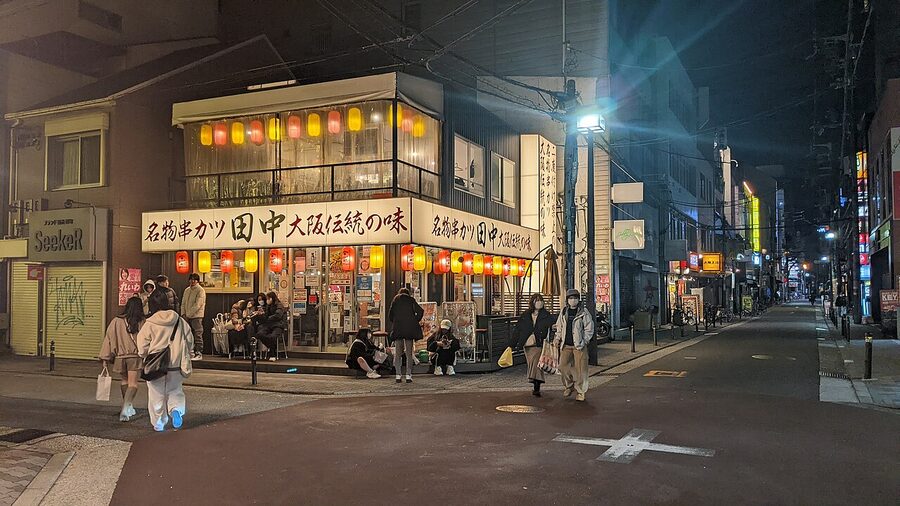
The double-dipping rule is legitimate and seriously enforced. Every table has a communal rectangular dipping-sauce container — a soy-based sauce with a distinctive Worcestershire-like profile that the shops blend to their own specifications. You dip your skewer, eat the skewer, throw it away. If you want more sauce between bites, you use the shredded cabbage provided at each table to spoon sauce onto the skewer. Do not re-dip. The rule has been in place since the 1930s and is still printed on placemats.
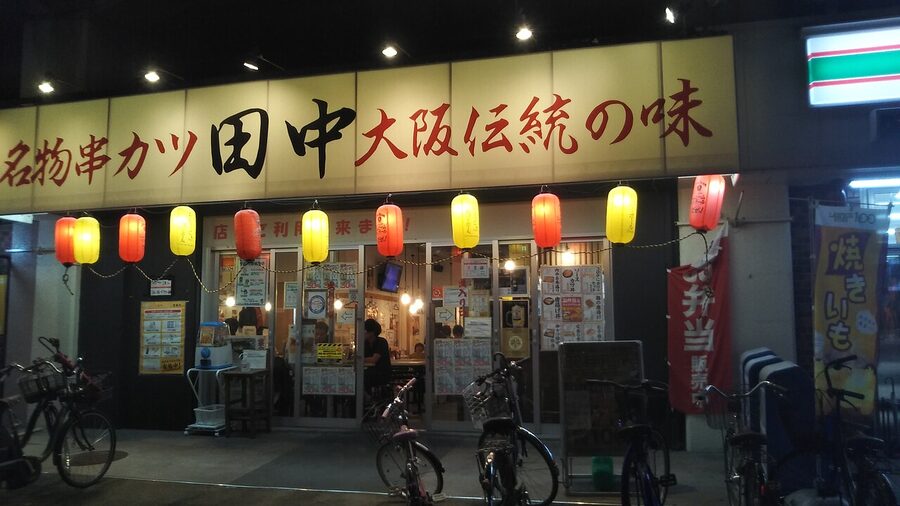
A typical order on a food tour will include 3-5 kushikatsu pieces at each stop: one beef, one chicken, one seafood (often shrimp), one vegetable (often renkon lotus root or kabocha squash), and one specialty item (cheese, quail egg, or something seasonal). The guide usually orders in pairs — one for you, one for them — so you can taste how locals pair the sauce and the cabbage.
Takoyaki and Okonomiyaki
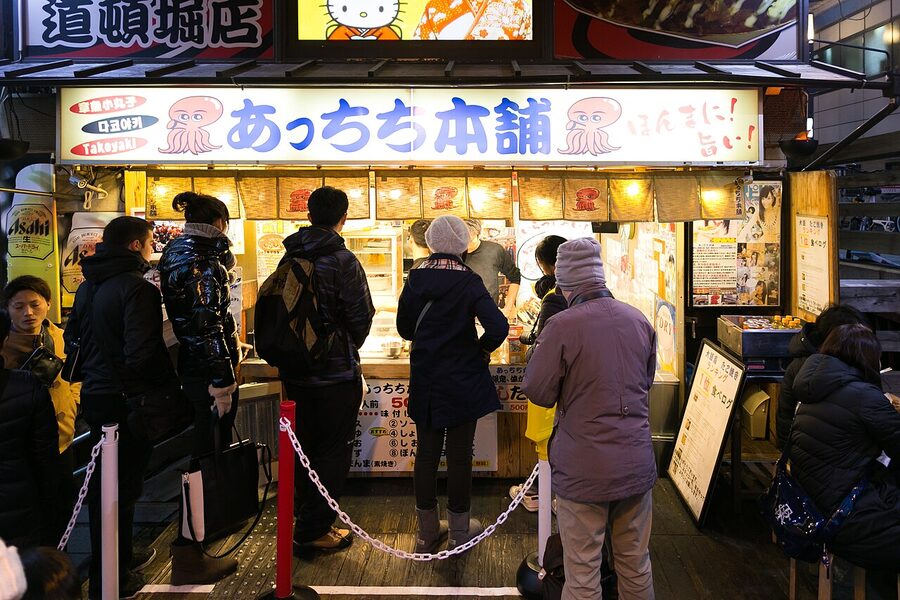
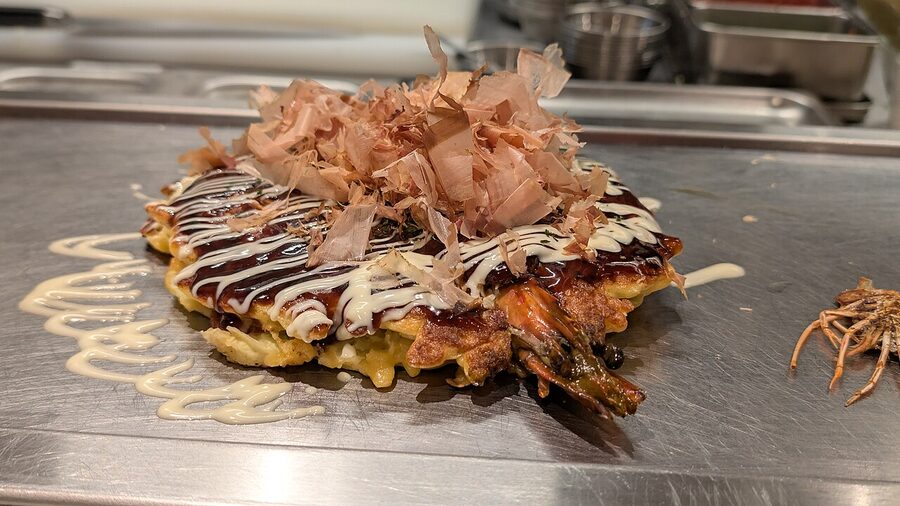
The other two dishes Shinsekai specialises in — takoyaki and okonomiyaki — are Osaka signatures broadly, not Shinsekai-exclusive. But the district has some of the best shops for both because the food culture here has never stopped iterating on them. Takoyaki (octopus balls) were invented in Osaka in the 1930s. Okonomiyaki (a savoury pancake with cabbage, pork, and squid) originated in Osaka in the post-war period and is still most associated with the city.
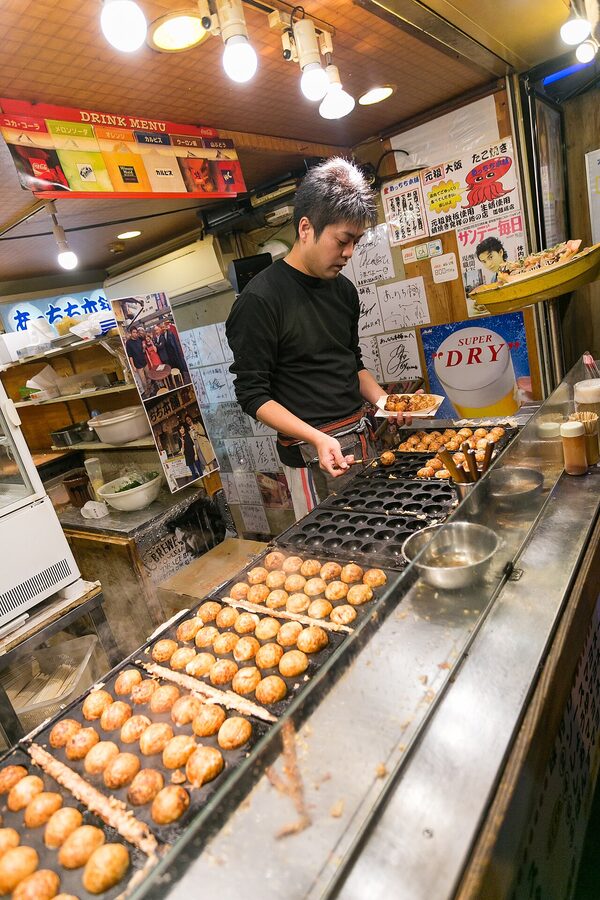
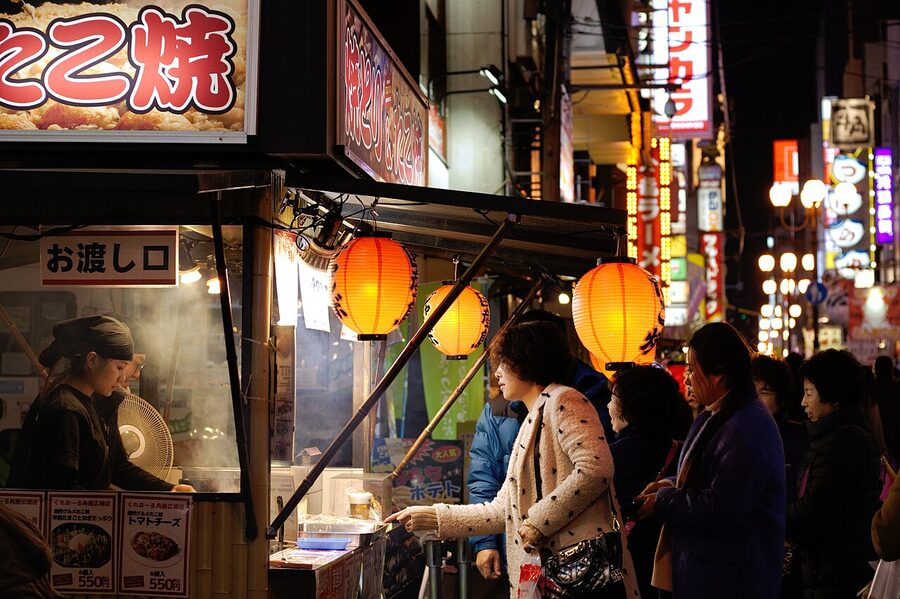
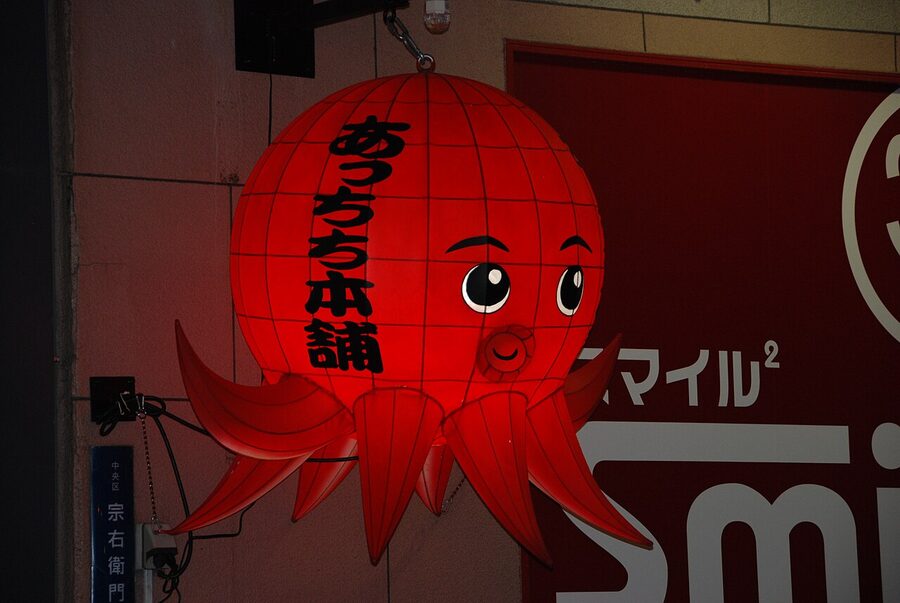
The Shinsekai tours typically include one takoyaki stop and one okonomiyaki stop, each at a specific shop the guide has a relationship with. The interior seating is usually counter-based — 8-12 stools at a horseshoe around a hot iron grill where the chef cooks your specific order in front of you. You watch the takoyaki cook, get handed it steaming, and have to manage the 300°C-interior temperature for the first bite. Breathing out a little after the bite is a legitimate technique; it’s literally how Osakans eat these.
The Billiken, the Tower, and the Walking Route
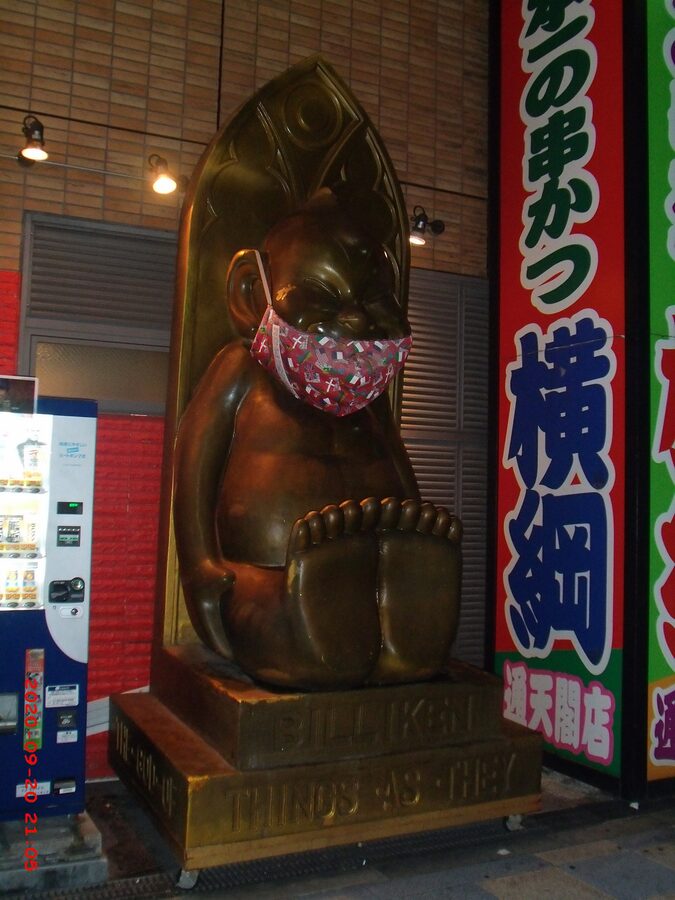
Billiken is Shinsekai’s signature cultural oddity. Designed by an American art teacher in 1908 as a “god of things as they ought to be,” Billiken dolls became briefly fashionable in the US in the early 1910s, then largely disappeared. A Japanese visitor brought one to Osaka around 1912, right as Shinsekai was being built, and the figure was incorporated into the district’s first Tsutenkaku Tower. It has stayed the district’s unofficial mascot ever since, surviving the 1943 tower fire, the 1956 rebuild, and every subsequent renovation.
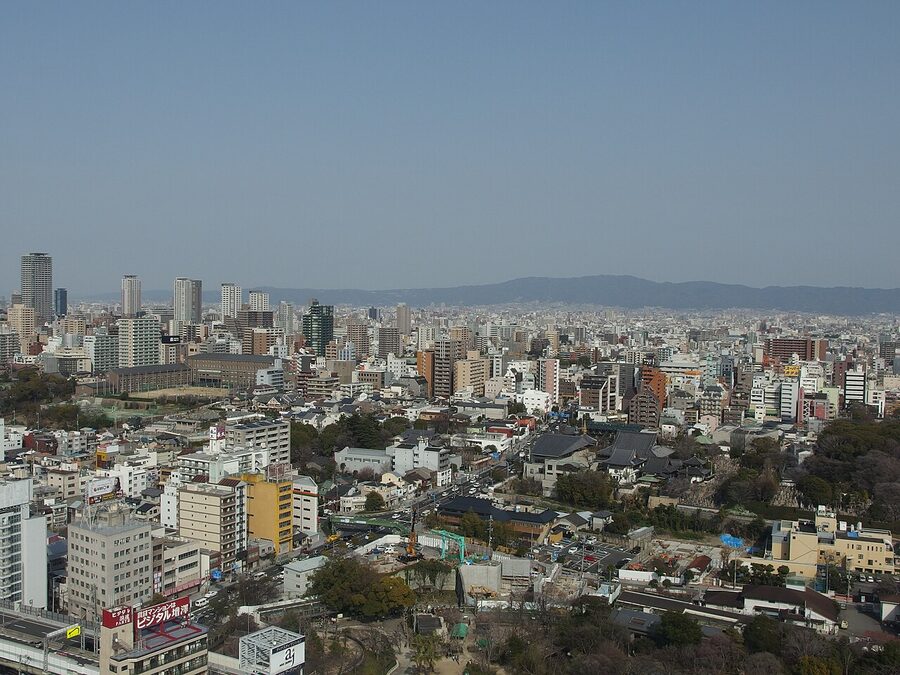
The food tours typically include a stop at the tower for a photograph and a brief look at Billiken — the tower interior is free to enter for the lower levels (the observation deck has a ¥800 admission). Most tours don’t actually go up the tower because it would eat 30 minutes of the 3-hour itinerary, but the guide will point out the tower’s weather-coloured top and explain the forecasting system.
When to Go, What to Wear
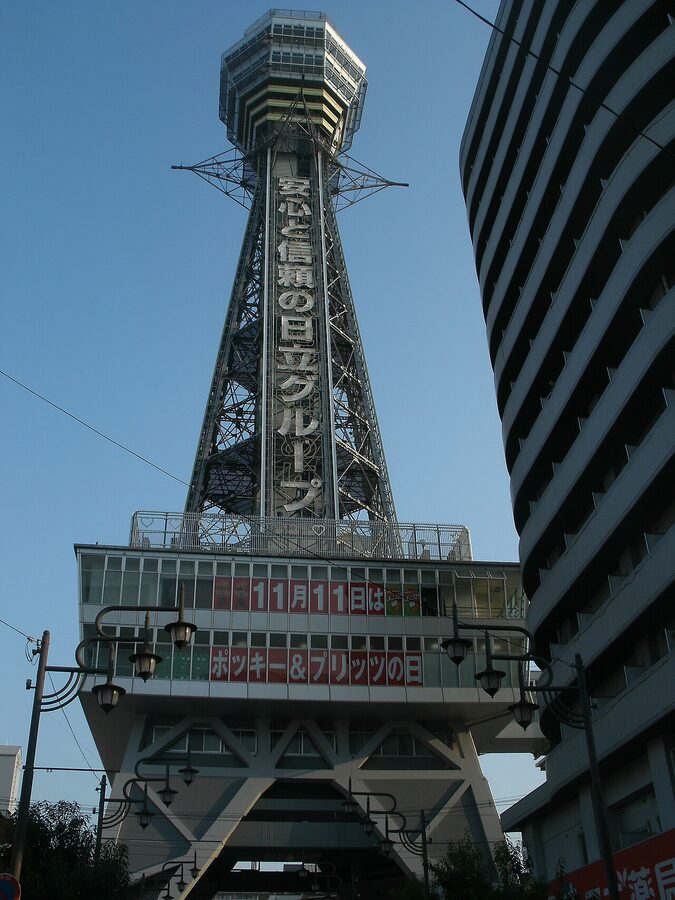
Shinsekai food tours run in late afternoon and evening slots — typically 5-6 pm start times — to catch the district at its liveliest and most photogenic. Book the earliest slot you can; by 6 pm the district fills with the Friday/Saturday dinner crowd and the shops get hectic, which is atmospheric but crowded.
Wear comfortable shoes (you’ll walk 2-3 km on pavement and through covered arcades), something easy to clean (the sauce and batter drops happen), and layers for winter tours (Shinsekai is outdoors-heavy; December-February evenings are cold). Most tours don’t require any specific dress code beyond this.
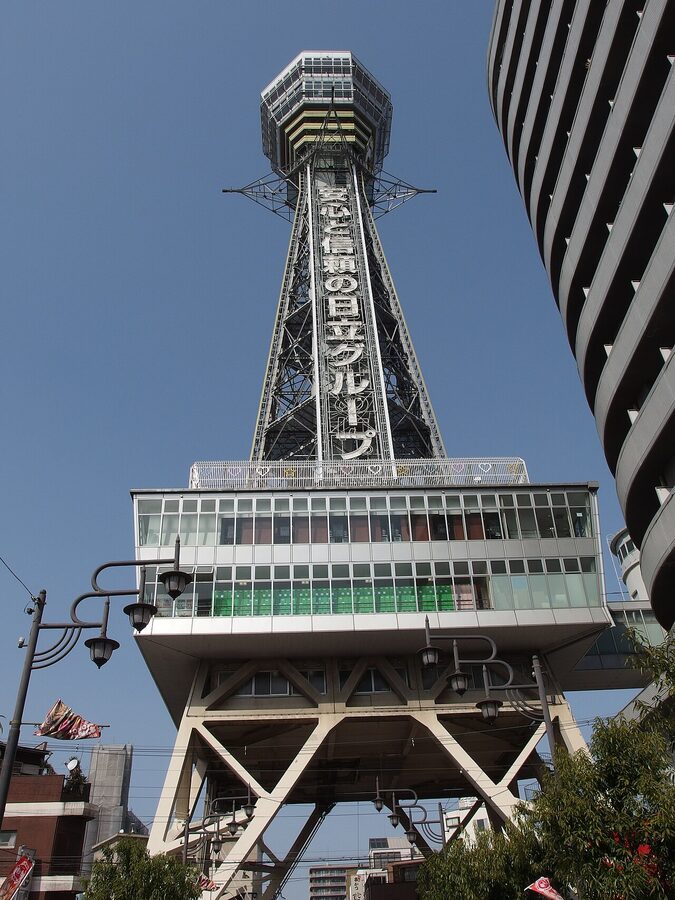
Bring cash. Most Shinsekai shops accept credit cards now, but the smaller Jan-Jan Yokocho stalls remain cash-only, and the tours occasionally stop at these specifically. ¥3,000-5,000 in small bills covers most incidental purchases.
Seasonally, Shinsekai is most photographable in autumn (October-November, when the evening air is crisp and the neon reads clean against clear skies) and winter (December-January, when the district feels especially atmospheric). Summer tours run in humid conditions that can be uncomfortable; the Jan-Jan Yokocho arcade offers some air-conditioning relief.
What’s Near Shinsekai
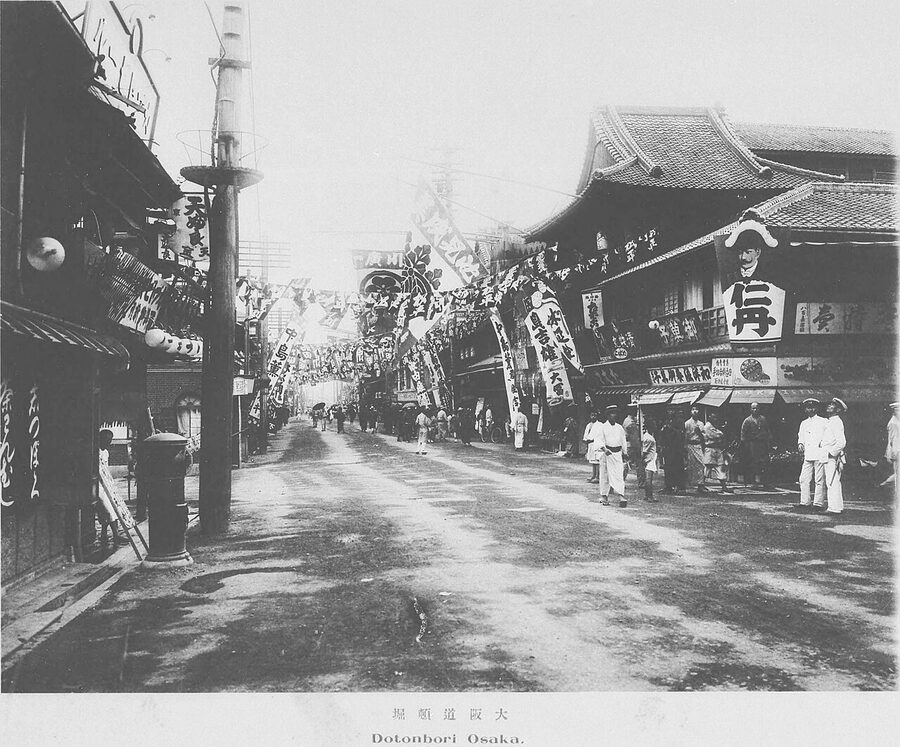
Shinsekai sits within walking distance of two other notable Osaka destinations. Tennoji Park (10 minutes north) has Osaka’s zoo, a large green space, and the Tennoji-ji temple complex — a good afternoon stop before the food tour. Dotonbori (15 minutes north by subway) is the other major Osaka food district and works as the before-or-after venue for a full Osaka food day.
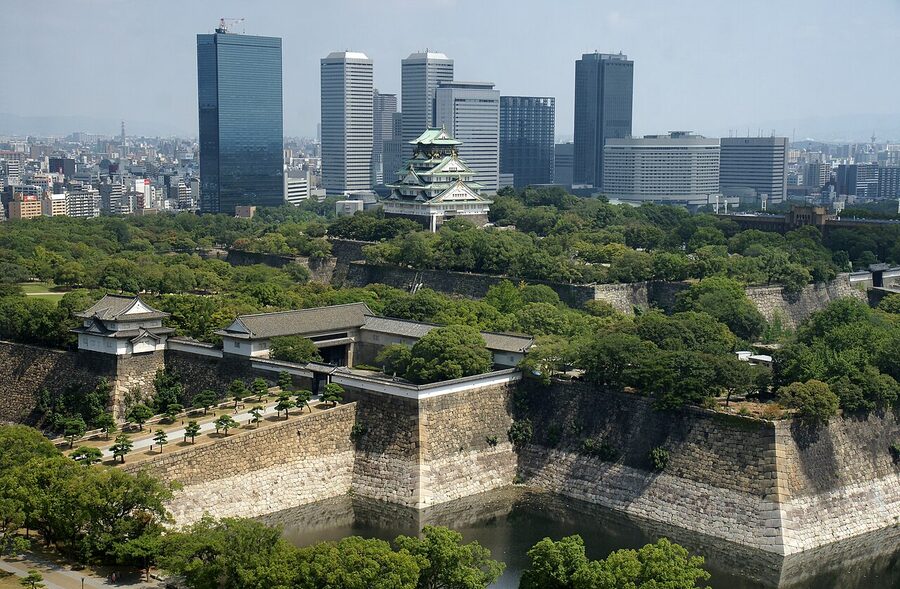
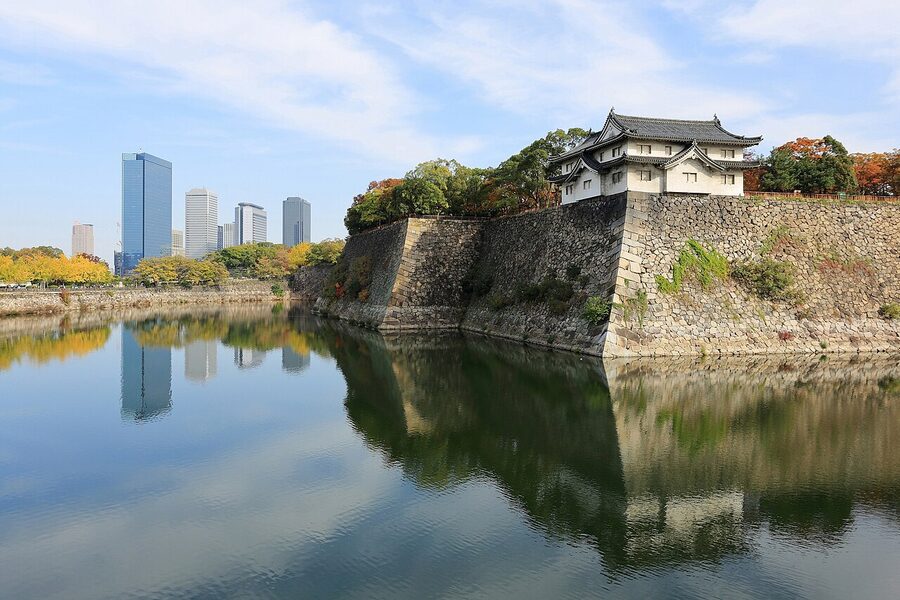
Osaka Castle (Tour 1’s standalone version doesn’t include it but the combined tours sometimes do) is a 25-minute subway ride — viable as a morning pairing with a late-afternoon Shinsekai food tour on the same day.
Shinsekai vs Dotonbori — The Quick Comparison
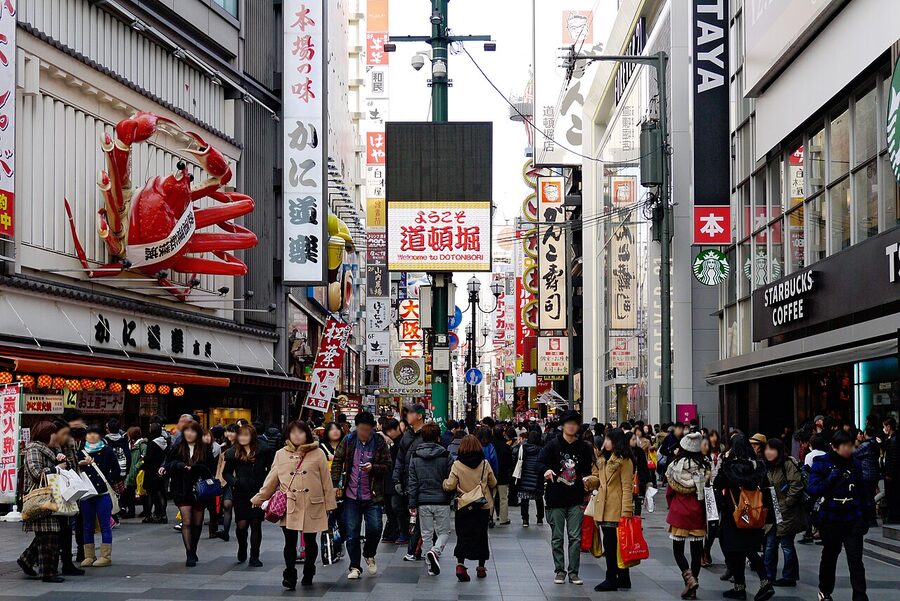
Both districts are worth a visit, but they serve different purposes. Dotonbori is the central entertainment strip with international-visitor density, branded attractions (the Glico Running Man, the giant moving crab sign), and upscale restaurants alongside the casual ones. Shinsekai is residential-adjacent, smaller, more idiosyncratic, and more focused specifically on food. Dotonbori can feel theme-park; Shinsekai can feel like a neighbourhood.
If you’re picking one: Shinsekai is the one to book a food tour in, Dotonbori is the one to walk through on your own evening. The combined Tour 2 above gives you both but at a sprinting pace; the standalone Shinsekai tours (1 and 3) let you actually settle into the district.
Booking Tips
Book 3-5 days ahead for the standalone Shinsekai tours; 1-2 weeks for the combined Dotonbori-Shinsekai tour during peak months (April, November) or Japanese Golden Week. The tours are small-group, so popular dates fill fastest.
All three tours offer free cancellation up to 24 hours before. Food restrictions can be accommodated with 48 hours’ notice — vegetarian versions are available at most venues (though kushikatsu with vegetables only is a restricted menu), halal requires the more careful premium tour.
The meeting point for most tours is Tsutenkaku Tower base. Easy to find — the tower is visible from everywhere in the district — but arrive 10 minutes early to allow for the occasional group confusion (multiple tour companies meet at the same tower at similar times).
A photograph point worth knowing: the Shinsekai “Billiken” sign on the main street, about 100 metres north of Tsutenkaku. Tour guides usually pause here for a group shot; stand on the street side of the sign for the best composition.
More Osaka and Japan Experiences
A Shinsekai food tour slots naturally into a broader Osaka itinerary. Our Osaka Kuromon Market food tour guide is the morning food counterpart — fresh seafood market at 10 am, kushikatsu at 6 pm makes a full Osaka food day. Osaka Dotonbori river cruise covers the neon district from water-level. Our Osaka Castle guide handles the historic daytime anchor. Osaka tea ceremony is the quiet contemplative counterpoint to a food-tour evening. For broader Kansai, our Kyoto UNESCO bus tour is the Kyoto day-trip pairing, and Kyoto Gion food tour is the Kyoto-equivalent food format (different register — Kyoto tends toward higher-end small plates rather than Osaka’s fried skewers). If you’re continuing to Tokyo, our Tokyo ramen tasting tour and Tokyo sumo show cover the capital’s parallel cultural experiences. Mt Fuji + Hakone day trip is the transition-day option between Osaka and Tokyo. Most travellers book Shinsekai on day two or three of an Osaka stay — the first day covers Dotonbori and Osaka Castle, the second adds a tea ceremony or market tour, and the Shinsekai food tour works as the culminating evening of the Osaka food circuit.