Udon, tempura, and gyoza make a satisfying meal, but the fun here is learning how each part comes together. In a small Tokyo cooking class with Emi, you’ll knead noodles, prepare dashi, fry tempura, and fold dumplings, then sit down to eat what you made.
I like two things in particular: you make the dishes from scratch, and Emi’s friendly, patient teaching makes the steps approachable even if your kitchen skills stop at boiling water. You also get an English recipe booklet, so the meal can travel home with you.
The main drawback is the location and scheduling. The class meets near Nerima, outside central Tokyo’s best-known sightseeing areas, and the exact studio address arrives later by email or WhatsApp. The stated duration also varies between 2.5 and 3 hours, so leave some flexibility in your day.
- At a glance
- A home-style cooking class, not a restaurant demo
- Kneading udon, one step at a time
- Tempura and gyoza: the hands-on part
- A shared meal with Emi
- Getting to a studio near Nerima
- Is the price worth it?
- Who should book this class?
- FAQ
- How long does the cooking class last?
- Where does the class meet?
- What dishes will I make?
- What gyoza fillings can I choose?
- Is the class suitable for beginners?
- Are food requirements accommodated?
- What is included in the price?
- Is there a sake option?
- Can children join?
- Is the class wheelchair-accessible, and can I cancel?
- The Best Of Tokyo!
- More Tours in Tokyo
- More Tour Reviews in Tokyo
- Not for you? Here's more nearby things to do in Tokyo we have reviewed
At a glance
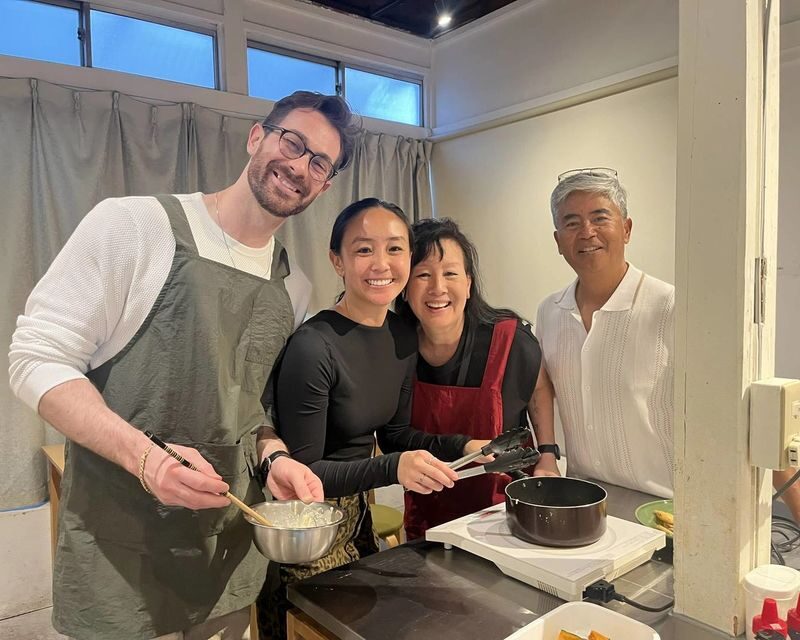
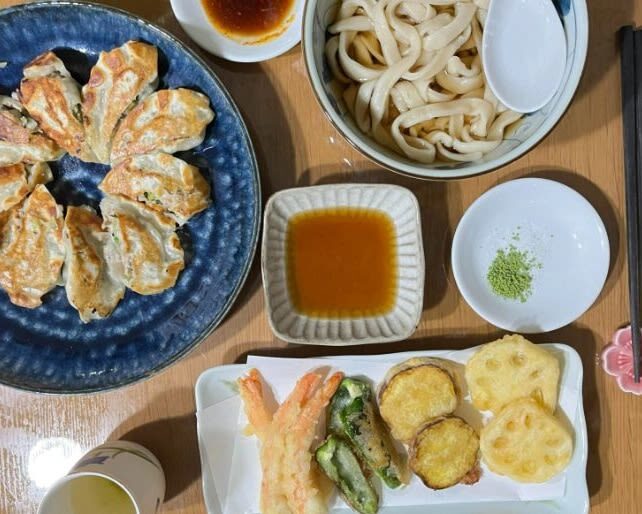
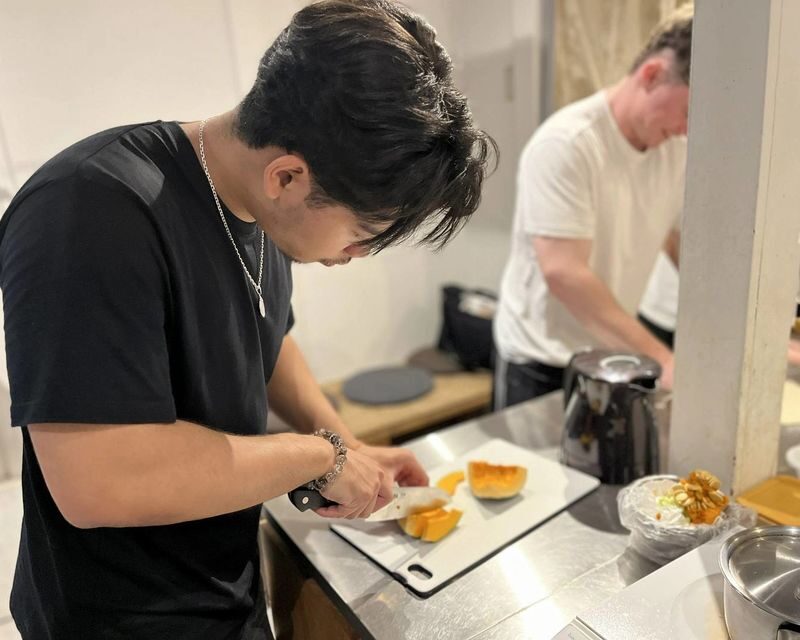
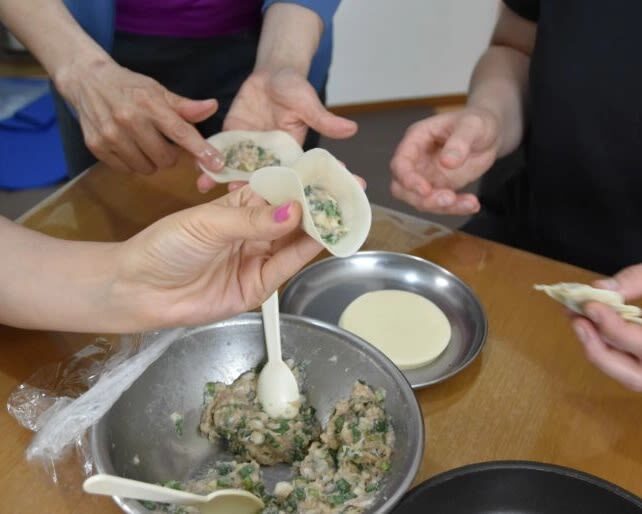
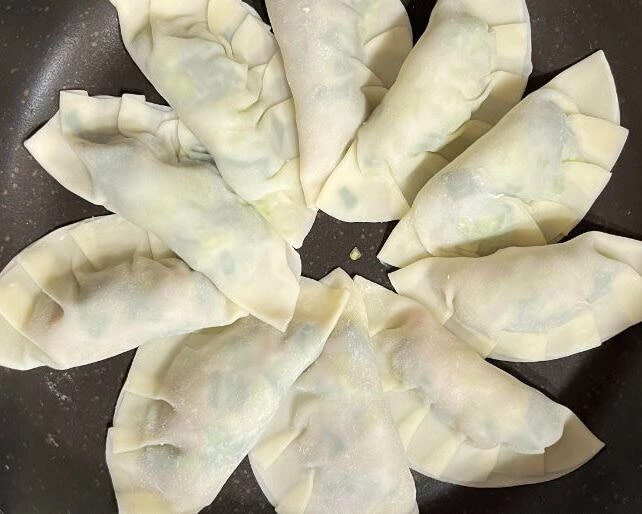
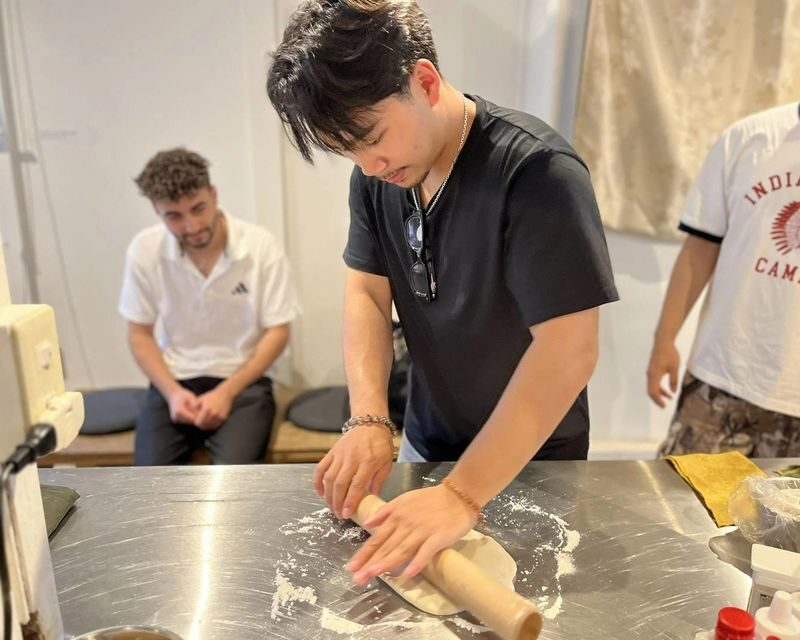
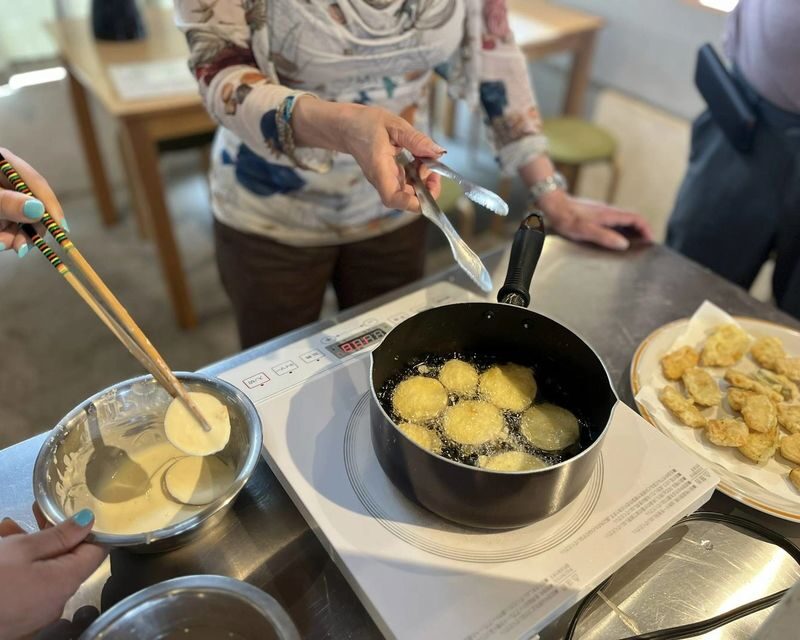
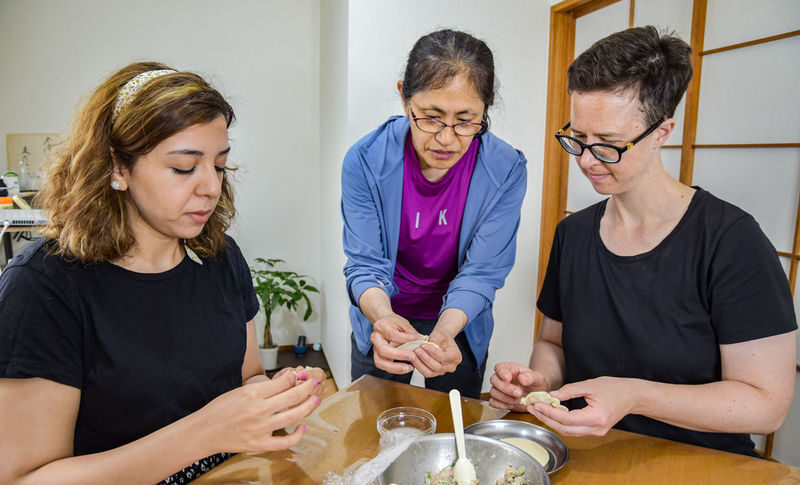
- Three dishes, made by hand: Prepare udon, tempura, and gyoza from scratch, then eat the meal together.
- Choose your gyoza filling: Select minced pork, minced pork with shrimp, or vegetables when you book.
- A patient local host: Emi guides the class in English and shares practical cooking tips.
- Recipes to take home: The English booklet helps you repeat the dishes after your trip.
- A little farther from the center: The class meets near Nerima, Hikawadai, or Hikarigaoka Station, not at a fixed address listed in advance.
- From $89.89: An optional Dassai sake pairing starts at $98.09.

👉 See our pick of the 25 Best Guided Tours In Tokyo
A home-style cooking class, not a restaurant demo
This class is built around doing, not watching. You’ll work through the basics of three familiar Japanese dishes, with Emi showing you how to handle each task and offering guidance along the way. The reward is a freshly made meal, but the useful part is learning techniques you can repeat in your own kitchen.
The format also makes the class feel personal. People who have taken it describe Emi as warm, easy to talk with, and good at explaining each step without rushing. One family with a 15-year-old daughter appreciated the clear instructions and conversation; another participant who felt socially anxious said the relaxed setting helped them feel comfortable. That kind of welcome matters when you’re cooking alongside someone you’ve just met.
Think of this as a small cultural experience as much as a cooking lesson. You’ll share a table with your host, ask questions, and get a little local conversation along with your food. If you want a polished restaurant meal with no flour on your hands, choose dinner out instead. If you like learning by doing, this is a more memorable way to spend a few hours.
You can also read our reviews of more tours and experiences in Tokyo.



Kneading udon, one step at a time
The class starts with udon, the thick wheat noodles that give the meal its hearty center. You’ll hand-knead the dough, learning how a simple mixture becomes a springy noodle with a satisfying bite. It’s a tactile task, and likely the part that most clearly shows why handmade noodles differ from a packet bought at the store.
You’ll also prepare dashi, the savory stock that forms the base of many Japanese dishes. The class does not promise a detailed lecture on every ingredient, but learning to make the broth yourself gives you a useful starting point for recreating the meal. Emi is known for explaining each stage patiently, so you needn’t arrive with cooking experience.
The recipes are described as straightforward enough for home cooks to repeat. That is a real advantage over a class that leaves you with a lovely dinner but no clear path to making it again. Bring questions about ingredients and methods, and make notes if you want more than the booklet to remember.
Tempura and gyoza: the hands-on part
Next comes tempura, where you’ll prepare ingredients and fry them until crisp. The appeal is partly in the contrast: a light, crunchy coating around the food, served alongside chewy noodles and savory dumplings. Frying does require attention, so follow Emi’s directions rather than treating the kitchen like a free-for-all.
Gyoza add another practical skill: shaping and folding the dumplings. You can choose minced pork, minced pork and shrimp, or vegetables, but you need to state your preference when booking. That detail is easy to miss, so decide before you reserve your place.
If you eat pescetarian or vegetarian, the class can accommodate those diets, but tell the host in advance. The available gyoza choices include a vegetables-only filling, while the class description specifically notes that dietary requirements should be shared ahead of time. If your needs are more complex, ask before booking rather than assuming every ingredient can be changed.
These dishes suit a beginner because the work is divided into clear steps. You’ll have several chances to ask Emi for help, and the focus is on making a delicious home-style meal, not passing a test. Still, you’ll be handling dough, filling dumplings, and working around hot oil, so expect to take part rather than simply watch.
A shared meal with Emi
Once the cooking is done, you sit down to eat the udon, tempura, and gyoza you made. The meal is included, as are beverages, ingredients, and cooking utensils. Past participants have also described hot tea and relaxed conversation, though the exact details of each class may vary.
This shared table is a big part of the experience. It gives you time to talk with Emi about food and Japanese culture, and it turns the class into something more personal than a recipe demonstration. If you’re travelling alone or with family, that conversation can be as welcome as the meal itself.
You can also book a version with Dassai sake pairing. It costs from $98.09, compared with $89.89 for the standard class, a difference of about $8.20 at the listed starting prices. Alcohol is not included in the standard package, so choose the pairing option if you want sake with your meal.
Getting to a studio near Nerima
The meeting point is Nerima Station, but the cooking class may take place at one of three studios in Nerima City, near Nerima, Hikawadai, or Hikarigaoka Station. The precise address and map link are sent directly by the host through email or WhatsApp. Check those messages carefully before setting out, and make sure your contact details are current.
Transport to the meeting point is not included. The venue is described as within walking distance of one of those stations, but the exact station depends on the studio assigned to your class. That means you should avoid planning a tight connection or assuming the address is beside Nerima Station itself.
For groups of three or more, classes are held in a cooking studio, and booking two to three months ahead is recommended, especially during New Year, spring, and autumn. On national holidays, the class accepts only groups of four or more. If you’re travelling as a smaller party, check your date before making other plans.
The class is not wheelchair- or stroller-accessible. Children must be included in the passenger headcount, and participants must be at least 9 years old. Children aged 9 to 11 need a paying adult with them. One further restriction is important for solo bookings: a single male participant cannot take part alone.





Is the price worth it?
At $89.89 per person, this is more than a quick snack stop, but you’re paying for a hands-on class, ingredients, utensils, an English-speaking host, a full meal, beverages, and a recipe booklet. The value is strongest if you want to learn a set of practical cooking skills and enjoy a personal meal with a local host. If you only want to eat udon and gyoza, a restaurant will cost less and take less time.
The optional sake pairing brings the starting price to $98.09. That modest increase may suit you if you want to try Dassai with the meal, but remember that alcoholic drinks are not part of the standard package.
The experience has a 4.9 out of 5 rating from 13 class reviews. The most consistently praised feature is Emi herself: people highlight her patience, clear cooking advice, conversational English, and welcoming manner. One participant noted that Emi adapted the class to their diet, while others valued the chance to learn recipes simple enough to make at home. A single rating is lower, but it still describes a friendly, attentive class.
One practical wrinkle is the advertised length. The experience title calls it 2.5 hours, while the overview describes it as three hours. Treat that as a rough range and keep your schedule open rather than booking a timed activity immediately afterward.
Who should book this class?
I’d recommend it to curious home cooks, families with older children, and anyone who wants a relaxed food activity with more interaction than a restaurant meal. It’s particularly appealing if you like the idea of making noodles and dumplings yourself, or if you want a recipe booklet to help you keep cooking after Japan.
It may be less suitable if your Tokyo schedule is packed, you need a wheelchair-accessible venue, or you prefer a central location with a fixed address available before booking. It also isn’t an option for a solo male participant, and smaller groups cannot book on national holidays.
Book this class if the cooking itself sounds like part of the holiday, not just a way to get dinner. You’ll leave with a full meal, a few useful techniques, and a better sense of how these everyday Japanese dishes are made at home.
Learn to Make Home-style Tempura Udon and Gyoza in Tokyo (2.5 hours)
“Emi is very friendly. My daughter and I had a great time and we learn a lots of good tips for home cooking!!!! definitely come next time for next c…”
FAQ
How long does the cooking class last?
The experience is described as both 2.5 hours and 3 hours. Allow around that amount of time, with some flexibility in case the class runs closer to the longer estimate.
Where does the class meet?
The meeting point is Nerima Station. The cooking venue may be near Nerima, Hikawadai, or Hikarigaoka Station, and the host sends the exact address and map link by email or WhatsApp.
What dishes will I make?
You’ll make handmade udon, prepare dashi, fry tempura, and fold gyoza. You’ll eat the meal after cooking.
What gyoza fillings can I choose?
Choose minced pork, minced pork and shrimp, or vegetables only. Provide your choice when booking.
Is the class suitable for beginners?
Yes. The class is described as suitable for beginners, and Emi guides participants through the cooking steps.
Are food requirements accommodated?
Vegetarian and pescetarian diets can be accommodated. Inform the host of your dietary requirements in advance.
What is included in the price?
The package includes an English-speaking guide, meals and beverages, ingredients, cooking utensils, and an English recipe booklet. Transport and alcoholic beverages are not included in the standard package.
Is there a sake option?
Yes. You can book the class with a Dassai sake pairing. The listed starting price is $98.09, compared with $89.89 for the standard option.
Can children join?
Participants must be at least 9 years old. Children aged 9 to 11 must be accompanied by a paying adult, and infants and children must be included in the passenger headcount.
Is the class wheelchair-accessible, and can I cancel?
The activity is not wheelchair- or stroller-accessible. You can receive a full refund if you cancel at least 72 hours before the activity, based on local time at the destination.