You get three hands-on parts in one small Miyajima experience: kimono dressing, a tea ceremony, and making an omamori charm at Tokujuji Temple. I like that you do more than watch. You learn to prepare matcha yourself, then make a keepsake to take with you.
I also like the setting and the practical English guidance. The temple is about a five-minute walk from the ferry port, and the staff explain each step, so you can ask questions as you go.
One thing to weigh is the $126.15 starting price, especially since no set duration is provided. Plan on a couple of hours, based on one participant’s account, and arrive on time: late arrivals cannot join a later session or receive a refund.
- What you get for the price
- Getting to Tokujuji Temple
- Choosing a kimono and obi
- Watching the tea ceremony, then making matcha
- Making an omamori charm with your own wish
- Photos, pace, and the overall feel
- Is 6.15 good value?
- Who will enjoy this experience most
- Booking and practical details
- Should you book it?
- FAQ
- Where does the experience take place?
- How do I get to Tokujuji Temple from the ferry port?
- How far is the temple from Miyajima ferry port?
- What is included in the package?
- Can I make matcha myself?
- What choices do I have when making the omamori?
- What is the minimum age to participate?
- What happens if I arrive late or need to cancel?
- More Tours in Hatsukaichi
- More Tour Reviews in Hatsukaichi
- Not for you? Here's more nearby things to do in Hatsukaichi we have reviewed
What you get for the price
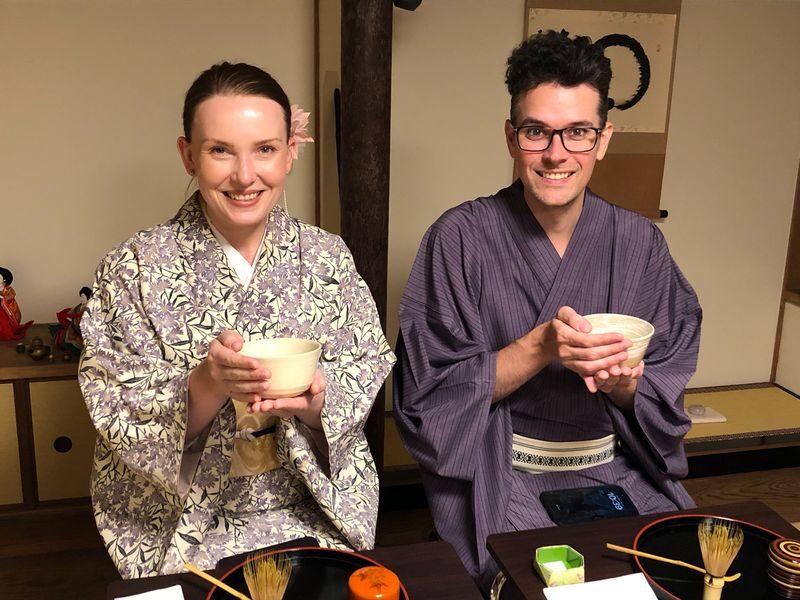
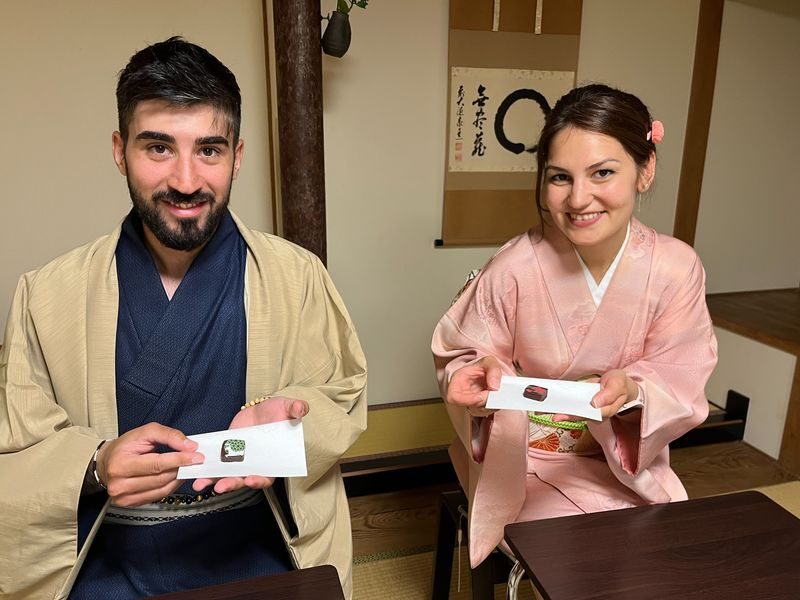
- Choose from a broad range of kimono and obi: Staff provide what you need to dress, with accessories available too.
- Watch a tea master, then make your own matcha: The ceremony has an English-guided demonstration followed by a hands-on tea-making lesson.
- Build a personal omamori charm: Pick from more than 300 amulet bags and 15 cord colors, then add a mini rice scoop carrying a wish.
- Take photos in your kimono: There is a dedicated photo-taking period during the experience.
- Visit a temple close to the ferry port: Okeiko Japan is at Tokujuji Temple, about five minutes on foot from the Miyajima ferry port.
Getting to Tokujuji Temple
The meeting point is Okeiko Japan at 741-1 Miyajimacho, inside Tokujuji Temple. Its short walk from the ferry port makes this an easy cultural activity to fit into a Miyajima visit, but do allow time to find the entrance.
From the port, head into the street beside the LAWSON across the open area. Go through the tunnel, turn left, and look for the red fan sign at the end of the road. Follow its arrow to the temple.
The activity starts on time. If you arrive late, you will not be admitted to a later session, and you will not receive a refund. Check your ferry timing and give yourself a little room for the walk and directions rather than setting off at the last minute.
You can also read our reviews of more tours and experiences in Hatsukaichi.


Choosing a kimono and obi
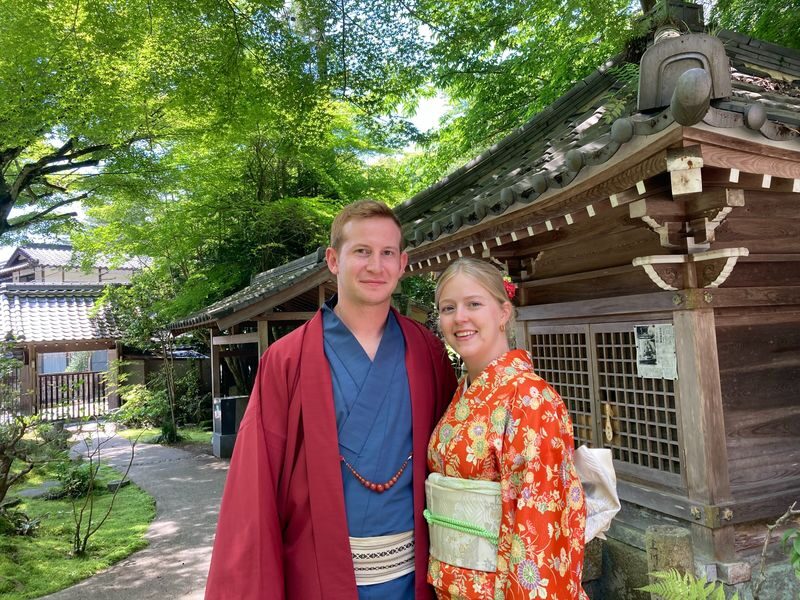
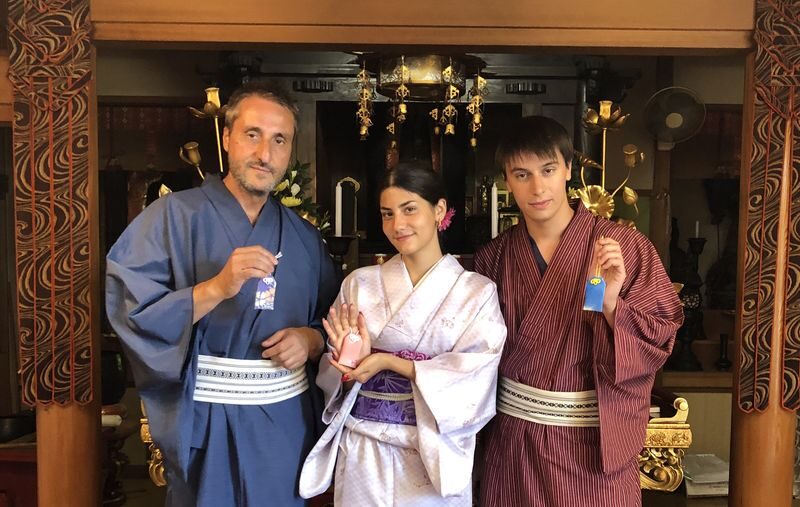
The experience begins with choosing a kimono and obi belt. There are many options, and the staff have the accessories and other items needed to dress you. One participant specifically noted the range of sizes and the accessories, which is useful if you are concerned about finding a comfortable fit.
Take a moment to choose a combination you like. This is not just a costume change before the main event: wearing the kimono is part of the activity, and you will have time for photos once you are dressed. If you are visiting with friends or family, you can also enjoy seeing each other’s choices.
The experience includes kimono dressing, but the information provided does not specify how long you will wear it after the activity or whether you can leave the temple in it. If that matters to your plans, ask Okeiko Japan before booking rather than assuming it works like an all-day rental.
Watching the tea ceremony, then making matcha
The tea portion has two stages. First, a tea master leads a ceremony with guidance in English. You can ask questions as you watch, which makes this more useful than a demonstration where you simply sit back and try to follow unfamiliar gestures.
Then comes bon temae, the hands-on part. You learn how to prepare matcha yourself, with the aim of making a good cup. That shift from watching to doing is the heart of the activity: you get a clear look at the ceremony’s steps, then try the process rather than leaving with only a few photos.
If Japanese tea customs interest you, this format gives you an approachable introduction without requiring prior knowledge. You do not need to arrive as a tea expert. Listen, ask questions, and treat the making portion as a chance to practice, not a test.
Making an omamori charm with your own wish
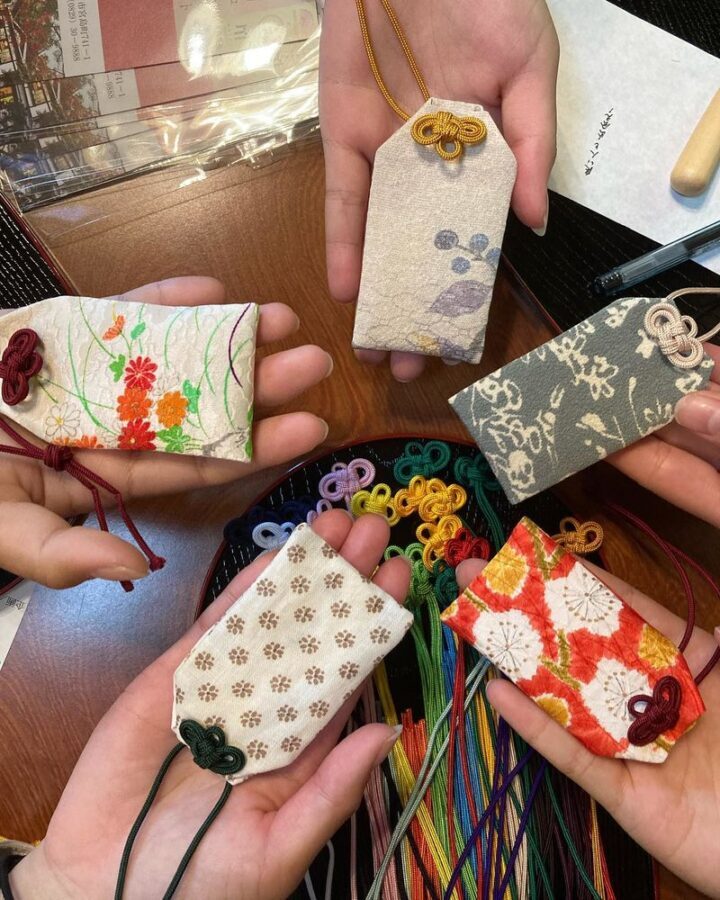
The final activity takes place in the temple’s main room. You begin by choosing an amulet bag from more than 300 options, then select one of 15 cord colors. The large range means you can take your time and make the charm feel personal, rather than picking from a small set of standard choices.
Next, you choose a mini rice scoop to place inside the charm. You can select a wish or write your own on the scoop, then put the pieces together to make your omamori. The result is a small memento linked to your own choice of colors and wish, not just a souvenir picked up from a shop.
This is a thoughtful finish to the activity. The kimono and tea ceremony give you a chance to take part in Japanese customs, while the charm-making leaves you with something tangible to carry home. If you are doing the activity with children aged six or older, the choice of bag, cord, and wish may give them a simple way to make the experience their own.
Photos, pace, and the overall feel
There is time for a photo session in your kimono. You can use it to remember the outfit and the temple setting, though the details do not specify whether photography is guided or what equipment is provided. Bring your own phone or camera if you want to take pictures.
The staff speak English, and the tea ceremony is conducted with English guidance. That matters here because the experience involves several instructions: getting dressed, following tea preparation, and assembling the charm. Clear explanations can help you take part rather than feel you are watching from the sidelines.
The pace also depends on how much time you spend choosing. With hundreds of charm bags and a wide selection of kimono and obi, you may want to avoid rushing through the decisions. The overall experience has been described as taking a couple of hours, but no official duration is specified, so keep your wider Miyajima schedule flexible.
Is $126.15 good value?
At a starting price of $126.15, this is not a quick, low-cost stop. The package combines kimono dressing, a guided tea ceremony, hands-on matcha preparation, amulet-making materials, English-speaking staff, and photo time. If you value taking part in several activities in one place, the price is easier to justify than if you are mainly seeking a short tea tasting.
The value is personal, too. You make a charm that includes a wish you choose or write, and you get to try preparing matcha after watching the tea master. Those details give the session a more participatory feel than simply renting a kimono or buying a ready-made souvenir.
The trade-off is that the experience is focused on these activities, not a broader tour of Miyajima. It does not include other personal expenses, and tips are not included. If you are watching your budget or want to spend most of your day outdoors, compare it with a kimono rental or a walking tour before deciding.
Who will enjoy this experience most
I would look at this for someone who wants a structured cultural activity and prefers learning by doing. The mix works well if you are curious about tea customs, like making things by hand, or want a photo opportunity in a kimono without arranging the separate pieces yourself.
It may also suit families with children aged six or older, provided the children can follow the activity and remain attentive. The minimum age is six, and the charm-making choices may appeal to young participants. The information provided does not give a child price or other age-based details, so check those before booking.
If you are already planning a visit to Miyajima, the location close to the ferry port is convenient. You can put this into your day without needing to travel across Hatsukaichi to reach it. Just keep the fixed start time in mind, and do not schedule your arrival too tightly around a ferry connection.
Booking and practical details
The package listed is Kimono, Tea ceremony and Amulet making, starting at US$126.15. It includes kimono wearing, the tea ceremony, amulet making, and English- and Japanese-speaking guide support, along with English-speaking staff. Other personal expenses and tips are not included.
The voucher is valid only on the date and time specified, and you can present it on your phone. Confirmation is expected within minutes. If you do not see it, contact customer support before heading to the temple.
You must be at least six to take part. Anyone who appears intoxicated may be refused service, with no refund in that case. Outside food and drinks are not allowed, and pets are prohibited. You can cancel for a full refund if you do so at least 24 hours before the activity date, using destination local time.
Should you book it?
Book this if you want a hands-on cultural session that combines kimono, tea, and a personal charm, and you are comfortable paying for a multi-part activity. The English guidance, short walk from the ferry, and chance to make your own matcha and omamori are the strongest reasons to choose it.
Skip it if you want a cheap, quick stop or need a precisely stated duration to plan a tight itinerary. The session starts on time, and late arrivals lose their place without a refund. Arrive with enough time to find Tokujuji Temple, and you will be better placed to enjoy the experience at its own pace.
Authentic Tea Ceremony and Omamori Charm Making in Kimono (Miyajima)
“What a wonderful experience! During my day on Miyajima, I spent a couple of hours at the okeiko Japan being dressed up with a wonderful kimono, tak…”
FAQ
Where does the experience take place?
It takes place at Okeiko Japan, inside Tokujuji Temple, at 741-1 Miyajimacho, Hatsukaichi, Hiroshima Prefecture.
How do I get to Tokujuji Temple from the ferry port?
Walk into the street beside the LAWSON across the open area, go through the tunnel, and turn left. Follow the red fan sign and its arrow to the temple.
How far is the temple from Miyajima ferry port?
It is about a five-minute walk from the ferry port.
What is included in the package?
The package includes kimono wearing, a tea ceremony, amulet-making materials and activity, and English- and Japanese-speaking guide support. English-speaking staff are also provided.
Can I make matcha myself?
Yes. After watching the tea master lead the ceremony with English guidance, you take part in bon temae and learn how to make matcha.
What choices do I have when making the omamori?
You can choose from more than 300 amulet bags and 15 cord colors. You also choose a mini rice scoop to hold a wish, or write your own wish for the scoop.
What is the minimum age to participate?
Participants must be at least six years old.
What happens if I arrive late or need to cancel?
Late arrivals cannot join a later session and will not receive a refund. You can receive a full refund if you cancel at least 24 hours before the activity date, based on destination local time.