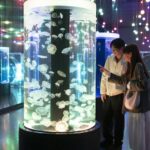
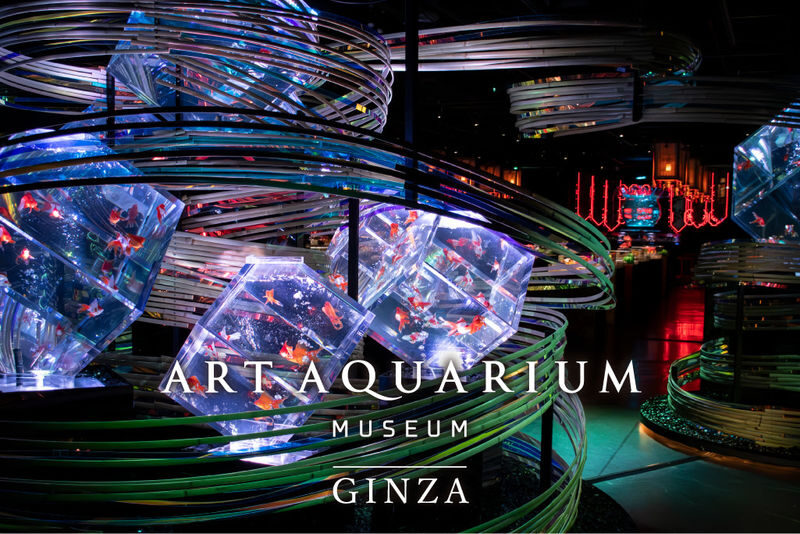
Art Aquarium Ginza turns goldfish into the main event: thousands of fish move through glowing tanks and displays shaped by Japanese patterns and design. It’s a visual change of pace from Ginza’s shops and department stores, and the Goldfish Corridor and Goldfish Waterfall give the exhibition its most memorable forms.
I like two things in particular: the displays make ordinary aquarium viewing feel theatrical, and you can take photos and videos without paying an extra fee. The location is also easy to reach by metro, which makes this a handy indoor stop on a Ginza day.
One thing to weigh is the short visit. You may be through in 30 minutes, though a slower look and photo stops can stretch it to about an hour or more. The dark rooms and small tanks also won’t suit everyone, and some people may have concerns about the fish’s welfare.
- What to Know Before You Go
- Goldfish Take the Spotlight in Ginza
- Following the Goldfish Corridor and Changing Displays
- Light, Sound, and a Room-by-Room Mood
- How Long to Allow, and What the Price Gets You
- Getting to the 9th-Floor Entrance
- Practical Details for Families and Careful Planners
- Who Will Enjoy Art Aquarium Ginza Most?
- Should You Book This Goldfish Exhibition?
- FAQ
- How long does a visit to Art Aquarium Museum GINZA take?
- What are the museum’s opening hours?
- Where is the entrance?
- Which stations are closest?
- Can I take photos and videos inside?
- Can children enter for free?
- Are strollers or pets allowed?
- Are there coin lockers at the museum?
- Do I need to print my ticket?
- Can I use my ticket if I miss the selected time?
- The Best Of Tokyo!
- More Tickets in Tokyo
- More Tours in Tokyo
- More Tour Reviews in Tokyo
- Not for you? Here's more nearby things to do in Tokyo we have reviewed
What to Know Before You Go
 1 / 7
 2 / 7
 3 / 7
 4 / 7
 5 / 7
 6 / 7
 7 / 7
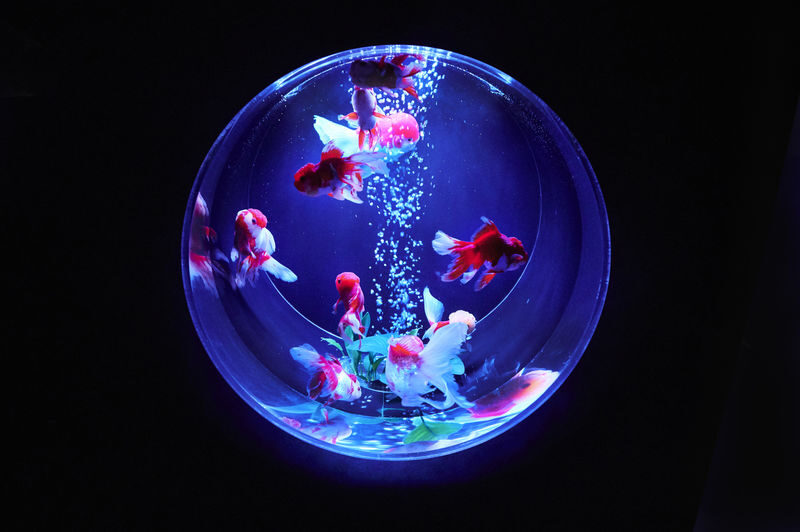
- Goldfish as living art: Each display pairs fish with carefully designed tanks, light, color, and traditional Japanese-inspired patterns.
- A compact route: Most visits take around one to two hours, but a quick walk-through may take only about 30 minutes.
- Phone photography is allowed: You can take photos and videos inside, so there’s no need to leave your camera in your bag.
- A central Ginza address: The museum is inside the Ginza Mitsukoshi New Building, with direct access from Ginza Station.
- Children can enter free: Up to two children aged 0 to 12 may enter free with each paying adult. Children must be accompanied by an adult.
- Check the ticket terms: Tickets are nonrefundable. A selected-date ticket is valid that day, and you may be able to enter at a different time if you miss your chosen time, subject to congestion.

👉 See our pick of the 25 Best Guided Tours In Tokyo
Goldfish Take the Spotlight in Ginza
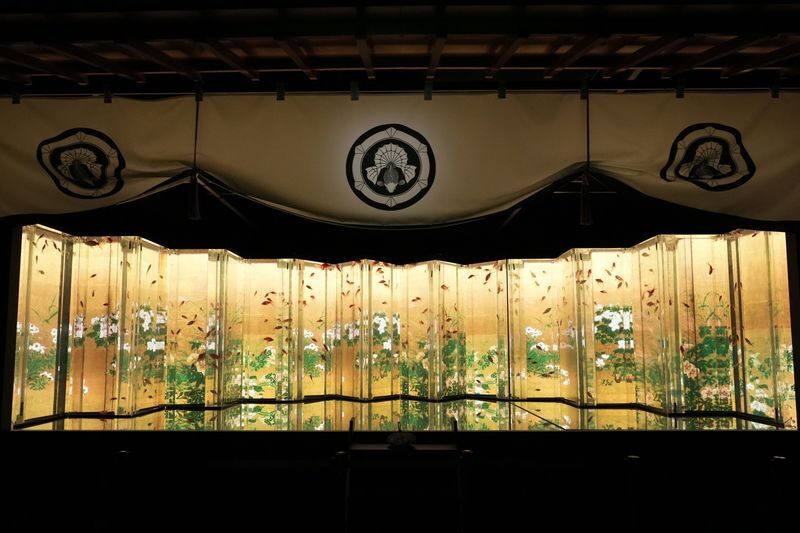
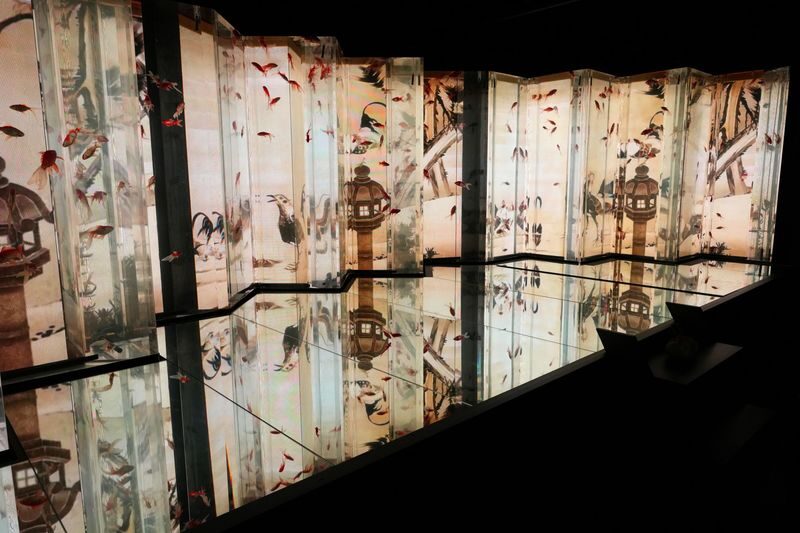
This is not a conventional aquarium built around natural habitats, long viewing windows, or a wide range of marine life. Art Aquarium Museum GINZA presents goldfish as moving subjects in a series of designed spaces. The fish, tanks, lighting, and patterns work together, so your attention moves between the animals and the way each display frames them.
That approach is the attraction’s strength, and also its limit. If you enjoy color, unusual design, and photo-friendly interiors, the exhibition gives you plenty to look at. If you expect a large aquarium with extensive species variety or detailed natural-history displays, you may find the visit slight.
The setting adds to the contrast. The museum sits inside a department store in the middle of Ginza, one of Tokyo’s most polished shopping districts. You can pair it with lunch, shopping, or another nearby stop rather than setting aside half a day for a far-flung attraction.
You can also read our reviews of more tours and experiences in Tokyo



Following the Goldfish Corridor and Changing Displays
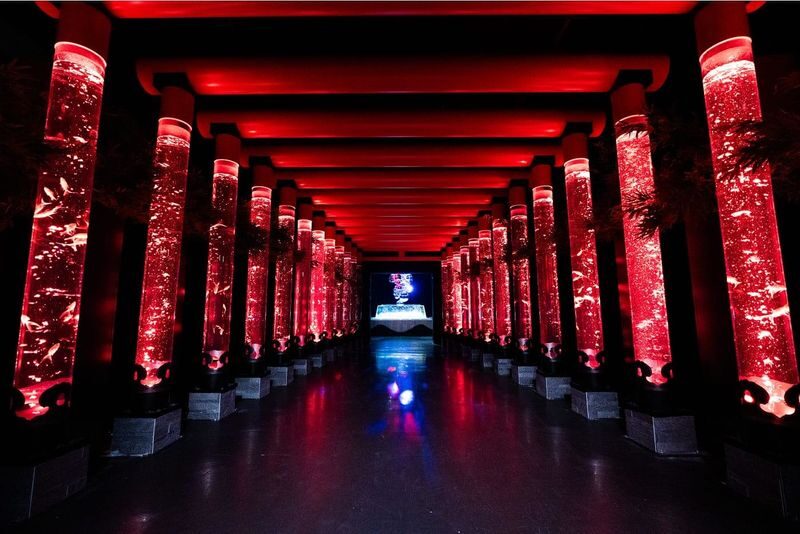
The Goldfish Corridor is a natural place to slow down. Rows of illuminated tanks make the fish appear in repeating patterns of color and movement. The long line of displays gives the room a sense of rhythm, though it can also make the tanks feel more like a sequence of visual frames than a traditional aquarium exhibit.
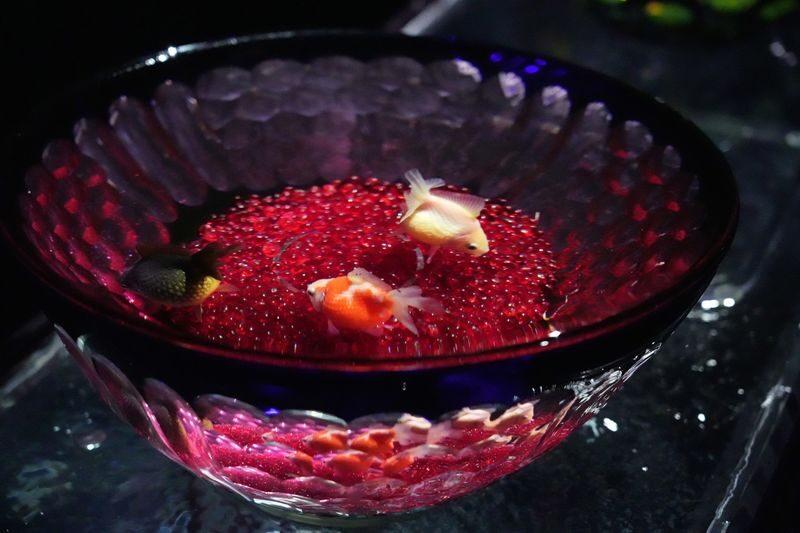
The Goldfish Collection puts rare goldfish in specially designed tanks that show off their fins, shapes, and colors. Take a moment to look beyond the lighting effects: the fish themselves are the point, and the range of forms is part of what makes the collection interesting. If you’re visiting with children, this is an easy place to stop and compare the different fish at your own pace.
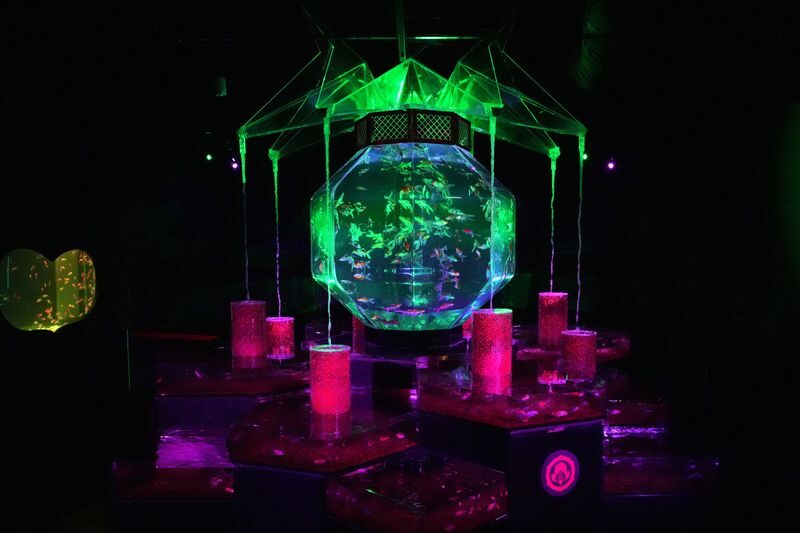
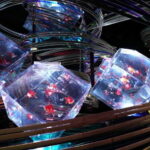
The Goldfish Waterfall stacks tanks into a flowing arrangement. It gives the exhibition a more architectural feel, turning a familiar aquarium shape into a focal point. It’s one of the displays that can be especially rewarding in person, where you can see how the arrangement changes as you move around it.
Other sections take their cues from Japanese design. At Temaririum, bright patterns reference temari, traditional decorative balls. The Goldfish Bamboo Forest uses tall column-shaped tanks that glow like bamboo, with shifting light around the fish. These are not literal recreations of gardens or forests; they are stylized settings that connect the fish displays with familiar visual motifs.
The exhibits may change with the seasons, so the details and atmosphere can vary. The overall idea stays consistent: goldfish in carefully arranged tanks, framed by color and design. Move slowly if you want to notice those differences, but don’t expect a long, linear itinerary with a guide or set schedule.
Light, Sound, and a Room-by-Room Mood
The exhibition relies on atmosphere as much as on the fish. Rooms are dark, and colored light shapes how the tanks look. Some people find the effect peaceful and dreamlike; others find the subdued setting gloomy. If you’re sensitive to dark spaces or prefer bright, natural aquarium displays, that mood is worth considering before you book.
The sensory presentation also makes this a good rainy-day option. It is indoors, compact, and easy to combine with a day in Ginza. Some visitors also note a digital-art display near the end, though the specific elements can change. Leave a little time for the final section rather than assuming the fish tanks are the only thing on view.
Photography is part of the appeal. You can take photos and videos for free, and the lighting creates plenty of striking compositions. Keep in mind that a phone camera may render dark rooms differently from what you see, and stopping often for pictures will slow your progress. That is useful if you want a leisurely visit, but less so if you’re squeezing this between appointments.
How Long to Allow, and What the Price Gets You
The expected visit is about one to two hours. In practice, you could see the main displays in around 30 minutes if you move briskly, while a slower visit with photos and time at each artwork may take an hour or more. The venue is not a full-day attraction, so I’d treat it as a short cultural stop rather than the centerpiece of a Tokyo itinerary.
Tickets start at about $17.05, with the exact price depending on the ticket option and date. For that cost, you’re paying for a compact, designed exhibition rather than a large collection or an extended program. The value is strongest if you appreciate the visual concept, take your time, and pair the visit with other plans in Ginza. It is harder to justify if you’re traveling a long way solely for a brief walk-through.
There are several package choices. A buy-two-get-one-free offer may suit three adults traveling together, while another option includes a JPY 500 museum-shop voucher. You can also choose a flexible-date ticket or combine admission with teamLab Planets TOKYO or a 24-, 48-, or 72-hour Tokyo Subway ticket. Check the details of your chosen package before booking, since the offers are not interchangeable.
Getting to the 9th-Floor Entrance
The museum’s address is 4 Chome-6-16 Ginza, Chuo City, inside the Ginza Mitsukoshi New Building. The entrance is reached via the Ginza Terrace on the 9th floor. Use the New Building escalator or an elevator in either building to get there; the Main Building escalator does not go directly to the 9th floor.
Ginza Station has direct access from the Tokyo Metro Ginza, Marunouchi, and Hibiya lines. Higashi-Ginza Station is about a two-minute walk via an underground passage, while Ginza-itchome Station is about five minutes away from Exit 9. JR Yurakucho Station is about a nine-minute walk from its Chuo or Ginza exit.
The address is central, but the correct building and route matter. If you arrive inside Mitsukoshi and can’t find the entrance, head for the New Building and continue up to the Ginza Terrace rather than relying on the Main Building escalator.
You can also read our reviews of more museum experiences in Tokyo


Practical Details for Families and Careful Planners
Opening hours are listed as 10:00 a.m. to 7:00 p.m., with last entry at 6:00 p.m. Hours and closure dates can change, so check the official information before setting out. Advance purchase is recommended, particularly on weekends and holidays, when same-day tickets may sell out.
A mobile voucher can be scanned at the entrance, so you don’t need to print it. Tickets are valid only for the selected date and time, if a time applies. If you miss your chosen time, you may still be allowed in later that day, but congestion could mean a wait. Cancellations and refunds are not offered, so choose your date carefully.
Families get a useful break on admission costs: up to two children aged 0 to 12, including elementary-school children, can enter free with a paying adult. Children must stay with a paying adult. Strollers and pets are not allowed, and there are no coin lockers inside the museum. There are coin lockers around the station, so plan where to leave larger bags before you arrive.
The exhibition’s lighting and small tanks can raise questions about animal welfare. Some people find the displays beautiful, while others feel uneasy about the fish’s space or the use of bright lights. The supplied details do not establish how the fish are housed or cared for beyond the display descriptions, so I can’t settle that concern for you. If animal welfare is a decisive issue in your choice of attractions, take it seriously before buying a nonrefundable ticket.
Who Will Enjoy Art Aquarium Ginza Most?
I’d put this high on the list for anyone who likes visual art, Japanese-inspired design, photography, or unusual indoor attractions. It also suits families with younger children, especially with the free child admission, though the dark rooms and short duration may affect how long little ones stay engaged.
It’s less suited to someone looking for a traditional aquarium, extensive educational interpretation, or a broad range of fish. The exhibition focuses on goldfish and the way they are presented. The scale is modest, and the ticket may feel expensive if you move through quickly or have ethical reservations about ornamental fish displays.
For the best value, combine it with a meal or shopping in Ginza and allow enough time to pause at the displays. Don’t plan your day around a two-hour visit unless you know you like this kind of visual exhibition. Think of it as a concentrated stop, not an all-afternoon outing.
Should You Book This Goldfish Exhibition?
Book Art Aquarium Museum GINZA if you want a short, distinctive indoor attraction in central Tokyo and enjoy dramatic lighting, design, and easy photo opportunities. The Goldfish Corridor, Waterfall, and Japanese-inspired displays offer a different sort of museum visit, and the location makes it simple to fit into a Ginza day.
Skip it if you want a large aquarium, a long visit, or a display style that avoids small, brightly lit tanks. The exhibition can be lovely, but its appeal depends on how you feel about the art-and-aquarium concept. If that sounds like your kind of stop, choose your date carefully, check current hours, and take your time once inside.
Art Aquarium Museum GINZA Ticket
“Original idea, but you can see everything in 30 minutes, which is why I consider it a bit pricey.”
FAQ
How long does a visit to Art Aquarium Museum GINZA take?
Plan for about one to two hours. A quick visit may take around 30 minutes, while stopping to view each display and take photos can make it longer.
What are the museum’s opening hours?
The listed hours are 10:00 a.m. to 7:00 p.m., with last entry at 6:00 p.m. Hours and closure dates may change, so check the latest information before visiting.
Where is the entrance?
The museum is in the Ginza Mitsukoshi New Building at 4 Chome-6-16 Ginza. Enter via the Ginza Terrace on the 9th floor.
Which stations are closest?
Ginza Station has direct access from the Ginza, Marunouchi, and Hibiya lines. Higashi-Ginza Station is about a two-minute walk via an underground passage, and Ginza-itchome Station is about five minutes away from Exit 9.
Can I take photos and videos inside?
Yes. Photo and video taking inside the museum is free.
Can children enter for free?
Up to two children aged 0 to 12, including elementary-school students, can enter free with each paying adult. Children must be accompanied by a paying adult.
Are strollers or pets allowed?
No. Strollers and pets are not allowed inside the museum.
Are there coin lockers at the museum?
No coin lockers are available inside. There are numerous coin lockers around the station.
Do I need to print my ticket?
No. You can enter directly using the mobile voucher and its QR code.
Can I use my ticket if I miss the selected time?
The voucher is valid on the selected date and time, if a time applies. If you miss the selected time, you may still enter at another time that day, but you could be asked to wait if the venue is congested.