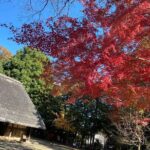
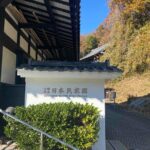
A sumo ring is more than a place to wrestle. It is a sacred space, and this four-hour visit puts you inside a former Kawasaki stable to learn its customs, watch demonstrations, and try the sport yourself with retired wrestlers. You also share chanko-nabe, the hearty hot pot associated with sumo life.
I like two things especially: you get to practice and wrestle in the ring, not just watch a staged bout, and lunch gives you time to ask the wrestlers questions in a relaxed setting. The T-shirt and handprint souvenir add a personal keepsake without making the visit feel like a costume photo stop.
The main consideration is that this is an active, tightly timed outing, not a passive show. The ring activity may not suit everyone, and the stable can cancel at short notice; you also need to reach the correct station gate on time.
- You visit a former stable: See the ring and the spaces once used for training and daily life.
- You learn by doing: Try traditional exercises, then take part in a friendly wrestling session with retired wrestlers.
- You make chanko-nabe: Prepare chicken dumplings for the hot pot and share lunch with the sumo team.
- You can ask questions directly: English-speaking guides explain sumo’s history, ranks, rituals, and rules.
- You leave with a keepsake: The activity includes an original T-shirt and a wrestler’s handprint souvenir.
- You meet in Kawasaki: Start and finish at Shin-Kawasaki Station, with 9:30 a.m. and 4:30 p.m. departures.
- Inside a former sumo stable
- From the station to the ring
- Sumo moves from explanation to practice
- Chanko-nabe, made and shared
- What the price includes, and what it does not
- Who will enjoy this most
- A few practical points before you book
- Should you book the sumo stable experience?
- FAQ
- Where does the tour meet?
- How long is the activity?
- What departure times are available?
- Do I get to wrestle with a sumo wrestler?
- Is lunch included?
- Can the tour accommodate allergies or dietary restrictions?
- Can children join, and is the tour wheelchair-accessible?
- The Best Of Kawasaki!
- More Lunch Experiences in Kawasaki
- More Tours in Kawasaki
- More Tour Reviews in Kawasaki
- Not for you? Here's more nearby things to do in Kawasaki we have reviewed
Inside a former sumo stable
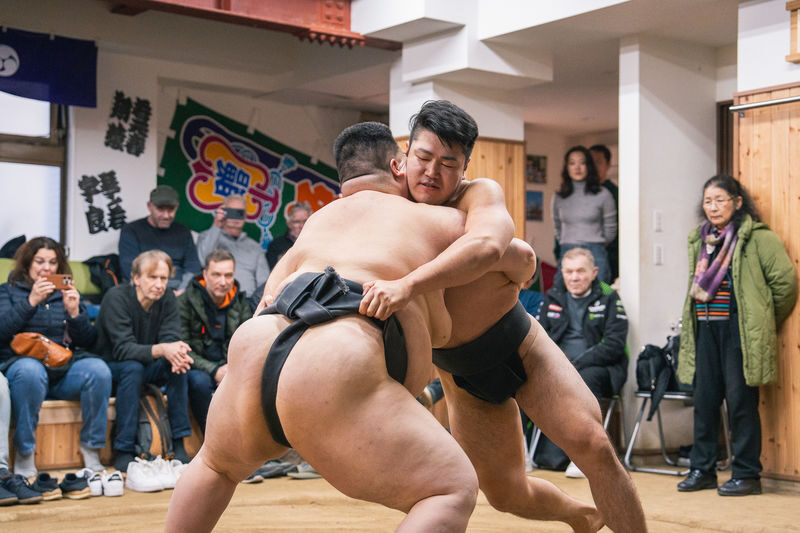
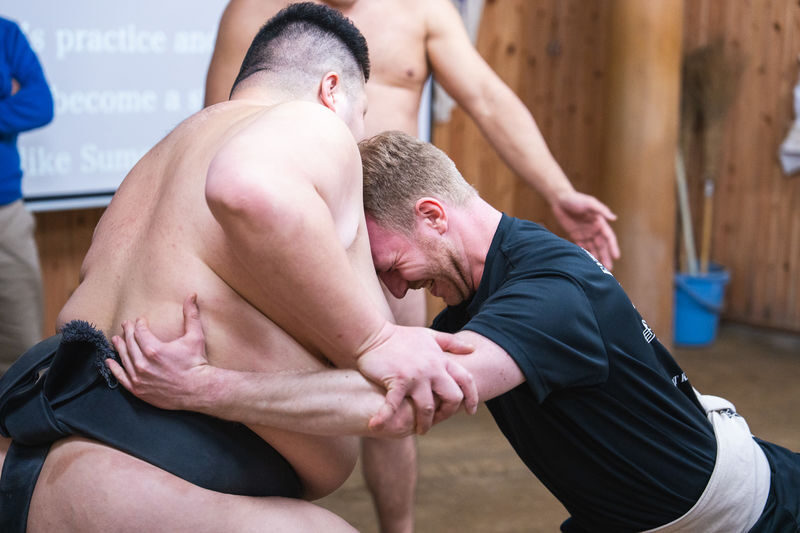
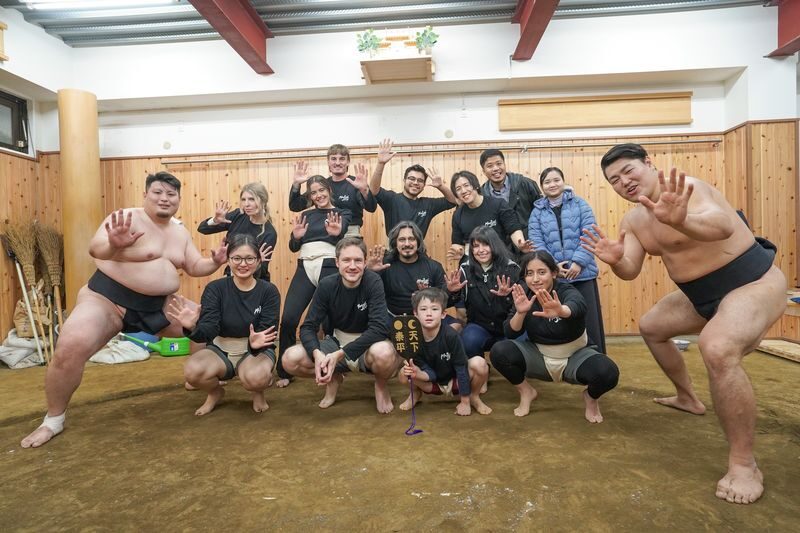
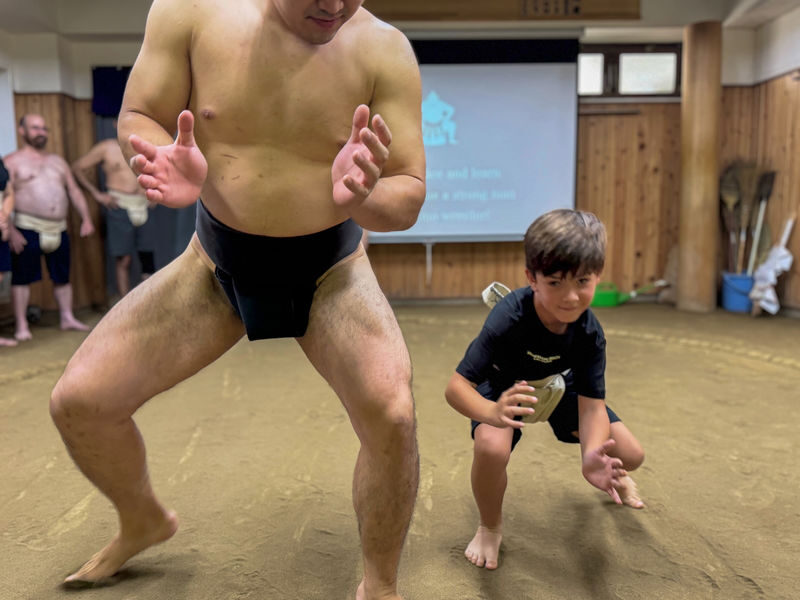
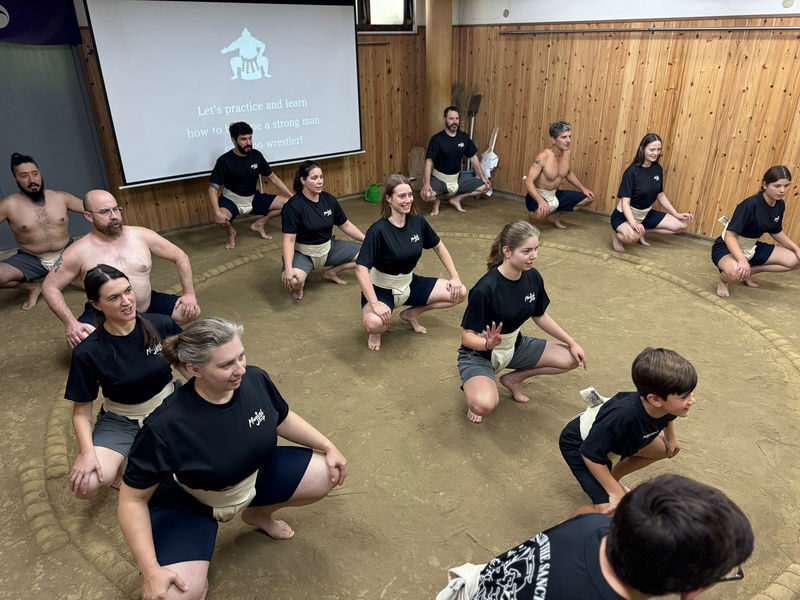
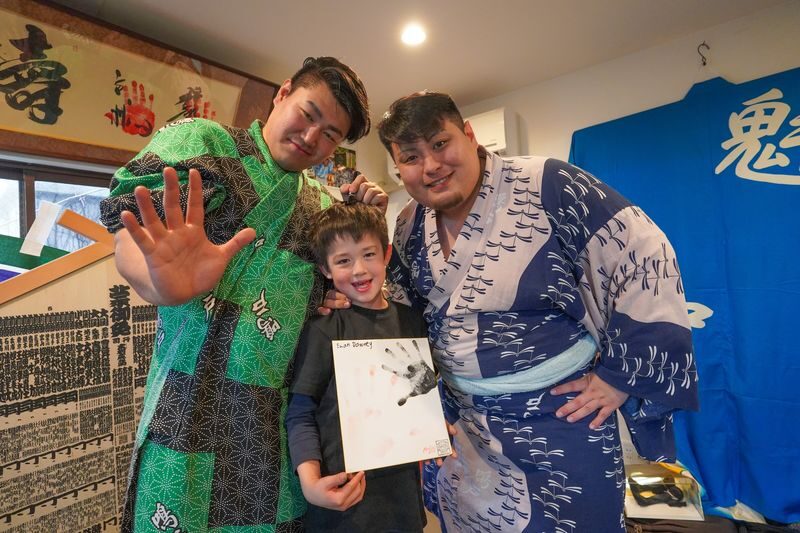
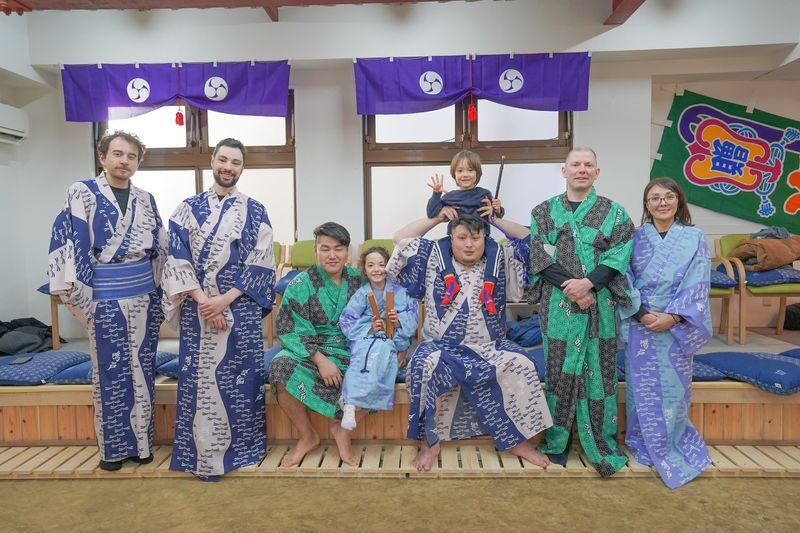
This is not a stadium event or a sumo costume photo session. You visit a former operational stable, known as a beya, where wrestlers once lived and trained. The setting helps make the sport’s routines easier to understand: you are not only hearing about sumo as a contest, but seeing the ring and the working spaces tied to a wrestler’s daily life.
Your English-speaking guide introduces the history, ranks, rules, and Shinto customs behind sumo. That context matters. Without it, a stomp or a handful of salt can look like a bit of ceremony before the action. With an explanation, you begin to see how ritual, discipline, and sport meet in the ring.
Guides have included people such as Charlie, Fuji, Taka, Ken, and Jim. Your guide will vary, but the format gives you time to ask questions rather than simply listen to a speech. If you have wondered how rankings work, why wrestlers perform certain movements, or what stable life involves, this is a good place to ask.
The stable is in Kawasaki, in Kanagawa Prefecture, rather than central Tokyo. The meeting point is Shin-Kawasaki Station, which the tour describes as about 20 minutes from Tokyo Station and 30 minutes from Shinjuku Station. A guide meets the group at the station and takes you onward to the stable. The station meeting point is easy to miss if you follow a map pin without checking the gate: there is only one gate, and the meeting spot is in front of it.
👉 See our pick of the 3 Best Guided Tours In Kawasaki
From the station to the ring
Plan for four hours door to door from the station, not four hours of wrestling. The advertised departure choices are 9:30 a.m. and 4:30 p.m., with returns around 1:30 p.m. or 8:30 p.m., depending on the departure you choose. The schedule can change with traffic or weather, so leave room in your day rather than planning a close connection afterward.
Arrive at least 10 minutes early. The tour starts on time, and the rules are strict: if you miss the group, you cannot join later, reschedule, or receive a refund. One past participant had trouble finding the meeting place and advised checking the Shin-Kawasaki gate in advance. That is sensible preparation, especially if you are arriving from across Tokyo.
Once at the stable, you get an introduction to its history and layout, including the ring and areas connected with training and meals. This is a small but useful part of the visit. The stable is not just a backdrop: it gives the sport a home, and helps you picture the repeated work behind the brief, explosive action of a bout.
The tour is described as an authentic stable experience, but set your expectations carefully. It takes place in a former stable and includes demonstrations and interaction with retired wrestlers. It is not a promise that you will watch current professional wrestlers doing their regular morning practice. The experience is built around guided explanation, demonstration, participation, and a shared meal.
You can also read our reviews of more tours and experiences in Kawasaki
Sumo moves from explanation to practice
After the introduction, the wrestlers demonstrate training movements and explain the basics. You then get the chance to try some exercises yourself. The physical work is part of the point: even a short session gives you a better feel for the balance, force, and stamina involved than watching a bout from a seat.
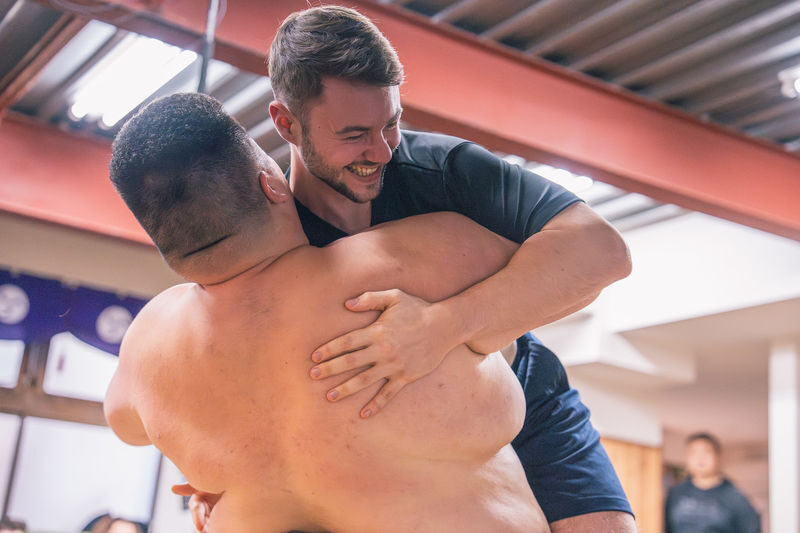
The tour’s most distinctive feature is the chance to enter the ring and wrestle with retired professionals. Participation is designed to be friendly and adjusted to the person taking part, including children and women. You do not need to be a trained athlete, but you should be willing to move, listen to instructions, and take part at a level that feels comfortable.
There is no need to treat this as a test of strength. The wrestlers are there to guide and entertain, not to prove a point against you. You may choose to watch rather than wrestle, but the hands-on element is what separates this outing from a standard demonstration. If you are traveling with teenagers, it can be a lively way to turn a lesson about sumo into something physical and memorable.
The tour supplies an original T-shirt to wear, and you can take it home afterward. It is a practical inclusion: you do not need to bring special training clothes. There is also a wrestler’s handprint souvenir, sometimes presented as a signed or personalized keepsake. Additional merchandise may be available for purchase, so bring cash if you think you will want something extra.
Chanko-nabe, made and shared
After the activity, the group prepares chicken dumplings for chanko-nabe, the hot pot associated with sumo wrestlers. The meal is included, and the menu can change with the season and ingredient availability. It is a filling, home-cooked style lunch rather than a quick snack between activities.
Making the dumplings gives you a small role in the meal, while eating together gives the visit a slower, more personal finish. The wrestlers sit with the group, and you can ask about training, daily life, and the sport. That conversation is a real part of the value: the lesson does not end when the wrestling does.
Food is prepared in a kitchen that the tour operator does not control. Tell the operator about allergies or dietary requests at least one day before the tour, but understand that an allergy-free meal or special diet cannot be guaranteed. Requests made on the day may not be accommodated. If a serious allergy is involved, contact the operator before booking and decide whether the uncertainty is acceptable.
What the price includes, and what it does not
The starting price is $157.89 per person for a four-hour guided activity. That is a substantial outlay for a half-day, particularly if you are comparing it with a museum ticket or a short cultural demonstration. The value comes from the combination: a visit to a former stable, an English-speaking guide, demonstrations, active participation with retired wrestlers, a shared meal, and two take-home items.
I would judge the cost by how much you want direct contact with the sport. If you are curious about sumo but only want to watch a bout, this may be more time and money than you need. If you want to understand the rituals, try the movements, speak with wrestlers, and eat the food connected with the sport, the price is easier to justify.
The meal and original T-shirt are included, as is the handprint souvenir described as part of the experience. Personal expenses and extra merchandise are not included. Some participants have found additional souvenirs worth browsing, but those are optional. Bring cash if you want to shop, and do not count on purchases being included in the tour price.
Who will enjoy this most
This suits curious first-time visitors, families with older children, and anyone who likes culture best when they can take part. The wrestlers adjust the activity to participants, and the format is intended to be safe and fun for families. Children aged 0 to 3 are free, but infants and children still need to be included in the passenger headcount when booking.
It is also a good choice if you want a break from temples, shops, and city streets. The stable visit is active and social, with a guide to put the details in context and time to ask questions. You do not need prior knowledge of sumo to follow along.
This is not recommended for people with high blood pressure, heart disease, or other serious medical conditions. It is also not wheelchair- or stroller-accessible. Large suitcases are not permitted, so keep your luggage to a small day bag. Kawasaki’s weather can be extreme, with summer highs around 40°C and winter lows around -5°C; dress for the season, especially if you are traveling in the hottest or coldest months.



A few practical points before you book
The activity requires at least four participants per tour group. If fewer than three people are booked, the tour may be cancelled, and the stable can also cancel unexpectedly a few days before the date. That uncertainty is worth considering if this is the centerpiece of a short Tokyo visit. Keep some flexibility in your schedule and check your messages before heading out.
Free cancellation and date or time changes are available up to 48 hours before the start time. The voucher is valid only on the date and time selected. If you are running late, contact the operator immediately; arriving more than five minutes late without contacting them is treated as a cancellation, with no refund.
Should you book the sumo stable experience?
Book it if you want more than a quick photo with a wrestler. The strongest reason to go is the mix of explanation, practice, ring wrestling, and a meal shared with the people who have lived the sport. You come away with a clearer sense of sumo as both a physical discipline and a tradition, plus a T-shirt and handprint to remember the day.
Skip it if you prefer to observe from the sidelines, have mobility or health concerns that make the activity unsuitable, or need a highly predictable schedule. For the right person, though, this is a rare chance to enter a real sumo space, ask direct questions, and discover that a hot pot lunch can be part of the lesson.
Authentic Tokyo Sumo: Enter the Ring & Chanko Lunch
“they're not messing around when they throw around the word, "authentic". you get to go to an actual sumo stable out in the boonies of Tokyo. they w…”
FAQ
Where does the tour meet?
Meet in front of the single gate at Shin-Kawasaki Station, at 1 Chome-2 Kashimada, Saiwai Ward, Kawasaki. Arrive 10 minutes before your selected departure.
How long is the activity?
The guided tour lasts about four hours, including travel from the station to the stable and back.
What departure times are available?
The listed departure times are 9:30 a.m. and 4:30 p.m. The return is around 1:30 p.m. or 8:30 p.m., depending on the departure and schedule.
Do I get to wrestle with a sumo wrestler?
The activity includes training exercises and the opportunity to wrestle with retired sumo wrestlers. They adjust their strength to make participation suitable for a range of people.
Is lunch included?
Yes. The tour includes chanko-nabe, a hot pot meal, and participants help make chicken dumplings. The menu may change with the season and ingredient availability.
Can the tour accommodate allergies or dietary restrictions?
You can notify the operator at least one day before the tour, but the food is prepared in a kitchen outside its control, so allergy-free meals and dietary requests cannot be guaranteed. Same-day requests cannot be accommodated.
Can children join, and is the tour wheelchair-accessible?
Children can join, and children aged 0 to 3 are free, but all children must be included in the passenger headcount. The activity is not wheelchair- or stroller-accessible.